Plan your trip · Indonesia
Indonesia with kids: Sanur, the Gilis, orangutans and how to plan it
Indonesia is easy to love with children and easy to overplan. The country is a chain of islands, so every new base usually means a flight or a boat, and a sea crossing that is a thrill for an adult can be a long, wet morning for a five-year-old. The trips that work for families are built on few bases with calm water and short transfers, with one bigger adventure added only when the children are old enough to enjoy it. Bali's Sanur and the car-free Gili Islands are the classic pairing; an orangutan trip on a river boat in Borneo or the granite beaches of Belitung are the add-ons.
- Suggested time
- 10–14 days for two bases; add 3 days for an orangutan river trip
- Where to stay
- Sanur on Bali, then Gili Air or Gili Meno; Tanjung Puting or Belitung as an add-on
- Season and timing
- April to October is the dry season in most of the country, including Bali and Java; the July school holidays and Idul Fitri are busy domestic travel periods.
The short answer
For a first family trip of about ten days to two weeks, use two bases: four or five nights in Sanur on Bali, where reefs keep the lagoon calm and a paved seafront path runs the length of the resort, then three or four nights on Gili Air or Gili Meno, reached by a morning fast boat. Fly into Bali's Ngurah Rai airport (DPS), sleep the first night in Sanur, and plan boat crossings for the morning, when the sea is calmest. With older children who can cope with heat, mosquitoes and simple facilities, add a three-day, two-night klotok trip to see orangutans in Tanjung Puting, flying to Pangkalan Bun; for a quieter beach week instead of the Gilis, fly to Belitung. Travel in the April to October dry season, avoid the July school holidays and Idul Fitri if you can, and see a travel-health clinic at least eight weeks before you go.
Two bases, not five: how to shape a family trip
The single most useful decision is how often you move. Every change of island in Indonesia costs a morning or a day: a hotel transfer, a harbour or airport, a crossing, another transfer. With children, two bases in ten days to two weeks is comfortable; three is the limit unless they are teenagers who enjoy the travelling itself.
Sanur plus the Gilis is the pairing that needs no domestic flight. You land at Bali's Ngurah Rai airport, which the Ministry of Tourism page for Sanur Beach puts about 15 km and 30 to 45 minutes away by taxi or app-based car, depending on traffic. Sanur Harbour is the departure point for fast boats to Nusa Lembongan, which the Ministry of Tourism puts at 30 to 45 minutes, and some operators continue to the Gilis. Sanur makes the gentle first base for jet lag and the Gilis the car-free second, and the order also works in reverse at the end of a trip.
The add-ons each need a flight. Tanjung Puting, for orangutans, starts at Iskandar Airport in Pangkalan Bun on Borneo; the Ministry of Tourism says flights run there daily from Jakarta and other major cities. Belitung's only airport, at Tanjung Pandan, has flights from Jakarta. Neither combines neatly with Bali in a single short trip, so treat them as the second base instead of the Gilis, or as a separate holiday.
Sanur: the easy first base on Bali
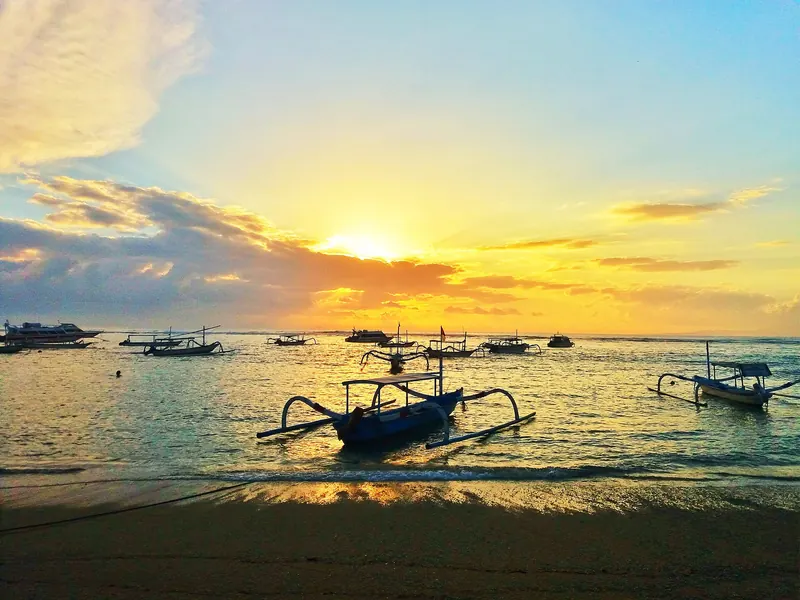
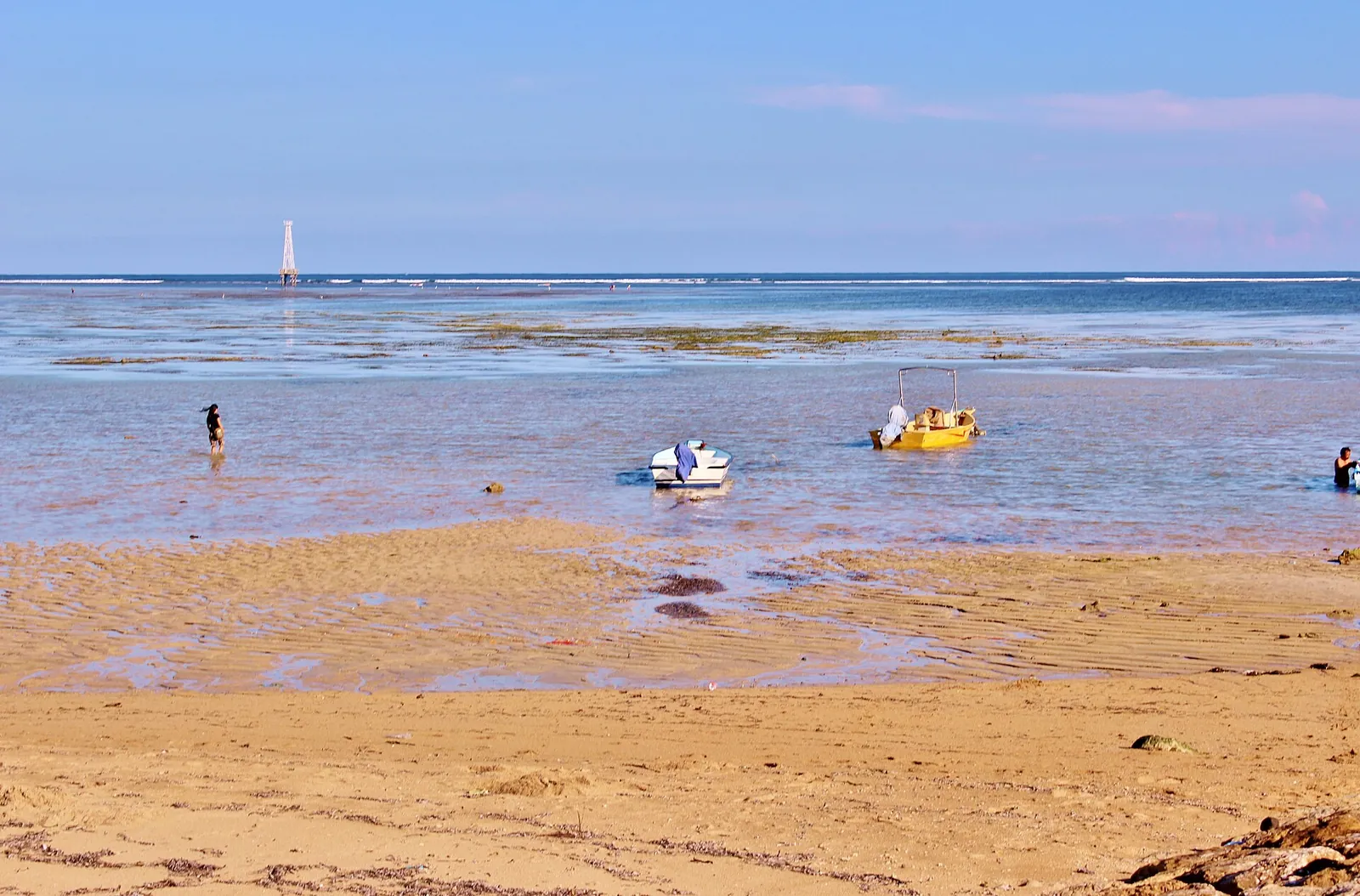
Sanur is Bali's family beach because of its reef. The Ministry of Tourism describes the waters as protected by a long string of offshore reefs that create large, warm, shallow lagoons for swimming and snorkelling, and calls Sanur Beach known for its calm waves. The flip side is the tide: the same page notes that the reefs can be very shallow at low tide, so plan swims for mid to high tide and pack reef shoes.
The other asset is the path. A paved beachfront path runs about 5 km from Mertasari in the south to the main beach at Jalan Hang Tuah, and the official page suggests cycling it in the early morning; bicycles, canoes and snorkel gear can be rented at the beach, which also has public toilets. That makes a simple daily rhythm for small children: path and swim before the heat, a long lunch and rest in the shade, and the beach again in the late afternoon.
From Sanur, a fast boat to Nusa Lembongan is the easiest island day out, at 30 to 45 minutes. Before paying, ask the boat operator whether it can supply child-sized life jackets. Bali's traffic is the other thing to plan around: the UK government warns that traffic discipline is very poor and that moped and motorbike accidents have risen sharply in Bali, so families are better off with a booked car than renting scooters.
Make time for the local food
What to eat and where to look
Bakso (meatball soup)
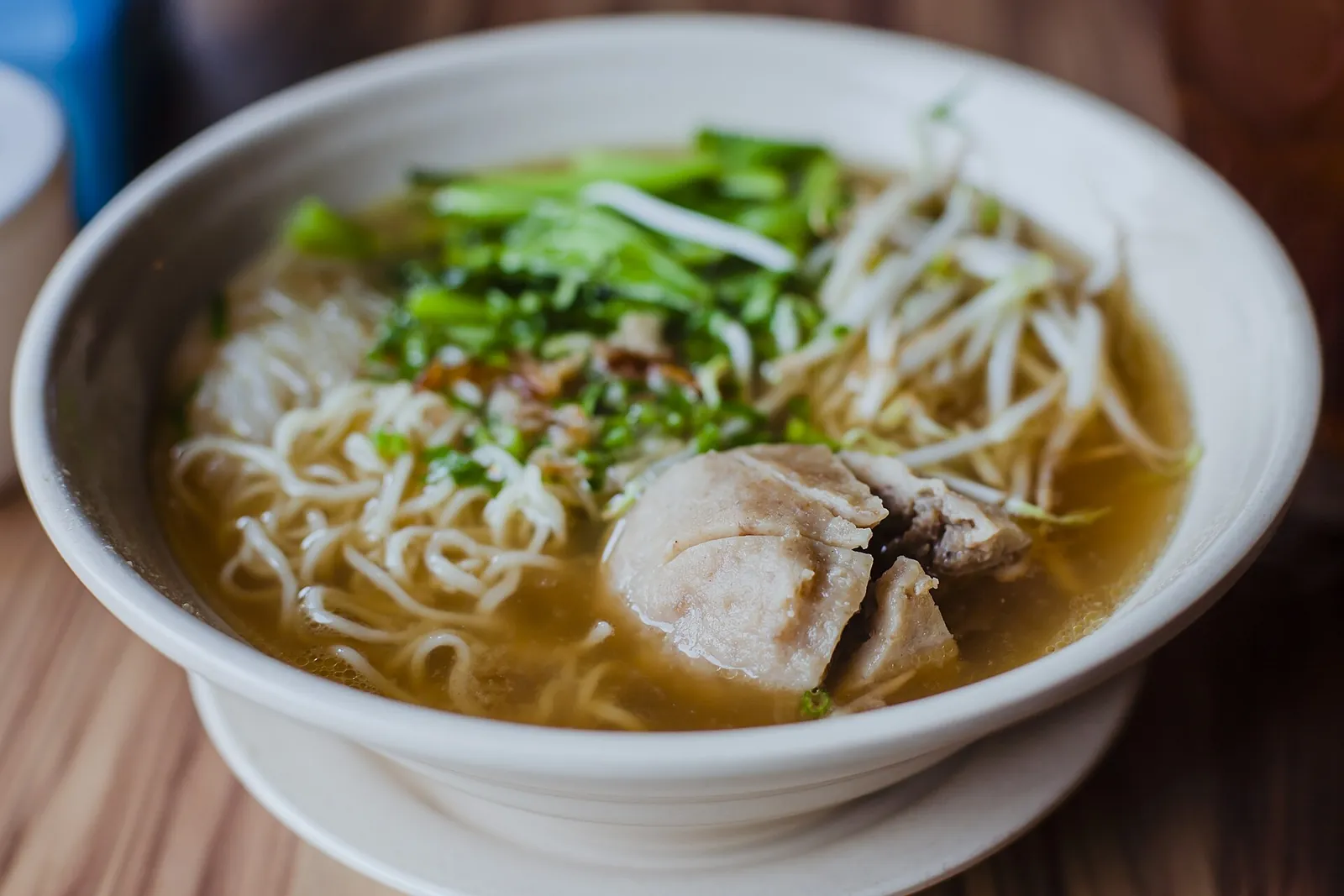
Beef or chicken meatballs in a warm broth, often with noodles or fried wontons. The Ministry of Tourism notes that sambal and sweet soy sauce are served on the side for customers to add, which makes it one of the easiest dishes to order mild for children.
- Where to look
- Bakso carts and simple warung across the country, including on Bali.
- Fit it into your day
- A quick lunch on a travel day, when a familiar-tasting bowl beats an unfamiliar menu.
Add the sambal yourself rather than letting it be stirred in; ask whether the meatballs are beef, chicken or pork if that matters to you.
Sate lilit (Balinese minced satay)
Minced chicken, fish or pork mixed with the Balinese spice paste bumbu Bali and coconut, wrapped around lemongrass or bamboo sticks and grilled over charcoal. The soft texture suits children who find chunks of satay chewy.
- Where to look
- Balinese warung and restaurants in Sanur and elsewhere on Bali.
- Fit it into your day
- A shared starter with rice after a morning on the beach.
The spice paste contains chilli; ask how hot it is before ordering for a child.
Gili night market: grilled fish and chicken satay
The night market by the main harbour on Gili Trawangan sells chicken satay, mixed rice and fresh seafood such as grilled fish with Indonesian spices, according to the Ministry of Tourism.
- Where to look
- Near the main harbour on Gili Trawangan; if you are staying on Air or Meno, remember that inter-island boats stop before dark.
- Fit it into your day
- An early dinner where everyone can choose something different.
Grilled seafood is usually basted with a spiced sauce; ask for a plain piece for small children and check it is cooked through.
Meals on a klotok
On a Tanjung Puting river trip, meals are part of the klotok hire along with the bed, the boat and the guide, according to the Central Kalimantan tourism office, so the family eats together on deck between wildlife stops.
- Where to look
- Included with your trip; discuss what the children eat when you book.
- Fit it into your day
- Tell the operator about allergies and fussy eaters when you book, since on the boat you eat what the cook prepares.
Bring snacks and drinking water your children like, and check that drinking water is supplied on board.
Bedulang (Belitung communal tray)
A Belitung dining custom in which family and friends share a meal from a single large tray, described by the Ministry of Tourism as a symbol of togetherness.
- Where to look
- Community food experiences on Belitung, such as the Belitung Culinary Adventure featured by the Ministry of Tourism.
- Fit it into your day
- A family dinner in Belitung where children can try small amounts of several dishes.
Dishes may include fish, squid and spiced chicken; ask what is in each one.
The Gili Islands: no traffic, but respect the sea
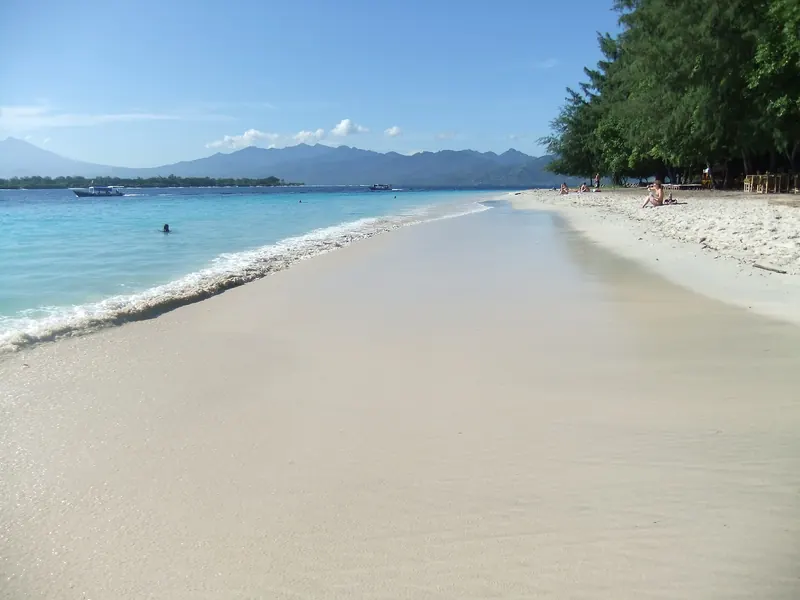
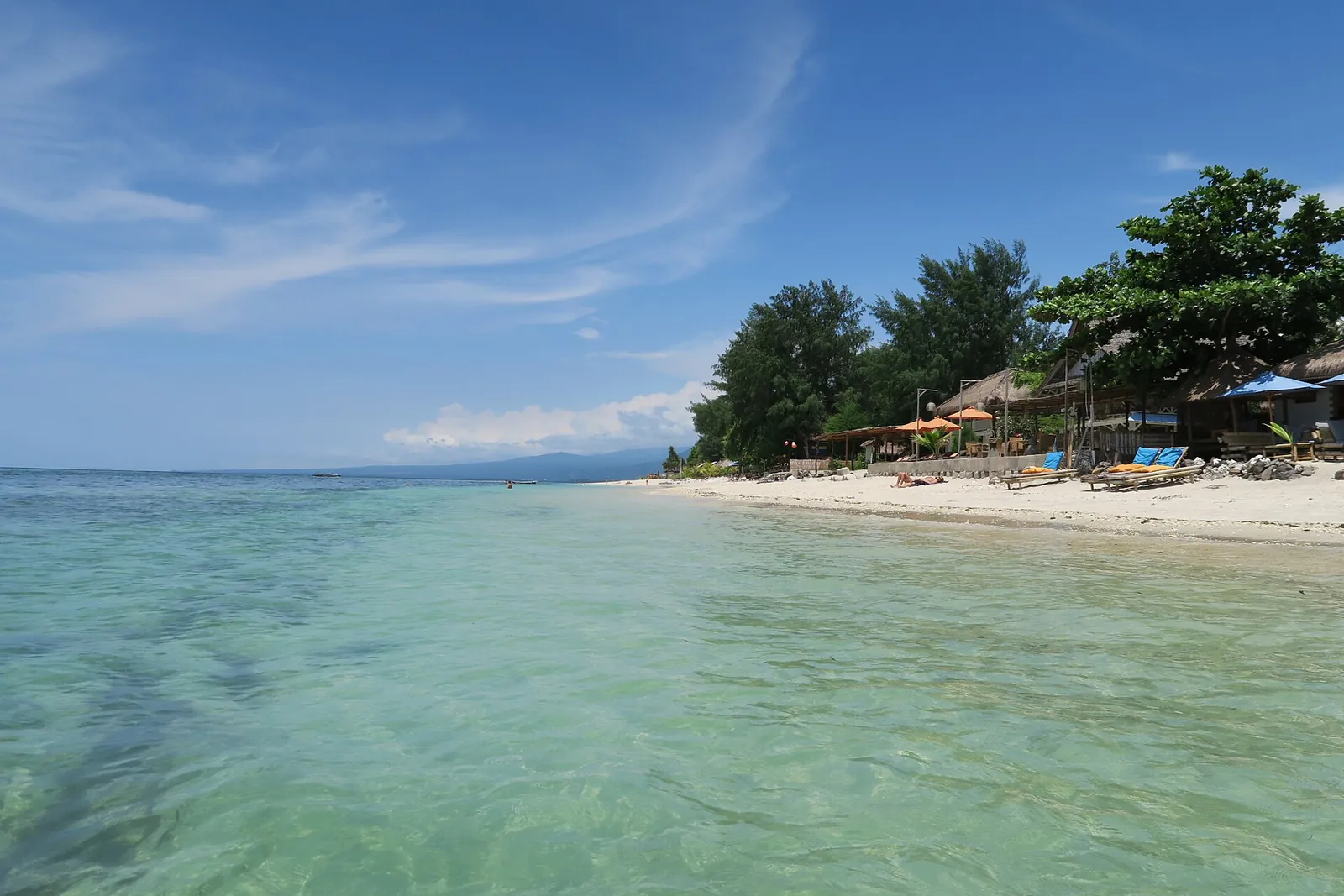
The three Gilis off north-west Lombok have no cars or motorbikes, according to the Ministry of Tourism, which is why parents like them: children can walk and cycle sandy lanes without traffic. Bicycles and the horse-drawn cidomo are the only transport. Choose your island by temperament. Gili Air is closest to the mainland and the most populated, with a village feel; Gili Meno is the smallest, with only a few hundred permanent residents and the quietest beaches; Gili Trawangan has the most restaurants and nightlife, which is a reason for families with young children to sleep elsewhere and visit for the day.
Turtles are the highlight. The Ministry of Tourism says the usual three-island snorkelling trips stop at sites such as Turtle Point and include masks, snorkels and a life vest, and that a glass-bottom boat tour shows the reef to anyone who does not want to get wet, which suits younger children. The ministry also notes that green turtles are usually seen at 10 to 20 metres, so a weak swimmer on the surface may see them only from above.
Treat the water between the islands with real caution. Wikivoyage warns that the channels may look swimmable but the currents are fierce and visitors have died trying, and that the sea is calmest in the morning, with all boats stopping well before dark. The UK government says safety standards vary between boat operators and that life jackets for children are not always available, so you may need to bring your own. If a boat looks overloaded or the weather is bad, wait for the next one.
Orangutans by river boat: Tanjung Puting with older children
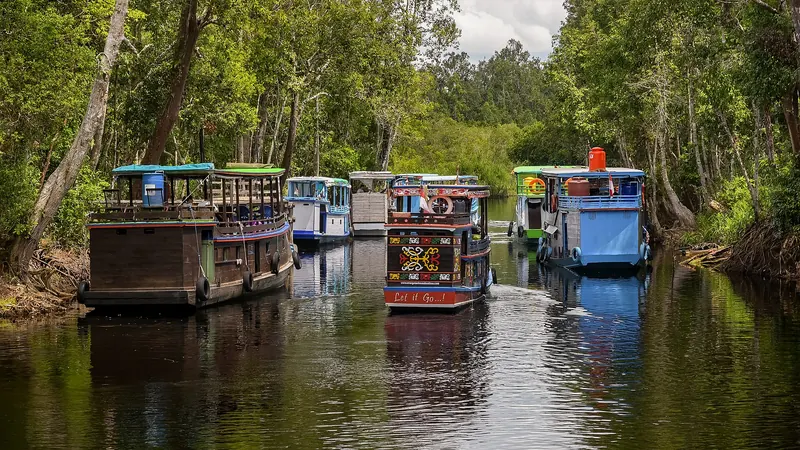
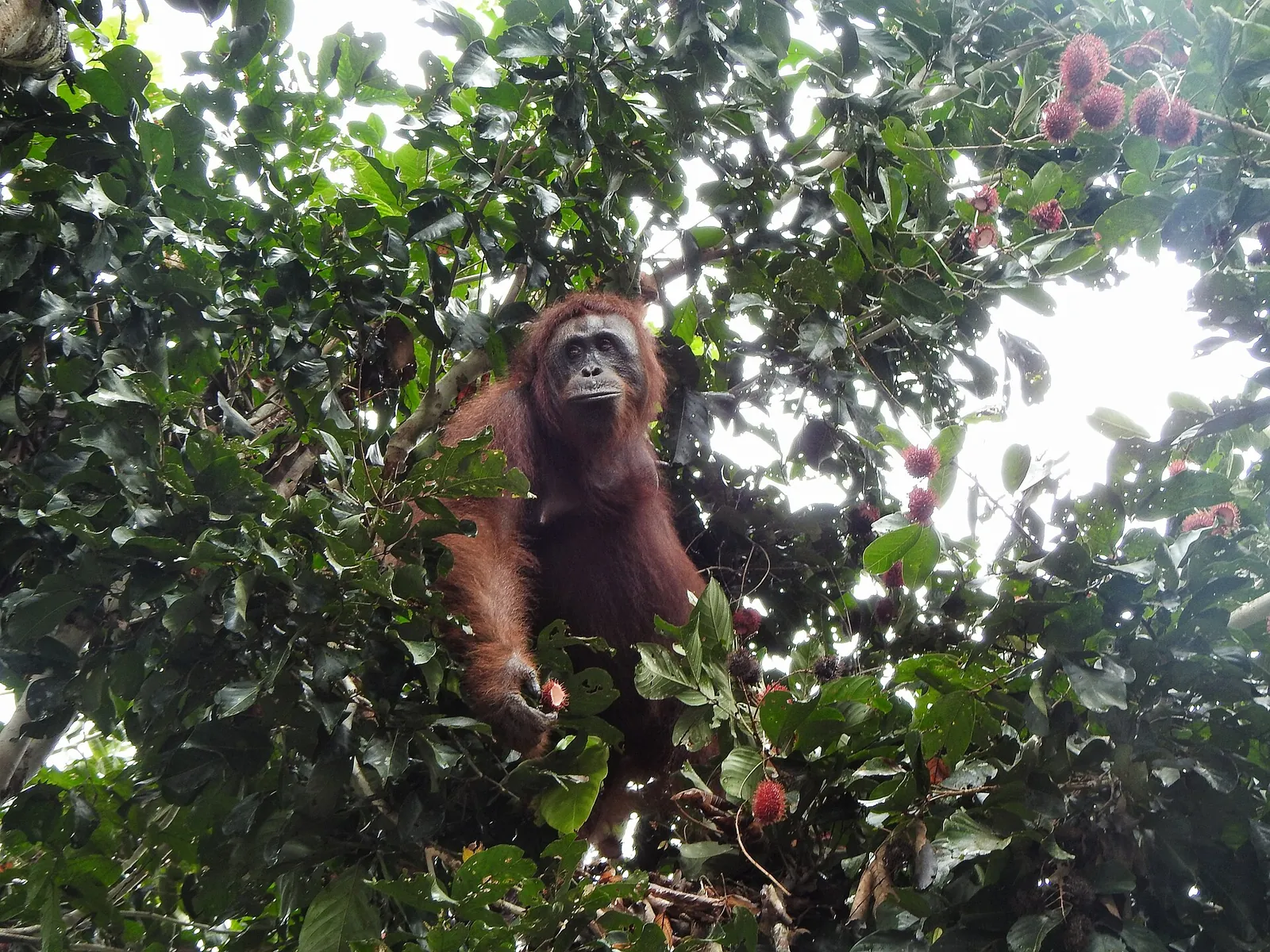
Tanjung Puting National Park in Central Kalimantan is the classic family wildlife trip in Indonesia, and its format suits children who like adventure. You live on a klotok, a wooden river boat that the Central Kalimantan tourism office describes as fitted with mattresses under mosquito nets on the upper deck, a simple bathroom and an eating area. The boat travels slowly up the Sekonyer River, with proboscis monkeys in the riverside trees at dusk and, the same office says, guides often taking visitors to look for fireflies after dark.
The provincial tourism office recommends three days and two nights, enough to reach Camp Leakey and spend an evening on the river. The Ministry of Tourism says the daily feedings at Camp Leakey and Pondok Tangui are the highlight, and that forest walks can be tailored to your fitness, so discuss shorter walks with the guide. Camp Leakey is an active research station: the Orangutan Foundation International says day visitors come with local guides and permits, must observe the orangutans from a safe distance, and cannot stay overnight.
This trip is better for older children than for toddlers. Days are hot and humid, the facilities are simple, and the provincial office lists insect repellent as essential. The US CDC lists rural Kalimantan among the areas of Indonesia where it recommends malaria prevention medicine, so ask your clinic about it well before travel. In the dry season, smoke from forest and land fires can also affect the region: the UK government warns of haze from May to November, particularly in Kalimantan, and in August 2026 schools in Palangka Raya, the provincial capital, suspended outdoor activities for pupils and moved early-childhood classes online because of it. Check the air before you commit.
Belitung: a quieter beach alternative
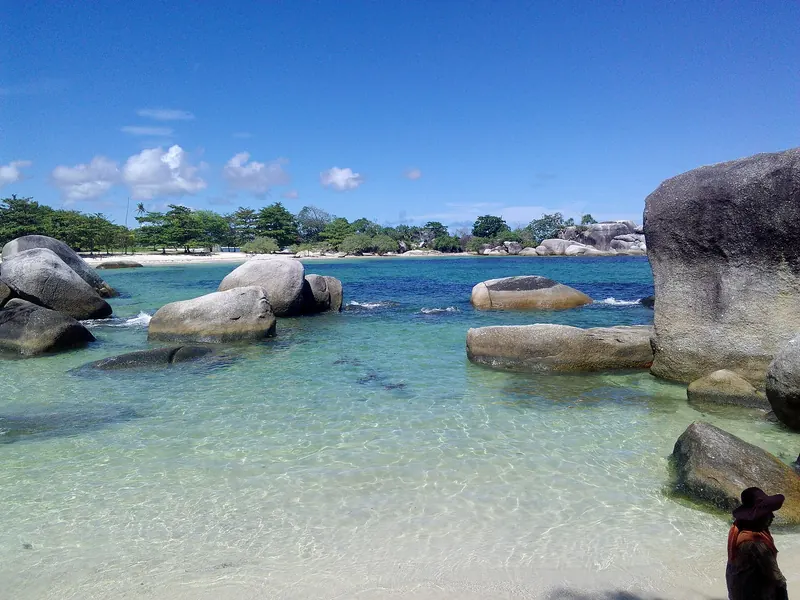
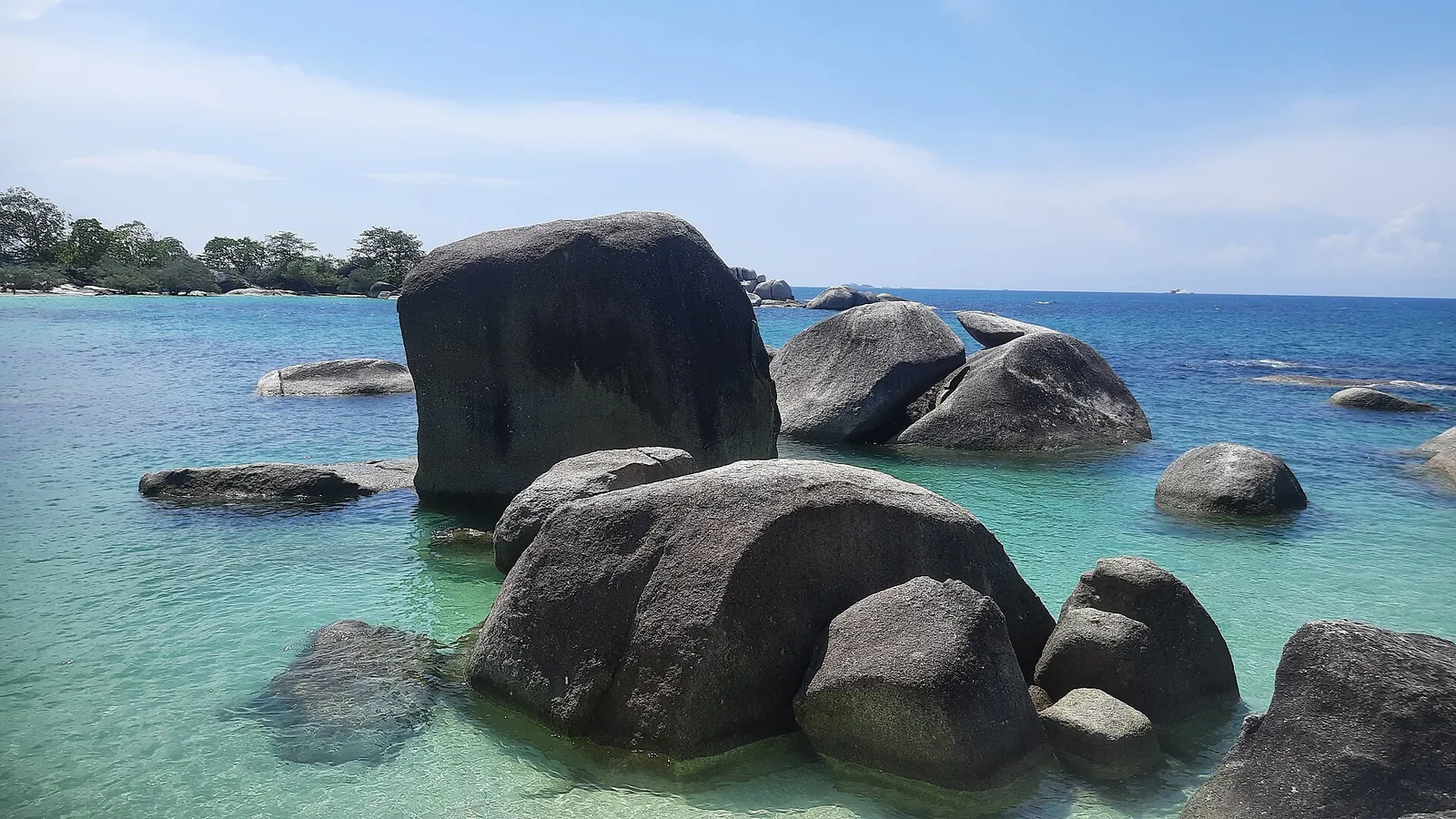
Belitung, an island between Sumatra and Borneo, has white sand, granite boulders and more than a hundred small islands offshore, according to the Ministry of Tourism. It is calmer and less developed than Bali and suits families who want beaches and short boat hops without crowds. One of the ministry's own travel stories follows a family of three adults and two children around the island, and it is honest about the practicalities: sights are scattered one to two hours' drive from Tanjung Pandan, public transport is poor, and transport with a fixed price should be booked in advance.
The same story describes the island-hopping day in detail: the Lengkuas lighthouse has 313 steps up slippery iron stairs (the boatman carried their three-year-old), visitors queue for the viewing deck, and wind and current picked up quickly enough to carry an inflatable toy out to sea. Plan the boat day for the morning, keep inflatables out of the water, and use life jackets. Wikivoyage puts the dry season, when the sea is calmer and the shallow reefs clearer, at April to September, and warns that the UV index at the beaches is very high.
Heat, seasons and school holidays
The Ministry of Tourism describes the climate as almost entirely tropical, with coastal plains averaging 28 °C and relative humidity between 70 and 90 per cent. In most of the country, including Java and Bali, the dry season runs from April to October and the wet season from November to March, though it adds that the seasons have become less predictable. For children, the heat matters more than the rain: plan outdoor time for early morning and late afternoon, keep the middle of the day for shade, a pool or a rest, and carry water.
Holidays matter as much as weather. Bali's star hotels had the highest occupancy of any province in July 2026, which Statistics Indonesia attributed mainly to domestic travel during the school holidays, as reported by Antara. Idul Fitri is extended by about seven to ten days of collective leave, according to the Ministry of Tourism, as families travel to their home towns, and there is shorter collective leave at Christmas. If your own school holidays allow it, April to June or September to October avoid the peaks while staying in the dry season.
Health, documents and the checks before you fly
Start with a travel-health appointment at least eight weeks before you leave, as the UK government advises. The US CDC recommends that all international travellers be fully vaccinated against measles, including an early dose for infants aged 6 to 11 months, and that infants of that age also be vaccinated against hepatitis A. On malaria, it lists no transmission in the resort areas of Bali, the Gili Islands or Jakarta, but recommends prevention medicine for rural Kalimantan, rural West Nusa Tenggara (which includes Lombok), Sulawesi and Sumatra. Dengue is present, so mosquito repellent and covered arms at dusk are worth the effort everywhere.
Animals are the risk children most often underestimate. The UK government notes many street dogs in Bali and monkeys around temples and tourist areas, and that rabies exists in both wild and domestic animals: seek medical help immediately after any bite or scratch, and teach children not to feed, touch or stare at monkeys. Tap water is not safe to drink. The emergency number for an ambulance is 118. Medical care outside the main cities can be limited, so buy insurance that covers medical evacuation.
Each child needs their own passport and visa arrangements. When we checked on 2026-10-03, the UK government's entry page said a British passport must be valid for at least six months after arrival with two blank pages, listed a 30-day visa on arrival with proof of onward travel, and asked travellers to complete the free All Indonesia arrival card within 72 hours of arrival. Rules differ by nationality, so check the Indonesian immigration website. Bali also charges a foreign tourist levy: when we checked, the official Love Bali site listed IDR 150,000 per person, and its FAQ named no exemption for children.
A family route that works
This is an editorial suggestion, not a timetable. Check boat and flight schedules for your dates.
- Days 1–5 — Sanur: arrive at Ngurah Rai, sleep in Sanur, and keep the first two days to the beach path, the lagoon at high tide and early nights. Add a fast-boat day to Nusa Lembongan if everyone is settled.
- Day 6 — Crossing: a morning fast boat from Bali to the Gilis. Pack swimwear, water and a change of clothes in a day bag, and keep electronics in a waterproof bag.
- Days 6–10 — Gili Air or Gili Meno: bikes, beach and one snorkelling or glass-bottom boat trip on the calmest morning.
- Days 11–12 — Back to Bali: return to Sanur or a hotel near the airport for the last night rather than crossing on the morning of the flight.
- Alternative for older children: replace the Gilis with a three-day, two-night klotok trip in Tanjung Puting, flying from Jakarta to Pangkalan Bun.
Practical questions
Where is the best place to stay in Bali with young children?
Sanur is the easiest choice: offshore reefs keep the lagoon calm and shallow, a paved seafront path runs about 5 km along the beach, and the airport is about 30 to 45 minutes away by car. Swim at mid to high tide, as the reef is very shallow at low water.
Which Gili island is best for families?
Gili Air or Gili Meno. Air is the most populated, with a village atmosphere and plenty of places to eat; Meno is the smallest and quietest. Gili Trawangan has the most nightlife, so it is better as a day visit with young children. None of the three has cars or motorbikes.
Is the fast boat to the Gilis safe with children?
Safety standards vary between operators. Travel in the morning, when the sea is usually calmest, never after dark, and check that child-sized life jackets are on board; the UK government advises bringing your own if necessary. Do not board an overloaded boat or cross in bad weather.
Can children go on an orangutan trip in Tanjung Puting?
Yes, and the klotok river boat is an adventure in itself, but it suits older children best. The usual three-day, two-night trip involves heat, mosquitoes and simple facilities, and the CDC recommends malaria prevention for rural Kalimantan. Ask the operator about shorter walks and check haze conditions in the dry season.
Do children need malaria tablets for Bali?
The CDC lists no malaria transmission in Bali's resort areas or on the Gili Islands, but it does recommend prevention medicine for rural Lombok, rural Kalimantan, Sulawesi and Sumatra. Ask a travel clinic about your exact route, and protect against mosquito bites everywhere because of dengue.
Do children pay the Bali tourist levy?
The official Love Bali site lists IDR 150,000 per person for foreign tourists, and its exemptions cover visa and residence categories, not ages. Pay online before arrival or at the airport counter.
When is the best time to visit Indonesia with kids?
In the dry season, April to October in most of the country, and ideally April to June or September to October, which avoid the July domestic school-holiday peak in Bali. Also check the dates of Idul Fitri, when much of the country travels.
Sources and checks before you travel
Reference sources for the version dated 3 October 2026. Confirm opening times, access, transport and conditions for your travel dates.
- Indonesia Travel (Ministry of Tourism): Sanur ↗ — opens in a new tab
- Indonesia Travel (Ministry of Tourism): Sanur Beach ↗ — opens in a new tab
- Indonesia Travel (Ministry of Tourism): snorkelling at Nusa Lembongan ↗ — opens in a new tab
- Scoot Fast Cruises (operator) ↗ — opens in a new tab
- Indonesia Travel (Ministry of Tourism): Gili Trawangan and the Gilis ↗ — opens in a new tab
- Indonesia Travel (Ministry of Tourism): Gili Trawangan tours and snorkelling ↗ — opens in a new tab
- Wikivoyage: Gili Islands ↗ — opens in a new tab
- Indonesia Travel (Ministry of Tourism): Tanjung Puting ↗ — opens in a new tab
- Central Kalimantan tourism office: Taman Nasional Tanjung Puting ↗ — opens in a new tab
- Orangutan Foundation International: Camp Leakey ↗ — opens in a new tab
- Indonesia Travel (Ministry of Tourism): Belitung ↗ — opens in a new tab
- Indonesia Travel (Ministry of Tourism): The beauty of Belitung ↗ — opens in a new tab
- Wikivoyage: Belitung ↗ — opens in a new tab
- Wikipedia: H.A.S. Hanandjoeddin International Airport ↗ — opens in a new tab
- Indonesia Travel (Ministry of Tourism): weather, climate and seasons ↗ — opens in a new tab
- Indonesia Travel (Ministry of Tourism): business hours and holidays ↗ — opens in a new tab
- Antara: BPS on hotel occupancy in July 2026 ↗ — opens in a new tab
- Antara: haze and school changes in Kalimantan (August 2026) ↗ — opens in a new tab
- UK government: Indonesia travel advice, health ↗ — opens in a new tab
- UK government: Indonesia travel advice, safety and security ↗ — opens in a new tab
- UK government: Indonesia travel advice, entry requirements ↗ — opens in a new tab
- US CDC: Travelers' health, Indonesia ↗ — opens in a new tab
- Love Bali (Bali Provincial Government): tourist levy FAQ ↗ — opens in a new tab
- Indonesia Travel (Ministry of Tourism): Ngurah Rai Airport ↗ — opens in a new tab
- Indonesia Travel (Ministry of Tourism): must-try Indonesian food ↗ — opens in a new tab
- Indonesia Travel (Ministry of Tourism): sate lilit ↗ — opens in a new tab
- Indonesia Travel (Ministry of Tourism): Belitung culinary adventure ↗ — opens in a new tab
Does this experience fit your route?
A private boat or a private klotok lets a family set its own pace. Check child life jackets, pick-up points and what is included before you book.
Check dates and details on Viator ↗ — opens in a new tabAffiliate link · Book with ViatorPhoto credits
Sanur Beach at low tide: the reef keeps the lagoon calm and shallow
Photograph: Michelle Maria — opens in a new tab · CC BY 3.0 — opens in a new tab
Changes: Resized and converted to WebP; displayed with responsive crops. · Original photograph and licence details ↗ — opens in a new tab
Gili Air: no cars or motorbikes, and clear water off the beach
Photograph: Felix Dance — opens in a new tab · CC BY 2.0 — opens in a new tab
Changes: Resized and converted to WebP; displayed with responsive crops. · Original photograph and licence details ↗ — opens in a new tab
A Bornean orangutan in Tanjung Puting National Park
Photograph: Rezky Putri Harisanti — opens in a new tab · CC BY-SA 4.0 — opens in a new tab
Changes: Resized and converted to WebP; displayed with responsive crops. · Original photograph and licence details ↗ — opens in a new tab
Granite boulders and clear water at Tanjung Tinggi, Belitung
Photograph: Raflinoer32 — opens in a new tab · CC BY-SA 4.0 — opens in a new tab
Changes: Resized and converted to WebP; displayed with responsive crops. · Original photograph and licence details ↗ — opens in a new tab
Bakso, a mild meatball soup; the sambal comes on the side
Photograph: Qaedi Shamsuddin — opens in a new tab · CC BY 2.0 — opens in a new tab
Changes: Resized and converted to WebP; displayed with responsive crops. · Original photograph and licence details ↗ — opens in a new tab