Java · Central Java
Semarang travel guide: Old Town, Lawang Sewu, lumpia and where to stay
Semarang is Central Java's working port city and provincial capital, not a resort, and that is its appeal. Within a small area of the old harbour district you have a Dutch commercial quarter with an 18th-century domed church, a Chinatown of narrow alleys and temples, a Malay quarter whose mosque tower once served as a lighthouse, and the stalls that made the city known as Kota Lumpia. Treat it as two or three neighbourhoods to walk slowly, plus two big sights that need a ride.
- Suggested time
- 2 days (3 with a day trip)
- Where to stay
- Kota Lama for the Old Town and Tawang station; Simpang Lima or Jalan Pemuda for food and central rides
- Season and timing
- On Java the dry season is roughly April to October and the wet season November to March, though the pattern is less predictable than it used to be. Semarang is hot at sea level: walk the Old Town in the late afternoon and keep the midday hours for indoor sights.
The short answer
Give Semarang two days: one for Kota Lama (the Old Town) and Chinatown on foot, ending with dinner at the Semawis night market if it is a Friday, Saturday or Sunday, and one for Lawang Sewu and the Sam Poo Kong temple, which are spread out and best reached by taxi. Stay in or beside Kota Lama for the heritage walk and Tawang station, or around Simpang Lima and Jalan Pemuda for food, malls and easier rides across the city. Add Karimunjawa, the Dieng Plateau or Borobudur as separate trips rather than squeezing them into a city day.
Choose your base: the Old Town or the modern centre
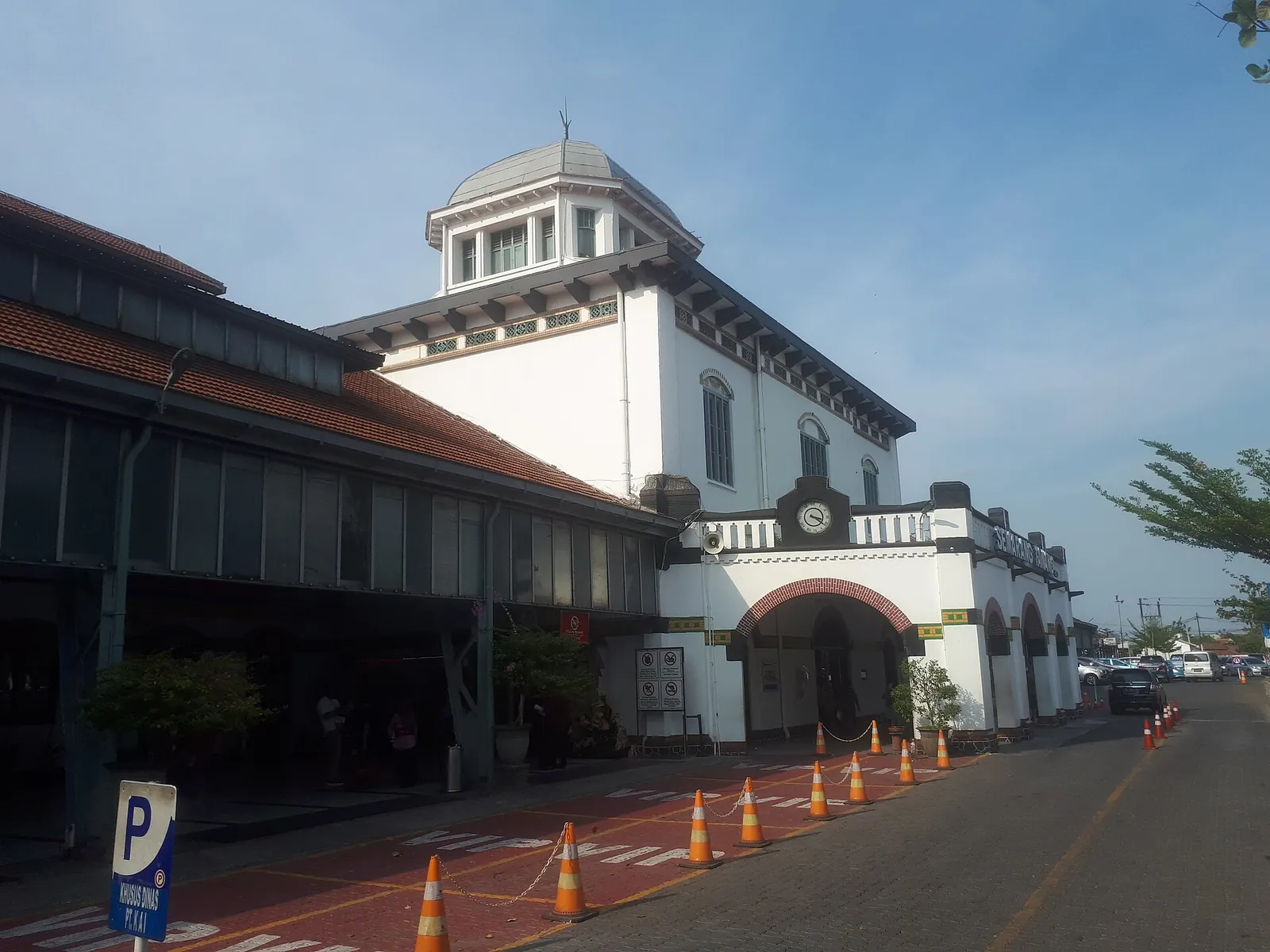
Kota Lama, the old Dutch commercial district by the harbour, is the most atmospheric place to sleep. You can walk out to Gereja Blenduk at sunrise before the heat, and Semarang Tawang, the city's historic railway station, sits on the northern edge of the quarter, which makes it the easy choice if you arrive or leave by train. The trade-off is that the area is separate from the newer residential and shopping districts, so most other sights mean a ride.
Simpang Lima, the big roundabout at the centre of the modern city, and Jalan Pemuda, the avenue that runs up to Lawang Sewu at Tugu Muda, are better for food, malls and moving around. The tourism ministry points out that hotels near Simpang Lima are within walking distance of street-food areas and the Paragon mall, and that Jalan Pemuda is close to Lawang Sewu and a Trans Semarang bus stop. The hilly Candisari area to the south is quieter and has city views but is further from everything; check the exact hotel location before you book.
Kota Lama and Chinatown: one historic quarter on foot
Since 2020 the old city of Semarang has been a national cultural heritage area made up of four parts: Kauman, the Malay quarter (Kampung Melayu), Chinatown (Pecinan) and the Oudstad, the former Dutch district. The Oudstad grew up on the site of a five-bastion VOC fort; after the walls came down in 1824 it filled with offices, warehouses, banks and consulates. It is on UNESCO's World Heritage Tentative List, and the provincial tourism office says its pedestrian paths make it comfortable to explore on foot.
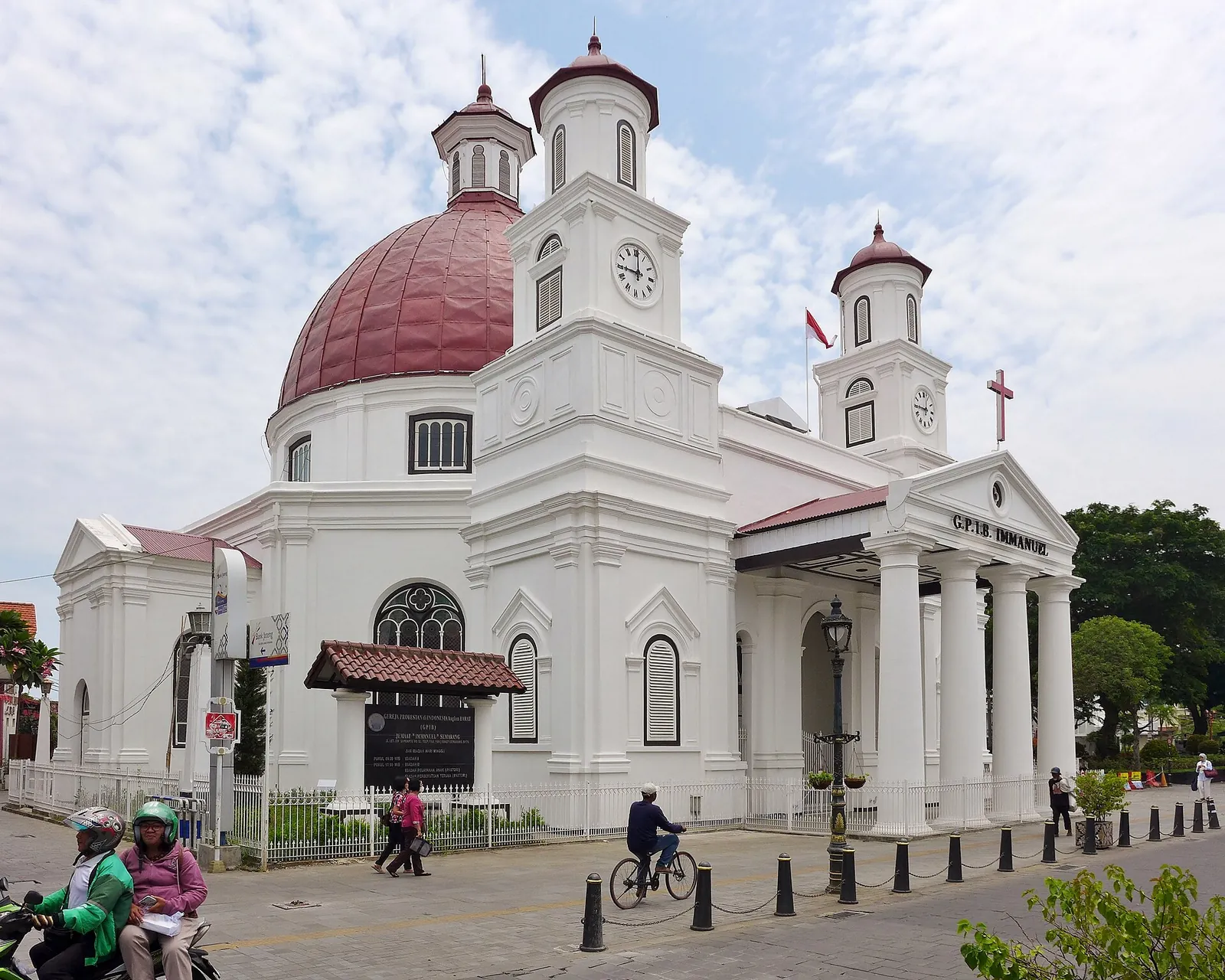
Start at Gereja Blenduk, the domed church that is still a place of worship. It dates from 1753 and was remodelled in 1894 into the current form with its octagonal copper dome and two clock towers. Around it, look for the red-brick Marba building, put up in the mid-19th century as an office and warehouse by a Yemeni merchant, the 1895 Spiegel department store that is now a bistro, the Praoe Lajar factory still making hand-rolled cigarettes, and the Klitikan antique market with its old cameras, coins and household objects. The ministry suggests arriving in the late afternoon for softer light and less heat; ontel bicycles can be rented around Taman Srigunting, and on weekend nights Jalan Letjen Suprapto becomes a car-free street. Carry small notes for parking, entry tickets and snacks.
Chinatown lies in the alleys of the Kranggan area: Gang Pinggir, Gang Lombok, Gang Warung and Gang Baru, with shrines, Chinese pharmacies and food stalls. Gang Lombok, beside the Tay Kak Sie temple, is the best-known street for lumpia. On Friday, Saturday and Sunday evenings Gang Warung turns into Pasar Semawis, a night market that was set up in 2004 to mark 600 years since Zheng He's first expedition; when we checked on 2026-10-03, the tourism ministry gave its hours as 18:00 to 23:00 on those three nights and said it gets busy from about 18:00. Schedule your Old Town walk for a weekend afternoon if you can, so it runs straight into dinner here.
- Gereja Blenduk: an active church; dress modestly and avoid service times if you want to look inside.
- Tawang station: one of Indonesia's oldest working stations, at the northern side of the Old Town; worth a look even if you are not catching a train.
- Masjid Layur (Kampung Melayu): a riverside mosque whose tower began as the old harbour's lighthouse; cover arms and legs if you visit.
Make time for the local food
What to eat and where to look
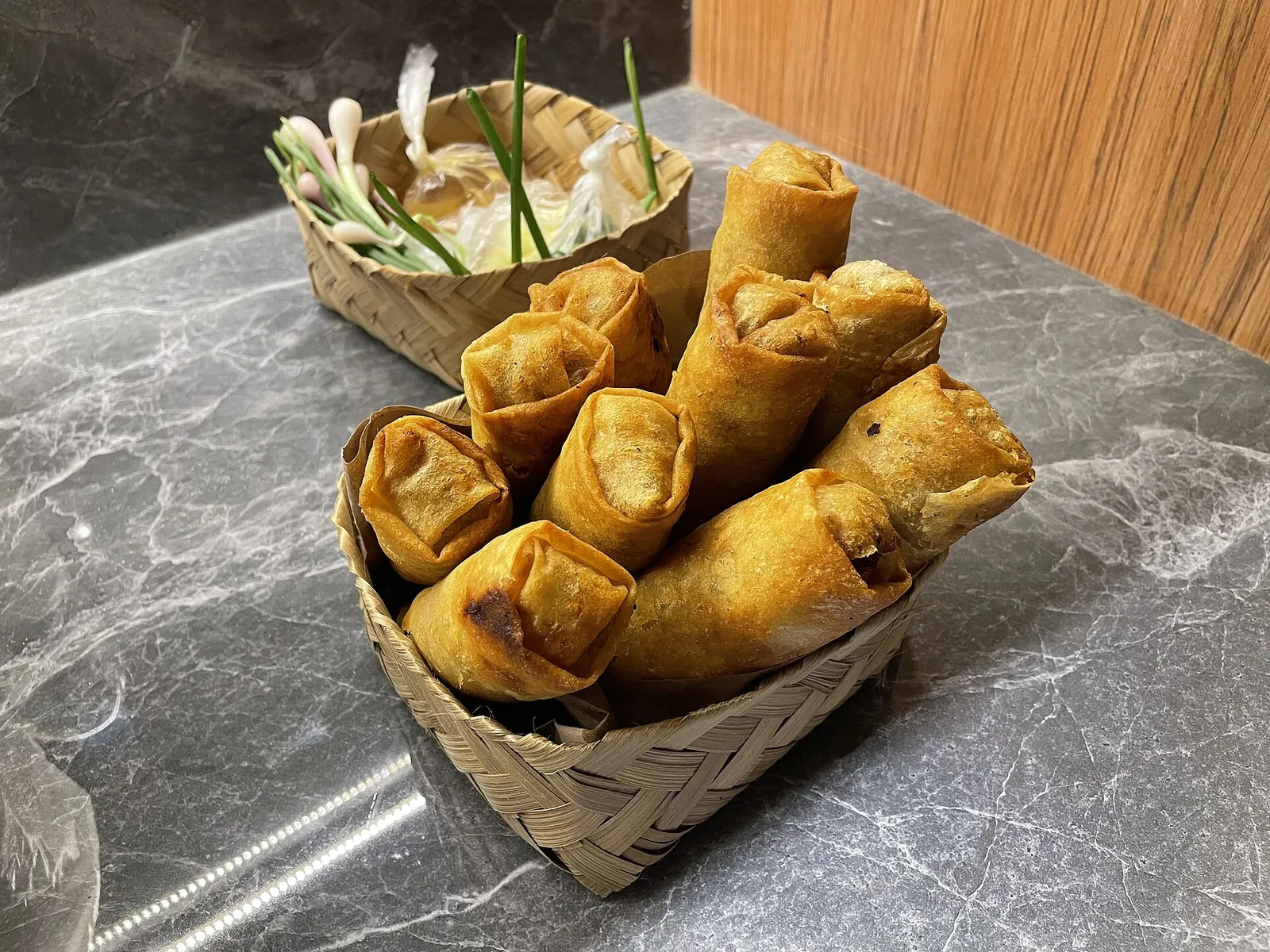
Lumpia Semarang
The city's signature spring roll, a Chinese-Javanese snack filled with bamboo shoots, egg and prawn or chicken. It comes either fried or soft and fresh, with a thick sweet-savoury brown sauce, spring onions and small green chillies.
- Where to look
- Gang Lombok beside the Tay Kak Sie temple in Chinatown; the provincial tourism office also lists shops on Jalan Mataram, Jalan Gajah Mada, Jalan Pandanaran and Jalan Pemuda.
- Fit it into your day
- Eat one or two fresh in Chinatown as a snack before dinner; buy a box to take away on your last day.
Contains shellfish and egg. As a take-home gift it keeps for only about a day, so do not pack it for a long journey.
Tahu gimbal
Fried tofu, rice cake (lontong), bean sprouts, a fried egg, raw shredded cabbage and gimbal — crisp prawn fritters — all doused in a peanut sauce made with petis, a dark prawn paste.
- Where to look
- Stalls around Simpang Lima, Jalan Menteri Supeno and Taman Indonesia Kaya.
- Fit it into your day
- A filling dinner after a sightseeing day if you are staying in the modern centre.
Contains peanuts, prawn and egg; ask for it less spicy if needed.
Semawis night-market spread
Satay, fried rice, noodles, soups, desserts and Semarang specialities such as pisang plenet (grilled pressed banana) and lumpia, with Chinese-Indonesian dishes you rarely see elsewhere on Java, including some made with pork.
- Where to look
- Pasar Semawis on Gang Warung in Chinatown, on Friday, Saturday and Sunday evenings only.
- Fit it into your day
- Make it the dinner of your Old Town day: arrive soon after it opens and graze from several stalls.
Some stalls serve pork; ask if you avoid it. Bring small cash and expect crowds at weekends.
Bandeng presto
Milkfish pressure-cooked until its many fine bones are soft enough to eat, a Semarang speciality also sold grilled, as pepes in banana leaf or as otak-otak.
- Where to look
- The souvenir shops (pusat oleh-oleh) along Jalan Pandanaran.
- Fit it into your day
- Buy it fried with rice for lunch, or vacuum-packed to take away.
Fish; check how long a packed one keeps before you travel with it.
Wingko babat
A dense baked cake of grated coconut and glutinous rice, sold in many brands and flavours such as durian, chocolate, jackfruit and pandan.
- Where to look
- Jalan Pandanaran souvenir shops, Tawang and Poncol stations, and a wingko shop on Jalan Cendrawasih in Kota Lama.
- Fit it into your day
- A snack for the train or a gift to take home.
Sweet and filling; flavoured versions may contain dairy.
Lawang Sewu and Sam Poo Kong: the two big sights
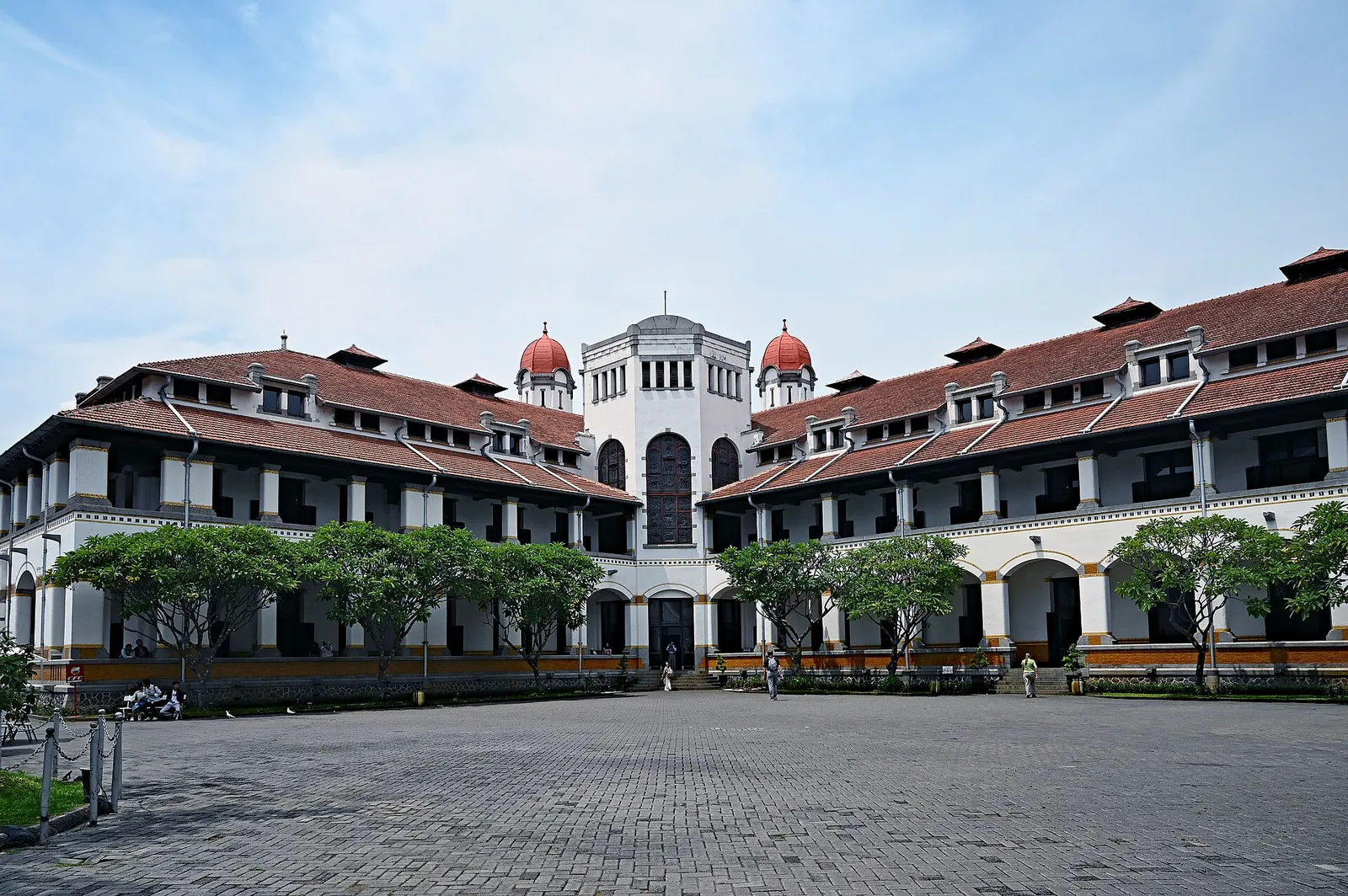
Lawang Sewu, "a thousand doors" in Javanese, stands at Tugu Muda on Jalan Pemuda. It was built from 1903 and opened on 1 July 1907 as the headquarters of the Dutch-era railway company Nederlandsch-Indische Spoorweg Maatschappij, designed by Jacob F. Klinkhamer and B.J. Quendag. Its later history is darker: the Japanese army used the basement of one building as a prison in 1942, and in 1945 the complex was at the centre of the five-day battle of Semarang, which is commemorated by a monument in the yard. Today the main buildings, the underground rooms and exhibition spaces are open to visitors. The ministry's own guidance is to check opening hours before you go; we found no current official timetable or ticket price we could read, so we do not give one.
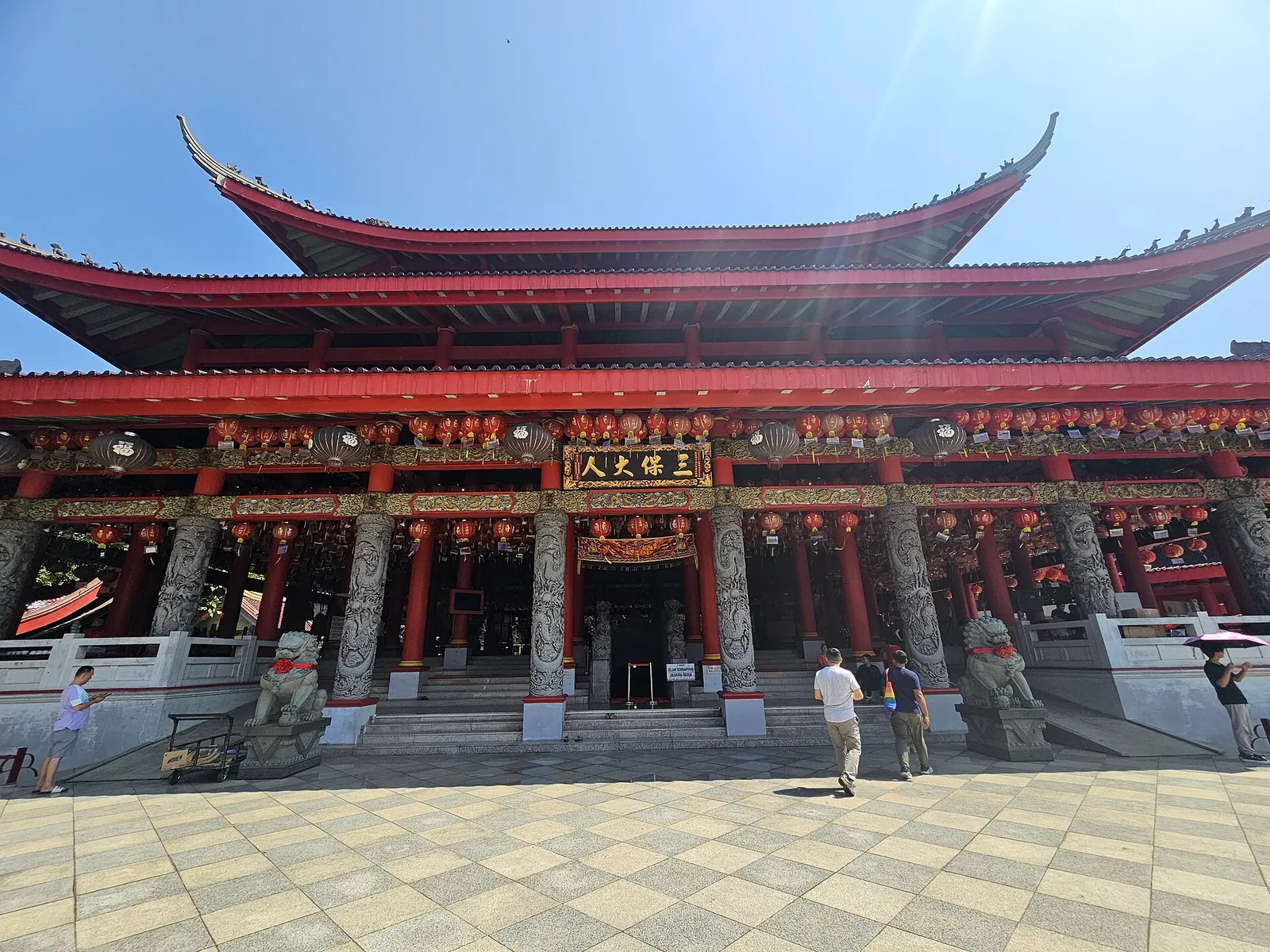
Sam Poo Kong, also called Gedung Batu, honours Admiral Zheng He (Cheng Ho), the Ming-dynasty Muslim explorer said to have landed here in the 15th century. It is on Jalan Simongan in West Semarang, about 3 km south-west of Simpang Lima, so take a taxi. The complex covers 3.2 hectares, with the red, triple-roofed main temple and several smaller shrines, and is used for worship by Buddhists, Taoists and Muslims; the original cave temple collapsed in a landslide in 1704 and was rebuilt about 20 years later. Dress neatly and keep clear of people praying.
If your dates are flexible, the biggest day at Sam Poo Kong is the festival held on the 29th and 30th days of the sixth lunar month to mark Zheng He's arrival, when a statue of the admiral is paraded from Tay Kak Sie temple in Chinatown to Sam Poo Kong. The date moves on the Western calendar each year, so check it before you plan around it.
Getting in and getting around
Semarang is on Java's north-coast rail line, and Tawang station connects the city with Jakarta to the west and Surabaya to the east; trains also run from Bandung and Malang. The tourism ministry puts the train from Jakarta at around five hours and from Yogyakarta at around three and a half; buses run to Yogyakarta and Solo, with the ministry estimating three to four hours from Yogyakarta by road. Check the current KAI timetable and which Semarang station your ticket names before you book a hotel next to one of them.
Domestic airlines fly to Semarang from Jakarta and Surabaya, among other cities; the ministry lists about an hour's flying time from Jakarta. Cruise ships call at Tanjung Emas port and use the city as a base for excursions to Borobudur and Prambanan.
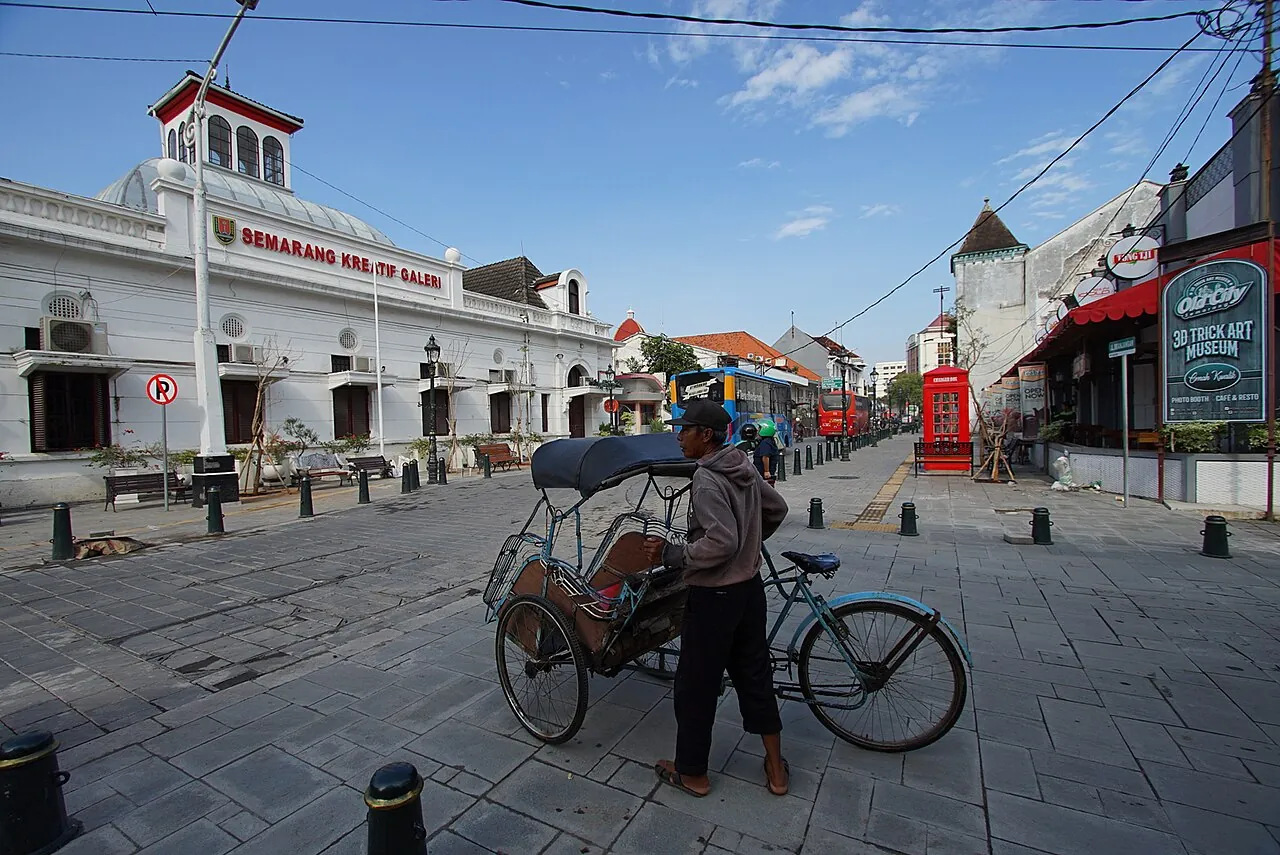
Inside the city, taxis are easy to find and the ministry suggests asking locals before using the small city buses. Trans Semarang runs the city's bus rapid transit network. In Kota Lama, a becak (cycle rickshaw) is a relaxed way to see the streets: agree the fare and the route before you set off.
A workable two-day route
This is an editorial suggestion, not a timetable. Check the opening days of each place you choose, and move the Old Town day to the weekend if you want Semawis for dinner.
- Day 1 — Kota Lama and Chinatown: a slow morning, then Gereja Blenduk, the Marba building and the Old Town streets from mid-afternoon into the evening light; walk on into Chinatown for lumpia on Gang Lombok and, on a Friday to Sunday, dinner at the Semawis night market.
- Day 2 — Lawang Sewu and Sam Poo Kong: Lawang Sewu in the morning while it is cooler, a taxi to Sam Poo Kong before lunch, a rest in the heat of the day, then Pasar Johar's mushroom-columned market hall or Kampung Batik for Semarangan batik, and tahu gimbal for dinner around Simpang Lima.
- Day 3 (optional): a separate trip to the Dieng Plateau or Borobudur, or travel on to Karimunjawa.
Onward trips: Karimunjawa, Dieng and beyond
Karimunjawa, a marine park of 27 islands in the Java Sea, belongs to Jepara Regency, and most sea crossings leave from Kartini harbour in Jepara rather than from Semarang: the tourism ministry lists the Siginjai ferry and the faster Express Bahari boat from there. From Semarang itself it lists Pelni ships from Tanjung Emas and flights from Ahmad Yani airport to Dewadaru airport on Kemujan island. Sea crossings depend on the weather and the season, so build a spare day into the plan and check schedules with the operators shortly before you travel.
The Dieng Plateau, on the border of Wonosobo and Banjarnegara regencies, is a three-to-four-hour drive from Semarang via Temanggung and Wonosobo by the ministry's estimate, by intercity bus or rented car. That makes it an overnight trip rather than a day out. Borobudur is about 105 km from Semarang by road, and Yogyakarta and Solo are both reachable by bus or train if you are continuing through Central Java.
Closer in, Brown Canyon in Rowosari, Tembalang, is a former quarry with eroded brown cliffs that photographers like. The ministry notes that it is still worked on weekdays and is dusty, so go at the weekend and take a mask; Benteng Pendem, the 19th-century Fort Willem I at Ambarawa in Semarang Regency, is another half-day option.
Practical questions
How many days do I need in Semarang?
Two full days cover the Old Town and Chinatown on foot plus Lawang Sewu and Sam Poo Kong without rushing. Add a third day only for a trip out, such as the Dieng Plateau or Borobudur, or the journey to Karimunjawa.
Is Semarang worth visiting or just a transit stop?
It is worth at least one night. Kota Lama is one of the best-preserved Dutch-era districts in Indonesia and on UNESCO's Tentative List, Chinatown and Sam Poo Kong show the city's Chinese heritage, and the food is distinctive. It is a working city, so plan around neighbourhoods rather than expecting a resort.
When is the Semawis night market open?
Only on Friday, Saturday and Sunday evenings. When we checked on 2026-10-03, the tourism ministry gave the hours as 18:00 to 23:00, on Gang Warung in Chinatown. Plan a weekend night in Semarang if the market matters to you.
Where should I stay in Semarang?
Stay in or next to Kota Lama if the heritage walk and Tawang station are your priorities. Choose Simpang Lima or Jalan Pemuda for street food, malls and shorter rides to Lawang Sewu and Sam Poo Kong.
How do I get from Semarang to Karimunjawa?
Most crossings leave from Kartini harbour in Jepara (the Siginjai ferry and the Express Bahari fast boat). The tourism ministry also lists Pelni ships from Tanjung Emas in Semarang and flights from Ahmad Yani airport to Dewadaru on Kemujan island. Check current schedules with the operators, and keep a buffer day for weather.
Is there pork food in Semarang?
Yes, in Chinatown. The tourism ministry notes that several stalls at the Semawis market serve pork dishes, which is unusual on Java. Ask before ordering if you avoid pork, and look for halal signs elsewhere.
Sources and checks before you travel
Reference sources for the version dated 3 October 2026. Confirm opening times, access, transport and conditions for your travel dates.
- Indonesia Travel (Ministry of Tourism): Semarang ↗ — opens in a new tab
- Indonesia Travel: 12 best attractions in Semarang Old Town ↗ — opens in a new tab
- Indonesia Travel: Semarang Old Town (the Oudstad) ↗ — opens in a new tab
- Indonesia Travel: Semarang attractions not to be missed ↗ — opens in a new tab
- Indonesia Travel: Sam Poo Kong Temple ↗ — opens in a new tab
- Indonesia Travel: historic places in Semarang (Indonesian) ↗ — opens in a new tab
- Visit Jawa Tengah (provincial tourism office): Kota Lama Semarang ↗ — opens in a new tab
- Visit Jawa Tengah: Lawang Sewu ↗ — opens in a new tab
- Indonesia Travel: the springroll of Chinatown in Semarang ↗ — opens in a new tab
- Visit Jawa Tengah: lumpia ↗ — opens in a new tab
- Visit Jawa Tengah: tahu gimbal ↗ — opens in a new tab
- Visit Jawa Tengah: bandeng presto ↗ — opens in a new tab
- Visit Jawa Tengah: wingko babat ↗ — opens in a new tab
- Indonesia Travel: Discover Semarang's unique views, museums, seafood and cafés ↗ — opens in a new tab
- Indonesia Travel: budget hotels in Semarang ↗ — opens in a new tab
- Indonesia Travel: Karimunjawa ↗ — opens in a new tab
- Indonesia Travel: Dieng Plateau ↗ — opens in a new tab
- Indonesia Travel: weather, climate and seasons ↗ — opens in a new tab
- Trans Semarang (city BRT operator) ↗ — opens in a new tab
Does this experience fit your route?
A private guided day is the easiest way to link Lawang Sewu, Sam Poo Kong and the Old Town without juggling rides. Check what is included and the pick-up point before you book.
Check dates and details on Viator ↗ — opens in a new tabAffiliate link · Book with ViatorPhoto credits
Gereja Blenduk, the domed Protestant church at the heart of Kota Lama, Semarang
Photograph: Bahnfrend — opens in a new tab · CC BY-SA 4.0 — opens in a new tab
Changes: Resized and converted to WebP; displayed with responsive crops. · Original photograph and licence details ↗ — opens in a new tab
Lawang Sewu, the former Dutch railway company headquarters at Tugu Muda
Photograph: P. Hughes — opens in a new tab · CC BY 4.0 — opens in a new tab
Changes: Resized and converted to WebP; displayed with responsive crops. · Original photograph and licence details ↗ — opens in a new tab
The main temple at Sam Poo Kong (Gedung Batu), Semarang's shrine to Admiral Zheng He
Photograph: Kaliper1 — opens in a new tab · CC BY-SA 4.0 — opens in a new tab
Changes: Resized and converted to WebP; displayed with responsive crops. · Original photograph and licence details ↗ — opens in a new tab
Becak waiting on a pedestrianised street in Semarang Old Town
Photograph: Ivuvisual — opens in a new tab · CC BY-SA 4.0 — opens in a new tab
Changes: Resized and converted to WebP; displayed with responsive crops. · Original photograph and licence details ↗ — opens in a new tab
Lumpia Semarang, the city's bamboo-shoot spring rolls, served fried
Photograph: Candramawa99 — opens in a new tab · CC BY 4.0 — opens in a new tab
Changes: Resized and converted to WebP; displayed with responsive crops. · Original photograph and licence details ↗ — opens in a new tab
Semarang Tawang station, on the northern edge of the Old Town
Photograph: Rizal Febri Ardiansyah — opens in a new tab · CC BY-SA 4.0 — opens in a new tab
Changes: Resized and converted to WebP; displayed with responsive crops. · Original photograph and licence details ↗ — opens in a new tab