Bali · Bali
Sidemen, Bali: rice-valley walks, weaving and where to stay
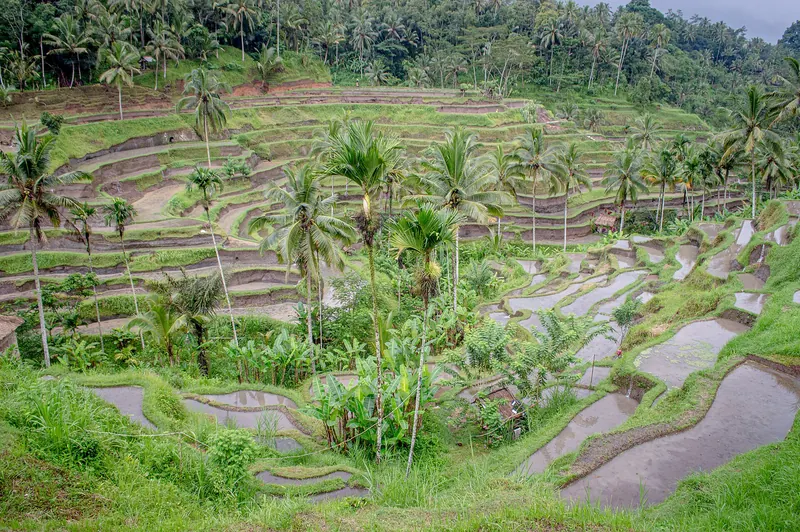
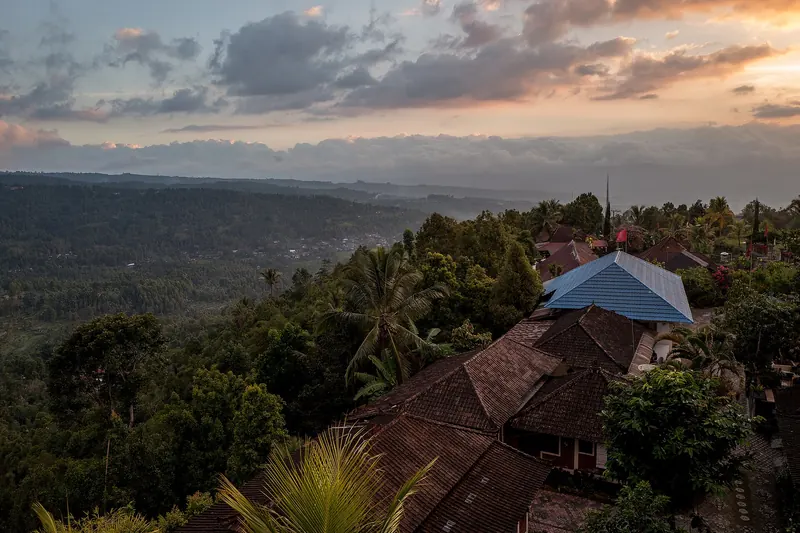
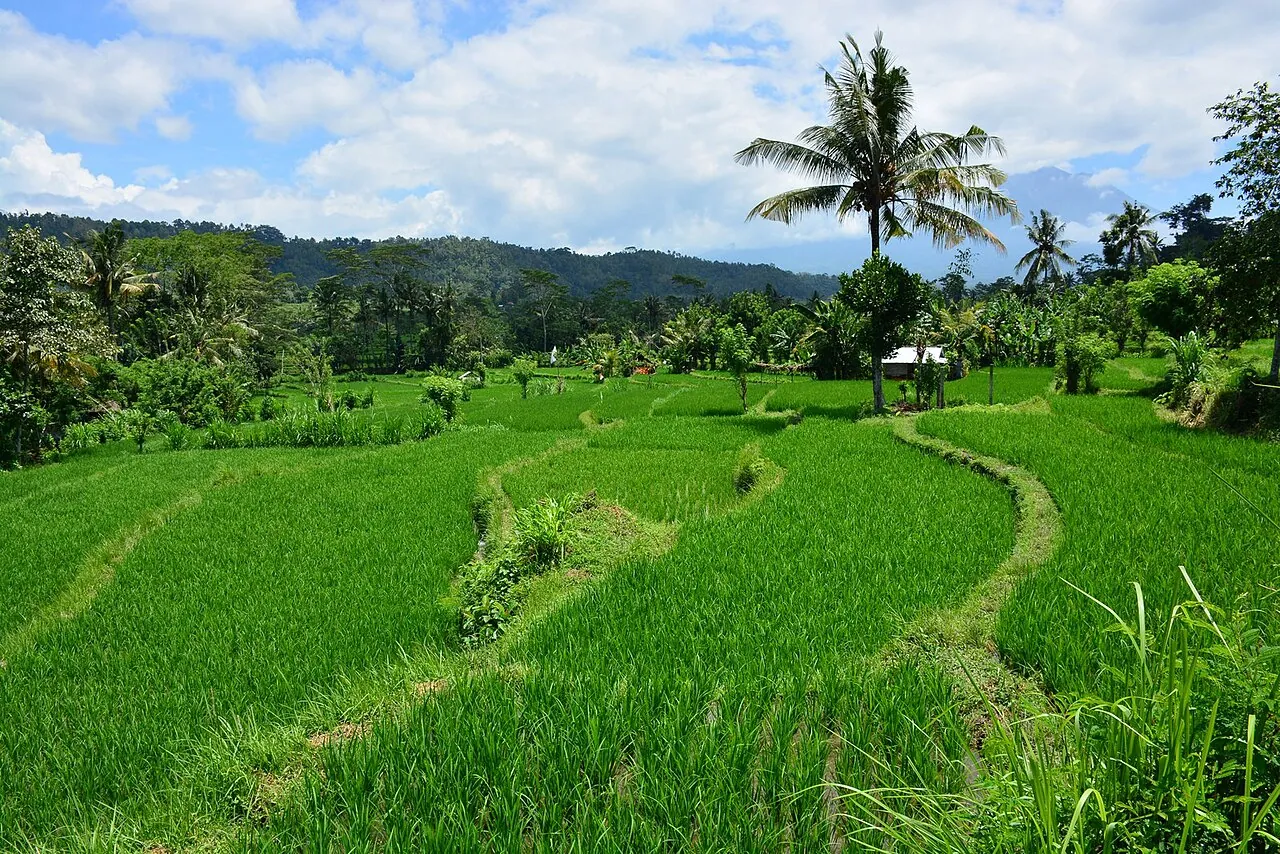
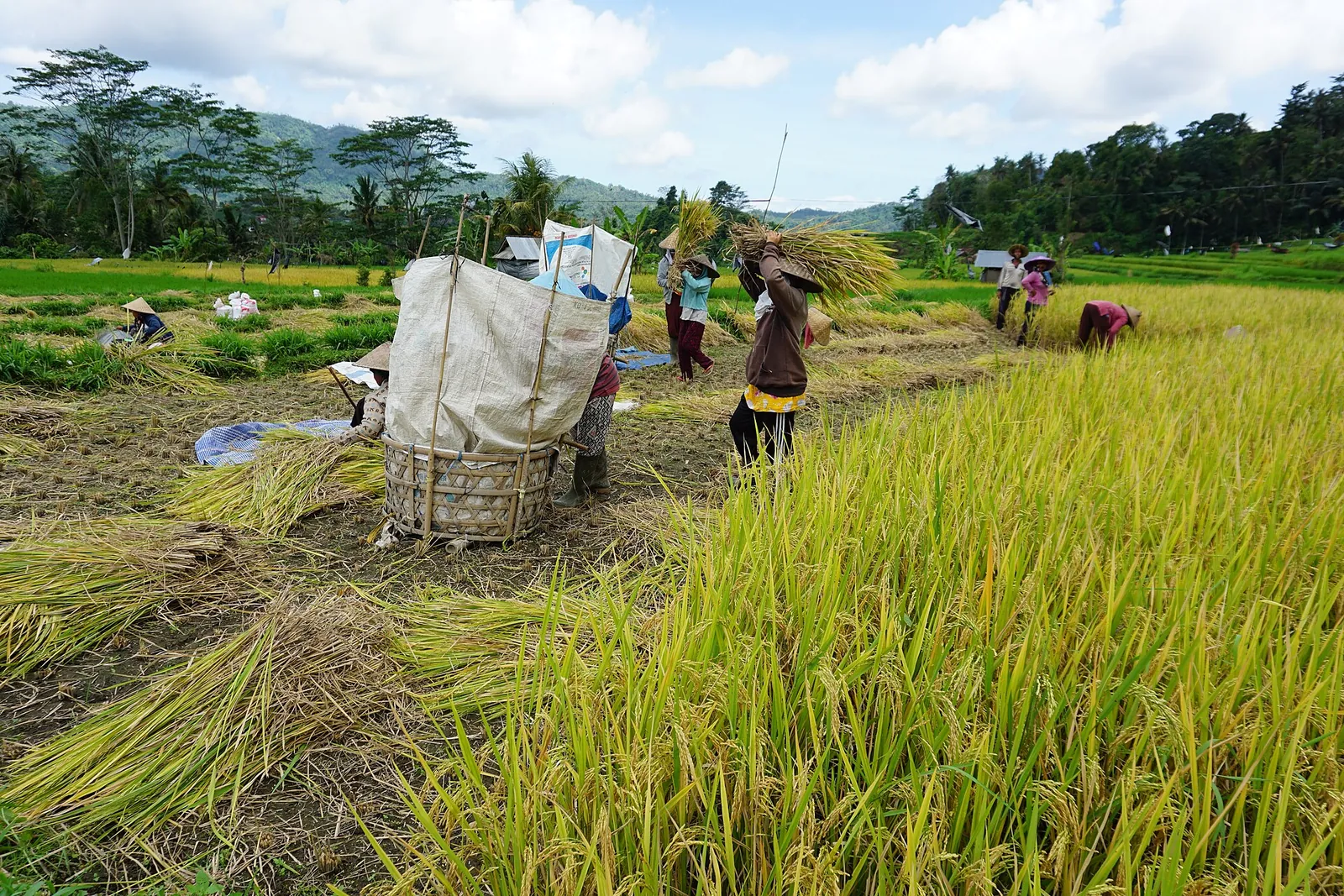
Sidemen is a farming district in Karangasem, East Bali: a valley of rice fields, terraces and hills between two rivers, the Tukad Unda, which carries Mount Agung's lahars down from the mountain, and the Telaga Waja. It is not a resort town. What it offers is fields you can walk through with a village guide, households that still weave endek and songket cloth on hand looms, and Bali's mother temple, Besakih, on the mountain above. It suits travellers who have seen Ubud and want a few quieter days in the countryside.
- Suggested time
- 2–3 nights
- Where to stay
- Sidemen village or Sangkan Gunung in the valley; Ubud if you only come for the day
- Season and timing
- The drier months, roughly April to October, are the Ministry of Tourism's recommended season for East Bali and give the best walking. Outside them, expect rain, muddier field paths and more cloud over the mountain.
The short answer
Give Sidemen two or three nights, not a day trip: the point is to walk the fields early, when it is cool, and to have time to watch weaving without rushing. Sleep in the valley itself, around Sidemen village or in Sangkan Gunung, whose tourism village lists homestays and its own guides. Come by car with a driver, ideally via Ubud. Walk one of the village trekking routes with a local guide, spend a morning with the weavers, and give a separate day to Besakih, or to Mount Agung if you are a strong hiker. If you want restaurants, shops and evening life within walking distance, stay in Ubud and visit Sidemen for a day instead.
Is Sidemen the right base for you?
Sidemen is a *kecamatan*, or district, of Karangasem regency, made up of ten villages, Sidemen itself among them. When the district head set out its potential for the regency, he named three things: farming, livestock, and endek and songket weaving. The Ministry of Tourism's profile of Sangkan Gunung describes the land as rice fields and hills, with the Unda river on one side and the Telaga Waja on the other.
That shapes the stay. A few days in Sidemen are mostly fields, footpaths and weaving, and evenings are quiet. If that is what you are after, it is a calmer alternative to Ubud. If you want a choice of restaurants every night, spas and shopping, base yourself in Ubud and come to Sidemen for the day.
Sleep in the valley rather than on its edges. Sidemen village is where much of the songket and ikat weaving is found. Sangkan Gunung, which borders Muncan to the north, is a registered tourism village whose members include a homestay and food group, local guides and a transport group. Ask your host about drop-offs: the walks and the weavers are spread across several villages.
Walking the valley: village treks, waterfalls and rivers
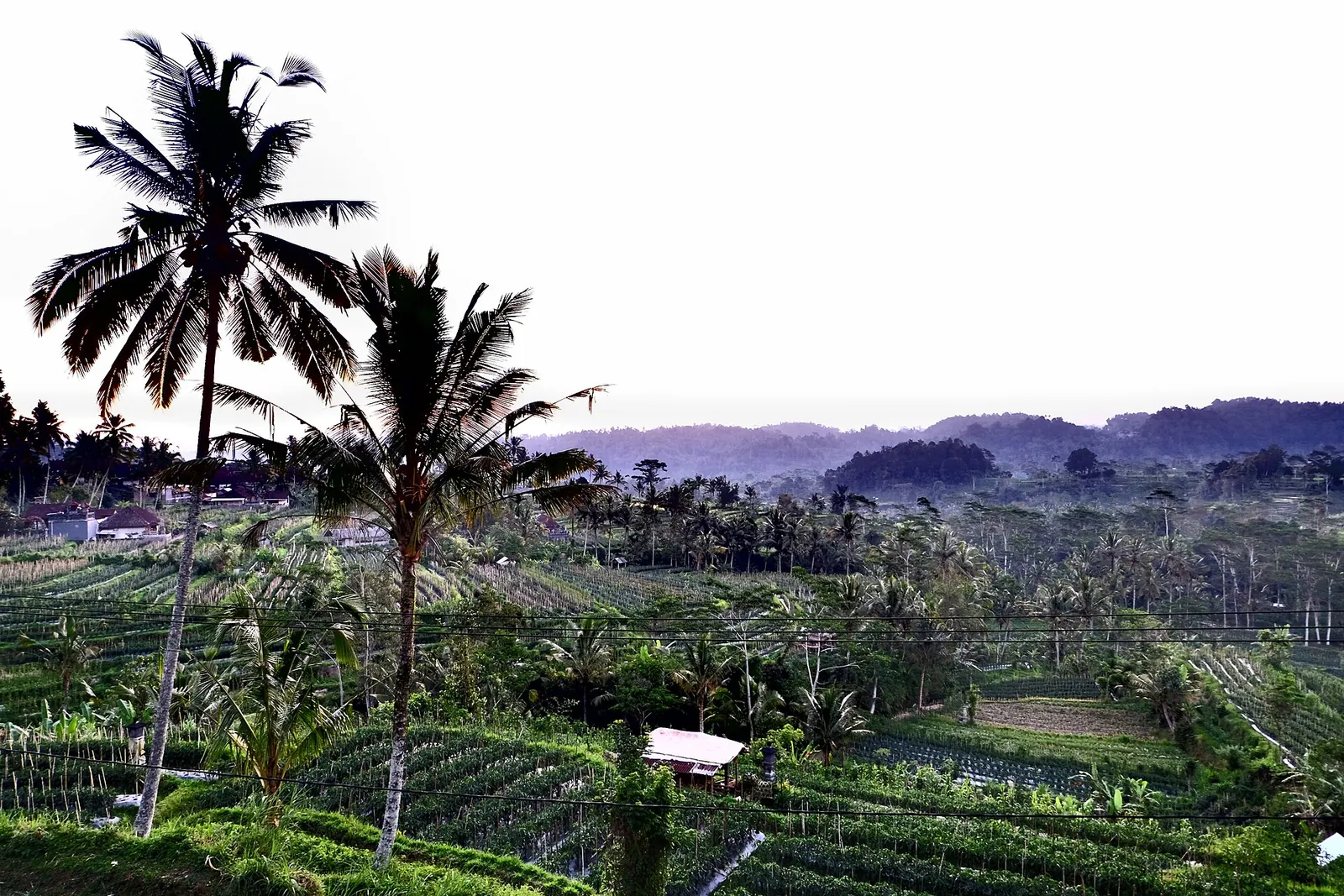
Walking is the main reason to stay. On the Ministry of Tourism's tourism-village network (JADESTA), Desa Wisata Sangkan Gunung lists three trekking routes through the fields and plantations of Banjar Luah: a short one of about 30 minutes, a middle one of about 40 minutes and a long one of about an hour. The village's tourism group, Pokdarwis Pucak Luah Santhi, offers trekking, a swing, photo spots, food and homestays.
The same profile names other things to see on foot around Sangkan Gunung: the Belatuk waterfall, the Goa Tangkid cave, views from Pura Bukit Sangkan Gunung and Pura Petemon, and two *pelukatan* springs, Tirta Suda Mala Semseman and Belatuk Semseman, where Balinese come for ritual purification. These are places of worship first. Ask your guide whether visitors may enter, and dress as you would for a temple.
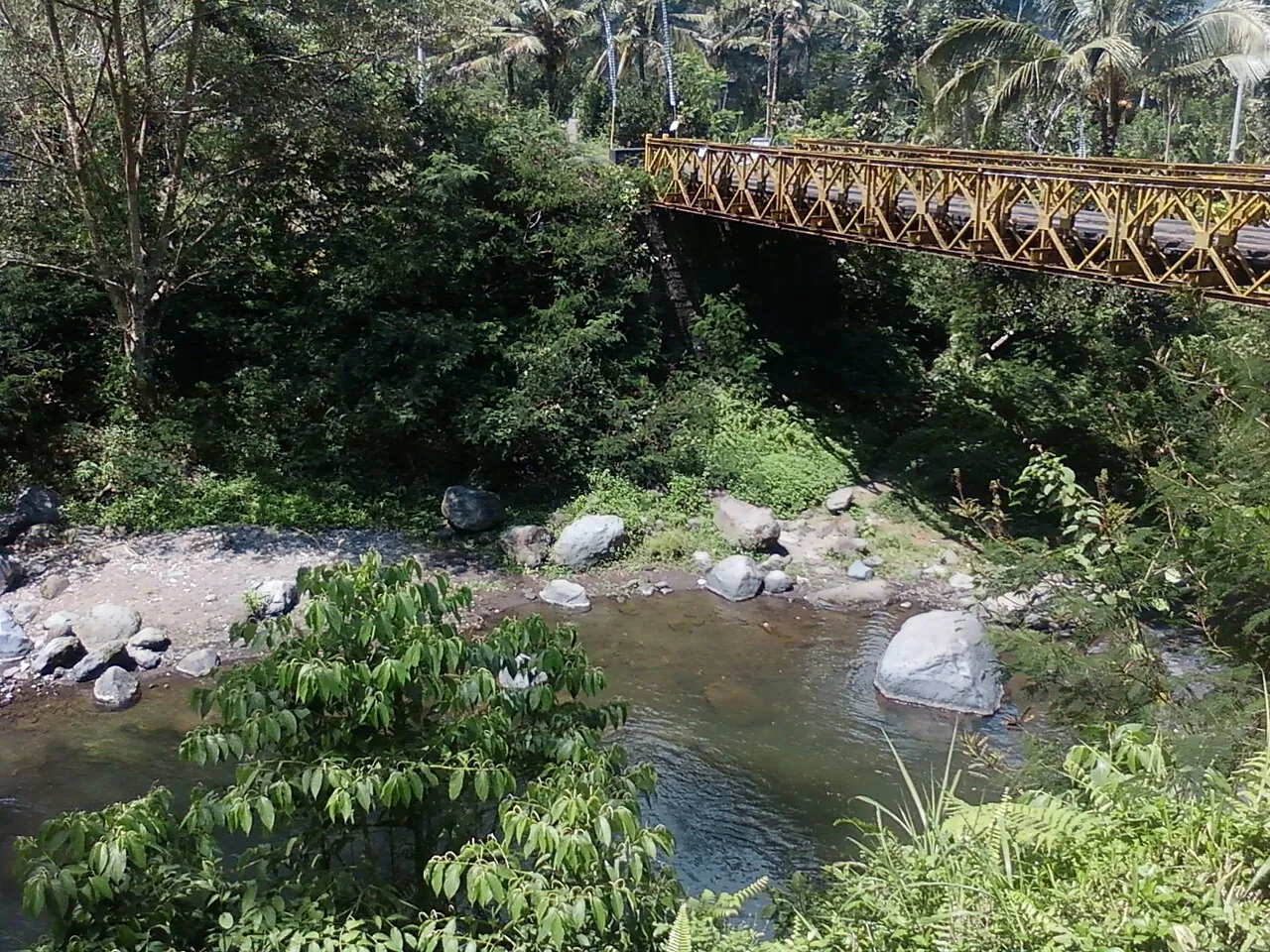
The list also includes rafting on the Telaga Waja, the river on the western side of the village. The Tukad Unda on the eastern side is a different matter: the regency describes it as the channel that carries Mount Agung's cold lahars, the mudflows of volcanic debris, down from the mountain. After heavy rain, keep out of both riverbeds unless a local guide says it is safe.
Go with a guide from the village. The routes cross working fields and irrigation channels, not marked trails, and a guide keeps you on the paths farmers are happy for you to use. Start early, before the heat and the afternoon cloud. In the wet season, wear shoes that can get muddy.
Make time for the local food
What to eat and where to look
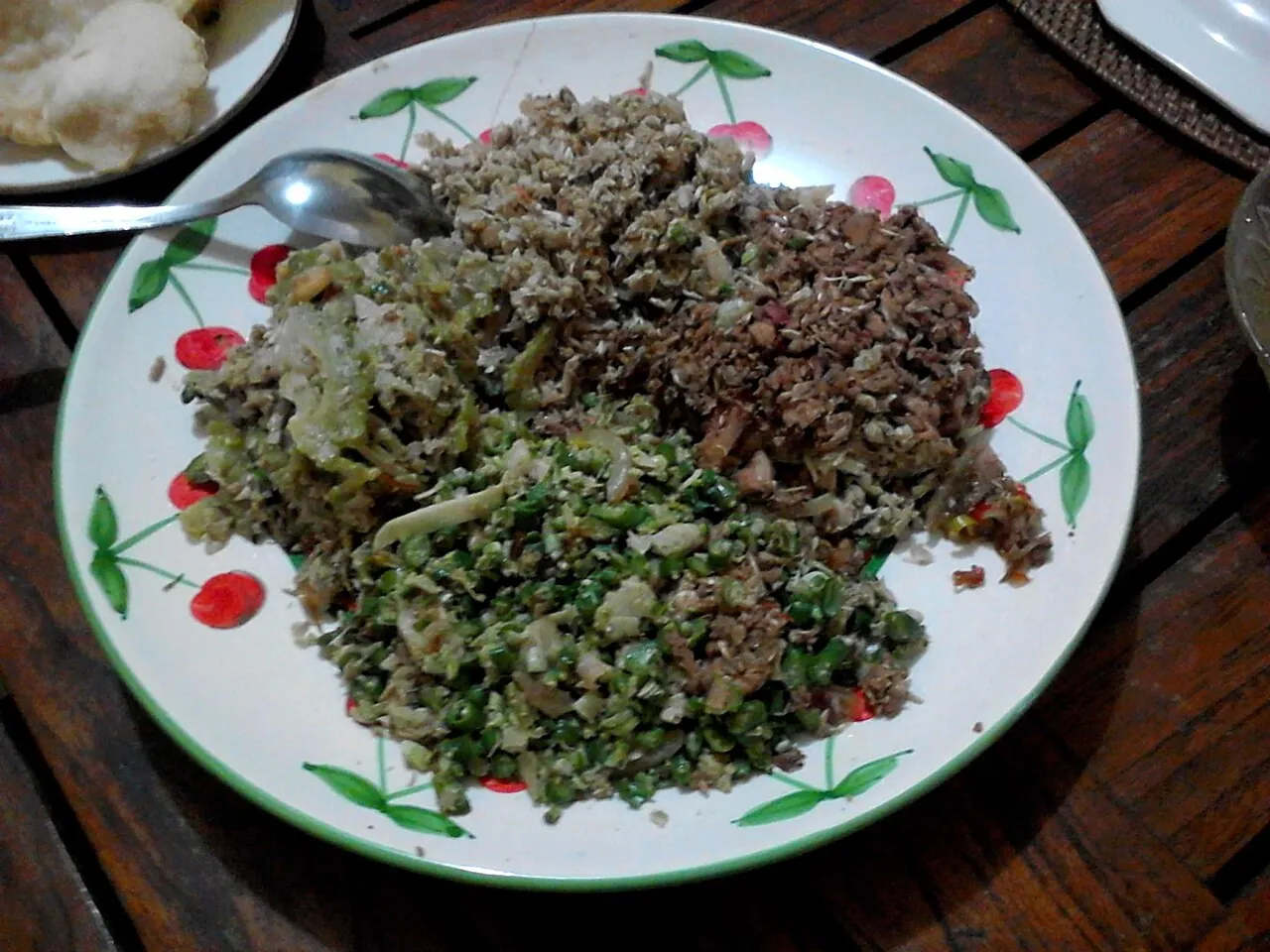
Lawar
Bali's signature mixed dish of finely chopped meat (chicken, pork or sometimes duck), vegetables, grated coconut and a rich spice paste: savoury, spicy and a little sweet. Every part of Bali has its own recipe; lawar merah is coloured with fresh blood, while lawar putih is made without it.
- Where to look
- Warungs serving Balinese food in the valley villages, and at ceremonies if your hosts invite you.
- Fit it into your day
- Lunch, with rice, while it is still fresh and warm.
Ask whether it contains raw blood (lawar merah) or pork if either matters to you, and eat it fresh rather than left standing.
Jukut urab
Boiled vegetables such as long beans, bean sprouts, spinach and water spinach, tossed with grated coconut seasoned with kencur, shrimp paste and bird's-eye chilli. Fresh, savoury and spicy, it usually comes as a side to nasi campur or ayam betutu.
- Where to look
- Village warungs and homestay kitchens; it is part of most Balinese rice plates.
- Fit it into your day
- With any rice meal; it is the easiest vegetable dish to find.
Contains shrimp paste (terasi), so it is not vegetarian unless made without; it can be very hot.
Sate lilit
Minced fish, chicken or pork mixed with bumbu Bali spice paste and coconut, wrapped around bamboo sticks or lemongrass stalks and grilled over charcoal. Inland, pork and chicken versions are more common than fish.
- Where to look
- Warungs and food stalls, especially those grilling over charcoal; also served at temple feasts.
- Fit it into your day
- With rice and sambal matah for dinner, or as a snack on the way back from Besakih.
Ask which meat is used; sambal matah is raw and fiery.
Endek and songket: Sidemen's weaving
Sidemen is one of Bali's best-known weaving areas. Endek is Balinese ikat: the threads are tied and dyed before weaving, so the pattern is already in the yarn. The Ministry of Tourism describes endek as woven on hand looms (ATBM), with geometric, floral and symbolic motifs. It is worn at temple ceremonies such as Galungan and Kuningan, at weddings and, in simpler designs, every day, and a single cloth can take weeks. Songket is woven with gold or coloured thread worked into the cloth, and is kept for important occasions.
Weaving is spread across the valley rather than in one craft village. Regency statements name an endek weaving group in Telaga Tawang, and Sangkan Gunung lists its own songket group among its tourism members. In 2019 Karangasem regency signed an agreement with the industry ministry's crafts and batik centre in Yogyakarta (BBKB) to raise the quality of Tenun Endek Sidemen. The centre's team had already visited the workshops where the cloth is made.
The best way to see it is to ask your host to arrange a visit to a working loom or a small workshop, where you can follow the tying, dyeing and weaving. Ask before photographing weavers in their homes. If you buy, buying directly from the weaver or a village workshop keeps the money in the valley.
Besakih and Mount Agung from Sidemen
Pura Besakih, the largest and holiest temple complex in Bali, lies in Besakih village in Rendang district, on the south-west slope of Mount Agung at about 1,000 metres. The Ministry of Tourism counts 23 temples in the complex, centred on Pura Penataran Agung, and puts it about two hours' drive from Ubud. Both are in Karangasem regency, so a morning at Besakih can be combined with a stay in Sidemen; ask your host or driver how long the drive takes. The ministry recommends coming in the morning, when it is cooler and calmer. All visitors must wear a sarong (kamen) and sash, which can be rented at the entrance. When we checked on 3 October 2026, the ministry's page listed the entrance ticket at Rp60,000–100,000, including sarong and sash rental. The great annual ceremony, Ida Bhatara Turun Kabeh, falls around March or April.
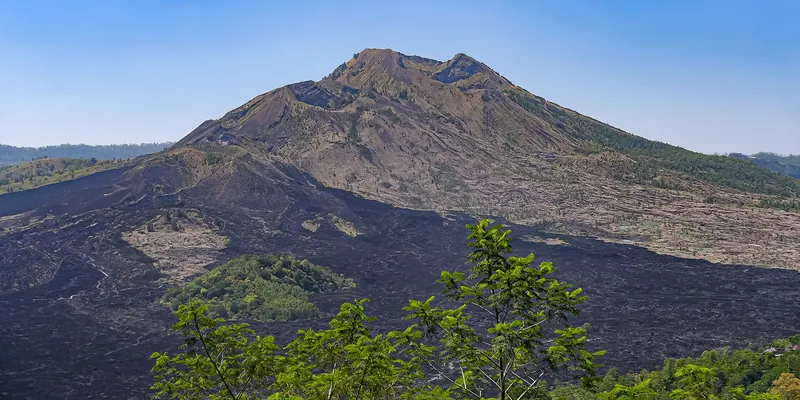
Mount Agung is Bali's sacred mountain and an active volcano. The Ministry of Tourism describes three climbing routes. From Pura Pasar Agung on the south side, the climb takes about 3–4 hours to the southern crater rim at 2,907 metres. From Besakih, it takes about 6–7 hours to the highest peak at 3,142 metres. The third route, from Budakeling, is less used. These are long, steep climbs on volcanic rock: go with an experienced local guide, and treat it as a separate expedition rather than an add-on to a gentle valley stay.
When we checked on 3 October 2026, Indonesia's volcanology agency (PVMBG, on MAGMA Indonesia) listed Agung at Level I (Normal). Check again before you go: a higher alert level brings exclusion zones around the crater, and the Tukad Unda below Sidemen is one of the channels lahars follow.
Getting to Sidemen and moving around
The gateway is Bali's only international airport, I Gusti Ngurah Rai, on the south coast about 13 km south of Denpasar. We could not find an official public-transport route to Sidemen, so plan on a car with a driver: a pre-booked transfer, or a ride arranged by your accommodation. The official airport taxi counter is outside the arrivals hall. Breaking the trip in Ubud for a night or two shortens the last leg and gives you two very different sides of Bali.
Inside the valley, the villages are spread out, so most visitors rely on their hosts, a hired driver or Sangkan Gunung's own transport group to get between them.
Two island-wide rules apply. When we checked on 3 October 2026, the Ministry of Tourism's Bali regulations page listed a mandatory levy of IDR 150,000 for foreign tourists, payable online through the official Love Bali system or at counters at Ngurah Rai airport and Benoa port. On Nyepi, the Day of Silence in March or April, Bali shuts down for 24 hours and the airport closes, so do not plan to arrive or leave that day.
Three slow days in Sidemen
An editorial suggestion, not a timetable. Arrange the trek, the weaving visit and the Besakih trip through your host or a local guide.
- Day 1: drive up from Ubud or the airport, settle in, and take an evening stroll along the field paths near your accommodation.
- Day 2: an early trek around Sangkan Gunung (choose the 30-minute, 40-minute or one-hour route, perhaps with the Belatuk waterfall), then a slow lunch and an afternoon at a weaver's loom.
- Day 3: Pura Besakih first thing, then back to the valley, or on east to Amed, Tirta Gangga or Tenganan.
Practical questions
How many days do I need in Sidemen?
Two or three nights. That gives you one morning for a village trek, time with the weavers, and a separate morning for Besakih. A day trip from Ubud is possible, but it makes for a long day with little time to walk.
Is Sidemen better than Ubud?
It is different. Sidemen is a farming and weaving district of rice fields, rivers and village walks, with quiet evenings. Ubud is a much busier town with far more places to eat and stay. Many travellers do both: Ubud first, then a few slow days in Sidemen.
Can I go trekking in Sidemen?
Yes. The Ministry of Tourism's village network lists three trekking routes at Sangkan Gunung, of about 30 minutes, 40 minutes and an hour, through fields and plantations. The village also lists sights such as the Belatuk waterfall. Go with a local guide and start early.
Where can I see endek and songket weaving?
Across the valley rather than in one place: the regency names an endek group in Telaga Tawang, and Sangkan Gunung has a songket group. Ask your host to arrange a visit to a working loom, and ask before taking photos.
Is it safe to stay near Mount Agung?
When we checked on 3 October 2026, MAGMA Indonesia listed Agung at Level I (Normal). Check the alert level again before you travel, and keep out of the Tukad Unda riverbed after heavy rain, since it is a lahar channel.
How do I get to Sidemen from the airport?
By car with a driver; we could not find an official public-transport route. Arrange a transfer through your accommodation or a reputable driver, and consider a night or two in Ubud on the way.
Sources and checks before you travel
Reference sources for the version dated 3 October 2026. Confirm opening times, access, transport and conditions for your travel dates.
- JADESTA (Ministry of Tourism tourism-village network): Desa Wisata Sangkan Gunung ↗ — opens in a new tab
- ANTARA Bali: Karangasem regency and BBKB Yogyakarta to develop Tenun Endek Sidemen (2019) ↗ — opens in a new tab
- ANTARA Bali: Karangasem regency socialisation at Tebola, Sidemen ↗ — opens in a new tab
- ANTARA Bali: Karangasem promotes the creative economy ↗ — opens in a new tab
- ANTARA: Songket and ikat weaving in Sidemen village, Karangasem ↗ — opens in a new tab
- ANTARA Bali: Deputy regent checks the Tukad Unda channel in Sangkan Gunung (2021) ↗ — opens in a new tab
- Kecamatan Sidemen (Karangasem regency official website) ↗ — opens in a new tab
- Wikipedia (Indonesian): Sidemen, Karangasem ↗ — opens in a new tab
- Indonesia Travel (Ministry of Tourism): Tenun Endek ↗ — opens in a new tab
- Indonesia Travel (Ministry of Tourism): Visiting Pura Besakih ↗ — opens in a new tab
- Indonesia Travel (Ministry of Tourism): Gunung Agung ↗ — opens in a new tab
- MAGMA Indonesia (PVMBG): volcano activity levels ↗ — opens in a new tab
- Indonesia Travel (Ministry of Tourism): activities at Amed Beach, East Bali ↗ — opens in a new tab
- Indonesia Travel (Ministry of Tourism): Lawar ↗ — opens in a new tab
- Indonesia Travel (Ministry of Tourism): Jukut Urab ↗ — opens in a new tab
- Indonesia Travel (Ministry of Tourism): Sate Lilit ↗ — opens in a new tab
- Indonesia Travel (Ministry of Tourism): Bali regulations ↗ — opens in a new tab
- Indonesia Travel (Ministry of Tourism): Nyepi frequently asked questions ↗ — opens in a new tab
- Indonesia Travel (Ministry of Tourism): Ngurah Rai Airport ↗ — opens in a new tab
- Indonesia Travel (Ministry of Tourism): Kain songket ↗ — opens in a new tab
- Indonesia Travel (Ministry of Tourism): Kain tenun ikat ↗ — opens in a new tab
Does this experience fit your route?
For Sidemen itself, a village guide arranged through your host is usually the best way to walk the valley. For the drive up from the south, or a day that combines Sidemen with Besakih, a private driver from the Bali listings is the simplest option: check the route and inclusions before you book.
Browse relevant experiences on Viator ↗ — opens in a new tabAffiliate link · Book with ViatorPhoto credits
Rice fields and coconut palms in the Sidemen valley
Photograph: Paul Arps from The Netherlands — opens in a new tab · CC BY 2.0 — opens in a new tab
Changes: Resized and converted to WebP; displayed with responsive crops. · Original photograph and licence details ↗ — opens in a new tab
Terraced farmland in Sidemen, Karangasem
Photograph: Adhesaiful — opens in a new tab · CC BY-SA 4.0 — opens in a new tab
Changes: Resized and converted to WebP; displayed with responsive crops. · Original photograph and licence details ↗ — opens in a new tab
Rice harvest in Sidemen
Photograph: rahmat nugroho — opens in a new tab · CC BY-SA 4.0 — opens in a new tab
Changes: Resized and converted to WebP; displayed with responsive crops. · Original photograph and licence details ↗ — opens in a new tab
The Tukad Unda river at Sidemen
Photograph: Adimelali Bali — opens in a new tab · CC BY-SA 3.0 — opens in a new tab
Changes: Resized and converted to WebP; displayed with responsive crops. · Original photograph and licence details ↗ — opens in a new tab
Lawar, a Balinese mixed dish of chopped meat, vegetables and coconut
Photograph: ちちゃ — opens in a new tab · CC BY 2.1 jp — opens in a new tab
Changes: Resized and converted to WebP; displayed with responsive crops. · Original photograph and licence details ↗ — opens in a new tab