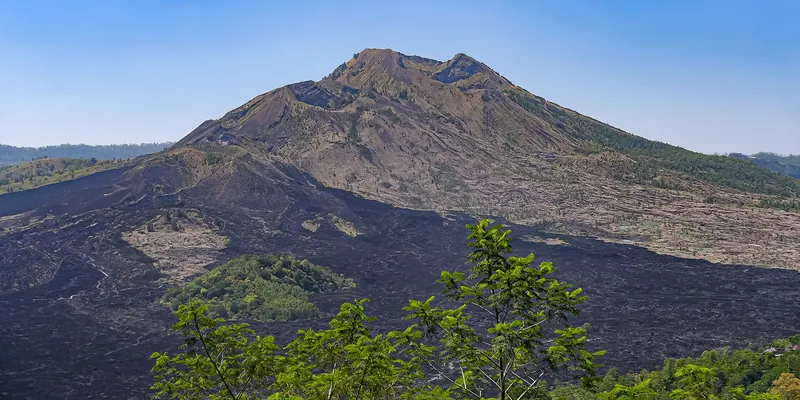
Bali · Bali
Munduk travel guide: twin lakes, waterfalls, clove hills and Jatiluwih
Munduk is a hill village in Buleleng, in Bali's central highlands, where the road from Bedugul climbs past the lakes and then drops west through clove and coffee gardens towards the north coast. It suits travellers who want cool air, long walks and quiet evenings more than beaches or nightlife. The village is the natural base for Lake Tamblingan and the waterfalls in the valleys below it, and it sits within a morning's drive of Pura Ulun Danu Beratan and the UNESCO-listed rice terraces of Jatiluwih.
- Suggested time
- 2–3 nights
- Where to stay
- Munduk village for walking and the lakes; Candikuning by Lake Beratan only if the temple and botanic garden are your focus
- Season and timing
- The Ministry of Tourism gives April to October as Bali's dry season and November to March as the wet season. The highlands are noticeably cooler than the coast, often misty, and evenings can be chilly; the waterfalls run fullest in the wet months, when paths are also at their most slippery.
The short answer
Stay two nights, three if you want a full day on foot. Sleep in Munduk itself rather than by Lake Beratan: the village is closer to Lake Tamblingan and the waterfall trails, and its homestays and lodges are the reason to come. Drive up from the south with a stop at Jatiluwih, see Ulun Danu Beratan on the way through Bedugul, then give Munduk one unhurried day for a waterfall walk through the plantations and a dugout-canoe trip on Lake Tamblingan. Leave north to Lovina or Pemuteran, or back south to Ubud. Plan on a car and driver: public transport is impractical for sightseeing up here.
Munduk, Bedugul or Jatiluwih: where to sleep
The highlands have three possible bases, and they suit different trips. Munduk, in Banjar district of Buleleng Regency, is a working farm village on a ridge west of Lake Tamblingan. The Ministry of Tourism's tourism-village network (Jadesta) describes plantations of cloves, coffee, vanilla and cocoa on its northern side, green valleys with several waterfalls between about 10 and 56 metres high, and rice fields to the south with Mount Batukaru, Mount Lesung and Mount Sanghyang behind them. The same listing says accommodation ranges from starred hotels to homestays, and names more than a dozen family homestays in the village.
Candikuning, on the shore of Lake Beratan in Tabanan, is the busier Bedugul side, with the temple, the botanic garden and the market within a short distance. It works if you want those sights at opening time, but it is a crossroads on the main Denpasar–Singaraja road rather than a place to walk from your door. Jatiluwih, lower down on the slopes of Batukaru, is a day stop for most visitors; stay there only if the rice terraces are your main reason to come.
Whichever you choose, expect cool nights. Many highland rooms have no air-conditioning because they do not need it, and some have no heating either: check that there are warm blankets and hot water before you book.
A day on foot: waterfalls, cloves and coffee
Munduk's best day is a walk, and the village has organised it around guided routes that start from your lodging. When we checked on 2026-10-03, the Jadesta listing for Desa Wisata Munduk described a Red Coral Waterfall trek of about two hours, rated medium, that goes through clove, coffee, vanilla and avocado gardens to the falls, with two more waterfalls nearby and a different route back. It also listed a three-hour subak trek through the rice fields of the Suradadi, Lampah and Sanda subak in the village valley, ending with a break at the Tibuan Sanda river and a return through the centre of the village. Both listed starting prices (Rp 200,000 and Rp 300,000) — confirm with the village or your homestay, since these are not fixed tariffs.
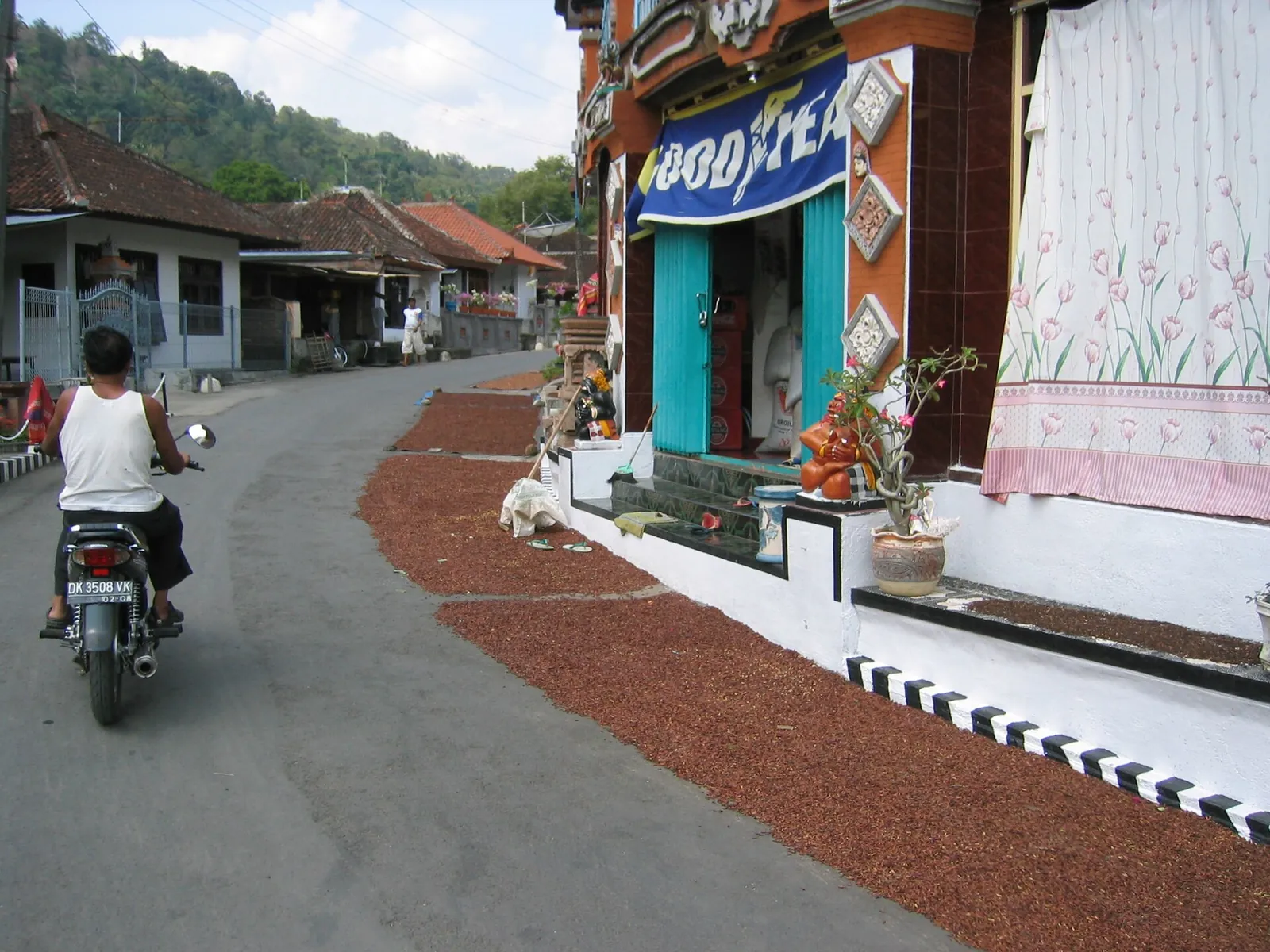
The plantations are the backdrop to all of it. According to the village's own Jadesta page on coffee, Munduk was a coffee-growing area under Dutch rule, at its height from the 1920s until about 1970, when falling coffee prices led farmers to replace most of the coffee with cloves. Coffee has since come back, and homestays offer coffee-processing sessions from picking to grinding. You may also see clove leaves being distilled into essential oil by small local producers, and in the harvest season cloves spread out to dry beside the road.
The ministry also points to the easy-to-reach Munduk Waterfall and, on the Bedugul side, the twin falls of Banyumala. Wear shoes with grip: the paths drop steeply into the valleys and are often wet. A local guide is worth it for the longer routes through the plantations.
Make time for the local food
What to eat and where to look
Munduk coffee
Coffee has grown here since the Dutch period, and after years of cloves it is back on the hillsides. Homestays and small producers roast and grind their own beans, and many will show you the process from picking to powder.
- Where to look
- Homestays, lodges and roadside coffee shops in and around Munduk village; the village's Jadesta page lists a coffee-processing session.
- Fit it into your day
- A cup with breakfast on the veranda, and a tasting on the afternoon you come back from a walk.
If you are buying beans to take home, ask whether they are grown in Munduk itself.
Catur Desa home cooking
Dishes of the Dalem Tamblingan community, many of them from temple-ceremony feasts, cooked in a traditional kitchen with ingredients picked from the family garden and served as a set menu.
- Where to look
- Cooking lessons offered by homestays in Munduk; Jadesta notes that almost every lodging in the village arranges one before dinner.
- Fit it into your day
- Book it for the evening of your full day in Munduk, so the lesson becomes dinner.
Ceremonial dishes often include pork and chilli; say in advance if you need vegetarian or halal food.
Sate lilit
Bali's 'wrapped' satay: minced chicken, fish or pork mixed with the bumbu Bali spice paste and grated coconut, pressed around bamboo or lemongrass sticks and grilled over charcoal, often served with rice and sambal matah.
- Where to look
- Balinese warungs and homestay kitchens across the highlands; it is a staple of ceremonial feasts.
- Fit it into your day
- A simple lunch on the road between Bedugul and Munduk, or part of a Balinese set dinner.
Pork is common in Balinese versions; ask which meat is used.
Ayam taliwang around Lake Beratan
Young free-range chicken grilled and basted with a paste of chilli, shallot, garlic, shrimp paste, palm sugar and coconut milk. The dish comes from West Nusa Tenggara, and Bedugul's Sasak community has made it a local favourite.
- Where to look
- Restaurants with Ayam Taliwang signs around Candikuning and Lake Beratan.
- Fit it into your day
- Lunch after a morning at Ulun Danu Beratan or the botanic garden.
Usually very spicy; contains shrimp paste.
Highland strawberries and market produce
The cool Bedugul highlands are Bali's vegetable and fruit garden, and the area is known for strawberries as well as spices and fresh produce sold in mixed packs.
- Where to look
- The traditional market at Candikuning and roadside farm stalls between Lake Beratan and Lake Buyan.
- Fit it into your day
- A snack stop on the drive between Bedugul and Munduk.
Wash fresh fruit before eating it.
Lake Tamblingan and the twin lakes
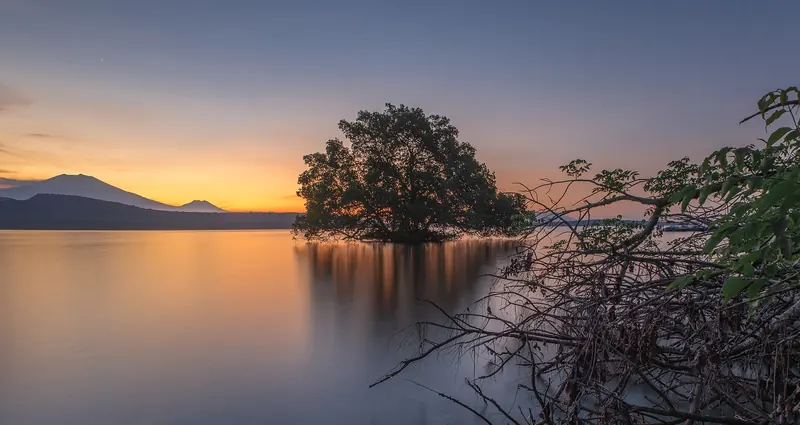
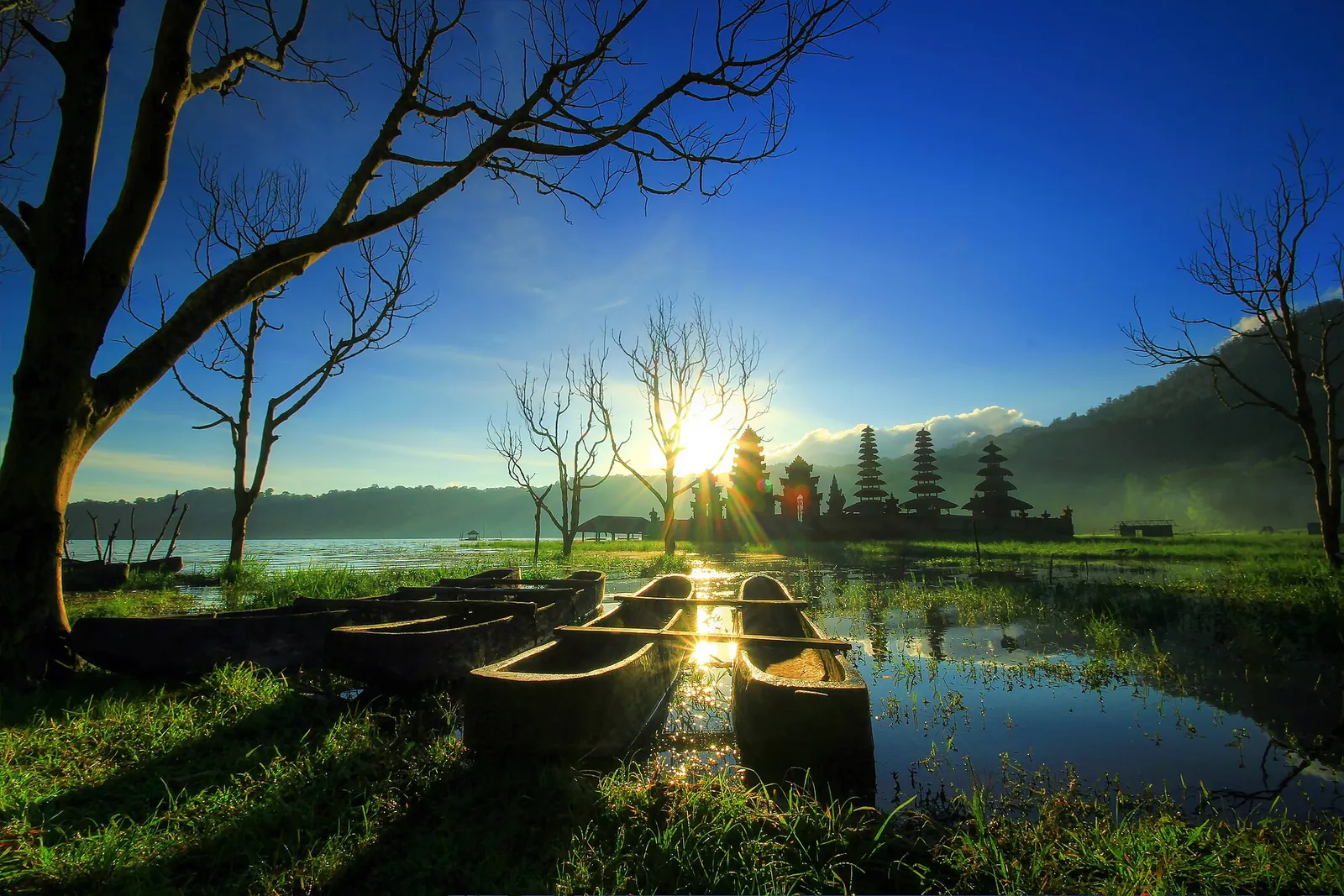
Above the village lie the twin lakes, Buyan and Tamblingan, in a ring of forested hills; the ministry calls Buyan the largest of the three highland lakes and notes the forest trails around them for trekking and birdwatching. Tamblingan is the quieter of the two and the one to prioritise. Its lakeside temple, Ulun Danu Tamblingan, appears to stand in the water when the level is high, and the shrines around the lake are held sacred by the customary community of Dalem Tamblingan.
The way to see it is from the water. When we checked on 2026-10-03, the Jadesta listing offered canoeing on Lake Tamblingan in a *pedau* (dugout canoe) paddled by a local fisherman, for one to two hours, including the shrines around the shore, from Rp 200,000. Go early, when mist often lies on the lake. The same listing describes a *melukat* purification led by a temple priest with the lake's holy water; it is a religious rite, not a show, so take part only if you are willing to follow the priest's instructions and dress as asked.
For the view of both lakes together, the ministry points to the hilltop at Asah Gobleg village. The village calendar includes the Karya Alilitan ceremonies of the Dalem Tamblingan community, with the Piagem Gama Tirta ritual honouring water, and a Twin Lake Festival of parades and local food in Catur Desa; dates vary, so ask locally.
Ulun Danu Beratan and the Bedugul side
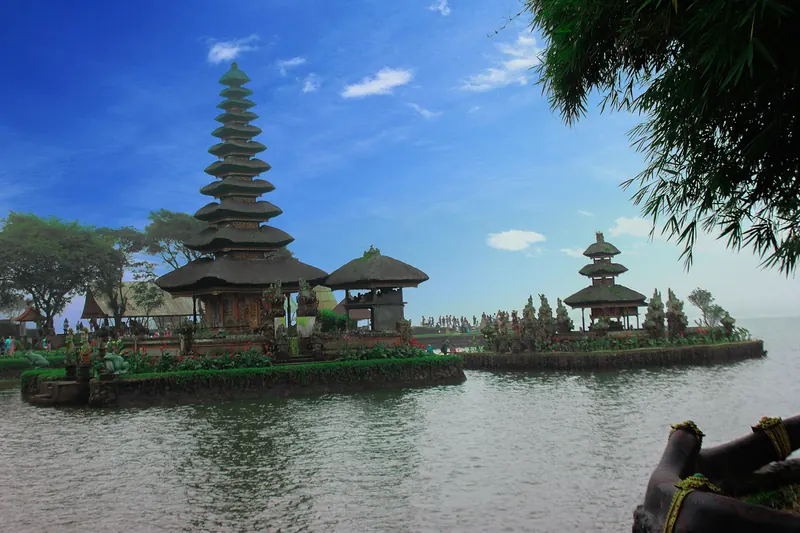
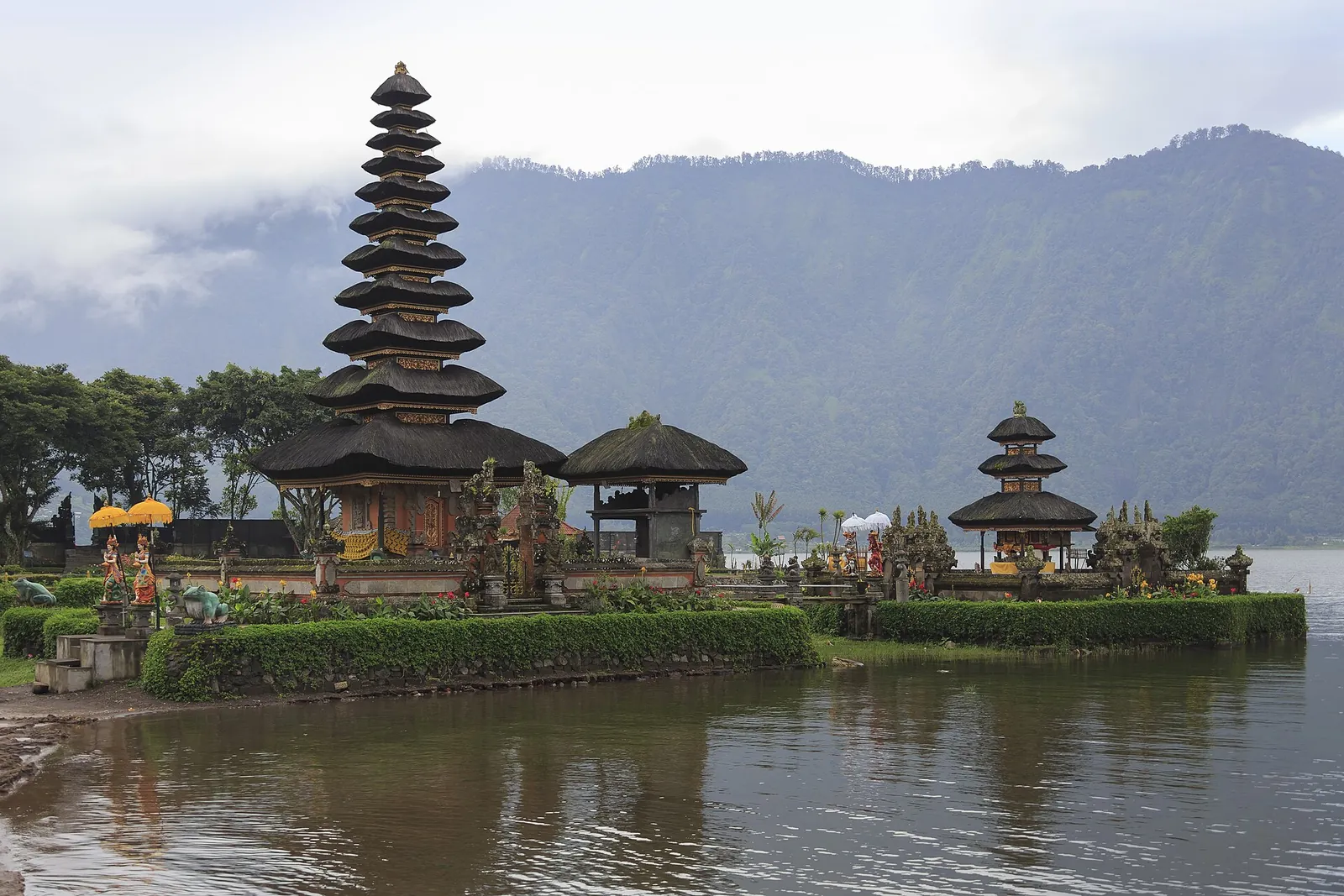
Pura Ulun Danu Beratan, on the shore of Lake Beratan at Candikuning, is the temple on the 50,000-rupiah note and the highlands' best-known sight. The ministry dates its founding to the 17th century under I Gusti Agung Putu of the Mengwi kingdom and describes it as a temple to Dewi Danu, goddess of the lake. Its tiered meru shrines seem to float when the water is high. It is more than a postcard: the ministry's subak pages explain that Ulun Danu Beratan is one of the two lake temples that coordinate Bali's rice irrigation, in its case for the north, east and south of the island.
It is an active temple inside a landscaped park, so come early for a quieter visit, wear clothes that cover shoulders and knees, and use the sash or sarong the temple provides at the entrance. The ministry's etiquette notes ask visitors to keep their voices down, to ask before photographing rituals, not to touch shrines, and say that women who are menstruating should not enter the main sacred areas. We could not reach an official page with current opening hours or ticket prices, so check those on arrival.
Close by, the Bali Botanic Garden (Kebun Raya Bali, also called Eka Karya) at Candikuning covers 157 hectares, according to the ministry, with Bali's largest orchid collection, a rainforest trail, begonias and carnivorous plants, and a treetop adventure park. It is the best rainy-afternoon option in the highlands. The market at Candikuning sells the highlands' vegetables, fruit, strawberries and spices.
Jatiluwih: the UNESCO terraces on the way in or out
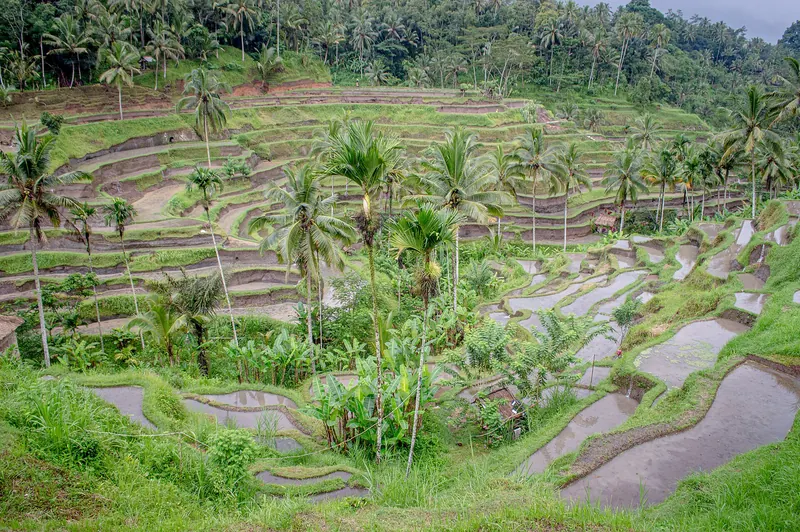
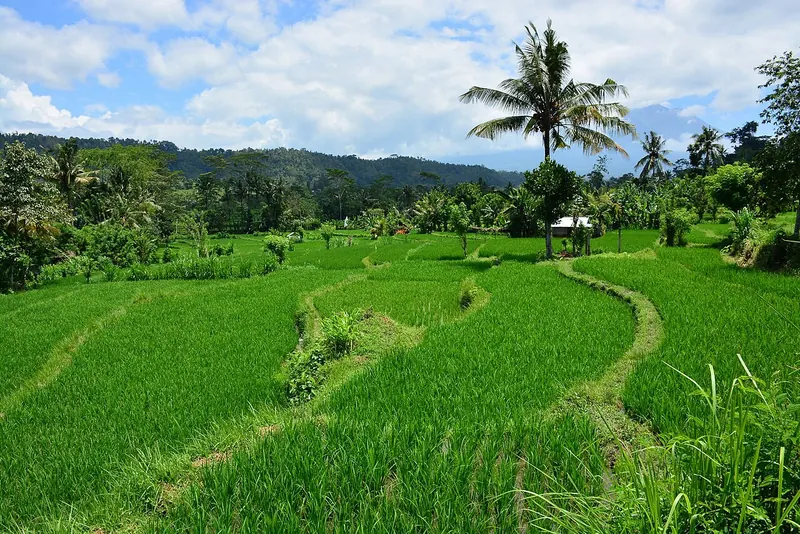
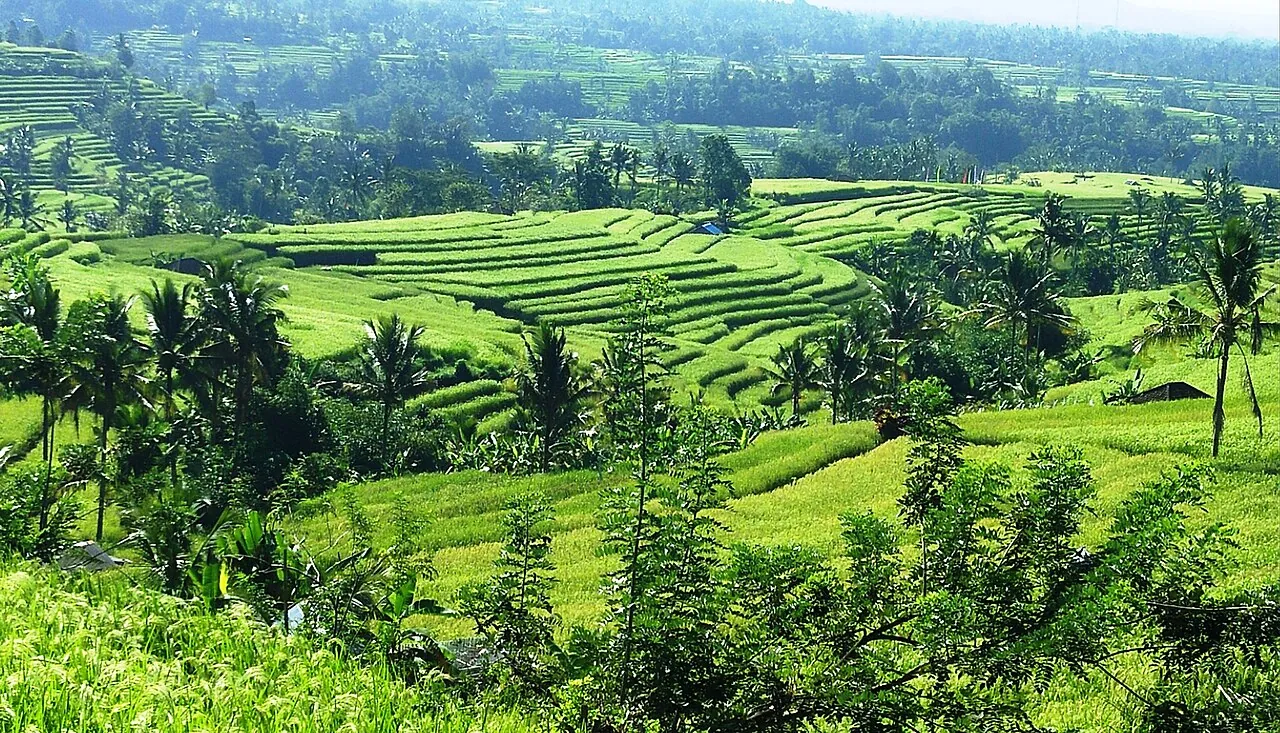
The rice terraces of Jatiluwih, in Penebel district of Tabanan on the slopes of Mount Batukaru, are the best-known example of the Cultural Landscape of Bali Province: the Subak System, inscribed by UNESCO in 2012. The ministry describes the subak as farmers' cooperatives that share water from a single dam or canal, linked to water temples that hold festivals every 105 days in step with the rice cycle.
Jatiluwih is not on the main road to Munduk, so plan it as a half-day detour on the drive up from the south or on the way back. The ministry puts it about 40 kilometres from Denpasar, roughly two hours by road, with cafés overlooking the terraces along the approach. The village's Jadesta page highlights walking and cycling paths that link the fields with the surrounding forest; walk at least part of one rather than seeing the terraces only from a café terrace. Its local red rice is sold as a souvenir.
The terraces change through the year. Water, young green rice and harvest-gold fields all have their moment, and fields can be bare after harvest. If the colour matters to you, ask your driver or lodging what stage the planting has reached.
Getting there and moving on
The Jadesta listing puts Munduk about 54 kilometres from Ngurah Rai International Airport, roughly two hours by road, and about 68 kilometres or three hours from the Gilimanuk ferry port. The road climbs through Bedugul, passes Lake Buyan and Lake Tamblingan, then continues west through Munduk and down towards Seririt on the north coast. That makes Munduk a natural overnight stop between south Bali or Ubud and the north: from Seririt the coast road leads east to Lovina and west to Pemuteran.
The usual way is to hire a car and driver for the transfer and for the Jatiluwih detour; agree the route, stops and price in advance. Local minibuses run between Denpasar and Singaraja via Bedugul, but they do not make sightseeing easy. Riding a scooter yourself is possible, but the highland roads are steep, winding and often wet and misty, so only do it if you are experienced.
- Day 1: leave south Bali or Ubud in the morning, walk at Jatiluwih, stop at Ulun Danu Beratan in the afternoon and arrive in Munduk before dark.
- Day 2: a dugout canoe on Lake Tamblingan early, then a guided waterfall or subak walk; coffee or a cooking class at your homestay in the evening.
- Day 3 (optional): a second walk, the botanic garden on a wet day, or an early start north via Seririt to Lovina or Pemuteran.
Practical questions
How many nights should I spend in Munduk?
Two nights give you one full day for Lake Tamblingan and a waterfall walk, with Jatiluwih and Ulun Danu Beratan on the drive in. Add a third if you want a second walk or a slower pace; the mornings are the best part of a stay here.
Is Munduk better than Ubud as a base?
They do different jobs. Ubud is a town with restaurants, arts and many day trips; Munduk is a quiet farm village for walking, lakes and cool air. Many travellers combine them, staying in Ubud first and then crossing the highlands to Munduk on the way to the north coast.
Can I visit Munduk as a day trip from south Bali?
You can see Ulun Danu Beratan and Jatiluwih in a long day from the south, but Munduk itself is about two hours from the airport by road, according to the ministry's tourism-village listing. A day trip leaves no time for the walks or the lake, which are the reason to come.
How cold does it get?
Cooler than the coast, especially at night. The Ministry of Tourism notes that temperatures in Indonesia drop by roughly 1 °C for every 90 metres of altitude. Pack a fleece or jumper and a rain jacket, and check that your room has warm bedding.
Do I need a guide for the Munduk waterfalls?
Not for the easiest falls, but a guide helps on the longer routes through the plantations, where paths are steep and often slippery. The village's guided treks start from your lodging; ask your homestay to arrange one.
What should I wear at Ulun Danu Beratan?
Cover your shoulders and knees, and use the sash or sarong offered at the entrance. Keep your voice down, ask before photographing ceremonies and do not touch the shrines.
Sources and checks before you travel
Reference sources for the version dated 3 October 2026. Confirm opening times, access, transport and conditions for your travel dates.
- Jadesta (Ministry of Tourism): Desa Wisata Munduk ↗ — opens in a new tab
- Jadesta: Red Coral Waterfall trekking (Munduk) ↗ — opens in a new tab
- Jadesta: Subak trek (Munduk) ↗ — opens in a new tab
- Jadesta: Canoeing on Lake Tamblingan ↗ — opens in a new tab
- Jadesta: Melukat (purification) at Lake Tamblingan ↗ — opens in a new tab
- Jadesta: Coffee processing (Munduk) ↗ — opens in a new tab
- Jadesta: Munduk cooking lesson ↗ — opens in a new tab
- Jadesta: Desa Wisata Jatiluwih ↗ — opens in a new tab
- Indonesia.travel: Buleleng, Bali's hidden northern gem ↗ — opens in a new tab
- Indonesia.travel: Ulun Danu Beratan ↗ — opens in a new tab
- Indonesia.travel: Pura Ulun Danu Beratan Bedugul ↗ — opens in a new tab
- Indonesia.travel: Jatiluwih rice terraces ↗ — opens in a new tab
- Indonesia.travel: Subak, Bali's cultural landscape ↗ — opens in a new tab
- Indonesia.travel: Six botanical gardens of Indonesia ↗ — opens in a new tab
- Indonesia.travel: weather, climate and seasons ↗ — opens in a new tab
- Indonesia.travel: Ngurah Rai Airport ↗ — opens in a new tab
- Love Bali (Bali Provincial Government): tourist levy ↗ — opens in a new tab
- Indonesia.travel: Bali regulations and the tourist levy ↗ — opens in a new tab
- Indonesia.travel: Sate lilit ↗ — opens in a new tab
- Indonesia.travel: Ayam taliwang ↗ — opens in a new tab
- Wikivoyage: Bedugul (covers Munduk) ↗ — opens in a new tab
Does this experience fit your route?
If you would rather not arrange a driver yourself, a guided highlands day links Jatiluwih and Ulun Danu Beratan in one trip. Check the pick-up area, the time at each stop and what is included before you book.
Browse relevant experiences on Viator ↗ — opens in a new tabAffiliate link · Book with ViatorPhoto credits
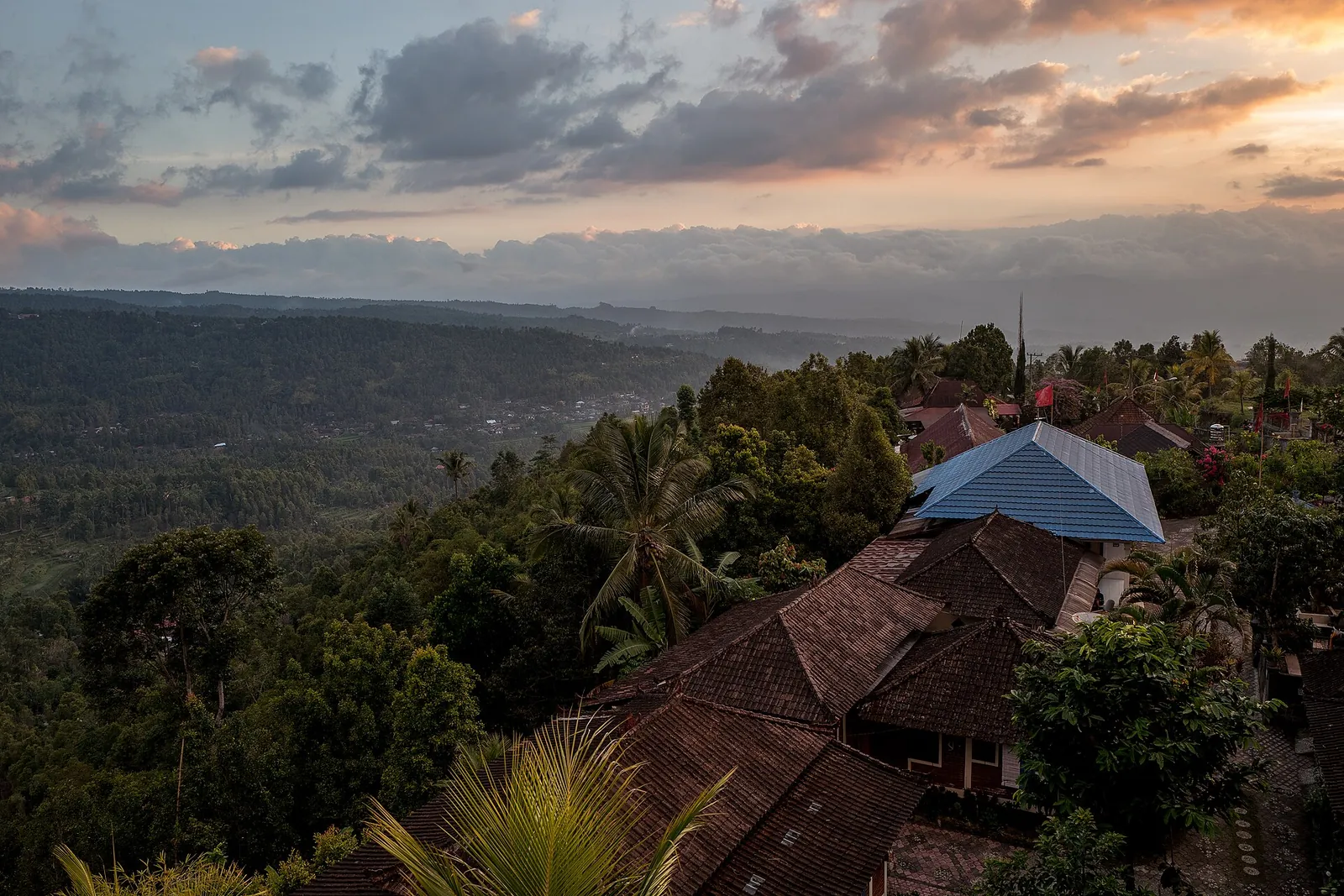
The view from Munduk across the valleys of Bali's northern highlands at dusk
Photograph: Dr. Matthias Ripp — opens in a new tab · CC BY 2.0 — opens in a new tab
Changes: Resized and converted to WebP; displayed with responsive crops. · Original photograph and licence details ↗ — opens in a new tab
Cloves drying beside the road in Munduk, a clove- and coffee-growing village
Photograph: tinofrey — opens in a new tab · Public domain — opens in a new tab
Changes: Resized and converted to WebP; displayed with responsive crops. · Original photograph and licence details ↗ — opens in a new tab
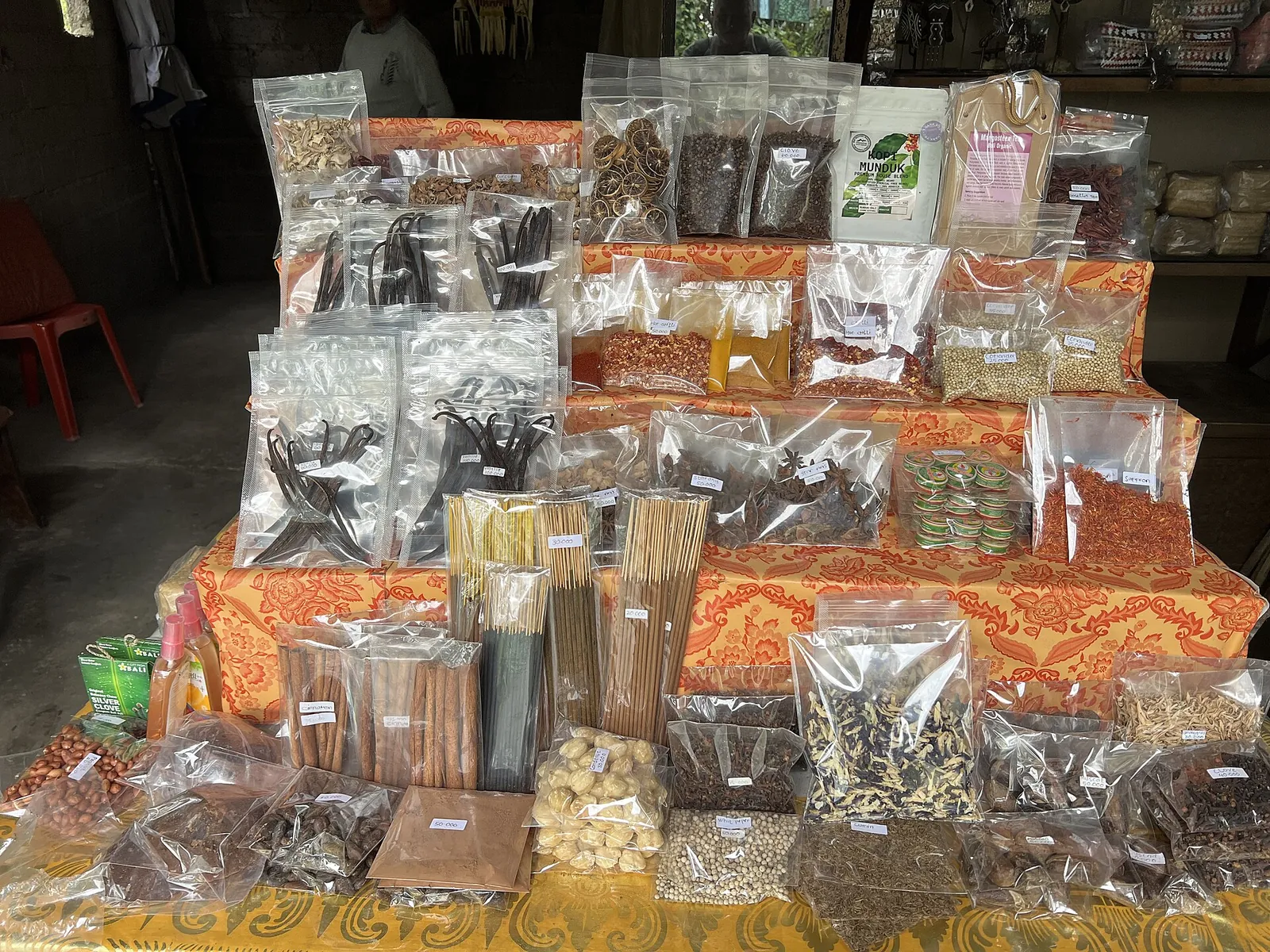
Spices and coffee for sale in Munduk
Photograph: Mike Dickison — opens in a new tab · CC BY 4.0 — opens in a new tab
Changes: Resized and converted to WebP; displayed with responsive crops. · Original photograph and licence details ↗ — opens in a new tab
Dugout canoes at Lake Tamblingan, above Munduk
Photograph: Kerildoank — opens in a new tab · CC BY-SA 4.0 — opens in a new tab
Changes: Resized and converted to WebP; displayed with responsive crops. · Original photograph and licence details ↗ — opens in a new tab
Pura Ulun Danu Beratan on Lake Beratan, Bedugul
Photograph: CEphoto, Uwe Aranas — opens in a new tab · CC BY-SA 3.0 — opens in a new tab
Changes: Resized and converted to WebP; displayed with responsive crops. · Original photograph and licence details ↗ — opens in a new tab
The UNESCO-listed rice terraces of Jatiluwih, Tabanan
Photograph: Imacim — opens in a new tab · CC BY-SA 4.0 — opens in a new tab
Changes: Resized and converted to WebP; displayed with responsive crops. · Original photograph and licence details ↗ — opens in a new tab