Sumatra · Aceh
Pulau Weh guide: Iboih, Gapang, Rubiah reefs and the boat from Banda Aceh
Pulau Weh is a small volcanic island off the northern tip of Sumatra, and the whole island is the city of Sabang, the northernmost and westernmost city in Indonesia. It is the opposite of Bali or the Gilis: few visitors, no beach-bar strip, and reefs that start a few strokes from the shore at Iboih and Gapang. It also sits in Aceh, the only Indonesian province that enforces Sharia law, so it suits travellers who want quiet water and are happy to keep things low-key.
- Suggested time
- 3–5 nights
- Where to stay
- Iboih (for Rubiah snorkelling) or Gapang (for dive centres)
- Season and timing
- Sabang has a tropical rainforest climate with no true dry season: rainfall is moderate from February to August and heavy from September to January. Plan the boat crossings with some slack in the wetter months.
The short answer
Give it three to five nights. Fly into Banda Aceh (BTJ), take a taxi to Ulee Lheue port and cross to Balohan on Pulau Weh by fast boat (about 45 minutes) or slow ferry (about 2 hours). Sleep at Iboih if snorkelling off Rubiah is the point, or at Gapang if you are diving with one of its dive centres. Arrange a driver or rent a scooter, because public transport on the island is minimal, and spend one day on a loop to Kilometre Zero, Sabang town and the black-sand beach at Anoi Itam.
Iboih or Gapang: choosing your base
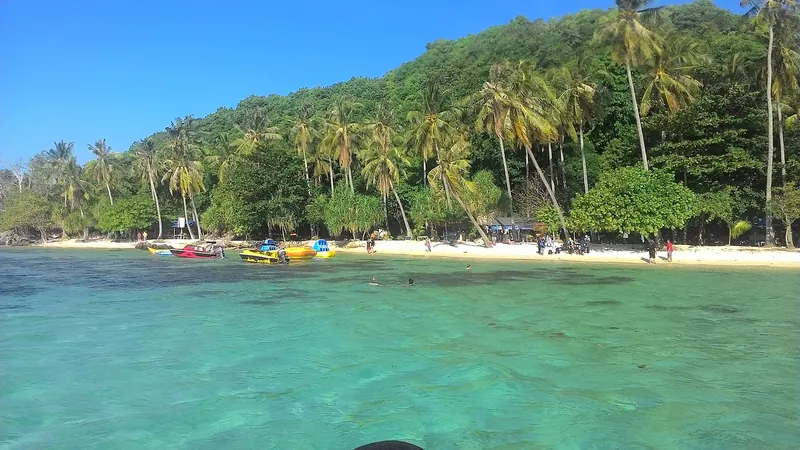
Almost everyone who comes to snorkel or dive stays on the north-west coast, not in Sabang town. Iboih, also called Teupin Layeu, faces Rubiah, a small island just offshore; the tourism ministry describes clear, shallow water with coral and a protected forest reserve behind the village. The beach itself is short — Wikipedia puts it at about 150 metres — and the ministry notes guesthouses and restaurants serving fresh seafood.
Gapang, about 5 kilometres from Iboih, is the diving base. The ministry says it has dive centres offering equipment, training and guides, and Wikipedia describes it as a white-sand beach with simple food stalls, lodging and several dive resorts. The road there climbs through forest where the ministry notes long-tailed macaques.
Choose Iboih if you mainly want to snorkel and take boats to Rubiah, Gapang if you want to dive every day from a dive centre's own beach. The two are close enough to visit each other by scooter.
- Iboih: snorkelling, boats to Rubiah, seafood by the landing.
- Gapang: dive centres, courses and guided dives.
- Sabang town: food, coffee and the old port, but far from the reefs.
Snorkelling and diving around Rubiah and Gapang
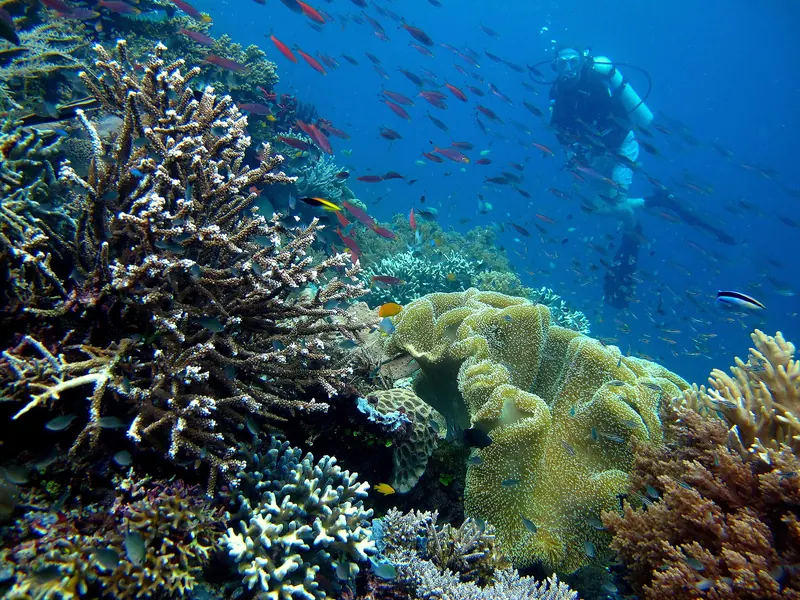
The reefs are the reason to come. The tourism ministry calls Weh 'the unparalleled underwater universe' among divers, names the Sea Garden at Rubiah as its best-known site and lists manta rays, whale sharks, dolphins and sea turtles among the animals divers may meet — treat the big animals as a chance, not a promise. A Conservation International survey in 1997–1999, summarised on Wikipedia, found coral diversity relatively low but a rich variety of fish.
Rubiah is a short boat ride from Iboih; the ministry mentions snorkel gear and boat hire there and a light trekking path on the island. Off Gapang, Wikipedia describes underwater fumaroles — volcanic gas vents — at a site called Hydrothermal Point. The Indonesian government declared a wildlife protection area of about 34 square kilometres of land and 26 square kilometres of sea around the island in 1982, in response to blast and cyanide fishing.
The UK government's travel advice notes that dive-school standards in Indonesia vary. Before you book, check the operator's credentials, ask whether oxygen is carried on the boat and how a diver would be evacuated to a hyperbaric chamber. Do not stand on coral or take anything from the reef.
Make time for the local food
What to eat and where to look
Grilled fresh seafood
The ministry names fresh seafood as the island's speciality, with the places to eat it mostly around the harbour at Iboih.
- Where to look
- Restaurants by the boat landing at Iboih, and simple stalls at Gapang.
- Fit it into your day
- Dinner after a day on the water.
Ask the price before you order.
Kopi sanger and roti bakar
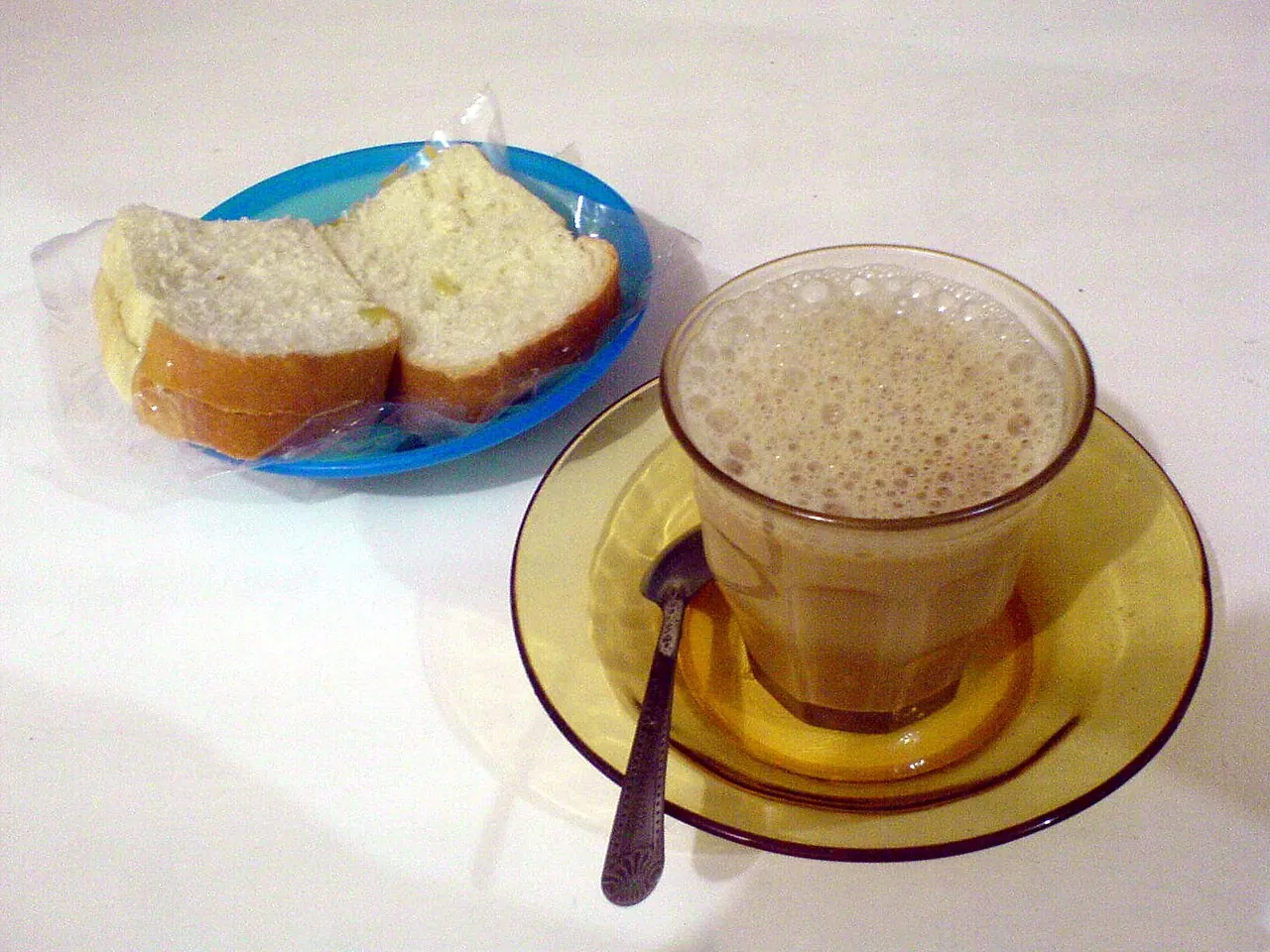
Sanger is Aceh's filtered coffee with condensed milk, poured through a sieve repeatedly for a smooth texture. The ministry says locals in Sabang gather in the evening over sanger and roti bakar (toast).
- Where to look
- Coffee stalls (kedai) in Sabang town.
- Fit it into your day
- An evening stop on the day loop, or breakfast before the boat back.
It is sweet; ask for less condensed milk if you prefer.
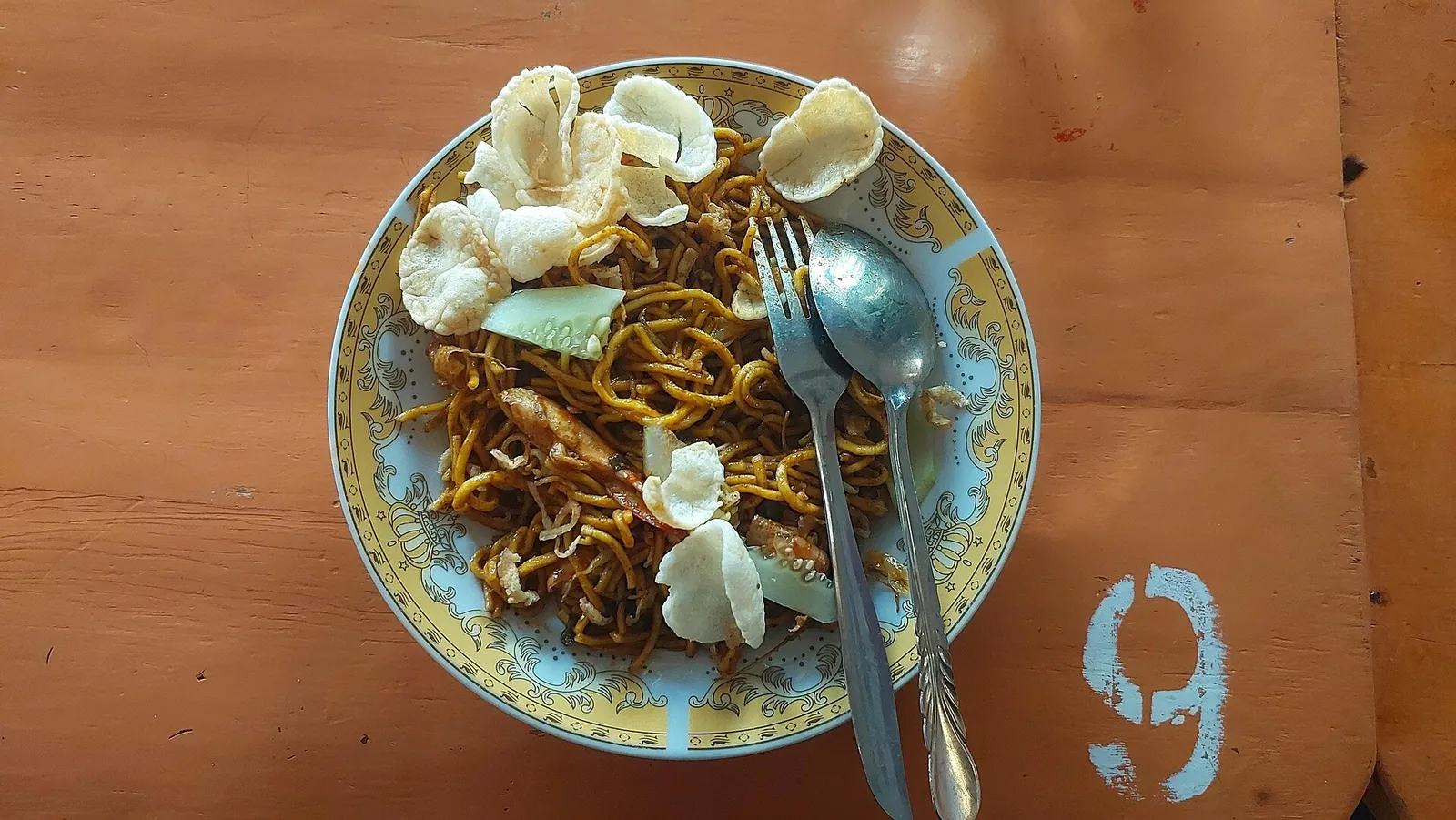
Mie Aceh
Thick noodles in a spiced sauce, cooked fried, stir-fried or in broth, with toppings such as shrimp, squid or beef and served with pickled onions, emping crackers and cucumber.
- Where to look
- Noodle stalls in Sabang town, or the famous shops of Banda Aceh before or after the crossing.
- Fit it into your day
- A filling lunch in town.
Can be very spicy; seafood and beef versions are the usual choices.
Rujak Aceh
Fresh fruit such as mango, pineapple and jicama in a spiced peanut dressing, sharpened with asam sunti and chilli, according to the ministry.
- Where to look
- Markets and traditional warungs.
- Fit it into your day
- An afternoon snack.
Sweet, sour and spicy at once — ask for less chilli.
Rubiah's hajj quarantine and Sabang's port history
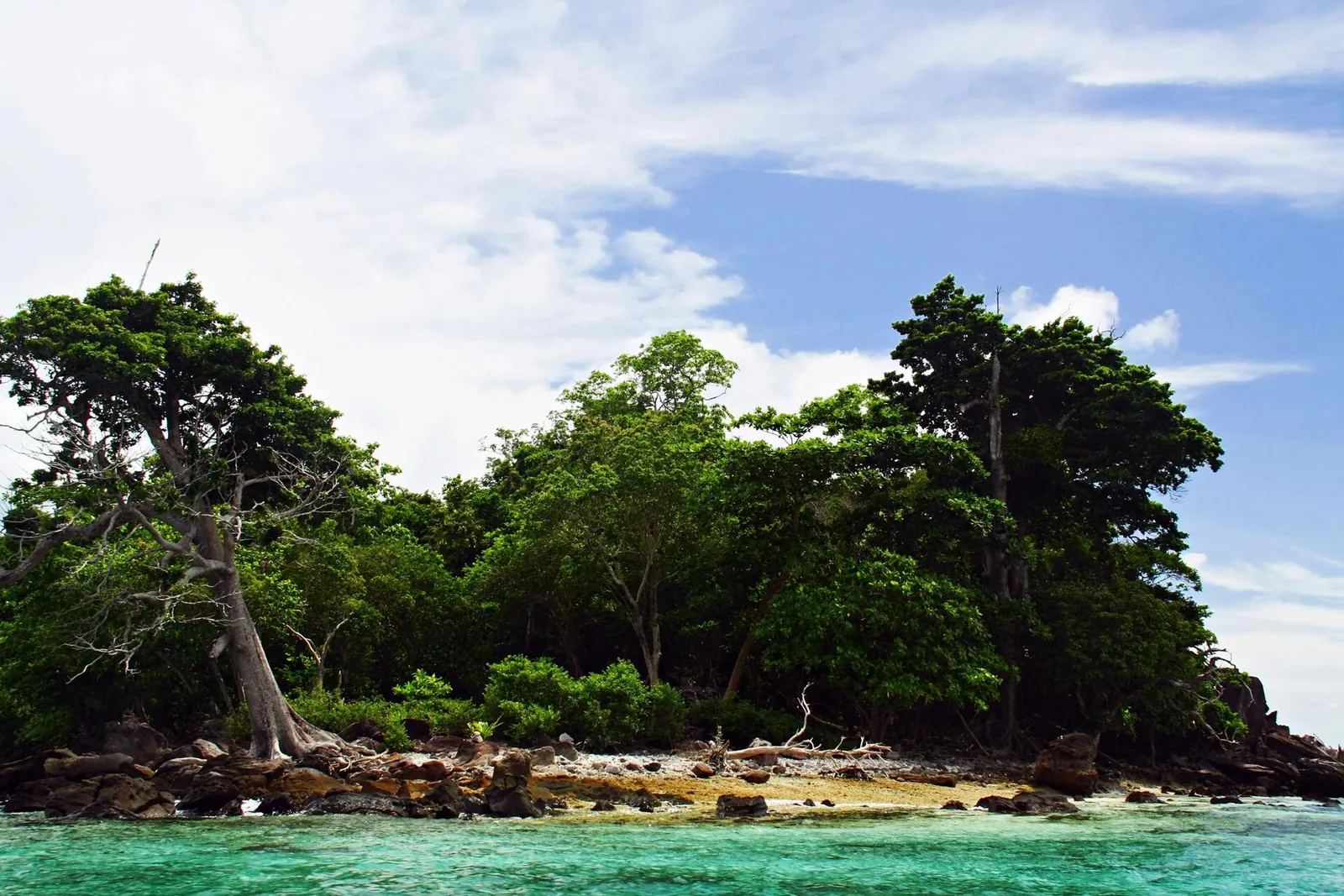
Rubiah is more than a reef. Before air travel, pilgrims sailing from the archipelago to Mecca were quarantined here; the Indonesian-language Wikipedia calls it one of the two oldest hajj quarantine stations in the country, alongside Onrust near Jakarta, and says the foundations and water tanks of the station can still be seen.
Sabang town, on the north-east side of the island, grew as a deep, sheltered harbour on the shipping route through the Malacca Strait. According to Wikipedia, the Dutch opened it as a coaling station in the 1880s and a free port in 1895; Japanese forces occupied it in 1942 and left bunkers and gun emplacements, some of which survive. Sabang was declared a free trade zone in 2000. The small Museum Sabang, started in 2013 by the free-port authority, tells this story; the ministry notes that its collection has not yet been formally documented.
The Sabang Marine Festival, held every year since 2015 according to the ministry, brings yachts, boat parades and a coastal clean-up at Iboih and Gapang. The 2024 edition ran from 1 to 3 March; check the ministry's events page for the current year's dates.
A day loop: Kilometre Zero, Sabang town and Anoi Itam
Spend one day off the reef. The Kilometre Zero monument marks Indonesia's westernmost point; the ministry notes that a certificate can be bought there as proof of the visit and that souvenir stalls sell trinkets.
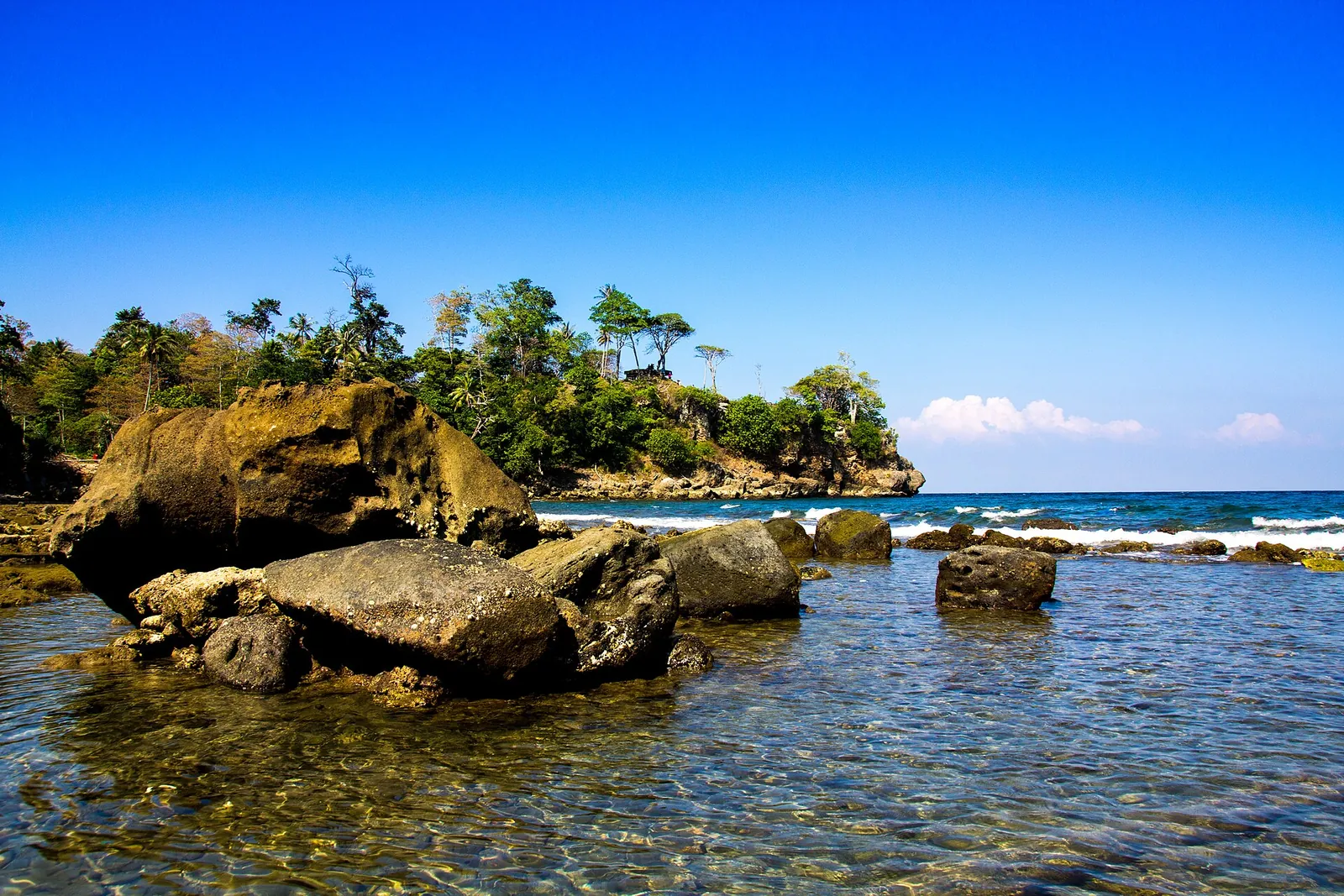
Continue to Sabang town for lunch and coffee, then cross to the east coast. Anoi Itam has dark sand from volcanic minerals and, the ministry says, the remains of a Japanese fort nearby. If you want a harder outing, Gua Sarang is a sea cave on a rocky coast reached by a steep trek down and back up; the ministry suggests the first viewpoint over the bay if you do not want the full climb.
Wikipedia notes that Sabang has no angkot shared taxis and minimal public transport, though Gojek ride-hailing operates. A driver for the day or a rented scooter is the practical choice.
Getting there: Banda Aceh, Ulee Lheue and Balohan
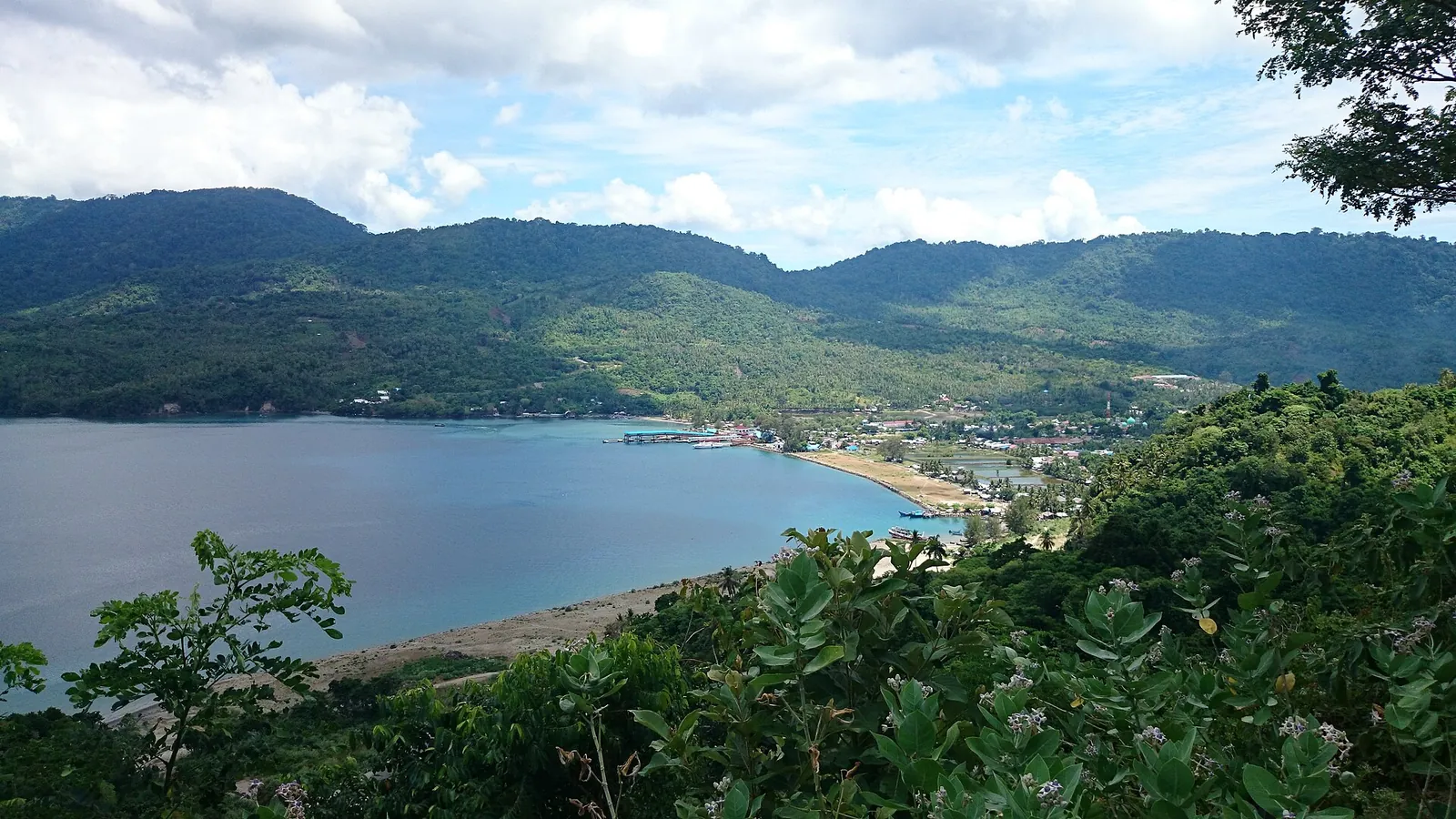
The gateway is Sultan Iskandar Muda International Airport (BTJ) in Blang Bintang, outside Banda Aceh. From there, take a taxi to Ulee Lheue port on the city's west shore. The state ferry company ASDP lists Ulee Lheue–Balohan as one of its commercial routes, and boats arrive at Balohan, the island's ferry harbour on the east side.
The ministry and Wikipedia both give about 45 minutes by fast boat and about 2 hours by ferry; one ministry page says the fast boats run twice a day. When we checked on 2026-10-03, we could not reach a current timetable from ASDP or the fast-boat operators, so confirm departure times at Ulee Lheue or with your lodging and aim for a morning crossing, as the ministry suggests.
From Balohan to Iboih the ministry gives about 40 minutes on a hilly road. Most guesthouses can arrange a pick-up. The UK government advises checking life jackets on any boat and avoiding crossings after dark.
Aceh's rules on the island
Aceh enforces Sharia law, and the UK government's travel advice states that it applies to non-Muslims too: alcohol, gambling and extra-marital and same-sex sexual activity are illegal, with public caning among the punishments. Do not expect beer at the beach.
The ministry notes that modesty is appreciated in this conservative province. Cover up when you leave the beach for villages, warungs and Sabang town. On Fridays, the ministry says Gapang beach opens only at 2 pm so that Muslims can attend Friday prayers — plan a slow morning or a dive that starts later.
Practical questions
How do I get to Pulau Weh?
Fly to Banda Aceh (BTJ), take a taxi to Ulee Lheue port and cross to Balohan by fast boat (about 45 minutes) or ferry (about 2 hours). Confirm the day's departure times locally.
Should I stay in Iboih or Gapang?
Iboih for snorkelling and boats to Rubiah, Gapang for dive centres and courses. They are about 5 kilometres apart.
Is alcohol available on Pulau Weh?
No. Pulau Weh is in Aceh, where Sharia law makes alcohol illegal, and the UK government says this applies to non-Muslims too.
When is the best time to visit Pulau Weh?
There is no true dry season. Rain is moderate from February to August and heavy from September to January, so the first half of the year is generally easier.
How do I get around the island?
Hire a driver or rent a scooter. Public transport is minimal, though Gojek ride-hailing operates in Sabang.
Where is Kilometre Zero?
On Pulau Weh, at Indonesia's westernmost point. A certificate of your visit can be bought there.
Sources and checks before you travel
Reference sources for the version dated 3 October 2026. Confirm opening times, access, transport and conditions for your travel dates.
- Indonesia Travel (Ministry of Tourism): Weh Island ↗ — opens in a new tab
- Indonesia Travel: The beach at Iboih, Weh Island's hidden paradise ↗ — opens in a new tab
- Indonesia Travel: What to do while on vacation in Sabang ↗ — opens in a new tab
- Indonesia Travel: Explore the modest beauty of Aceh ↗ — opens in a new tab
- Indonesia Travel: Pulau Rubiah ↗ — opens in a new tab
- Indonesia Travel: Pantai Anoi Itam ↗ — opens in a new tab
- Indonesia Travel: Wisata Gua Sarang ↗ — opens in a new tab
- Indonesia Travel: Museum Sabang ↗ — opens in a new tab
- Indonesia Travel: Sabang Marine Festival ↗ — opens in a new tab
- Indonesia Travel: Delicious treats in Aceh ↗ — opens in a new tab
- Indonesia Travel: Rujak Aceh ↗ — opens in a new tab
- Indonesia Travel: Banda Aceh ↗ — opens in a new tab
- ASDP Indonesia Ferry: commercial route map ↗ — opens in a new tab
- Ministry of Transportation (Hubud): Sultan Iskandar Muda Airport ↗ — opens in a new tab
- Wikipedia: Weh Island ↗ — opens in a new tab
- Wikipedia: Sabang, Aceh ↗ — opens in a new tab
- Wikipedia (Indonesian): Pulau Rubiah ↗ — opens in a new tab
- GOV.UK (FCDO): Indonesia safety and security ↗ — opens in a new tab
Photo credits
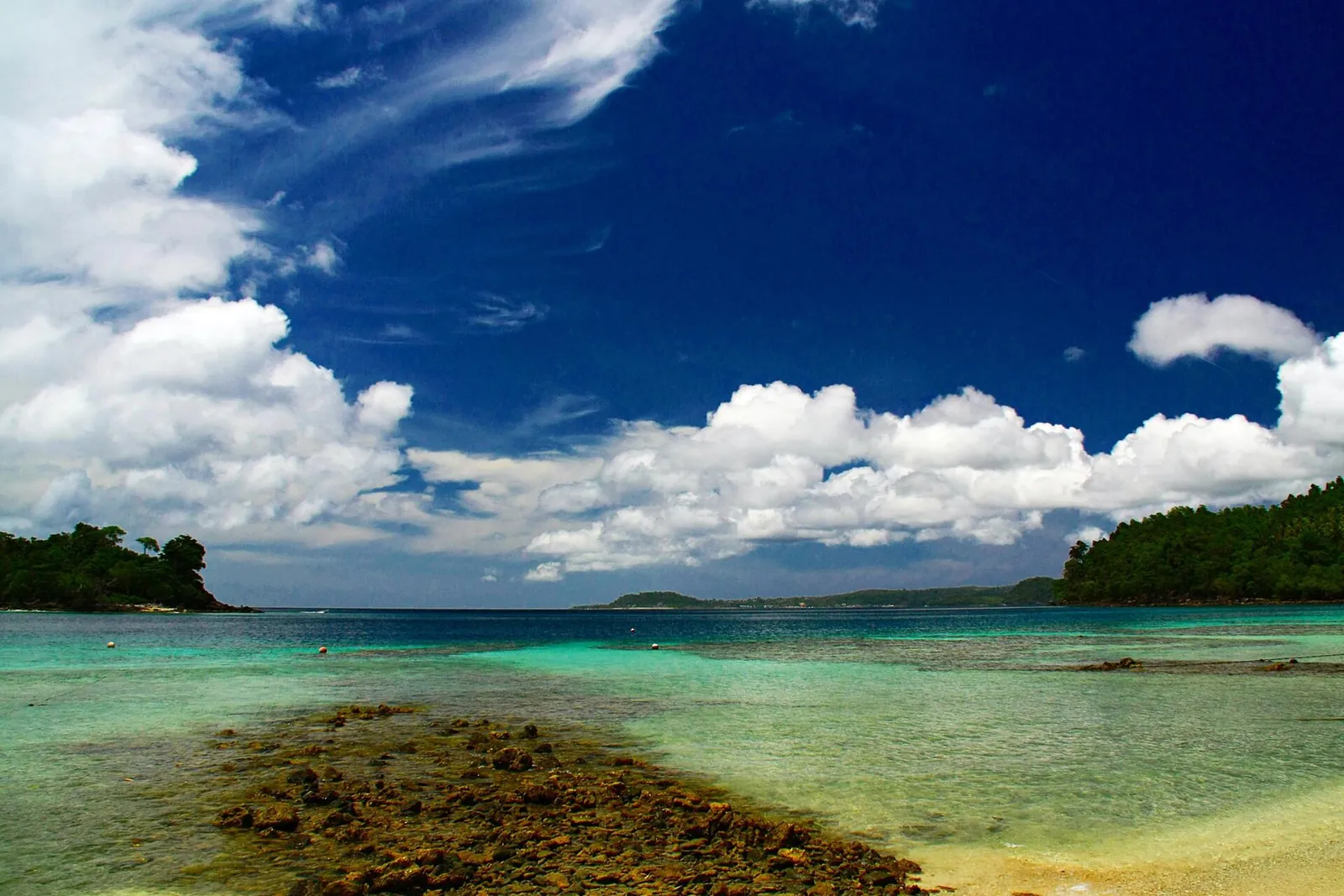
Iboih beach, at the western end of Pulau Weh: the reef starts right off the shore.
Photograph: fitri agung from Solo, Central Java, Indonesia, Indonesia — opens in a new tab · CC BY 2.0 — opens in a new tab
Changes: Resized and converted to WebP; displayed with responsive crops. · Original photograph and licence details ↗ — opens in a new tab
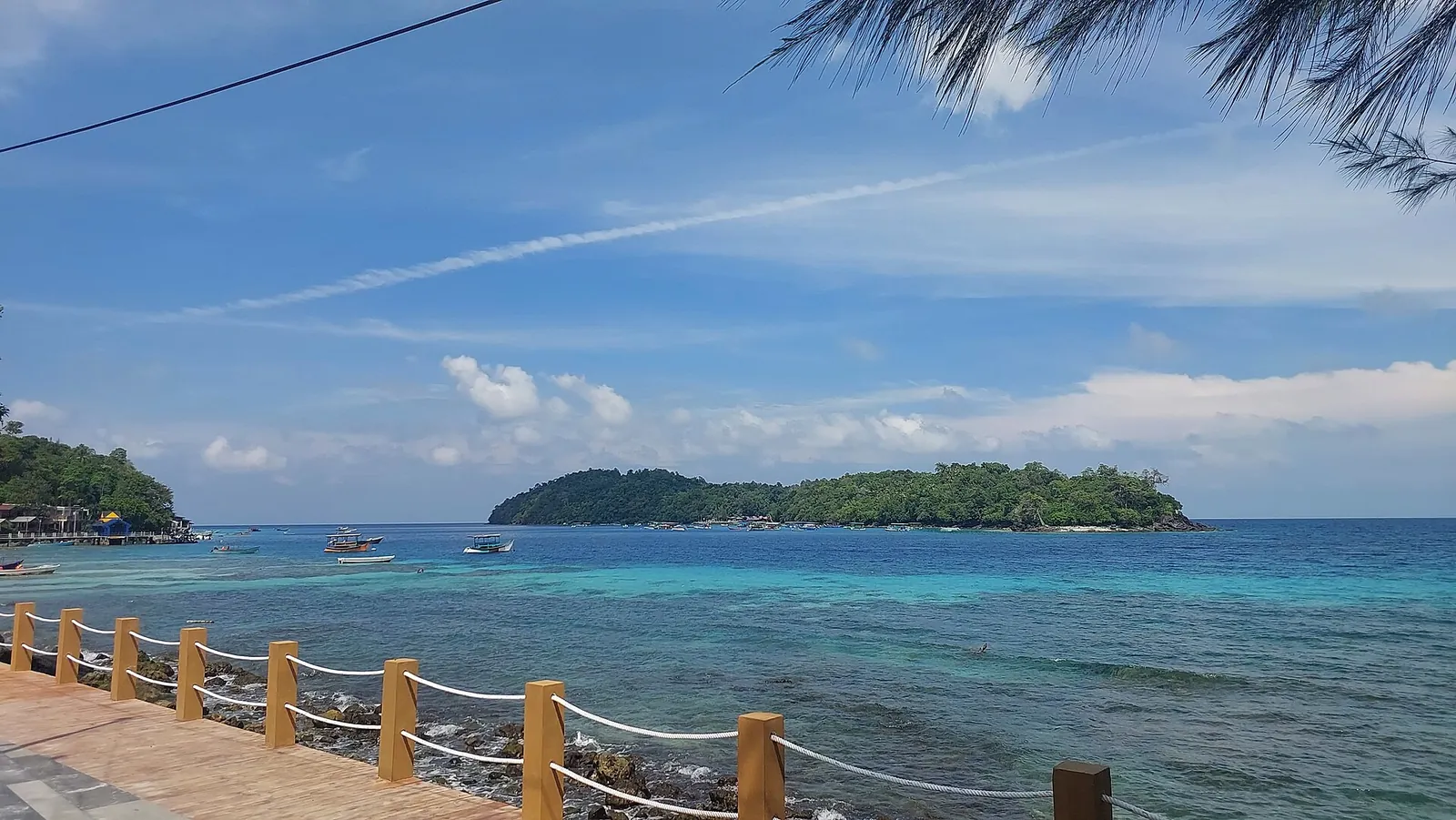
Rubiah island from Iboih. Boats cross the short channel for snorkelling at the Sea Garden.
Photograph: Eunike25 — opens in a new tab · CC BY 4.0 — opens in a new tab
Changes: Resized and converted to WebP; displayed with responsive crops. · Original photograph and licence details ↗ — opens in a new tab
The shore of Rubiah island, which was once a quarantine stop for hajj pilgrims.
Photograph: fitri agung from Pekanbaru, Riau, Indonesia, Indonesia — opens in a new tab · CC BY 2.0 — opens in a new tab
Changes: Resized and converted to WebP; displayed with responsive crops. · Original photograph and licence details ↗ — opens in a new tab
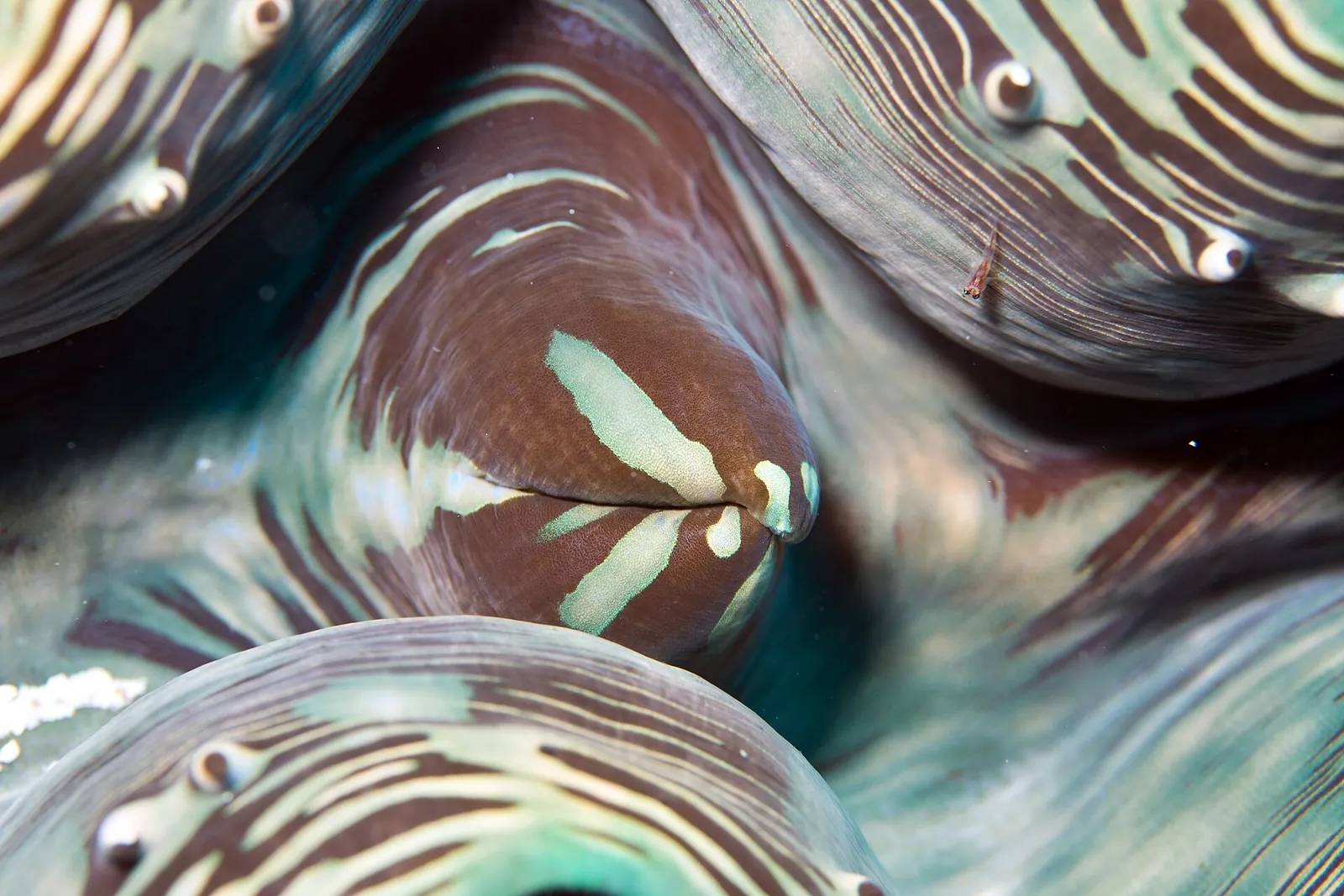
A giant clam on the reef off Pulau Weh.
Photograph: prilfish from Vienna, Austria — opens in a new tab · CC BY 2.0 — opens in a new tab
Changes: Resized and converted to WebP; displayed with responsive crops. · Original photograph and licence details ↗ — opens in a new tab
Balohan bay, where ferries and fast boats from Banda Aceh dock.
Photograph: Tj Pramono — opens in a new tab · CC BY-SA 4.0 — opens in a new tab
Changes: Resized and converted to WebP; displayed with responsive crops. · Original photograph and licence details ↗ — opens in a new tab
Anoi Itam beach on the east coast, known for its dark volcanic sand.
Photograph: Defriyanramzi — opens in a new tab · CC BY-SA 4.0 — opens in a new tab
Changes: Resized and converted to WebP; displayed with responsive crops. · Original photograph and licence details ↗ — opens in a new tab
Mie Aceh at a cafe in Sabang town.
Photograph: Eunike25 — opens in a new tab · CC BY 4.0 — opens in a new tab
Changes: Resized and converted to WebP; displayed with responsive crops. · Original photograph and licence details ↗ — opens in a new tab
Kopi sanger with bread, the classic Acehnese coffee-stall order.
Photograph: Si Gam — opens in a new tab · CC BY-SA 3.0 — opens in a new tab
Changes: Resized and converted to WebP; displayed with responsive crops. · Original photograph and licence details ↗ — opens in a new tab