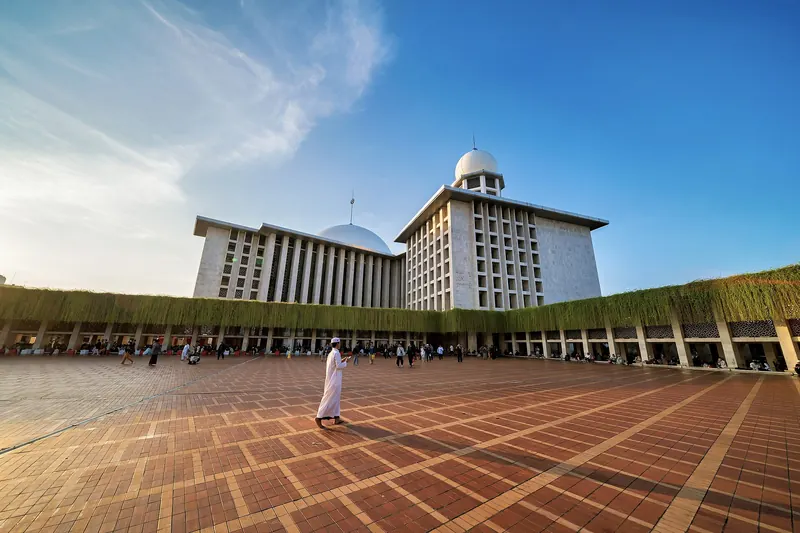
Sumatra · Aceh
Banda Aceh guide: the Grand Mosque, tsunami sites, coffee and local rules
Banda Aceh, the capital of Aceh at the northern tip of Sumatra, is not a beach town or a party stop. It is a devout, compact city with two stories to tell. The first is the Aceh Sultanate and the long war against the Dutch, told by the Baiturrahman Grand Mosque, Museum Aceh and the colonial cemetery. The second is 26 December 2004, when the Indian Ocean tsunami destroyed much of the city; you see it in the Tsunami Museum and in a power ship still sitting where the wave left it. Aceh is the only Indonesian province that enforces Sharia law, and visitors are bound by it too. Plan how you dress and behave before you plan where you eat.
- Suggested time
- 2 days (3 with a beach day or a wait for the Weh ferry)
- Where to stay
- Central Banda Aceh near the Baiturrahman Grand Mosque; Ulee Lheue for an early ferry
- Season and timing
- The tourism ministry says Aceh's drier, sunnier months are roughly April to September, but rain can come at any time. The end of the year is usually the wettest. The ministry gives November to March as the surf season at Lampuuk. Ramadan changes the city's rhythm, with daytime fasting and busy evenings. Its dates move every year, so check them before you book.
The short answer
Two full days are enough for Banda Aceh; add a third if you are waiting for the boat to Weh Island. Stay in the centre, within reach of the Baiturrahman Grand Mosque and the Tsunami Museum. On day one, visit the mosque early in the morning, see the Tsunami Museum and PLTD Apung, and take an afternoon break at a coffee shop. On day two, walk the Sultanate sites (Museum Aceh, the Gunongan and Kerkhof Peucut), eat a Mie Aceh lunch, then catch the sunset at Ulee Lheue, where the ferries to Weh leave. Dress modestly all the time, not only in the mosque: no alcohol, cover shoulders and knees, and women should carry a headscarf. Fly into Sultan Iskandar Muda Airport (BTJ), about 20–30 minutes from the centre by road.
Before you go: Sharia law, dress and conduct
Aceh received special autonomy under the 2005 Helsinki agreement and is the only province in Indonesia that formally implements Sharia law. The tourism ministry says this covers dress codes and public conduct. The UK government's travel advice (FCDO) says these laws apply to non-Muslims as well as Muslims. When we checked on 3 October 2026, the FCDO said that drinking, making and selling alcohol, gambling, extra-marital sex and same-sex sexual activity were all illegal in Aceh under Sharia law. Penalties can include public caning after a Sharia court process. It also mentioned reports of the Sharia police harassing foreigners.
In practice, plan a dry trip and dress conservatively across the whole city, not only in the mosque. Wear loose clothes that cover your shoulders and knees, and women should keep a headscarf to hand. Unmarried couples should be discreet. Daily life follows the prayer times, and the Friday midday prayer is the high point of the week. On Weh Island, for example, the ministry notes that Gapang Beach opens only at 2 pm on Fridays so that people can attend the prayer.
The Baiturrahman Grand Mosque
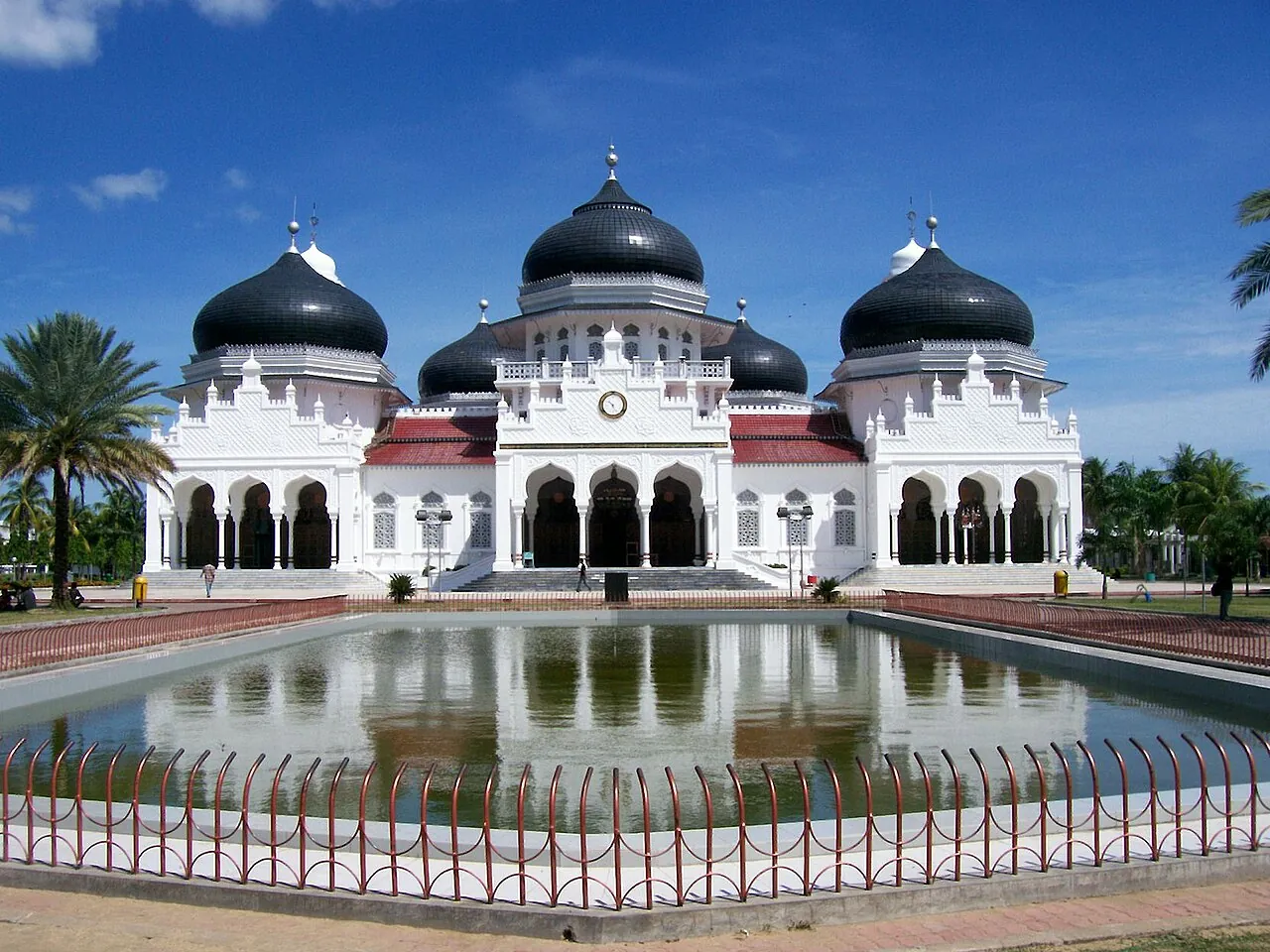
The mosque in the centre of the city is Banda Aceh's landmark, opposite the Blangpadang field. Its roots go back to the Aceh Sultanate. The tourism ministry's pages say the first mosque on the site dates from the reign of Sultan Iskandar Muda, and one gives 1612. The Dutch colonial army burned it down on 10 April 1873, during the Aceh War. The Dutch then rebuilt it between 1879 and 1881, in a grander Mughal-influenced style. More domes were added in 1936 and 1957, and the ministry describes the mosque today with seven black domes and seven minarets. It was one of the few large buildings left standing after the 2004 tsunami and became a refuge for survivors. The courtyard now has giant retractable umbrellas modelled on those at the Prophet's Mosque in Medina.
Come in the early morning or late afternoon, when the marble is cooler and the light is softer. Come back after dark if you want to see the mosque lit up. The ministry says modest dress is required. Women are expected to cover their arms and legs and wear a headscarf, and the mosque usually lends robes and headscarves to visitors who need them. Photography is allowed, but take photos quietly and never disturb people who are praying. Plan your visit between prayer times, and avoid the Friday midday prayer.
Make time for the local food
What to eat and where to look
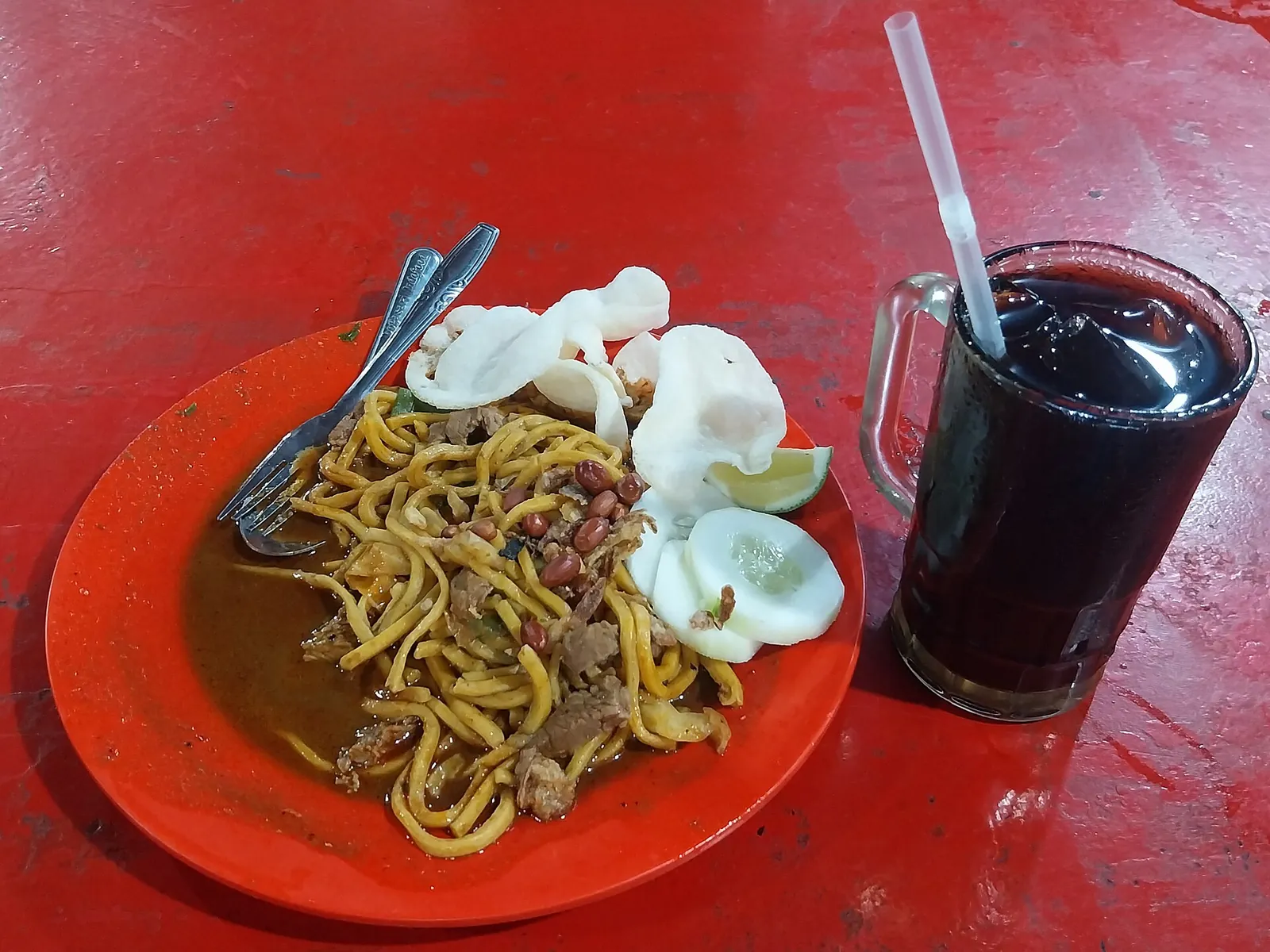
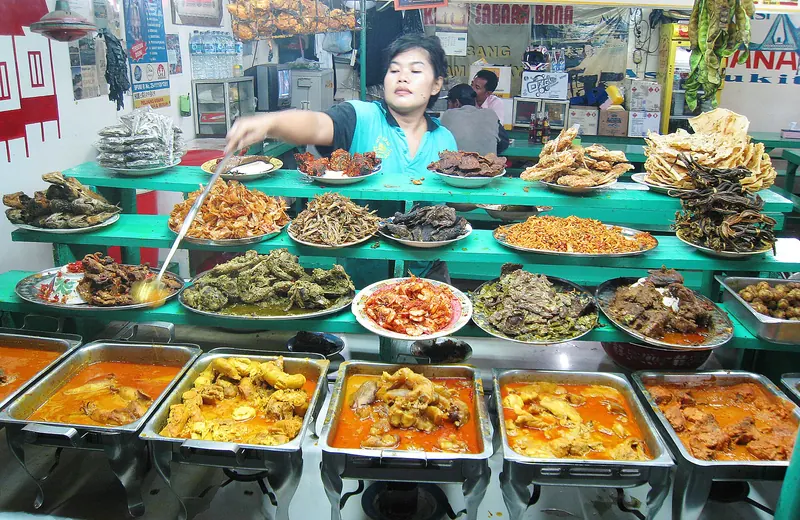
Mie Aceh
Thick yellow noodles cooked with turmeric, cumin, cardamom, coriander and chilli, with beef, goat, prawns, squid or crab. The tourism ministry describes it as served fried, stir-fried or in broth, with emping (melinjo crackers), pickled shallots, cucumber and lime.
- Where to look
- Specialist noodle shops. The ministry names Mie Razali, a long-running shop on Jalan Panglima Polem in Peunayong, and Mie Ayah on Jalan T. Nyak Arief at Simpang Lima.
- Fit it into your day
- Lunch after the morning at the mosque and museums, or a late supper: noodle shops stay open into the evening.
Spicy by default, and seafood versions contain shellfish. Ask for less chilli or no broth if you prefer.
Ayam tangkap
Chicken marinated in Acehnese spices and fried with a mound of curry leaves, pandan and green chilli. The crisp leaves are eaten too, and the name ('captured chicken') comes from digging the pieces out of the herbs.
- Where to look
- Acehnese restaurants serving family-style meals. The ministry mentions Rumah Makan Aceh Rayeuk on Jalan Ring Road in Blang Cut, Lueng Bata, which also serves kuah pliek u, a curry made with fermented coconut.
- Fit it into your day
- A shared dinner with rice, sambal and a vegetable curry. Order it for the table.
Small bones and whole chillies among the leaves; check before you bite.
Kopi sanger and Gayo coffee
The tourism ministry says Aceh's coffee comes from the Gayo highlands and is traditionally filtered (kopi saring). Sanger is coffee with sweetened condensed milk, filtered repeatedly and shaken until it froths.
- Where to look
- Traditional warung kopi across the city. Ask a local to point you to their favourite; there are plenty.
- Fit it into your day
- A mid-afternoon break between sights, or the evening, when the coffee shops fill up.
Very sweet as standard. Ask for less condensed milk, or order black coffee.
Kuah beulangong
Beef or goat simmered for hours with coconut milk, chilli and spices in a huge pot. It is the classic dish of Acehnese feasts and is traditionally cooked together by the community.
- Where to look
- Acehnese restaurants. Above all, it is the dish of kenduri, the communal feasts and customary celebrations.
- Fit it into your day
- A lunch with rice. It is rich, so one portion is plenty.
Rich and often fatty; goat versions can be strong-tasting.
Kue timphan
A soft parcel of glutinous rice flour, banana and coconut milk, often filled with srikaya custard or grated coconut, then wrapped in banana leaf and steamed.
- Where to look
- Traditional markets, cake stalls and some Acehnese restaurants.
- Fit it into your day
- With an afternoon coffee.
Sweet and sticky, made with coconut milk.
The tsunami memorials: museum and PLTD Apung
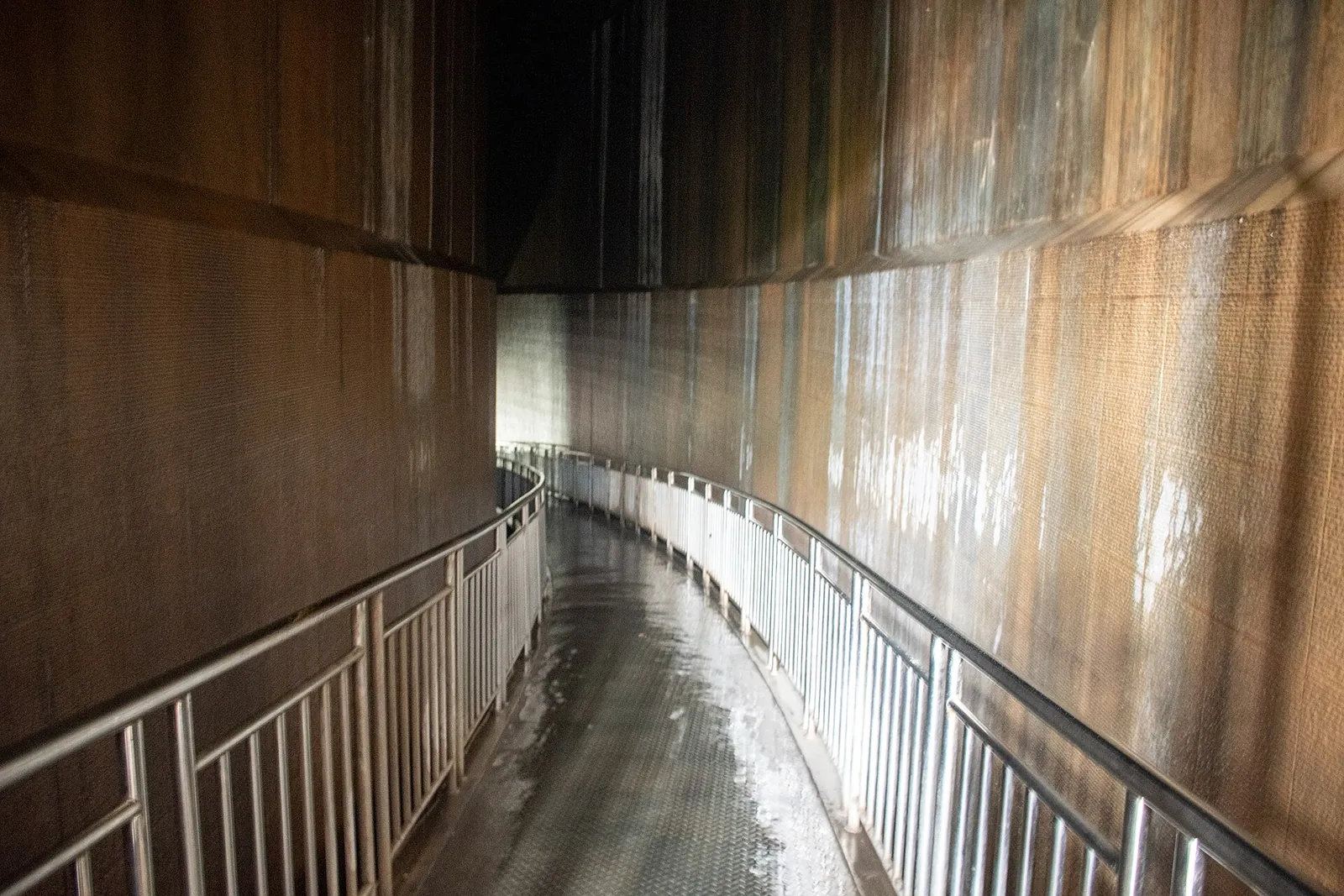
The Aceh Tsunami Museum on Jalan Sultan Iskandar Muda is a short walk or rickshaw ride from the mosque. It opened in 2009, designed by the architect Ridwan Kamil, and its wave-shaped building is meant to be walked through in order. You enter through a long, dark passage with water running down the walls. Next comes a chamber with victims' names inscribed on the walls, followed by dioramas, photographs, survivors' stories and a disaster-preparedness section. The roof is designed as an escape hill for up to 3,000 people. Treat the museum as a memorial: speak quietly, don't touch the exhibits, and don't come for photographs alone.
Opening details vary. When we checked on 3 October 2026, one ministry article listed opening every day from 09:00 to 16:00, with tickets at about IDR 10,000 for foreign visitors. Another said the museum is closed on Fridays and that entry is free. The museum's own website could not be read, so ask your hotel before you go. Avoid Friday, and allow about two hours.
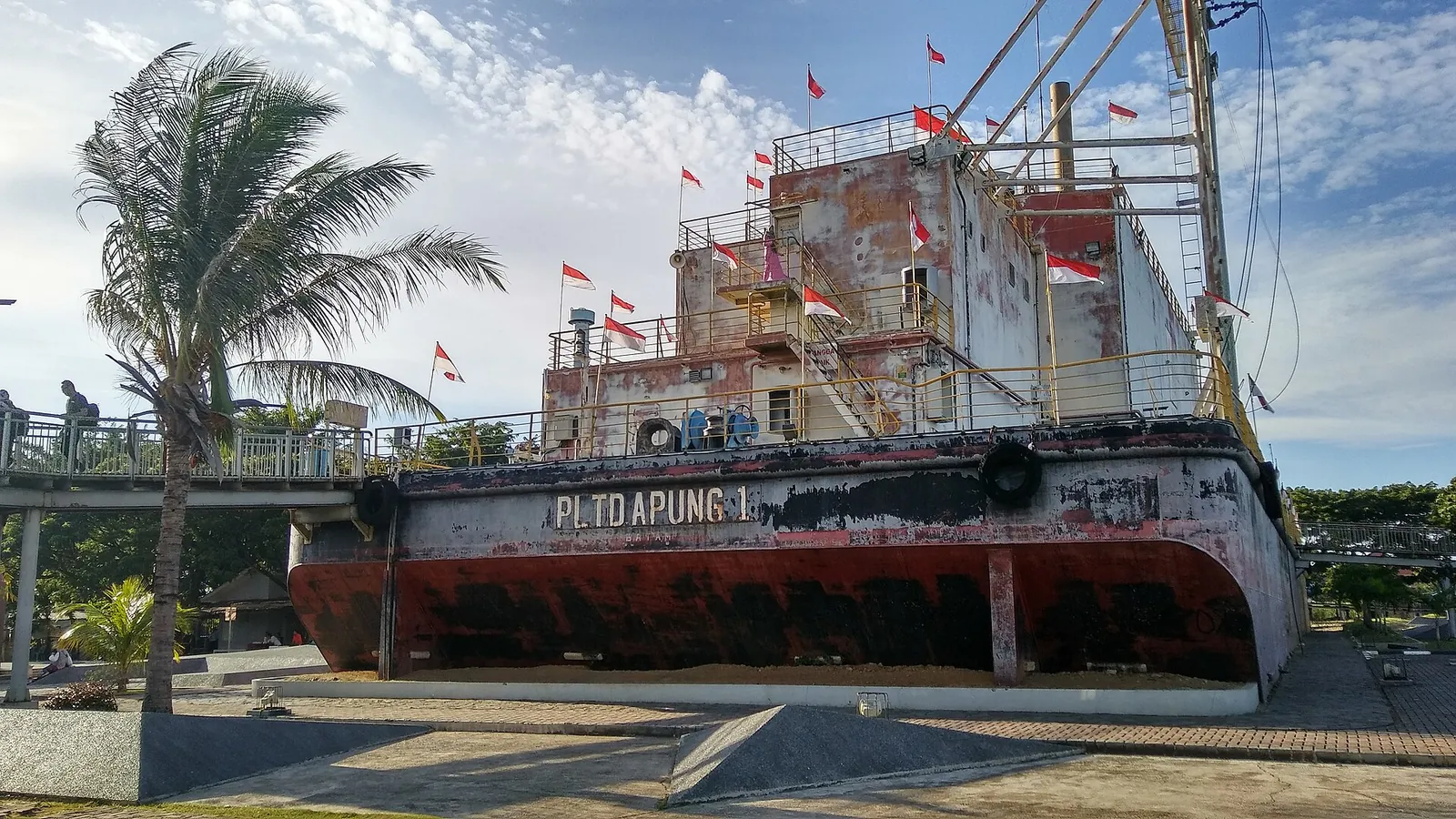
In Punge Blang Cut, a few kilometres inland, sits PLTD Apung 1. This 2,600-tonne floating power plant was moored offshore when the tsunami carried it two to three kilometres into the city. It crushed two houses, killing the people inside. The site was later turned into a memorial park with a monument and walkways. Seeing a ship this big among houses shows the tsunami's reach more clearly than any map. Go after the museum, by ride-hailing car or rickshaw.
The Sultanate city: Museum Aceh, Gunongan and Kerkhof Peucut
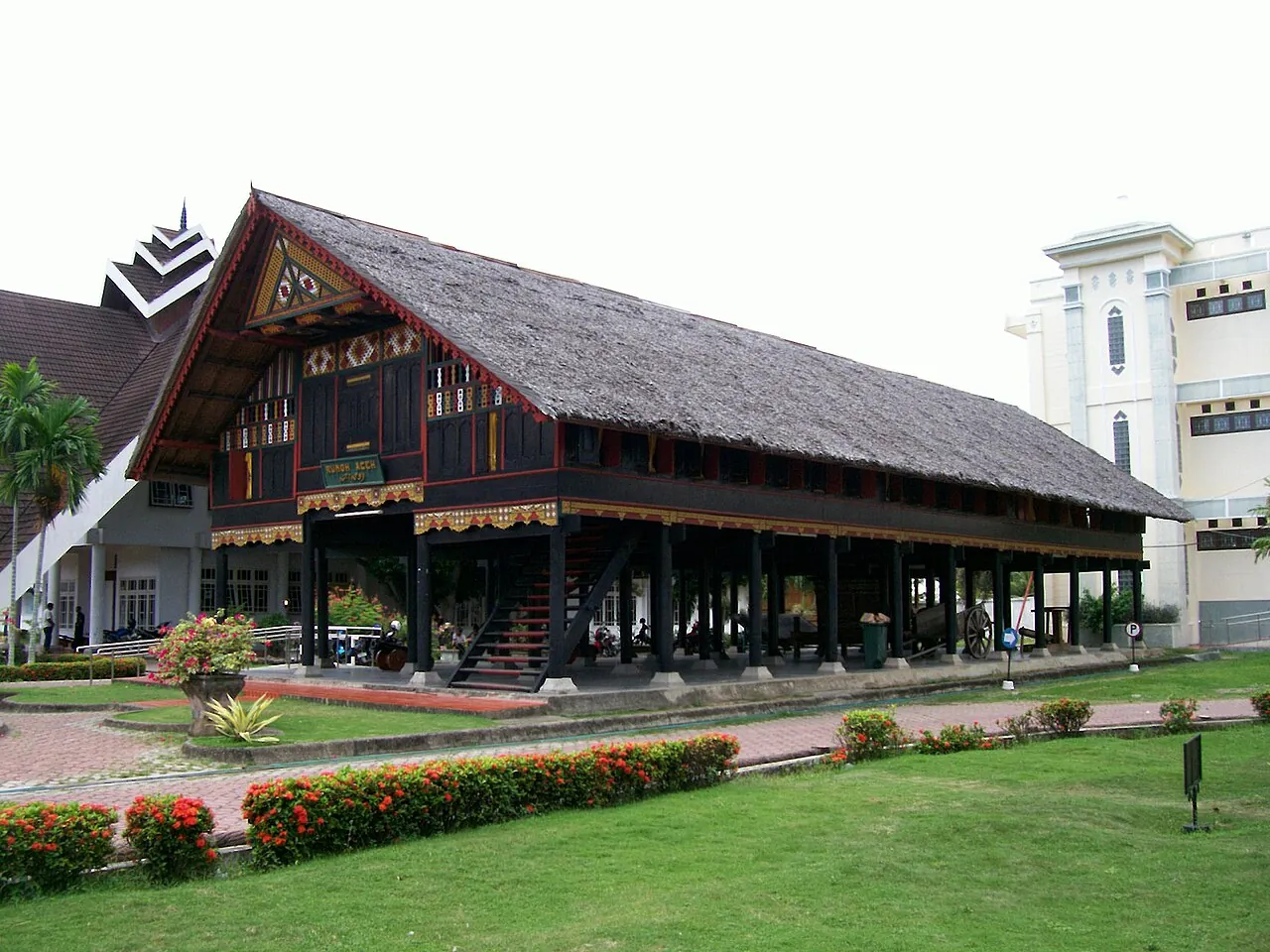
Museum Aceh on Jalan Sultan Alaidin Mahmudsyah, near the mosque, was founded by the Dutch on 31 July 1915 as the Atjeh Museum. Its centrepiece is a Rumoh Aceh, the traditional Acehnese wooden stilt house, whose front veranda was for receiving male guests and back veranda for women. The ministry lists 1,856 objects in the collection, including Islamic manuscripts. When we checked, the ministry gave opening hours of 08:30–12:00 and 14:00–16:15 daily except national holidays, and admission of IDR 5,000 for adults and IDR 3,000 for children. Note the midday closure.
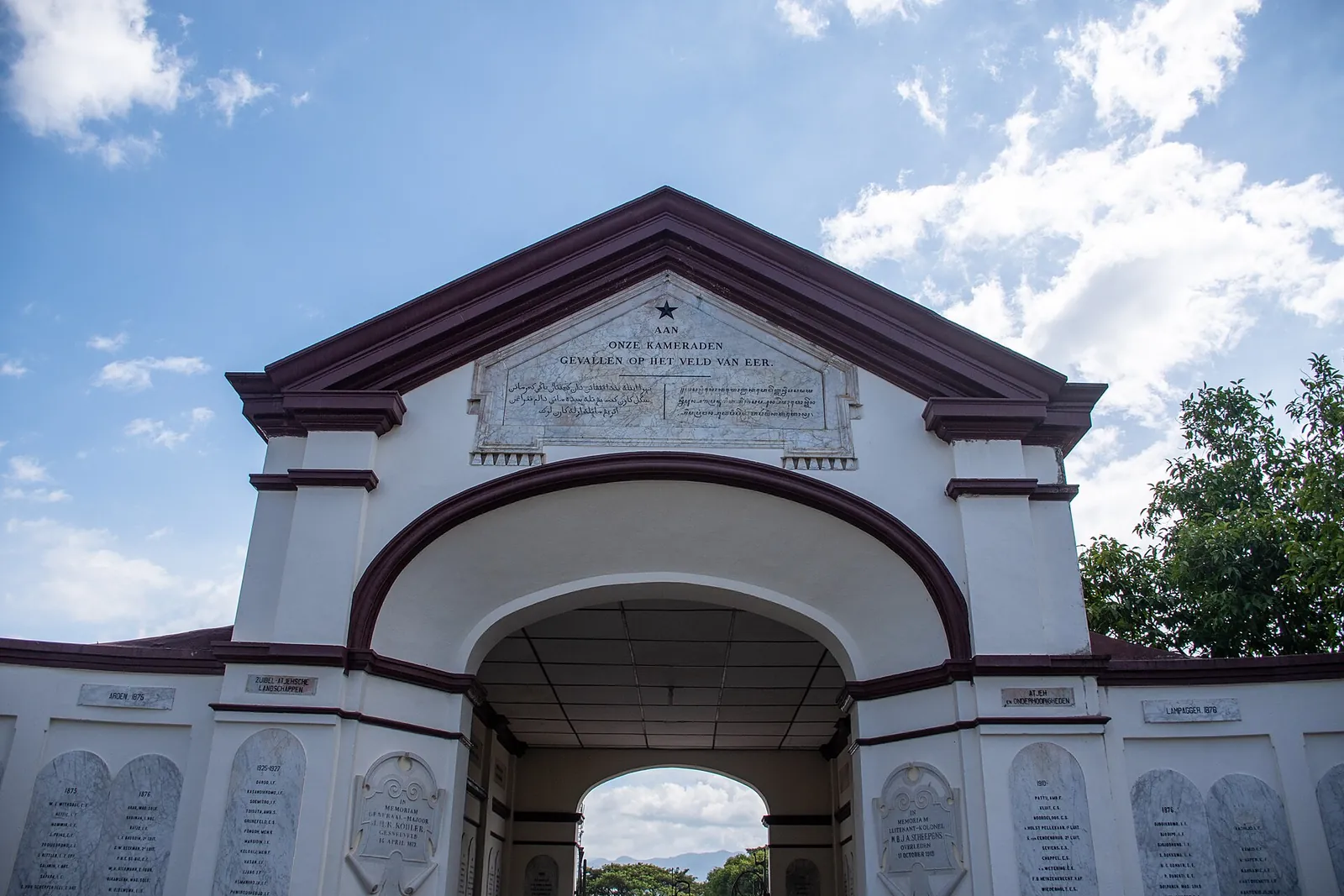
Close by, the Gunongan in Taman Sari is a white ornamental structure that, according to the ministry, Sultan Iskandar Muda built for his consort Putroe Phang, a princess from Pahang. The small domed gate called Pinto Khop once linked the garden to the palace. Also nearby, Kerkhof Peucut is the Dutch military cemetery from the Aceh War, where thousands of soldiers are buried. The Aceh War began in 1873 and the Dutch claimed victory in 1904, though resistance went on afterwards. Together with the mosque, these three sites tell the story of the Sultanate and the colonial war, and they can share one morning.
Coffee shops, sunset at Ulee Lheue and the beaches
Coffee is Banda Aceh's social life. Spend an hour in a traditional *warung kopi*, where the coffee is filtered rather than made with an espresso machine. Order a sanger, coffee with sweetened condensed milk, filtered repeatedly and shaken until it froths. The tourism ministry says the name comes from *sama-sama mengerti*, 'mutual understanding'. The beans usually come from the Gayo highlands around Takengon, and the ministry recommends Takengon for a proper coffee tour. In 2026, the city also held a Colossal Coffee Experience festival (18–20 September).
For the evening, Ulee Lheue beach in Meuraxa district, not far from the centre, is the city's sunset spot. The ministry lists parking, toilets, a prayer room and food stalls there. Lampuuk, about 17 km from the city, has white sand and beginner surf waves from November to March. The dress code applies on the beach too, so swim covered up, and only when the sea is calm.
Moving on: the ferry to Weh Island
Banda Aceh is the gateway to Weh Island (Sabang), with reefs and dive sites around Iboih, Gapang and Rubiah Island. Boats leave from the port at Ulee Lheue. The tourism ministry says the slow ferry takes a couple of hours and the fast boat about 45 minutes, and that ferries leave in the morning. Timetables change and the weather can affect sailings. Check the day's departures at the port or with your hotel before you plan the rest of the trip around them.
To combine Banda Aceh with Medan and North Sumatra, the tourism ministry suggests flying or taking the bus. Long-distance buses arrive at Batoh terminal, and ride-hailing cars, rickshaws (bentor) and minibuses run from there into the centre.
Practical questions
How many days do I need in Banda Aceh?
Two full days cover the Grand Mosque, the tsunami memorials, Museum Aceh and the Sultanate sites, plus a sunset at Ulee Lheue. Add a third for Lampuuk beach or to wait for the ferry to Weh Island.
Does Sharia law apply to tourists in Aceh?
Yes. The UK government's travel advice says Aceh's Sharia laws apply to non-Muslims too. Alcohol, gambling, extra-marital sex and same-sex activity are all illegal there. Dress modestly throughout the city, and check the current official advice before you travel.
What should I wear to the Baiturrahman Grand Mosque?
Loose clothes covering your arms and legs, with a headscarf for women. The tourism ministry says the mosque usually lends robes and headscarves to visitors who need them.
Is the Aceh Tsunami Museum open on Fridays?
Possibly not. The tourism ministry's articles disagree: one lists daily opening from 09:00 to 16:00, while another says the museum is closed on Fridays. Visit on another day, or confirm locally.
How do I get from Banda Aceh to Weh Island?
Take a ferry or fast boat from Ulee Lheue port. The tourism ministry gives a couple of hours for the slow ferry and about 45 minutes for the fast boat. Check the day's departures, which depend on the weather.
Can I drink alcohol in Banda Aceh?
No. The FCDO says consuming, producing and distributing alcohol are illegal in Aceh under Sharia law and can be punished by public caning.
Sources and checks before you travel
Reference sources for the version dated 3 October 2026. Confirm opening times, access, transport and conditions for your travel dates.
- Indonesia Travel (Ministry of Tourism): Banda Aceh ↗ — opens in a new tab
- Indonesia Travel: Aceh province ↗ — opens in a new tab
- Indonesia Travel: Baiturrahman Grand Mosque, famous for its uniqueness ↗ — opens in a new tab
- Indonesia Travel: The Grand Mosque of Baiturrahman ↗ — opens in a new tab
- Indonesia Travel: The Baiturrahman Grand Mosque, a symbol of faith and resilience ↗ — opens in a new tab
- Indonesia Travel: Aceh Tsunami Museum, traces of tragedy ↗ — opens in a new tab
- Indonesia Travel: Aceh Tsunami Museum, a symbol of resilience ↗ — opens in a new tab
- Wikipedia: Apung 1 ↗ — opens in a new tab
- Indonesia Travel: Museum Aceh ↗ — opens in a new tab
- Indonesia Travel: Museum Aceh (destination page) ↗ — opens in a new tab
- Indonesia Travel: Rumoh Acèh ↗ — opens in a new tab
- Indonesia Travel: Taman Sari Gunongan and Pinto Khop ↗ — opens in a new tab
- Indonesia Travel: Kerkhof Peucut ↗ — opens in a new tab
- Indonesia Travel: Aceh Province, the Veranda of Mecca ↗ — opens in a new tab
- Indonesia Travel: The religions of Aceh Province ↗ — opens in a new tab
- GOV.UK (FCDO): Indonesia safety and security ↗ — opens in a new tab
- GOV.UK (FCDO): Indonesia regional risks ↗ — opens in a new tab
- Indonesia Travel: Explore the modest beauty of Aceh ↗ — opens in a new tab
- Indonesia Travel: Mie Aceh ↗ — opens in a new tab
- Indonesia Travel: Ayam tangkap ↗ — opens in a new tab
- Indonesia Travel: Rumah Makan Aceh Rayeuk ↗ — opens in a new tab
- Indonesia Travel: Sanger ↗ — opens in a new tab
- Indonesia Travel: Delicious treats in Aceh ↗ — opens in a new tab
- Indonesia Travel: Kuah beulangong ↗ — opens in a new tab
- Indonesia Travel: Kue timphan ↗ — opens in a new tab
- Indonesia Travel: Banda Aceh Colossal Coffee Experience 2026 ↗ — opens in a new tab
- Indonesia Travel: Pantai Ulee Lheue ↗ — opens in a new tab
- Indonesia Travel: Surfing Lampuuk ↗ — opens in a new tab
- Indonesia Travel: Weh Island ↗ — opens in a new tab
- Ministry of Transportation (Hubud): Sultan Iskandar Muda Airport ↗ — opens in a new tab
- Wikipedia: Banda Aceh ↗ — opens in a new tab
Photo credits
The Baiturrahman Grand Mosque, with its black domes and white arcades, seen across the reflecting pool
Photograph: Si Gam — opens in a new tab · CC BY-SA 3.0 — opens in a new tab
Changes: Resized and converted to WebP; displayed with responsive crops. · Original photograph and licence details ↗ — opens in a new tab
The dark entrance passage of the Aceh Tsunami Museum, designed to recall the wave
Photograph: Rachmat04 — opens in a new tab · CC BY-SA 3.0 — opens in a new tab
Changes: Resized and converted to WebP; displayed with responsive crops. · Original photograph and licence details ↗ — opens in a new tab
PLTD Apung 1, the power-generating ship the 2004 tsunami carried inland
Photograph: Hillun Vilayl Napis — opens in a new tab · CC BY-SA 4.0 — opens in a new tab
Changes: Resized and converted to WebP; displayed with responsive crops. · Original photograph and licence details ↗ — opens in a new tab
The gateway of Kerkhof Peucut, the Dutch military cemetery from the Aceh War
Photograph: Rachmat04 — opens in a new tab · CC BY-SA 3.0 — opens in a new tab
Changes: Resized and converted to WebP; displayed with responsive crops. · Original photograph and licence details ↗ — opens in a new tab
Rumoh Aceh, the traditional stilt house in the grounds of Museum Aceh
Photograph: Si Gam Acèh — opens in a new tab · CC BY-SA 3.0 — opens in a new tab
Changes: Resized and converted to WebP; displayed with responsive crops. · Original photograph and licence details ↗ — opens in a new tab
Mie Aceh with emping crackers, served with a glass of Gayo coffee
Photograph: AIP2000 — opens in a new tab · CC BY-SA 4.0 — opens in a new tab
Changes: Resized and converted to WebP; displayed with responsive crops. · Original photograph and licence details ↗ — opens in a new tab