Sumatra · North Sumatra
Medan travel guide: Kesawan, Maimun Palace, food and onward travel
Medan is the capital of North Sumatra and the largest city on the island, and most travellers meet it only as the place between Kualanamu airport and the bus to Bukit Lawang, Berastagi or Lake Toba. It is hot, loud and congested, not a sightseeing city in the usual sense. Give it one full day anyway: the old trading street of Kesawan, a Chinese tycoon's mansion, the Deli sultans' palace and mosque, the oldest Hindu temple in town and some of the most varied street food in Indonesia sit within a short ride of each other, and the city's Malay, Chinese, Indian, Batak and Acehnese communities are easiest to taste at the table.
- Suggested time
- 1–2 nights (one full day in the city)
- Where to stay
- Merdeka Square and Kesawan for the airport train and the old town; Sun Plaza and Little India for food and shopping
- Season and timing
- Medan is hot and humid all year, with daytime highs around 31–33 °C and rain in every month. Long-term averages show September and October as the wettest months and February as the driest. Sightsee in the morning and late afternoon, and keep the hottest hours for the mansion, the mosque or a long lunch indoors.
The short answer
Plan one night if you are only passing through, or two nights for a full day in the city. Take the airport train to Medan station by Merdeka Square and stay in the centre: around Merdeka Square and Kesawan for the train and the old town, or near Sun Plaza and Little India for food. Spend the morning on Kesawan and the Tjong A Fie Mansion, cross by taxi to the Grand Mosque and Maimun Palace, then eat on Jalan Selat Panjang or in Little India at night. Leave the next morning for Bukit Lawang, Berastagi or Lake Toba, each of which deserves its own nights.
Treat Medan as a stopover with one good day
The tourism ministry describes Medan as North Sumatra's economic hub and the largest city in Sumatra, a place people have moved to from all over Indonesia, and it warns that traffic is part of the experience: minibuses, becak and taxis compete for space with motorbikes. That shapes the plan. The sights worth your time are in and around the old centre, so choose a hotel there and do the city in one full day rather than trying to cross it several times.
Merdeka Square (Lapangan Merdeka) is the most practical base. The Railink airport train ends at Medan station on its edge, the old post office and the colonial-era hotels face it, and the Kesawan heritage street starts a few minutes' walk away. The Grand Inna Medan on Jalan Balai Kota, built in 1898 as Hotel De Boer, is the oldest hotel in the city.
If food is the point of your stay, look instead around Sun Plaza and Jalan Zainul Arifin on the edge of Kampung Keling, Medan's Little India, where evening food alleys and Indian restaurants are on the doorstep. Budget hotels also cluster near the Grand Mosque on Jalan Sisingamangaraja, the road that leads south towards Amplas bus terminal. Wherever you book, check the distance to Medan station or your bus departure point: a cheap room on the wrong side of the city can cost an hour in traffic on your travel day.
Eat your way through Medan
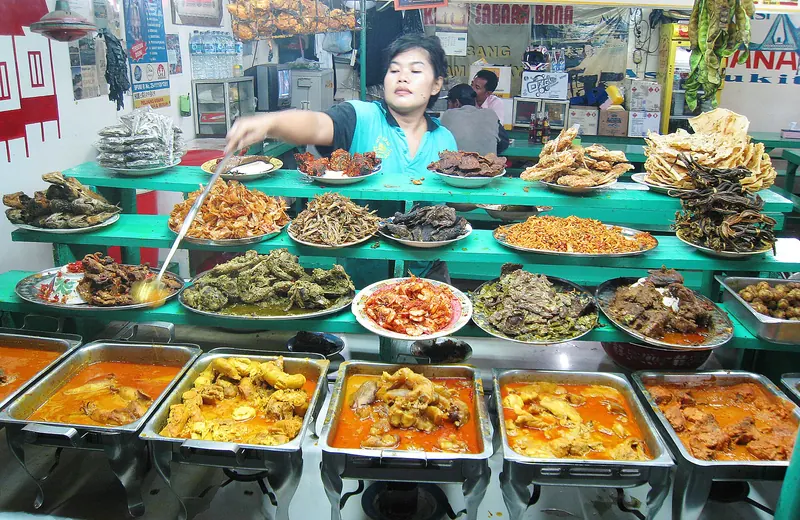
Food is the main reason to stay longer than a night. The ministry calls Medan a melting pot whose Chinese, Malay, Minang, Indian and Javanese communities have produced a cuisine of their own, and the city is a food-travel destination for Indonesians themselves. Plan meals around neighbourhoods rather than one famous name.
Kesawan in the morning. Kedai Kopi Apek on Jalan Hindu, which the ministry dates to 1922, serves Sidikalang coffee with toast and a soft-boiled egg in one of the city's oldest coffee houses. Tip Top on Jalan Ahmad Yani, opposite the Tjong A Fie Mansion, is a Dutch-era restaurant whose veranda looks out over the Kesawan street.
Jalan Selat Panjang at night. This street and its neighbours hold some of Medan's oldest Chinese eateries and are the ministry's pick for a night out eating: noodle houses such as Bakmi Tiong Sin, plate-cooked sweet martabak, steamed buns and Chinese-Indonesian restaurants. Many dishes here contain pork; if you avoid it, ask first.
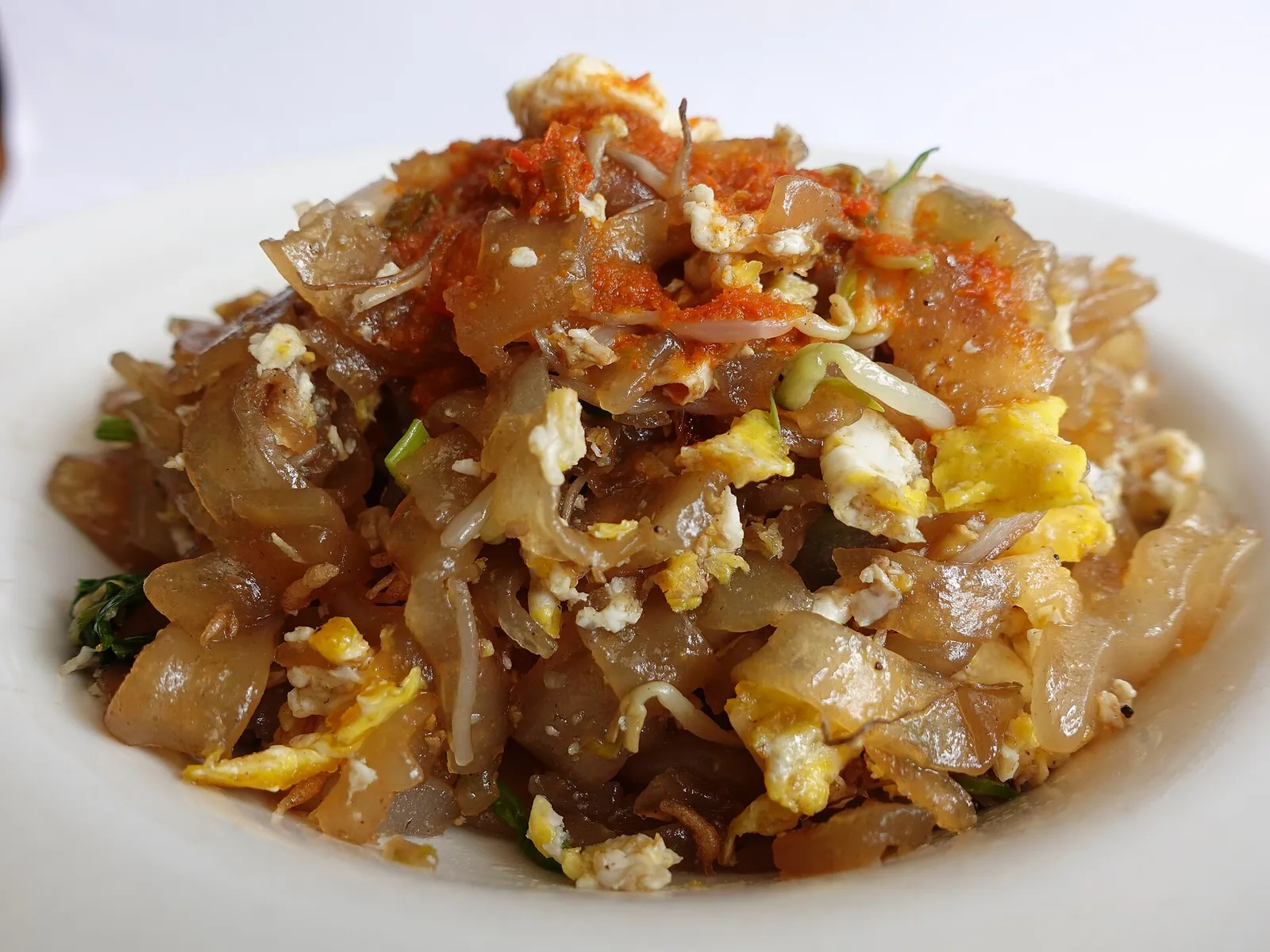
Little India in the evening. The alleys of Kampung Keling around Jalan Pagaruyung come alive after sunset with satay, martabak telur, fried rice and Minang-style rice dishes, and the Indian restaurants nearby serve curries and vegetarian food. For halal food elsewhere, the ministry's own list includes Mie Aceh Titi Bobrok on Jalan Setia Budi, Sipirok for bone-marrow soup and the mie balap cooks on Jalan Wahidin.
- Durian: Durian Ucok on Jalan KH Wahid Hasyim, in business since the 1980s, is the city's best-known durian stop; when we checked on 2026-10-03, the ministry listed it as open 24 hours and said the sellers will replace a fruit you are not happy with.
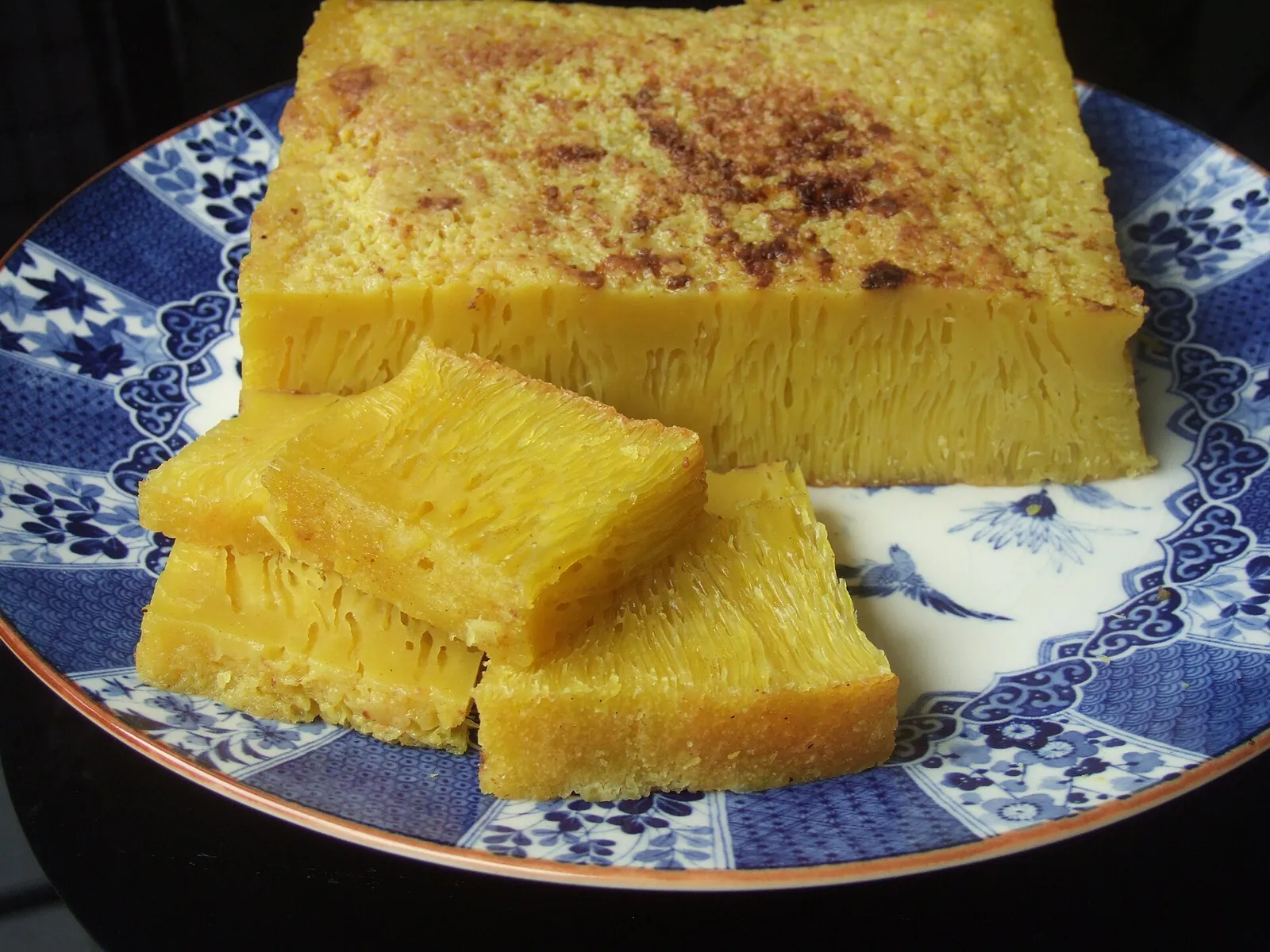
- Take-home cakes: bika ambon and bolu (rolled sponge cake) are Medan's classic gifts; the best-known bika ambon shops are on Jalan Mojopahit and Jalan Sekip, and it is also sold at Kualanamu airport.
- Drinks: look for markisa (passion fruit) syrup and teh susu telur, a mix of tea, milk and raw egg.
Make time for the local food
What to eat and where to look
Soto Medan
Medan's own soto: a spiced broth enriched with coconut milk, with chicken, beef, prawns or offal and often a potato fritter (perkedel), eaten with rice. The ministry says its favourite shop has queues as soon as it opens.
- Where to look
- Long-running soto houses in the centre; the ministry singles out Morning Rays on Jalan Sei Deli, open since 1962.
- Fit it into your day
- Breakfast before the Kesawan walk, or an early lunch.
Rich with coconut milk; ask which meat is in the bowl if you avoid offal, and note that some versions use pork.
Mie Aceh
Thick yellow noodles from neighbouring Aceh province, stir-fried dry or served in a hot, curry-like broth with beef, mutton, prawns or crab, and usually topped with fried shallots and served with emping crackers, cucumber and lime.
- Where to look
- Mie Aceh Titi Bobrok on Jalan Setia Budi is the name the ministry gives as the city's most popular; Acehnese stalls are found across the city.
- Fit it into your day
- A filling dinner; choose fried (goreng) or with sauce (kuah/rebus).
Spicy by default, and seafood versions contain shellfish. Halal.
Chinese noodles on Jalan Selat Panjang
Medan's Chinese community gives the city some of Indonesia's best noodle houses: bakmi and wonton noodles, wok-fried kwetiau, steamed buns and plate-cooked sweet martabak.
- Where to look
- Jalan Selat Panjang and the surrounding streets, including Bakmi Tiong Sin and Martabak Piring Murni, which the ministry lists.
- Fit it into your day
- Make it dinner, then move along for a sweet martabak as dessert.
Pork is common in noodles, dumplings and buns; ask for a pork-free version or choose another area if you eat halal.
Laksa Medan
A local laksa with a thick, spiced coconut-milk broth over yellow noodles or rice vermicelli, topped with egg, prawns and bean sprouts; savoury with a slight sweetness.
- Where to look
- Long-established noodle stalls and coffee shops in the centre; ask locally for the nearest.
- Fit it into your day
- A mid-afternoon bowl between sights.
Contains prawn and egg.
Bika ambon
Medan's signature cake, named after Jalan Ambon where it first became popular: a chewy, honeycombed yellow cake fermented with palm sap and flavoured with coconut milk, lime leaves and lemongrass.
- Where to look
- Specialist shops on Jalan Mojopahit and Jalan Sekip, the Pasar Petisah area and the shops at Kualanamu airport.
- Fit it into your day
- Buy a whole cake on your last day to take with you.
Contains egg. The ministry says it keeps three to four days at room temperature, longer refrigerated.
Durian
Medan is a durian city: you choose a fruit, it is split open in front of you and eaten on the spot, or you try durian pancakes and durian ice cream.
- Where to look
- Durian Ucok on Jalan KH Wahid Hasyim, which the ministry lists as open around the clock.
- Fit it into your day
- A late-night stop after dinner rather than a meal in itself.
The smell is strong and lingers; eat it on the spot, or ask for the special packaging the ministry says Durian Ucok offers for flights.
Kesawan and the old trading town on foot
Kesawan, the corridor along Jalan Ahmad Yani, is the oldest part of Medan. The ministry's heritage guide says it was first a Malay settlement, then a trading centre for Chinese merchants from Malacca, and that after a great fire in 1890 it was rebuilt with the Chinese shophouses and Dutch colonial buildings that line it today. Some of them are worn; many have kept their old facades. Walk it in the morning before the heat, from Merdeka Square south.
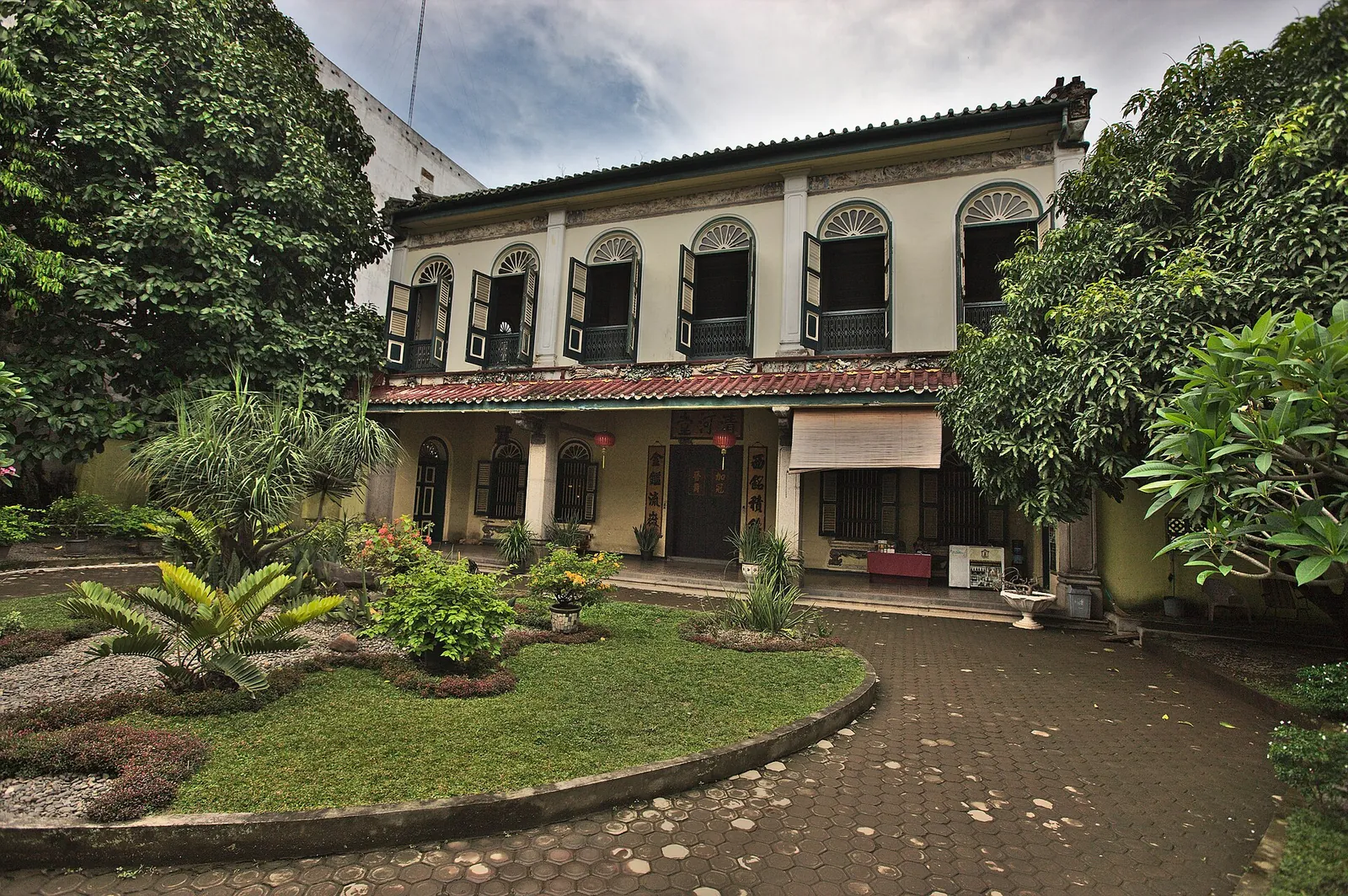
The Tjong A Fie Mansion at Jalan Ahmad Yani 105 is the one interior to see. Tjong A Fie was a Chinese merchant who made his fortune in Sumatra's plantation economy; his official museum site says the two-storey, 35-room house was built in 1895 around a central open-air courtyard, following feng-shui principles, with Chinese, Malay and Art Deco influences. It opened to the public as a museum in June 2009. When we checked on 2026-10-03, the official site listed opening hours of 9:00 to 17:00 every day, with no entry after 16:30 and closure on Chinese New Year Day, and an entry fee of IDR 35,000 that includes a guided tour in English or Indonesian.
Around it, look for the London Sumatra building at Jalan Ahmad Yani No. 2, built in 1906 as the headquarters of the British plantation firm Harrisons & Crosfield and, according to the ministry, the first building in Medan with a lift; the curved two-storey Warenhuis at the corner of Jalan Hindu, designed by Gerard Bos in 1918 as the city's first department store; and the old main post office at Jalan Pos No. 1, now restored as the Pos Bloc Medan creative and community space. Nearby in Petisah, the Tjong Yong Hian flower garden on Jalan Kejaksaan, honouring Tjong A Fie's brother, opened in 2011 with a gallery of historical photographs.
The sultan's palace, the Grand Mosque and Little India
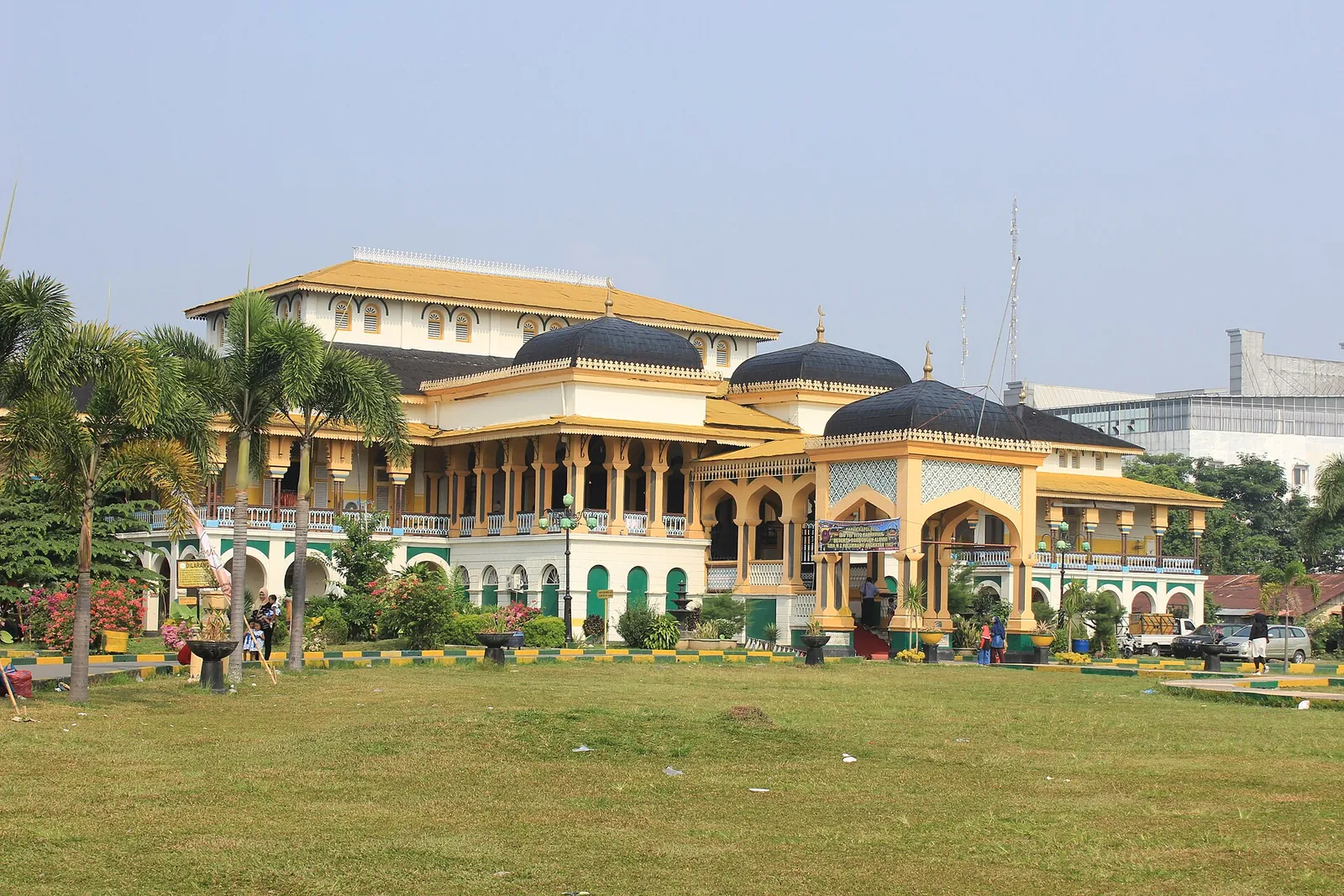
South of the centre, the Deli Sultanate's two great buildings stand a short walk apart. Maimun Palace (Istana Maimun) on Jalan Brigjen Katamso was built for Sultan Ma'moen Al Rasyid Perkasa Alamsjah: the foundation stone was laid on 26 August 1888 and the palace was finished on 18 May 1891. The ministry describes a 2,772-square-metre complex of 30 rooms in a main building and two wings, mixing Malay Deli, Middle Eastern, Spanish, Indian, Dutch and Italian elements, with the Meriam Puntung, a legendary broken cannon, in the grounds. Only some rooms are open, and visitors can hire Deli court costume for photographs.
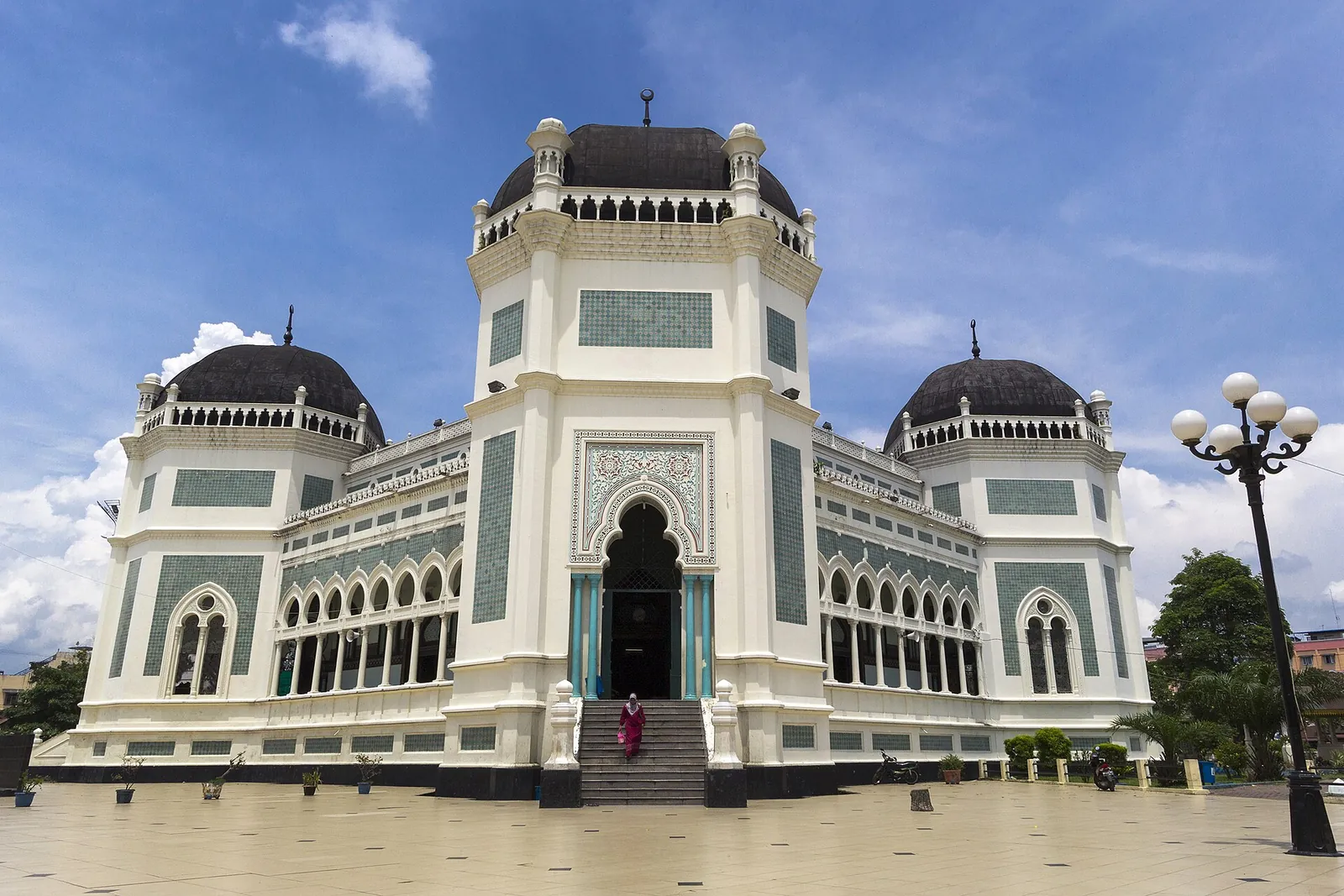
The Grand Mosque, Masjid Raya Al Mashun, on Jalan Sisingamangaraja was begun in 1906 under the same sultan and held its first Friday prayers on 10 September 1909. Its octagonal plan and five black domes are the city's best-known silhouette, and the ministry notes marble from Italy and Germany, stained glass from China and chandeliers from France. It is a working mosque: dress modestly, cover arms and legs, avoid prayer times and take your shoes off where others do. Women may be directed to a separate entrance and section.
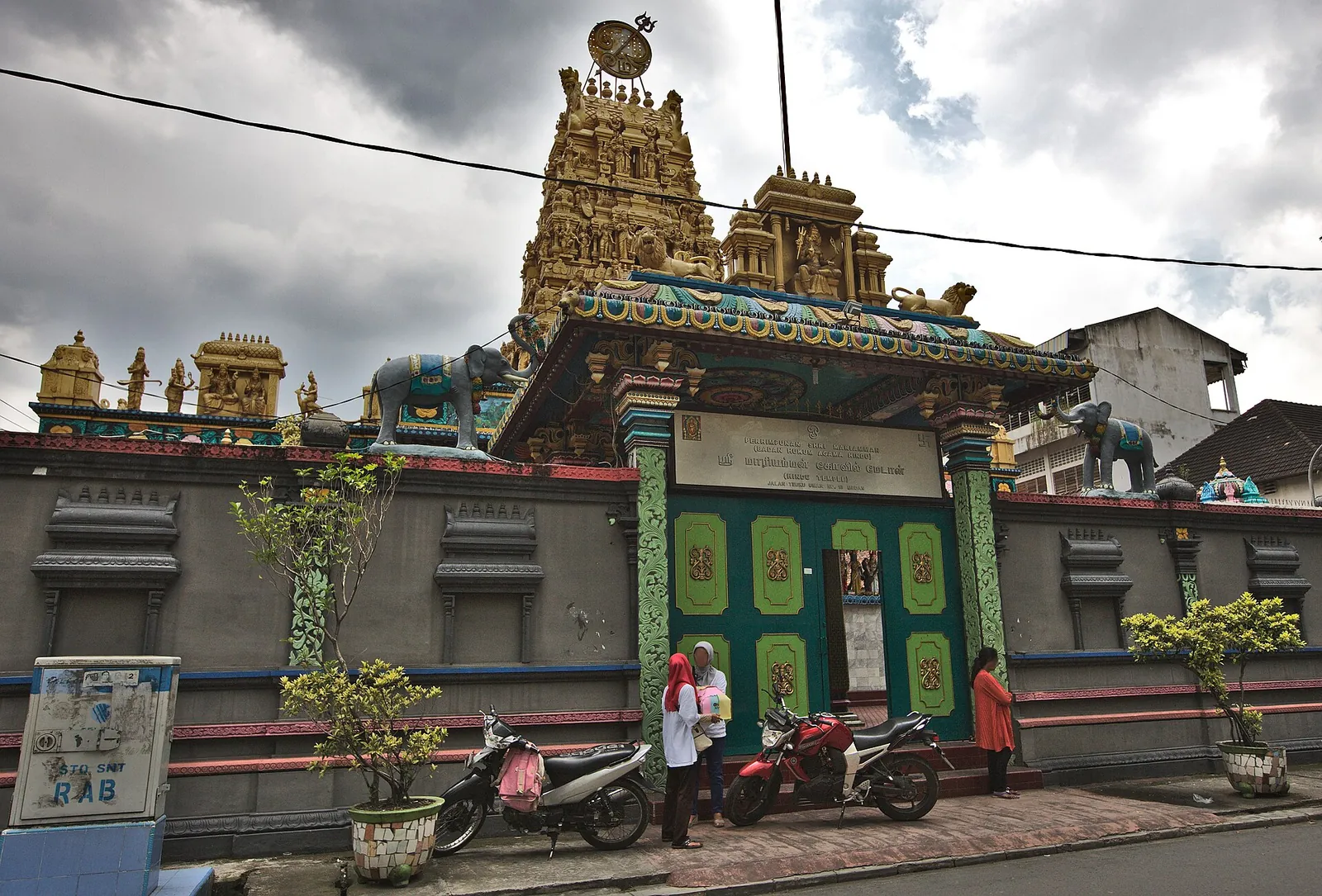
West of the centre, the Shri Mariamman Temple at the corner of Jalan Teuku Umar and Jalan Zainul Arifin is Medan's oldest Hindu temple, founded in 1884 for the city's Tamil community, in a South Indian (Dravidian) style. It marks Kampung Keling, the Little India quarter, which is also where you will want to eat in the evening. Ask before photographing people at worship, and keep your voice down in all three places.
- Graha Maria Annai Velangkanni: a Catholic shrine built in the style of an Indian temple, inaugurated on 1 October 2005, at Jalan Sakura III in Tanjung Selamat, about 11 km from downtown; worth a taxi if you have a second day.
- Maha Vihara Maitreya: in Cemara Asri, the largest Buddhist temple complex in Medan, with statues, a koi pond and a vegetarian canteen.
- Vihara Gunung Timur: a large Taoist temple about 500 m from Shri Mariamman, especially busy at Chinese New Year and Cap Go Meh.
Getting in and getting around
Kualanamu International Airport (KNO) opened in 2013 in Deli Serdang Regency, replacing the old Polonia airport in the city, and lies about 23 km east of downtown. The Railink airport train runs between the airport and Medan station beside Merdeka Square in around 30 minutes, with an intermediate stop at Bandar Khalipah. It is the most predictable way in; Wikivoyage reports that tickets are paid by card rather than cash, so carry one that works in Indonesia and check the current timetable for an early or late flight. DAMRI buses run to Jalan Gatot Subroto by Plaza Medan Fair and to Amplas terminal and take 60 to 90 minutes or more in traffic; taxis and the Grab and Gojek apps also work from the airport.
In the city, metered Blue Bird or Express taxis and the Grab and Gojek apps avoid the haggling. The ministry's advice for other taxis and for becak motor, the noisy motorised rickshaws, is to agree the destination and price before you get in; Wikivoyage warns of drivers who quote one price and demand ten times as much on arrival, so confirm the amount clearly and keep small notes. The green Trans Metro Deli buses link Merdeka Walk with Pinang Baris and Amplas terminals on fixed routes, and are paid by electronic money or QRIS. The small sudako minibuses are cheap but hard to use without Indonesian.
The ministry's Medan page still mentions ships from Penang, but Wikivoyage reports that passenger ferries no longer run between Penang and Belawan, Medan's port. Unless you can confirm a current sailing with an operator, fly from Malaysia: Kualanamu has direct flights from Kuala Lumpur, Penang and Singapore among other cities.
A workable one-day plan
This is an editorial suggestion, not a timetable. Arrive the evening before if you can, and check the opening times of each place on the day.
- Morning — Kesawan: coffee and toast at Kedai Kopi Apek, then the Tjong A Fie Mansion soon after it opens, and a slow walk past the London Sumatra building, the Warenhuis and the old post office on Merdeka Square.
- Midday — the Deli Sultanate: a taxi to the Grand Mosque outside prayer times, then the short walk to Maimun Palace; lunch indoors through the hottest hours.
- Late afternoon — Little India: the Shri Mariamman Temple and Vihara Gunung Timur, then satay and martabak in Kampung Keling as the stalls open.
- Evening — Selat Panjang or durian: a Chinese noodle dinner on Jalan Selat Panjang, or Durian Ucok if you are brave.
- Next morning: leave early for Bukit Lawang, Berastagi or Lake Toba before the traffic builds.
Onward: Bukit Lawang, Berastagi and Lake Toba
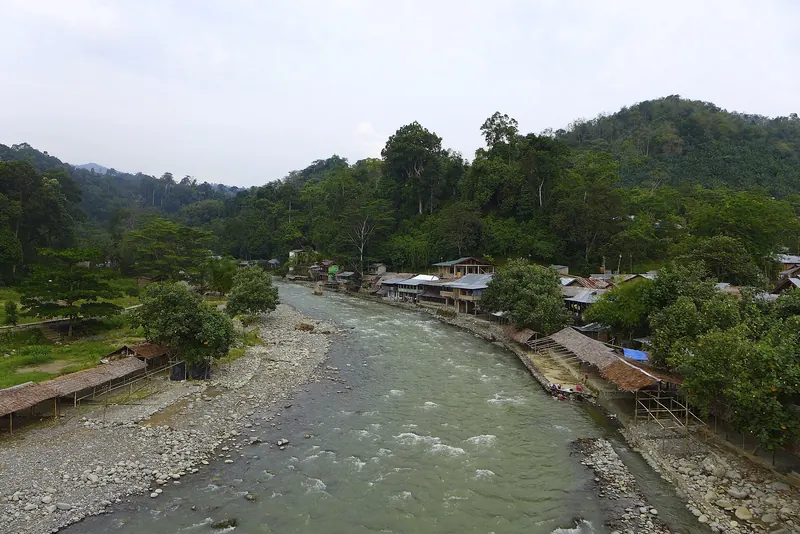
Bukit Lawang, the jungle village on the edge of Gunung Leuser National Park, is about 90 km north-west of Medan. The ministry says buses leave frequently from Pinang Baris terminal on Jalan Gatot Subroto and take about three hours, or you can hire a car with a driver; the Trans Metro Deli K1M bus runs to Pinang Baris from Merdeka Walk.
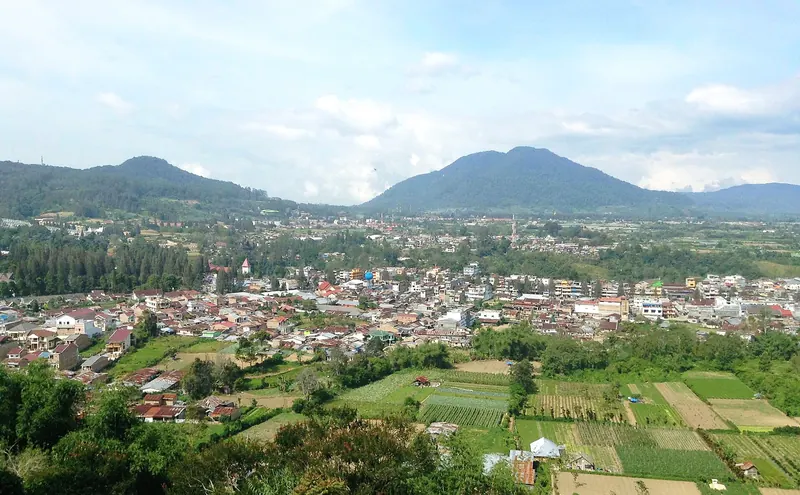
Berastagi, the old Dutch hill station in the Karo highlands, sits at about 1,300 m with daytime temperatures the ministry puts at 17 to 20 °C, a welcome change from Medan's heat. It is roughly 70 km from the city and about two hours by road, with views of the Sinabung and Sibayak volcanoes; check the current volcano status before planning a hike.
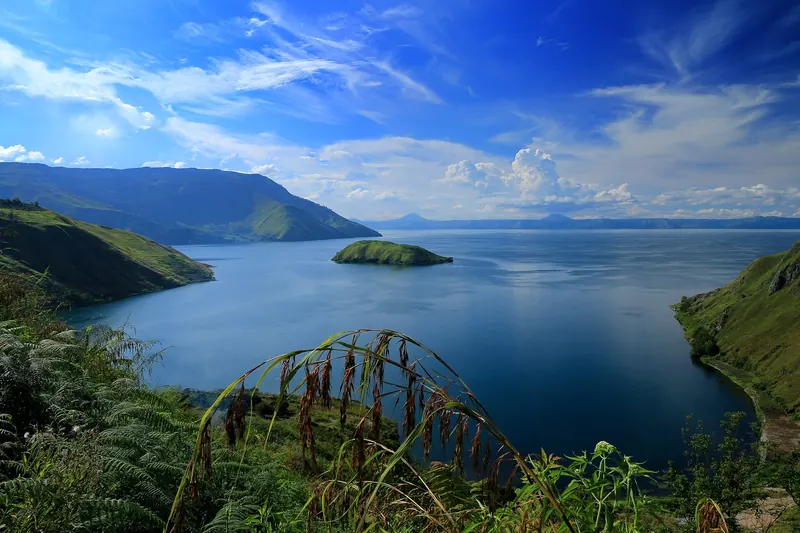
Lake Toba: Parapat, the lakeside town on the mainland shore, is 176 km from Medan. The ministry says public buses take under six hours on two routes, direct or through Berastagi, so you can break the journey in the highlands. The faster alternative is to fly from Kualanamu to Sisingamangaraja XII (Silangit) airport at Siborong-borong and continue by road. Each of these places needs at least two nights; do not try them as day trips from Medan.
Practical questions
Is Medan worth visiting or just a transit stop?
Most visitors use it as a transit point, but one full day is worthwhile: Kesawan and the Tjong A Fie Mansion, Maimun Palace and the Grand Mosque, Little India and some of Indonesia's most varied street food are all close to the centre. If you are short of time, one night between the airport and your onward bus is enough.
How do I get from Kualanamu airport to Medan?
The Railink airport train runs to Medan station beside Merdeka Square in around 30 minutes and is the most reliable option; pay by card and check the current timetable for very early or late flights. DAMRI buses to Plaza Medan Fair and Amplas terminal are slower, and taxis and ride-hailing apps are also available.
Where should I stay in Medan?
Around Merdeka Square and Kesawan if you arrive by the airport train and want to walk the old town. Near Sun Plaza and Little India if food and shopping matter more. Budget hotels also cluster near the Grand Mosque on Jalan Sisingamangaraja.
How do I get from Medan to Lake Toba?
By road to Parapat, 176 km away: the ministry says public buses take under six hours, either direct or via Berastagi, and travel agents can arrange a car with a driver. The quicker option is a flight from Kualanamu to Sisingamangaraja XII (Silangit) airport, then a road transfer to the lake.
How do I get from Medan to Bukit Lawang?
Buses leave frequently from Pinang Baris terminal on Jalan Gatot Subroto and take about three hours, according to the ministry; a private car arranged through your guesthouse is easier with luggage.
Is it easy to find halal food in Medan, and is there pork?
Both are easy to find. Malay, Acehnese, Minang and Indian Muslim food is everywhere, and the ministry publishes its own list of halal favourites. Chinese eateries, especially around Jalan Selat Panjang, and Batak restaurants often serve pork, so ask before ordering if you avoid it.
What does the Tjong A Fie Mansion cost?
When we checked on 2026-10-03, the official site listed an entry fee of IDR 35,000 including a guided tour in English or Indonesian, and opening hours of 9:00 to 17:00 daily with last entry at 16:30. It closes on Chinese New Year Day.
Sources and checks before you travel
Reference sources for the version dated 3 October 2026. Confirm opening times, access, transport and conditions for your travel dates.
- Indonesia Travel (Ministry of Tourism): Medan ↗ — opens in a new tab
- Indonesia Travel: 10 tempat bersejarah di Medan (10 historic places in Medan) ↗ — opens in a new tab
- Indonesia Travel: 6 destinasi wisata sejarah di Medan (6 historic sights in Medan) ↗ — opens in a new tab
- Tjong A Fie Mansion (official site): Visit Us ↗ — opens in a new tab
- Tjong A Fie Mansion (official site): home page ↗ — opens in a new tab
- Indonesia Travel: 10 tasty halal food you must find in Medan ↗ — opens in a new tab
- Indonesia Travel: Culinary on Jalan Selat Panjang ↗ — opens in a new tab
- Indonesia Travel: Bika Ambon (Indonesian) ↗ — opens in a new tab
- Indonesia Travel: Durian Ucok Medan ↗ — opens in a new tab
- Indonesia Travel: Laksa Medan (Indonesian) ↗ — opens in a new tab
- Indonesia Travel: Bukit Lawang, door to the hills ↗ — opens in a new tab
- Indonesia Travel: Berastagi ↗ — opens in a new tab
- Indonesia Travel: Lake Toba ↗ — opens in a new tab
- Wikipedia: Soto (food), Soto Medan entry ↗ — opens in a new tab
- Wikipedia: Mie aceh ↗ — opens in a new tab
- Wikipedia: Kualanamu International Airport ↗ — opens in a new tab
- Wikivoyage: Medan ↗ — opens in a new tab
Photo credits
Maimun Palace, built for the Deli sultans between 1888 and 1891
Photograph: Mimihitam — opens in a new tab · CC BY-SA 4.0 — opens in a new tab
Changes: Resized and converted to WebP; displayed with responsive crops. · Original photograph and licence details ↗ — opens in a new tab
Masjid Raya Al Mashun, Medan's Grand Mosque, first used for Friday prayers in 1909
Photograph: Herusutimbul — opens in a new tab · CC BY-SA 4.0 — opens in a new tab
Changes: Resized and converted to WebP; displayed with responsive crops. · Original photograph and licence details ↗ — opens in a new tab
The Tjong A Fie Mansion on Kesawan's Jalan Ahmad Yani, now a museum
Photograph: Pratyeka — opens in a new tab · CC BY-SA 3.0 — opens in a new tab
Changes: Resized and converted to WebP; displayed with responsive crops. · Original photograph and licence details ↗ — opens in a new tab
Shri Mariamman Temple, founded in 1884, at the edge of Medan's Little India
Photograph: Pratyeka — opens in a new tab · CC BY-SA 3.0 — opens in a new tab
Changes: Resized and converted to WebP; displayed with responsive crops. · Original photograph and licence details ↗ — opens in a new tab
Bika ambon, Medan's signature honeycombed cake
Photograph: Midori — opens in a new tab · CC BY 3.0 — opens in a new tab
Changes: Resized and converted to WebP; displayed with responsive crops. · Original photograph and licence details ↗ — opens in a new tab
Mi balap, the fast-fried noodles of Medan
Photograph: Nafisathallah — opens in a new tab · CC BY-SA 4.0 — opens in a new tab
Changes: Resized and converted to WebP; displayed with responsive crops. · Original photograph and licence details ↗ — opens in a new tab