Sumatra · West Sumatra
Padang travel guide: nasi padang, the old harbour and onward boats
Most travellers pass through Padang on the way to somewhere else: up to Bukittinggi and the Minangkabau highlands, or out to sea on the Mentawai boats that leave from the old harbour on the Batang Arau river. That is a reasonable plan, but the capital of West Sumatra deserves at least an evening of its own. This is the city that gave its name to nasi padang, the rice-and-many-dishes meal sold all over Indonesia, and eating it here, with rendang cooked the slow Minangkabau way, is the clearest reason to stop. Add the colonial-era warehouses along the river, a sunset on the city beach and a short climb up Gunung Padang, and one or two nights fill easily.
- Suggested time
- 1–2 nights
- Where to stay
- Batang Arau old town for the Mentawai boats; Padang Beach or the Padang Barat centre for food, sunsets and road connections to the highlands
- Season and timing
- Padang is one of Indonesia's wettest cities, with rain in every month and February the least wet; temperatures stay around 26 °C all year. Plan outdoor sightseeing for the morning and keep an indoor option such as the museum in reserve.
The short answer
Give Padang one night if you are passing through, two if you want the old town, a museum and Air Manis beach as well. Sleep by the Batang Arau river in the old harbour quarter if you are catching a Mentawai boat; sleep near Padang Beach (Taplau) or in the Padang Barat centre if you are heading up to Bukittinggi, which is about 90 km and roughly a two-hour drive away. Arrive at Minangkabau International Airport (PDG), take the airport train or a taxi into town, and plan your meals around nasi padang, sate padang in the evening and soto padang for breakfast.
Pick your base by where you go next
Padang is a big, spread-out city of nearly a million people, so the part you sleep in matters more than the hotel's star rating. Decide first what the stay is for: an early boat to the Mentawai Islands, a road trip up to the highlands, or a couple of days of eating and walking in the city itself.
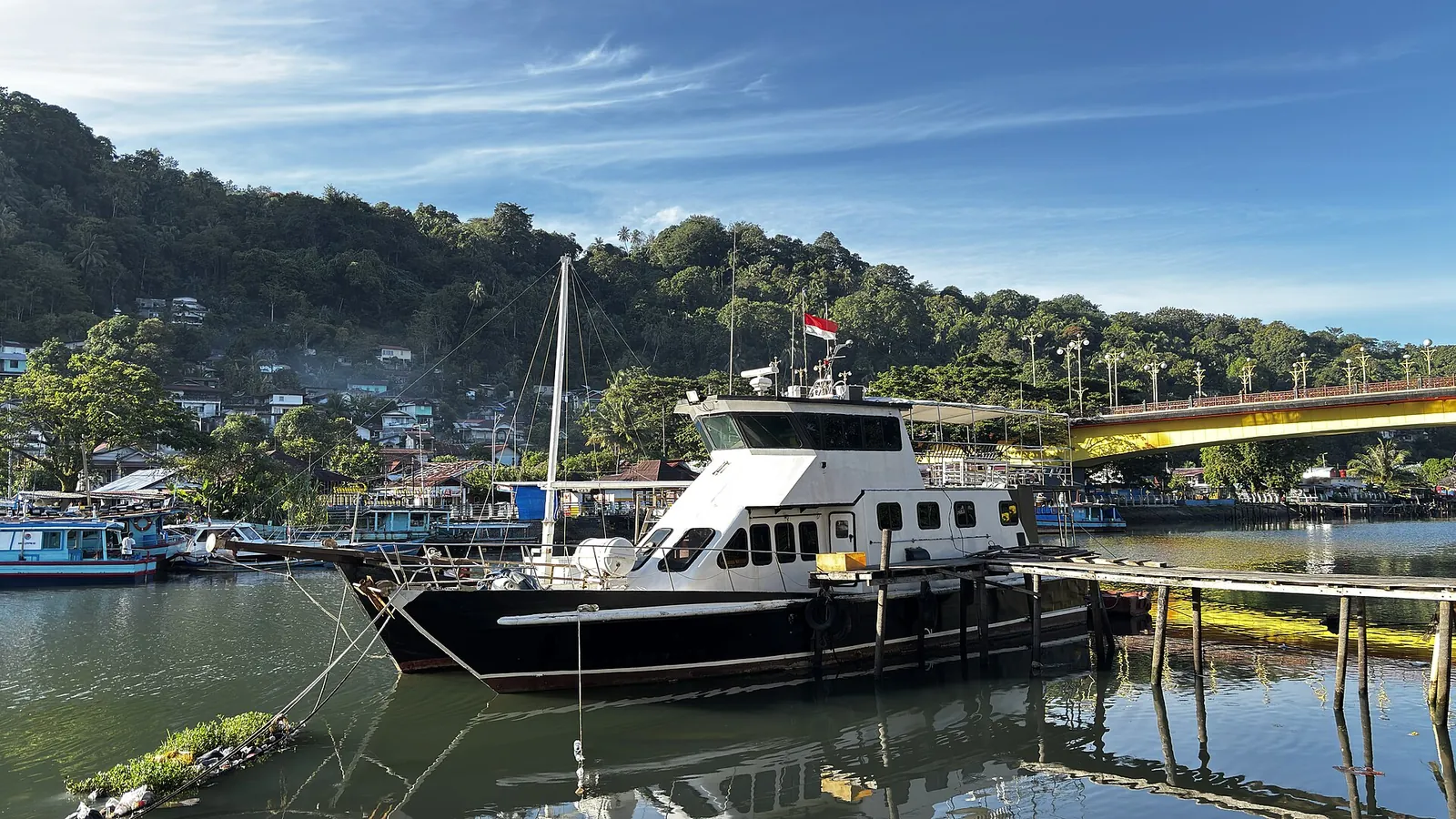
Batang Arau, the old harbour quarter, is where the Mentawai Fast boats leave from: the operator gives its address as Jalan Batang Arau, Pelabuhan Muaro Padang. It is also the old town, with warehouses and merchant houses along the river and the Siti Nurbaya bridge at hand. Choose it for the night before a boat, and for evenings on the riverbank.
Padang Beach (Taplau) and the Padang Barat centre suit everyone else. The beach strip runs from Purus down to the mouth of the Batang Arau, with food stalls and sunsets over the Indian Ocean, and the commercial streets inland around Kampung Jao and Pasar Raya put you close to restaurants, banks and the minibuses. Compare the exact location before booking: the city is spread out, and a hotel described simply as "in Padang" can be a long taxi ride from the old town and the beach.
Nasi padang and rendang at the source
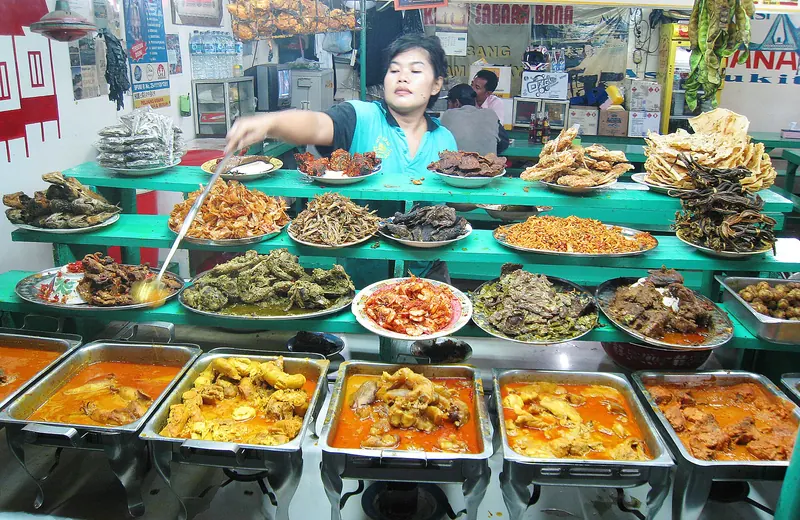
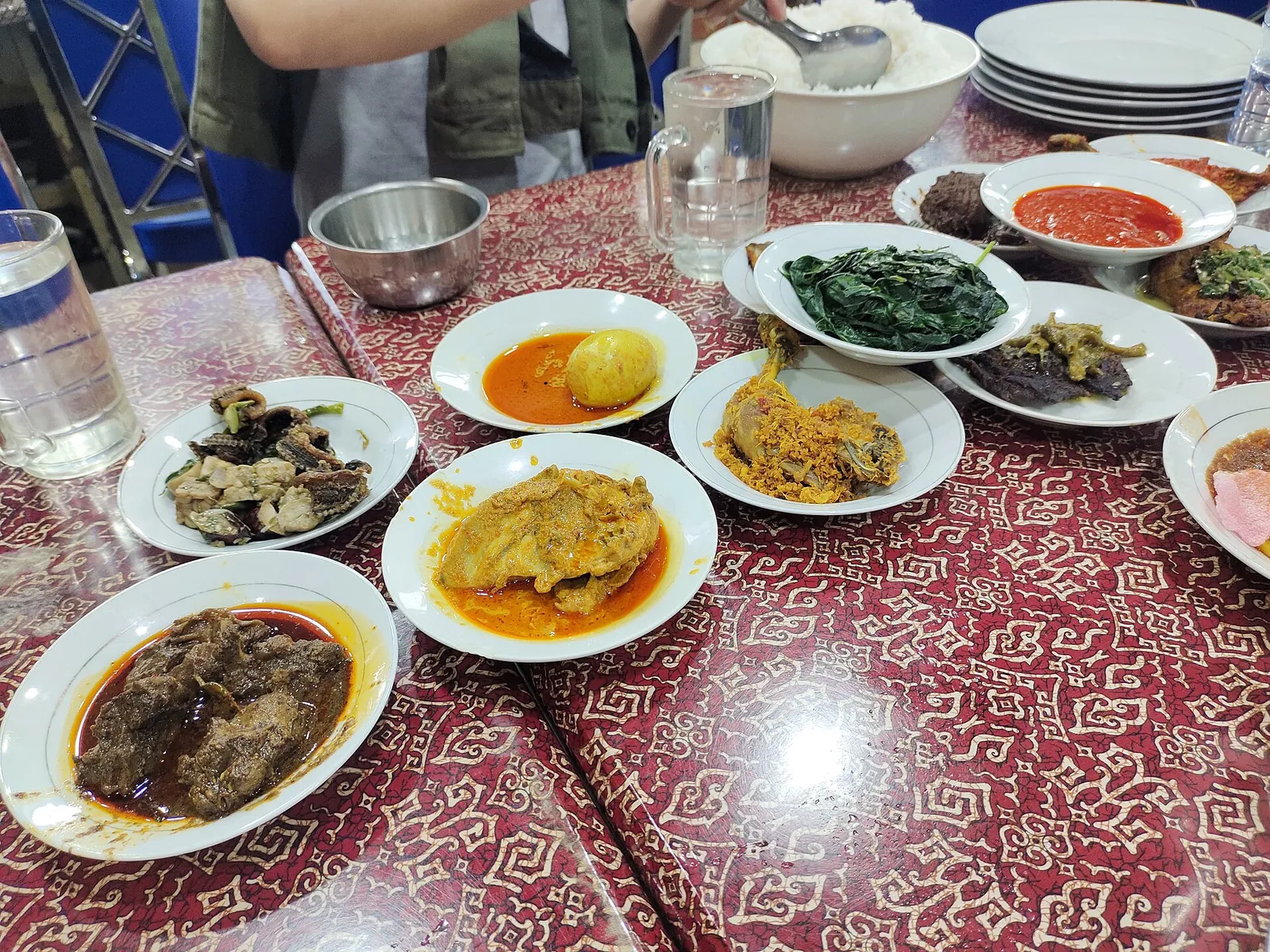
Nasi padang is the Minangkabau way of eating rice with many dishes, and the Ministry of Tourism describes the classic scene: waiters carrying more than ten plates up their arms and spreading them out on the table for diners to pick from. This is the hidang style used in larger restaurants. You pay only for what you take, so leave untouched plates alone if you do not want them. Smaller places use the pesan style instead: you point at the dishes in the window display and they are put on your plate.
Food is usually cooked once a day and left on display until it runs out, so lunch is the best time for the widest choice. In Minang restaurants it is normal to eat with your hand; the small bowl of water with a slice of lime on the table is for washing your fingers, not for drinking. Ask for a spoon and fork if you prefer.
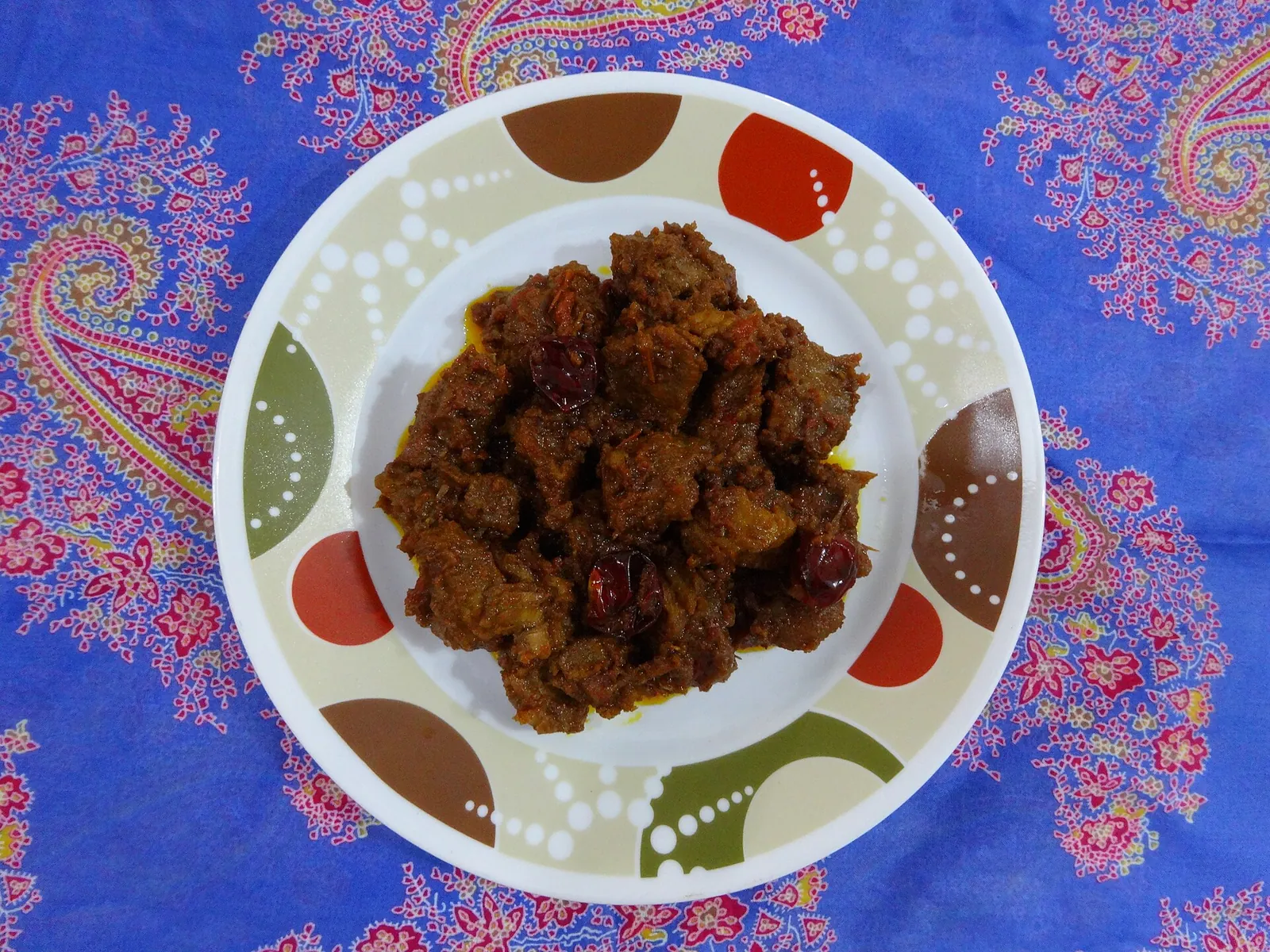
Rendang is the dish to understand here. It is beef (traditionally beef or buffalo) cooked slowly in coconut milk and spices until the liquid has gone and the meat is coated in a dark, almost dry paste; the Ministry of Tourism's rendang guide puts the cooking time at often four to six hours. Kalio is a close relative that stays wetter and lighter in colour, and you will often see both on the same counter. Rendang keeps for weeks when it is cooked dry, which is why Minangkabau travellers carried it on their journeys and why packed rendang is now a popular thing to take home from Padang. Indonesia granted West Sumatran rendang cultural heritage status in 2013.
Make time for the local food
What to eat and where to look
Rendang
Beef simmered for hours in coconut milk with chilli, shallots, garlic, galangal, lemongrass, turmeric leaf and lime leaf until the sauce has cooked down to a dark, dry coating. Kalio is its wetter, paler relative. Chicken, egg and lung (rendang paru) versions also exist.
- Where to look
- Any nasi padang restaurant; vacuum-packed rendang to take home is sold widely in Padang.
- Fit it into your day
- Have it as part of a nasi padang lunch, when the day's dishes are freshest.
Usually beef and quite rich; ask which pieces are lung or offal if you want plain meat.
Nasi padang (hidang style)
Rice with a spread of ready-cooked dishes set on the table: rendang, gulai curries, dendeng balado (crisp beef with chilli), ayam pop, fish curries, cassava leaves and sambal. You choose what to eat and pay only for what you touch.
- Where to look
- Larger rumah makan Padang serve hidang style; smaller ones let you point at the window display (pesan).
- Fit it into your day
- A long group lunch; for a solo meal, order a plate pesan-style.
Each dish you start is charged; ask the price of anything unfamiliar before you eat from it.
Sate padang
Skewers of beef, tongue or heart grilled over coconut-shell charcoal and covered in a thick, spicy sauce. The ministry's guide distinguishes the yellow, turmeric-heavy Padang Panjang style, the red, hotter Pariaman style and the brown city style that mixes both.
- Where to look
- Evening stalls across the city. When we checked on 2026-10-03, the ministry's sate padang guide listed Sate KMS Permindo on Jalan Permindo (daily 16:00–02:00) and Sate Itjap on Jalan Rasuna Said (daily 16:00–01:00).
- Fit it into your day
- Dinner or a late snack after sunset on Gunung Padang or the beach.
Often includes offal; the sauce is hot, so ask for less sambal if needed.
Soto padang
A clear, spiced beef broth without coconut milk, with crisp fried beef, rice vermicelli, fried potato patties (perkedel) and red crackers, with sambal on the side.
- Where to look
- Soto stalls and rumah makan in the morning.
- Fit it into your day
- Breakfast, sometimes with teh talua, a frothy egg tea.
Teh talua is made with egg; the soup itself is beef-based and can be spicy with the sambal.
The old town on the Batang Arau
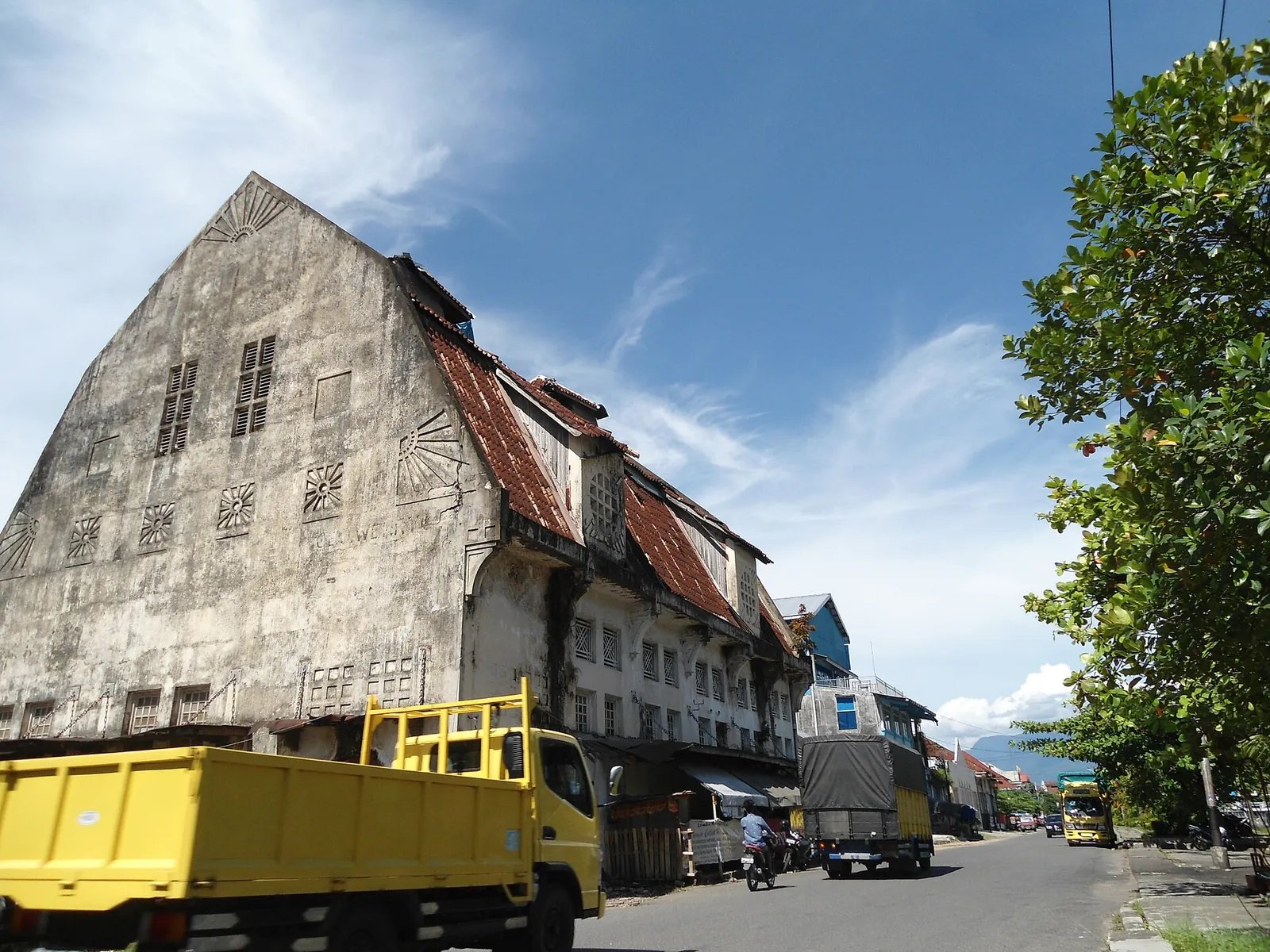
Padang's old commercial district sits beside Muaro harbour on the Batang Arau river. The Ministry of Tourism describes the Kota Tua Batang Arau as a protected heritage area and points to buildings such as the Padangsche Spaarbank, De Javasche Bank (now part of the Bank Indonesia museum), the See Hin Kiong temple, one of the oldest Chinese temples in West Sumatra and busiest at Cap Go Meh, and the Muhammadan Mosque, built by Padang's Indian Muslim community. Walk it in the late afternoon, when the light is softer and the riverside food stalls start up.
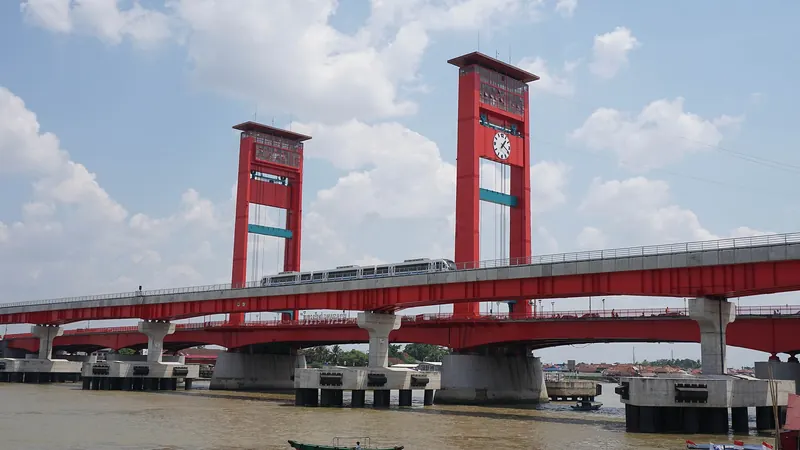
The Siti Nurbaya bridge, 156 metres long and opened in 2002, crosses the river from the old town to the Seberang Padang side. It is named after the heroine of Marah Rusli's novel *Sitti Nurbaya*, and the area around it is known for food and drink sellers from late afternoon into the night.
On the far side, Gunung Padang is a hill of about 80 metres at the river mouth. The ministry says the path to the top usually takes 15 to 30 minutes; there are Japanese bunkers from the Second World War and, in Taman Siti Nurbaya at the top, the grave associated with the Siti Nurbaya legend and wide views over the city and the sea. Go up an hour before sunset, carry water and come down before full dark.
Museum, mosque and the city beach
The Adityawarman Museum on Jalan Diponegoro is West Sumatra's state museum, housed in a rumah gadang, the Minangkabau house with upswept roof spires, with two rice barns in the front yard. Its collection covers Minangkabau and Mentawai culture, including copies of the Bhairawa statue and the Amoghapasa inscription from the Dharmasraya period. When we checked on 2026-10-03, the Ministry of Tourism listed opening hours of 08:00 to 16:00 from Tuesday to Sunday, closed on Mondays and national holidays, and admission of Rp5,000 for adults and Rp3,000 for children and students. It is a good first stop if you are going on to the highlands, and a dry one on a rainy afternoon.
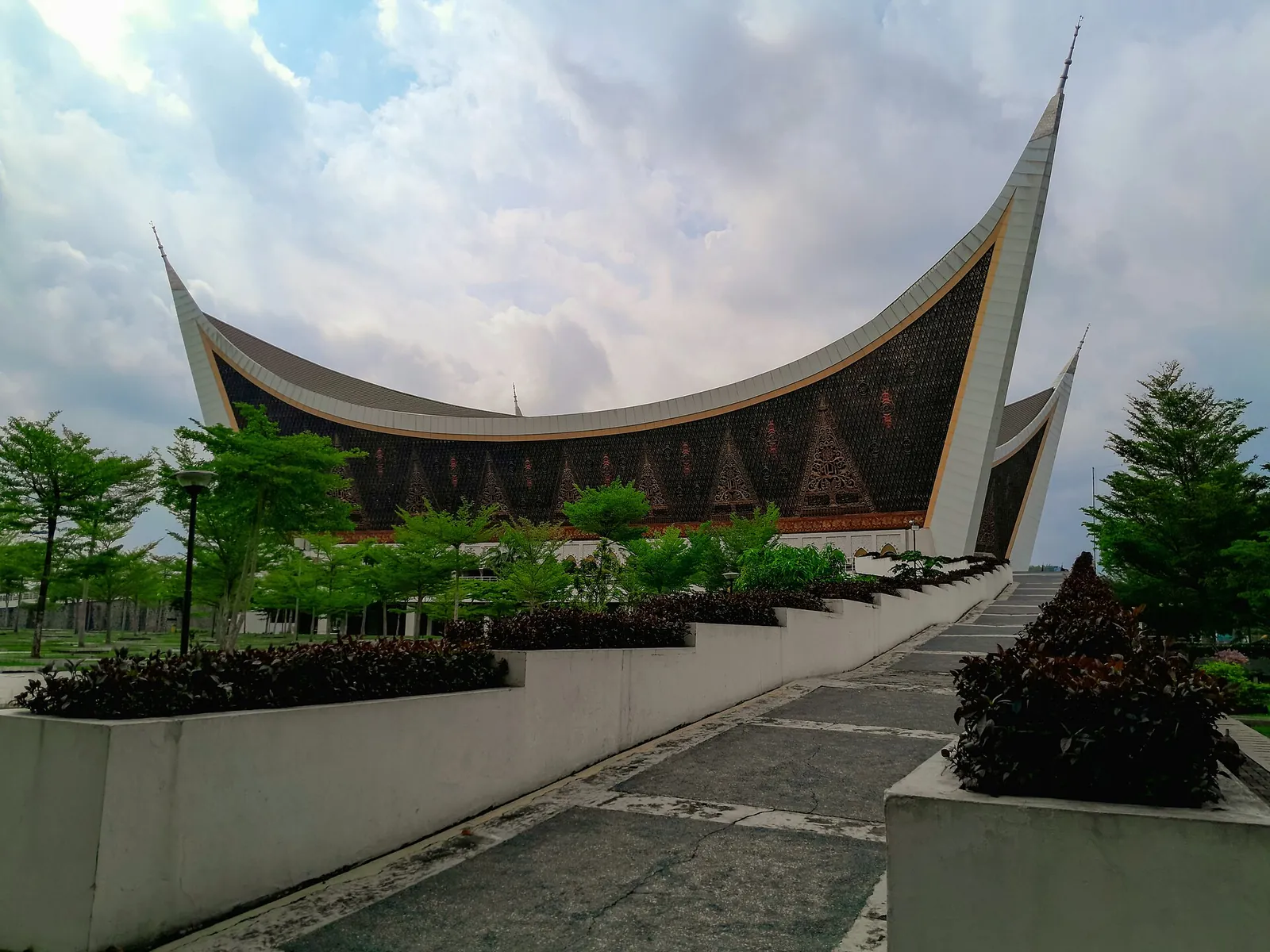
The Grand Mosque of West Sumatra (Masjid Raya Sumatera Barat, now also called Masjid Raya Syekh Ahmad Khatib Al-Minangkabawi) on Jalan Khatib Sulaiman is the city's modern landmark. Instead of a dome it has a roof based on the gonjong spires of the rumah gadang, and the ministry notes that the design takes account of the region's earthquakes. It holds about 20,000 worshippers. Visit outside prayer times, dress modestly with shoulders and knees covered, and follow any instructions at the entrance.
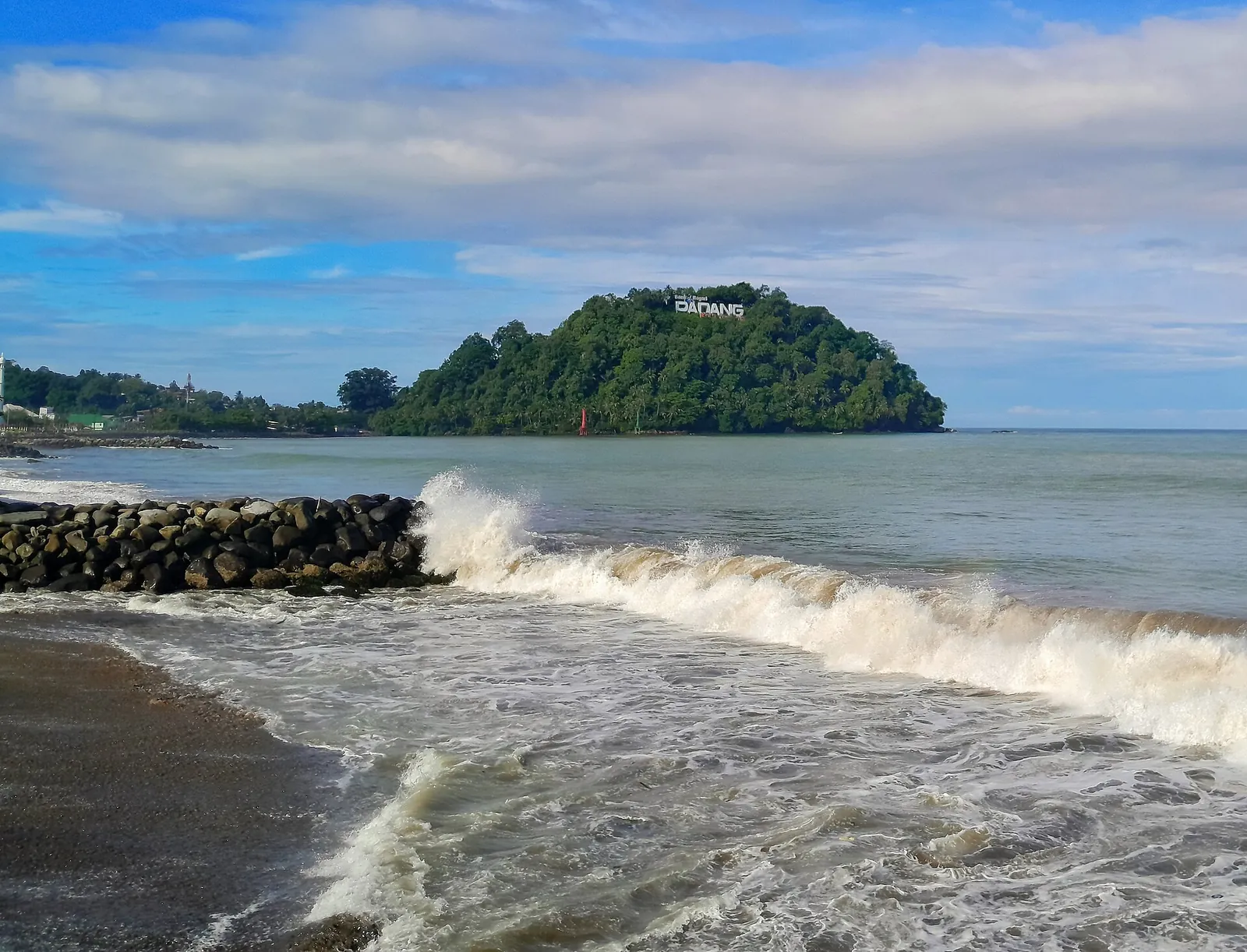
Padang Beach, known locally as Taplau (from *tapi lauik*, "seashore"), is the city's evening promenade, with a paved walkway, food stalls and the "Padang Kota Tercinta" sign. Come for an evening walk, the sunset and a snack.
Air Manis and the islands south of town
Air Manis beach lies about 10–15 km south of the centre (the ministry's pages give both figures), behind Gunung Padang. The ministry describes it as a calm, low-wave beach and the home of the Malin Kundang legend: a rock at the beach is said to be the ungrateful son cursed to stone by his mother, with nearby rock formations that look like the wreck of his ship. From the beach you can walk or take a boat to the small island of Pisang Kecil, about 500 metres away, and rent a motorboat to Sikuai island.
Further south, the Mandeh islands in Carocok Tarusan bay are about 56 km from Padang, and the ministry suggests an hour's drive from the city, with snorkelling, diving and boat trips between the islands. That is a full day out or an overnight stay rather than an add-on to a city afternoon. For both, settle the boat price and the return time with the boatman before you leave the shore.
Arriving, and moving on to the highlands or the islands
Minangkabau International Airport (PDG) is at Ketaping, about 20–23 km north-west of the centre. The Minangkabau Ekspres airport train, run by Kereta Api Indonesia, links the airport with Padang station and continues to Pulau Aie station near the old town; check the current timetable with Kereta Api Indonesia before you land. Taxis are the other way into town; the ministry's Padang page says the city has metered taxis.
To Bukittinggi, the Ministry of Tourism describes a drive of about two hours (90 km) up through the Anai Valley, with frequent local buses and cheaper shared minivans ("travel") from Padang. There is no passenger railway to Bukittinggi today. If you are going straight up from the airport, a taxi or hired car from the terminal saves a change in the city.
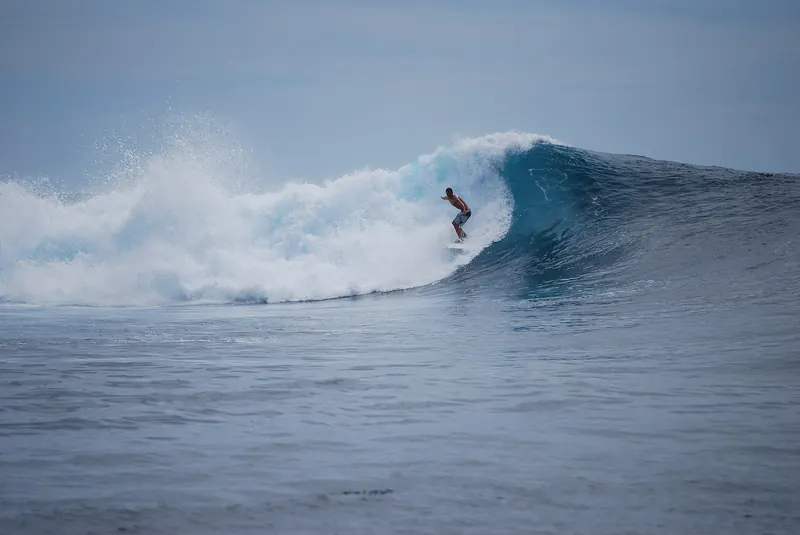
To the Mentawai Islands, the Mentawai Fast boats leave from Pelabuhan Muaro Padang on Jalan Batang Arau. Sailing days differ by island, so build the Padang nights around the timetable: see our Mentawai Islands guide and the operator's current schedule.
Inside the city, the ministry points to metered taxis, minibuses and buses, and the horse-drawn bendi as a slower option; most of the old town can be covered on foot.
Earthquakes and tsunami: know your high ground
Padang faces the Indian Ocean on a coast with a long record of large earthquakes. On 30 September 2009 an earthquake off the coast killed more than 1,100 people in West Sumatra, 313 of them in Padang, and destroyed or damaged hundreds of thousands of houses across the province. Historic tsunamis struck the city in 1797 and 1833.
This is not a reason to stay away, but it should shape where you sleep. If your hotel is on the seafront or in the low-lying old town, find out from the reception where the nearest high ground or evacuation building is. After strong or long shaking near the coast, move inland and uphill straight away rather than waiting for an official warning.
A workable two-day stay
This is an editorial suggestion, not a timetable. Check opening days for each place you choose.
- Day 1 — Old town and dinner: arrive by airport train or taxi, the Adityawarman Museum before it closes at 16:00 (not on Mondays), then the old town along the Batang Arau, Gunung Padang for sunset and sate padang for dinner.
- Day 2 — Food and the coast: soto padang for breakfast, a long nasi padang lunch, then Air Manis beach in the afternoon or the Grand Mosque and Padang Beach at sunset.
- Day 3: the road to Bukittinggi, or the Mentawai boat from Muaro harbour on its sailing day.
Practical questions
How many days do I need in Padang?
One night is enough to eat well and see the old town on the way through; two nights let you add the museum, Gunung Padang and Air Manis beach. Most travellers then continue to Bukittinggi or the Mentawai Islands.
How do I get from Padang airport to the city?
Minangkabau International Airport (PDG) is about 20–23 km north-west of the centre. The Minangkabau Ekspres airport train runs to Padang station and Pulau Aie near the old town; check KAI's current timetable. Taxis are available at the terminal.
How does eating nasi padang work?
In hidang-style restaurants many small plates are put on your table and you pay only for the dishes you eat from. In smaller places you point at the dishes in the window instead. Eating with the right hand is normal, and you can ask for cutlery.
How do I get from Padang to Bukittinggi?
By road: the Ministry of Tourism describes a two-hour, 90 km drive through the Anai Valley, with frequent local buses and shared minivans from Padang, or a taxi or hired car.
Where do the boats to the Mentawai Islands leave from?
The Mentawai Fast boats leave from Pelabuhan Muaro Padang on Jalan Batang Arau, in the old harbour quarter. Sailing days vary by island, so check the operator's schedule and sleep nearby the night before.
When is the best time to visit Padang?
There is no real dry season: Padang gets rain in every month, with February the least wet. Mornings are usually the best time for walking; keep the museum or a long lunch for heavy showers.
Is the Tabuik festival in Padang?
No, it is in Pariaman, a coastal town north of Padang. When we checked on 2026-10-03, the Ministry of Tourism listed Pesona Budaya Hoyak Tabuik Piaman for 16–28 June 2026, free of charge; dates change every year.
Sources and checks before you travel
Reference sources for the version dated 3 October 2026. Confirm opening times, access, transport and conditions for your travel dates.
- Indonesia Travel (Ministry of Tourism): Padang ↗ — opens in a new tab
- Indonesia Travel: Wisata one day trip di Kota Padang ↗ — opens in a new tab
- Indonesia Travel: Adityawarman Museum ↗ — opens in a new tab
- Indonesia Travel: Air Manis Beach, Little Getaway in Padang ↗ — opens in a new tab
- Indonesia Travel: Taman Siti Nurbaya ↗ — opens in a new tab
- Indonesia Travel: Jembatan Siti Nurbaya ↗ — opens in a new tab
- Indonesia Travel: Klenteng See Hin Kiong ↗ — opens in a new tab
- Indonesia Travel: Bukittinggi ↗ — opens in a new tab
- Indonesia Travel: Mandeh Islands ↗ — opens in a new tab
- Indonesia Travel: Rendang, the legendary dish from West Sumatra ↗ — opens in a new tab
- Indonesia Travel: Sate Padang, history and places to eat ↗ — opens in a new tab
- Indonesia Travel: Soto Padang ↗ — opens in a new tab
- Indonesia Travel: Pesona Budaya Hoyak Tabuik Piaman 2026 ↗ — opens in a new tab
- Mentawai Fast (operator) ↗ — opens in a new tab
- Wikipedia: Padang ↗ — opens in a new tab
- Wikipedia: Nasi padang ↗ — opens in a new tab
- Wikipedia: Rendang ↗ — opens in a new tab
- Wikipedia (Indonesian): Kereta api Minangkabau Ekspres ↗ — opens in a new tab
- Wikipedia: Minangkabau International Airport ↗ — opens in a new tab
- Wikipedia: Grand Mosque of West Sumatra ↗ — opens in a new tab
- Wikipedia: Adityawarman Museum ↗ — opens in a new tab
- Wikipedia (Indonesian): Jembatan Sitti Nurbaya ↗ — opens in a new tab
- Wikipedia: 2009 Sumatra earthquakes ↗ — opens in a new tab
- Wikipedia: Bukittinggi ↗ — opens in a new tab
- Wikipedia (Indonesian): Pantai Air Manis ↗ — opens in a new tab
- Wikipedia: Soto padang ↗ — opens in a new tab
Photo credits
The Batang Arau river and the Siti Nurbaya Bridge in Padang's old harbour quarter
Photograph: Afdhal Sy — opens in a new tab · CC BY-SA 4.0 — opens in a new tab
Changes: Resized and converted to WebP; displayed with responsive crops. · Original photograph and licence details ↗ — opens in a new tab
The Grand Mosque of West Sumatra, whose roof replaces a dome with Minangkabau gonjong spires
Photograph: Undeka 11 — opens in a new tab · CC BY-SA 4.0 — opens in a new tab
Changes: Resized and converted to WebP; displayed with responsive crops. · Original photograph and licence details ↗ — opens in a new tab
Padang Beach (Taplau) in the morning, looking towards Gunung Padang
Photograph: Undeka 11 — opens in a new tab · CC BY-SA 4.0 — opens in a new tab
Changes: Resized and converted to WebP; displayed with responsive crops. · Original photograph and licence details ↗ — opens in a new tab
A colonial-era warehouse on Jalan Batang Arau in the old town
Photograph: Rahmat Irfan Denas — opens in a new tab · CC BY-SA 3.0 — opens in a new tab
Changes: Resized and converted to WebP; displayed with responsive crops. · Original photograph and licence details ↗ — opens in a new tab
Nasi padang served hidang-style: you pay only for the dishes you eat from
Photograph: Zahirulnukman — opens in a new tab · CC BY-SA 4.0 — opens in a new tab
Changes: Resized and converted to WebP; displayed with responsive crops. · Original photograph and licence details ↗ — opens in a new tab
Beef rendang, cooked down in coconut milk and spices until almost dry
Photograph: Miansari66 — opens in a new tab · CC0 — opens in a new tab
Changes: Resized and converted to WebP; displayed with responsive crops. · Original photograph and licence details ↗ — opens in a new tab