Sumatra · South Sumatra
Palembang travel guide: Musi River, Ampera Bridge and pempek
Palembang is a working river city, not a resort, and it makes most sense when you treat the Musi as its main street. The Ampera Bridge, the sultanate's fort, the Great Mosque and the 16 Ilir market all sit within walking distance of one stretch of riverbank, and the boats that leave from there pass the floating houses on the way to Kemaro Island. Add a museum for the Srivijaya story and several meals built around pempek, and a short stop here is worth more than its modest reputation suggests.
- Suggested time
- 1–2 days
- Where to stay
- The Ampera Bridge and Benteng Kuto Besak riverfront for walking; Jalan Jenderal Sudirman for restaurants and onward transport
- Season and timing
- The Ministry of Tourism's South Sumatra guide names May to September, the dry season, as the best time; in the wet months, plan river trips for the morning and keep museums for the afternoon. Kemaro Island is at its busiest around Cap Go Meh, 15 days after Chinese New Year.
The short answer
Give Palembang one full day plus an evening, or two days if you want the Srivijaya museums and a slower food crawl. Stay near the Ampera Bridge and the Benteng Kuto Besak riverfront, where the boats, the Great Mosque and the old market are on foot. Spend the morning on the river (Kemaro Island and the stilt houses by boat), the afternoon at the Sultan Mahmud Badaruddin II Museum and the market, and the evening on the riverfront when the bridge is lit. Arrive by air at PLM and use the LRT into the city.
Base yourself by the river, not out in the suburbs
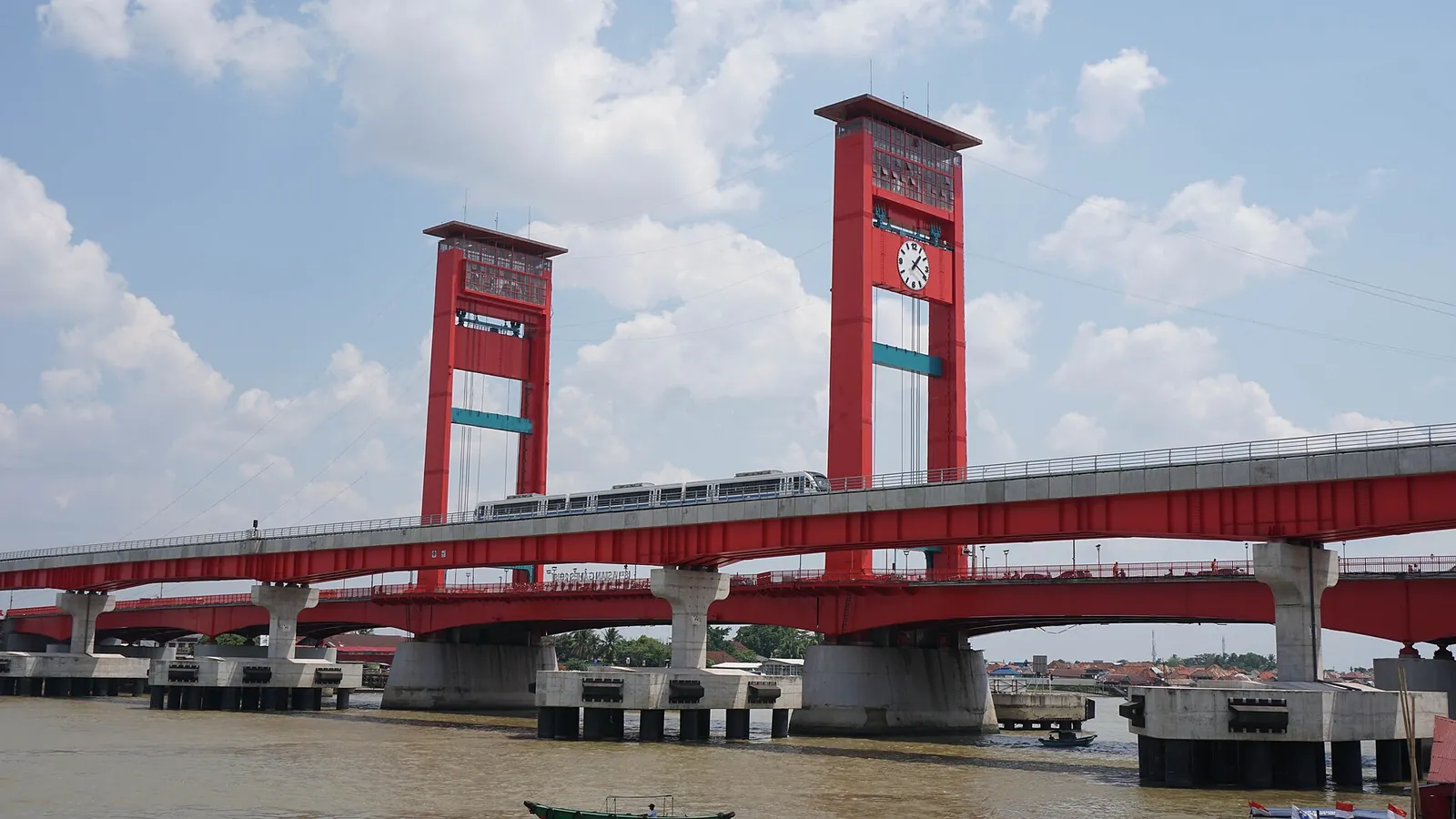
Almost everything a visitor comes for is on the north bank of the Musi (Seberang Ilir) around the Ampera Bridge. The ministry describes the 1,177-metre bridge as the link between Seberang Ilir and Seberang Ulu, with Benteng Kuto Besak and the 16 Ilir market beside it and the Great Mosque a short walk inland. Sleep within walking distance of this stretch and the river, the boats and the evening food stalls are on your doorstep.
Jalan Jenderal Sudirman, the main road running inland from the bridge, is the practical alternative: several of the pempek and martabak houses the ministry recommends are on it. Jakabaring, on the south side, is where the 2018 Asian Games venues are, linked to the airport by the LRT; it suits sports events, not sightseeing. Palembang is Sumatra's second-largest city after Medan, so a hotel listed simply as "Palembang" can be a long ride from the river: check the distance to the Ampera Bridge before booking.
The Musi by boat: Kemaro Island and the floating houses
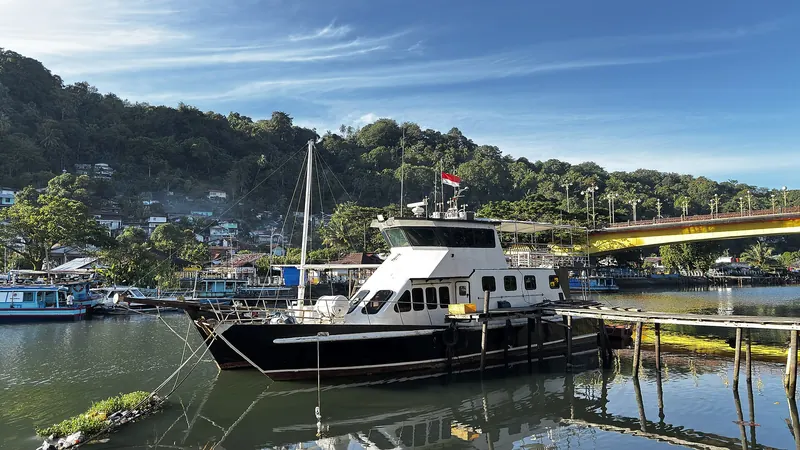
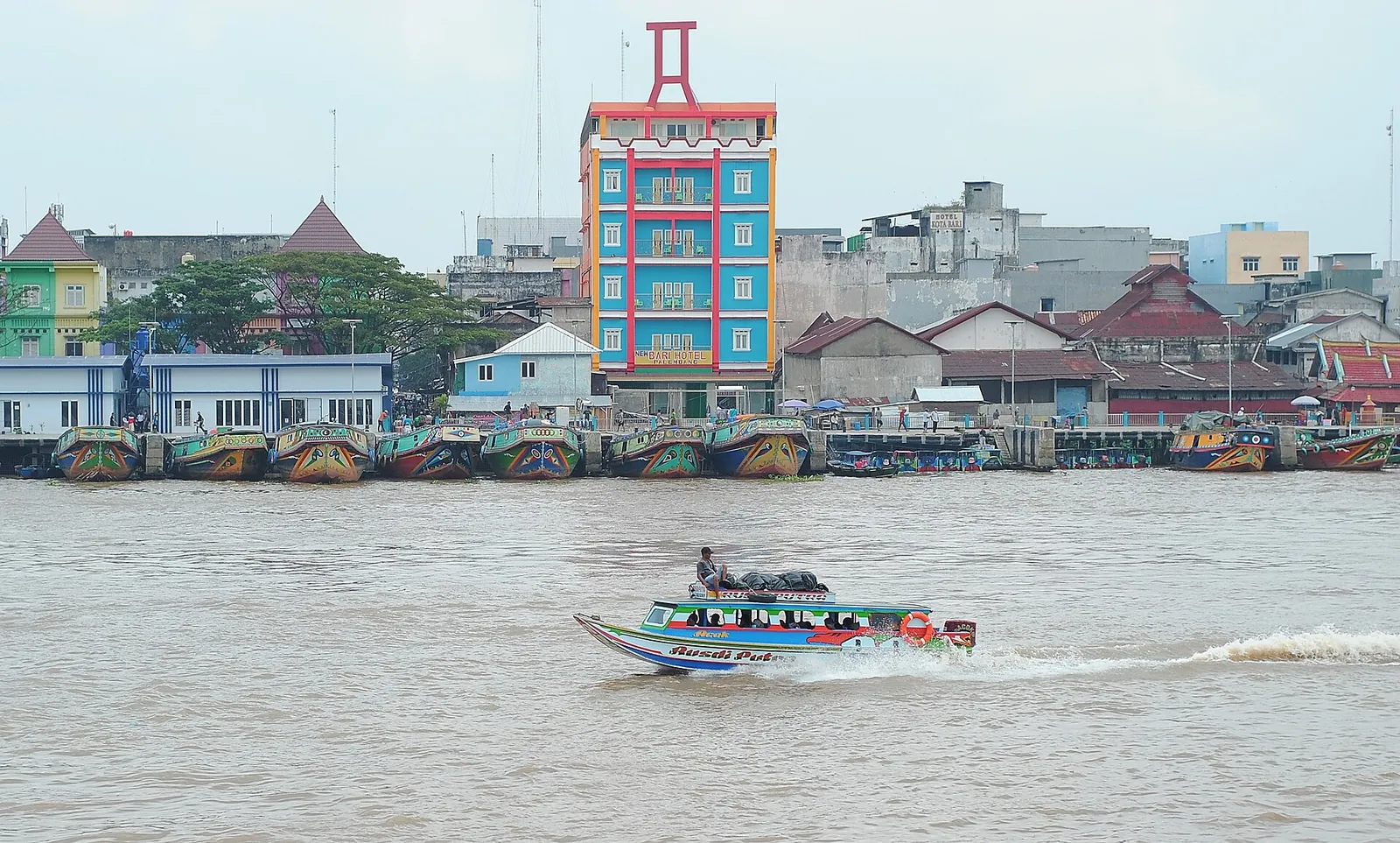
The Musi, which the ministry calls Sumatra's longest river at 750 kilometres, is wide enough here that the city once earned the name "Venice of the East". It is still used as a road: small motorboats ferry people across, and houses on stilts and floating raft houses (rumah rakit), built on wooden rafts or drums so that they rise and fall with the water, line both banks. Seeing that river life is the main reason to take a boat rather than only look at the river from the bridge.
According to the ministry, boats can be hired under the Ampera Bridge, in front of the Sultan Mahmud Badaruddin II Museum and in front of Benteng Kuto Besak; choices range from the small wooden ketek to speedboats. The usual destination is Kemaro Island downstream, where a nine-storey pagoda and the Hok Cing Bio Chinese temple stand beside the graves linked to the legend of Princess Siti Fatimah and the Chinese prince Tan Bun An. An older ministry article puts the trip at about 30 minutes from the Ampera Bridge. Agree the route, the waiting time at the island and the price with the boat driver before you set off, and wear a life jacket where one is offered.
Go in the morning, before the midday heat on the open water. Around Cap Go Meh the island fills with thousands of visitors from across Indonesia and abroad, with Chinese opera and barongsai lion dances; it is a spectacle, but expect crowded boats and no quiet moments at the pagoda.
Make time for the local food
What to eat and where to look
Pempek (fish cakes with cuko)
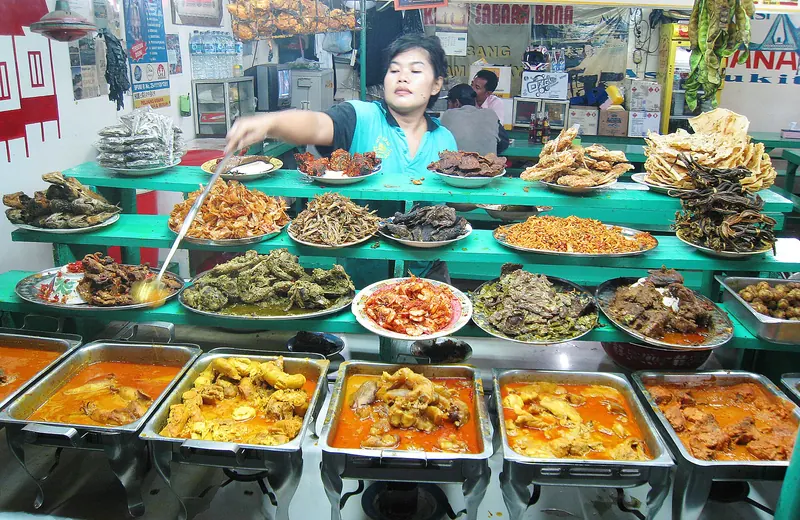
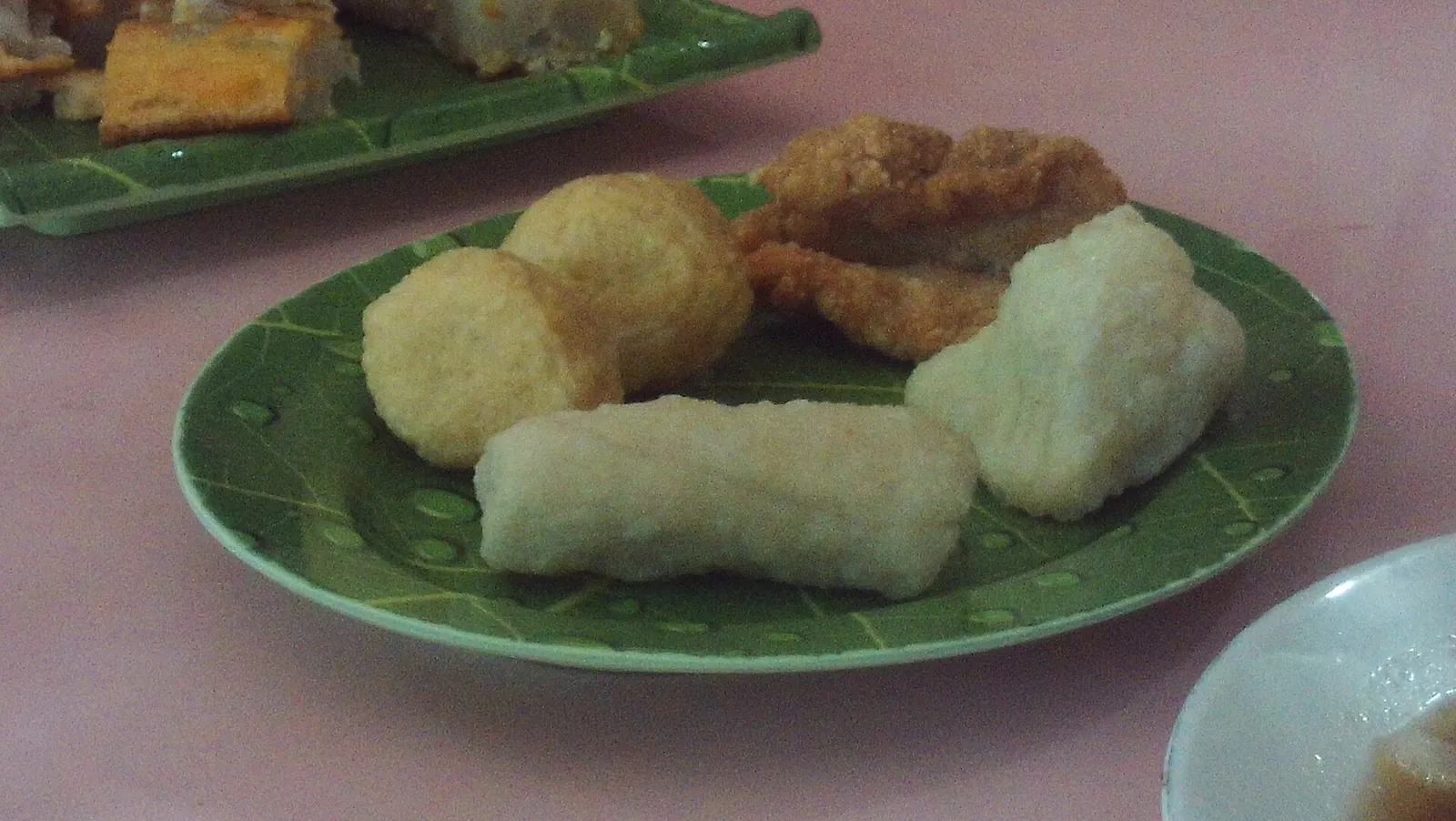
Palembang's signature dish: a dough of minced fish (typically tenggiri, Spanish mackerel) and tapioca, boiled or fried and served with cuko, a thin dark sauce of palm sugar, vinegar, tamarind, garlic and chilli. Common shapes include the long lenjer, the round adaan and the kapal selam ('submarine'), which hides a whole egg.
- Where to look
- Specialist pempek houses across the city; the ministry's food guide recommends Pempek Saga Sudi Mampir on Jalan Demang Lebar Daun and Pempek Nony 169 on Jalan Jenderal Sudirman, and the Benteng Kuto Besak riverfront has stalls.
- Fit it into your day
- Order a mixed plate (pempek campur) to share as a first meal, then try a kapal selam on its own.
Contains fish and often egg; cuko can be fiery, so ask for the chilli on the side.
Tekwan
Small fish-and-sago dumplings in a clear prawn broth with glass noodles, wood-ear mushrooms and slivers of jicama. According to the ministry, the name comes from the Palembang phrase 'berkotek samo kawan', sitting and chatting with friends.
- Where to look
- Most pempek houses serve it alongside their fish cakes.
- Fit it into your day
- A light lunch or the soup to go with a plate of pempek.
Made with fish and prawn stock.
Pindang patin
Patin river catfish in a sour, spicy and slightly sweet spiced broth. Versions with gabus (snakehead) or beef ribs (pindang tulang) are also common.
- Where to look
- Rumah makan specialising in pindang; the ministry names Rumah Makan Pindang Musi Rawas on Jalan Angkatan 45.
- Fit it into your day
- A proper sit-down lunch with rice after a morning on the river.
Watch for small bones; the broth is often hot with chilli.
Mie celor
Thick noodles in a rich sauce of coconut milk and prawn stock, topped with bean sprouts and egg. The ministry describes it as a favourite breakfast in Palembang.
- Where to look
- Morning noodle shops; the ministry recommends Mi Celor 26 Ilir H.M. Syafei on Jalan Merdeka.
- Fit it into your day
- Breakfast before a museum morning; the portions are filling.
Contains shellfish and coconut milk.
Martabak HAR
An egg-filled martabak served drenched in a curry sauce with potato, a Palembang version the ministry traces to Haji Abdul Rozak, of Indian descent, in 1947.
- Where to look
- Martabak HAR outlets on Jalan Jenderal Sudirman.
- Fit it into your day
- A late dinner after the riverfront in the evening.
Rich and heavy; made with chicken or duck eggs.
Riverfront history: the fort, the mosque and the sultanate's museum
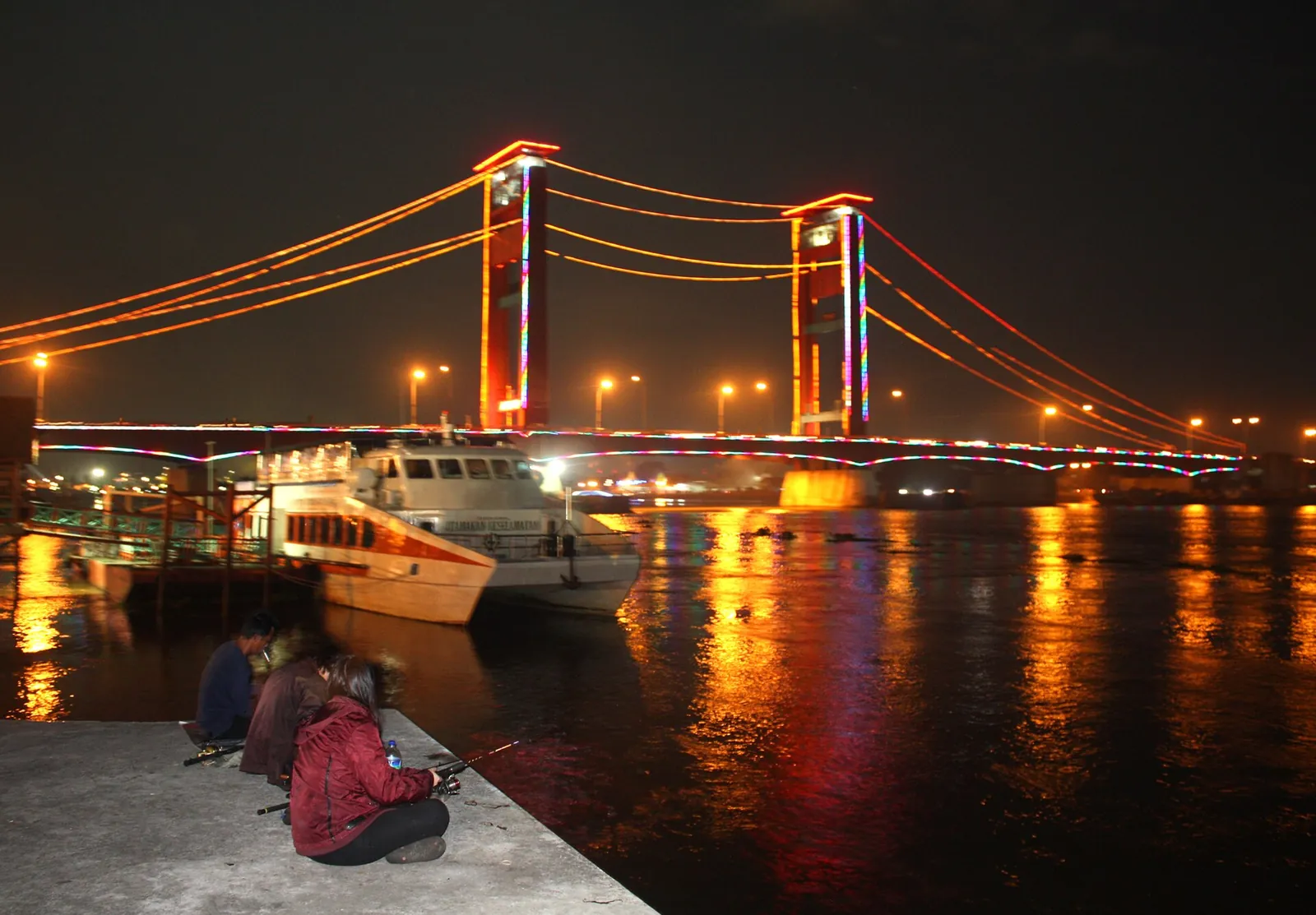
Benteng Kuto Besak was the defensive centre of the Palembang Darussalam Sultanate, which the ministry dates to 1550–1823, and its long whitewashed walls face the river right beside the bridge. Its grounds are often used for cultural events and performances; at other times the riverfront in front of it, with its food vendors, is the place to sit at sunset, eat pempek and watch the boats and the bridge lights.
Next door, the Sultan Mahmud Badaruddin II Museum stands on the site of the earlier Kuto Lama fort and has been a museum since 1984. Run by the city government, it covers the sultanate, the colonial period and earlier eras, with songket textiles, keris and other weapons, coins and replicas of Srivijaya inscriptions and statues. It is the best single hour for understanding the city you are walking through.
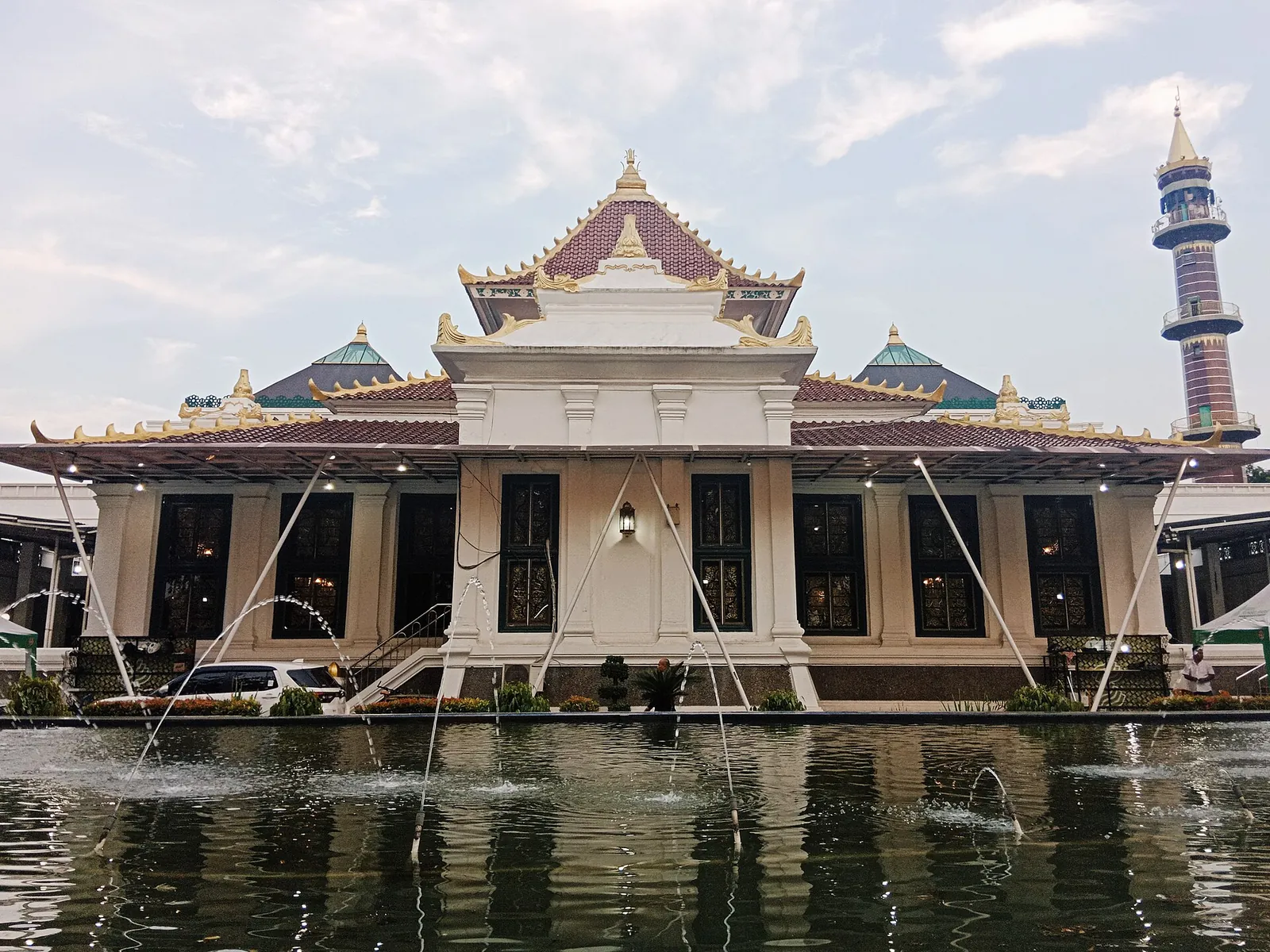
The Great Mosque of Palembang (Masjid Agung), a short walk from the bridge, was built in the 18th century under Sultan Mahmud Badaruddin I, and the ministry describes its architecture as a blend of Malay, Chinese and European elements. It is an active mosque: dress modestly, avoid prayer times, and ask before entering the prayer hall. When we checked on 2026-10-03, we found no current official opening hours or admission prices for the museum or the mosque, so confirm them locally.
Srivijaya: what remains of the old kingdom
Palembang was the seat of Srivijaya, the Buddhist maritime kingdom that controlled the seas around Sumatra and the Strait of Malacca; the ministry gives its height as the 9th to 11th centuries, while the Sriwijaya Museum covers a wider 7th-to-13th-century span. The Chinese monk Yijing (I Ching) stayed in Palembang for six months in AD 671 and wrote of more than a thousand Buddhist monks studying there.
Very little of that city survives above ground, so manage expectations. The Taman Purbakala Kerajaan Sriwijaya, the Srivijaya archaeological park, preserves traces such as canals and old structures, and houses the Sriwijaya Museum, run by the provincial government. Its displays include statues, inscriptions, ceramic fragments, beads and a boat about 8.2 metres long; some statues show Hindu influence in a kingdom known for Buddhism. Allow half a day including the ride from the river, and pair it with the Sultan Mahmud Badaruddin II Museum on the same day only if museums are your main interest.
Srivijaya's legacy is easier to see in living crafts: the ministry points to Palembang's gold- and silver-threaded songket, its lacquerware and its formal dances. Songket weavers in the Tanggo Buntung area (30 Ilir), which the ministry says has worked in the trade since the 18th century, and the stalls of the 16 Ilir market under the bridge are the places to look; bargaining is normal.
Across the bridge: Kampung Kapitan and the Ulu bank
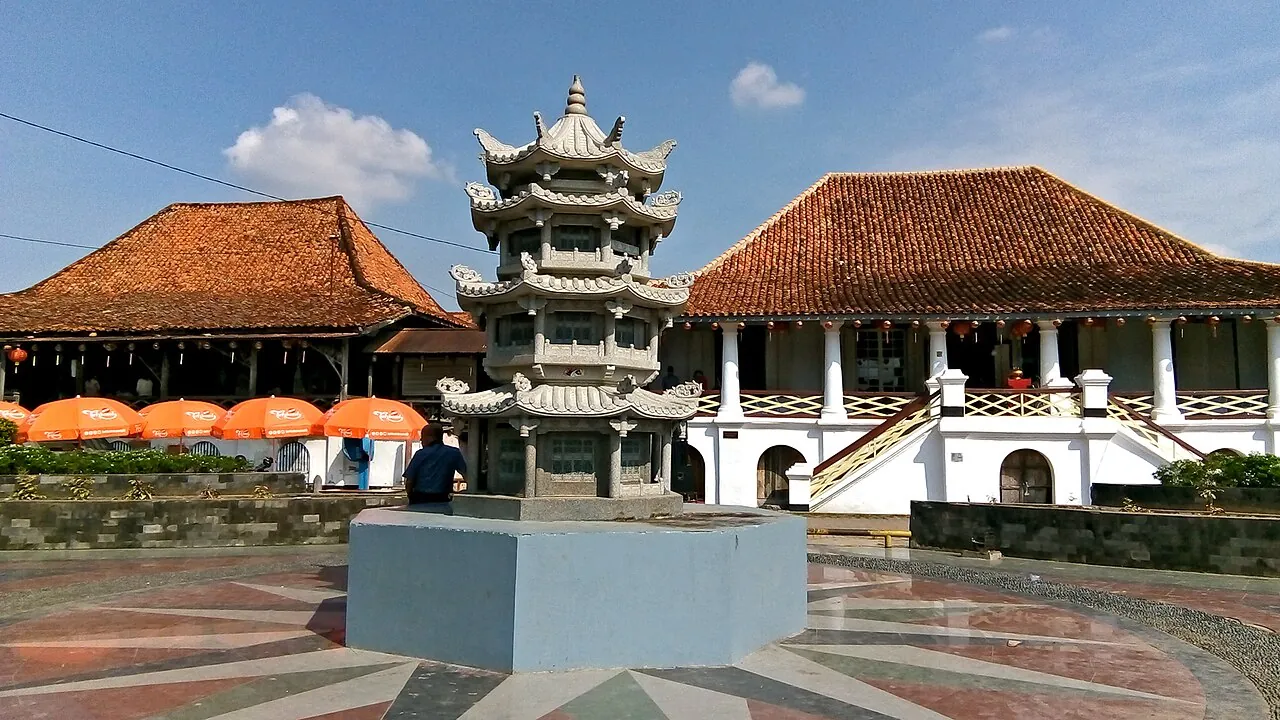
Kampung Kapitan, in 7 Ulu on the south bank, is a small cluster of about 15 stilt houses where Chinese, Dutch and Palembang styles mix. The ministry links its name to the Chinese officer Tjoa Ham Hin, entrusted with tax matters under the Dutch, whose house combines a Chinese-style interior with the pyramid roof of the Palembang limas house. It is a quiet, lived-in neighbourhood, not a museum: walk through respectfully and do not photograph inside homes.
The ministry describes taking local transport from below the Ampera Bridge towards Kertapati and walking the last stretch; a taxi or ride-hailing car across the bridge is simpler.
A workable one- or two-day plan
This is an editorial suggestion, not a timetable. Check boat arrangements and opening days on the spot.
- Morning: a boat from the Benteng Kuto Besak or Ampera piers to Kemaro Island, past the stilt and raft houses.
- Lunch: pindang patin or a pempek house near Jalan Jenderal Sudirman; Kampung Kapitan across the bridge if you have the energy.
- Afternoon: the Sultan Mahmud Badaruddin II Museum, the Great Mosque and a walk through the 16 Ilir market.
- Evening: the Benteng Kuto Besak riverfront for the lit-up Ampera Bridge, then martabak HAR or more pempek for dinner.
- Day 2 (optional): the Srivijaya archaeological park and museum in the morning, mie celor or burgo for a late breakfast, and the Punti Kayu pine forest or songket shopping in the afternoon.
Practical questions
How many days do I need in Palembang?
One full day covers a boat trip to Kemaro Island, the riverfront sights and an evening by the Ampera Bridge. Add a second day for the Srivijaya archaeological park and museum and a slower food crawl.
Where should I stay in Palembang?
Near the Ampera Bridge and the Benteng Kuto Besak riverfront if you want to walk to the boats, the Great Mosque and the market. Jalan Jenderal Sudirman is a good second choice for restaurants and transport. Check the distance to the bridge before booking anything further out.
How do I get to Kemaro Island?
By boat from the Musi riverfront. The ministry lists boat hire under the Ampera Bridge, in front of the Sultan Mahmud Badaruddin II Museum and in front of Benteng Kuto Besak. Agree the route, waiting time and price before boarding.
What is the best time to visit Palembang?
The ministry recommends the dry season, May to September, for South Sumatra. Visit around Cap Go Meh, 15 days after Chinese New Year, if you want to see Kemaro Island's festival, and expect big crowds.
How do I get from the airport to the city?
Sultan Mahmud Badaruddin II International Airport (PLM) is linked to the city by the LRT Sumatera Selatan light rail, which also has a station at Ampera; taxis and ride-hailing cars are the alternative.
Is Palembang worth a stop on a Sumatra trip?
Yes, if you enjoy food and river life: it is one of the few places to eat pempek, tekwan and mie celor where they come from, and the Musi boat trip is unlike anything in the highland towns. It is a city stop, not a nature destination.
Sources and checks before you travel
Reference sources for the version dated 3 October 2026. Confirm opening times, access, transport and conditions for your travel dates.
- Indonesia Travel (Ministry of Tourism): Palembang, bustling city on Sumatra's wide Musi River ↗ — opens in a new tab
- Indonesia Travel: Musi River ↗ — opens in a new tab
- Indonesia Travel: Jembatan Ampera (Indonesian) ↗ — opens in a new tab
- Indonesia Travel: What to do in Palembang, a destination guide for 2 days ↗ — opens in a new tab
- Indonesia Travel: Kamaro Island, Cap Go Meh celebrations ↗ — opens in a new tab
- Indonesia Travel: Benteng Kuto Besak (Indonesian) ↗ — opens in a new tab
- Indonesia Travel: Sultan Mahmud Badaruddin II Museum ↗ — opens in a new tab
- Indonesia Travel: Masjid Agung Palembang (Indonesian) ↗ — opens in a new tab
- Indonesia Travel: Museum Sriwijaya ↗ — opens in a new tab
- Indonesia Travel: Taman Purbakala Kerajaan Sriwijaya (Indonesian) ↗ — opens in a new tab
- Indonesia Travel: Kampung Kapitan ↗ — opens in a new tab
- Indonesia Travel: Rumah Rakit (Indonesian) ↗ — opens in a new tab
- Indonesia Travel: 10 Makanan Khas Palembang (Indonesian) ↗ — opens in a new tab
- Indonesia Travel: Pempek ↗ — opens in a new tab
- Indonesia Travel: 12 super tasty Palembang dishes ↗ — opens in a new tab
- Indonesia Travel: 10 gifts and food souvenirs to bring home from Palembang ↗ — opens in a new tab
- Indonesia Travel: South Sumatra travel guide to nature, history and culture ↗ — opens in a new tab
- Indonesia Travel: Road to Asian Games 2018, Palembang ↗ — opens in a new tab
- LRT Sumatera Selatan (operator) ↗ — opens in a new tab
Photo credits
The Ampera Bridge and the LRT line beside it, crossing the Musi in central Palembang
Photograph: Gaudi Renanda — opens in a new tab · CC BY-SA 4.0 — opens in a new tab
Changes: Resized and converted to WebP; displayed with responsive crops. · Original photograph and licence details ↗ — opens in a new tab
Boats are still everyday transport on the Musi; riverside houses line the banks
Photograph: Oka1302 — opens in a new tab · CC BY-SA 4.0 — opens in a new tab
Changes: Resized and converted to WebP; displayed with responsive crops. · Original photograph and licence details ↗ — opens in a new tab
Pempek campur at Pempek Saga Sudi Mampir, one of the pempek houses the ministry recommends
Photograph: Firzafp — opens in a new tab · CC BY-SA 4.0 — opens in a new tab
Changes: Resized and converted to WebP; displayed with responsive crops. · Original photograph and licence details ↗ — opens in a new tab
The original prayer hall of the Great Mosque of Palembang, a short walk from the Ampera Bridge
Photograph: Swarabakti — opens in a new tab · CC BY-SA 4.0 — opens in a new tab
Changes: Resized and converted to WebP; displayed with responsive crops. · Original photograph and licence details ↗ — opens in a new tab
Kampung Kapitan on the south bank, where Chinese and Palembang building styles meet
Photograph: baka_neko_baka — opens in a new tab · CC BY 2.0 — opens in a new tab
Changes: Resized and converted to WebP; displayed with responsive crops. · Original photograph and licence details ↗ — opens in a new tab
The Ampera Bridge after dark, seen from the riverbank
Photograph: Gunawan Kartapranata — opens in a new tab · CC BY-SA 3.0 — opens in a new tab
Changes: Resized and converted to WebP; displayed with responsive crops. · Original photograph and licence details ↗ — opens in a new tab