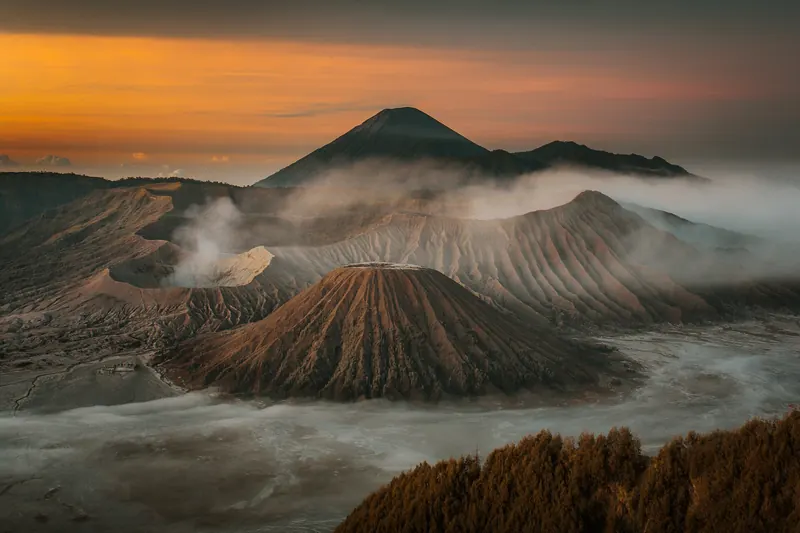
Itineraries · North Sumatra
North Sumatra in 7 days: Bukit Lawang, Berastagi and Lake Toba
North Sumatra fits a week well because its three great places lie on one rough line south of Medan: the rainforest at Bukit Lawang, the cool Karo highlands around Berastagi, and the caldera lake of Toba with Samosir Island in the middle. What breaks the week is the road. Every leg is several hours of traffic, hills and potholes, and none of the places works as a day trip from Medan. This route takes the jungle first while you are fresh, breaks the long drive south with two nights in the highlands, and gives the lake the most nights, because Samosir is where the trip slows down.
- Suggested time
- 7 days, 7 nights (leave on the morning of day 8)
- Where to stay
- Bukit Lawang riverside (nights 1–2), Berastagi (nights 3–4), Tuktuk on Samosir (nights 5–7); Medan only for a late arrival
- Season and timing
- Treks, hikes and boats run all year, but the weather shapes each stop. The Ministry of Tourism names April to October as Lake Toba's dry season and warns that heavy rain and strong winds from November to March can disrupt plans; Wikivoyage describes October to March as the wet season at Bukit Lawang, with rain most afternoons. Avoid weekends and the June to early July school holidays at Bukit Lawang if you can, and book Lake Toba early around Chinese New Year.
The short answer
Plan seven nights and fly out on the morning of day 8. Land at Kualanamu (KNO) near Medan and go straight to Bukit Lawang for two nights: arrive, trek with a guide the next day, and do not expect an orangutan on demand. Then cross to Berastagi for two nights, with a guided morning up Mount Sibayak and the hot springs at its foot. On day 5 drive south past the Lingga Karo village and Sipiso-piso waterfall to Parapat and take the boat to Tuktuk on Samosir for the last three nights: one day for the Batak villages of the east shore, one for the west side or simply the lake. A car with a driver for the three road legs saves the most time; buses exist but we could not verify timetables beyond the ministry's journey times. If you land late, sleep the first night in Medan and drop one night on Samosir.
The shape of the week: three bases, three road days
Put the jungle first, the highlands second and the lake last. Bukit Lawang is the most physical stop, and the trek is better done before a week of road travel wears you down. Berastagi sits on one of the two roads from Medan to Lake Toba, so it breaks what would otherwise be a single long drive. Samosir comes last because it is where you stop moving.
Count the road days honestly. The Ministry of Tourism puts Bukit Lawang about 90 km north-west of Medan, with buses from Pinang Baris terminal taking around three hours; Berastagi about 66 km from Medan and around two hours, which Wikivoyage warns is often longer at weekends; and Lake Toba 4 to 5 hours from Medan by road. Days 1, 3 and 5 are mostly travel, with a short walk or a viewpoint at the end. Do not plan anything that needs an early start on the day after a road day.
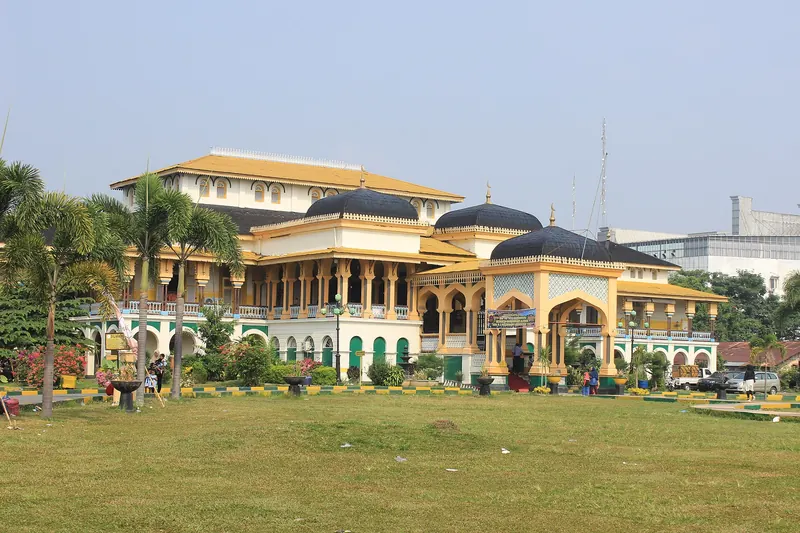
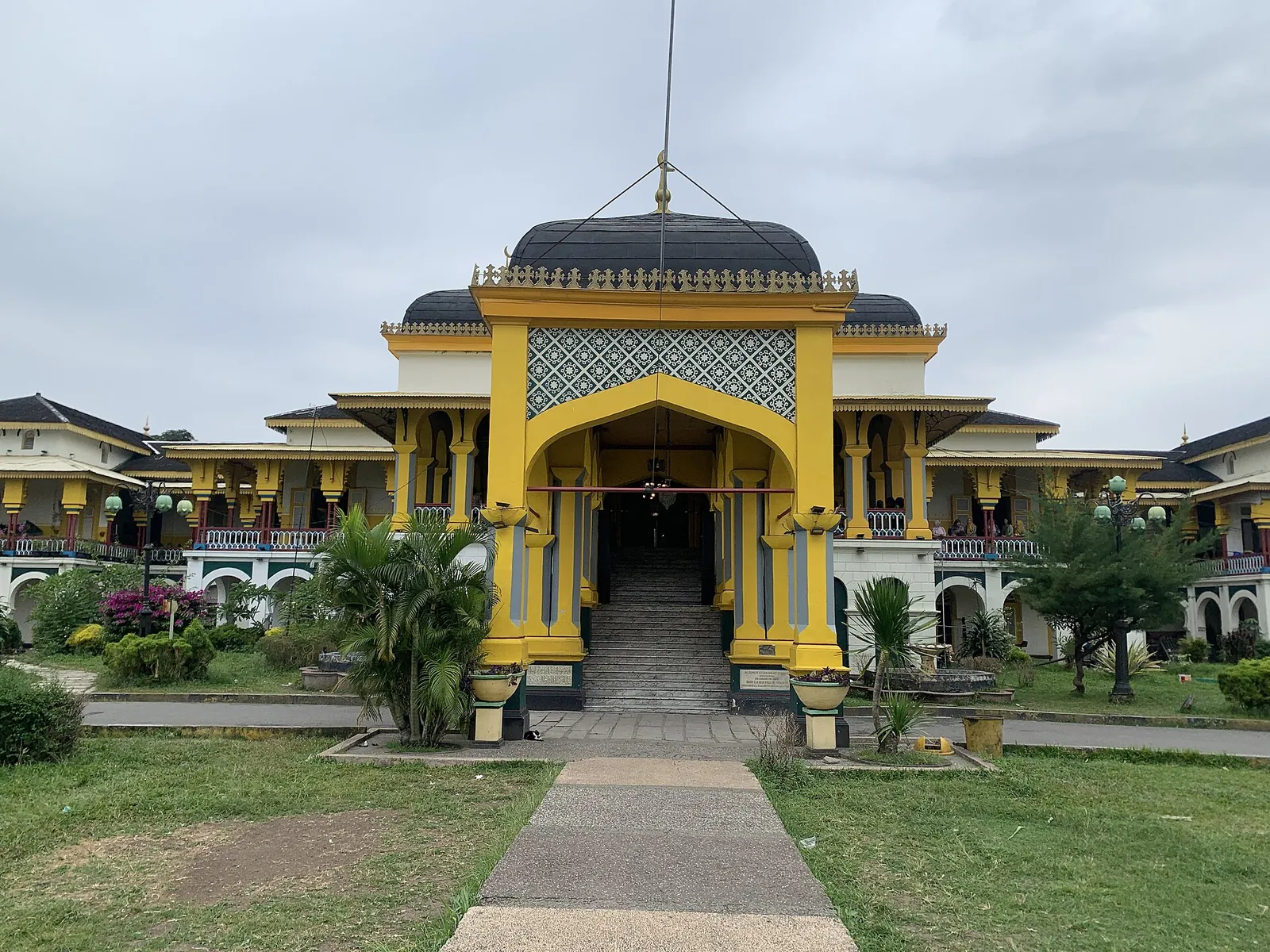
Medan itself is optional. Most international flights land at Kualanamu, which lies about 23 km east of the city, and the drive to Bukit Lawang crosses or skirts Medan anyway. If your flight lands by early afternoon, go straight on to the jungle. If it lands in the evening, sleep in Medan, travel in daylight next morning and take one night off Samosir instead.
- Nights 1–2: Bukit Lawang, on the river.
- Nights 3–4: Berastagi town, or the hot-spring village of Semangat Gunung below Sibayak.
- Nights 5–7: Tuktuk on Samosir.
- Late arrival: night 1 in Medan near Merdeka Square, then two nights on Samosir instead of three.
Days 1–2: Bukit Lawang and the orangutan trek
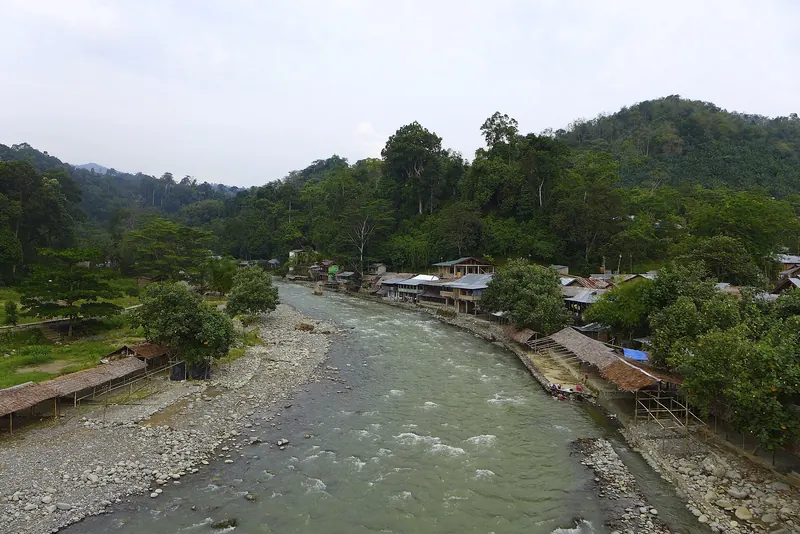
Bukit Lawang is a riverside village on the edge of Gunung Leuser National Park, and the forest begins on the far bank of the Bahorok River. From Kualanamu, the simplest arrival is a private car arranged with your guesthouse; Wikivoyage notes that many Bukit Lawang guesthouses arrange airport or Medan hotel pick-ups when you book a room. By public transport you would go into Medan first, by the Railink airport train to Medan station (about 30 minutes) or by taxi, then take a bus from Pinang Baris. Arrive in daylight with time to meet your guide.
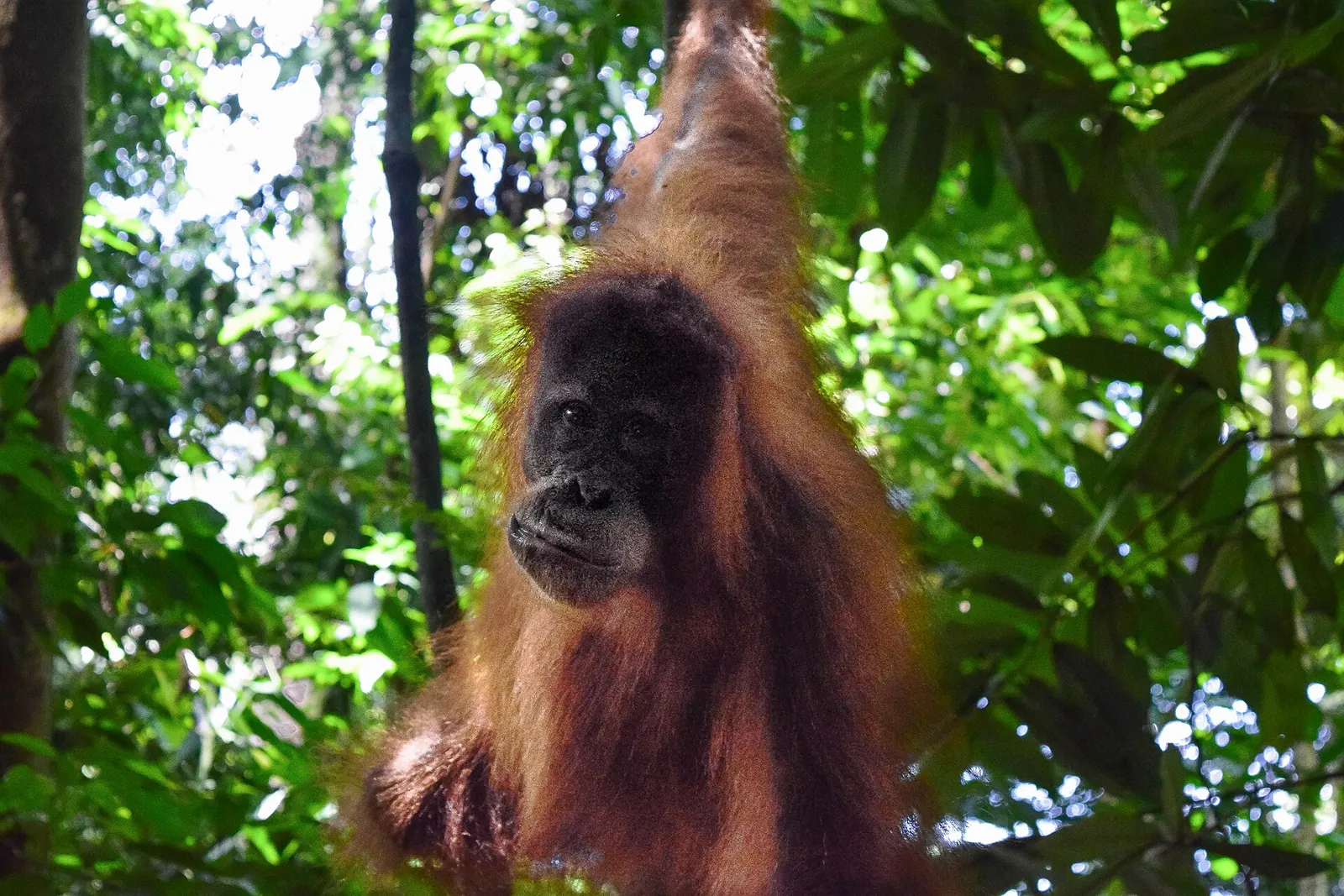
Day 2 is the trek. Wikivoyage says you are not permitted to enter the jungle without a guide, and recommends at least a half-day or full-day trek for a fair chance of seeing orangutans; the ministry describes the terrain as steep, slippery and muddy. Book the guide through your guesthouse and ask before paying who will actually lead you, how many people will be in the group and whether the park permit is included. Keep at least 10 metres from any orangutan and never feed, touch or call one: Wikivoyage reports that orangutans here have fallen ill or died after guides fed them human food to bring them close for photographs.
An overnight trek in the forest is possible, but it would take day 3 too, and this route needs day 3 for the road. If the jungle matters most to you, add a third night here and drop one night on Samosir. The old orangutan feeding platform has closed, so the only way to see orangutans now is on a trek, and no trek can promise a sighting.
Make time for the local food
What to eat and where to look
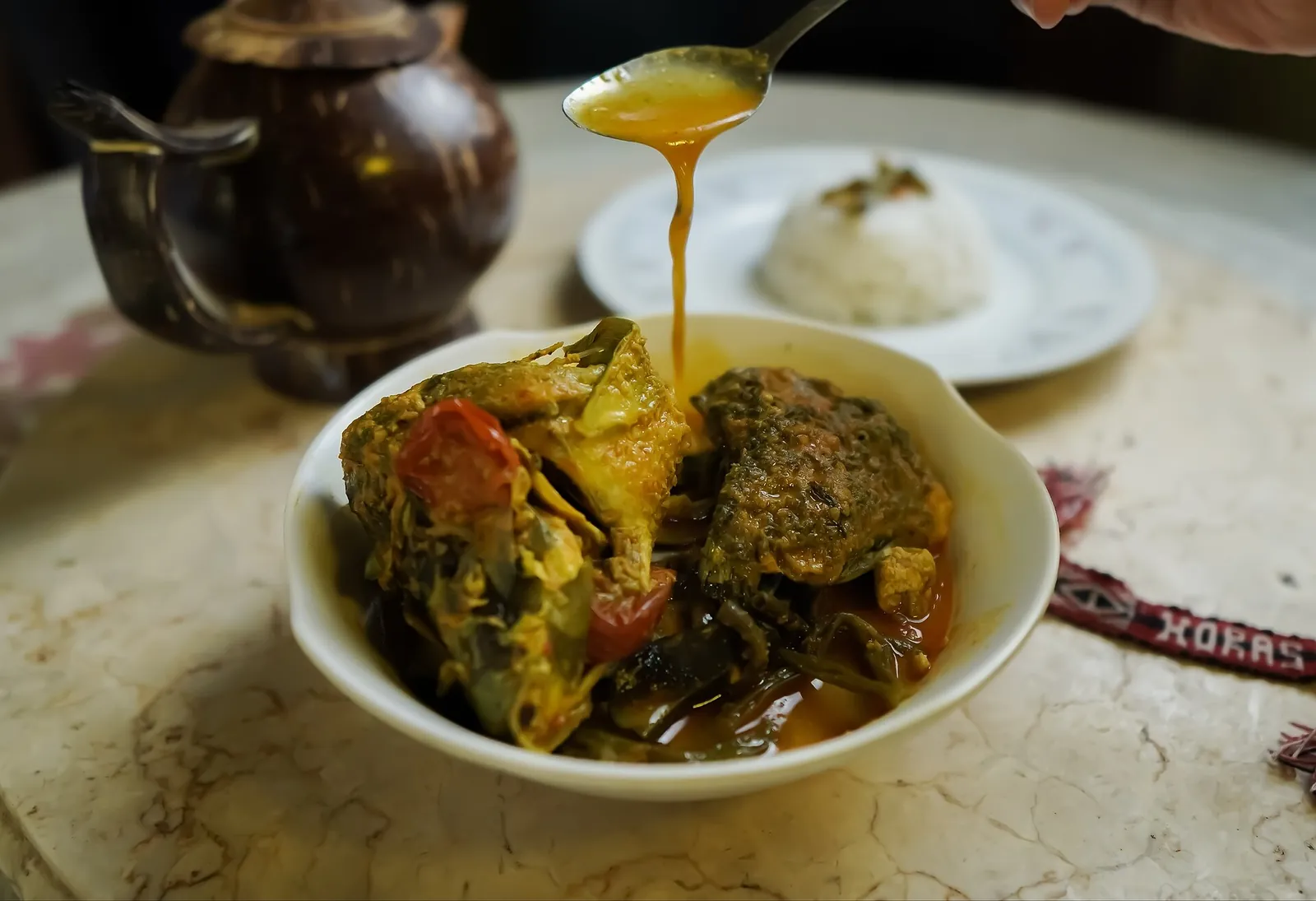
Arsik (Batak spiced carp)
The Batak Toba signature: carp (ikan mas) cooked with turmeric, ginger, shallots, chilli, torch ginger and andaliman, a citrusy pepper that English Wikipedia says grows only in the Batak highlands of North Tapanuli and Samosir.
- Where to look
- Batak restaurants (lapo) in Tuktuk, Tomok and Parapat; ask for ikan mas arsik.
- Fit it into your day
- A shared dinner with rice on your first evening on Samosir.
Freshwater fish with many small bones; andaliman leaves a slight numbing tingle.
Babi panggang Karo (BPK)
The Karo highlands' grilled pork, served with a spiced sauce made from pig's blood, cooked cassava leaves and a bowl of pork broth, as Wikivoyage describes it. You can ask for fatty belly, leaner meat or a mix.
- Where to look
- BPK eateries in the Karo towns and along the road between Medan and Berastagi.
- Fit it into your day
- A filling lunch after the Sibayak hike on day 4.
Pork and blood; not halal. Many Batak and Chinese eateries serve pork, so ask first if you avoid it.
Bandrek and highland fruit
Bandrek is a hot, spiced tea, best with milk (bandrek susu) according to Wikivoyage, sold at the food tents on Berastagi's main street after dark. Berastagi is also known for passion fruit, and its market sells highland fruit and vegetables.
- Where to look
- The evening food tents on the main street and the fruit and flower market in Berastagi.
- Fit it into your day
- Bandrek on a cold evening; a bag of fruit for the road on day 5.
Bandrek is usually sweet; haggle politely at the market, where weekend prices can be high.
Mie Aceh and soto Medan
If you pass through Medan, eat there. The ministry describes mie Aceh as spicy curried noodles from neighbouring Aceh, fried or in broth, with beef, chicken or seafood, and soto Medan as the city's soup with beef entrails, meat or shredded chicken, served with rice.
- Where to look
- Mie Aceh Titi Bobrok for noodles and RM Morning Rays, open since 1962, for soto, both on the ministry's list of Medan's halal favourites.
- Fit it into your day
- Dinner and breakfast on a late-arrival night in Medan, or a meal before an evening flight.
Mie Aceh is spicy by default and seafood versions contain shellfish; soto may contain offal.
Guesthouse meals and trek food at Bukit Lawang
Bukit Lawang is a village of guesthouses, and Wikivoyage notes that each has a restaurant serving Indonesian and Western food. On a trek, Wikivoyage says your guide should provide all your food.
- Where to look
- Your guesthouse and the cafés along the riverside path; trek meals come with the guide.
- Fit it into your day
- An early breakfast before the trek and dinner by the river afterwards.
Ask exactly how much water is carried on the trek and take extra. Never share food with wildlife.
Days 3–4: Berastagi, Sibayak and the hot springs
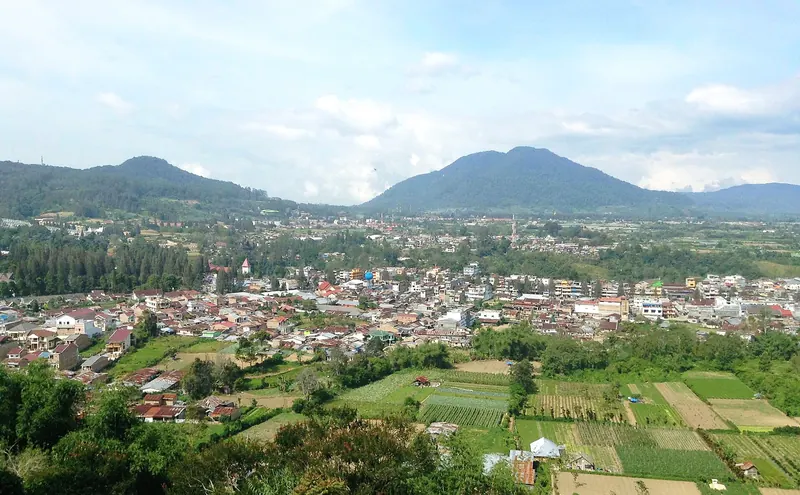
We found no official timetable for a direct public connection between Bukit Lawang and Berastagi. Either ask your guesthouse to arrange a car straight across, which is the practical choice, or go back to Medan by bus and take one of the buses the ministry names from Jalan Ginting in Padang Bulan to Berastagi. Either way, it is a full travel day. At about 1,300 metres, Berastagi is 17 to 20 °C according to the ministry, a real change after the jungle, and the nights are cold enough for a jacket.
Use the end of day 3 for the town: the fruit and flower market in the centre, then Gundaling Hill, which the ministry places 3 km from the centre at about 1,575 metres, for the late-afternoon view of the Sibayak and Sinabung volcanoes. Fog often settles around dusk, so do not leave the viewpoint too late.
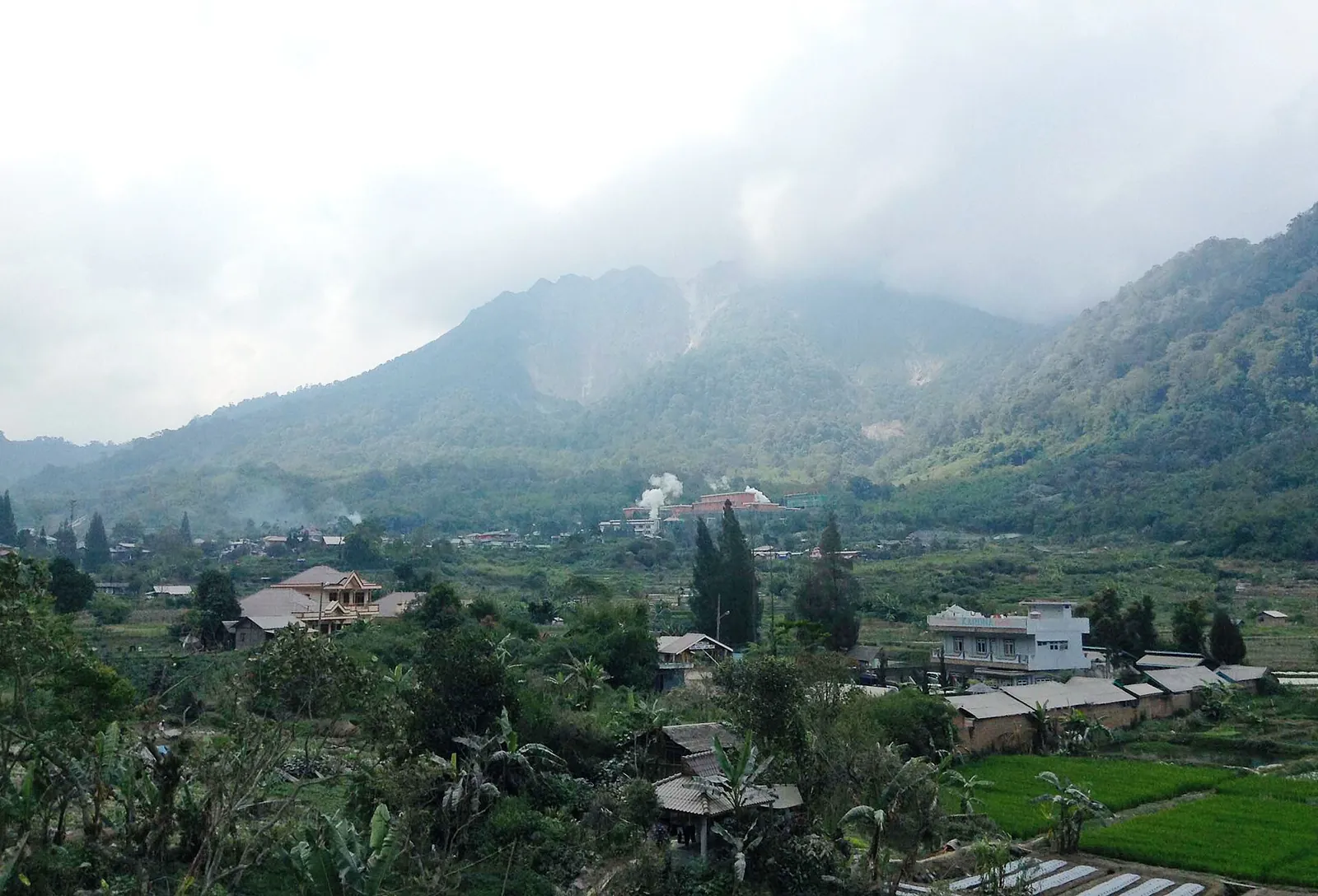
Day 4 is for Mount Sibayak. The ministry gives 2 to 3 hours to the summit on a maintained path and calls the hike suitable for beginners; Wikivoyage is more cautious, saying a guide is definitely required unless you are an experienced trekker, because the path is slippery, steep and confusing in places. Hire a local guide, start early for clearer views and carry a warm layer and rain gear. Come down to the hot-spring pools at Lau Debuk-Debuk in Semangat Gunung, which Wikivoyage says fill with local families in the late afternoon.
Check volcano alerts the evening before. When we checked on 2026-10-03, MAGMA Indonesia, the government's volcano-monitoring service, did not list Sibayak at Level II or above, but listed neighbouring Mount Sinabung at Level III (Siaga). Do not join any trip that offers to take you up Sinabung; see it from Gundaling instead. Our volcano hikes guide covers Sibayak alongside Indonesia's other climbable volcanoes.
Day 5: the road to Lake Toba via Lingga and Sipiso-piso
The ministry lists two bus routes from Medan to Parapat, the lakeside ferry town: direct, or via Berastagi. From Berastagi, the drive south is the most scenic leg of the week, and it is the main reason to hire a car with a driver rather than ride buses: you can stop on the way. Wikivoyage names Kabanjahe as the nearest bus terminal to Berastagi if you travel by public transport, but we could not verify a timetable for the onward connections.
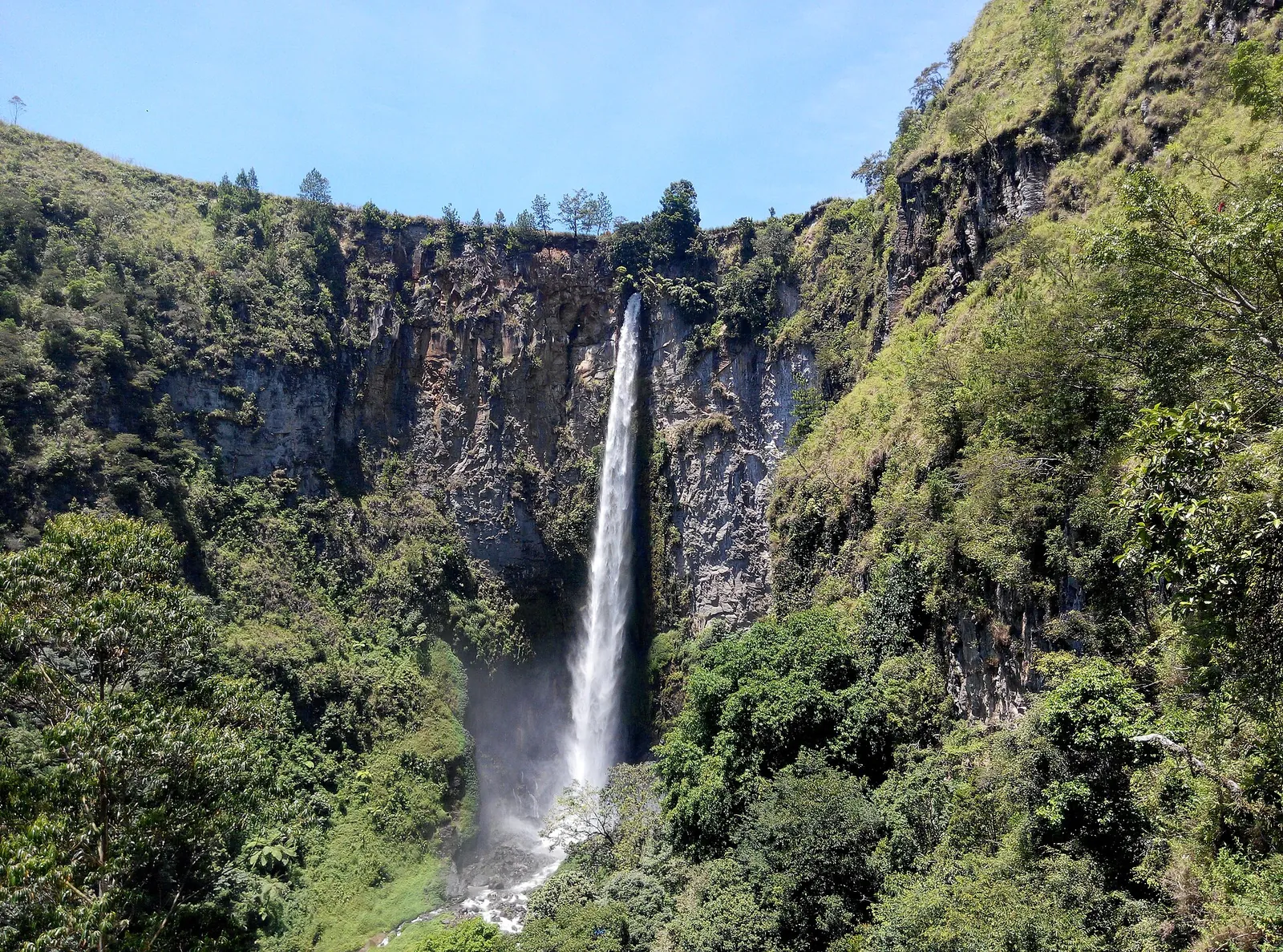
South of Kabanjahe, the Karo village of Lingga is, according to English Wikipedia, one of the last places with a surviving rumah siwaluh jabu, the large shared house of several families, and the small Museum Karo Lingga, which the ministry places about 5 km west of Kabanjahe, stands about 1 km before it. The village is lived in: ask before taking photographs of people or homes. Further on, Sipiso-piso waterfall drops about 120 metres into a gorge at the northern end of Lake Toba, 24 km from Kabanjahe and about 45 minutes from Berastagi by the ministry's estimate. You can see it from the gazebos near the food stalls; the stairs down towards the base are long and tiring, so skip them on a travel day.
Continue to Parapat and cross to Samosir by passenger boat in daylight. Boats leave from Tigaraja and Ajibata harbours, and Wikivoyage says you can ask to be dropped at your guesthouse's own jetty in Tuktuk. Take boat safety seriously: in June 2018 the overloaded MV Sinar Bangun capsized in rough weather and 167 people died. Do not board an overloaded boat, check that there are life jackets, and wait if the wind is up.
Days 6–7: Samosir slowly
Day 6 is for the Batak villages on Samosir's east shore, all within easy reach of Tuktuk. Start at Museum Huta Bolon Simanindo on the north side, a former royal house that opened as a museum in 1969: when we checked on 2026-10-03, the Ministry of Tourism listed it as open daily from 10:00 to 17:00 and a tortor dance performance with the sigale-gale puppet at 10:30 and 11:45, so time the morning around the dance and confirm locally. On the way back, stop at Huta Siallagan near Ambarita, a restored Batak village known for its Batu Parsidangan, the stone chairs where the village once held its trials, then finish at Tomok by the ferry landing, with the stone tomb of King Sidabutar and the Tomok Museum, which the ministry dates to 2005.
Day 7 is the slow finish. The ministry suggests hiring a motorbike for the road round the island, which is rough and unpaved in places, for the views from the high points; Wikivoyage notes there are no taxis around the lake and that Tuktuk guesthouses rent bicycles. If you are not confident on poor roads, hire a car and driver for a half day round the island, or stay put. Ask your guesthouse where it is safe to swim, as Wikivoyage warns that fish farming has polluted parts of the lake. Be back before dark.
Day 8: getting home from the lake
Leaving Samosir takes most of a morning. Allow for the boat back to Parapat, then the long road north: the ministry gives 4 to 5 hours between Medan and the lake, and Kualanamu lies on the Medan side; English Wikipedia lists DAMRI airport buses that serve Ajibata ferry port in Parapat as well as shuttle companies running from the airport to Parapat via Pematangsiantar. An evening flight from Kualanamu is realistic. A morning flight is not: in that case spend night 7 in Medan instead of on Samosir.
The alternative is Sisingamangaraja XII Airport (DTB), still often called Silangit, at Siborong-Borong near the lake's southern shore, about 76 km from Parapat. English Wikipedia says it now has domestic flights only, to Jakarta and Batam, after losing its international status. It suits you if you are connecting through Jakarta anyway. Check current routes with the airlines before you build the trip around it.
The route day by day
This is an editorial suggestion, not a timetable. Journey times are the Ministry of Tourism's estimates and grow with traffic; check opening days and volcano alerts for each stop.
- Day 1 — Kualanamu to Bukit Lawang: private car arranged with your guesthouse, or train to Medan and bus from Pinang Baris (about 3 hours). Evening by the river.
- Day 2 — Jungle trek: half or full day with a guide in Gunung Leuser National Park; river and rest afterwards.
- Day 3 — To Berastagi: car across or bus via Medan; fruit market and Gundaling Hill in the late afternoon.
- Day 4 — Sibayak: guided morning hike (2–3 hours up, by the ministry's estimate), then the hot springs at Semangat Gunung.
- Day 5 — To Lake Toba: Lingga village and Sipiso-piso waterfall on the way, Parapat, boat to Tuktuk in daylight.
- Day 6 — East Samosir: Huta Bolon Simanindo for the late-morning dance, Huta Siallagan at Ambarita, Tomok.
- Day 7 — Slow day: a bike or car to the west side, or the lake and a long lunch.
- Day 8 — Departure: boat to Parapat and the road to Kualanamu for an evening flight, or a domestic flight from Silangit.
Practical questions
Is a week enough for North Sumatra?
A week covers Bukit Lawang, Berastagi and Lake Toba at a fair pace with seven nights: two, two and three. It does not leave room for Tangkahan or Aceh. If you can add days, give them to Samosir or to a longer trek.
Do I need to spend a night in Medan?
Only if you land late or fly out early. Kualanamu airport is about 23 km east of the city, and the drive to Bukit Lawang crosses or skirts Medan, so with a daytime landing you can go straight to the jungle. If you do stay, Merdeka Square is next to the airport train's terminus.
Should I hire a driver or take buses?
A car with a driver is the simplest choice for the three road legs, and it lets you stop at Lingga and Sipiso-piso on the way to the lake. Buses run from Medan to each place, according to the Ministry of Tourism, but they mean going back through Medan's terminals, and we could not verify timetables.
Can I do the route in the other direction?
Yes. Flying into Silangit (DTB) via Jakarta and ending at Bukit Lawang with a car to Kualanamu works. You give up finishing slowly on Samosir, and the trek comes at the end of a week on the road.
Will I definitely see orangutans at Bukit Lawang?
No trek can guarantee it. Wikivoyage recommends at least a half-day or full-day trek for a fair chance. The feeding platform has closed, so sightings now happen only on guided treks.
Is it safe to climb volcanoes on this route?
Sibayak is the one to climb, with a local guide. When we checked on 2026-10-03, MAGMA Indonesia listed Mount Sinabung at Level III (Siaga); do not attempt it. Check the alert levels again before you go.
Sources and checks before you travel
Reference sources for the version dated 3 October 2026. Confirm opening times, access, transport and conditions for your travel dates.
- Indonesia Travel (Ministry of Tourism): Bukit Lawang, door to the hills ↗ — opens in a new tab
- Wikivoyage: Gunung Leuser National Park ↗ — opens in a new tab
- Wikivoyage: Bukit Lawang ↗ — opens in a new tab
- Indonesia Travel: Berastagi ↗ — opens in a new tab
- Indonesia Travel: Mount Sinabung ↗ — opens in a new tab
- Indonesia Travel: Sibayak Mountain ↗ — opens in a new tab
- Wikivoyage: Berastagi ↗ — opens in a new tab
- MAGMA Indonesia (PVMBG): volcano activity levels ↗ — opens in a new tab
- Wikipedia: Berastagi ↗ — opens in a new tab
- Wikipedia: Karo people (Indonesia) ↗ — opens in a new tab
- Indonesia Travel: Museum Karo Lingga ↗ — opens in a new tab
- Indonesia Travel: The stunning Sipiso-piso waterfall ↗ — opens in a new tab
- Indonesia Travel: Sipiso-piso Waterfall ↗ — opens in a new tab
- Indonesia Travel: Lake Toba ↗ — opens in a new tab
- Indonesia Travel: 6 important things to know before exploring Lake Toba ↗ — opens in a new tab
- Indonesia Travel: 5 Batak museums around Lake Toba ↗ — opens in a new tab
- Indonesia Travel: Museum Huta Bolon Simanindo ↗ — opens in a new tab
- Wikivoyage: Lake Toba ↗ — opens in a new tab
- Wikipedia: Lake Toba ↗ — opens in a new tab
- Wikipedia (Indonesian): Huta Siallagan ↗ — opens in a new tab
- Wikipedia (Indonesian): Tomok, Simanindo, Samosir ↗ — opens in a new tab
- Wikipedia: Kualanamu International Airport ↗ — opens in a new tab
- Wikipedia: Sisingamangaraja XII International Airport ↗ — opens in a new tab
- Wikipedia: Arsik ↗ — opens in a new tab
- Indonesia Travel: 10 tasty halal food you must find in Medan ↗ — opens in a new tab
Photo credits
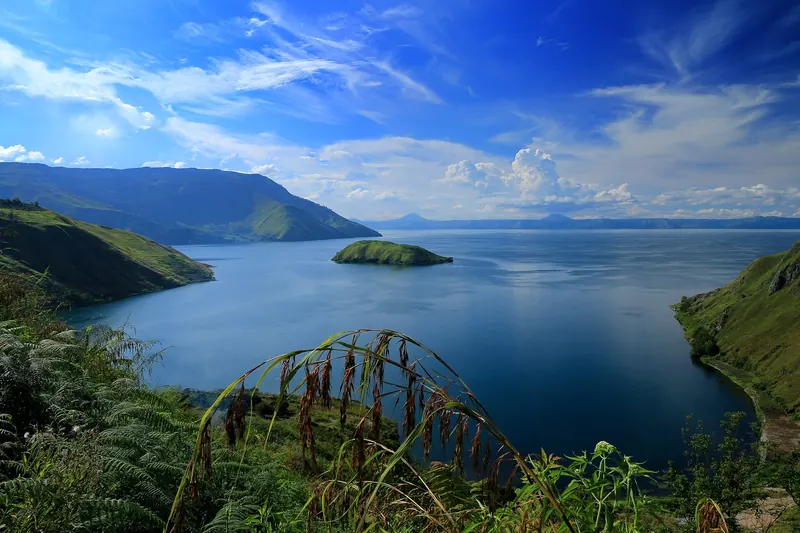
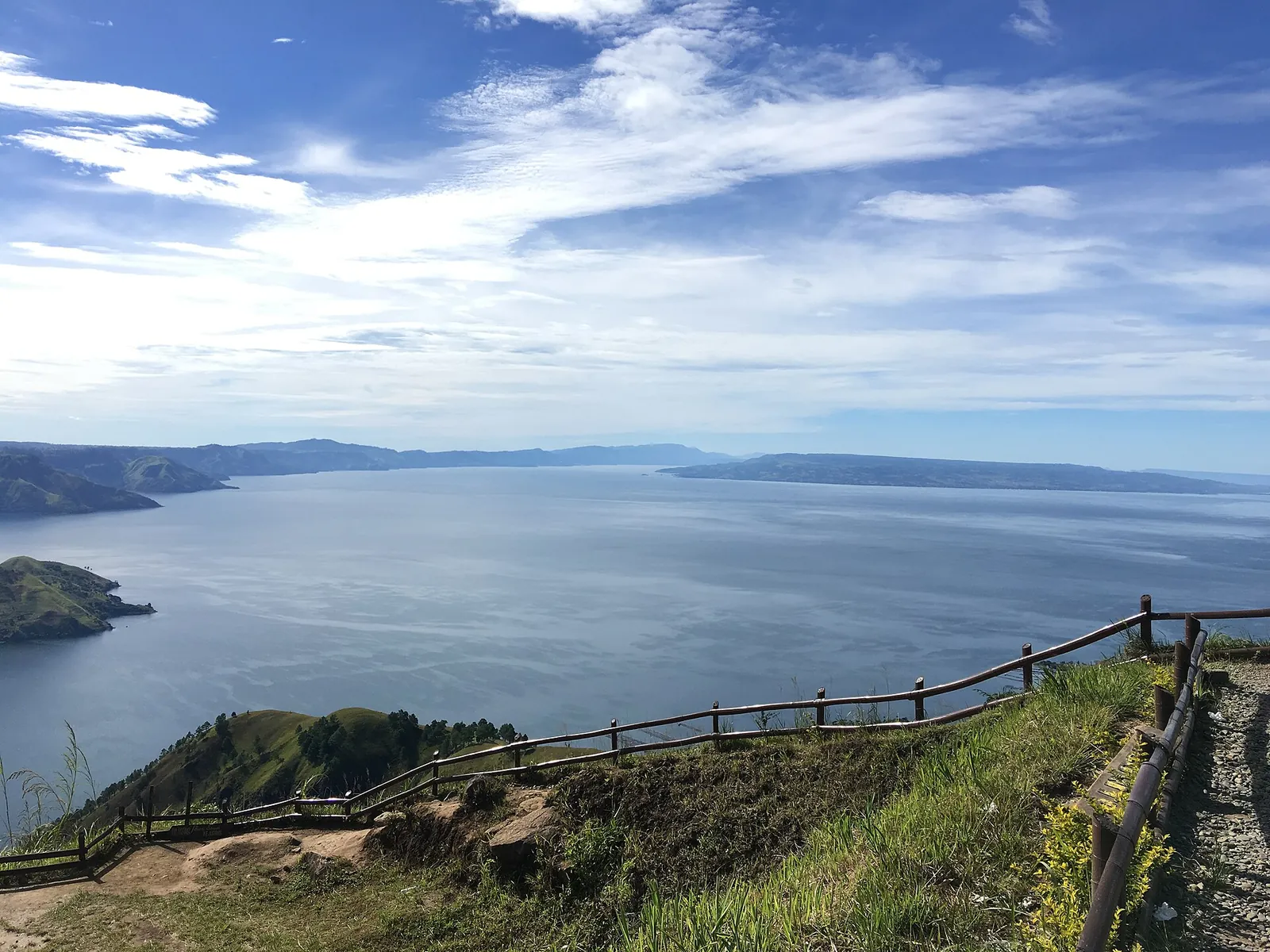
Lake Toba and Samosir Island from a hillside viewpoint: the last three nights of the week are spent on the island.
Photograph: Nirwanto Honsono — opens in a new tab · CC BY-SA 4.0 — opens in a new tab
Changes: Resized and converted to WebP; displayed with responsive crops. · Original photograph and licence details ↗ — opens in a new tab
A Sumatran orangutan seen on a trek from Bukit Lawang in Gunung Leuser National Park. Sightings are common but never guaranteed.
Photograph: Gube12 — opens in a new tab · CC BY-SA 4.0 — opens in a new tab
Changes: Resized and converted to WebP; displayed with responsive crops. · Original photograph and licence details ↗ — opens in a new tab
Mount Sibayak above Semangat Gunung, the hot-spring village at its foot, near Berastagi.
Photograph: Christian Advs Sltg — opens in a new tab · CC BY-SA 4.0 — opens in a new tab
Changes: Resized and converted to WebP; displayed with responsive crops. · Original photograph and licence details ↗ — opens in a new tab
Sipiso-piso waterfall at the northern end of Lake Toba, a stop on the road from Berastagi.
Photograph: Hendypernando — opens in a new tab · CC BY-SA 4.0 — opens in a new tab
Changes: Resized and converted to WebP; displayed with responsive crops. · Original photograph and licence details ↗ — opens in a new tab
Maimun Palace, the Deli sultans' palace in Medan, worth a visit if you spend a night in the city.
Photograph: Rafliyan18 — opens in a new tab · CC BY 4.0 — opens in a new tab
Changes: Resized and converted to WebP; displayed with responsive crops. · Original photograph and licence details ↗ — opens in a new tab
Dekke na niarsik, fish cooked arsik-style, the Batak Toba dish to order around Lake Toba.
Photograph: Samuel Rayditia — opens in a new tab · CC BY-SA 4.0 — opens in a new tab
Changes: Resized and converted to WebP; displayed with responsive crops. · Original photograph and licence details ↗ — opens in a new tab