Sumatra · North Sumatra
Berastagi guide: Sibayak volcano, fruit market, Karo villages and route
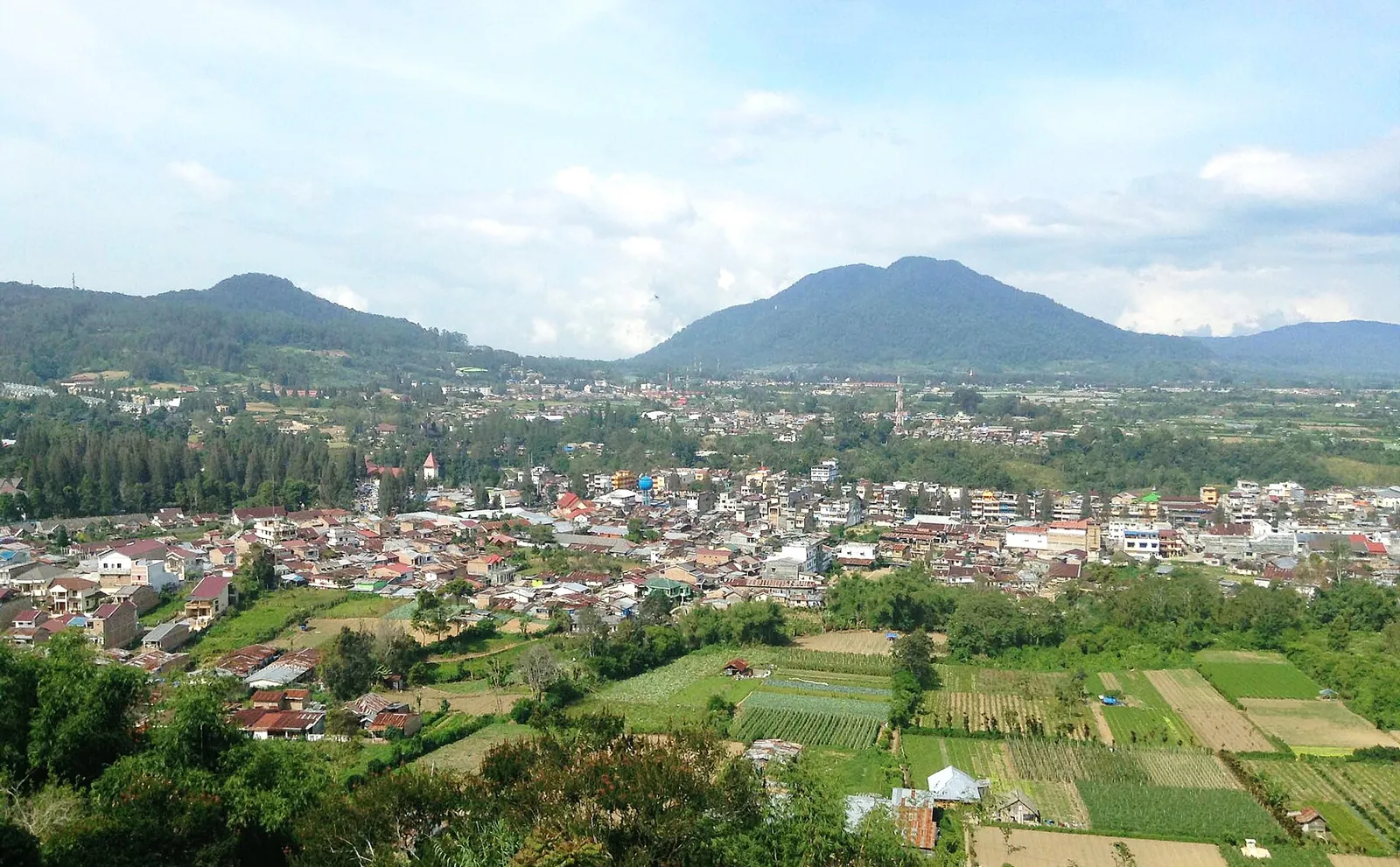
Berastagi is a cool market town in the Karo highlands of North Sumatra, about 1,300 metres above sea level and some 66 km by road from Medan. It grew up in the 1920s as a Dutch hill station and is now Medan's weekend escape: one main street, a busy fruit and flower market, and two volcanoes on the horizon — Sibayak, which you can climb, and Sinabung, which you cannot. For travellers it is also the natural halfway stop between Bukit Lawang's jungle and Lake Toba.
- Suggested time
- 2 nights (1 if you skip Sibayak)
- Where to stay
- Berastagi town centre around Jalan Veteran and the fruit market; the hotel strip on Jalan Jamin Ginting; or Semangat Gunung hot-spring village below Sibayak
- Season and timing
- Cool all year — the ministry gives 17–20 °C, with chilly nights and fog often settling in around dusk. Rain can fall in any month; Wikivoyage's climate table shows the least rain from June to August and the most from September to January. Avoid the Sibayak hike in heavy rain, and expect the town to be full of Medan visitors at weekends, public holidays and the Karo Flower and Fruit Festival.
The short answer
Stay two nights. Arrive from Medan or Kualanamu airport by road (the Ministry of Tourism gives about two hours from Medan; allow longer at weekends), walk the fruit market and go up Gundaling Hill for the late-afternoon view. Climb Sibayak the next morning with a local guide — the ministry gives 2–3 hours to the top — and soak in the hot springs at its foot afterwards. On the third day head south via Kabanjahe, the Lingga traditional village and Sipiso-piso waterfall to Lake Toba. Sleep in the town centre near the market, or at the hot-spring village of Semangat Gunung if Sibayak is the point of your visit. Mount Sinabung is off limits: on 2026-10-03 it was at alert Level III.
Why stop in Berastagi, and how long
Berastagi is not a place of grand monuments. Its appeal is the climate and the setting: the Ministry of Tourism describes a town at about 1,300 metres, with temperatures of 17–20 °C that make a real break from Medan's heat, pleasant days and cool nights. The surrounding Karo plateau is farm country — the ministry calls the town famous for its flowers, vegetables and fruit — and the skyline is dominated by Sibayak and Sinabung.
The town grew from the 1920s as a Dutch hill station and today fills up with Medan residents at weekends. It is compact: the ministry notes that it is essentially one main street that you can explore on foot, with opelet minibuses running from the terminal to surrounding villages, motorbikes for rent, and horse-drawn carts called sado for short rides.
One night is enough for the market and Gundaling Hill. Two nights let you climb Sibayak without rushing and still have an evening in town. Because Berastagi sits on one of the two main road routes from Medan to Lake Toba — the ministry's Lake Toba page lists buses via Medan–Berastagi as well as the direct Medan–Parapat road — it works best as a break in that journey rather than as a return trip from Medan.
Climbing Sibayak and the hot springs
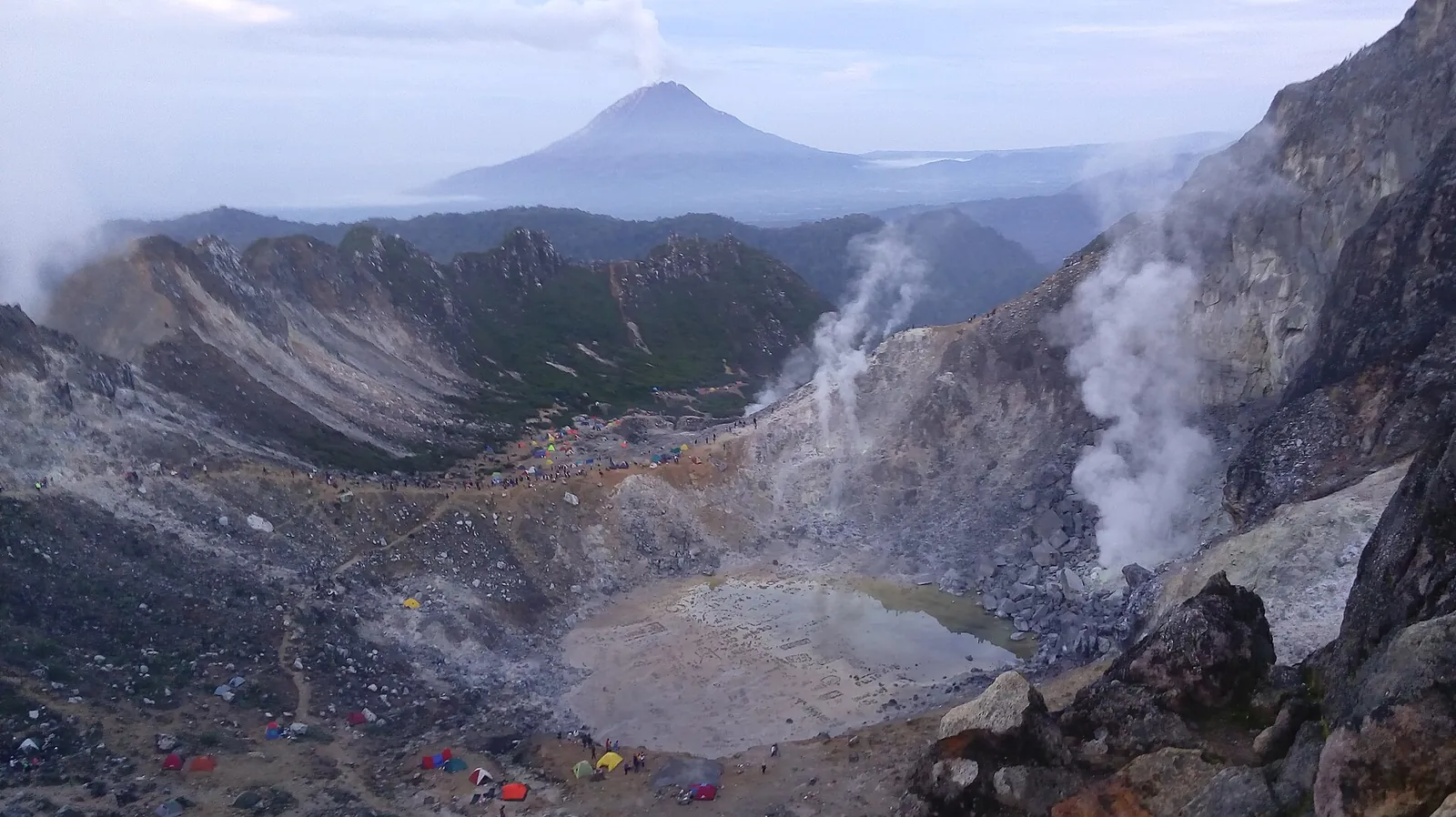
Gunung Sibayak is the volcano you can actually climb. The Ministry of Tourism gives its height as about 2,212 metres (the Smithsonian-based figure on Wikipedia is 2,181 m), calls the hike suitable for beginners as well as experienced walkers, and gives 2–3 hours to the summit on a clear, maintained path, with steam from geothermal vents in the active crater and a sunrise view for those who start early. You reach the trailhead from town by ojek (motorbike taxi) or rented vehicle.
Its last eruption, according to Wikipedia, was in 1881, but fumaroles and hot springs remain very active, and sulphur gases have discoloured the small crater lake. Wikivoyage describes two usual starting points — near the geothermal power plant at Lau Debuk-Debuk in Semangat Gunung village on the south-east side, and Pos Lestari on the west — and strongly recommends a guide unless you are an experienced trekker, because parts of the path are steep, slippery and confusing. Take that seriously in rain or mist, and carry a warm layer for the top.
The ministry notes natural hot springs on the way, and the hot-spring pools at Lau Debuk-Debuk / Semangat Gunung, at the foot of the mountain, are the natural place to end the day. Wikivoyage warns that the springs fill with local families in the late afternoon. When we checked on 2026-10-03, MAGMA Indonesia did not list Sibayak among the volcanoes at Level II or above; check it again before you go and obey any closure at the trailhead.
Make time for the local food
What to eat and where to look
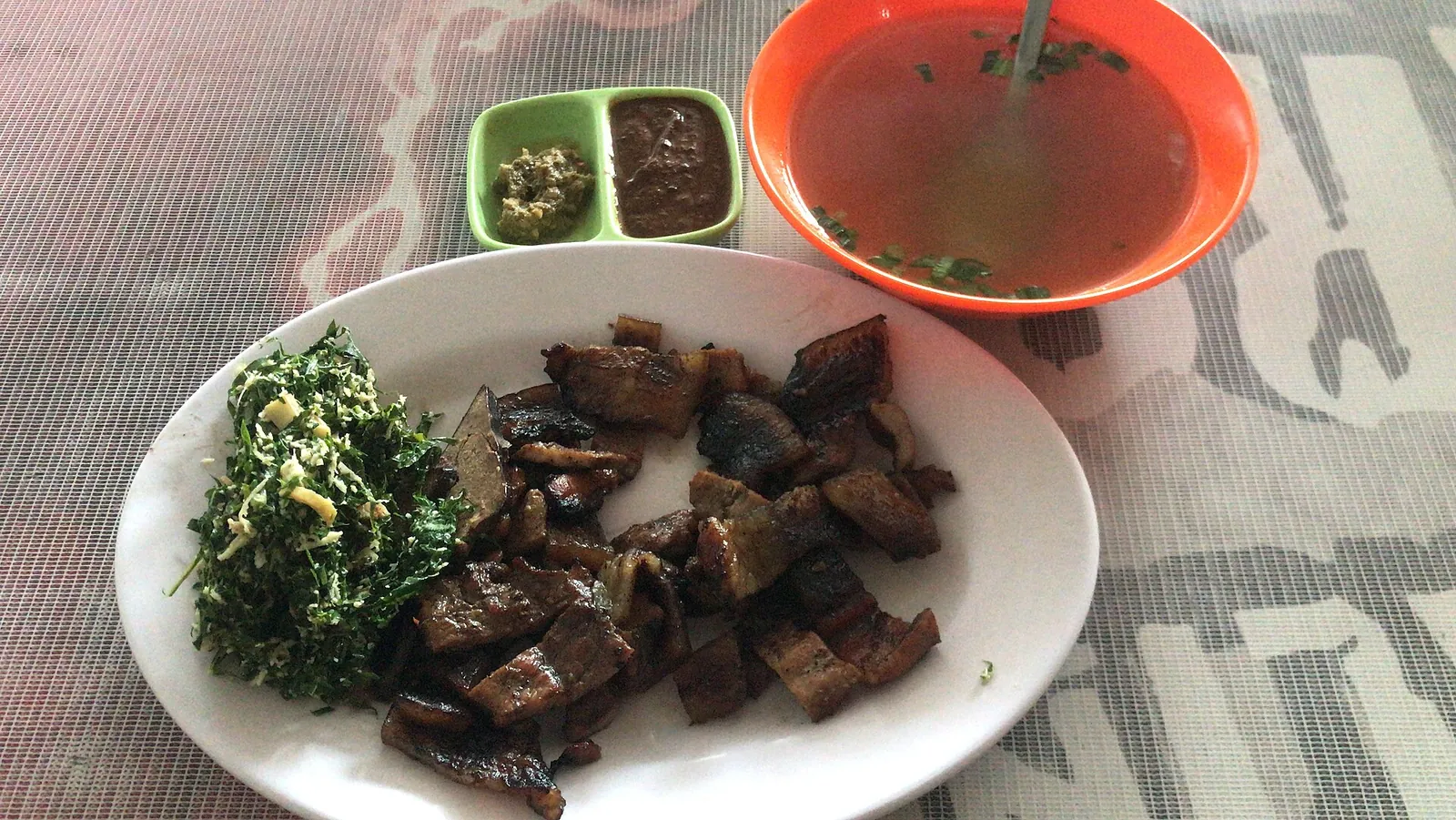
Babi panggang Karo (BPK)
The Karo signature dish: grilled pork served with a sauce made from pig's blood and spices, usually with cooked cassava leaves and a bowl of broth. Wikivoyage notes that you can ask for fatty belly, leaner meat or a mix.
- Where to look
- BPK eateries in the Karo towns and along the Medan road; Wikivoyage lists one at Bandar Baru, on the way up from Medan.
- Fit it into your day
- A filling lunch or dinner after the Sibayak hike.
Pork and blood; not halal. Ask for the sauce on the side if you are unsure about it.
Highland fruit: passion fruit, citrus and strawberries
The Karo plateau supplies fruit to Medan, and the ministry lists oranges, passion fruit (markisa) and strawberries among the regency's flagship crops. Berastagi is especially known for passion fruit.
- Where to look
- The fruit and flower market (pasar buah) in the town centre.
- Fit it into your day
- Breakfast or a snack; buy a bag for the road to Lake Toba.
Haggle politely and wash or peel fruit before eating.
Cimpa
Karo rice-flour cakes with coconut and palm sugar, traditionally made for the Kerja Tahun harvest festival; cimpa bohan is a version made with purple sweet potato.
- Where to look
- Ask at market snack stalls and local cake shops; it is most common around festivals.
- Fit it into your day
- With coffee in the afternoon, or wrapped for the journey.
Very sweet; often sold wrapped in leaves, so eat it the same day.
Bandrek and Karo coffee
Bandrek is a hot, spiced tea, best with milk (bandrek susu) according to Wikivoyage, that suits a cold highland evening; the Karo highlands also grow coffee that local cafés serve.
- Where to look
- Evening food tents along the main street and cafés in the town centre.
- Fit it into your day
- After dark, or before an early start up Sibayak.
It is usually sweet and spicy; ask for less sugar if you prefer.
Sinabung: watch it, do not climb it
Mount Sinabung, 2,460 metres high, is the cone you see smoking to the west. It has erupted repeatedly since 2013, and older pages — including a Ministry of Tourism article describing hiking routes from Lau Kawar — predate that and should not be used to plan a climb.
When we checked on 2026-10-03, MAGMA Indonesia, the government's volcano-monitoring service, listed Sinabung at Level III (Siaga) and advised the public and visitors not to enter the relocated villages, nor any area within 3 km of the summit or within 5 km in the south-eastern sector. Rivers that rise on the mountain also carry a risk of lahars. Do not join any 'Sinabung trek' while that advice stands.
The safe way to see it is from a distance. The ministry names Gundaling Hill, about 3 km from the town centre, as a viewpoint for both volcanoes, and lists villages 7–8 km from the summit — Tiga Pancur, Perteguhan and Tiga Kicat — as viewing areas; check that any village you visit is outside the current exclusion zone.
Gundaling Hill, the fruit market and the town
Gundaling Hill rises on the western edge of town. The ministry places it at about 1,575 metres, with gardens, horse rides and views of Sinabung and Sibayak; Wikivoyage adds that the top is crowded with small stalls, so go for the view rather than for peace. Late afternoon is the obvious time, before the evening fog that Wikipedia notes often settles around dusk.
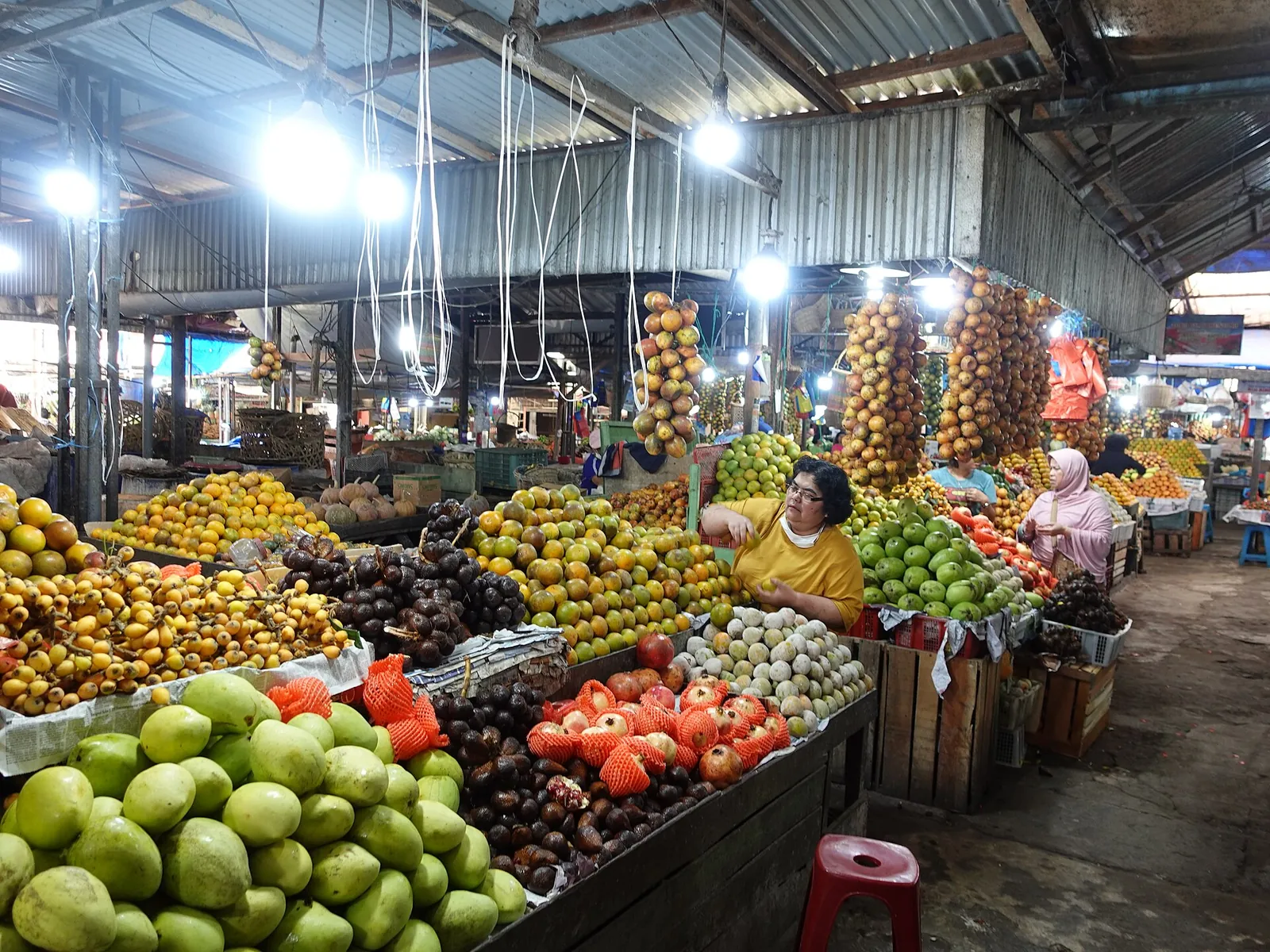
The fruit and flower market (pasar buah) is the town's centre of gravity. The ministry describes dozens of stalls of fresh-picked fruit and fragrant flowers, and the town is known for its passion fruit (markisa). Expect citrus, passion fruit, strawberries, highland vegetables, cut flowers and potted plants; Wikivoyage advises haggling, since prices aimed at weekend visitors can be higher than in the local market.
Two other stops repay a short visit. Museum Pusaka Karo in Berastagi, founded by the Dutch missionary Pastor Leo Joosten Ginting and opened in 2013, holds about 70 ethnographic objects of the Karo people; the ministry lists it as open from Tuesday to Sunday. Taman Alam Lumbini, a few kilometres east, is a Buddhist temple park whose golden pagoda is modelled on Myanmar's Shwedagon; Wikivoyage notes a dress code and a ban on bringing alcohol and cigarettes inside.
Lingga village and the road to Lake Toba
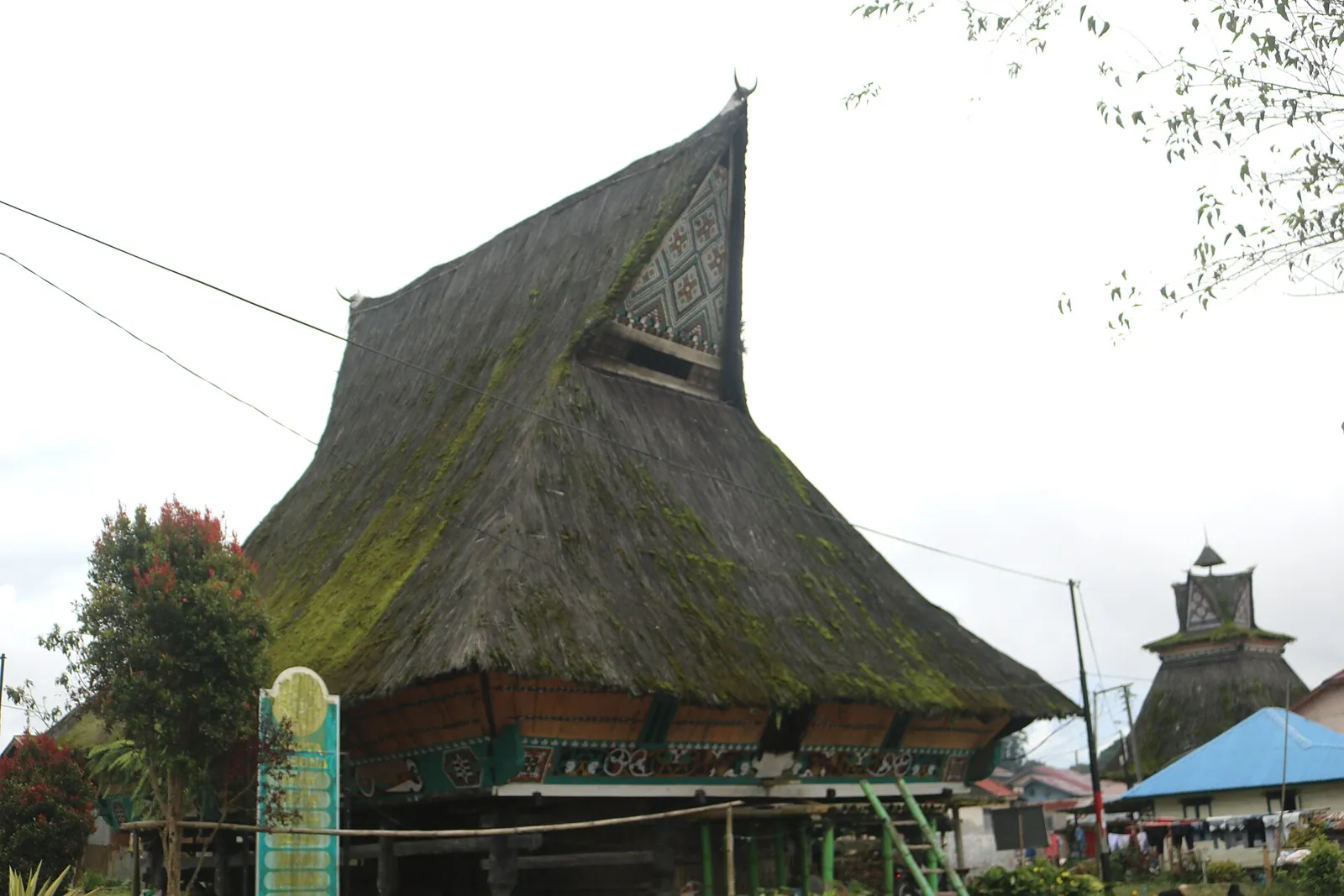
The Karo traditionally lived in large shared houses, rumah siwaluh jabu, with steep, horned roofs over several families; very few now remain, and Wikipedia names Lingga as the village where they can still be seen. Lingga is also one of the five founding villages of Karo tradition. The ministry places Museum Karo Lingga, a small community museum opened in 1989, about 5 km west of Kabanjahe and about 1 km before the traditional village. These are lived-in homes: ask before photographing people and do not walk into a house uninvited.
Continuing south, Sipiso-piso waterfall drops about 120 metres into a gorge on the northern side of Lake Toba. The ministry puts it 24 km from Kabanjahe and about 45 minutes from Berastagi, with viewing gazebos near the food stalls and a long, tiring staircase if you want to go down towards the base.
From there you continue to Parapat, the lakeside town that the ministry's Lake Toba page names as the bus destination. Seeing Lingga and Sipiso-piso on the way is the main reason to hire a car with a driver for this leg: by public transport you would start from the bus terminal in Kabanjahe, which Wikivoyage names as the nearest one to Berastagi, and we could not verify a timetable for the onward connections.
Getting there and the Karo Flower and Fruit Festival
From Medan the ministry gives about 66 km and around two hours by road, and names Jalan Ginting in Padang Bulan, Medan, as the place to catch the 'Sumatera Transport' or 'Sinabung' buses; it also suggests a rented car, minibus or taxi for more comfort. Wikivoyage warns that the road is often jammed, especially at weekends, and that buses run from Kualanamu airport to Kabanjahe via Berastagi. From the airport, the ministry's Sibayak page allows 2–3 hours.
Coming from Bukit Lawang, the ministry describes both places as reached by road from Medan, and we found no official timetable for a direct connection; either travel back through Medan or ask your guesthouse to arrange a car straight across.
The Karo Flower and Fruit Festival (Festival Bunga dan Buah Karo), held in Berastagi with a parade of floats decorated with flowers and fruit, Karo performances and food stalls, dates back to the 1980s and was rebranded under its current name in 2022, according to the ministry. Its event page listed the 2026 edition from 31 July to 2 August, with most events free. Book rooms early for those dates.
- Day 1: road from Medan or the airport; fruit market and Museum Pusaka Karo (not Mondays); Gundaling Hill in the late afternoon.
- Day 2: Sibayak with a guide — earlier for the sunrise and clearer views — then the hot springs at Semangat Gunung; a slow evening in town.
- Day 3: south via Kabanjahe and Lingga to Sipiso-piso, then along Lake Toba's northern shore towards Parapat. This is an editorial suggestion, not a timetable.
Practical questions
How many days do I need in Berastagi?
Two nights is ideal: one day for the market and Gundaling Hill, one morning for Sibayak and the hot springs, then onward to Lake Toba. One night is enough if you skip the hike.
How hard is the Sibayak hike?
The Ministry of Tourism calls it suitable for beginners and gives 2–3 hours to the top on a clear path. Wikivoyage warns that parts are steep and slippery and recommends a guide unless you are experienced, especially in rain or mist.
Can I climb Mount Sinabung?
No. When we checked on 2026-10-03, MAGMA Indonesia listed Sinabung at Level III (Siaga) and advised visitors to stay out of relocated villages, 3 km around the summit and 5 km in the south-eastern sector. View it from Gundaling Hill instead.
How do I get from Medan to Berastagi?
By road, about 66 km and around two hours according to the ministry, longer at weekends. Buses leave from Jalan Ginting in Padang Bulan, Medan; a rented car or taxi is more comfortable, especially from Kualanamu airport.
Is Berastagi on the way to Lake Toba?
Yes. The ministry lists the Medan–Berastagi road as one of the two bus routes to Parapat, and Sipiso-piso waterfall, at the northern end of the lake, is about 45 minutes from Berastagi.
How cold does Berastagi get?
The ministry gives 17–20 °C, with cool nights; Wikipedia notes that nights can fall to 12–16 °C and that fog often settles around dusk. Bring a jacket and a warm layer for Sibayak.
Sources and checks before you travel
Reference sources for the version dated 3 October 2026. Confirm opening times, access, transport and conditions for your travel dates.
- Indonesia Travel (Ministry of Tourism): Berastagi ↗ — opens in a new tab
- Indonesia Travel: Sibayak Mountain ↗ — opens in a new tab
- Indonesia Travel: Mount Sinabung, the mighty volcano with glorious view ↗ — opens in a new tab
- MAGMA Indonesia (PVMBG): volcano activity levels ↗ — opens in a new tab
- MAGMA Indonesia: Sinabung activity report, 3 October 2026 ↗ — opens in a new tab
- Indonesia Travel: Museum Pusaka Karo ↗ — opens in a new tab
- Indonesia Travel: Museum Karo Lingga ↗ — opens in a new tab
- Indonesia Travel: Taman Alam Lumbini ↗ — opens in a new tab
- Indonesia Travel: The stunning Sipiso-piso waterfall ↗ — opens in a new tab
- Indonesia Travel: Sipiso-piso Waterfall ↗ — opens in a new tab
- Indonesia Travel: Lake Toba ↗ — opens in a new tab
- Indonesia Travel: Bukit Lawang ↗ — opens in a new tab
- Indonesia Travel: Karo Flower and Fruit Festival ↗ — opens in a new tab
- Indonesia Travel: Festival Bunga & Buah Karo 2026 ↗ — opens in a new tab
- Wikipedia: Mount Sibayak ↗ — opens in a new tab
- Wikipedia: Berastagi ↗ — opens in a new tab
- Wikipedia: Karo people (Indonesia) ↗ — opens in a new tab
- Wikivoyage: Berastagi ↗ — opens in a new tab
- Wikipedia: Kualanamu International Airport ↗ — opens in a new tab
Photo credits
Berastagi from Gundaling Hill: the town spreads across the Karo plateau between farm plots and the mountains.
Photograph: Christian Advs Sltg — opens in a new tab · CC BY-SA 4.0 — opens in a new tab
Changes: Resized and converted to WebP; displayed with responsive crops. · Original photograph and licence details ↗ — opens in a new tab
The crater of Mount Sibayak, still steaming, with Sinabung rising on the horizon.
Photograph: Palma Bernardo Alexius Hutabarat — opens in a new tab · CC BY 2.0 — opens in a new tab
Changes: Resized and converted to WebP; displayed with responsive crops. · Original photograph and licence details ↗ — opens in a new tab
The fruit market in Berastagi, the town's busiest corner.
Photograph: Astari28 — opens in a new tab · CC BY-SA 4.0 — opens in a new tab
Changes: Resized and converted to WebP; displayed with responsive crops. · Original photograph and licence details ↗ — opens in a new tab
Babi panggang Karo (BPK): grilled pork with cassava leaves, broth and the blood-based sauce.
Photograph: Lim Natee — opens in a new tab · CC BY-SA 4.0 — opens in a new tab
Changes: Resized and converted to WebP; displayed with responsive crops. · Original photograph and licence details ↗ — opens in a new tab
A siwaluh jabu, the Karo multi-family house, in the Lingga cultural village south of Berastagi.
Photograph: Agus Damanik — opens in a new tab · CC BY-SA 4.0 — opens in a new tab
Changes: Resized and converted to WebP; displayed with responsive crops. · Original photograph and licence details ↗ — opens in a new tab