Lombok and Nusa Tenggara · East Nusa Tenggara
Komodo National Park guide: dragons, Padar, Pink Beach and the 2026 quota
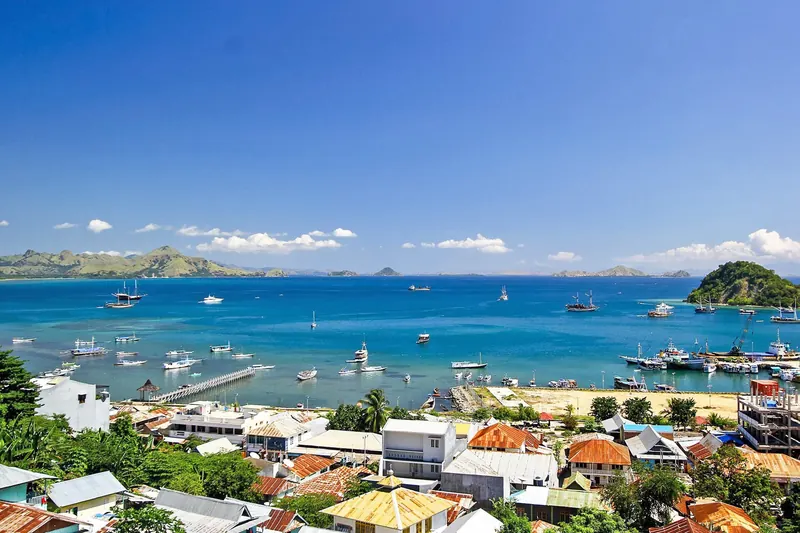
Komodo National Park covers the sea and islands between Sumbawa and Flores in East Nusa Tenggara. It was set up in 1980 to protect the Komodo dragon, the world's largest living lizard, and has been a UNESCO World Heritage Site since 1991. Its three large islands, Komodo, Rinca and Padar, are dry hills of savanna and monsoon forest, and the surrounding water has coral reefs, seagrass, mangroves and strong currents that bring in manta rays. Nobody lives on the trails: everything is done by boat from Labuan Bajo on the western tip of Flores, and every walk among the dragons is led by a ranger. Since April 2026 the park has also limited visitor numbers, so the date you book now matters as much as the boat.
- Suggested time
- 2–4 nights in Labuan Bajo, with 1–2 boat days or a 2–3 day liveaboard
- Where to stay
- Labuan Bajo on Flores (town centre or Waecicu Beach); some trips sleep on board
- Season and timing
- The dry months bring brown, golden hills and the rainy season turns Padar and Rinca green, as the Ministry of Tourism describes. On Rinca, June and July are the dragons' mating period and the ministry says they are harder to find then. Sea conditions decide the day: in August 2026 the harbour authority warned about high waves and strong winds in the southern Sape Strait while confirming that boats to Padar and Komodo were still sailing.
The short answer
Plan two to four nights in Labuan Bajo and give the park one or two full days by boat, or join a two- or three-day liveaboard. A typical day goes to Padar's viewpoint early in the morning, then Komodo or Rinca for a ranger-led dragon walk, then Pink Beach and a manta point for snorkelling. Book through an operator who can confirm your slot under the park's daily quota (1,000 visitors a day since 1 April 2026, booked through the SiOra system) before you pay for flights. Fly into Komodo International Airport (LBJ) in Labuan Bajo, usually from Bali; the harbour is about ten minutes from the airport.
Book the date before the boat: the 2026 visitor quota
Since 1 April 2026 the Komodo National Park authority (Balai Taman Nasional Komodo) has capped visits at 1,000 people a day, about 365,000 a year, covering Padar, Rinca, Komodo and 23 dive sites, as ANTARA reported from the park and the Ministry of Forestry. The ministry said the daily total is split into three sessions of roughly 300–330 people and is distributed through the park's SiOra booking application. The park recorded 429,509 visits in 2025, above its own estimate of what the islands and reefs can carry.
In practice this changes the order of planning. The park has asked tour operators to book activity tickets well in advance and confirm that the quota is available on the day; if you arrive in Labuan Bajo without a slot, it suggests visiting other sights around the town while you wait. Ask any boat operator, in writing, which day and session your park entry is booked for and whether entrance fees are included. The quota is under review: the Governor of East Nusa Tenggara said it would be evaluated after three to six months, and the Ministry of Forestry said it could be raised once trails and jetties on Padar are improved, so check the current rules before you go.
The park fee itself follows Government Regulation 36 of 2024. When the new rates took effect on 30 October 2024, ANTARA reported, citing the park's official site, that foreign visitors paid Rp250,000 per person, weekday or weekend, with separate charges for activities such as diving and for drones. We could not open the park's own site to confirm the current figure on 2026-10-03, so treat that number as a guide and check it with your operator.
Seeing Komodo dragons on Rinca or Komodo
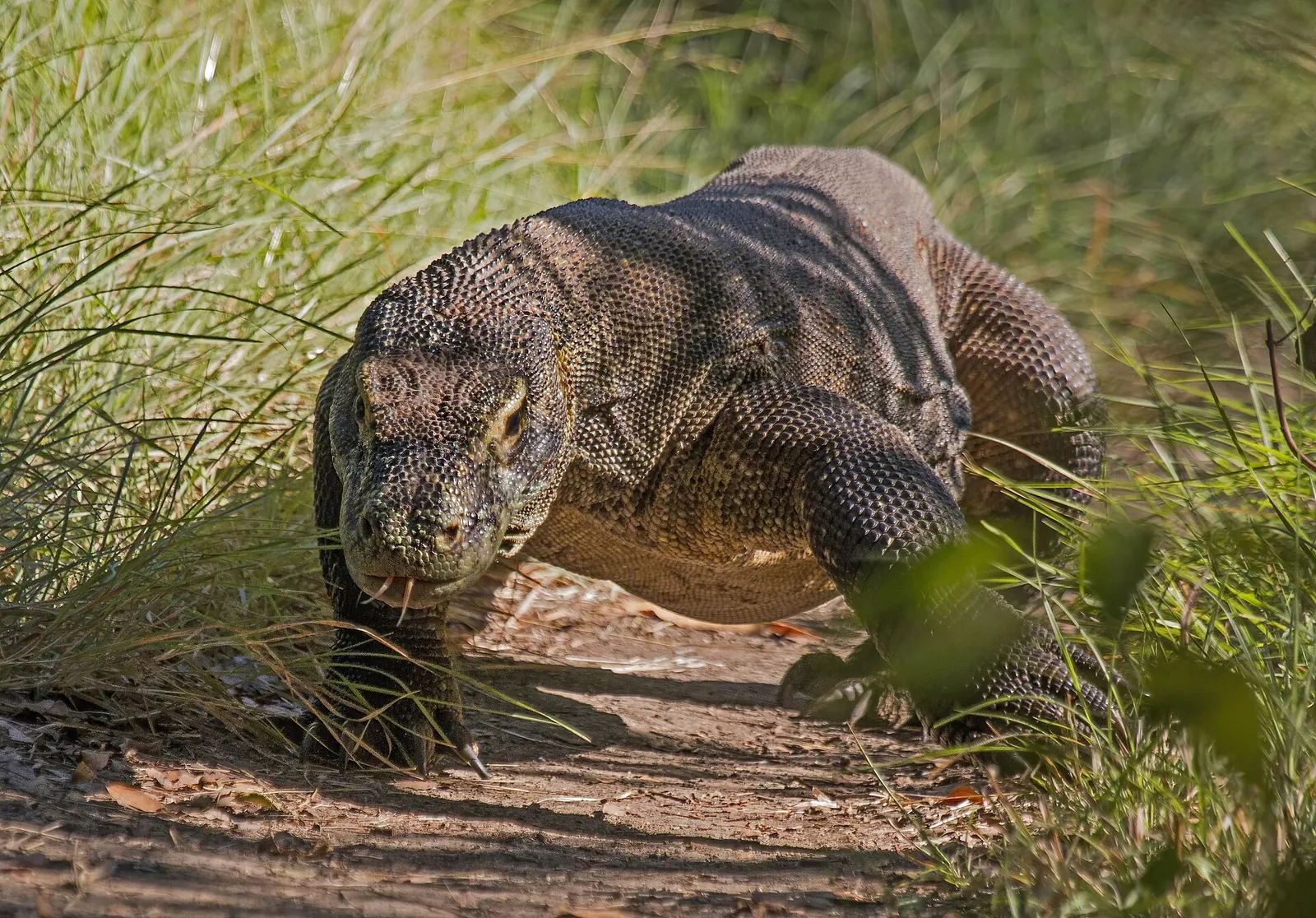
Dragons live on several islands, but visitors meet them at two ranger stations: Loh Buaya on Rinca and Loh Liang on Komodo, the park's main gate. The Ministry of Tourism says Rinca, about 18,500 hectares and mostly savanna, has the larger population, with around 2,000 dragons; ANTARA, quoting the park, put the number on Komodo Island at about 1,600 in 2025. Either island can show you dragons. On Rinca, the ministry describes treks from short routes to walks of one to three hours, climbing to hilltops over the bays. Komodo has Loh Liang's trails and, on the same island, Pink Beach.
Walks are always led by a park ranger, and the dragons are genuinely dangerous: they are fast, swim well and have a venomous bite. Wikivoyage reports a photographer bitten in 2017 after leaving the group. Stay with the ranger, keep the distance they set and never walk off alone for a photo. Wikivoyage suggests long trousers, sunglasses and a hat for the walks.
Timing helps. The ministry recommends avoiding Rinca in June and July, the mating period, when dragons stay near their nests and are harder to find.
Make time for the local food
What to eat and where to look
Grilled fish and seafood (ikan bakar)
Fish and seafood grilled over charcoal and served with rice and sambal: the natural dinner after a day on the water.
- Where to look
- Kampung Ujung on the Labuan Bajo waterfront, which the Ministry of Tourism names as the town's local food centre.
- Fit it into your day
- Dinner on the evening you return from the park.
Ask the price before you order, and ask for the sambal on the side if you do not like heat.
Meals on board
On day boats and liveaboards the crew usually cooks: rice, vegetables, fried or grilled fish and fruit, eaten between stops. Packages that include meals are the norm, as the Ministry of Tourism notes.
- Where to look
- Your boat; check what is included when you book.
- Fit it into your day
- Breakfast and lunch on a park day.
Tell the operator about allergies or vegetarian needs in advance; there is no shop to fall back on at sea. Food near the Rinca ranger station is limited, Wikivoyage notes.
Sour fish soup (ikan kuah asam)
A sour fish broth that the Ministry of Tourism presents as an authentic East Nusa Tenggara flavour.
- Where to look
- Local warung and seafood restaurants in Labuan Bajo rather than the hotel strip.
- Fit it into your day
- Lunch on a town day or while waiting for your park slot.
Watch for fish bones.
Water and snacks for the walks
Wikivoyage reports that water and soft drinks can be bought near the park headquarters on Rinca, but the trails themselves have nothing.
- Where to look
- Shops in Labuan Bajo before you board; the Rinca ranger station as a fallback.
- Fit it into your day
- Carry at least one large bottle per person for Padar and the dragon walks.
Do not drink tap water, Wikivoyage warns; take your empty bottles back to the boat.
Padar Island: the viewpoint everyone comes for
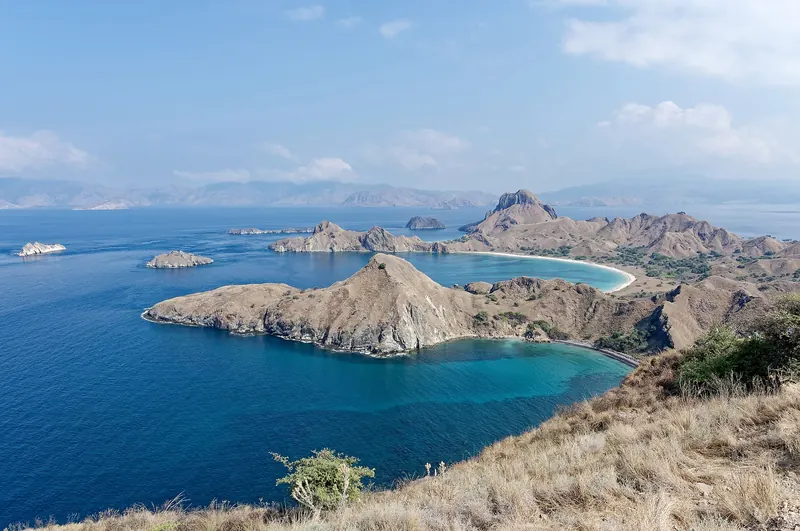
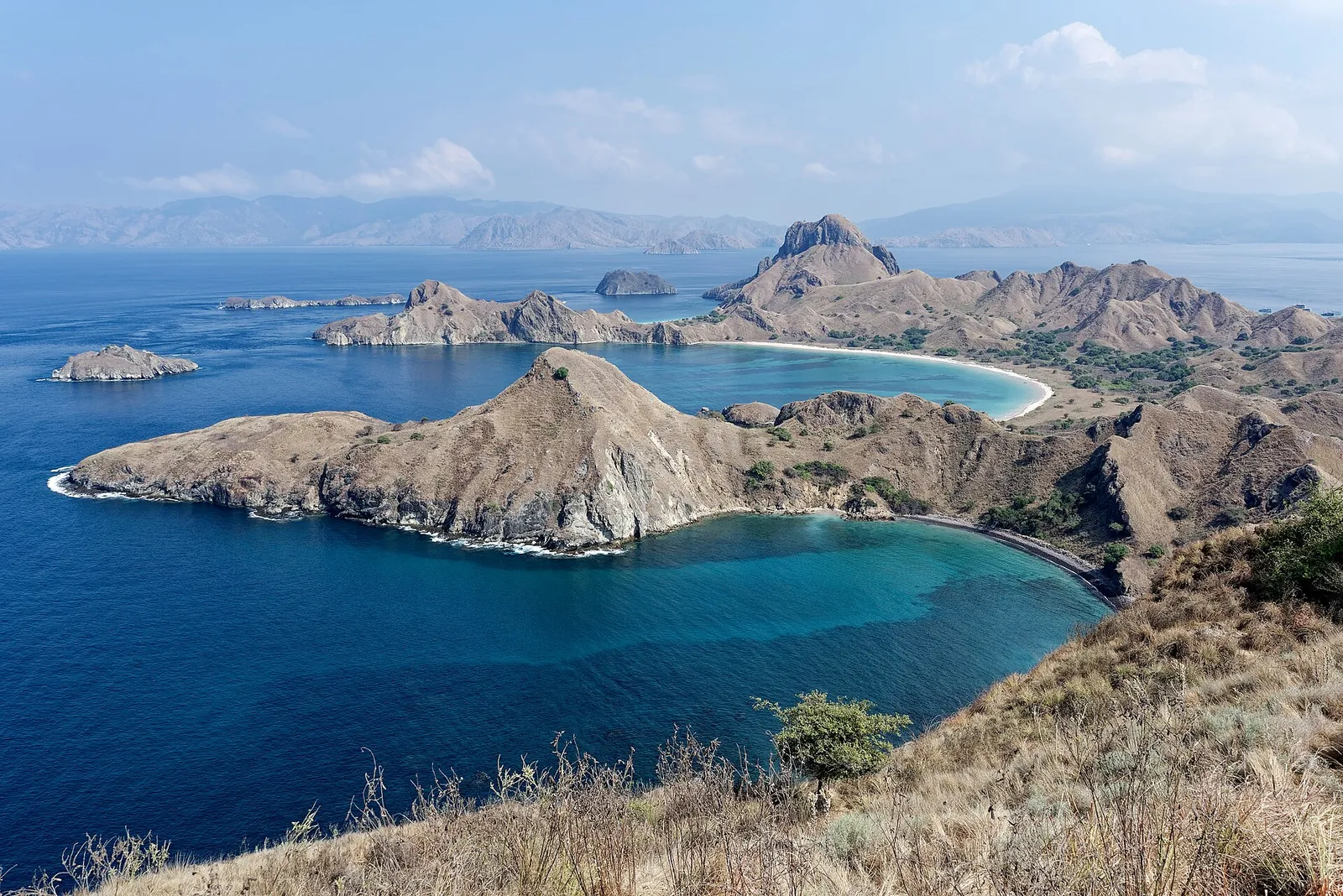
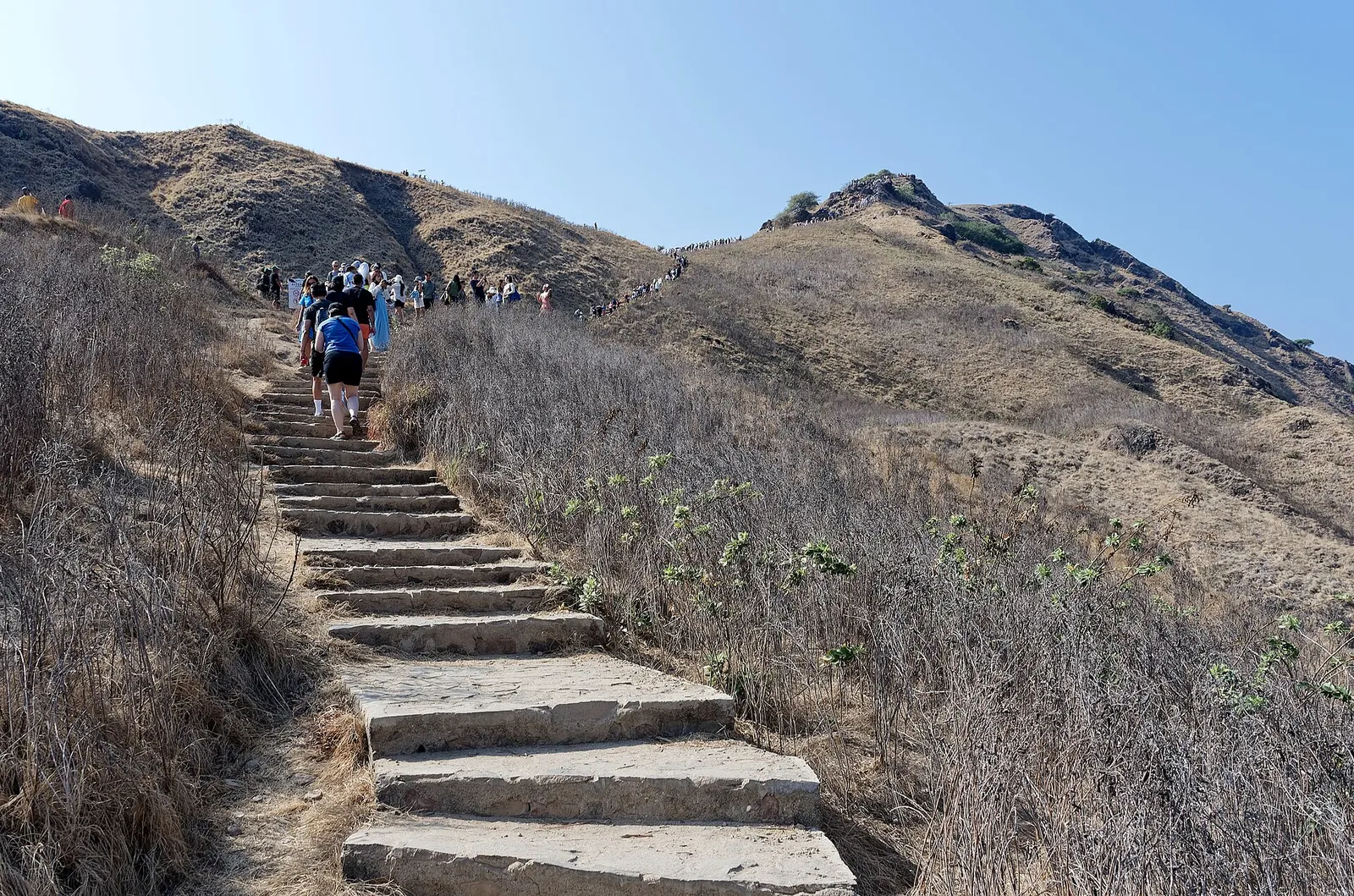
Padar is visited for its view rather than its dragons: the famous panorama over three curved bays with white, pink and dark sand, seen from a ridge above the jetty. The Ministry of Tourism describes a climb of around 30 minutes on a steep slope, with no handrail along the way. Wear shoes with grip, carry water and go at sunrise or late afternoon: there is no shade and the ministry advises against the middle of the day.
Padar is also where crowding became the political issue behind the quota. The Minister of Forestry said in 2025 that the island had become 'like a market' and promised tighter queues, fencing and signs at the photo points. Expect controlled access to the summit and, on busy days, waiting for your turn on the ridge.
The colour of the hills depends on when you come. In the rainy season the grass turns green; in the dry season it fades to gold and brown, as the ministry describes. Both are photogenic, but the dry months bring fiercer sun on the climb.
Pink Beach, manta points and the reefs
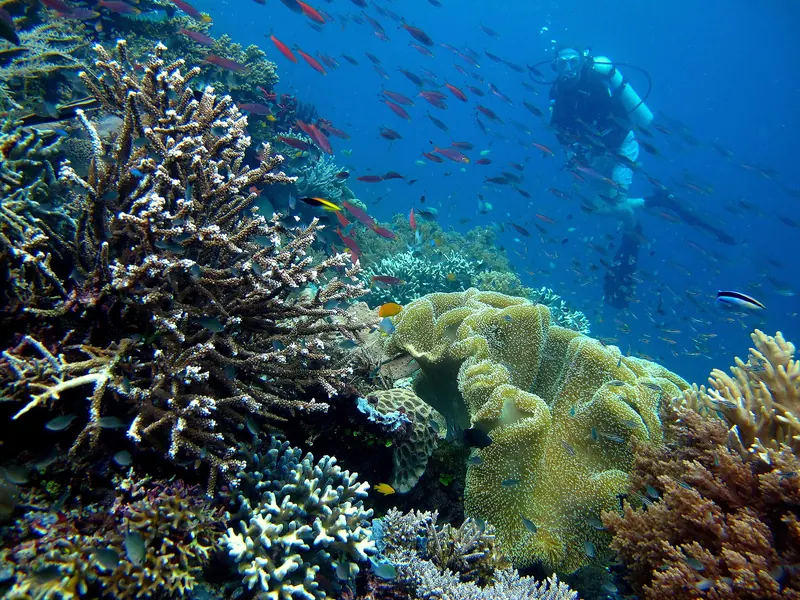
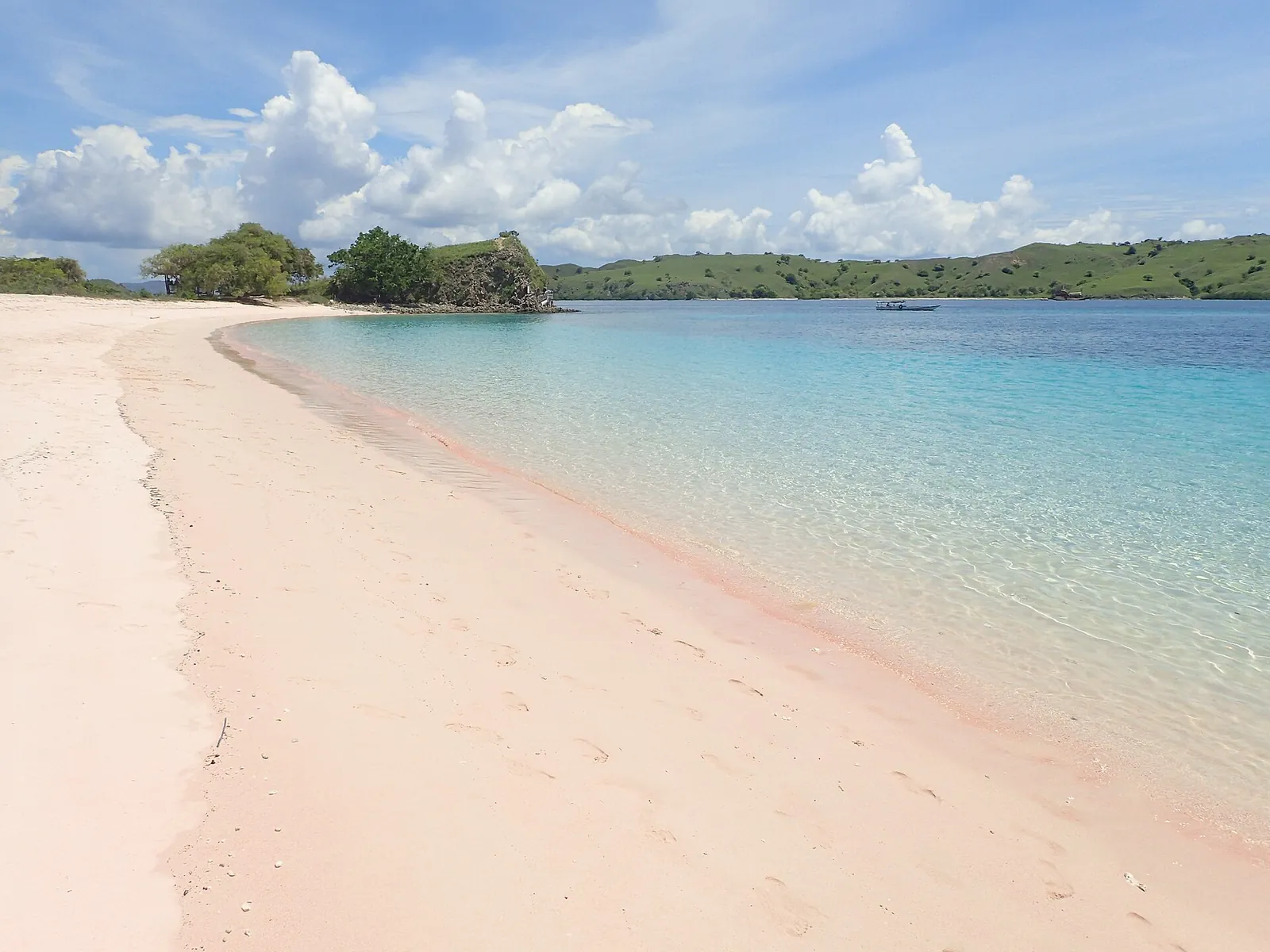
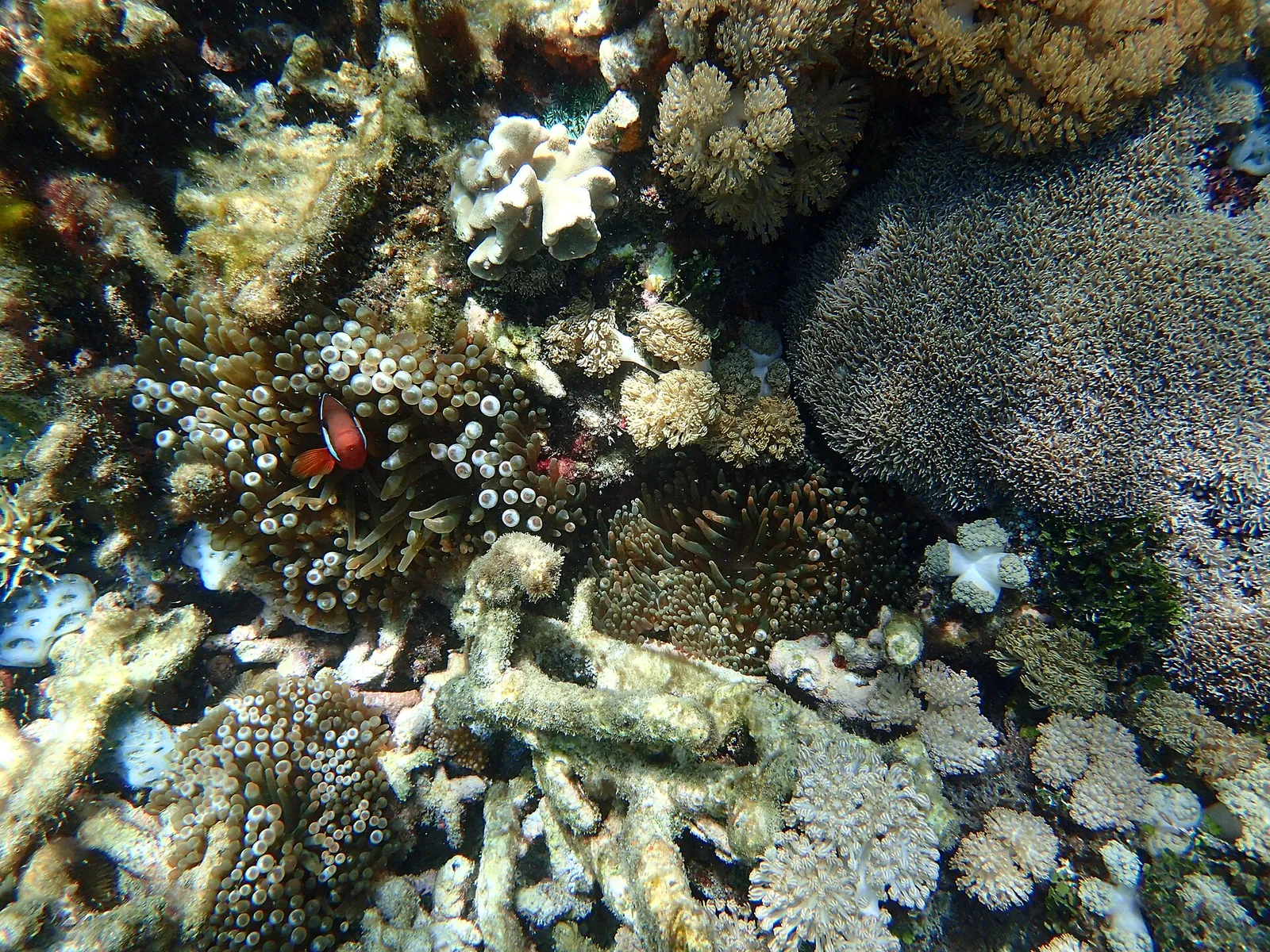
The park is as much about the water as the dragons. The Ministry of Tourism describes Pink Beach (Pantai Merah) on Komodo as getting its colour from fragments of red coral mixed into white sand, with reefs close to shore that suit snorkellers and beginner divers. Remember that it is dragon habitat too: the ministry advises keeping your distance if one appears on the beach and not visiting without a guide.
For divers and confident snorkellers, the ministry lists Manta Point, where manta rays up to three metres long can be seen, Batu Bolong and Castle Rock, a demanding dive with strong currents, sharks and pelagic fish; Tatawa Besar north of Rinca is an easier snorkelling stop. The currents that bring the marine life are also the main risk. Snorkel only with the boat crew watching, wear a life jacket or float if you are not a strong swimmer, and leave the drift dives to qualified divers with a local dive centre.
Do not stand on coral or touch the mantas. The park counts reef damage among the pressures that led to the visitor limits, and the ministry's description of the marine area stresses zoning and conservation rules.
Day boat, overnight boat or liveaboard
Wikivoyage notes that there are no regular public connections between the park's islands and no roads on them; you visit by speedboat, wooden day boat or a phinisi liveaboard. A speedboat day from Labuan Bajo can link Padar, a dragon walk, Pink Beach and a manta point, but it is a long day with a lot of time at speed on open water. A one- or two-night boat trip lets you climb Padar at dawn without leaving town at night and spreads the snorkelling over calmer hours. Liveaboards are the usual choice for divers; Wikivoyage lists dive centres in Labuan Bajo running both day trips and multi-day liveaboards. The Ministry of Tourism notes that joining a shared trip or a package that includes meals and transfers is the simpler option if chartering your own boat is too expensive.
Safety deserves real attention. In July 2023 a phinisi tourist boat sank off Pink Beach with nine foreign visitors on board, ANTARA reported. Before booking, ask how many passengers the boat carries, whether there are life jackets for everyone and a radio, and what happens if the harbour authority stops sailings for weather. Keep a spare day in your plans: after the M7.7 Flores earthquake of 15 August 2026, Labuan Bajo's harbour and the park stayed open, but the harbour authority warned about high waves and strong winds in the southern Sape Strait and told visitors to follow official information.
Closer to Labuan Bajo, small islands such as Kelor and Kanawa, which the Ministry of Tourism describes as a snorkelling island reached by boat from town, make easier half-day trips, and in Labuan Bajo itself Batu Cermin cave and the hill viewpoints fill a day if your park slot is not until later.
Practical questions
Is there a limit on visitors to Komodo National Park?
Yes. Since 1 April 2026 the park has limited visits to 1,000 people a day, split into sessions and booked through the SiOra system, ANTARA reported. Confirm your slot with your operator before booking flights; the quota is being reviewed.
Rinca or Komodo: which island is better for seeing dragons?
Both have ranger-led walks and plenty of dragons. Rinca is closer to Labuan Bajo and, according to the Ministry of Tourism, has the larger population; Komodo is further but combines easily with Pink Beach. Avoid Rinca in June and July if you can, when the dragons are mating and harder to find.
Can I walk on Komodo or Rinca without a ranger?
No. Dragon walks are always led by park rangers, and the animals are dangerous. Stay with the group and follow the ranger's instructions.
How long does the climb on Padar take?
About 30 minutes on a steep, partly stepped trail, according to the Ministry of Tourism. Go at sunrise or late afternoon, as there is no shade.
Is Labuan Bajo safe to visit after the August 2026 earthquake?
The M7.7 earthquake on 15 August 2026 was centred near Mbay in Nagekeo, further east on Flores. The Ministry of Tourism reported that Komodo National Park, the harbour and Komodo Airport kept operating, while some sights elsewhere on Flores closed for checks. Check official updates before you travel.
How much is the entrance fee?
When new rates took effect in October 2024, ANTARA reported an entrance fee of Rp250,000 per person for foreign visitors, citing the park's site. We could not confirm the current figure on the park's site, so check with your operator; the fee is separate from the boat price unless stated.
Sources and checks before you travel
Reference sources for the version dated 3 October 2026. Confirm opening times, access, transport and conditions for your travel dates.
- Indonesia Ministry of Tourism: Komodo National Park ↗ — opens in a new tab
- Indonesia Ministry of Tourism: Rinca Island ↗ — opens in a new tab
- Indonesia Ministry of Tourism: Padar Island ↗ — opens in a new tab
- Indonesia Ministry of Tourism: Pink Beach ↗ — opens in a new tab
- Indonesia Ministry of Tourism: Diving Komodo ↗ — opens in a new tab
- Indonesia Ministry of Tourism: Snorkeling Komodo ↗ — opens in a new tab
- Indonesia Ministry of Tourism: Labuan Bajo ↗ — opens in a new tab
- Indonesia Ministry of Tourism: Kanawa Island ↗ — opens in a new tab
- Indonesia Ministry of Tourism: culinary spots in East Nusa Tenggara ↗ — opens in a new tab
- ANTARA: park sets a quota of 1,000 visitors a day ↗ — opens in a new tab
- ANTARA: Ministry of Forestry on the 1,000-a-day limit ↗ — opens in a new tab
- ANTARA: quota covers Padar, Rinca, Komodo and 23 dive sites ↗ — opens in a new tab
- ANTARA: park advises booking ahead and visiting other sights while waiting ↗ — opens in a new tab
- ANTARA: governor says the quota will be evaluated ↗ — opens in a new tab
- ANTARA: Ministry of Forestry to review the quota regularly ↗ — opens in a new tab
- ANTARA: tighter quota and safety measures on Padar ↗ — opens in a new tab
- ANTARA: 2024 Komodo National Park ticket prices ↗ — opens in a new tab
- ANTARA: tourist boat sinks in Komodo National Park ↗ — opens in a new tab
- ANTARA: destinations still closed after the NTT earthquake ↗ — opens in a new tab
- ANTARA: Ministry of Tourism on safety in Labuan Bajo ↗ — opens in a new tab
- Wikivoyage: Komodo National Park ↗ — opens in a new tab
Does this experience fit your route?
A boat day is the only way into the park. Before you book, check that the operator confirms your quota slot, states whether park fees are included and carries life jackets for everyone.
Check dates and details on Viator ↗ — opens in a new tabAffiliate link · Book with ViatorPhoto credits
The view from the southern viewpoint on Padar Island, about 30 minutes' climb from the jetty
Photograph: Jakub Hałun — opens in a new tab · CC BY 4.0 — opens in a new tab
Changes: Resized and converted to WebP; displayed with responsive crops. · Original photograph and licence details ↗ — opens in a new tab
A Komodo dragon on Rinca Island, where every walk is led by a park ranger
Photograph: Charles J. Sharp — opens in a new tab · CC BY-SA 4.0 — opens in a new tab
Changes: Resized and converted to WebP; displayed with responsive crops. · Original photograph and licence details ↗ — opens in a new tab
Pink Beach on Komodo Island: the colour comes from fragments of red coral mixed into the white sand
Photograph: Hotel Kaesong — opens in a new tab · CC BY-SA 2.0 — opens in a new tab
Changes: Resized and converted to WebP; displayed with responsive crops. · Original photograph and licence details ↗ — opens in a new tab
The trail on Padar Island has no shade; go early in the morning or late in the afternoon
Photograph: Jakub Hałun — opens in a new tab · CC BY 4.0 — opens in a new tab
Changes: Resized and converted to WebP; displayed with responsive crops. · Original photograph and licence details ↗ — opens in a new tab
Coral in the shallows off Pink Beach, one of the park's easier snorkelling stops
Photograph: Hotel Kaesong — opens in a new tab · CC BY-SA 2.0 — opens in a new tab
Changes: Resized and converted to WebP; displayed with responsive crops. · Original photograph and licence details ↗ — opens in a new tab