Lombok and Nusa Tenggara · East Nusa Tenggara
Bajawa and Bena travel guide: Ngada villages, Inerie and hot springs
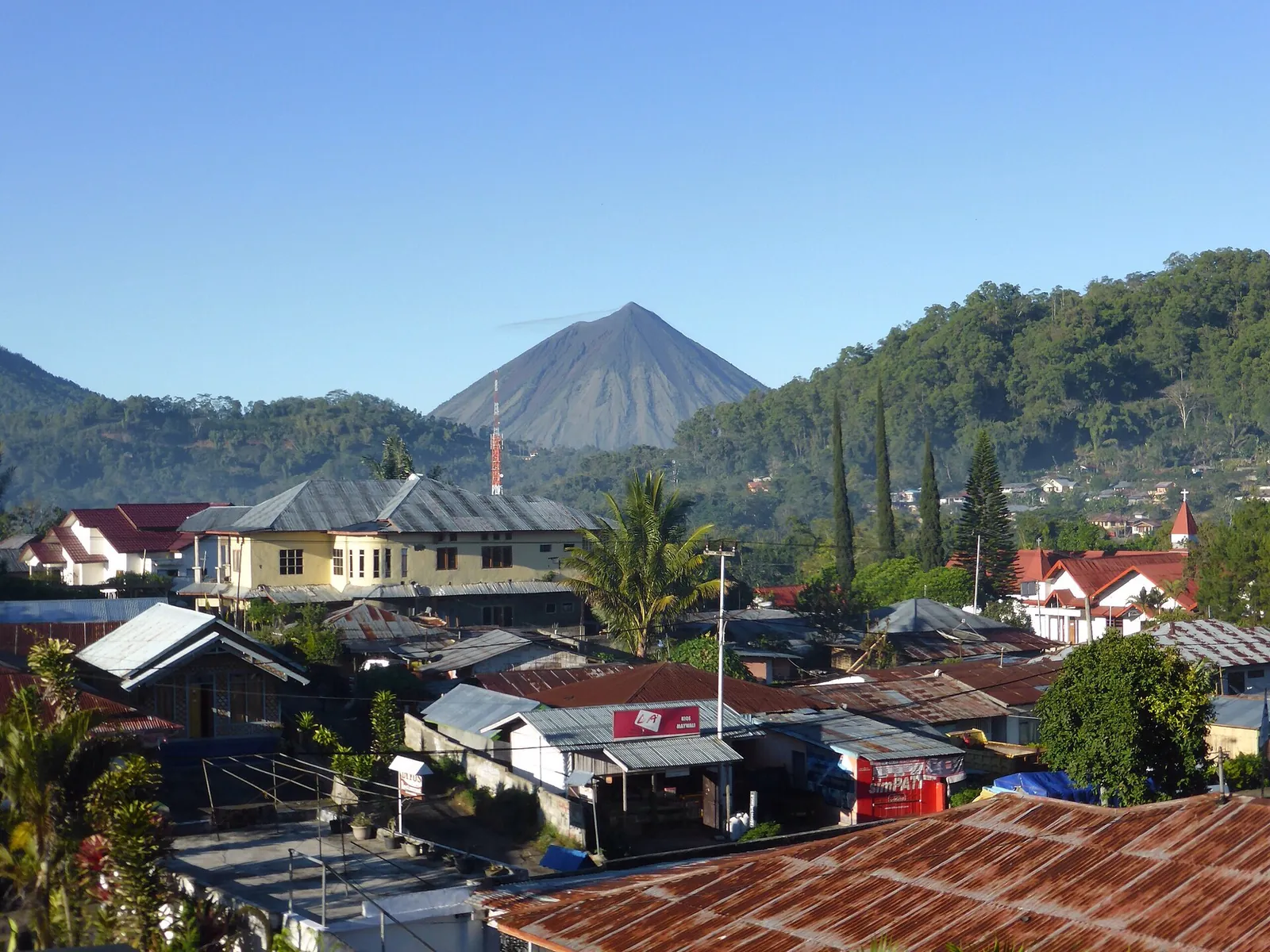
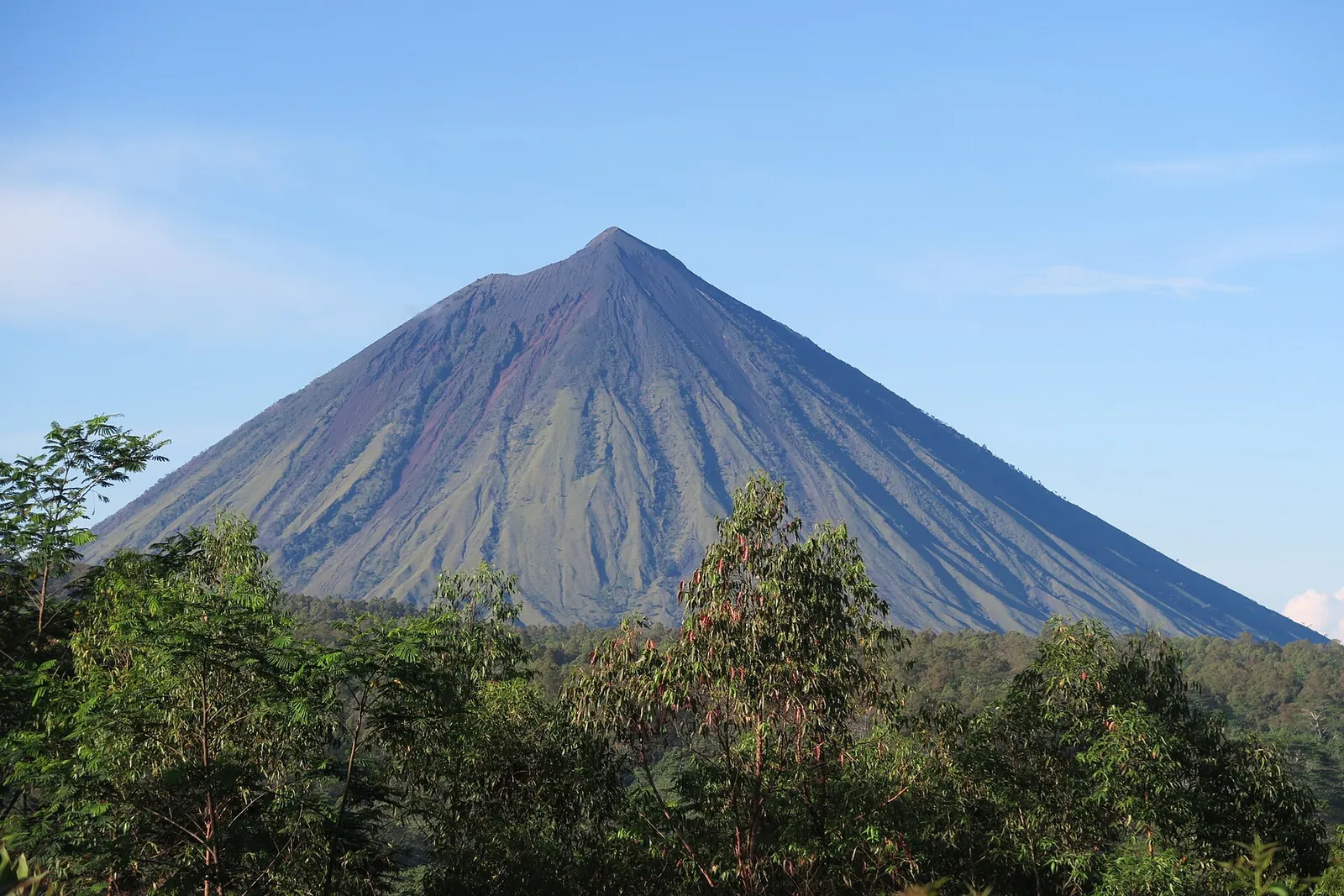
Bajawa is the capital of Ngada Regency, a cool highland town in the middle of Flores that most travellers reach on the long road between Labuan Bajo and Ende. It sits at roughly 1,200 metres, so nights are chilly, and the near-perfect cone of Inerie, the highest volcano on Flores, rises just to the south. The reason to stop is in the hills around it: Ngada villages such as Bena, where thatched clan houses face each other across a terraced yard of megaliths and ancestor shrines, plus hot springs, waterfalls and coffee country.
- Suggested time
- 2 nights (3 with an Inerie climb or Riung)
- Where to stay
- Bajawa town; Manulalu, on the ridge above Bena, for the volcano view
- Season and timing
- The Flores dry season is the easier time to visit: Indonesia Kaya names June to August as the busiest months on Inerie, when the trail is in its best condition. Bajawa's altitude means cold nights in any month, so bring a warm layer.
The short answer
Stop for two nights, three if you want to climb Inerie or add a day trip to Riung. Sleep in Bajawa town for the widest choice of homestays and hotels, or at Manulalu on the ridge above Bena for the Inerie view. Hire a car with a driver or a motorbike through your lodging — there is no useful public transport to the villages — and spend one full day on the southern loop: Bena (and nearby villages such as Gurusina or Tololela) in the morning, Manulalu for the view, and a hot spring to finish. Most people arrive by road; Soa Airport (BJW) outside town has Wings Air flights to Labuan Bajo and Kupang.
Why stop in Bajawa
On a trip across Flores, Bajawa is the point where the island turns from coast and rice terraces to volcanic highland. The town itself is a working regency capital rather than a sight — markets, churches, guesthouses and a few restaurants on the main streets — but it is the natural base for the Ngada heartland to its south, where Inerie dominates every view.
The Ngada (also written Ngadha) are the people of central Flores. Most are Catholic today, yet villages around Bajawa still keep the layout, clan houses and ancestor shrines of their adat (customary) tradition. Indonesia's tourism ministry lists Bena in Ngada among the island's megalithic villages, alongside the better-known Wae Rebo in Manggarai.
Plan Bajawa as a two-night stop: arrive in the afternoon from Ruteng or Ende, spend one full day in the villages and hot springs, and move on the next morning. Climbing Inerie or visiting the Riung islands each needs another day.
Bena and the Ngada villages
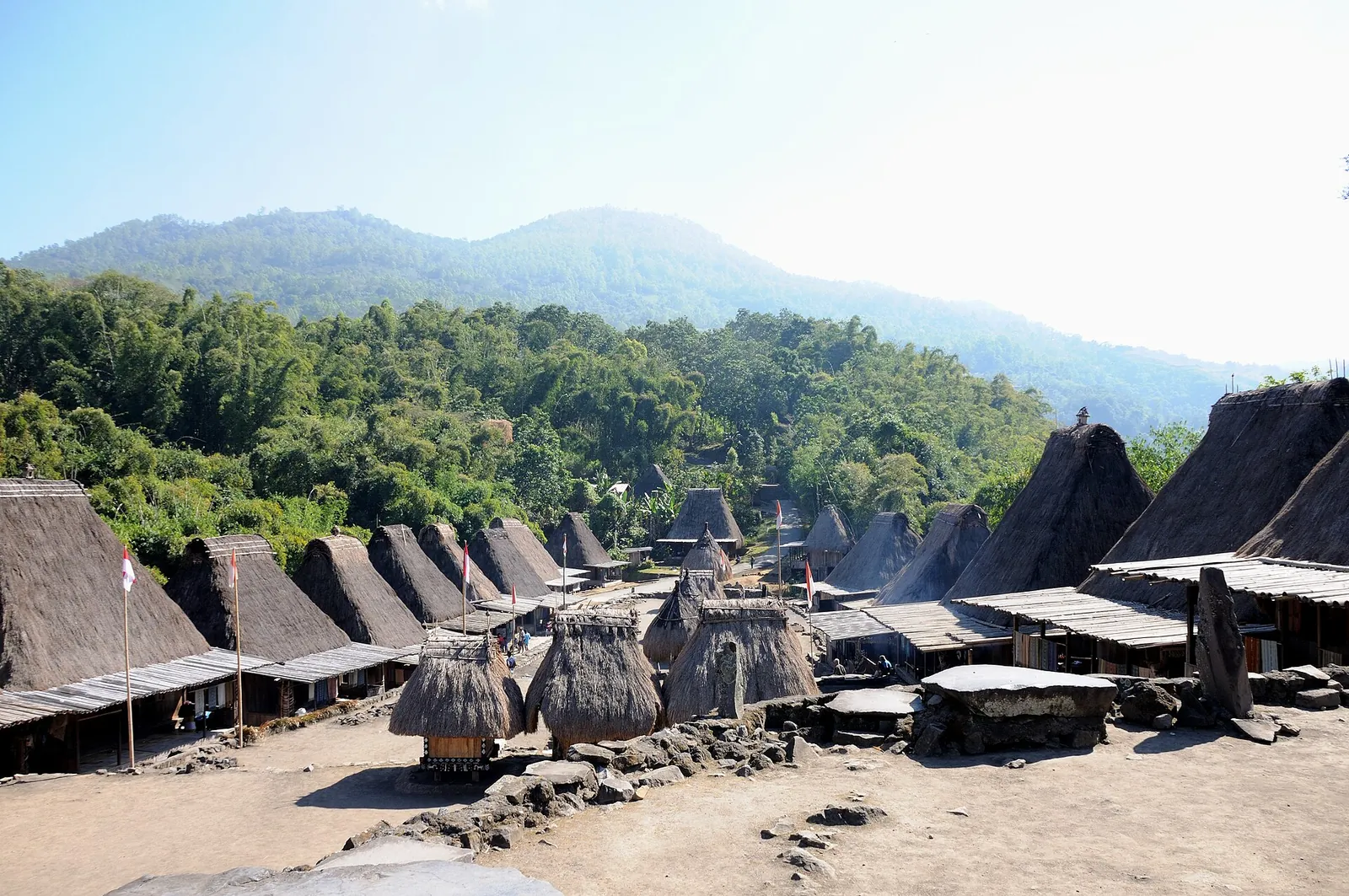
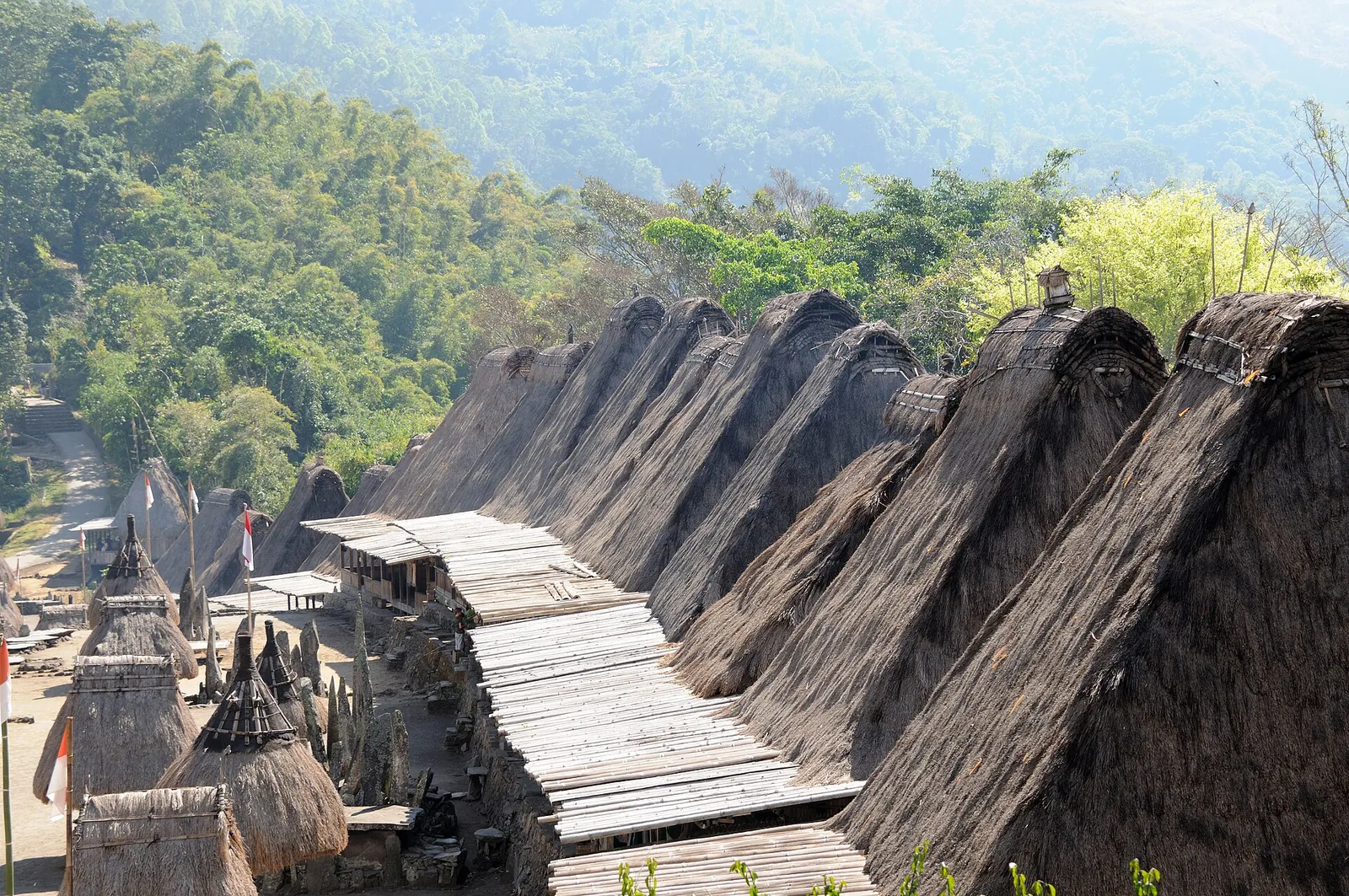
Bena lies about 19 kilometres south of Bajawa in Tiwuriwu village, on a hilltop at the foot of Inerie. According to Indonesia Kaya, roughly 45 houses face each other around a long U-shaped yard that steps down the slope in nine levels, one for each clan, and the roof decorations differ according to the lineage that lives in each house. The single entrance is at the north end; the south end finishes at the edge of a steep drop. Bena's residents believe that Yeta, a god enthroned on Inerie, protects the village.
In the yard between the rows stand the ngadhu and bhaga that define a Ngada village. A ngadhu, the symbol of the male ancestors, is a single carved post under a thatched roof, shaped like a parasol; its post also serves for tethering sacrificial animals at ceremonies. A bhaga, for the female ancestors, looks like a miniature house. Kinship in Bena runs through the female line; most residents farm, and many women also weave.
Bena is the best known, but not the only, village worth seeing. Wikivoyage's Bajawa guide names Gurusina and Tololela as the other villages travellers visit most. With a driver you can combine Bena with one of them in a morning.
How to visit respectfully. These are lived-in homes, not an open-air museum. Indonesia Kaya describes no fixed ticket at Bena; instead visitors sign a guest book and leave a donation for upkeep — carry small notes, as there are no ATMs in the villages. Ask before you photograph people, keep off the stone platforms, ngadhu and bhaga, which are ancestral shrines, and dress modestly. If you would like a woven cloth, buy it from the weaver directly. If a ceremony is under way, watch from the edge unless you are invited in. For more, see our guide to etiquette in Indonesia.
- Bring cash in small notes from Bajawa for the guest-book donation and any weaving you buy.
- Ask before photographing people, and do not climb on the megaliths or ancestor shrines.
- Go in the morning, when the light is on the houses and before clouds build on Inerie.
Make time for the local food
What to eat and where to look
Bajawa coffee
The Bajawa highlands are known for high-quality Flores arabica, and coffee is the drink of every homestay breakfast and village visit.
- Where to look
- Homestays and cafés in Bajawa, and packaged beans in the town's shops and markets.
- Fit it into your day
- A morning cup before the village loop; buy beans to take home.
Coffee is often served with sugar by default; ask for it without (tanpa gula) if you prefer.
Tapa kolo
Rice, usually a local red rice, packed into a length of bamboo and cooked over an open fire, served with chicken, pork or other meat. The tourism ministry describes it as a dish for rituals, ceremonies and special occasions.
- Where to look
- At village celebrations and occasionally at restaurants that cook Flores dishes; ask your host whether anyone is preparing it.
- Fit it into your day
- A special meal if you are around for an event, rather than something on every menu.
Often served with pork; ask what comes with it.
Se'i
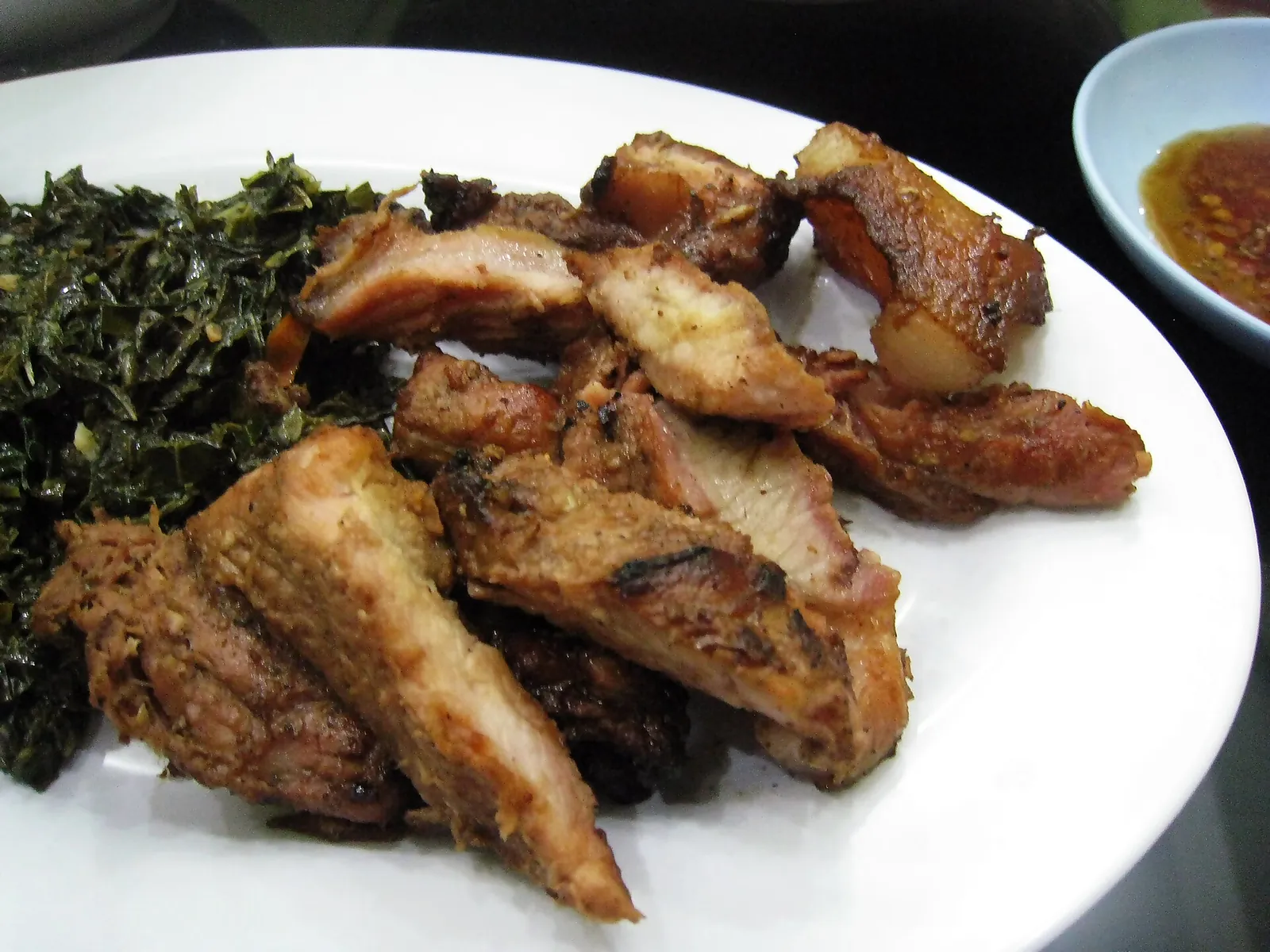
Meat — usually pork or beef, sometimes fish — smoked slowly over an open fire so that hot smoke rather than flame cooks it; East Nusa Tenggara's best-known meat dish.
- Where to look
- Restaurants in Bajawa town that serve local food.
- Fit it into your day
- Dinner in town after a day in the villages.
Se'i babi is pork; ask for se'i sapi (beef) if you avoid pork.
Moke
Flores palm spirit, distilled from palm sap by traditional methods; the ministry describes it as a symbol of friendship and hospitality. 'Black' moke is distilled further and is stronger.
- Where to look
- Offered by hosts and sold in town; Wikivoyage notes it is a popular drink in Bajawa, where it is also called arak.
- Fit it into your day
- A small glass in the evening, never before driving or an Inerie climb.
Strength varies widely between batches; drink very little if you do not know the source.
Inerie: the view and the climb
Inerie (2,245 m) is the highest volcano on Flores; its name is usually explained as ine, mother, and rie, beautiful. Indonesia Kaya describes it as still active, with the last eruption in 1970. When we checked on 2026-10-03, Indonesia's volcano monitoring service MAGMA listed Inierie at Level I (Normal); check again before a climb.
For the view without the climb, go to Manulalu, on the ridge above Bena. Indonesia Kaya calls it the best spot for a 360-degree panorama of Inerie, with Bajawa and the hidden villages below; it is also a sunrise viewpoint, and it has a café and a bed-and-breakfast. The road to Bena passes it.
The climb starts from Watumeze village, already high on the mountain, and Indonesia Kaya puts the ascent at about three to five hours. Hikers usually leave in the small hours to reach the top at sunrise. The trail is loose gravel and rock with sections where you need your hands, and there is almost no shade, so it is hard going in the midday sun. The summit is marked by three cross-shaped posts and looks straight down on Bena. Go with a guide; the tourist information centre in Bajawa can help you find one.
Hot springs, waterfalls and viewpoints
Ngada's volcanoes heat several springs. Mengeruda, in Piga village in the Soa district north-east of town and near the airport road, is a natural hot-spring bathing place fed by water from the Inielika volcano area. Malanage, south of Bajawa towards Inerie, is a river where hot volcanic water meets a cold mountain stream, so you can choose your temperature by where you sit; Wikivoyage notes only a changing room and a small warung there. Either makes a good end to the village day.
Ogi waterfall, about 30 metres high in Pape village roughly 8 kilometres from town, is reached by a walk of about a kilometre through rice fields. Indonesia Kaya warns that signs are few, there is no public transport and only a small warung by the parking area — ask locals for directions and bring water.
For a quick look at Inerie from closer to town, Wikivoyage lists the Wolobobo viewpoint south of Bajawa.
Riung and the Seventeen Islands
If you have an extra day, the 17 Islands Marine Park (Taman Laut 17 Pulau) at Riung on the north coast is Ngada's sea-side counterpart to the highlands. Indonesia Kaya puts it about 75 kilometres from Bajawa, roughly two and a half hours by road through savanna hills, and describes it as a conservation area under the natural resources conservation agency (BBKSDA) in Kupang. It is much quieter than Komodo National Park because it is harder to reach.
Boats are hired from local residents. Snorkelling spots include the waters around Pulau Tiga and Pulau Meja, and Pulau Ontole is known for thousands of fruit bats roosting in its mangroves. Riung is best treated as an overnight detour rather than a rushed day trip.
Getting there and getting around
Most travellers reach Bajawa on the Trans-Flores road. Indonesia Kaya puts Labuan Bajo seven to eight hours away by road, and Wikivoyage gives about four hours from Ruteng and about three from Ende. In Ende, the tourism ministry says, westbound buses for Bajawa, Ruteng and Labuan Bajo leave from the Ndao terminal. A private car with driver, often booked across several days of a Flores trip, is the most comfortable option.
Bajawa's own airport, Soa (BJW), is in Masumeli in the Soa district outside town. When we checked on 2026-10-03, the Directorate General of Civil Aviation listed Wings Air flights to Komodo Airport in Labuan Bajo and to El Tari Airport in Kupang, each seven times a week. Confirm with the airline, as regional schedules change.
In and around town you need your own transport. Lodgings rent motorbikes and arrange cars with drivers; that is the practical way to see Bena, Manulalu and the hot springs in one day. To continue east to Kelimutu, the usual route is Bajawa to Ende and on to Moni.
Practical questions
How many days do I need in Bajawa?
Two nights give you one full day for Bena, another Ngada village, Manulalu and a hot spring. Add a day to climb Inerie or to visit the Riung islands.
How far is Bena from Bajawa?
About 19 kilometres south of town. There is no useful public transport, so go by hired car with a driver or by motorbike.
Do I have to pay to enter Bena?
Indonesia Kaya describes no fixed ticket: visitors sign a guest book and leave a voluntary donation for the village's upkeep. Bring small notes from Bajawa, as there are no ATMs in the villages.
Can I climb Inerie?
Yes, with a guide. The trail starts at Watumeze village and takes about three to five hours to the summit, usually starting before dawn. It is steep, loose and shadeless. Check the volcano's alert level with MAGMA Indonesia before you go.
What is the best way to get to Bajawa?
By road along the Trans-Flores highway — about seven to eight hours from Labuan Bajo, around four from Ruteng and around three from Ende. Soa Airport (BJW) also has Wings Air flights to Labuan Bajo and Kupang.
Is it cold in Bajawa?
At around 1,200 metres, Bajawa is much cooler than the coast, and nights can be chilly. Bring a sweater or fleece.
Sources and checks before you travel
Reference sources for the version dated 3 October 2026. Confirm opening times, access, transport and conditions for your travel dates.
- Indonesia.travel: try these ways to savour the great outdoors in Flores ↗ — opens in a new tab
- Indonesia.travel: tasty traditional treats of Flores Island ↗ — opens in a new tab
- Indonesia.travel: Ende ↗ — opens in a new tab
- Directorate General of Civil Aviation (Kemenhub): Soa Airport ↗ — opens in a new tab
- MAGMA Indonesia (Ministry of Energy and Mineral Resources): volcano activity levels ↗ — opens in a new tab
- Indonesia Kaya: Bena, a 1,200-year-old megalithic village in Flores ↗ — opens in a new tab
- Indonesia Kaya: Gunung Inerie ↗ — opens in a new tab
- Indonesia Kaya: Panorama Manulalu ↗ — opens in a new tab
- Indonesia Kaya: Ogi waterfall ↗ — opens in a new tab
- Indonesia Kaya: the 17 Islands Marine Park, Riung ↗ — opens in a new tab
- Wikipedia (Indonesian): Kampung Bena ↗ — opens in a new tab
- Wikipedia (Indonesian): Pemandian Air Panas Mengeruda ↗ — opens in a new tab
- Wikipedia (Indonesian): Gunung Inerie ↗ — opens in a new tab
- Wikipedia: Ngada people ↗ — opens in a new tab
- Wikivoyage: Bajawa ↗ — opens in a new tab
Photo credits
Bena, the best-known Ngada village south of Bajawa, with its clan houses facing each other across the yard
Photograph: Josep M. Gracia — opens in a new tab · CC BY-SA 4.0 — opens in a new tab
Changes: Resized and converted to WebP; displayed with responsive crops. · Original photograph and licence details ↗ — opens in a new tab
Thatched roofs of the clan houses in Bena, stepping down the hillside
Photograph: Josep M. Gracia — opens in a new tab · CC BY-SA 4.0 — opens in a new tab
Changes: Resized and converted to WebP; displayed with responsive crops. · Original photograph and licence details ↗ — opens in a new tab
Bajawa, the Ngada capital, with Inerie rising to the south
Photograph: Bryn Pinzgauer — opens in a new tab · CC BY 2.0 — opens in a new tab
Changes: Resized and converted to WebP; displayed with responsive crops. · Original photograph and licence details ↗ — opens in a new tab
Inerie (2,245 m), the highest volcano on Flores
Photograph: Felix Dance — opens in a new tab · CC BY 2.0 — opens in a new tab
Changes: Resized and converted to WebP; displayed with responsive crops. · Original photograph and licence details ↗ — opens in a new tab
Se'i babi, East Nusa Tenggara's smoked pork, as served in Kupang
Photograph: Gunawan Kartapranata — opens in a new tab · CC BY-SA 4.0 — opens in a new tab
Changes: Resized and converted to WebP; displayed with responsive crops. · Original photograph and licence details ↗ — opens in a new tab