Lombok and Nusa Tenggara · East Nusa Tenggara
Sumba travel guide: megalithic villages, ikat and west vs east
Sumba is not a smaller Bali. It is an island of savannah, maize and cassava fields and low limestone hills, where hilltop villages of steep thatched clan houses stand around stone tombs and many families still honour their ancestors through the Marapu belief. It is also home to some of Indonesia's finest hand-tied ikat and to the Pasola, a mounted spear-throwing ritual. Facilities are thin outside a few towns and resorts, so the trip works best when you decide early which half of the island you are going for.
- Suggested time
- 4–6 nights
- Where to stay
- Tambolaka or Waikabubak for the west; Waingapu for the east
- Season and timing
- The ministry names July to September as the peak season. The Wairinding hills are green in the rainy months (about November to May) and golden from July to October; some areas are risky to reach in heavy rain. Pasola is held in February and March.
The short answer
Give Sumba at least four nights, and five or six if you want both ends. For megalithic villages, Weekuri Lagoon and the south-west coast, fly into Tambolaka (Lede Kalumbang Airport, TMC) and sleep in Tambolaka or Waikabubak. For ikat weaving villages, the Wairinding hills and Walakiri Beach, fly into Waingapu (WGP) and stay in town. Doing both means a cross-island travel day: the ministry's own Sumba guide says a west-to-east trip needs at least three nights. Go with a driver or local guide rather than relying on public transport, and visit villages with someone who can ask permission for you.
West or east: choose your half of Sumba first
Sumba has two airports at opposite ends: Lede Kalumbang Airport at Tambolaka in Southwest Sumba (still widely called Tambolaka Airport; it was renamed in 2022) and Umbu Mehang Kunda Airport at Waingapu in East Sumba. Which one you fly into decides most of your trip, because the two halves feel different and crossing between them uses up a day.
The west (Southwest Sumba and West Sumba regencies) is where most visitors go for the living megalithic culture: Ratenggaro on the coast near Kodi, Praijing and Tarung around the West Sumba capital Waikabubak, and the Pasola ritual in February and March. It also has the turquoise Weekuri Lagoon, the rocky Mandorak and Bawana beaches, the Lapopu waterfall in the national park, and the surf coast with Sumba's best-known resorts.
The east centres on Waingapu, the island's largest town and port. The ikat-weaving villages of Prailiu, Labanapu and Kwangu are within about 10 kilometres of town, according to the Ministry of Tourism, and the open savannah of Bukit Wairinding, the Waimarang waterfall and the mangrove silhouettes of Walakiri Beach are day trips from it.
With four nights, choose one half. With five or six, fly into one airport and out of the other, and treat the drive across the middle as a travel day rather than trying to sightsee all the way.
Megalithic villages and Marapu: how to visit well
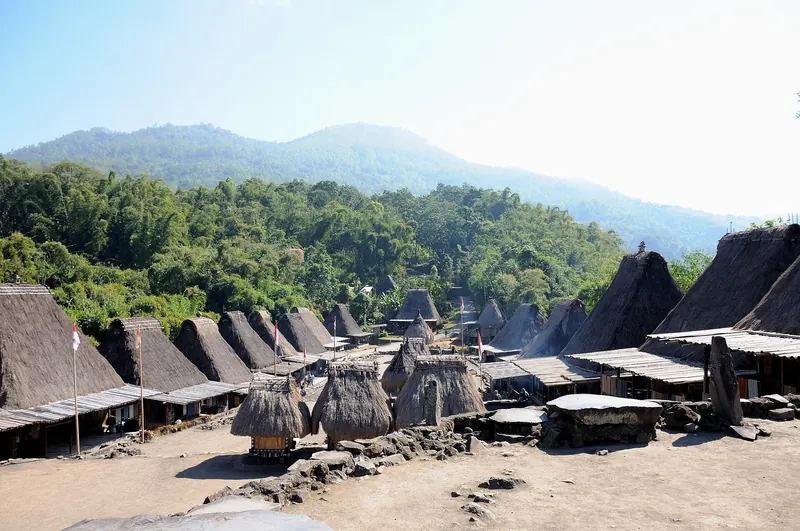
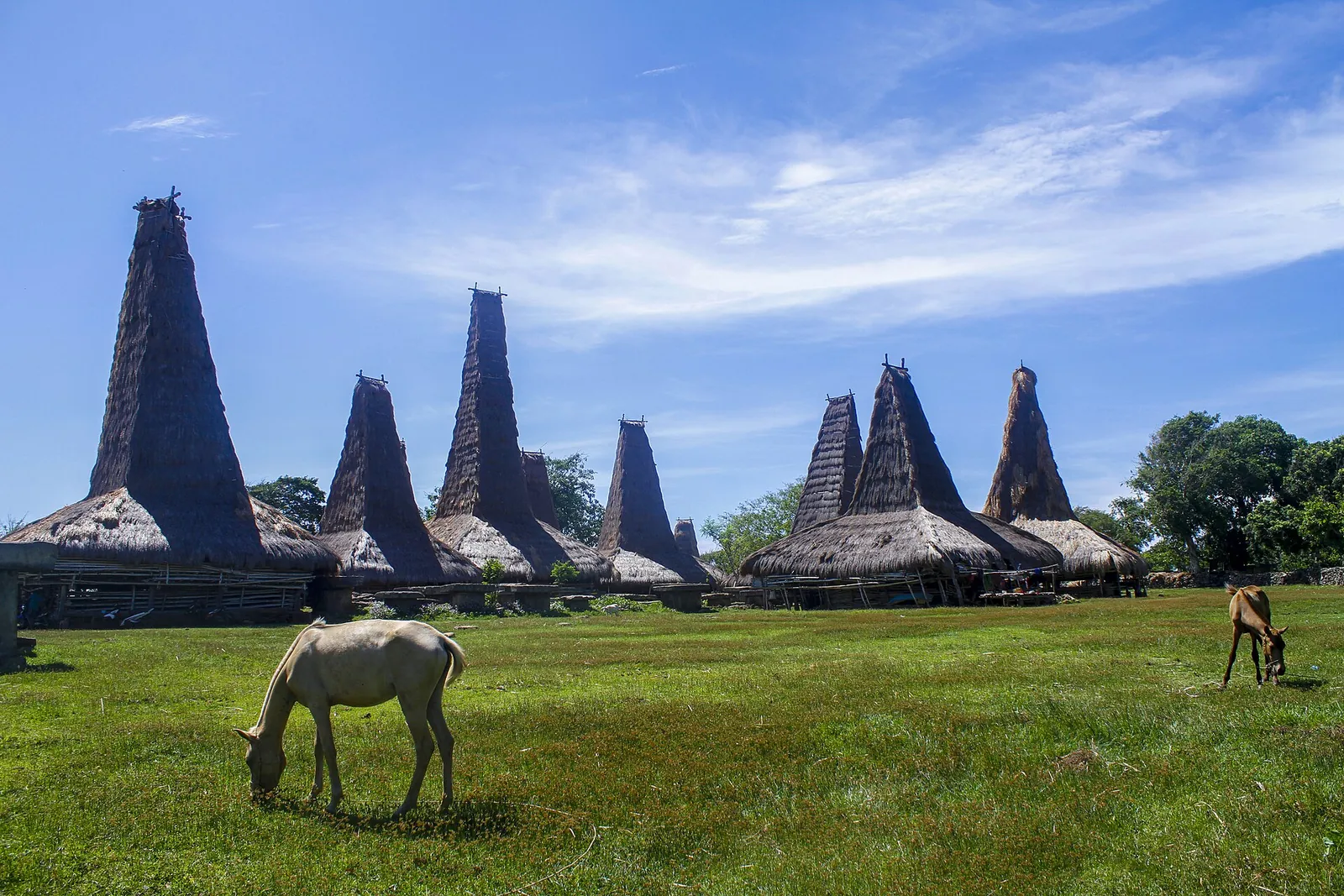
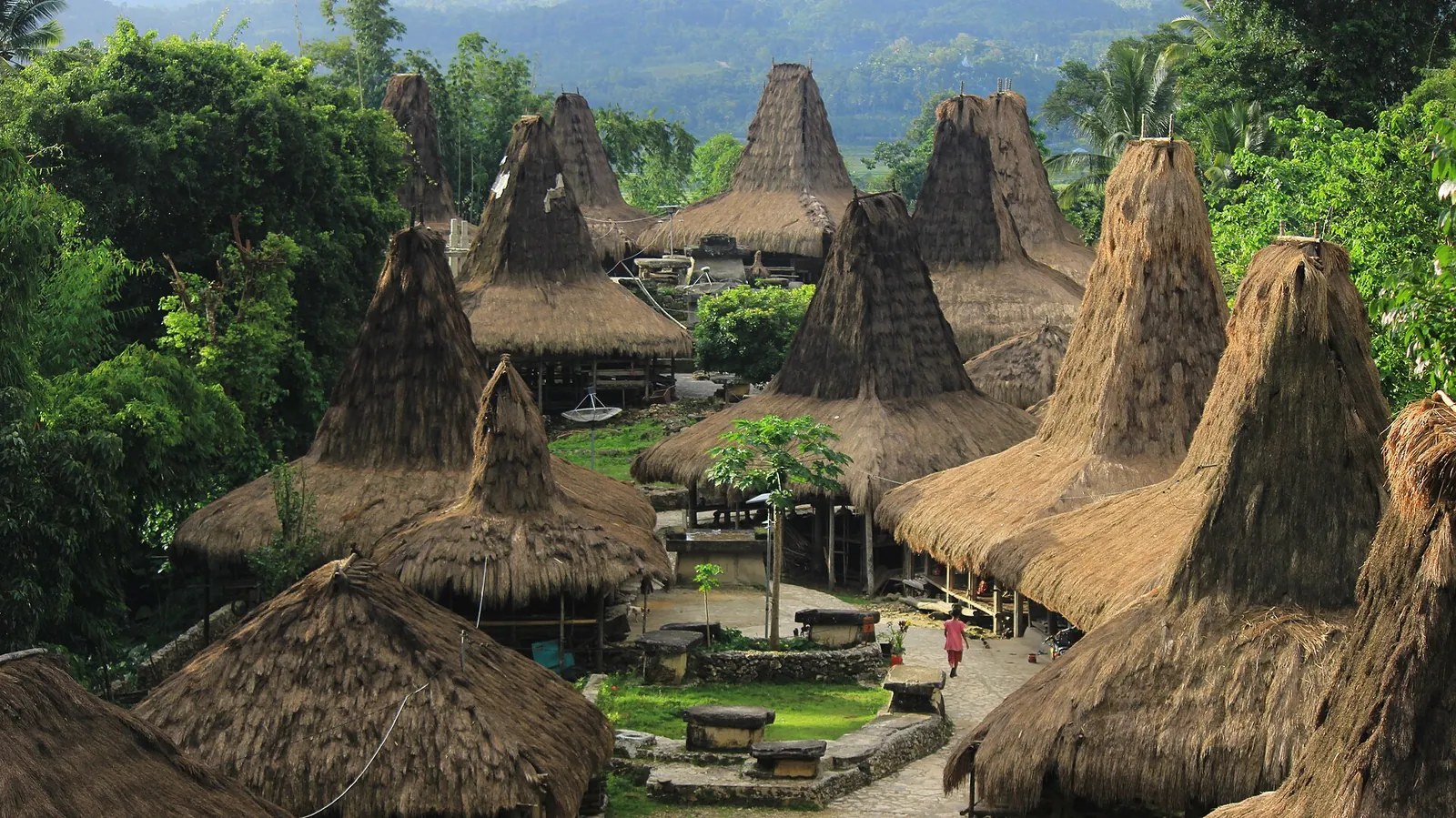
The traditional Sumbanese house — known as Uma Mbatangu or Uma Bokulu — has a tall thatched roof of alang-alang grass. The ministry describes three levels: the space under the floor for livestock, the main living floor in the middle, and the high roof space for Marapu heirlooms and offerings. Clan houses are grouped around megalithic stone tombs in the village yard; these are graves of ancestors, not ruins.
Ratenggaro, in Umbu Ngedo village in Southwest Sumba, sits on the coast at the mouth of the Waiha River. Its houses carry towering roofs (the ministry gives about 15 metres) and the ministry counts 304 megalithic tombs. Praijing is a hilltop village of thatched houses near Waikabubak, and Kampung Tarung stands in the middle of Waikabubak itself, where women still weave ikat that can take up to a year to finish.
These are homes, and some houses and tombs are sacred. Go with a local guide or driver who can introduce you, ask before entering a house or photographing people, dress modestly, do not climb on tombs, and buy something or leave a contribution if you have been welcomed in. If a ceremony is under way, watch from where you are invited to stand.
Make time for the local food
What to eat and where to look
Grilled fish and seafood
Sumba is known for its seafood. The ministry suggests ending a day in East Sumba at Waingapu's harbour, where local stalls grill fish and serve it with rice and sautéed vegetables.
- Where to look
- Evening stalls by Waingapu's seaport.
- Fit it into your day
- Dinner after a day trip to the waterfalls or Wairinding.
Choose fish that is grilled to order and still hot.
Sautéed papaya flower
Tumis bunga pepaya, sautéed papaya flowers, is a side dish the ministry recommends trying in East Sumba.
- Where to look
- Local restaurants and warung in Waingapu.
- Fit it into your day
- A side dish at lunch alongside fish or chicken.
Papaya flowers are naturally bitter; ask how spicy it is.
Bokosawu nyale
A traditional dish made from nyale, the sea worms gathered on the beach in the Pasola season, which the ministry calls one of the island's iconic dishes.
- Where to look
- Ask your guide or homestay host; it is seasonal and not on everyday menus.
- Fit it into your day
- Worth asking about if you are in Sumba for Pasola in February or March.
Seasonal and not always available; avoid it if you have a shellfish or seafood allergy.
Vegetable sides
Cassava leaves, watercress and banana heart, usually sautéed, are everyday vegetables in Sumba and the easiest choice for vegetarians.
- Where to look
- Warung and homestay kitchens across the island.
- Fit it into your day
- With rice at any meal; useful on long driving days.
Ask about fish sauce, shrimp paste or meat stock if you are strictly vegetarian.
Ikat in the east: Prailiu, Labanapu and Kwangu
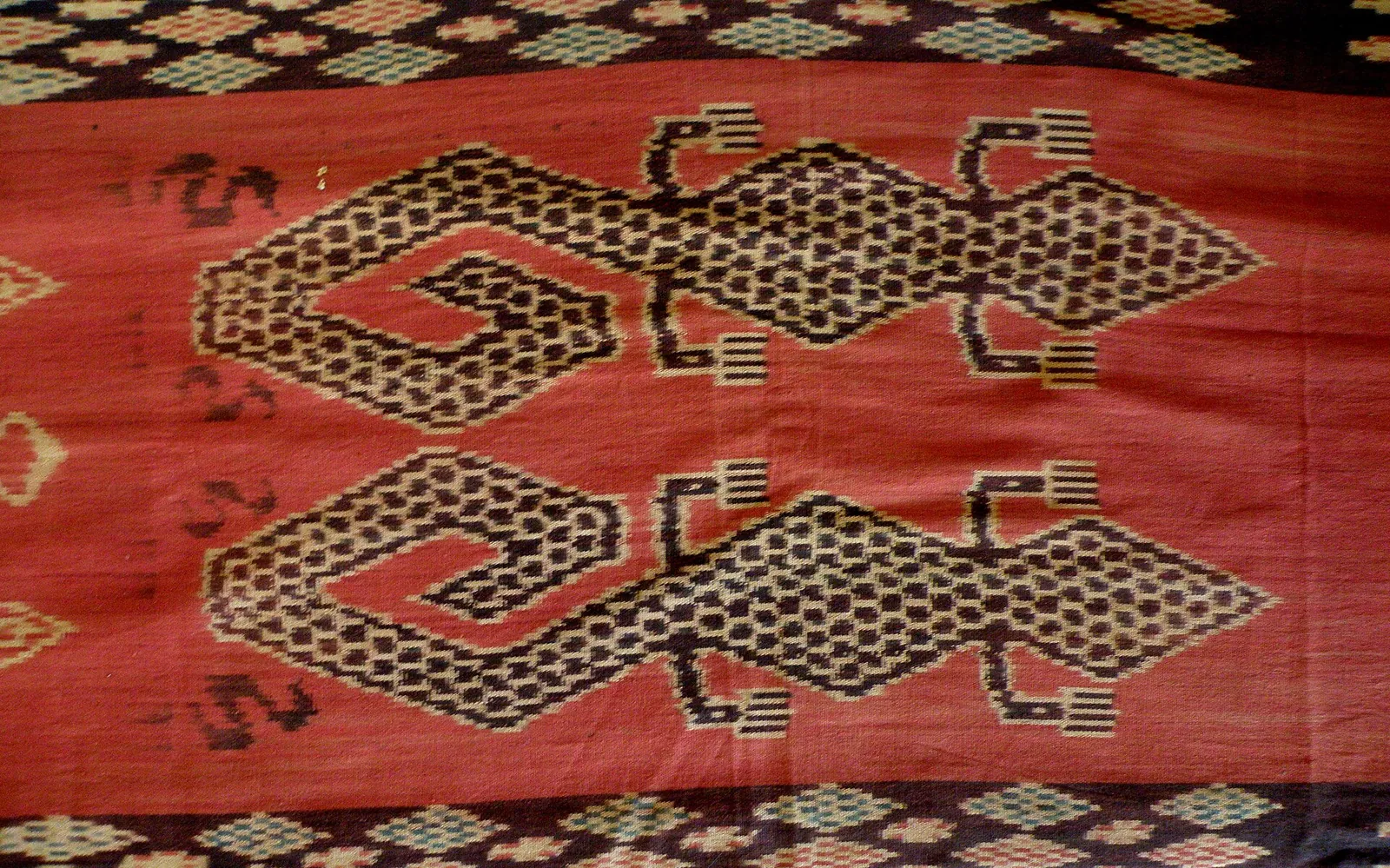
East Sumba's weaving villages are the easiest place to see the whole ikat process: tying the motif into the warp threads, dyeing, and weaving. The ministry lists Prailiu about 2 kilometres from Waingapu's centre, Labanapu about 6 kilometres and Kwangu about 10 kilometres, all known for fine cloth. Motifs include horses, animals and people, often in deep blue, rust red, black, white and yellow.
The ministry explains the natural dyes: indigo blue from nila leaves, red from mengkudu (morinda) roots and loba bark, yellow from kayu kuning, and dark blue-black from repeated dyeing. A large naturally dyed cloth can take six to twelve months. Naturally dyed pieces cost more than chemically dyed ones, which are also handwoven but come in brighter colours — ask the seller which is which.
If you buy, bargain gently, remembering how many months of work a piece represents. East and West Sumba weave different patterns, so it is worth looking in both if you are crossing the island. In Waikabubak, the Inpres market on Jalan Ahmad Yani, next to the bus terminal, sells ikat alongside everyday goods, according to the ministry.
Lagoons, savannah and the coast
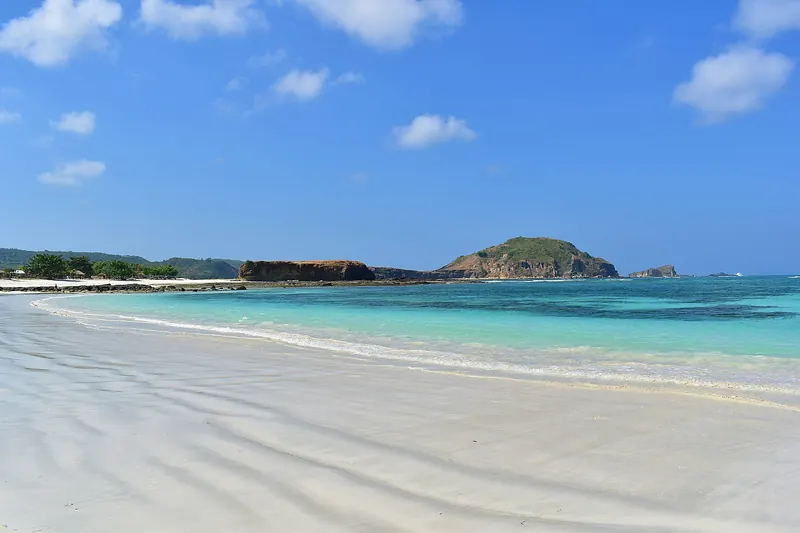
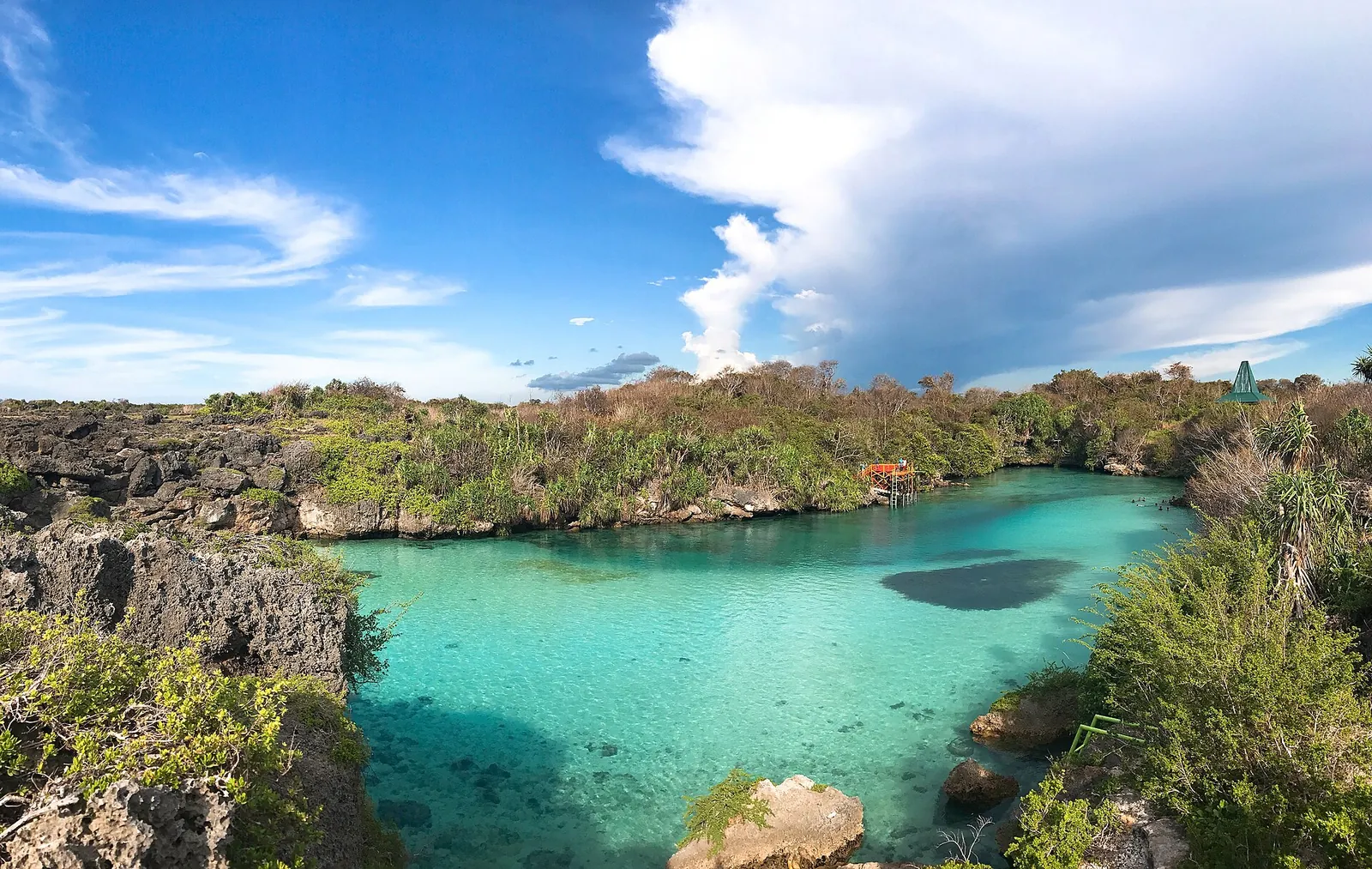
Weekuri Lagoon in Kodi Utara, Southwest Sumba, is a clear saltwater lake fed by the sea through cracks in the reef. The ministry says it now has pathways and bridges, basic changing facilities and simple stalls. A few minutes away, Mandorak Beach is a photogenic cove between rocks, but the waves are strong and swimming is not an option. Bawana Beach, with its stone arch and cliffs, can be reached only before the tide comes in; at high tide, look at it from Mareha Hill instead.
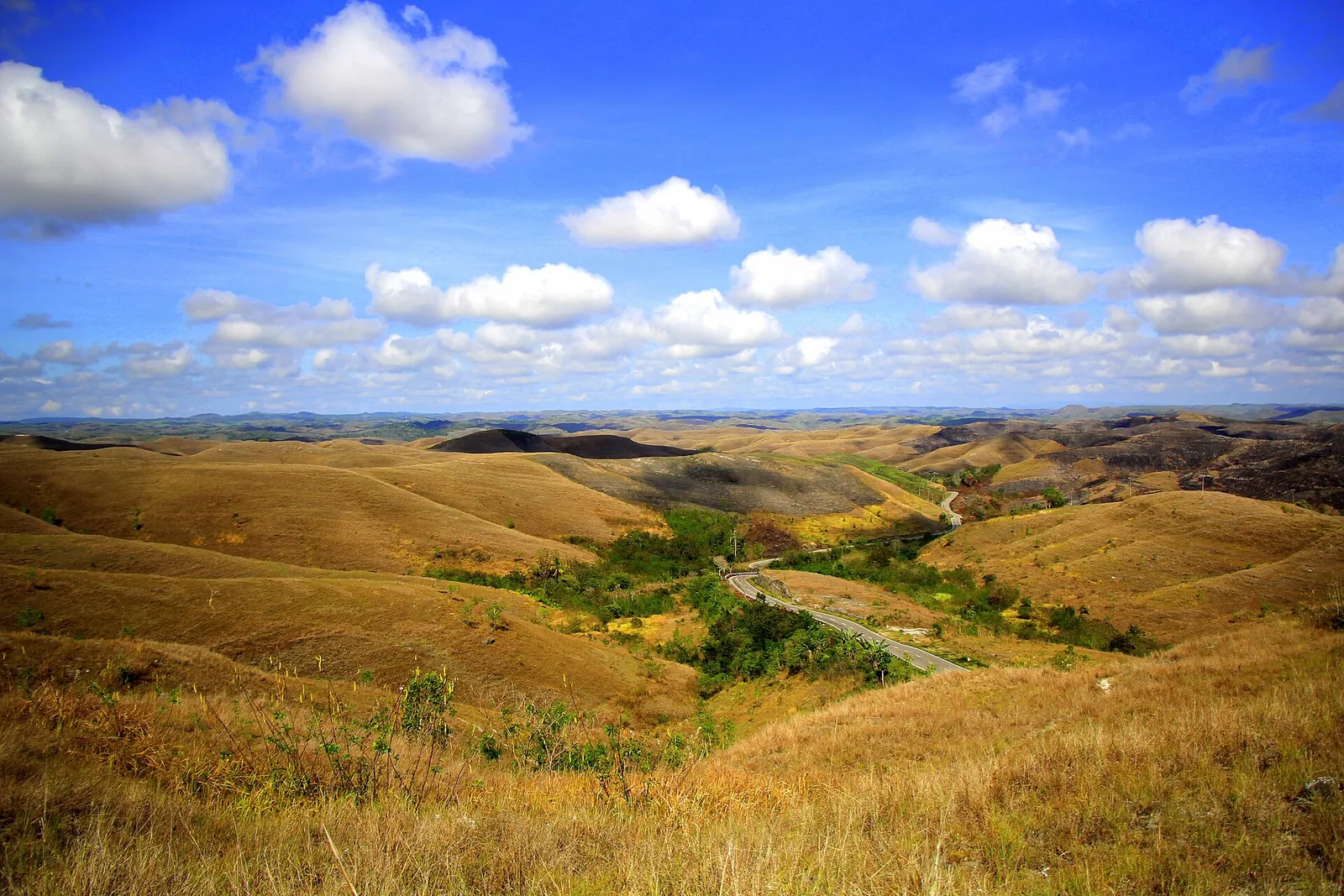
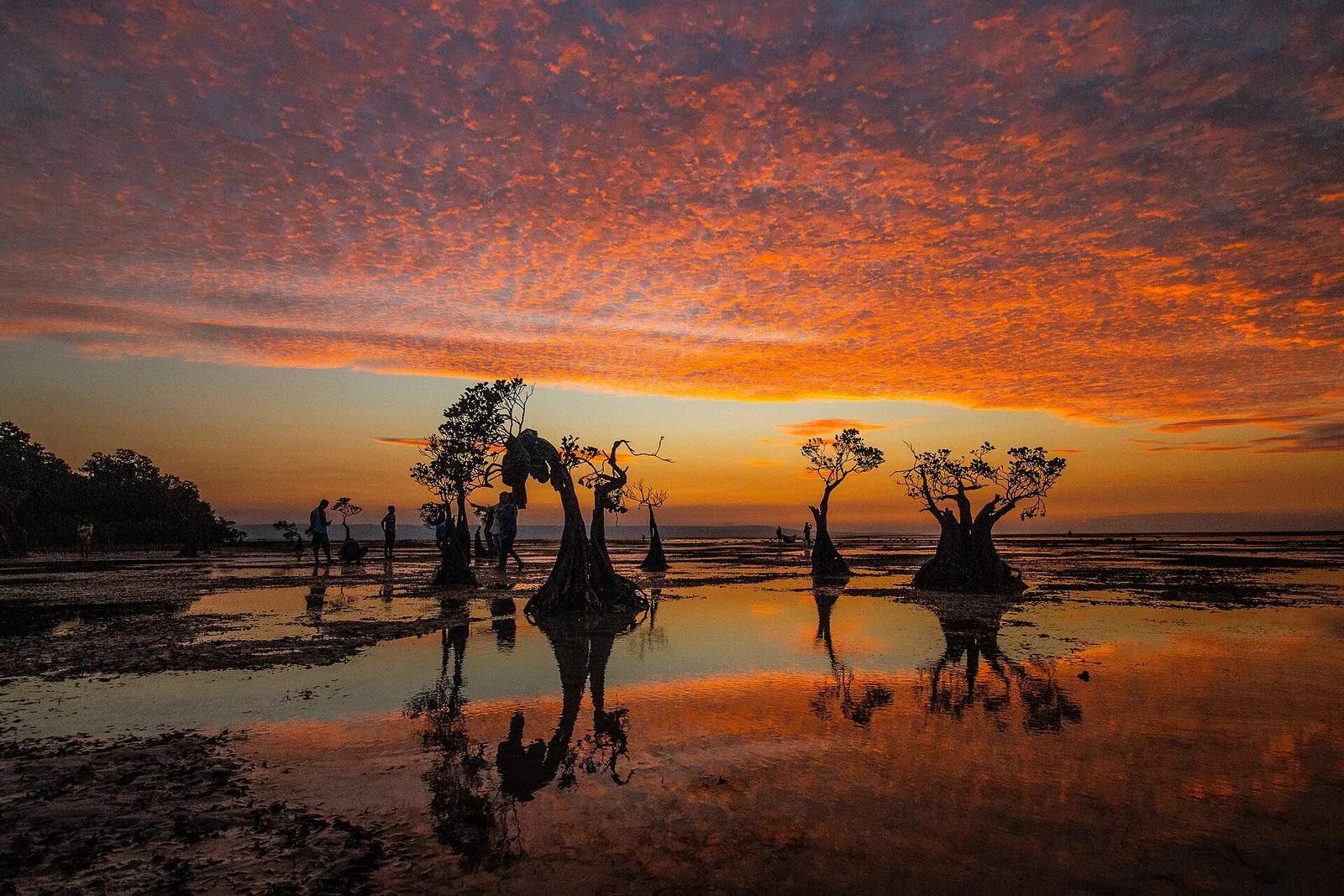
In the east, Bukit Wairinding is a sweep of grassy hills about 45 minutes to an hour by road from Waingapu. The ministry notes that it is green in the rainy season, from November to May, and turns gold from July to October; sunset is the classic time. Walakiri Beach is known for its low, twisted mangrove trees, which make silhouettes at low tide around sunset. The Waimarang waterfall pool is about two hours from Waingapu's airport, with a walk on an unpaved path and no changing room, and Tanggedu waterfall in Kanatang district has unusual rock formations and fast water that the ministry suggests for tubing.
In the west, the Lapopu waterfall lies inside the Manupeu Tanah Daru and Laiwangi Wanggameti (Matalawa) National Park. Sumba's south-west coast faces the Indian Ocean: the ministry says the big swells usually come between May and October and that the most powerful breaks are for experienced surfers only.
Pasola and when to go
Pasola is a ritual battle in which two groups of horsemen throw wooden spears at each other. It belongs to the Marapu agricultural calendar and the nyale (sea-worm) season: the ministry describes priests reading the signs at dawn and collecting sea worms on the beach before the riders meet. It takes place in February and March, in different places on different days; the ministry's article on Nihi Sumba says it is usually held about seven days after the full moon. For 2024, the ministry's event listing gave 1 March at the Bara Bedang field in Wanukaka, West Sumba.
Dates follow the moon and the ritual itself, and are not fixed far in advance. If Pasola is the reason for your trip, confirm the date with the regency or your guide shortly before you fly, keep spare days, and stand well back from the field.
For dry roads and sea, the ministry names July to September as the peak season. In the rainy season, some areas are risky to reach, so check the forecast and take local advice before driving to remote beaches or waterfalls.
A workable route
This is an editorial suggestion, not a timetable. Driving times depend on roads and weather; confirm them with your driver.
- Day 1 — Arrive at Tambolaka: settle in, then an easy afternoon at Weekuri Lagoon and Mandorak.
- Day 2 — Kodi coast: Ratenggaro in the morning with a guide, then Bawana from Mareha Hill, timed with the tide.
- Day 3 — Waikabubak: Kampung Tarung and Praijing, the Inpres market, and Lapopu waterfall if the road is passable.
- Day 4 — Cross to the east: a travel day to Waingapu; dinner at the harbour seafood stalls.
- Day 5 — East Sumba: Prailiu and another weaving village in the morning, Wairinding for sunset.
- Day 6 (optional): Waimarang or Tanggedu waterfall, or Walakiri at low tide in the evening, before flying out of Waingapu.
Practical questions
How many days do I need in Sumba?
Four nights for one half of the island, five or six to see both the west and the east. The ministry's Sumba guide says a west-to-east trip needs at least three nights, and the crossing is best treated as a travel day.
Should I fly into Tambolaka or Waingapu?
Tambolaka (Lede Kalumbang Airport, TMC) for the megalithic villages, Weekuri Lagoon and the south-west coast; Waingapu (Umbu Mehang Kunda Airport, WGP) for ikat villages, Wairinding and Walakiri. If you have the time, fly into one and out of the other.
When is Pasola held?
In February and March, on different days in different places, usually about a week after the full moon according to the ministry. Dates follow the moon and local ritual, so confirm them shortly before you travel.
Can I visit the traditional villages on my own?
You can reach them, but it is better to go with a local guide or driver who can introduce you and ask permission. They are lived-in villages with sacred houses and tombs; ask before entering or photographing people, and leave a contribution or buy something if you are welcomed in.
Can I swim at Weekuri Lagoon and Mandorak Beach?
Weekuri is a sheltered saltwater lagoon where people swim, with basic changing facilities. At Mandorak the waves are strong, and the ministry says swimming is not an option.
When are the Wairinding hills green?
In the rainy season, roughly November to May. From July to October the grass turns gold.
Sources and checks before you travel
Reference sources for the version dated 3 October 2026. Confirm opening times, access, transport and conditions for your travel dates.
- Indonesia Travel (Ministry of Tourism): Sumba, the newly discovered gem in East Nusa Tenggara ↗ — opens in a new tab
- Indonesia Travel: 12 weekend ideas to experience in Sumba ↗ — opens in a new tab
- Indonesia Travel: 10 tropical paradises in Sumba ↗ — opens in a new tab
- Indonesia Travel: Rumah Sumba ↗ — opens in a new tab
- Indonesia Travel: Nihi Sumba ↗ — opens in a new tab
- Indonesia Travel: Pasola Sumba Barat (event listing) ↗ — opens in a new tab
- Indonesia Travel: Sumba's tenun ikat festival ↗ — opens in a new tab
- Tenaers: Tambolaka airport officially renamed Lede Kalumbang ↗ — opens in a new tab
- Wikipedia: Lede Kalumbang Airport ↗ — opens in a new tab
- Wikipedia: Umbu Mehang Kunda Airport ↗ — opens in a new tab
Photo credits
The towering thatched roofs of Ratenggaro, a traditional village on the coast of Southwest Sumba
Photograph: Allwyn Wawyn — opens in a new tab · CC BY-SA 4.0 — opens in a new tab
Changes: Resized and converted to WebP; displayed with responsive crops. · Original photograph and licence details ↗ — opens in a new tab
Weekuri Lagoon in Southwest Sumba, a saltwater lake fed by the sea through cracks in the reef
Photograph: Bimantara.prawoto — opens in a new tab · CC BY-SA 4.0 — opens in a new tab
Changes: Resized and converted to WebP; displayed with responsive crops. · Original photograph and licence details ↗ — opens in a new tab
Bukit Wairinding in East Sumba in the dry season, when the savannah turns gold
Photograph: Djakartacaver — opens in a new tab · CC BY-SA 4.0 — opens in a new tab
Changes: Resized and converted to WebP; displayed with responsive crops. · Original photograph and licence details ↗ — opens in a new tab
Praijing, a hilltop traditional village near Waikabubak in West Sumba
Photograph: Zahrasrtn — opens in a new tab · CC BY-SA 4.0 — opens in a new tab
Changes: Resized and converted to WebP; displayed with responsive crops. · Original photograph and licence details ↗ — opens in a new tab
Mangrove trees on Walakiri Beach in East Sumba at sunset, at low tide
Photograph: Ignaskunda8 — opens in a new tab · CC BY-SA 4.0 — opens in a new tab
Changes: Resized and converted to WebP; displayed with responsive crops. · Original photograph and licence details ↗ — opens in a new tab
Detail of a Sumba hinggi, a hand-tied ikat cloth dyed in natural colours with a gecko motif
Photograph: Chris Hazzard — opens in a new tab · CC BY-SA 3.0 — opens in a new tab
Changes: Resized and converted to WebP; displayed with responsive crops. · Original photograph and licence details ↗ — opens in a new tab