Bali · Bali
Sanur guide: Bali's calm reef beach, seafront path and island boats
Sanur is the stretch of Bali's south-east coast just east of Denpasar, and it was the island's first beach resort, older than Kuta or Nusa Dua. A line of offshore reefs keeps the water inside it shallow and calm, a paved path runs the length of the seafront, and the sun rises over the sea rather than setting into it. It is also where most fast boats to Nusa Penida and Nusa Lembongan leave from. That makes Sanur two things at once: an easy, low-key base for families and slow travellers, and the practical night before or after an island crossing.
- Suggested time
- 1–3 nights (one if you are only catching a boat)
- Where to stay
- North Sanur around Jalan Hang Tuah; central Sanur around Sindhu; quieter Semawang and Mertasari in the south
- Season and timing
- When we checked, the Ministry of Tourism's guide to the islands offshore recommended the dry season, between April and October, for more favourable weather, and noted that boat crossing times depend on the weather. The ministry's Sanur page says the reef breaks offshore work best in the north-west wind season, roughly October to March. Sunrise, not sunset, is the beach's best hour.
The short answer
Give Sanur two or three nights as a calm beach base, or one night if you only need it for an early fast boat. Choose the north end around Jalan Hang Tuah for the main beach, the Le Mayeur Museum and the fast-boat offices, the middle around Sindhu and Jalan Danau Tamblingan for restaurants and the night market, or the quieter south towards Semawang and Mertasari. Walk or cycle the seafront path at sunrise, swim in the reef lagoon at mid to high tide, and use Sanur Harbour for day trips or onward stays on Nusa Lembongan and Nusa Penida. The airport is about 15 kilometres away by road.
Why Sanur, and which end of the seafront to stay on
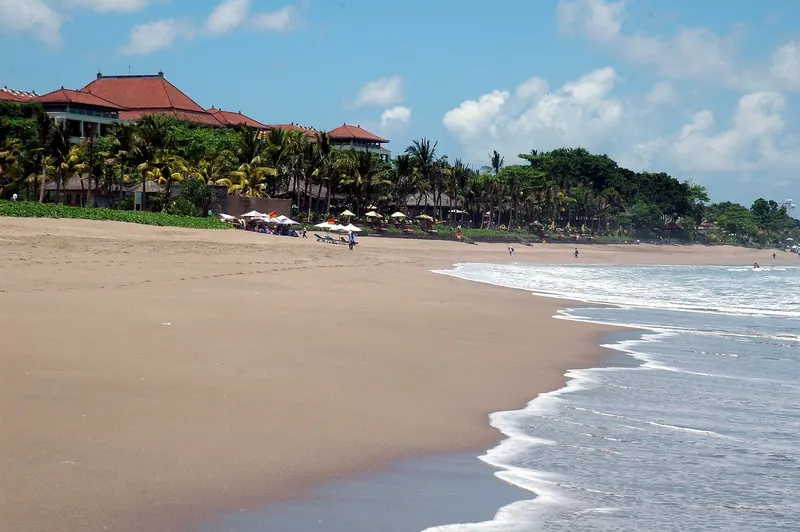
Indonesia's Ministry of Tourism describes Sanur as the place where tourism first flourished in Bali, and the town still shows it. The ten-storey Bali Beach InterContinental, which opened here in 1966 as Bali's first international five-star hotel, was received with mixed feelings locally and, as Wikipedia records, led the governor in 1971 to bar new hotels higher than 15 metres, roughly the height of a mature coconut palm. The result is a low-rise resort of older hotels, gardens and villas behind the sand rather than a wall of towers, and a pace that suits families, couples and longer stays far better than nightlife.
Sanur is long and narrow, so the part you choose matters more than the hotel name. The north, around Jalan Hang Tuah, is where the ministry places Sanur's main beach; the Le Mayeur Museum is here, and so is the main office of fast-boat operators such as Scoot, which makes it a practical choice before an early boat (confirm your own operator's check-in point). The centre, around Sindhu Beach and the main street, Jalan Danau Tamblingan, has the most restaurants and the night market. The south, towards Semawang and Mertasari, is quieter, with the path still running past the door. The ministry notes that the main bypass road, Jalan Bypass Ngurah Rai, forms Sanur's western edge: a hotel on the bypass side of town can be a long, hot walk from the beach, so check the distance to the sand before booking.
The seafront path and the reef lagoon
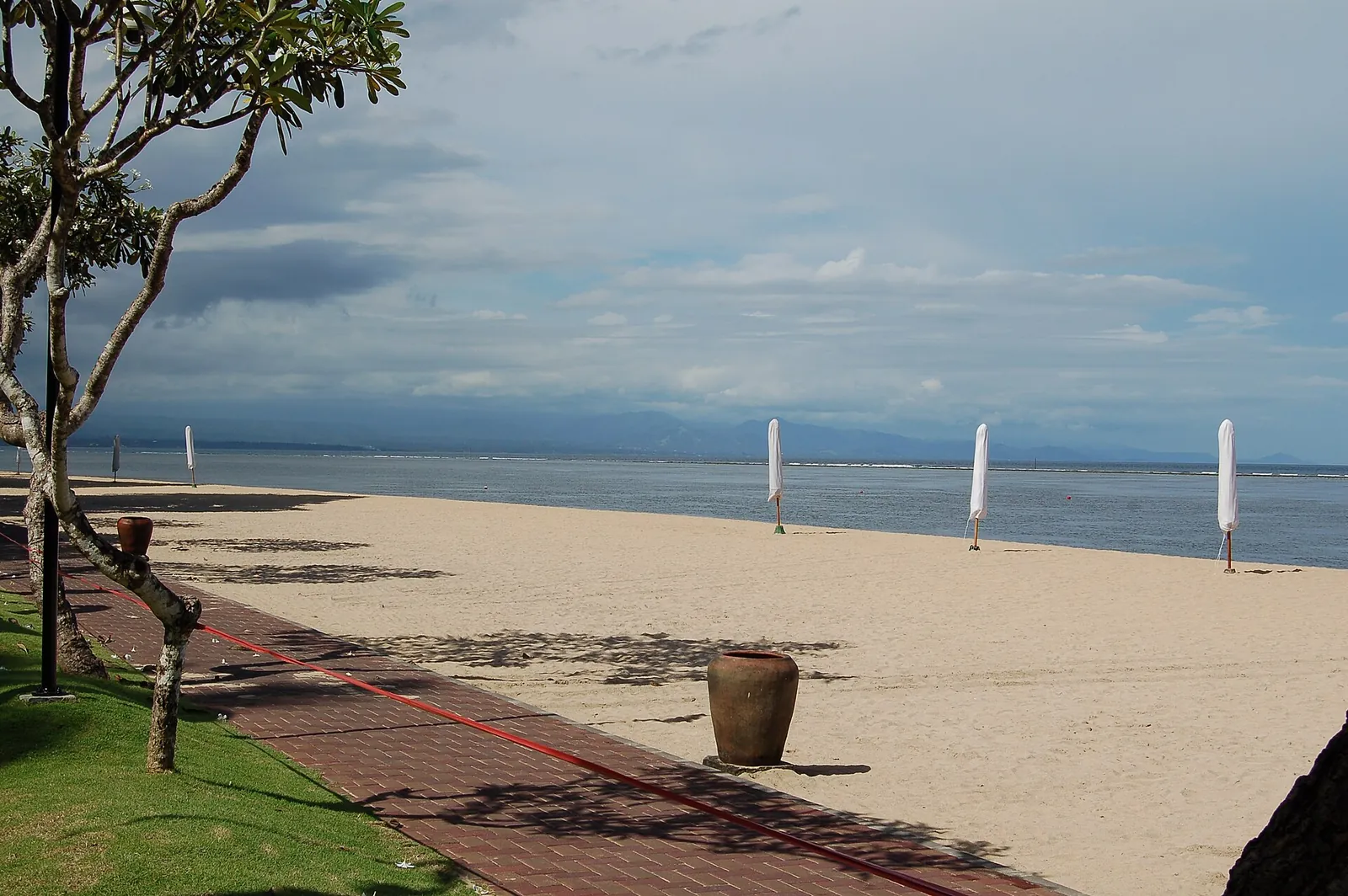
The ministry describes a paved beachfront path of about 5 kilometres running from the Mertasari area in the south to the main beach at Jalan Hang Tuah in the north. It is the backbone of a Sanur stay: walk or cycle it early, stop for breakfast at one of the beach cafés, and use it instead of the road to get between the different beaches. Bicycles can be rented in town and on the beach.
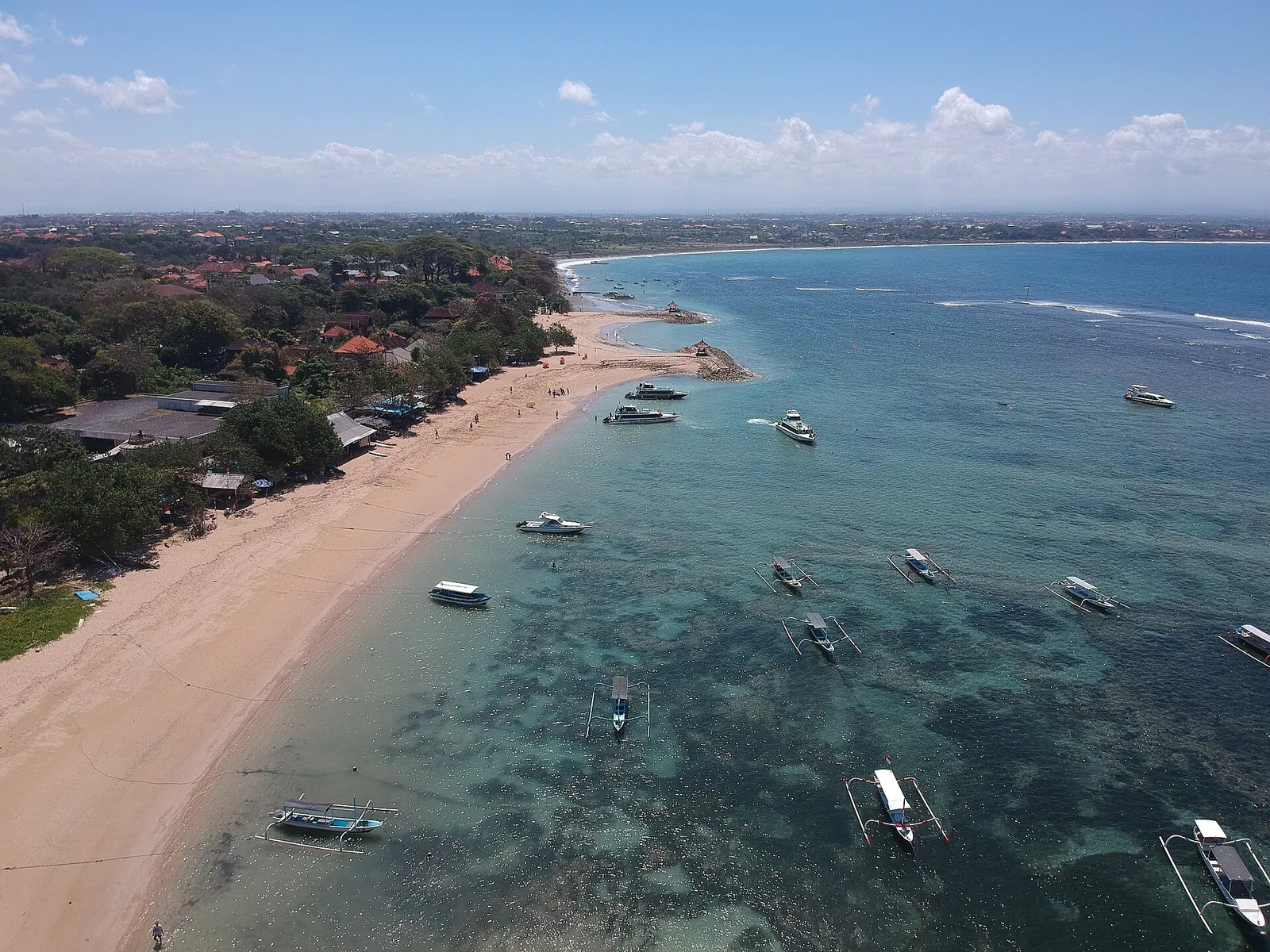
Offshore reefs protect the water, creating what the ministry calls warm, shallow and safe lagoons for swimming and snorkelling, which makes Sanur one of the easier Bali beaches for families with small children. The same reefs make the water very shallow at low tide, when much of the lagoon is too shallow to swim in comfortably: plan swims around mid to high tide and wear something on your feet if you walk out over the reef flat. Watersports offered on the beach include kitesurfing, windsurfing, paddling and banana boats; surfers head for breaks about 1 kilometre offshore, which the ministry says work in the north-west wind season, roughly October to March.
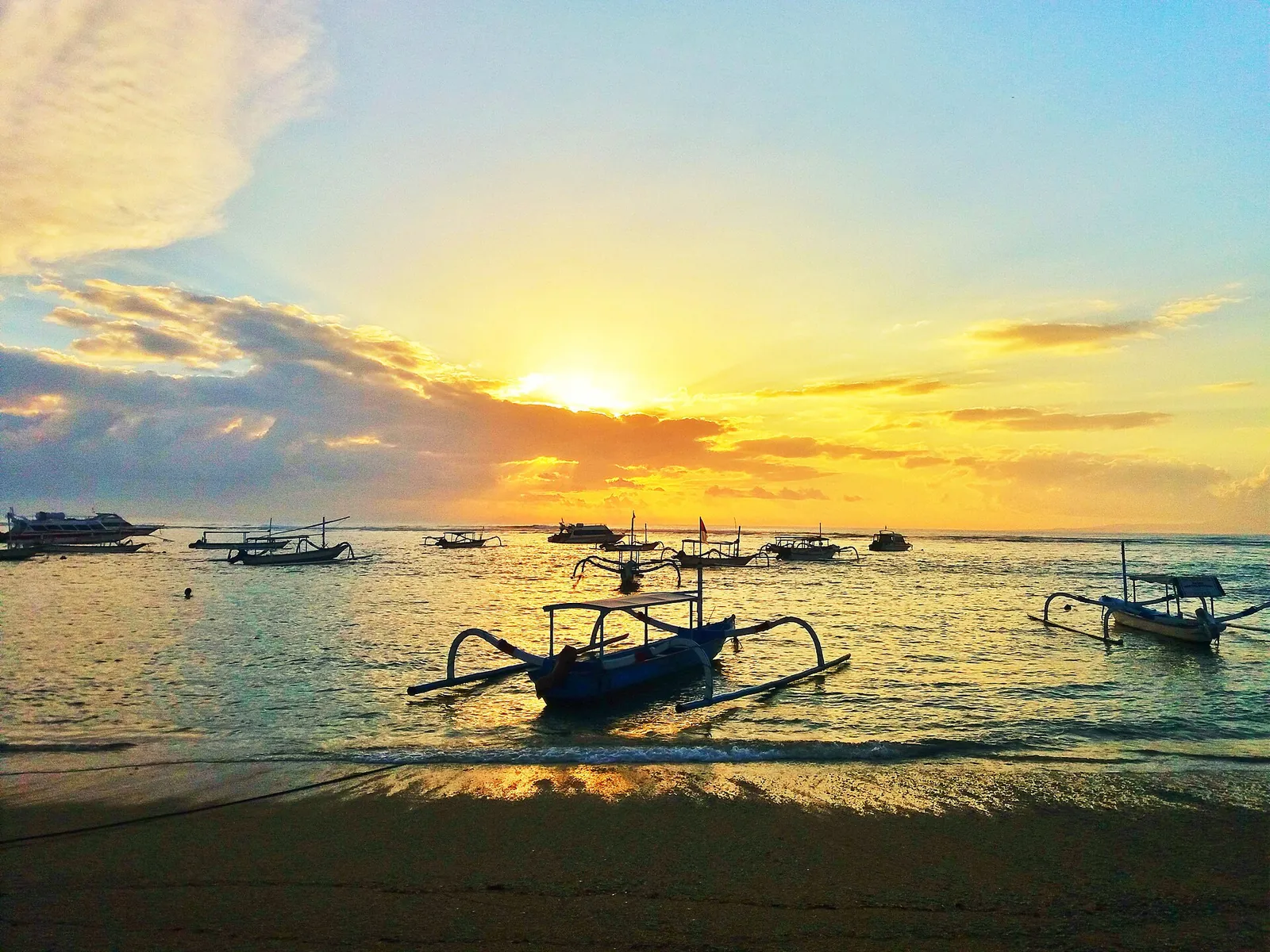
Come at dawn. The ministry's beach page says the best time is sunrise, from about 5:30 to 7:00 a.m. Central Indonesian Time (WITA), because the beach faces east. When we checked on 2026-10-03, the same page listed the beach as open 24 hours, with parking at IDR 2,000 for motorbikes and IDR 5,000 for cars, plus public toilets and rental of snorkelling gear, canoes and bicycles.
Make time for the local food
What to eat and where to look
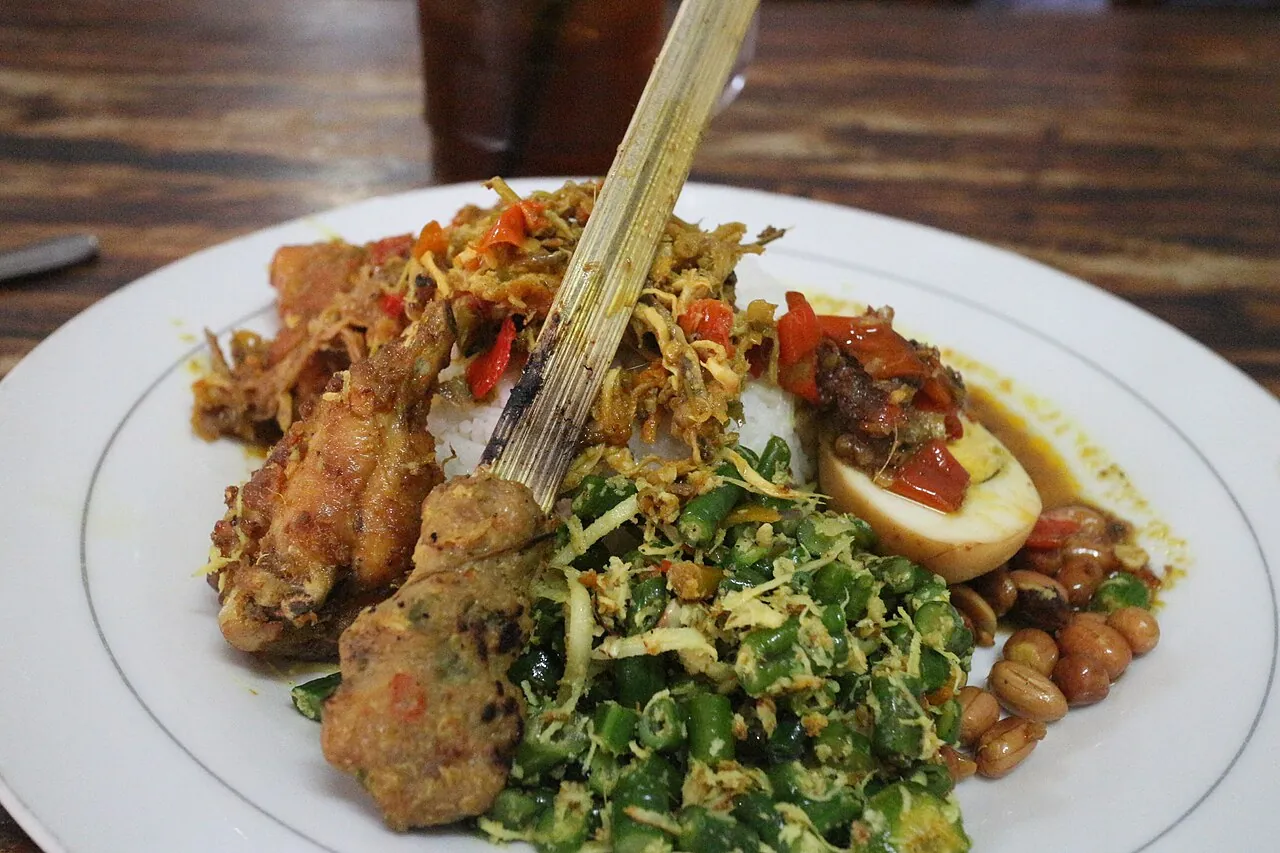
Nasi campur Bali
Rice with a spread of small portions, typically chicken, sate lilit, a spiced egg, Balinese urap (steamed vegetables with spiced coconut), sambal matah and fried peanuts, as the Ministry of Tourism describes the version at a long-running Denpasar restaurant.
- Where to look
- Warung in Sanur, or Nasi Ayam Kedewatan Ibu Mangku on Jalan Tukad Badung in Renon, about 4 kilometres north-west of the beach, which the ministry says has served Balinese dishes since the 1960s.
- Fit it into your day
- A filling lunch on the museum day.
Usually contains chilli and peanuts; Balinese versions may contain pork, so ask if you avoid it.
Sate lilit
Balinese satay in which minced fish, chicken or pork is mixed with bumbu Bali spice paste and wrapped around a bamboo stick or lemongrass stalk, then grilled over charcoal. 'Lilit' means 'to wrap' in Balinese.
- Where to look
- Warung menus and the evening night market at the corner of Jalan Danau Tamblingan and Jalan Pungutan.
- Fit it into your day
- Order a few skewers as part of a night-market dinner.
Ask which meat is used: the ministry lists pork, chicken and fish among the traditional options.
Crispy duck and bebek betutu
Duck is a Balinese speciality. Bebek betutu is a whole duck rubbed with shallots, garlic, turmeric, ginger and candlenut, wrapped in leaves and slow-cooked; crispy fried duck (bebek garing) is the quicker restaurant version.
- Where to look
- Balinese restaurants in Sanur and Renon; the ministry recommends Bebek Garing Renon on Jalan Cok Agung Tresna for fried, roasted or grilled duck.
- Fit it into your day
- A sit-down dinner after a beach day.
Betutu is long-cooked and strongly spiced, and the ministry notes it is often served with sambal matah, a raw chilli and shallot relish.
Night-market meals
The Ministry of Tourism points budget eaters to Sanur's Pasar Malam (night market), where evening food stalls offer simpler local dishes than the seafront restaurants.
- Where to look
- At the northern end of Jalan Danau Tamblingan, where it meets Jalan Pungutan.
- Fit it into your day
- An inexpensive dinner on any evening, especially with children.
Choose stalls that cook to order and are busy with local customers.
Fast boats from Sanur Harbour
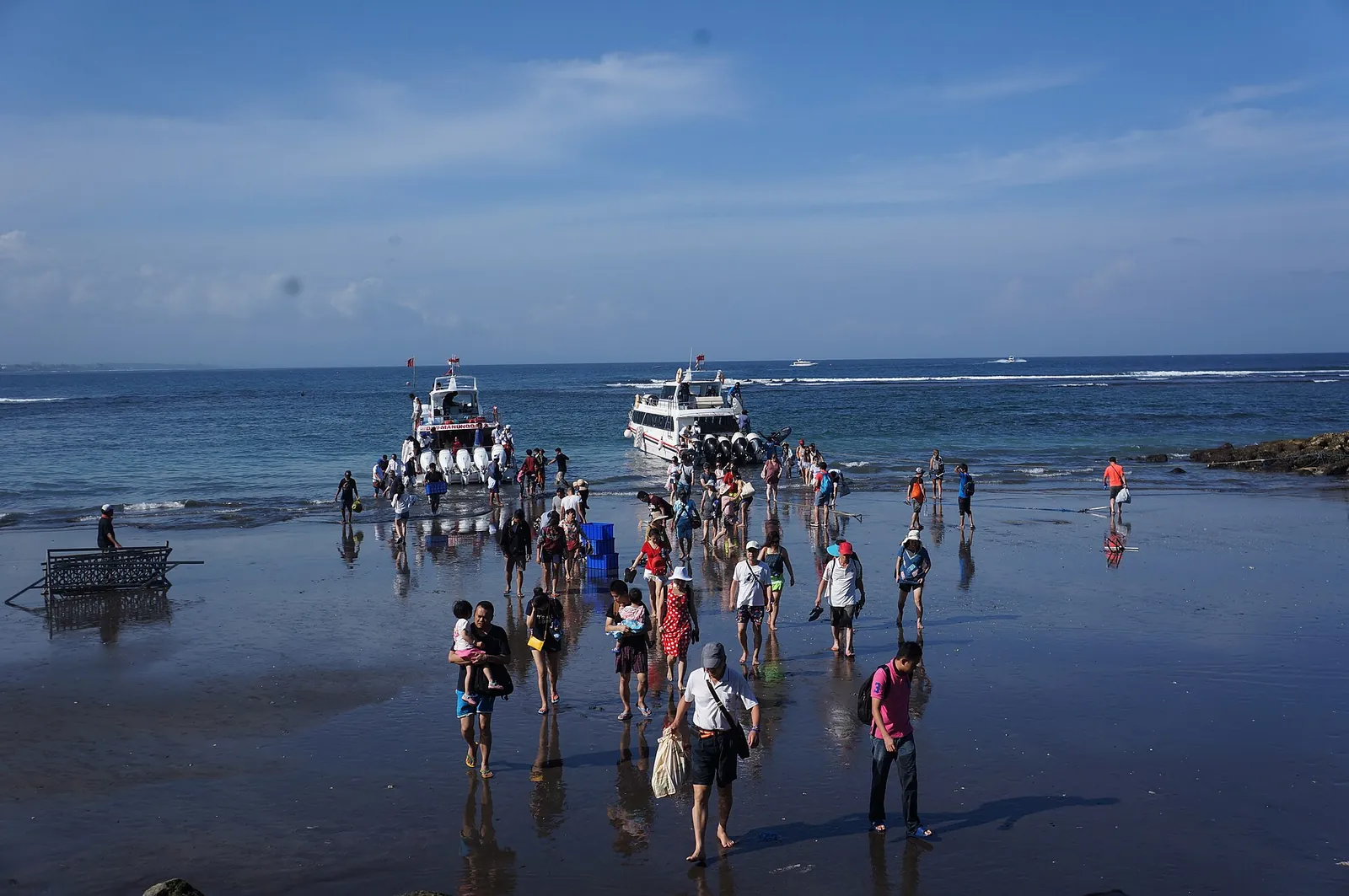
Sanur is a main departure point for Nusa Penida and Nusa Lembongan. A Bali provincial government tourism article describes the Port of Sanur as serving the crossings to both islands, with fast boats from several companies and departures, when it was written in 2023, between 07:00 and 15:00 WITA; it gives about an hour to Banjar Nyuh harbour on Nusa Penida. The Ministry of Tourism gives 30 to 45 minutes from Sanur to Nusa Lembongan. Boats also leave for the same islands from Serangan, Benoa and Kusamba, according to the ministry.
Some operators continue to the Gili Islands and Lombok. When we checked on 2026-10-03, Scoot Fast Cruises' website described departures from the new Sanur Harbor terminal and listed a Sanur–Lembongan–Gili route leaving Sanur at 9:30 a.m. Other Gili services leave from Padang Bai further east, so compare the departure harbour as well as the price when you book. Timetables change and crossings depend on the sea: check the operator's current schedule, book ahead in holiday periods (the ministry warns that tickets can sell out), and avoid planning a same-day international flight after a return crossing.
A day trip from Sanur works for Nusa Lembongan, which is small, but is rushed for Nusa Penida, whose best-known viewpoints are on opposite coasts. If the islands are a priority, spend your last Sanur night before the crossing and stay at least one night on the island.
Le Mayeur Museum and the Blanjong pillar: Sanur's older layers
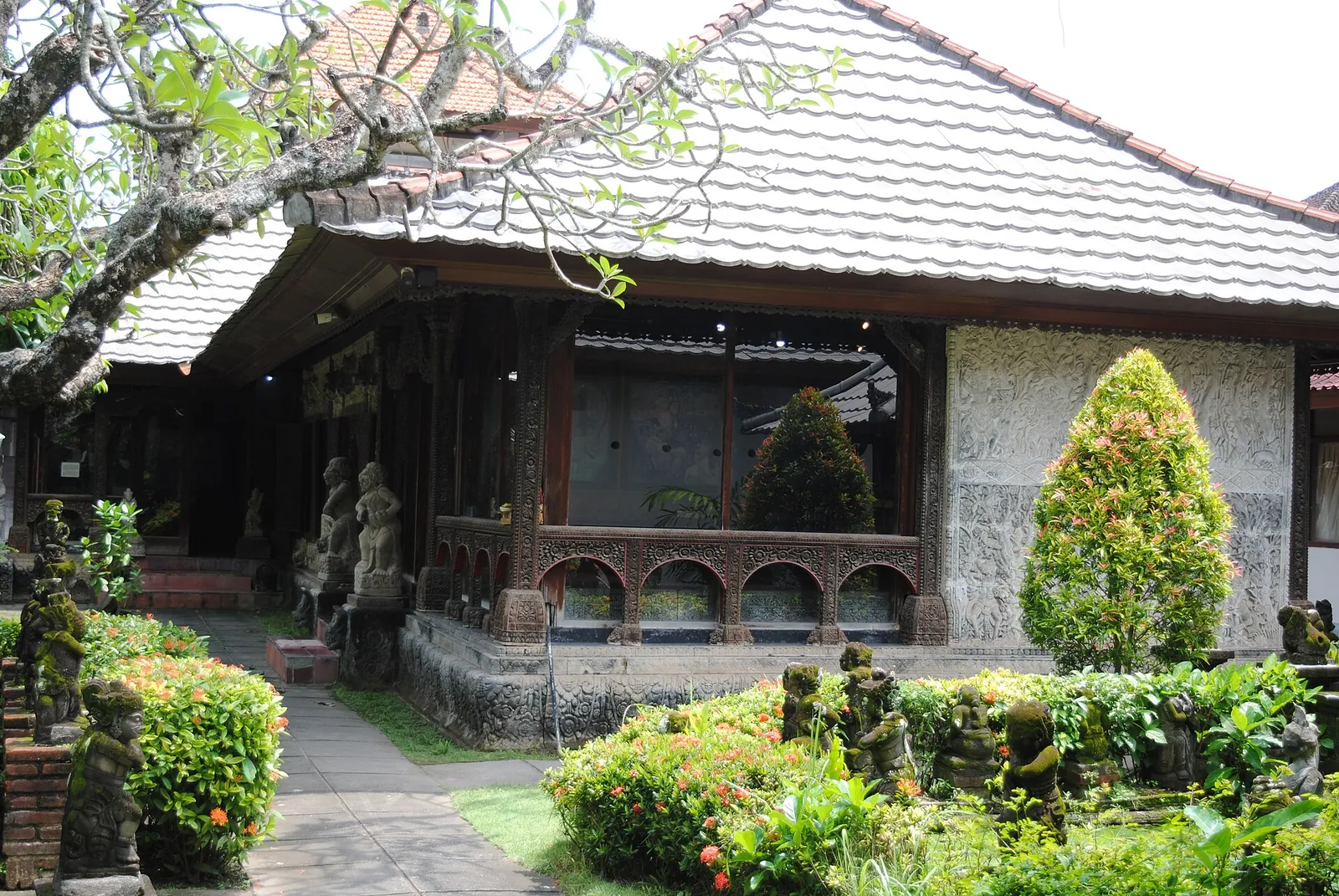
On the beach near Jalan Hang Tuah, the Museum Le Mayeur occupies the former house of the Belgian painter Adrien-Jean Le Mayeur de Merpres. The Ministry of Tourism tells the story: he bought land on Sanur Beach, married the legong dancer Ni Nyoman Pollok, his main model, in 1935, and in 1957 gave the house to her; she then donated it and its contents to the Indonesian state as a museum. It is now owned by the Bali provincial government and run by the Museum Bali technical unit. Expect an old Balinese house and garden hung with his impressionist paintings, not a modern gallery; Wikipedia counts around 88 paintings. Check current opening hours locally, as we could not confirm them on an official page.
In the south of Sanur, the Blanjong pillar (Prasasti Blanjong) stands in the Blanjong temple under a protective shelter. Dated 914 CE and found only in 1932, it carries an inscription in Sanskrit and Old Balinese by King Sri Kesari Warmadewa and is one of the oldest written records from Bali, with an early mention of the island's name, as Wikipedia explains. It is a working temple: the provincial government's visitor guidelines ask you to dress modestly at temples and not to step on or disturb offerings.
On Serangan Island, just south of Sanur, the Ministry of Tourism lists the Turtle Conservation and Education Center (TCEC), where visitors can see hatchlings and adult turtles and learn about conservation; it pairs easily with a morning at the southern end of the path.
Getting around, events and a two-day plan
Sanur is one of the easiest parts of Bali to get around without a car. The ministry notes that distances are short and the streets relatively quiet, and that Jalan Danau Tamblingan has outlets for car, motorbike and bicycle rental; metered taxis and app-based cars are common. Its beach page says several Trans Metro Dewata bus routes also serve the area. By road the ministry allows about 30 minutes to Kuta or Legian, about 45 minutes to Seminyak or Ubud and about 15 minutes to central Denpasar, though Bali's traffic can stretch all of these.
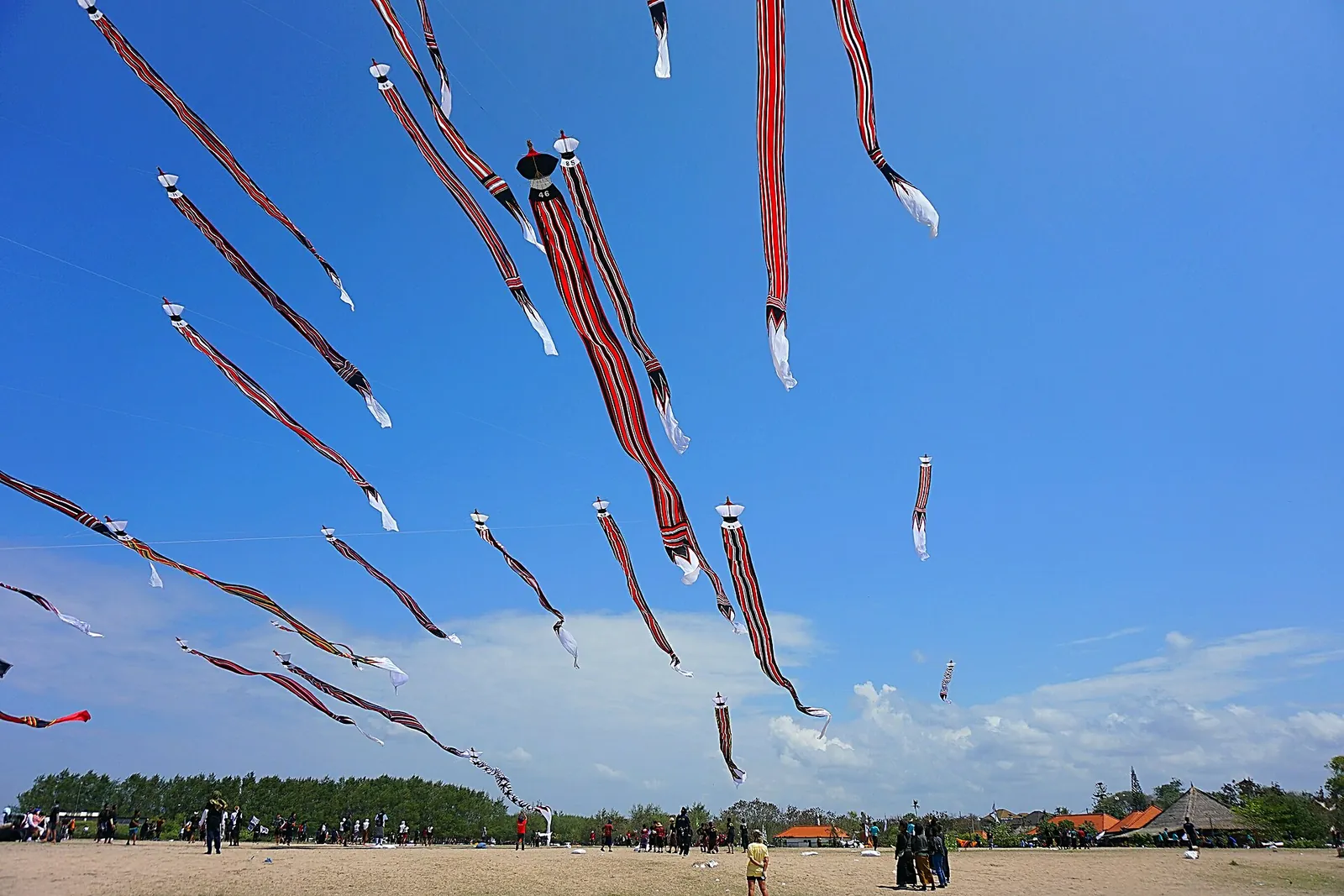
Bali's 2026 calendar of events, published by the provincial government, lists the Sanur Village Festival in November and the Denpasar Kite Festival in August. Foreign visitors to Bali must pay the province's tourist levy, listed at IDR 150,000 per person when we checked on 2026-10-03, through the official Love Bali website.
This is an editorial suggestion, not a timetable:
- Day 1 — The seafront: sunrise on the beach, a cycle or walk along the path from Sindhu to Mertasari, a lagoon swim at high tide, and the Blanjong temple on the way back; dinner around Sindhu or at the night market.
- Day 2 — Art and lunch: the Le Mayeur Museum in the morning, a Balinese lunch in nearby Renon, a lazy afternoon on the beach, and an early night before the boat.
- Day 3 (optional): a fast boat to Nusa Lembongan or Nusa Penida, ideally with at least one night on the island.
Practical questions
How many nights should I spend in Sanur?
Two or three nights for a relaxed beach stay, or one night before an early fast boat to Nusa Penida or Nusa Lembongan.
Is Sanur good for families and swimming?
Yes. Offshore reefs create calm, shallow lagoons that the Ministry of Tourism describes as safe for swimming and snorkelling. The water gets very shallow at low tide, so swim around mid to high tide.
How long is the boat from Sanur to Nusa Penida?
About an hour to Banjar Nyuh, according to a Bali provincial tourism article; Nusa Lembongan takes 30 to 45 minutes, according to the Ministry of Tourism. Times depend on the sea and the operator.
Can I get to the Gili Islands from Sanur?
Yes, with some operators. When we checked on 2026-10-03, Scoot Fast Cruises listed a Sanur–Lembongan–Gili route. Other Gili boats leave from Padang Bai, so check the departure harbour.
How far is Sanur from the airport?
About 15 kilometres. The Ministry of Tourism gives 30 to 45 minutes by taxi or app-based car, depending on traffic.
Is Sanur good for sunset?
No, Sanur faces east. It is Bali's sunrise beach: the ministry recommends about 5:30 to 7:00 a.m. For sunsets, go to the west coast.
Sources and checks before you travel
Reference sources for the version dated 3 October 2026. Confirm opening times, access, transport and conditions for your travel dates.
- Indonesia Travel (Ministry of Tourism): Sanur ↗ — opens in a new tab
- Indonesia Travel (Ministry of Tourism): Sanur Beach ↗ — opens in a new tab
- Indonesia Travel (Ministry of Tourism): Museum Le Mayeur ↗ — opens in a new tab
- Indonesia Travel (Ministry of Tourism): things to try around Sanur ↗ — opens in a new tab
- Indonesia Travel (Ministry of Tourism): snorkelling at Nusa Lembongan ↗ — opens in a new tab
- Indonesia Travel (Ministry of Tourism): Nusa Penida ↗ — opens in a new tab
- Love Bali (Bali Provincial Government): Nusa Penida ↗ — opens in a new tab
- Scoot Fast Cruises (operator) ↗ — opens in a new tab
- Ekajaya Fast Ferries (operator) ↗ — opens in a new tab
- Love Bali: Bali Calendar of Events 2026 ↗ — opens in a new tab
- Love Bali: travel guidelines in Bali ↗ — opens in a new tab
- Indonesia Travel (Ministry of Tourism): Sate lilit ↗ — opens in a new tab
- Indonesia Travel (Ministry of Tourism): Bebek betutu ↗ — opens in a new tab
- Indonesia Travel (Ministry of Tourism): TCEC Serangan ↗ — opens in a new tab
- Wikipedia: Sanur, Bali ↗ — opens in a new tab
- Wikipedia: Belanjong pillar ↗ — opens in a new tab
- Wikipedia (Indonesian): Museum Le Mayeur ↗ — opens in a new tab
- Wikipedia: Le Mayeur Museum ↗ — opens in a new tab
Does this experience fit your route?
If you would rather not arrange boats and drivers yourself, a guided island day from Sanur takes care of the logistics. Check the departure harbour, pick-up time and what is included before you book.
Browse relevant experiences on Viator ↗ — opens in a new tabAffiliate link · Book with ViatorPhoto credits
Sunrise at Sanur Beach, Bali's east-facing beach, with jukung fishing boats in the lagoon
Photograph: Danangtrihartanto — opens in a new tab · CC BY-SA 4.0 — opens in a new tab
Changes: Resized and converted to WebP; displayed with responsive crops. · Original photograph and licence details ↗ — opens in a new tab
Sanur from above: the beach, the low-rise resort behind it and the reef-sheltered lagoon
Photograph: Magul — opens in a new tab · CC BY-SA 4.0 — opens in a new tab
Changes: Resized and converted to WebP; displayed with responsive crops. · Original photograph and licence details ↗ — opens in a new tab
The beachfront path at Sanur, which runs for about 5 kilometres along the seafront
Photograph: Matt Croxson — opens in a new tab · Public domain — opens in a new tab
Changes: Resized and converted to WebP; displayed with responsive crops. · Original photograph and licence details ↗ — opens in a new tab
Passengers arriving at Sanur Beach by fast boat from Nusa Lembongan (2017)
Photograph: Simonsiregar — opens in a new tab · CC BY-SA 4.0 — opens in a new tab
Changes: Resized and converted to WebP; displayed with responsive crops. · Original photograph and licence details ↗ — opens in a new tab
The Museum Le Mayeur, the painter's former house on Sanur Beach
Photograph: Andy Mabbett — opens in a new tab · CC BY-SA 4.0 — opens in a new tab
Changes: Resized and converted to WebP; displayed with responsive crops. · Original photograph and licence details ↗ — opens in a new tab
Giant traditional kites at the 2018 Bali Kite Festival on Mertasari Beach, south Sanur
Photograph: Johannnindito Adisuryo (Yohanes Nindito Adisuryo) — opens in a new tab · CC BY-SA 4.0 — opens in a new tab
Changes: Resized and converted to WebP; displayed with responsive crops. · Original photograph and licence details ↗ — opens in a new tab
Nasi campur Bali: rice with sate lilit, egg, vegetables and peanuts, a typical Balinese lunch
Photograph: Eny Santiati — opens in a new tab · CC BY-SA 4.0 — opens in a new tab
Changes: Resized and converted to WebP; displayed with responsive crops. · Original photograph and licence details ↗ — opens in a new tab