Sumatra · Bangka Belitung Islands
Belitung travel guide: granite beaches, island hopping and where to stay
Belitung is the island Jakarta escapes to when Bali feels too far or too busy. A short flight from the capital lands you on an island of tin-mining towns and pepper farms whose north coast is lined with giant grey granite boulders, white sand and shallow, clear water. Offshore, more than a hundred small islands — most uninhabited — are reached by fishing boat. It is quiet rather than lively: Wikivoyage notes that nightclubs and party resorts barely exist, and that is most of the appeal. Since 2021 the island has been a UNESCO Global Geopark, Belitong, recognised for its geology.
- Suggested time
- 3 nights (2–3 full days)
- Where to stay
- North coast (Tanjung Tinggi and Tanjung Kelayang) for beaches and boats; Tanjung Pandan for food and town life
- Season and timing
- Wikivoyage recommends the dry season, roughly April to September, for calmer seas and clearer water around the outer islands. From about October to March heavy rain can reduce visibility, flood roads and make boat crossings choppy, so keep a spare day for the island trip.
The short answer
Give Belitung three nights, which means two full days plus the mornings and afternoons around your flights. Fly from Jakarta's Soekarno-Hatta airport to Tanjung Pandan, then hire a car with driver or a rental car, since public transport is thin. Sleep on the north coast near Tanjung Tinggi and Tanjung Kelayang if beaches and boats are the point, or in Tanjung Pandan for food and cheaper rooms. Spend one morning island hopping from Tanjung Kelayang to Lengkuas and its lighthouse, and one day on an eastern loop to the kaolin lake, the Museum Kata in Gantung and the coffee shops of Manggar. Plan the boat day for April to September, when the sea is calmer.
Choose between the north coast and Tanjung Pandan
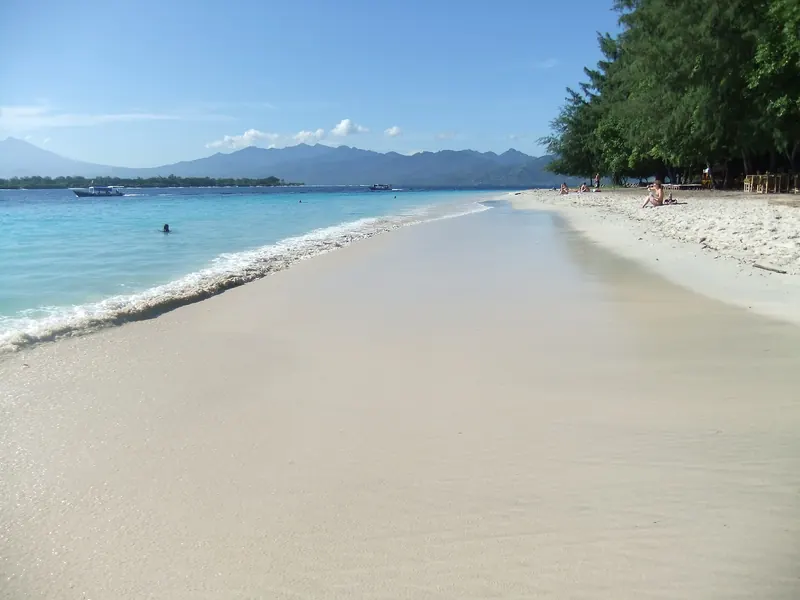
Belitung is small enough that the Ministry of Tourism describes most points of interest as within two hours of Tanjung Pandan, the main town on the west coast, but the island's two halves suit different trips. The famous beaches and the boats to the outer islands are on the north coast, in Sijuk district: Tanjung Kelayang is about 27 kilometres from Tanjung Pandan, according to the Ministry, and Tanjung Tinggi is around ten minutes beyond it. A handful of hotels sit right on the sand here, so you can swim before breakfast and be at the boats without a drive.
Tanjung Pandan has most of the hotels, according to Wikivoyage, and more places to eat. It is the better base for a first or last night around the flights, for travellers on a tighter budget and for anyone more interested in the island's tin-mining past than in a beach. Wherever you sleep, arrange transport before you arrive: the Ministry notes that public transport is hard to find and that renting a car or motorbike is the practical way around. Wikipedia's Belitung page adds that ride-hailing apps and taxis operate, but a car with a local driver for the whole stay is the usual arrangement.
Tanjung Tinggi and Tanjung Kelayang: the granite coast
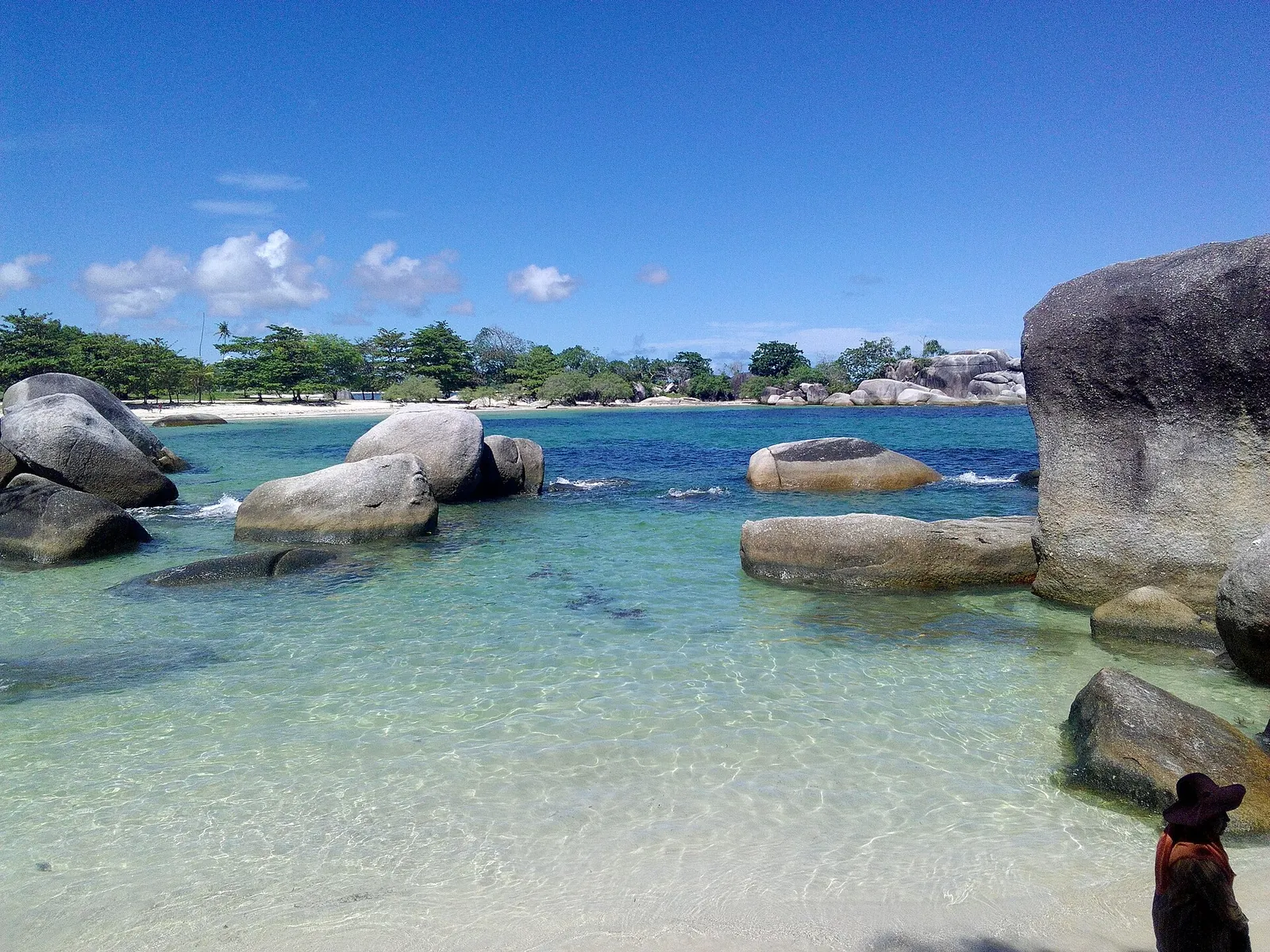
Tanjung Tinggi is the beach on most Belitung postcards: huge rounded granite boulders, some the size of houses, stacked along a short curve of white sand with calm, clear water between them. The Ministry of Tourism notes that it was a filming location for the 2008 Indonesian film *Laskar Pelangi* (The Rainbow Troops), the story by Belitung-born novelist Andrea Hirata that put the island on the domestic travel map. Come early in the morning or stay for sunset; around midday the light is flat and the rocks are hot.
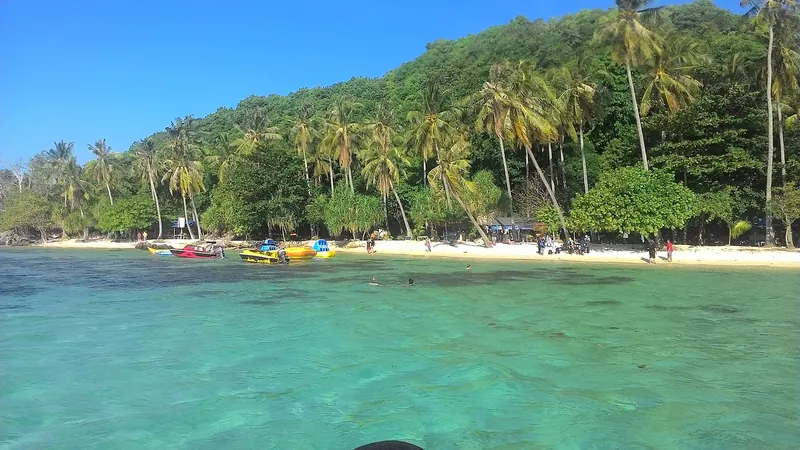
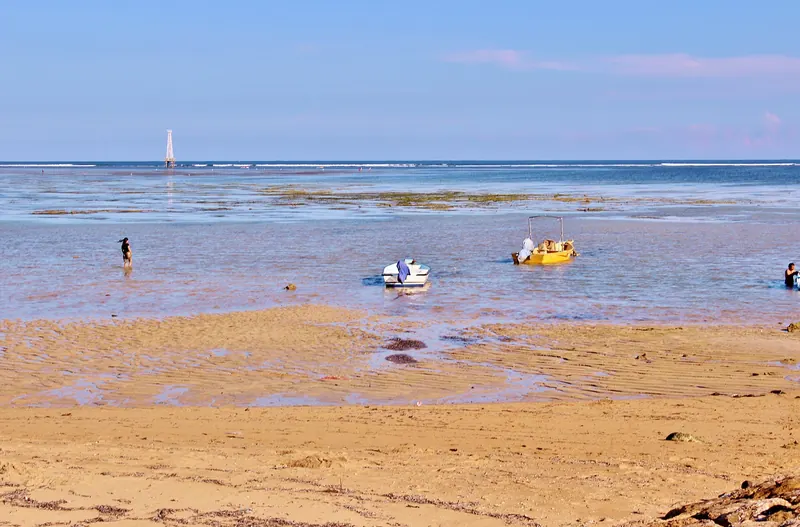
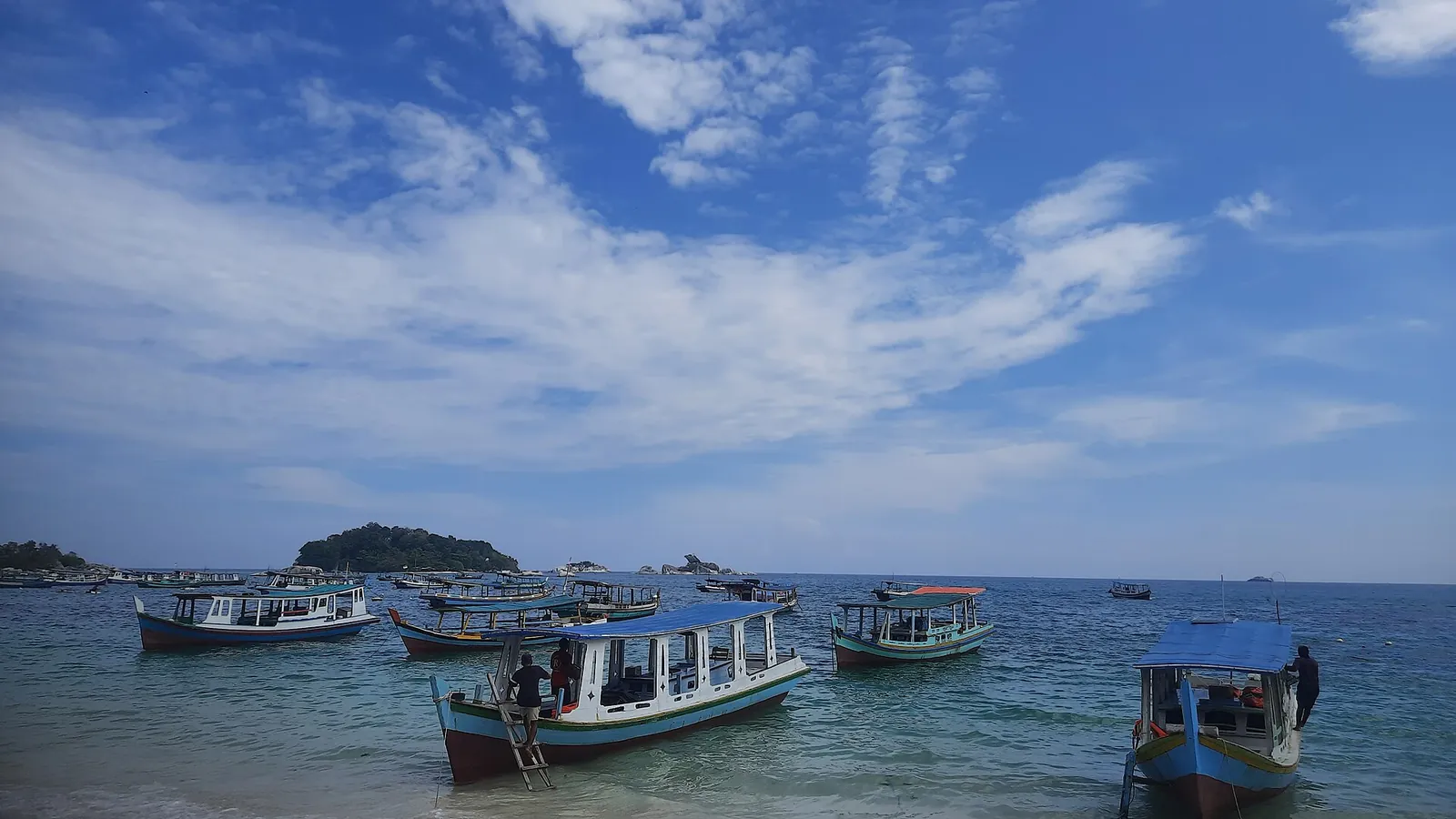
Tanjung Kelayang, a few minutes along the coast, is a longer beach with smaller rock formations, some standing offshore as islets. Wikivoyage describes a sandier eastern side, where the fishing boats wait for island-hopping passengers, and a rockier western side. The Ministry lists the wider Tanjung Kelayang area as a 324.8-hectare special economic zone planned for resort development, so expect building work along parts of this coast.
Swimming is easy in the shallows, but the Ministry's guides warn that wind and current can pick up quickly at Tanjung Tinggi, and one first-hand account on the Ministry's site mentions coral starting about ten metres off the sand. Keep children close, and do not climb the boulders when they are wet.
Make time for the local food
What to eat and where to look
Gangan
Belitung's signature fish soup, made with curry spices and pineapple, according to Wikivoyage. In Terong village it is made with beluko, a small mangrove fish that can walk across the mud and climb mangrove roots, as gangan ikan beluko, the Ministry of Tourism notes.
- Where to look
- Local restaurants in Tanjung Pandan and seafood places on the north coast; Desa Wisata Terong in Sijuk district runs a community culinary programme built around it.
- Fit it into your day
- Order it as a shared dish with rice and grilled fish at lunch or dinner.
The fish is usually served on the bone; the broth can be spicy.
Mie Belitung
The island's own noodle dish: yellow noodles in a sweet, spiced shrimp gravy topped with cucumber, tofu, potato and dried shrimp, often eaten with melinjo crackers, as Wikivoyage describes it.
- Where to look
- Noodle shops and stalls in Tanjung Pandan.
- Fit it into your day
- A quick lunch on the arrival or departure day in town.
Contains shrimp; ask for no shrimp only if you are sure the gravy is not shrimp-based.
Seafood at Tanjung Binga
The Ministry of Tourism singles out the fishing village of Tanjung Binga for seafood such as crab, grilled fish, squid and fish crackers, and especially stuffed crab, in which the shell is filled with spiced crab meat and fried.
- Where to look
- Simple seafood restaurants around the fishing village at Tanjung Binga, close to the island-hopping beaches.
- Fit it into your day
- Dinner after the boat day.
Shellfish and crab; ask what is fresh that day and confirm the price before you order.
Manggar coffee
Strong black coffee drunk slowly in roadside coffee shops with long wooden benches, part of the coffee culture that gives Manggar its "1001 coffee shops" monument, according to the Ministry of Tourism.
- Where to look
- Warung kopi along the streets of Manggar in East Belitung.
- Fit it into your day
- An afternoon stop on the eastern loop, with fried cassava or another simple snack.
Manggar is on the far side of the island from the north-coast hotels; make it the last stop of the day and drive back before dark.
Island hopping to Lengkuas and the outer islands
A morning on a wooden fishing boat among the granite islets off the north-west coast is the reason most people come. Boats leave from Tanjung Kelayang, Tanjung Binga and Tanjung Tinggi; the Ministry of Tourism gives about 20 minutes by boat from Tanjung Kelayang to Lengkuas Island, or 30 to 45 minutes from Tanjung Binga or Tanjung Tinggi. Hire a boat on the beach or through your hotel, agree the route and the return time before you leave, and make sure there are life jackets on board.
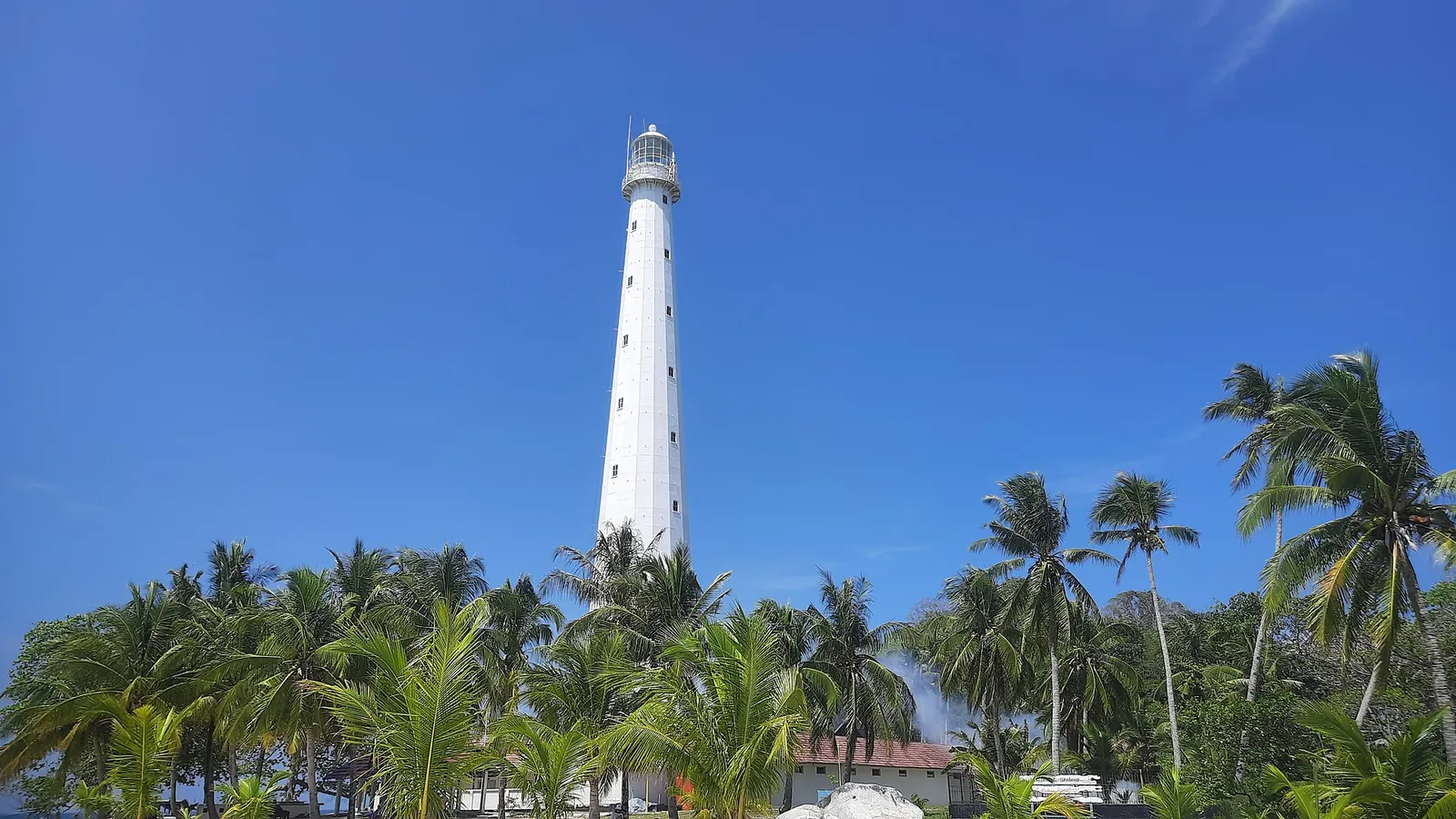
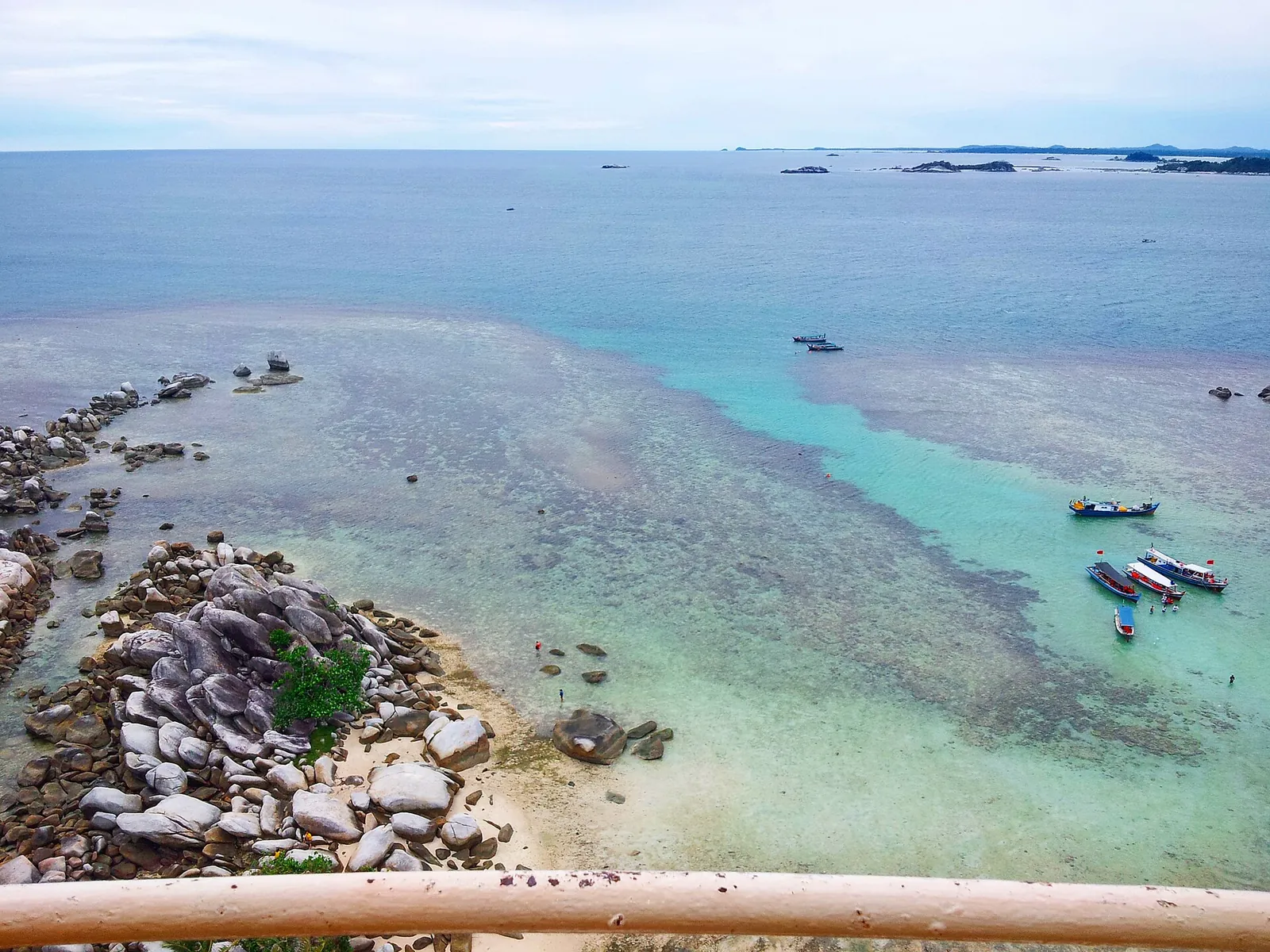
Lengkuas is the highlight: a small island of white sand and boulders crowned by a white iron lighthouse built by the Dutch, which the Ministry dates to 1882. The Ministry describes 313 steps to the top, where a narrow viewing deck looks over reef flats and the surrounding islets; the iron stairs can be slippery, and at busy times there is a queue for the deck. Snorkelling around the island's rocks is the other reason to linger.
Most boats combine Lengkuas with a few shorter stops. Pulau Batu Berlayar is named for a granite formation that looks like a ship under sail; the Ministry notes that the shallow, rocky approach needs an experienced boatman. Pulau Burung (Bird Island) has a rock shaped like a bird's head. On Pulau Kepayang, a conservation group, Kelompok Peduli Lingkungan Belitung (KPLB), runs a turtle hatchery where you can see nests and young turtles, according to the Ministry. At low tide, boatmen often stop at a sandbar, Pulau Pasir, that disappears as the water rises.
The sea is the deciding factor. Wikivoyage advises that the dry season gives clearer water and calmer crossings, and the rainy months from about October to March bring rougher seas. Go in the morning, and if the wind is up, move the trip to your spare day rather than going anyway.
The eastern loop: kaolin lake, Museum Kata and Manggar coffee
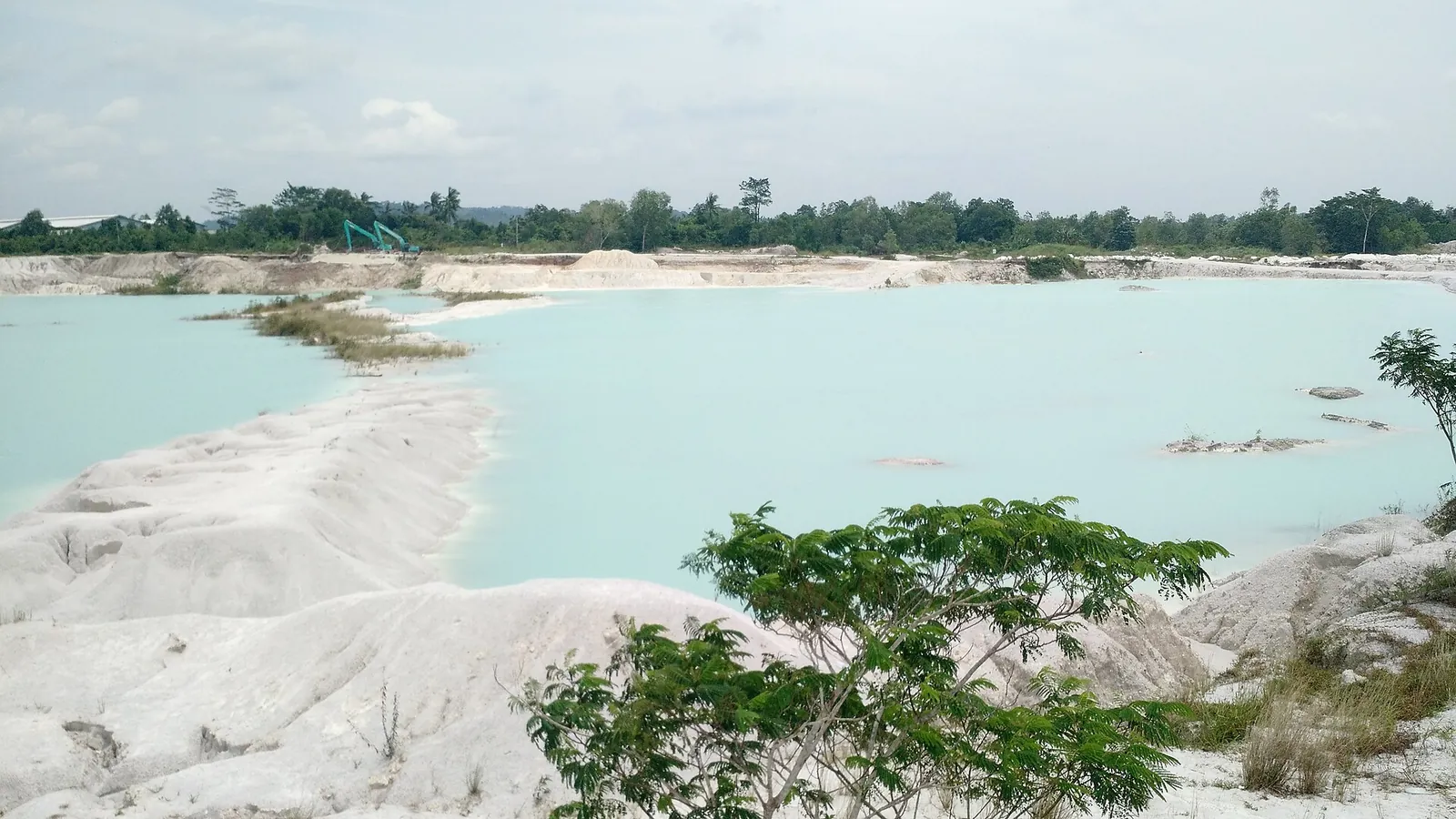
Give a second day to the island's interior and east, a route the Ministry of Tourism's own travel writers follow. Start at Danau Kaolin, a flooded former kaolin (white clay) mine where milky turquoise water sits in a basin of white spoil. It is a photo stop, not a swim: the Ministry notes that entering the water is not allowed for safety reasons.
Continue east to Gantung in East Belitung for the Museum Kata Andrea Hirata, which the Ministry describes as Indonesia's first literary museum, opened by the novelist in 2013 in his hometown. Instead of artefacts it has brightly painted rooms, murals, quotations and reading spaces built around his books; the Ministry's account also mentions a coffee shop at the back. A replica of the village school from *Laskar Pelangi* stands nearby.
End the loop in Manggar, East Belitung's main town, known across Indonesia for its coffee culture and marked by a monument to its "1001 coffee shops". Sit on the long benches of a roadside *warung kopi* with a strong black coffee and fried cassava, then drive back west to your base before dark: the Ministry's accounts put the island's sights one to two hours' drive apart, and Wikivoyage warns that minor roads are poorly lit.
Tanjung Pandan: tin, satam and the harbour
Belitung's history is a mining one — Wikipedia notes that the Dutch tin company Billiton Maatschappij took its name from the island and later became part of BHP Billiton — and Tanjung Pandan still shows it. The Museum Tanjungpandan (officially the Belitung Regency government museum) began as a tin-mining company museum, inaugurated in 1962, and holds mining relics, tools, pottery and fishing and maritime equipment, according to the Ministry of Tourism. Wikivoyage points to Dutch colonial government buildings and shophouses in the centre and to the wharf and fish market for a look at the working harbour.
In the middle of a roundabout in the town centre stands the Satam Monument, built around satam, the black tektite stone that is sold across the island as jewellery. Tanjung Pandan is also the easiest place to buy pepper, fish crackers and other local produce to take home. If you have a few hours before a flight, the town is a better use of them than another beach.
A workable three-night plan
This is an editorial suggestion, not a timetable. Check flight times, boat conditions and opening days for the places you choose.
- Day 1 — Arrive: fly from Jakarta, have lunch in Tanjung Pandan and visit the museum or the Satam Monument, then drive to the north coast for sunset at Tanjung Tinggi.
- Day 2 — Island hopping: leave Tanjung Kelayang in the morning for Lengkuas (climb the lighthouse and snorkel), Batu Berlayar, Pulau Burung and Kepayang; seafood dinner at Tanjung Binga.
- Day 3 — Eastern loop: Danau Kaolin, Museum Kata and the school replica in Gantung, coffee in Manggar, back to your base by dark. Swap this with Day 2 if the sea is rough.
- Day 4 — Leave: an early swim on the north coast, then the airport. Add a night if you want a slower beach day or a second chance at the boat trip.
Practical questions
How do I get to Belitung from Jakarta?
Fly from Soekarno-Hatta to H.A.S. Hanandjoeddin Airport (TJQ) at Tanjung Pandan; the flight takes under an hour. PELNI passenger ships from Tanjung Priok take about a day and sail infrequently, so for most visitors the plane is the only practical option.
How many days do I need in Belitung?
Three nights gives you one day for island hopping, one for the kaolin lake, Gantung and Manggar, and time for the beaches around your flights. Add a fourth night in the rainy season so you have a spare day if the sea is too rough for the boats.
Where should I stay in Belitung?
On the north coast near Tanjung Tinggi or Tanjung Kelayang if you want to swim and be close to the boats, or in Tanjung Pandan for more choice of hotels and restaurants. Both work with a car and driver.
Can I climb the Lengkuas lighthouse?
Yes, visitors climb the 313 steps the Ministry of Tourism describes to a viewing deck at the top. The iron stairs are steep and can be slippery, and at busy times you may have to queue for the deck.
Can I swim in the kaolin lake?
No. The Ministry of Tourism notes that entering the water at the kaolin lake is not allowed for safety reasons; it is a viewpoint.
When is the best time to visit Belitung?
The dry season, roughly April to September, is best for island hopping and snorkelling. From about October to March, heavy rain and choppier seas can disrupt boat trips.
Sources and checks before you travel
Reference sources for the version dated 3 October 2026. Confirm opening times, access, transport and conditions for your travel dates.
- Indonesia Travel (Ministry of Tourism): Belitung ↗ — opens in a new tab
- Indonesia Travel (Ministry of Tourism): 5 spots around Tanjung Kelayang ↗ — opens in a new tab
- Indonesia Travel (Ministry of Tourism): Top 9 special places on Belitung ↗ — opens in a new tab
- Indonesia Travel (Ministry of Tourism): The Beauty of Belitung ↗ — opens in a new tab
- Indonesia Travel (Ministry of Tourism): Museum Kata Andrea Hirata ↗ — opens in a new tab
- Indonesia Travel (Ministry of Tourism): UPT Museum of the Belitung Regency Government ↗ — opens in a new tab
- Indonesia Travel (Ministry of Tourism): Belitung Culinary Adventure, Desa Wisata Kreatif Terong ↗ — opens in a new tab
- Wikipedia: Belitung ↗ — opens in a new tab
- Wikipedia: H.A.S. Hanandjoeddin International Airport ↗ — opens in a new tab
- Wikipedia: List of UNESCO Global Geoparks in Asia ↗ — opens in a new tab
- Wikipedia (Indonesian): Mercusuar Pulau Lengkuas ↗ — opens in a new tab
- Wikivoyage: Belitung ↗ — opens in a new tab
Photo credits
Granite boulders and clear shallows at Tanjung Tinggi Beach, on Belitung's north coast
Photograph: HeyFromINDO — opens in a new tab · CC BY-SA 4.0 — opens in a new tab
Changes: Resized and converted to WebP; displayed with responsive crops. · Original photograph and licence details ↗ — opens in a new tab
The Dutch-era lighthouse on Lengkuas Island, the usual highlight of a Belitung island-hopping day
Photograph: Raflinoer32 — opens in a new tab · CC BY-SA 4.0 — opens in a new tab
Changes: Resized and converted to WebP; displayed with responsive crops. · Original photograph and licence details ↗ — opens in a new tab
Looking down from the Lengkuas lighthouse over the reef flats and moored boats
Photograph: Christine Anggeline — opens in a new tab · CC BY-SA 4.0 — opens in a new tab
Changes: Resized and converted to WebP; displayed with responsive crops. · Original photograph and licence details ↗ — opens in a new tab
Boats waiting off Tanjung Kelayang Beach, a starting point for island-hopping trips
Photograph: Raflinoer32 — opens in a new tab · CC BY-SA 4.0 — opens in a new tab
Changes: Resized and converted to WebP; displayed with responsive crops. · Original photograph and licence details ↗ — opens in a new tab
Danau Kaolin, a flooded former kaolin mine on Belitung; entering the water is not allowed
Photograph: Ayufib — opens in a new tab · CC BY-SA 4.0 — opens in a new tab
Changes: Resized and converted to WebP; displayed with responsive crops. · Original photograph and licence details ↗ — opens in a new tab