Java · West Java
Bandung travel guide: art deco centre, volcano day trips, Sundanese food
Bandung, the capital of West Java, sits on a highland plain ringed by volcanoes, and a good visit uses both halves of that setting. The colonial centre is compact enough to walk: Jalan Asia Afrika, where the 1955 Asian-African Conference met, the old shopping street of Braga and the 1920s Gedung Sate. The day trips are what most Indonesian visitors come for: the drive-up crater of Tangkuban Perahu to the north, and the turquoise Kawah Putih crater lake and tea country around Ciwidey to the south. Both are road trips through traffic that can double on weekends, so the main decisions are which days you go and where you sleep.
- Suggested time
- 3 days (2 if you skip either the north or the south)
- Where to stay
- Braga and Jalan Asia Afrika for the old town and Bandung station; Dago or Ciumbuleuit for the cooler north; Lembang only for a highland stay
- Season and timing
- Java's dry season runs roughly April to October and the wet season November to March. Bandung and especially the craters are noticeably cooler than Jakarta; bring a warm layer for Kawah Putih and Tangkuban Perahu at any time of year.
The short answer
Give Bandung three days: one on foot in the centre (Gedung Merdeka and its museum, Braga, the Alun-Alun and Gedung Sate), one for the north (Tangkuban Perahu, with Lembang or Tebing Keraton on the way back), and one for the south (Kawah Putih and the tea estates around Situ Patenggang). Sleep near Braga and Jalan Asia Afrika if the old town and the railway station matter most, or in Dago or Ciumbuleuit for a cooler, greener base closer to the north. Do the volcano days on weekdays with a hired car and driver or a tour, start early, and keep a late afternoon free for the angklung show at Saung Angklung Udjo.
Choose the base that matches your days
The old centre around Jalan Asia Afrika and Jalan Braga puts you within walking distance of Gedung Merdeka, the Alun-Alun and Braga's cafés, and the Ministry of Tourism puts Bandung station about 10 to 15 minutes from Braga. This is the practical choice if you arrive by train or by the Whoosh feeder train, which runs from Bandung station. The Savoy Homann on Jalan Asia Afrika, an art deco hotel where leaders of the 1955 conference stayed, gives a sense of the street's history.
Dago, along Jalan Ir. H. Juanda, and Ciumbuleuit, higher up on the northern slopes, are greener and cooler, with many of the city's boutique and design hotels. They are also on the side of the city you leave from for Lembang, Tebing Keraton and Tangkuban Perahu. Lembang itself, about 30 minutes from the centre according to the ministry, suits a highland night among farms and pine forest, but it puts every visit to the city behind the same congested road.
Whichever area you pick, look at the hotel's position against the one or two trips you care about. Bandung's traffic is the real cost of a badly placed room, and the ministry warns that a Jakarta–Bandung drive of about two hours can take four to six on weekends and public holidays.
The colonial centre on foot
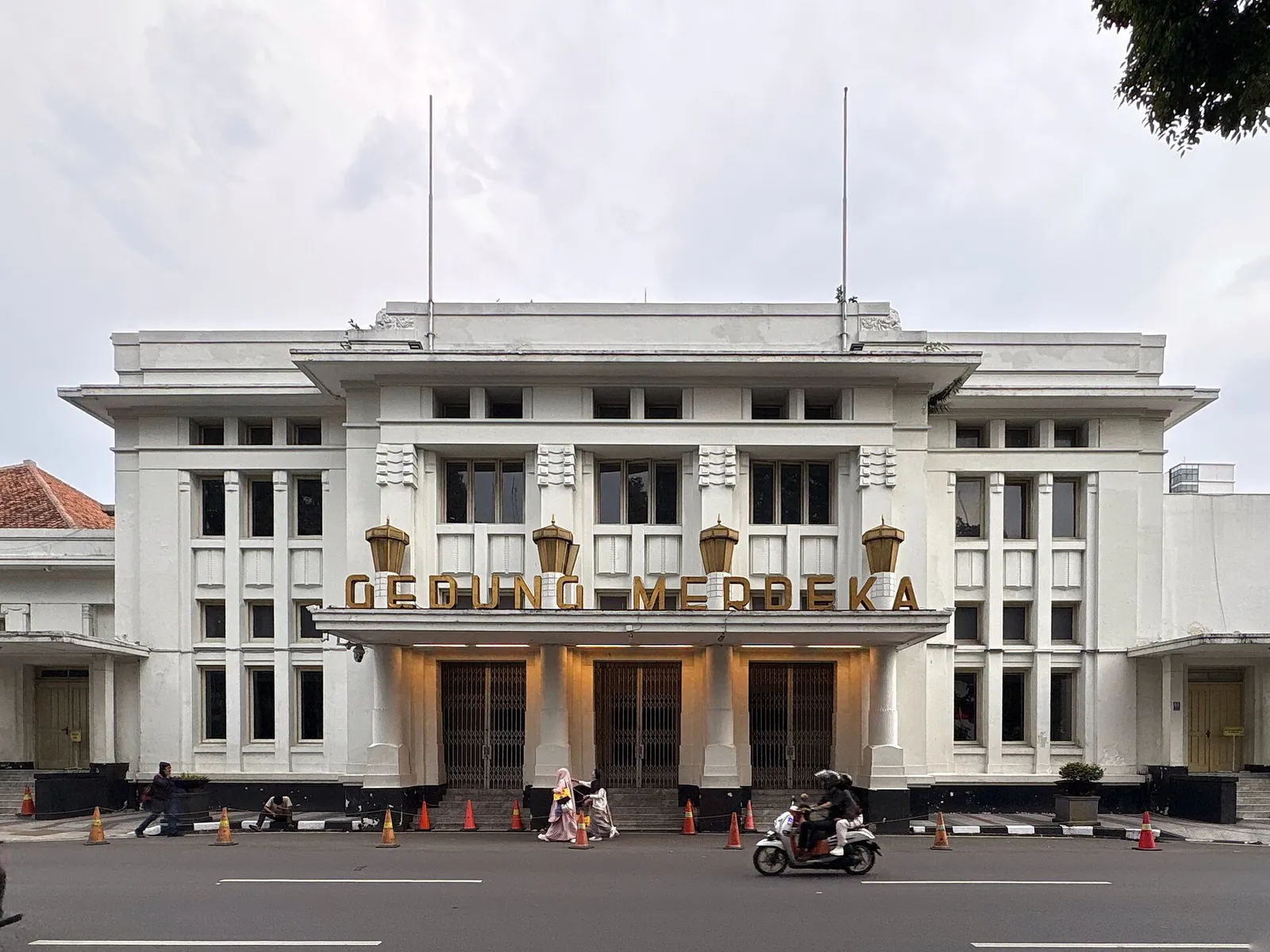
Jalan Asia Afrika follows the old Great Post Road (Groote Postweg) built under Governor-General Daendels, and the city's kilometre zero marker stands on it. Gedung Merdeka began in 1895 as the Societeit Concordia, a European club, and was rebuilt in art deco style in 1921–1926 by C.P. Wolff Schoemaker. It hosted the Asian-African Conference of 18–24 April 1955, and the Museum of the Asian-African Conference, opened on 24 April 1980, occupies part of the building. The museum's own website was out of date when we checked, so confirm opening days locally before planning around it.
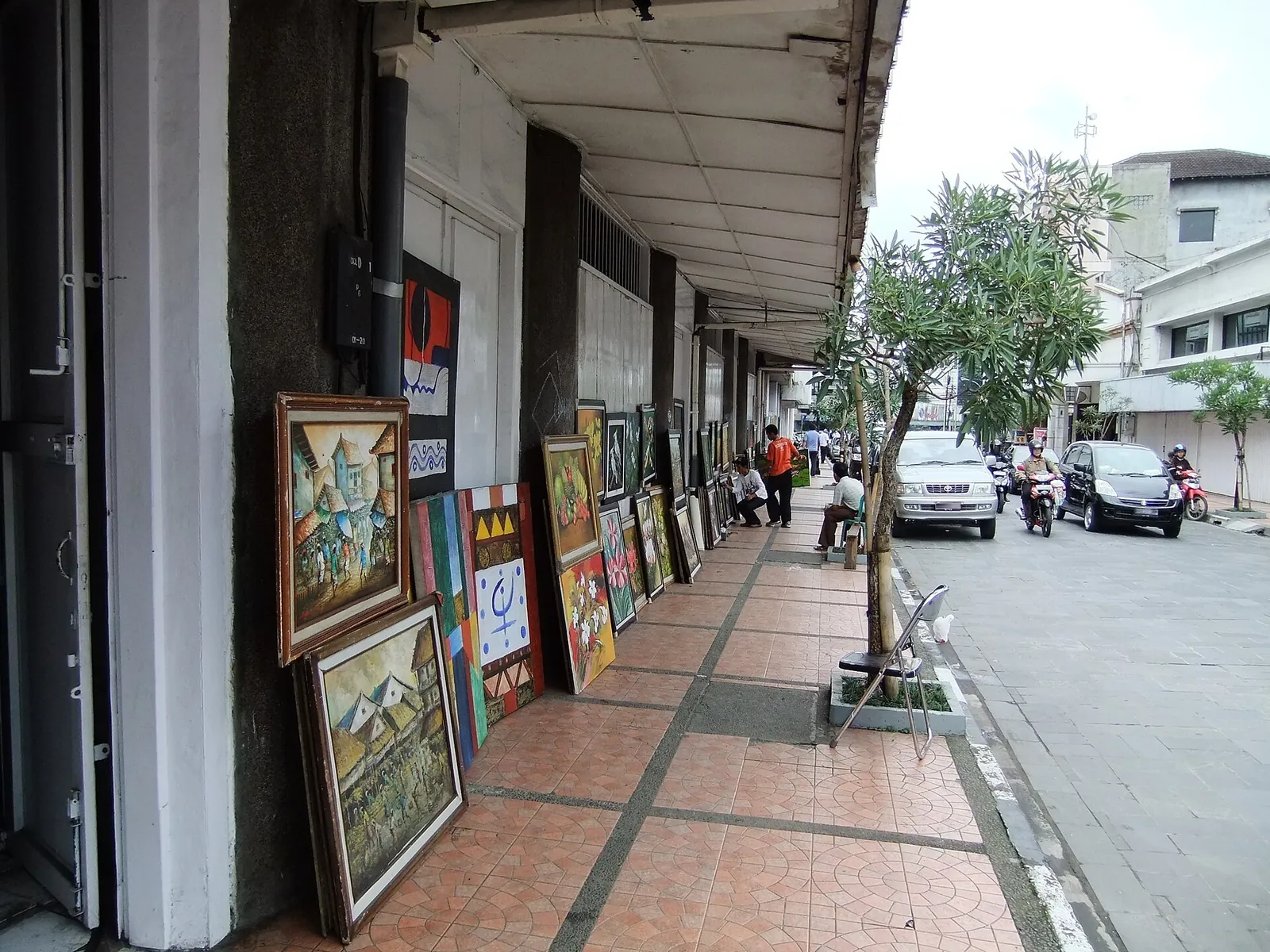
Braga starts at the corner of Asia Afrika at the old De Vries department store. Its art deco shopfronts, galleries and old cafés are the reason to come, and the ministry says the street is closed to motor traffic at weekends as Braga Beken, with art and food along it. The Alun-Alun, the city square laid out around 1810 beside the Grand Mosque (Masjid Raya Bandung), is open around the clock without charge.
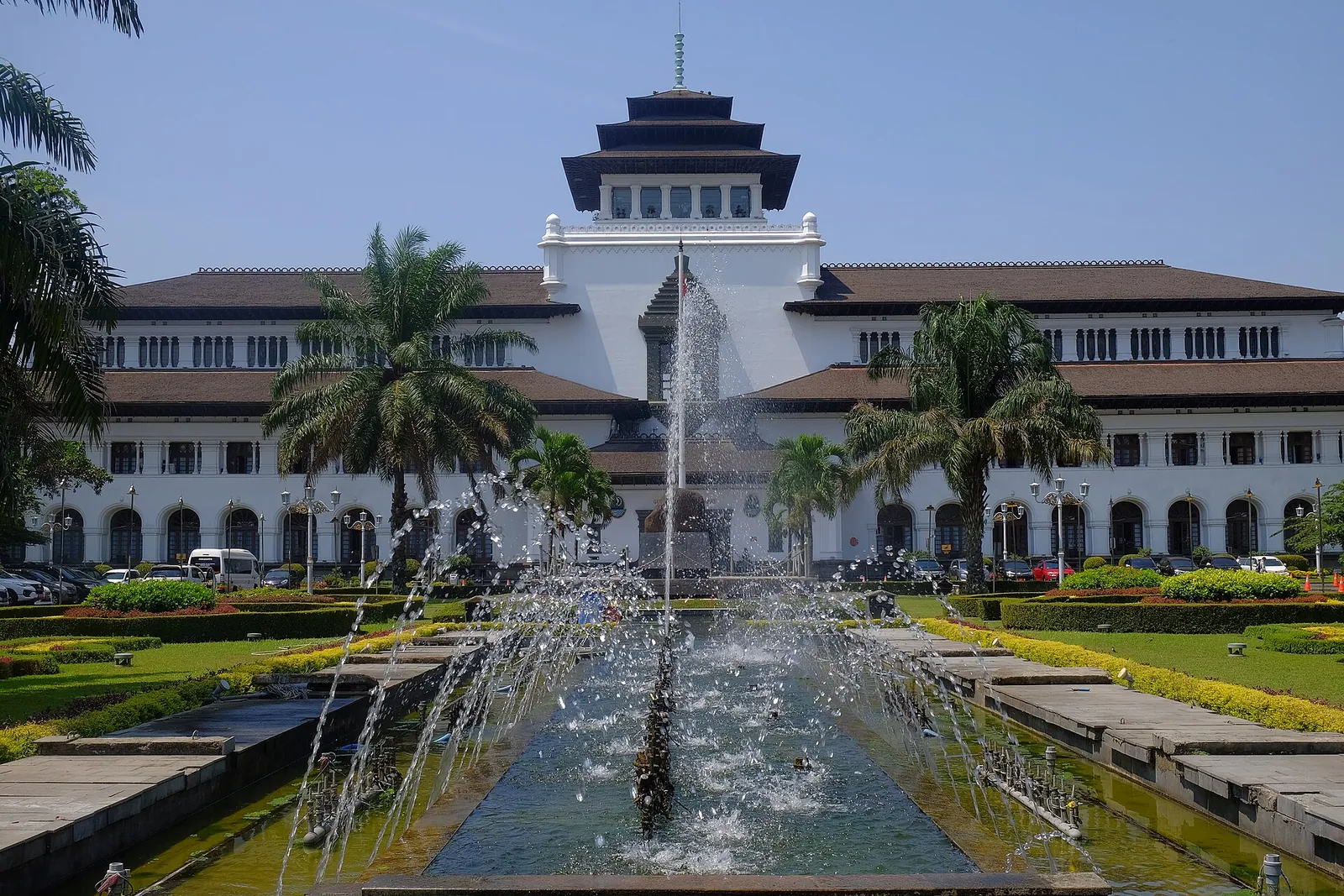
Gedung Sate, the West Java governor's office named after the skewer-like ornament on its tower, is a short ride away. It was begun in 1920 to a design by J. Gerber and finished in 1924. When we checked on 2026-10-03, the ministry's heritage guide listed the Gedung Sate Museum in the building's basement as open Tuesday to Sunday from 09:30 to 16:00 with a ticket of about Rp 5,000, and said a visit needs a reservation because the building is a working government office. The Museum Pos Indonesia, in a building of about 1920 in the same district, and the Geological Museum, housed in a building from 1928, round out a full city day without a long drive.
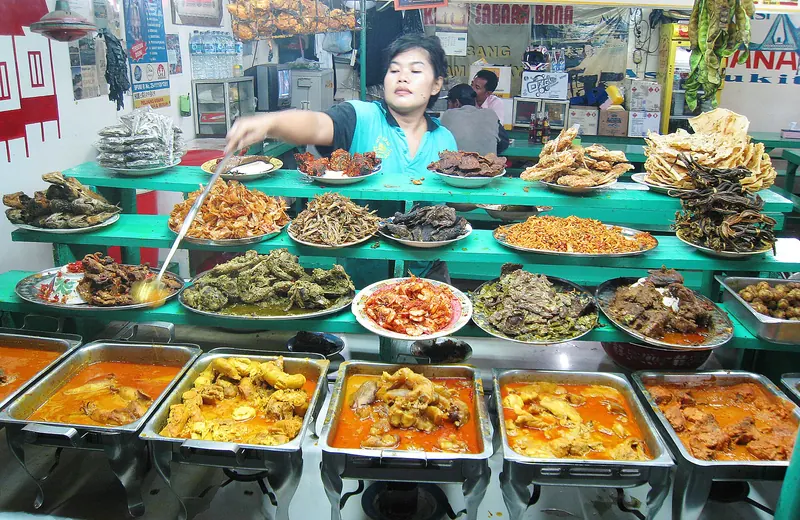
Make time for the local food
What to eat and where to look
Nasi timbel
Rice wrapped in banana leaf, served Sundanese style with fried or grilled chicken, fried tofu and tempeh, salted fish, raw vegetables (lalapan) and fresh sambal. It is one of West Java's best-known dishes.
- Where to look
- Sundanese restaurants across the city, and the roadside restaurants on Jalan Raya Ciwidey–Rancabali on the way to Kawah Putih.
- Fit it into your day
- Make it lunch on the Kawah Putih day, on the way back through Ciwidey.
The sambal is often very hot, and the raw vegetables are eaten as they come; skip them if your stomach is sensitive.
Batagor and siomay
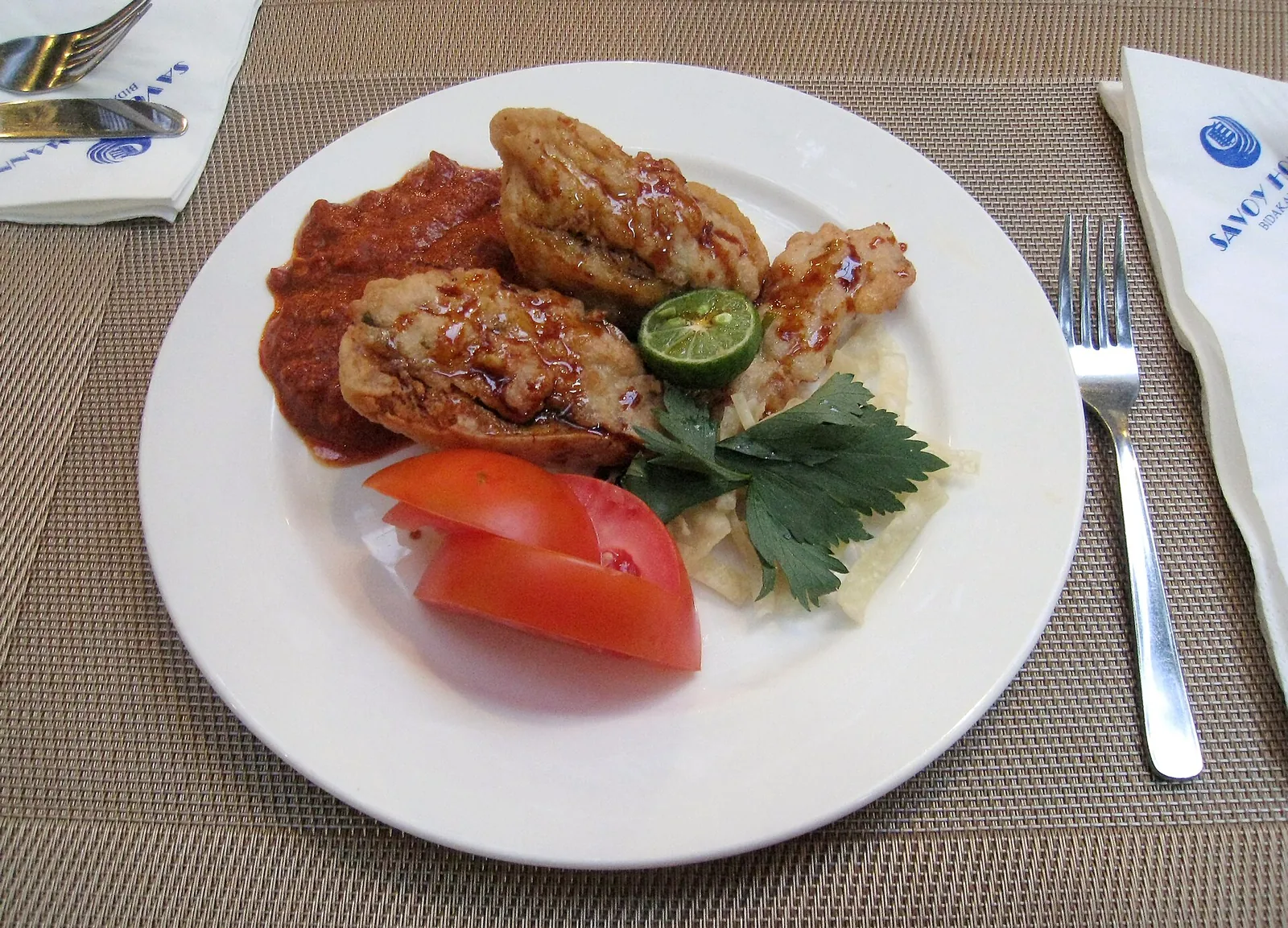
Batagor is fried fish-and-tofu dumplings and siomay is the steamed kind. Both are served with a thick, spicy peanut sauce and are among Bandung's best-known street foods.
- Where to look
- Street carts and specialist shops throughout the city; it is also served in hotel breakfasts.
- Fit it into your day
- An afternoon snack between sights, or a light lunch.
Contains fish, peanuts and often egg.
Tapioca snacks: cireng, cilok, cimol and bakso aci
Bandung is known for snacks made from tapioca starch (aci): fried cireng with a peanut filling, steamed cilok on skewers with peanut sauce, small fried cimol tossed in seasoning, and bakso aci, tapioca balls in hot broth.
- Where to look
- Street carts all over the city; Cireng Cipaganti, open since 1990, is one long-running name.
- Fit it into your day
- Something to share while walking in the late afternoon.
Chewy and filling rather than light; the seasoning on cimol is often chilli-hot.
Mie yamin and the old restaurants
Bandung-style yamin noodles are a fixture of the city's old family restaurants; the ministry names Rumah Makan Linggarjati and Mie Naripan for them. Sumber Hidangan on Braga (1929) still bakes Dutch-style breads and cakes, and Warung Kopi Purnama (1930) serves kopi tubruk and kaya toast.
- Where to look
- The streets around Braga and the old town.
- Fit it into your day
- Breakfast at an old coffee house and lunch over noodles on the old-town day.
Older restaurants can close early in the evening; check the hours on the day.
Bandrek and bajigur
Two hot traditional drinks that the ministry suggests for Bandung's colder days, sold alongside fried snacks such as pisang goreng and peuyeum goreng (fried fermented cassava).
- Where to look
- Street stalls and warung, especially in the evening.
- Fit it into your day
- With fried snacks after a day at the craters.
Usually sweet; ask what goes into the version you are offered if you avoid dairy or sugar.
North: Tangkuban Perahu, Lembang and Tebing Keraton
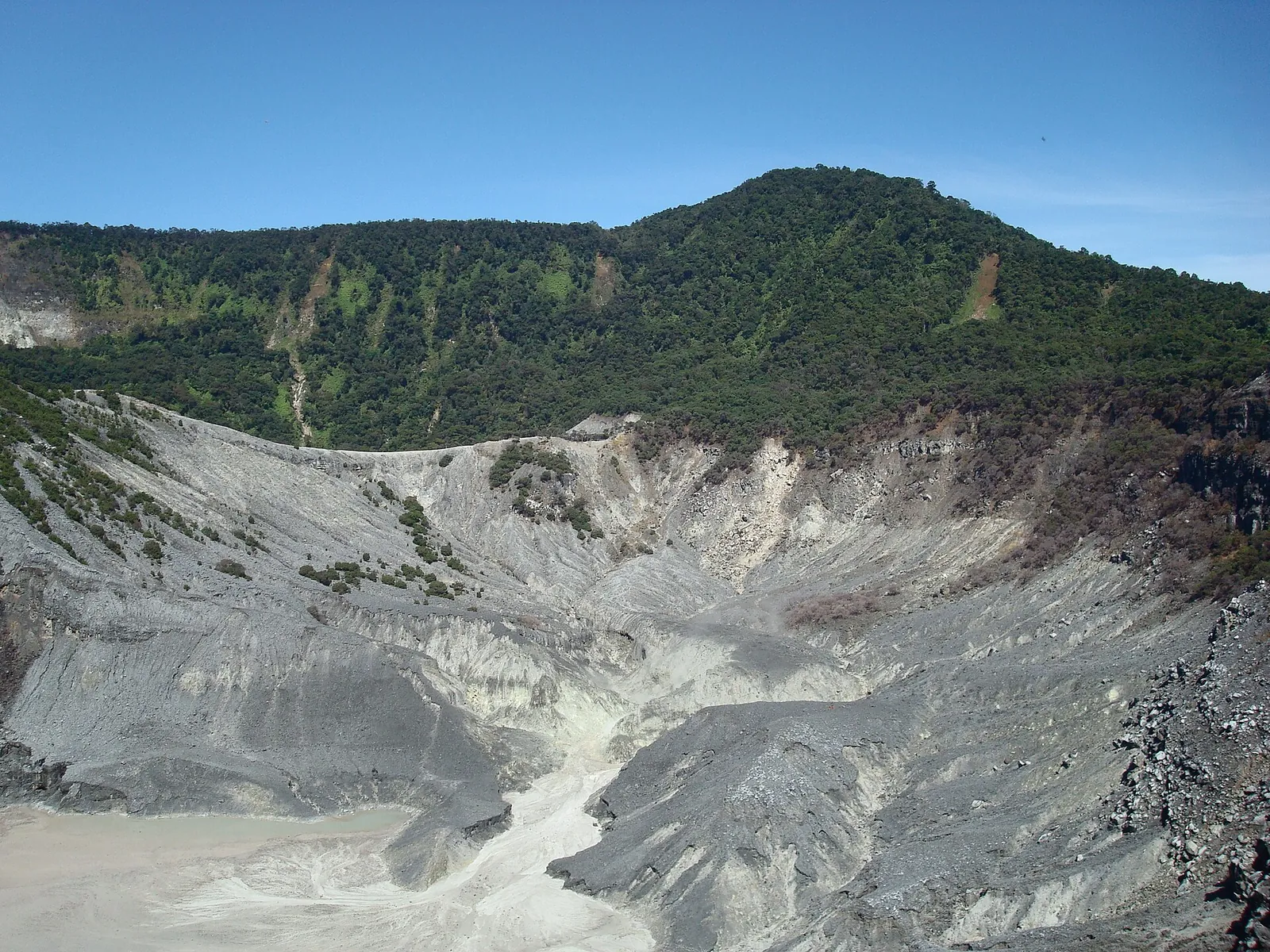
Tangkuban Perahu, the 'overturned boat' volcano, lies about 30 km north of the city on the border of West Bandung and Subang. The ministry describes it as a crater you can drive right up to the rim. Kawah Ratu is the largest crater and Kawah Upas sits beside it; at Kawah Domas, lower down, visitors boil eggs in the hot springs. A steep trail of about an hour links the top with Kawah Domas through forest, and the ministry advises walking it downhill. It also gives about 90 minutes for the drive on a weekday; on weekends allow more.
Come early and bring a layer, since mist often drifts over the craters: the ministry notes that temperatures drop by about 1°C for every 90 m of height. The sulphur fumes are strong at the rim, so anyone with breathing problems should keep the stop short. The Ciater hot springs on the Subang side make a natural end to the day.
On the way back, Lembang has farm parks, the Bosscha Observatory and the Cikole pine and orchid forest. Tebing Keraton is a rock outcrop in the Ir. H. Djuanda Forest Park at about 1,200 m, reached from Dago, with a wide view over forested valleys; it is best at sunrise or sunset, so it fits better as a separate early start than as an add-on to the volcano.
South: Kawah Putih, Ciwidey and the tea country
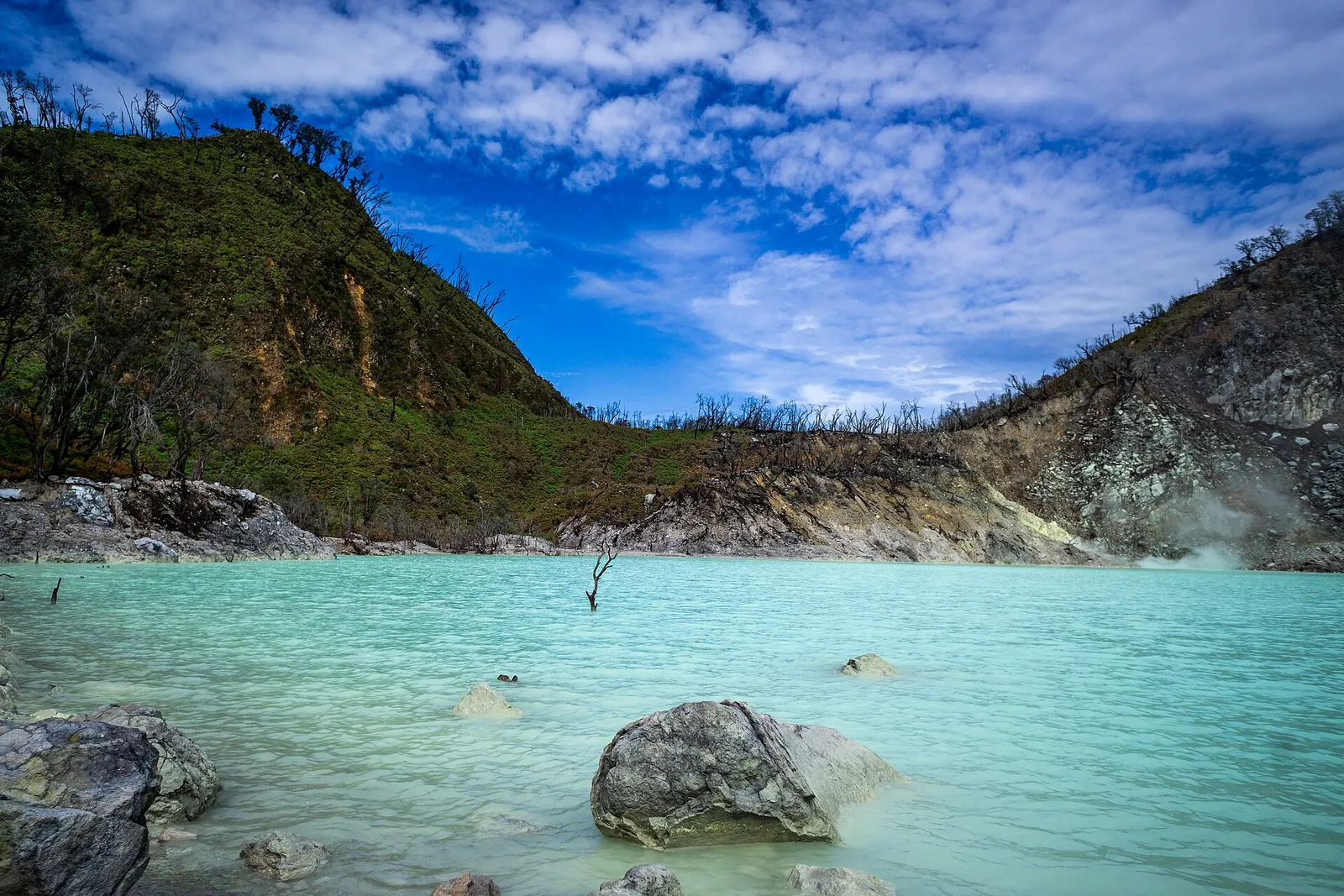
Kawah Putih, the White Crater, is one of two craters of Mount Patuha near the market town of Ciwidey. The ministry puts it a little over two hours from central Bandung, depending on traffic, by the busy road south through Soreang. Visitors usually leave their car at the entrance and take the shuttle minibuses that run up the last 5 km to the crater. Sulphur was once mined here, and during the Second World War the plant was run by the Japanese military; the plant is gone, but old tunnel entrances can still be seen. The site opened to visitors in 1987.
The crater lake is a pale turquoise surrounded by white ground, and the altitude makes it chilly. The ministry advises a mask against the sulphur smell, and masks are sold on site. Weekends and holidays bring large crowds, so this is the day to do on a weekday if you can.
Situ Patenggang, about 7 km from Kawah Putih, is a lake among the Rancabali tea plantations, with boats out to the small island known as Batu Cinta. The road between Ciwidey and Rancabali is lined with restaurants serving nasi timbel, and strawberry farms and glamping sites are scattered through the hills, which makes this the easier day to slow down and eat well.
An evening of angklung at Saung Angklung Udjo
The angklung, a bamboo instrument from West Java that sounds one note per frame, is on UNESCO's list of the Intangible Cultural Heritage of Humanity (inscribed in 2010). Saung Angklung Udjo, founded in 1966 by Udjo Ngalagena and his wife Uum Sumiyati in eastern Bandung (Jl. Padasuka No. 118), stages a show with wayang golek puppets, dance, an angklung orchestra and a section where the audience plays.
When we checked on 2026-10-03, Saung Angklung Udjo's website listed the regular show daily from 15:30 to 17:00, with extra sessions at 13:00 on Saturdays and 10:00 on Sundays, sold on site without reservation. Tickets for international visitors were listed at Rp 120,000 for adults and Rp 85,000 for students. Weekday morning and afternoon sessions are for pre-booked groups only, so individual travellers should aim for the 15:30 show, which fits after a morning in the centre.
Getting to Bandung and getting around
The Whoosh high-speed railway links Jakarta and Bandung. Its operator, KCIC, lists four stations: Halim in East Jakarta, Karawang, Padalarang and Tegalluar Summarecon. When we checked on 2026-10-03, KCIC's site listed a journey of 36 to 44 minutes between Jakarta and Bandung with trains every 20 to 30 minutes. Padalarang connects with the KA Feeder shuttle train to Bandung station, timed to each Whoosh departure. Since March 2026, KCIC says, feeder passengers at Bandung station use the new waiting area on the west side, reached through the North Gate from Jalan Kebon Kawung. Tegalluar Summarecon lies near the Gelora Bandung Lautan Api stadium, and KCIC has warned of traffic around it on match days.
Whoosh tickets are sold in the Whoosh app and at ticket.kcic.co.id from 14 days before travel; boarding opens 30 minutes before departure and closes 5 minutes before. Conventional trains also run between Jakarta and Bandung; the ministry describes a scenic trip of about three hours through tunnels and mountains. Check the current timetable with KAI, the national rail operator.
In the city, taxis and ride-hailing apps are the simplest way between areas; the angkot minibuses are cheap but their routes are hard to read for visitors. For Tangkuban Perahu and Kawah Putih, the ministry recommends a tour or a rented car with a driver. Both are possible by public transport (a minibus via Lembang for the volcano; a bus from Leuwipanjang terminal to Ciwidey, then an angkot, for Kawah Putih), but expect a long day.
A workable three-day plan
This is an editorial suggestion, not a timetable. Put the two road trips on weekdays if you can, and check opening days for the museums you choose.
- Day 1 — Old town: Gedung Merdeka and the Asian-African Conference museum, Braga and the Alun-Alun, lunch at one of the old restaurants, then Gedung Sate (booked ahead) or the 15:30 angklung show at Saung Angklung Udjo.
- Day 2 — North: an early start for Tangkuban Perahu, the walk down to Kawah Domas if you are fit, then Lembang or the Ciater hot springs; dinner back in the city.
- Day 3 — South: Kawah Putih at opening time, Situ Patenggang and the Rancabali tea estates, and nasi timbel on the road back through Ciwidey.
- Short on time: choose the north or the south, not both, and add Tebing Keraton at sunrise from a hotel in Dago.
Practical questions
How many days do I need in Bandung?
Three days cover the old centre, one trip north to Tangkuban Perahu and one trip south to Kawah Putih at a sensible pace. With two days, spend one in the centre and choose either the north or the south for the other.
What is the fastest way from Jakarta to Bandung?
The Whoosh high-speed train from Halim station in East Jakarta. When we checked on 2026-10-03, KCIC listed 36 to 44 minutes between Jakarta and Bandung. Get off at Padalarang and change to the KA Feeder train for Bandung station in the centre, or ride on to Tegalluar Summarecon. Allow time to reach Halim, which is in East Jakarta, far from Soekarno-Hatta airport.
Can I visit Tangkuban Perahu and Kawah Putih on the same day?
It is not a good idea. Tangkuban Perahu is north of the city and Kawah Putih is a little over two hours south, so combining them means crossing Bandung's traffic twice. Give each its own day, ideally on weekdays.
Where should I stay in Bandung?
Near Braga and Jalan Asia Afrika if you want to walk the old town and use Bandung station. Choose Dago or Ciumbuleuit for a cooler, greener base on the side of the city facing Lembang and Tangkuban Perahu.
Do I need to book the angklung show at Saung Angklung Udjo?
Not for the regular show. When we checked on 2026-10-03, its website said tickets for the daily 15:30 show (and the extra weekend sessions) are sold on site without reservation; weekday morning and afternoon sessions are for booked groups only.
Is Bandung cold?
It is cooler than Jakarta, and the craters are colder still: temperatures drop by about 1°C for every 90 m you climb. A light jacket is enough in the city in the evening; take a warmer layer for Kawah Putih and Tangkuban Perahu.
Sources and checks before you travel
Reference sources for the version dated 3 October 2026. Confirm opening times, access, transport and conditions for your travel dates.
- Indonesia.travel (Ministry of Tourism): Tangkuban Perahu ↗ — opens in a new tab
- Indonesia.travel: The ultimate guide to Tangkuban Perahu ↗ — opens in a new tab
- Indonesia.travel: White Crater (Kawah Putih) ↗ — opens in a new tab
- Indonesia.travel: Things to do in the Kawah Putih area ↗ — opens in a new tab
- Indonesia.travel: Lembang ↗ — opens in a new tab
- Indonesia.travel: Tebing Keraton ↗ — opens in a new tab
- Indonesia.travel: 4 historic spots in Bandung in one day ↗ — opens in a new tab
- Indonesia.travel: Historic places in Bandung ↗ — opens in a new tab
- Indonesia.travel: Museum of the Asian-African Conference ↗ — opens in a new tab
- Indonesia.travel: Geological Museum ↗ — opens in a new tab
- Indonesia.travel: Photo spots in Braga ↗ — opens in a new tab
- Indonesia.travel: Bandung's unique hotels ↗ — opens in a new tab
- Indonesia.travel: Artsy hotels in Bandung ↗ — opens in a new tab
- Indonesia.travel: Scarlet Dago Hotel Bandung ↗ — opens in a new tab
- Saung Angklung Udjo (official site) ↗ — opens in a new tab
- Indonesia.travel: Udjo's House of Angklung ↗ — opens in a new tab
- Indonesia.travel: Angklung ↗ — opens in a new tab
- KCIC (Whoosh operator): home page ↗ — opens in a new tab
- KCIC: Whoosh stations ↗ — opens in a new tab
- KCIC: Whoosh tickets and schedules ↗ — opens in a new tab
- KCIC press release: KA Feeder access at Bandung station from March 2026 ↗ — opens in a new tab
- KCIC press release: congestion around Tegalluar station ↗ — opens in a new tab
- Indonesia.travel: Bandung culinary ↗ — opens in a new tab
- Indonesia.travel: Must-try street foods in Bandung ↗ — opens in a new tab
- Indonesia.travel: Bandung's tapioca street snacks (Lautan Aci) ↗ — opens in a new tab
- Indonesia.travel: Legendary restaurants in Bandung ↗ — opens in a new tab
- Indonesia.travel: Nasi timbel in Ciwidey ↗ — opens in a new tab
- Kertajati International Airport (BIJB): transport facilities ↗ — opens in a new tab
- Indonesia.travel: Weather, climate and seasons ↗ — opens in a new tab
- KAI (Kereta Api Indonesia) ↗ — opens in a new tab
Photo credits
Gedung Sate, the West Java governor's office begun in 1920, seen across its front gardens and fountain.
Photograph: RaiyaniM — opens in a new tab · CC BY-SA 4.0 — opens in a new tab
Changes: Resized and converted to WebP; displayed with responsive crops. · Original photograph and licence details ↗ — opens in a new tab
Gedung Merdeka on Jalan Asia Afrika, venue of the 1955 Asian-African Conference and home of its museum.
Photograph: Chainwit. — opens in a new tab · CC BY 4.0 — opens in a new tab
Changes: Resized and converted to WebP; displayed with responsive crops. · Original photograph and licence details ↗ — opens in a new tab
Paintings for sale along a covered pavement on Jalan Braga, the old shopping street in the city centre.
Photograph: Midori — opens in a new tab · CC BY 3.0 — opens in a new tab
Changes: Resized and converted to WebP; displayed with responsive crops. · Original photograph and licence details ↗ — opens in a new tab
The crater of Tangkuban Perahu, north of Bandung towards Lembang, which visitors can reach by road.
Photograph: Arabsalam — opens in a new tab · CC BY-SA 4.0 — opens in a new tab
Changes: Resized and converted to WebP; displayed with responsive crops. · Original photograph and licence details ↗ — opens in a new tab
Kawah Putih, the crater lake on Mount Patuha near Ciwidey, south of Bandung.
Photograph: Galeri ega — opens in a new tab · CC BY-SA 4.0 — opens in a new tab
Changes: Resized and converted to WebP; displayed with responsive crops. · Original photograph and licence details ↗ — opens in a new tab
Batagor, Bandung's fried fish and tofu dumplings with peanut sauce, served for breakfast at the Savoy Homann on Jalan Asia Afrika.
Photograph: Gunawan Kartapranata — opens in a new tab · CC BY-SA 3.0 — opens in a new tab
Changes: Resized and converted to WebP; displayed with responsive crops. · Original photograph and licence details ↗ — opens in a new tab