Java · West Java
Cirebon travel guide: kratons, Trusmi batik, food and where to stay
Cirebon sits on Java's north coast right at the border of West and Central Java, and it shows. The tourism ministry describes a town where Sundanese and Javanese culture mixed with Chinese, Indian, Arab and European influences: palace walls set with old porcelain plates, batik with strong Chinese motifs, mosques with an Arab flavour. It is a working port city rather than a resort, so the pleasure lies in a compact old quarter of palaces, a short ride out to the batik workshops of Trusmi, and eating well between them. Most travellers pass through on the train; stopping for a night turns it into one of the most rewarding breaks on the line.
- Suggested time
- 1–2 nights
- Where to stay
- Kejaksan, around Cirebon station, for train arrivals and the most hotels; the palaces and Trusmi are a short taxi ride away
- Season and timing
- The tourism ministry gives April to October as the dry season and November to March as the wet season for Java, while noting the seasons have become less predictable. On the coastal plain it is hot all year, so put the palace visits in the morning.
The short answer
Give Cirebon one night, or two if batik shopping or a workshop matters to you. Arrive by train at Cirebon (Kejaksan) station, which the tourism ministry places in the heart of the city, and sleep nearby. Spend a morning in Lemahwungkuk at the Kasepuhan and Kanoman palaces, add the Sunyaragi water garden in the afternoon, and go out to Trusmi, about 4 km west of the centre, late in the day when its shops are still open and the food stalls start up. Leave on the next train east or west.
Why stop: a coastal court town between two worlds
Cirebon was part of the string of north-coast trading powers — the pesisir — that ran from Banten in the west through Demak and Semarang to Tuban in the east, and the tourism ministry calls it the fourth-largest city on Java's north coast after Jakarta, Surabaya and Semarang. The coast road, now known as the Pantura, is still a busy commercial artery full of container trucks, which is one reason the train is the easier way to arrive.
What makes the town worth a night is how much of its court culture is still visible in a small area. Four palaces survive — Kasepuhan, Kanoman, Kacirebonan and Keprabon — and the ministry notes that the first two are the largest, with throne rooms, while the other two are really royal houses. All four mix Hindu-Javanese, Islamic, Chinese and Dutch elements into a style of their own. Add a living batik village with more than a thousand artisans and a distinct local kitchen, and you have a stop that does not feel like anywhere else on the line.
Kejaksan, the central district around the main station, is the practical base: the hotels the ministry lists in Cirebon describe themselves as close to the station, and it keeps the next morning's departure simple. Lemahwungkuk, the old quarter around the palaces, Chinatown and the port, puts you within walking distance of Kasepuhan and Kanoman; check the exact location and transport before you book there.
Kasepuhan and Kanoman: a morning in the palaces
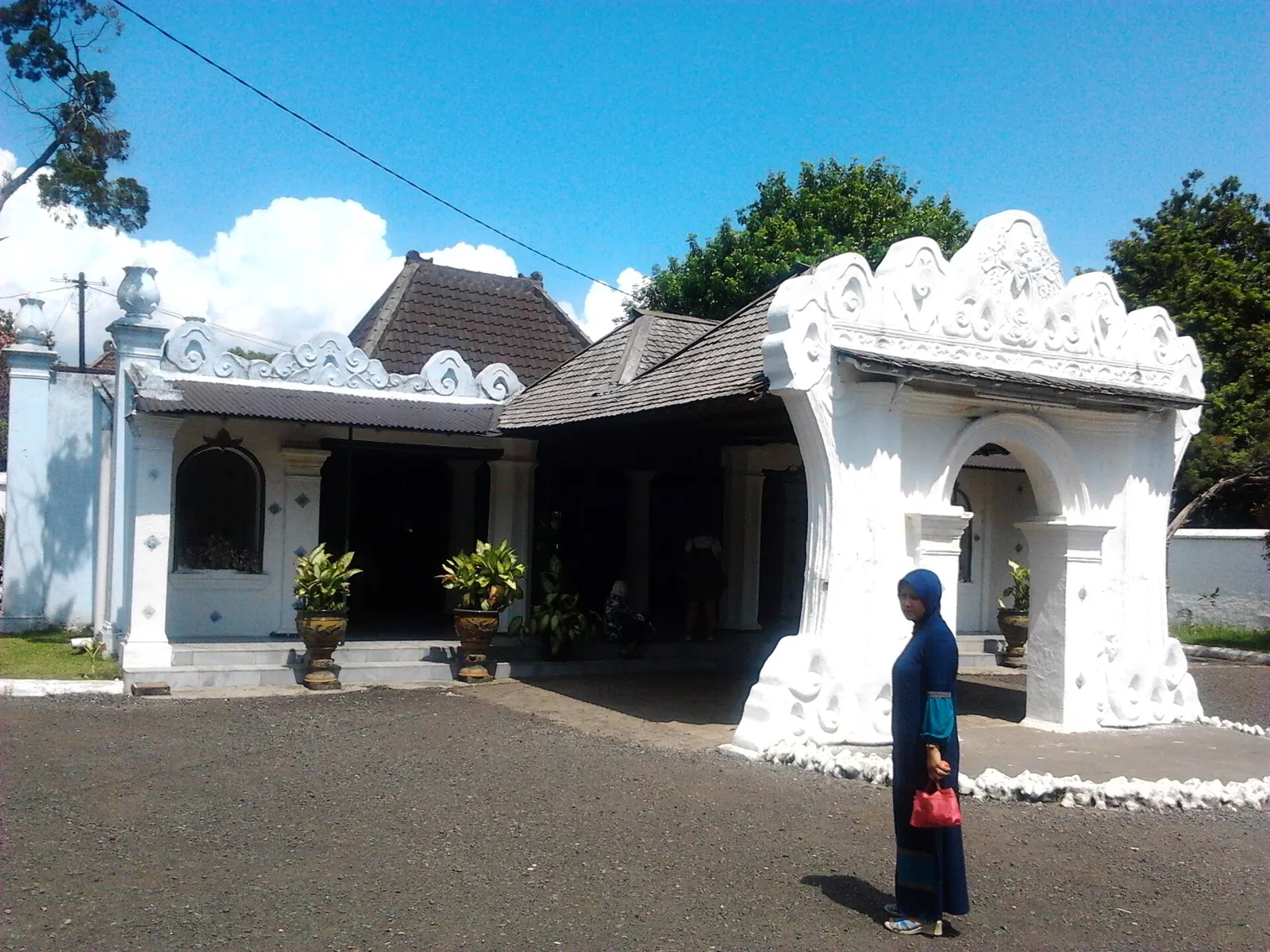
Keraton Kasepuhan in Lemahwungkuk is the one to see if you see only one. The tourism ministry dates it to 1529, calls it the oldest palace on Java and describes it as the largest and best kept of the four, on about 10 hectares. In the classic Javanese layout it faces a large green square, with the Sang Cipta Rasa Grand Mosque on the square's western side. Inside the white-walled compound are the throne room and reception halls; the palace's museum holds the royal heirlooms, and the ministry's list of Cirebon's historic places singles out the Singa Barong carriage. On the palace's southern edge, the Lawang Sanga building on the Krayan river was the kingdom's customs post, where goods arriving by water were taxed.
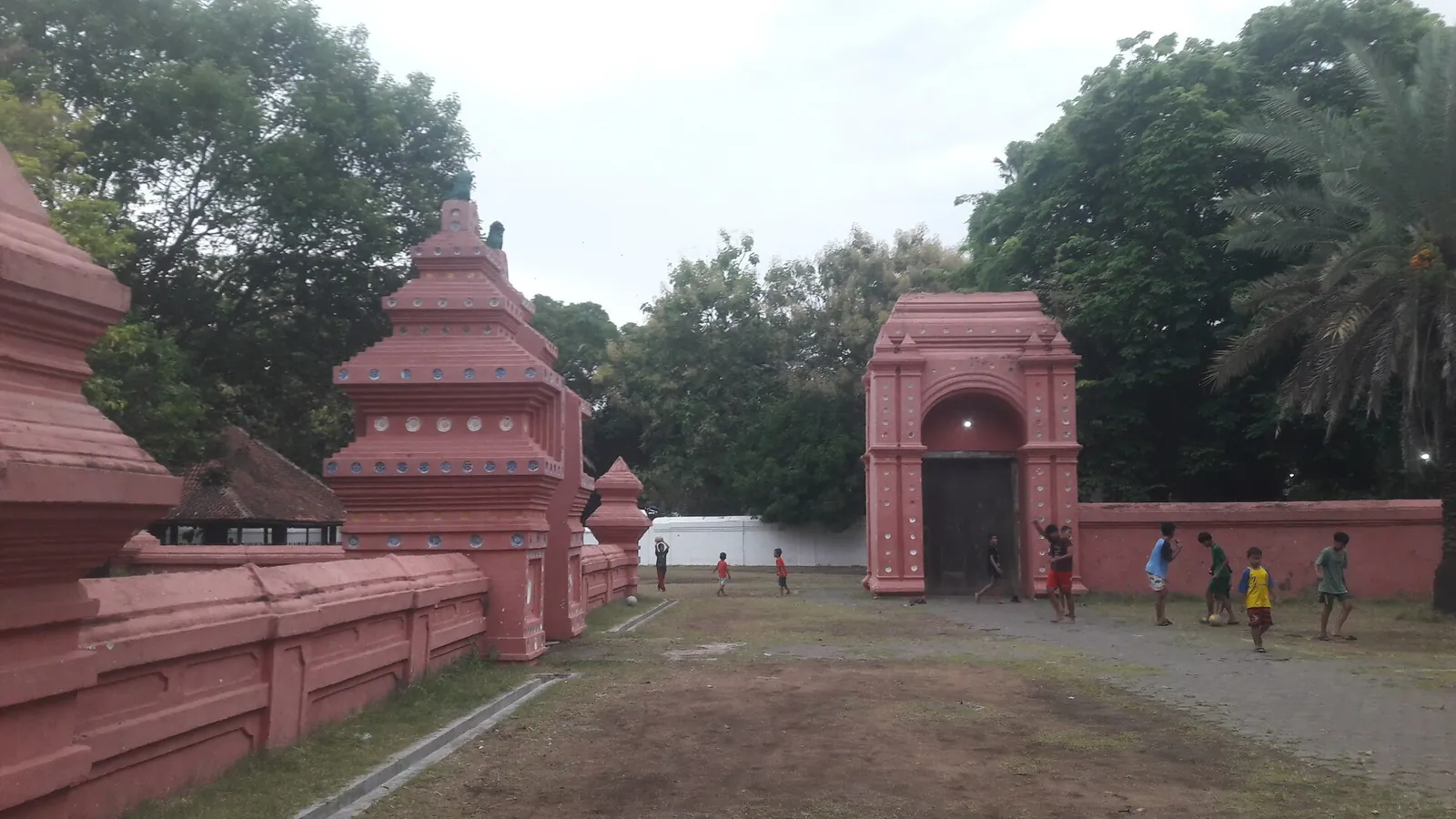
Keraton Kanoman, also in Lemahwungkuk on Jalan Kanoman, was founded in 1678 according to the ministry and is known for the antique plates set into its walls. Its heritage museum, opened to the public in 1997, displays gamelan, kris and spears, carvings and the royal carriages Paksi Naga Liman and Jempana. Keraton Kacirebonan on Jalan Pulasaren, dating from 1808, is smaller and quieter.
When we checked on 2026-10-03, the tourism ministry's guide to Cirebon's historic places listed Kasepuhan as open daily from 08:00 to 17:00 with tickets from IDR 20,000, and Kanoman and Kacirebonan as open daily from 08:00 to 16:00 with tickets from IDR 15,000. These are living royal households as well as museums: dress modestly, ask before photographing people or ceremonies, and confirm hours locally, especially around religious holidays.
Two short additions fit the same morning. Kelenteng Talang on Jalan Talang, a Chinese temple the ministry dates to the 15th century, was listed as open daily from 07:00 to 18:00 with free entry, and the streets of the old Chinese quarter and port area around it hold the colonial-era buildings of Cirebon's Kota Lama. The Topeng Cirebon Museum, opened in September 2024 in the 1927 city hall building, is the place to see Cirebon's mask-dance tradition if you cannot catch a performance.
Make time for the local food
What to eat and where to look
Empal gentong
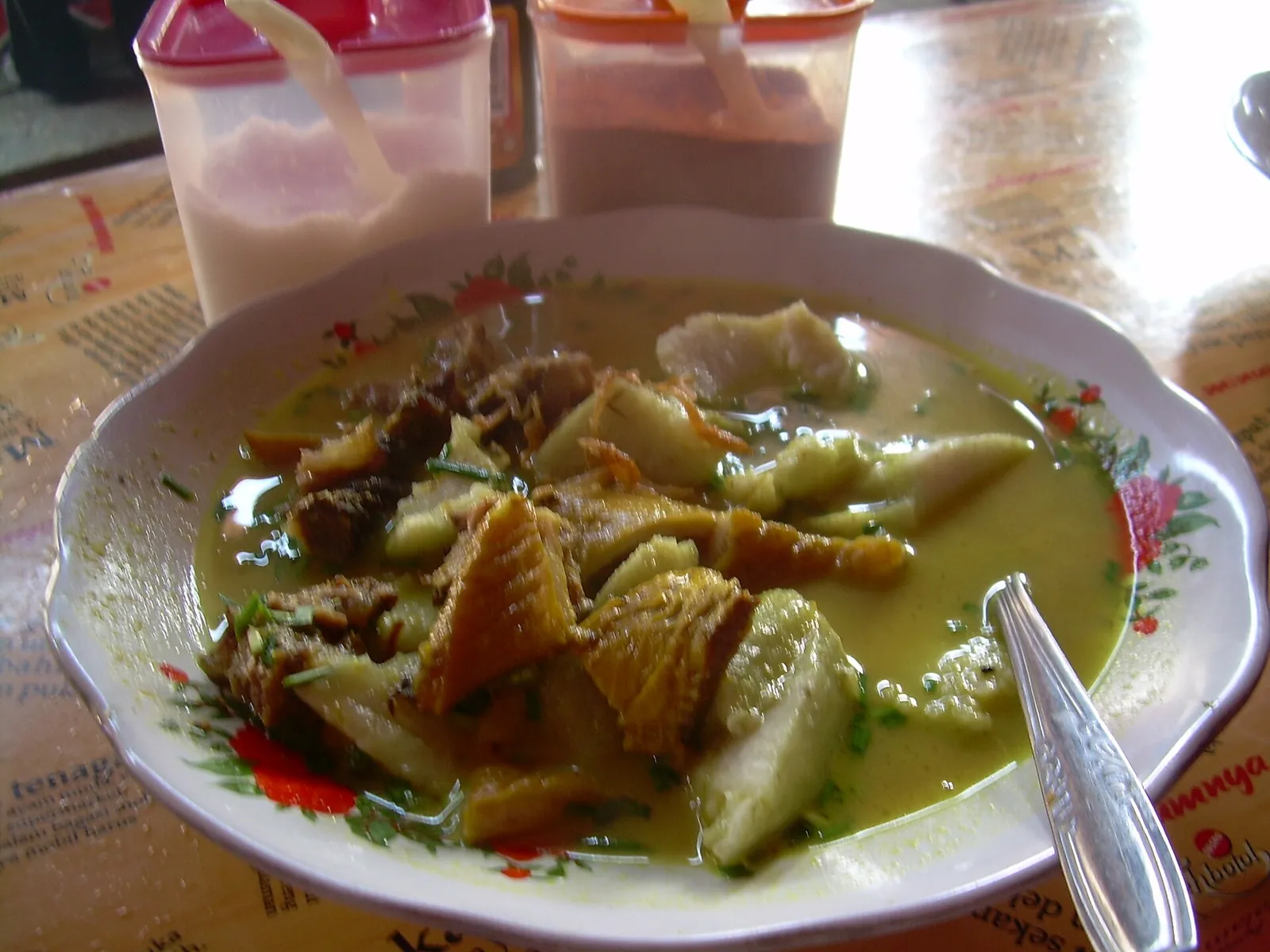
Cirebon's signature beef soup: meat (empal), tripe and intestine cooked in an earthenware pot (gentong) over a wood fire. The tourism ministry traces the dish to the 15th century and says the fire is still made with mango or tamarind wood.
- Where to look
- Specialist empal gentong eateries around the city and in the Trusmi area, which the ministry names as a place to try it.
- Fit it into your day
- A filling lunch; ask for meat only if you would rather avoid offal.
Usually includes tripe and intestine; chilli is often added at the table.
Nasi jamblang (sega jamblang)
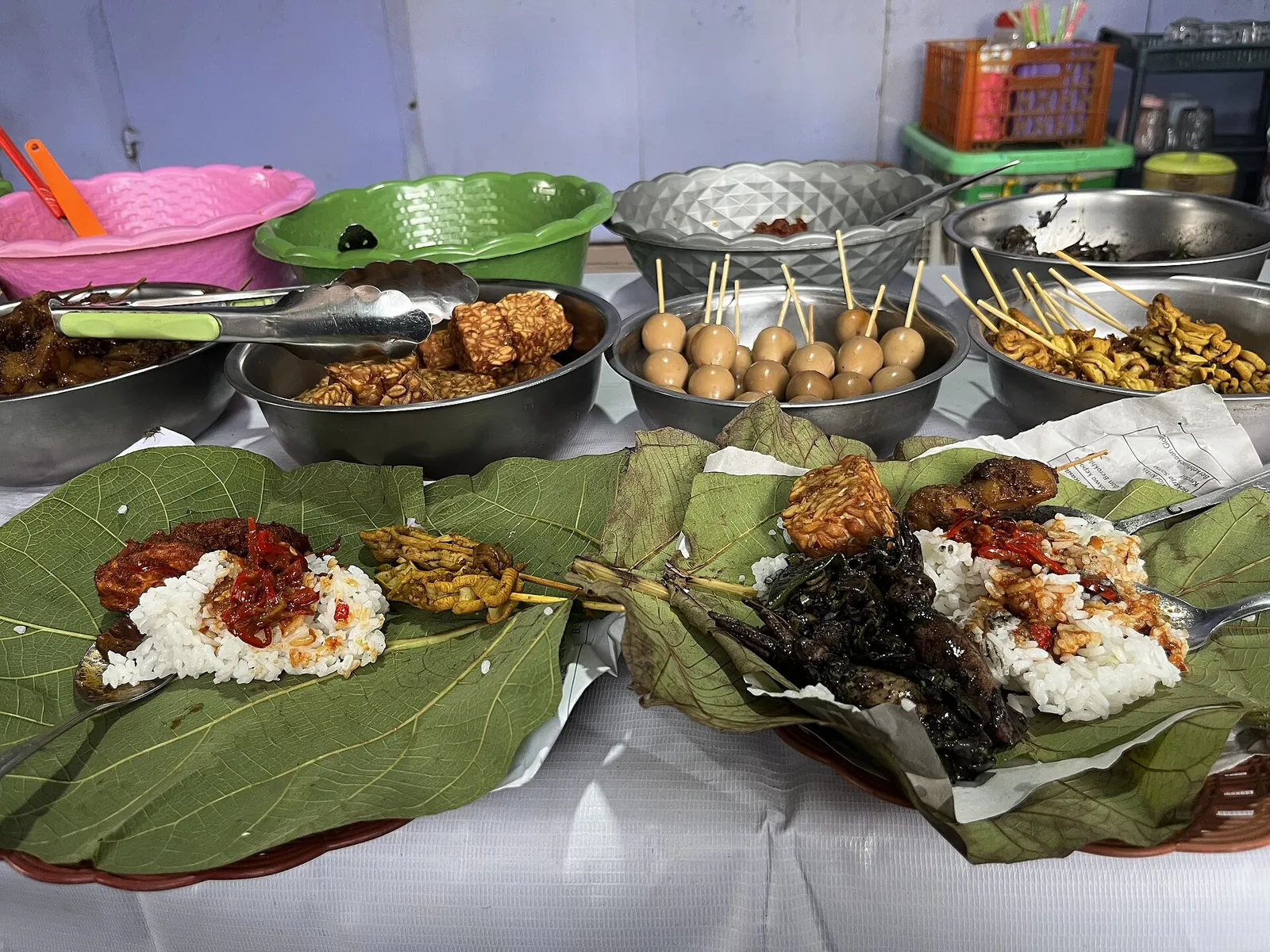
Rice served wrapped in teak leaves, which give it a faint aroma, with a spread of side dishes to choose from — fried tofu, sambal goreng and spiced beef semur among them. The ministry traces it to food served to forced labourers in the colonial era.
- Where to look
- Warung that lay out a spread of side dishes for you to choose from; the ministry notes that many now add modern touches.
- Fit it into your day
- Breakfast or lunch: take one or two parcels of rice and a few sides.
The side dishes are ready-cooked and sit out; a busy warung is the better bet.
Docang
A Cirebon breakfast of sliced lontong rice cake, bean sprouts and boiled cassava leaves under a warm, savoury sauce of oncom (fermented soybean or peanut cake), finished with crackers.
- Where to look
- Traditional warung in the morning; the ministry notes it is now also served in more modern restaurants.
- Fit it into your day
- An early breakfast before the palaces open.
Oncom has a strong fermented flavour; crackers often contain shrimp.
Tahu gejrot
Fried tofu cut into pieces and doused in a thin sour, sweet and spicy sauce pounded with garlic, shallots and chilli, traditionally served in a small stone mortar (cobek).
- Where to look
- Street vendors and snack stalls, including in the Trusmi area in the late afternoon.
- Fit it into your day
- A snack between batik shops or before dinner.
Raw garlic and chilli; ask for less chilli if needed.
Nasi lengko (sega lengko)
A simple north-coast plate of warm rice with fried tofu and tempeh under peanut sauce, with cucumber and chives — the ministry notes it is found in Cirebon, Tegal and nearby towns.
- Where to look
- Everyday warung across the city, mainly at breakfast and lunch.
- Fit it into your day
- A light, cheap lunch; it is vegetarian unless shrimp crackers or a meat side are added.
Contains peanuts; ask whether the sauce or crackers contain shrimp.
Mie koclok
Yellow noodles in a thick, savoury broth of coconut milk and chicken stock, topped with shredded chicken, fried shallots and spring onion.
- Where to look
- Mie koclok warung around the city, which the ministry describes as always busy.
- Fit it into your day
- A warm dinner after the palaces or Sunyaragi.
Rich and coconut-heavy; usually eaten with crackers or sambal on the side.
Sunyaragi: the coral-rock pleasure garden
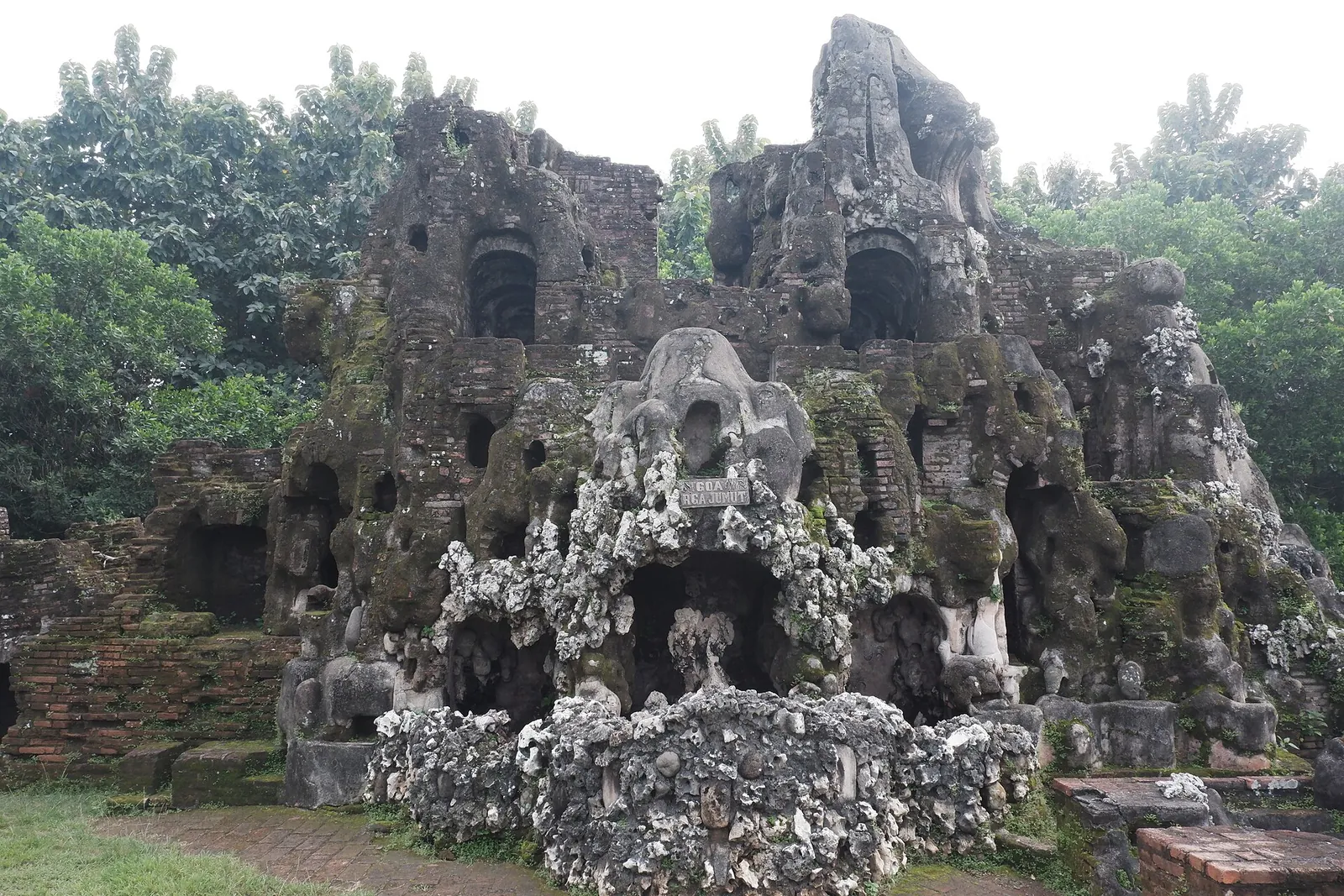
Taman Sari Gua Sunyaragi, on Jalan By Pass Brigjen Dharsono in Kesambi, is the strangest sight in town. It is not a natural cave: the ministry's history explains that the name uses *guha*, meaning built, and that the complex was a retreat and water garden for the sultan's family, built from coral and sandstone into grottoes, meditation rooms, pools and pavilions. The ministry's account dates its main construction to around 1703, with older origins and later additions, and records that Chinese craftsmen helped to build it — a small monument on the site commemorates them.
The complex is managed under the Keraton Kasepuhan foundation and covers about 3 hectares, so an hour or so is enough. Water once surrounded it — the family arrived by raft — and the Chinese plates that once decorated the Kaputren pool are gone, so come for the architecture rather than a manicured garden. When we checked on 2026-10-03, the ministry listed it as open daily from 08:00 to 17:00 with tickets from IDR 15,000.
Trusmi: batik village, workshops and an evening of food
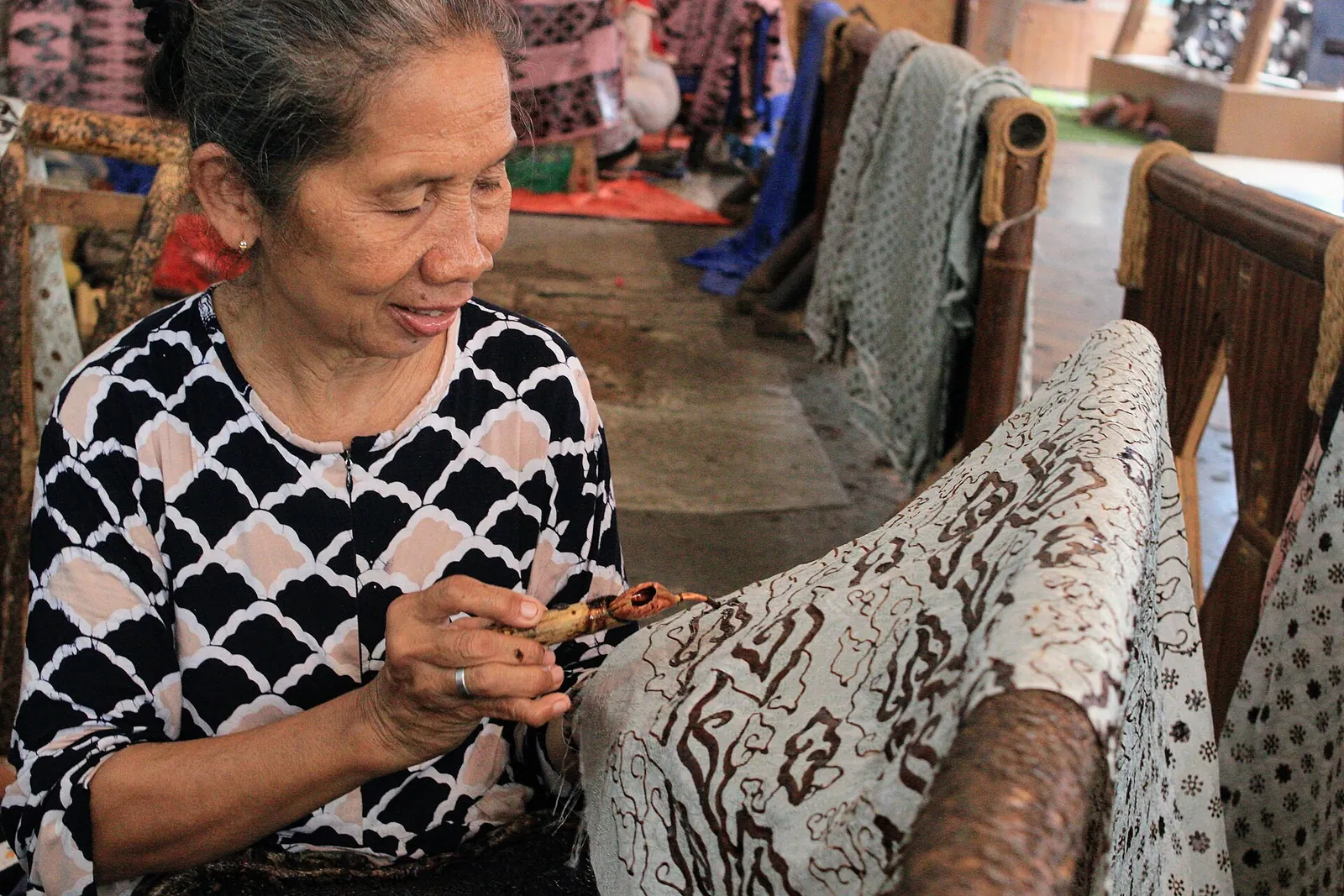
Cirebon's batik is usually called Batik Trusmi after the village where it is made, in Plered district about 4 km west of the city centre. The tourism ministry counts more than a thousand artisans, drawn from Trusmi and nearby villages such as Gamel, Kaliwulu, Wotgali and Kalitengah, and a 1.5-km main road lined with shops and showrooms. Unlike Solo or Pekalongan, Cirebon makes both royal-court and coastal batik; its best-known motif is Mega Mendung, the layered rain clouds, alongside Singa Barong, Wadasan rock forms and Paksi Naga Liman.
Know what you are buying. The ministry explains that batik tulis, drawn by hand with wax, takes around two to three months for a piece, while batik cap, stamped with copper blocks, takes two to three days, which is why prices range so widely. Several workshops let visitors try the canting and wax themselves; the large BT Batik Trusmi store on Jalan Trusmi Kulon, which the ministry lists as open daily from 08:00 to 21:00 when we checked, has a workshop area as well as clothes, fabric and local souvenirs such as prawn crackers and terasi shrimp paste. Becak riders near the village gate offer rides past the older buildings, including the 1935 batik cooperative.
Go in the late afternoon. The ministry notes that the Trusmi area turns into a food centre towards evening, with tahu gejrot and empal gentong the dishes to look for — so you can finish shopping and eat dinner in the same place before taking a taxi back to your hotel. The tomb of Ki Gede Trusmi, the follower of Sunan Gunung Jati credited with teaching batik here, is a respected site: visit quietly if at all.
Getting there and getting around
The train is the natural way in. The tourism ministry describes services from Jakarta's Gambir station and from Bandung station that end at Kejaksan, Cirebon's main station in the city centre; the city's second station is Prujakan. The same northern corridor continues east towards Central and East Java, which is why Cirebon works as an overnight break on the way from Jakarta into Central Java. Check current trains and book through KAI, the national rail operator.
By road, expect heavy container traffic on the coast highway. Within the city, the ministry recommends a taxi or hired car for getting between the sights, with small angkot minibuses as the local alternative. Kasepuhan, Kanoman and Kelenteng Talang are all in Lemahwungkuk, with Kacirebonan in Pekalipan, so they group naturally; Sunyaragi in Kesambi and Trusmi, out in Cirebon Regency, are separate rides.
A workable one-night plan
This is an editorial suggestion, not a timetable. Check opening hours for each place before you go.
- Arrival day: take a morning train, drop your bags near the station, have empal gentong or nasi jamblang for lunch, then go out to Trusmi in the afternoon for the workshops and shops, staying on for tahu gejrot and dinner.
- Next morning: docang or nasi lengko for breakfast, Keraton Kasepuhan at opening time, then Kanoman, and Kelenteng Talang or the mask museum if time allows.
- Afternoon: Sunyaragi in the cooler late afternoon, then the evening train onward — or a second night if you want a batik class or a slower pace.
Practical questions
Is Cirebon worth a stop between Jakarta and Central Java?
Yes, if you like history, textiles or regional food. The palaces, Sunyaragi and Trusmi fit into one night, and trains from Jakarta's Gambir station run to Cirebon, so it breaks a long rail journey east.
How many days do I need in Cirebon?
One night covers the Kasepuhan and Kanoman palaces, Sunyaragi and an afternoon in Trusmi. Stay two nights for a batik workshop, more shopping or a slower pace.
Where should I stay in Cirebon?
Near Cirebon (Kejaksan) station if you are travelling by train — it is central and several hotels are close to it. The old quarter of Lemahwungkuk is closer to the palaces, but check the exact location before booking.
How far is Trusmi from the city centre?
The tourism ministry puts the batik village about 4 km west of the centre, in Plered district of Cirebon Regency. Take a taxi or ride-hailing car; it is not a comfortable walk.
What is the difference between batik tulis and batik cap?
Batik tulis is drawn by hand with wax and, according to the ministry, takes around two to three months for a piece; batik cap is printed with copper stamps and takes two to three days. Price usually reflects the difference, so ask which you are looking at.
What should I eat in Cirebon?
Empal gentong (beef soup cooked in a clay pot), nasi jamblang (rice in teak leaves with side dishes), docang for breakfast, tahu gejrot as a snack and mie koclok for dinner.
Sources and checks before you travel
Reference sources for the version dated 3 October 2026. Confirm opening times, access, transport and conditions for your travel dates.
- Indonesia.travel: Cirebon ↗ — opens in a new tab
- Indonesia.travel: Kasepuhan Palace ↗ — opens in a new tab
- Indonesia.travel: 10 historic places in Cirebon ↗ — opens in a new tab
- Indonesia.travel: Kanoman Palace Heritage Building Museum ↗ — opens in a new tab
- Indonesia.travel: Museum Pusaka Keraton Kasepuhan ↗ — opens in a new tab
- Indonesia.travel: Topeng Cirebon Museum ↗ — opens in a new tab
- Indonesia.travel: Taman Sari Guha Sunyaragi ↗ — opens in a new tab
- Indonesia.travel: Trusmi Batik Village ↗ — opens in a new tab
- Indonesia.travel: The story behind Trusmi batik ↗ — opens in a new tab
- Indonesia.travel: Batik Trusmi activities ↗ — opens in a new tab
- Indonesia.travel: BT Batik Trusmi ↗ — opens in a new tab
- Indonesia.travel: Sega jamblang ↗ — opens in a new tab
- Indonesia.travel: Docang ↗ — opens in a new tab
- Indonesia.travel: Tahu gejrot ↗ — opens in a new tab
- Indonesia.travel: Sega lengko ↗ — opens in a new tab
- Indonesia.travel: Mie koclok ↗ — opens in a new tab
- Indonesia.travel: Grand Dian Boutique Hotel Cirebon ↗ — opens in a new tab
- Kertajati International Airport (BIJB): airport facilities ↗ — opens in a new tab
- Kertajati International Airport (BIJB): home page and flight board ↗ — opens in a new tab
- Indonesia.travel: Weather, climate and seasons ↗ — opens in a new tab
- KAI (Kereta Api Indonesia) ↗ — opens in a new tab
Photo credits
Keraton Kasepuhan, the oldest and largest of Cirebon's palaces, with its white Cirebon-style gateway
Photograph: Mokhammad Misdianto — opens in a new tab · CC BY-SA 3.0 — opens in a new tab
Changes: Resized and converted to WebP; displayed with responsive crops. · Original photograph and licence details ↗ — opens in a new tab
Taman Sari Gua Sunyaragi, the sultans' man-made coral-rock retreat in Kesambi
Photograph: Pijri Paijar — opens in a new tab · CC BY-SA 4.0 — opens in a new tab
Changes: Resized and converted to WebP; displayed with responsive crops. · Original photograph and licence details ↗ — opens in a new tab
Red-brick gateways in the Keraton Kanoman complex in Cirebon's old quarter
Photograph: LintasGiat — opens in a new tab · CC0 — opens in a new tab
Changes: Resized and converted to WebP; displayed with responsive crops. · Original photograph and licence details ↗ — opens in a new tab
Batik tulis being drawn with wax and a canting in a Trusmi workshop
Photograph: Ahaetulla — opens in a new tab · CC BY-SA 4.0 — opens in a new tab
Changes: Resized and converted to WebP; displayed with responsive crops. · Original photograph and licence details ↗ — opens in a new tab
Nasi jamblang: rice served on teak leaves with a choice of side dishes
Photograph: Muhammad Syahid — opens in a new tab · CC BY 4.0 — opens in a new tab
Changes: Resized and converted to WebP; displayed with responsive crops. · Original photograph and licence details ↗ — opens in a new tab
Empal gentong, Cirebon's beef and tripe soup cooked in a clay pot
Photograph: swara dila — opens in a new tab · CC BY 2.0 — opens in a new tab
Changes: Resized and converted to WebP; displayed with responsive crops. · Original photograph and licence details ↗ — opens in a new tab