Maluku and Papua · Highland Papua
Baliem Valley guide: Wamena flights, Dani culture, treks and safety
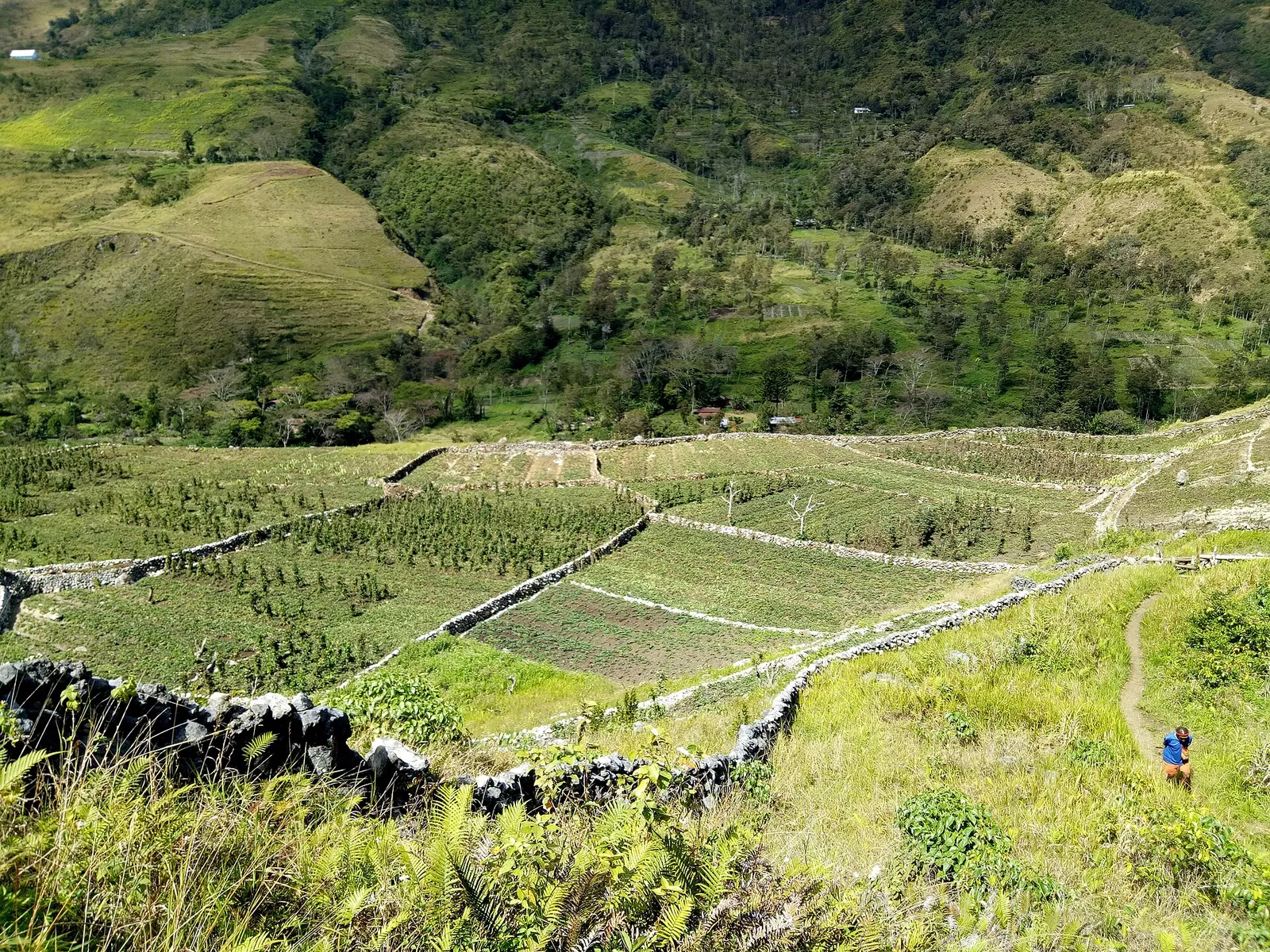
The Baliem Valley is a broad, cultivated highland basin in the middle of New Guinea, about 1,600 metres up and enclosed by steep mountain walls. No road links it with Jayapura on the coast, so every visit starts with a flight into Wamena, the valley's town. What you come for is the landscape of sweet-potato gardens and thatched honai compounds, the markets where people from the surrounding villages trade, and walks along the Baliem River with a local guide. Before any of that, read your government's current travel advice: Highland Papua is the province several governments single out for armed clashes.
- Suggested time
- 4–5 nights in Wamena; longer only for a guided multi-day trek
- Where to stay
- Wamena town, near the airport and the markets; village nights only with a guide who arranges them
- Season and timing
- Rain falls in every month. Long-term averages for Wamena show March and April as the wettest months and May to September as somewhat drier, with daytime highs around 25–26 °C and nights near 15 °C. The cultural festival is held in early August.
The short answer
Decide on safety first: when we checked on 2026-10-03, Canada advised against non-essential travel to all provinces of Indonesian Papua apart from Raja Ampat and Sorong, and the UK described the security situation in Highland Papua as unpredictable. If you still go, plan four or five nights in Wamena, reached only by air from Jayapura (Sentani). Sleep in Wamena town, use a local licensed guide or a packaged trip for the villages and any trek, register your route with the police on arrival, and time the visit for the early-August cultural festival only if you want crowds and the mock battles.
Wamena: the only way in, and the base for everything
The Ministry of Tourism is plain about access: the only way into the Baliem Valley is a flight to Wamena. Travellers usually fly to Jayapura first — from Jakarta, Makassar or Bali, according to the Ministry — and connect onward the same day. Wikivoyage puts the Jayapura–Wamena hop at about 40 minutes, and Wikipedia lists Wings Air, Trigana Air and Sriwijaya Air on the route. Wamena Airport sits about a kilometre from the town centre, so most hotels are a short ride from the terminal.
Stay in Wamena itself. Wikivoyage warns not to expect many lodging options, and most of them are in town, as are the grocery shops, the markets and the guides, and the Ministry notes that there are very few restaurants out in the valley. The Ministry names the restaurant of Hotel Baliem Pilamo on Jalan Trikora as a place to eat local dishes, which gives a sense of where the town's facilities cluster. Wikivoyage warns that almost everything is flown in, so prices for goods and fuel are higher than elsewhere in Indonesia: budget accordingly, and buy what you need for village days before you leave town.
Getting around the valley floor from Wamena is by rented car with a driver or by public bus, according to the Ministry. Wikivoyage adds minivans (bemo) on fixed routes and bicycle rickshaws in town; agree the price before you set off.
Markets, honai compounds and villages near Wamena
The most rewarding first day is in the markets. The Ministry describes Sinakma Market, near Wamena, as one of the main hubs of highland life: from early morning, sellers arrive from the villages with sweet potatoes, cassava leaves, taro, bananas, highland passion fruit, pork and chickens, carried in woven noken bags. Nayak Market has a similar mix and, the Ministry notes, some trade there is still done by barter. Women run much of the selling. Ask before photographing anyone; Wikivoyage gives the same advice.
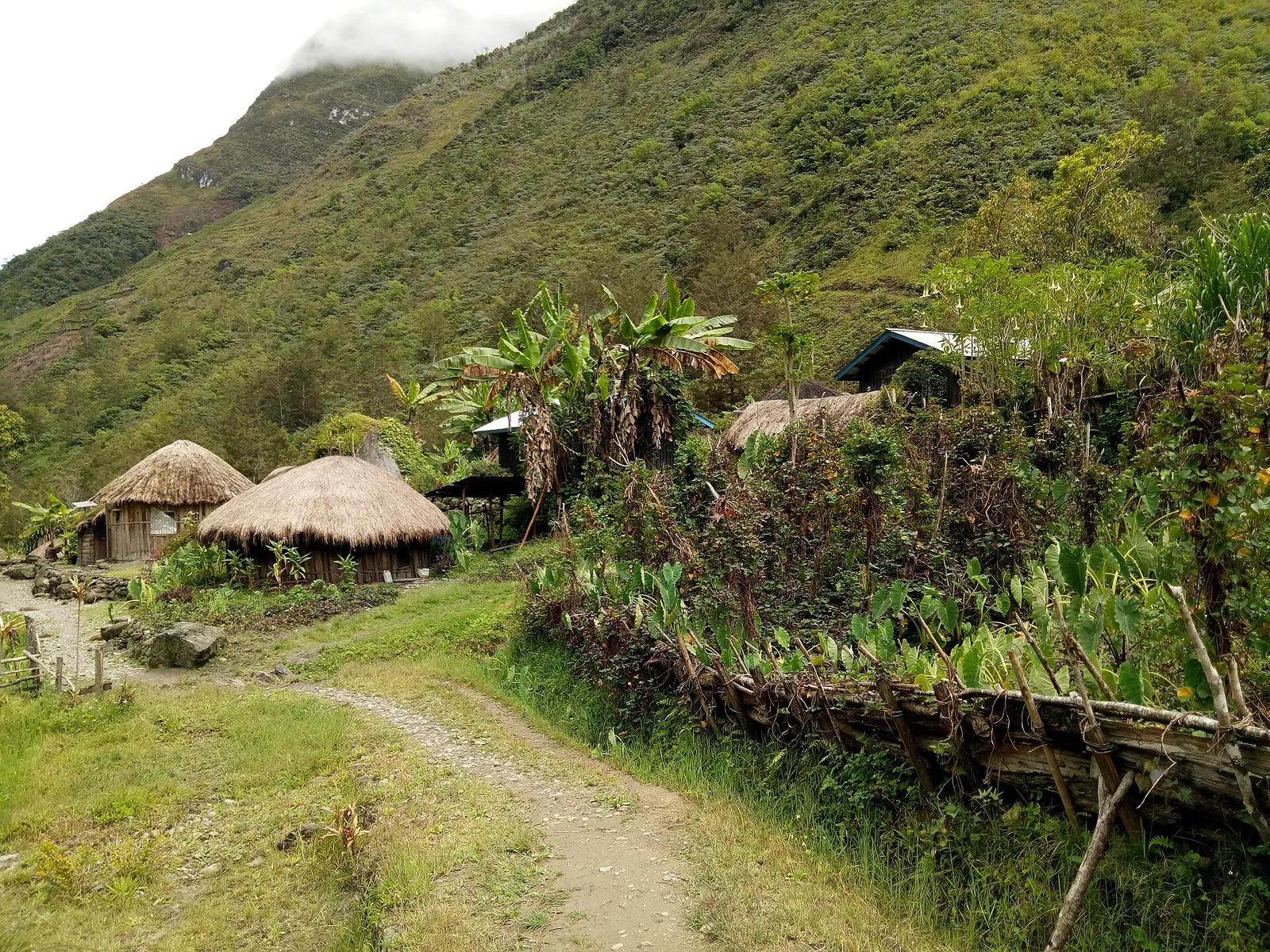
In the villages you will see honai, the round, thatched, windowless houses built to hold warmth at this altitude. The Ministry explains that the men's house (honai), the women's and children's house (ebei) and the pig shelter (wamai) are separate buildings, which is why compounds look like small clusters rather than single homes. The noken bag, woven from bark and plant fibre, has been on UNESCO's Intangible Cultural Heritage list since 2012 and is the souvenir with the most meaning here.
For a short outing, the Ministry suggests Wauma village, reachable by car from Wamena, and Aikima, where a mummified village chief it describes as about 250 years old is kept; a two-hour climb from the area leads to salt springs where Dani women have made salt by hand for centuries. The Ministry's festival article mentions preserved mummies in Kurulu, Assologaima and Kurima districts. Wikivoyage notes that a fee may be asked if you photograph a mummy with its keepers: settle this through your guide before you raise a camera.
Make time for the local food
What to eat and where to look
Hipere (highland sweet potato)
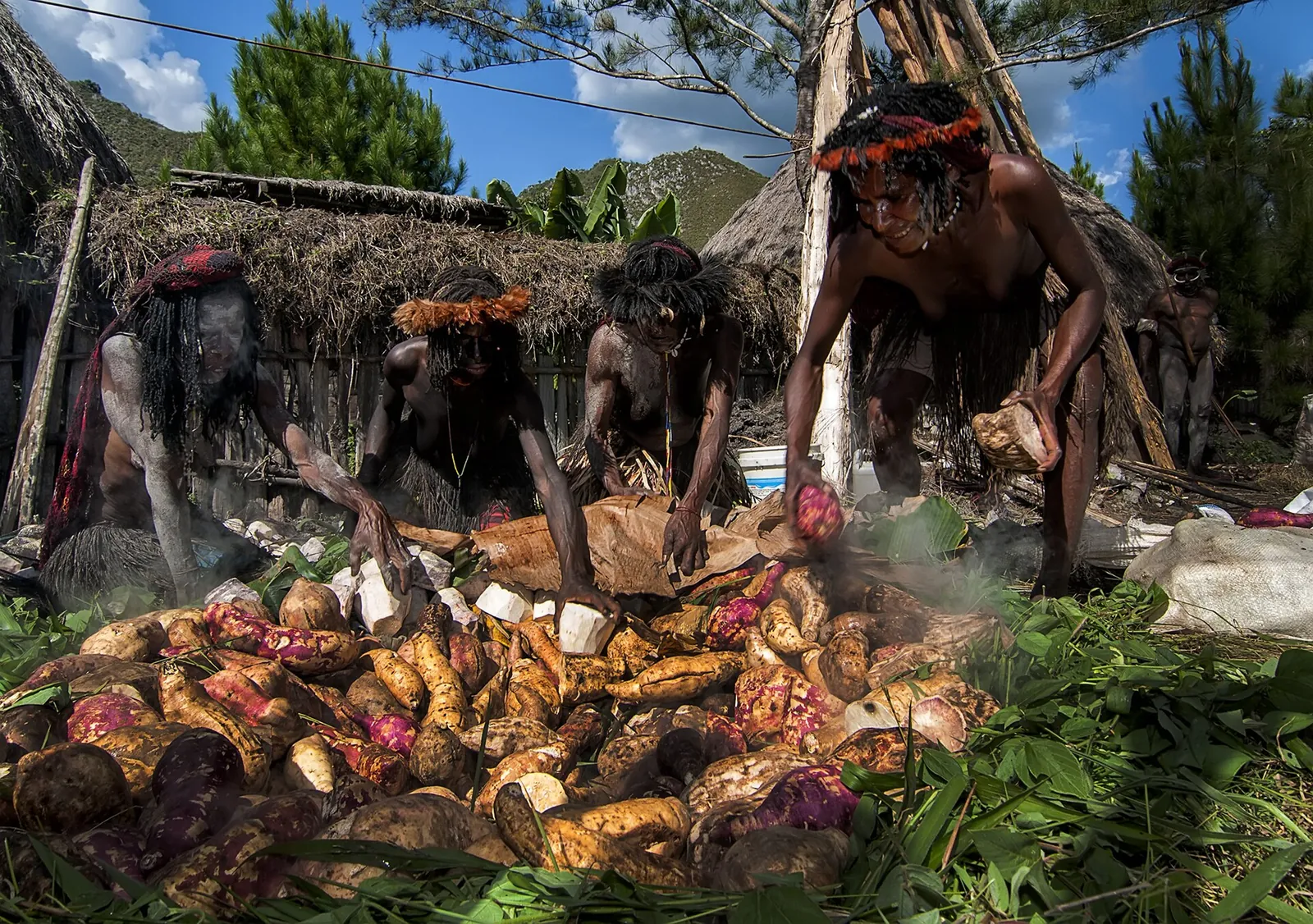
Sweet potato, called hipere or petatas, is the staple of the highlands, eaten in place of rice. The Ministry of Tourism calls Papua one of the world's largest centres of sweet-potato diversity, with purple, yellow and white varieties that are roasted or cooked in the bakar batu earth oven.
- Where to look
- Heaped on the ground at Sinakma and Nayak markets in the morning, and in the meals a guide arranges in villages.
- Fit it into your day
- A filling lunch on a walking day, alongside the snacks you bought in Wamena.
Village meals are simple and depend on what is harvested; carry your own food for treks, as the Ministry advises.
Bakar batu (stone-oven feast)
Pork and sweet potatoes wrapped in banana leaves and cooked slowly in a pit layered with stones heated on a fire. The Ministry describes it as a communal event lasting eight to ten hours, prepared for celebrations and shared by the whole community.
- Where to look
- At the August festival, where it is part of the programme, or at a village feast your guide has arranged with the community.
- Fit it into your day
- Treat it as the main event of a day, not a quick meal.
Usually built around pork; it is a community occasion, so join only when you have been invited or it has been arranged.
Udang selingkuh (highland crayfish)
Freshwater crayfish with large, crab-like claws, caught in the Baliem River and highland lakes such as Lake Habema. The Ministry describes firm, sweet meat served with oyster, Padang or sweet-and-sour sauce, rice and stir-fried water spinach.
- Where to look
- Restaurants in Wamena; the Ministry recommends the restaurant at Hotel Baliem Pilamo on Jalan Trikora.
- Fit it into your day
- A dinner in town after a day in the villages.
Priced by size: when we checked on 2026-10-03, the Ministry put a typical serving at IDR 100,000 to 300,000. Confirm the price before ordering. Contains shellfish.
Highland passion fruit and market fruit
Bananas, papayas and highland passion fruit come straight from village gardens to the market, according to the Ministry's description of Sinakma Market.
- Where to look
- Sinakma and Nayak markets in the morning.
- Fit it into your day
- Buy fruit for the trail or for breakfast the next day.
Wikivoyage advises that Wamena's tap water is not safe to drink unless boiled and filtered; wash fruit with treated water.
Trekking beyond the road: guided, provisioned and registered
The Ministry describes trekking as the way to see the Dani's daily life, markets and ceremonies, and recommends a packaged tour from an operator rather than improvising. Its practical advice is specific: bring your own meals and snacks, bought at grocery stores in Wamena, because there is little food for sale along the trails; a guide can arrange simple meals with villagers. If you intend to walk without an operator, the Ministry advises reporting your itinerary to the police when you arrive at the airport.
Wikivoyage's traveller-written guide describes trails with long climbs out of river valleys and over passes, many of them climbing above 3,000 metres from the valley floor. Landslides regularly cut sections of trail in the wet season, there are no signs, and little English is spoken in the villages, which is why it recommends a guide for anything longer than a day or two. Given the current security picture, we would not walk any route without a local guide who knows the day's situation.
Lake Habema, which the Ministry calls Indonesia's highest lake and Wikivoyage places at about 3,300 metres, is the classic high-altitude excursion from Wamena. Whether a particular route is open, and safe, is something only a local operator can tell you on the day.
The Baliem Valley Cultural Festival in August
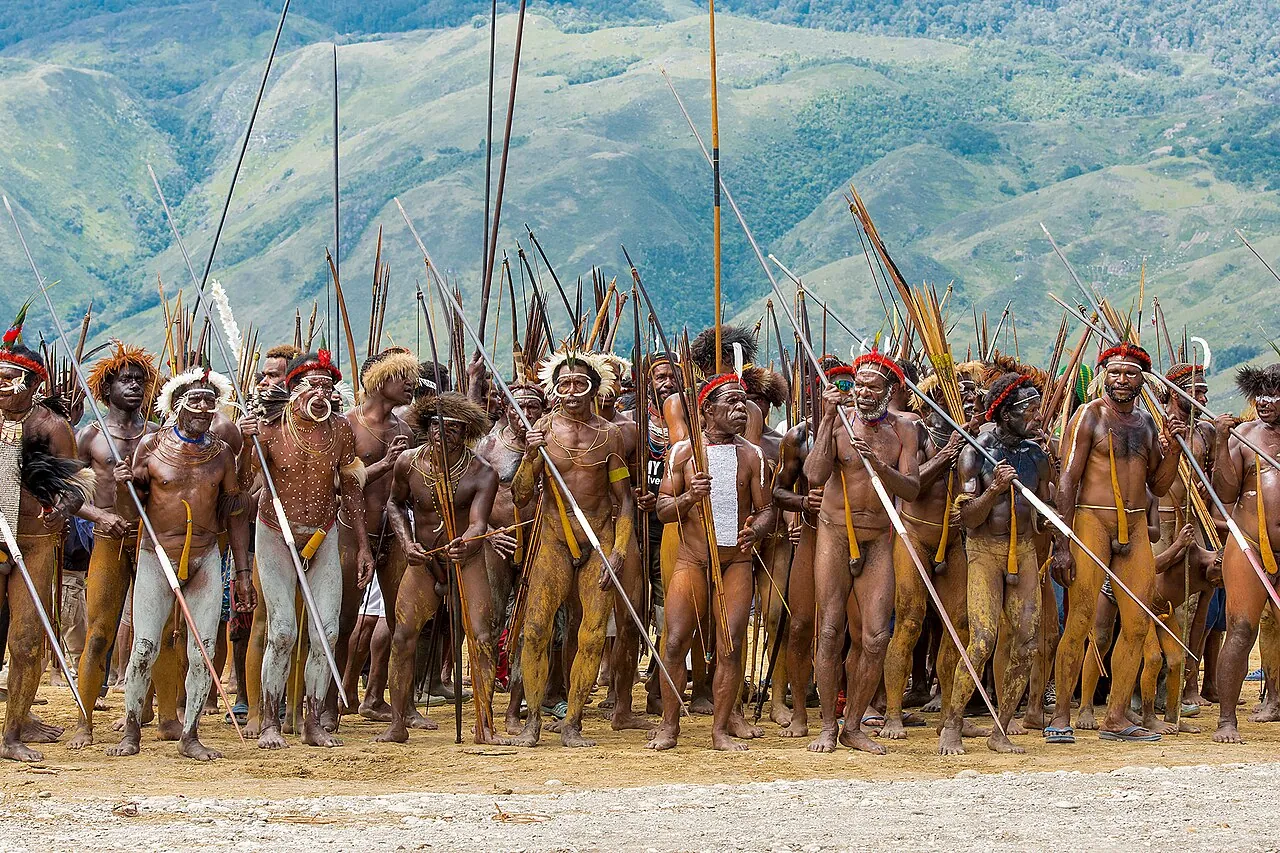
The festival is the valley's best-known event and the reason many people choose August. The Ministry's 2018 article describes groups of warriors from the Dani, Lani and Yali staging choreographed mock battles with long spears and bows — a display of skill and regalia, not real fighting — along with dances, pikon music, a pig race, archery and spear-throwing contests, the traditional games sikoko and puradan, and cooking demonstrations.
When we checked on 2026-10-03, the Ministry's event calendar listed the 34th festival in Wamena on 7–8 August 2026, free to attend, with traditional dances, the youth games, pig racing, bakar batu and a closing carnival with dancers from Papua New Guinea. The 2025 edition ran from 7 to 9 August, and the 2018 edition from 8 to 10 August, so early August is the pattern — but dates and the venue move, so wait for the official listing before booking flights.
Expect the busiest flights and fullest hotels of the year around the festival. Follow the Ministry's advice to ask before photographing participants, and keep the crowds in mind given the advisories' warnings about large gatherings.
Advisories, permits and what can change at short notice
When we checked on 2026-10-03, the UK Foreign Office (page updated 18 September 2026) said armed separatist groups and Indonesian security forces clash regularly, mainly in Highland Papua and Central Papua; that clashes have killed civilians, including foreign nationals; that separatists have attacked commercial aircraft serving small highland airfields; and that demonstrations can turn violent at short notice, sometimes with the internet switched off. It notes that hospital facilities in the region are limited and that patients needing emergency care are likely to be evacuated to Darwin in Australia.
Canada's advice, last updated 10 September 2026, tells travellers to avoid non-essential travel to all provinces of Indonesian Papua except the Raja Ampat islands and the city of Sorong, citing violent incidents, threats against foreigners and the risk of kidnapping. It also states that you must obtain a permit to travel to Indonesian Papua and that the rules can change at any time. Wikivoyage describes this as the surat jalan, a police travel permit that lists the places you plan to visit. Ask your operator to arrange it and the police registration, and carry copies.
Read your own government's advice as well, and check whether your travel insurance covers a destination your government advises against; many policies do not. If the situation changes before you travel, Raja Ampat offers a very different, coastal side of Papua that is outside Canada's warning.
- Before booking: read current advisories, confirm insurance cover, choose a licensed local operator.
- On arrival: register with the police, keep copies of your passport and travel permit.
- Every day: ask your guide about local tensions before leaving Wamena; avoid demonstrations and large rallies.
- Don't bring alcohol: Wikivoyage reports that it is illegal and unavailable in the valley.
A workable four-night plan
This is an editorial suggestion, not a timetable. Build in a spare day, because highland flights depend on the weather.
- Day 1 — Fly in: Jayapura to Wamena, check in, meet your guide, register with the police and buy trail food in town.
- Day 2 — Markets and Wauma: Sinakma Market early, then Wauma village by car.
- Day 3 — Aikima and the salt springs: the mummy at Aikima, with the walk to the salt springs if you are fit.
- Day 4 — A guided walk or Lake Habema: a day hike between villages, or the high road to the lake if your operator confirms it.
- Day 5 — Fly out: an early flight to Jayapura, with a buffer before any onward connection.
Practical questions
Is it safe to visit the Baliem Valley now?
Several governments advise caution or against travel. When we checked on 2026-10-03, Canada advised against non-essential travel to all of Indonesian Papua except Raja Ampat and Sorong, and the UK described Highland Papua's security situation as unpredictable, with regular armed clashes. Read your own government's advice and check your insurance before deciding.
How do I get to Wamena?
Only by air. Fly to Jayapura (Sentani), then take a domestic flight to Wamena Airport (WMX); Wikivoyage puts the flight at about 40 minutes. There is no road from Jayapura.
Do I need a permit for the Baliem Valley?
Canada's travel advice states that a permit is required to travel to Indonesian Papua, and the Ministry of Tourism advises reporting your itinerary to the police on arrival if you plan to trek. Let your operator arrange the permit and registration, and confirm the current rules before you travel, because they change.
When is the Baliem Valley Festival?
In early August. The Ministry of Tourism listed the 2026 festival for 7–8 August and the 2025 festival for 7–9 August. Check the Ministry's event calendar for next year's dates before booking.
Do I need a guide for trekking?
In practice, yes. The Ministry recommends a packaged tour, Wikivoyage advises a guide for anything longer than a day or two because trails are unsigned and little English is spoken, and the security situation makes local knowledge essential.
How many days should I spend in the Baliem Valley?
Four or five nights in Wamena give you the markets, a few villages and a day walk, with a spare day for weather-dependent flights. Multi-day treks need more time and a guide.
Sources and checks before you travel
Reference sources for the version dated 3 October 2026. Confirm opening times, access, transport and conditions for your travel dates.
- Indonesia Travel (Ministry of Tourism): Baliem Valley ↗ — opens in a new tab
- Indonesia Travel (Ministry of Tourism): Baliem Valley Festival, ancient tribe's mock war experience ↗ — opens in a new tab
- Indonesia Travel (Ministry of Tourism): Festival Budaya Lembah Baliem 2026 (event listing) ↗ — opens in a new tab
- Indonesia Travel (Ministry of Tourism): The Baliem Valley Cultural Festival 2025 (event listing) ↗ — opens in a new tab
- Indonesia Travel (Ministry of Tourism): Baliem Valley Festival 2018: into the heart of Papua ↗ — opens in a new tab
- Indonesia Travel (Ministry of Tourism): Pasar Sinakmat (Sinakma Market) ↗ — opens in a new tab
- Indonesia Travel (Ministry of Tourism): Pasar Nayak (Nayak Market) ↗ — opens in a new tab
- Indonesia Travel (Ministry of Tourism): Honai traditional house (Highland Papua) ↗ — opens in a new tab
- Indonesia Travel (Ministry of Tourism): Noken cloth ↗ — opens in a new tab
- Indonesia Travel (Ministry of Tourism): Bakar batu tradition ↗ — opens in a new tab
- Indonesia Travel (Ministry of Tourism): Udang selingkuh ↗ — opens in a new tab
- Indonesia Travel (Ministry of Tourism): Ubi jalar Papua (petatas) ↗ — opens in a new tab
- GOV.UK (FCDO): Indonesia travel advice, regional risks ↗ — opens in a new tab
- Government of Canada: Indonesia travel advice ↗ — opens in a new tab
- Wikipedia: Wamena Airport ↗ — opens in a new tab
- Wikipedia: Wamena ↗ — opens in a new tab
- Wikipedia: Baliem Valley ↗ — opens in a new tab
- Wikivoyage: Baliem Valley ↗ — opens in a new tab
- Wikivoyage: Western New Guinea ↗ — opens in a new tab
Does this experience fit your route?
Most visits to the Baliem Valley are arranged with a local operator. Whoever you book with, check what is included — flights, permits, guide and meals — and how they respond if travel advice changes.
Browse relevant experiences on Viator ↗ — opens in a new tabAffiliate link · Book with ViatorPhoto credits
Gardens divided by stone walls on the slopes of the Baliem Valley, Highland Papua.
Photograph: Lasthib — opens in a new tab · CC BY-SA 4.0 — opens in a new tab
Changes: Resized and converted to WebP; displayed with responsive crops. · Original photograph and licence details ↗ — opens in a new tab
Honai houses in Yuarima village, on the Baliem River trail south of Wamena.
Photograph: Lasthib — opens in a new tab · CC BY-SA 4.0 — opens in a new tab
Changes: Resized and converted to WebP; displayed with responsive crops. · Original photograph and licence details ↗ — opens in a new tab
Warriors gathered with spears at the Baliem Valley Festival near Wamena, August 2016.
Photograph: Udomunich — opens in a new tab · CC BY-SA 4.0 — opens in a new tab
Changes: Resized and converted to WebP; displayed with responsive crops. · Original photograph and licence details ↗ — opens in a new tab
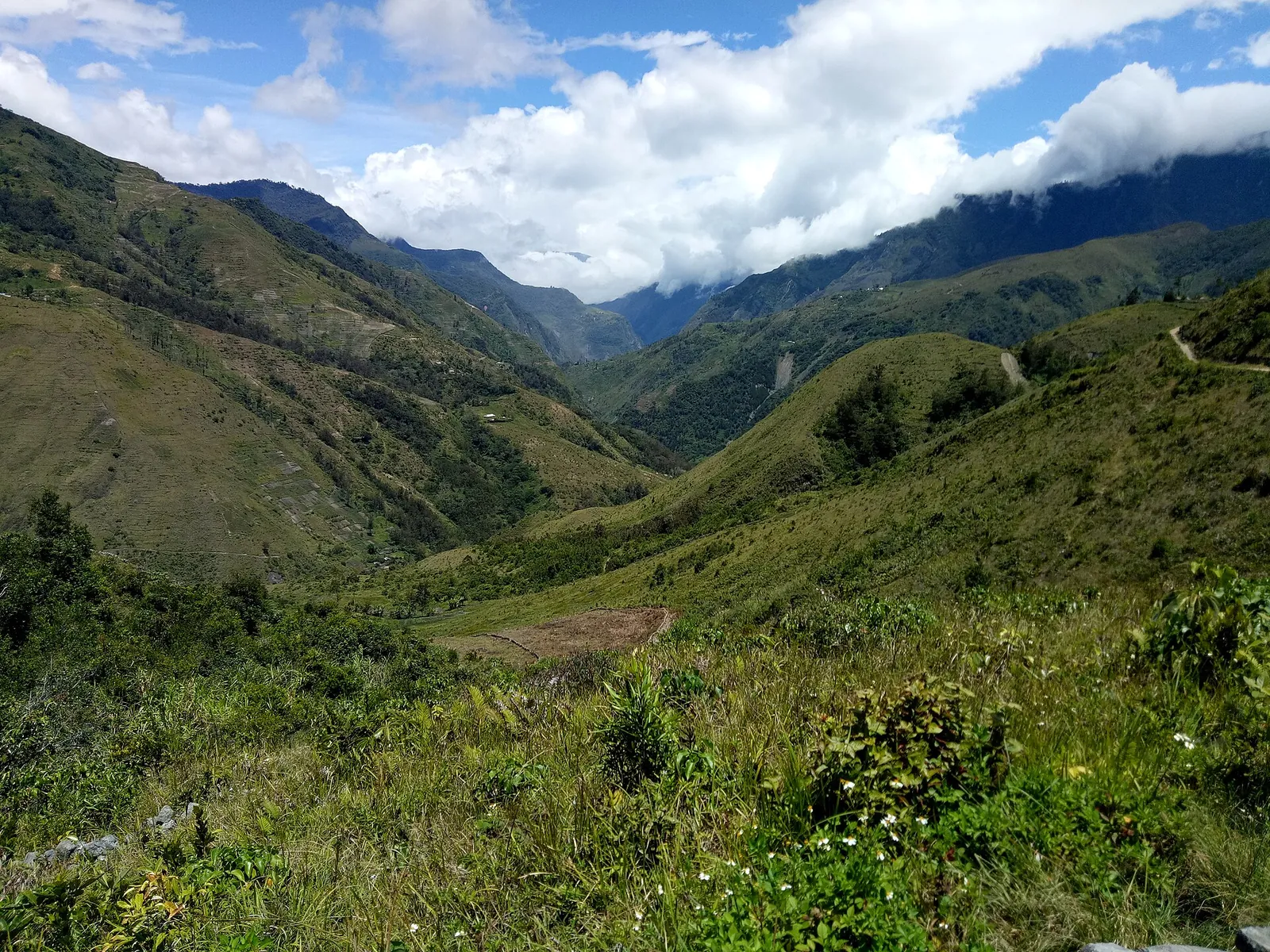
Steep slopes and cloud over the Baliem Valley, Highland Papua.
Photograph: Lasthib — opens in a new tab · CC BY-SA 4.0 — opens in a new tab
Changes: Resized and converted to WebP; displayed with responsive crops. · Original photograph and licence details ↗ — opens in a new tab
Sweet potatoes from a bakar batu stone oven, prepared by Dani men in Highland Papua.
Photograph: Keenan63 — opens in a new tab · CC BY-SA 4.0 — opens in a new tab
Changes: Resized and converted to WebP; displayed with responsive crops. · Original photograph and licence details ↗ — opens in a new tab