Maluku and Papua · Maluku
Ambon travel guide: Ambon Bay diving, old forts and the way to Banda
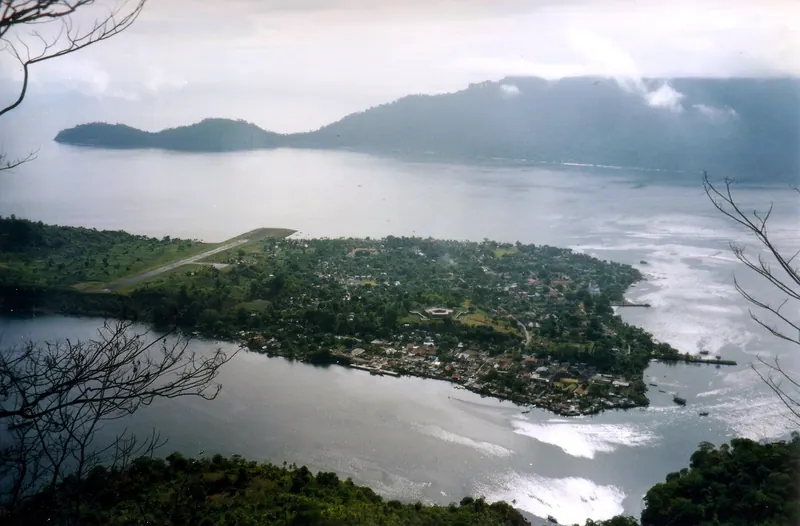
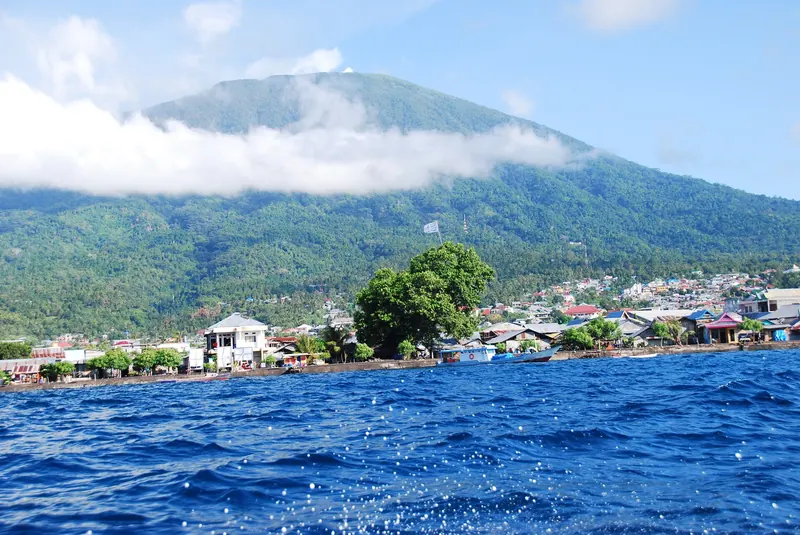
It is easy to treat Ambon as a one-night stop on the way to the Banda Islands. If you dive or care about history, give it longer. Ambon is the capital of Maluku province, an island cut deep by Ambon Bay, and, as the Ministry of Tourism notes, one of the earliest places in Indonesia to be occupied by colonial powers, in the era of the spice trade. The city is busy and has few sights in the usual sense. Its draws are the critter diving in the bay, a 16th-century fort that is still an army headquarters, a provincial museum, Hila's Dutch fort and old mosque on the north coast, and a food culture built on sago, fish and sharp, fresh sambal. In 2019 UNESCO named Ambon a Creative City of Music, and its description stresses that music here is part of everyday life, from church choirs to brass bands.
- Suggested time
- 2–4 nights (add 1–2 days for diving or as a buffer for Banda)
- Where to stay
- Ambon city centre (Sirimau, around Lapangan Merdeka) or the east coast at Natsepa and Tulehu
- Season and timing
- Ambon has no real dry season. The climate data cited by Wikipedia puts the wettest month in June (about 638 mm of rain) and the driest in November (about 114 mm), with temperatures close to 25–27 °C all year. Expect the heaviest rain in the middle of the year. If you are continuing to Banda, leave spare days in any season.
The short answer
Give Ambon two to four nights. Two are enough for one day in the city (Siwalima Museum, the area around Fort Victoria, the Pattimura Monument, the World Peace Gong and a fish dinner) and one day on the east coast at Natsepa and Liang beaches. Divers should add one or two days in Ambon Bay. Sleep in the city centre, in Sirimau district near Lapangan Merdeka, if you want restaurants and transport. Sleep on the Natsepa–Tulehu side of the island if you want to be by the sea and close to the eastern harbour for boats to Pombo and Banda. Hire a car with a driver or use ojek (motorbike taxis) for the outlying sights, because the beaches and Hila are 18 to 42 km from the centre. If Banda is the goal, plan Ambon as the buffer around it: the ministry warns that flights and boats to Banda are often cancelled.
How Ambon works: the bay, the bridge and getting around
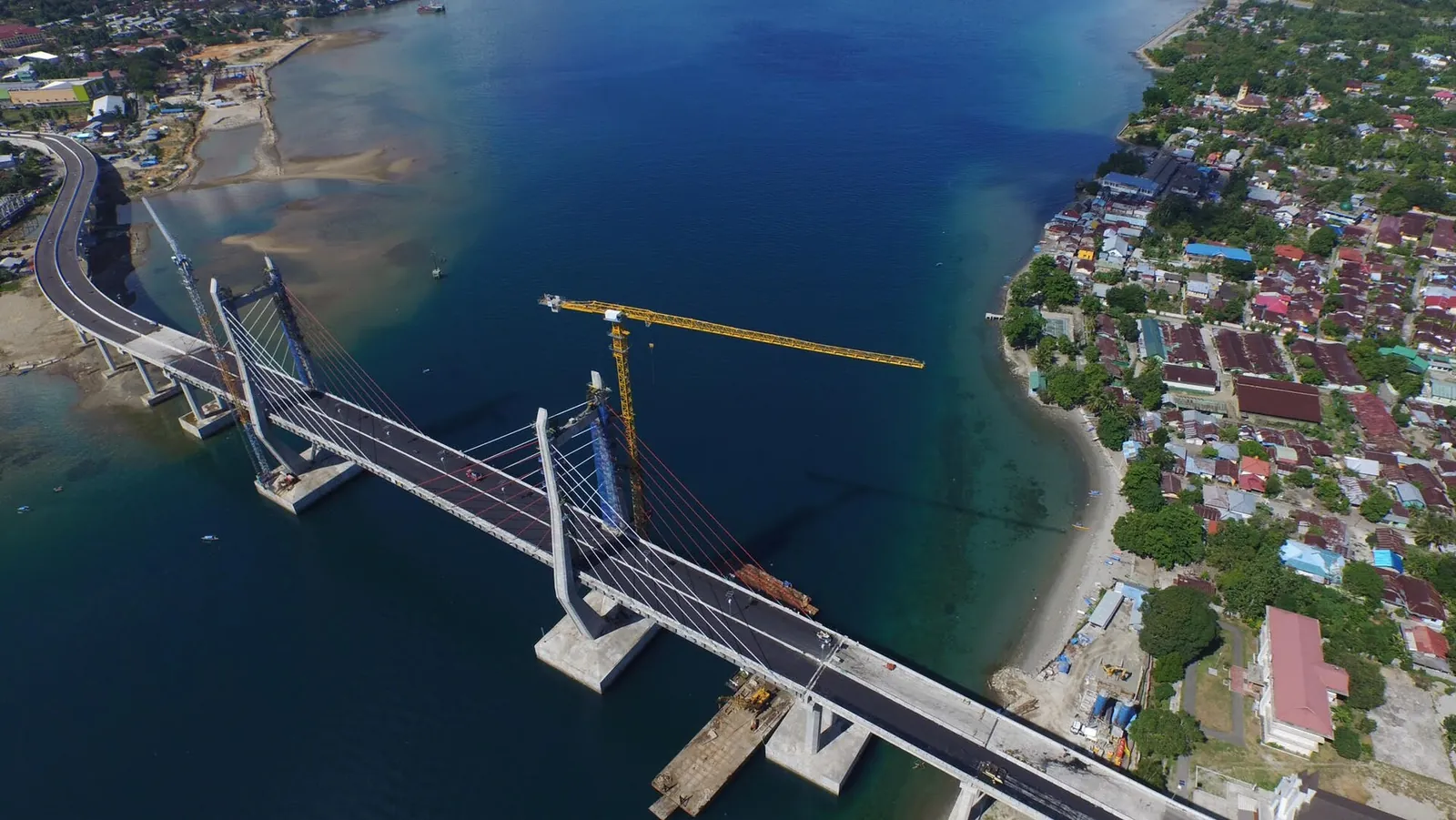
Ambon Bay cuts deep into the island. The city centre is on its south side. Pattimura Airport (AMQ) is on the northern shore at Laha, about 38 km west of the centre by Wikipedia's figure; the Ministry of Tourism says about 36 km. Since the Merah Putih (Red and White) Bridge opened across the inner bay, the drive has become much shorter. The ministry gives its length as 1,140 metres, linking Poka on the north side with Galala on the south side. It describes it as the longest bridge in eastern Indonesia and suggests crossing it at sunset.
In the city, the ministry suggests becak (cycle rickshaws) for short trips downtown, bemo (local minibuses, called angkot) and ojek (motorbike taxis). There are also speedboats across Ambon Bay from the pier where the ferries from the other side dock. Wikivoyage adds that the downtown area is very easy to walk and that Gojek's app-based ojek service operates here. For a day on the coast, a car with a driver is far simpler than linking minibuses.
It helps to know the island's recent past. Wikivoyage describes clashes between Muslims and Christians that broke out after the fall of Suharto in 1998 and killed thousands of people, until a government-mediated agreement in 2002. It reports that the city is much more peaceful as of 2024, and the World Peace Gong in the centre, which the ministry describes as a symbol of post-conflict reconciliation, is a good place to understand that history. According to the 2023 figures cited by Wikipedia, the city is about 57% Protestant and 40% Muslim, so you will see churches and mosques side by side. The ministry describes the Al-Fatah Grand Mosque, built in 1979, as the largest mosque in Maluku.
- City centre (Sirimau): hotels, restaurants, the museum and the monuments; the base for most short stays.
- East coast (Natsepa, Liang, Tulehu): beaches, the hot springs and Tulehu harbour for boats to Pombo and Banda.
- North coast (Hila and Kaitetu): Fort Amsterdam and the Wapauwe mosque, a half-day trip.
- Bay and south-west coast: dive sites, Pintu Kota beach and Ruhatu hill.
Spices and empires: Fort Victoria, Siwalima Museum and the city's monuments
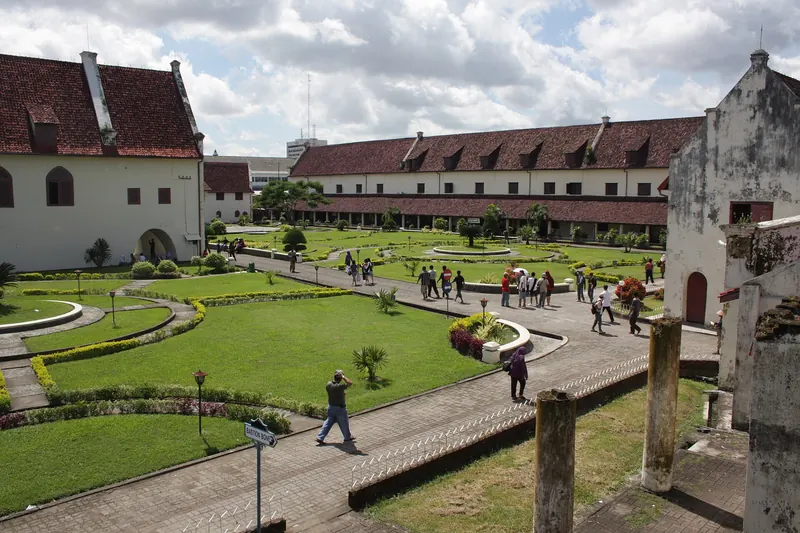
The city grew around a Portuguese fort. Wikipedia's account says the Portuguese arrived in 1513 and began building Nossa Senhora da Anunciada around 1575. The Dutch East India Company (VOC) took it on 23 February 1605 and renamed it Fort Victoria. After an earthquake around 1754 damaged it badly, it was rebuilt as Nieuw Victoria. Pattimura, the Moluccan national hero who led a revolt against the Dutch, was hanged at the fort in 1817. Fort Victoria still stands in Sirimau, in the city centre, and it is still the headquarters of the Pattimura Military Command. Do not assume you can walk around it as you would a museum. Look at the walls from the street and ask at the gate.
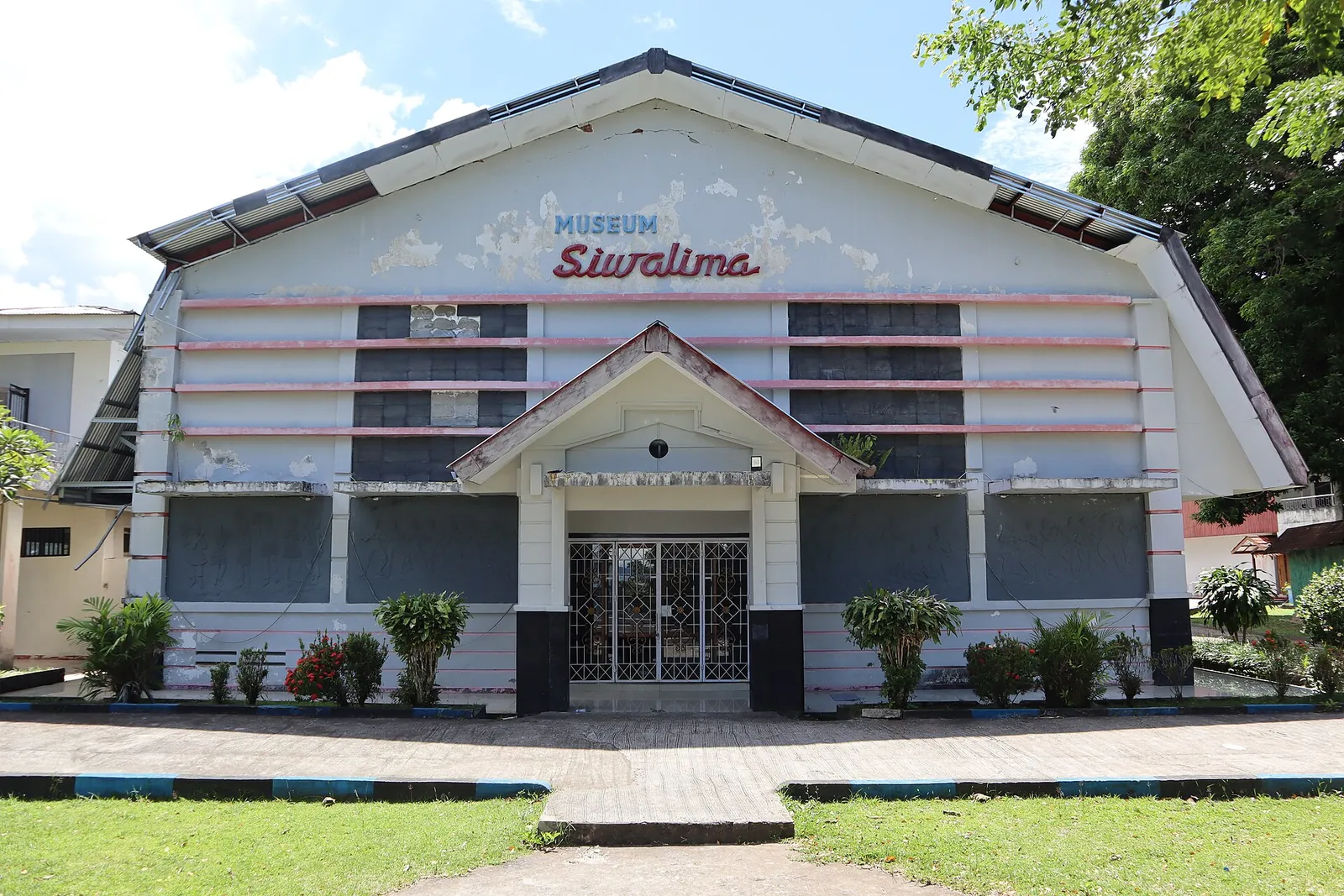
Head uphill to the Siwalima Museum, the provincial museum. The Ministry of Tourism's page says it was established on 8 November 1973 and opened on 26 March 1977, and holds more than 5,300 registered objects covering traditional culture, history and natural specimens, including maritime collections. The building stands on a hill with a view over Ambon Bay. Go there early in your stay: it gives context to the forts and the spice trade you will meet later on the island.
Back in the centre, the Pattimura Monument shows the hero with his sword drawn. The ministry notes that it is the focus of national and local commemorations. Wikipedia also lists the Martha Christina Tiahahu statue among the city's historical sights, and Wikivoyage notes that its hilltop site has views over the bay. The Ambon War Cemetery, which Wikipedia says holds the graves of 1,777 Allied soldiers, recalls the Japanese landing on 1 February 1942 and the occupation that followed.
Make time for the local food
What to eat and where to look
Papeda with ikan kuah kuning
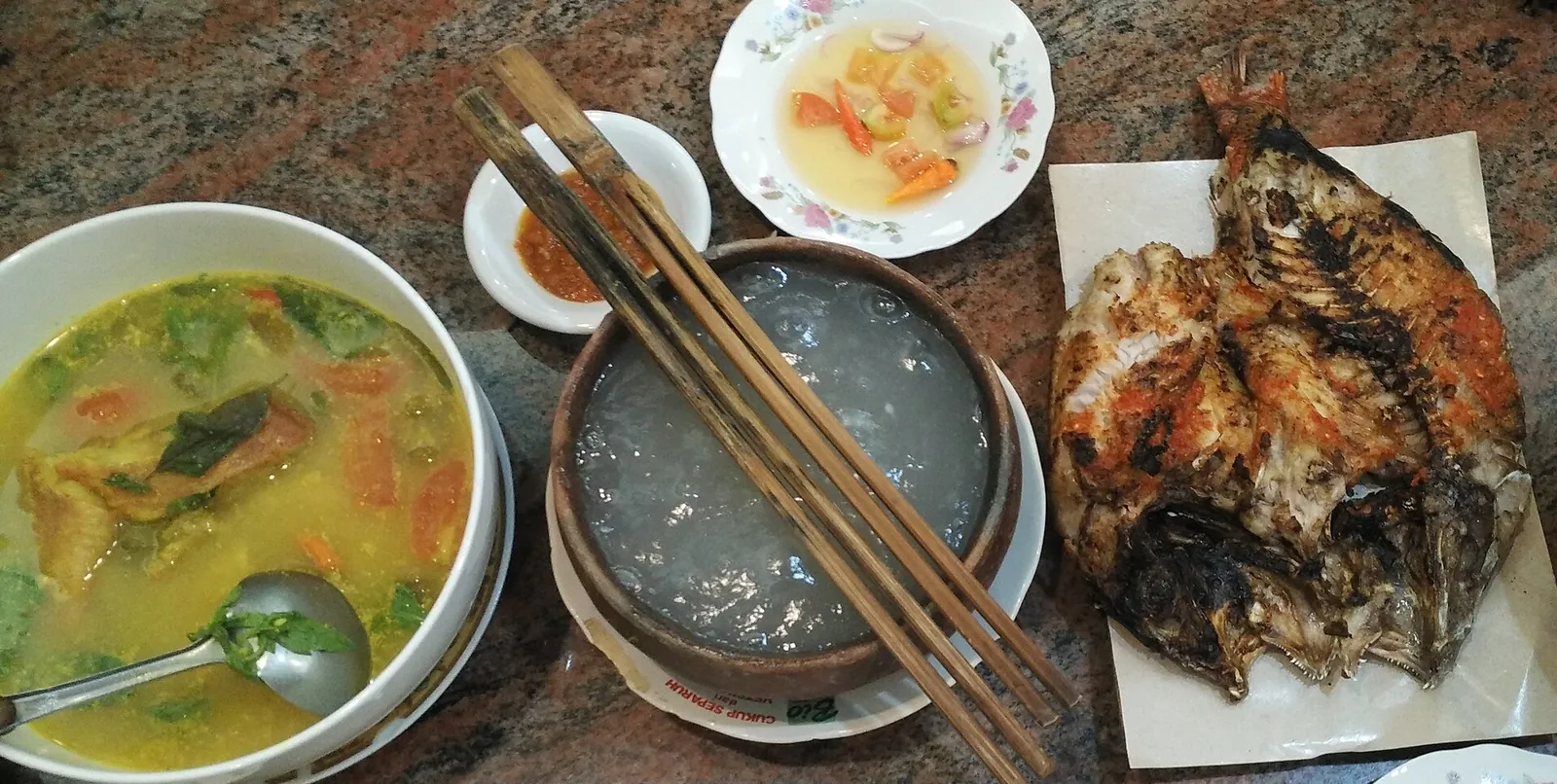
Papeda is a sticky, glue-like porridge made from sago starch. Wikivoyage describes it as eaten with ikan kuah kuning, sea fish in a yellow soup. The ministry's description of the dish names turmeric, which gives the colour, and lemongrass. The papeda itself tastes of very little; it carries the broth.
- Where to look
- Local Maluku restaurants in the city centre. The Ministry of Tourism describes Dapor Kole Kole as a well-known Ambon restaurant serving traditional Maluku dishes with a modern touch.
- Fit it into your day
- Have it for lunch on your city day, after the Siwalima Museum.
The texture surprises many visitors. Watch how locals twist it onto chopsticks or a fork, then follow.
Ikan bakar with sambal colo-colo
Grilled fresh sea fish served with colo-colo, Maluku's raw sambal. The ministry describes it as made from chilli, shallot and tomato with citrus juice, often finished with soy sauce or hot coconut oil. It is chopped rather than ground, so it stays coarse, sour and fresh.
- Where to look
- Simple beach warung on the coast, which the ministry recommends for this dish, and evening seafood stalls on Jalan Sam Ratulangi in the centre, according to Wikivoyage.
- Fit it into your day
- Dinner on the day you visit the beaches, or in the city on your last evening.
Colo-colo is made with raw chilli and shallot; ask for it on the side if you do not like heat.
Rujak Natsepa
Ambon's own fruit rujak: mixed fruit and slices of sweet potato with a sauce of fried peanuts ground with palm sugar, tamarind and salt. It tastes sweet, sour and hot.
- Where to look
- The many vendors inside and outside the Natsepa beach area at Suli.
- Fit it into your day
- An afternoon snack on the way to or from Liang beach.
It is sweet, sour and spicy; ask for less chilli if you prefer it mild.
Nasi kuning Maluku
Ambonese yellow rice. Wikivoyage describes nasi kuning Ambon as a cheap meal sold in almost every corner of the city for breakfast, lunch and dinner, and the ministry lists Maluku yellow rice on the menu at Moluccas Restaurant.
- Where to look
- Small eateries and morning stalls across the city centre.
- Fit it into your day
- Breakfast before an early drive to Hila or a dive boat.
What comes with it varies by stall; ask if you avoid fish or meat.
Diving and snorkelling in Ambon Bay
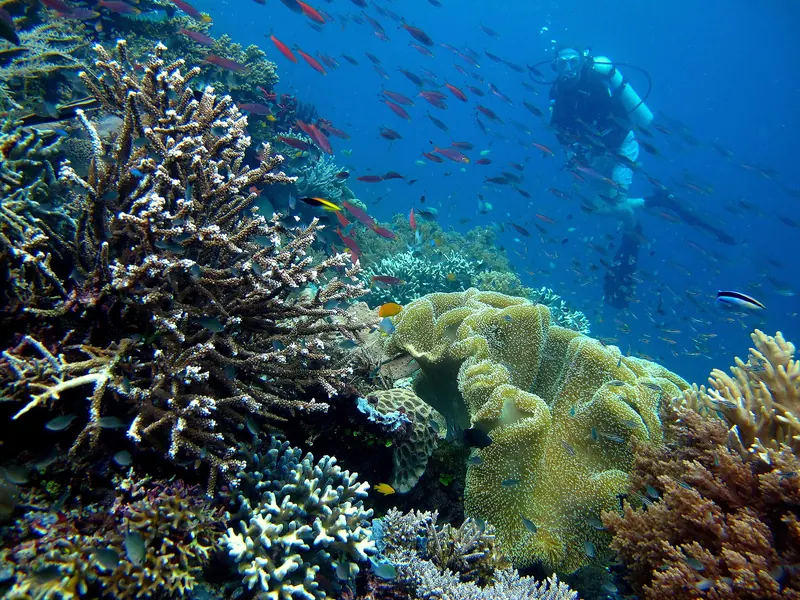
Ambon is best known to divers for muck diving: looking for small, unusual creatures on sand and silt rather than swimming over coral reefs. The Ministry of Tourism describes Ambon Bay as having muck, reef and cave dives. Among the animals it lists are harlequin shrimp, ghost pipefish, mandarin fish, frogfish, cuttlefish, blue-ringed octopus, pygmy seahorses, stonefish and scorpionfish. Book with a local dive centre, plan for two or three days, and bring a camera with a macro lens if you have one, because most of the subjects are tiny.
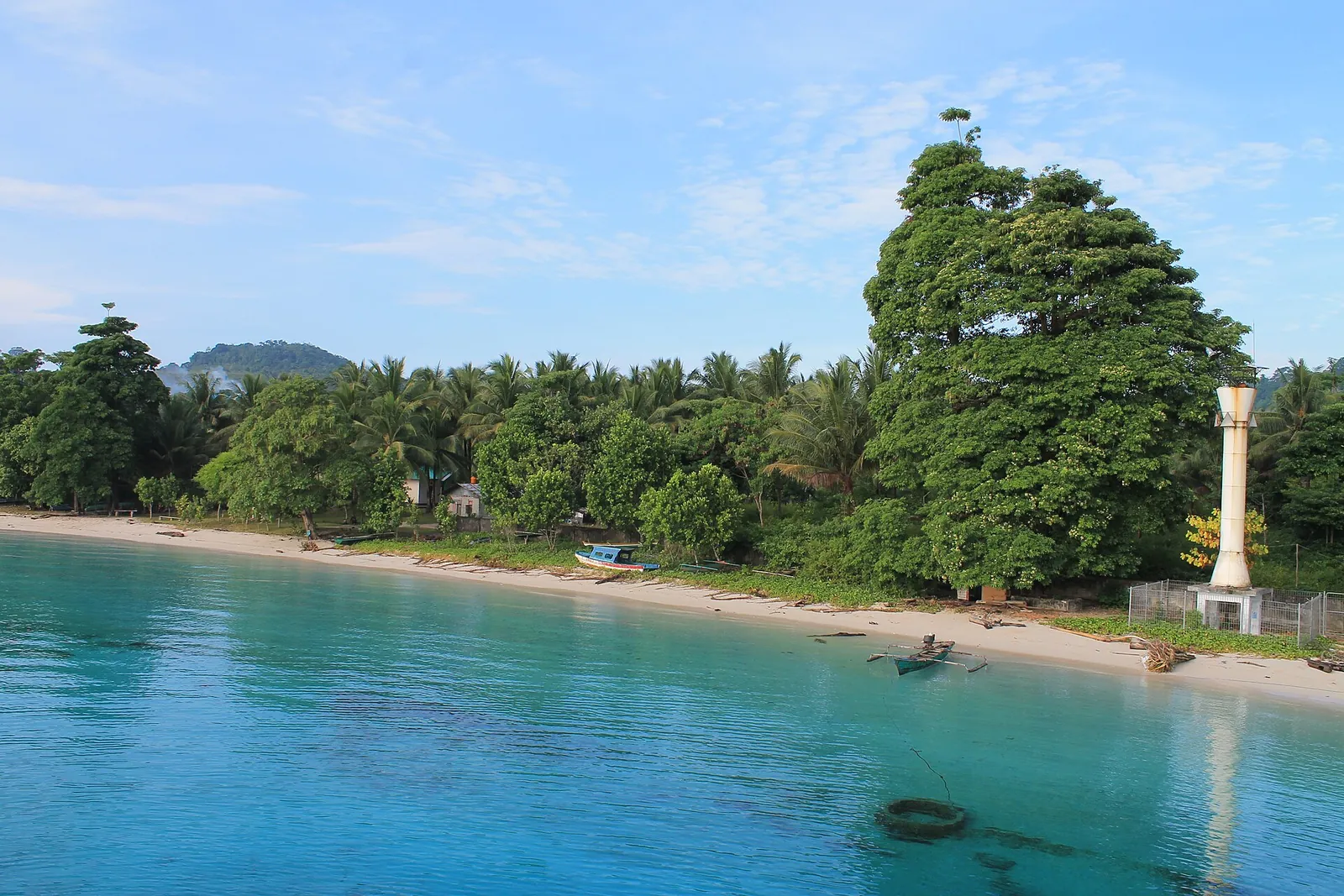
Non-divers can snorkel from the shore on the south-west coast. Pintu Kota beach at Airlouw, Nusaniwe, is named after a natural rock arch shaped like a city gate, and the ministry mentions swimming and snorkelling in its clear water. Namalatu beach in the same part of the island has calm water, coral rocks and fish warung (small local eateries), according to the ministry.
For a full day out, Pombo Island is a small, uninhabited coral atoll in a protected marine recreation park. The ministry says to hire a speedboat from Tulehu harbour on the east coast, about 30 minutes each way. There are no facilities and nobody lives there, so take all your food and water and leave nothing behind.
Beaches, Hila and the north coast
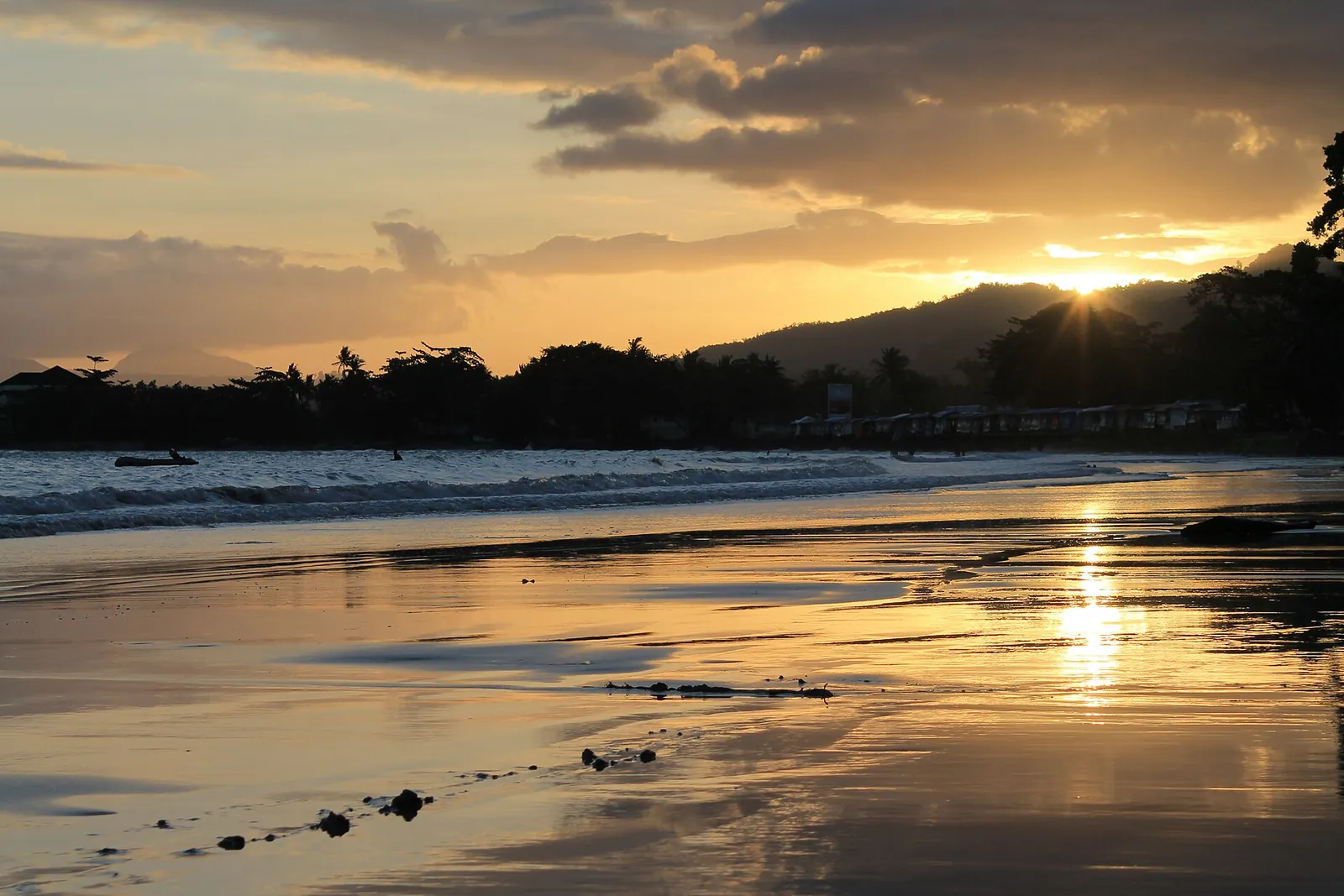
The Ministry of Tourism's one-day Ambon plan combines Liang, Natsepa and the Merah Putih Bridge. Natsepa beach at Suli is about 18 km from the city. It is known for rujak Natsepa, a fruit salad dressed with ground peanuts, palm sugar, tamarind and salt and served with slices of sweet potato, which vendors sell along the beach. Liang beach (Pantai Hunimua), in Salahutu district, is about 40 km from the centre, roughly 90 minutes by car. The ministry says UNDP once named it Indonesia's most beautiful beach, in 1990, and calls it safe for swimming, with fine white sand and a wooden jetty that people jump from.
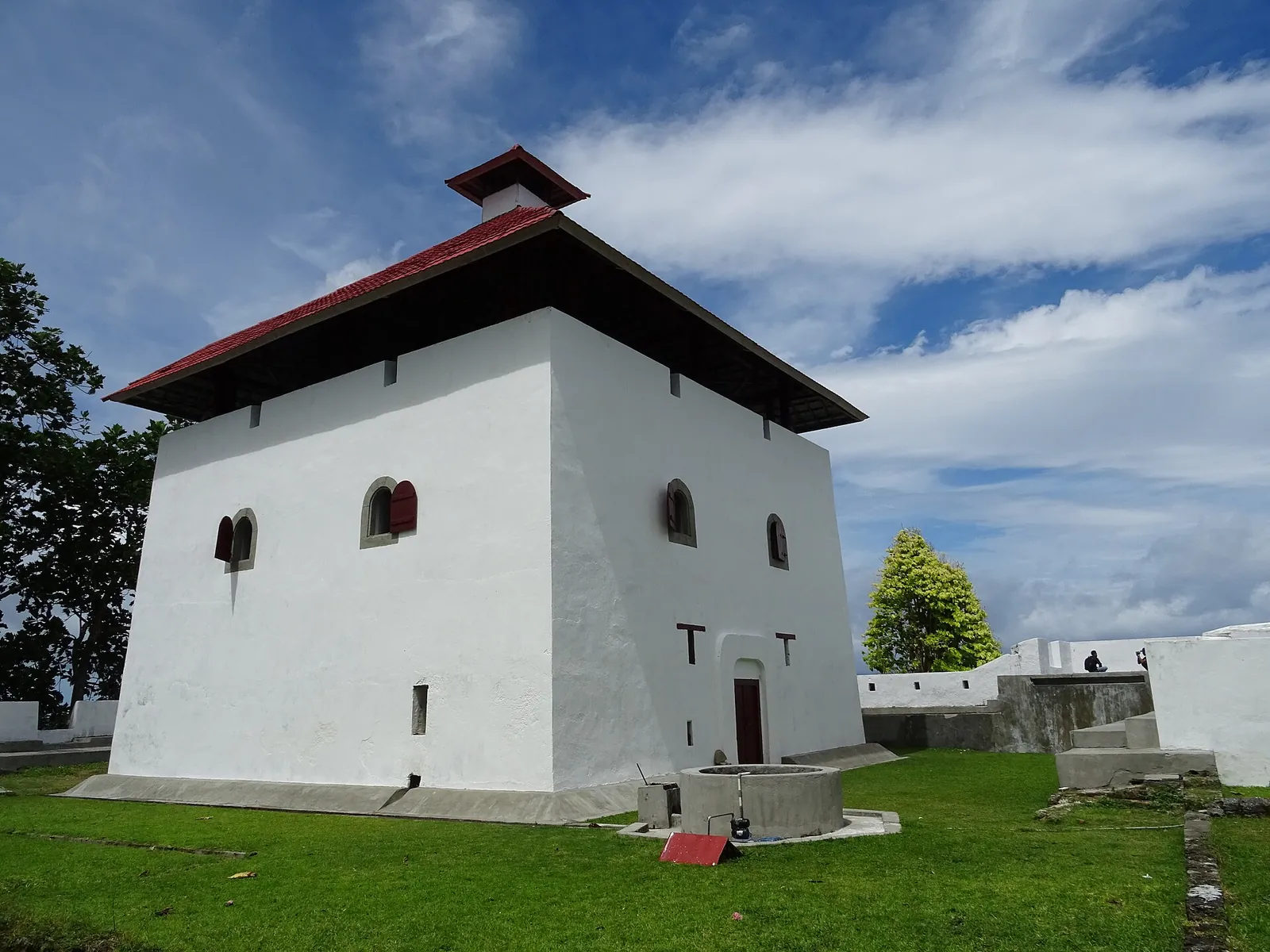
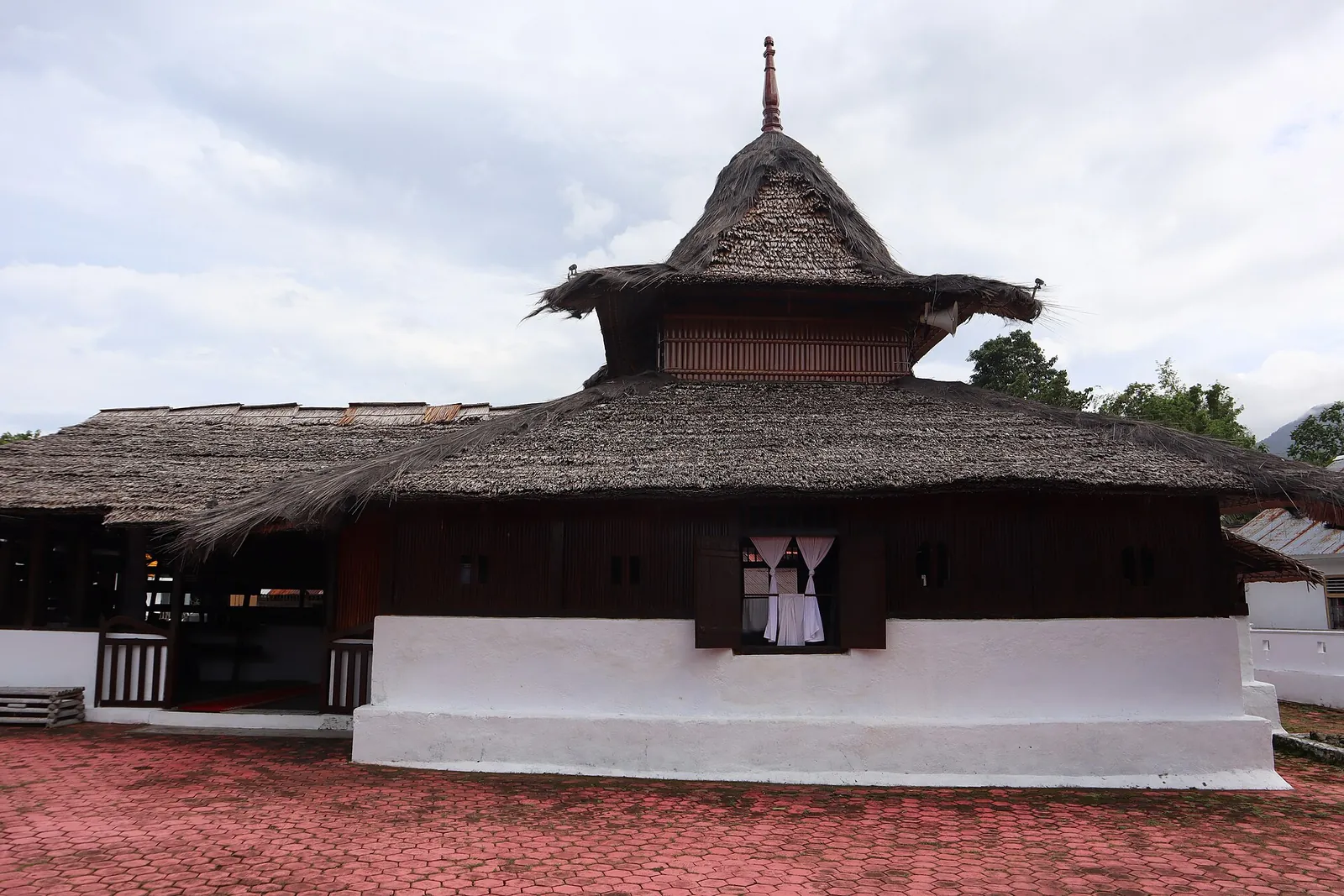
On the north coast, Fort Amsterdam stands on the border of Hila and Kaitetu villages in Leihitu, about 42 km from the city, according to the Indonesian Wikipedia article. It began as a Portuguese post; the Dutch turned it into a fort in 1637, enlarged it in later decades and named it Benteng Amsterdam. The Ministry of Education and Culture restored it between 1991 and 1994. It has a brick ground floor that once held a prison and gunpowder store, wooden upper floors and a watchtower. Close by in Kaitetu, the Wapauwe Old Mosque dates by tradition to 1414. Its wooden joints use no nails or pegs, and its roof is thatched with sago leaves. It is still used for daily prayers, so dress modestly and ask before entering.
Two easier extras: the Tulehu hot springs, about 30 minutes from the city according to the ministry, with pools at different temperatures. And Ruhatu Hill at Airlouw, Nusaniwe, about 15 km and 30 minutes from the city, with views over Ambon Bay and Seri beach. When we checked on 2026-10-03, the ministry listed an entrance fee of IDR 5,000 and said the hill is open around the clock. Paragliding there does not run every day, so contact the managers first if you want to fly.
On to Banda: plan Ambon as your buffer
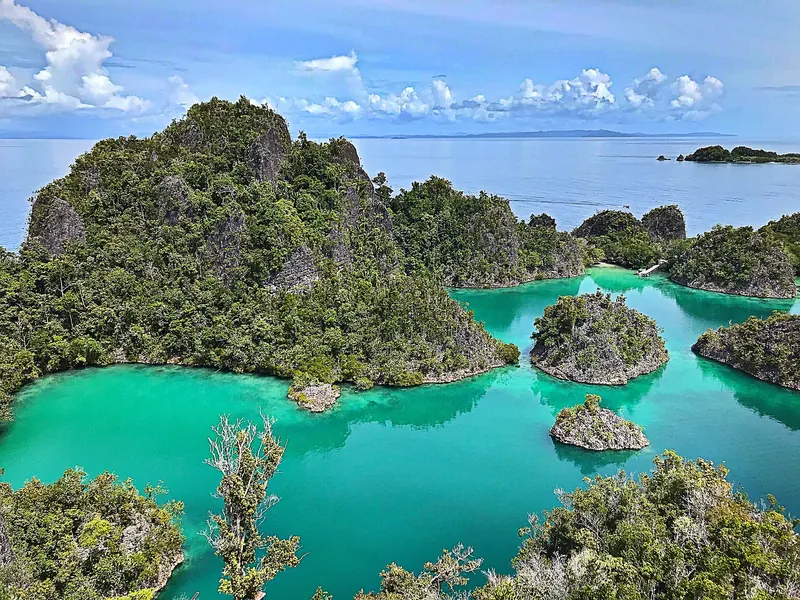
Ambon is the gateway to the Banda Islands, the original nutmeg islands. The Ministry of Tourism describes three ways there: flights from Pattimura Airport, a sea crossing of about seven hours, or a cruise. It warns that the sea crossing is very unpredictable, that flights are often cancelled because of weather or technical problems, and that round-trip tickets cannot be booked. Book the return once you are in Ambon and keep reconfirming it. Wikipedia's route list for Pattimura Airport shows Smart Aviation flying to Banda Neira on a small pioneer (perintis) route. Wikivoyage describes fast boats from Tulehu harbour that are cancelled in bad weather, and PELNI ships that call at Banda on the way to the Kei Islands.
In practice this means a night in Ambon before Banda and at least one spare night after it, ideally on the Tulehu side if you are going by boat. Use that spare time for the city sights, so a cancellation costs you nothing. Ambon is also your link to the rest of eastern Indonesia: Wikipedia lists flights from Pattimura to Jakarta, Makassar, Surabaya, Sorong (for Raja Ampat), Ternate and the Kei Islands at Langgur.
Practical questions
How many days do I need in Ambon?
Two to four nights. Allow one day for the city and one for the east-coast beaches. Divers should add one or two days in Ambon Bay. If you are going to Banda, keep at least one spare night in Ambon after you return, because flights and boats are often cancelled.
How far is Pattimura Airport from Ambon city?
About 38 km by Wikipedia's figure (the Ministry of Tourism says about 36 km). The airport is at Laha, on the north side of Ambon Bay, and the Merah Putih Bridge has shortened the drive. A DAMRI bus runs to Lapangan Merdeka in the centre, and taxis are available.
How do I get from Ambon to the Banda Islands?
By a small Smart Aviation flight from Pattimura Airport to Banda Neira, or by sea. The ministry puts the ferry at about seven hours; Wikivoyage mentions fast boats from Tulehu and PELNI ships. Schedules change and cancellations are common, so check close to the date and leave spare days.
Is Ambon good for diving?
Yes, especially for muck diving. The Ministry of Tourism describes muck, reef and cave dives in Ambon Bay, with species such as harlequin shrimp, frogfish, mandarin fish, blue-ringed octopus and pygmy seahorses.
Can I visit Fort Victoria?
You can see it in the city centre, but it is still the headquarters of the Pattimura Military Command, so access is limited. For a colonial fort you can explore, go to Fort Amsterdam at Hila, about 42 km away on the north coast.
When is the rainy season in Ambon?
In the middle of the year. In the climate data cited by Wikipedia, June is the wettest month and November the driest. It can rain in any month.
Sources and checks before you travel
Reference sources for the version dated 3 October 2026. Confirm opening times, access, transport and conditions for your travel dates.
- Indonesia Travel (Ministry of Tourism): Ambon ↗ — opens in a new tab
- Indonesia Travel (Ministry of Tourism): Maluku ↗ — opens in a new tab
- Indonesia Travel (Ministry of Tourism): Diving Ambon Bay ↗ — opens in a new tab
- Indonesia Travel (Ministry of Tourism): Siwalima Museum ↗ — opens in a new tab
- Indonesia Travel (Ministry of Tourism): Museum Siwalima Provinsi Maluku ↗ — opens in a new tab
- Indonesia Travel (Ministry of Tourism): One day in Ambon (Satu Hari di Ambon) ↗ — opens in a new tab
- Indonesia Travel (Ministry of Tourism): Pintu Kota beach ↗ — opens in a new tab
- Indonesia Travel (Ministry of Tourism): Namalatu beach ↗ — opens in a new tab
- Indonesia Travel (Ministry of Tourism): Pombo Island Atoll ↗ — opens in a new tab
- Indonesia Travel (Ministry of Tourism): Banda Neira ↗ — opens in a new tab
- Indonesia Travel (Ministry of Tourism): Tulehu hot springs ↗ — opens in a new tab
- Indonesia Travel (Ministry of Tourism): Ruhatu Sky-Gliding Hill ↗ — opens in a new tab
- Indonesia Travel (Ministry of Tourism): Monumen Gong Perdamaian Dunia ↗ — opens in a new tab
- Indonesia Travel (Ministry of Tourism): Monumen Pattimura ↗ — opens in a new tab
- Indonesia Travel (Ministry of Tourism): Masjid Raya Al-Fatah Ambon ↗ — opens in a new tab
- Indonesia Travel (Ministry of Tourism): Colo-colo ↗ — opens in a new tab
- Indonesia Travel (Ministry of Tourism): Dapor Kole Kole ↗ — opens in a new tab
- Indonesia Travel (Ministry of Tourism): Moluccas Restaurant ↗ — opens in a new tab
- UNESCO Creative Cities Network: Ambon ↗ — opens in a new tab
- Directorate General of Civil Aviation: Pattimura Airport ↗ — opens in a new tab
- Wikipedia: Pattimura Airport ↗ — opens in a new tab
- Wikipedia: Ambon, Maluku ↗ — opens in a new tab
- Wikipedia: Fort Victoria (Ambon) ↗ — opens in a new tab
- Wikipedia (Indonesian): Benteng Amsterdam ↗ — opens in a new tab
- Wikipedia (Indonesian): Masjid Wapauwe ↗ — opens in a new tab
- Wikivoyage: Ambon ↗ — opens in a new tab
- Wikivoyage: Banda Islands ↗ — opens in a new tab
Does this experience fit your route?
Plan Ambon around your Banda connection and the dive days. Book the essentials, such as a dive centre or a driver for Hila and the beaches, and keep a free day in case a boat or flight is cancelled.
Browse relevant experiences on Viator ↗ — opens in a new tabAffiliate link · Book with ViatorPhoto credits
Clear water by the jetty at Liang village, next to Hunimua harbour on the east coast of Ambon Island
Photograph: Sitanalarenny — opens in a new tab · CC BY-SA 4.0 — opens in a new tab
Changes: Resized and converted to WebP; displayed with responsive crops. · Original photograph and licence details ↗ — opens in a new tab
The Merah Putih (Red and White) Bridge across the inner bay, linking the two sides of Ambon city
Photograph: Perpustakaan Kementerian Pekerjaan Umum dan Perumahan Rakyat — opens in a new tab · Public domain — opens in a new tab
Changes: Resized and converted to WebP; displayed with responsive crops. · Original photograph and licence details ↗ — opens in a new tab
Fort Amsterdam at Hila on Ambon's north coast, restored between 1991 and 1994
Photograph: Kainjock — opens in a new tab · CC BY-SA 4.0 — opens in a new tab
Changes: Resized and converted to WebP; displayed with responsive crops. · Original photograph and licence details ↗ — opens in a new tab
The Siwalima Museum, Maluku's provincial museum, in Nusaniwe, Ambon
Photograph: Zhilal Darma — opens in a new tab · CC BY-SA 4.0 — opens in a new tab
Changes: Resized and converted to WebP; displayed with responsive crops. · Original photograph and licence details ↗ — opens in a new tab
The Wapauwe Old Mosque at Kaitetu, Leihitu, with its sago-leaf thatched roof
Photograph: Zhilal Darma — opens in a new tab · CC BY-SA 4.0 — opens in a new tab
Changes: Resized and converted to WebP; displayed with responsive crops. · Original photograph and licence details ↗ — opens in a new tab
A Maluku meal: papeda, ikan kuah kuning, grilled fish and sambal colo-colo
Photograph: M.akbar.raf — opens in a new tab · CC BY-SA 4.0 — opens in a new tab
Changes: Resized and converted to WebP; displayed with responsive crops. · Original photograph and licence details ↗ — opens in a new tab
Sunset at Natsepa beach, Suli, on the east coast of Ambon Island
Photograph: Sitanalarenny — opens in a new tab · CC BY-SA 4.0 — opens in a new tab
Changes: Resized and converted to WebP; displayed with responsive crops. · Original photograph and licence details ↗ — opens in a new tab