Mekong Delta and Phu Quoc · Vinh Long
Vinh Long and Cai Be: An Binh homestays and a night on the Mekong
Most people see this stretch of the Tien River from a day-tour boat out of Ho Chi Minh City and are back on the bus by mid-afternoon. It works better as an overnight. On one bank is Vinh Long, a provincial town with a passenger port and boats to the river routes; in mid-river is An Binh, an island of fruit orchards where village families have been taking in guests for years; across the Tien River is Cai Be, with an old village of wooden merchant houses. Stay a night on An Binh and you have the evening and the early morning to yourself, which day trippers never see. Expect the names to have changed: since the 2025 provincial merger, Cai Be has belonged to Dong Thap province and An Binh has been merged into a larger commune of Vinh Long.
- Suggested time
- 1–2 nights
- Where to stay
- A family homestay on An Binh island; Vinh Long town for hotels and the passenger port; Cai Be for the old village and the Tan Phong islet
- Season and timing
- Vietnam's national tourism site gives December to April as the clear, sunny season in the Mekong Delta and May to November as the wet season, with heavy afternoon showers. Spring tides can flood low riverside roads: in late September 2026 the province's weather station warned of 10–50 cm of water in low-lying areas.
The short answer
One night is the minimum and two is better. Sleep in a family homestay on An Binh island for the orchards, the evening programme and a quiet morning on the canals; choose a hotel in Vinh Long town if you want standard hotel rooms, restaurants and the passenger port at the door. Spend one half-day on An Binh by bicycle or rowing boat, one on Cai Be's old village of Dong Hoa Hiep and the riverside town, and use the boat routes from Vinh Long for the brick and pottery kilns of Mang Thit. Continue to Can Tho afterwards rather than doubling back to Saigon.
Choose your bank of the river first
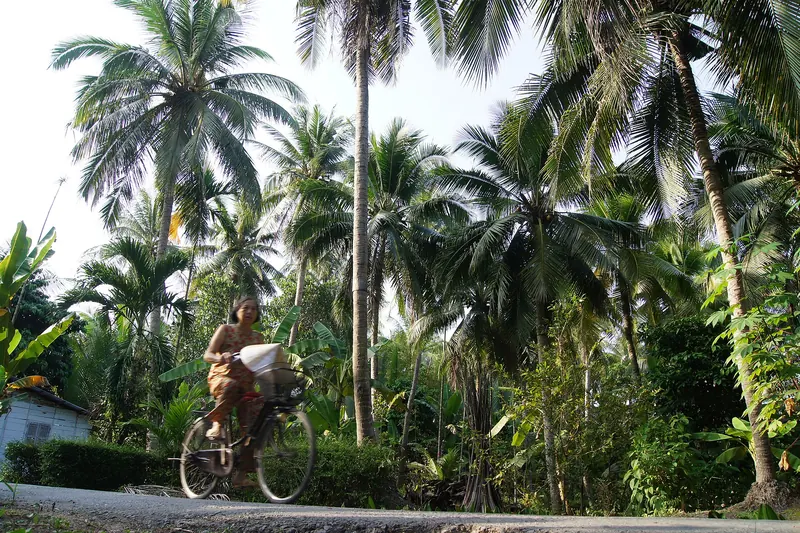
An Binh island sits between the Tien and the Co Chien rivers, opposite Vinh Long town. It is the reason to stay: around 4,000 hectares of orchards, narrow lanes and canals, and a long-running network of family homestays. In the 2025 reorganisation the old communes of An Binh, Hoa Ninh, Dong Phu and Binh Hoa Phuoc were merged into a single An Binh commune, so a homestay advertised in Binh Hoa Phuoc or Hoa Ninh is on the same island. The commune's Party secretary told the provincial newspaper in February 2026 that it has 19 homestays, nine of them with ASEAN tourism awards, plus six places to eat and more than twenty orchard gardens that receive visitors. In 2023 a cluster of six An Binh homestays — Ut Thuy, Sau Thanh, Nam Thanh, Ba Linh, Ngoc Phuong and Ngoc Sang — won the ASEAN Homestay Award.
A homestay here is a family house in an orchard, not a hotel. Expect home cooking, a bicycle, a boat trip arranged by the hosts and an early night; check before booking whether the room has air conditioning, a private bathroom and a pick-up from the boat landing, because these vary from house to house.
Vinh Long town is the practical alternative. It has the provincial passenger port, which the provincial tourism promotion centre has run since 15 October 2022, and the town's restaurants and hotels. Cai Be is a smaller riverside town across the Tien River, now Cai Be commune of Dong Thap province (it used to be Cai Be district, Tien Giang). Vietnam's national tourism site points to family homestays on its Tan Phong islet; choose Cai Be if the old village of Dong Hoa Hiep is your priority.
On and around An Binh: orchards, kilns and a torch-lit evening
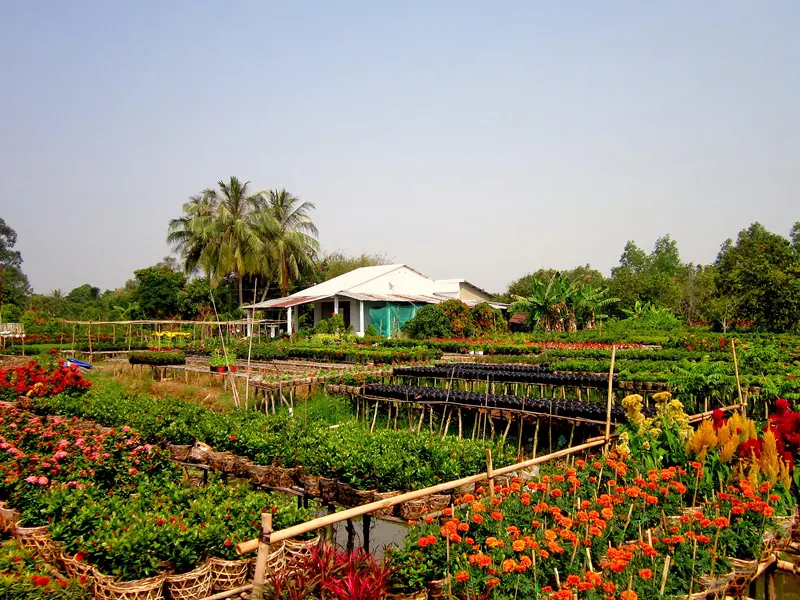
Spend the first afternoon on the island itself. Borrow the homestay's bicycle or ask for a rowing boat into the side canals; the orchards grow longan, rambutan and durian, and Binh Hoa Phuoc rambutan is one of the island's OCOP-rated local products. In the weeks before Tet, the yellow apricot growers of Phuoc Dinh, a craft village more than seventy years old, fill the lanes with flowering trees.
The visits the province shows to travel buyers give a good idea of what a day here can hold. In August 2026 an international group walked by coconut-leaf torchlight to An Thanh communal house to watch hat boi, the classical theatre of southern Vietnam; toured the traditional brick kilns of the Thanh Duc pottery; and watched coconut candy and puffed rice being made at the Cuu Long candy workshop. CocoHome, a three-room southern house built from more than 4,000 coconut trunks, opened at the end of 2019 and serves country dishes such as small river fish (ca coc) braised in coconut water and a salad of ban (mangrove apple) flowers. Ask your homestay which of these are running on the night you stay, and whether they need booking.
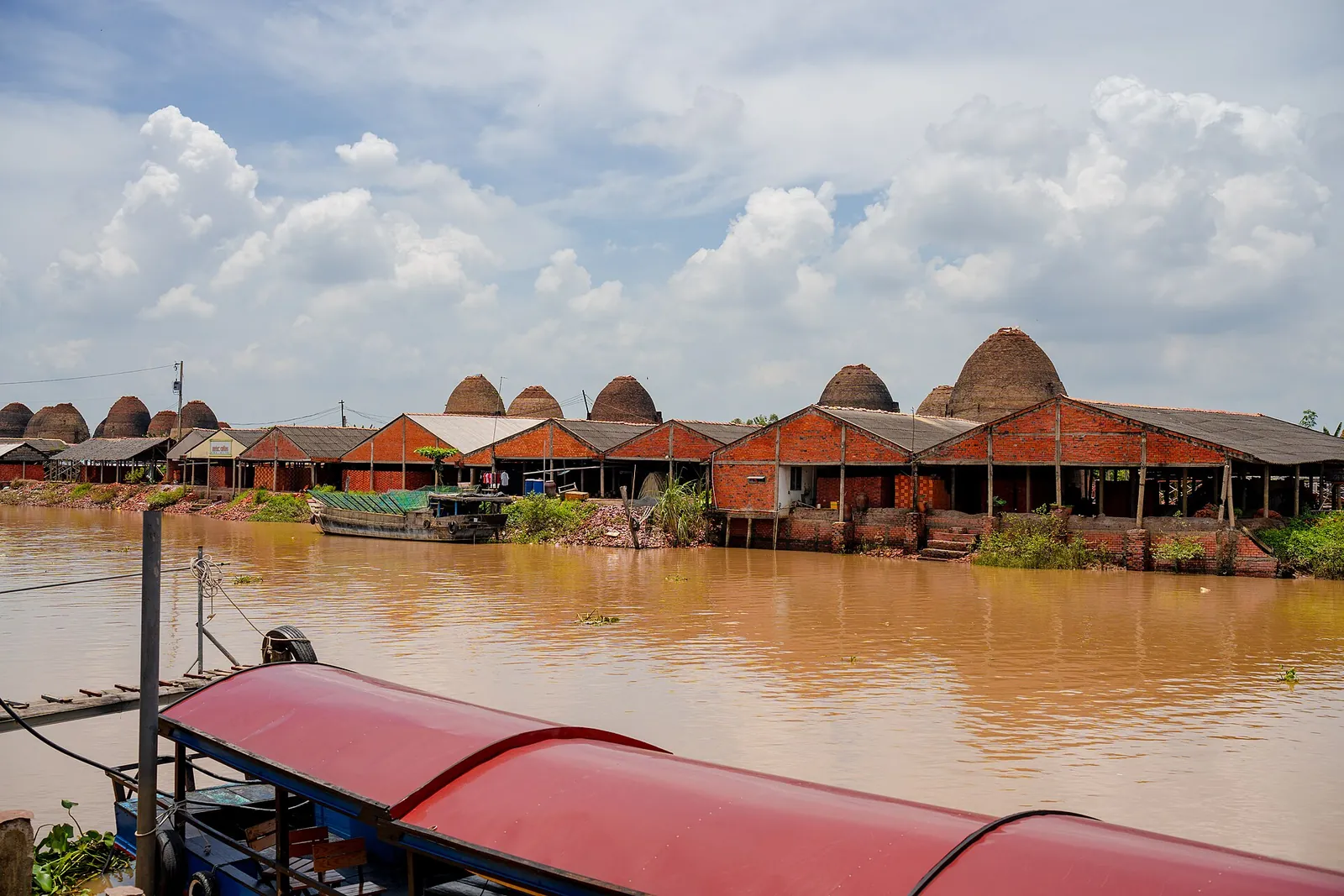
The other reason to come is off the island, reached by boat along the Long Ho river: the Mang Thit brick and pottery kilns on the Thay Cai canal in Nhon Phu commune, a craft area of brick and pottery kilns that the province wants to turn into one of its signature sights. The provincial chairman toured them by boat in April 2026 and said the preservation plan was moving slowly; many kilns are still working sites, so visit with a boat operator or guide who has arranged it rather than walking into a yard on your own.
Make time for the local food
What to eat and where to look
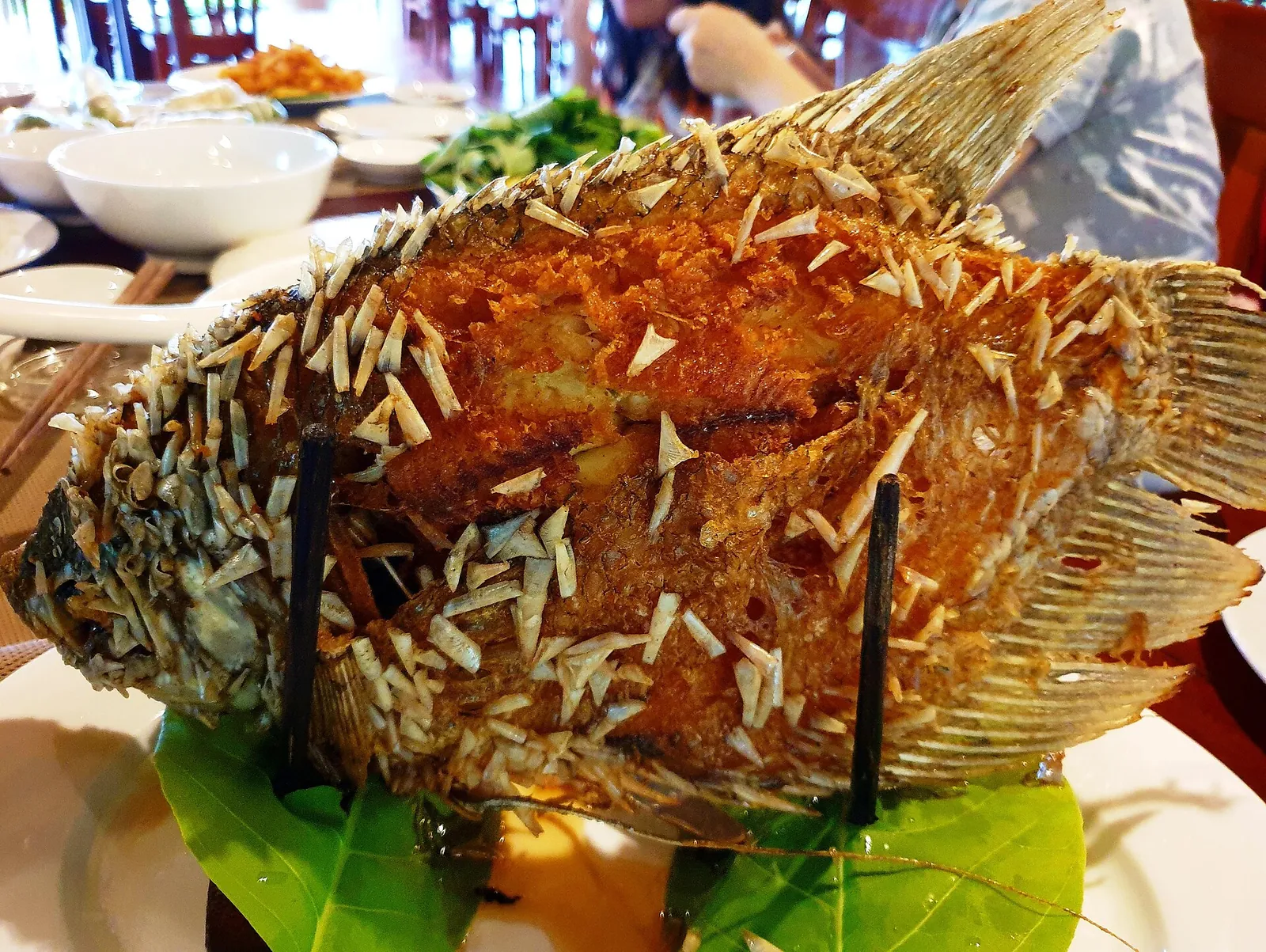
Ca tai tuong chien xu (fried elephant-ear fish)
A whole elephant-ear fish deep-fried until crisp, then picked apart at the table and rolled in rice paper with herbs, cucumber and pineapple and dipped in sauce. It is the showpiece of a Mekong river lunch.
- Where to look
- Riverside and resort restaurants that serve boat groups, for example on the Con Phung route and in Cai Be.
- Fit it into your day
- A shared lunch for three or four people; order rice and a sour soup alongside.
Watch for bones; the dipping sauces usually contain fish sauce.
Homestay dinner: river fish in coconut water and ban-flower salad
The country cooking of the island: small fish braised in coconut water, a salad of ban (mangrove apple) flowers and other dishes from the garden and the river, served family-style.
- Where to look
- Your homestay's dinner table, and CocoHome on An Binh, which lists these dishes.
- Fit it into your day
- Book dinner at the homestay on the night you arrive; it is part of the reason to stay.
Tell your hosts in advance if you do not eat fish, meat or very sweet dishes; menus are set by what the family cooks that day.
Hu tieu
A clear pork and dried-seafood broth with chewy rice noodles, sliced pork and bean sprouts, eaten for breakfast all over the delta — on the floating markets it is passed boat to boat.
- Where to look
- Morning noodle shops in Vinh Long town and Cai Be market.
- Fit it into your day
- An early breakfast before a boat trip, with a cloth-filter coffee.
The broth is made with pork bones and often dried squid.
Island fruit: rambutan, longan and durian
An Binh's orchards grow rambutan, longan and durian; Binh Hoa Phuoc rambutan and Hoa Ninh longan carry local quality labels.
- Where to look
- Orchard gardens open to visitors on the island; ask your homestay which fruit is in season.
- Fit it into your day
- An afternoon stop on a bicycle ride, or dessert after dinner.
Ask before picking in a private orchard, and confirm the price of anything you take away.
Banh phong sua (Cai Be milk crackers) and candies
Thin rounds made from cassava, sugar, milk and coconut milk, rolled and dried in the sun: the traditional snack of Cai Be, now made by fewer than twenty households. On An Binh, workshops make coconut candy and puffed rice.
- Where to look
- Workshops in Cai Be commune and the candy workshops on An Binh.
- Fit it into your day
- A snack to take on the road to Can Tho.
Very sweet and fragile; buy sealed packs if you are travelling far.
Cai Be: an old village and a floating market that has faded
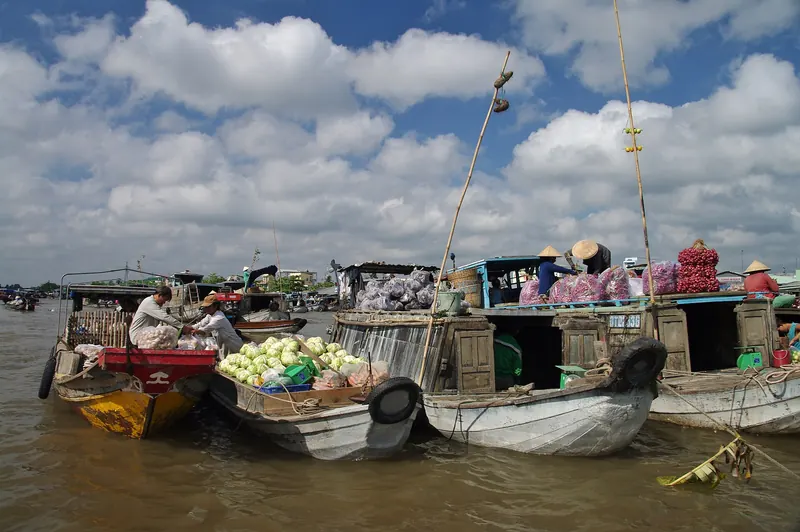
Do not plan the trip around the Cai Be floating market. The Dong Thap provincial newspaper describes it as a market that has thinned out over the years: roads and bridges now carry the fruit that once travelled by boat, and the families who lived on their boats have been moving ashore. The cay beo — a pole at the bow hung with a sample of whatever the boat is selling — is now seen mostly when the market is recreated. The commune has staged a recreated floating market during recent village festivals, and a Tet riverside fair in early 2026, but these are events, not a daily market. For a working wholesale floating market, go on to Cai Rang in Can Tho.
Dong Hoa Hiep ancient village, in Cai Be commune, is the better reason to cross the river. Its wooden houses, many 150 to 220 years old, were classified as a national monument in 2017. The house of Tran Tuan Kiet, built around 1838, stands on 108 hardwood columns; the Vo Van Vo house, finished in 1931, is still lived in by the fourth generation, and the family told the provincial paper that they charge no entrance fee and offer meals instead. There is a historical link with the other bank, too: in 1732 the seat of the new Long Ho administrative region was set up at An Binh Dong in this village, and in 1757 it moved to the site of present-day Vinh Long.
Vietnam's national tourism site suggests seeing Cai Be town by bicycle at first light: the riverside market, Cai Be Church, built by a German Catholic priest in the early 20th century, and the Cao Dai temple. The Tan Phong islet across the river, with its fruit farms and homestays, is no longer a ferry ride away: the Tan Phong bridge opened on 18 April 2025 and the ferries stopped.
- Dong Hoa Hiep festival 2026: the seventh Dong Hoa Hiep Ancient Village Culture and Tourism Festival is scheduled for 19 to 22 November 2026 in Cai Be commune, with a floating-market and food area, performances on the river and the old houses lit at night, according to the Dong Thap provincial plan as reported by its newspaper.
Vinh Long town and the boat routes
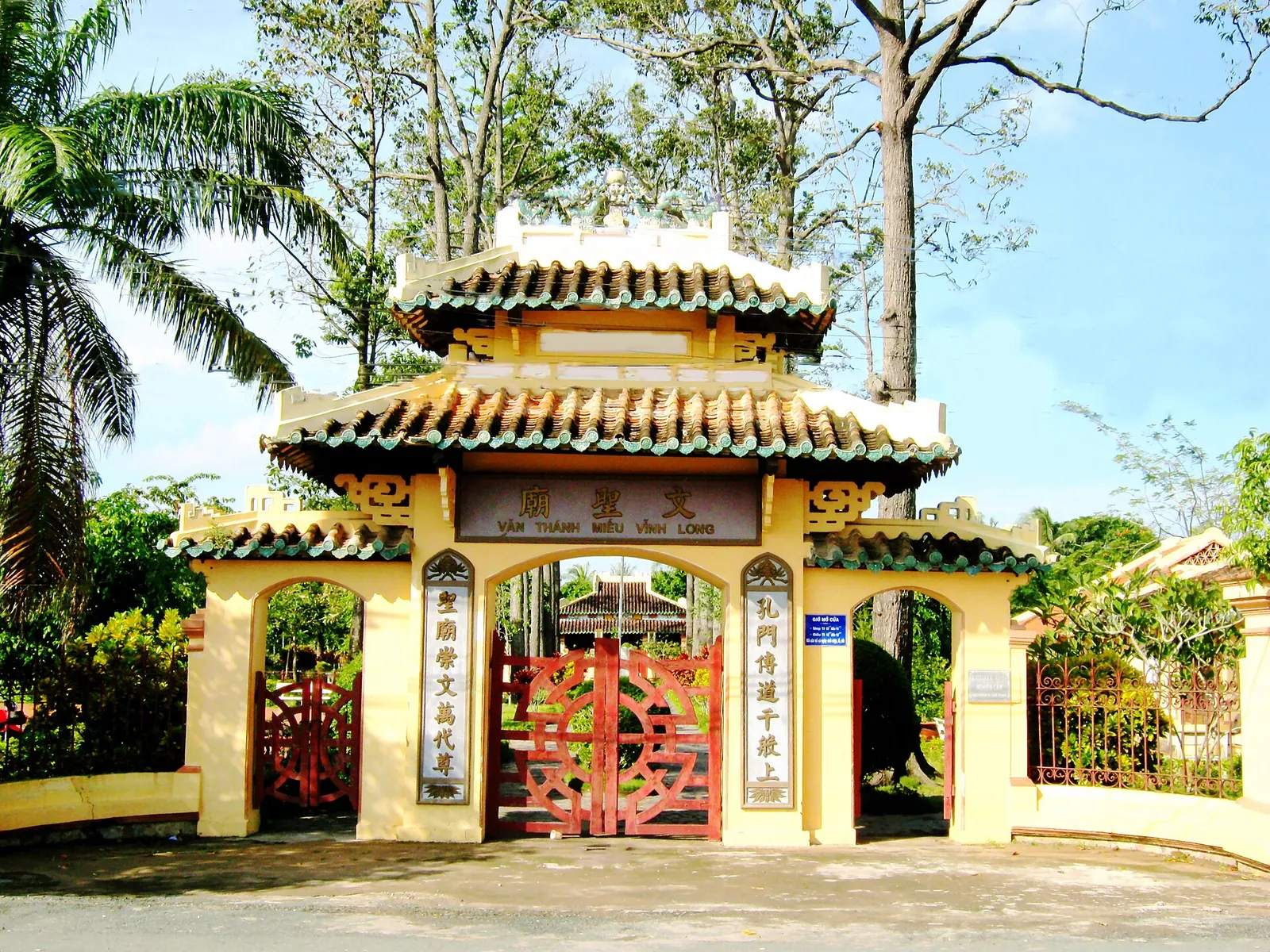
The provincial Department of Culture, Sports and Tourism counts 154 licensed tourist boats in the province, the Vinh Long passenger port and 24 registered private landings. The routes it promotes include the An Binh orchard route, the Long Ho river past the Van Thanh Mieu (the town's Confucian temple), the Tu Buoi house — a traditional three-room house built entirely of Vinh Long red pottery — and the kilns on the Thay Cai canal, and, further afield, the Thom river, where boats loaded with coconuts trade with the processing workshops on both banks.
The river cruise ship La Marguerite has also begun calling at Vinh Long on Mekong cruises between Ho Chi Minh City and Cambodia, stopping at the Van Thanh Mieu, the Mang Thit kilns and the Thom coconut market, according to the provincial tourism department. We found no official timetable or fare list for the local boats when we checked on 3 October 2026; ask your homestay or hotel to book a boat and agree the route and the return time before you set off.
Rain, tides and when to come
Vietnam's national tourism site describes December to April as the clear, sunny season in the Mekong Delta and May to November as the wet season, with a dependable afternoon downpour lasting a few hours. The wet months are still possible for a homestay, but plan the boat trips and the cycling for the morning.
Water levels matter as much as rain. In late September 2026 the provincial weather station warned that the mid-autumn spring tide, combined with rain and floodwater from upstream, would flood low-lying roads by 10 to 50 cm, with the highest water forecast for 29 September to 1 October; National Road 53 through Long Ho was among the roads flooded. If you travel around the full or new moon in the autumn months, ask your hosts whether the landings and island lanes are passable and allow extra time on the road.
A workable two-day route
This is an editorial suggestion, not a timetable. Check opening days and boat bookings with your hosts.
- Day 1 — To the island: leave Ho Chi Minh City in the morning, cross to An Binh, settle into the homestay and spend the late afternoon on a bicycle in the orchards; dinner with the family and, if it is running, the torch-lit walk to the communal-house theatre.
- Day 2 — River and old village: an early boat into the side canals, then Cai Be's riverside and the Dong Hoa Hiep houses before the midday heat; lunch in the village if a house is serving.
- Day 3 (optional): a boat from Vinh Long along the Long Ho river to the Mang Thit kilns, then onward to Can Tho for a night and the Cai Rang floating market the next morning.
Practical questions
Is An Binh island in Vinh Long or in Cai Be?
An Binh is in Vinh Long province, in the river opposite Vinh Long town. Cai Be is on the far bank of the Tien River and, since the 2025 provincial merger, belongs to Dong Thap province (it used to be in Tien Giang). Many tours combine both, and many maps still use the old names.
Is the Cai Be floating market still worth visiting?
Not as the main reason for the trip. The provincial newspaper describes it as a market that has thinned out, now recreated mainly during festivals. Come for the old village of Dong Hoa Hiep and the river, and see a working floating market at Cai Rang in Can Tho instead.
Should I stay in a homestay or a hotel?
Stay in a homestay on An Binh if you want the evenings and early mornings on the island; it is the point of the trip. Choose a hotel in Vinh Long town if you need standard rooms or will travel on by road the next morning. Check each homestay's room type, bathroom and pick-up before booking.
How many nights do I need?
One night shows you the island in the evening and the canals in the morning. Two nights let you add Cai Be's old village and a boat trip to the Mang Thit kilns without rushing.
When is the Dong Hoa Hiep village festival?
The 2026 festival is scheduled for 19 to 22 November in Cai Be commune, according to the Dong Thap provincial plan reported by its newspaper. Check nearer the time: an August draft gave 19 to 24 November.
Can I visit in the rainy season?
Yes, but plan the boat trips and cycling for the mornings. Spring tides in the autumn can flood low roads and landings, so ask your hosts about the water level before you travel.
Sources and checks before you travel
Reference sources for the version dated 3 October 2026. Confirm opening times, access, transport and conditions for your travel dates.
- Bao Vinh Long: river and orchard tourism on An Binh (February 2026) ↗ — opens in a new tab
- Bao Vinh Long: An Binh homestay cluster wins ASEAN Homestay Award 2023 ↗ — opens in a new tab
- Bao Vinh Long: international visitors at the An Binh kilns and theatre (August 2026) ↗ — opens in a new tab
- Bao Vinh Long: provincial chairman surveys the Mang Thit kilns (April 2026) ↗ — opens in a new tab
- Bao Vinh Long: waterway tourism in Vinh Long (March 2026) ↗ — opens in a new tab
- Bao Vinh Long: waking up river tourism (June 2026) ↗ — opens in a new tab
- Bao Vinh Long: developing tourism around local strengths (September 2026) ↗ — opens in a new tab
- Bao Vinh Long: heavy rain and spring tides flood roads (September 2026) ↗ — opens in a new tab
- Bao Dong Thap: Dong Hoa Hiep ancient village ↗ — opens in a new tab
- Bao Dong Thap: 2026 Dong Hoa Hiep festival plan ↗ — opens in a new tab
- Bao Dong Thap: August 2026 draft festival dates ↗ — opens in a new tab
- Bao Dong Thap: memories of the floating market at the Cai Be spring fair ↗ — opens in a new tab
- Bao Dong Thap: a dry coconut frond on the cay beo ↗ — opens in a new tab
- Bao Dong Thap: when the Tan Phong – Cai Be ferry became a memory ↗ — opens in a new tab
- Bao Dong Thap: Hau Thanh rice paper and Cai Be milk crackers ↗ — opens in a new tab
- Vietnam Tourism: 5 reasons you'll love Cai Be ↗ — opens in a new tab
- Vietnam Tourism: 5 unique towns in the Mekong Delta ↗ — opens in a new tab
- Vietnam Tourism: 4 memorable days in the Mekong Delta ↗ — opens in a new tab
- Vietnam Tourism: Chasing the floating flavour at the Mekong Delta's floating markets ↗ — opens in a new tab
- Vietnam Tourism: Day-tripping in the Mekong Delta ↗ — opens in a new tab
- Vietnam Tourism: Weather and climate in Vietnam ↗ — opens in a new tab
- Vietnam Tourism: Can Tho ↗ — opens in a new tab
- Vietnam Tourism: a traveller's guide to Vietnam's airports ↗ — opens in a new tab
Does this experience fit your route?
The simplest way to see An Binh and Cai Be is an overnight from Ho Chi Minh City with a homestay on the island. Before you book, check which villages the tour actually visits and where you sleep.
Browse relevant experiences on Viator ↗ — opens in a new tabAffiliate link · Book with ViatorPhoto credits
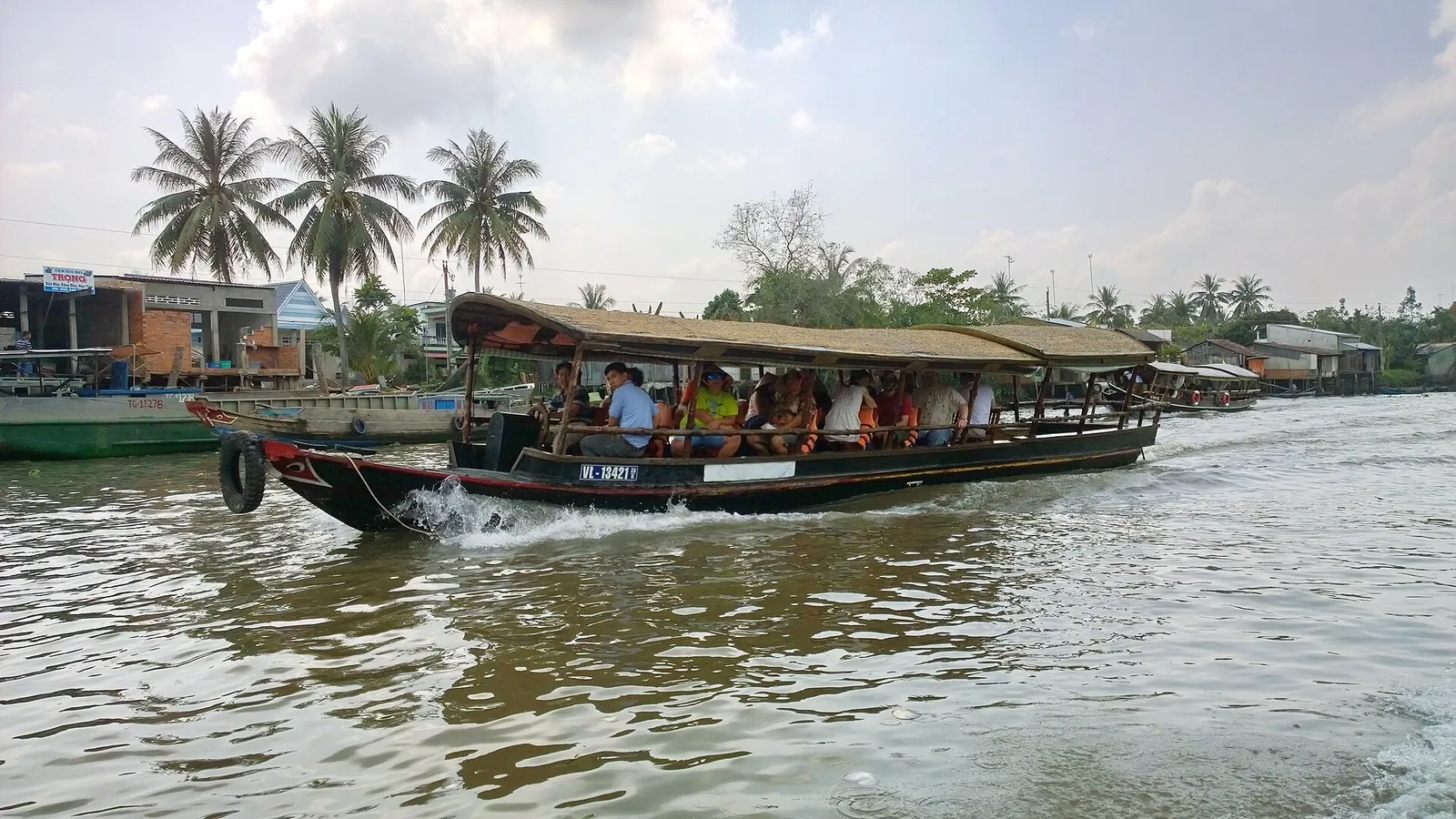
A tourist boat on the Tien River at Dong Hoa Hiep, Cai Be
Photograph: trungydang — opens in a new tab · CC BY 3.0 — opens in a new tab
Changes: Resized and converted to WebP; displayed with responsive crops. · Original photograph and licence details ↗ — opens in a new tab
The gate of Van Thanh Mieu in Vinh Long town, a stop on the Long Ho river route
Photograph: Bùi Thụy Đào Nguyên — opens in a new tab · CC BY-SA 3.0 — opens in a new tab
Changes: Resized and converted to WebP; displayed with responsive crops. · Original photograph and licence details ↗ — opens in a new tab
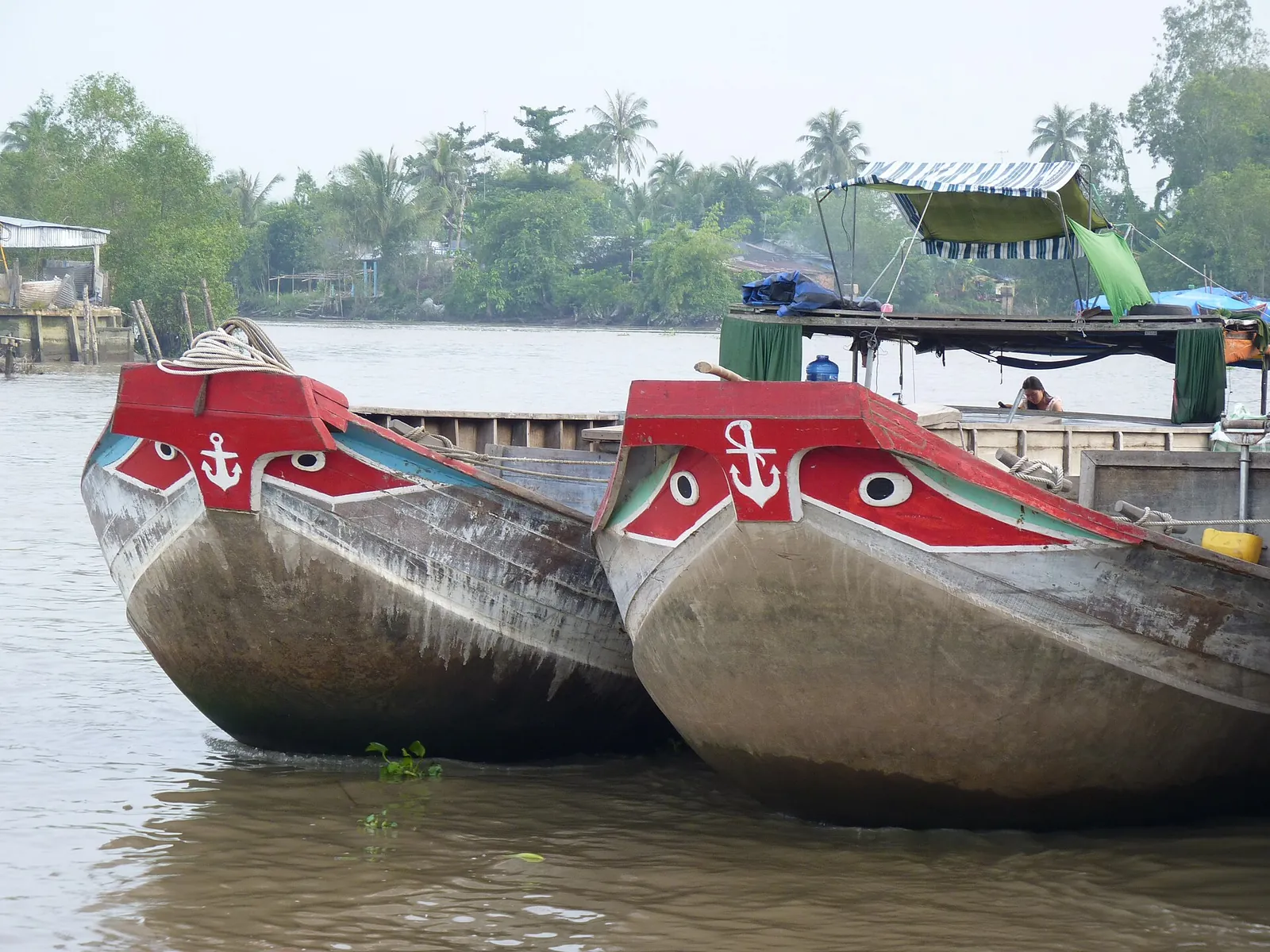
Painted wooden boats moored at Dong Hoa Hiep, Cai Be
Photograph: Adriaan Castermans — opens in a new tab · CC BY-SA 3.0 — opens in a new tab
Changes: Resized and converted to WebP; displayed with responsive crops. · Original photograph and licence details ↗ — opens in a new tab
Fried elephant-ear fish (ca tai tuong chien xu) served at a resort in Cai Be
Photograph: Phương Huy — opens in a new tab · CC BY-SA 4.0 — opens in a new tab
Changes: Resized and converted to WebP; displayed with responsive crops. · Original photograph and licence details ↗ — opens in a new tab
The brick kilns of Mang Thit, Vinh Long, seen from the water
Photograph: Trantuonglam — opens in a new tab · CC BY-SA 4.0 — opens in a new tab
Changes: Resized and converted to WebP; displayed with responsive crops. · Original photograph and licence details ↗ — opens in a new tab
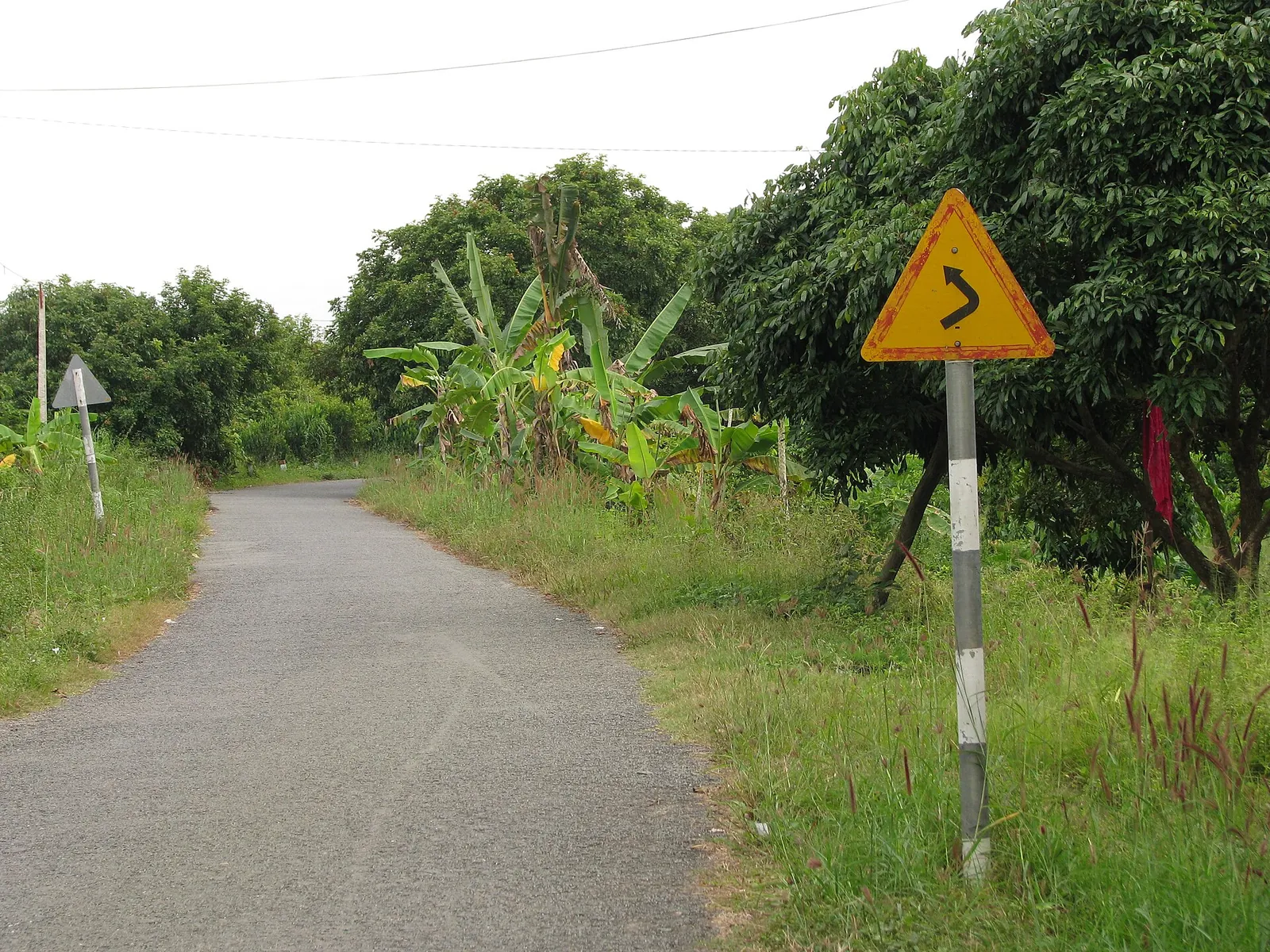
A country lane on An Binh island, the kind of road homestay guests explore by bicycle
Photograph: McKay Savage from London, UK — opens in a new tab · CC BY 2.0 — opens in a new tab
Changes: Resized and converted to WebP; displayed with responsive crops. · Original photograph and licence details ↗ — opens in a new tab