Mekong Delta and Phu Quoc · Vinh Long
Tra Vinh travel guide: Ba Om pond, Khmer pagodas and where to stay
Tra Vinh is the Mekong Delta town to choose if you want the region's Khmer side rather than its boat tours. Vietnam's tourism authority counts about 140 ornate temples built by the Khmer Krom in the area and puts the ethnic Khmer share of the population at about 31 percent; the saffron robes, curved naga roofs and pagoda schools are part of everyday life here, not a show. The town itself is shady and unhurried — thousands of old trees line its streets — and the main sights, Ba Om pond, Ang Pagoda, the Khmer culture museum and Hang Pagoda, all lie within a few kilometres of the centre.
- Suggested time
- 1–2 nights
- Where to stay
- Central Tra Vinh, around Hung Vuong, Ly Thuong Kiet and Pham Thai Buong streets
- Season and timing
- The dry season runs from December to April and the rainy season from May to November; it is warm all year. Come in the lunar tenth month (usually November) for the Ok Om Bok moon festival.
The short answer
Stay one or two nights in central Tra Vinh. Spend a morning at Ba Om pond, Ang Pagoda and the Khmer culture museum across the road, which sit together about 5 km south-west of the centre; walk the market and the riverside in the middle of the day; and go to Hang Pagoda in the late afternoon, when storks come back to its trees. With a second day, head out to the gilded Vam Ray Pagoda and the stork-filled Co Pagoda in Tra Cu, or to the community-run Con Chim islet. Buses from Ho Chi Minh City's Mien Tay Bus Station take about three hours; Tra Vinh also slots neatly between Ben Tre and Can Tho on a road trip through the delta.
Why Tra Vinh, and how long to stay
Tra Vinh lies between the Tien and Hau branches of the Mekong, south of Ben Tre and north of Soc Trang. Vietnam's tourism authority describes it as one of the delta's prettier provinces — a maze of quiet, tree-lined streets, old houses and rice paddies — and the trees are no exaggeration: city figures reported by VnExpress counted 14,463 shade trees along 87 roads, around 800 of them more than a century old.
What sets Tra Vinh apart from Can Tho or Ben Tre is the Khmer presence. Reports put the number of Khmer pagodas in the province at about 140 to 143, many of them still schools where children and novice monks learn to read and write Khmer during the summer. You come here to walk pagoda grounds, watch monks on their morning alms round and eat Khmer-influenced noodles, not for floating markets or river cruises.
One night is enough for Ba Om, Ang Pagoda, the museum and Hang Pagoda. Two nights let you add the outlying pagodas of Tra Cu, Con Chim islet or the coast at Ba Dong without rushing. Since the June 2025 reorganisation of Vietnam's provinces, the former Tra Vinh province has been part of an enlarged Vinh Long Province, together with Ben Tre, so you may see Vinh Long in addresses and on booking sites.
Ba Om pond, Ang Pagoda and the Khmer museum
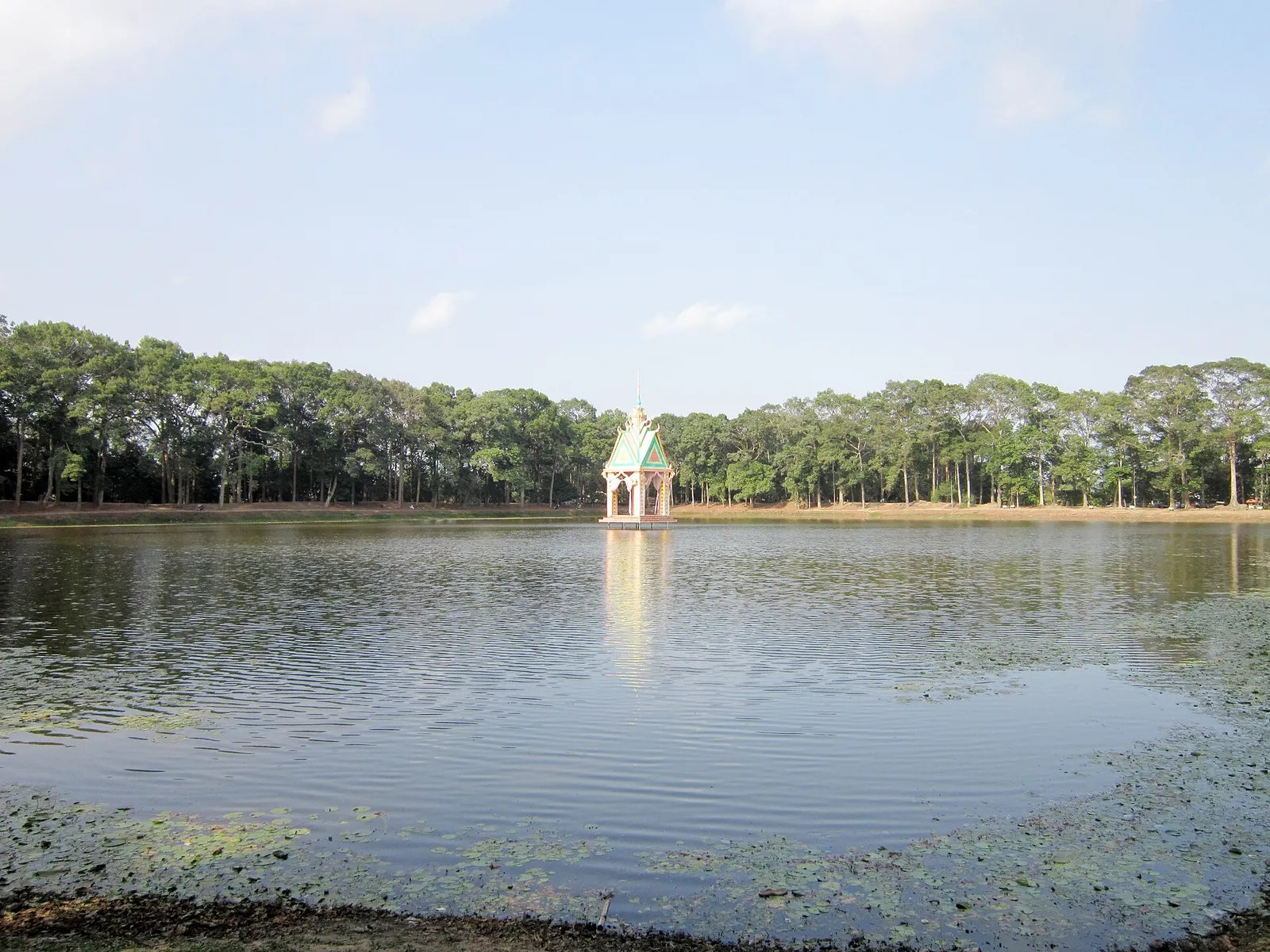
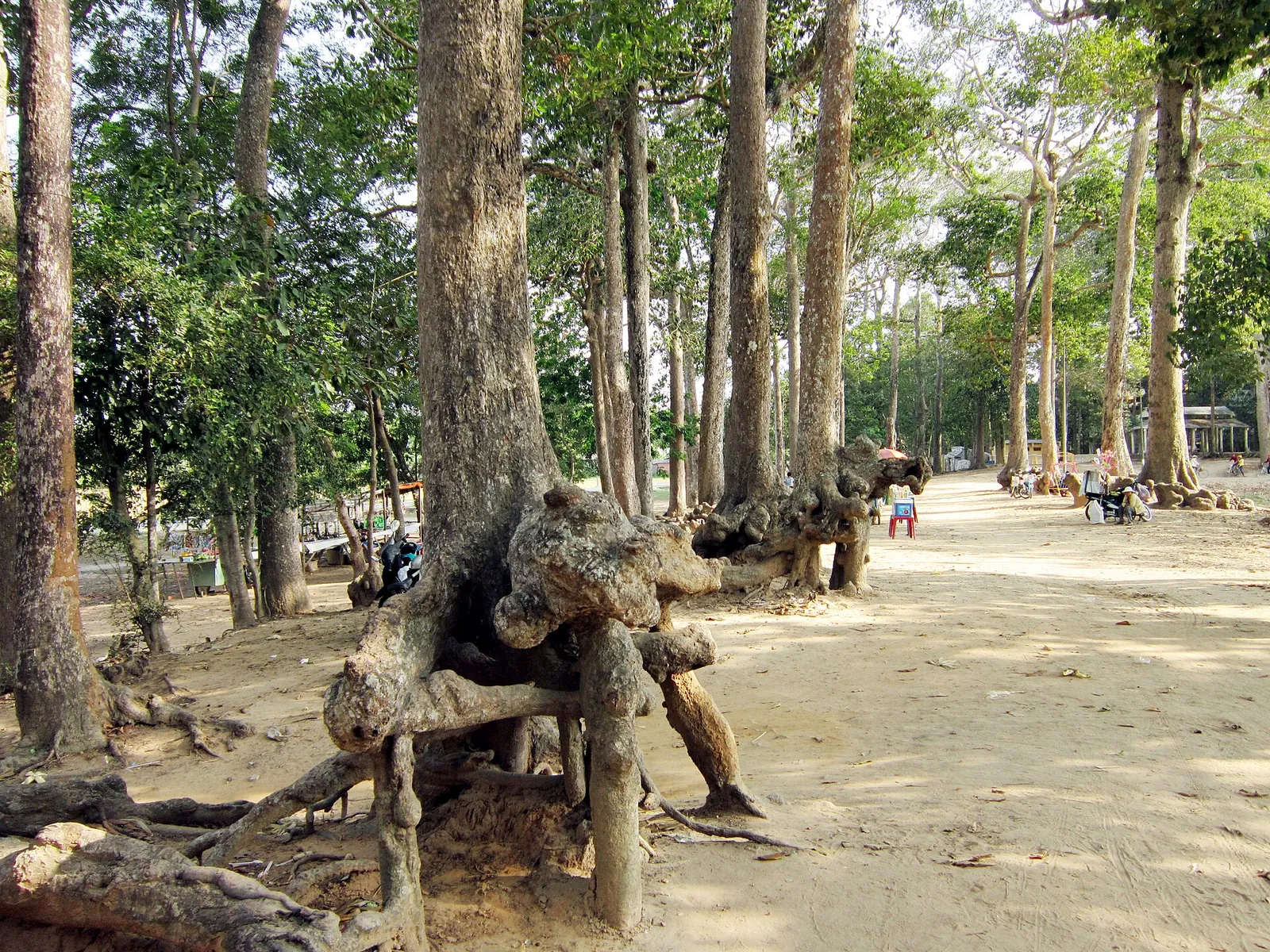
Ao Ba Om is a near-square pond, about 500 m long and 300 m wide, dug by hand on a sand ridge centuries ago to store rainwater. Its banks are rolling sandy mounds under tall dipterocarp trees whose roots rise a metre or two out of the ground in strange, knotted shapes; the provincial People's Committee counts about 500 of these old trees around the pond. Legend says the pond was dug in a night-long contest between men and women, won by the women under a Khmer woman named Om, who earned the right to choose a husband. The pond dried out in the severe drought of 2016 and was dredged and reinforced afterwards.
Ba Om is a local park as much as a monument. Vietnam's tourism authority suggests doing what residents do: sit in a plastic chair under the trees with an iced coffee from one of the stalls and watch the lotus and dragonflies. It is also where the Khmer community gathers for its main festivals, including Chol Chnam Thmay, Sene Dolta and Ok Om Bok.
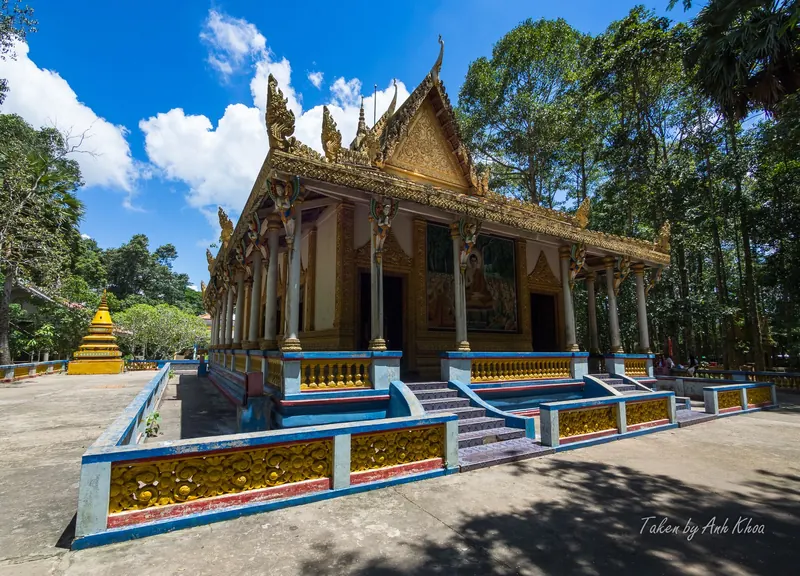
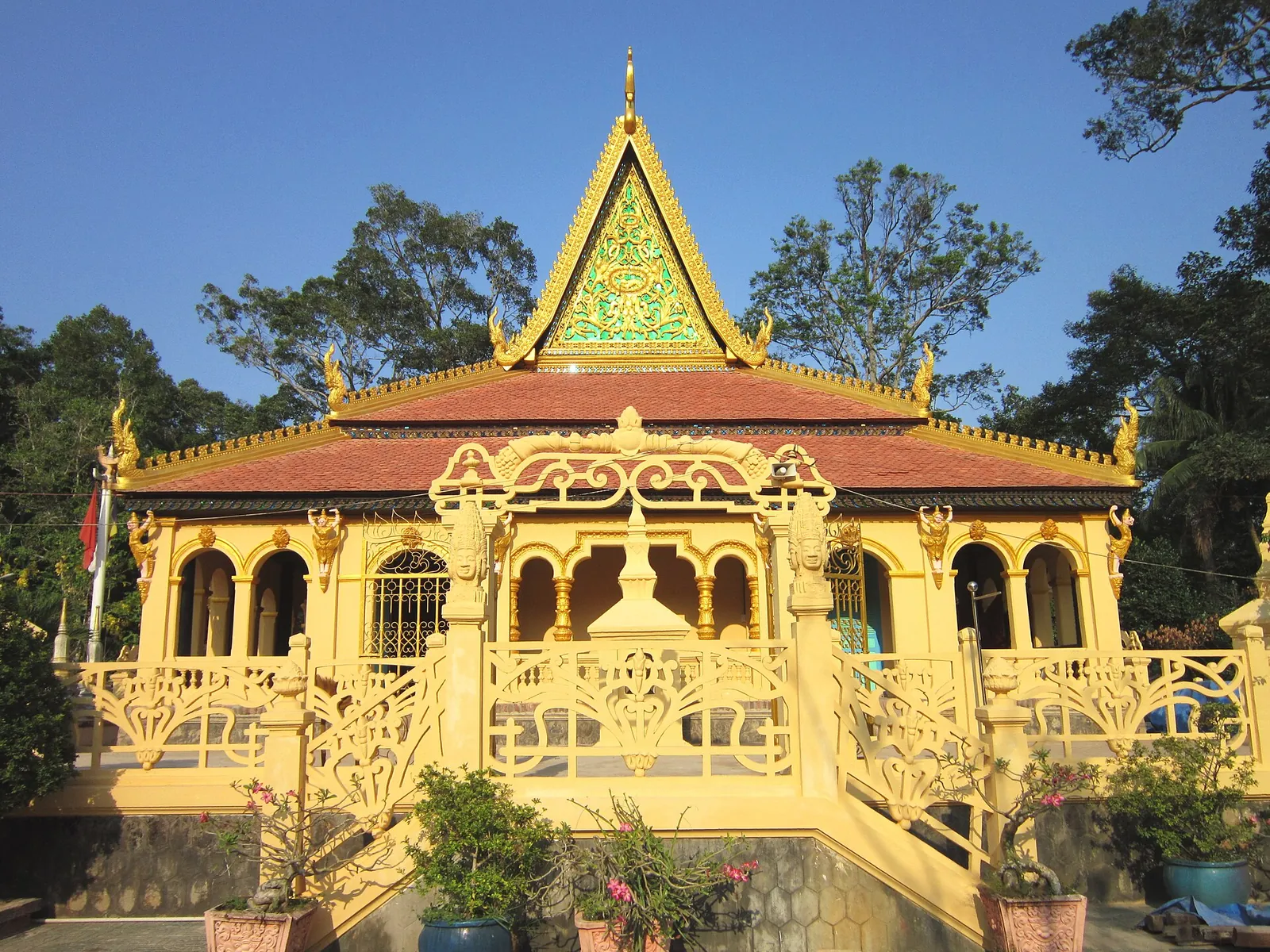
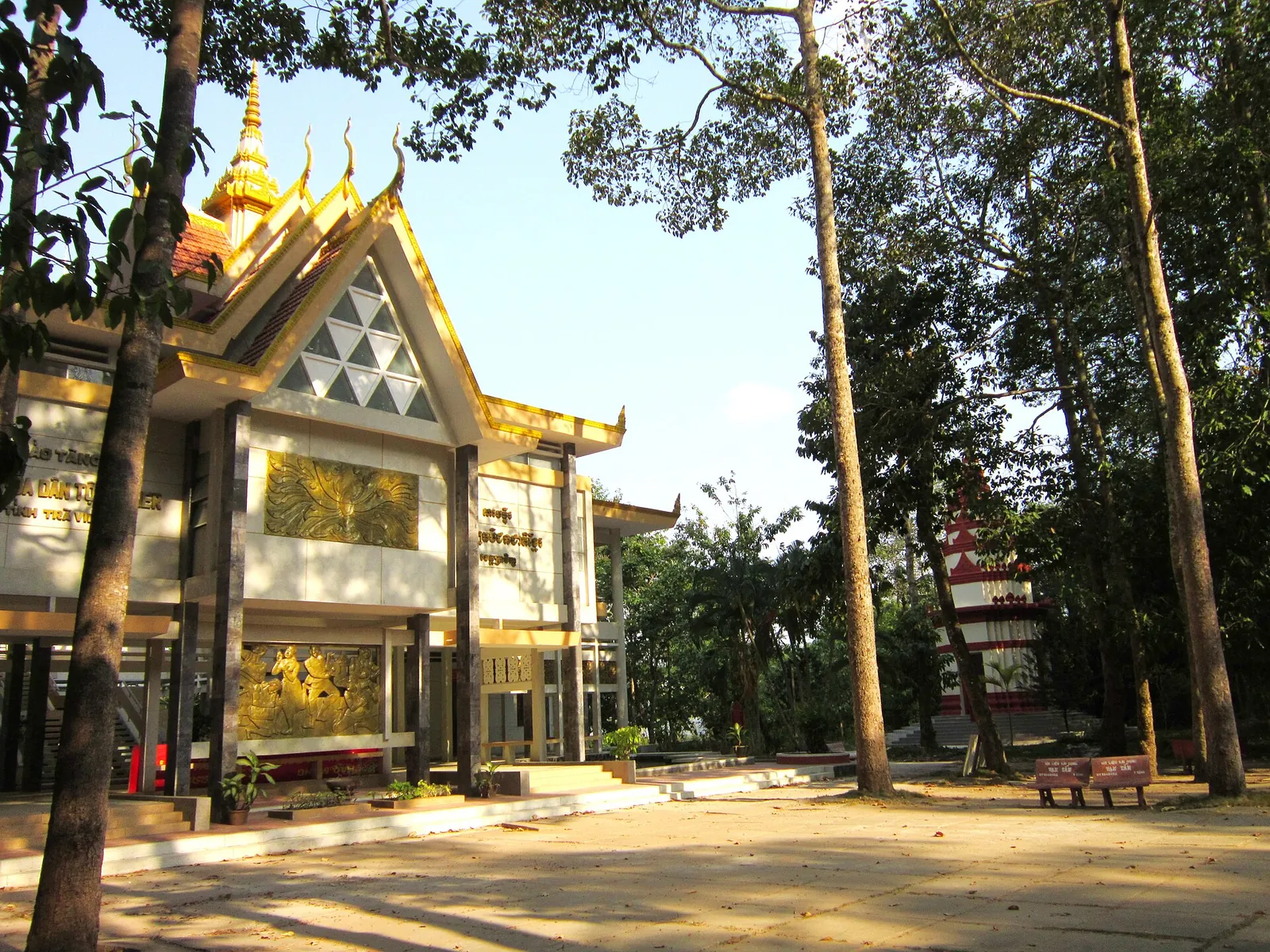
Across National Road 53 stands Ang Pagoda (Angkorajaborey), considered the oldest and one of the most beautiful Khmer pagodas in Tra Vinh. It is said to date from the tenth century and was rebuilt in 1842; its gates, roofs and pillars are decorated with bird-headed figures, celestial dancers, guardian giants and naga serpents, set in a grove of old trees. Opposite it, the Museum of Khmer Ethnic Culture displays everyday objects of Khmer Krom life. Allow two to three hours for all three. Opening hours and admission for the pagoda and the museum were not available from an official source when we checked on 2026-10-03, so go in the morning and dress for a temple: shoulders and knees covered, shoes off where others take them off.
Make time for the local food
What to eat and where to look
Bún nước lèo
The Khmer delta's signature noodle soup: a broth of fermented fish (mắm bò hóc in Tra Vinh) strained and simmered with lemongrass, flaked snakehead fish, straw mushrooms and pork blood, poured over rice noodles. It comes with fried spring rolls, roast pork and plenty of shredded banana flower and water lily stems. Soc Trang claims it too.
- Where to look
- Noodle shops and breakfast stalls in central Tra Vinh; Vietnam's tourism authority suggests it for lunch after Ba Om.
- Fit it into your day
- Breakfast or lunch on the Ba Om morning, with spring rolls and roast pork on the side.
The fermented-fish broth is pungent; contains fish, pork and pork blood.
Bún suông
A Tra Vinh invention: rice noodles in a tamarind-and-fermented-soybean pork broth with suông, little curled dumplings of pounded shrimp shaped like palm-weevil larvae, plus pork belly, bean sprouts and shredded cabbage, with a dip of ground soybean paste and chilli.
- Where to look
- Noodle shops in central Tra Vinh, mostly in the morning.
- Fit it into your day
- Breakfast before Ong Met Pagoda or the market.
Contains shrimp and pork.
Bánh canh Bến Có
Thick, round rice noodles in a clear pork-bone broth, with pork knuckle, lean pork, heart, liver and other nose-to-tail cuts, finished with spring onion, fried shallots and pepper. It is named after Ben Co hamlet on National Road 53, where a shop has been serving it for more than 40 years.
- Where to look
- Along National Road 53 at Ben Co, on the road south-west past Ba Om, and in town.
- Fit it into your day
- Lunch on the way back from Ba Om and Ang Pagoda.
Offal-heavy unless you ask for lean meat only.
Bánh tét Trà Cuôn
A log-shaped sticky-rice cake from Tra Cuon hamlet in Cau Ngang, a Khmer area. The rice is tinted green with leaf juice and wrapped round mung bean and seasoned pork (sometimes salted egg), or a sweet banana filling, then boiled in banana leaves for about ten hours.
- Where to look
- Tra Vinh market and roadside stops near the city.
- Fit it into your day
- A snack on the market walk, or a whole cake to take on the bus.
The savoury version contains pork; check the filling before buying.
Cháo ám and bánh mì phá lấu
Cháo ám is a snakehead-fish rice porridge with dried shrimp and squid, fermented fish sauce and roasted peanuts, eaten with herbs and crumbled sesame crackers. For dinner, Vietnam's tourism authority points to bánh mì phá lấu, a baguette stuffed with braised offal in a rich, sweet sauce.
- Where to look
- Small eateries and evening bánh mì sellers in the centre.
- Fit it into your day
- Cháo ám for a light lunch; bánh mì phá lấu before an evening café on Pham Ngu Lao.
Contains fish, shellfish and offal.
Hang Pagoda: wood carvings and storks at dusk
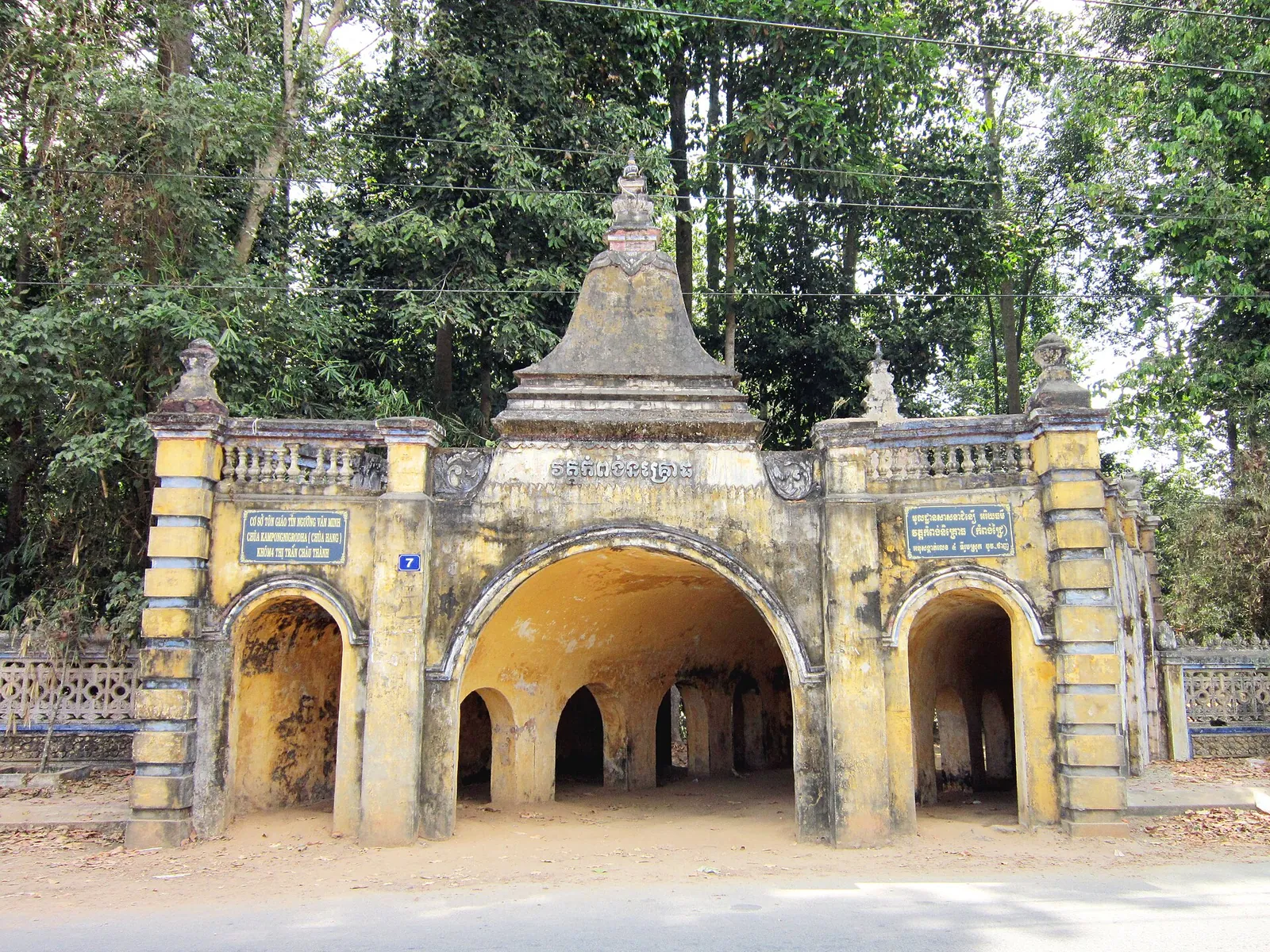
Kompong Chrây Pagoda, better known as Hang Pagoda (the 'cave pagoda'), lies just south of town on National Road 54 — Vietnam's tourism authority puts it 6 km from the city. Its name comes from the entrance: three arched gates built like caves side by side, with walls so thick that walking through feels like passing through rock. The pagoda is more than 300 years old and stands in about two hectares of old trees.
Two things make it worth timing your visit. The resident monks carve wood, turning tree roots into large sculptures that stand around the grounds and indoors, some of them reaching the ceiling. And the treetops are home to thousands of storks and other birds: arrive in the late afternoon and wait until dusk, when flocks return to roost.
Keep your distance from the nesting trees, do not use a drone, and remember that this is a working monastery where young monks study.
Around town: Ong Met Pagoda, the market and the river
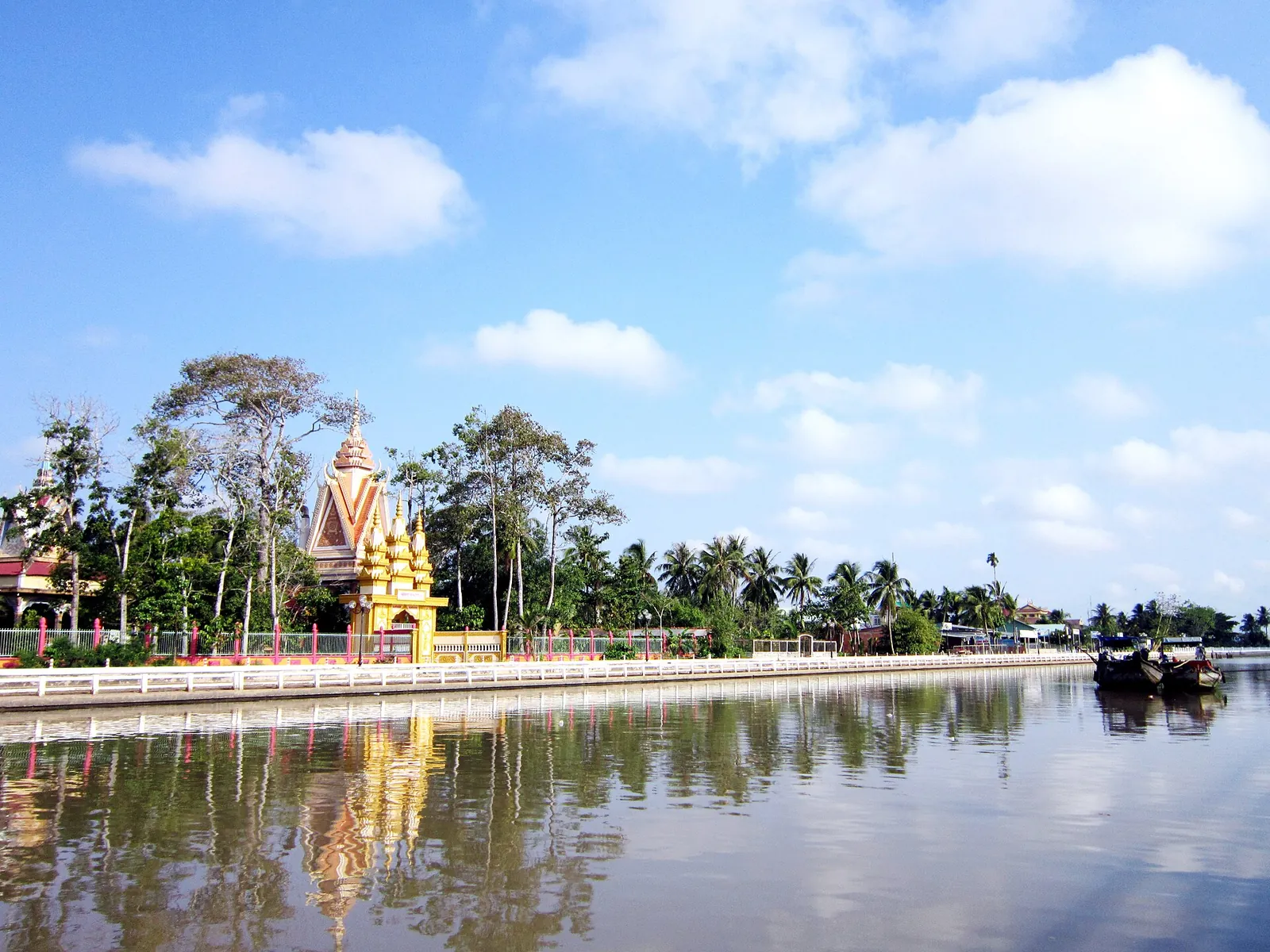
In the centre, Ong Met Pagoda (Kompong Ksan) beside the Tra Vinh canal is one of the province's best-known Khmer temples. VnExpress reports that it dates back to 642 CE, moved to its present site in 711 CE and was made a national relic in 2009. It is also an important centre of Khmer-language teaching, with many generations of the province's monks trained here.
Vietnam's tourism authority recommends a walk through the wet market and along the Long Binh river, where fishermen pull in their nets, and picking up a slice of bánh tét Trà Cuôn on the way. In the evening, the cafés along Pham Ngu Lao Street and Deja Vu Huynh Kha Eco Park, where local families walk after dinner, are where Tra Vinh spends its free time.
The town is flat and shady, so a bicycle or a rented motorbike is the easiest way to link the centre with Ba Om and Hang Pagoda; taxis are available too. Large old trees stand in the middle of some roads — one at the junction of Hung Vuong and Le Loi streets has been kept on its own traffic island — so ride slowly.
A second day: Vam Ray, Co Pagoda, Con Chim and the coast
With another day, pick one direction rather than trying to do everything. These are long rides on rural roads; a car with driver or a full day on a motorbike is the realistic way to cover them.
- Vam Ray Pagoda, in Ham Tan commune, Tra Cu, about 35 km from the city: rebuilt in the 2000s on the site of an older pagoda destroyed in the war, it is gilded from roof to pillar and has a gilded reclining Buddha 54 m long.
- Co Pagoda (Phno Don or Giong Lon), in Dai An commune, Tra Cu: founded in 1677, it is known for the storks, egrets and bitterns that nest in the old trees of its six-hectare grounds, and it runs Khmer classes for local children in the summer.
- Con Chim islet, about 15 km from the city on the Co Chien River: a community-based tourism village reached by a short ferry from Ba Tram dock, where families serve home-cooked delta food and lend bicycles to ride around the islet. Salt water reaches the islet from March to September, when farmers switch from rice to shrimp and crab.
- Ba Dong beach, in Truong Long Hoa, Duyen Hai, about 55 km from the city: a seaside day with seafood and the wind turbines along the coast, with mangrove forest a few kilometres away.
- Cau Ke, on the Hau River west of the city: fruit orchards on Tan Quy islet, Sam Pua Pagoda and the early 20th-century Huynh Ky house, about 30 km from Tra Vinh.
Festivals and when to go
Tra Vinh is hot all year, at around 28 °C on average. The dry season from December to April is the easiest time for long rides to the outlying pagodas; from May to November afternoon rain is common, but the town and the main sights are close enough together to work around it.
The Khmer calendar is the best reason to time a visit. Ok Om Bok, the moon-worship festival on the full moon of the tenth lunar month, usually in November, brings families to Ba Om pond to float lanterns and dance; Tra Vinh's Ok Om Bok was recognised as national intangible heritage in 2014. Sene Dolta, the festival for ancestors, falls from the 29th day of the eighth lunar month to the first day of the ninth, and Kathina, the robe-offering ceremony, is held at pagodas during the ninth and tenth lunar months, with processions, drum dances and masked yeak dancers. The lunar dates move each year, so check them before you book.
Khmer New Year, Chol Chnam Thmay, is the biggest celebration of the year: three days of pagoda visits, offerings to monks, sand-mound building and the bathing of Buddha statues. If you plan to come for a festival, book your room early.
Getting there and moving on
From Ho Chi Minh City, buses leave from Mien Tay Bus Station and take about three hours to Tra Vinh, which is roughly 130 km away. Vietnam's tourism authority notes that local buses link most delta provinces with each other and with Mien Tay, and that bookable express buses are another option.
Tra Vinh works best as one stop on a delta loop rather than a dead end: come by car or bus from Ben Tre in the morning, as Vietnam's tourism authority's four-day delta itinerary does, and continue to Can Tho, about three hours away, or south to the Khmer pagodas of Soc Trang. Once in town, rent a bicycle or motorbike, or use taxis; agree on the waiting time if you hire a driver for the outlying pagodas.
Practical questions
Is Tra Vinh worth visiting?
Yes, if you are interested in Khmer culture. It has around 140 Khmer pagodas, a large Khmer population and a calm, tree-shaded town. If you mainly want floating markets and boat trips, Can Tho is the better base.
How many days do I need in Tra Vinh?
One night covers Ba Om pond, Ang Pagoda, the Khmer culture museum and Hang Pagoda at dusk. Two nights let you add Vam Ray and Co pagodas in Tra Cu, Con Chim islet or Ba Dong beach.
How do I get from Ho Chi Minh City to Tra Vinh?
By bus from Mien Tay Bus Station, which takes about three hours for the roughly 130 km trip. You can also come from Ben Tre by car or bus and continue to Can Tho, about three hours away.
When is the best time to see the storks at Hang Pagoda?
Late afternoon into dusk, when the birds return to the old trees in the pagoda grounds.
When is the Ok Om Bok festival in Tra Vinh?
On the full moon of the tenth lunar month, usually in November. The lunar date changes every year, so check it before you travel, and book a room early.
Is Tra Vinh still a province?
Not since 2025. Under the June 2025 reorganisation, Tra Vinh, Ben Tre and Vinh Long were merged into an enlarged Vinh Long Province. The town and its sights are unchanged, but addresses now often show Vinh Long.
Sources and checks before you travel
Reference sources for the version dated 3 October 2026. Confirm opening times, access, transport and conditions for your travel dates.
- Vietnam Tourism: 4 memorable days in the Mekong Delta ↗ — opens in a new tab
- Vietnam Tourism: Vietnam's new provincial system ↗ — opens in a new tab
- Vietnam Tourism: Dining in the Delta ↗ — opens in a new tab
- VnExpress: Tra Vinh travel handbook (Cẩm nang du lịch Trà Vinh) ↗ — opens in a new tab
- VnExpress: old trees at Ao Ba Om ↗ — opens in a new tab
- VnExpress: Ao Ba Om scenic site ↗ — opens in a new tab
- VnExpress International: Century-old trees give Mekong Delta city a green lung ↗ — opens in a new tab
- VnExpress International: Southern temples offer free Khmer language classes ↗ — opens in a new tab
- VnExpress International: Off the beaten track in charming Tra Vinh ↗ — opens in a new tab
- VnExpress International: Discover Con Chim islet in Tra Vinh ↗ — opens in a new tab
- VnExpress International: Tra Vinh-style noodle soup ↗ — opens in a new tab
- VnExpress: Kathina robe-offering ceremony in Tra Vinh ↗ — opens in a new tab
- VnExpress: Hang Pagoda, a cultural highlight of Tra Vinh ↗ — opens in a new tab
Does this experience fit your route?
Tra Vinh is best explored on your own; book your guided boat morning for the next stop, Can Tho.
Browse relevant experiences on Viator ↗ — opens in a new tabAffiliate link · Book with ViatorPhoto credits
Ao Ba Om, the square Khmer pond on the edge of Tra Vinh, ringed by old trees
Photograph: Bùi Thụy Đào Nguyên — opens in a new tab · CC BY-SA 3.0 — opens in a new tab
Changes: Resized and converted to WebP; displayed with responsive crops. · Original photograph and licence details ↗ — opens in a new tab
The main hall of Ang Pagoda (Angkorajaborey), across the road from Ba Om pond
Photograph: Bùi Thụy Đào Nguyên — opens in a new tab · CC BY-SA 3.0 — opens in a new tab
Changes: Resized and converted to WebP; displayed with responsive crops. · Original photograph and licence details ↗ — opens in a new tab
Old dipterocarp trees with exposed roots on the banks of Ba Om pond
Photograph: Bùi Thụy Đào Nguyên — opens in a new tab · CC BY-SA 3.0 — opens in a new tab
Changes: Resized and converted to WebP; displayed with responsive crops. · Original photograph and licence details ↗ — opens in a new tab
The cave-like triple gate that gives Hang Pagoda (Kompong Chrây) its name
Photograph: Bùi Thụy Đào Nguyên — opens in a new tab · CC BY-SA 3.0 — opens in a new tab
Changes: Resized and converted to WebP; displayed with responsive crops. · Original photograph and licence details ↗ — opens in a new tab
The Museum of Khmer Ethnic Culture beside Ba Om pond
Photograph: Bùi Thụy Đào Nguyên — opens in a new tab · CC BY-SA 3.0 — opens in a new tab
Changes: Resized and converted to WebP; displayed with responsive crops. · Original photograph and licence details ↗ — opens in a new tab
Ong Met Pagoda beside the canal in central Tra Vinh
Photograph: Bùi Thụy Đào Nguyên — opens in a new tab · CC BY-SA 3.0 — opens in a new tab
Changes: Resized and converted to WebP; displayed with responsive crops. · Original photograph and licence details ↗ — opens in a new tab