Mekong Delta and Phu Quoc · Dong Thap
Sa Dec travel guide: flower village, The Lover's house and noodles
Sa Dec is a small river town on the Sa Giang, a river channel linking the Tien and the Hau, and it rewards a slow overnight stop more than a rushed photo call. Its gardens supply flowers to much of southern Vietnam, its riverside streets hold old Chinese temples and merchant houses, and one of those houses belonged to Huynh Thuy Le, the lover Marguerite Duras wrote about decades later. Come for the flowers in the cool of the morning, the house and the temples in the afternoon, and a bowl of the town's rice noodles at the market.
- Suggested time
- 1 night (or a half-day stop)
- Where to stay
- Sa Dec town centre for the market and the old house; a flower-village homestay for mornings among the gardens
- Season and timing
- Flowers grow all year. The weeks before Tet (Lunar New Year) are the busiest and most colourful; the wet season brings afternoon downpours from May to November.
The short answer
Give Sa Dec one night, or a long half-day if you are moving between Vinh Long, Can Tho and Chau Doc. Sleep in the town centre for the market, the Huynh Thuy Le house and Kien An Cung on foot, or in a garden homestay in the flower village if early-morning light among the beds matters more to you. Walk the flower lanes early, see the house and temples while the gardens are hot, and finish at the market or with hu tieu for dinner. Without your own transport, come by bus or car from Can Tho or Ho Chi Minh City and use local electric carts or a taxi to reach the gardens.
Where Sa Dec fits, and where to sleep
Sa Dec sits in the south of Dong Thap province, on the Sa Dec river close to the Tien River. Since the 2025 reorganisation of local government, the former Sa Dec city has been merged into a single Sa Dec ward, so addresses that still say "Ward 1" or "Ward 2" refer to the old divisions. VnExpress's travel guide puts the town about 60 km from Can Tho (a little over an hour by road) and about 130 km from Ho Chi Minh City (around three hours).
The town centre is compact: the market, the riverfront, the Huynh Thuy Le house on Nguyen Hue Street and the Chinese temples are all close together, and this is where the ordinary hotels are. The flower village lies on the edge of town in the Tan Quy Dong area, and some growers there run homestays with garden rooms and home cooking. Choose the centre if you arrive late or want to eat at the market; choose a garden stay if you want the flower lanes to yourself at first light.
The flower village: raised beds, boats and early light
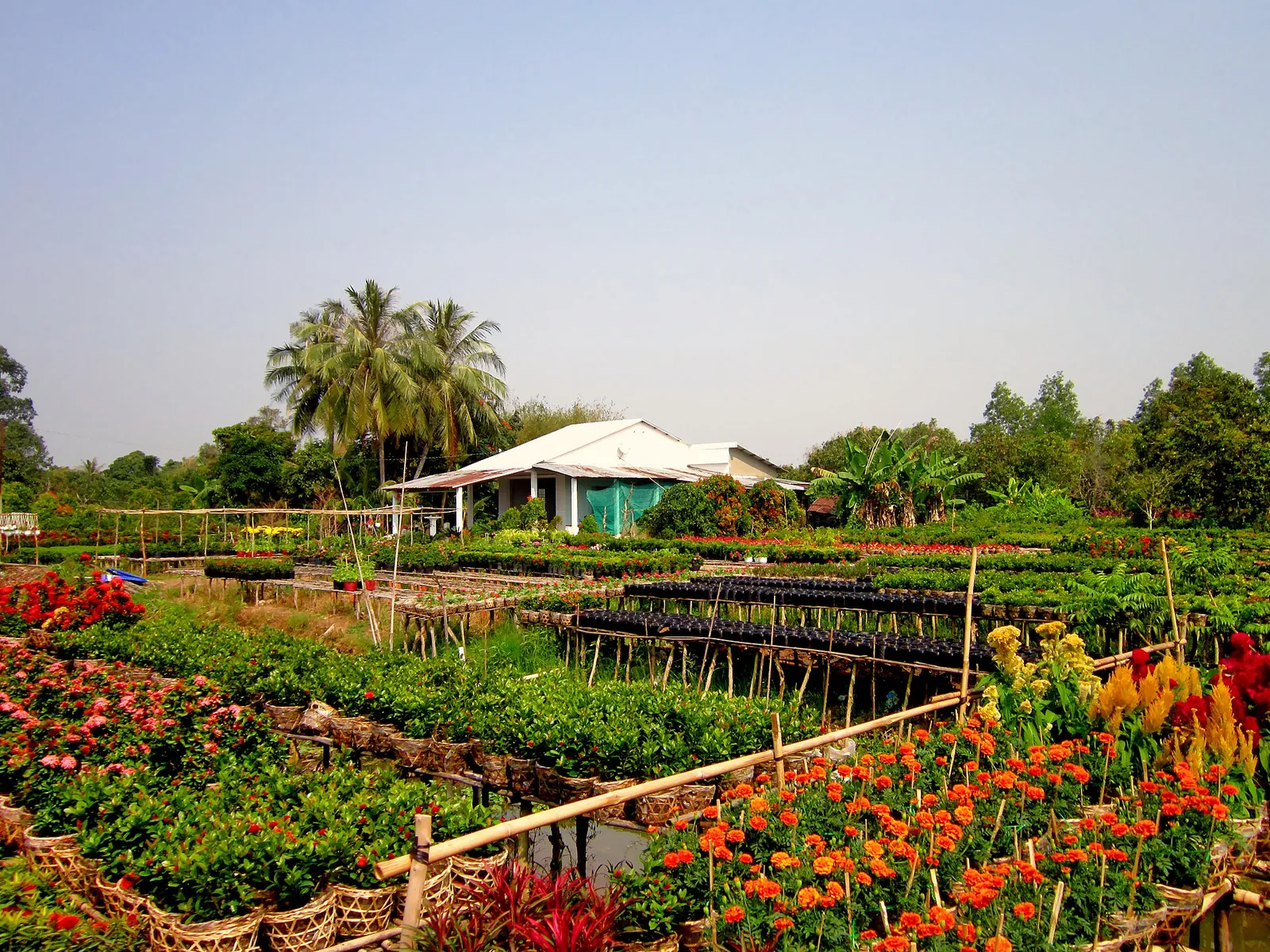
Sa Dec's flower village grew from gardens in Tan Quy Dong more than a century ago and now covers close to 1,000 hectares, with about 4,000 growing households and more than 2,000 varieties of flowers and ornamental plants, according to the Vietnam National Authority of Tourism. In December 2025 the Ministry of Culture, Sports and Tourism added Sa Dec's flower and ornamental-plant growing to the national list of intangible cultural heritage.
What makes it different from flower fields elsewhere is the way it is farmed. Because the land is low and wet, growers set their pots on raised platforms of bamboo or concrete over channels of river water, and tend and harvest them from small boats. Walk the lanes between the plots, or ride one of the electric carts that run through the village, rather than driving: the detail is at ground level, in the stacked pots and the plank bridges.
The gardens are private working farms that open according to each household. Go in the early morning or late afternoon, when the light is softer and the heat bearable. Some gardens have built viewing towers, cafés and play areas and charge a small entry fee; elsewhere, ask before stepping into a plot, keep to the edges and do not handle plants that are grown for sale.
In the weeks before Tet, the village is at its busiest. Vietnamnet reported in January 2025 that by the end of the twelfth lunar month around 80% of the flowers had been pre-ordered by traders, with displays kept for a few more days for visitors before the pots were shipped. The Sa Dec Flower and Ornamental Plant Festival has been held twice so far, from 30 December 2023 to 5 January 2024 and from 27 December 2025 to 4 January 2026; if another edition is announced, book a room early.
Make time for the local food
What to eat and where to look
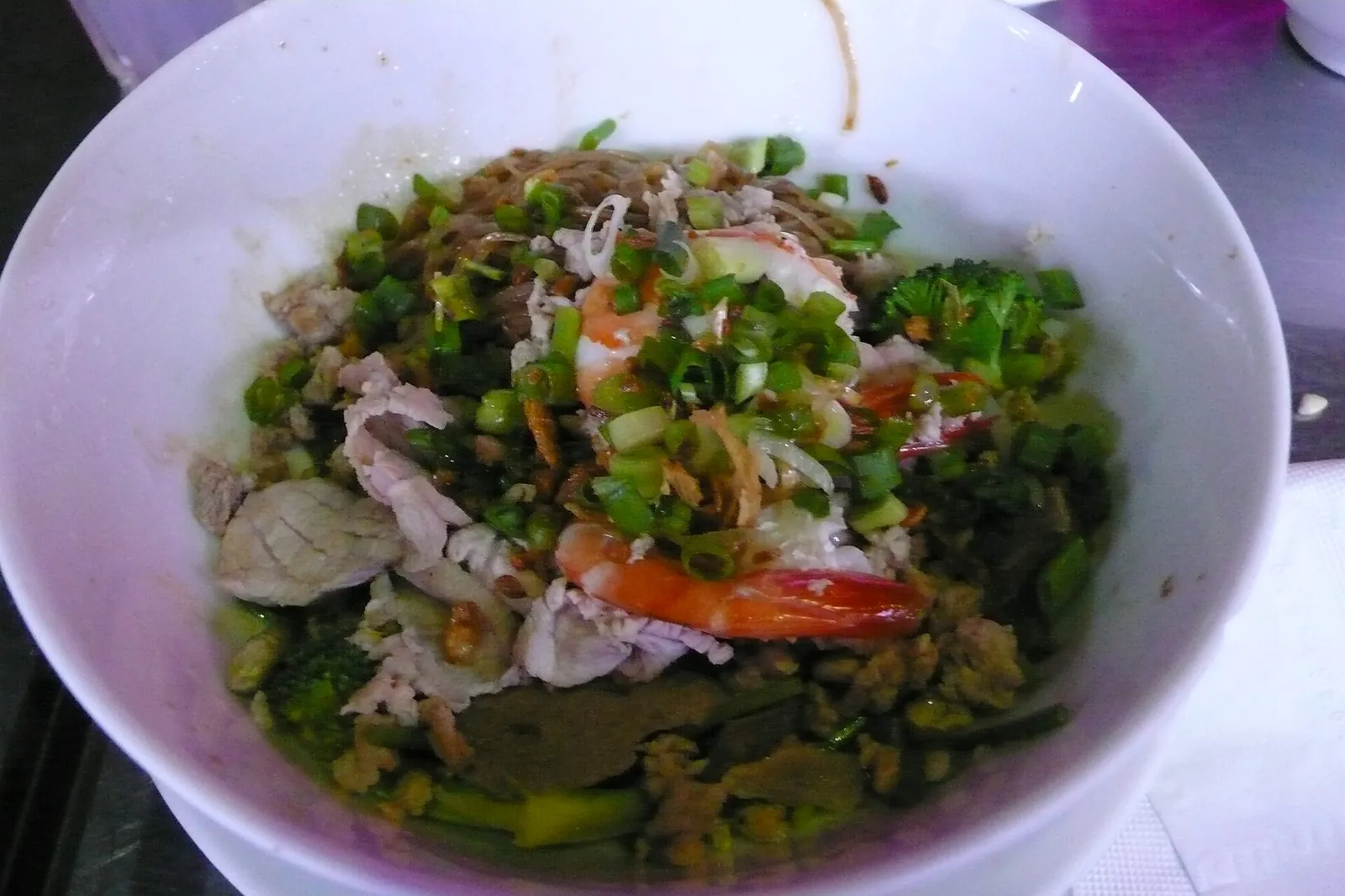
Hu tieu Sa Dec (rice noodle soup)
White rice noodles made from the town's own rice flour, in a clear broth simmered from pork bones with grilled dried squid and dried shrimp, topped with pork, liver or kidney, quail eggs, bean sprouts and chives. It is also served dry, with the broth on the side.
- Where to look
- Long-running noodle shops in the town centre and the stalls around Sa Dec market.
- Fit it into your day
- Breakfast before or after an early walk in the flower village, or a simple dinner in town.
Traditional bowls include offal; ask for meat only if you prefer.
Banh tam bi (rice noodles with shredded pork skin)
Thick, soft noodles of rice and tapioca flour, steamed and topped with shredded pork skin tossed in toasted rice powder, herbs, bean sprouts and cucumber, then dressed with coconut cream and sweet-sour fish sauce.
- Where to look
- Market stalls and small eateries in central Sa Dec.
- Fit it into your day
- A light lunch; it is filling but not heavy.
Contains pork and fish sauce, and often spring rolls or meatballs on top.
Ca loc nuong trui (straw-grilled snakehead fish)
A whole snakehead fish grilled over burning straw until the skin chars, then eaten in pieces rolled with herbs, cucumber, young lotus shoots and rice noodles, dipped in tamarind fish sauce.
- Where to look
- Garden restaurants in and around the flower village, which serve country dishes to groups.
- Fit it into your day
- A shared lunch or dinner rather than a solo meal.
Watch for small bones.
Lau ca linh bong dien dien (linh fish hotpot with sesbania flowers)
A flood-season hotpot of small linh fish and yellow dien dien flowers cooked in coconut water with fish sauce and tamarind, dipped in salty fish sauce with chilli.
- Where to look
- Family restaurants during the flood season; ask what is in season.
- Fit it into your day
- A shared dinner when it is available.
Only available when the fish and flowers are in season; the fish are eaten whole with their soft bones.
The Lover's house and the Chinese temples
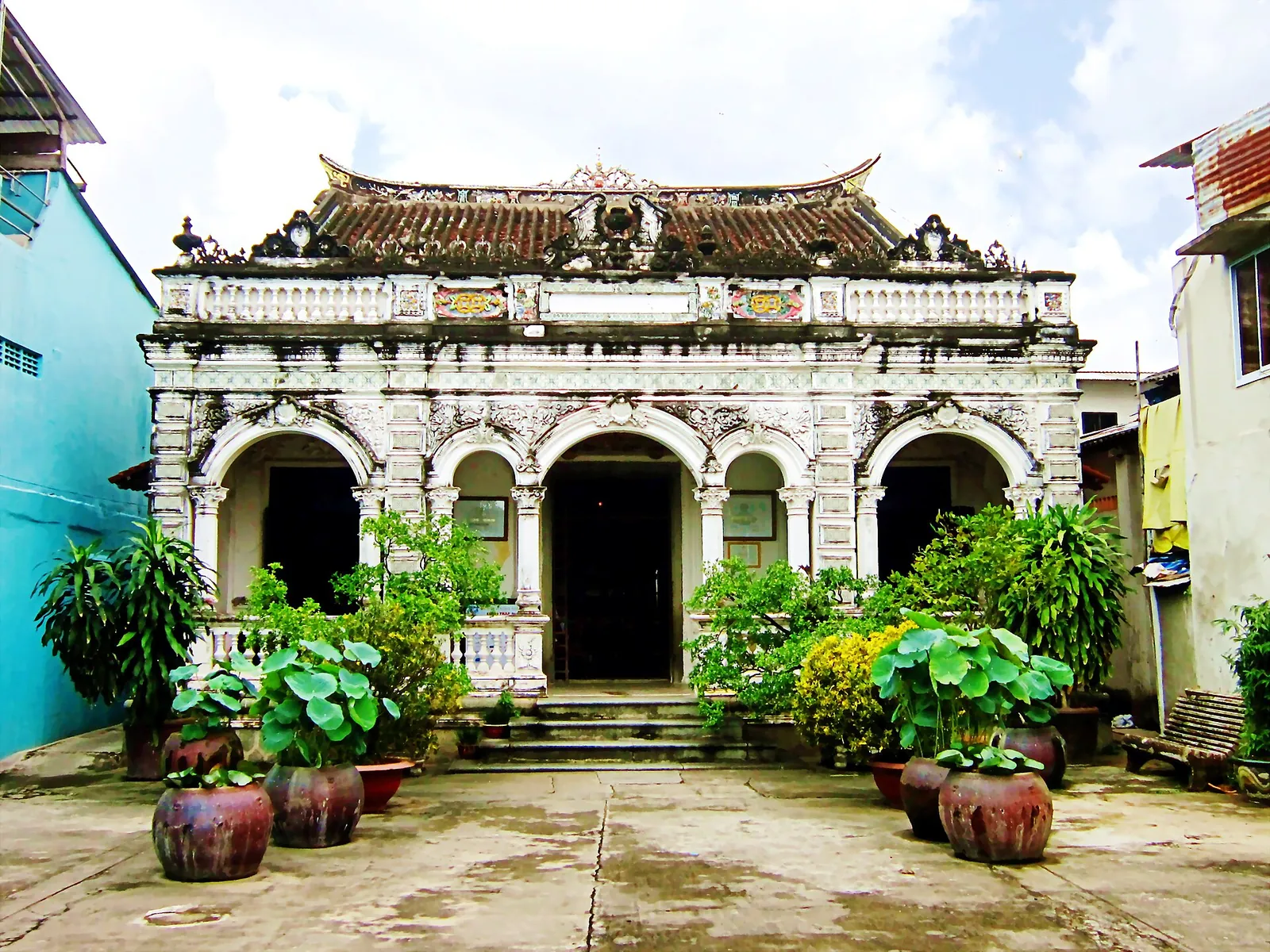
The Huynh Thuy Le ancient house, at 255A Nguyen Hue Street, was built in 1895 by Huynh Cam Thuan, a wealthy merchant of Chinese origin, on what was then a busy trading street by the river, and rebuilt in brick in 1917. From the outside it looks like a French villa; inside it keeps the three-bay layout of a southern Vietnamese house, with red-lacquered, gilded wooden screens and carved phoenixes in a Chinese style. Of a once larger compound, only the main building, about 258 m², survives. It became a national relic in 2009.
The house takes its name from the owner's son, Huynh Thuy Le. According to the national tourism authority, he met the teenage Marguerite Duras on a ferry crossing in 1929, when her mother was posted to the delta; his father opposed the relationship and it ended after about 18 months. Duras turned it into L'Amant (The Lover), which won the Prix Goncourt in 1984 and was filmed by Jean-Jacques Annaud in 1992. Sources disagree on how much of the film was shot here: a guide at the house told the national tourism authority that the crew used another old house in Can Tho as the main setting.
The house closed for restoration and reopened on 15 December 2023 with paid admission, film screenings of The Lover and traditional costume hire, according to the Vietnam National Authority of Tourism. We could not find an official page listing current opening hours or ticket prices, so check at the gate.
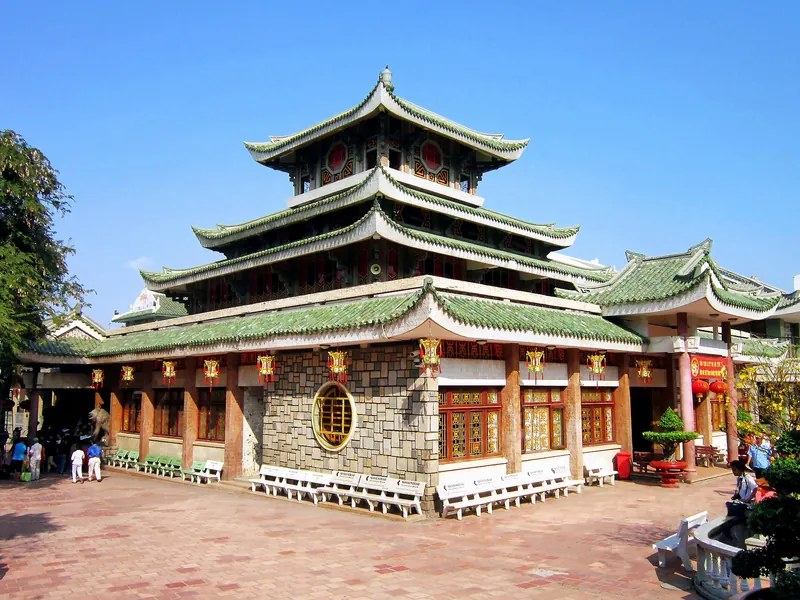
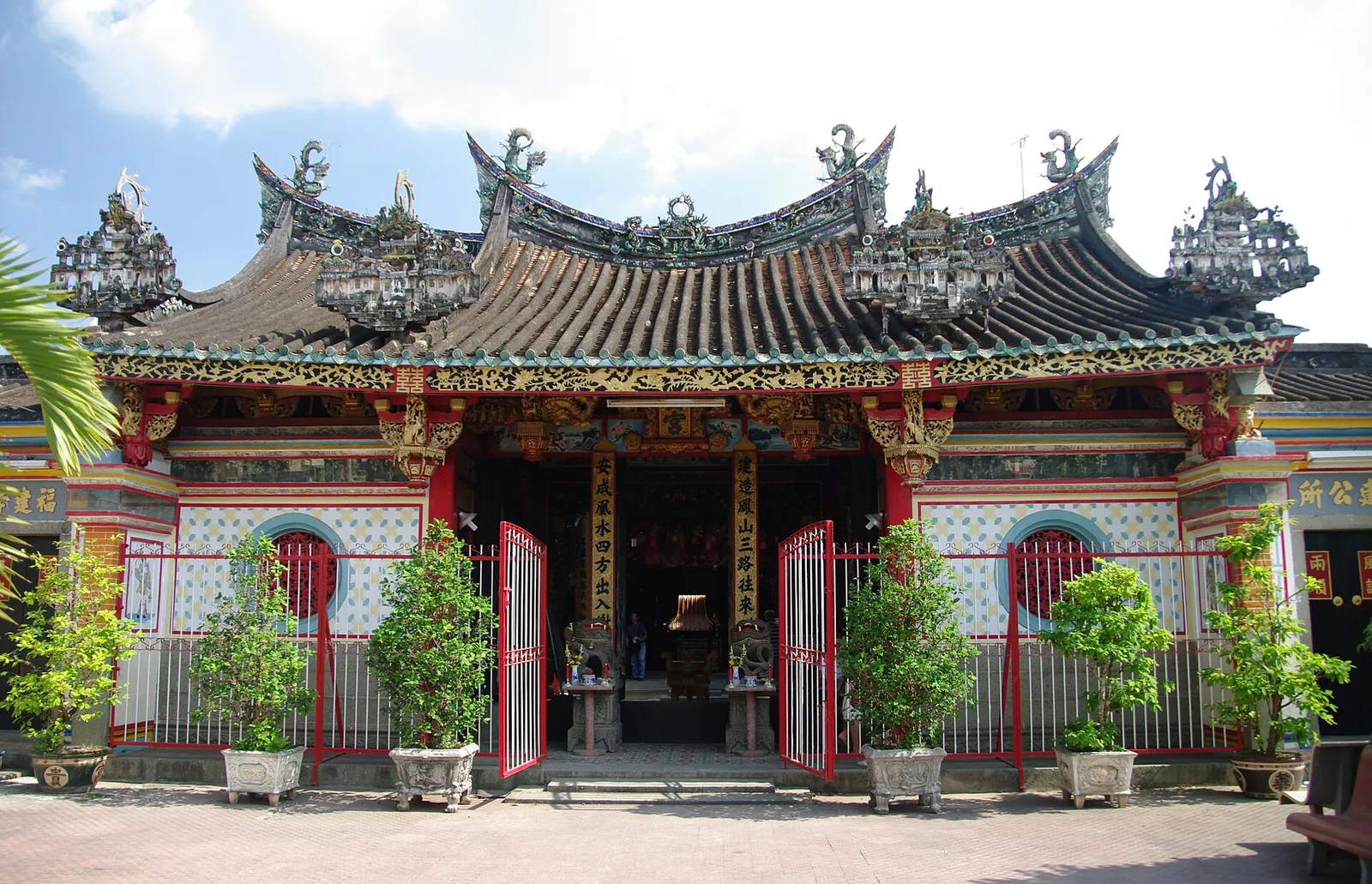
A short walk away, Kien An Cung, also called Chua Ong Quach, is a Chinese temple built in the 1920s by Sa Dec's Fujian community and a national relic. Look at the coloured ceramic reliefs on the roof and the carved timber inside. When we checked on 2026-10-03, VnExpress's Sa Dec guide listed it as open daily from 6:00 to 18:00 with free entry. The same guide points to the Thien Hau pagoda, built by the Fujian community in 1867 about 500 m away, and to the older Kim Hue and Phuoc Hung pagodas if you want a longer temple walk. These are working places of worship: dress modestly and do not photograph people praying.
Market, riverfront and a rice-flour town
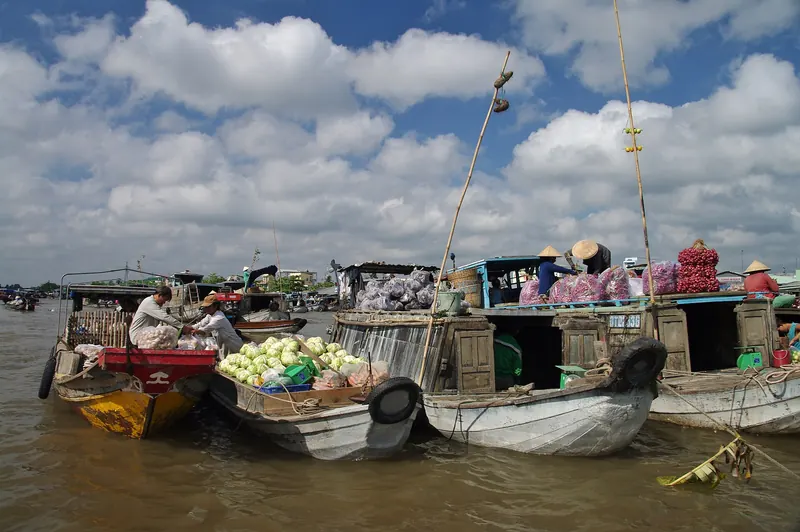
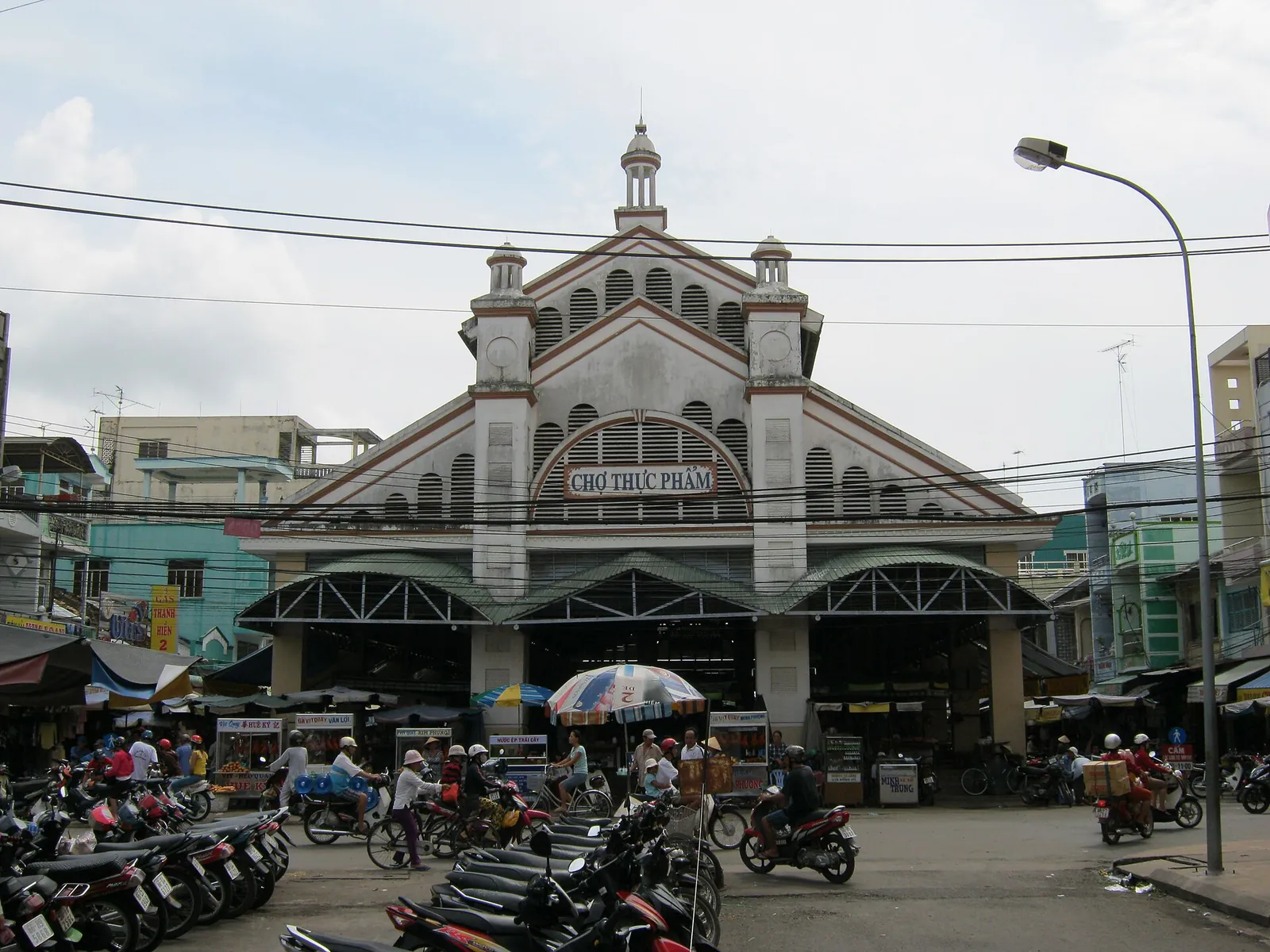
Sa Dec market, on the bank of the Sa Giang, is busiest in the early morning, when boats tie up with produce, fish and fruit from the surrounding villages. Stalls in and around it sell bun nuoc leo, hu tieu, banh tam and banh xeo, which makes it the obvious place for breakfast before or after a dawn walk in the gardens.
The town is also known for its rice flour. The craft of making Sa Dec rice flour, practised for about a century and involving soaking, grinding, fermenting and drying the rice, was added to the national intangible heritage list in 2024; Vietnamnet counted about 350 producing households. The flour goes into hu tieu noodles, banh canh and steamed cakes such as banh bo and banh da lon, so a noodle breakfast here is a taste of what the town actually makes.
Fitting Sa Dec into a Mekong Delta route
Sa Dec works best as an overnight stop between Vinh Long and Chau Doc, or as a long side trip from Can Tho. Long-distance buses run from Ho Chi Minh City's Mien Tay bus station, and there are buses from Can Tho; with luggage and limited time, a car with driver is simpler. Check the current timetable with the operator before you travel, and allow for slow roads in the run-up to Tet.
This is an editorial suggestion, not a timetable.
- Afternoon of arrival: check in, walk the riverfront and the market area, then visit Kien An Cung before it closes.
- Evening: hu tieu or banh tam bi in the town centre.
- Next morning: the flower village at first light, on foot or by electric cart.
- Late morning: the Huynh Thuy Le house, then lunch and onward travel to Vinh Long, Can Tho or Chau Doc.
When to go
Vietnam's national tourism site describes the Mekong Delta as hot all year, with a wet season from May to November that usually brings a heavy afternoon downpour lasting a few hours. Plan the gardens for the morning and keep the house and temples for the afternoon in those months.
The flower village is planted all year, but the weeks before Tet are the most colourful and the most crowded. The annual flood season (mua nuoc noi) is when dishes such as linh fish hotpot with dien dien flowers appear on local menus.
Practical questions
How long should I spend in Sa Dec?
One night is enough to see the flower village in the morning light, the Huynh Thuy Le house and the temples, and to eat at the market. If you are short of time, a long half-day stop between Can Tho and Chau Doc or Vinh Long covers the highlights, but you will miss the early morning in the gardens.
Is the Huynh Thuy Le house the house from the film The Lover?
It is the family home of Huynh Thuy Le, the man behind the lover in Marguerite Duras's novel. A guide at the house told Vietnam's tourism authority that the 1992 film used another old house in Can Tho as its main setting, though some Vietnamese reports say scenes were filmed here.
When is the best time to see the flowers?
The gardens are planted all year, but the weeks before Tet are the most colourful and the busiest, with pots stacked for shipment across the south. For quieter lanes, come outside the Tet period and walk early in the morning.
How do I get to Sa Dec?
Fly to Can Tho, about 60 km away, or to Ho Chi Minh City, about 130 km away, then continue by bus or car. Buses leave Ho Chi Minh City from the Mien Tay bus station. Check current timetables with the bus operator before you travel.
Can I stay in the flower village?
Yes. Some growers in the flower village run homestays with garden rooms and home-cooked meals. They suit travellers who want the gardens at first light; the town centre is better if you want restaurants and the market on foot.
Do I need to pay to enter the flower gardens?
Many lanes are public roads through working farms, but some gardens with viewing towers, cafés or play areas charge a small entry fee. Ask before walking into a private plot.
Sources and checks before you travel
Reference sources for the version dated 3 October 2026. Confirm opening times, access, transport and conditions for your travel dates.
- Vietnam National Authority of Tourism: Huynh Thuy Le ancient house, a national relic site ↗ — opens in a new tab
- Vietnam National Authority of Tourism: visit the 130-year-old ancient house in Dong Thap ↗ — opens in a new tab
- Vietnam National Authority of Tourism: Sa Dec flower growing recognised as national intangible heritage ↗ — opens in a new tab
- Vietnam National Authority of Tourism: a hundred years of Sa Dec flowers ↗ — opens in a new tab
- Vietnam National Authority of Tourism: Sa Dec develops its flower village with tourism ↗ — opens in a new tab
- Vietnam National Authority of Tourism: Sa Dec preserves its historic relics ↗ — opens in a new tab
- Vietnamnet: century-old Sa Dec flower village thrives as Tet 2025 nears ↗ — opens in a new tab
- Vietnamnet: Sa Dec rice flour recognised as national intangible heritage ↗ — opens in a new tab
- VnExpress: Sa Dec flower village travel guide ↗ — opens in a new tab
- VnExpress: Sa Dec, a town of old buildings and relics ↗ — opens in a new tab
- VnExpress: five Sa Dec specialities ↗ — opens in a new tab
- Wikipedia: Sa Dec, Dong Thap ↗ — opens in a new tab
- Wikipedia (Vietnamese): Sa Dec flower village ↗ — opens in a new tab
- Wikipedia: Marguerite Duras ↗ — opens in a new tab
- Vietnam Tourism: weather and climate in Vietnam ↗ — opens in a new tab
- Vietnam Tourism: Can Tho ↗ — opens in a new tab
Does this experience fit your route?
Sa Dec is easy to see on your own; a guided trip from Can Tho makes sense only if it actually stops here. Read the itinerary for Sa Dec, the flower village and the Huynh Thuy Le house before you book.
Browse relevant experiences on Viator ↗ — opens in a new tabAffiliate link · Book with ViatorPhoto credits
Flower beds in Tan Quy Dong, the heart of Sa Dec's flower village.
Photograph: Bùi Thụy Đào Nguyên — opens in a new tab · CC BY-SA 3.0 — opens in a new tab
Changes: Resized and converted to WebP; displayed with responsive crops. · Original photograph and licence details ↗ — opens in a new tab
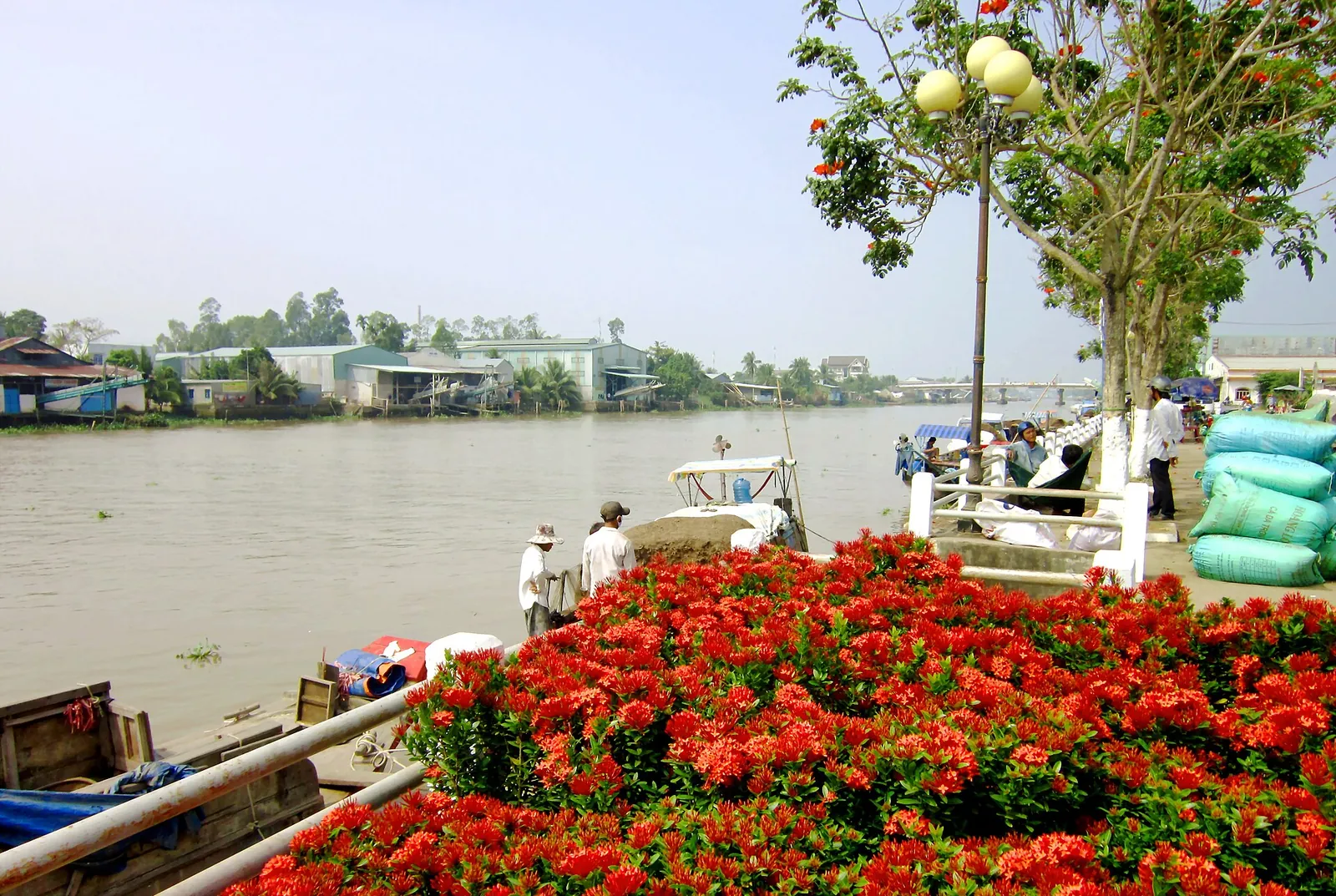
Flowers from Tan Quy Dong gathered at a landing on the Sa Dec river, ready to be loaded onto boats.
Photograph: Bùi Thụy Đào Nguyên — opens in a new tab · CC BY-SA 3.0 — opens in a new tab
Changes: Resized and converted to WebP; displayed with responsive crops. · Original photograph and licence details ↗ — opens in a new tab
Sa Dec market, the town's traditional market by the Sa Giang river.
Photograph: Bùi Thụy Đào Nguyên — opens in a new tab · CC BY-SA 3.0 — opens in a new tab
Changes: Resized and converted to WebP; displayed with responsive crops. · Original photograph and licence details ↗ — opens in a new tab
Hu tieu kho, the dry version of hu tieu; in Sa Dec the noodles are made from the town's rice flour.
Photograph: Christopher — opens in a new tab · CC BY 2.0 — opens in a new tab
Changes: Resized and converted to WebP; displayed with responsive crops. · Original photograph and licence details ↗ — opens in a new tab
The Huynh Thuy Le ancient house on Nguyen Hue Street: a French-style front on a house built in 1895.
Photograph: Bùi Thụy Đào Nguyên — opens in a new tab · CC BY-SA 3.0 — opens in a new tab
Changes: Resized and converted to WebP; displayed with responsive crops. · Original photograph and licence details ↗ — opens in a new tab
Kien An Cung (Chua Ong Quach), the Chinese temple built by Sa Dec's Fujian community.
Photograph: Jean-Marc Astesana from Voisins le Bretonneux, France — opens in a new tab · CC BY-SA 2.0 — opens in a new tab
Changes: Resized and converted to WebP; displayed with responsive crops. · Original photograph and licence details ↗ — opens in a new tab