Ho Chi Minh City and the Southeast · Tay Ninh
Tay Ninh guide: Cao Dai noon ceremony, Ba Den cable car and timing
Tay Ninh, about 100 km north-west of Ho Chi Minh City, is where Caodaism, a religion founded in Vietnam in 1926, keeps its Holy See: a yellow, pink and blue temple with twin towers, dragon-wrapped columns and a great painted globe bearing the Divine Eye. A few kilometres away, Ba Den Mountain rises out of flat farmland to 986 metres, the highest peak in the south, with old cave pagodas on its slopes and huge modern Buddha statues on its summit, both reached by cable car. Most visitors come on a long day from Saigon, and the day works only if it is built around one fixed point: the Holy See's ceremony at noon.
- Suggested time
- One long day from Ho Chi Minh City; a day and a night to add Ba Den Mountain at an unhurried pace
- Where to stay
- Ho Chi Minh City for a day trip; Tay Ninh city (Tan Ninh or Long Hoa wards) for an overnight stay
- Season and timing
- Vietnam's national tourism site describes the south as hot all year, with a May-to-November wet season that brings a dependable afternoon downpour; plan the outdoor parts for the morning or late afternoon. The Ba Den spring festival, from the fourth day of the first lunar month, and the big Cao Dai feast days draw very large crowds.
The short answer
Give Tay Ninh one long day from Ho Chi Minh City, or a day and a night if you want both the mountain and the temple without rushing. Leave Saigon early, put the Cao Dai Holy See at the centre of the day so that you are inside the grounds before the noon ceremony, and spend the other half of the day either on Ba Den Mountain by cable car or, on the way back, at the Cu Chi tunnels; trying to fit all three into one day turns it into a bus ride. With a night in Tay Ninh city, ride up Ba Den in the late afternoon on the cheaper after-5 pm ticket, sleep in town, and see the Holy See the next day. Without a driver, an organised day tour from Saigon is the simplest way to do it.
Build the day around noon at the Holy See
Caodaists hold four ceremonies a day, at 6:00, noon, 18:00 and midnight, as the Caodai organisation's guide to practice explains. For a visitor coming from Saigon, the noon ceremony is the only one that fits a day trip, which is why almost every Tay Ninh itinerary bends around it. Work backwards from 12:00: the city is about 100 km away, and Sun World's own route guide gives two to two and a half hours by car on National Highway 22 when traffic is favourable. Leaving central Saigon by 7:00 to 7:30 leaves time for a stop on the way and a slow walk around the grounds before the ceremony begins.
Then choose what fills the other half of the day. There are three sensible shapes, and the main decision is whether you want the mountain or the tunnels.
Large feast days change the picture. The Holy See holds monthly ceremonies at midnight on the first and fifteenth days of the lunar month, its great celebration for the Supreme Being on the ninth day of the first lunar month, and the Hoi Yen Dieu Tri Cung banquet for the Holy Mother on the fifteenth day of the eighth lunar month, when many Caodaists make the pilgrimage. These are spectacular but crowded; if you want a quiet visit, check the lunar calendar before you pick a date.
- Holy See and Cu Chi (the classic tour): Tay Ninh for the noon ceremony, then the Cu Chi tunnels on the way back. Cu Chi lies on the same National Highway 22 corridor between Saigon and Trang Bang, so the drive back does double duty.
- Ba Den and the Holy See: an early start, the cable car up Ba Den in the morning, and the Holy See at noon; or the Holy See first and the mountain in the afternoon. This is the better choice if you have already seen Cu Chi or plan to do it separately.
- Overnight in Tay Ninh: arrive in the afternoon, ride up Ba Den after 17:00 for sunset, sleep in town, see the Holy See the next morning or at noon, and stop at Cu Chi or Trang Bang on the way back.
Inside the Cao Dai Holy See
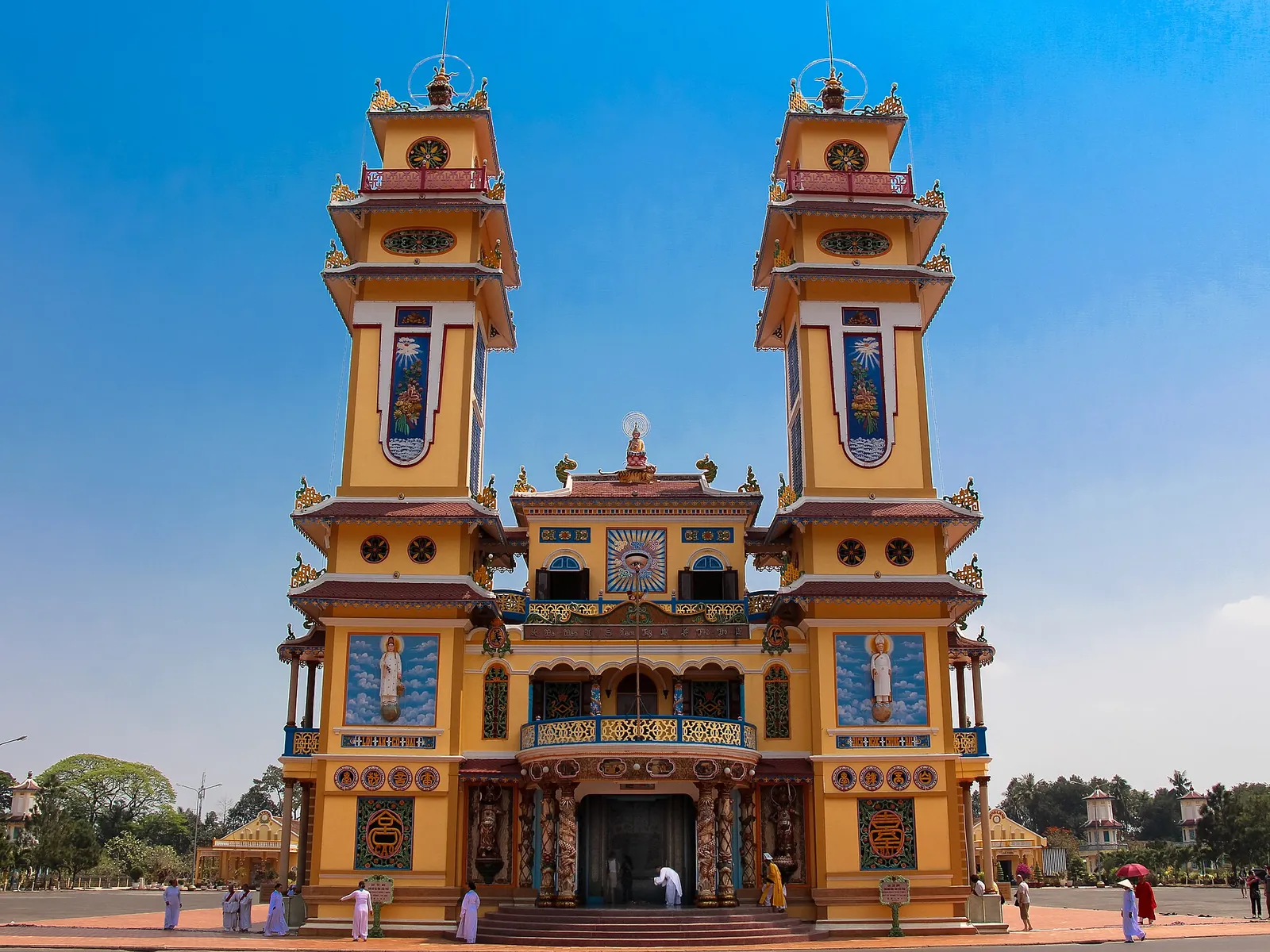
Caodaism was founded in 1926 and combines Buddhist, Taoist and Confucian teachings with a church hierarchy modelled on Catholicism; its Holy See stands in what is now Long Hoa ward, about 5 km from the old centre of Tay Ninh. The walled compound covers about one square kilometre with offices, residences, gardens and woods, and it has twelve gates; Vietnam's tourism authority notes that the main gate is reserved for dignitaries, so visitors come in by one of the side gates. The temple itself, the Great Divine Temple, was completed in 1947 after work that stopped and started through the 1930s.
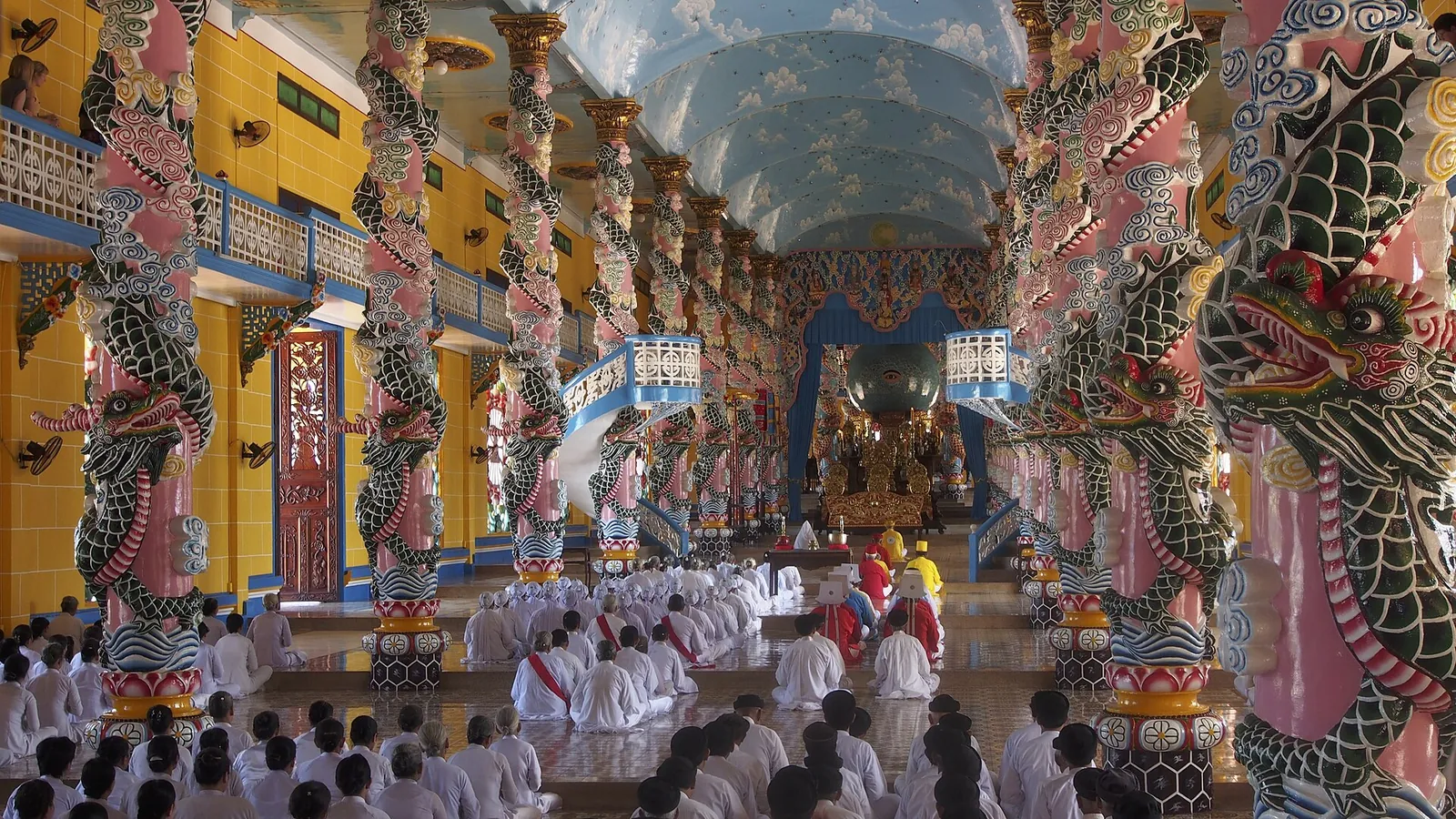
Read the building from front to back. The two-towered facade faces west; the left tower holds the bell and the right one the drum. The long nave behind it, the Cuu Trung Dai, rises in nine levels that match the nine ranks of the Cao Dai hierarchy, between columns wrapped in coloured dragons under a ceiling painted with sky and clouds. At the far end, in the octagonal Bat Quai Dai, stands a large globe painted with the Divine Eye, the symbol of the religion; the Holy See is the only Cao Dai temple allowed to have one. Men and women enter through separate side doors.
This is a working temple, and the ceremony is worship, not a show. Dress modestly, with shoulders and knees covered, keep your voice down, follow staff instructions on where visitors may stand and where they may not walk, and do not use a flash or walk in front of worshippers to take a photograph.
Make time for the local food
What to eat and where to look
Banh canh Trang Bang
Trang Bang's noodle soup: rice noodles in a sweet broth of pork bones, carrots and straw mushrooms, finished with lime, fish sauce, chilli, coriander and spring onion. Vietnam's tourism authority notes that it is often served as two bowls, one of broth and noodles and one of meat.
- Where to look
- Long-established noodle shops in Trang Bang, on Highway 22 between Saigon and Tay Ninh; the national tourism authority names Nam Dung, Be Nam and Ong Cao among them.
- Fit it into your day
- Breakfast or an early lunch on the drive out, before the noon ceremony.
Pork-based; ask before adding the chilli.
Dew-dried rice paper rolls (banh trang phoi suong)
Trang Bang rice paper is made by hand in several stages: soaking and grinding the rice, spreading and baking the sheets, and finally drying them in the dew. It is rolled at the table with boiled pork, local herbs, cucumber, bean sprouts and pickles and dipped in a sweet-and-sour fish sauce. The craft is listed as national intangible heritage.
- Where to look
- The same Trang Bang eateries that serve banh canh, and rice paper stalls along the highway.
- Fit it into your day
- Share a platter with the noodle soup; it is a meal to linger over rather than eat in a hurry.
Lots of raw herbs and vegetables; contains pork and fish sauce.
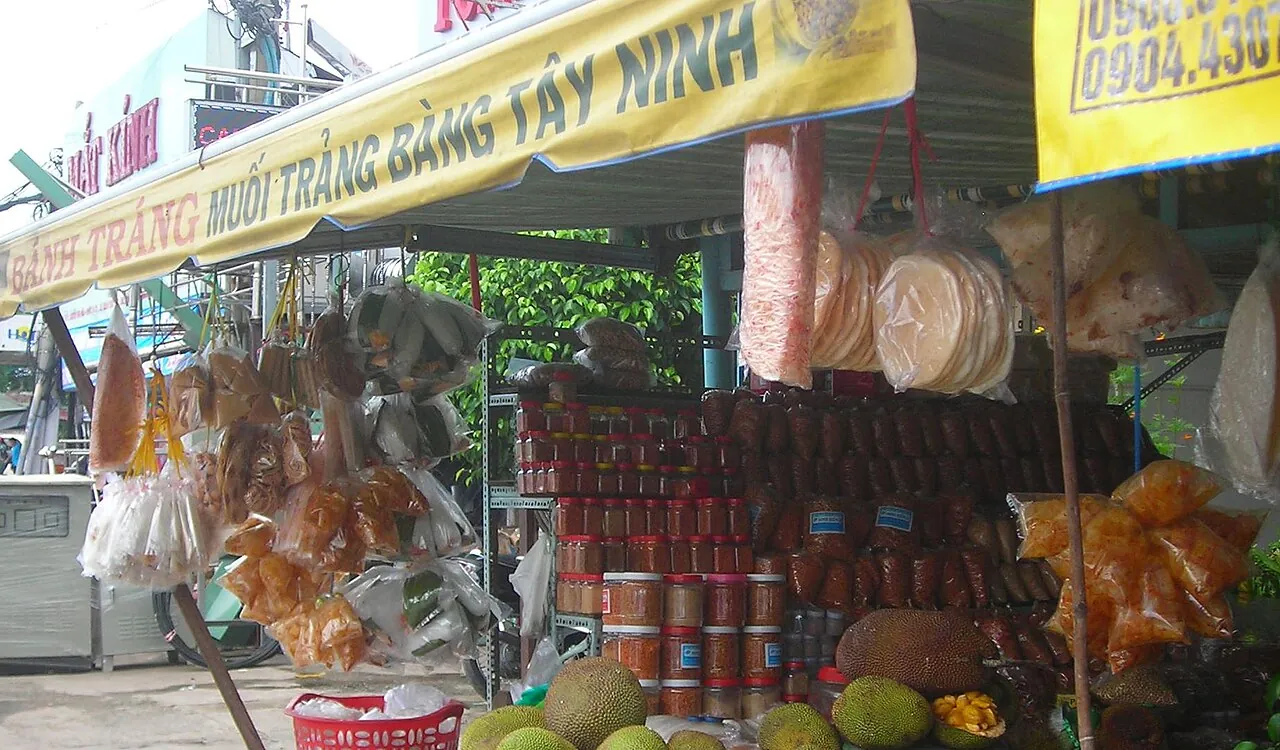
Tay Ninh shrimp salt (muoi tom)
A dry mix of salt, chilli and dried shrimp roasted in a hot pan. It is eaten with fruit, rice paper rolls and boiled vegetables, and used as a marinade for meat and seafood. Tay Ninh's chilli-salt making is listed as a national intangible heritage craft.
- Where to look
- Long Hoa market near the Holy See, and souvenir stalls in Trang Bang and around Ba Den.
- Fit it into your day
- Buy a jar on the way home rather than at the start of the day.
Contains shellfish, and it is often very hot.
Tay Ninh vegetarian food
Many Caodaists eat vegetarian food for at least ten days a month, and Tay Ninh's art of vegetarian cooking is a national intangible heritage. Look for vegetarian versions of familiar dishes such as banh xeo, bun rieu and mushroom hotpot.
- Where to look
- Vegetarian restaurants in Tay Ninh city.
- Fit it into your day
- Lunch after the noon ceremony, a little way from the Holy See.
If you are vegan, ask whether egg or dairy is used.
Ba Den Mountain: which cable car, when and what it costs
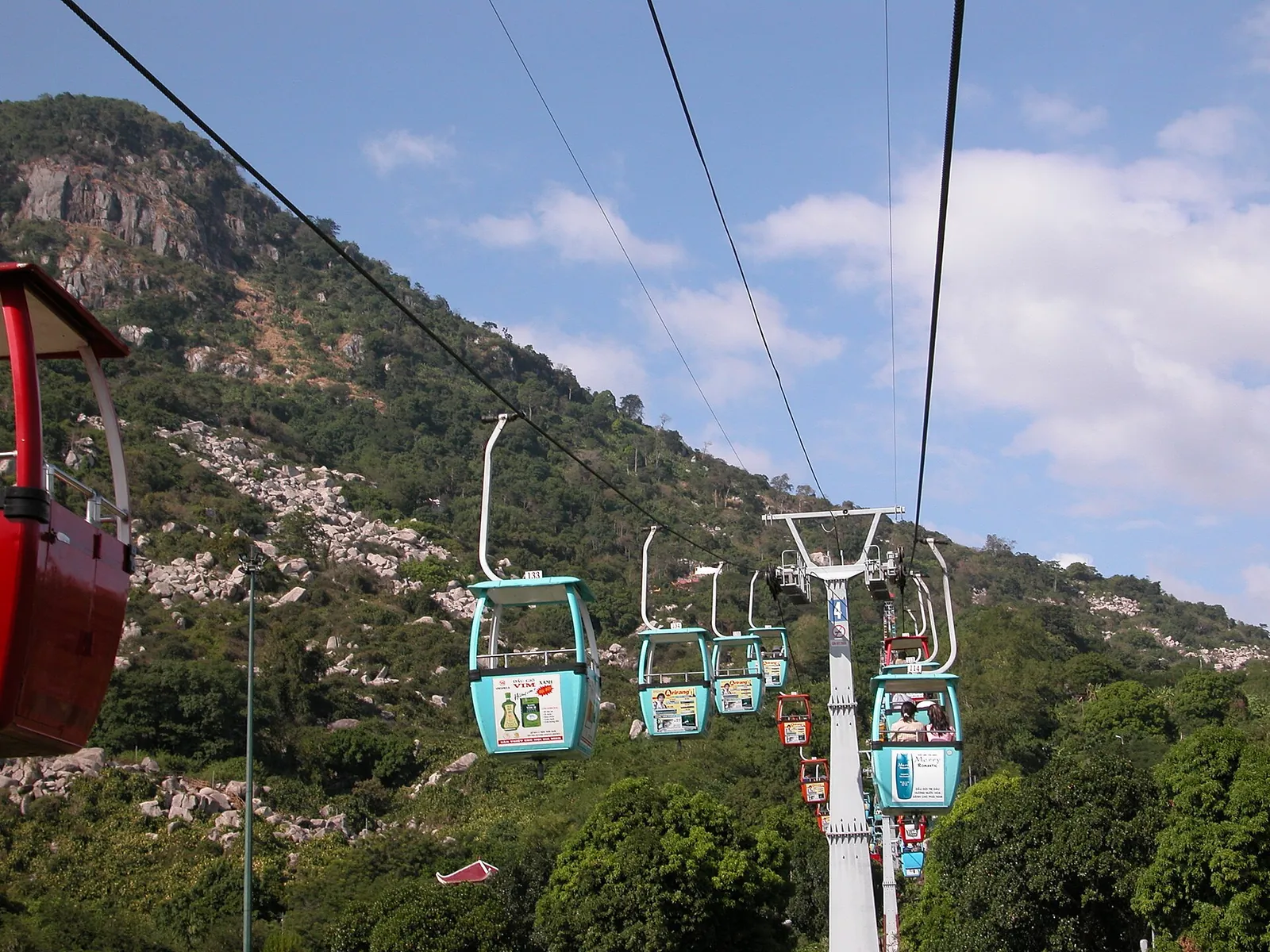
Ba Den Mountain is run as a tourist area by Sun World, and the cable cars decide how your visit works. The Van Son line runs from Ba Den Station at the foot of the mountain to the summit in about eight minutes, by Sun World's account; the Chua Hang line goes to the Ba Pagoda complex on the mountainside; and the Tam An line links the mid-mountain station with the summit. Ba Den Station, the departure point, was recognised by Guinness World Records in 2020 as the world's largest cable car station, according to Vietnam's tourism authority.
When we checked on 2026-10-03, Sun World's schedule, valid from 28 September 2026 until further notice, listed the Van Son and Chua Hang cable cars from 6:00 to 20:30 Monday to Friday, 5:30 to 21:00 on Saturdays and 5:30 to 20:30 on Sundays. The Tam An cable car does not run on weekdays and runs from 6:30 to 19:00 at weekends. The summit's spiritual complex opens 6:30 to 20:00 on weekdays, 6:00 to 20:30 on Saturdays and 6:00 to 20:00 on Sundays, and the buffet restaurant from 10:00 to 15:00. Sun World notes that cable car hours can change with the weather.
On the same date, Sun World's price list for 28 September to 31 December 2026 gave adult fares of 450,000 VND for the Van Son summit cable car, 250,000 VND for the Chua Hang cable car return, and 650,000 VND for a Van Son plus Chua Hang combo, plus a 10,000 VND entrance ticket to the tourist area. After 17:00, the Van Son ride dropped to 300,000 VND and the combo to 400,000 VND. Child fares apply from 1 metre to under 1.4 metres tall, children under 1 metre ride free, and visitors aged 80 and over are free with ID. If you only want one thing, choose by purpose: the summit for the views and statues, the Chua Hang line for the old pagodas.
The summit statues, the Ba Pagoda and the spring festival
At the summit, the Tay Bo Da Son Buddha statue stands 72 metres tall and is recognised by the Asia and Vietnam record organisations as the tallest bronze Buddha statue on a mountain top in Asia, Vietnam's tourism authority reports. Nearby is a sandstone Maitreya Buddha, inaugurated in January 2024: 36 metres high, assembled from 6,688 pieces of natural sandstone and described as the largest statue of its kind in the world. Sun World points out that on clear days you can see across the Tay Ninh plain to Dau Tieng Lake; morning and late afternoon are the cooler and clearer times to be up there.
The mountain's older religious life is lower down. The Ba Pagoda complex, reached by the Chua Hang cable car, is a cluster of pagodas, shrines and natural caves closely tied to the worship of Linh Son Thanh Mau, the holy mother of the mountain. Her festival is a national intangible heritage, and the Ba Den spring festival, which begins on the fourth day of the first lunar month and runs for about a month, brings hundreds of thousands of pilgrims, according to the national tourism authority. Avoid it if you dislike crowds; go if you want to see the mountain at its most devout.
You can still climb. Sun World puts the hike to the summit at three to four hours on a planned trail with rest stops. In the heat of southern Vietnam, start at first light, carry plenty of water, and consider walking up and taking the cable car down.
Getting there from Ho Chi Minh City
By car or with a driver, the usual route is National Highway 22 out through Hoc Mon and Cu Chi to Trang Bang, then Highway 22B to Tay Ninh; Sun World puts Ba Den about 10 km beyond the city centre. Stop in Trang Bang for its noodle soup and dew-dried rice paper, the two dishes the town is known for. A private car with a driver is the most flexible way to fit the noon ceremony around Ba Den or Cu Chi.
By bus, when we checked on 2026-10-03, Sun World's travel guide listed several operators running from An Suong, Mien Dong and Mien Tay bus stations to Tay Ninh bus station, with fares of 150,000 to 230,000 VND and a journey of three to three and a half hours; from the bus station it is about 10 km to Ba Den by taxi. Check the departure station and the last return time before you go, because the bus makes the noon ceremony much harder to reach on a day trip.
Organised day tours from Saigon usually combine the Holy See with either Cu Chi or Ba Den. Before you book, check that the schedule really arrives before noon, how long you get inside the Holy See, and whether cable car tickets are included.
If you stay the night
A night in Tay Ninh turns a rushed day into an easy one. Sun World's two-day plan spends the first day on Ba Den and the second on the surrounding countryside, including Khedol Pagoda, a Khmer pagoda near the mountain, and fruit gardens such as 7 Sang Mulberry Garden, where you can pick mulberries in season (call ahead to check). Add the Holy See to whichever morning or noon suits you.
For an evening on the mountain, the after-17:00 tickets and the late weekday closing time of 20:30 let you see the sunset from the summit and come down after dark. Long Hoa market is the place to buy shrimp salt and rice paper to take home.
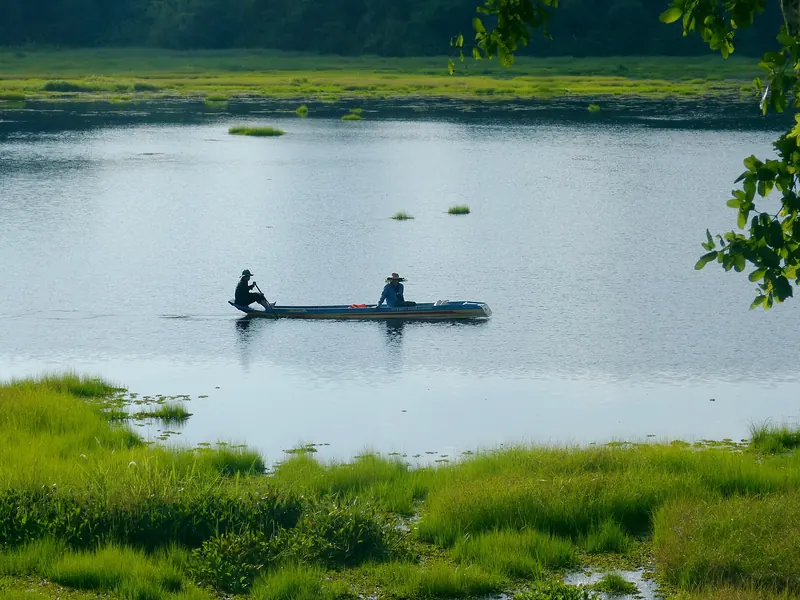
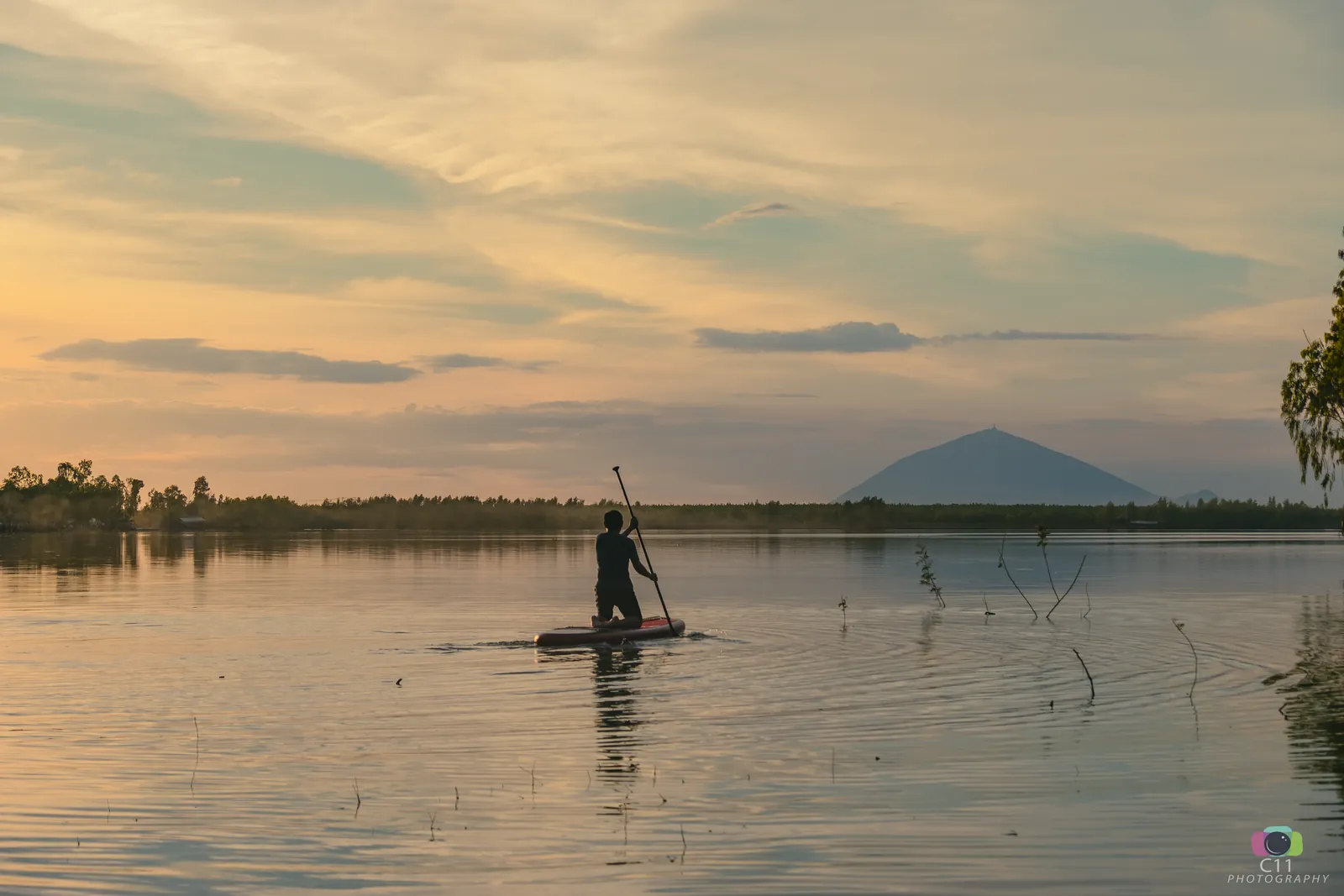
Dau Tieng Lake, which the national tourism authority describes as covering 27,000 hectares about 20 km from Tay Ninh town, is the view you see from the summit on a clear day; from its shore, Ba Den's silhouette rises above the water at sunset. It suits travellers with a car and time to spare rather than a day trip.
Practical questions
What time is the ceremony at the Cao Dai Holy See?
Caodaists hold four ceremonies a day, at 6:00, noon, 18:00 and midnight. Day-trippers from Saigon aim for the noon ceremony; arrive by about 11:30 so that you can walk the grounds first.
Can I see Cao Dai, Ba Den Mountain and Cu Chi in one day?
Only in a hurry. With the round trip from Saigon, pick two of the three: the Holy See plus Cu Chi, or the Holy See plus Ba Den. Stay a night in Tay Ninh if you want all three.
What are the Ba Den Mountain cable car hours?
When we checked on 2026-10-03, Sun World listed the Van Son and Chua Hang cable cars from 6:00 to 20:30 on weekdays, 5:30 to 21:00 on Saturdays and 5:30 to 20:30 on Sundays. The Tam An line runs only at weekends. Hours can change with the weather.
How much is the Ba Den cable car?
When we checked on 2026-10-03, Sun World's price list for 28 September to 31 December 2026 gave 450,000 VND for an adult on the Van Son summit cable car and 650,000 VND for the Van Son plus Chua Hang combo, with cheaper tickets after 17:00. Check the current list before you go.
How far is Tay Ninh from Ho Chi Minh City?
About 100 km. Sun World gives two to two and a half hours by car on National Highway 22 in good traffic, and three to three and a half hours by bus.
Can I hike up Ba Den Mountain?
Yes. Sun World puts the climb at three to four hours on a planned trail. Start at first light, take plenty of water, and take the cable car down if the heat builds.
Sources and checks before you travel
Reference sources for the version dated 3 October 2026. Confirm opening times, access, transport and conditions for your travel dates.
- Caodai.org: how does one practice Caodai ↗ — opens in a new tab
- Sun World Ba Den Mountain: operating hours from 28 September 2026 ↗ — opens in a new tab
- Sun World Ba Den Mountain: ticket prices 2026 ↗ — opens in a new tab
- Sun World Ba Den Mountain: from Ho Chi Minh City to Ba Den, travel directions ↗ — opens in a new tab
- Sun World Ba Den Mountain: a 48-hour journey through Ba Den, culture and ecotourism ↗ — opens in a new tab
- Sun World Ba Den Mountain: park home page ↗ — opens in a new tab
- Vietnam National Authority of Tourism: Tay Ninh offers a world of tour options ↗ — opens in a new tab
- Vietnam National Authority of Tourism: Getting lost in Tay Ninh ↗ — opens in a new tab
- Vietnam National Authority of Tourism: Tay Ninh, an attractive destination in the south ↗ — opens in a new tab
- Vietnam National Authority of Tourism: world's largest Maitreya Buddha statue inaugurated ↗ — opens in a new tab
- Vietnam National Authority of Tourism: Ba Den cable car station sets Guinness World Record ↗ — opens in a new tab
- Vietnam National Authority of Tourism: cultural heritage in Tay Ninh tourism (Vietnamese) ↗ — opens in a new tab
- Vietnam National Authority of Tourism: cultural and spiritual tourism in Tay Ninh (Vietnamese) ↗ — opens in a new tab
- Vietnam National Authority of Tourism: Tay Ninh before the new year (Vietnamese) ↗ — opens in a new tab
- Vietnam National Authority of Tourism: Tay Ninh tourism after the merger ↗ — opens in a new tab
- Vietnam Tourism: weather and climate in Vietnam ↗ — opens in a new tab
- Wikipedia: Great Divine Temple (Tay Ninh Holy See) ↗ — opens in a new tab
- Wikipedia (Vietnamese): Toa Thanh Tay Ninh ↗ — opens in a new tab
- Wikipedia: Caodaism ↗ — opens in a new tab
Does this experience fit your route?
A day tour from Saigon takes care of the timing, which is the hard part of a Tay Ninh trip. Check that it reaches the Holy See before noon and whether it pairs it with Cu Chi or Ba Den Mountain.
Browse relevant experiences on Viator ↗ — opens in a new tabAffiliate link · Book with ViatorPhoto credits
The west-facing facade of the Cao Dai Holy See in Tay Ninh, with its bell and drum towers
Photograph: Mussi Katz — opens in a new tab · Public domain — opens in a new tab
Changes: Resized and converted to WebP; displayed with responsive crops. · Original photograph and licence details ↗ — opens in a new tab
A ceremony inside the Great Divine Temple of the Tay Ninh Holy See, seen from the back of the nave
Photograph: Clay Gilliland — opens in a new tab · CC BY-SA 2.0 — opens in a new tab
Changes: Resized and converted to WebP; displayed with responsive crops. · Original photograph and licence details ↗ — opens in a new tab
Cable cars on the slopes of Ba Den Mountain, Tay Ninh
Photograph: Nguyễn Thanh Quang 18:18, 16 December 2007 (UTC) — opens in a new tab · Public domain — opens in a new tab
Changes: Resized and converted to WebP; displayed with responsive crops. · Original photograph and licence details ↗ — opens in a new tab
Ba Den Mountain seen across Dau Tieng Lake at sunset
Photograph: Cuong Tran — opens in a new tab · Public domain — opens in a new tab
Changes: Resized and converted to WebP; displayed with responsive crops. · Original photograph and licence details ↗ — opens in a new tab
A Trang Bang stall selling rice paper and shrimp salt, the specialities of Tay Ninh
Photograph: Vietcuongdao — opens in a new tab · CC BY-SA 4.0 — opens in a new tab
Changes: Resized and converted to WebP; displayed with responsive crops. · Original photograph and licence details ↗ — opens in a new tab