Ho Chi Minh City and the Southeast · Dong Nai
Cat Tien National Park guide: gibbons, night drives and where to stay
Cat Tien National Park protects one of the largest areas of lowland tropical forest left in Vietnam, about 150 km by road north of Ho Chi Minh City, bordered by more than 80 km of the Dong Nai River. It is not a scenic-viewpoint park. It is about animals: the yellow-cheeked gibbons calling at dawn, deer and, with luck, gaur on the grasslands at night, and the wetlands of Crocodile Lake. Most of what you will want to do happens at dawn and after dark, so where you sleep decides the trip.
- Suggested time
- 2–3 nights
- Where to stay
- Park headquarters at Nam Cat Tien, inside the park across the Dong Nai River; Ko Nia lodge or Crocodile Lake for a night deeper in the forest
- Season and timing
- The park says the southern rainy season usually runs from April to November, with leeches on the trails. In the dry months the forest is thinner, and Vietnam's tourism authority says animals are easier to see on the night drive then.
The short answer
Stay two nights, three if you want to walk to Crocodile Lake and back. Sleep at the park headquarters, where the park runs about 60 rooms a few minutes' walk from the river ferry, so you are already inside the park for the dawn gibbon walk and the evening night drive. Arrive by early afternoon on day one for the night drive. On day two, do the gibbons at sunrise and the Dao Tien primate centre's 8:00 tour, then go cycling or walking. Get there by road from Ho Chi Minh City or Da Lat: the park lists local buses that run to its gate, and Phuong Trang buses on the Ho Chi Minh City–Da Lat route that drop you about 25 km away.
Sleep inside the park: headquarters, Ko Nia or Crocodile Lake
Cat Tien's lodging is run by the park itself, in three places: the headquarters area, Ko Nia lodge (Kơ Nia Lữ Quán) and Bàu Sấu, the Crocodile Lake. You reach the park by crossing the Dong Nai River from Nam Cat Tien by ferry or boat. Once you are on the far bank you do not have to keep paying entry and crossing back, and the park points out that this is the practical reason to stay inside.
The headquarters is the base for almost everyone. The park lists about 60 rooms there, from doubles and family rooms to dorm-style rooms and stilt houses, set in small blocks among trees by the river. It has two restaurants and phone and wifi signal. The ferry landing, the nature museum, the wildlife rescue centre and the campsite are all within a few minutes' walk.
Ko Nia lodge is beside the Dong Nai River on the night-drive route, marked by a huge old kơ nia tree. It is about a third of the distance of the Crocodile Lake trip, so you can reach it by park vehicle or by bicycle all the way, and it still has phone signal. Crocodile Lake is the remote option. The park describes the route as 14 km, with the last 5 km on foot along a forest trail. That makes it a night for walkers, not a base.
Gibbons at dawn and the Dao Tien primate centre
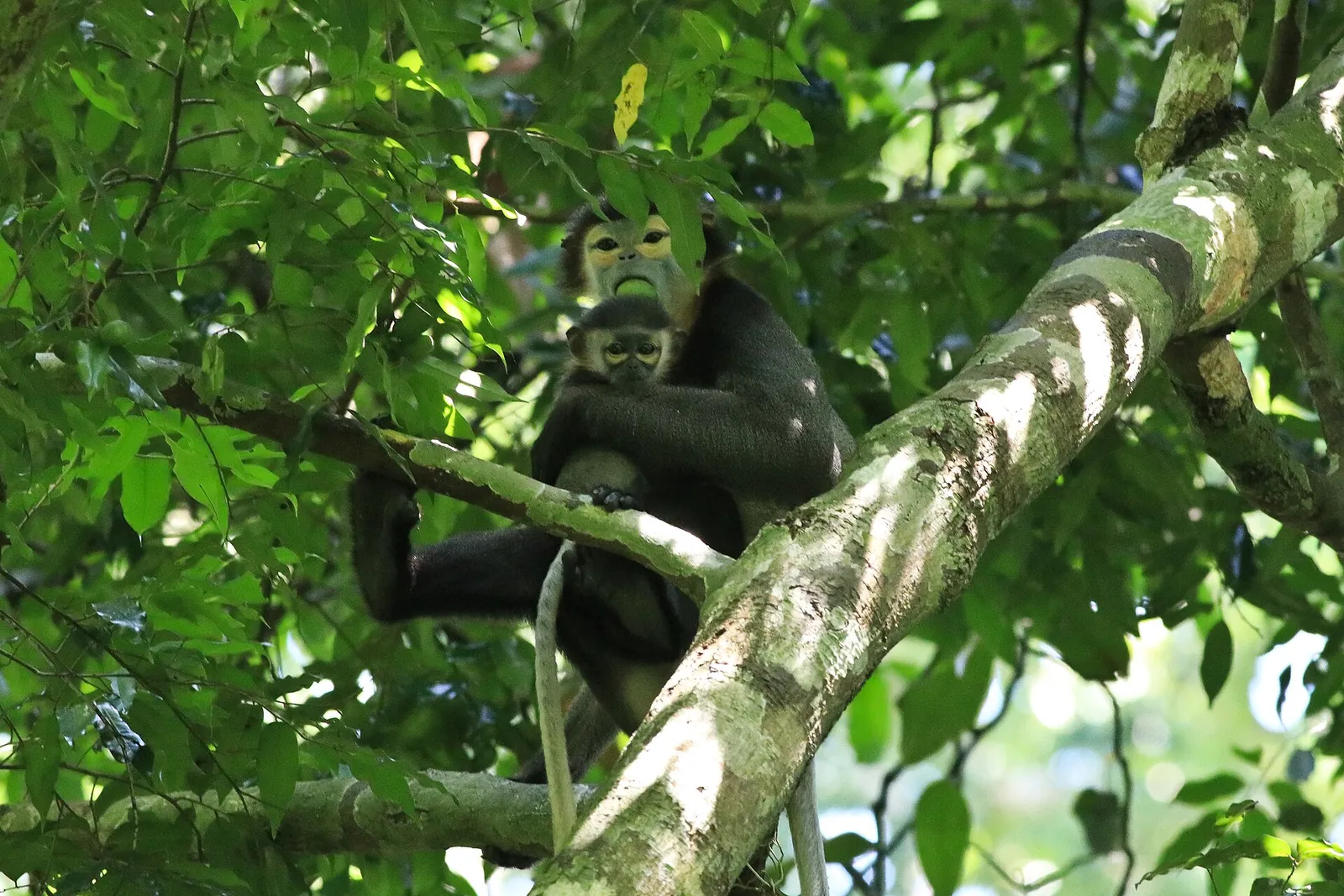
The park says more than 500 yellow-cheeked gibbons live in Cat Tien. They are tailless apes that live in family groups and almost never come to the ground. You find them by their song. The park's sunrise gibbon tour follows a ranger or guide to where the families feed early in the morning. Vietnam's tourism authority calls the half-day gibbon hike from the headquarters the park's most popular trip, and it needs an early start to catch the dawn chorus. Ask about it at the tourism office when you check in.
Dao Tien Endangered Primate Species Centre, on an island in the river, takes in primates rescued from the wildlife trade, rehabilitates them and releases them into protected forest. When we checked on 2026-10-03, its operator (the UK charity EAST) listed a daily tour at 8:00 from the Cat Tien tourism office. The tour lasts about two and a half hours with an English- or Vietnamese-speaking guide and includes a boat ride to the island and a platform where you can watch gibbons in the trees. Sessions are limited to 30 people. Listed prices were 400,000 VND for foreign adults and 200,000 VND for children and students aged 3 to 15, and under-3s go free.
Do the gibbon walk first, then the Dao Tien tour. You see wild apes and rehabilitated ones on the same morning, and you are back at the headquarters before the midday heat.
Make time for the local food
What to eat and where to look
Cơm lam (rice cooked in bamboo)
Rice cooked inside a length of bamboo over the fire. The park's Tre Vàng restaurant lists it as one of its forest specialities.
- Where to look
- Tre Vàng restaurant in the park headquarters area.
- Fit it into your day
- Dinner before or after the night drive.
Specialities depend on the day's supplies; ask what the kitchen has when you arrive.
Forest greens: đọt mây, lá nhíp and fresh bamboo shoots
Rattan shoots (đọt mây), nhíp leaves and fresh bamboo shoots (măng tươi) are the wild greens that the park's restaurant puts on the table with its rice dishes.
- Where to look
- The two restaurants at the headquarters, Tre Vàng and Cây Dầu.
- Fit it into your day
- A shared dinner with rice and grilled or stir-fried dishes.
Seasonal and not always available; order early if you have a group.
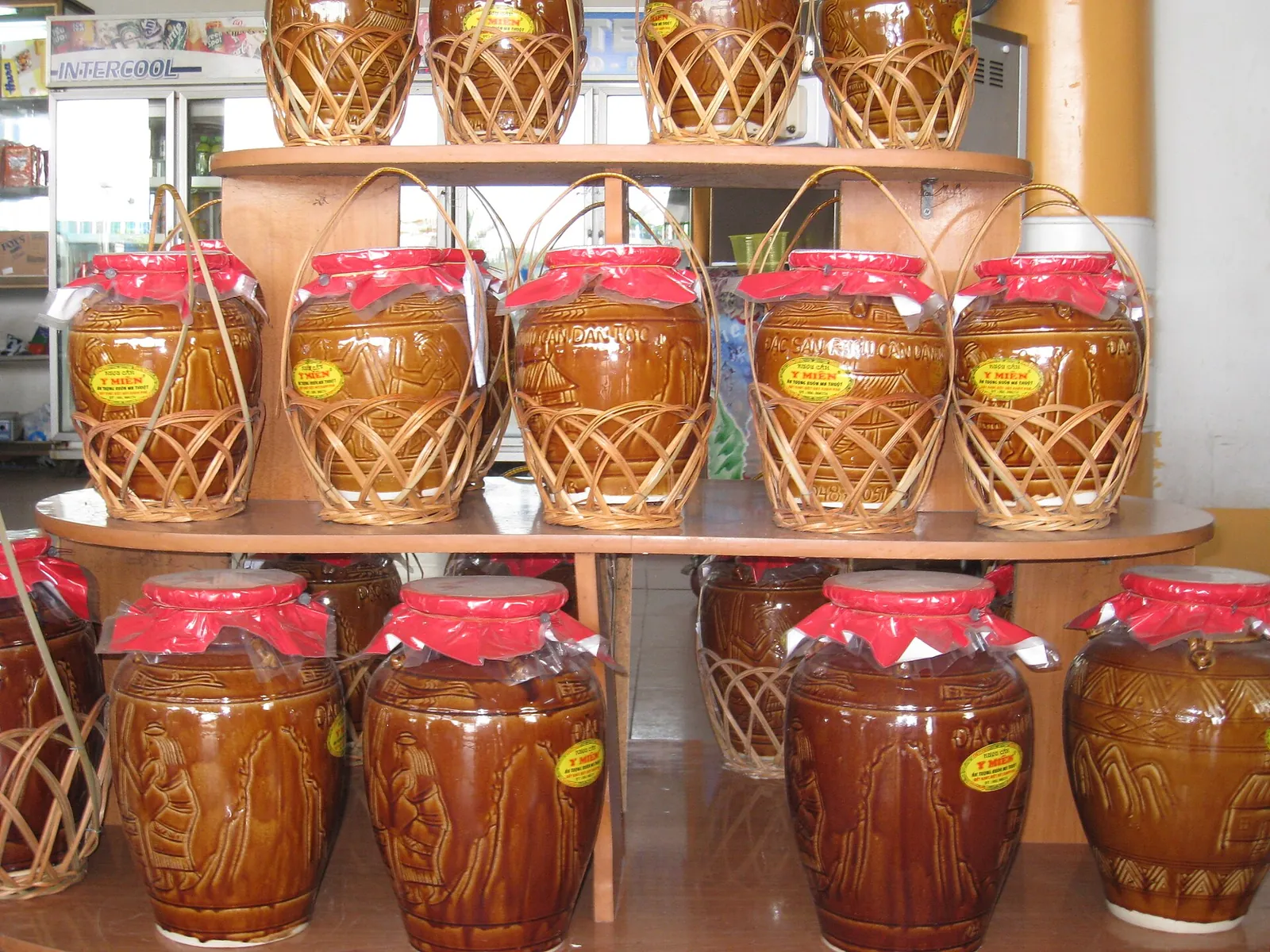
Rượu cần (rice wine through bamboo straws)
Rice wine fermented in a jar and drunk together through long bamboo straws, The park's restaurant lists it among its specialities.
- Where to look
- Tre Vàng restaurant; ask when you book dinner.
- Fit it into your day
- With dinner on your first night, after the night drive.
It is alcoholic and usually shared from one jar; go easy before a dawn gibbon start.
Campsite dinners from Cây Dầu
The Cây Dầu restaurant sits next to the park's campsite and seats about 150 inside and on a terrace facing the trees. It takes orders for dinners delivered to the campsite and for campfire evenings.
- Where to look
- Cây Dầu restaurant beside the headquarters campsite.
- Fit it into your day
- Dinner for groups camping or staying near the campsite.
Book ahead; there are few alternatives once you are inside the park.
The night drive on the grasslands
The night drive is the other half of a Cat Tien stay. When we checked on 2026-10-03, the park's page described it as leaving every night from 18:30 in an open-topped vehicle, a round trip of 12 km lasting about an hour. It heads out to the grasslands to look for deer, porcupines, hares and civets feeding in the dark. In some seasons, with luck, you may see a herd of gaur.
Keep your expectations honest. In a 2023 report republished by Vietnam's tourism authority, a park guide put the chance of seeing gaur at about 20 percent. Wild elephants are rarer still: rangers sometimes go months without seeing one. In the rainy season animals have food and water everywhere, so sightings depend more on luck. In the dry season the vegetation is thinner and animals are easier to spot.
The guide shines a dimmed yellow spotlight and asks for silence when an animal appears. Phone flashes are forbidden because the white light frightens the animals. Bring a rain layer in the wet months, because the drive can run in the rain.
Crocodile Lake, the old trees and the forest trails
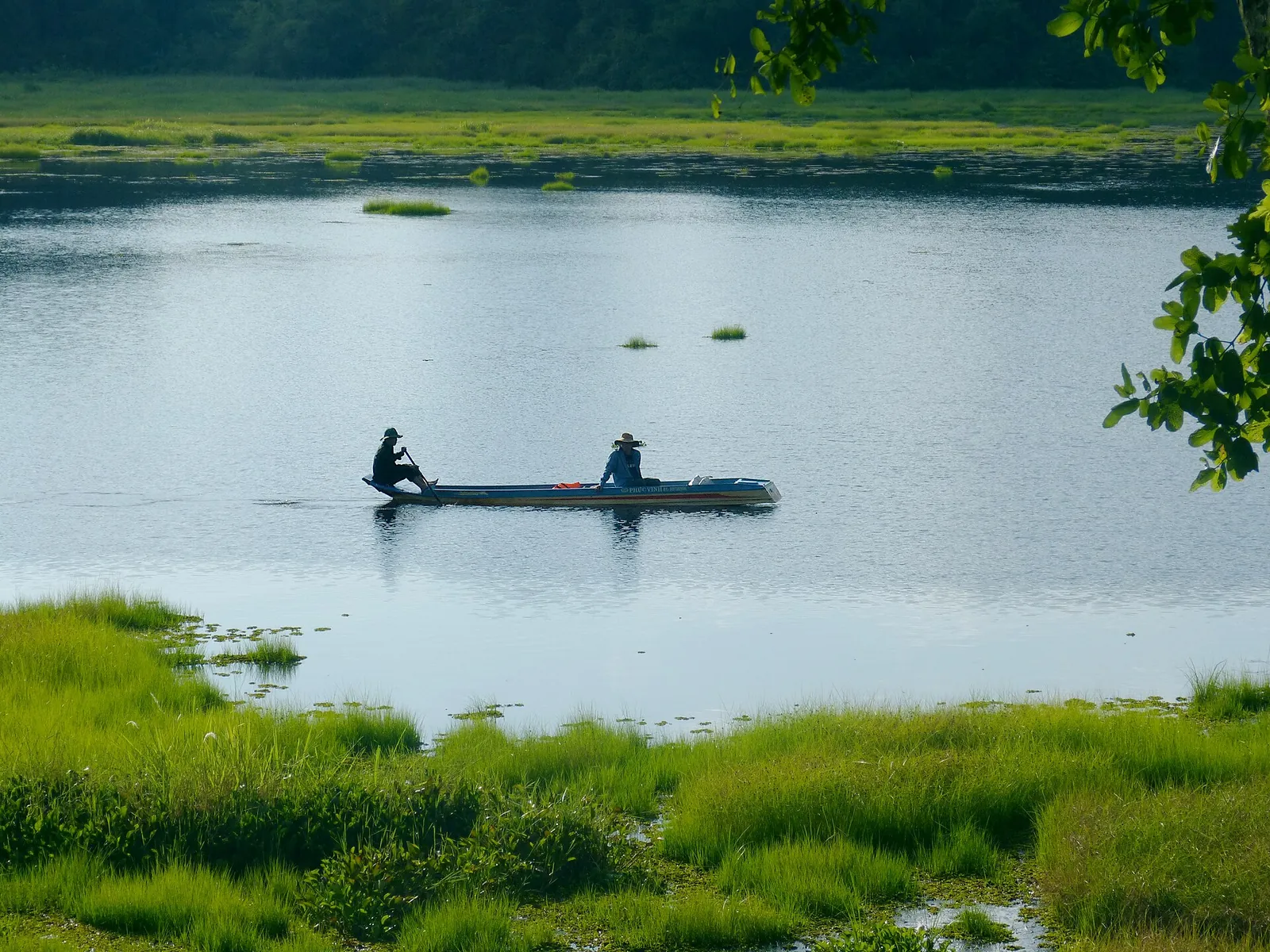
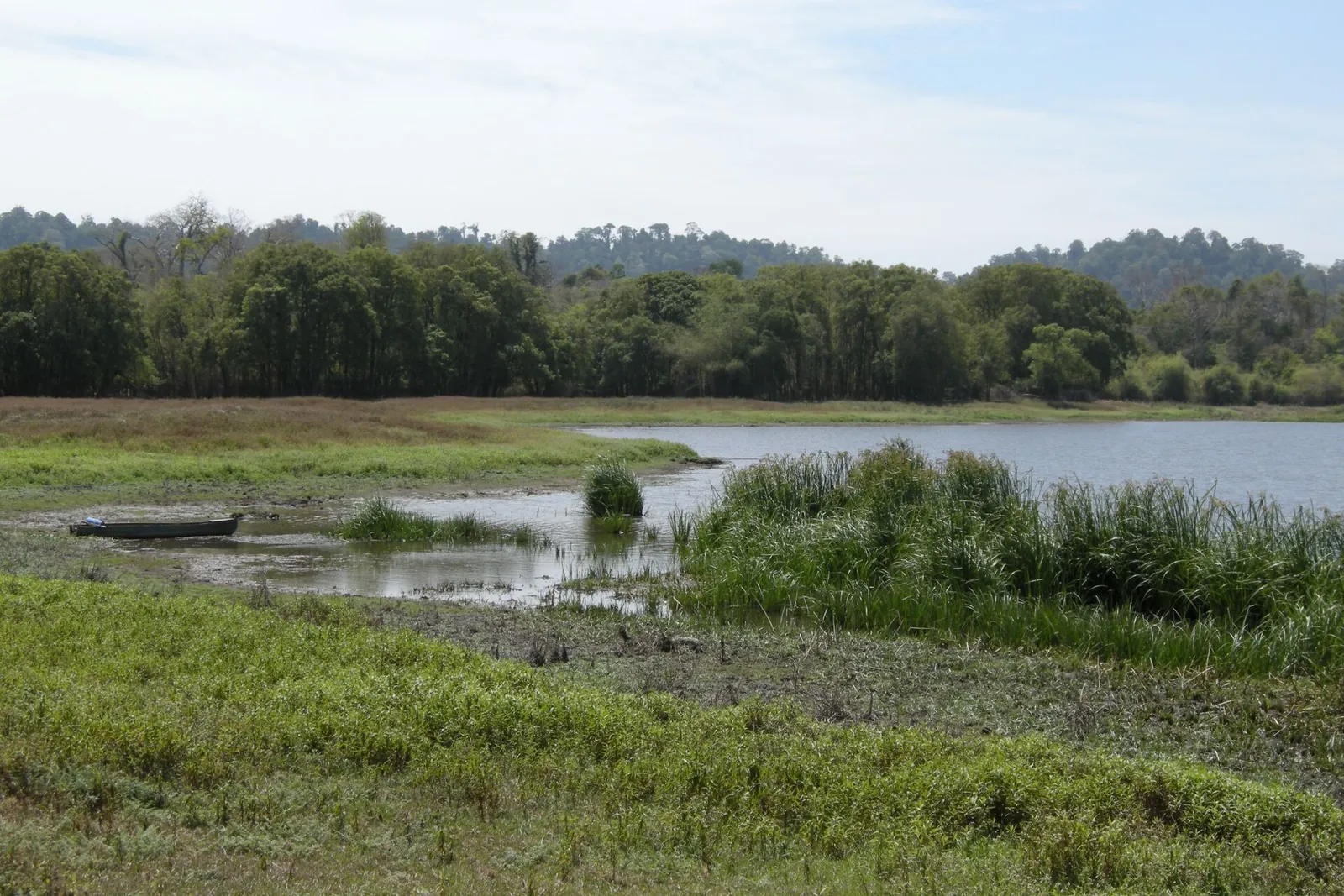
Bàu Sấu (Crocodile Lake) and the wetlands around it are a Ramsar site, listed in 2005 as a wetland of international importance. In the rainy season the Dong Nai River floods into them through a stream that flows backwards, refilling the lakes and grasslands. Siamese crocodiles are among the park's reptiles, and Vietnam's tourism authority describes walks where visitors can see wild crocodiles and, at times, gaur grazing in the distance. Because the last 5 km are on foot, a Crocodile Lake trip is a full day or an overnight. Arrange it with the park's tourism office.
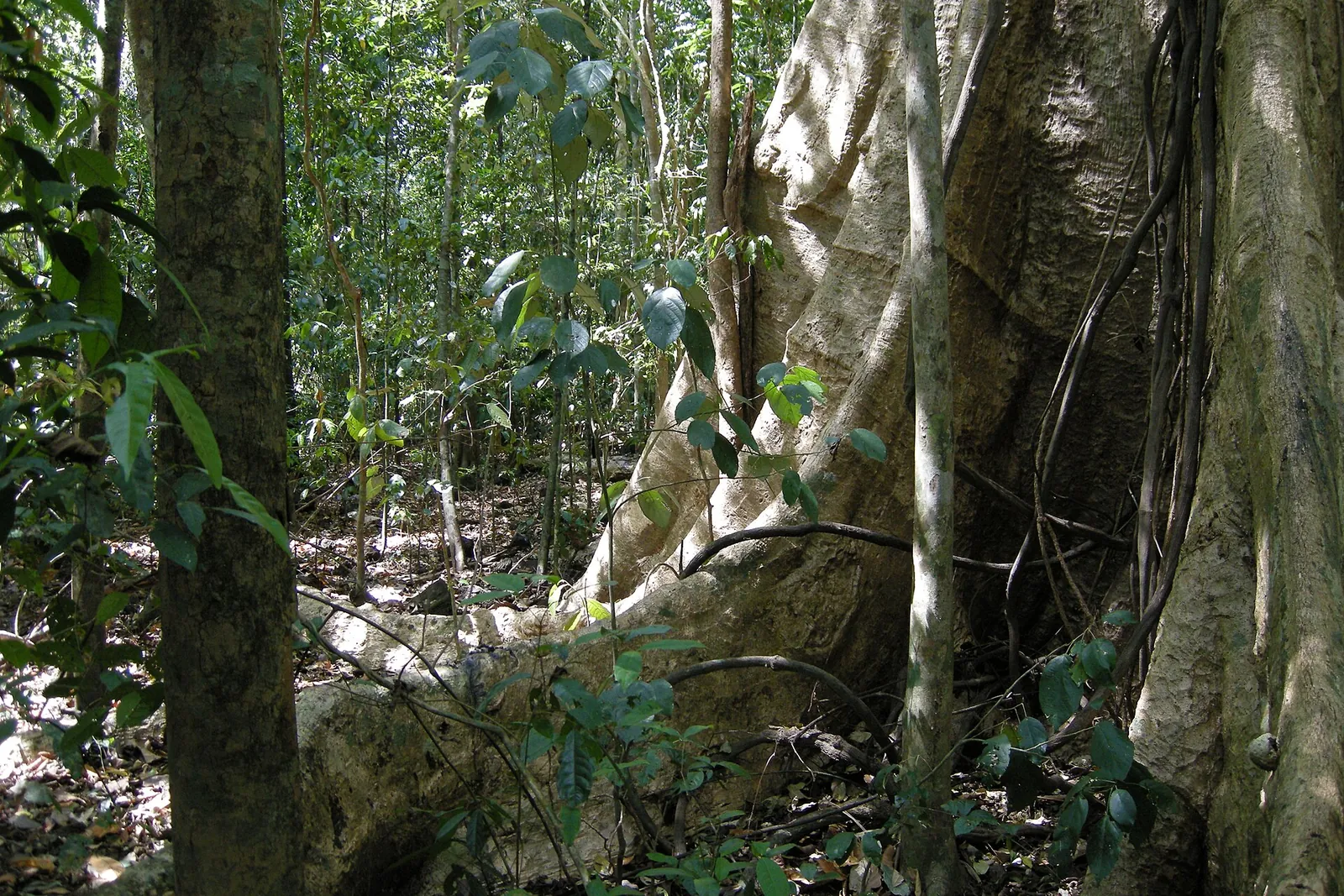
Closer to the headquarters, the trails pass huge old trees. Vietnam's tourism authority singles out a tùng tree more than 400 years old with giant buttress roots. You can explore the flatter tracks by mountain bike, which the park rents along with places on its open-topped vehicles and local guides. Keep to marked routes and go with a guide for anything longer.
For a longer trip, the Dong Nai tourism department approved three guided trekking and camping programmes in the park in July 2026, run by the operator Oxalis: 2 days and 1 night with 6 km of walking, 3 days and 2 nights with 21 km, and a 4-day ranger-patrol trek of 20–25 km.
Getting there from Ho Chi Minh City or Da Lat
The park lies about 150 km from Ho Chi Minh City and 175 km from Da Lat, so it fits on the road between them. When we checked on 2026-10-03, the park's directions page listed these options:
- Local buses to the gate: small local companies run from Ho Chi Minh City straight to the park gate. The park's English guide says to buy tickets at counter 5 of the Eastern (Mien Dong) Bus Station. The park quoted 120,000–150,000 VND a person as a reference fare.
- Phuong Trang on the Ho Chi Minh City–Da Lat route: get off at the company's Phu Lam office, about 25 km (30–40 minutes) from the park. Ask for the transfer when you book.
- Via Tan Phu bus station: Phuong Trang and Thanh Buoi buses also stop at Tan Phu bus station, 24 km from the gate. From there take a taxi; the park notes that Xanh SM taxis now run from Tan Phu.
- From Da Lat: the Duc Loc bus company runs to the park gate.
- Private car: the park's tourism office can arrange cars and shared taxis from Ho Chi Minh City or Da Lat. Contact it by email, phone or Zalo.
A two-night plan
This is an editorial suggestion, not a timetable. Confirm the night drive, the gibbon walk and the Dao Tien tour with the park's tourism office when you book your room. The park's published group programmes apply to groups of ten or more; smaller parties book from its service price list.
- Day 1: travel from Ho Chi Minh City in the morning, cross the river and check in at the headquarters. Walk the forest trails near the river in the late afternoon, then take the 18:30 night drive.
- Day 2: go on the dawn gibbon walk, take the 8:00 Dao Tien tour, rest through the midday heat, then cycle the tracks or visit the nature museum. If you are fit and have arranged it, spend this day, or a third, on Crocodile Lake instead.
- Day 3: go birdwatching or walk in the early morning, then leave for Ho Chi Minh City, or carry on up the hill road to Da Lat.
Practical questions
How many days do I need in Cat Tien?
Two nights is the useful minimum: one evening for the night drive and one dawn for the gibbons and the Dao Tien tour. The Dao Tien primate centre recommends at least two to three days to see the park's main highlights; add a night if you want to walk to Crocodile Lake.
Where should I stay in Cat Tien National Park?
At the park headquarters, across the Dong Nai River from Nam Cat Tien. The park runs about 60 rooms there with two restaurants nearby, and the ferry, nature museum and rescue centre are a short walk away. Ko Nia lodge is quieter and reachable by park vehicle or bike; Crocodile Lake needs a 5 km walk at the end.
Will I see wild animals on the night drive?
The drive looks for deer, porcupines, hares and civets, but nothing is guaranteed. A park guide put the chance of seeing gaur at about 20 percent, and wild elephants are rarer still. The dry season usually gives better sightings than the rainy months.
How do I see the gibbons?
Join the park's sunrise gibbon walk with a ranger or guide, which follows the gibbons' morning calls to where the families feed. The park says more than 500 yellow-cheeked gibbons live there. Ask at the park's tourism office when you check in.
How do I get from Ho Chi Minh City to Cat Tien?
By road, about 150 km. Local buses run from the Eastern (Mien Dong) Bus Station to the park gate. Alternatively, take a Phuong Trang bus on the Ho Chi Minh City–Da Lat route to its Phu Lam office, about 25 km away, and arrange the transfer when booking. The park's tourism office can also arrange a private car.
What should I pack for Cat Tien?
The park recommends insect repellent, light clothes for walking, shoes with good grip, leech socks or long socks (especially from April to November), a hat, a raincoat, a waterproof bag for your phone and camera, a refillable water bottle and basic medicines. It does not provide single-use plastic toiletries, so bring your own toothbrush and toothpaste.
Sources and checks before you travel
Reference sources for the version dated 3 October 2026. Confirm opening times, access, transport and conditions for your travel dates.
- Cat Tien National Park (official site): home page ↗ — opens in a new tab
- Cat Tien National Park: hotel and camping ↗ — opens in a new tab
- Cat Tien National Park: night animal watching ↗ — opens in a new tab
- Cat Tien National Park: yellow-cheeked gibbons (English) ↗ — opens in a new tab
- Cat Tien National Park: directions ↗ — opens in a new tab
- Cat Tien National Park: guide to the park (English) ↗ — opens in a new tab
- Cat Tien National Park: restaurants ↗ — opens in a new tab
- Cat Tien National Park: tips for the rainy season ↗ — opens in a new tab
- Cat Tien National Park: tour programmes ↗ — opens in a new tab
- Cat Tien National Park: service price list ↗ — opens in a new tab
- EAST (Go East): visit Dao Tien ↗ — opens in a new tab
- EAST (Go East): home page ↗ — opens in a new tab
- Vietnam National Authority of Tourism: lightning over Cat Tien pulls the gaurs out of the dark (2023) ↗ — opens in a new tab
- Vietnam National Authority of Tourism: IUCN Green List for Cat Tien (2024) ↗ — opens in a new tab
- Vietnam National Authority of Tourism: Cat Tien wins four ecotourism awards (2025) ↗ — opens in a new tab
- Vietnam National Authority of Tourism: 8 treks in Vietnam ↗ — opens in a new tab
- Vietnam National Authority of Tourism: Dong Nai checks safety of three Cat Tien treks (July 2026) ↗ — opens in a new tab
- UNESCO MAB: Dong Nai Biosphere Reserve ↗ — opens in a new tab
- Wikipedia: Cát Tiên National Park ↗ — opens in a new tab
- VnExpress: Long Thanh airport operating roadmap (29 July 2026) ↗ — opens in a new tab
Does this experience fit your route?
If you would rather not arrange the bus, ferry and park bookings yourself, compare overnight trips from Ho Chi Minh City and check that they sleep inside the park.
Browse relevant experiences on Viator ↗ — opens in a new tabAffiliate link · Book with ViatorPhoto credits
Crocodile Lake (Bàu Sấu), the Ramsar-listed wetland in Cat Tien National Park
Photograph: 1April1950 — opens in a new tab · CC BY-SA 4.0 — opens in a new tab
Changes: Resized and converted to WebP; displayed with responsive crops. · Original photograph and licence details ↗ — opens in a new tab
A black-shanked douc, one of the rare primates of Cat Tien's lowland forest
Photograph: Broobas — opens in a new tab · CC BY-SA 4.0 — opens in a new tab
Changes: Resized and converted to WebP; displayed with responsive crops. · Original photograph and licence details ↗ — opens in a new tab
Buttress roots along a lowland rainforest trail in Cat Tien
Photograph: Vyacheslav Argenberg — opens in a new tab · CC BY 4.0 — opens in a new tab
Changes: Resized and converted to WebP; displayed with responsive crops. · Original photograph and licence details ↗ — opens in a new tab
Wetland and grassland in Cat Tien National Park
Photograph: Vyacheslav Argenberg — opens in a new tab · CC BY 2.0 — opens in a new tab
Changes: Resized and converted to WebP; displayed with responsive crops. · Original photograph and licence details ↗ — opens in a new tab
Rượu cần rice-wine jars for sale in a shop in Vung Tau; the drink is on the menu at Cat Tien's park restaurant
Photograph: Genghiskhanviet — opens in a new tab · Public domain — opens in a new tab
Changes: Resized and converted to WebP; displayed with responsive crops. · Original photograph and licence details ↗ — opens in a new tab