Hanoi and the Northeast · Hanoi
Perfume Pagoda (Chua Huong): boat, cave shrine and festival timing
The Perfume Pagoda — Chua Huong in Vietnamese — is not one building but a spread of pagodas, shrines and caves in the limestone hills of Huong Son, around 60–70 km south-west of central Hanoi. What makes it different from other temple trips is the approach: you leave the car at a riverside wharf, sit in a hand-rowed boat for about an hour along Yen stream between rice fields and karst, and then climb on foot or by cable car to Huong Tich cave, the shrine that pilgrims come for. It is Vietnam's best-known Buddhist pilgrimage, and whether you enjoy it depends almost entirely on when you go.
- Suggested time
- One long day; one night nearby only for a dawn start
- Where to stay
- Hanoi for a day trip; a guesthouse or homestay around Ben Duc wharf in Huong Son for an early start
- Season and timing
- The pilgrimage festival runs from just after Lunar New Year to the third lunar month (18 February–11 May in 2026) and is very crowded. Outside it the site is quiet; water lilies colour Yen stream from about October to December. Vietnam's tourism authority suggests April–June or September–December for the north.
The short answer
Make it a full day trip from Hanoi: leave early, take the boat from Ben Duc wharf up Yen stream, visit Thien Tru Pagoda, go up to Huong Tich cave by cable car or on the stone path, and come back down for the boat out by mid-afternoon. Sleep in Hanoi; stay in a simple guesthouse near Ben Duc only if you want to be on the water at first light. Without your own transport, a guided tour or a car with driver is the easiest way. For calm water and few people, go outside the spring festival, which in 2026 ran from 18 February to 11 May; October to December adds water lilies on the stream.
How the trip works: wharf, boat, pagoda, cave
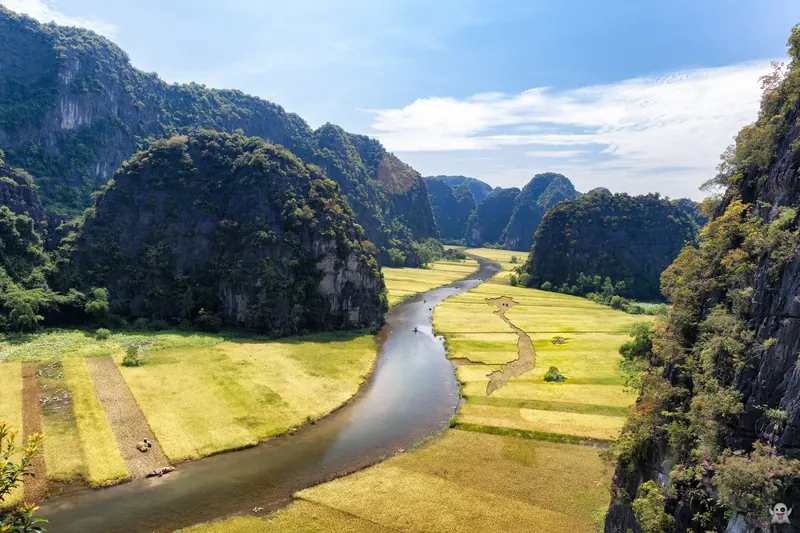
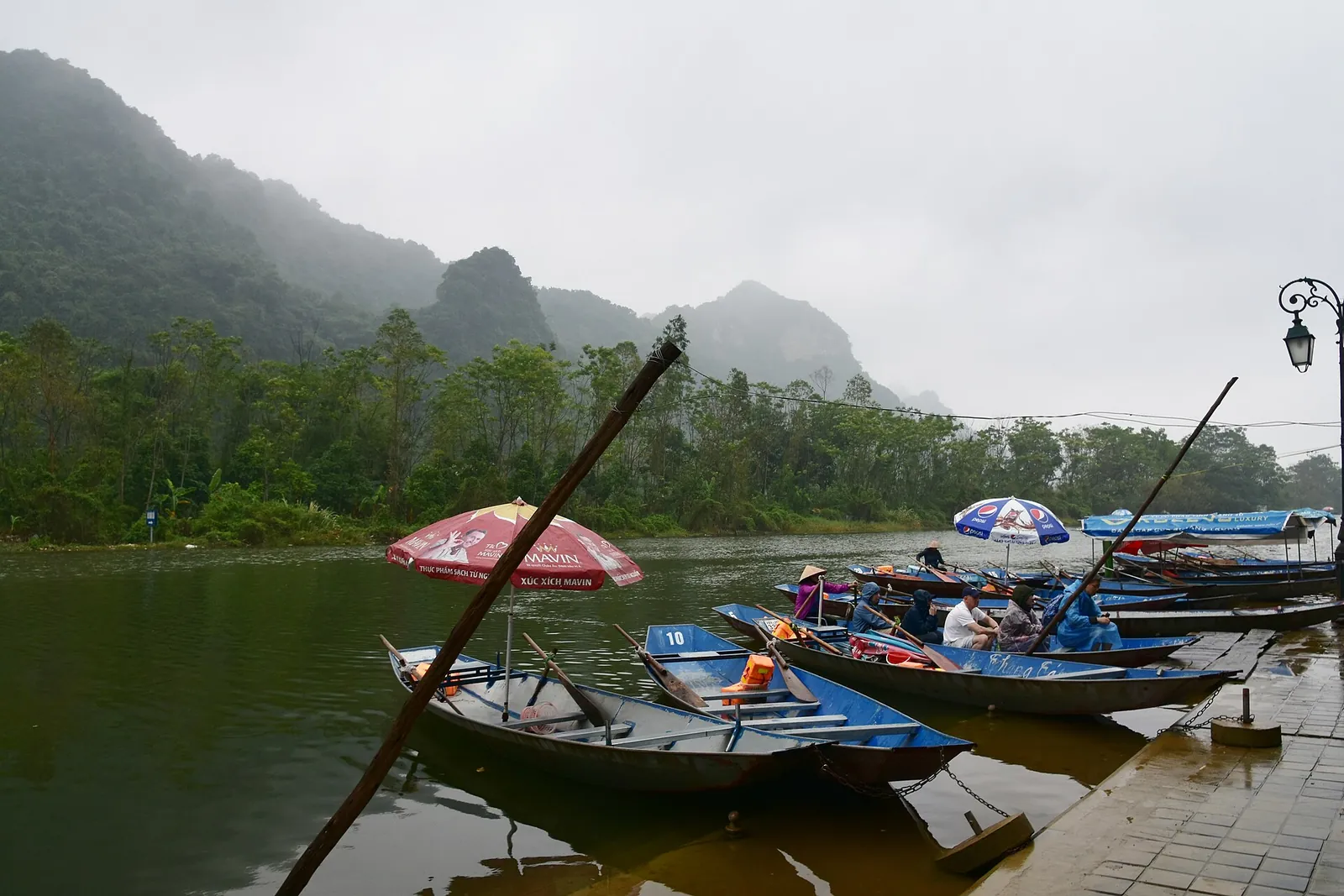
The visit runs in a fixed order. Cars and tour buses stop at Ben Duc, the wharf on Yen stream in Huong Son commune; from there a rowing boat takes you about an hour up the stream, which Vietnamese press guides describe as roughly 4 km long, winding between rice fields and limestone peaks. For the 2026 festival the organisers limited motorboats on the stream to emergency use and required every boat to carry life jackets and passengers to wear them, so the ride is quiet and slow — part of the pilgrimage rather than a transfer.
Most boats stop first at Den Trinh (the 'Presentation Shrine', also called Den Thuong Quan), about 500 m from Ben Duc at the foot of Ngu Nhac mountain. Pilgrims 'present' themselves here before going further; the shrine was destroyed during the war against the French and rebuilt in 1992. The boat then continues to the landing for Thien Tru Pagoda, where the walk begins.
From Thien Tru you either climb the stone path through the forest or take the cable car towards Huong Tich cave, then come back down to the same landing and take the boat out. A Vietnamese one-day pilgrim itinerary in VnExpress's festival guide leaves Hanoi at about 6 am, has lunch around 1 pm and is back in the city by about 7 pm — a realistic picture of how long the day takes.
Thien Tru Pagoda and Giai Oan
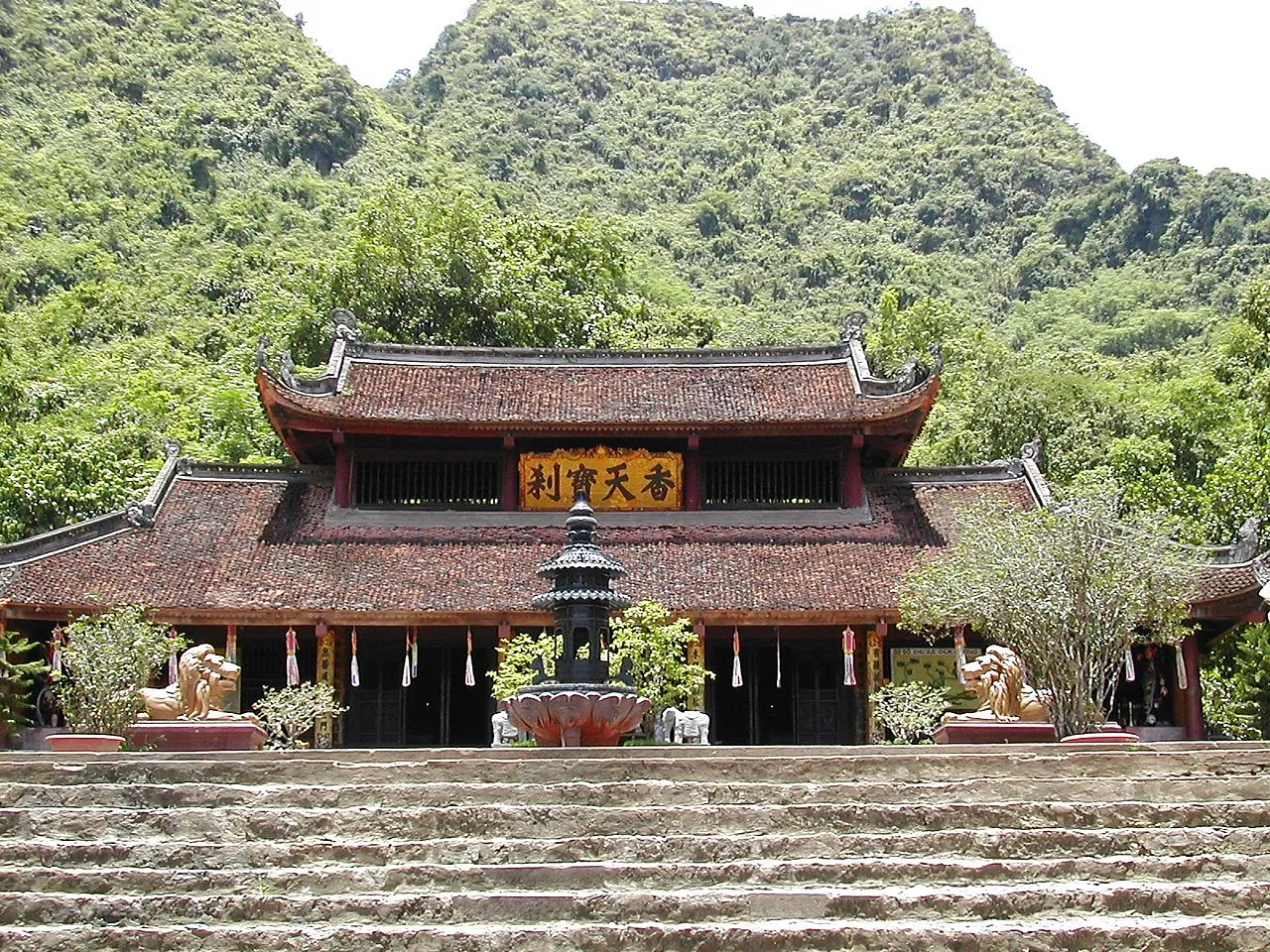
Thien Tru, the 'Heaven Kitchen' pagoda, is where the festival is usually opened each year. Its origins go back to the late 15th century under King Le Thanh Tong. The layout is described as 'five gates, three levels': you pass the triple gate with its bell and drum towers into a brick-paved courtyard with a bronze incense urn nearly 3 m high, then up two more terraces to the main hall. Behind it are the founder's hall and a shrine to the Mother Goddess, and in the grounds stands the Vien Cong stupa, a terracotta tower honouring the monk who founded the pagoda.
On the way up the mountain, Giai Oan Pagoda ('clearing of injustice') stands on the slope of Long Tuyen mountain. Beside it is a rock said to carry the footprint of the Bodhisattva Quan Am, and below runs Giai Oan stream with its nine small springs.
These are working religious sites. Dress with shoulders and knees covered, keep your voice down where people are praying, and do not climb on altars or statues for photographs.
Make time for the local food
What to eat and where to look
Che lam Chua Huong
A soft, chewy sweet of glutinous rice flour with sugar-cane molasses, roasted peanuts and ginger, dusted with white rice flour. It is the classic souvenir of the pilgrimage and is eaten with hot green tea.
- Where to look
- Specialty stalls around Ben Duc wharf and along the paths near Thien Tru.
- Fit it into your day
- A snack with tea after the climb, or a box to take back to Hanoi.
Contains peanuts; very sweet.
Banh cu mai (yam and cereal crackers)
Crisp, lightly sweet triangles made from cu mai, a kind of yam, and grains, sold all over the site.
- Where to look
- Specialty stalls at the wharf and on the pagoda paths.
- Fit it into your day
- Something to carry for the walk up to Huong Tich cave.
Check the ingredients if you avoid gluten.
Huong Tich apricots (mo Huong Tich)
Small, thick-fleshed apricots with a clean sour taste, picked around the third lunar month and sold fresh, preserved as o mai, in syrup or as apricot wine.
- Where to look
- Stalls around the wharf and the pagodas, especially late in the festival season.
- Fit it into your day
- Buy a bag of o mai on the way out rather than carrying it up the mountain.
Locals advise choosing small, bright-yellow, firm fruit; large ones are often hybrids sold as the local variety.
Huong Tich cave: the shrine at the top
Huong Tich is the goal of the pilgrimage and the 'Inner Pagoda' (Chua Trong) of the complex. Seen from below, the cave mouth looks like an open dragon's jaw; on its wall are carved the characters *Nam Thien De Nhat Dong* — 'the foremost cave under the southern sky' — dated 1770 and attributed to Lord Trinh Sam.
Inside, green-stone statues of the Buddha and Quan Am stand among stalactites and stalagmites that pilgrims have named — the mother's breast, the rice mound, the coin pile, the golden and silver trees. Some are worn smooth by generations of hands, and in festival season people crowd to catch the drops of water falling from the formations for luck. The cave floor is uneven and can be wet; wear shoes with grip.
Going up is the hard part of the day. The stone path is long and steep in places, which is why many visitors take the cable car up and walk down, or ride both ways. If you walk, start early, carry water and take it slowly; in festival season the path itself can be crowded.
Fees and tickets: what we found for 2026
When we checked on 2026-10-03, a Hanoi People's Council resolution reported by the Ministry of Culture, Sports and Tourism set the visitor fee for the Huong Pagoda site at 120,000 VND per visit, including 2,000 VND of travel insurance. The same resolution makes the site free on the last day of the lunar year, the first two days of Lunar New Year, Buddha's birthday (the 15th day of the fourth lunar month) and Vietnam Cultural Heritage Day, 23 November.
For the 2026 festival, press reports of the organisers' price list gave 230,000 VND for an adult ticket on the main Huong Tich route covering the site fee and the boat (170,000 VND for concession holders, 60,000 VND for children), and 260,000 VND for an adult return on the cable car (180,000 VND one way). On the quieter Long Van and Tuyet Son routes the site fee was waived and the boat cost 85,000 VND for adults. During the free-entry days of the 2026 festival visitors paid only the boat ticket of 110,000 VND. Car and motorbike parking at the organisers' lots was free from 18 February to 11 May 2026.
Tickets in 2026 were electronic, with QR-code gates at the wharf. Prices outside the festival and in future years may differ: buy only at the official ticket counters, keep your ticket, and agree any extra boat stop with the rower before you set off. Many tours from Hanoi include the site fee and the boat; check whether the cable car is included.
When to go: festival crowds or a quiet stream
The Perfume Pagoda festival is one of the longest in Vietnam. In 2026 it ran from 18 February to 11 May — the second day of the first lunar month to the 25th day of the third — with the official opening at Thien Tru on 22 February. The dates follow the lunar calendar and move every year. Crowds are enormous: the site counted 135,895 visitors between 17 and 21 February 2026 alone, before the official opening. If you want to see the pilgrimage itself, go knowing that you will queue for boats and the cable car, keep valuables close and expect the day to run long; our suggestion is a weekday later in the season rather than the days just after Tet.
Outside the festival the stream is almost empty, and Vietnam's tourism authority notes that you can visit at any time of year. Autumn is the most beautiful season on the water: buds of pink-purple water lilies start to appear on Yen stream from about mid-September and bloom from October, and local photographers say the best displays last from late October into December. The flowers are open in the early morning and start to close from about 10 am, so a dawn start matters more than usual. In June, lotus blooms along the stream.
For the weather, Vietnam's tourism authority recommends April–June or September–December for Hanoi; June to August is the hot, rainy season, and late December to March can be cold and grey, which is worth remembering for an hour sitting still in an open boat.
- Pilgrimage atmosphere: the festival, roughly the first three lunar months; check the year's dates.
- Quiet water and water lilies: October to December, early in the morning.
- Avoid: the first days after Lunar New Year unless the crowd is the point.
Getting there and the other routes
Ben Duc is in Huong Son commune at the southern edge of Hanoi. VnExpress's guide puts the drive at about an hour and a half to two hours from the city centre, depending on traffic; Vietnam's tourism authority describes the pagoda as about two hours from Hanoi. Most international visitors go with a group or private tour, or hire a car with driver and agree the waiting time — the boat trip and climb leave the driver waiting for most of the day.
The complex has four main routes from Yen stream, with about 20 temples, pagodas and caves in all: Huong Tich (the central route described above), Thanh Son, Long Van and Tuyet Son. Long Van involves a climb of about 150 m to Long Van pagoda and cave and is marketed locally as a forest trek; Tuyet Son is reached by a 1.5 km boat ride from Phu Yen village or by road, and has caves full of stalactites and the small Bao Dai pagoda. These are worth adding only if you stay nearby or skip the main climb.
Practical questions
How far is the Perfume Pagoda from Hanoi?
Huong Son is around 60–70 km south-west of central Hanoi. Allow about one and a half to two hours each way by car, more in traffic, plus about an hour on the boat each way.
How much does the Perfume Pagoda cost?
When we checked on 2026-10-03, the official site fee set by Hanoi's People's Council was 120,000 VND. For the 2026 festival, the combined adult ticket for the site and boat on the main route was reported at 230,000 VND and the return cable car at 260,000 VND. Prices can change; buy at the official counters.
Do I have to climb to Huong Tich cave?
No. A cable car is the alternative to the stone path; many people ride up and walk down. The stone path is long and steep in places, so wear shoes with grip and carry water if you walk.
When is the Perfume Pagoda festival?
It follows the lunar calendar, from just after Lunar New Year to the third lunar month. In 2026 it ran from 18 February to 11 May, with the official opening on 22 February.
Is it worth visiting outside the festival?
Yes, if you prefer quiet. The boat ride and caves are the same, the stream is nearly empty, and from October to December water lilies bloom on Yen stream in the early morning.
What should I wear?
Modest clothes covering shoulders and knees for the pagodas, sports shoes for the steps and the wet cave floor, and a hat and sunscreen for the open boat.
Sources and checks before you travel
Reference sources for the version dated 3 October 2026. Confirm opening times, access, transport and conditions for your travel dates.
- Vietnam Tourism: Perfume Pagoda Festival ↗ — opens in a new tab
- Vietnam Tourism: 5 day trip destinations from Hanoi ↗ — opens in a new tab
- Ministry of Culture, Sports and Tourism: Hanoi raises visitor fees at scenic and historic sites ↗ — opens in a new tab
- VnExpress: Huong Pagoda festival 2026 guide (Vietnamese) ↗ — opens in a new tab
- VietnamPlus (Vietnam News Agency): Huong Pagoda Festival 2026 opens ↗ — opens in a new tab
- Nguoi Ha Noi: refunds for Huong Pagoda tickets bought 20–22 February 2026 ↗ — opens in a new tab
- Wikipedia: Huong Temple (Perfume Pagoda) ↗ — opens in a new tab
- Tuoi Tre: water lily season at Huong Pagoda ↗ — opens in a new tab
- Dan Viet (Trang Trai Viet): Huong Pagoda in October ↗ — opens in a new tab
- Vietnam Tourism: weather and climate in Vietnam ↗ — opens in a new tab
- Vietnam Tourism: a traveller's guide to Vietnam's airports ↗ — opens in a new tab
Does this experience fit your route?
A guided day from Hanoi takes care of the drive, the tickets and the boat, and explains the shrines on the way up. Before you book, check whether the cable car is included and, in festival season, how early the tour leaves.
Check dates and details on Viator ↗ — opens in a new tabAffiliate link · Book with ViatorPhoto credits
Thien Tru Pagoda, the 'Heaven Kitchen', where the walk towards Huong Tich cave begins.
Photograph: Jack French from San Francisco, USA — opens in a new tab · CC BY 2.0 — opens in a new tab
Changes: Resized and converted to WebP; displayed with responsive crops. · Original photograph and licence details ↗ — opens in a new tab
Rowing boats waiting at the wharf on Yen stream, the start of the trip to the Perfume Pagoda.
Photograph: Richard Mortel from Riyadh, Saudi Arabia — opens in a new tab · CC BY 2.0 — opens in a new tab
Changes: Resized and converted to WebP; displayed with responsive crops. · Original photograph and licence details ↗ — opens in a new tab
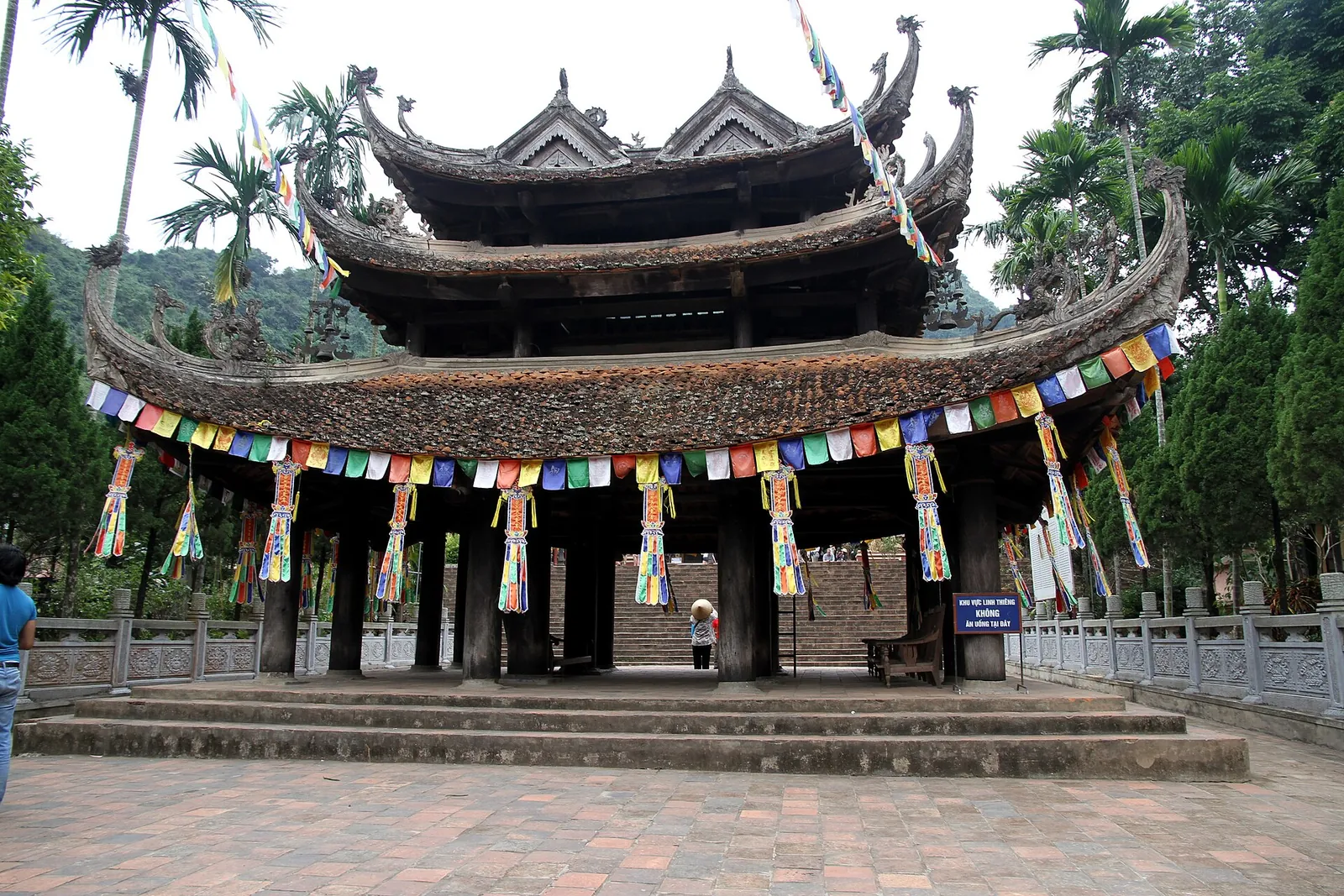
A pavilion strung with prayer flags in the Perfume Pagoda complex.
Photograph: Maya-Anaïs Y. — opens in a new tab · CC BY 2.0 — opens in a new tab
Changes: Resized and converted to WebP; displayed with responsive crops. · Original photograph and licence details ↗ — opens in a new tab
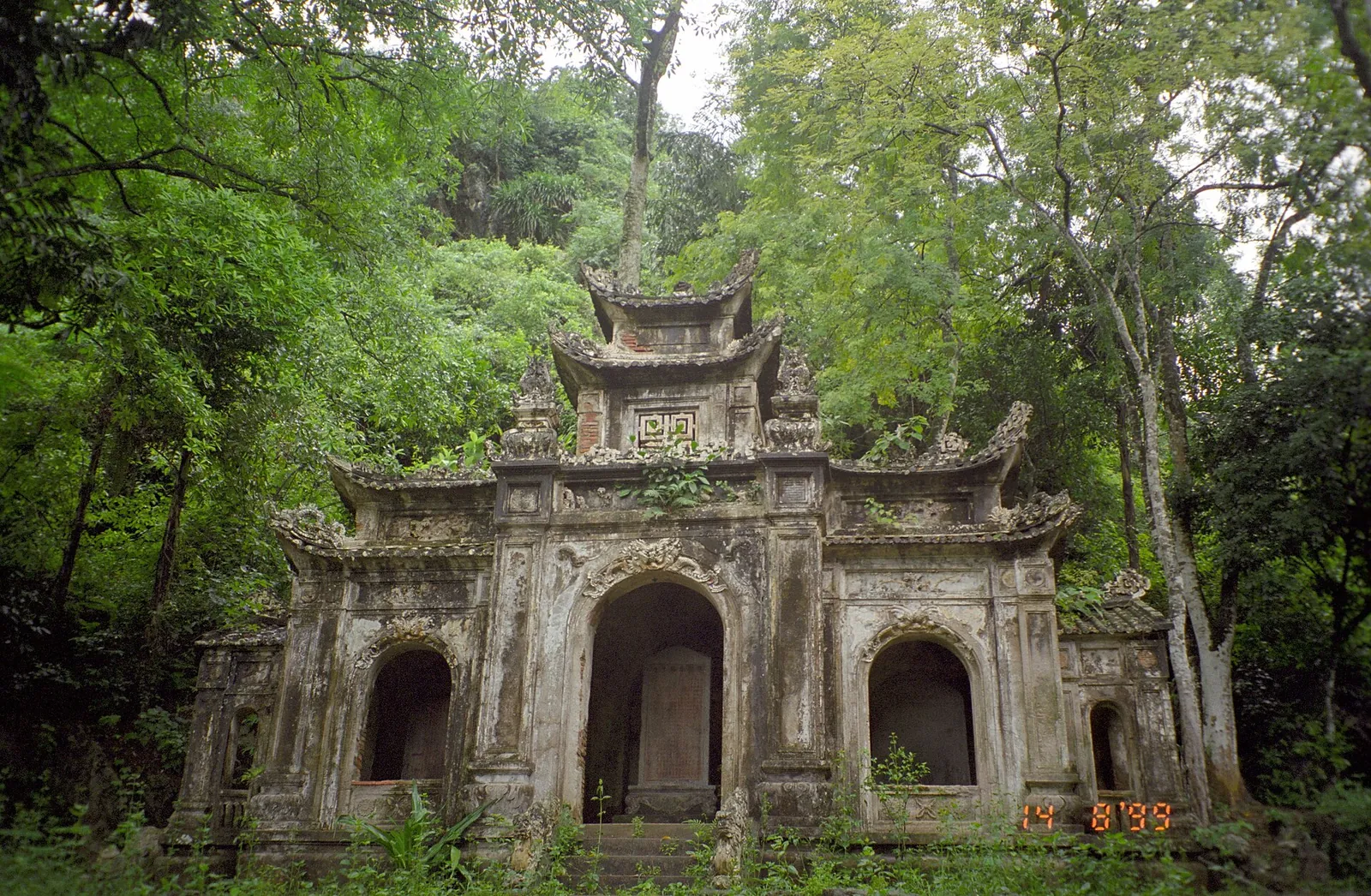
A weathered stone gate on the path through the Perfume Pagoda complex.
Photograph: upyernoz from Haverford, USA — opens in a new tab · CC BY 2.0 — opens in a new tab
Changes: Resized and converted to WebP; displayed with responsive crops. · Original photograph and licence details ↗ — opens in a new tab