Hanoi and the Northeast · Hanoi
Duong Lam Ancient Village: a laterite village day trip from Hanoi
Duong Lam is not a single sight but a cluster of five old villages on the edge of Son Tay, about 44 km west of central Hanoi, where people still live in houses built of laterite — the rough, rust-brown stone of this part of the Red River Delta. The rewards are small and close together: a tiled village gate beside a lotus pond, a seventeenth-century communal house, a pagoda crowded with statues, the shrine of a tenth-century king and courtyards lined with jars of fermenting soy sauce. Come to walk slowly, not to tick off monuments.
- Suggested time
- A long half-day or full day; one night in a homestay for a slower visit
- Where to stay
- Hanoi for a day trip; a homestay in an old house in Duong Lam for an overnight stay
- Season and timing
- For the north, Vietnam's tourism authority suggests April–June or September–December; June to August is hot and rainy, and late December to March can be cold and grey. Lunar New Year brings large crowds.
The short answer
Most visitors come as a day trip from Hanoi: leave in the morning, walk Mong Phu village and its communal house, visit Mia Pagoda and the Ngo Quyen shrine, and eat lunch in one of the old houses before heading back. Stay overnight in a village homestay if you want the lanes in the early morning and evening, after the day visitors have gone. Without your own transport, a guided tour or a car with driver from Hanoi is the simplest way to go.
Day trip or a night in an old house
Duong Lam works well as a day out from Hanoi because the village is compact: the main lanes, Mong Phu communal house and Mia Pagoda are close enough to see on foot in a few hours, with Ngo Quyen's shrine a little apart on Cam hill. The guided tours from Hanoi are day trips, most with lunch in the village.
The case for staying is the light and the quiet. Vietnam's tourism authority notes that local households offer homestays in the old houses, home-cooked meals and hands-on sessions making soy sauce, rice wine and traditional cakes. A night lets you walk the lanes early, when the village is going about its own business, and eat dinner at a family table. Rooms in old houses are simple; check whether the bathroom is shared, whether there is air conditioning for summer, and how to find the house before you arrive.
If you prefer a hotel, staying in Hanoi and making the trip by car is more comfortable than looking for one near the village. Since a 2025 reorganisation of Hanoi's local government, the former Duong Lam commune is part of the new Son Tay ward, so you may see either name on maps and booking sites.
Mong Phu: the gate, the communal house and the laterite lanes
Duong Lam was the first village in Vietnam to be recognised as a national historical and cultural relic, in 2006, and Hanoi made it a city-level tourist site in 2019. A census of its traditional houses counted 956 of them, in the hamlets of Dong Sang (441), Mong Phu (350) and Cam Thinh (165). What sets them apart is the material: walls of laterite blocks, moss-covered tiled roofs, brick courtyards and wells.
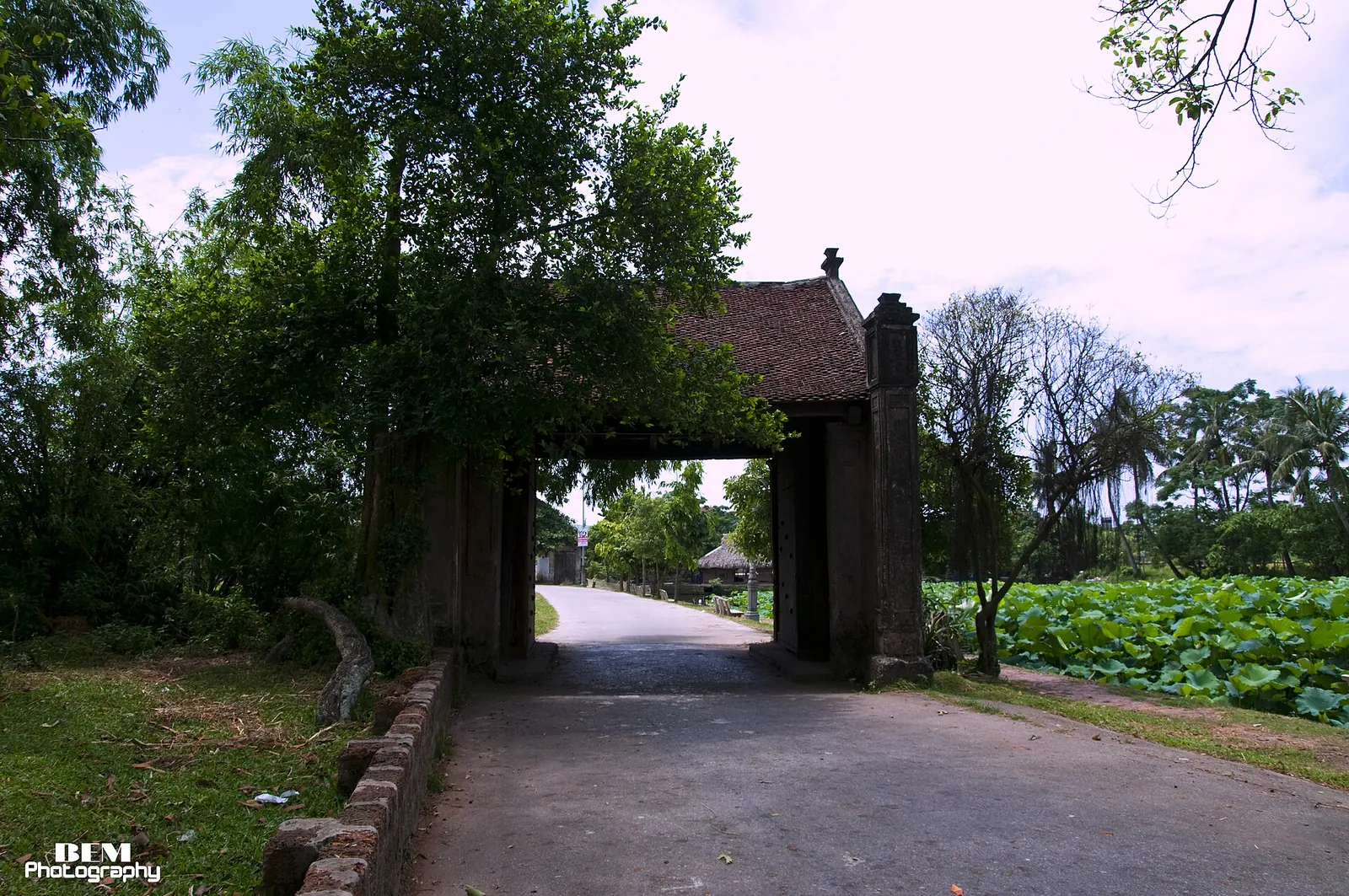
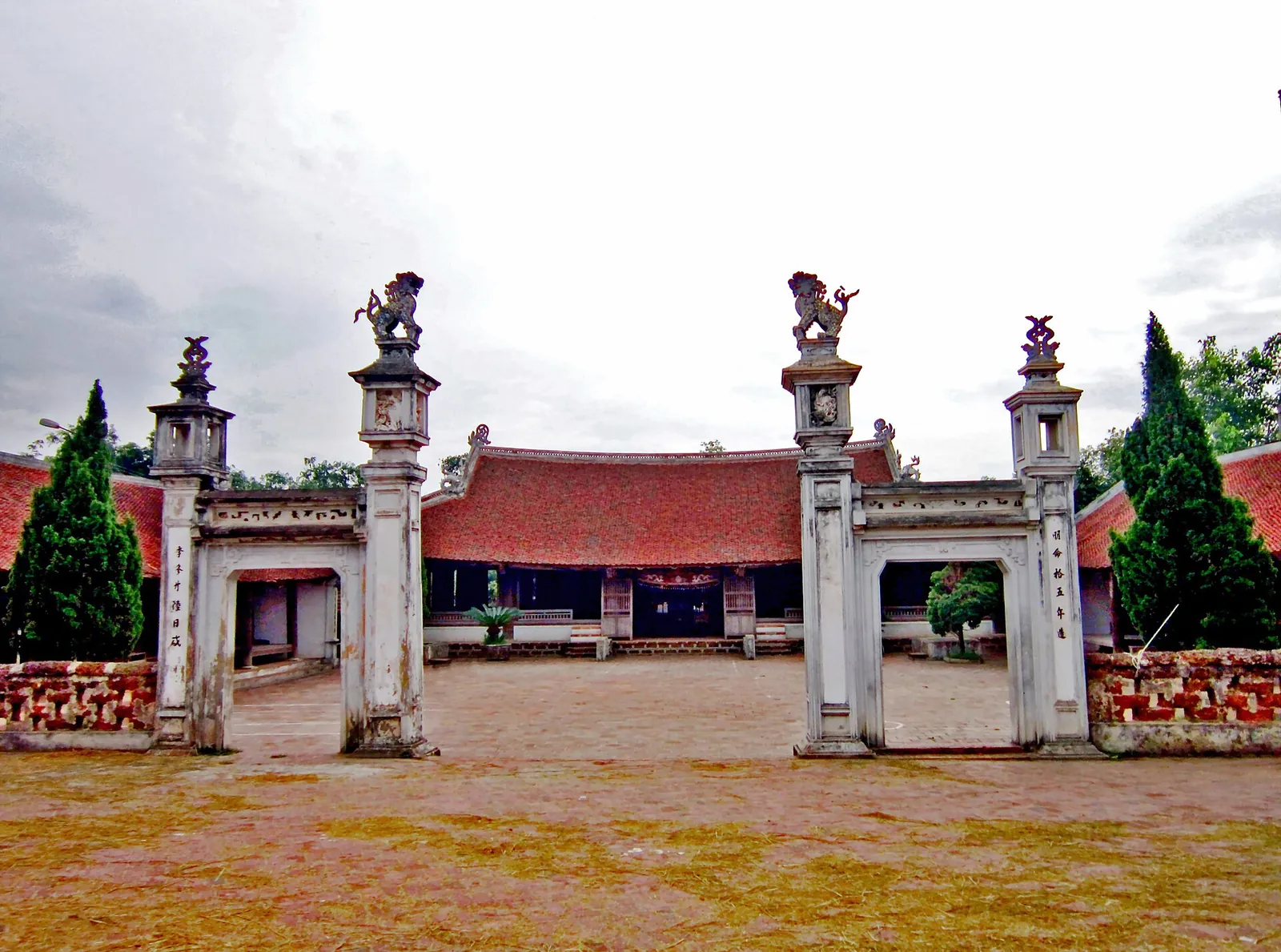
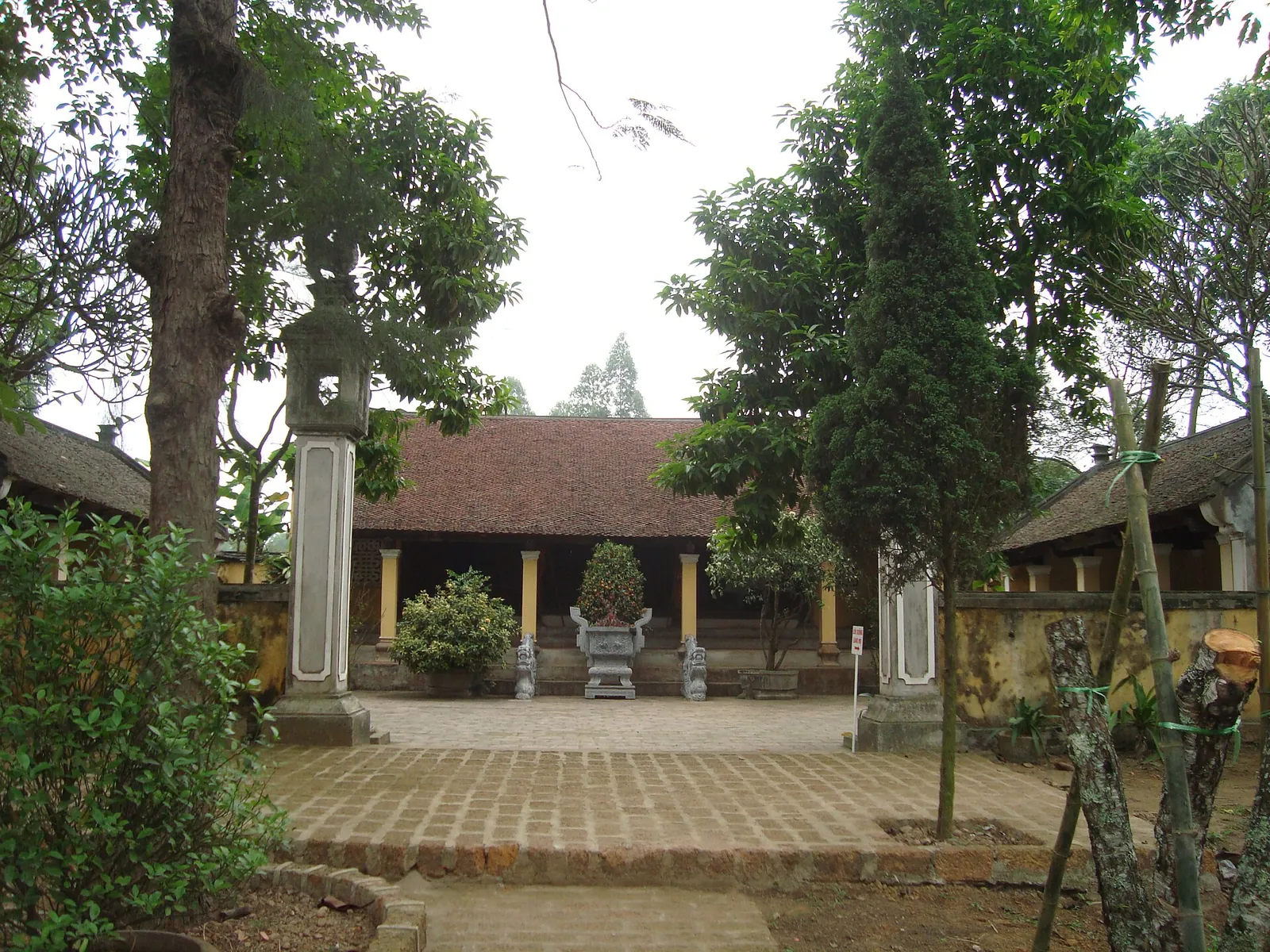
Start at Mong Phu. Its village gate stands under a large spreading tree beside old banyans, with a field and a lotus pond in front — the classic picture of a northern village. Inside, red-brick paths branch out from Mong Phu communal house (dinh), built in 1684. Instead of enclosing walls it has open railings, and its courtyard is set lower than the surrounding ground so that rainwater runs in and drains through two outlets at the sides. The village festival is held here from the first to the tenth day of the first lunar month.
These are lived-in houses, not a museum. Some open their courtyards to visitors, many do not: look for a sign or an open gate, ask before you walk in or photograph people, and keep voices down in the narrow lanes. When we checked on 2026-10-03, a Hanoi People's Council resolution reported by the Ministry of Culture set the visitor fee for the ancient village at 20,000 VND per visit, with no fee on the last day of the lunar year and the first two days of Lunar New Year and on Vietnam Cultural Heritage Day (23 November). Fees can change; pay at the entry point and keep the ticket.
Make time for the local food
What to eat and where to look
Mia chicken (ga Mia)
A local breed named after Ke Mia, an old name for Duong Lam; it was once an offering for the gods and a tribute to the king. Today it is one of the village's certified OCOP (One Commune One Product) specialities.
- Where to look
- Family restaurants and homestays in the old houses, often as part of a set meal for groups.
- Fit it into your day
- Make it the main dish of lunch in the village, ordered ahead if you are a small party.
A premium local product: ask the price and the portion size when you order.
Duong Lam soy sauce (tuong) and fish braised in it
Soy sauce fermented in the large earthenware jars you see lined up in courtyards across the village. It is used as a dip and to braise fish (ca kho tuong).
- Where to look
- Courtyards with rows of jars belong to families who make it — ask whether they sell a bottle; braised fish appears on home-cooked menus.
- Fit it into your day
- Taste it with boiled vegetables at lunch; buy a bottle on the way out rather than at the start.
Salty and strong; check how a bottle is sealed before packing it in your luggage.
Che lam, keo doi and peanut candy
Che lam is a soft sweet of roasted glutinous rice flour, malt, fresh ginger, sugar syrup and roasted peanuts; keo doi is a peanut nougat that is still cooked by hand. Sesame and peanut candies are certified local products.
- Where to look
- Small family workshops and stalls along the village lanes.
- Fit it into your day
- A snack with tea in the afternoon, or a light gift to take back to Hanoi.
Contain peanuts and sesame; very sweet.
Banh te Phu Nhi
A slim, leaf-wrapped cake of plain rice flour around a filling of pork, wood-ear mushroom and fried shallot, made in Phu Nhi village in neighbouring Phu Thinh ward and sold across the Son Tay area. It is best eaten hot.
- Where to look
- Markets and food shops around Son Tay.
- Fit it into your day
- A savoury breakfast or a snack on the way out of Son Tay.
Contains pork.
Roast pork (thit quay don)
Duong Lam's own style of roast pork, listed among the village specialities alongside Mia chicken and the sweets.
- Where to look
- Village restaurants and family set meals.
- Fit it into your day
- Share it as part of a set lunch rather than ordering it alone.
Rich and fatty; not for those avoiding pork.
Mia Pagoda and the land of two kings
Mia Pagoda (Sung Nghiem Tu) is the village's most important religious building and is classified as a special national relic. It is known for its crowded halls of statues — 287 of them, in bronze, wood and clay — including long rows of arhats down the side galleries. Dress modestly, take shoes off where others do and leave the altars clear.
Duong Lam is known as the 'land of two kings' because it was the birthplace of both Phung Hung and Ngo Quyen, whose victory at the Bach Dang River in 938 opened the era of Vietnamese independence. Ngo Quyen's temple stands at the top of Cam hill, about 100 m from his mausoleum, which dates from 1874; the old streblus trees in the grounds, where he is said to have tied his elephants and horses, are recognised as national heritage trees. On the 14th day of the second lunar month, the anniversary of his death, people from the region come to make offerings.
Allow two to three hours for Mong Phu and Mia Pagoda on foot, and add an hour for the Ngo Quyen shrine and mausoleum, which are more comfortably reached by bicycle, car or the tour vehicle than on foot in the midday heat.
Getting there and getting around
Duong Lam lies about 44 km west of central Hanoi, near Son Tay. Most international visitors arrive on a guided tour or by hired car or taxi from the city; agree the waiting time and the return trip if you hire a driver. Allow for Hanoi's traffic on the way out and back, especially if you are returning in the evening rush.
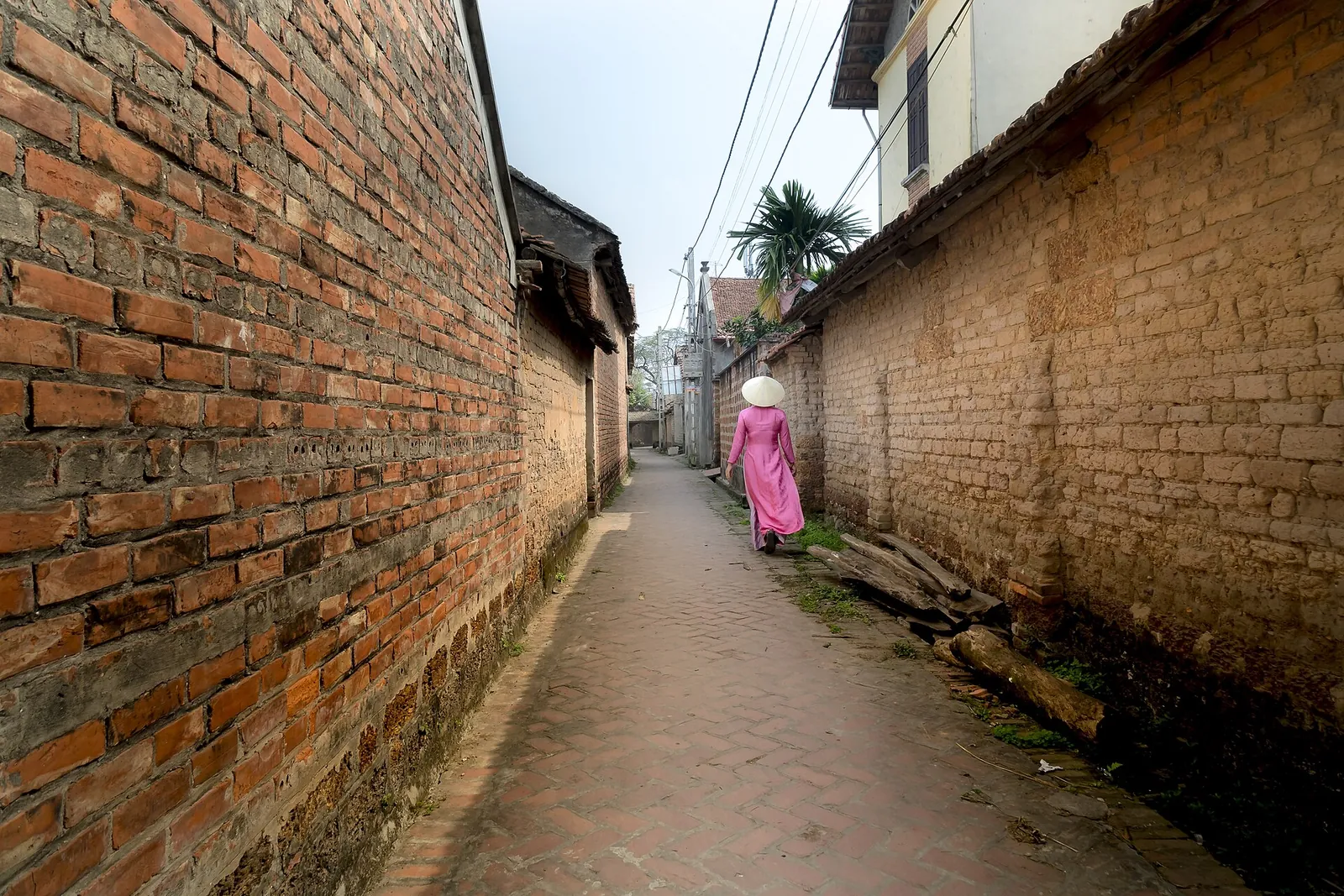
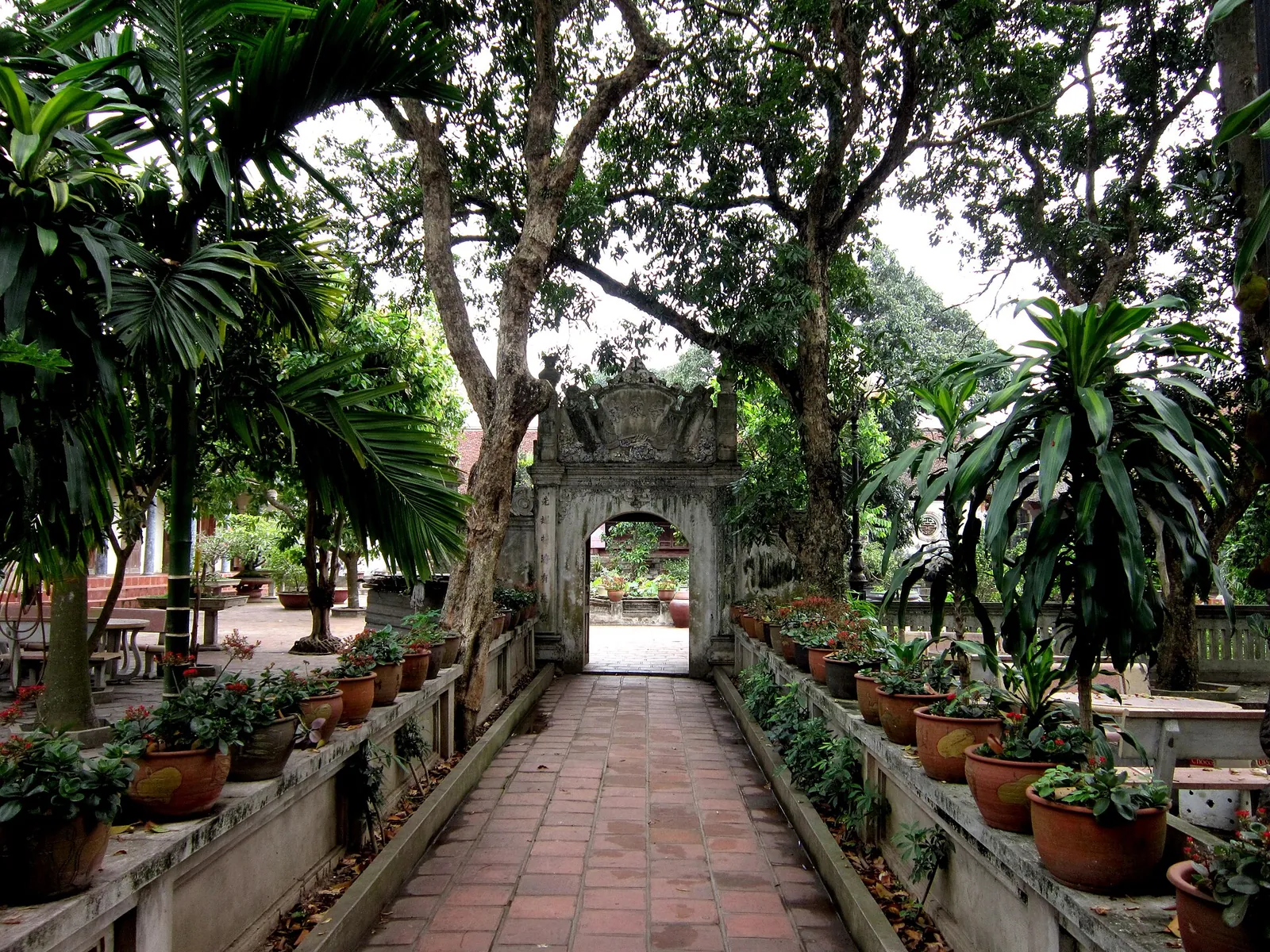
Once you are there, walk. The lanes are narrow and the houses close together, and the village is most rewarding at walking pace. A bicycle helps if you want to add the Ngo Quyen shrine and the fields around the hamlets; tours often include one.
Around Son Tay, tourism businesses working with Hanoi's tourism department have proposed combining Duong Lam with the old Son Tay citadel, Ba Vi National Park and the Vietnamese Ethnic Groups Culture Village. Combine one of them with Duong Lam only if you stay overnight; together they are too much for a single day trip.
A workable day — and when to go
This is an editorial suggestion, not a timetable. Opening times for individual temples and houses were not available from an official source, so plan the visit in daylight and be flexible.
- Morning: leave Hanoi early, start at the Mong Phu gate and walk the lanes to Mong Phu communal house before the day's groups arrive.
- Late morning: Mia Pagoda and its statue halls.
- Lunch: a home-cooked meal in an old house, with local dishes such as Mia chicken or fish braised in soy sauce.
- Afternoon: the Ngo Quyen temple and mausoleum by bicycle or car, then back to Hanoi; or stay the night and walk the village again at dusk.
- Seasons: spring and autumn are the most comfortable. Lunar New Year is busy — local reports counted about 30,000 visitors over the 2025 holiday — so come on a weekday if you want quiet lanes.
Practical questions
How far is Duong Lam from Hanoi?
About 44 km west of central Hanoi, near Son Tay. Plan for a road journey each way that depends heavily on Hanoi's traffic, and leave early.
Is Duong Lam worth an overnight stay?
If you enjoy quiet villages, yes. Day visitors arrive in the late morning; a homestay in an old house gives you the lanes in the early morning and evening and a family dinner. If you only want the main sights, a day trip is enough.
Is there an entrance fee?
Yes. When we checked on 2026-10-03, the fee set by Hanoi's People's Council was 20,000 VND per visit, with free entry on the last day of the lunar year, the first two days of Lunar New Year and Vietnam Cultural Heritage Day (23 November). Check at the entry point, as fees can change.
Can I visit Duong Lam without a tour?
Yes. A taxi or car with driver from Hanoi is the simplest independent option; once there, the village is easy to explore on foot. A guide adds the stories behind the houses and the two kings, which you will otherwise miss.
Can I go inside the old houses?
Some households open their courtyards or serve meals and offer homestays; others are private homes. Enter only where there is an open gate or sign, and ask before photographing people.
What should I wear to Mia Pagoda and the temples?
Cover shoulders and knees, take shoes off where others do, and keep your voice down during prayers.
Sources and checks before you travel
Reference sources for the version dated 3 October 2026. Confirm opening times, access, transport and conditions for your travel dates.
- Vietnam National Authority of Tourism (rural tourism): Duong Lam Ancient Village – a heritage space ↗ — opens in a new tab
- Ministry of Culture, Sports and Tourism: Hanoi raises visitor fees at scenic and historic sites ↗ — opens in a new tab
- Vietnam.vn: the unique land of two kings (from Phap Luat Viet Nam) ↗ — opens in a new tab
- Bao Van Hoa (Ministry of Culture newspaper): traditional northern cuisine at Duong Lam ↗ — opens in a new tab
- Vietnam National Authority of Tourism (rural tourism): Phu Nhi banh te village ↗ — opens in a new tab
- VietNamNet: Ngo Quyen temple and mausoleum ↗ — opens in a new tab
- Wikipedia: Duong Lam Ancient Village ↗ — opens in a new tab
- Vietnam Tourism: Duong Lam ancient village (in photos) ↗ — opens in a new tab
- Government portal: Resolution 1656/NQ-UBTVQH15 on Hanoi's commune-level units (2025) ↗ — opens in a new tab
- Vietnam Tourism: weather and climate in Vietnam ↗ — opens in a new tab
- Vietnam Tourism: a traveller's guide to Vietnam's airports ↗ — opens in a new tab
Does this experience fit your route?
A guided day from Hanoi takes care of the drive and explains the houses and temples you would otherwise walk past. Before you book, check the pick-up time, how much cycling or walking is involved and whether lunch is in an old house.
Check dates and details on Viator ↗ — opens in a new tabAffiliate link · Book with ViatorPhoto credits
The old tiled village gate at Duong Lam, Son Tay, with a lotus pond alongside
Photograph: Bem photography: — opens in a new tab · CC BY 2.0 — opens in a new tab
Changes: Resized and converted to WebP; displayed with responsive crops. · Original photograph and licence details ↗ — opens in a new tab
A narrow lane between old walls in Duong Lam: the village is best explored on foot
Photograph: Quangpraha — opens in a new tab · CC0 — opens in a new tab
Changes: Resized and converted to WebP; displayed with responsive crops. · Original photograph and licence details ↗ — opens in a new tab
Mong Phu communal house, built in 1684, at the heart of Duong Lam
Photograph: Bùi Thụy Đào Nguyên — opens in a new tab · CC BY-SA 3.0 — opens in a new tab
Changes: Resized and converted to WebP; displayed with responsive crops. · Original photograph and licence details ↗ — opens in a new tab
The shrine of King Ngo Quyen in Cam Lam hamlet, Duong Lam
Photograph: Original uploader was Ngokhong at vi.wikipedia — opens in a new tab · CC BY 3.0 — opens in a new tab
Changes: Resized and converted to WebP; displayed with responsive crops. · Original photograph and licence details ↗ — opens in a new tab
The approach to Mia Pagoda (Sung Nghiem Tu), home to 287 statues
Photograph: Bùi Thụy Đào Nguyên — opens in a new tab · CC BY-SA 3.0 — opens in a new tab
Changes: Resized and converted to WebP; displayed with responsive crops. · Original photograph and licence details ↗ — opens in a new tab
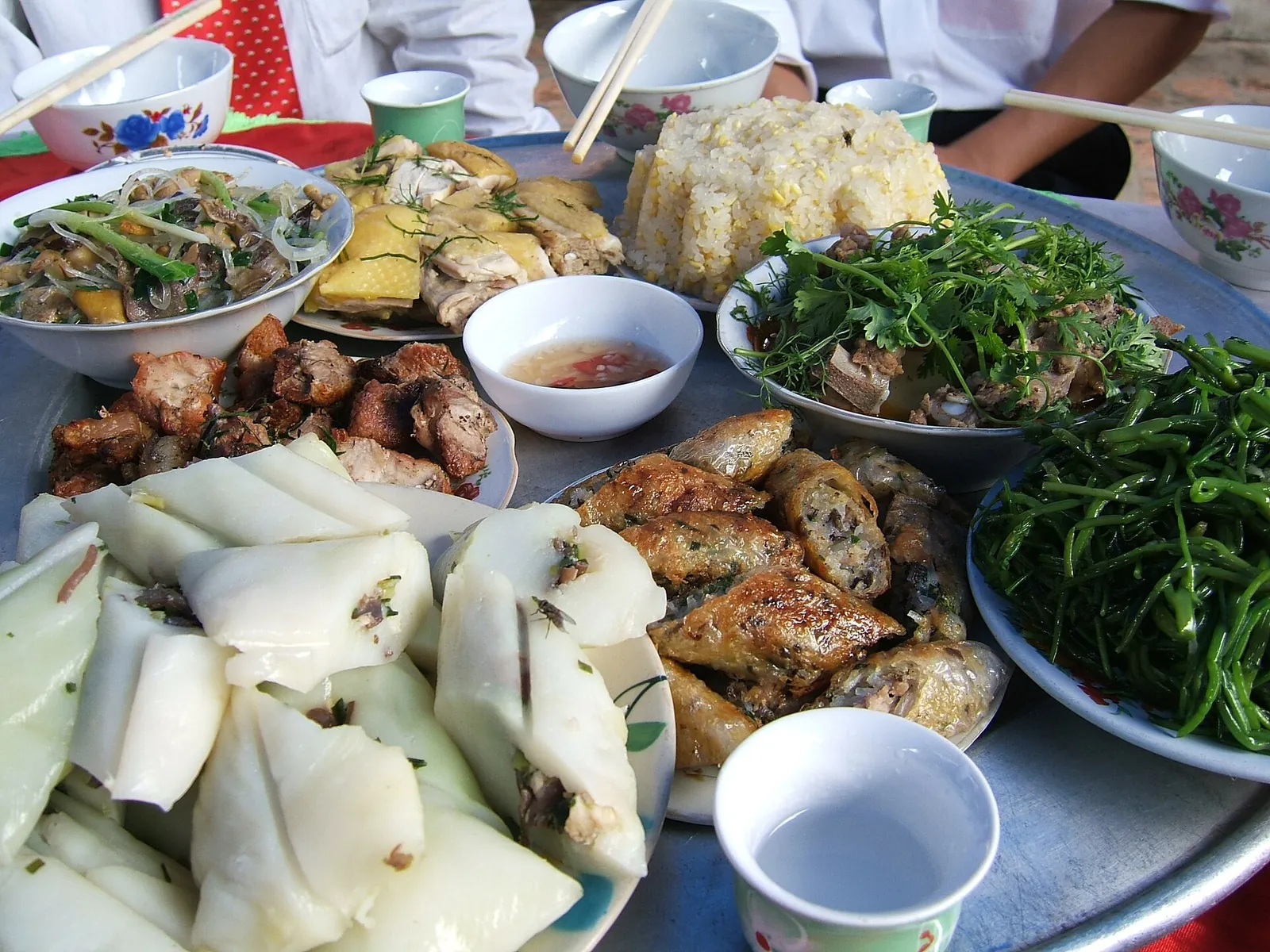
A northern Vietnamese feast tray, photographed in the countryside near Son Tay
Photograph: Viethavvh at Vietnamese Wikipedia — opens in a new tab · Public domain — opens in a new tab
Changes: Resized and converted to WebP; displayed with responsive crops. · Original photograph and licence details ↗ — opens in a new tab