Mekong Delta and Phu Quoc · An Giang
Chau Doc travel guide: Sam Mountain, Tra Su forest and Cham villages
Chau Doc sits on the Hau (Bassac) River where the Mekong Delta meets the Cambodian border, and it feels different from the delta towns downstream. Kinh Vietnamese, Khmer, Cham and Chinese communities share the area: Buddhist pagodas and the delta's busiest goddess temple line the slopes of Sam Mountain, Cham mosques stand on the islets across the river, and the market smells of the fermented fish that made the town famous. Further west, the Tra Su melaleuca forest floods every year. Most people pass through on the way to or from Cambodia; it is worth staying a few nights.
- Suggested time
- 2–3 nights
- Where to stay
- Chau Doc riverfront and market area; Sam Mountain for a quieter hillside stay
- Season and timing
- Dry and sunny from November to April. The rainy season runs from May to October, and the high-water months of August to November are the best time for the Tra Su forest and the floating villages. The Ba Chua Xu festival falls on the 22nd–27th days of the fourth lunar month, when Sam Mountain is crowded with pilgrims.
The short answer
Stay two nights, three if you want both Tra Su and the Cham islets without rushing. Sleep on the riverfront in town for the market and boat trips, or on Sam Mountain for sunrise views. Spend one morning at the market and on the river (floating village, Cham islets), one afternoon on Sam Mountain ending at the Cave Pagoda, and a half-day at Tra Su. Fly to Can Tho (VCA) and continue about three hours by road, or take the six-hour bus from Ho Chi Minh City. The river route from Cambodia arrives at the town's doorstep.
How Chau Doc works: river town, holy mountain, flooded forest
Think of Chau Doc as three short trips from one base. The town itself faces the Hau River, which Vietnam Tourism also calls the Bassac. Boats unload produce at the market, and the floating village, the fish farms and the Cham islets are all a short boat ride away. Sam Mountain rises from the rice fields south-west of the centre, with National Highway 91 running along its foot. The Tra Su forest lies further out, beyond the mountain. Vietnam Tourism puts it 23 km from Chau Doc.
The border is right next to town. Chau Doc, now formally a ward of An Giang Province, borders Cambodia to the west, and the Vinh Te canal, dug between 1819 and 1824, runs along the frontier below Sam Mountain. This mix of peoples is what Vietnam Tourism highlights: Cham, Khmer, Kinh and Chinese communities have lived side by side here for generations, and you can see it in the shop signs, the places of worship and the food.
Two nights is enough for the river and the mountain; a third adds Tra Su at an unhurried pace. Do the river early in the morning and the mountain in the late afternoon, when the light softens and the view west towards Cambodia is at its best.
The market, the floating village and the Cham islets
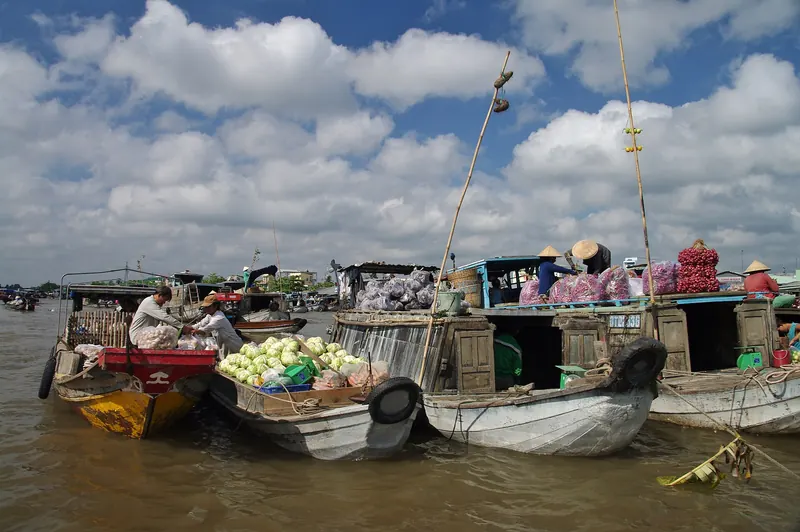
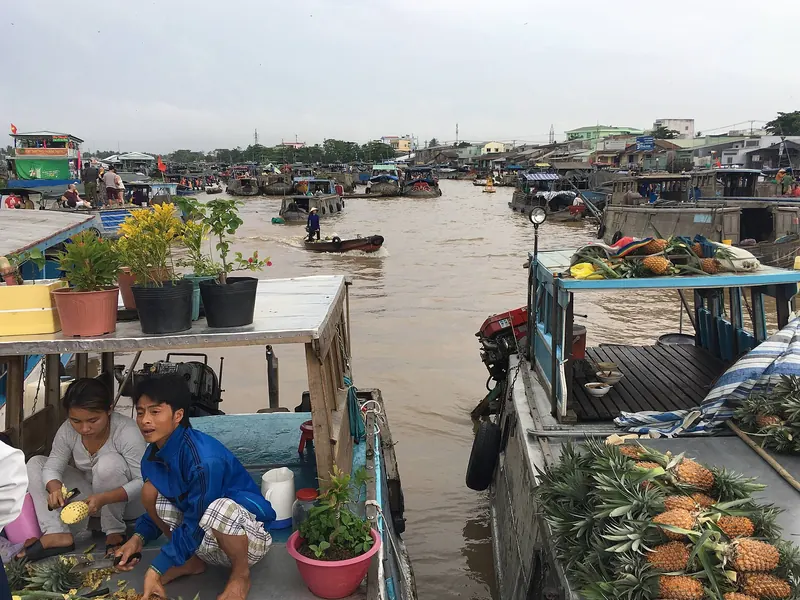
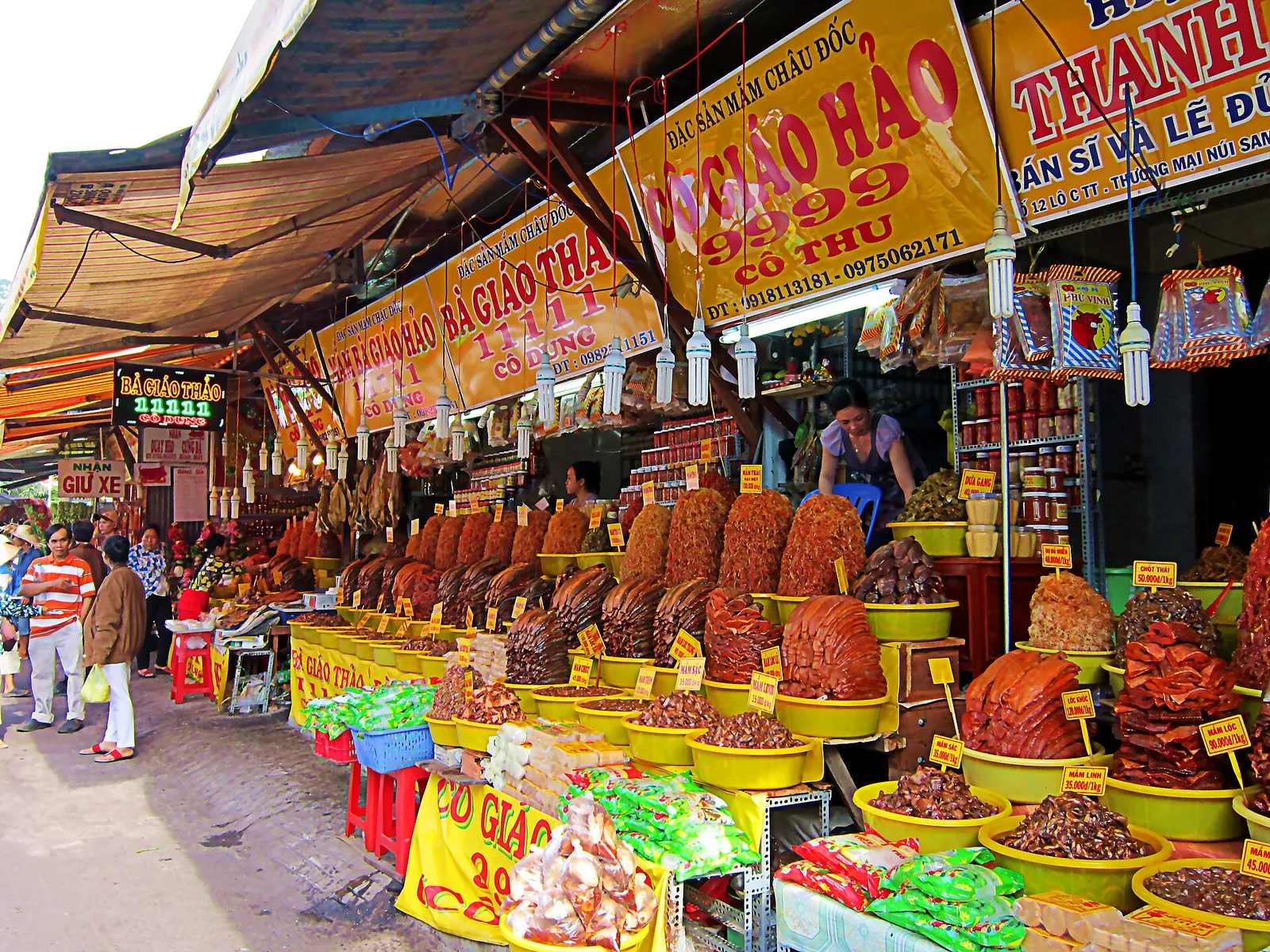
Start at Chau Doc Market around sunrise. Vietnam Tourism's dining guide says it is in full swing by 7am, and calls the town the 'Kingdom of Pickled Fish'. Look for stacks of mắm, river fish pickled with palm sugar, salt, chilli and garlic, fermenting in the open air, along with tamarind, palm nuts, flowers and jellied sweets. Bowls of fish noodle soup are sold on the edge of the market. Vietnam Tourism also describes a small floating market of several dozen boats in the early morning, where sellers hang samples of their produce from tall poles rather than calling out to buyers.
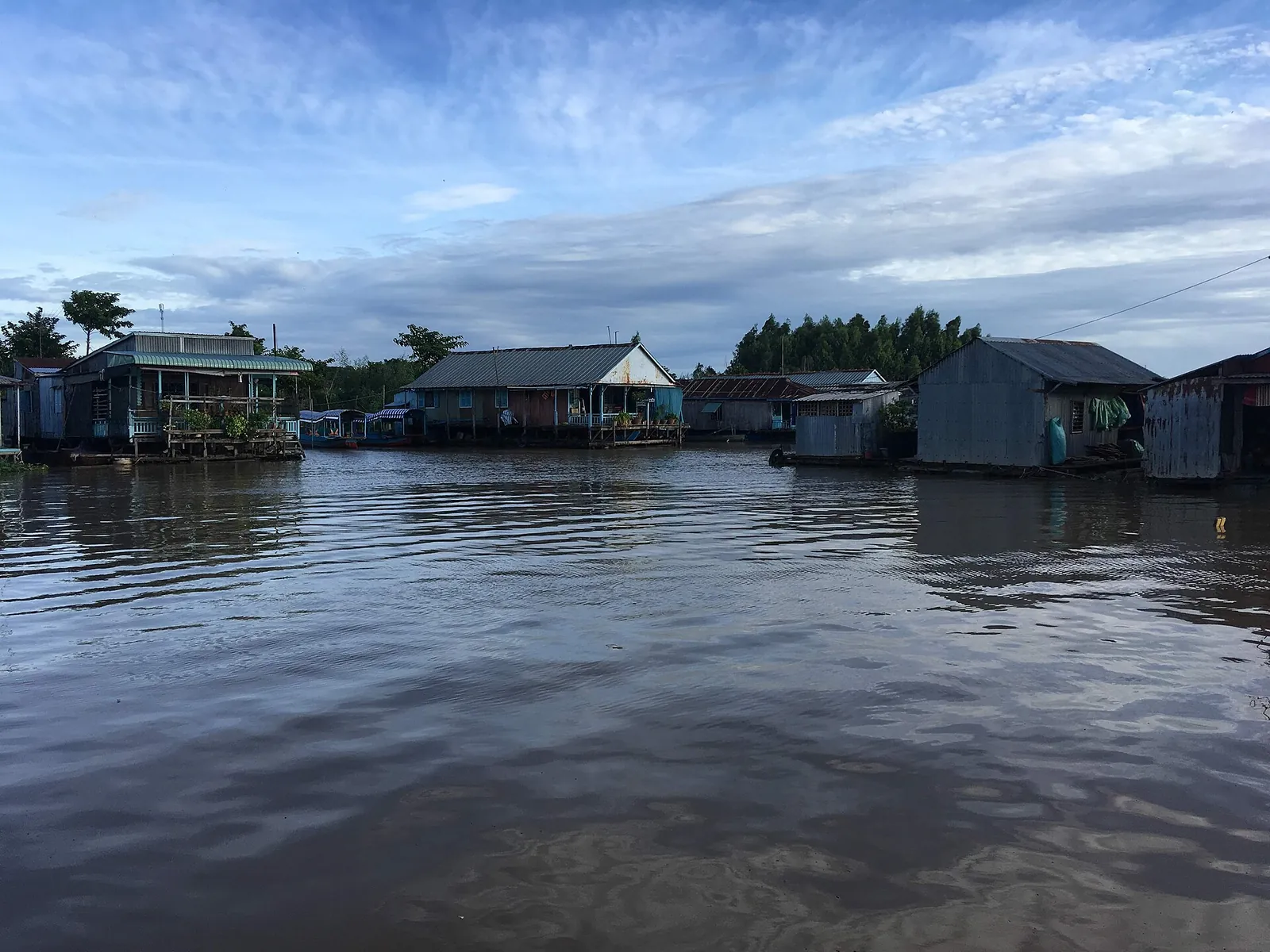
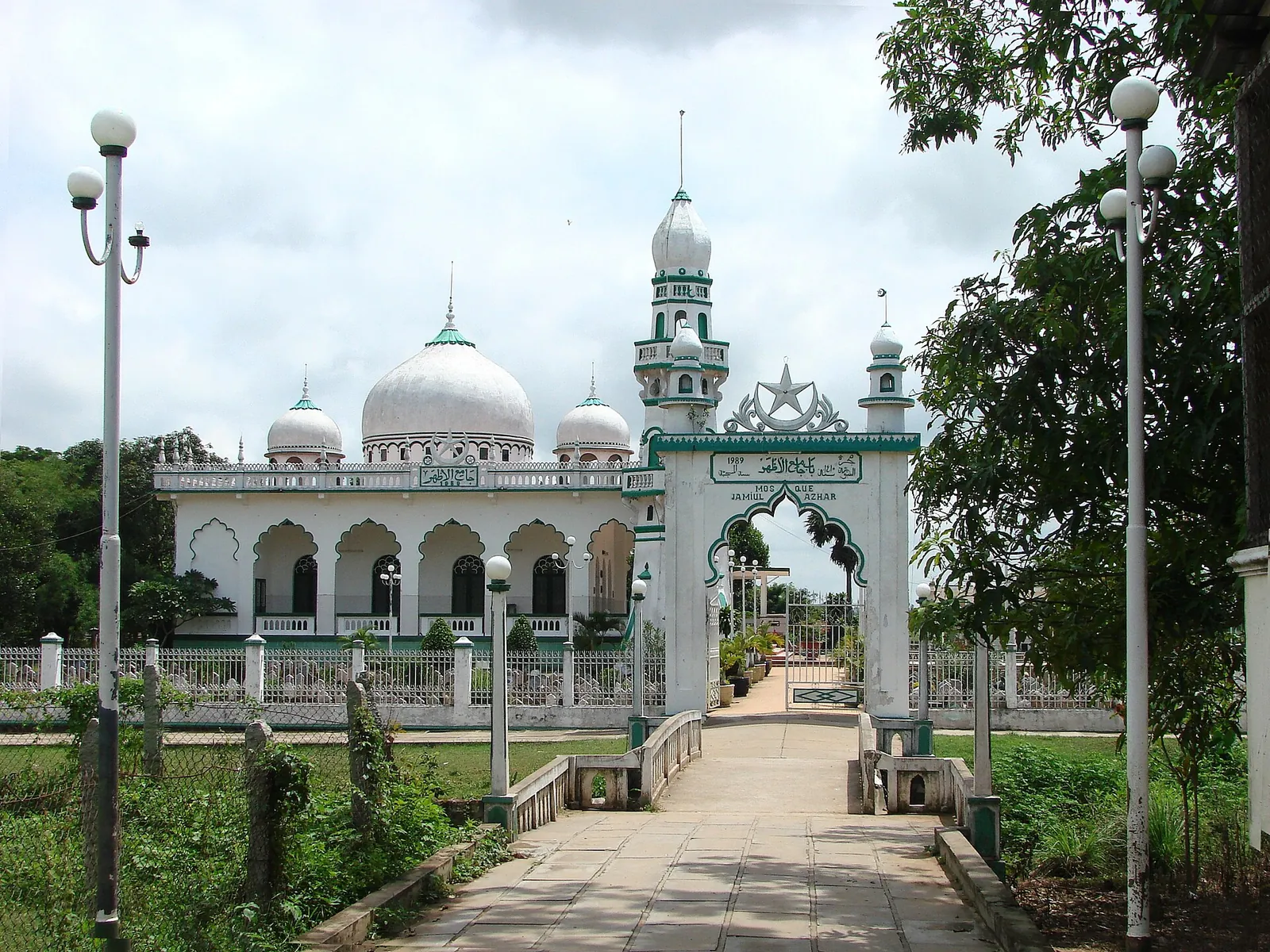
From the riverfront, boats go to the floating village, which Vietnam Tourism describes as a fishing community about 50 years old. Its houses are built on rafts that double as fish farms, raising catfish and snapper for sale. Ask your boat operator to include the Cham villages of Chau Giang and Chau Phong, on the islets across the Hau River. The Cham here are Sunni Muslims, with a mosque in each community and old wooden stilt houses linked by boardwalks above the changing water. Weavers make the checked Cham scarves on hand looms.
The Mubarak Mosque is the best known. Wikipedia records it as said to date from 1750, renovated in 1808, and among the oldest Cham mosques in Vietnam. These are working places of worship: dress modestly (cover shoulders and knees), take your shoes off where others do, ask before photographing people and avoid visiting during prayer times.
Make time for the local food
What to eat and where to look
Bún cá Châu Đốc (fish noodle soup)
Chau Doc's classic breakfast, Vietnam Tourism says: fresh rice noodles in a turmeric-yellow broth made with garlic, fermented fish paste and river fish, topped with banana blossom, bean sprouts and crunchy yellow điên điển flowers. Season it with chilli and lime.
- Where to look
- Stalls on the pavements around Chau Doc Market.
- Fit it into your day
- Breakfast at the market before the boat trip.
Made with fish and fermented fish paste; not suitable for vegetarians.
Mắm and lẩu mắm (fermented fish and fermented-fish hotpot)
Fermented river fish is the town's best-known product. At the market it is sold pickled with palm sugar, salt, chilli and garlic. Vietnam Tourism lists a lẩu mắm hotpot dinner among the things not to miss in Chau Doc.
- Where to look
- The fermented-fish stalls at Chau Doc Market; hotpot restaurants in town.
- Fit it into your day
- A shared dinner; buy mắm to take home on the way out.
Very strong smell and taste; pack jars well, since leaks are hard to clean.
Bánh bò thốt nốt and palm-nut chè
Sweets made from the sugar palms on the plains around town. Vietnam Tourism recommends bánh bò thốt nốt, a soft palm-sugar cake, and chè of palm-nut jelly with coconut cream and shaved ice. Look out also for bánh bò Chăm, cooked under hot clay lids and eaten warm.
- Where to look
- Market stalls and roadside sellers, especially around Sam Mountain and on the way to Tra Su.
- Fit it into your day
- An afternoon snack between temples.
Very sweet; ice in chè may be made from untreated water at small stalls.
Cá kho tộ (caramelised fish in a clay pot)
A Mekong Delta staple that Vietnam Tourism recommends in Chau Doc: river fish slow-cooked in a clay pot until tender and salty-sweet, eaten with hot rice and greens.
- Where to look
- Family-style rice restaurants in town.
- Fit it into your day
- Lunch or dinner as part of a shared meal.
Usually made with fish sauce and sugar; watch for small bones.
Sam Mountain: Ba Chua Xu, Tay An and the Cave Pagoda
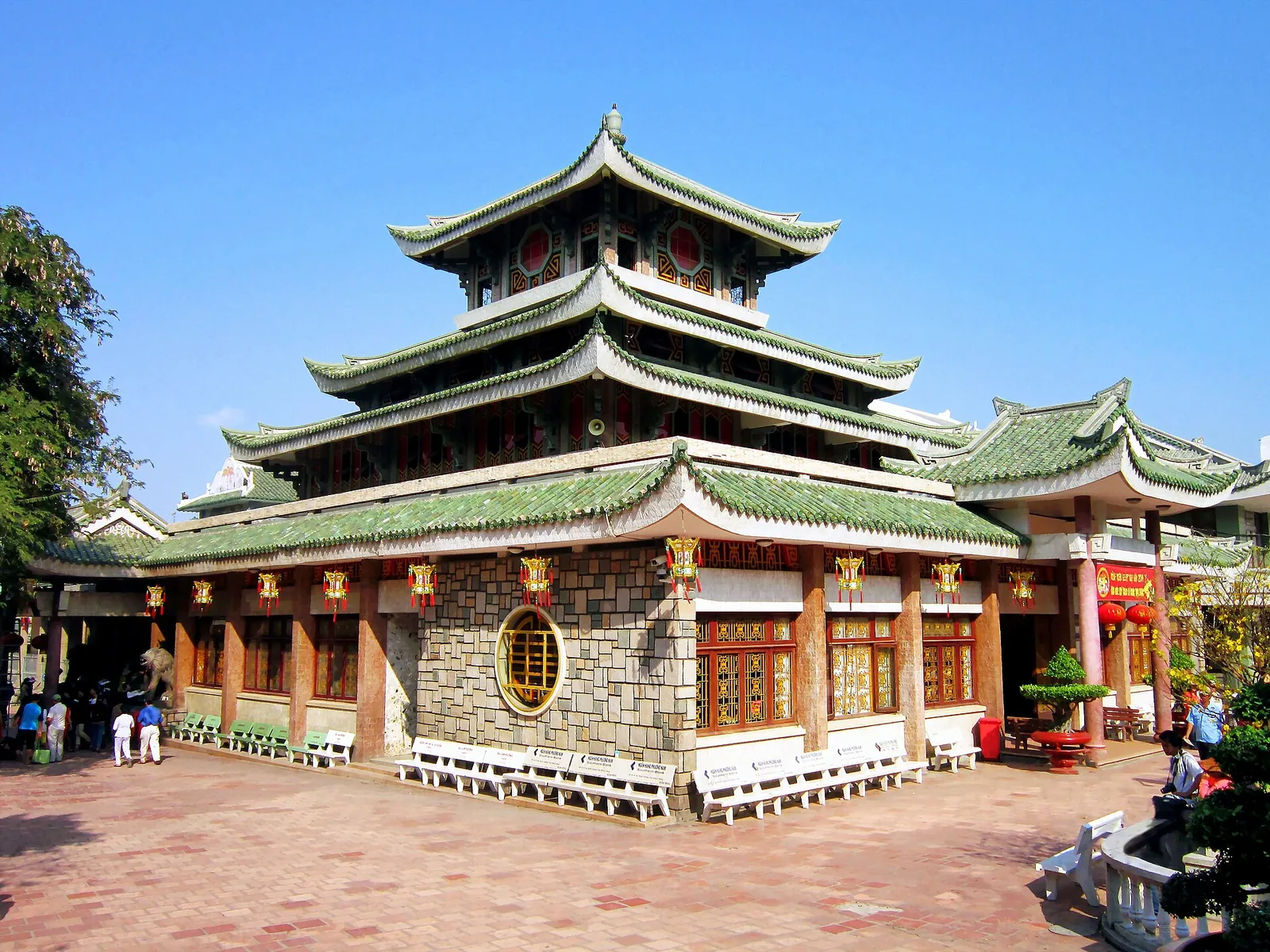
Sam Mountain (Núi Sam) is only 284 metres high, but Vietnam Tourism counts around 200 large and small religious sites on its slopes and calls it the most sacred of the hills around Chau Doc. The main temples and tombs at its foot are listed together as a national historical and cultural relic site, according to Vietnamese Wikipedia.
Mieu Ba Chua Xu, the temple of the Lady of the Realm, is one of the busiest religious sites in Vietnam, Vietnam Tourism says. Devotees bring whole roast pigs, towers of fruit and bundles of lotus, and light incense before a statue said to have been found on the mountaintop some 200 years ago. Its festival, held from the 22nd to the 27th day of the fourth lunar month, was inscribed by UNESCO in 2024 on its Representative List of the Intangible Cultural Heritage of Humanity. UNESCO describes it as shared by the Kinh, Khmer, Cham and Hoa communities, with a palanquin procession and a ceremony in which the statue is bathed and dressed in new clothes. Expect very large crowds and full hotels in that week.
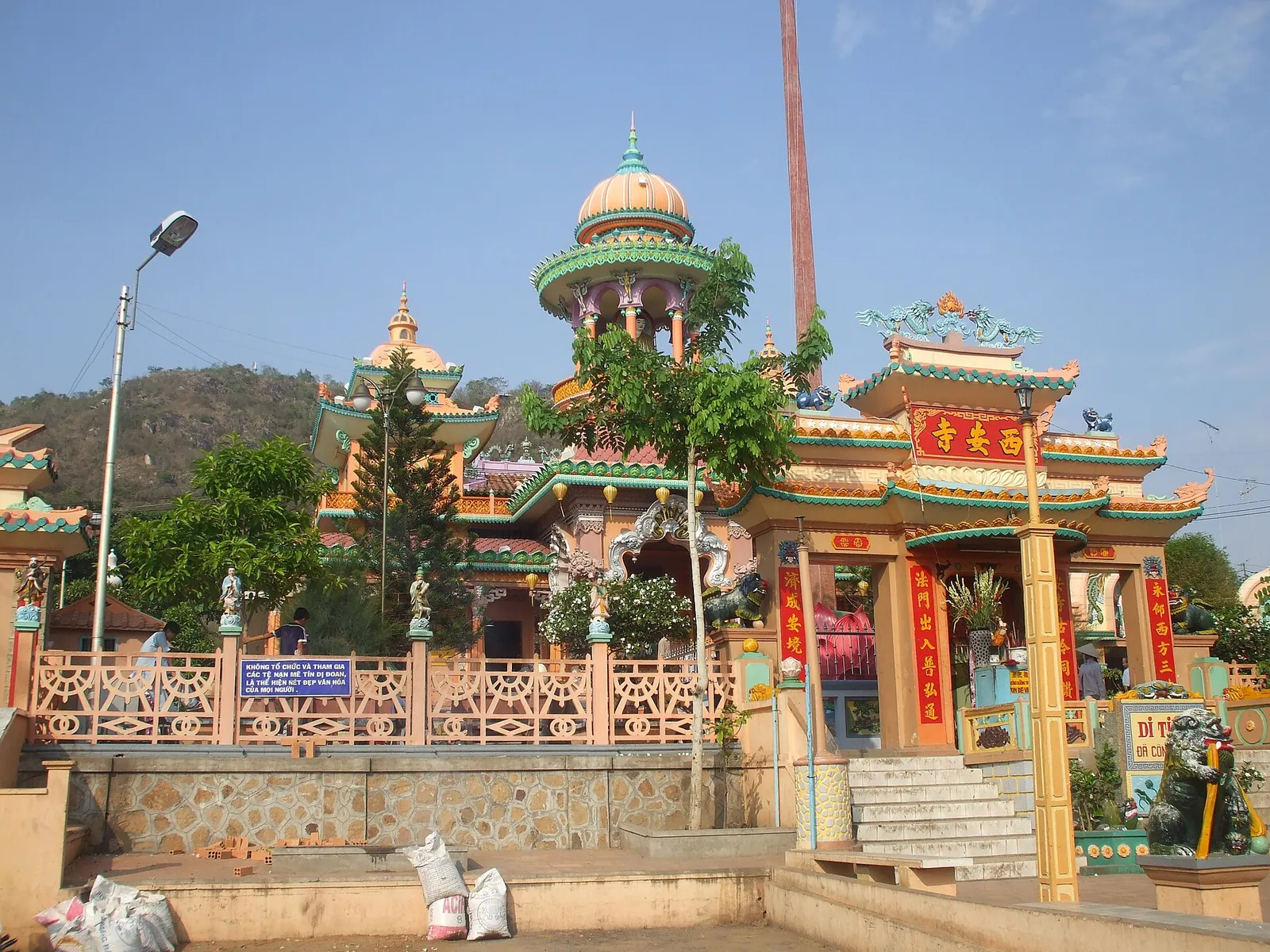
Nearby, Tay An Pagoda is worth a stop for its architecture. The tomb of Thoai Ngoc Hau, the official who oversaw the Vinh Te canal, is part of the same relic site. Climb the steps to Chua Hang (the Cave Pagoda) for views over the rice fields to the mountains of Cambodia; it also has caves that lead into the hillside. Go in the late afternoon, carry water, and dress for temples. No official opening hours or admission charges were available online when we checked, so ask locally.
Tra Su melaleuca forest by boat
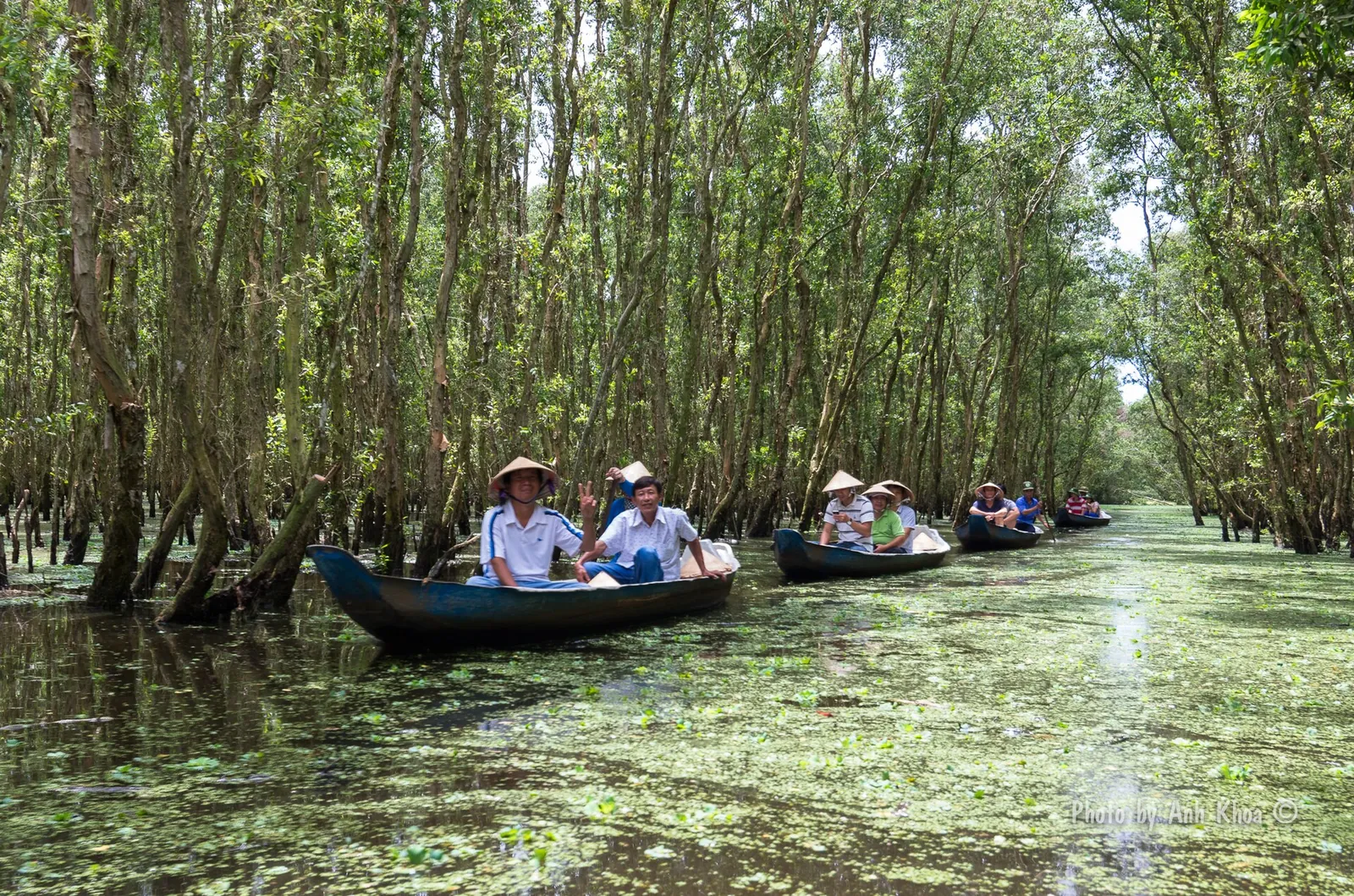
Tra Su is a flooded forest of melaleuca (cajuput) trees west of Chau Doc. Vietnamese Wikipedia gives its area as 845 hectares, and An Giang Province made it a protected landscape area in 2003. The same source records 70 bird species, including the painted stork and the Oriental darter, both in Vietnam's Red Data Book. Vietnam Tourism describes cruising its channels on a tắc ráng (a small motorised sampan), over a carpet of duckweed, lotus and water hyacinth.
The usual visit is a motorboat ride into the forest, then a smaller rowing boat through the narrow channels. Vietnamese Wikipedia also mentions a bamboo walkway more than 10 km long. The forest is at its best in the high-water months; Vietnam Tourism names August to November as the right season for Tra Su. Outside those months the forest is less flooded.
Go early in the morning or in the late afternoon, when birds are most active and the heat is easier. Get there by hired car or motorbike taxi from Chau Doc; the road runs through Nha Bang on provincial road 948. Bring insect repellent and a hat, and check current ticket and boat prices at the gate: we could not reach an official page listing them.
Getting there, and the river route to Cambodia
There is no airport in Chau Doc. Vietnam Tourism suggests flying to Can Tho, then driving about three hours. From Ho Chi Minh City, direct buses or cars take about six hours. If you are coming through the delta, Can Tho makes a good stop on the way; see our Can Tho guide.
Chau Doc is also the Vietnamese end of the Mekong river route from Cambodia. Vietnam Tourism notes cruises from Cambodia into Vietnam and between Can Tho and Chau Doc. The river crossing is at Vinh Xuong, officially called the Song Tien international border gate and opposite Cambodia's Kaorm Samnor post in Kandal province. Wikipedia lists it as an e-visa entry point. Entry rules change, so confirm on Vietnam's official e-visa portal before you travel that your visa is valid for this specific gate (see our Vietnam entry guide).
In town, walking covers the riverfront and the market. Use a taxi, a hired car or a motorbike taxi for Sam Mountain and Tra Su, and arrange boats through your hotel or at the riverfront the evening before. Agree the route, the stops and the price before you set off.
A workable two- or three-night plan
This is an editorial suggestion, not a timetable. Confirm boat times the evening before.
- Day 1 — Arrive: check in by the river, walk the riverfront, then go to Sam Mountain in the late afternoon: Ba Chua Xu, Tay An and the climb to the Cave Pagoda for sunset.
- Day 2 — River morning: the market at sunrise with a bowl of bún cá, then a boat to the floating village and the Cham islets of Chau Giang and Chau Phong; back for lunch and a rest, lẩu mắm for dinner.
- Day 3 — Tra Su: an early drive to the melaleuca forest and its channels, back by lunchtime, then on to Can Tho or Ha Tien, or by river into Cambodia.
Practical questions
How many days do I need in Chau Doc?
Two nights covers the market, the river and Sam Mountain. Add a third for the Tra Su forest without rushing.
When is the best time to visit Tra Su forest?
In the high-water season. Vietnam Tourism names August to November as the best months for Tra Su and the floating villages; the dry season, from November to April, is sunnier but the forest is less flooded.
When is the Ba Chua Xu festival?
From the 22nd to the 27th day of the fourth lunar month, according to UNESCO, which inscribed the festival on its intangible heritage list in 2024. The Gregorian dates change every year, and the area is very crowded.
Can I travel from Chau Doc to Cambodia by boat?
Yes. Boats and cruises use the Mekong route via the Vinh Xuong (Song Tien) international border gate. Check before travel that your visa or e-visa is valid for that gate.
How do I get to Chau Doc?
Fly to Can Tho (VCA) and continue about three hours by road, or take a direct bus or car from Ho Chi Minh City, which Vietnam Tourism puts at about six hours. River cruises also run from Can Tho and from Cambodia.
Can I visit the Cham mosques?
Yes, respectfully. Dress modestly, remove your shoes where others do, avoid prayer times and ask before photographing people.
Sources and checks before you travel
Reference sources for the version dated 3 October 2026. Confirm opening times, access, transport and conditions for your travel dates.
- Vietnam Tourism: Chau Doc ↗ — opens in a new tab
- Vietnam Tourism: The colourful charms of Chau Doc ↗ — opens in a new tab
- Vietnam Tourism: 5 unique towns in the Mekong Delta ↗ — opens in a new tab
- Vietnam Tourism: Dining in the Delta ↗ — opens in a new tab
- UNESCO: Festival of Bà Chúa Xứ Goddess at Sam Mountain ↗ — opens in a new tab
- Wikipedia (Vietnamese): Núi Sam ↗ — opens in a new tab
- Wikipedia (Vietnamese): Rừng tràm Trà Sư ↗ — opens in a new tab
- Wikipedia: Châu Đốc, An Giang ↗ — opens in a new tab
- Wikipedia: Vĩnh Xương ↗ — opens in a new tab
- Wikipedia: Mubarak Mosque (An Giang) ↗ — opens in a new tab
Does this experience fit your route?
In Chau Doc, the best trips are arranged the day before: a boat to the floating village and the Cham islets, or a car to Tra Su. Agree the route and stops in advance.
Browse relevant experiences on Viator ↗ — opens in a new tabAffiliate link · Book with ViatorPhoto credits
Mieu Ba Chua Xu, the temple of the Lady of the Realm at the foot of Sam Mountain, Chau Doc
Photograph: Bùi Thụy Đào Nguyên — opens in a new tab · CC BY-SA 3.0 — opens in a new tab
Changes: Resized and converted to WebP; displayed with responsive crops. · Original photograph and licence details ↗ — opens in a new tab
Rowing boats on the flooded channels of the Tra Su melaleuca forest, west of Chau Doc
Photograph: Tran Anh Khoa (zorrotran) — opens in a new tab · CC BY-SA 2.0 — opens in a new tab
Changes: Resized and converted to WebP; displayed with responsive crops. · Original photograph and licence details ↗ — opens in a new tab
Fermented fish (mắm) for sale at a market stall in Chau Doc
Photograph: Bùi Thụy Đào Nguyên — opens in a new tab · CC BY-SA 3.0 — opens in a new tab
Changes: Resized and converted to WebP; displayed with responsive crops. · Original photograph and licence details ↗ — opens in a new tab
The floating village on the Hau River near Chau Doc, where raft houses double as fish farms
Photograph: Christophe95 — opens in a new tab · CC BY-SA 4.0 — opens in a new tab
Changes: Resized and converted to WebP; displayed with responsive crops. · Original photograph and licence details ↗ — opens in a new tab
Jamiul Azhar Mosque in the Cham village of Chau Phong, across the Hau River from Chau Doc
Photograph: Adam Jones Adam63 — opens in a new tab · CC BY-SA 3.0 — opens in a new tab
Changes: Resized and converted to WebP; displayed with responsive crops. · Original photograph and licence details ↗ — opens in a new tab
Tay An Pagoda at the foot of Sam Mountain, Chau Doc
Photograph: Thuydaonguyen — opens in a new tab · CC BY-SA 3.0 — opens in a new tab
Changes: Resized and converted to WebP; displayed with responsive crops. · Original photograph and licence details ↗ — opens in a new tab