Central Vietnam · Quang Tri
DMZ and Vinh Moc tunnels: a day in Quang Tri from Hue or Dong Ha
From 1954 to 1975 the Ben Hai River in Quang Tri was the temporary military line that divided North and South Vietnam at the 17th parallel, and the land on either side became the demilitarised zone, the DMZ. Today it is a scattered landscape of memorials rather than a single attraction: a painted bridge and a loudspeaker tower on the river, a village that moved underground at Vinh Moc, the former US base at Khe Sanh far up Road 9 in the hills, the rebuilt walls of the Quang Tri Citadel, and national cemeteries. A day here is about history, not scenery, and it works best when you choose a route rather than trying to tick off every site.
- Suggested time
- 1 long day; 2 days to add Khe Sanh without rushing
- Where to stay
- Dong Ha for the full loop; Hue for a day trip to the coastal sites
- Season and timing
- Quang Tri lies just north of Hue, where the national tourism site calls February to April the best months, warns of very hot days in June and July, and says the rains come in August and can last into January, with flooding usually from October to late in the year.
The short answer
Give the DMZ one full, guided day, or two if you want Khe Sanh as well as the coast. The national tourism authority describes the usual DMZ tour as a one-day loop from Dong Ha: west along Road 9 to Khe Sanh, then north to the Hien Luong Bridge on the Ben Hai River and the Vinh Moc tunnels. Sleep in Dong Ha if you want that full loop without a long drive at each end; stay in Hue and choose the coastal half (the Citadel, Hien Luong and Vinh Moc) if you are not willing to spend most of the day in a car. Go with a guide or a hired car and driver: the sites are spread out, and the stories need explaining.
Dong Ha or Hue: where to base a DMZ day
The DMZ sites are spread north, west and south of Dong Ha. The Vietnam National Authority of Tourism describes the classic DMZ tour as a single day that starts from Dong Ha, follows Road 9 west to Khe Sanh and the Ta Con airfield, swings back to Con Tien and Doc Mieu, and finishes at the Hien Luong Bridge and the Vinh Moc tunnels. Sleeping in Dong Ha the night before lets you start that loop early and keep the car time to the sites themselves.
Hue is the practical alternative if you are already staying there and do not want to change hotels. The cost is distance: you add the run north to Quang Tri at both ends of the day, so the realistic choice from Hue is the coastal half — the Quang Tri Citadel, the Hien Luong Bridge and Vinh Moc — and leaving Khe Sanh for another trip. If you are travelling on north towards Phong Nha, staying a night in Dong Ha or by the sea at Cua Tung, beside Vinh Moc, breaks the journey usefully.
A note on names: since Quang Binh was merged into Quang Tri province in 2025, the province reaches north to Dong Hoi and Phong Nha-Ke Bang, and the old district names (Vinh Linh, Gio Linh, Huong Hoa) have given way to new communes on official addresses. Many signs, maps and tour listings still use the old names.
Vinh Moc: the village that moved underground
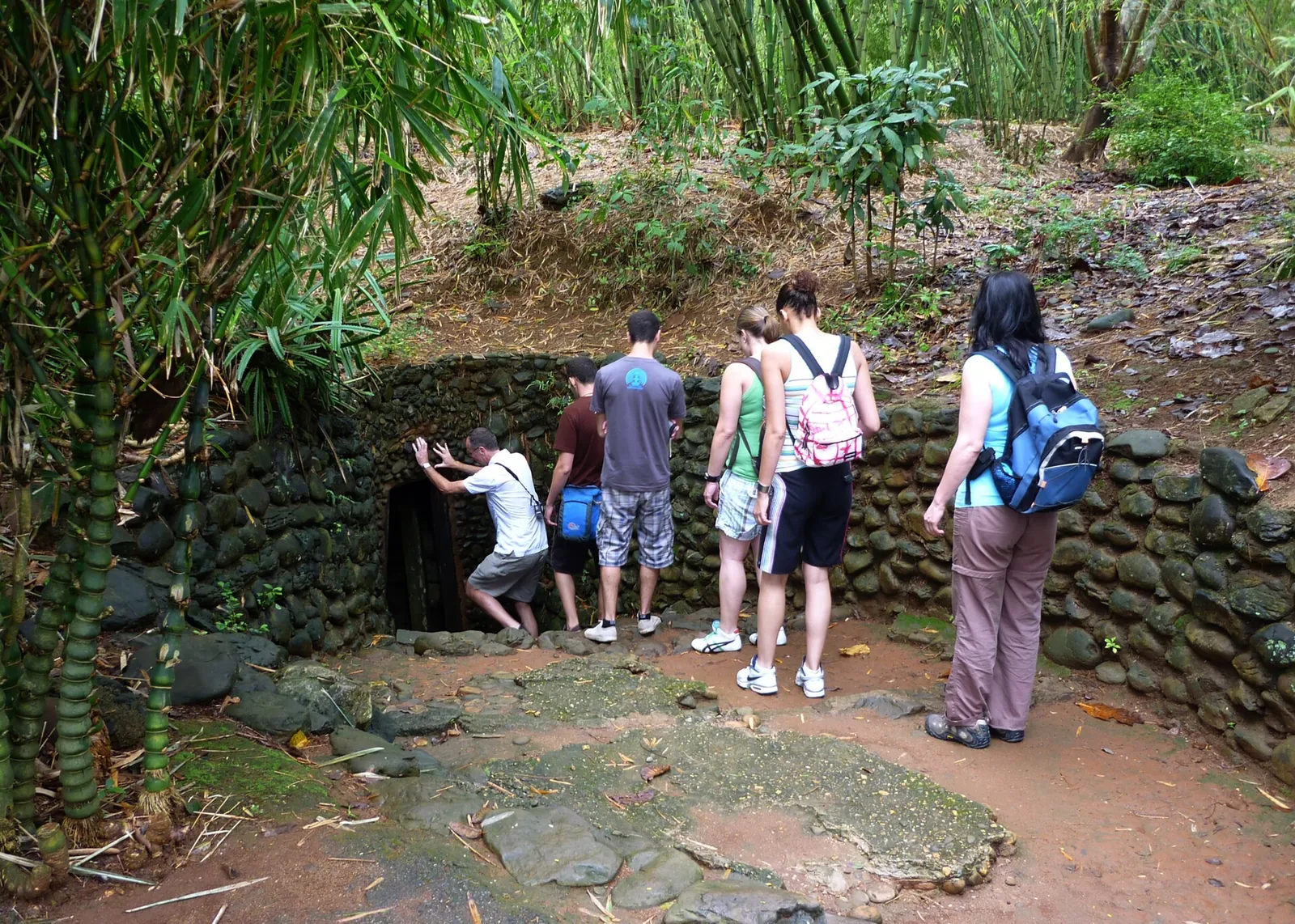
Vinh Moc was a fishing village on the coast just north of the dividing line, and it was bombed relentlessly in the effort to cut the supply routes across the 17th parallel: the Quang Tri provincial tourism portal, citing a 2026 CNN report, gives a figure of around 9,000 tonnes of bombs over eight years. Between 1965 and 1967 the villagers and local militia dug a tunnel system by hand. The portal describes more than 1.6 kilometres of tunnels on three levels, from 15 to over 23 metres deep, laid out in zigzags to absorb the shock of explosions, with 13 entrances — seven opening towards the sea and six into the hills.
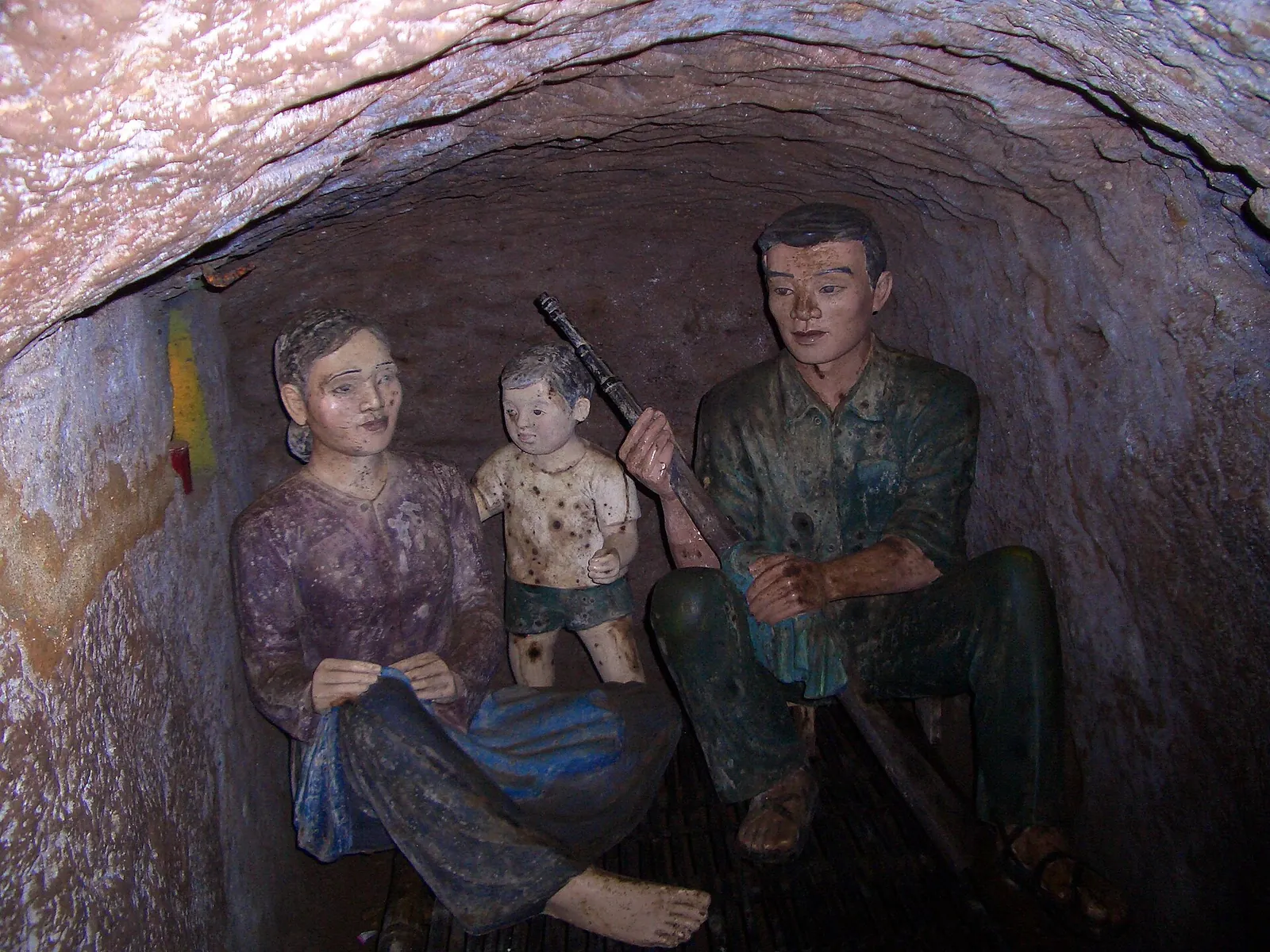
Underground, the tunnels worked as a village. The same page lists small family compartments, wells, a kitchen, a clinic, a meeting hall and a maternity room, and says 17 children were born in the tunnels during almost 2,000 days and nights of living below ground. The tunnels also supported Con Co island offshore, a strategic post that Vinh Moc helped supply. It is a Special National Relic, and the layout — entrances in the hills, exits facing the sea — makes the scale of underground life clear in a way no museum case can.
Practically: when we checked on 2026-10-03, the provincial tourism portal listed Vinh Moc as open from 7:00 to 18:00 and showed the ticket price as 'being updated', so bring cash and check at the gate. The family compartments are tiny and the passages are dug through red basalt soil; if enclosed spaces bother you, ask your guide which section is shortest, or stay with the entrances and the sea exits above ground. Cua Tung beach, where the Ben Hai River meets the sea, is right next to the tunnels and makes a good place to stop afterwards.
Make time for the local food
What to eat and where to look
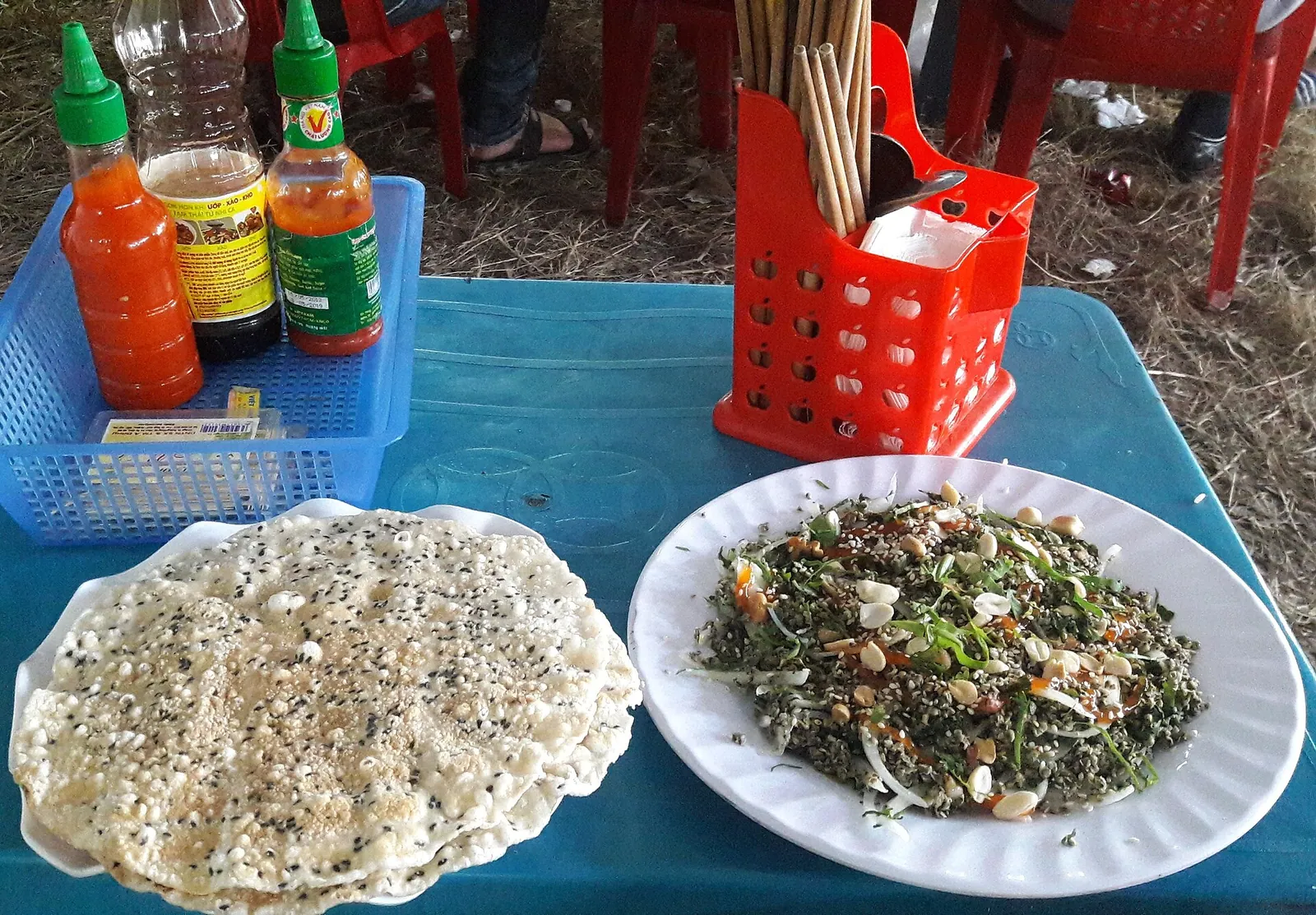
Bun hen Mai Xa (baby clam noodles from Mai Xa village)
Fresh rice vermicelli topped with stir-fried tiny clams (chat chat) raked from the Hieu and Thach Han rivers, herbs and a ladle of the clam broth. The national tourism authority notes it was named among Vietnam's top 100 dishes by the Vietnam Records Organization.
- Where to look
- Mai Xa village in Gio Mai, in the former Gio Linh district between Dong Ha and the Ben Hai River, where village eateries serve it.
- Fit it into your day
- A light lunch or snack on the way to or from Hien Luong and Vinh Moc.
Shellfish; usually eaten with fish sauce, chilli and garlic or salt pounded with green chilli and ginger.
Nem lui cho Sai (grilled pork skewers from Sai market)
Finely pounded fresh pork mixed with shredded pork skin and grilled on bamboo skewers over charcoal, a speciality of Trieu Thanh in the former Trieu Phong district. You slide the meat off the skewer into rice paper with cucumber, green banana, green mango, papaya salad and herbs, roll it and dip it in nuoc leo, a rich sauce of pork liver, peanuts, sesame, soy beans and pineapple.
- Where to look
- It comes from Trieu Thanh in the former Trieu Phong district; look for 'nem lui cho Sai' by name on local menus.
- Fit it into your day
- A shared dinner after a day at the Citadel.
Pork; the dipping sauce contains peanuts, sesame and pork liver.
Banh uot Phuong Lang (steamed rice sheets)
Thin, soft rice sheets steamed on a cloth stretched over boiling water in the craft village of Phuong Lang, then served hot or cold with sliced pork belly, fresh herbs and a family dipping sauce of fish sauce, peanuts, chilli and garlic.
- Where to look
- Phuong Lang village in Hai Ba, in the former Hai Lang district south of Quang Tri town; the provincial tourism portal lists banh uot eateries under its food section.
- Fit it into your day
- Breakfast or a light lunch if you are driving north from Hue towards the Citadel.
Pork and fish sauce; the dipping sauce contains peanuts.
Khe Sanh coffee
Coffee grown in the hills of Huong Hoa around Khe Sanh, including farms that grow it under the forest canopy. The national tourism authority describes a community-run Khe Sanh coffee tour with farm visits, processing, roasting and the chance to make your own cup.
- Where to look
- Cafés in Khe Sanh town, and the coffee farms of the Huong Phung area on the coffee tour.
- Fit it into your day
- A morning stop on the Road 9 leg, before Ta Con.
Usually strong; ask for less sugar or condensed milk if you prefer.
Hien Luong Bridge and the Ben Hai River: the 17th parallel
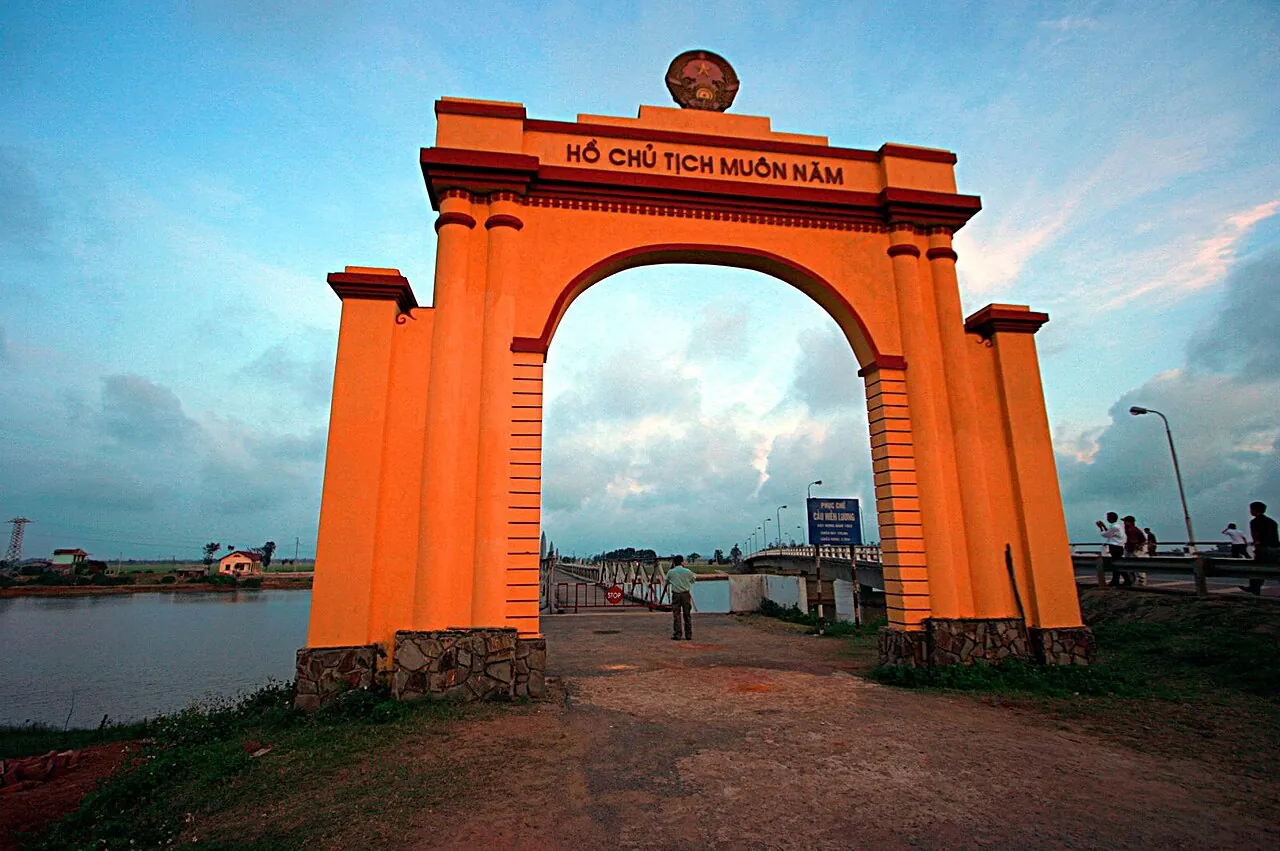
After the Geneva Accords of 1954, the Ben Hai River became the temporary military demarcation line at the 17th parallel, and it stayed that way until 1975. The Hien Luong Bridge, where National Highway 1A crosses the river, is the symbol of that division: the provincial portal describes how a painted line once split the bridge between North and South, and how the two banks fought a 'war without gunfire' through loudspeakers, paint colours and the height of rival flagpoles. The original wooden bridge was bombed and rebuilt several times; the bridge you see today has been restored to its original form.
The site — officially the Hien Luong–Ben Hai Banks Special National Relic — is more than the bridge. The national tourism authority lists the border police post, an observation point, the high-powered loudspeaker system the North used to broadcast across the river, a museum and the 'Aspiration for Unification' statue group. Seeing the narrow river from the bridge explains the geography of the war better than any map. Around 30 April, the anniversary of reunification, the site hosts a national flag-raising ceremony, and the provincial portal lists events here such as bai choi folk singing.
When we checked on 2026-10-03, the provincial portal listed the site as open from 7:00 to 18:00, with the price marked 'being updated'. A plan approved in April 2025 sets out restoration and a historic park on both banks, so expect some construction and changes to the layout.
West along Road 9: Khe Sanh and Ta Con
Road 9 runs west from Dong Ha into the Truong Son mountains towards the Lao border at Lao Bao, and it was the axis of the Road 9–Khe Sanh campaign of 1968, which the national tourism authority notes is known in Vietnam as the 'second Dien Bien Phu'. The national tourism authority's route stops at the Rockpile on the way and then at the Khe Sanh base area itself.
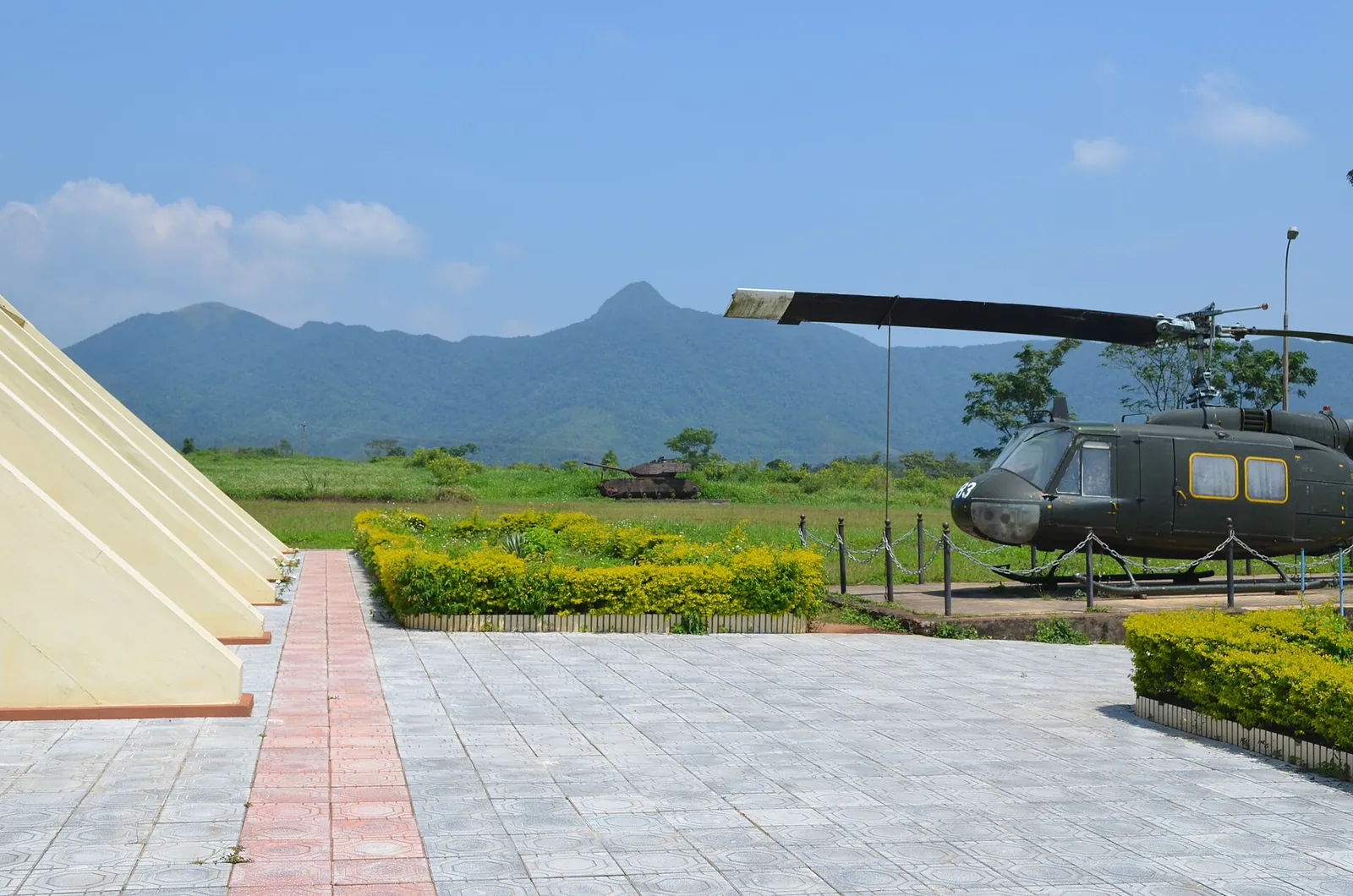
The Ta Con airfield relic is what most people mean by Khe Sanh. The provincial portal describes it as a cluster of US military positions from 1966 to 1968 and a key link in the Khe Sanh combat base, about 3 kilometres north of Khe Sanh town; it was listed as a national relic in 1986 and displays aircraft and other wartime equipment. It is the furthest point of the DMZ loop from the coast, which is why it is the part to drop if you are coming from Hue for the day.
If you stay in the hills, Khe Sanh is also coffee country. The national tourism authority describes a Khe Sanh coffee tour run by a local community group, visiting farms in the Huong Phung area, roasting and tasting, and ending with a visit to Ta Con. Further west, the Lao Bao prison and the Lao Bao border gate on the East–West Economic Corridor are a long day's extension, not a detour.
Quang Tri Citadel and the cemeteries
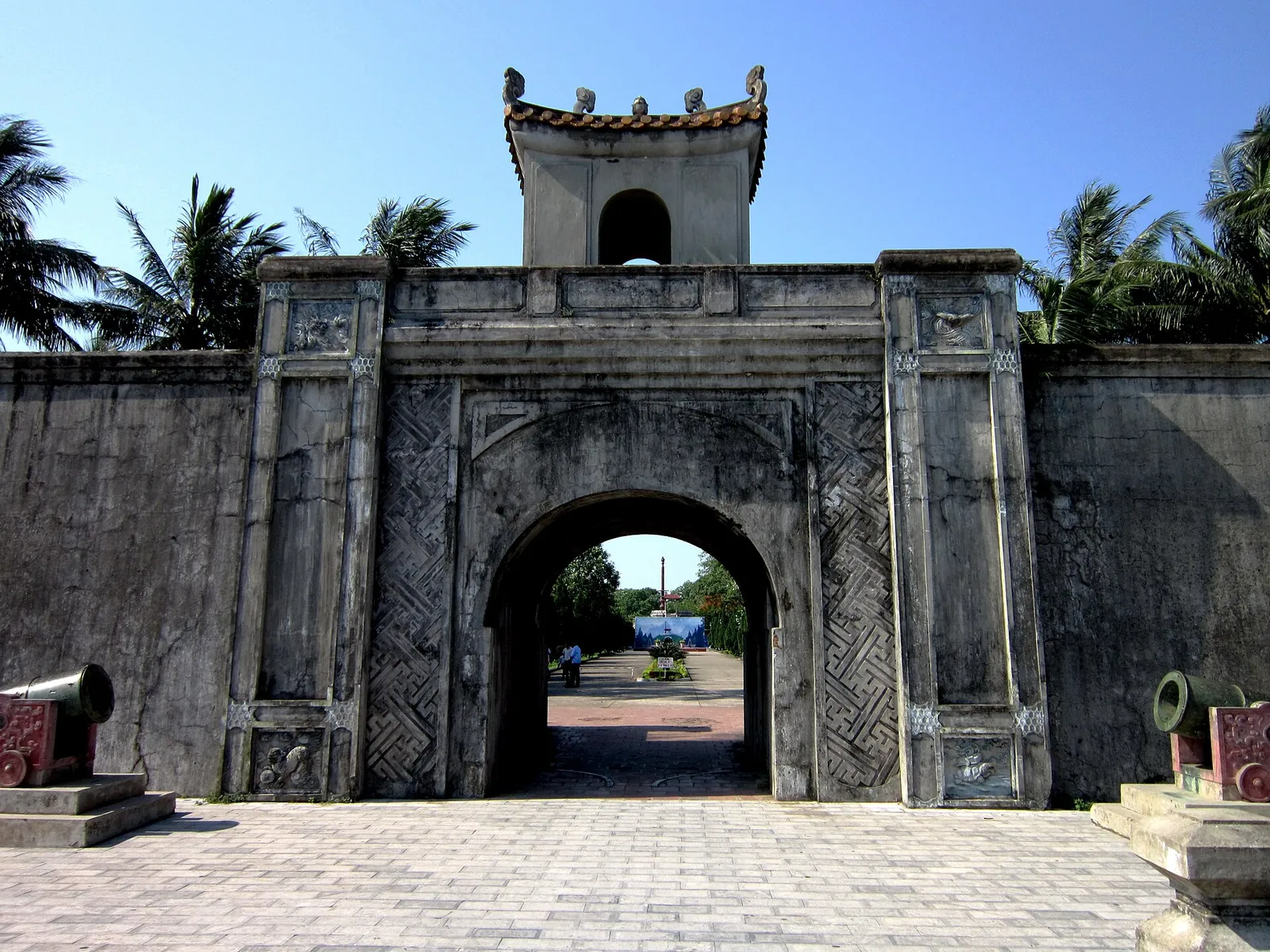
The Quang Tri Citadel, in the centre of the former Quang Tri town south of Dong Ha, began as a Nguyen-dynasty provincial citadel: moved to its site in 1809 and rebuilt in brick under Emperor Minh Mang in 1837, square, with walls more than 2,000 metres round and a moat. In 1972 it was the scene of 81 days and nights of fighting, from 28 June to 16 September, that left almost nothing standing except part of the east gate and some walls. Today the rebuilt gates and wall sections surround a memorial park with a central monument and a museum in the south-west corner. It is a place of mourning rather than a ruin to explore: many of those who died here were never identified.
The province has also introduced evening visits: offering incense at the Citadel and then releasing flower lanterns on the Thach Han River in memory of the soldiers who died on the river. The national tourism authority reported in 2025 that the film *Mua do* (Red Rain), set in the 1972 battle, has brought many more visitors to the Citadel. When we checked on 2026-10-03, the provincial portal listed the Citadel as open from 7:00 to 18:00.
Two national cemeteries complete the picture: the Truong Son National Martyrs' Cemetery in the former Gio Linh district and the Road 9 National Martyrs' Cemetery in Dong Ha. Both are working places of remembrance: dress modestly, speak quietly, and ask before photographing people paying respects. When we checked, the provincial portal listed both as open from 7:00 to 18:00.
Getting there, guides and safety
Dong Ha is a stop on the north–south railway, and since late August 2026 Vietnam Railways has also run a tourist train, the HQ1/HQ2 'Journey of Wonders – World Heritage' service, between Hue and Tho Loc for Phong Nha. When we checked on 2026-10-03, the national tourism authority's report of the launch gave the HQ2 as leaving Hue at 7:15 and reaching Tho Loc at 11:55, and the HQ1 leaving Tho Loc at 13:15 and reaching Hue at 17:25, stopping at Dong Ha (for the Citadel) and My Trach (for Vinh Moc). Intermediate times were not listed; check them with Vietnam Railways and arrange onward transport from the station to the sites before you travel.
For the sites themselves, a car with a driver or a guided tour is the realistic option. The sites are spread across the province, and without a guide much of what you see — a bridge, a field, a grassy airstrip — means very little. Ask in advance which sites are included, whether entrance fees are covered and whether the guide will go into the Vinh Moc tunnels with you.
The national tourism authority notes that much of the province's land was left contaminated with bombs and mines after the war. At the relic sites, stay on the paths, and never touch or pick up metal objects you find in fields or on hillsides.
A workable one- or two-day plan
This is an editorial suggestion, not a timetable. Check opening hours and prices at each site before you go.
- From Hue, one day (coastal DMZ): an early start north, the Quang Tri Citadel, the Hien Luong Bridge and its museum, then the Vinh Moc tunnels and Cua Tung beach, and back to Hue in the evening.
- From Dong Ha, one full day (the classic loop): Road 9 west to the Rockpile and Ta Con at Khe Sanh in the morning, back via Con Tien and Doc Mieu, then Hien Luong and Vinh Moc in the afternoon.
- Two days: day one for Khe Sanh and its coffee, with the night in Dong Ha; day two for the Truong Son cemetery, Hien Luong and Vinh Moc, with the Citadel and a lantern evening on the Thach Han River.
- Onward: continue north to Phong Nha, or return south to Hue.
Practical questions
Can I visit the DMZ as a day trip from Hue?
Yes, but choose the coastal half — the Quang Tri Citadel, the Hien Luong Bridge on the Ben Hai River and the Vinh Moc tunnels — and accept a long day in a car. The full loop including Khe Sanh is described by the national tourism authority as a one-day tour from Dong Ha; from Hue it is better spread over two days.
Is it worth sleeping in Dong Ha?
Yes, if you want Khe Sanh and the coast in one go, or if you are travelling between Hue and Phong Nha. Dong Ha is the starting point of the classic DMZ loop and a stop on the north–south railway. Cua Tung beach, next to Vinh Moc, is another option for a quieter night.
Are the Vinh Moc tunnels suitable if I am claustrophobic?
They can be hard going. The provincial tourism portal describes three levels down to more than 23 metres and small family compartments. You can see the entrances, the sea exits and the surroundings without going deep; tell your guide beforehand.
What are the opening hours and ticket prices?
When we checked on 2026-10-03, the Quang Tri provincial tourism portal listed Vinh Moc, the Hien Luong–Ben Hai site, the Quang Tri Citadel, Ta Con and the two national cemeteries as open from 7:00 to 18:00, with prices marked 'being updated'. Bring cash and check at each gate.
Is there a train to the DMZ?
There is a train to Dong Ha on the north–south line, and the HQ1/HQ2 tourist train between Hue and Phong Nha stops at Dong Ha (for the Citadel) and My Trach (for Vinh Moc). You still need a car or tour from the station to the sites.
How is the Vinh Moc tunnels different from Cu Chi?
Both are wartime tunnel systems, but Vinh Moc was a coastal village that moved underground to survive the bombing, with family compartments, a clinic and a maternity room where 17 children were born. Seven of its 13 entrances open towards the sea.
Sources and checks before you travel
Reference sources for the version dated 3 October 2026. Confirm opening times, access, transport and conditions for your travel dates.
- Vietnam National Authority of Tourism: Quang Tri from the DMZ to the East-West Economic Corridor ↗ — opens in a new tab
- Quang Tri provincial tourism portal: Vinh Moc Tunnels National Relic ↗ — opens in a new tab
- Quang Tri provincial tourism portal: Vinh Moc tunnels reported by CNN (1 July 2026) ↗ — opens in a new tab
- Quang Tri provincial tourism portal: Hien Luong–Ben Hai Banks Special National Relic ↗ — opens in a new tab
- Vietnam National Authority of Tourism: restoration plan for the Hien Luong–Ben Hai relic (April 2025) ↗ — opens in a new tab
- Vietnam National Authority of Tourism: Quang Tri tourism 'transformed' (May 2026) ↗ — opens in a new tab
- Quang Tri provincial tourism portal: Ta Con airfield relic ↗ — opens in a new tab
- Vietnam National Authority of Tourism: Quang Tri Ancient Citadel ↗ — opens in a new tab
- Quang Tri provincial tourism portal: Quang Tri Citadel ↗ — opens in a new tab
- Quang Tri provincial tourism portal: night visits to the Quang Tri Citadel ↗ — opens in a new tab
- Vietnam National Authority of Tourism: 'Mua do' and Quang Tri tourism (October 2025) ↗ — opens in a new tab
- Quang Tri provincial tourism portal: Truong Son and Road 9 National Martyrs' Cemeteries ↗ — opens in a new tab
- Quang Tri provincial tourism portal: Cua Tung beach ↗ — opens in a new tab
- Vietnam National Authority of Tourism: Hue–Phong Nha heritage train launch (August 2026) ↗ — opens in a new tab
- Vietnam National Authority of Tourism: planning after the Quang Tri merger (July 2026) ↗ — opens in a new tab
- Vietnam National Authority of Tourism: Quang Tri cuisine (2023) ↗ — opens in a new tab
- Vietnam National Authority of Tourism: Khe Sanh coffee tour (2023) ↗ — opens in a new tab
- Vietnam Tourism: Hue ↗ — opens in a new tab
Does this experience fit your route?
A guide makes the DMZ make sense. Before you book a DMZ day from Hue, check which sites it covers, the pick-up time and whether the Vinh Moc tunnels are included.
Browse relevant experiences on Viator ↗ — opens in a new tabAffiliate link · Book with ViatorPhoto credits
The memorial arch at the Hien Luong Bridge site on the Ben Hai River, the old dividing line at the 17th parallel
Photograph: Rolf Müller ( User:Rolfmueller ) — opens in a new tab · CC BY-SA 3.0 — opens in a new tab
Changes: Resized and converted to WebP; displayed with responsive crops. · Original photograph and licence details ↗ — opens in a new tab
A hillside entrance to the Vinh Moc tunnels in Quang Tri
Photograph: LÊ TẤN LỘC — opens in a new tab · CC BY-SA 3.0 — opens in a new tab
Changes: Resized and converted to WebP; displayed with responsive crops. · Original photograph and licence details ↗ — opens in a new tab
A family compartment inside the Vinh Moc tunnels, reconstructed with figures
Photograph: Margrethe Store from Norway — opens in a new tab · CC BY 2.0 — opens in a new tab
Changes: Resized and converted to WebP; displayed with responsive crops. · Original photograph and licence details ↗ — opens in a new tab
One of the rebuilt gates of the Quang Tri Citadel
Photograph: Bùi Thụy Đào Nguyên — opens in a new tab · CC BY-SA 3.0 — opens in a new tab
Changes: Resized and converted to WebP; displayed with responsive crops. · Original photograph and licence details ↗ — opens in a new tab
Aircraft on display at the old Khe Sanh combat base, with the hills of Huong Hoa behind
Photograph: Nick — opens in a new tab · CC BY 2.0 — opens in a new tab
Changes: Resized and converted to WebP; displayed with responsive crops. · Original photograph and licence details ↗ — opens in a new tab
Bun hen, baby clam noodles, at a Mai Xa stall in Quang Tri
Photograph: Phương Huy — opens in a new tab · CC BY-SA 4.0 — opens in a new tab
Changes: Resized and converted to WebP; displayed with responsive crops. · Original photograph and licence details ↗ — opens in a new tab