Ho Chi Minh City and the Southeast · Ho Chi Minh City
Can Gio mangrove guide: day trip from Saigon, Vam Sat boats, monkeys
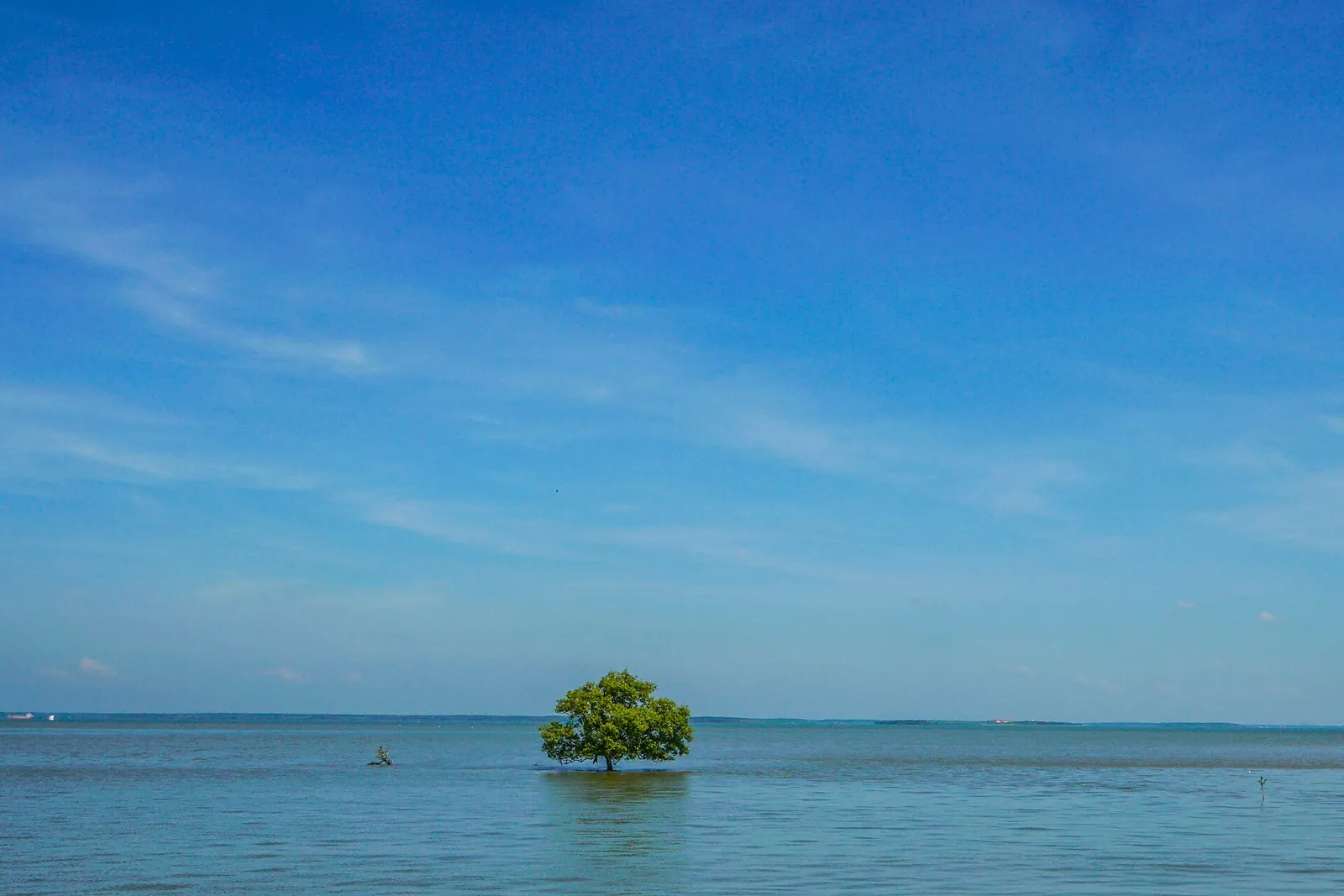
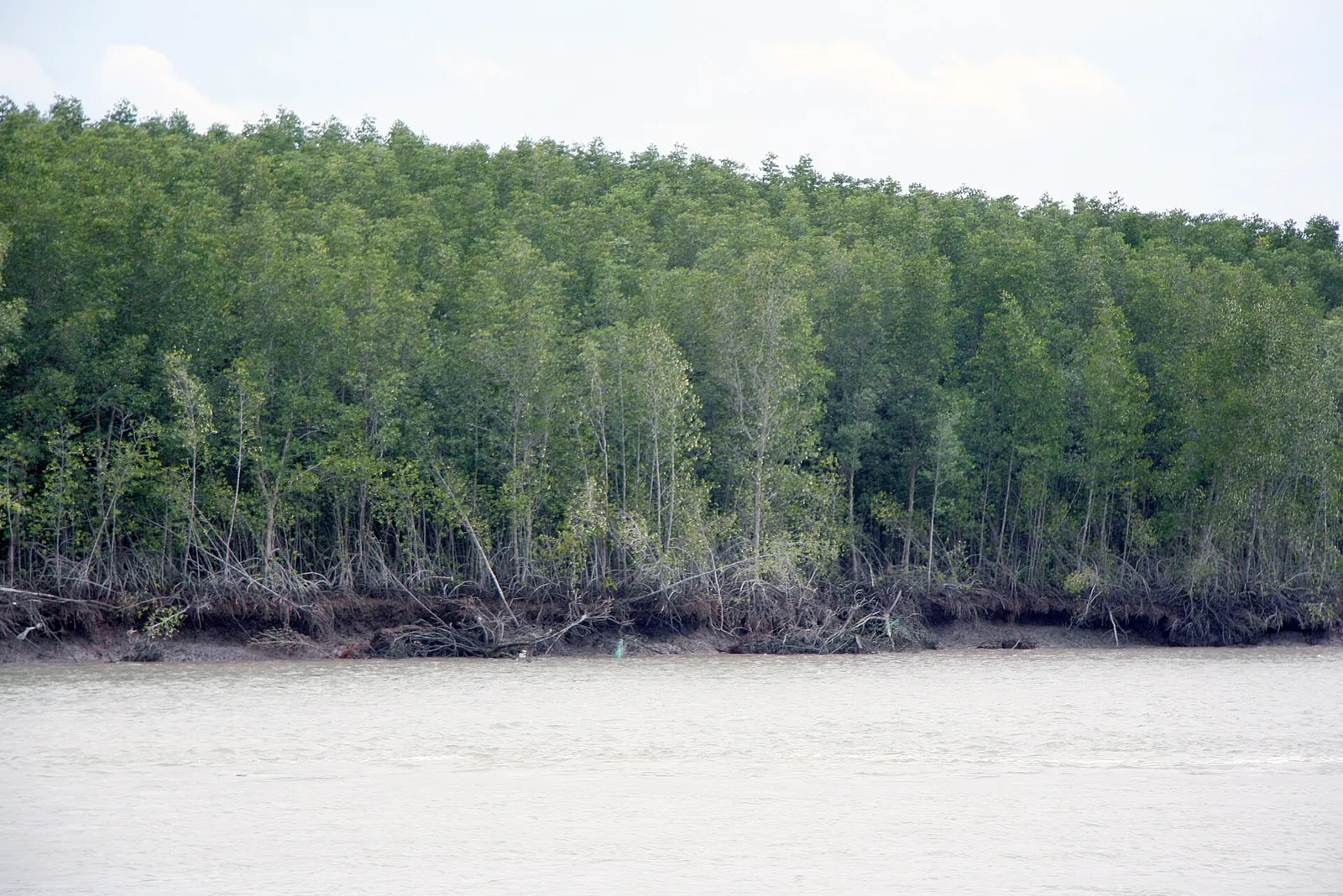
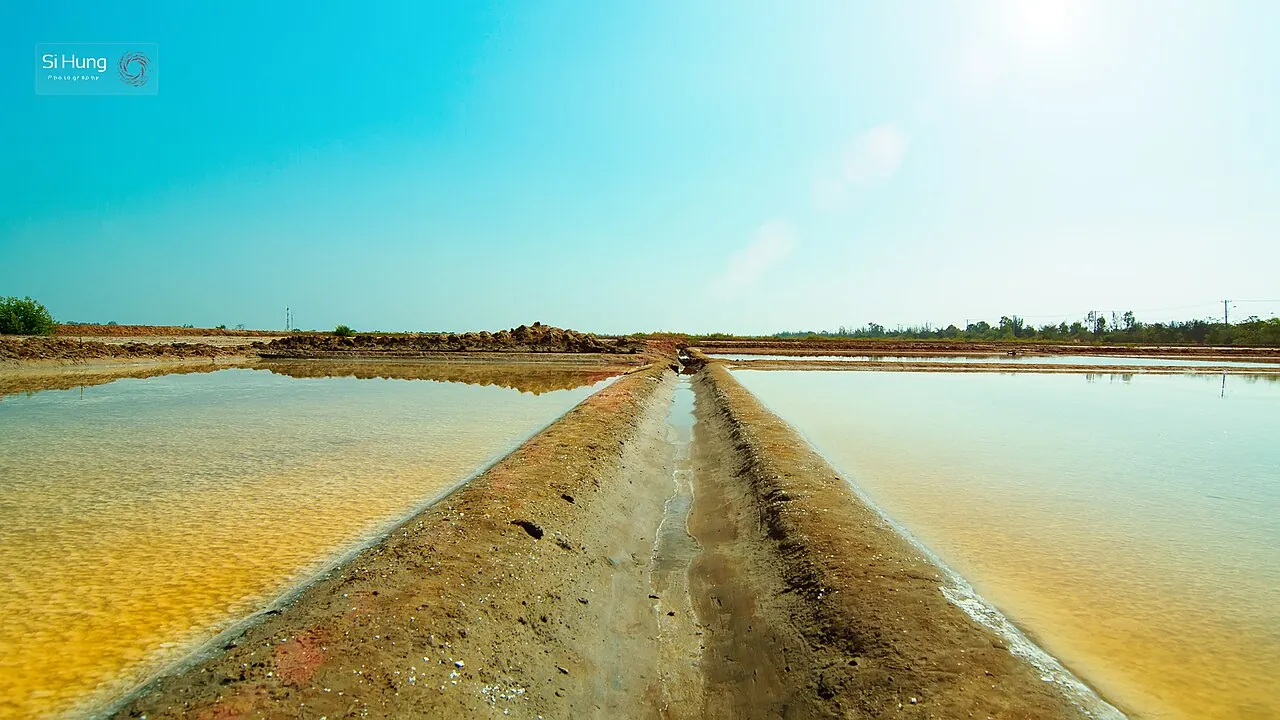
Can Gio is Ho Chi Minh City's only stretch of coast and the place the city goes to breathe. South-east of the centre, between the river mouths and the sea, lies a mangrove forest that UNESCO made Vietnam's first biosphere reserve in 2000 and still calls the green lungs of the city. Much of it is not ancient: after the war left the area badly damaged, the forest was replanted from 1978 onwards. Today a long, straight road runs through it to a fishing coast with black sand, salt fields and seafood markets. You do not come here for a single famous sight. You come for a boat through the mangroves, a bat colony hanging over a tidal creek, long-tailed macaques, a seafood lunch and the feeling of being in wild country without leaving the city's boundary.
- Suggested time
- One long day; two days with Thieng Lieng or an onward ferry to Vung Tau
- Where to stay
- Central Ho Chi Minh City (District 1) for a day trip; the Can Gio coast or a Thieng Lieng homestay for an overnight
- Season and timing
- Vietnam Tourism describes southern Vietnam as hot all year, with a wet season from May to November that brings a dependable afternoon downpour, and clearer, drier skies from December to April. Vam Sat's official site says birds come to nest in its bird reserve from April to October, so the wet months are the birdwatching season. In the dry season, start early to avoid the midday heat on open boats.
The short answer
Give Can Gio one long day from central Ho Chi Minh City. Leave early by car or with a tour, cross the Soai Rap River on the Binh Khanh ferry and choose one main stop: Vam Sat for the boat ride, the bats, the bird reserve and the 26-metre tower, or the monkeys and the Rung Sac revolutionary base. Then have lunch or an early dinner by the sea before driving back. Sleep in District 1 the night before and the night after. Stay overnight on the coast or in Thieng Lieng only if you want sunrise, the salt fields and a quieter second day, or if you are continuing by sea ferry to Vung Tau.
What Can Gio is, and how to plan the day
UNESCO's record for the Can Gio Mangrove Biosphere Reserve, designated in 2000, describes 75,740 hectares of mangroves, wetlands, salt marshes, mudflats and seagrass beds on the soils laid down by the Saigon and Dong Nai rivers. It says the forest holds the highest diversity of mangrove plants, mangrove-dwelling invertebrates and mangrove-associated fish and shellfish in the sub-region, along with saltwater crocodiles, spot-billed pelicans, king cobras and fishing cats. Apart from forest guards, forestry staff and a few fishermen, nobody lives in the core and buffer zones. The villages, salt pans and fish farms are in the outer transition zone.
That shapes the trip. The protective forest itself, more than 34,800 hectares according to a March 2026 report from Vietnam Tourism's information centre, is reached through a few organised sites rather than open trails. The most useful for visitors are Vam Sat, a Phuthotourist-run eco-park deep in the forest; the monkey island and the Rung Sac wartime base; and Dan Xay, where kayaks, stand-up paddleboards and boats go into the mangroves. The coast at the far end adds the beach, the seafood market and the island hamlets.
Distances are modest on paper. Vietnam Tourism puts the Can Gio area about 40 km from the city centre and Vam Sat about 50 km. The ferry crossing is the variable: in January 2026 VnExpress reported that the journey from central Ho Chi Minh City still took nearly two hours. Choose one forest site and one meal, not every stop on the map.
Getting there: the Binh Khanh ferry and the Rung Sac road
By road, you leave the centre along Huynh Tan Phat Street to the Binh Khanh ferry, which carries traffic across the Soai Rap River. On the far side, Rung Sac Road runs south through the mangroves to the coast. Vam Sat's directions page gives the two turnings that matter. For the land entrance, continue about 14 km after the ferry to the Ly Nhon junction, turn right and drive about another 20 km to the ticket office. For the boat entrance, continue about 22 km along Rung Sac Road to the foot of Dan Xay bridge, without crossing it, and turn right to the Dan Xay boat station.
The ferry is the bottleneck. In October 2025 VnExpress reported that Binh Khanh had five ferries carrying about 22,000 passengers a day, with regular congestion at rush hour, at weekends and over holidays. Its 2023 Can Gio guide warns that waits can stretch to several hours at the busiest times. Fares rose on 18 March 2026, when the operator raised the fare for pedestrians and bicycles to 3,000 VND a crossing. If you can, go on a weekday morning and avoid travelling back at weekend and holiday peaks.
This will change. Work on the Can Gio bridge began on 15 January 2026. VnExpress describes a 6.3 km crossing over the Soai Rap, due for completion in 2029, that should cut the drive from the centre to 40–50 minutes. Until it opens, plan around the ferry.
Without a car, most visitors join a tour or hire a driver for the day. VnExpress's 2023 guide described city bus route 75 from 23/9 Park in District 1 to Can Thanh bus station, with a journey of about two hours and ten minutes and six departures a day. Treat that only as a starting point and check current Ho Chi Minh City bus information. A bus to Can Thanh still leaves you far from Vam Sat.
Make time for the local food
What to eat and where to look
Salt-water duck (vit nuoc man)
Free-range ducks raised in Vam Sat's brackish ponds, where they feed on what the shrimp and crab farms leave behind. The eco-park's site says this makes the meat firm and nearly fat-free. Its 'three-dish duck' for about four people includes a jar-roasted duck (vit quay lu), eaten wrapped in rau bui leaves from the mangroves, and a duck salad with lim kim leaves.
- Where to look
- The Vam Sat restaurant inside the eco-park.
- Fit it into your day
- Order it as the shared main course of a Vam Sat lunch. One duck feeds a table.
A whole duck is a big order for two. Ask what portion sizes the restaurant offers.
Ba khia crab hotpot with la bui leaves
Ba khia is a small crab of the mangroves, also made into a salted paste. At a 2024 food talk reported by Vietnam Tourism's information centre, a culinary expert described a Can Gio hotpot made with a rich ba khia crab broth and served with nutty bui leaves. Wartime special forces in the Rung Sac forest once foraged those leaves, which earned them the nickname 'soldiers' greens'.
- Where to look
- Seafood restaurants on the Can Gio coast and the forest eco-parks. Ask whether ba khia is available that day.
- Fit it into your day
- A hotpot to share at an early dinner before the drive back.
Shellfish. The crab is small and fiddly, more for flavour than meat.
Lim kim leaf salad with dried lep fish
A rustic salad of lim kim (also written la kim), a climbing plant from the salty mangrove soils, tossed with crisp-fried dried lep fish in sweet-and-sour fish sauce. The same 2024 report says the leaves' sourness and astringency change with the season and the time of day they are picked.
- Where to look
- Restaurants serving Can Gio specialities; Vam Sat also lists lim kim among its forest greens.
- Fit it into your day
- A starter alongside duck or seafood.
Made with fish sauce and fried fish.
Seafood cooked to order at Hang Duong market
Cockles, snails, crab, flower crab, prawns and squid, bought fresh and cooked on the spot by the stallholders. VnExpress lists styles such as salt-roasted, fried with garlic, stir-fried with coconut, butter or tamarind, grilled with spring-onion oil and steamed with lemongrass.
- Where to look
- Hang Duong market in the centre of Can Gio, the area's biggest seafood market.
- Fit it into your day
- Lunch after the beach or the monkeys. Choose a few kinds of shellfish rather than one large fish.
Agree the price per kilo and the cooking fee before anything goes in the pan, and avoid raw shellfish in the heat.
Mudskipper (ca thoi loi)
The bug-eyed fish of the mudflats that can even climb trees. Vam Sat's restaurant serves it as a salad, grilled with salt and chilli, or steamed and rolled in rice paper.
- Where to look
- The Vam Sat restaurant.
- Fit it into your day
- Try one plate as a shared Can Gio curiosity next to the duck.
An acquired taste: share one plate before ordering more.
Vam Sat: bats, birds, crocodiles and a view over the forest
Vam Sat Ecopark, in Ly Nhon in the heart of the forest, is run by Phuthotourist, the company behind Dam Sen park in the city. When we checked on 2026-10-03, its official site listed opening hours of 7:30 to 17:00 every day in one place and 8:00 to 17:00 in another, so arrive after 8:00 to be safe. Its price list showed a 60,000 VND land-entrance ticket including the eco-shuttle, with children under 6 free and children aged 6 to 11 at half price. Extras are priced separately, as are combination tickets.
The best way in is by water. The official one-day waterway programme starts at Dan Xay boat station, 100 m from the foot of Dan Xay bridge, at 8:30. A 15-minute canoe ride brings you to the bat reserve, where you switch to a paddled boat to slip between the mangrove clumps. The site says the large, yellow-bellied fruit bats have a wingspan of up to 1 m, sleep in the trees by day and leave to feed at around 18:00. They are easily frightened, so keep your voice down. The programme then continues to the centre for the bird reserve, the crocodile area and the macaques, a climb up the Tang Bong tower and lunch at the Vam Sat restaurant, before the boat returns at 14:00. Lunch is not included in the waterway tour price.
The steel Tang Bong tower is 26 m high, with four viewing levels reached by 134–138 steps, according to the site. From the top you look out over an unbroken canopy of mangroves. It also commemorates the more than 820 soldiers of the Rung Sac special-forces 10th Regiment and the many civilians and fighters who died here.
Timing matters for the birds. The site says thousands of birds come to nest in the bird reserve from April to October, then move elsewhere, and it runs separate programmes with and without the bird reserve. Its price list shows the bird-reserve visit from May to October. In the dry months, the bats, the tower and the boat ride are the reasons to come. The crocodile area includes a caged boat for 'crocodile fishing'. Skip it if that kind of attraction is not for you.
The macaques and the Rung Sac wartime base
Can Gio's best-known animals are its long-tailed macaques. VnExpress's guide describes thousands of them living wild in the mangroves of the so-called monkey island. It says they began to reappear after the reforestation of the 1990s and are bold enough to crowd around visitors for food and water. From the ticket gate it is about 1 km into the site, and the guide suggests taking the electric cart rather than walking. Vietnam Tourism's report on the island describes monkeys snatching glasses, hats and phones. Put loose things away before you get out, keep a distance, and do not feed them anything you bring.
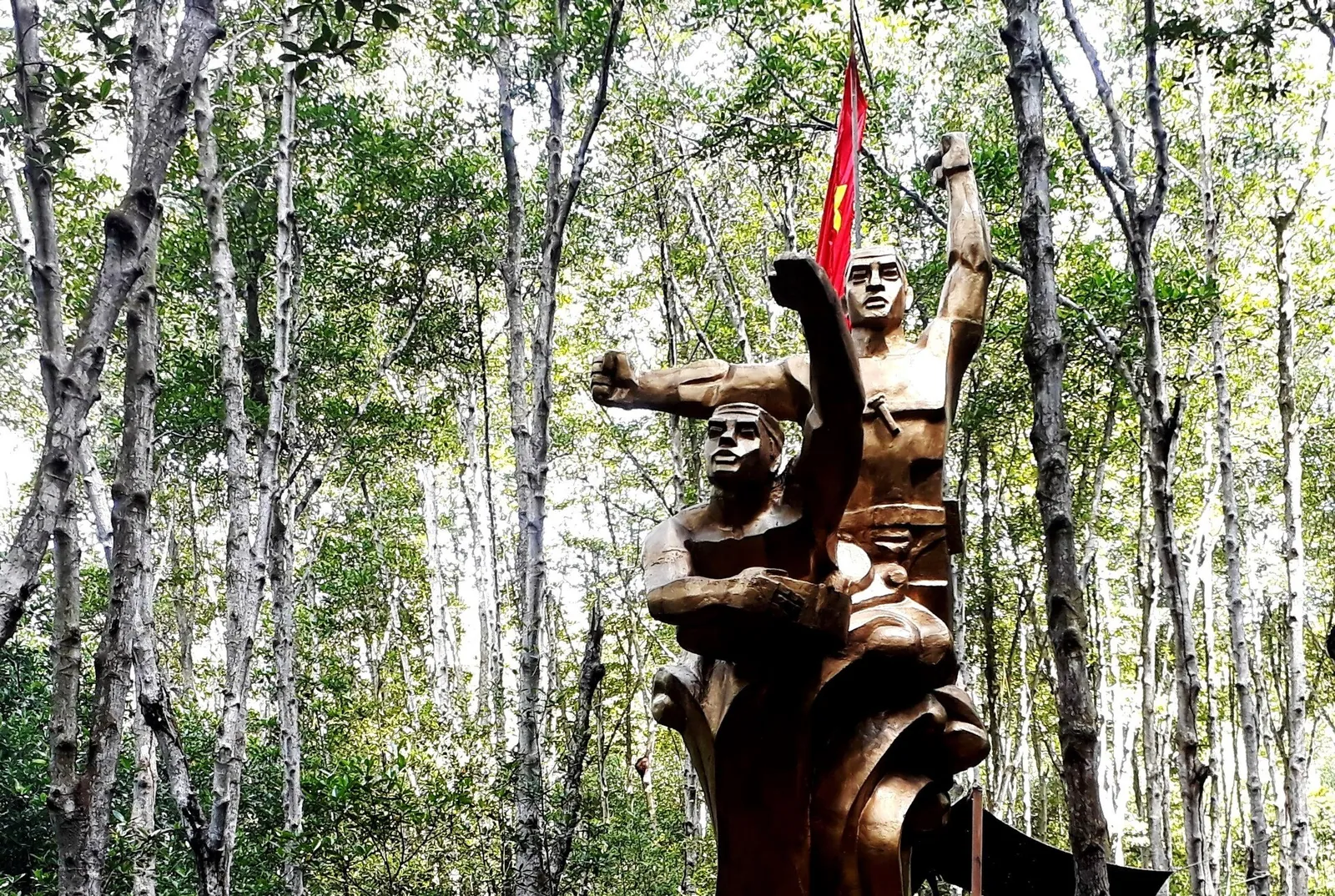
The Rung Sac base, a recognised national historic site, tells the story of the special forces who fought in these mangroves during the war. According to Vietnam Tourism's information centre, statues show fighters distilling fresh water from salt water, planning the attack on the Nha Be fuel depot and fighting crocodiles in the creeks. You reach it by motorboat through the forest, which makes the trip there part of the visit.
We could not find an official page with current hours or ticket prices for the monkey island or the base. Check both on the spot, or with your tour operator, before you plan the day around them.
The coast: black sand, low tide and the seafood market
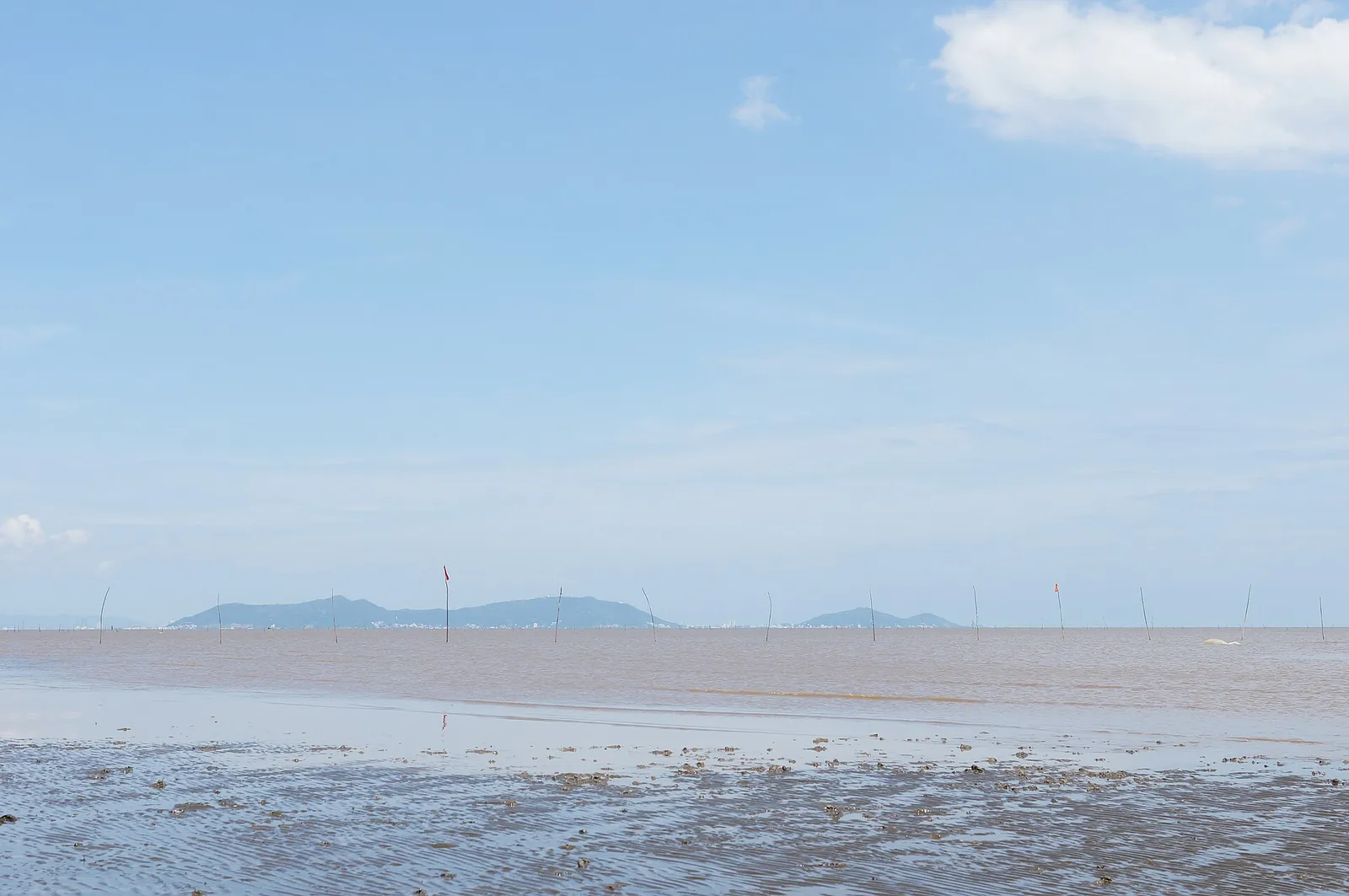
At the end of Rung Sac Road the forest gives way to the sea. Vietnam Tourism explains why Can Gio's beach surprises first-time visitors: the water is brackish, sitting between the river mouths and the sea off Tan Dien and Vung Tau, so the sand is dark with mud rather than dirty. At the lowest tides, usually early in the morning, the sea pulls back across a long flat. Local families rake clams there, and visitors can join in and have their catch cooked. The 30/4 beach is one of the stops Vietnam Tourism lists for this stretch of coast.
For lunch, Hang Duong market, in the centre of Can Gio, is the area's largest seafood market. VnExpress's guide describes stalls selling fresh and cooked shellfish, crab, prawns and squid, and sellers who will cook what you choose for a small fee. Popular styles include roasted with salt, fried with garlic or tossed with tamarind.
The coast is also changing fast. On 19 April 2025 Ho Chi Minh City broke ground on the Can Gio sea-encroachment urban tourism area at Long Hoa and Can Thanh. According to Vietnam Tourism's information centre, it covers about 2,870 hectares, of which more than 1,357 hectares are reclaimed from the sea. Expect building work around Long Hoa and Can Thanh, and a coast that may look different from older photos.
Thieng Lieng and Thanh An: the overnight option
If one day feels too rushed, the island commune of Thanh An is the reason to stay. VnExpress's guide puts it about 30 minutes or more by boat from Can Thanh, with a sea dike to walk around more than half of the island. Its hamlet Thieng Lieng was named Ho Chi Minh City's first community-tourism destination in December 2022. In 2022 Vietnam Tourism described a place with no cars and no hotels, where people live mainly from salt-making and oyster farming. A road of more than 4 km loops past the salt pans, and homestays serve home cooking. Giong Chua, a 10-metre rock of volcanic origin, is the hamlet's highest point.
The same report says boats now leave from the pier of the Can Gio Protective Forest Management Board, saving road and river distance compared with the old route via Can Thanh, and that a Thieng Lieng trip takes a day or longer. The hamlet's homestays are small, and that 2022 report counted only three. Arrange your boat and bed in advance, not on arrival.
A workable day
This is an editorial suggestion, not a timetable. The only fixed times below come from Vam Sat's published waterway programme. Check opening hours on the day.
- Early morning: leave District 1 by car and cross on the Binh Khanh ferry before the traffic builds.
- 8:30: board the boat at Dan Xay station for Vam Sat: the bat reserve by paddled boat, then the bird reserve (April to October), the macaques and the Tang Bong tower.
- Lunch: the Vam Sat restaurant, or drive on to Hang Duong market on the coast.
- Afternoon: the beach at low tide or, instead of Vam Sat, the monkey island and the Rung Sac base.
- Evening: return to the city, or stay on the coast and take a boat to Thieng Lieng the next morning.
Going on to Vung Tau, and the whale festival
Can Gio and Vung Tau are only about 15 km apart across Ganh Rai Bay. A sea ferry has linked them since January 2021, when Vietnam Tourism reported the first service from Tac Suat wharf. In May 2026 VnExpress reported that the ferry ran from 6:00 to 22:00 every day, and in June 2026 it said that the crossing took 90 to 120 minutes once waiting time was included. It carries passengers and private vehicles, which makes a one-way loop possible: Can Gio by road, then the ferry to Vung Tau and its beaches instead of going back to the city. Check the current schedule before you rely on it.
The coast's big event is the Nghinh Ong festival, honouring the whale god whom local fishermen believe protects them at sea. Vietnam Tourism's information centre reports that it is held around the full moon of the eighth lunar month, with a procession of hundreds of fishing boats at sea and ba trao rowing songs. It was recognised as national intangible cultural heritage in 2013. Expect crowds that weekend.
Practical questions
How far is Can Gio from Ho Chi Minh City?
Vietnam Tourism puts the Can Gio area about 40 km from the city centre and Vam Sat about 50 km. The Binh Khanh ferry makes the journey slower than the distance suggests. In January 2026 VnExpress reported nearly two hours from the centre.
Is Can Gio worth a day trip?
Yes, if you want nature rather than sights. A boat through the mangroves to Vam Sat's bat reserve, the tower view and a seafood lunch make a full, easy day. Pick one forest site rather than trying to see everything.
How much is the ticket to Vam Sat?
When we checked on 2026-10-03, Vam Sat's official price list showed a 60,000 VND land-entrance ticket including the eco-shuttle, with children under 6 free and children aged 6 to 11 at half price. Boats, the bat reserve, the bird reserve and the crocodile area cost extra or come in combination tickets. Check the current list before you go.
When is the best time to see birds in Can Gio?
Vam Sat's official site says birds come to nest in its bird reserve from April to October and then leave. Its price list offers the bird-reserve visit from May to October.
Are the monkeys in Can Gio dangerous?
They are wild long-tailed macaques and very bold. Official and press reports describe them grabbing glasses, hats and phones. Keep your belongings zipped away, keep your distance and do not feed them.
Can I go from Can Gio to Vung Tau?
Yes. A sea ferry crosses Ganh Rai Bay for passengers and vehicles. In May 2026 VnExpress reported that it ran from 6:00 to 22:00 daily, and in June 2026 that the trip took 90 to 120 minutes including waiting. Confirm the schedule before travelling.
Can I stay overnight in Can Gio?
Yes. There are resorts and homestays near the coast, and simple homestays in Thieng Lieng hamlet on Thanh An island. Most visitors do it as a day trip from the city, so stay only if you want sunrise, the salt fields or a slower second day.
Sources and checks before you travel
Reference sources for the version dated 3 October 2026. Confirm opening times, access, transport and conditions for your travel dates.
- UNESCO Man and the Biosphere Programme: Can Gio mangrove ↗ — opens in a new tab
- Vietnam Tourism (TITC): Can Gio, a green land at the river mouth (Sept 2026) ↗ — opens in a new tab
- Vietnam Tourism (TITC): Can Gio forest ecotourism plan (March 2026) ↗ — opens in a new tab
- Vietnam Tourism (TITC): Exploring Vam Sat ecological tourist site ↗ — opens in a new tab
- Vietnam Tourism (TITC): exploring Can Gio's sea ↗ — opens in a new tab
- Vietnam Tourism (TITC): Can Gio monkey island ↗ — opens in a new tab
- Vietnam Tourism (TITC): Can Gio mangrove cuisine ↗ — opens in a new tab
- Vietnam Tourism (TITC): Thieng Lieng, quiet and peaceful green island (2022) ↗ — opens in a new tab
- Vietnam Tourism (TITC): 10 tourist spots in Ho Chi Minh City ↗ — opens in a new tab
- Vietnam Tourism (TITC): Can Gio sea-encroachment urban area ground-breaking ↗ — opens in a new tab
- Vietnam Tourism (TITC): Can Gio, green tourism and festivals (Nghinh Ong) ↗ — opens in a new tab
- Vietnam Tourism (TITC): Can Gio – Vung Tau ferry opens (2021) ↗ — opens in a new tab
- Vam Sat Ecopark (Phuthotourist): official site ↗ — opens in a new tab
- Vam Sat Ecopark: price list ↗ — opens in a new tab
- Vam Sat Ecopark: directions ↗ — opens in a new tab
- Vam Sat Ecopark: one-day waterway programme ↗ — opens in a new tab
- Vam Sat Ecopark: bat reserve ↗ — opens in a new tab
- Vam Sat Ecopark: Tang Bong tower ↗ — opens in a new tab
- Vam Sat Ecopark: salt-water duck ↗ — opens in a new tab
- Vam Sat Ecopark: mudskipper ↗ — opens in a new tab
- VnExpress: Can Gio travel guide (2023) ↗ — opens in a new tab
- VnExpress: Can Gio and Cat Lai bridges (January 2026) ↗ — opens in a new tab
- VnExpress: Binh Khanh and Cat Lai ferry fares (March 2026) ↗ — opens in a new tab
- VnExpress: extra ferries proposed for Binh Khanh (October 2025) ↗ — opens in a new tab
- VnExpress: Can Gio – Vung Tau sea link proposal (May 2026) ↗ — opens in a new tab
- VnExpress: where the Can Gio – Vung Tau sea road will be built (June 2026) ↗ — opens in a new tab
- Vietnam Tourism: weather and climate ↗ — opens in a new tab
Does this experience fit your route?
A tour or a driver solves the hardest part of Can Gio: getting through the ferry queue and between sites that are far apart. Check which forest site the tour visits and whether the boat is included.
Browse relevant experiences on Viator ↗ — opens in a new tabAffiliate link · Book with ViatorPhoto credits
A single mangrove in the shallows off Can Gio, where the forest meets the sea
Photograph: Bao Nguyen — opens in a new tab · CC BY 2.0 — opens in a new tab
Changes: Resized and converted to WebP; displayed with responsive crops. · Original photograph and licence details ↗ — opens in a new tab
Mangroves lining a river in the Can Gio Biosphere Reserve
Photograph: Lưu Ly ( thảo luận ) — opens in a new tab · CC BY 3.0 — opens in a new tab
Changes: Resized and converted to WebP; displayed with responsive crops. · Original photograph and licence details ↗ — opens in a new tab
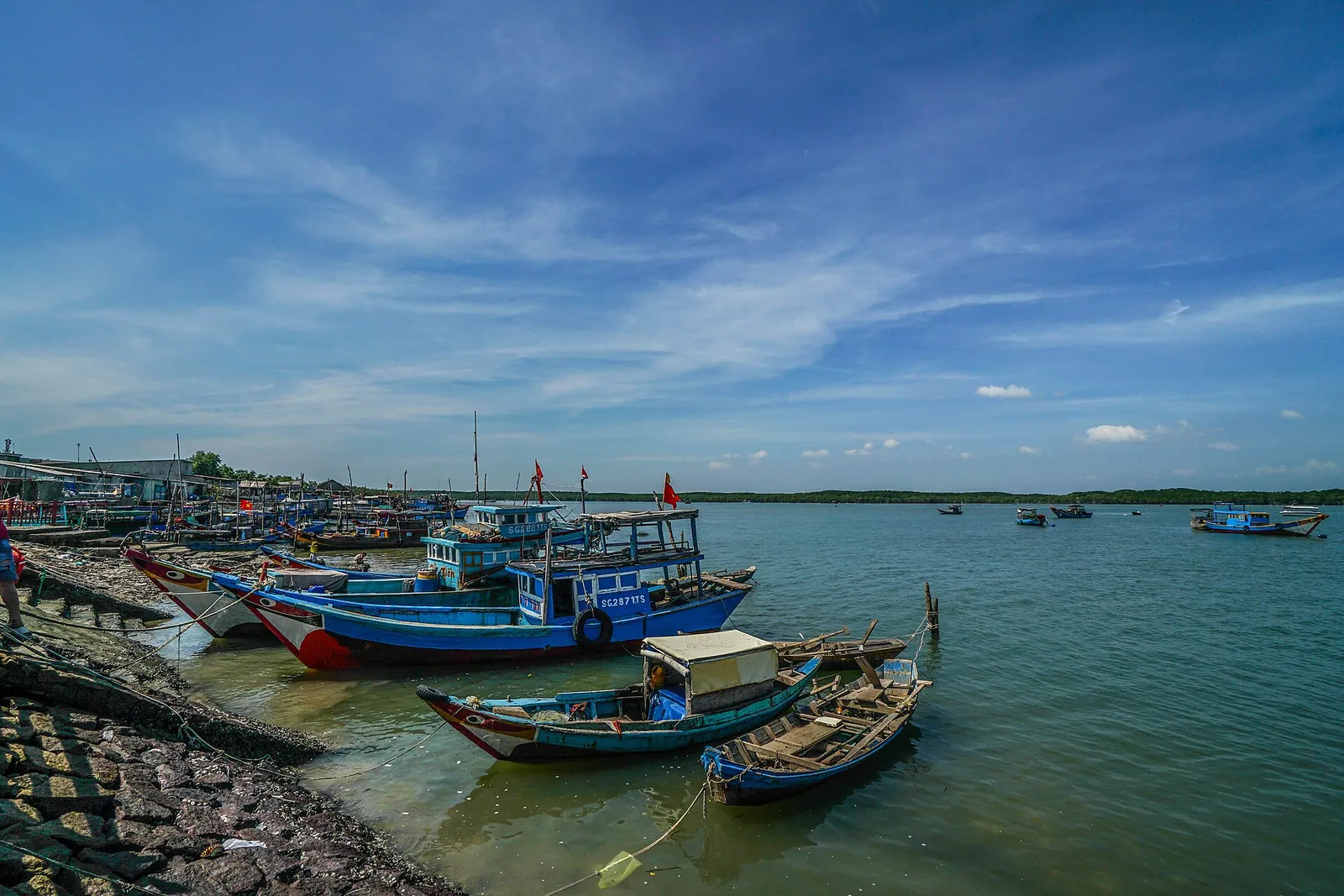
Fishing boats at Can Gio, the city's only stretch of coast
Photograph: Bao Nguyen — opens in a new tab · CC BY 2.0 — opens in a new tab
Changes: Resized and converted to WebP; displayed with responsive crops. · Original photograph and licence details ↗ — opens in a new tab
The memorial statue of the Rung Sac special forces in the Can Gio mangroves
Photograph: Phương Huy — opens in a new tab · CC BY-SA 4.0 — opens in a new tab
Changes: Resized and converted to WebP; displayed with responsive crops. · Original photograph and licence details ↗ — opens in a new tab
Salt fields at Can Thanh, Can Gio
Photograph: Si Hung Photography — opens in a new tab · CC BY-SA 2.0 — opens in a new tab
Changes: Resized and converted to WebP; displayed with responsive crops. · Original photograph and licence details ↗ — opens in a new tab
Can Gio beach seen from the 30/4 beach area, looking across the bay towards Vung Tau
Photograph: Prenn — opens in a new tab · CC BY-SA 3.0 — opens in a new tab
Changes: Resized and converted to WebP; displayed with responsive crops. · Original photograph and licence details ↗ — opens in a new tab