Ho Chi Minh City and the Southeast · Ho Chi Minh City
Vung Tau guide: fast boat from Saigon, beaches, seafood and Con Dao ferry
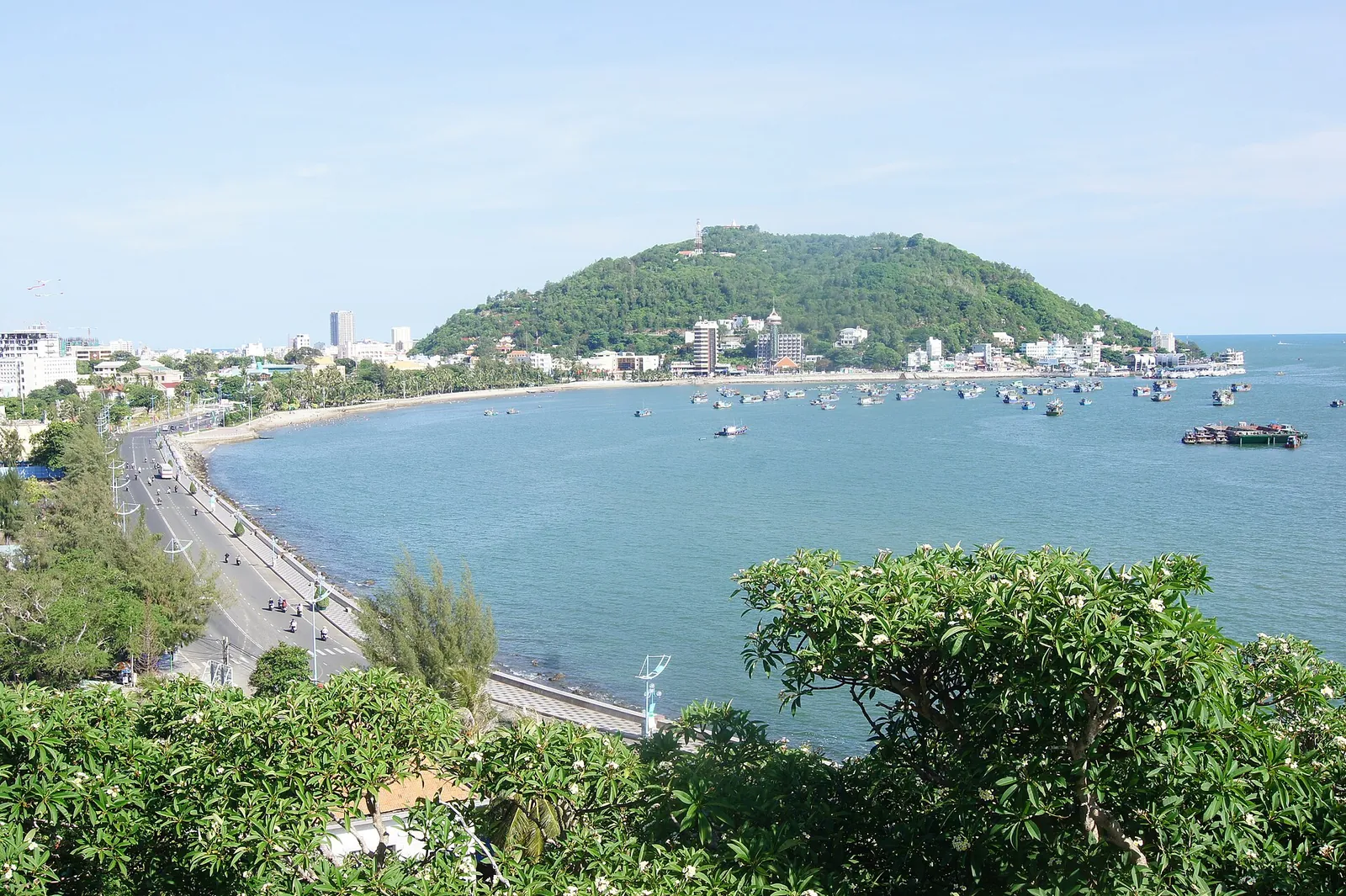
Vung Tau is the beach at the end of Ho Chi Minh City's road. It sits on a narrow peninsula at the mouth of the Saigon River, between two green hills: Small Mountain, with the lighthouse and the giant Christ statue, and Big Mountain, with the colonial villa the French called Villa Blanche. Saigon families have been coming here for quick beach breaks since the 1980s, according to the national tourism site. Do not expect a tropical-island lagoon: the beaches change with the seasons, and at weekends they are crowded. What you do get is a breezy seaside town with good seafood, a cluster of hilltop sights and the Con Dao ferry port.
- Suggested time
- 1–2 nights
- Where to stay
- Back Beach (Bai Sau) for swimming; Front Beach (Bai Truoc) for the town centre and sights
- Season and timing
- VnExpress's Vung Tau handbook gives May to October as the rainy season and November to April as the dry season. Vietnam Tourism names December and January as the breeziest, most pleasant months for the beach. Water hyacinth and other debris wash onto the beaches twice a year: from late May to mid-July, and from late August to the end of the rainy season, with Front Beach worst hit. Weekends and public holidays bring crowds and higher room prices.
The short answer
Spend one or two nights in Vung Tau. Come by the GreenlinesDP fast boat from central Ho Chi Minh City, which the operator says takes about 90 minutes, or by road on the Bien Hoa–Vung Tau expressway, which VnExpress reported was opening along its whole length in May 2026. Stay on Back Beach if swimming is the point, or near Front Beach for the evening promenade, the seafood market and short rides to the hills. Give one morning to Small Mountain (the Christ statue, the lighthouse and Nghinh Phong Cape) and one to Big Mountain (Bach Dinh and the provincial museum), and leave the evenings for banh khot and stingray hotpot. If Con Dao is your goal, sleep in Vung Tau the night before the morning ferry.
Fast boat or road: getting there from Ho Chi Minh City
The most pleasant way in is the GreenlinesDP fast boat. GreenlinesDP says the trip takes about 90 minutes. In Ho Chi Minh City the boats now leave from Pier No. 4, opposite Ham Nghi Street, about 400 metres from the old Bach Dang terminal. The operator moved there on 28 August 2025, and older guides still give the previous pier. In Vung Tau, the company lists its ticket office at Ho May pier, 1A Tran Phu Street. It describes the route as running via Can Gio.
When we checked on 2026-10-03, the operator's notice of 25 September 2026 set fares from 1 October at 350,000 dong for adults on weekdays and 300,000 dong for seniors (63 and over) and children aged 6 to 11. Children under six travel free if they share an adult's seat. Its July 2026 notice had already put weekend fares at the same levels. GreenlinesDP does not publish a timetable online: its schedule page tells passengers to ask the hotline or Zalo (0988 009 579). Its boarding rules ask you to arrive at least 20 minutes before departure. The service stops now and then, for example from 14 to 16 September 2026 for work on the Vung Tau pontoon, so check before you plan around it.
By road, VnExpress reported that the Bien Hoa–Vung Tau expressway, almost 54 kilometres long, was due to open along its whole length on the afternoon of 18 May 2026. In its first phase it was open only to cars with fewer than nine seats, at up to 80 km/h. When finished, it is expected to cut the drive from Ho Chi Minh City to about 70 minutes. The road is still being worked on. On 29 September 2026 VnExpress reported cracks and subsidence on a stretch at Phuoc Tan after heavy rain, and the link with the new Ben Luc–Long Thanh expressway was not yet open. Coaches from Mien Dong bus station and the older National Road 51 remain the alternatives. At weekends and on public holidays, VnExpress's handbook warns, the town fills up and prices rise.
Front Beach and Small Mountain
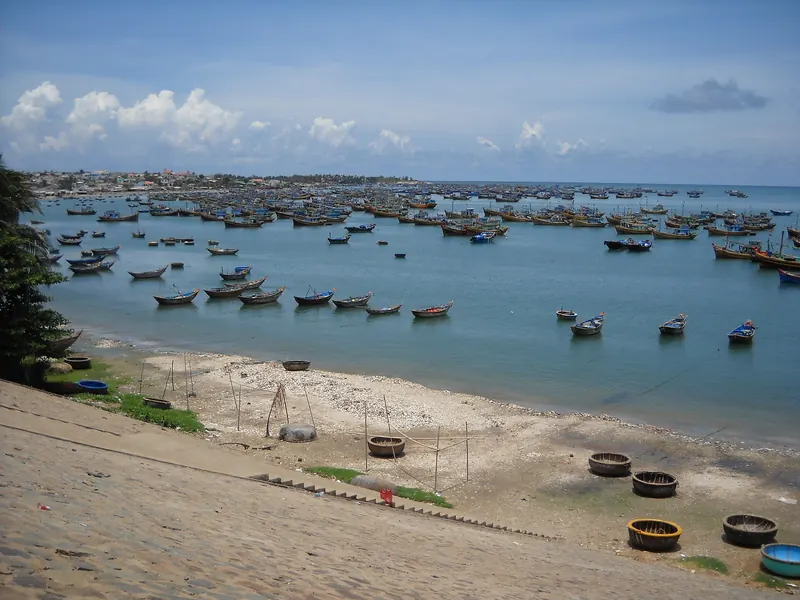
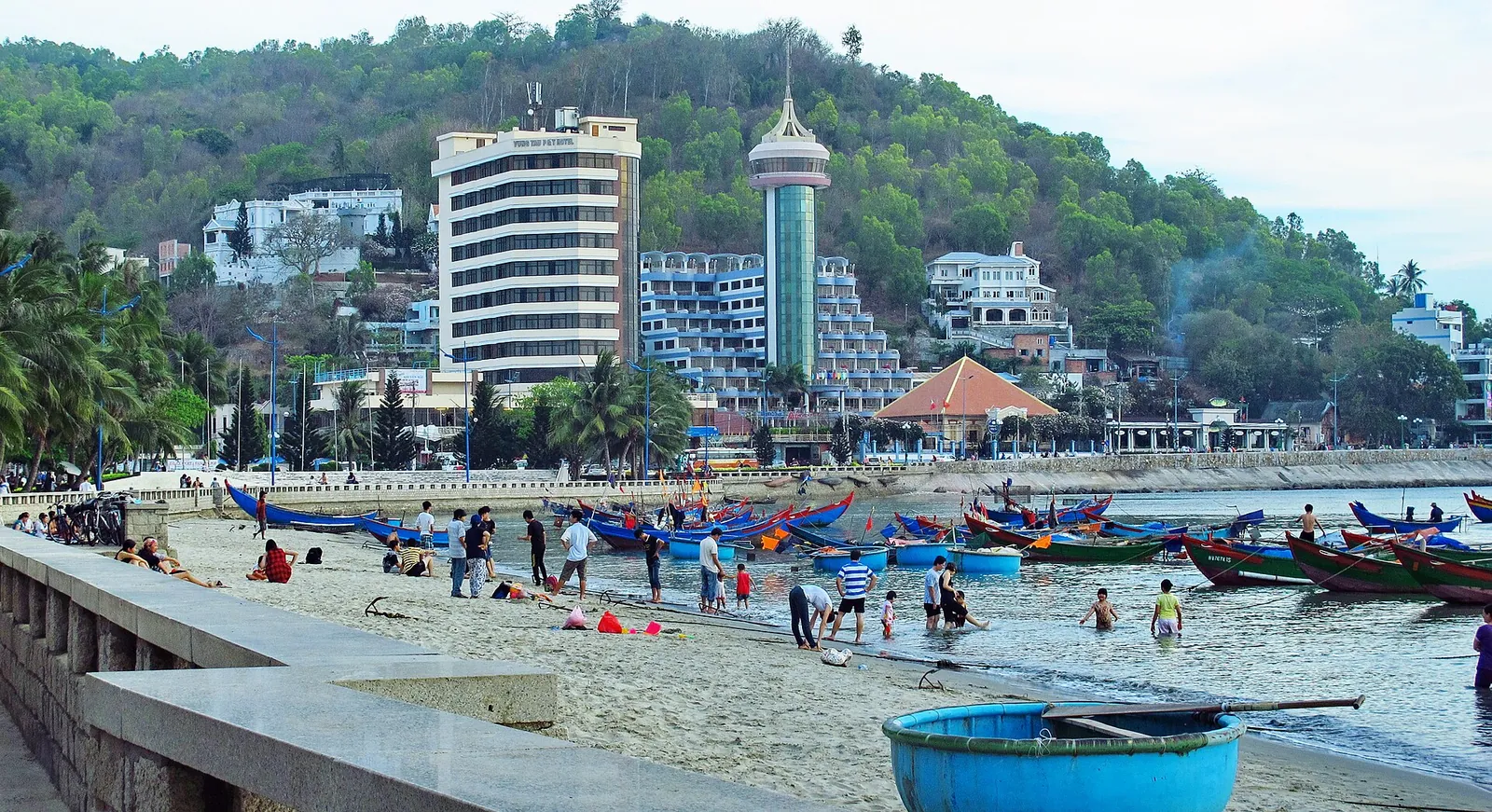
Front Beach (Bai Truoc) faces west into the bay, so it gets the sunsets. It is better for a walk than a swim, with a seafront park and sea-view cafés, and the national tourism site suggests ending a day here to watch the sky change colour. From the beach, Ha Long Street follows the shore around the foot of Small Mountain (Nui Nho), lined with hotels, restaurants and cafés.
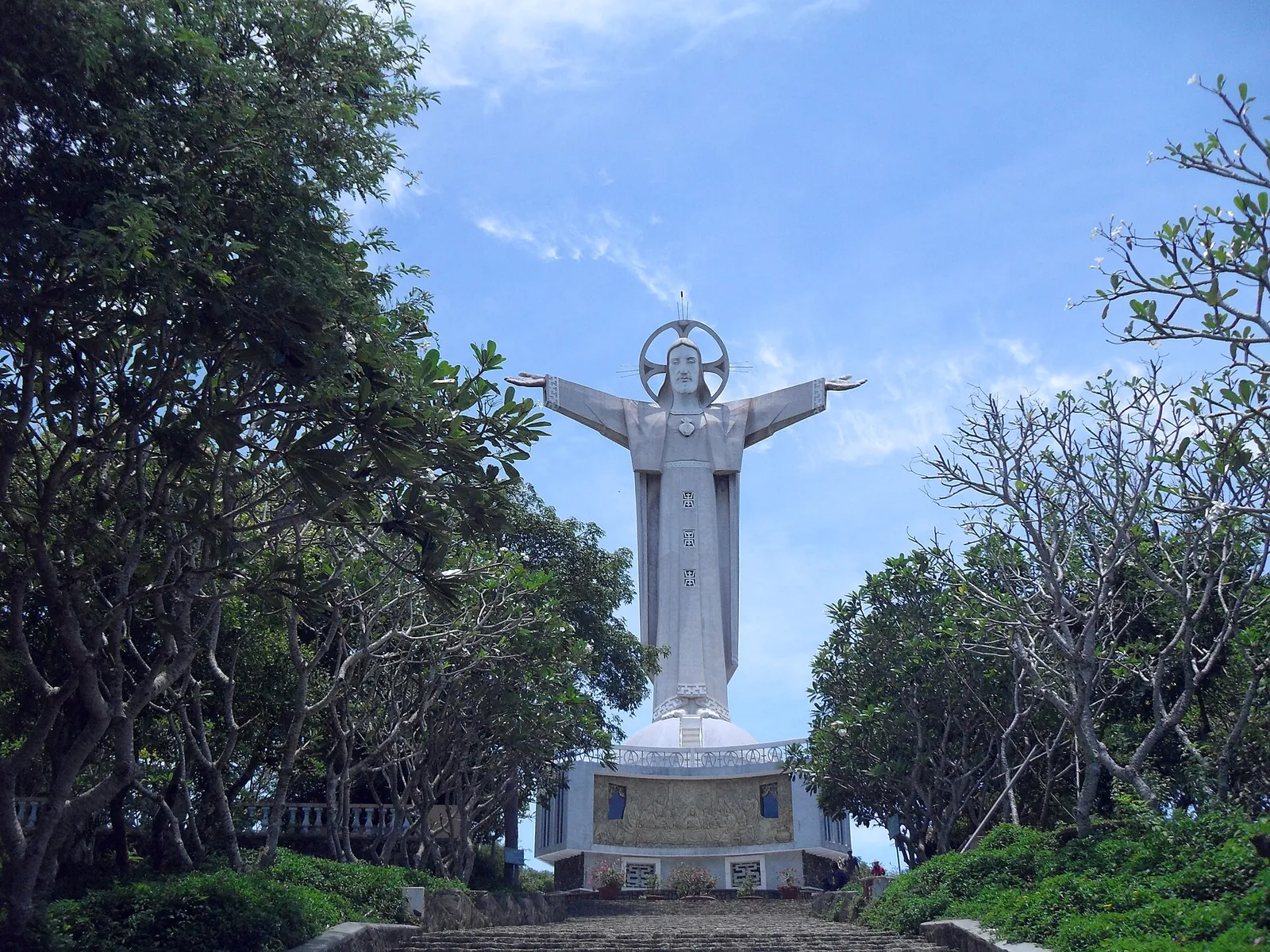
On Small Mountain stands Christ the King, the town's best-known landmark. VnExpress gives its height as 32 metres and its arm span as 18.3 metres. Building began in 1974 and it was inaugurated in 1994. A spiral staircase of 133 steps inside the statue climbs from the base to the arms, which serve as a viewing platform. Below the statue are three huge old guns, part of an 11-gun battery on the hill, each set in a sunken emplacement and linked by trenches and shelters. Vietnam Tourism suggests the climb as a family outing. Go early in the day, before the heat.
The Vung Tau lighthouse stands on top of the same hill. The French first built it in 1862 and rebuilt it in 1913, and the white tower is 18 metres high. VnExpress calls it one of the oldest lighthouses in Vietnam and recommends coming in the late afternoon or evening rather than at midday; from the top you look over the whole town. You can reach it by car or motorbike, or walk up the road along the hillside.
Make time for the local food
What to eat and where to look
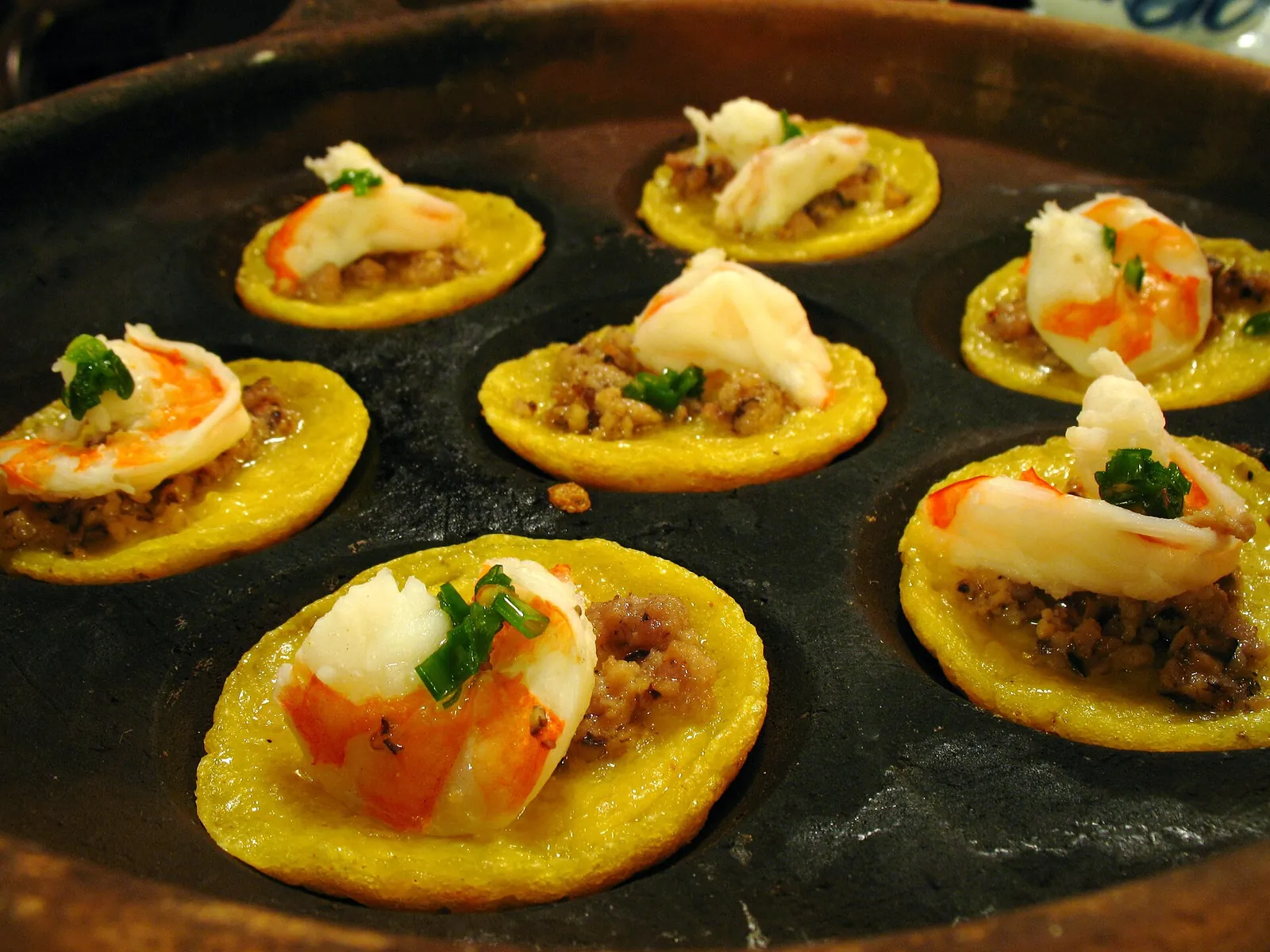
Banh khot
Small, crisp rice-flour cakes fried in a clay or cast-iron mould, each with a shrimp in the centre, rolled in lettuce and herbs and dipped in fish sauce. Vietnam Tourism calls Vung Tau the dish's birthplace.
- Where to look
- VnExpress points to Ba Trieu Street in the centre, where many places sell it, and to the long-running Goc Vu Sua on Nguyen Truong To Street.
- Fit it into your day
- Lunch after arriving, or an early dinner.
Contains shrimp, and the cakes are traditionally fried in pork fat; ask if you avoid pork.
Stingray hotpot (lau ca duoi)
A sour and spicy broth with stingray, eaten with pickled bamboo shoots, greens and rice noodles. VnExpress calls it Vung Tau's signature dinner, and Vietnam Tourism mentions stingray hotpot with forest bamboo shoots.
- Where to look
- Nguyen Truong To Street, which VnExpress describes as a row of stingray hotpot restaurants, some open for more than 30 years.
- Fit it into your day
- The main dinner, best shared by a group.
Often very spicy; ask for less chilli if needed.
Seafood from the Xom Luoi market
Xom Luoi is an informal fishermen's market where you choose fish, squid, prawns, crab or shellfish and have them grilled, steamed or boiled in about 10 to 15 minutes. VnExpress describes it as cheaper than the restaurants in town.
- Where to look
- Near the Front Beach park, at the junction of Phan Boi Chau and Nguyen Cong Tru streets.
- Fit it into your day
- An evening after sunset on Front Beach.
Agree on the weight and the price, including cooking, before anything goes on the grill; check for shellfish allergies.
Mi thay and banh canh with crab
Mi thay, "tossed noodles", gets its name from the cook flipping each portion of noodles high in the air to drain it; VnExpress names Nghiep Ky on Ba Cu Street near Front Beach. Vietnam Tourism also recommends banh canh, thick tapioca noodles topped with flower crab.
- Where to look
- Noodle shops around Ba Cu Street in the centre.
- Fit it into your day
- Breakfast or a quick lunch before the hills.
Noodle broths may be made with pork; small shops change, so check that a place is open.
Big Mountain: Bach Dinh and the museums
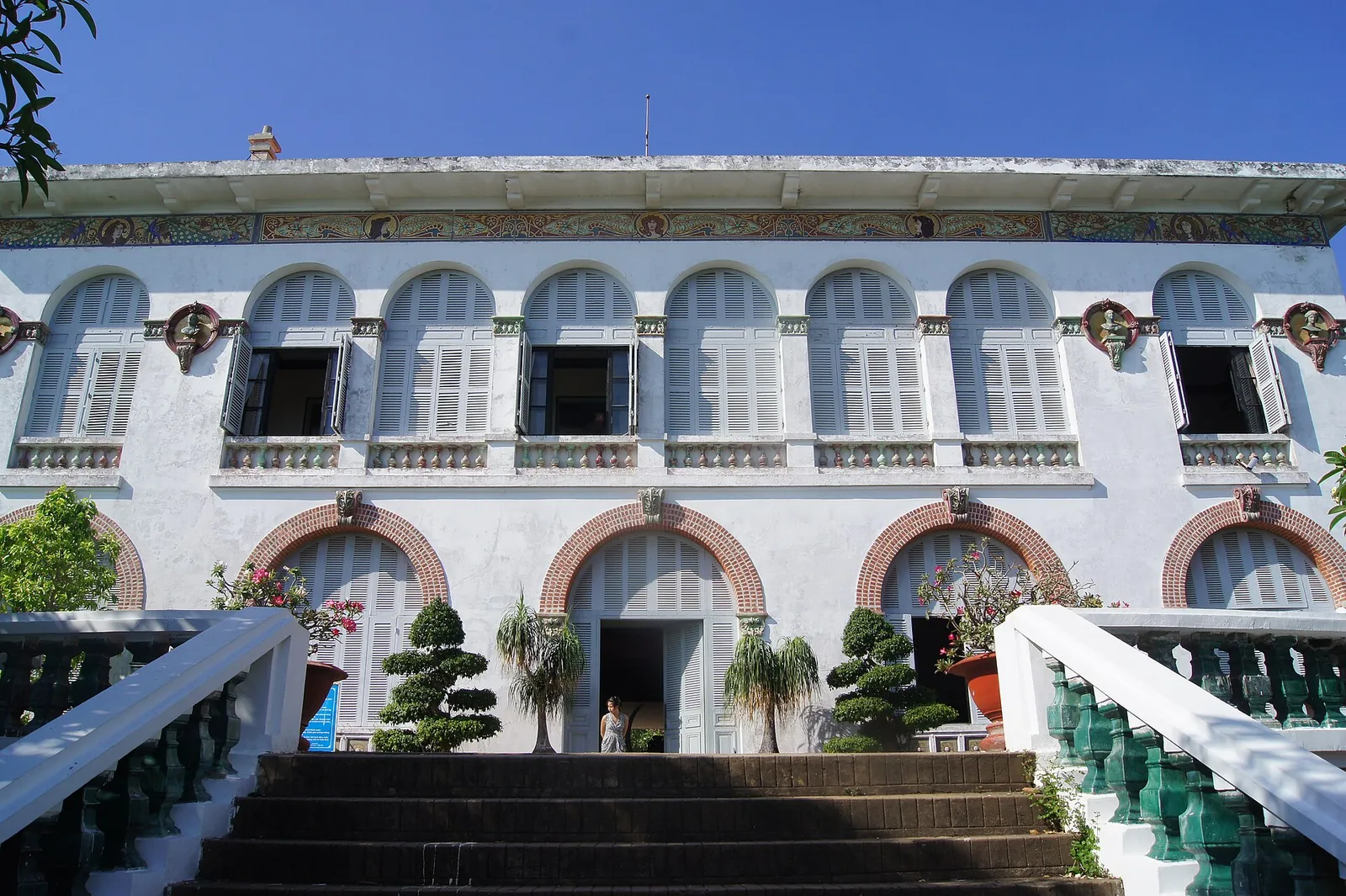
Bach Dinh, the White Palace, is also known as Villa Blanche. It is a European-style mansion built in the late 19th century on the slope of Big Mountain (Nui Lon), facing the sea at 10 Tran Phu Street. VnExpress says it was used as a holiday residence by Paul Doumer, Governor-General of French Indochina. Vietnam Tourism describes it as a mansion built for the French governor and a good look into colonial domestic life. Nineteen old cannons are displayed in the grounds, and the gardens give the classic view back over Front Beach to Small Mountain.
Combine it with the Ba Ria–Vung Tau Museum on Tran Phu Street, which VnExpress pairs with Bach Dinh for a history morning, and with the Robert Taylor Worldwide Arms Museum at 98 Tran Hung Dao Street. Vietnam Tourism calls the latter Vietnam's only private weapons museum. VnExpress puts its collection at about 4,000 weapons, uniforms and pieces of military equipment from the 12th to the 20th century. Vietnam Tourism also points to the old French military outposts on the hills, built to guard the mouth of the Saigon River, some of which still have their cannons.
Further around Big Mountain, Thich Ca Phat Dai is a large Buddhist complex on the hillside. A seated Buddha is visible from far away, and statues retrace the life of the Buddha. Back in town, Thang Tam communal house holds the tomb of Ong Nam Hai, where the bones of some 180 whales are kept and worshipped. It was listed as a national historic site in 1991, and its Nghinh Ong whale festival takes place on the 16th to 18th days of the eighth lunar month. Dress modestly at the pagoda and the communal house.
Back Beach, Nghinh Phong Cape and the beach seasons
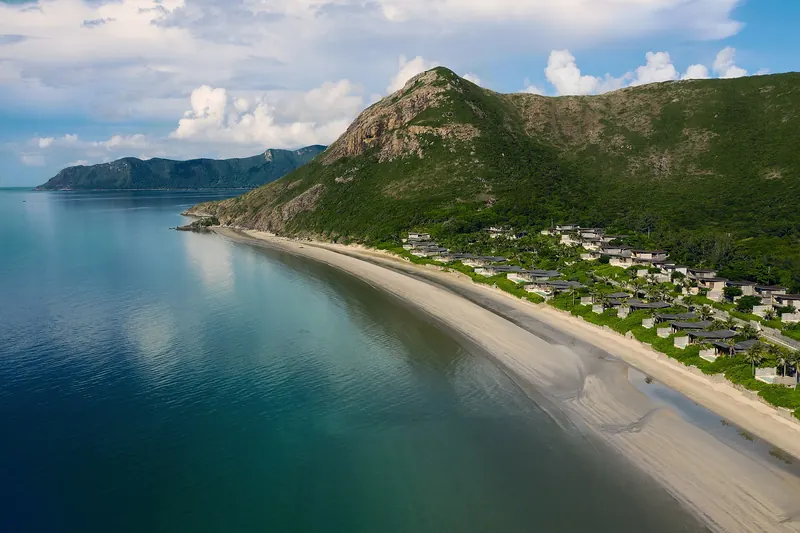
Back Beach (Bai Sau), also called Thuy Van after the road behind it, is Vung Tau's long open swimming beach on the south-east side of the peninsula. VnExpress calls it the longest and most beautiful of the town's beaches. Tam Thang Tower stands in the centre opposite Thuy Van Square. At the Small Mountain end, the small islet of Hon Ba sits just offshore.
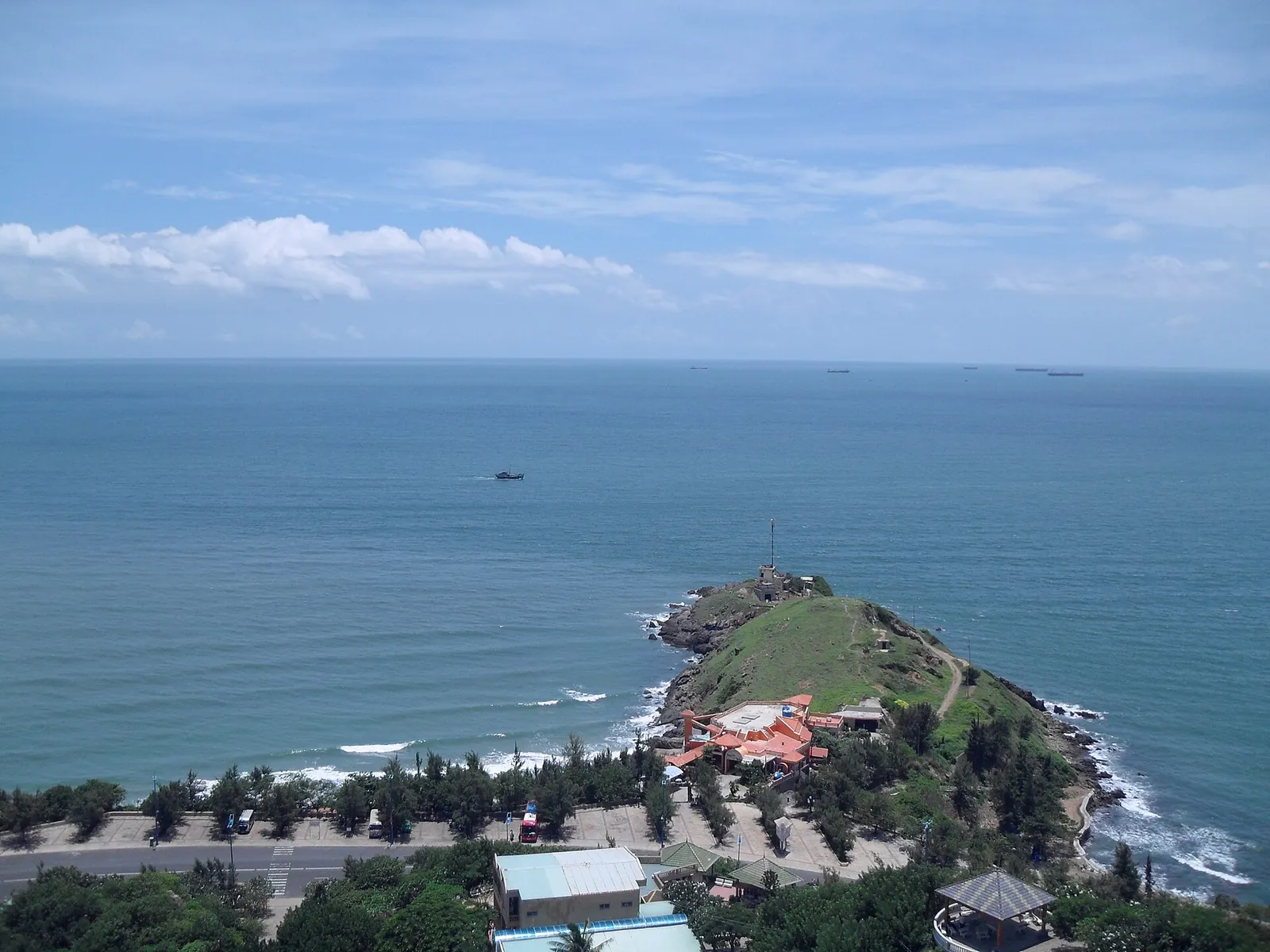
Nghinh Phong Cape, whose name means "welcoming the wind", is the southern tip of the peninsula, below the Christ statue. A stone gateway on the slope above the sea is known locally as the "Gate of Heaven" (Cong Troi). VnExpress warns that the path is rocky and uneven, so wear proper shoes, and that the cape is windy enough to need a light jacket.
Check the sea before you swim. VnExpress reported in April 2026 that many swimmers on Back Beach, between Hon Ba and the end of Thuy Van Street, were stung by bristle worms (*Chloeia parva*) and jellyfish. A marine biologist it quoted said the worms multiply as the water warms in spring and summer, and that this is a seasonal effect rather than a sign of pollution. Front Beach has its own problem. In February 2026 the city's environment department said water hyacinth and debris from the rivers wash in twice a year, from late May to mid-July and from late August to the end of the rainy season. On busy holiday weekends, VnExpress also advises keeping an eye on your belongings and not swimming far out.
Onward by sea: Con Dao and Can Gio
Vung Tau is one of the sea gateways to Con Dao. The fast ferry Thang Long, which VnExpress describes as Vietnam's highest-capacity passenger fast ferry (77 metres long, up to 1,017 passengers), sails from Cau Da port in Vung Tau on a route of about 180 kilometres. On 1 August 2026 the ferry left Cau Da at about 7:30, lost two of its three engines an hour later and returned to Vung Tau. The operator refunded tickets and moved passengers who wanted to continue onto a sailing from Tran De. Spend the previous night in Vung Tau, keep a spare day before any flight home, and check the schedule with the operator when you book. GreenlinesDP also lists a Vung Tau–Con Dao route, again with schedules by hotline only.
In the other direction, a car and passenger sea ferry links Vung Tau with Can Gio, the coastal district of Ho Chi Minh City across the bay. VnExpress reported in January 2025 that the 15-kilometre crossing from Tac Suat pier in Can Thanh takes about 30 minutes instead of three and a half hours by road. Four ferries were running from 6:00 to 20:00 on weekdays and until 21:00 at weekends, roughly hourly. The figures are from that report, so confirm the current schedule locally. The ferry lets you combine Can Gio and Vung Tau in one trip without going back through the city.
A weekend plan
This is an editorial suggestion, not a timetable. Confirm the boat's departure times with the operator.
- Day 1 — Arrival and Front Beach: fast boat from Pier No. 4 in Ho Chi Minh City, banh khot for lunch, an afternoon swim on Back Beach, then sunset on Front Beach and seafood at the Xom Luoi market.
- Day 2 — The two hills: climb to Christ the King early, walk down to Nghinh Phong Cape, see the lighthouse, then spend the afternoon at Bach Dinh and the Ba Ria–Vung Tau Museum before the boat or the drive back.
- Extension: stay a third night for Thich Ca Phat Dai and the Robert Taylor arms museum, take the ferry to Can Gio, or catch the morning ferry to Con Dao.
Practical questions
How long does the fast boat from Ho Chi Minh City to Vung Tau take?
GreenlinesDP says about 90 minutes. Boats leave from Pier No. 4 opposite Ham Nghi Street in central Ho Chi Minh City; the timetable is given by the operator's hotline rather than online.
How much is the Vung Tau fast boat?
When we checked on 2026-10-03, the operator listed 350,000 dong for adults and 300,000 dong for seniors and children aged 6 to 11 from 1 October 2026, with children under six free when sharing an adult's seat. Fares change with fuel prices, so check when you book.
Is Vung Tau worth a day trip from Ho Chi Minh City?
It is possible by boat, but one night is better: you can see the Christ statue and the lighthouse early before the heat, have dinner on the seafront and travel back the next day.
Which beach in Vung Tau is best for swimming?
Back Beach (Bai Sau) is the long swimming beach. Front Beach faces the sunset and is better for walking. Check for jellyfish and bristle worms in spring and summer, and for water hyacinth during the rainy season.
Can I take a ferry from Vung Tau to Con Dao?
Yes. The fast ferry Thang Long sails from Cau Da port in Vung Tau on a route of about 180 kilometres. Sailings can be cancelled or turned back by weather or breakdowns, so sleep in Vung Tau the night before and keep a spare day.
Which province is Vung Tau in?
Since the 2025 administrative reform, Vung Tau is a ward of Ho Chi Minh City. Older sources place it in Ba Ria–Vung Tau province.
Sources and checks before you travel
Reference sources for the version dated 3 October 2026. Confirm opening times, access, transport and conditions for your travel dates.
- Vietnam Tourism: 5 ways to enjoy Vung Tau as a family ↗ — opens in a new tab
- VnExpress: Vung Tau travel handbook (updated 12 June 2026) ↗ — opens in a new tab
- VnExpress: landmarks on the 2026 Vung Tau marathon route (28 August 2026) ↗ — opens in a new tab
- VnExpress: Vung Tau itinerary for the 2 September holiday (22 August 2026) ↗ — opens in a new tab
- GreenlinesDP: About us and services ↗ — opens in a new tab
- GreenlinesDP: Notice of temporary fare adjustment from 1 October 2026 ↗ — opens in a new tab
- GreenlinesDP: Fare notice from 1 July 2026 (Vietnamese) ↗ — opens in a new tab
- GreenlinesDP: Schedules ↗ — opens in a new tab
- GreenlinesDP: Boarding regulations (Vietnamese) ↗ — opens in a new tab
- GreenlinesDP: Temporary suspension 14–16 September 2026 ↗ — opens in a new tab
- GreenlinesDP: Promotional fares (Vung Tau pier address) ↗ — opens in a new tab
- VnExpress: Bien Hoa–Vung Tau expressway opens in full (18 May 2026) ↗ — opens in a new tab
- VnExpress: Long Thanh expressway traffic must detour to reach the Bien Hoa–Vung Tau expressway (16 May 2026) ↗ — opens in a new tab
- VnExpress: cracks on the Bien Hoa–Vung Tau expressway (29 September 2026) ↗ — opens in a new tab
- VnExpress: Ben Luc–Long Thanh and Bien Hoa–Vung Tau expressways not yet linked (30 September 2026) ↗ — opens in a new tab
- VnExpress: ferry with 200 passengers to Con Dao turns back (1 August 2026) ↗ — opens in a new tab
- VnExpress: proposal to add four sea ferries on the Can Gio–Vung Tau route (8 January 2025) ↗ — opens in a new tab
- VnExpress: bristle worms and jellyfish on Back Beach (15 April 2026) ↗ — opens in a new tab
- VnExpress: barrier planned against water hyacinth on Vung Tau beaches (9 February 2026) ↗ — opens in a new tab
- VnExpress: Long Thanh airport expected to open for commercial flights from 1 December (13 July 2026) ↗ — opens in a new tab
- Wikipedia: Christ of Vung Tau ↗ — opens in a new tab
- Wikipedia (Vietnamese): Vung Tau lighthouse ↗ — opens in a new tab
- Wikipedia: Vung Tau, Ho Chi Minh City ↗ — opens in a new tab
- Wikipedia (Vietnamese): Banh khot ↗ — opens in a new tab
Does this experience fit your route?
Vung Tau is easy to do on your own by fast boat. For the days you spend in Ho Chi Minh City on either side, compare the city's tours and day trips.
Browse relevant experiences on Viator ↗ — opens in a new tabAffiliate link · Book with ViatorPhoto credits
Front Beach (Bai Truoc) and Small Mountain from the grounds of Bach Dinh
Photograph: Hoangvantoanajc — opens in a new tab · CC BY-SA 3.0 — opens in a new tab
Changes: Resized and converted to WebP; displayed with responsive crops. · Original photograph and licence details ↗ — opens in a new tab
Christ the King on Small Mountain (Nui Nho)
Photograph: BrightRaven — opens in a new tab · CC BY 3.0 — opens in a new tab
Changes: Resized and converted to WebP; displayed with responsive crops. · Original photograph and licence details ↗ — opens in a new tab
Nghinh Phong Cape, the old Cap Saint-Jacques, from the Christ statue
Photograph: BrightRaven — opens in a new tab · CC BY 3.0 — opens in a new tab
Changes: Resized and converted to WebP; displayed with responsive crops. · Original photograph and licence details ↗ — opens in a new tab
Bach Dinh (Villa Blanche) on the slope of Big Mountain
Photograph: Hoangvantoanajc — opens in a new tab · Public domain — opens in a new tab
Changes: Resized and converted to WebP; displayed with responsive crops. · Original photograph and licence details ↗ — opens in a new tab
Fishing boats on Front Beach in central Vung Tau
Photograph: trungydang — opens in a new tab · CC BY 3.0 — opens in a new tab
Changes: Resized and converted to WebP; displayed with responsive crops. · Original photograph and licence details ↗ — opens in a new tab
Banh khot cooking in its mould: the dish Vung Tau is known for
Photograph: Joshua Rappeneker from Tokyo, Japan — opens in a new tab · CC BY-SA 2.0 — opens in a new tab
Changes: Resized and converted to WebP; displayed with responsive crops. · Original photograph and licence details ↗ — opens in a new tab