Northeast Thailand (Isaan) · Nakhon Ratchasima
Khao Yai National Park: where to stay, trails and wildlife
Stay for the forest, not just a list of waterfalls. Thailand's first national park has dry evergreen forest, rainforest and open grassland. Elephants, gibbons and gaur are among the mammals the park records here. Its entrances are linked by a winding road, with trailheads and viewpoints spread along it. Two nights let you walk in the forest, watch the grassland and join a night safari without fitting everything between two Bangkok drives. Phimai's Khmer sanctuary deserves a separate day after the park.
- Suggested time
- Two nights for the park; add one night in Korat or Phimai for the temple.
- Where to stay
- Choose Mu Si for a room outside the north gate, or park accommodation for an overnight forest stay. Use Korat or Phimai for a separate temple night.
- Season and timing
- The park recommends November to March for camping. Its climate guide describes green forest and strong waterfalls in the June–September rainy season, and cold nights in the October–February cool season.
The short answer
Book two nights in Mu Si or in park accommodation, and arrange your vehicle and any guided walk first. Use one park day for the visitor-centre trails, Nong Phak Chi and Haew Suwat, and the other for Haew Narok and the viewpoints. Checked on 2026-10-13, the park charged THB400 per foreign adult at either main gate. The official night safari was THB600 per vehicle, for up to eight people. The complete three-day model below covers two adults sharing a furnished tent, both wildlife days, meals and return transfers from Bangkok. Add a separate night in Korat or Phimai only for the temple extension.
Where to stay for two park days
For a first visit, use the Pak Chong entrance on the northern side. The park's official directions place its headquarters 15 km beyond the entrance and give about 50 km for the road linking it with the Noen Hom entrance in Prachinburi. Allow a substantial part of the day for the forest itself rather than spending the arrival afternoon moving between distant resorts.
Mu Si and Thanarat Road are our choice for an outside-park stay. Choose one room for both nights and arrange the sightseeing vehicle with the booking. The complete model below uses a furnished tent and a paid connection to the wildlife tour’s Pak Chong meeting point.
Inside the park, guest houses and campground spaces are limited, according to the park's accommodation page. Book online in advance; the visitor centre also handles rooms that remain available on arrival. The accommodation and camping pages allow bookings up to 60 days ahead for a maximum three-day consecutive stay. The detailed room and camping costs are below.
Pak Chong town is the rail gateway. The park's access page lists a bus to the Pak Chong entrance every 30 minutes, from 06:00 to 17:00 daily, at THB15, checked on 2026-10-13. TAT’s provincial brochure gives 23 km for the approach from the Highway 2 turn-off along Thanarat Road to the park. That service ends at the gate. Arrange the vehicle for the forest roads before arriving by rail or bus; the access page suggests lifts in other visitors' cars beyond the entrance, which is too uncertain for a planned hotel and trail itinerary.
Korat and Phimai belong after the park stay. Choose the extra night for Khmer architecture, or use it for another forest morning if wildlife is your priority. The Phimai extension below gives the separate road distances so that it does not become an unplanned return journey from your park hotel.
Entry tickets and seasonal closures
The park's visitor information gives gate hours of 06:00–18:00. Checked on 2026-10-13, admission through Pak Chong or Noen Hom was THB400 per foreign adult, including elderly and disabled visitors, and THB200 per foreign child under 14. Thai visitors pay THB40 per adult or THB20 per child; elderly and disabled Thai visitors are exempt. A ticket permits entry and exit on the same day, so visitors staying outside the park need another ticket for the next park day.
The separate vehicle tariff is THB20 per motorcycle, THB30 per four-wheel vehicle and THB100 per six-wheel vehicle. The same park page lists THB200 for a vehicle with more than six and no more than ten wheels, but its access rule prohibits vehicles with more than six wheels; it also bars double-deck vehicles, vehicles taller than 3.50 metres and towed recreational vehicles. Small tour buses may enter only through Noen Hom. Use a car or a suitably sized van for the route here.
Buy entry through the QueQ app or pay officials at either gate. The park's E-Ticket page lists debit cards, credit cards, cross-bank bill payment and PromptPay, with a QR code supplied after payment. Carry the admission receipt through the park.
The DNP sheet, headed ‘data as of 7 January 2026’, gives 1–30 April as the annual closure period for the Sarika and Krok E-Dok waterfall entry in its Khao Yai row. The park's trail page separately closes the long visitor-centre–Haew Suwat route from 1 July to 31 August.
Begin each park morning at the visitor centre for the current trail notice. Heavy rain or conservation work can change access, so choose the walk before setting off; the shorter forest loop, waterfalls and viewpoints below give you alternatives without adding a distant detour.
Day one: forest paths, Nong Phak Chi and Haew Suwat
Start at the visitor centre, where the park directs travellers for information and assistance. The forest is not scenery between attractions: Khao Yai's own habitat account identifies dry evergreen forest as its largest forest type and also describes mixed deciduous forest, lower montane rainforest, tropical rainforest and grassland. The UNESCO property extends beyond Khao Yai into the Dong Phayayen forest complex, but your first morning can show several habitats without attempting a long expedition.
Begin with Trail 1, the visitor centre–Kong Kaew Waterfall loop. The park describes it as its shortest and easiest trail: 1.2 km, taking 45 minutes to one hour, with no guide required. It runs through rainforest and dry forest, past large trees and on to a small waterfall on Lam Ta Khong stream. This is a good first walk before deciding how much more forest walking you want.
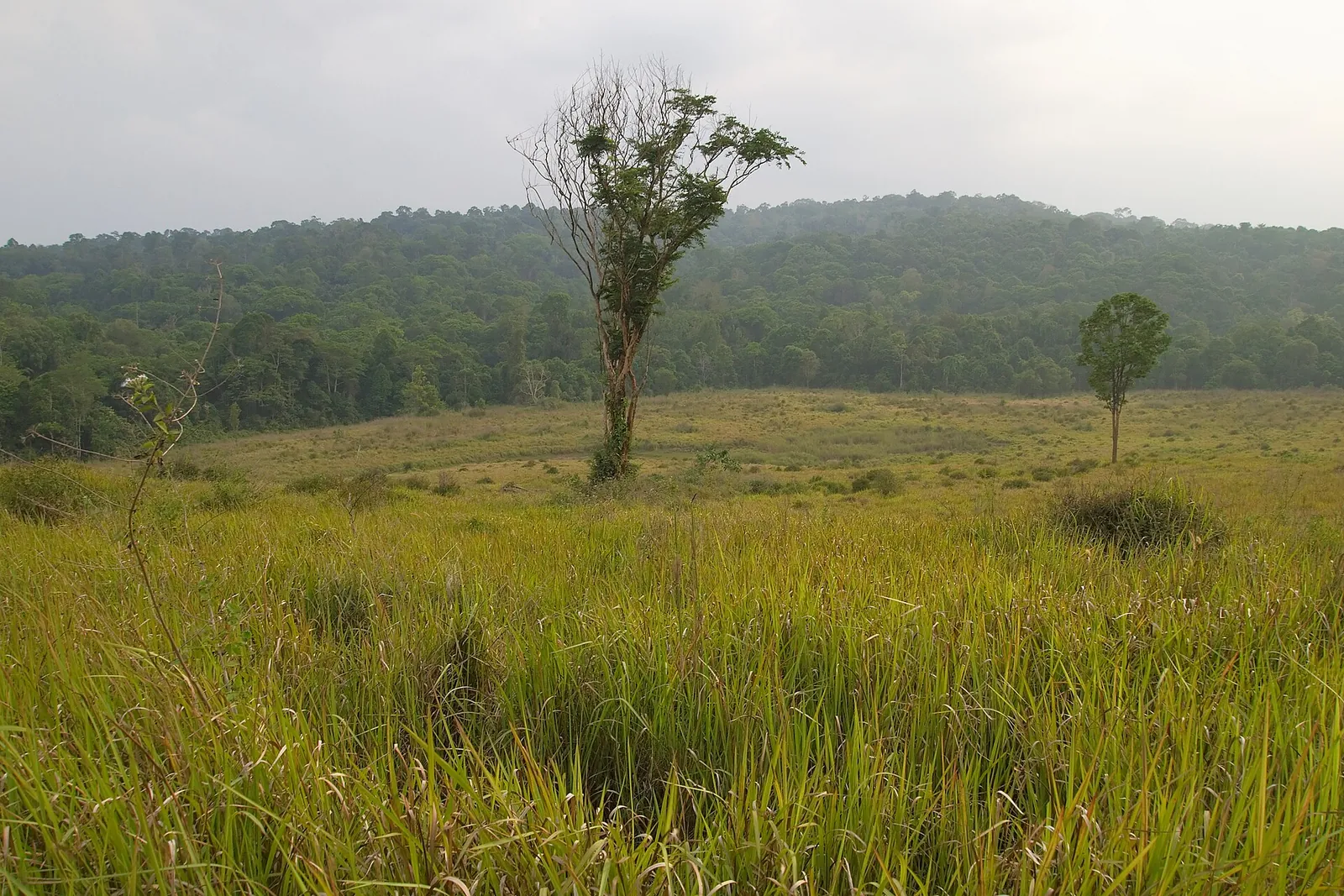
Nong Phak Chi Observation Tower overlooks grassland, water and salt licks. The park's places guide names sambar deer, barking deer and wild boar as frequent visitors, with elephants, gaur and dhole appearing less often. For a longer approach, its trail page gives Km 33–Nong Phak Chi as 4.2 km one way, taking 2.5–3 hours, with a guide mandatory; the route finishes at the Km 35 roadside. The shorter tower approach is from Km 35, about 3 km from the visitor centre, followed by a 1 km walk across the grassland.
Trail 2, Pha Kluai Mai Campground–Haew Suwat, is the self-guided streamside alternative. The park lists 3 km one way and two hours, through bamboo and dry forest beside Lam Ta Khong and past Pha Kluai Mai Waterfall. Arrange collection at the far end if you do not want to retrace it. Choose this or the longer Nong Phak Chi walk, rather than treating both as short stops between car parks.
Haew Suwat Waterfall drops 25 metres over volcanic rock, according to the park's places guide. A high viewpoint looks through the trees towards the curtain of water; a lower path leads towards the basin. The road approach is about 10 km from the visitor centre, then about 100 metres on foot from the car park. The park prohibits swimming here and warns of strong rainy-season current around the cave behind the fall.
Make the drive back part of the wildlife day. Leave space between the walk and waterfall rather than filling it with another destination; time spent quietly watching a clearing can be more rewarding than arriving at a second trailhead too late to start.
Day two: Haew Narok, high viewpoints and the road between gates
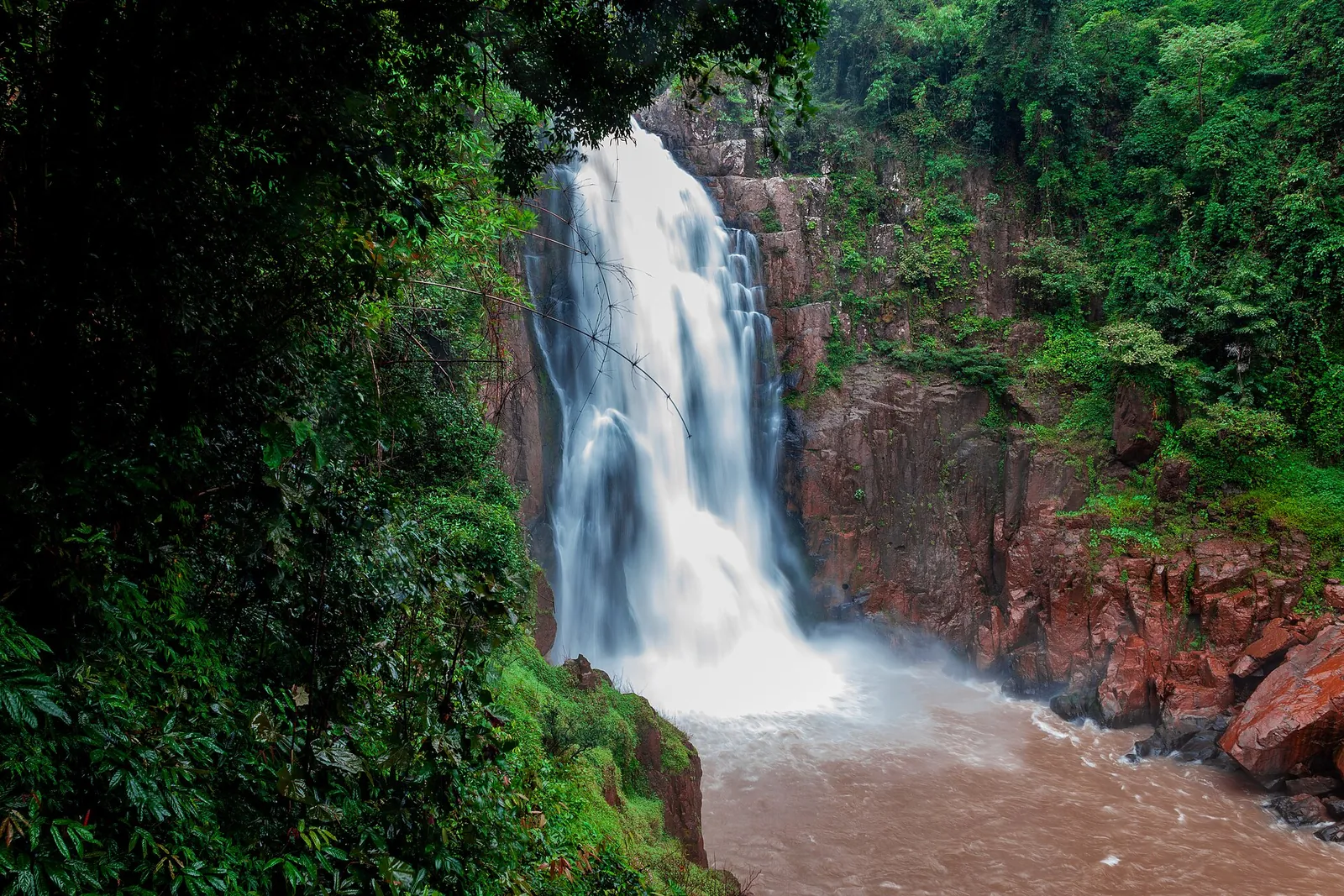
Use the second morning for the park's southern road and Haew Narok Waterfall. The park places it 22 km from the visitor centre on Highway 3077, followed by a 1 km walk from the car park and a steep, narrow 50-metre staircase to the viewpoint. It describes Haew Narok as Khao Yai's largest and tallest waterfall, falling about 150 metres in three tiers. The final viewpoint gives the drama; the pool and current are not a bathing place.
Haew Narok lies in the elephants' foraging range. The park records eight elephants dying after a fall on 2 August 1992 and another eleven on 5 October 2019. Water has cut through faulted sedimentary and volcanic rock to create the cliff. The scale and sheer rock face give this stop a different character from Haew Suwat.
For a panorama, the park's places guide describes Km 30 Viewpoint as the first viewpoint from Pak Chong, 6.6 km beyond Chao Phor Khao Yai Shrine, looking north over mountain ridges. Pha Diao Dai, at about 900 metres above sea level, has a wooden nature trail of about 450 metres; its trailhead is at Km 9 of the Khao Khieaw road. Khao Khieaw/Pha Trom Jai, at 1,290 metres, lies another 600 metres beyond that trail. Choose an open viewpoint that fits the weather and your remaining daylight.
Use Noen Hom for an onward journey towards the southern side, or return to Pak Chong for your outside-park room or station transfer. The official through-road distance is about 50 km. Decide the exit with the driver before the day starts and finish within the gate hours given above.
The park's two-day programme also separates Haew Narok and the high viewpoints from Haew Suwat. That is a useful rhythm for an independent visit. A guided tour may reverse the days to suit conditions; keep the two forest days, rather than insisting on one fixed order.
See wildlife without turning it into a chase
Khao Yai's mammals are the reason to stay overnight, but they are not scheduled performances. The park reports more than 70 mammal species and names Asian elephant, gaur, dhole, barking deer, sambar deer, white-handed and pileated gibbons and pig-tailed macaques among the animals visitors may encounter. UNESCO describes the wider Dong Phayayen-Khao Yai complex as habitat for more than 800 fauna species, including 112 mammals and 392 birds. Those numbers describe the ecosystem, not the number you will see on a weekend.
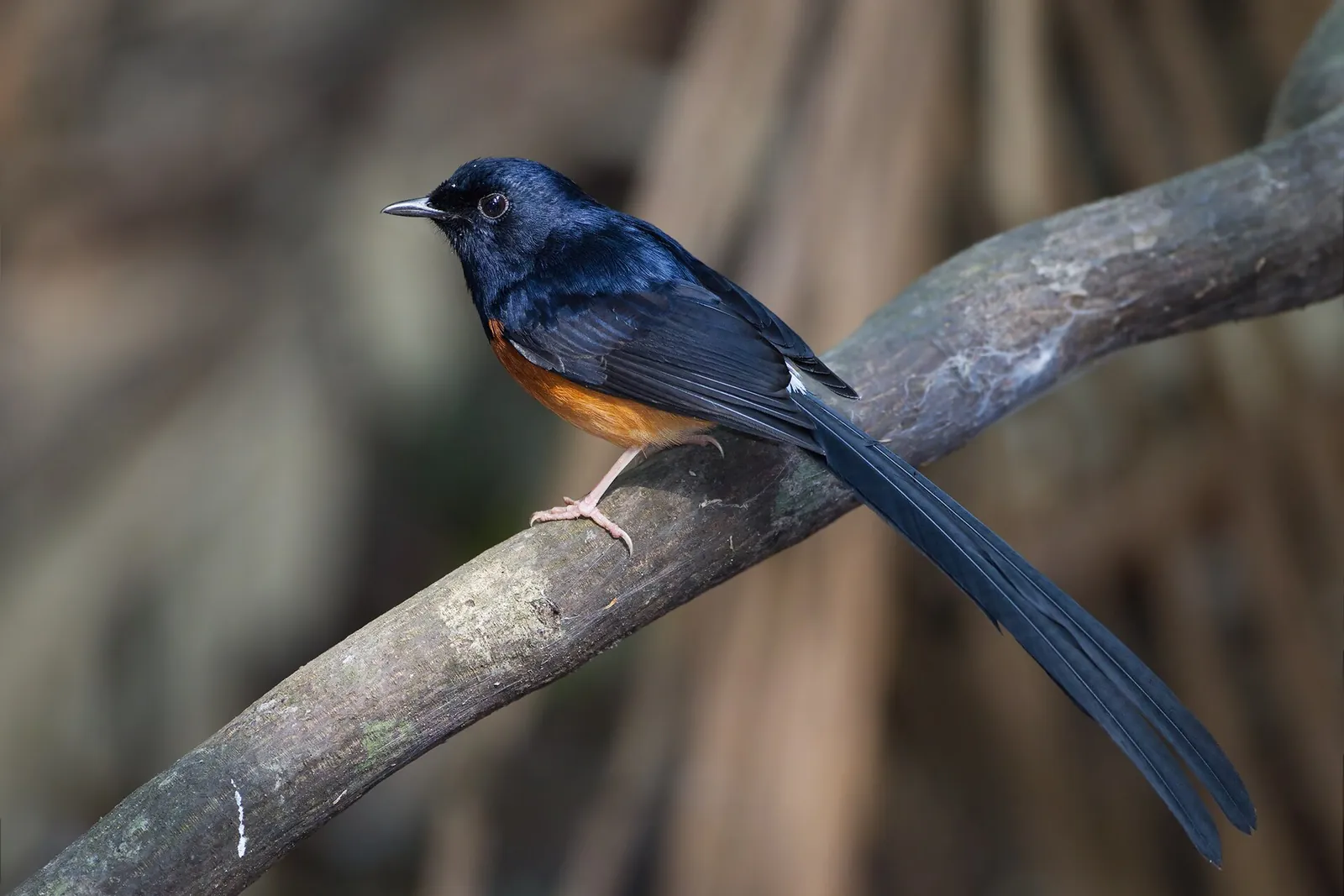
The park's birdwatching page recommends mornings and evenings. It records over 282 bird species, resident and migratory, including four hornbills: great, oriental pied, wreathed and Austen's brown. It names the visitor-centre areas, Pha Kluai Mai, Nong Phak Chi, Haew Suwat and Khao Khieaw as places to watch. Bring binoculars and give one area time instead of moving on after the first quiet few minutes.
The official night safari runs 19:00–20:00 and 20:00–21:00, covering 10 km in about one hour. Checked on 2026-10-13, the park charged THB600 per vehicle for no more than eight people, using a high-bed pick-up with rangers and lights. Book and pay at the visitor centre before 18:00 on the day, then meet there or arrange collection from the campground or lodge 15 minutes before the safari.
The park prohibits independent night wildlife drives and lists a THB500 fine. On the ranger safari, stay quiet and use only the guide's light; the park also prohibits flash photography and feeding animals. Enjoy whatever appears rather than booking the trip around one promised species.
If an elephant enters the road, the park instructs drivers to stop at least 30 metres away and reverse if it approaches. Keep the engine running; do not sound the horn, use flash or get out for a photograph. Read this routine with everyone in the vehicle before entering.
Match the trail to the guide rule and the weather
Khao Yai has seven short nature trails. The park marks Trails 1 and 2, described above, and the 2 km Thai-American Friendship loop, taking 1.5 hours, as not requiring a guide. The 4.2 km Km 33–Nong Phak Chi route takes 2.5–3 hours; 2.7 km Dong Tiw–Sai Sorn takes 1.5–2 hours; 5.5 km Dong Tiw–Nong Phak Chi takes three hours; and 8 km visitor centre–Haew Suwat takes six hours. A guide is mandatory on those four longer routes.
Register the chosen trail and obtain permission at the visitor centre. The park allows starts on Trails 1–5 and 7 from 08:00 to 14:00; Trail 6, the 8 km route, must start no later than 10:00, with a packed lunch. Its annual closure is stated above. The park also warns that the Lam Ta Khlong stream crossing on the 5.5 km route may be impassable during the rainy season.
Wear shoes that protect heel and ankle, long sleeves and trousers, and carry water, food, a torch, regular medication, insect repellent and a bag for your litter. The park's trekking code adds plastic leech socks in the rainy season and warm equipment for an unusually cold day. Stay on the path and keep a group together. These are practical preparations for humid forest, not a reason to arrive with expedition equipment for Trail 1.
The park rules prohibit touching wildlife, taking plants or other forest material, pets, alcohol, bonfires, unauthorised drones and smoking outside designated areas. Carry your litter out. Swimming is also prohibited at Pha Kluai Mai Waterfall.
The park's climate page gives an annual average of 21°C and says December and January temperatures can fall below 10°C. Bring a layer for early starts as well as rain protection. A cool morning is one of the pleasures of staying here, especially after Bangkok's heat.
Sleep in the forest or eat outside the gate
The park's accommodation page offers guest houses booked by the whole building. For a small-party example, Khao Yai 407/1–407/5 sleeps two people in one bedroom with one bathroom, single beds and a hot shower; its published nightly rates checked on 2026-10-13 were THB560 Monday–Thursday and THB800 Friday–Sunday and holidays. Cooking in or around park houses is prohibited, and keys must be returned before 11:00.
For camping, the park identifies Lam Ta Khong as the main site and Khao Rom as seasonal overflow. Checked on 2026-10-13, camping space was THB30 per adult or THB10 per child per night; tent rental was separate, at THB225 for a three-person tent or THB150 for a two-person tent per night. A recreational vehicle costs THB300 per night, while a rooftop-tent vehicle costs THB200. A sleeping bag is THB30, a blanket, sleeping board or mat THB20 each, a pillow THB10 and a canvas sheet THB40, all per night; bring your own equipment or add the pieces you need.
The campsite restaurant and shop publish 08:00–17:00 service. Elsewhere, the park's facilities page lists six restaurants and four drinks kiosks, with 07:00–18:00 Monday–Friday and 07:00–21:00 Saturday–Sunday hours, checked on 2026-10-13. Plan the meal stop before a long trail rather than returning hungry at closing time.
For a self-contained first visit, an outside-park room with breakfast and a guided wildlife booking makes the meals and road journeys easier to arrange together. The model below uses that approach. Park accommodation is the alternative for travellers who want the forest after the daytime visitors leave.
TAT's Isan food guide lists sticky rice, grilled meat and spicy salads. It also describes freshwater fish coated in salt and grilled to keep the flesh moist. Save the regional meal for a day when you are outside the gate. In the forest, choose lunch near the trailhead and leave the afternoon for walking rather than a long restaurant detour.
Make time for the local food
What to eat and where to look
Som tam with sticky rice
A sharp green-papaya salad, eaten with sticky rice. TAT names both as Isan staples.
- Where to look
- Sala Khao Yai's Hilltop Restaurant serves spicy papaya salad and sticky rice in its Som Tum Gai Yang plate.
- Fit it into your day
- Choose it for an outside-park lunch.
State any dietary restrictions when ordering; recipes and dressings vary.
Kai yang
Marinated grilled chicken, a classic partner for a spicy salad and sticky rice in Isan meals.
- Where to look
- Sala Khao Yai's Hilltop Restaurant lists Korat-style grilled chicken in its Som Tum Gai Yang plate.
- Fit it into your day
- Share the chicken and salad as one meal rather than ordering duplicate plates.
Larb
A minced-meat salad whose Isan flavour comes from herbs, chilli and savoury seasoning. TAT names it among the region’s staples.
- Where to look
- Somying's Kitchen at InterContinental Khao Yai lists Laab Moo Kua, a stir-fried minced-pork spicy salad.
- Fit it into your day
- Pair it with rice for a shared dinner outside the park.
Nam tok moo
Grilled pork sliced and tossed with roasted rice powder, lime, chilli and herbs.
- Where to look
- Isaan Baan Hao at Isaan Isan Resort lists Nam Tok Kho Moo Yang Than Thai Baan, its grilled-pork-neck version.
- Fit it into your day
- Choose it for a relaxed meal on the arrival day.
Reach Pak Chong from Bangkok, then give Phimai its own day
The official park directions give 205 km from Bangkok to the headquarters via the northern entrance and 190 km to the Noen Hom entrance by the southern approach. Treat either as an arrival or departure journey, not an extra stop between park walks. The 15 km gate-to-headquarters leg is part of the northern approach; the recommended room should fit that route.
Reserve the Bangkok journey and the two park days together if you are travelling without your own car. The public bus described by the park ends at the entrance, so arrange the onward road journeys with the booking. For a driver-led trip, give the driver the trail's start and finish points; several paths are one way, so the collection point matters as much as the morning drop-off.
Pak Chong is on the north-eastern railway. TAT's SRT notice moved rapid and express services to Krung Thep Aphiwat on 19 January 2023, while ordinary and suburban services continued at Hua Lamphong. Select the station and current train in SRT's D-Ticket system. The park's access page retains an older Hua Lamphong timetable with journeys of 3 hours 7 minutes to 4 hours 24 minutes; use that only as the scale of the rail journey, since its station arrangements predate the move.
For flight arrivals through Suvarnabhumi (BKK) or Don Mueang (DMK), use the Bangkok guide for the timed city connection; this park itinerary begins in central Bangkok. Suvarnabhumi's official guide places taxis on Level 1 between Gates 4 and 7, Grab at Level 1 Gate 4, and the Airport Rail Link on Level B1 from 05:30 to 24:00. For the two-night model below, begin in Bangkok after lunch and return after the second park day and dinner; keep the return evening clear of a flight.
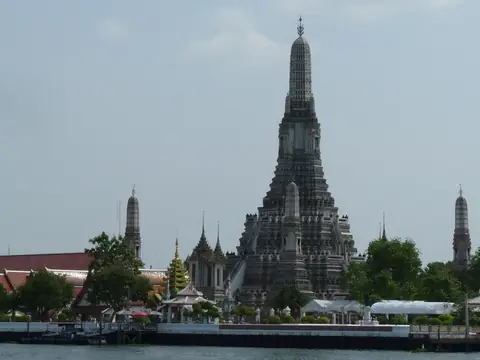
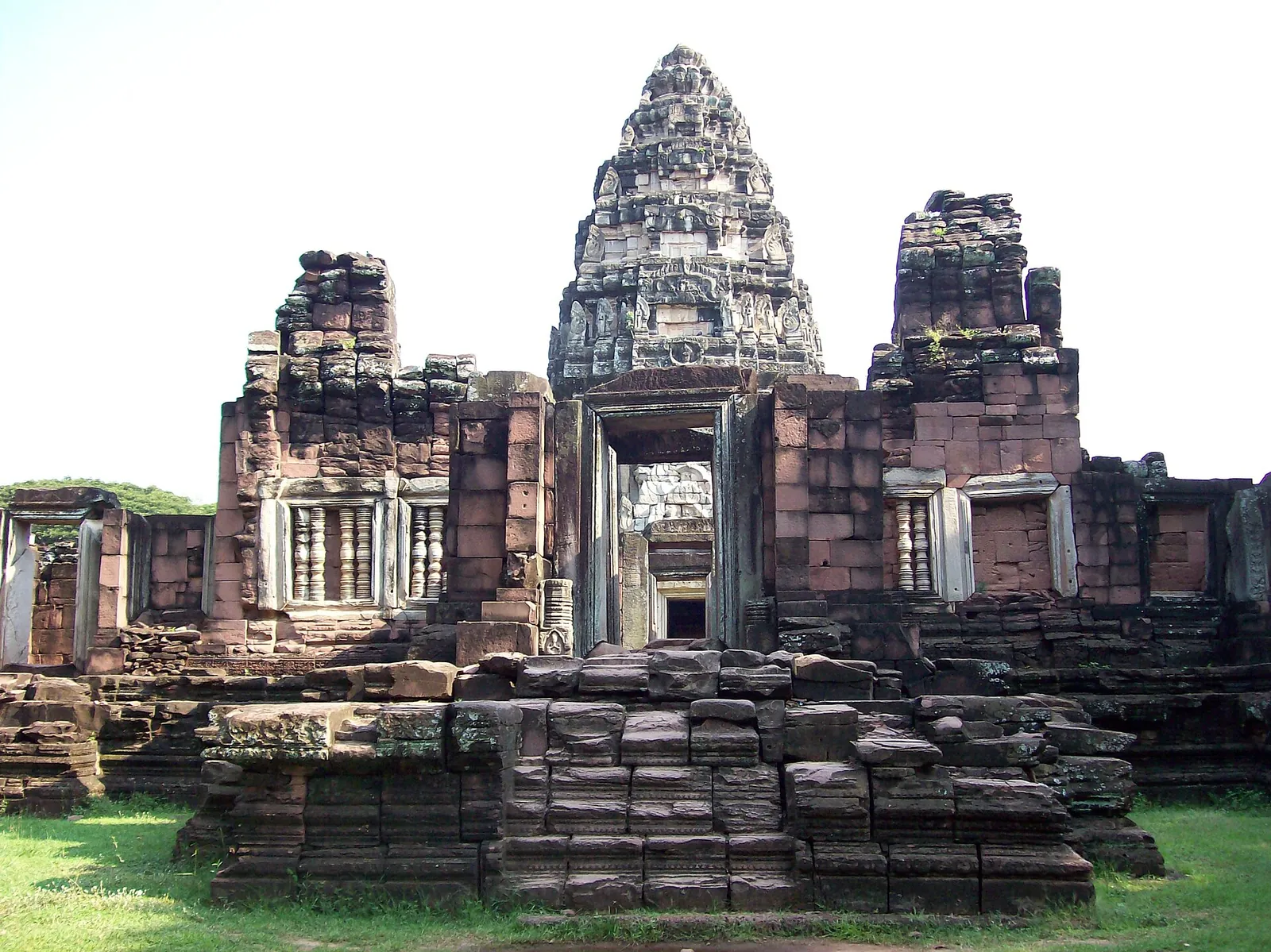
Prasat Hin Phimai is the separate cultural stop. TAT describes it as Thailand's largest stone Khmer temple, built for a prominent town of the Khmer Empire. Its main tower is white sandstone, with red sandstone porches and walls. TAT's provincial information places Pak Chong 87 km south-west of Korat. The Ministry tourism directory gives about 60 km from Korat to Phimai via Highways 2 and 206. Give that onward journey and the temple their own day.
The Ministry directory's explicit visitor-hours note gives 08:30–18:00 daily for Phimai Historical Park, checked on 2026-10-13. The current national fee schedule sets Phimai entry at THB200 per foreign visitor and THB20 per Thai visitor. This optional stop is outside the park-trip total below. TAT's 2017 Phimai Festival account describes light-and-sound performances, longboat races and a period market. Its 2023 account describes another light-and-sound event at the park. Use these as examples of the tradition, rather than dates for a future booking.
A complete two-night example, checked on 2026-10-13: Lala Mukha’s Deluxe Savanna tent is THB4,355 per night for two with breakfast, service and tax included during low-season weekdays (1 March–31 October, Sunday–Thursday, excluding public holidays and their eves); its two-passenger Bangkok sedan is THB3,500 each way, while a Jabulani barbecue dinner for two is THB2,500 net including red wine. Its arranged Pak Chong connection takes about 20 minutes and costs THB250 per person outside the free 11:00 and 14:00 pickup/drop-off times; the model uses paid connections before and after each park day.
GibbonWoot’s Thai National Parks two-day wildlife tour is THB8,000 per person for a private party of two, including vehicle, driver, licensed English-speaking guide, all park fees, two Thai set lunches, one dinner, water and wet-season leech socks, with the night safari and both main waterfalls in its itinerary. The operator accepts Pak Chong town pickups, starting at 08:00–08:30 and returning at 20:00–21:00 on the first day and 17:00–18:00 on the second; this model meets there rather than relying on its restricted hotel-pickup area.
Our model calculation: two hotel nights THB8,710; return Bangkok transfers THB7,000; the two-person wildlife package THB16,000; four hotel–Pak Chong journeys for two THB2,000; two dinners for two, on arrival and before the final Bangkok transfer, THB5,000. The total is THB38,710 for two, or about THB12,903 per day for the pair over three days. It starts after lunch in Bangkok, includes both breakfasts, both park lunches and all three dinners, and keeps the same room tier for both nights. Park entry and the night safari are already included, so do not add them again.
This example excludes the journey to Bangkok, lunch before departure on the first day, extra drinks, tips, shopping and the optional Phimai extension. Reserve the early and late Pak Chong connections with the room, and the town meeting point with the wildlife trip. The model uses two low-season weekday nights outside public holidays and their eves; a dated booking may cost more or less.
Practical questions
How many nights do I need at Khao Yai?
Book two nights near the Pak Chong entrance or inside the park. That gives you two early starts, one substantial trail, both main waterfall areas and the option of the official night safari. Add a third night in Korat or Phimai only for the Khmer sanctuary.
What does Khao Yai cost for a foreign visitor?
The park's gate and vehicle tariffs are in the entry section. Staying outside means paying again on the next park day. The worked budget includes two park days through a guided package, so its entry fees are not added twice.
Can I visit Khao Yai without a car?
Yes, with an arranged driver or guided tour. The public bus described by the park ends at the Pak Chong entrance; book the road journeys inside the park before arriving.
Which Khao Yai trails need a guide?
The trail section lists the self-guided and mandatory-guide routes, with their start deadlines and seasonal closure. Register your choice at the visitor centre.
Will I see elephants in Khao Yai?
Wildlife is unpredictable. The park lists elephants among its mammals, but a quiet day is possible. The road-safety routine above explains what to do if an elephant appears in front of the vehicle.
Can I combine Khao Yai and Phimai in one day?
Give Phimai a separate day after the two-night forest stay. The extension via Korat has its own road distances in the arrival section; a night in Korat or Phimai keeps the temple visit separate from a wildlife morning.
Sources and checks before you travel
Reference sources for the version dated 15 October 2026. Confirm opening times, access, transport and conditions for your travel dates.
- Khao Yai National Park: park entry fees ↗ — opens in a new tab
- Khao Yai National Park: getting here ↗ — opens in a new tab
- Khao Yai National Park: DNP E-Ticket ↗ — opens in a new tab
- Khao Yai National Park: visitor safety and regulations ↗ — opens in a new tab
- Khao Yai National Park: nature trails ↗ — opens in a new tab
- Khao Yai National Park: short-trek code of conduct ↗ — opens in a new tab
- Khao Yai National Park: night safari ↗ — opens in a new tab
- Khao Yai National Park: birdwatching ↗ — opens in a new tab
- Khao Yai National Park: camping ↗ — opens in a new tab
- Khao Yai National Park: lodge and camp ↗ — opens in a new tab
- Khao Yai National Park: visitor facilities ↗ — opens in a new tab
- Khao Yai National Park: places to go ↗ — opens in a new tab
- Khao Yai National Park: one- and two-day trip ideas ↗ — opens in a new tab
- Khao Yai National Park: World Heritage forest complex ↗ — opens in a new tab
- Khao Yai National Park: climate ↗ — opens in a new tab
- Khao Yai National Park: geology ↗ — opens in a new tab
- Khao Yai National Park: forests ↗ — opens in a new tab
- Khao Yai National Park: mammals ↗ — opens in a new tab
- Khao Yai National Park: birds ↗ — opens in a new tab
- Khao Yai National Park: visitor address and hours ↗ — opens in a new tab
- Department of National Parks: current national-park closure sheet ↗ — opens in a new tab
- TAT Newsroom: annual national-park opening and closure notice ↗ — opens in a new tab
- TAT Newsroom: Khao Yai QueQ e-ticket introduction ↗ — opens in a new tab
- UNESCO World Heritage Centre: Dong Phayayen-Khao Yai Forest Complex ↗ — opens in a new tab
- TAT Newsroom: Phimai Historical Park light-and-sound event ↗ — opens in a new tab
- TAT Newsroom: Phimai Festival 2017 ↗ — opens in a new tab
- TAT Newsroom: Isan food and independent travel ↗ — opens in a new tab
- TAT Newsroom: Isan cuisine ↗ — opens in a new tab
- Airports of Thailand: Suvarnabhumi transportation guide ↗ — opens in a new tab
- TAT Newsroom: SRT long-distance station relocation ↗ — opens in a new tab
- Lala Mukha: room rates, Bangkok transfers and Jabulani dinner ↗ — opens in a new tab
- Thai National Parks, GibbonWoot tour operator: two-day wildlife tour ↗ — opens in a new tab
- Sala Khao Yai: Hilltop Restaurant menu ↗ — opens in a new tab
- InterContinental Khao Yai: Somying’s Kitchen menu ↗ — opens in a new tab
- Isaan Isan Resort: Isaan Baan Hao menu ↗ — opens in a new tab
- TAT France: Nakhon Ratchasima ↗ — opens in a new tab
- Ministry of Tourism and Sports: Phimai Historical Park ↗ — opens in a new tab
- Tourism Authority of Thailand: Nakhon Ratchasima provincial brochure ↗ — opens in a new tab
- Airports of Thailand: Don Mueang International Airport ↗ — opens in a new tab
- Airports of Thailand: Suvarnabhumi Airport ↗ — opens in a new tab
- Lala Mukha: its location and arranged Pak Chong transfers ↗ — opens in a new tab
- Royal Gazette: national monument and museum fee schedule, effective 28 May 2025 ↗ — opens in a new tab
Photo credits
Haew Narok waterfall, Khao Yai National Park.
Photograph: Supanut Arunoprayote — opens in a new tab · CC BY 4.0 — opens in a new tab
Changes: Resized and converted to WebP; displayed with responsive crops. · Original photograph and licence details ↗ — opens in a new tab
Grassland in Khao Yai National Park.
Photograph: Vyacheslav Argenberg — opens in a new tab · CC BY 4.0 — opens in a new tab
Changes: Resized and converted to WebP; displayed with responsive crops. · Original photograph and licence details ↗ — opens in a new tab
A white-rumped shama, one of Khao Yai's many birds.
Photograph: JJ Harrison ( https://www.jjharrison.com.au/ ) — opens in a new tab · CC BY-SA 3.0 — opens in a new tab
Changes: Resized and converted to WebP; displayed with responsive crops. · Original photograph and licence details ↗ — opens in a new tab
The central sanctuary of Prasat Hin Phimai.
Photograph: Philip Nalangan — opens in a new tab · CC BY 4.0 — opens in a new tab
Changes: Resized and converted to WebP; displayed with responsive crops. · Original photograph and licence details ↗ — opens in a new tab