Chungcheong · South Chungcheong
Buyeo travel guide: Busosanseong, Nakhwaam, Jeongnimsa and Gungnamji
Buyeo was Sabi, the capital of the Baekje kingdom from 538 until its fall in 660, and four of the eight sites in the UNESCO-listed Baekje Historic Areas are here: the Gwanbuk-ri palace site with Busosanseong Fortress, the Jeongnimsa Temple Site, the Neungsan-ri royal tombs and the Buyeo outer city wall. What survives is mostly low and quiet: a hill above the Baengmagang (the local name for the Geumgang River) with the Nakhwaam cliff at its northern end, a single stone pagoda in the middle of town, an old royal pond, and a national museum that holds the gilt-bronze incense burner found here in 1993. Buyeo rewards a slow day on foot more than a checklist, and it makes most sense as the second half of a Baekje trip that starts in Gongju.
- Suggested time
- 1 full day and 1 night; 2 days with Baekje Cultural Land or the Neungsan-ri tombs
- Where to stay
- Buyeo-eup, the town centre between Busosanseong and Gungnamji; or Gyuam-myeon across the river by Baekje Cultural Land
- Season and timing
- Autumn is the best time: the Baekje Cultural Festival is held at sites in Buyeo and Gongju, and VisitKorea listed it for 3 to 11 October 2026. July is lotus season at Gungnamji Pond, when the Buyeo Seodong Lotus Festival is held. Busosanseong is an outdoor hill walk, and the river boat stops when the Baengmagang floods, so watch the weather in the summer monsoon.
The short answer
Give Buyeo one full day and sleep one night, ideally after a day in Gongju. Start at Busosanseong in the morning and walk the path to Nakhwaam and Goransa Temple, then take the river boat from Goransa back to Gudeurae for lunch. In the afternoon, see the Jeongnimsa pagoda and its museum, the Buyeo National Museum and Gungnamji Pond, all in the compact town below the fortress. Stay in Buyeo-eup itself if you are travelling by bus, or across the river in Gyuam-myeon by Baekje Cultural Land if you are driving or travelling as a family. From Seoul, intercity buses run to Buyeo from Seoul Nambu Terminal and Dong Seoul Terminal; from Cheongju airport or KTX Osong Station, the C-Tour Bus runs via Gongju to Buyeo Intercity Bus Terminal.
How to spend a day in Buyeo, and why to pair it with Gongju
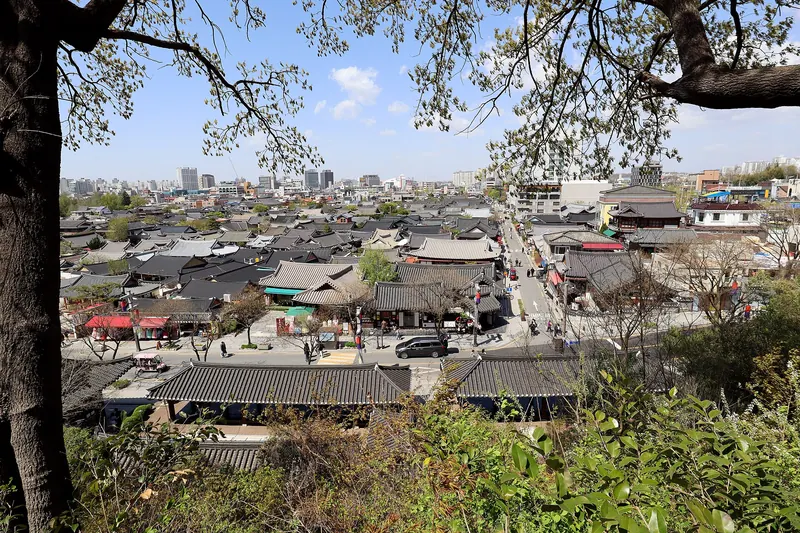
Buyeo-eup, the town, is small. Busosanseong rises at its northern edge above the river; the Jeongnimsa Temple Site sits in the centre; the Buyeo National Museum and Gungnamji Pond are on the south side. Buyeo Intercity Bus Terminal is close to all of this: the national museum's directions put it about 1.1 kilometres, or a three-minute taxi ride, from the museum. A full day on foot and by taxi covers the core sights. The Neungsan-ri tombs are east of town, and Baekje Cultural Land is across the river in Gyuam-myeon, so add a second half-day if you want either.
The route that works is fortress first, then town. Busosanseong is a walk over a hill to the cliffs above the river, and morning is the cooler time for it. Coming down by boat to Gudeurae puts you at the restaurant street for lunch, and the afternoon sights in town are close together. Gungnamji is free and open all year, so it is a good last stop as the light goes.
Baekje moved its capital from Ungjin (present-day Gongju) to Sabi (present-day Buyeo) around 538, and the two towns tell one story. Gongju has King Muryeong's intact tomb and the walls of Gongsanseong; Buyeo has the palace, temple and later royal tomb sites, and the end of the kingdom at Nakhwaam. With two days, do Gongju first and Buyeo second. The C-Tour Bus that VisitKorea describes links Gongju Jonghap Bus Terminal with Buyeo Intercity Bus Terminal.
Busosanseong, Nakhwaam and the river boat
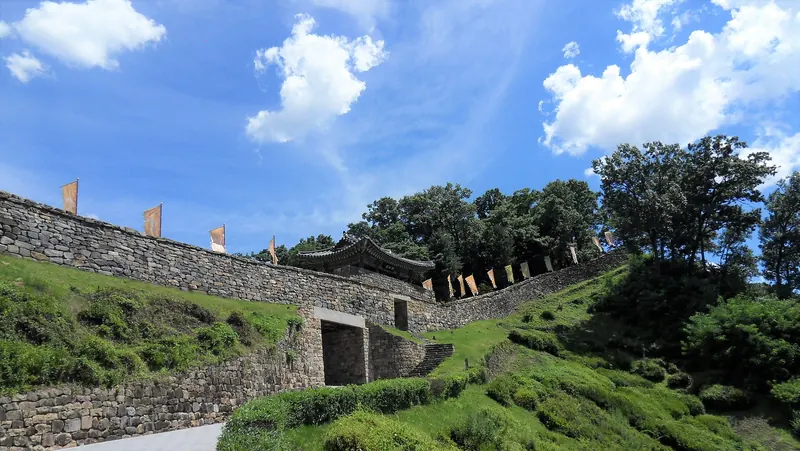
Busosanseong was the fortress of Sabi, the last Baekje capital, and VisitKorea's UNESCO page notes that it was called Sabiseong in Baekje times. Together with the Gwanbuk-ri archaeological site beside it, where the royal palace stood, it forms one of the Baekje Historic Areas sites: the palace for peacetime government, the fortress for war. VisitKorea also mentions a virtual experience centre called Sabido Fortress and a guided tour service on site.
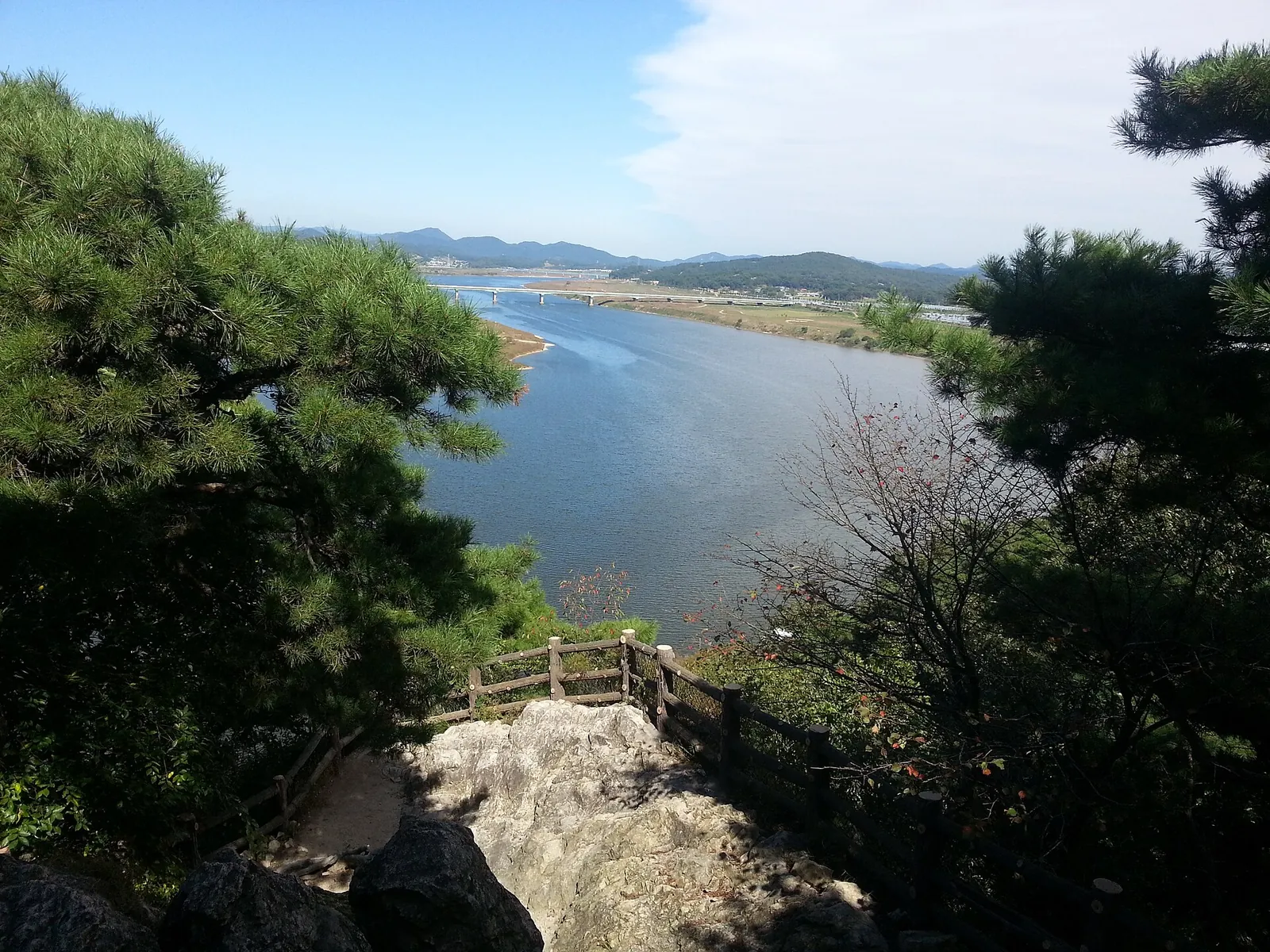
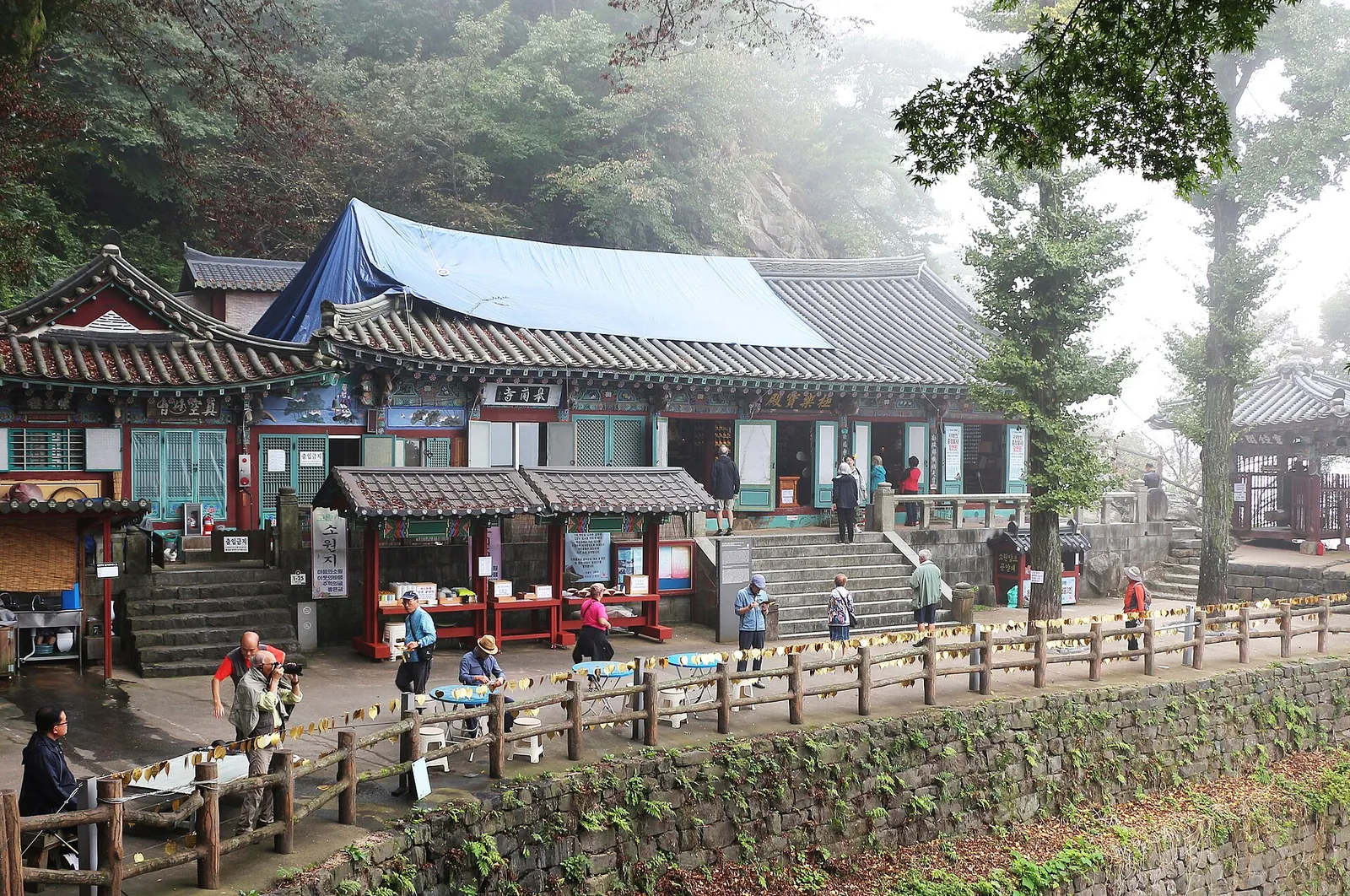
Nakhwaam, the 'cliff of falling flowers', is the rock at the northern end of Busosan above the Baengmagang. According to the legend VisitKorea retells, the court women of Baekje threw themselves from it when the Silla–Tang alliance took Sabiseong. Goransa, a small temple at the foot of the cliffs by the river, has a spring behind it from which, the story goes, the Baekje kings drank every day. When we checked on 3 October 2026, VisitKorea listed Busosanseong as open 9:00 to 18:00, with an adult ticket of 2,000 won (teenagers 1,100 won, children 1,000 won) that also covers the Nakhwaam shrine and Goransa; preschoolers and visitors aged 65 and over enter free. VisitKorea suggests about two hours for the fortress.
The Goransa Ferry runs between Goransa and Gudeurae, past Nakhwaam and the cliffs of Busosan, and is the easiest way to finish the walk without retracing it. When we checked, VisitKorea's ferry page listed about 20 minutes for the Gudeurae–Goransa round trip, and adult fares of 5,000 won one way and 7,000 won return on that route (VisitKorea's older Baengmagang River page gives lower fares, so check at the dock). It also said the ordinary boats leave once at least seven adults have boarded, and that the service can pause when the river floods. Admission to Busosanseong is charged separately from the boat.
- Walk: enter Busosanseong at 15 Buso-ro and follow the path to Nakhwaam and Goransa.
- Boat: Goransa to Gudeurae by ferry, then lunch on the Gudeurae food street.
- Allow: about two hours for the fortress, plus the boat and waiting time.
Make time for the local food
What to eat and where to look
Yeonnipbap (lotus-leaf rice)
Glutinous rice steamed in a lotus leaf with jujubes, ginkgo nuts and pumpkin seeds, so the rice takes on the scent of the leaf. Lotus runs through Buyeo's menus, and VisitKorea lists several restaurants and cafés built around it.
- Where to look
- Yeonkkot Iyagi ('lotus story'), whose menu VisitKorea lists as lotus-leaf rice, lotus hot-stone-pot rice and lotus mushroom hot pot; or Kudurae Dolssambap at 31 Naruteo-ro on the Gudeurae food street, which serves lotus-leaf rice with spicy stir-fried pork.
- Fit it into your day
- Lunch after the Busosanseong walk and the boat. When we checked, VisitKorea listed Yeonkkot Iyagi as open 11:30 to 20:00 with a break from 15:00 to 17:00 and closed on Mondays.
VisitKorea gives no street address for Yeonkkot Iyagi, so search the name in a Korean map app; Monday closures stack up with the museum's, so plan a Monday carefully.
Dolssambap (hot-stone-pot rice with wraps)
Rice cooked in a stone pot and served with bulgogi and a basket of fresh leaves for wrapping, the standard set meal of the restaurants near the Gudeurae ferry dock.
- Where to look
- Kudurae Dolssambap, open since 1997 at 31 Naruteo-ro, Gudeurae; VisitKorea names its dolssambap set as the main menu.
- Fit it into your day
- A filling lunch as you step off the boat. When we checked, VisitKorea listed 11:00 to 21:00 (last order 20:00), open all year.
If you are on your own, ask whether the set can be ordered for one.
Yeonkkot-ppang (lotus bread) and lotus-leaf drinks
Small baked lotus-shaped pastries made fresh each day, sold with traditional teas, coffee and lotus-leaf shakes and cookies.
- Where to look
- Baekjehyang, 17 Sabi-ro 30beon-gil, on the way to Gungnamji Pond.
- Fit it into your day
- An afternoon snack between the national museum and the pond. When we checked, VisitKorea listed 10:00 to 22:00, closed on Mondays except during festival periods.
Pastries contain wheat; the hours on VisitKorea's page are not dated, so check a map app before a detour.
Market food at the Baengmagang Moonlight Night Market
Buyeo Market in Gua-ri is a traditional five-day market for grain, fruit, seafood and household goods, and on Friday and Saturday evenings the Baengmagang Moonlight Night Market adds food stalls, tables and a small stage.
- Where to look
- Buyeo Market, 12 Seongwang-ro 173beon-gil, Buyeo-eup, in the town centre.
- Fit it into your day
- A casual dinner on a Friday or Saturday night; VisitKorea listed the night market from 18:00 to 23:00, and market days on the 5th, 10th, 20th, 25th and last day of the month.
Stall hours vary by vendor, and outside market days and weekend evenings it is quiet.
Jeongnimsa, the national museum and Gungnamji
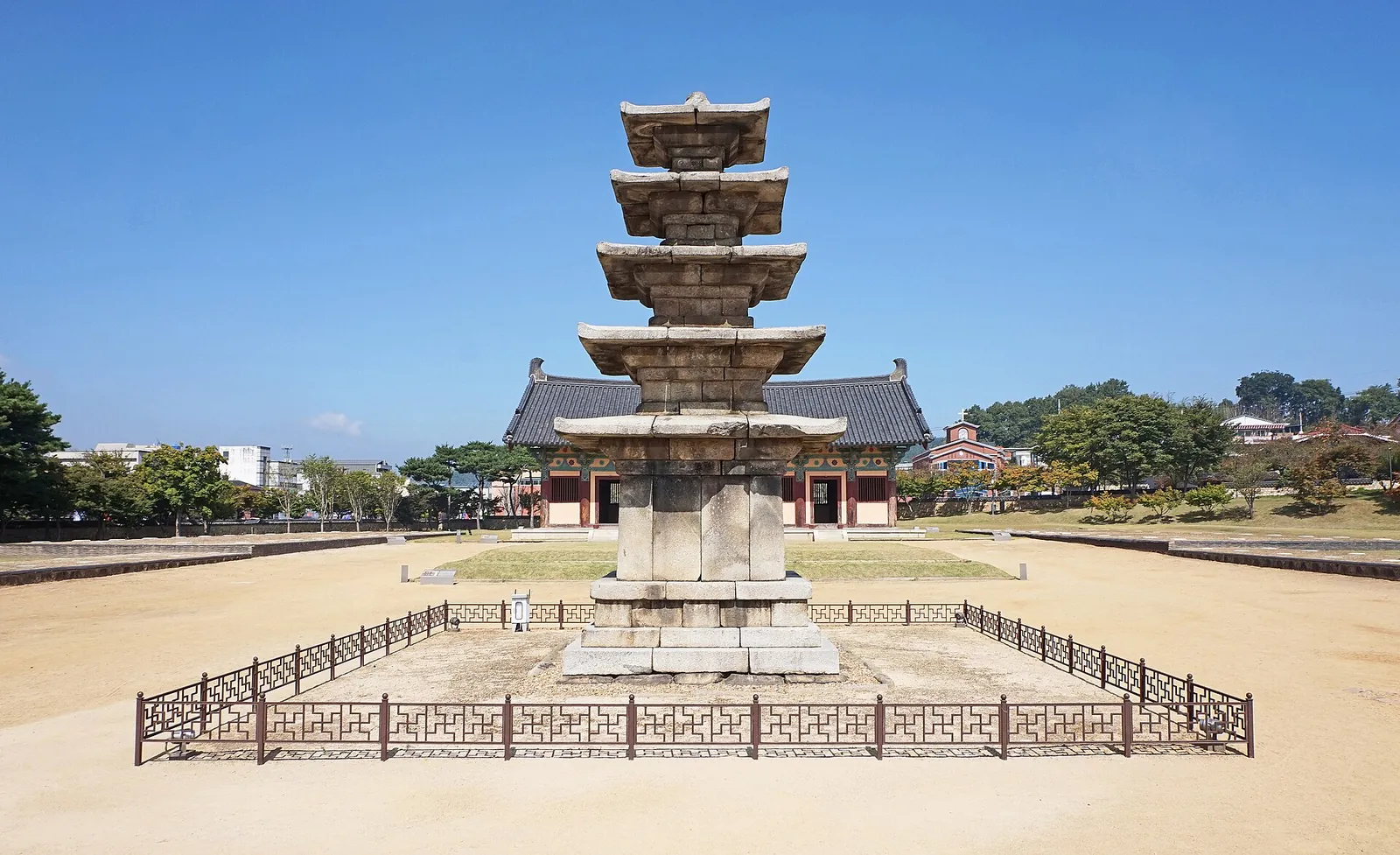
The five-storey stone pagoda at the Jeongnimsa Temple Site survived the fall of Baekje and still stands in the middle of town; it is a National Treasure. VisitKorea calls it one of two remaining Baekje pagodas and the model for the Korean stone pagodas that followed. The Jeongnimsaji Museum on the same site explains Baekje Buddhism with replicas, models and video rather than original finds. When we checked on 3 October 2026, VisitKorea listed the museum as open 9:00 to 18:00 from March to October and 9:00 to 17:00 from November to February, last admission one hour before closing, with an adult ticket of 1,500 won. The temple site itself (83 Jeongnim-ro) was listed as free, with evening opening until 22:00 from March to October and 21:00 from November to February.
The Buyeo National Museum (5 Geumseong-ro) is the one indoor stop you should not skip. Its centrepiece is the Great Gilt-bronze Incense Burner of Baekje, found in perfect condition at a temple site in Neungsan-ri in 1993: a dragon rising from water at the base, a lotus body, a lid of mountains and a phoenix on top. Since 23 December 2025 it has had its own three-storey hall, with a dimly lit room for the burner itself. When we checked on 3 October 2026, the museum's site listed opening hours of 9:00 to 18:00 (last admission 30 minutes before closing), free admission, and closure on Mondays, 1 January, Seollal and Chuseok; on its Culture Days it stays open until 20:00, and the list included 28 October. It also said guided tours are not currently offered and that tripods and flash are not allowed.
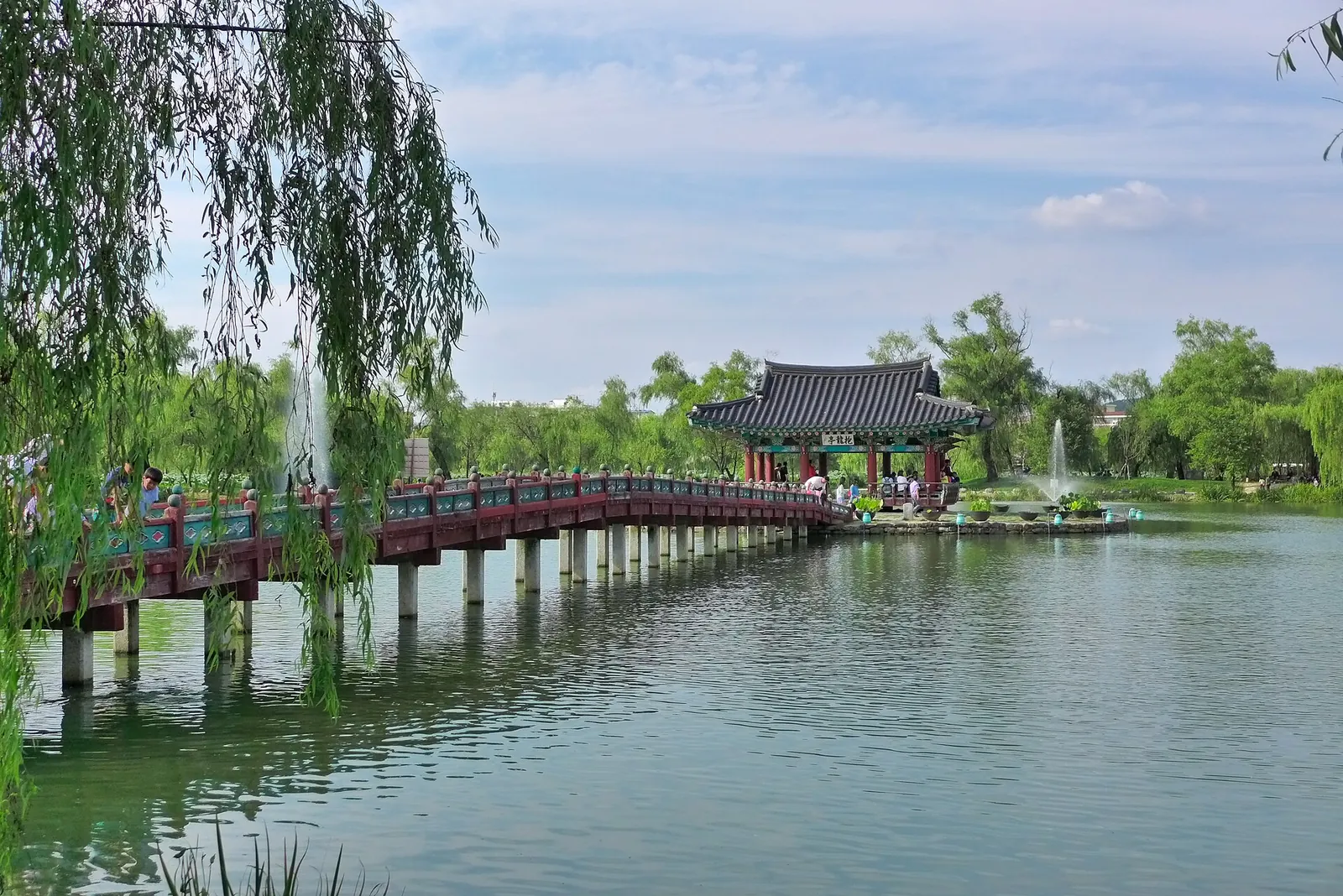
Gungnamji, 'the pond south of the palace', is in Seodong Park at 52 Gungnam-ro. VisitKorea cites the Samguk sagi for its origin: King Mu had it dug in 634, planted willows on the banks and built an island in the middle. VisitKorea listed it as free and open all year. The lotus fields around it are at their best in July, when the Buyeo Seodong Lotus Festival is held; outside the festival it is a quiet walk.
Neungsan-ri tombs, the outer wall and Baekje Cultural Land
The Neungsan-ri Ancient Tombs (61 Wangneung-ro), east of town, are the royal tombs of the Sabi period, from 538 to 660. VisitKorea describes them as the best preserved and largest of the hundreds of Baekje tombs around Buyeo, and notes a small museum at the entrance with models of tombs shown in cross-section. When we checked on 3 October 2026, VisitKorea listed hours of 9:00 to 18:00 from March to October and 9:00 to 17:00 from November to February, and an adult ticket of 1,000 won, with free entry for visitors aged 65 and over. The gilt-bronze incense burner in the national museum was found at a temple site in Neungsan-ri, so the tombs and the museum make a natural pair.
Buyeo Naseong, the outer city wall that ran from Busosanseong around the capital, was built around 538 when the capital moved here. VisitKorea is frank that only traces of the earth wall remain, so treat it as a short stop on the way to Neungsan-ri rather than a destination; it is listed as open 24 hours.
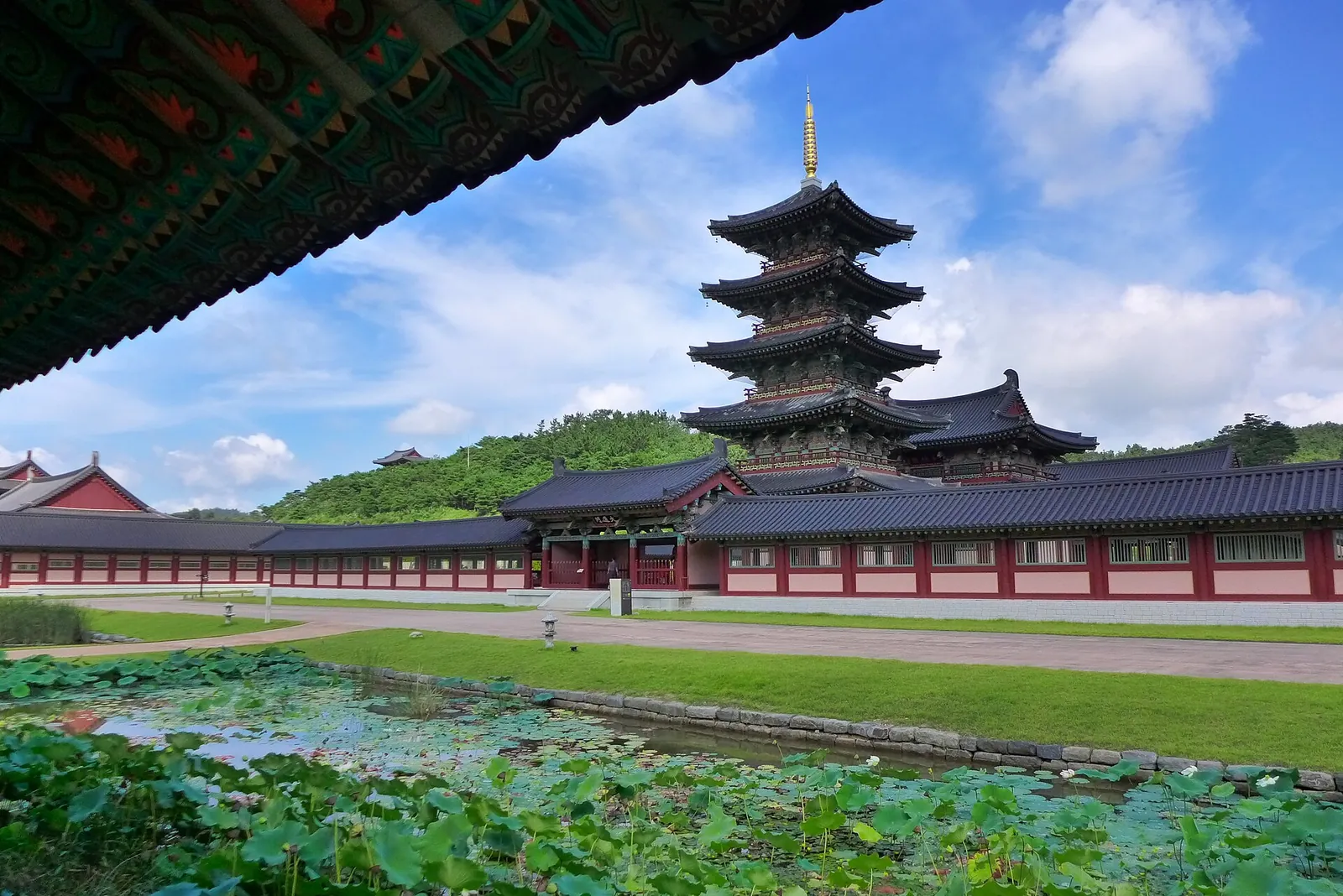
Baekje Cultural Land in Gyuam-myeon (455 Baekjemun-ro), across the river, is a different kind of place: a large history park with a full-size reconstruction of Sabigung Palace, the Neungsa temple rebuilt to the excavated plan with its five-storey pagoda, a living-culture village and Wiryeseong, a fortress from the earlier Hanseong period, plus the Baekje History and Culture Museum, which uses models and media rather than artifacts. Fans of the drama 'Moon Lovers: Scarlet Heart Ryeo' will know Cheonjeongjeon Hall. When we checked on 3 October 2026, VisitKorea listed hours of 9:00 to 18:00 from March to October and 9:00 to 17:00 from November to February, closed on Mondays, with a combined adult ticket of 6,000 won; it also mentioned evening opening on some dates. It suits families and anyone who wants to see what the empty sites in town once looked like. Lotte Resort Buyeo and the Lotte outlet mall are next to it.
Getting to Buyeo and around
The bus is the practical way in; the national museum's directions route rail travellers via KTX Gongju Station and a local bus. VisitKorea's bus guide lists Buyeo among the intercity routes from Seoul Nambu Terminal (Nambu Terminal Station, Seoul Subway Line 3) and Dong Seoul Terminal (Gangbyeon Station, Line 2). Buses arrive at Buyeo Intercity Bus Terminal in the town centre. Check times and book in a bus app such as Tmoney GO or Bustago, and remember that the same destination can be served from more than one terminal.
From Cheongju International Airport and KTX Osong Station, VisitKorea describes the C-Tour Bus, which started in June 2026 on a route from the airport via Osong Station and Gongju Jonghap Bus Terminal to Buyeo Intercity Bus Terminal. It says the bus runs eight times a day from Platform 2 at the airport and Platform 8 at Osong, and that seats can be booked at terminals or in the Tmoney GO and Bustago apps. This is also the simplest link if you are coming on from Gongju.
In town, Busosanseong, Jeongnimsa, the museum and Gungnamji are within walking distance of each other and of the bus terminal, and the museum puts a taxi from the terminal at about three minutes. Gudeurae and the ferry dock are on the river below Busosan. For Neungsan-ri and Baekje Cultural Land, a taxi or a car is easier than local buses. Driving, Buyeo is reached on the Seocheon–Gongju Expressway at Buyeo IC; the national museum and the main sites have free parking according to VisitKorea and the museum.
- Morning: Busosanseong from the town side, over the hill to Nakhwaam and Goransa.
- Midday: the ferry from Goransa to Gudeurae; lotus-leaf rice or a ssambap set on the Gudeurae food street.
- Afternoon: Jeongnimsa pagoda and museum, then the Buyeo National Museum (closed on Mondays).
- Evening: Gungnamji at dusk, or the night market on a Friday or Saturday.
Practical questions
Is Buyeo worth visiting?
Yes, if you are interested in Korean history and like walking. Buyeo has four of the eight Baekje Historic Areas sites, the gilt-bronze incense burner at the national museum and the river cliffs of Busosanseong. Do not expect grand standing monuments: most sites are excavated foundations and earthworks, with the Jeongnimsa pagoda as the exception.
Should I visit Gongju or Buyeo?
With one day, choose Buyeo for the river, Nakhwaam, the pagoda and the incense burner, or Gongju for King Muryeong's tomb and the fortress walls of Gongsanseong. With two days, do both, Gongju first: Baekje moved its capital from Ungjin (Gongju) to Sabi (Buyeo) around 538.
How do I get from Seoul to Buyeo?
By intercity bus. VisitKorea lists Buyeo among the routes from Seoul Nambu Terminal and Dong Seoul Terminal; buses arrive at Buyeo Intercity Bus Terminal in the town centre.
How much does Busosanseong cost and when is it open?
When we checked on 3 October 2026, VisitKorea listed 9:00 to 18:00 and an adult ticket of 2,000 won, which also covers the Nakhwaam shrine and Goransa Temple. The river boat from Goransa to Gudeurae is charged separately.
Where can I see the Baekje gilt-bronze incense burner?
At the Buyeo National Museum, in the Baekje Great Incense Burner Hall that opened on 23 December 2025. The museum's site listed free admission, 9:00 to 18:00, and closure on Mondays when we checked.
When is the Baekje Cultural Festival?
VisitKorea's listing gave 3 to 11 October 2026, with free entry. In Buyeo the venues listed were the Jeongnimsa Temple Site, Seoktap-ro and Gwanbuk-ri, with programmes from 10:00 to 22:00; Gongju hosts the other half of the festival.
Sources and checks before you travel
Reference sources for the version dated 3 October 2026. Confirm opening times, access, transport and conditions for your travel dates.
- VisitKorea: Archaeological Site in Gwanbuk-ri and Busosanseong Fortress ↗ — opens in a new tab
- VisitKorea: Goransa Temple ↗ — opens in a new tab
- VisitKorea: Nakhwaam Rock ↗ — opens in a new tab
- VisitKorea: Goransa Ferry ↗ — opens in a new tab
- VisitKorea: Baengmagang River ↗ — opens in a new tab
- VisitKorea: UNESCO World Heritage cultural sites (Baekje Historic Areas) ↗ — opens in a new tab
- VisitKorea: Five-story Stone Pagoda at Jeongnimsa Temple Site ↗ — opens in a new tab
- VisitKorea: Jeongnimsa Temple Site and Sabi-gil ↗ — opens in a new tab
- VisitKorea: Jeongnimsaji Museum ↗ — opens in a new tab
- Buyeo National Museum: Visitors’ Information ↗ — opens in a new tab
- Buyeo National Museum: Baekje Great Incense Burner Hall ↗ — opens in a new tab
- Buyeo National Museum: Directions ↗ — opens in a new tab
- VisitKorea: Seodong Park and Gungnamji Pond ↗ — opens in a new tab
- VisitKorea: Buyeo Seodong Lotus Festival ↗ — opens in a new tab
- VisitKorea: Buyeo Neungsan-ri Ancient Tombs ↗ — opens in a new tab
- VisitKorea: Buyeo Naseong Fortress ↗ — opens in a new tab
- VisitKorea: Baekje Cultural Land ↗ — opens in a new tab
- VisitKorea: Baekje History and Culture Museum ↗ — opens in a new tab
- VisitKorea: Baekje Cultural Festival ↗ — opens in a new tab
- VisitKorea: Express bus and intercity bus ↗ — opens in a new tab
- VisitKorea: Unique transportation (C-Tour Bus) ↗ — opens in a new tab
- VisitKorea: Fly to Cheongju International Airport and discover central Korea ↗ — opens in a new tab
- VisitKorea: Baekche Tourist Hotel ↗ — opens in a new tab
- VisitKorea: Lotte Resort Buyeo ↗ — opens in a new tab
- VisitKorea: Buyeo Lotte Outlet ↗ — opens in a new tab
- VisitKorea: Yeonkkot Iyagi ↗ — opens in a new tab
- VisitKorea: Kudurae Dolssambap ↗ — opens in a new tab
- VisitKorea: Baekjehyang ↗ — opens in a new tab
- VisitKorea: Buyeo Market and Baengmagang Moonlight Night Market ↗ — opens in a new tab
- VisitKorea: Gudeurae Park ↗ — opens in a new tab
Does this experience fit your route?
Buyeo is easy on your own by bus and best with a night in town, so you can walk Busosanseong in the morning cool. A guided day from Seoul makes sense if you want Gongju and Buyeo together without the connections; check how much time it leaves for the fortress walk and the incense burner.
Check dates and details on Viator ↗ — opens in a new tabAffiliate link · Book with ViatorPhoto credits
The Baekje five-storey stone pagoda at the Jeongnimsa Temple Site, in the centre of Buyeo
Photograph: Bernard Gagnon — opens in a new tab · CC0 — opens in a new tab
Changes: Resized and converted to WebP; displayed with responsive crops. · Original photograph and licence details ↗ — opens in a new tab
The Baengmagang seen from Nakhwaam, the cliff at the northern end of Busosanseong
Photograph: Frankhöffner — opens in a new tab · CC BY-SA 3.0 — opens in a new tab
Changes: Resized and converted to WebP; displayed with responsive crops. · Original photograph and licence details ↗ — opens in a new tab
Goransa, the small temple below Nakhwaam where the river boat to Gudeurae stops
Photograph: Bernard Gagnon — opens in a new tab · CC0 — opens in a new tab
Changes: Resized and converted to WebP; displayed with responsive crops. · Original photograph and licence details ↗ — opens in a new tab
Gungnamji Pond in Seodong Park, Buyeo, with its bridge and island pavilion
Photograph: travel oriented — opens in a new tab · CC BY-SA 2.0 — opens in a new tab
Changes: Resized and converted to WebP; displayed with responsive crops. · Original photograph and licence details ↗ — opens in a new tab
The rebuilt Neungsa temple and its wooden pagoda at Baekje Cultural Land, across the river from Buyeo town
Photograph: travel oriented from Seoul, South Korea — opens in a new tab · CC BY-SA 2.0 — opens in a new tab
Changes: Resized and converted to WebP; displayed with responsive crops. · Original photograph and licence details ↗ — opens in a new tab