Gangwon · Gangwon State
Chuncheon travel guide: dakgalbi, makguksu, Soyang Lake and rail bikes
Chuncheon, in Gangwon State, is the city Koreans think of first for two dishes: dakgalbi, chicken stir-fried on an iron griddle, and makguksu, coarse buckwheat noodles. VisitKorea calls it the 'Lake City', ringed by Uiamho, Chuncheonho and Soyangho lakes, and the Gyeongchun Line and the ITX-Cheongchun train run here from Seoul. VisitKorea notes that it is a popular day trip from the Seoul area, yet recommends staying longer, and the places that make Chuncheon worth a night are spread out: the ferry across Soyangho Lake to Cheongpyeongsa Temple, the rail bikes at Gimyujeong and the cable car over Uiamho Lake. Each needs half a day of its own.
- Suggested time
- 1–2 nights
- Where to stay
- Downtown Chuncheon around Myeongdong and Jungang-ro for food and trains; Gangchon (Namsan-myeon) for the rail bikes and Nami Island
- Season and timing
- Autumn is the strongest season: VisitKorea's 2026 foliage forecast expected peak colour across the country from mid-October to early November, and the city's makguksu and dakgalbi festival was listed for 14–18 October 2026. The Uiamho Lake Skywalk closes from mid-November to mid-March. Ferries, the cable car and the rail bikes can stop in bad weather.
The short answer
Spend one night, or two if you want both the lake and the rail bikes without rushing. Arrive from Seoul by train, eat dakgalbi in Myeongdong's dakgalbi alley on the first evening and sleep in the city centre, which keeps dinner, Jungang Market and the station close. Give the next morning to Soyang Dam and the ferry to Cheongpyeongsa, with makguksu near the lake for lunch. Ride the rail bikes at Gimyujeong, a short local-train ride from Namchuncheon on the Gyeongchun Line, on the way in or out.
Stay downtown, not by the lake
Chuncheon's lakes are what you came to see, but they are not one compact waterfront. Soyang Dam is in Sinbuk-eup in the north of the city, Uiamho Lake borders the centre, and Gangchon and the rail bikes are out along the Gyeongchun Line. A room in the city centre puts you within walking distance of Myeongdong, the dakgalbi alley and Jungang Market, with each lake a train, bus or taxi ride away.
Downtown (Myeongdong and Jungang-ro) is the practical base for a first visit: VisitKorea describes Myeongdong as the city's main street, linked to the dakgalbi alley and to Jungang Market, a covered market dating from 1960. Around Chuncheon and Namchuncheon stations suits a late arrival or an early train; the folk market under the railway between the two stations is about five minutes on foot from Namchuncheon, according to VisitKorea. Gangchon, in Namsan-myeon, is the old resort area by the Bukhangang River. It makes sense only if the rail bikes, Nami Island or the waterfalls near Samaksan are the point of your stay.
Chuncheon also has hanok stays. VisitKorea's September 2024 feature on stand-alone hanok stays named three, including one near the main gate of Kangwon National University and Gongjicheon Stream. They are whole-house rentals with fixed check-in times, so arrange your key and arrival time with the host in advance.
Dakgalbi alley and the rest of downtown
The Myeongdong Dakgalbi Street is a 150-metre alley off Myeongdong lined with dakgalbi restaurants on both sides. VisitKorea traces the dish to the 1960s, when cooks marinated chicken instead of pork and grilled it over charcoal like pork ribs. Cabbage, onions and other vegetables were added later and the whole thing moved onto an iron griddle. The restaurants gathered in this backstreet in the 1970s and 1980s, and an information panel on the history of the dish now stands in the alley. Hours vary by restaurant.
Along with the griddle version, restaurants here serve charcoal-grilled dakgalbi and Chuncheon's buckwheat noodles, so one evening covers both local dishes. Walk through Jungang Market beforehand. Its arcade roof makes it usable in rain, and VisitKorea mentions murals and sculptures hidden in its alleys as well as noodle and sundae-guk restaurants.
For an evening view, the Soyanggang Skywalk reaches 174 metres out over the river, 156 of them on a glass floor, and ends in a viewing platform known for sunsets. When we checked on 2026-10-03, VisitKorea listed opening from 10:00 to 21:00 from March to October (10:00 to 18:00 from November to February) and a 2,000-won fee. After dark, the Lego-inspired tower of Chuncheondaegyo Bridge, which links the city to Jungdo Island, is lit up. VisitKorea lists fountain shows there at 20:00, 21:00 and 22:00. The Gubongsan café street on the hill east of town is the other sunset spot. It is a line of bakery cafés and restaurants along the national highway over Gubongsan Mountain, with a panorama of downtown.
Make time for the local food
What to eat and where to look
Dakgalbi (spicy stir-fried chicken)
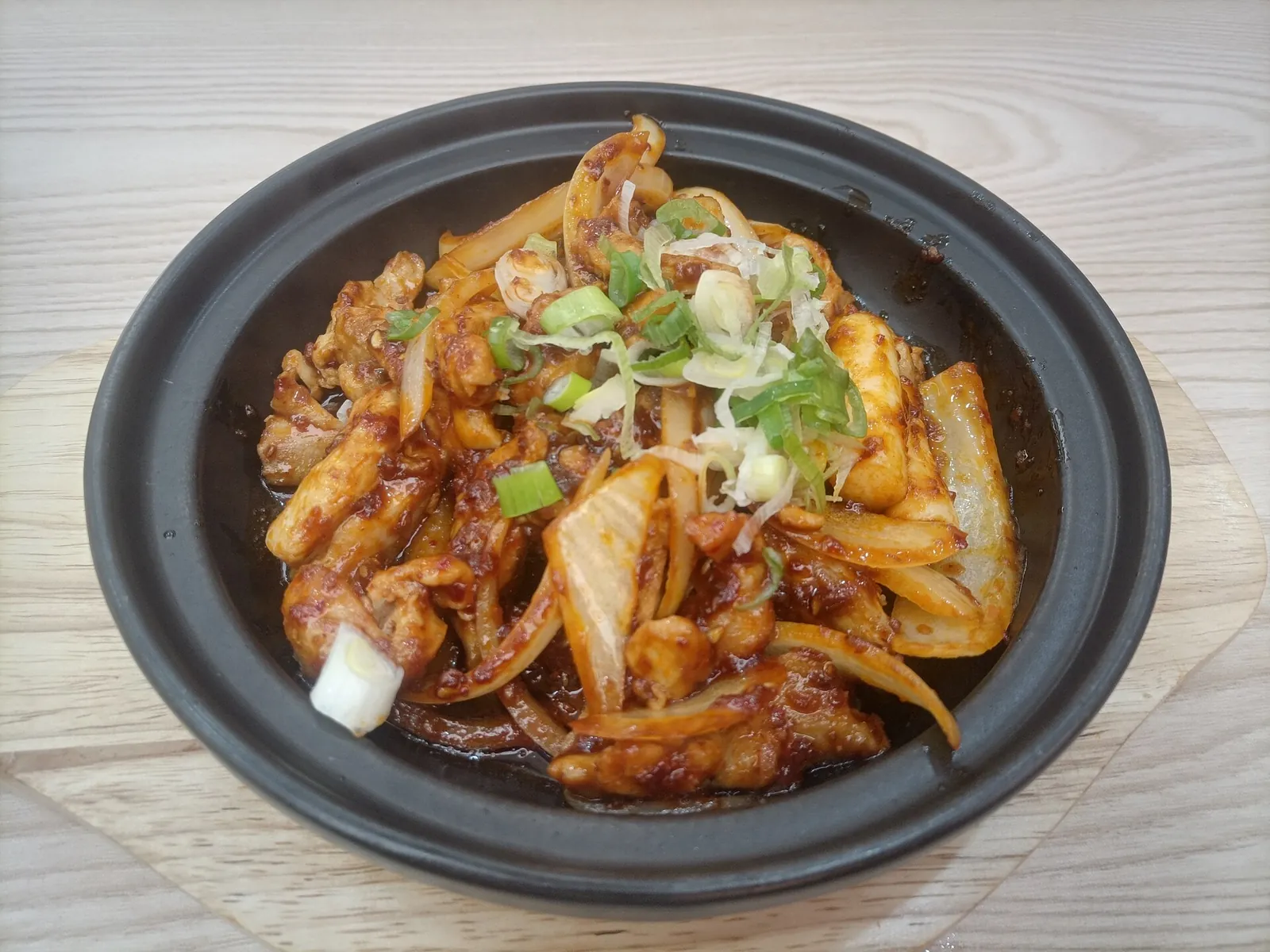
Chicken marinated in a red chilli paste sauce and stir-fried with cabbage, sweet potato, onion, spring onion and rice cakes, often wrapped in lettuce or perilla leaves. VisitKorea calls Chuncheon its birthplace. The city also has a charcoal-grilled version; VisitKorea's Chuncheon feature describes one restaurant serving it with soy, chilli-paste or salt seasoning.
- Where to look
- The Myeongdong Dakgalbi Street in the city centre, which serves both the griddle and the charcoal-grilled versions; Sinbuk-eup, north of the city, for more charcoal-grill restaurants.
- Fit it into your day
- Dinner on your first evening in the Myeongdong alley, with a bowl of makguksu on the side.
The standard marinade is red chilli paste, so it is spicy; ask about milder options before ordering if anyone avoids chilli.
Makguksu (buckwheat noodles)
Noodles of coarse buckwheat flour with only the outer husk removed, served in a chilled kimchi or dongchimi (radish water kimchi) broth, or dry and tossed with vegetables and seasoning. VisitKorea notes that diners adjust the taste with vinegar, mustard or extra broth.
- Where to look
- Soyangho Makguksu Street in Cheonjeon-ri, Sinbuk-eup, on the way to Soyang Dam; many dakgalbi restaurants downtown also serve it.
- Fit it into your day
- Lunch after the Soyangho ferry, or a light bowl alongside a dakgalbi dinner.
Buckwheat is a common allergen; avoid it if you react to buckwheat, and ask about the broth if you avoid kimchi or chilli.
Memilbuchim and memiljeonbyeong (buckwheat pancake and crêpe)
Buckwheat pancakes (memilbuchim) and savoury buckwheat crêpes (memiljeonbyeong), which VisitKorea lists as the usual partners for makguksu in Chuncheon. They are also sold at the city's five-day folk market.
- Where to look
- Makguksu restaurants, and stalls at the Chuncheon Folk Flea Market near Namchuncheon Station on market days (dates ending in 2 and 7).
- Fit it into your day
- Order one to share with a bowl of noodles rather than as a meal on its own.
Ask what the crêpe is filled with before ordering if you have dietary restrictions.
Soyang Dam and the ferry to Cheongpyeongsa
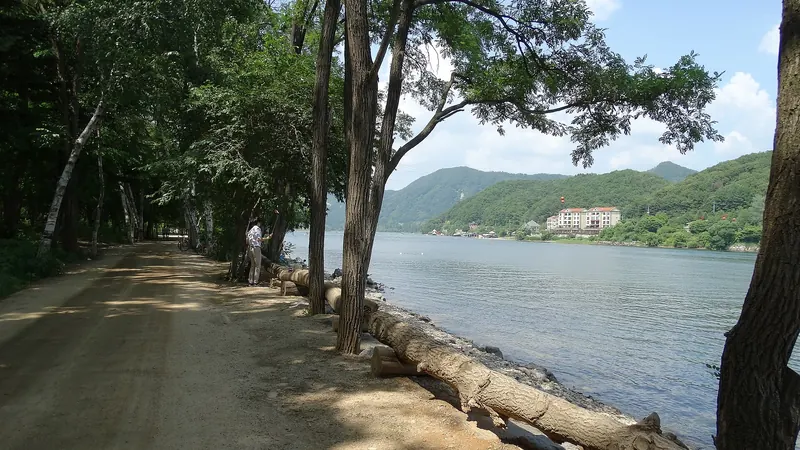
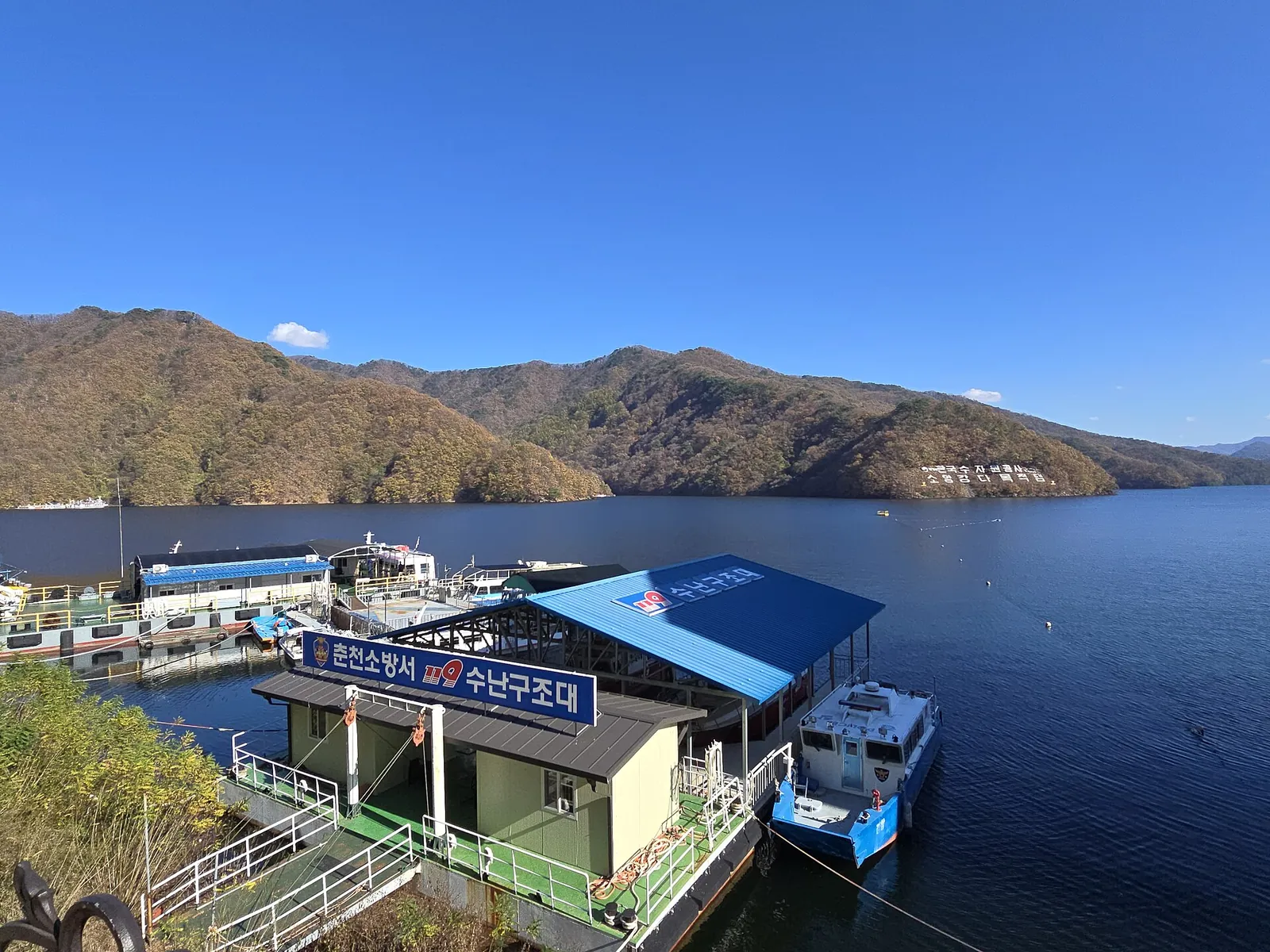
Soyang Dam was completed in 1973. According to VisitKorea it is 123 metres high and 530 metres long, and its reservoir, Soyangho Lake, is Korea's largest man-made lake, reaching as far as Yanggu and Inje. There is a walking trail of about 2.5 kilometres at the dam. From the dock nearby, boats run to Cheongpyeongsa Temple on Obongsan Mountain, and cruises run around the lake.
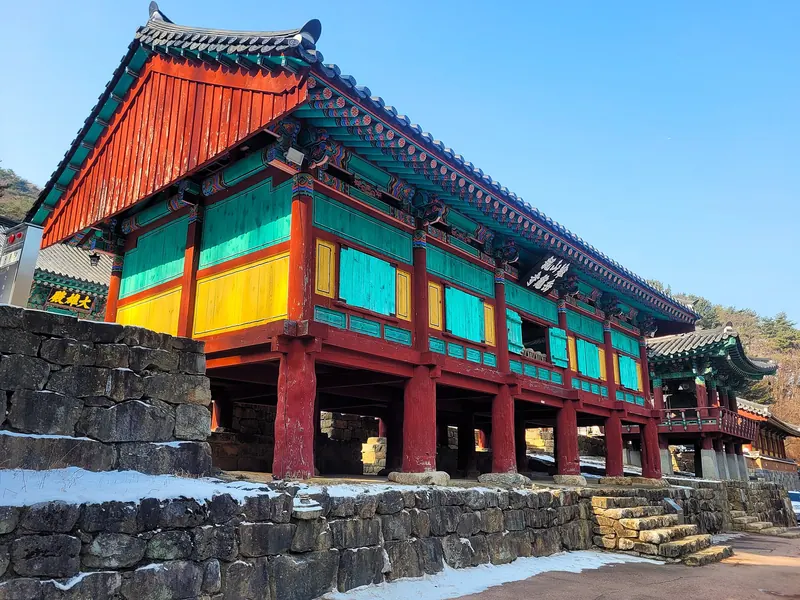
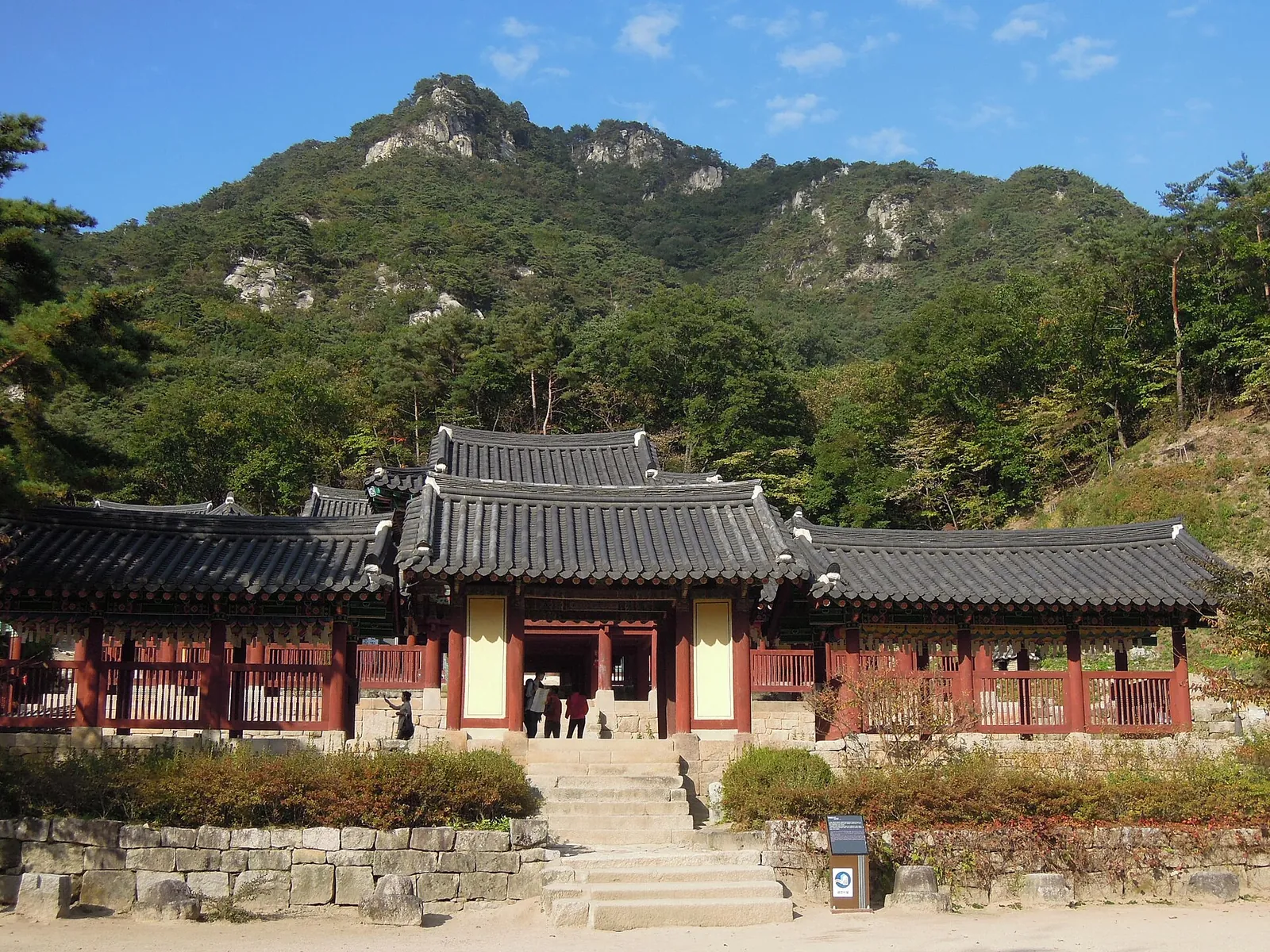
Cheongpyeongsa began as Baegamseonwon in 973. Its grounds keep a pond garden from the Goryeo period, laid out by the scholar Yi Ja-hyeon after he left government service. Much was lost over the centuries and in the Korean War; Geungnakjeon Hall was rebuilt in 1975. Plan the whole outing — ferry, walk, temple and return — as a morning, and check the last boat back before you set off up the path.
When we checked on 2026-10-03, VisitKorea's Soyangho ferry page listed 12,000 won for adults (6,000 for children) for the lake cruise, and 6,000 won for adults under Obongsan Mountain/Cheongpyeongsa Temple, and suggested about an hour as the average time spent. It does not publish a timetable, so ask at the dock. Afterwards, the Soyangho Makguksu Street in Cheonjeon-ri, Sinbuk-eup, near the lake, is the natural lunch stop. The Chuncheon Makguksu Museum in Sinbuk-eup has an exhibition on buckwheat and a hands-on noodle-making session. VisitKorea listed museum hours of 10:00–17:00, closure on Mondays, admission of 1,000 won for adults and 5,000 won for the experience programme.
Rail bikes at Gimyujeong and the literary village
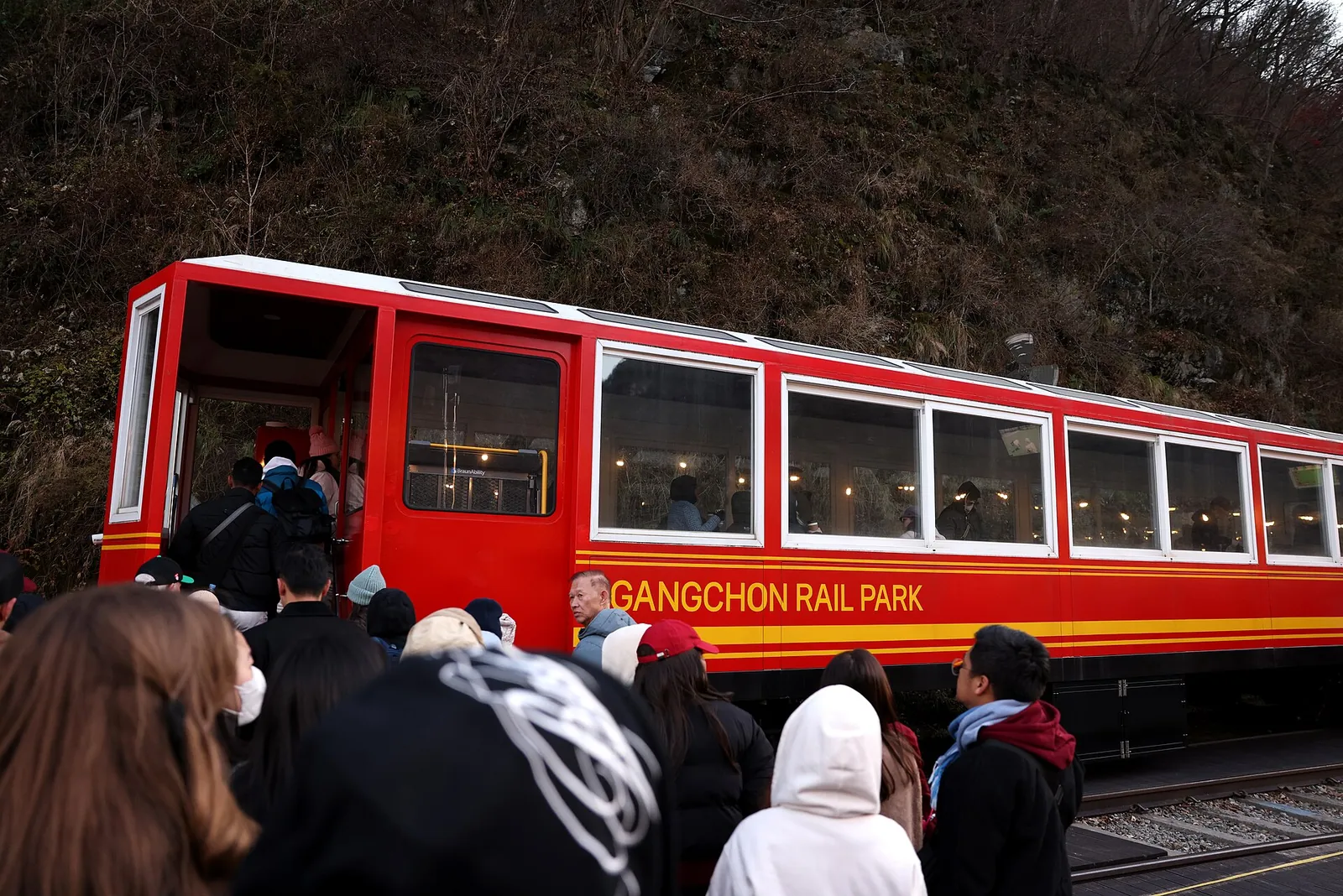
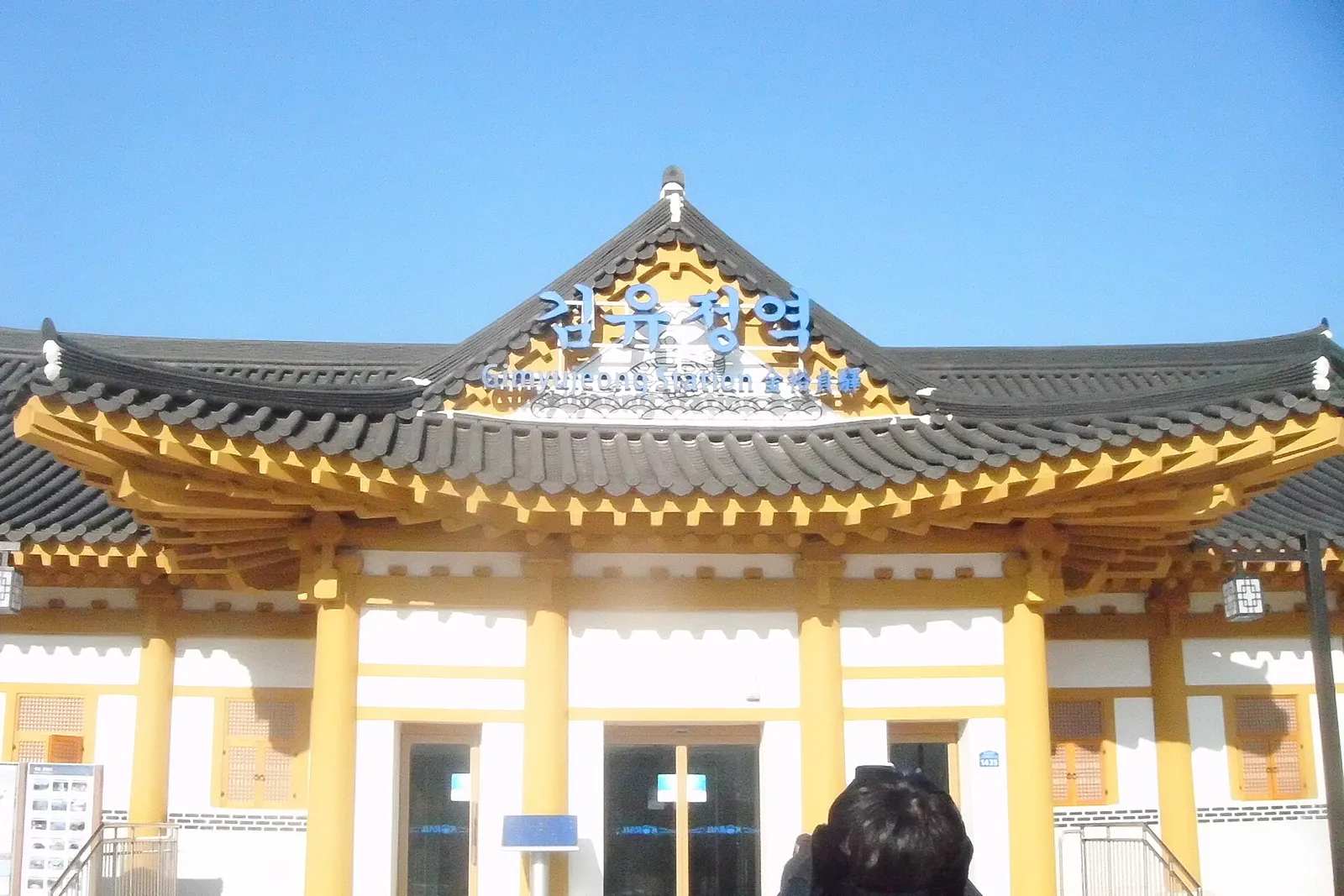
When the Gyeongchun Line reopened as a double-track railway (in 2010, according to VisitKorea), the old tracks were left behind, and Gangchon Rail Park now runs rail bikes on it. The Gimyujeong course starts beside Gimyujeong Station. You pedal about 6 kilometres, much of it downhill, through themed tunnels to a midpoint rest stop. A 'Romance Train' then covers the last 2.5 kilometres along the Bukhangang River, and a free shuttle bus takes you back to the start.
When we checked on 2026-10-03, the operator's Korean-language timetable listed departures at 09:00, 10:00, 11:00, 12:00, 13:30, 14:30, 15:30, 16:30 and 17:30, with an extra 18:30 departure at weekends and on public holidays from May to October. Bikes were priced per bike: 40,000 won for a two-seater and 56,000 won for a four-seater. VisitKorea's listing gives seasonal hours instead, with an earlier close from November to February, so book a slot on the operator's site rather than turning up late in the day.
The Literary Village of Kim You-jeong, also on Gimyujeong-ro in Sindong-myeon, is built around the restored birthplace of the short-story writer whose name the station carries. It also has a memorial hall and the Sille Story Road, a walk past places that appear in his stories. When we checked, VisitKorea listed opening from 09:30 to 18:00 in summer (17:30 in winter), closure on Mondays and a 2,000-won admission. Together with the rail bikes, it fills a half-day without going into the city centre.
Uiamho Lake: cable car, skywalk and canoes
Uiamho Lake lies on the city's western edge. The Samaksan Lake Cable Car crosses it from Samcheon-dong to Samaksan Mountain; VisitKorea calls it the longest cable car in Korea. According to VisitKorea, 20 of its 66 cabins are 'Crystal' cabins, which it calls the best choice for the view. When we checked on 2026-10-03, VisitKorea listed October–November hours of 09:00–20:00 from Sunday to Friday and 09:00–21:00 on Saturdays, with ticket sales ending an hour before closing. Round-trip fares were 24,000 won for an adult in a standard cabin and 28,000 won in a crystal cabin. Operation can stop in bad weather.
The free Uiamho Lake Skywalk is a glass-floored platform on the lakeside trail, open 09:00–18:00 according to VisitKorea and closed from mid-November to mid-March. On the water, Chuncheon Jungdo Mullegil rents canoes for one- to two-hour courses after a short safety briefing. Families should note that LEGOLAND Korea Resort is on Jungdo Island in the same lake. VisitKorea lists it as closed on Tuesdays and Wednesdays, and the park's own calendar is the one to check.
On a wet day, the Chuncheon National Museum covers the history of Gangwon State from prehistory onwards. When we checked, VisitKorea listed it as free, open 09:00–18:00 and closed on Mondays.
A two-day plan
This is an editorial suggestion, not a timetable. Check closing days, the last ferry and your rail-bike slot before you fix it.
- Day 1 — Arrive and eat: take the train from Seoul and drop your bags downtown. Spend the afternoon at the Samaksan cable car or the Uiamho Skywalk, then Jungang Market, dakgalbi in the Myeongdong alley and the Soyanggang Skywalk after dinner.
- Day 2 — Soyangho and Gimyujeong: go to Soyang Dam early for the ferry to Cheongpyeongsa and have makguksu on Soyangho Makguksu Street. In the afternoon, take the Gyeongchun Line to Gimyujeong for a booked rail-bike slot and the literary village, then continue back towards Seoul.
- With a third day: cross to Nami Island from Gapyeongnaru Pier on the Gapyeong side, or treat Gapyeong as its own stop on the same railway line.
Practical questions
Is Chuncheon worth an overnight stay, or just a day trip from Seoul?
A day trip covers lunch and one sight. Its best outings — the Soyangho ferry to Cheongpyeongsa, the Gimyujeong rail bikes and the Uiamho cable car — are in different parts of the city and each takes half a day, so one night lets you do two of them and eat dakgalbi without watching the clock.
How do I get from Seoul to Chuncheon by train?
The ITX-Cheongchun runs from Yongsan to Chuncheon, and the rail park's directions also list services from Cheongnyangni. The Gyeongchun Line local train starts from Sangbong Station on Seoul Subway Line 7. For the rail bikes, get off at Gimyujeong; ITX passengers change to a local train at Namchuncheon. Express and intercity buses run from the Seoul Express Bus Terminal and Dong Seoul Terminal.
Do I need to book the Gangchon rail bikes?
The operator sells fixed departure slots online, so booking ahead is the safer choice. It prices each bike rather than each person: when we checked, 40,000 won for a two-seater and 56,000 won for a four-seater.
Where is the best place to eat dakgalbi in Chuncheon?
For a first visit, the Myeongdong Dakgalbi Street downtown, a 150-metre alley of restaurants serving both the griddle and the charcoal-grilled versions. VisitKorea's Chuncheon feature also points to a charcoal-grill restaurant in Sinbuk-eup, north of the city.
Is Nami Island in Chuncheon?
Administratively, yes: its address is in Namsan-myeon, Chuncheon. But you reach it by ferry from Gapyeongnaru Pier on the Gapyeong side, so it fits better with a stop in Gapyeong than with a stay in central Chuncheon.
When is the best time to visit Chuncheon?
Autumn, for the foliage around the lakes and the makguksu and dakgalbi festival, which VisitKorea listed for 14–18 October 2026. Spring and early summer are good for the skywalks and canoes. In winter the Uiamho Skywalk is closed and outdoor activities have shorter hours.
Sources and checks before you travel
Reference sources for the version dated 3 October 2026. Confirm opening times, access, transport and conditions for your travel dates.
- VisitKorea: Chuncheon Myeongdong Dakgalbi Street ↗ — opens in a new tab
- VisitKorea: Gongjicheon Recreation Area ↗ — opens in a new tab
- VisitKorea: Chuncheon Myeongdong Street ↗ — opens in a new tab
- VisitKorea: Chuncheon Jungang Market ↗ — opens in a new tab
- VisitKorea: Spicy stir-fried chicken (dakgalbi) ↗ — opens in a new tab
- VisitKorea: A night's stay soaking in Chuncheon's good vibes ↗ — opens in a new tab
- VisitKorea: Soyangho Makguksu Street ↗ — opens in a new tab
- VisitKorea: Chuncheon Makguksu Museum ↗ — opens in a new tab
- VisitKorea: Soyang Dam ↗ — opens in a new tab
- VisitKorea: Chuncheon Soyangho Lake ↗ — opens in a new tab
- VisitKorea: Soyangho Lake Ferry ↗ — opens in a new tab
- VisitKorea: Chuncheon Cheongpyeongsa Temple ↗ — opens in a new tab
- Gangchon Rail Park: Gimyujeong course and directions ↗ — opens in a new tab
- Gangchon Rail Park: Gimyujeong hours and rates (Korean) ↗ — opens in a new tab
- VisitKorea: Gangchon Rail Park (Gimyujeong Railbike) ↗ — opens in a new tab
- VisitKorea: The Literary Village of Kim You Jeong ↗ — opens in a new tab
- VisitKorea: Samaksan Mountain Lake Cable Car ↗ — opens in a new tab
- VisitKorea: Uiamho Lake Skywalk ↗ — opens in a new tab
- VisitKorea: Soyanggang Skywalk ↗ — opens in a new tab
- VisitKorea: Chuncheondaegyo Bridge ↗ — opens in a new tab
- VisitKorea: Chuncheon Jungdo Mullegil ↗ — opens in a new tab
- VisitKorea: LEGOLAND Korea Resort ↗ — opens in a new tab
- VisitKorea: Chuncheon National Museum ↗ — opens in a new tab
- VisitKorea: Chuncheon Folk Flea Market ↗ — opens in a new tab
- VisitKorea: Gangchon Resort ↗ — opens in a new tab
- VisitKorea: Nami Island ↗ — opens in a new tab
- VisitKorea: Chuncheon Makguksu & Dakgalbi Festival ↗ — opens in a new tab
- VisitKorea: 2026 fall foliage forecast ↗ — opens in a new tab
- VisitKorea: Train ↗ — opens in a new tab
- VisitKorea: Express bus and intercity bus ↗ — opens in a new tab
- VisitKorea: Airport transportation ↗ — opens in a new tab
Does this experience fit your route?
If you would rather not plan the trains yourself, a day trip from Seoul is the simplest option. Before booking, check that the itinerary actually stops in Chuncheon and not only at Nami Island, and whether the rail-bike ticket is included.
Browse relevant experiences on Viator ↗ — opens in a new tabAffiliate link · Book with ViatorPhoto credits
Soyangho Lake, the reservoir behind Soyang Dam; ferries to Cheongpyeongsa Temple leave from a dock near the dam
Photograph: HPGkiji — opens in a new tab · CC BY 4.0 — opens in a new tab
Changes: Resized and converted to WebP; displayed with responsive crops. · Original photograph and licence details ↗ — opens in a new tab
The Gangchon Rail Park train, which carries rail-bike riders on the last stretch of the Gimyujeong course
Photograph: Gage Skidmore — opens in a new tab · CC BY-SA 4.0 — opens in a new tab
Changes: Resized and converted to WebP; displayed with responsive crops. · Original photograph and licence details ↗ — opens in a new tab
Gimyujeong Station on the Gyeongchun Line, the starting point of the rail bikes
Photograph: revi — opens in a new tab · CC BY 2.0 kr — opens in a new tab
Changes: Resized and converted to WebP; displayed with responsive crops. · Original photograph and licence details ↗ — opens in a new tab
Dakgalbi, chicken stir-fried in a red chilli paste sauce, Chuncheon's best-known dish
Photograph: Fumikas Sagisavas — opens in a new tab · CC0 — opens in a new tab
Changes: Resized and converted to WebP; displayed with responsive crops. · Original photograph and licence details ↗ — opens in a new tab
Cheongpyeongsa Temple at the foot of Obongsan Mountain, reached by ferry across Soyangho Lake
Photograph: Sven Brinkhoff — opens in a new tab · CC BY-SA 3.0 — opens in a new tab
Changes: Resized and converted to WebP; displayed with responsive crops. · Original photograph and licence details ↗ — opens in a new tab