Kyushu and Okinawa · Okinawa
Naha travel guide: neighbourhoods, markets and Okinawan food
Naha is a place to encounter Okinawan culture through neighborhoods, pottery and food, as well as a useful gateway to the wider islands.
- Suggested time
- 2 days
- Where to stay
- Naha near a Yui Rail stop
- Season and timing
- Subtropical climate: heat and summer humidity, rain and typhoons can affect transfers.
The short answer
Give central Naha’s markets and pottery streets one part of the day and Shuri’s royal heritage another. Check Shurijo Park and the reconstructed Seiden separately: the official project announces the hall’s opening from November 23, 2026, after this guide’s September 29 research date. Plan around the facilities confirmed open for your visit.
Choose the experience that gives the day its shape
Keep central Naha and Shuri as separate parts of the day. The former royal capital brings Ryukyu history into focus, while a market-area walk and pottery streets provide a different experience. Choose fewer stops so that lunch and browsing do not become rushed gaps between transport connections.
Give the main stop enough time to notice details, read interpretation and pause when something interests you. Keep one optional extension, and add it only if it leaves enough time for the experience you came for.
Build the route around arrival and return
Use the Yui Rail for places it actually serves and check the remaining walk. A convenient Naha base does not make all of Okinawa accessible by rail. If continuing to another island, plan the airport or port transfer and keep the departure day free of a distant sightseeing commitment.
Make time for the local food
What to eat and where to look
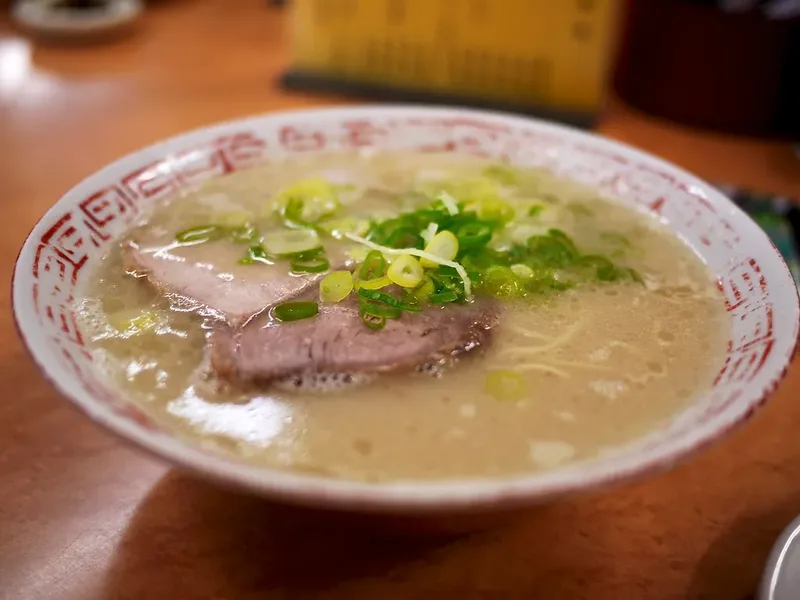
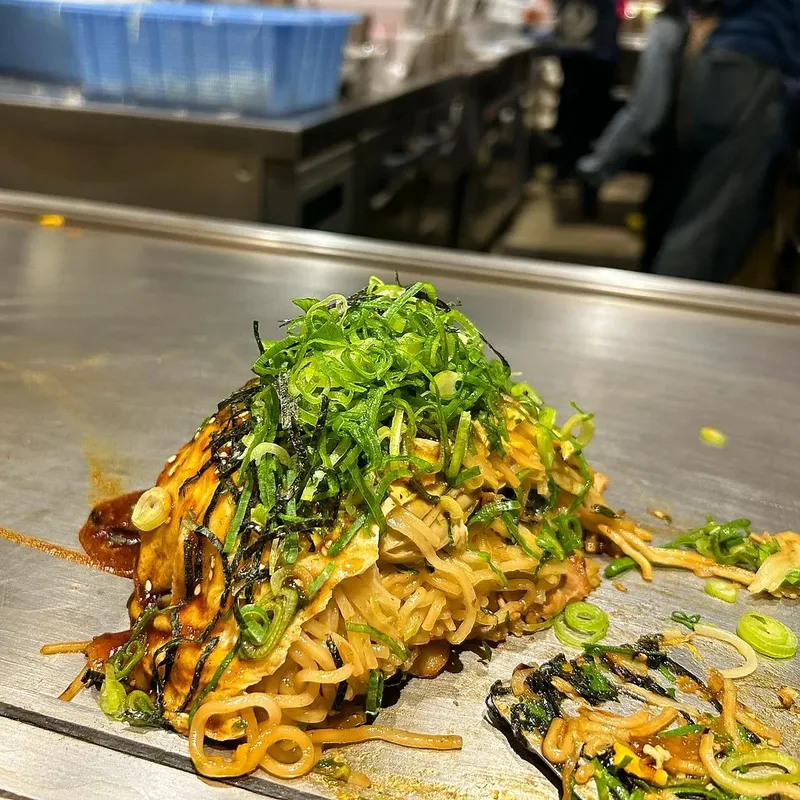
Okinawa soba
Wheat noodles; check broth and toppings instead of assuming buckwheat or vegetarian preparation.
Make room for a locally connected meal
Okinawa soba is a locally distinctive noodle dish; its name should not be read as proof that it is buckwheat soba. Check broth, toppings and ingredients with the restaurant. A market meal offers another way to discover regional food, with the exact choice determined by the stalls operating that day.
Match the visit to the current conditions
The Shurijo park and the reconstructed Seiden hall require separate access checks. The official completion project announces opening from November 23, 2026; that is future to this research date. Do not present a completed-hall visit as already available, and check any reservation requirements for the date being planned.
When a guided experience adds value
A Naha food or heritage walk is a natural fit when it stays within the neighborhood you want to explore. A main-island vehicle excursion should be compared separately, with pickup, distance and actual stops clearly stated.
Practical questions
How much time should I give Naha?
Use the suggested route as a starting point, then add the actual travel time and a meal. Staying nearby can make a slower visit possible; the right duration depends on the experiences you choose.
What should I confirm before booking?
The Shurijo park and the reconstructed Seiden hall require separate access checks. Check the relevant official notice for your visit date.
Is a guided experience worthwhile?
A Naha food or heritage walk is a natural fit when it stays within the neighborhood you want to explore. Confirm the listing’s route and inclusions before booking.
Sources and checks before you travel
Reference sources for the version dated 30 September 2026. Confirm opening times, access, transport and conditions for your travel dates.
Does this experience fit your route?
Explore related tours and experiences
Check dates and details on Viator ↗ — opens in a new tabAffiliate link · Book with ViatorPhoto credits
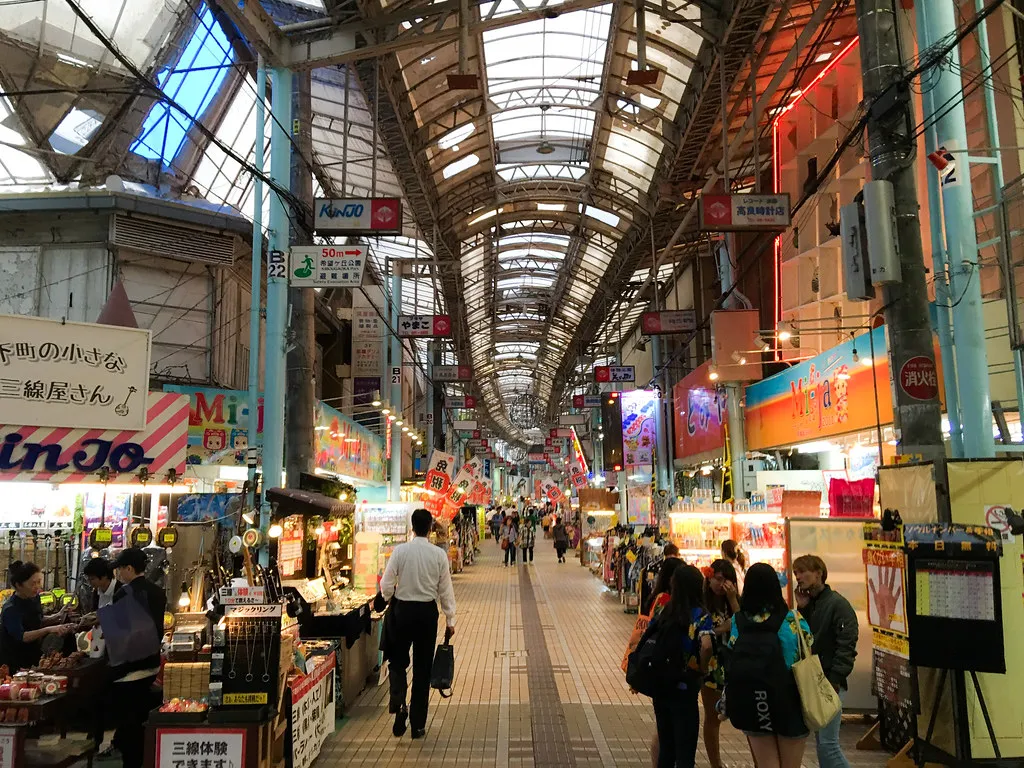
Shops and visitors in the covered Heiwa-dori shopping arcade in Naha.
Photograph: Daniel Ramirez — opens in a new tab · CC BY 2.0 — opens in a new tab
Changes: Resized and converted to WebP; displayed with responsive crops. · Original photograph and licence details ↗ — opens in a new tab
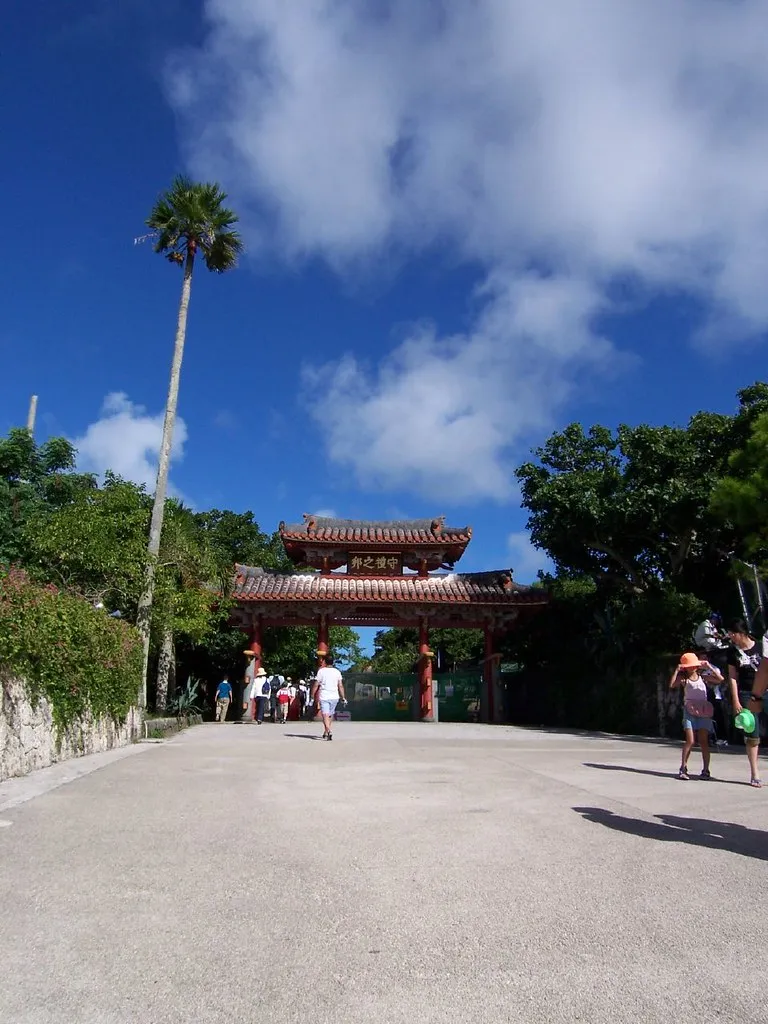
Shureimon gate in Naha's Shurijo Park, in an archival photograph.
Photograph: Hajime NAKANO — opens in a new tab · CC BY 2.0 — opens in a new tab
Changes: Resized and converted to WebP; displayed with responsive crops. · Original photograph and licence details ↗ — opens in a new tab
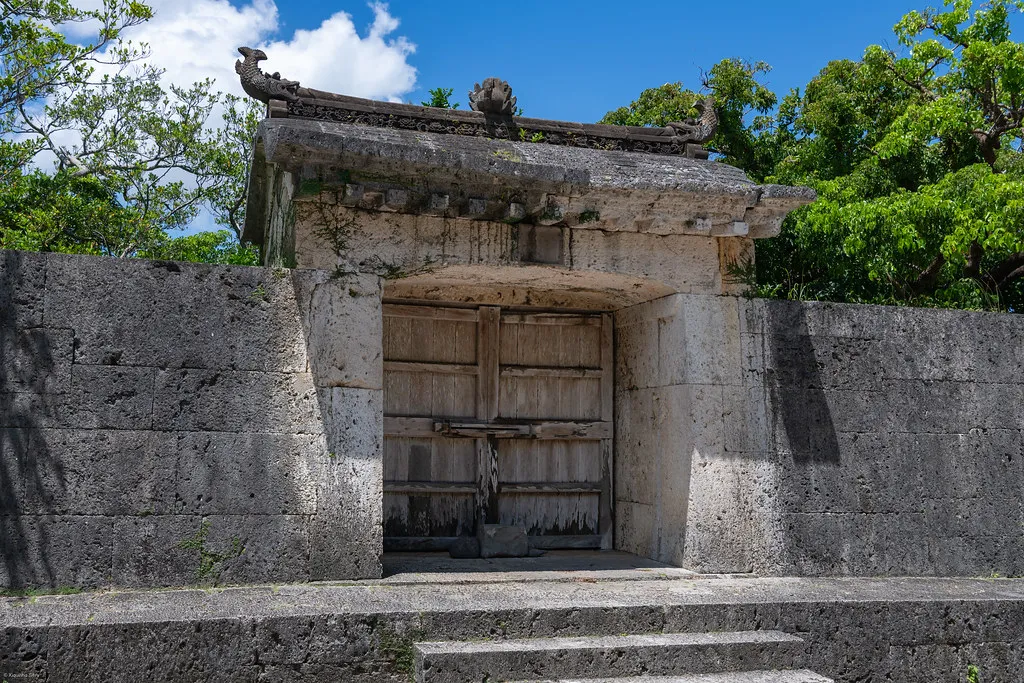
The sacred Sonohyan-utaki site in the Shuri area, Naha.
Photograph: xiquinhosilva — opens in a new tab · CC BY 2.0 — opens in a new tab
Changes: Resized and converted to WebP; displayed with responsive crops. · Original photograph and licence details ↗ — opens in a new tab