Sulawesi · South Sulawesi
Makassar travel guide: Fort Rotterdam, Losari sunsets and coto
Makassar, the capital of South Sulawesi and once known as Ujung Pandang, is the largest city in eastern Indonesia and the airport most Sulawesi trips start from. Few people fly in for the city alone, but it has a seventeenth-century fortress on the sea, a provincial museum inside it, an evening promenade that fills at sunset, islands fifteen minutes offshore by boat and one of Indonesia's strongest food cultures. Used well, it turns the night before or after Toraja or Bira into a good day of its own.
- Suggested time
- 1–2 nights (more as a base for Maros and the islands)
- Where to stay
- Losari waterfront and the old city centre (Ujung Pandang); Panakkukang inland
- Season and timing
- The Ministry of Tourism recommends the dry season, May to September, for calm seas, island trips and clear sunsets; its page on the Spermonde islands gives the same east-monsoon window. Outside that window, seas can be rougher for island crossings. The ministry also warns of humid heat and strong sun, so plan outdoor sightseeing for the late afternoon.
The short answer
Give Makassar one or two nights. Sleep near Losari Beach on the old waterfront, where Fort Rotterdam, the Somba Opu shopping street and the sunset promenade are all on foot. Spend a late afternoon in the fort and the La Galigo Museum, walk out to Losari for sunset and eat coto or seafood for dinner. With a second day, take a boat to Samalona or Lae-Lae island, or drive north to Rammang-Rammang's karst. Toraja (about 8 hours by road) and Tanjung Bira (about 200 km) are separate trips, not day outings.
Where to base yourself: the old waterfront
For a short stay, the old city centre around Losari Beach is the only area that makes sense. Fort Rotterdam, the Losari promenade, the floating mosque and Jalan Somba Opu lie within walking distance of each other here, and the Ministry of Tourism's own fort page suggests simply strolling along the boulevard from Losari to the fort. Hotels listed by the ministry in this part of town include properties on Jalan Somba Opu and Jalan Jenderal Sudirman, the latter about a ten-minute walk from Losari.
Panakkukang, inland, has larger family and resort-style hotels, including a family resort hotel listed by the ministry. It suits a business trip or a stay with children, but you will need a car or ride-hailing app for every visit to the waterfront. If you have a dawn flight, check the drive time rather than the distance: the airport sits on the Makassar–Maros border.
Getting around is by taxi, ride-hailing app (the ministry names Gojek and Grab) or, for the local experience, the pete-pete minibuses and the cycle rickshaws known here as roda tiga. Agree the becak fare before you get in; the ministry suggests asking someone to help you negotiate.
Fort Rotterdam and the La Galigo Museum
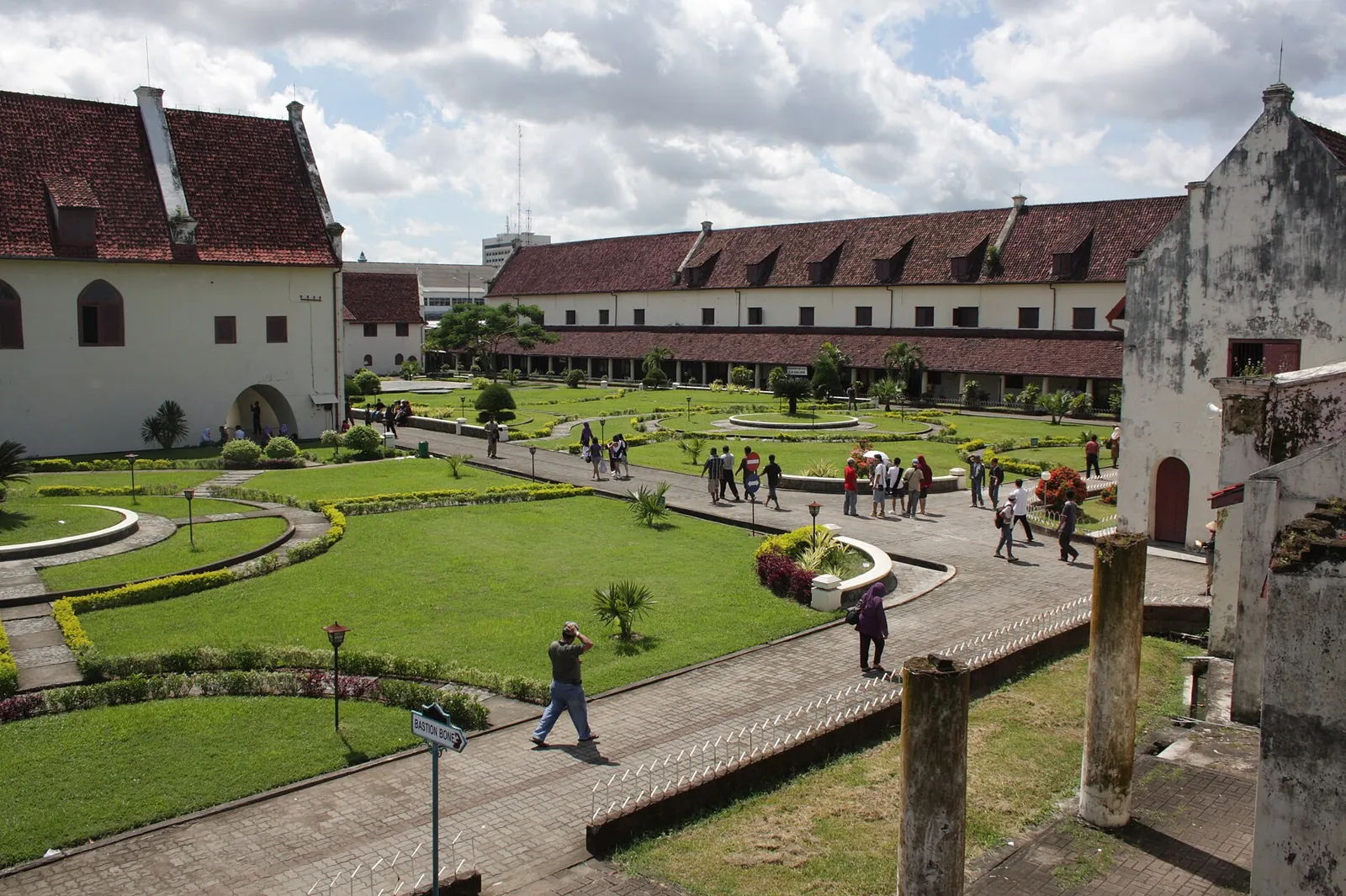
Fort Rotterdam is the city's landmark and the place to start. The Ministry of Tourism dates it to 1545, when the tenth King of Gowa, I Manrigau Daeng Bonto Karaeng Lakiung (Karaeng Tunipalangga Ulaweng), built Benteng Ujung Pandang on the shore. Its outline, said to resemble a turtle, earned it the name Benteng Panyua: like a turtle, the kingdom's power was meant to reach over land and sea. After Sultan Hasanuddin's defeat and the Treaty of Bongaya on 18 November 1667, the fort passed to the Dutch East India Company, which rebuilt it in Dutch style and renamed it after Cornelis Speelman's birthplace, Rotterdam.
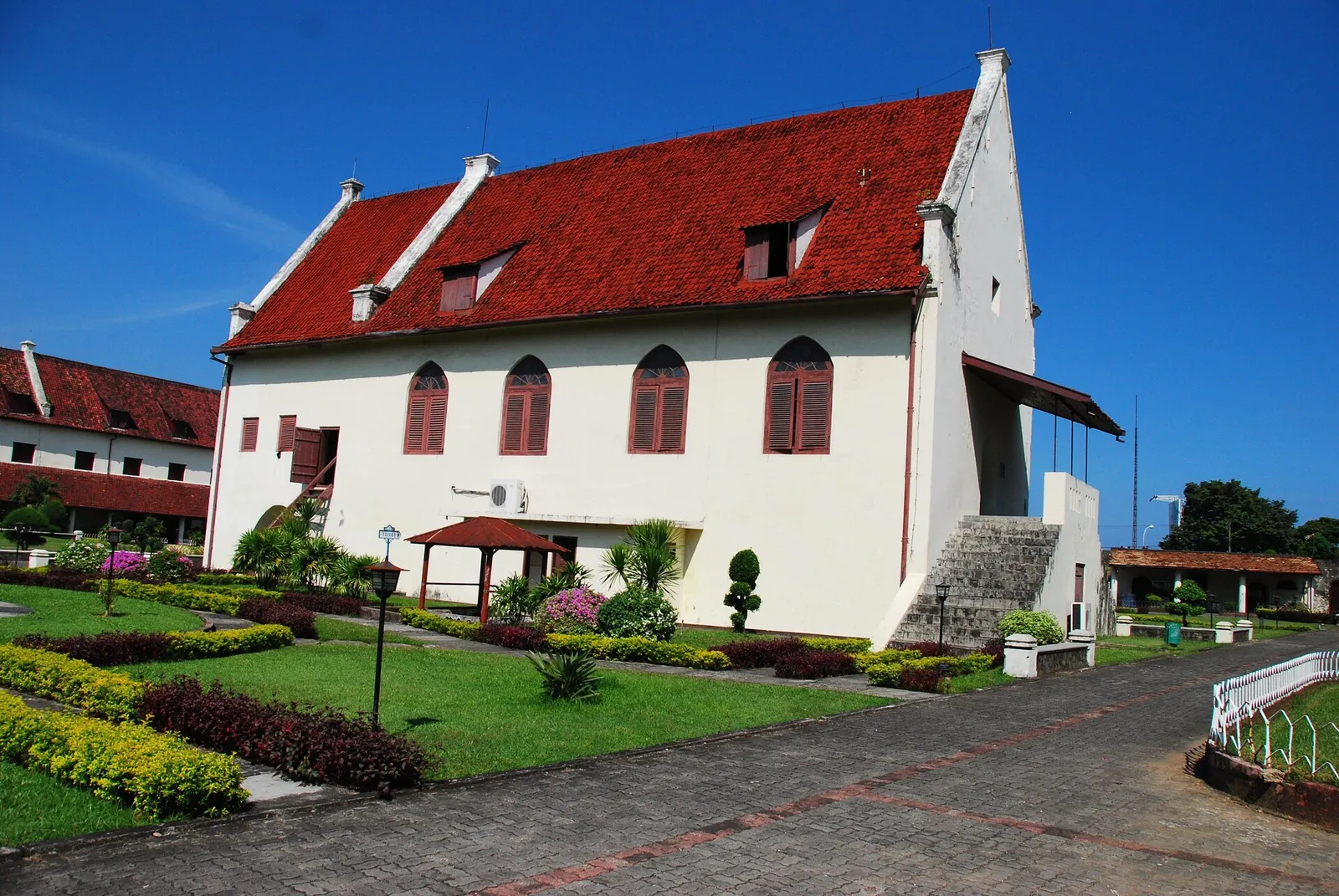
What you see today is a walled compound of whitewashed buildings with steep red roofs around a green courtyard. The ministry notes that Prince Diponegoro, the national hero, was held here from 1833 until his death in 1855, that the Japanese used the fort as a prisoner-of-war camp in the Second World War, and that it was restored in the 1970s. His cell can still be visited. Climb onto the walls for a view over the waterfront.
Several of the colonial buildings house the La Galigo Museum, the South Sulawesi provincial museum, named after the Bugis epic. According to the ministry, it grew out of a Celebes Museum founded in 1938, was established under its present name in 1970 and holds about 4,999 objects — prehistoric finds, ceramics, coins, royal items and ethnographic collections of the Bugis, Makassar, Mandar and Toraja peoples, including model pinisi ships. If you are heading to Toraja or Bira, it is the best single introduction in the city.
When we checked on 2026-10-03, a Ministry of Tourism guide gave the fort's hours as daily from 8am to 5pm, with tickets typically Rp10,000 to Rp20,000 depending on the visitor category, and noted that the museum charges a separate fee. Another ministry page recommends arriving from about 3:30pm, when the heat eases, and staying for the sunset. Carry small notes in cash, and confirm hours at the gate.
Make time for the local food
What to eat and where to look
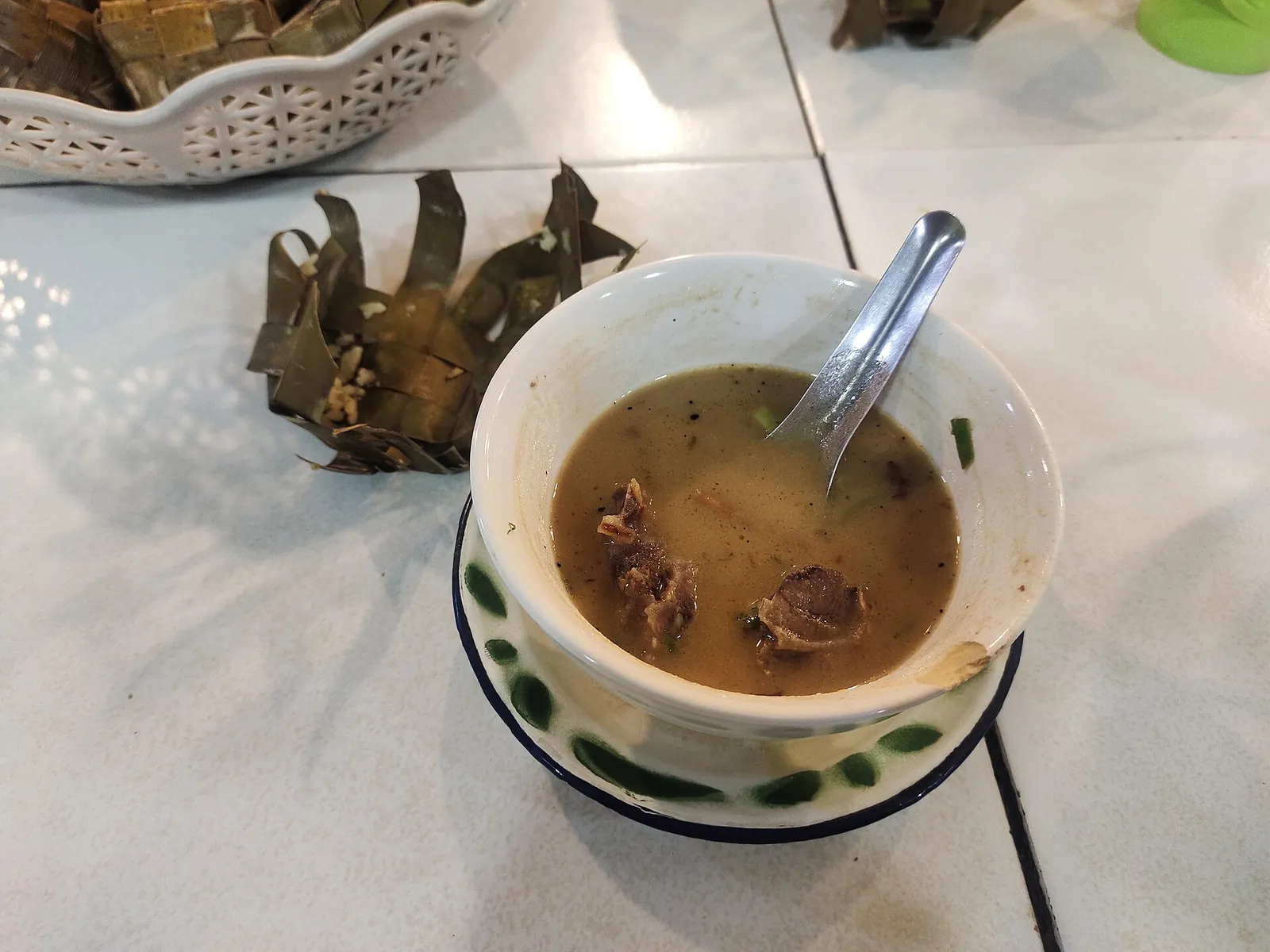
Coto Makassar
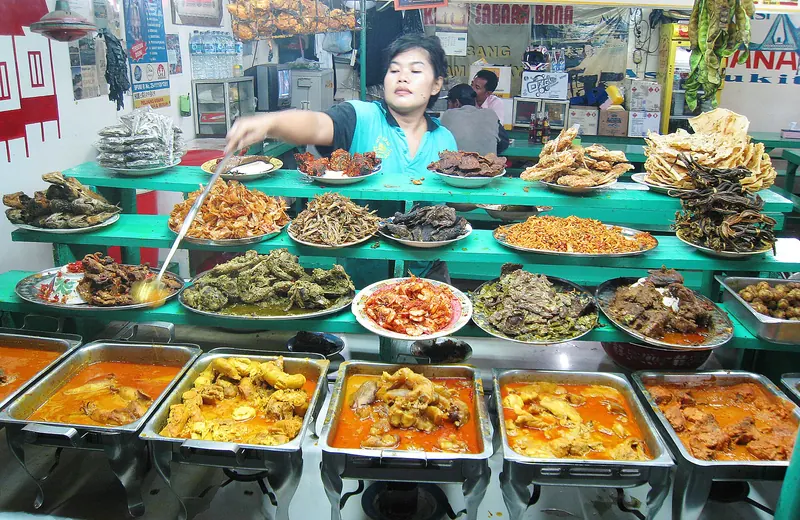
The city's signature: a thick, dark beef soup simmered with offal, ground peanuts and around 40 spices, including tauco (fermented soybean), as the Ministry of Tourism describes it. It is eaten with ketupat or burasa rice cakes dipped into the broth, with lime and fried shallots.
- Where to look
- Long-running coto shops. The ministry names Coto Nusantara on Jalan Nusantara near Soekarno-Hatta harbour and Coto Ranggong near Losari, founded in the 1960s; when we checked on 2026-10-03 it listed both as open daily from 7am (to 10pm and 9pm respectively, local WITA time).
- Fit it into your day
- Breakfast or an early lunch; the ministry notes that regulars have made some coto shops their breakfast spot for decades.
Made with beef and offal such as tripe, lung and liver. Many shops serve meat only if you ask.
Konro and konro bakar
Beef ribs in a black-brown broth coloured with keluak nut and spiced with coriander, nutmeg, galangal, tamarind and cloves, or grilled as konro bakar with a thick sauce, the ministry explains.
- Where to look
- Konro restaurants; the ministry names Konro Karebosi on Jalan Gunung Lompobattang.
- Fit it into your day
- A hearty dinner, with rice or buras.
Rich and heavy; one portion can be shared.
Grilled fish and Makassar crab
As an old harbour town, Makassar is a seafood city: the ministry recommends ikan bakar grilled over coconut husk, chilli crab and steamed prawns, and notes that restaurants will pack cooked crabs for you to take home by plane.
- Where to look
- Seafood restaurants near Losari, where many places let you choose the live fish to be grilled; the ministry lists Lae Lae on Jalan Datu Museng.
- Fit it into your day
- Dinner after sunset on the promenade.
Fish and crab are often sold by weight; confirm the price before it is cooked.
Pallubasa and sop saudara
Two other beef soups: pallubasa, thickened with toasted grated coconut, and sop saudara, beef soup with rice noodles, potato cakes, offal and egg, which locals eat with grilled milkfish, according to the ministry.
- Where to look
- Warung specialising in one dish; the ministry mentions Pallu Basa Serigala and Warung Pangkep Sop Saudara on Jalan Irian.
- Fit it into your day
- Lunch on a city day; try one instead of a second coto.
Both usually contain offal; pallubasa is sometimes made with buffalo.
Pisang epe and es pisang ijo
Banana in two forms: pisang epe, grilled and pressed flat, then covered in palm-sugar sauce, and es pisang ijo, banana wrapped in green pandan-coloured dough and served on shaved ice with syrup, coconut milk and sumsum rice-flour porridge.
- Where to look
- Pisang epe at the stalls on Losari Beach; es pisang ijo around the gate of Fort Rotterdam and in many restaurants.
- Fit it into your day
- Pisang epe at sunset on Losari; es pisang ijo to cool down after the fort.
Very sweet. Choose stalls where the ice is clearly fresh.
Losari Beach, the floating mosque and Somba Opu
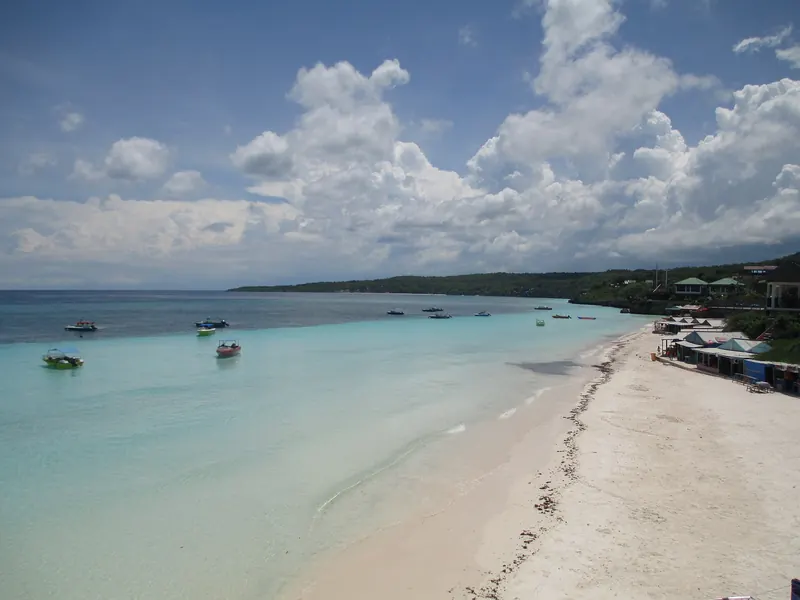
Losari is not a swimming beach but a seafront promenade, and it is where the city comes out at sunset for the breeze. The ministry recommends it for exactly that hour and for the street snacks sold along the plaza in the evening, above all pisang epe, flattened grilled banana in palm-sugar sauce.
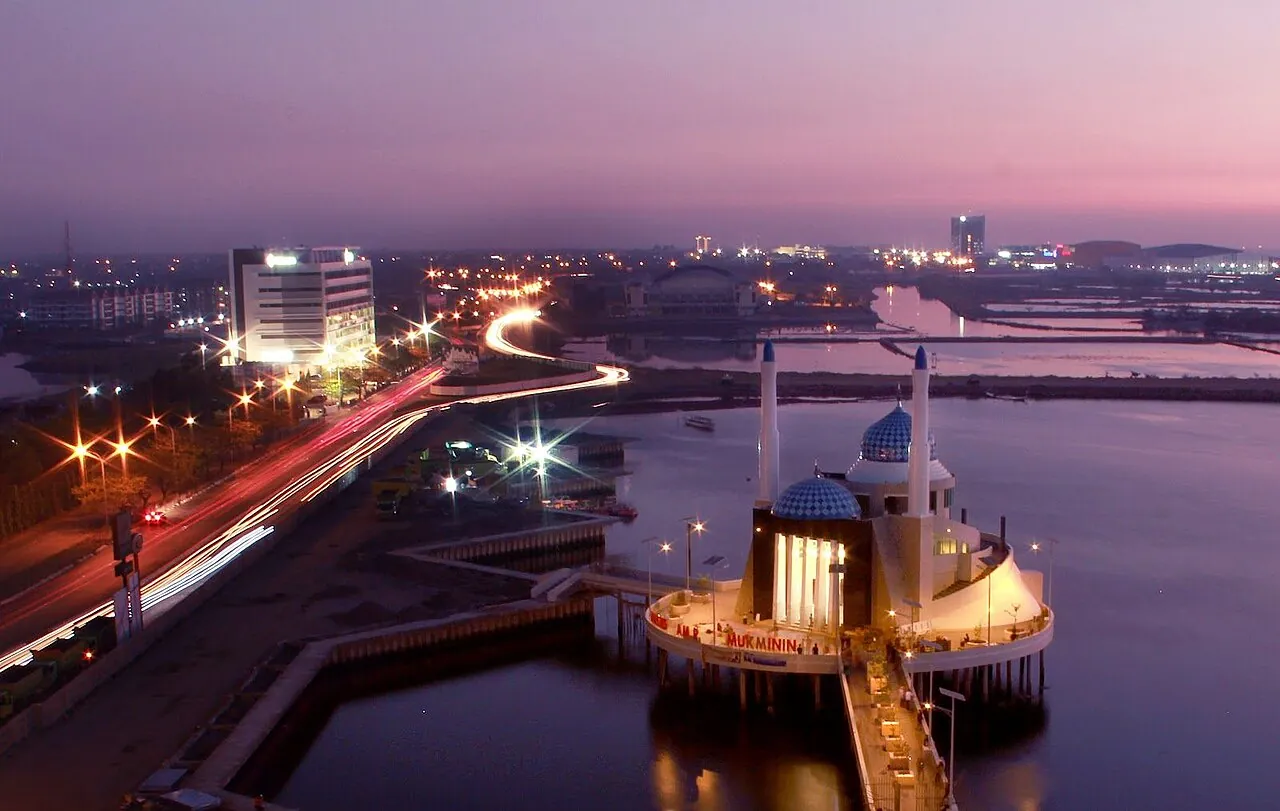
At the end of the promenade stands the Amirul Mukminin Mosque, the 'floating mosque' on the water's edge, which the ministry describes as having a double blue dome, three storeys and room for about 500 worshippers. It is at its most photogenic at dusk. It is an active mosque: dress modestly, and keep away during prayer times unless you are joining them.
Behind the waterfront, Jalan Somba Opu is the traditional shopping street. The ministry's page lists rows of gold and silver shops selling filigree work from Kendari in Southeast Sulawesi, pearls from eastern Indonesia and hand-woven cloth from the Toraja highlands. It is the place to compare prices if you want silver or textiles; for a market with daily life rather than souvenirs, the ministry points to Pasar Terong, a large traditional produce market.
Islands fifteen minutes offshore
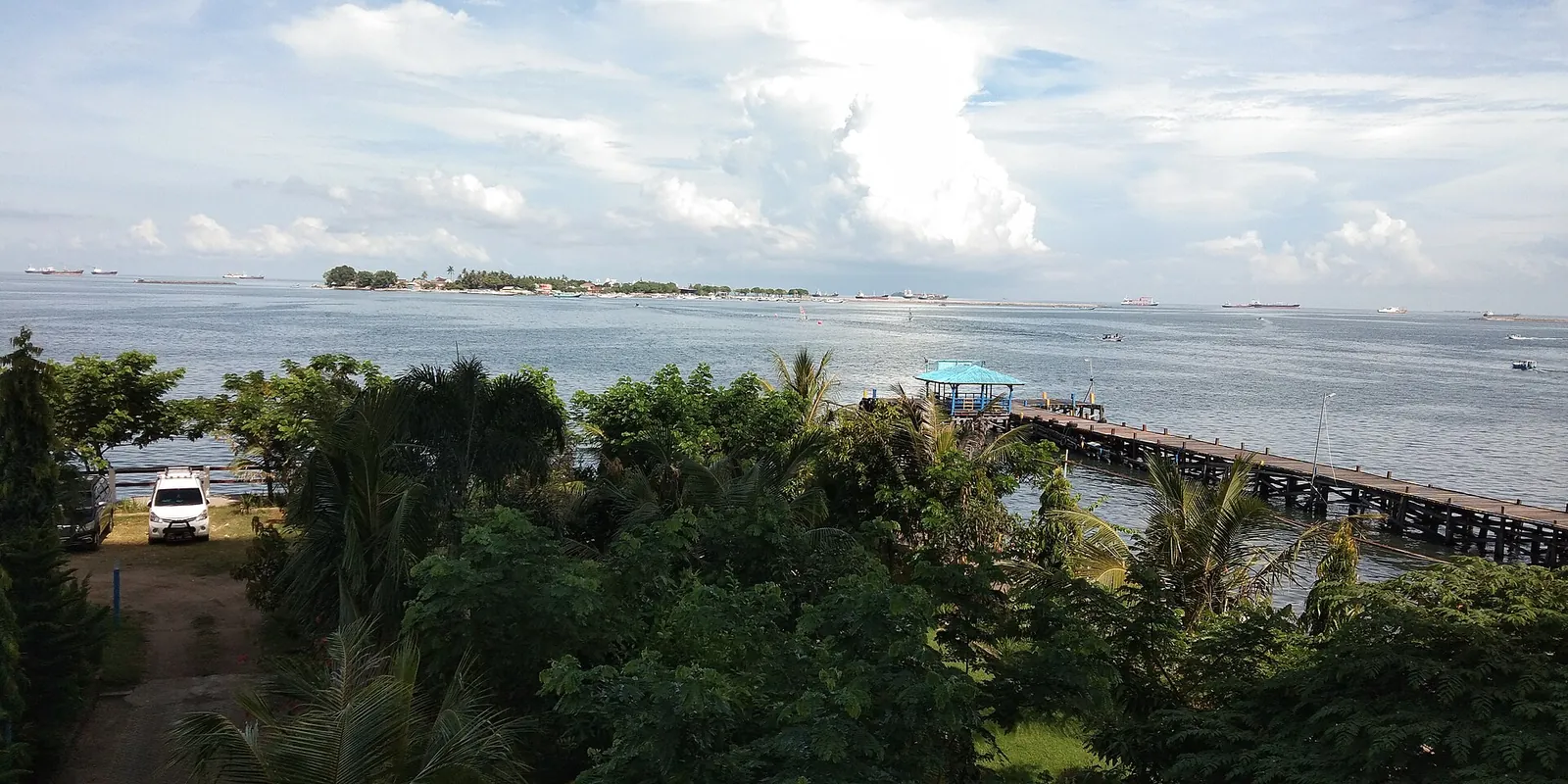
The city faces the Spermonde Archipelago, which the Ministry of Tourism counts at 55 islands and sand bars. Lae-Lae, about 1.5 km out and 10 to 15 minutes by boat, is a densely populated island whose people live from fishing and boat hire; Samalona, about 7 km away, is quieter, with a white beach and reef, the north side best for snorkelling. Kodingareng Keke, about 12 km out, is uninhabited and known for clear water.
There are two ways to go. The ministry recommends arranging the trip with an experienced dive operator in Makassar, who will supply equipment, the boat and food. If you hire a boat yourself at the wharf, agree the return trip before you leave — boats for the way back are not always available on the outer islands. The ministry's page notes that cottages on Samalona have simple, rather expensive meals, so bring water and snacks.
The outer islands such as Lanyukan, around 37 km out, have steep drop-offs and big fish, and the ministry says they are for experienced divers only. Go between May and September, when the seas are calm. The ministry's island page is old; check current conditions and facilities with your operator.
Day trips: Maros karst and Gowa
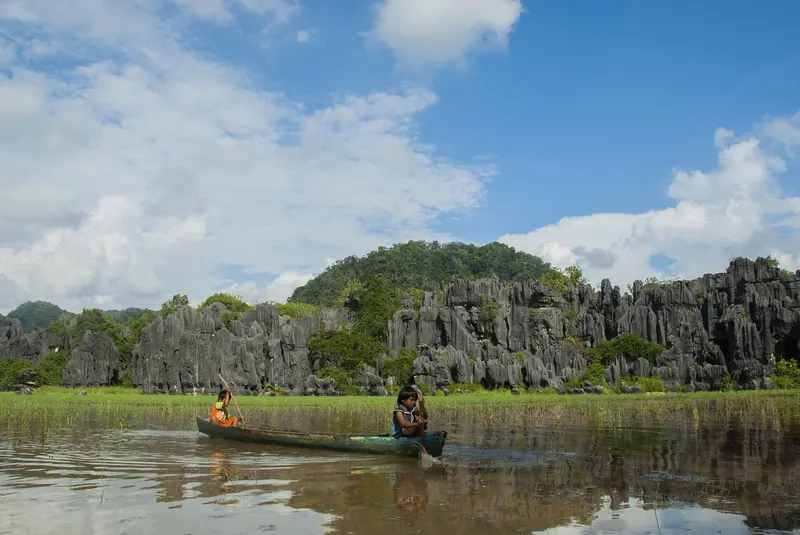
The best day out of the city is north into the karst of Maros. Rammang-Rammang, where a small boat runs up a river between limestone towers, is about 32 km and an hour's drive from the airport, according to the ministry, and Leang-Leang's prehistoric cave art and the waterfall and butterflies of Bantimurung-Bulusaraung National Park (about 50 km from the city) fit into the same day. See our Rammang-Rammang guide for how to plan it; an early start matters.
South of the city in Gowa, the former royal seat of the kingdom that built Fort Rotterdam, the Balla Lompoa Museum occupies a wooden palace built in 1935 by the 35th King of Gowa and turned into a museum in 1980, the ministry says; its name means 'big house'. It is a half-day pairing with the fort for anyone interested in the Gowa story. The cool hill resort of Malino, about 65 km away with pine woods and a tea estate, is the ministry's suggestion for cooler air.
Makassar as the hub for Toraja and Bira
Most travellers use Makassar as a turning point. The Ministry of Tourism puts Tana Toraja about 328 km or eight hours by road from the city centre, so it is a full travel day, not an excursion: leave early, and give Toraja at least two or three nights. Tanjung Bira, the beach and boatbuilding tip of the peninsula in Bulukumba, is about 200 km away and also deserves its own nights.
A sensible pattern is to land, sleep one night near Losari, see the fort and the sunset, and leave for Toraja or Bira the next morning — then return for a final night and a big seafood dinner before flying out. The ministry also notes that Pelni passenger ships use the city's Soekarno-Hatta Port, with schedules on Pelni's own website.
Practical questions
How many days should I spend in Makassar?
One or two nights. One night covers Fort Rotterdam, Losari at sunset and a coto or seafood meal; a second day allows a boat to Samalona or a trip to the Maros karst at Rammang-Rammang.
Where should I stay in Makassar?
Near Losari Beach in the old centre, where the fort, the promenade, the floating mosque and Jalan Somba Opu are walkable. Panakkukang, inland, has larger family hotels but needs a car for every trip to the waterfront.
What are Fort Rotterdam's opening hours?
When we checked on 2026-10-03, a Ministry of Tourism guide listed daily opening from 8am to 5pm, with tickets typically Rp10,000 to Rp20,000 and a separate fee for the La Galigo Museum. Confirm at the gate.
How do I get from Makassar airport to the city?
By taxi or ride-hailing car. The Ministry of Tourism puts Fort Rotterdam about 20 km from Sultan Hasanuddin International Airport, roughly 30 to 40 minutes depending on traffic.
Can I visit Tana Toraja as a day trip from Makassar?
No. The ministry gives about 328 km and eight hours by road. Treat it as a separate trip of at least two or three nights.
Which island can I visit from Makassar?
Lae-Lae is 10 to 15 minutes away; Samalona, about 7 km out, is quieter and better for snorkelling; Kodingareng Keke, about 12 km, is uninhabited. Go between May and September and agree the return boat in advance.
Sources and checks before you travel
Reference sources for the version dated 3 October 2026. Confirm opening times, access, transport and conditions for your travel dates.
- Indonesia Travel (Ministry of Tourism): Makassar ↗ — opens in a new tab
- Indonesia Travel: Fort Rotterdam, a historical tourism guide in Makassar ↗ — opens in a new tab
- Indonesia Travel: Fort Rotterdam, a tough fort that holds colonial traces ↗ — opens in a new tab
- Indonesia Travel: Fort Rotterdam, the city's iconic landmark ↗ — opens in a new tab
- Indonesia Travel: UPT Museum La Galigo ↗ — opens in a new tab
- Indonesia Travel: 5 things to do in Makassar ↗ — opens in a new tab
- Indonesia Travel: Dive the islands off Makassar (Spermonde) ↗ — opens in a new tab
- Indonesia Travel: Jalan Somba Opu ↗ — opens in a new tab
- Indonesia Travel: Museum Balla Lompoa Gowa ↗ — opens in a new tab
- Indonesia Travel: Coto Makassar, a tasty cuisine rich in spices and history ↗ — opens in a new tab
- Indonesia Travel: 5 mouthwatering culinary treasures of Makassar ↗ — opens in a new tab
- Indonesia Travel: Makassar's culinary specialties ↗ — opens in a new tab
- Indonesia Travel: Pallu Basa Serigala Makassar ↗ — opens in a new tab
- Indonesia Travel: 9 Instagrammable places in and around Makassar ↗ — opens in a new tab
- Indonesia Travel: Hyatt Place Makassar ↗ — opens in a new tab
- Indonesia Travel: MaxOneHotels @ Resort Makassar ↗ — opens in a new tab
- Indonesia Travel: Rammang-Rammang tourism village ↗ — opens in a new tab
- Wikipedia: Sultan Hasanuddin International Airport ↗ — opens in a new tab
Photo credits
Inside Fort Rotterdam: the colonial buildings around the central garden now house the La Galigo Museum
Photograph: Sanko . — opens in a new tab · CC BY-SA 3.0 — opens in a new tab
Changes: Resized and converted to WebP; displayed with responsive crops. · Original photograph and licence details ↗ — opens in a new tab
The Amirul Mukminin floating mosque on the Losari waterfront at dusk
Photograph: Dispora Kota Makassar — opens in a new tab · Public domain — opens in a new tab
Changes: Resized and converted to WebP; displayed with responsive crops. · Original photograph and licence details ↗ — opens in a new tab
Losari Beach on a bright morning, looking out towards the Makassar Strait
Photograph: Ahmad Risaldy — opens in a new tab · CC BY-SA 4.0 — opens in a new tab
Changes: Resized and converted to WebP; displayed with responsive crops. · Original photograph and licence details ↗ — opens in a new tab
One of the restored VOC-era buildings inside Fort Rotterdam
Photograph: Steijlen, Fridus. — opens in a new tab · CC BY 4.0 — opens in a new tab
Changes: Resized and converted to WebP; displayed with responsive crops. · Original photograph and licence details ↗ — opens in a new tab
Coto Makassar, the city's beef soup, served with ketupat rice cakes
Photograph: Rulwarih — opens in a new tab · CC BY 4.0 — opens in a new tab
Changes: Resized and converted to WebP; displayed with responsive crops. · Original photograph and licence details ↗ — opens in a new tab