Lombok and Nusa Tenggara · West Nusa Tenggara
Kuta Lombok guide: Tanjung Aan, Selong Belanak, surf and where to stay
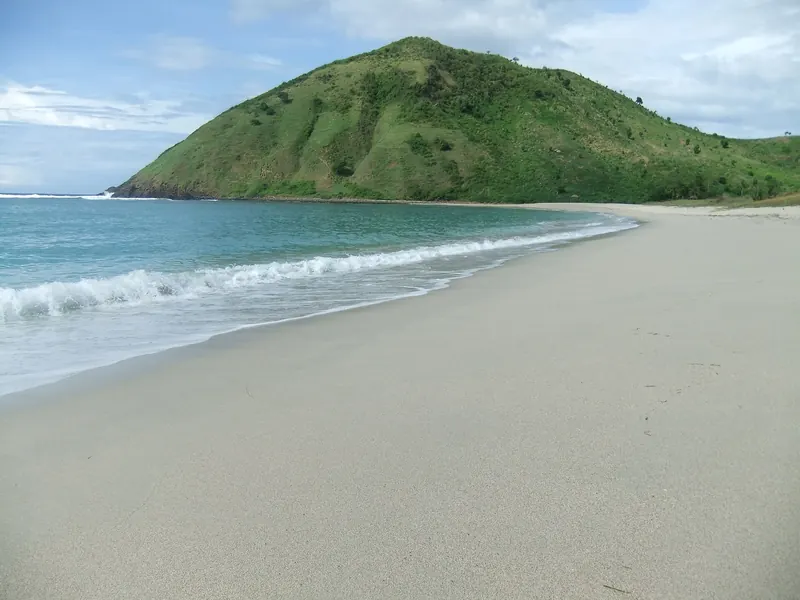
Kuta, on Lombok's south coast, is a former fishing village that has become the island's main beach base without turning into its namesake on Bali. Green hills run down to a string of separate bays, each with its own character: Kuta Beach in front of the village, Seger and Tanjung Aan to the east, Mawun and Selong Belanak to the west. The village sits beside Mandalika, the government-backed resort zone that holds the MotoGP circuit and a strip of large hotels, so you now choose between a surf-town base with warungs and cafés and a quieter resort beach. Either way, the real draw is a different bay every day, linked by short rides over the hills.
- Suggested time
- 3–5 nights
- Where to stay
- Kuta village for cafés and surf; the Mandalika resort strip for big hotels; Selong Belanak for a quiet bay
- Season and timing
- The Ministry of Tourism's Mandalika guides recommend the dry season, April to October, for clear skies and the best beach conditions. Expect the area to be at its busiest around the MotoGP race weekend at the Mandalika circuit, which falls on 9–11 October in 2026, and around the Bau Nyale festival, whose date follows the Sasak calendar and usually falls in February or March.
The short answer
Give Kuta three to five nights. Sleep in Kuta village if you want to walk to cafés, surf shops and warungs; on the Mandalika resort strip east of the village for big-hotel comfort on a landscaped beach; or out at Selong Belanak if you want one quiet bay and a beginner surf beach on your doorstep. Rent a scooter, or hire a car with a driver if you do not ride, because public transport is limited. Spend one day on the eastern bays, with Tanjung Aan for swimming and Bukit Merese at sunset, and one on the western bays of Mawun and Selong Belanak. Fit in a surf lesson or a boat out to the Gerupuk breaks, and half a day at Sade village. Fly into Lombok International Airport, which is less than half an hour's drive from the village. If you come from Bali, fly or take the Padang Bai–Lembar ferry.
Kuta village, Mandalika or the western bays: where to base yourself
Kuta village is the practical base. Wikivoyage notes that most of the accommodation and restaurants are along the beach strip and the roads behind it, from cheap huts to four-star hotels, and that everything in the village is within walking distance. This is where the surf shops, the coffee places and the cheap warungs are, and where you can find a scooter or a driver. It is a working village as much as a resort: local families live in housing clusters behind the tourist strip, largely untouched by the tourist trade.
Mandalika is the resort zone next door: according to the Ministry of Tourism, a 1,250-hectare special tourism economic zone with large hotels, the racing circuit, golf and spas. Its beachfront, Mandalika Beach Park, has wide promenades, cycle paths and gardens, as Wikivoyage describes, and the ministry notes a children's play area. It suits families and travellers who want a big pool and a quiet evening. Further east, Wikivoyage warns that Pantai Putri Nyale, the beach in front of the Novotel, almost dries out at low tide and is then not much good for swimming, so check the tide before you plan a swim there.
Selong Belanak, a scenic drive west over the hills and past rice fields, is the choice for people who want to wake up on one beach and stay there. It has a wide bay with gentle waves and a long row of surf schools; staying here means a drive for anything beyond the beach. Whichever base you choose, the bays are close together, and you will spend most days moving between them.
- Kuta village: walk to cafés, warungs and surf shops; the widest choice of budget and mid-range rooms.
- Mandalika resort strip: large hotels on a landscaped beach, near the circuit; quieter evenings.
- Selong Belanak: a single wide bay with beginner waves; you will need transport for food and sightseeing.
The eastern bays: Tanjung Aan, Bukit Merese and Seger
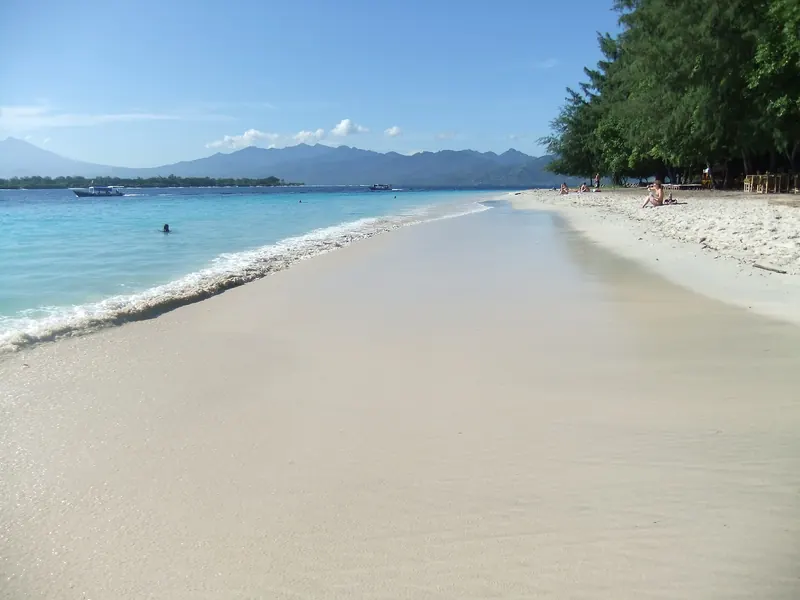
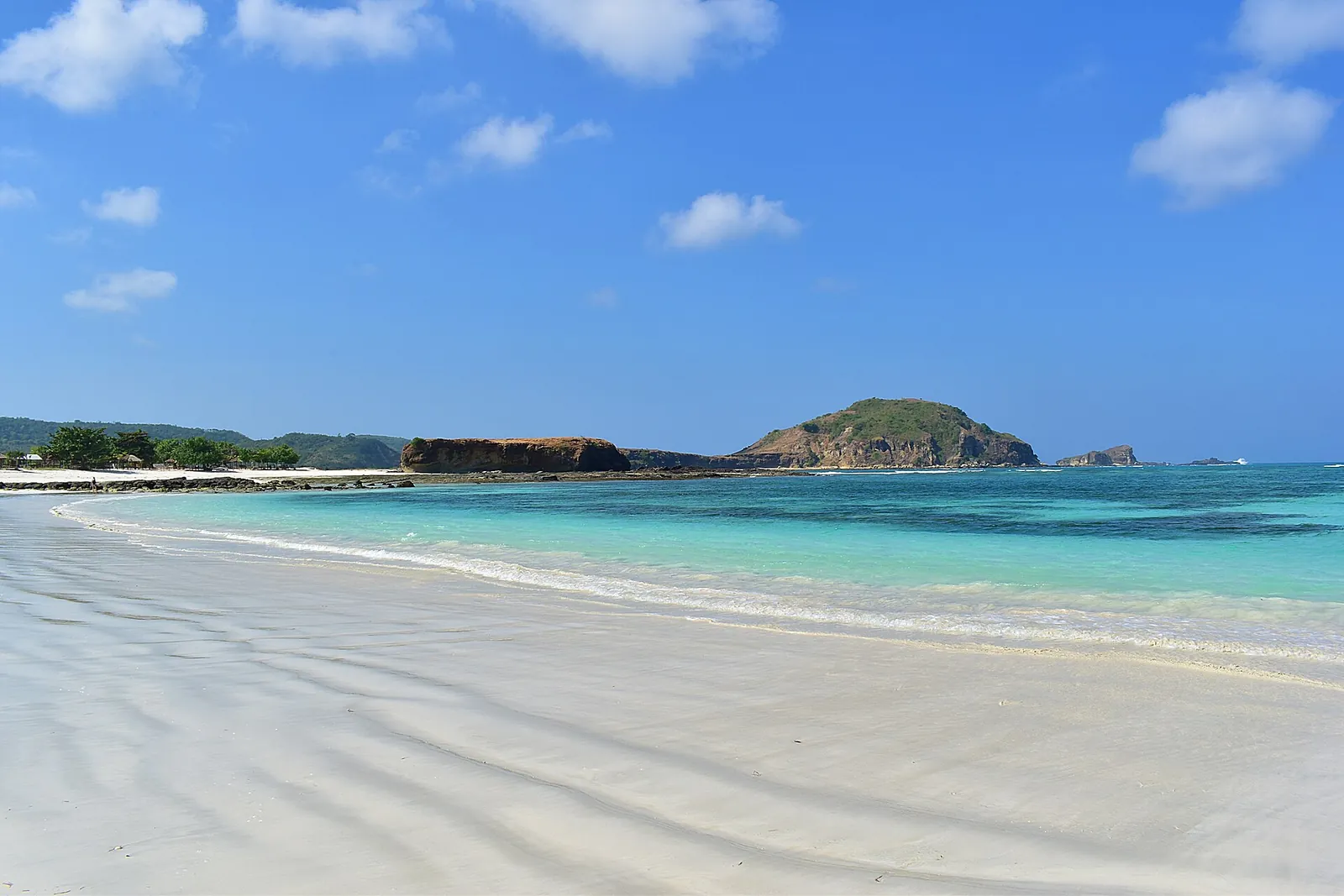
Tanjung Aan, about a 20-minute drive east of Kuta, is the bay most people come for. The Ministry of Tourism describes about 2 kilometres of pale sand with waves calm enough for swimming and snorkelling, and a row of cafés behind the beach. The sand is the curiosity: the ministry says it is shaped like round grains resembling peppercorns. Bring cash for a coconut or a sunbed, and expect children and villagers selling sarongs; Wikivoyage describes them as good-natured, and a polite no is enough.
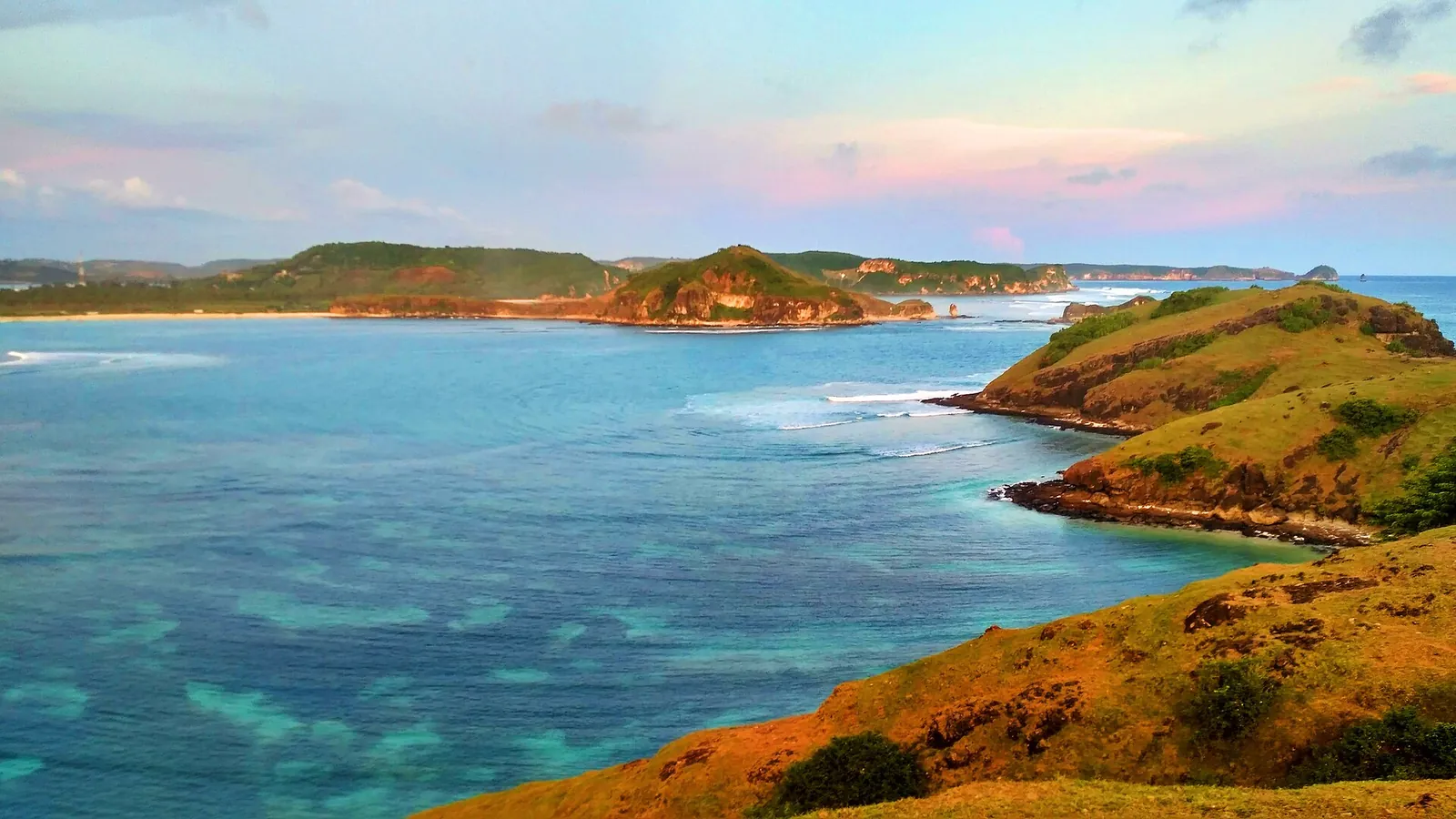
At the western end of Tanjung Aan, Bukit Merese is a grassy headland with one of the best views on Lombok, over Tanjung Aan, the open Indian Ocean and the jagged southern coast. The ministry puts it an 11-minute walk from the beach and recommends coming in the late afternoon for the sunset. Wikivoyage describes the path as short but moderately steep and notes a small entrance fee and basic parking. Arrive an hour before sunset, wear shoes with grip, and bring a torch for the walk down.
Closer to the village, Seger Beach has mushroom-shaped coral rocks and a statue of Princess Mandalika, the heroine of the Bau Nyale legend. Above it, Bukit Seger (Seger Hill), on the west side of the circuit, looks over Kuta Bay, the Mandalika strip and Turn 10 of the track; the ministry notes warungs on the hill and recommends early morning or late afternoon. Seger is also a surf break: Wikivoyage describes a heavy right-hander off the reef, best for experienced surfers.
Make time for the local food
What to eat and where to look
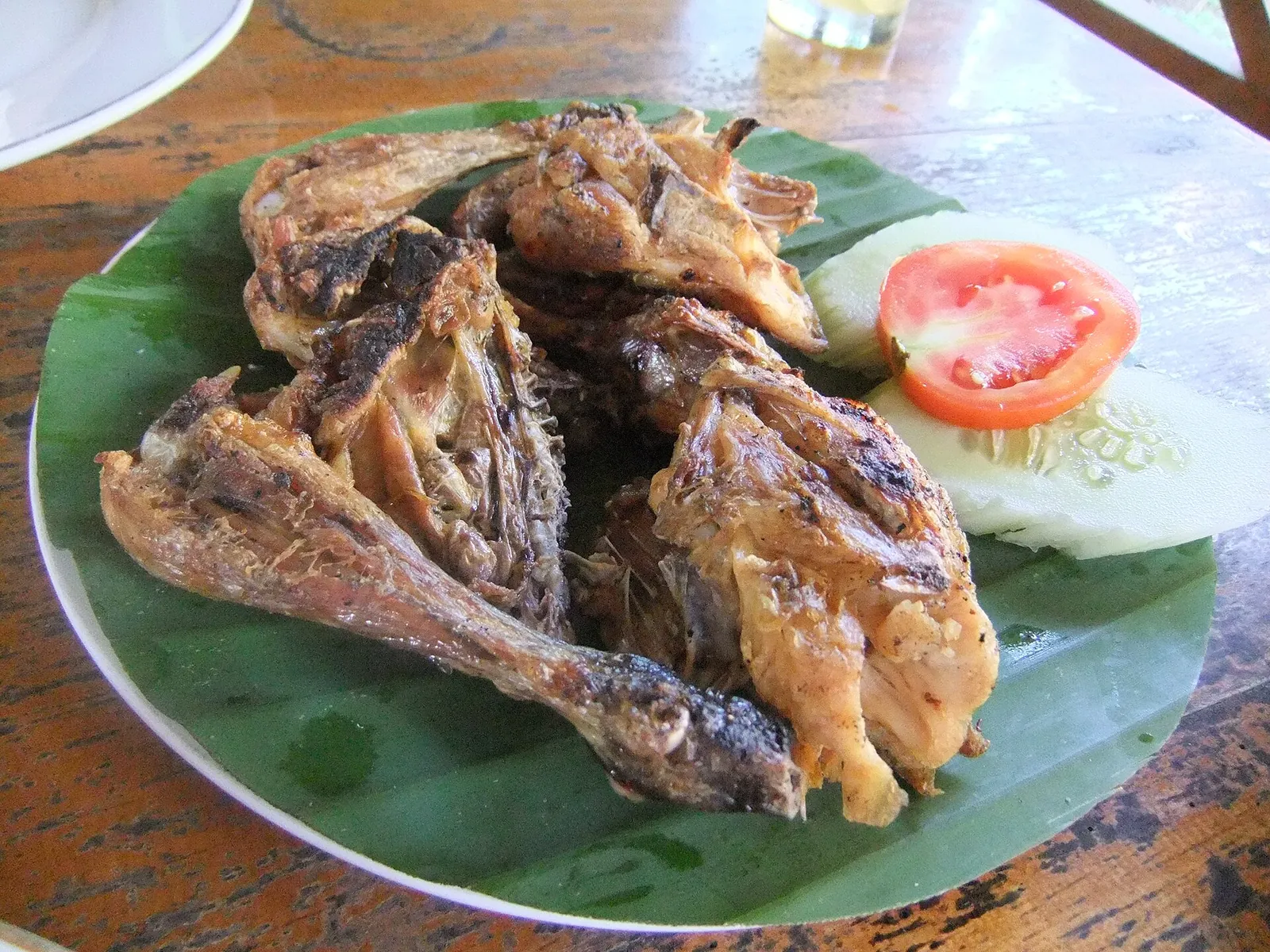
Ayam taliwang
Lombok's signature dish: preferably free-range chicken, half grilled, dipped in a paste of chilli, garlic and shrimp paste and grilled again. The Ministry of Tourism calls it a culinary icon of the island, first made in Karang Taliwang village.
- Where to look
- Local stalls around Mandalika, which the ministry recommends for it, and warungs serving Lombok (Sasak) food in Kuta village.
- Fit it into your day
- Dinner after a beach day, with rice and plecing kangkung.
Usually very spicy; the paste contains shrimp paste.
Plecing kangkung
Blanched water spinach under a raw sambal of chilli, tomato, shallot, garlic and shrimp paste, often finished with lime, fried peanuts or grated coconut — Lombok's standard side dish, as the ministry describes it.
- Where to look
- Almost any warung serving local food; it often comes with grilled fish or chicken.
- Fit it into your day
- A fresh side with grilled seafood or ayam taliwang.
Ask for it without terasi (shrimp paste) if you are vegetarian or allergic to shellfish.
Sate rembiga
Beef satay from Rembiga, near Mataram, marinated in shallot, garlic, candlenut, turmeric, tamarind, chilli and palm sugar and grilled over charcoal. The ministry describes it as spicy, savoury and slightly sweet, not drowned in peanut sauce.
- Where to look
- Satay stalls and Lombok restaurants; the ministry and its Mandalika guides list it among the local dishes to look for.
- Fit it into your day
- Lunch or dinner with rice or ketupat (rice cakes).
Spicy; it is beef, not chicken.
Sasak snacks: jaje and seaweed dodol
The ministry's Mandalika snack list includes poteng jaje tujak (fermented sticky rice with coconut), leaf-wrapped jaje tumbek and jaje reket, crisp goro-goro, cone-shaped kue cerorot and chewy seaweed dodol.
- Where to look
- Village markets, small shops and souvenir stalls around Kuta and Mandalika; seaweed dodol is sold as a souvenir.
- Fit it into your day
- A mid-morning snack with coffee, or something to take home.
Poteng is fermented and slightly tangy; snacks are very sweet.
Surfing: Gerupuk, Tanjung Aan and Selong Belanak
Many of Kuta's visitors are surfers, and the breaks sort themselves by level. For a first lesson, go to Selong Belanak, whose gentle waves the ministry describes as good for beginners, with lessons and board rental on the beach, or to the beach break at Tanjung Aan, which Wikivoyage recommends for absolute beginners and advises surfing in the morning, before the afternoon wind blows it out.
Gerupuk, a seaweed-farming village about 7 kilometres east of Kuta, is the most popular surf spot. Most of its breaks are out in the bay, so you hire a boatman from the village who waits while you surf. Wikivoyage describes Inside Gerupuk, in the sheltered bay, as suitable for beginners and intermediates over a soft reef, and the outside breaks as more reliable but heavier. Agree the price, how long the boat will wait and the return time before you leave the shore, and check there are life jackets on board.
Surf etiquette matters here. Wikivoyage warns that line-ups can get crowded with locals and boatmen, and that a collision can turn into a demand for money; stay calm, apologise if you are at fault and do not drop in. Thefts from parked bikes have been reported, so pay the small fee asked for watching your scooter while you are in the water. Boards can be rented in Kuta village and at Gerupuk.
The western bays: Mawun, Selong Belanak and Mawi
West of Kuta the road climbs over steep hills and drops down to a series of bays. Mawun is a half-moon bay between two green hills with clear, blue-green water. The Ministry of Tourism notes that the middle of the bay is usually calmer, while the open sides facing the Indian Ocean get bigger waves. When we checked on 2026-10-03, its Mawun page listed an entrance ticket of about Rp10,000 per person, opening hours of roughly 08:00 to 17:00, and parking, warungs, simple gazebos, rinse rooms and toilets, with a note that prices can change.
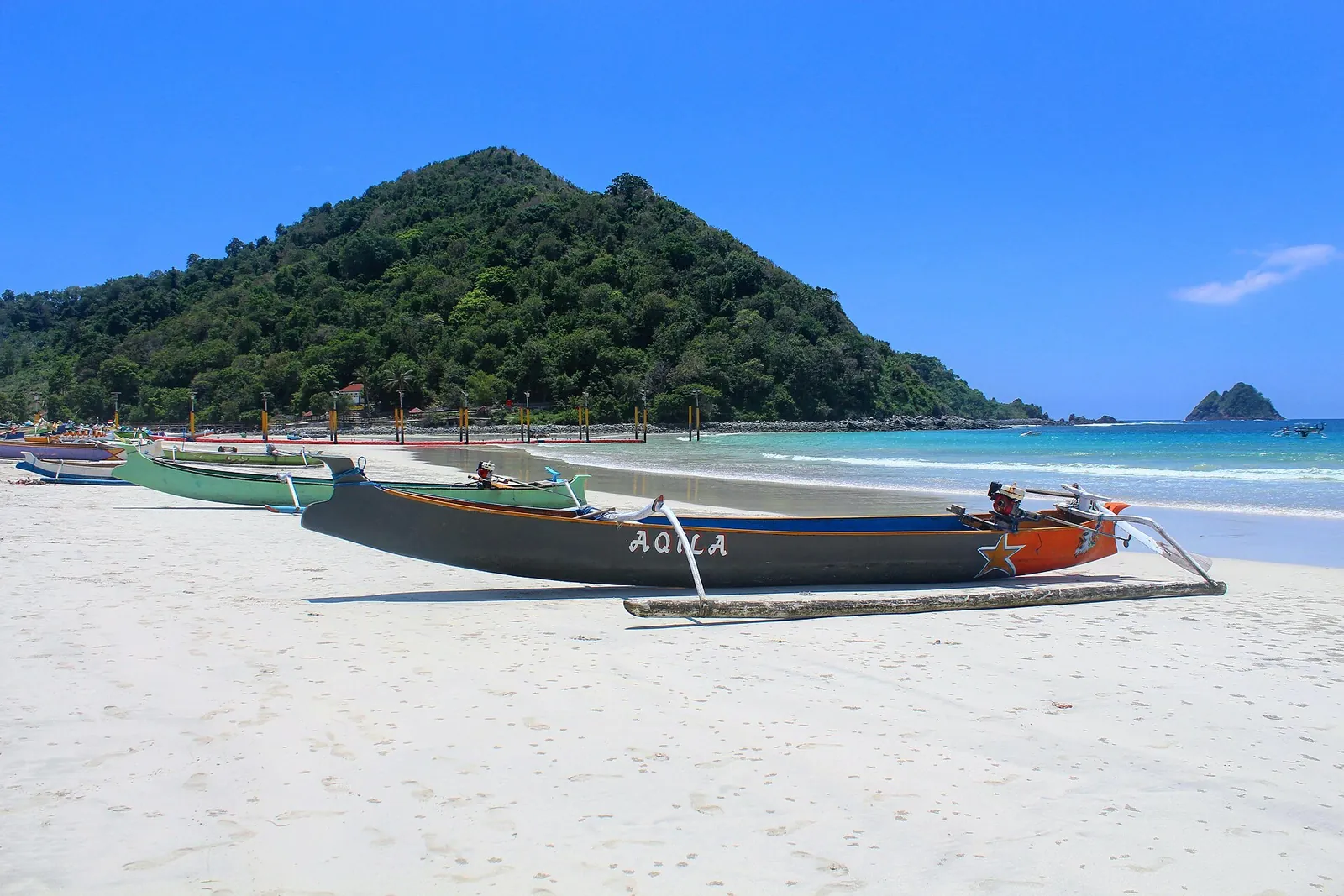
Selong Belanak is a wide, fine-sand bay framed by two rocky headlands, with surf schools and stalls along its length. The ministry lists no entrance fee, only parking. Wikivoyage warns that the beach has become commercialised: sellers meet you at the car park, and warungs may charge for sunbeds, so bring a towel and your own shade if you want to sit for free. You may also see local herders driving water buffalo along the sand. Nearby Mawi is another surf beach.
Between the two, Lancing, a long, little-visited beach, suits a quiet walk rather than a swim; Wikivoyage notes strong backwash there. Do the western bays as a loop by scooter or with a driver, in the morning, and keep the steep hill roads for daylight.
Sasak villages: Sade, Ende and Sukarara
Inland, about 15 minutes' drive from the Mandalika circuit, Sade is a village of the Sasak, Lombok's indigenous people, in Rembitan, Pujut district. The Ministry of Tourism describes around 150 traditional houses with steep thatched roofs and clay floors, home to about 750 people from the same extended family. These are lived-in homes, not exhibits. A local guide meets visitors at the entrance and walks you round. When we checked on 2026-10-03, the ministry listed an entrance fee of Rp15,000 per person and visiting hours from 08:00 to 19:00.
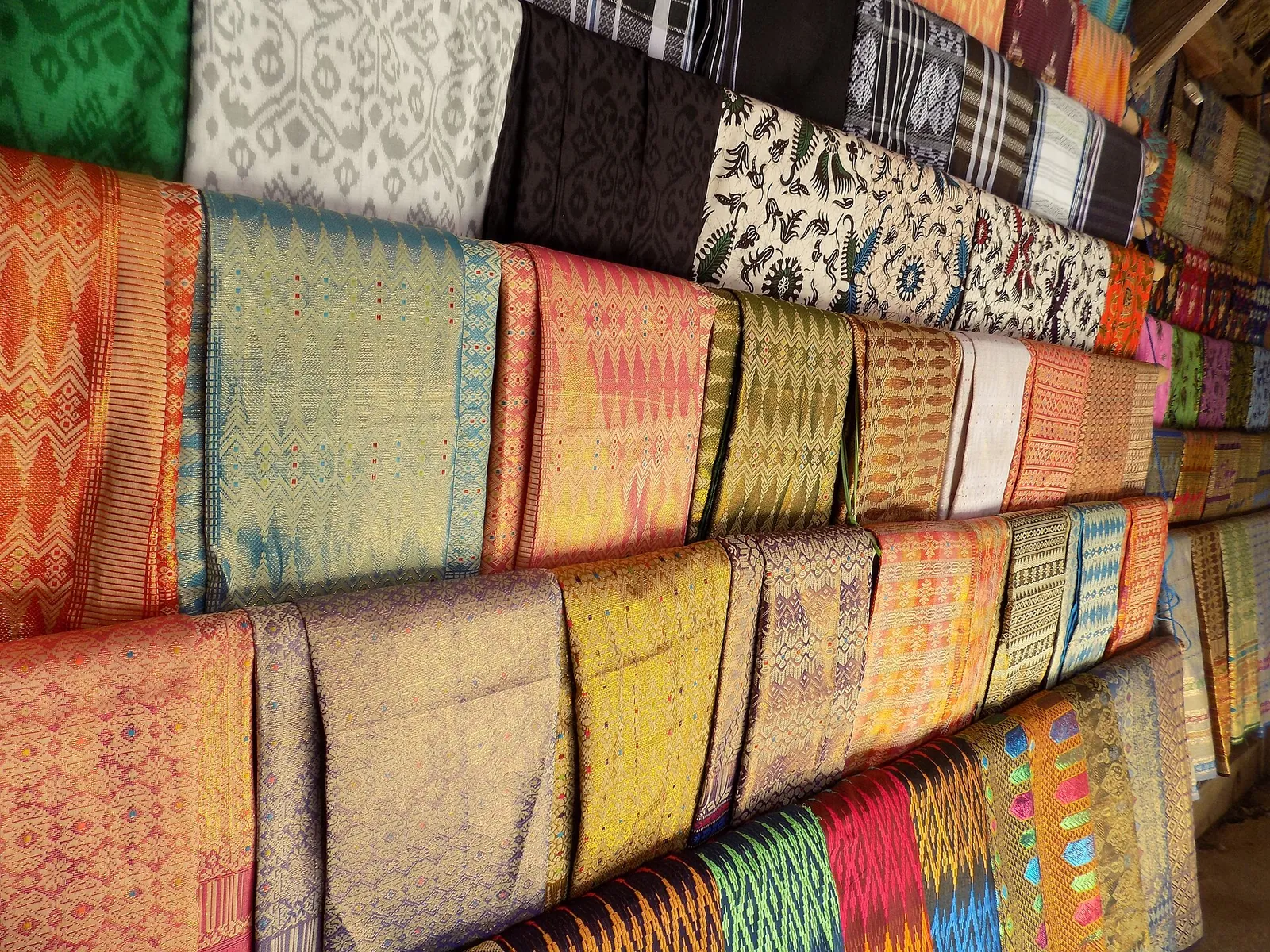
Weaving is central to Sasak life: the ministry notes that women learn to weave from childhood, and Sade sells hand-woven cloth, with prices it quotes between IDR 50,000 and IDR 400,000 a piece. Ask before photographing people and dress modestly. Ende, about three minutes' drive north, is another Sasak village with famously low doorways, built so that guests bow as they enter.
For more textiles, Sukarara in Jonggat district, which Wikivoyage lists as a day trip from Kuta, is known as Lombok's weaving village, the ministry says. The ministry notes there is no public transport to Sade, so combine the villages with your airport transfer or a day with a driver.
Getting around, festivals and practical tips
There is little useful public transport. The Ministry of Tourism advises renting a scooter or car, and Wikivoyage reports that Grab and Gojek do not operate in Kuta because of the local taxi association. If you rent a scooter, check the brakes, lights and tyres, make sure the registration document (STNK) is with the bike, wear a helmet and never leave your passport as a deposit. If you do not ride confidently on steep, sandy hill roads, hire a car with a driver from your hotel.
Two events shape the calendar. Bau Nyale is the Sasak sea-worm festival: according to the ministry, it remembers Princess Mandalika, who threw herself into the sea at Seger to avoid choosing between rival suitors and is believed to return as the colourful nyale worms. Locals gather on the beach on the 20th day of the 10th month of the Sasak calendar and catch the worms at night until dawn. The festival takes place at Seger Beach; in 2024 it ran from 23 February to 1 March. The MotoGP Grand Prix of Indonesia at the Mandalika circuit (4.3 kilometres, 17 turns) is on 9–11 October 2026, according to MotoGP's official calendar and the ministry; book well ahead or avoid race week if you want quiet beaches.
Bring enough cash: the ministry notes that small stalls and village shops still need it. Lombok is a largely Muslim island that the ministry promotes as a halal destination, and it asks visitors to respect village dress codes, so cover up away from the beach. Swim only where the bay is sheltered, as the open coast faces the Indian Ocean swell. If you hire a local boat, check it has life jackets and agree on the price and return time before you board.
Practical questions
Is Kuta Lombok like Kuta in Bali?
No. Kuta on Lombok is a smaller surf village on the south coast, with warungs, cafés and surf shops rather than big nightlife, next to the newer Mandalika resort zone. When you search for directions, type 'Kuta Lombok' so you do not end up in Bali.
How many days do I need in Kuta Lombok?
Three to five nights: one day for the eastern bays (Tanjung Aan and Bukit Merese), one for the western bays (Mawun and Selong Belanak), one for surfing or Gerupuk, and half a day for Sade village.
Which beach near Kuta is best for swimming?
Tanjung Aan, whose calm water the Ministry of Tourism recommends for swimming and snorkelling, and the sheltered middle of Mawun bay. Avoid the open, exposed sides of the bays, and check the tide at Pantai Putri Nyale in front of the Novotel, which Wikivoyage says almost dries out at low tide.
Where can beginners learn to surf near Kuta Lombok?
At Selong Belanak, which has gentle waves, surf schools and board rental, or at the beach break of Tanjung Aan in the morning. Inside Gerupuk suits beginners to intermediates, but you need a boat to reach it.
How do I get from Lombok airport to Kuta?
By taxi or pre-booked transfer: Wikivoyage puts the village 18 kilometres south of the airport, about 25 minutes by car. There is no useful public transport, and Grab and Gojek do not operate in Kuta itself.
When is the MotoGP at Mandalika?
The 2026 Grand Prix of Indonesia is on 9–11 October 2026, according to MotoGP's calendar and the Ministry of Tourism. Expect higher prices and full hotels that week.
Sources and checks before you travel
Reference sources for the version dated 3 October 2026. Confirm opening times, access, transport and conditions for your travel dates.
- Indonesia Travel (Ministry of Tourism): Tanjung Aan Beach ↗ — opens in a new tab
- Indonesia Travel (Ministry of Tourism): Mandalika Marvels, 4 scenic escapes ↗ — opens in a new tab
- Indonesia Travel (Ministry of Tourism): Sade village ↗ — opens in a new tab
- Indonesia Travel (Ministry of Tourism): Pantai Mawun ↗ — opens in a new tab
- Indonesia Travel (Ministry of Tourism): 7 destinations around Mandalika ↗ — opens in a new tab
- Indonesia Travel (Ministry of Tourism): Mandalika ↗ — opens in a new tab
- Indonesia Travel (Ministry of Tourism): Hills around Mandalika ↗ — opens in a new tab
- Indonesia Travel (Ministry of Tourism): 5 bucket-list destinations in Mandalika ↗ — opens in a new tab
- Indonesia Travel (Ministry of Tourism): The meaning behind the Bau Nyale festival ↗ — opens in a new tab
- Indonesia Travel (Ministry of Tourism): Festival Pesona Bau Nyale ↗ — opens in a new tab
- Indonesia Travel (Ministry of Tourism): Pertamina Grand Prix of Indonesia 2026 ↗ — opens in a new tab
- MotoGP: 2026 calendar ↗ — opens in a new tab
- Wikipedia: Mandalika International Street Circuit ↗ — opens in a new tab
- Wikipedia: Lombok International Airport ↗ — opens in a new tab
- Indonesia Travel (Ministry of Tourism): 6 tourism villages around Mandalika ↗ — opens in a new tab
- Indonesia Travel (Ministry of Tourism): Lombok's halal cuisine ↗ — opens in a new tab
- Indonesia Travel (Ministry of Tourism): Plecing kangkung ↗ — opens in a new tab
- Indonesia Travel (Ministry of Tourism): Sate rembiga ↗ — opens in a new tab
- Indonesia Travel (Ministry of Tourism): 6 Mandalika snacks ↗ — opens in a new tab
- Wikivoyage: Kuta (Lombok) ↗ — opens in a new tab
Does this experience fit your route?
Staying a few nights? Book a surf lesson for an early morning, when the wind is lightest, and keep your sunset for Bukit Merese.
Browse relevant experiences on Viator ↗ — opens in a new tabAffiliate link · Book with ViatorPhoto credits
Tanjung Aan, east of Kuta: a long bay of pale sand and shallow turquoise water.
Photograph: Suryanata budi — opens in a new tab · CC BY-SA 4.0 — opens in a new tab
Changes: Resized and converted to WebP; displayed with responsive crops. · Original photograph and licence details ↗ — opens in a new tab
Tanjung Aan seen from Bukit Merese, the headland above the bay, late in the day.
Photograph: Dhika Ayu Agustin Cahyani — opens in a new tab · CC BY-SA 4.0 — opens in a new tab
Changes: Resized and converted to WebP; displayed with responsive crops. · Original photograph and licence details ↗ — opens in a new tab
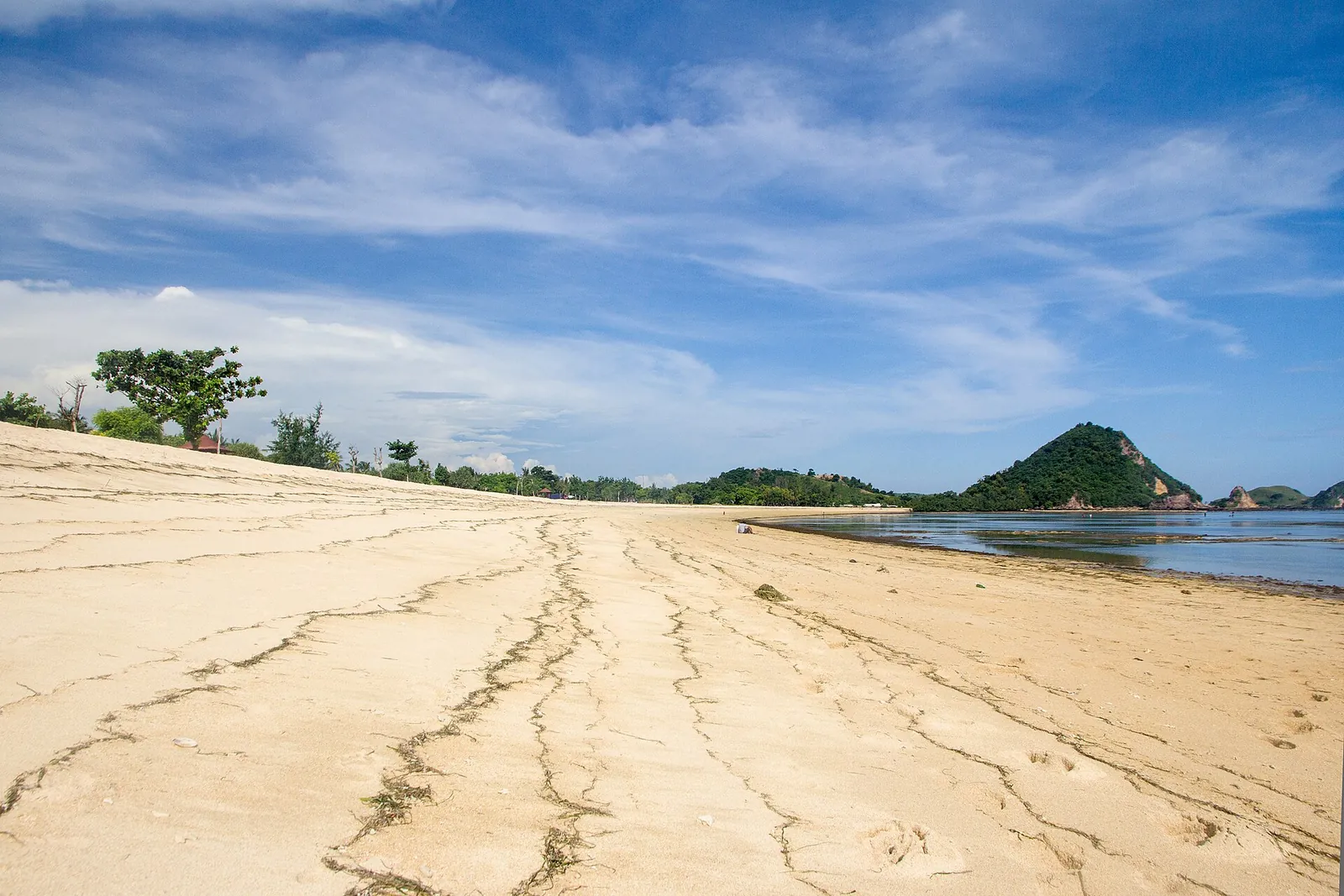
Kuta Beach on Lombok's south coast, in front of the village.
Photograph: Alexey Komarov — opens in a new tab · CC BY 3.0 — opens in a new tab
Changes: Resized and converted to WebP; displayed with responsive crops. · Original photograph and licence details ↗ — opens in a new tab
Fishing boats pulled up on the sand at Selong Belanak, west of Kuta.
Photograph: Afifahdpl — opens in a new tab · CC BY-SA 4.0 — opens in a new tab
Changes: Resized and converted to WebP; displayed with responsive crops. · Original photograph and licence details ↗ — opens in a new tab
Ayam taliwang, Lombok's spicy grilled chicken.
Photograph: Midori — opens in a new tab · CC BY 3.0 — opens in a new tab
Changes: Resized and converted to WebP; displayed with responsive crops. · Original photograph and licence details ↗ — opens in a new tab
Hand-woven Sasak cloth (tenun) for sale in Sade village.
Photograph: Meithyra Melviana Simatupang — opens in a new tab · CC BY-SA 4.0 — opens in a new tab
Changes: Resized and converted to WebP; displayed with responsive crops. · Original photograph and licence details ↗ — opens in a new tab