Bali · Bali
Uluwatu and the Bukit travel guide: cliff temple, kecak, surf and coves
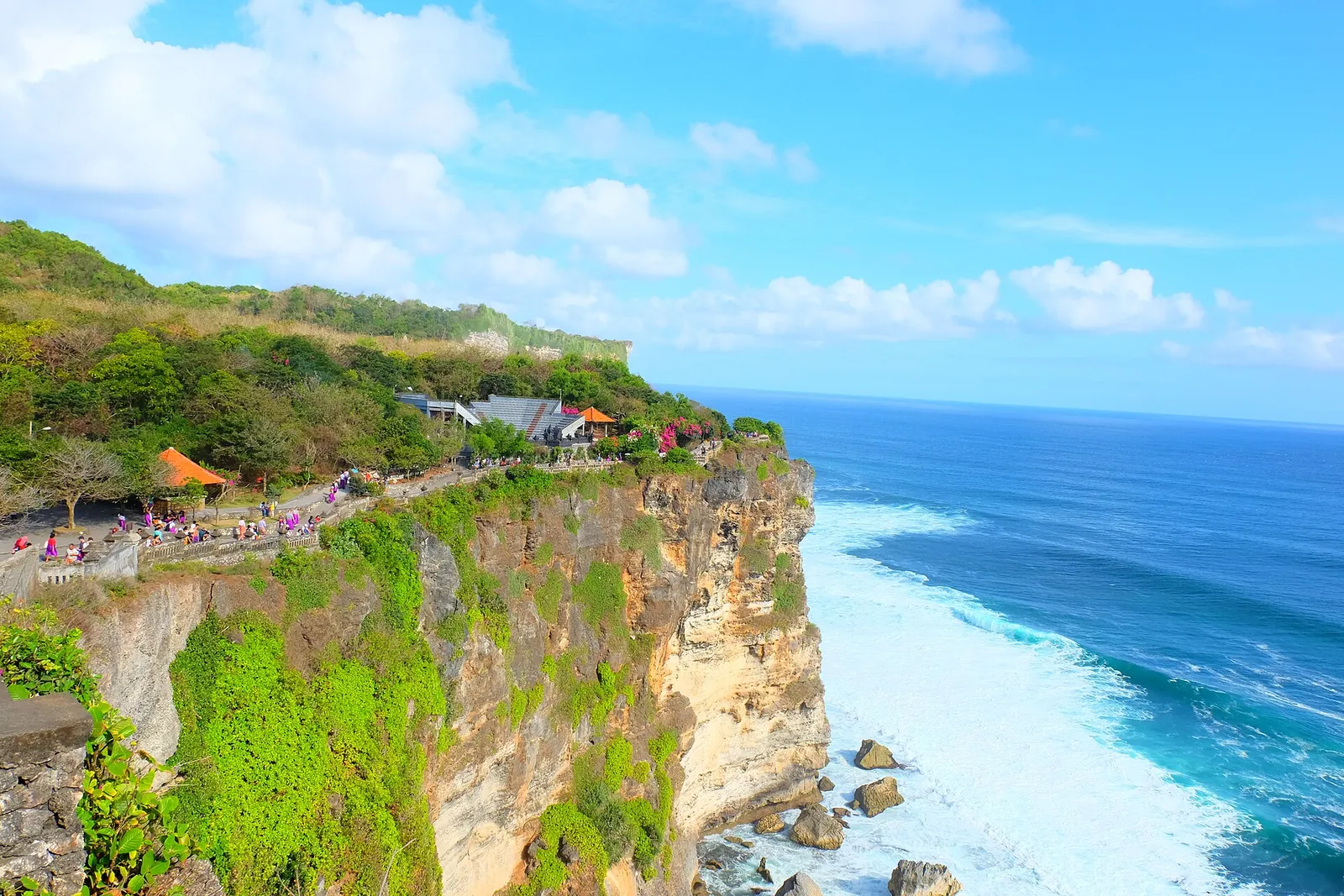
The Bukit is the dry limestone peninsula that hangs off Bali's southern tip, joined to the rest of the island by a narrow neck at the airport. Its west and south coasts are a wall of cliffs with small sandy coves tucked into gaps in the rock and some of Indonesia's best-known surf breaks offshore. At the far south-western corner, Pura Luhur Uluwatu sits on the cliff edge and stages a kecak performance at sunset. Staying here means trading Bali's rice-field and town scenery for ocean views — and accepting that almost every outing starts with a car or scooter ride.
- Suggested time
- 3–4 nights (more for a surf trip)
- Where to stay
- Uluwatu–Pecatu for surf and cliffs; Jimbaran or Nusa Dua for calmer water and resorts
- Season and timing
- Bali has a dry and a rainy season. Indonesia's tourism ministry names the dry season — April to August on its Suluban page — as the best time to surf the Bukit's west coast; the kecak runs at sunset and the temple is busiest in the late afternoon in holiday periods.
The short answer
Give the Bukit three or four nights, longer if you surf. Sleep in the Uluwatu–Pecatu area for the surf breaks and cliff-top views, in Jimbaran for a calm bay and the seafood dinners, or in Nusa Dua for a resort with easy swimming. Plan one late afternoon for Pura Luhur Uluwatu and its kecak, a day or two working through the coves (Padang Padang, Suluban, Dreamland, Balangan), and arrange a driver, taxi or scooter for each outing, because public transport barely reaches this coast. Ngurah Rai International Airport is at the northern end of the peninsula.
Choose your end of the peninsula
The Bukit is small on the map but slow to cross, so where you sleep decides what an ordinary day looks like. The Uluwatu–Pecatu side, on the south-west coast, puts you near the surf breaks, Pura Luhur Uluwatu and the cliff-foot coves. The tourism ministry describes lodging here as everything from simple warung rooms to villas and resort hotels, with cafés from cheap food stalls to expensive restaurants. Many places sit on the clifftop, so check how far the room is from a beach you can actually walk down to.
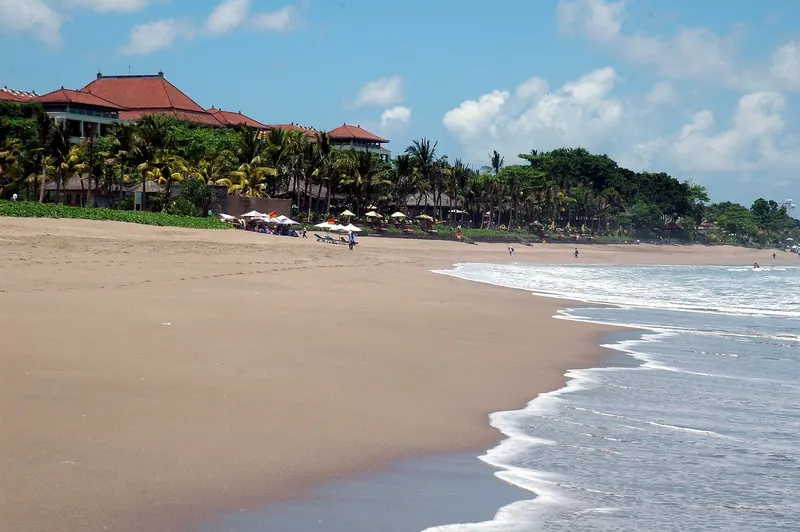
Jimbaran, on the bay just south of the airport, was a fishing village and is now best known for its beachfront seafood restaurants. The ministry notes that the bay is protected by a coral reef and its water is mellower than other parts of Bali — a better choice if you want to swim from your hotel. Nusa Dua, on the east coast, is a planned enclave of large international hotels, golf courses and a convention centre, with calm, shallow water; it suits a resort holiday more than surf-and-coves exploring.
Whichever you choose, budget for transport. The ministry's own pages recommend a taxi, a rented car or motorbike, or online ride services for the Bukit, and say Suluban in particular is hard to reach by public transport.
Pura Luhur Uluwatu and the sunset kecak
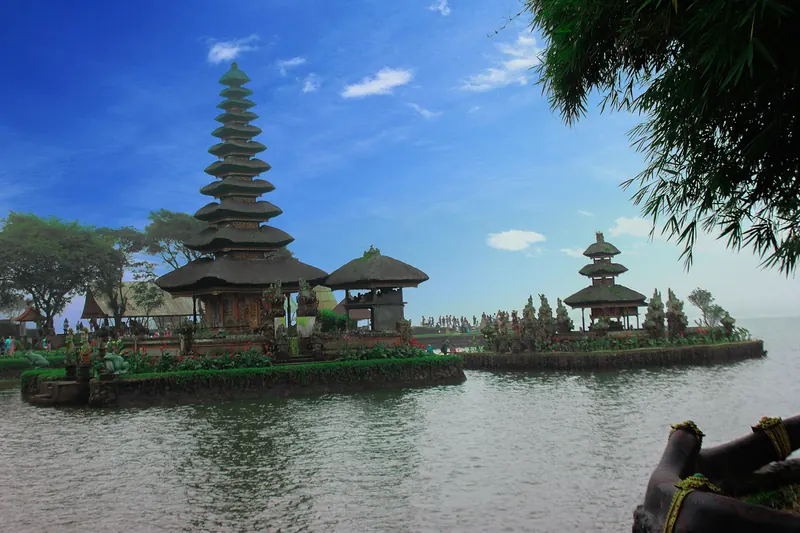
Pura Luhur Uluwatu stands on a 70-metre cliff above the Indian Ocean in Pecatu village. According to the tourism ministry, tradition credits its founding to Empu Kuturan in the 11th century and its later strengthening to the Javanese priest Dang Hyang Nirartha in the 16th century, who is believed to have ended his life here. In Balinese belief it is the guardian of the south, protecting the island from the forces of the ocean, and it is an active place of worship, not a museum: Balinese Hindus come to pray, and you may see ceremonies on holy days.
When we checked on 2026-10-03, the ministry's Pura Uluwatu page listed entry for foreign visitors at IDR 100,000 for adults and IDR 50,000 for children, including the loan of the sarong and sash you must wear, with the kecak ticketed separately at IDR 200,000 for foreign visitors. It describes these as 2025 prices and says tickets are sold on site or online, with advance booking advised in holiday periods. Confirm the current price at the gate.
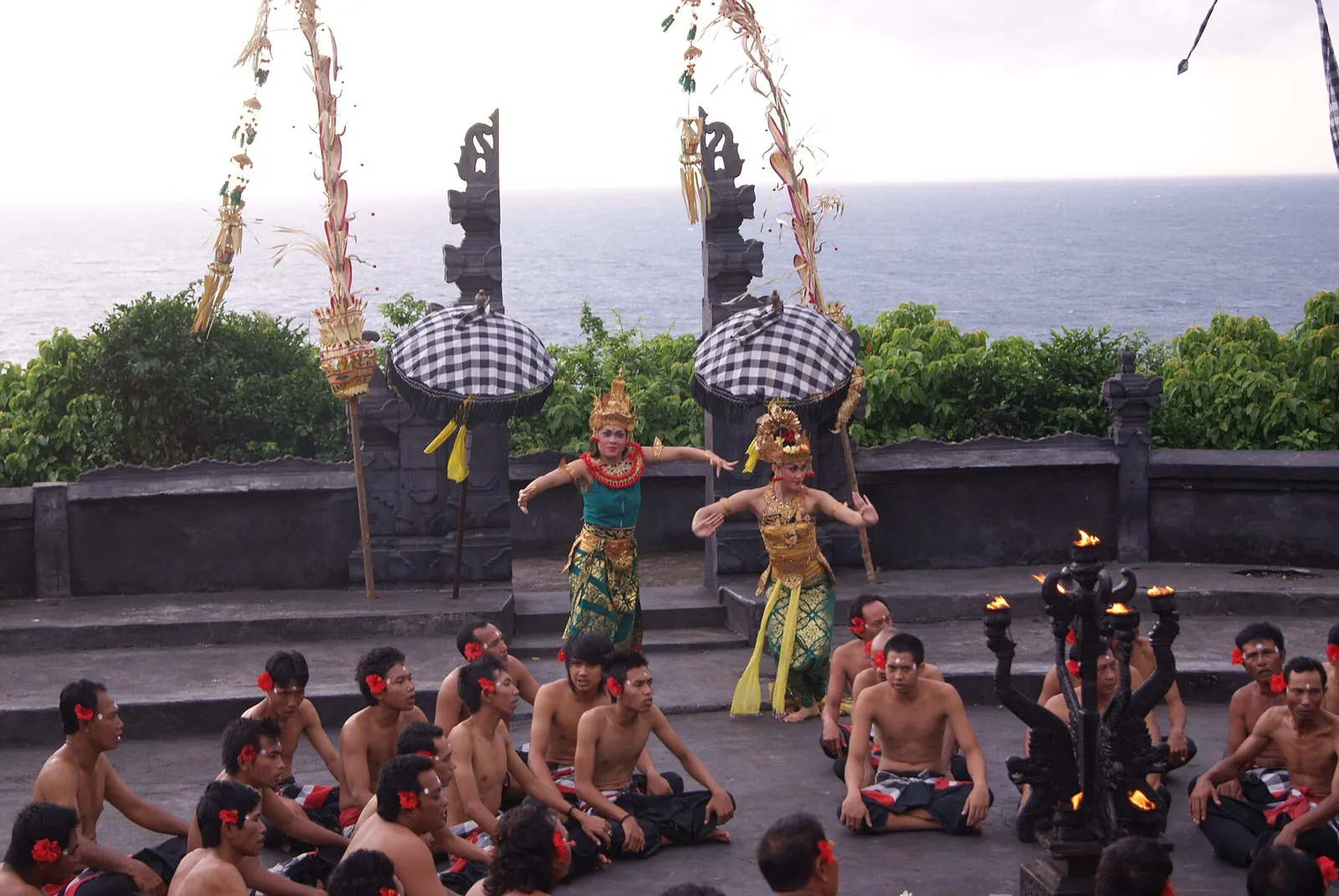
The kecak is performed in an open-air amphitheatre on the cliff, starting around 5 pm according to the ministry, so the sunset is the backdrop. It tells a short version of the Ramayana — the abduction of Sita and her rescue with the help of the white monkey Hanuman — with no gamelan orchestra: a circle of around 50–60 bare-chested men supplies all the music with the 'cak-cak-cak' chant. The form was developed in the 1930s by the Balinese dancer Wayan Limbak and the German painter Walter Spies from the older sanghyang trance ritual.
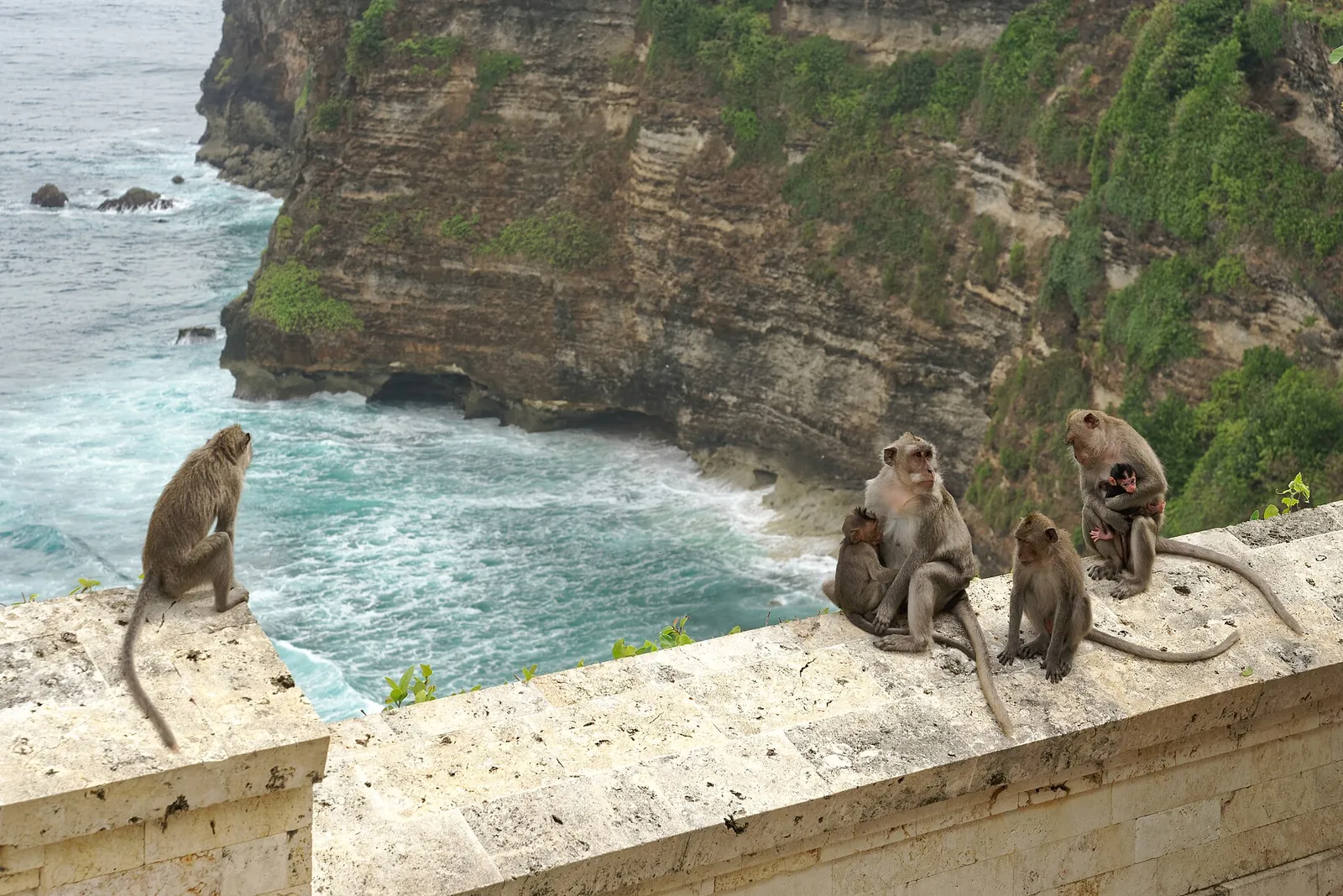
Rules are simple but enforced: wear the sarong and sash, keep your voice down where people are praying, do not climb walls or shrines, and — per the ministry — women who are menstruating should not enter the inner temple. The long-tailed macaques along the cliff path snatch glasses, hats and loose items. Traffic to the temple builds in the late afternoon before the performance, so set off early and treat the evening as the main event rather than squeezing it after a beach day across the peninsula.
Make time for the local food
What to eat and where to look
Grilled seafood on Jimbaran beach
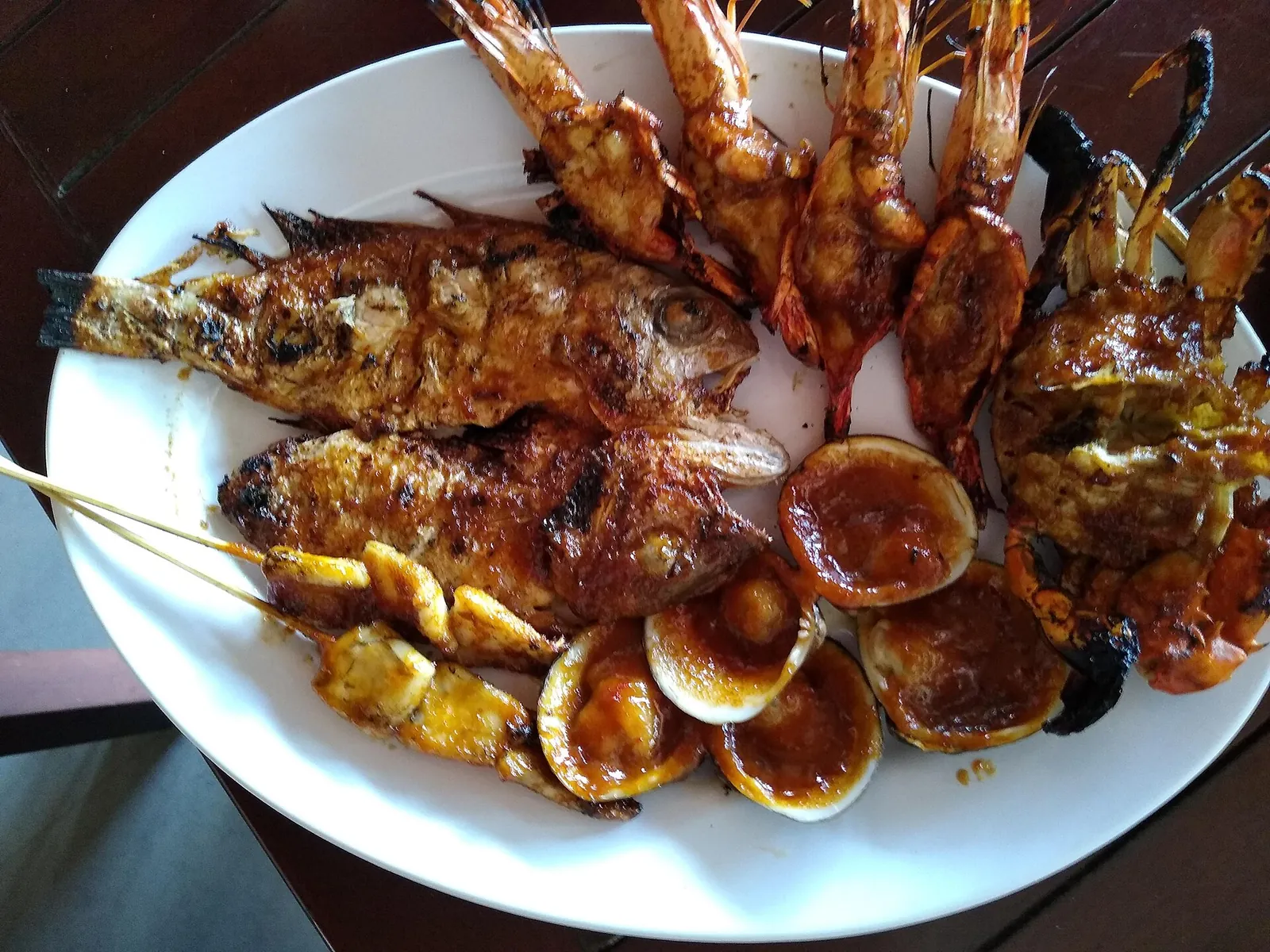
Fish, prawns, squid, clams, crab or lobster chosen from the day's catch and grilled for you, served at candlelit tables on the sand. The ministry names this as Jimbaran's signature evening.
- Where to look
- The beachfront restaurants along Jimbaran Bay.
- Fit it into your day
- A sunset dinner on your arrival or last night, as the bay is close to the airport.
Confirm the price of what you pick, and of the side dishes, before it goes on the grill. Contains shellfish.
Babi guling
Bali's spit-roasted whole pig, rubbed with spices so the skin turns crisp; served with rice, lawar and Balinese sambal.
- Where to look
- Warungs that specialise in babi guling; look for the dish name on the sign.
- Fit it into your day
- A big lunch, ideally before a lazy afternoon rather than before a surf session.
Pork; the plate often includes offal and blood-based lawar.
Sate lilit
Balinese 'wrapped' satay: minced fish, chicken or pork mixed with bumbu Bali spice paste and coconut, pressed around a bamboo stick or lemongrass stalk and grilled over charcoal.
- Where to look
- Warungs and Balinese restaurants, often on a mixed rice plate.
- Fit it into your day
- A snack or part of a mixed rice plate between coves.
Ask which meat is used if you avoid pork.
Bebek betutu
Whole duck rubbed with shallots, garlic, turmeric, ginger and candlenut, wrapped in banana leaves and slowly roasted or steamed until tender; served with rice, lawar and sambal matah.
- Where to look
- Balinese restaurants that cook traditional dishes rather than international menus.
- Fit it into your day
- A sit-down dinner on a night without the kecak.
Richly spiced; ask how hot the sambal matah is.
The surf breaks: watch before you paddle out
Uluwatu is the Bukit's headline wave: a long, powerful left-hand reef break that the tourism ministry rates for experienced surfers confident in fast, hollow conditions. You reach it through a cave at the foot of the cliff at lower tide, so the tide decides when you can get in and out.
The ministry breaks the spot into several waves. The Peak, in front of the cave, is the most consistent and best at mid to high tide, closing out at low tide. Racetracks, about 100 metres further along, is fast and best at low tide. Outside Corner only works with big swells (over about 8 feet) at low tide, and Temple — the two breaks below the temple — is for experts only because the reef is very shallow.
Next door, Suluban (also called Blue Point) is reached by steps and log ramps through narrow gaps in the limestone. The ministry describes waves of 3 to 12 feet and the dry season from April to August as the best time; it also suggests early morning to avoid the crowds. If you are not an experienced reef surfer, watch from the cliff, take lessons where the conditions suit beginners, or keep the Bukit as a place to watch rather than ride.
Coves below the cliffs
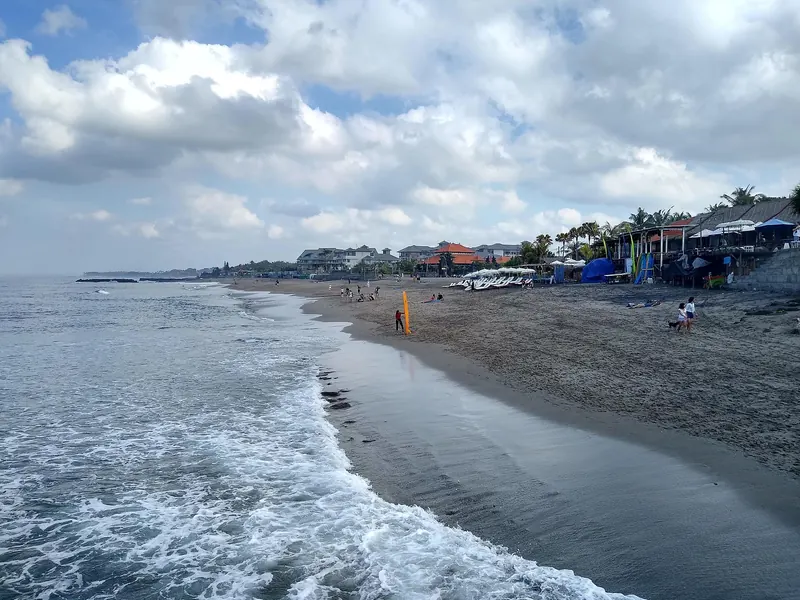
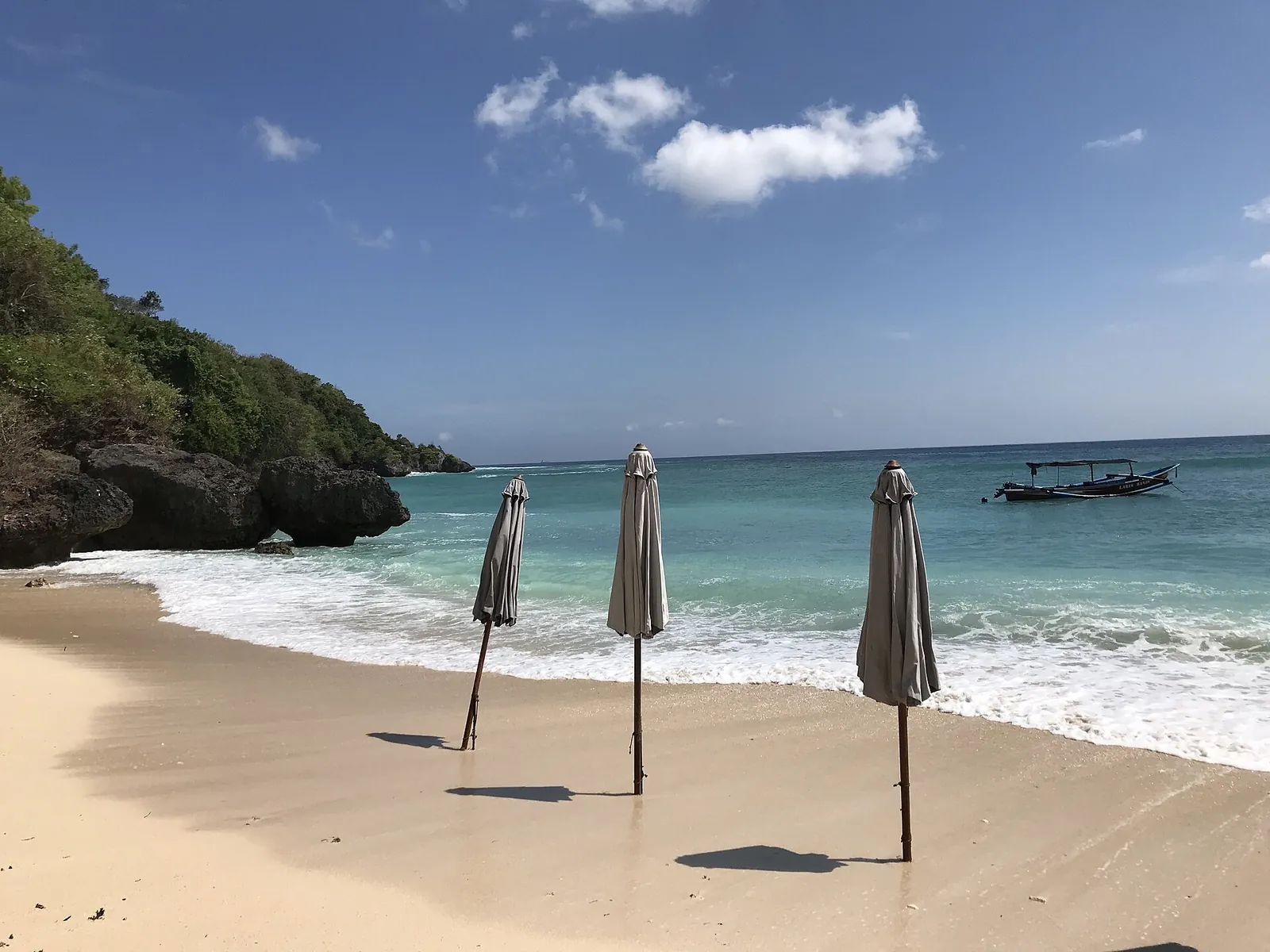
Between the surf breaks, the west and south coasts hide small white-sand beaches, most of them reached by stairs down the cliff. Treat each as a separate outing with its own parking, steps and facilities, and check the tide and the sea before you swim: these are surf beaches over reef, not lagoons.
- Padang Padang — a white-sand cove hidden behind a narrow gap in the rock, reached by stairs; popular with surfers and day visitors alike.
- Suluban (Blue Point) — reached through narrow rock gaps right below the Uluwatu break. When we checked on 2026-10-03, the ministry's page listed an entrance fee of IDR 20,000, and it notes cafés and restaurants serving Indonesian, Balinese and international food.
- Dreamland — in Pecatu, with soft white sand, big waves and the most facilities of the group: cafés, lodging and surfboard rental.
- Balangan — fine sand under tall coral cliffs, surfable waves and a good spot for sunset.
- Nyang Nyang — down a long, steep flight of steps on the south coast, quieter and more natural; the ministry advises bringing enough supplies because facilities are limited.
Jimbaran, GWK and Nusa Dua
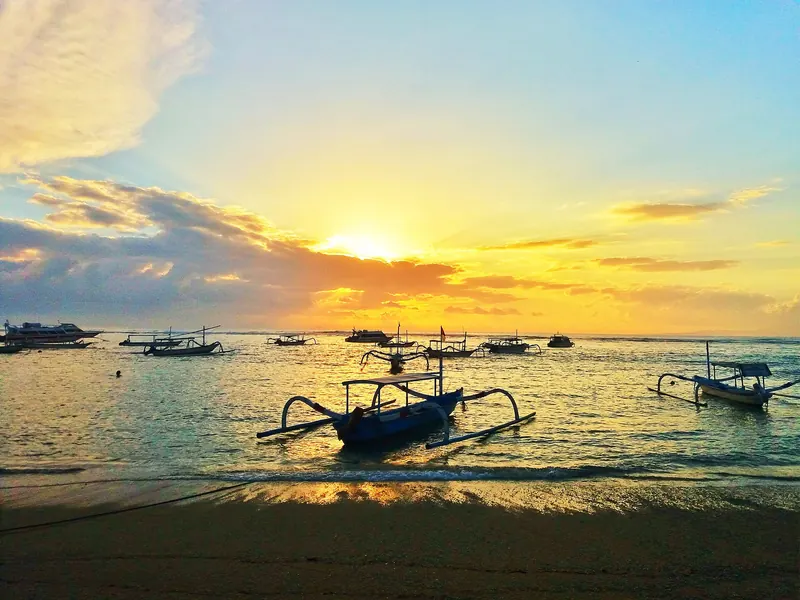
Jimbaran Bay is about 15 minutes from the airport, according to the ministry, and stretches about 4 kilometres. Its beachfront restaurants set tables on the sand at sunset: you pick from the day's catch — snapper, clams, crab, lobster or squid — and it is grilled while you watch the planes coming in to land. It is an easy last evening before a flight.
Garuda Wisnu Kencana (GWK) Cultural Park, in Ungasan in the middle of the peninsula, is a 60-hectare park built around Nyoman Nuarta's statue of Vishnu riding Garuda — over 120 metres tall and 64 metres wide, as the ministry describes it. It hosts dance and cultural performances (the kecak is also staged there) and works as a half-day stop between the airport and the Uluwatu side.
Nusa Dua's name means 'two islands', after the two small headlands off its coast; on one stands the Pura Nusa Dharma shrine. The ministry describes calm water suitable for families and water sports such as snorkelling and jet skiing, and a well-kept beach walkway. If you are staying on the wild west coast, it is the Bukit's easiest swimming day.
A workable three-day plan
This is an editorial suggestion, not a timetable. Check tides, temple ticket times and the sea on the day.
- Day 1 — Arrive and Jimbaran: land at Ngurah Rai, check in, and have a seafood dinner on Jimbaran beach at sunset.
- Day 2 — Coves and kecak: an early swim or surf at Padang Padang or Dreamland, a long lunch out of the midday sun, then leave early for Pura Luhur Uluwatu and the sunset kecak.
- Day 3 — Surf or slow day: watch the surfers at Uluwatu and Suluban in the morning, when the ministry says it is less crowded; in the afternoon either GWK or a calm-water beach at Nusa Dua.
- Day 4 (optional): Balangan or Nyang Nyang, or move on to Canggu, Seminyak or Sanur for the next part of your Bali trip.
Practical questions
How many days should I spend in Uluwatu and the Bukit?
Three or four nights cover the temple and kecak, a few coves and a Jimbaran seafood dinner at an easy pace. Surfers often stay a week or more to catch the right swell and tide.
Where should I stay on the Bukit Peninsula?
Uluwatu–Pecatu for surf and clifftop views, Jimbaran for a calm bay and seafood restaurants close to the airport, or Nusa Dua for large resorts and easy swimming. Check how far your hotel is from a beach you can walk to.
How much is the Uluwatu kecak dance?
When we checked on 2026-10-03, the tourism ministry's page listed IDR 200,000 for foreign visitors (as 2025 prices), separate from the temple entry of IDR 100,000 for foreign adults. Confirm at the ticket office or the official seller.
What time does the kecak start at Uluwatu?
The ministry says to arrive around 5 pm for the performance, which is timed to the sunset. Leave early, as traffic to the temple builds in the late afternoon.
Do I need my own transport on the Bukit?
In practice, yes. The tourism ministry recommends a taxi, a rented car or motorbike, or an online ride service, and notes that beaches such as Suluban are hard to reach by public transport.
Is Uluwatu good for beginner surfers?
The main Uluwatu break is a powerful reef wave for experienced surfers, and the Temple break is for experts only. Beginners are better off watching from the cliff and learning on gentler spots elsewhere in Bali, such as Old Man's at Batu Bolong in Canggu, which the ministry lists as a beginner break.
Sources and checks before you travel
Reference sources for the version dated 3 October 2026. Confirm opening times, access, transport and conditions for your travel dates.
- Indonesia.travel: Pura Uluwatu, a cliffside paradise ↗ — opens in a new tab
- Indonesia.travel: Pura Luhur Uluwatu ↗ — opens in a new tab
- Indonesia.travel: the Kecak dance ↗ — opens in a new tab
- Indonesia.travel: Uluwatu, home of the most famous waves in Bali ↗ — opens in a new tab
- Indonesia.travel: 15 surfing destinations in Indonesia ↗ — opens in a new tab
- Indonesia.travel: Suluban Beach ↗ — opens in a new tab
- Indonesia.travel: Padang Padang Beach ↗ — opens in a new tab
- Indonesia.travel: Dreamland Beach ↗ — opens in a new tab
- Indonesia.travel: Balangan Beach ↗ — opens in a new tab
- Indonesia.travel: Nyang Nyang Beach ↗ — opens in a new tab
- Indonesia.travel: Romantic Jimbaran Beach ↗ — opens in a new tab
- Indonesia.travel: Garuda Wisnu Kencana ↗ — opens in a new tab
- Indonesia.travel: Nusa Dua ↗ — opens in a new tab
- Indonesia.travel: Nusa Dua Beach ↗ — opens in a new tab
- Indonesia.travel: Ngurah Rai Airport ↗ — opens in a new tab
- Indonesia.travel: Surfing Old Man's ↗ — opens in a new tab
- Love Bali (Bali Provincial Government): tourist levy ↗ — opens in a new tab
- Indonesia.travel: Bali regulations and the tourist levy ↗ — opens in a new tab
- Indonesia.travel: Babi guling ↗ — opens in a new tab
- Indonesia.travel: Sate lilit ↗ — opens in a new tab
- Indonesia.travel: Bebek betutu ↗ — opens in a new tab
Does this experience fit your route?
An organised Uluwatu evening saves you the drive and the ticket queue. Before booking, check what is included — temple entry, kecak ticket and hotel pick-up — and the return time.
Browse relevant experiences on Viator ↗ — opens in a new tabAffiliate link · Book with ViatorPhoto credits
Pura Luhur Uluwatu stands on the cliff edge at the south-western tip of the Bukit Peninsula
Photograph: Paskuu — opens in a new tab · CC BY-SA 4.0 — opens in a new tab
Changes: Resized and converted to WebP; displayed with responsive crops. · Original photograph and licence details ↗ — opens in a new tab
The kecak performance at Pura Luhur Uluwatu, with the Ramayana's Rama and Sita in front of the chanting chorus
Photograph: Midori — opens in a new tab · CC BY 3.0 — opens in a new tab
Changes: Resized and converted to WebP; displayed with responsive crops. · Original photograph and licence details ↗ — opens in a new tab
Padang Padang Beach, one of the small coves under the Bukit's limestone cliffs
Photograph: TMFalkner — opens in a new tab · CC BY-SA 4.0 — opens in a new tab
Changes: Resized and converted to WebP; displayed with responsive crops. · Original photograph and licence details ↗ — opens in a new tab
Grilled seafood at a beach restaurant in Jimbaran, on the north side of the Bukit
Photograph: Mx. Granger — opens in a new tab · CC0 — opens in a new tab
Changes: Resized and converted to WebP; displayed with responsive crops. · Original photograph and licence details ↗ — opens in a new tab
Macaques on the wall of the cliff path at Pura Luhur Uluwatu; keep hats, glasses and phones secure
Photograph: Jakub Hałun — opens in a new tab · CC BY-SA 4.0 — opens in a new tab
Changes: Resized and converted to WebP; displayed with responsive crops. · Original photograph and licence details ↗ — opens in a new tab