Plan your trip · Indonesia
Ferries and fast boats in Indonesia: Bali, Gilis, Lombok and Komodo
In Indonesia the sea is part of almost every island trip, but the boats on it are very different things. A speedboat from Sanur to Nusa Penida, a car ferry from Padangbai to Lombok, a Pelni liner that takes days between provinces and a wooden phinisi anchored off Padar are run by different operators, booked through different channels and held to different standards. Choosing well is mostly about matching the boat to the distance, the weather and how much slack you have in the plan.
- Suggested time
- Short hops 30 minutes to a few hours; car ferries several hours; Pelni voyages overnight or longer
- Where to stay
- Sanur for Nusa Penida and Lembongan; Padang Bai or south Bali for the Gilis and Lombok; Labuan Bajo for Komodo
- Season and timing
- Mornings are usually calmer than afternoons. In July and August southerly swell makes the Bali–Gili crossing rougher, and the rainy season (usually October to March in the west) brings squalls; check BMKG's crossing forecasts before you sail.
The short answer
For Bali, Nusa Penida, Lembongan, the Gilis and Lombok, use private fast boats for short hops and take them in the morning: sleep in Sanur for the Nusa islands and in Padang Bai or south Bali for the Gilis. For a slow, cheap crossing with a vehicle or a lot of luggage, use the state ferry operator ASDP (Padangbai–Lembar, Ketapang–Gilimanuk, Sape–Labuan Bajo) and book through its Ferizy system. For Komodo, fly to Labuan Bajo and choose between day boats and a phinisi liveaboard. Use Pelni only if you have days to spare. On any boat, check the life jackets and the forecast, and keep a buffer day before an international flight.
Four kinds of boat, four different decisions
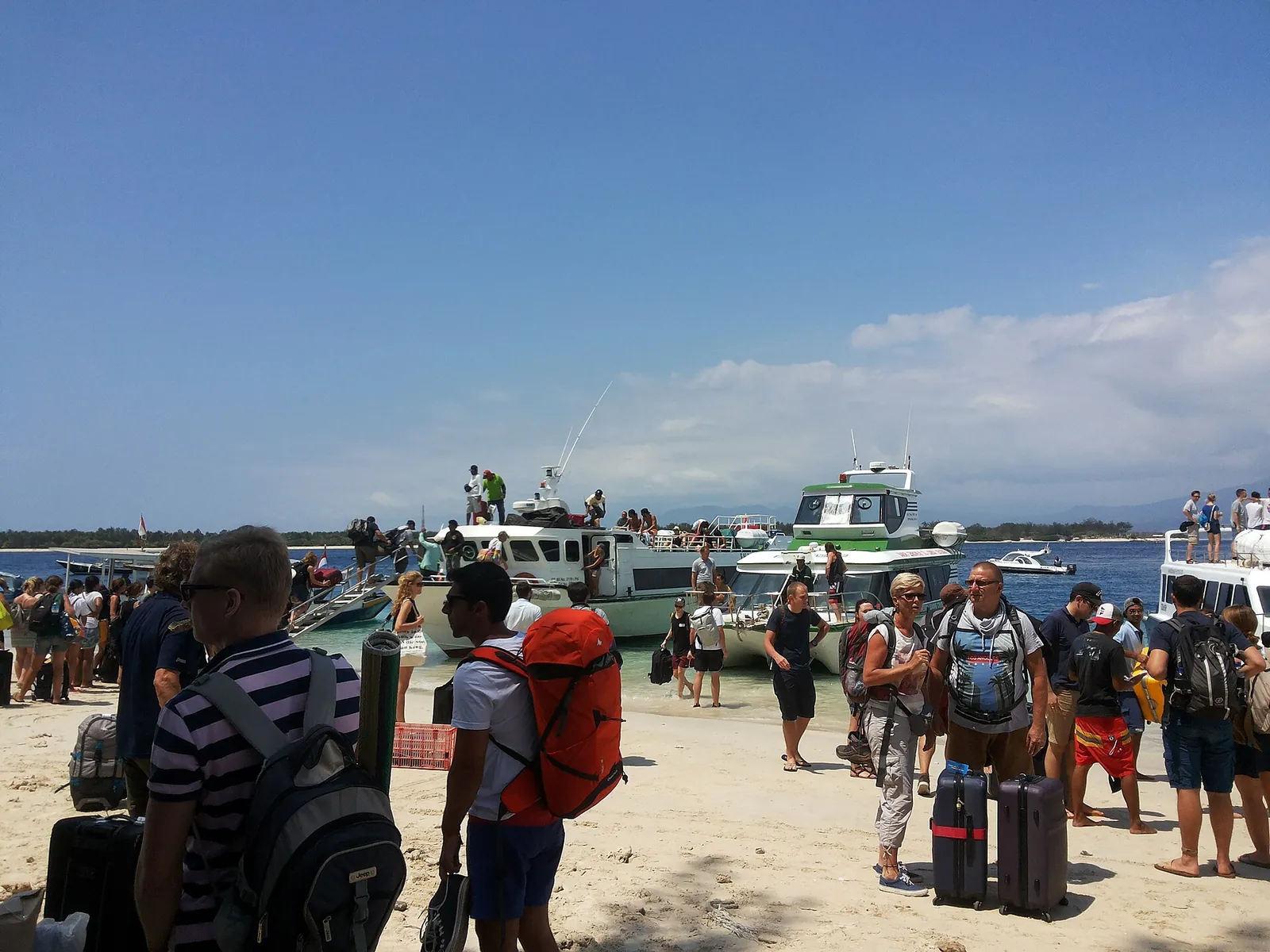
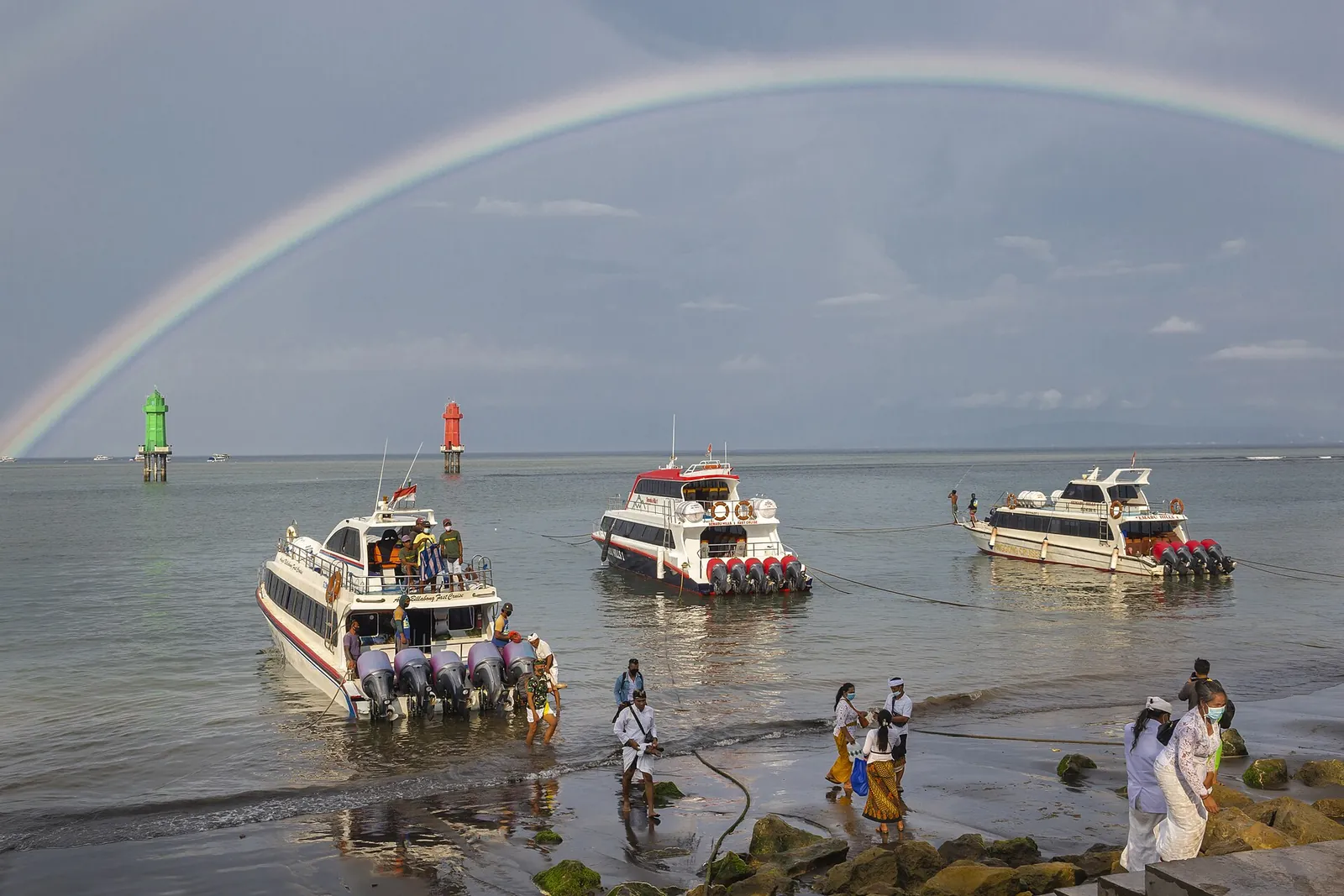
Fast boats are privately run speedboats on the short tourist routes: Bali to Nusa Penida and Nusa Lembongan, and Bali to the Gilis and Lombok. They are quick and leave from beaches and small harbours close to the resorts, but the community travel guide Wikivoyage describes most as light high-speed craft with petrol outboard engines, and notes that crew training, operating standards and safety equipment vary between operators.
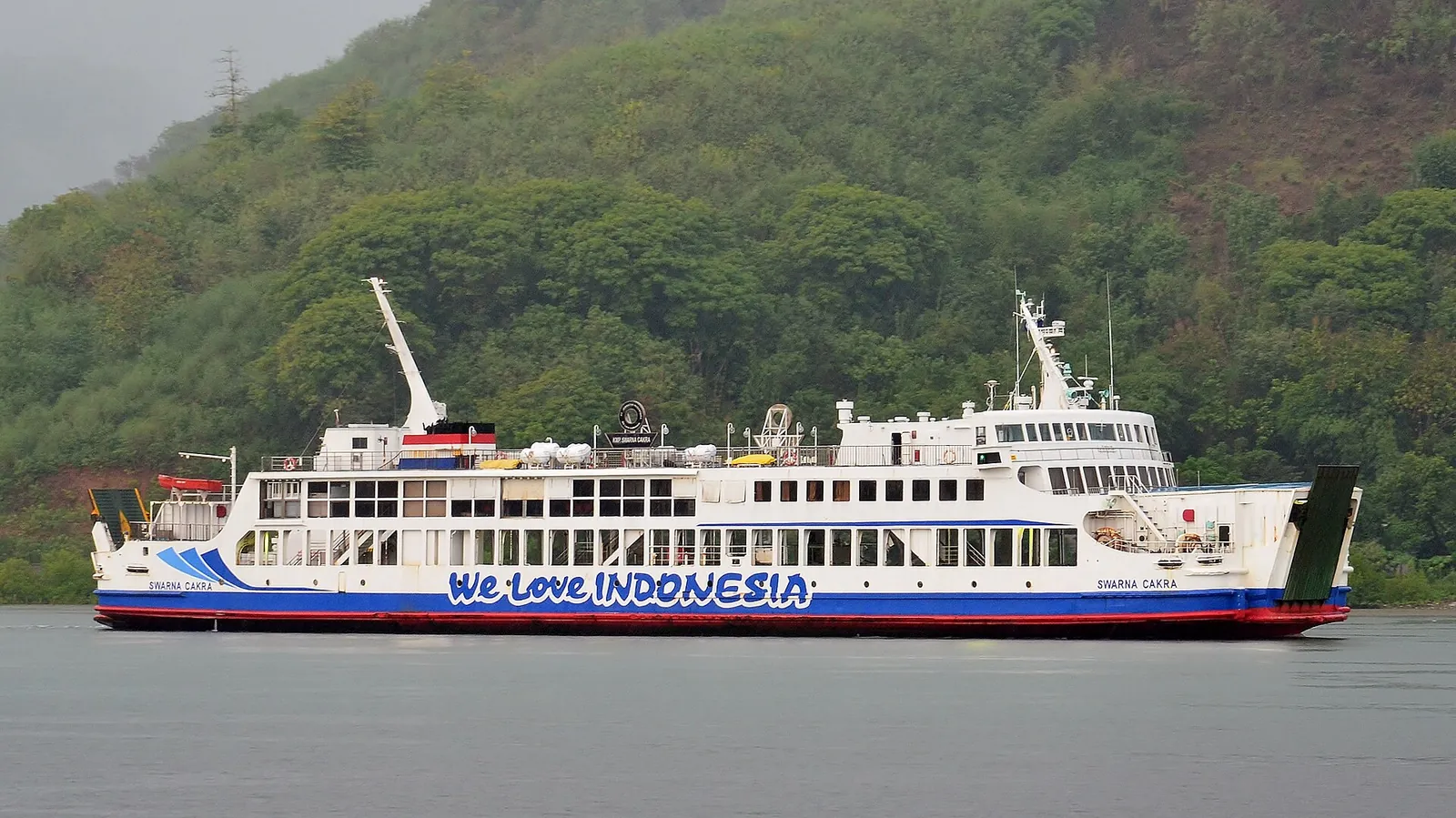
Public car ferries (KMP) are slower, larger vessels that carry trucks, cars, motorbikes and foot passengers. The state operator ASDP Indonesia Ferry says it runs more than 160 ferries on more than 300 routes; its commercial route map includes the crossings most travellers meet: Ketapang–Gilimanuk (Java–Bali), Padangbai–Lembar (Bali–Lombok), Kayangan–Pototano (Lombok–Sumbawa), Sape–Labuan Bajo (Sumbawa–Flores) and Sape–Waikelo (to Sumba).
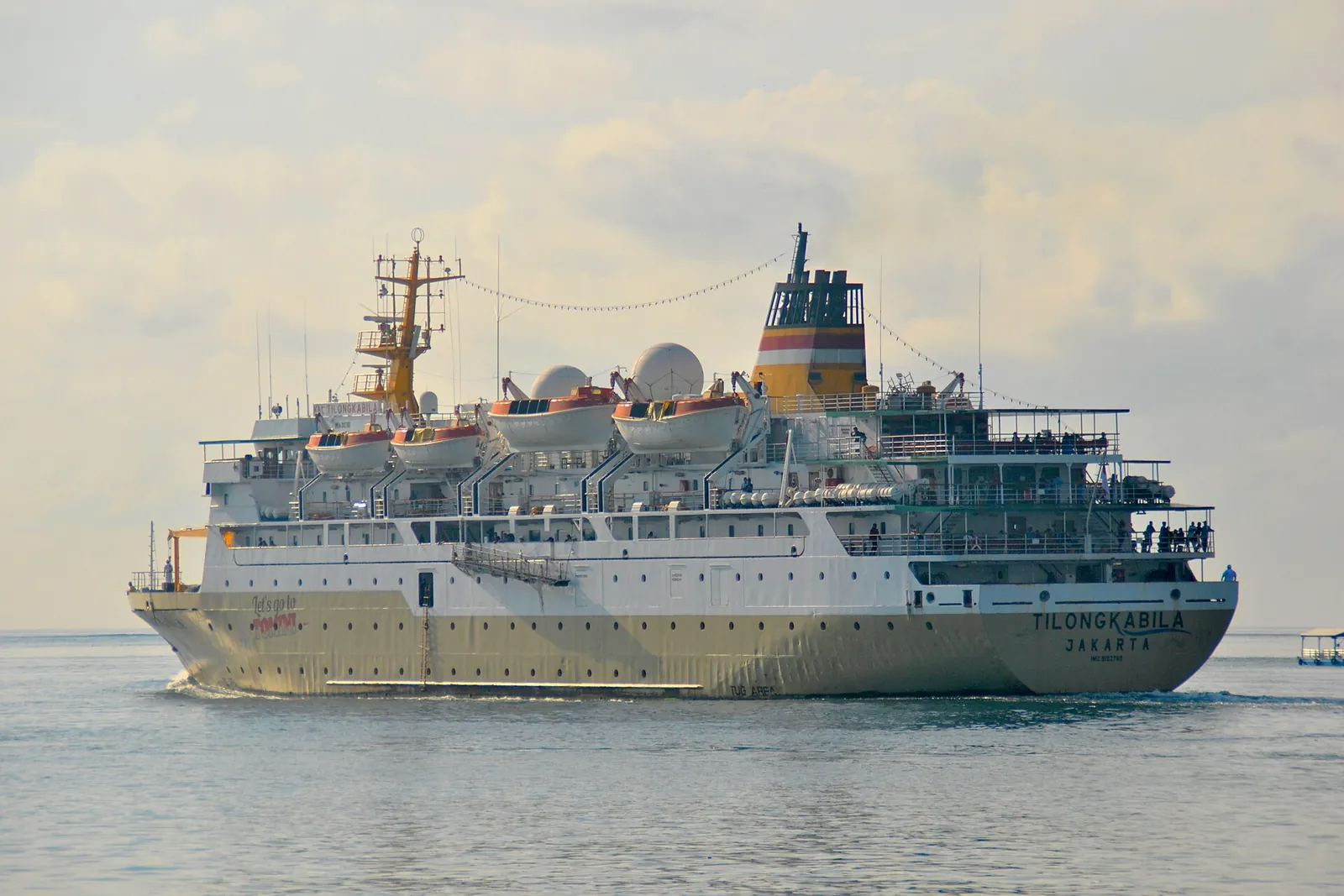
Pelni, the national shipping line, runs long-distance passenger ships between the big ports. Its booking system lists ports from Aceh to Papua, including Benoa in Bali, Lembar in Lombok, Labuan Bajo, Waingapu in Sumba, Maumere, Kupang, Ambon and Sorong. Tour boats and liveaboards, finally, are a separate world: in Labuan Bajo they are mostly converted phinisi sailing ships that live aboard for one or several nights in Komodo National Park.
The rule of thumb: the further and the more remote, the less a fast boat makes sense. Between Bali and Lombok the Wikivoyage Lombok page suggests flights across the strait as a comparable alternative when the sea is bad, and for Komodo, flying to Labuan Bajo is far quicker than any sea route from Bali.
Bali to Nusa Penida, Lembongan, the Gilis and Lombok
Nusa Penida and Nusa Lembongan are served from Sanur. The Bali provincial tourism site says the fast boat from Sanur Harbour to Nusa Penida takes about an hour, with many companies and departures from 07:00 to 15:00 WITA when we checked on 2026-10-03; boats arrive at harbours such as Banjar Nyuh. Indonesia's Ministry of Tourism adds Kusamba and Padang Bai as departure points and gives 30 to 45 minutes to Toyapakeh or Sampalan, depending on the weather, and advises booking well ahead in holiday periods.
The Gilis and Lombok are reached by fast boats from Padang Bai and Serangan, with a few from Amed in the north-east. When we checked on 2026-10-03, the Ministry of Tourism listed IDR 350,000–600,000 for a direct fast boat from Padang Bai or Serangan to Gili Trawangan, depending on operator and season. Wikivoyage notes that Padang Bai routes are shorter at sea but further by road from south Bali, so the total door-to-door time is similar; if you are prone to seasickness, choose the shorter crossing.
If you are already on Lombok, the crossing to the Gilis is short. The ministry listed public boats from Bangsal Harbour at Rp 20,000–30,000 and speedboats at Rp 85,000–150,000, with private speedboats from Teluk Nare from about IDR 350,000 one way. Wikivoyage advises reaching Bangsal or Teluk Nare by 16:00, since boats stop running in the late afternoon.
The slow alternative between Bali and Lombok is ASDP's Padangbai–Lembar car ferry. It is the sensible choice with a rental motorbike, a car or a bicycle. Wikivoyage describes the crossing as roughly five to six hours, sometimes with long waits for loading, and recommends bringing food and water; treat it as a travel day, not a morning transfer.
- Ask which vessel you are booked on. Wikivoyage warns that some resellers sell a premium service and then put passengers on a cheaper boat; your ticket should name the operator and boat.
- Pack for spray. Wikivoyage advises waterproof bags for phones, cameras and laptops; keep your passport in one too.
- Leave a buffer. Do not plan a Gili-to-airport transfer on the day of a long-haul flight; a cancelled boat means a lost day.
Make time for the local food
What to eat and where to look
Ayam taliwang
Lombok's signature grilled chicken: grilled, dipped in a marinade of garlic, chilli and shrimp paste, then grilled again. The Ministry of Tourism calls it the dish to put first on any eating trip to Lombok.
- Where to look
- Restaurants serving Lombok (Sasak) food in Mataram and Senggigi, on the way between Lembar or Bangsal and your hotel.
- Fit it into your day
- A late lunch after arriving on the Padangbai–Lembar ferry, before the drive north.
Usually very spicy, and the marinade contains shrimp paste.
Plecing kangkung
Boiled water spinach (morning glory) topped with a fresh sauce of tomato, chilli, salt and shrimp paste, often with bean sprouts, grated coconut and peanuts. On Lombok it is the usual partner for ayam taliwang.
- Where to look
- Any Lombok restaurant serving ayam taliwang, and warungs near the harbours.
- Fit it into your day
- Order it with grilled chicken or fish to cool the meal down with something green.
Contains shrimp paste and peanuts; the sauce is raw.
Grilled fish at Kampung Ujung
The Ministry of Tourism points visitors to Kampung Ujung, a local food centre in Labuan Bajo; grilled fish and seafood are what most visitors come for.
- Where to look
- Kampung Ujung in Labuan Bajo town.
- Fit it into your day
- Dinner the evening before or after a Komodo boat trip, when an early start rules out a long night.
Agree the price by weight before the fish goes on the grill, and avoid heavy meals right before a rough crossing.
Meals on a Pelni ship
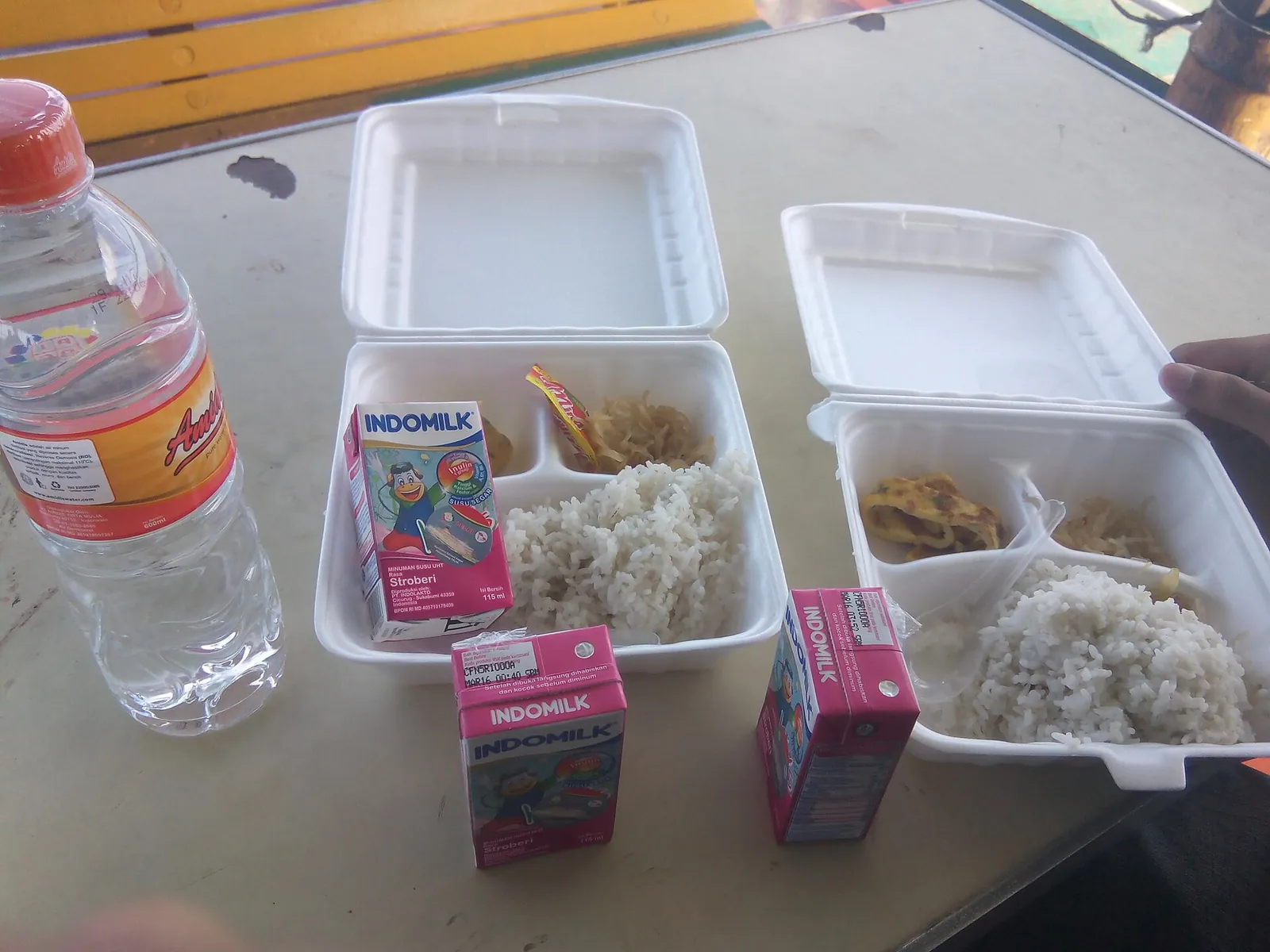
Pelni includes three meals a day in every fare, served simply on board; for a long voyage they are the backbone of the day rather than a highlight.
- Where to look
- On board Pelni ships; ports and convenience stores before departure for snacks and water.
- Fit it into your day
- Bring fruit, snacks and drinking water for the whole voyage, plus something extra in case of delays.
Pelni does not accept strong-smelling or spoiling food as baggage, so pack dry snacks.
Public car ferries: Ferizy tickets and crossing days
ASDP sells tickets for its commercial crossings through Ferizy (ferizy.com and the Ferizy app). The booking form asks for the departure and arrival port, the service class, whether you travel as a foot passenger or with a vehicle (with its class and length), and the passenger categories, which when we checked on 2026-10-03 were adults from five years, seniors from 60, children of two to five and infants under two. You also choose a port check-in window.
The check-in rules are strict. Ferizy's terms say check-in takes place at the port, only within the check-in time printed on the e-ticket, and that a ticket expires if you have not checked in by the end of that window. At check-in you must show an identity document (a passport for foreign visitors) and, if you have a vehicle, the number plate that matches the e-ticket. Ferizy lists ASDP's call centre as (021) 191.
Car-ferry crossings can also be disrupted by things that have nothing to do with you. In late September 2026, ASDP reported a three-day backlog on Ketapang–Gilimanuk: on 28 September the queue on the Java side was about 17 km, mostly lorries, and on 29 September, with 27 ships in service, it was down to about 8.5 km with no queue at Gilimanuk. If you cross between Java and Bali by road around holidays or after a disruption, check ASDP's press releases before you set off.
Further east the ferries are fewer and the distances longer. ASDP's route map lists Kayangan–Pototano between Lombok and Sumbawa, Sape–Labuan Bajo between Sumbawa and Flores, Sape–Waikelo to Sumba and Labuan Bajo–Bira to South Sulawesi. These are routes for overland travellers with time; ASDP's site lists the routes but schedules change, so confirm departures in Ferizy or at the port.
Labuan Bajo and Komodo: day boats and phinisi liveaboards
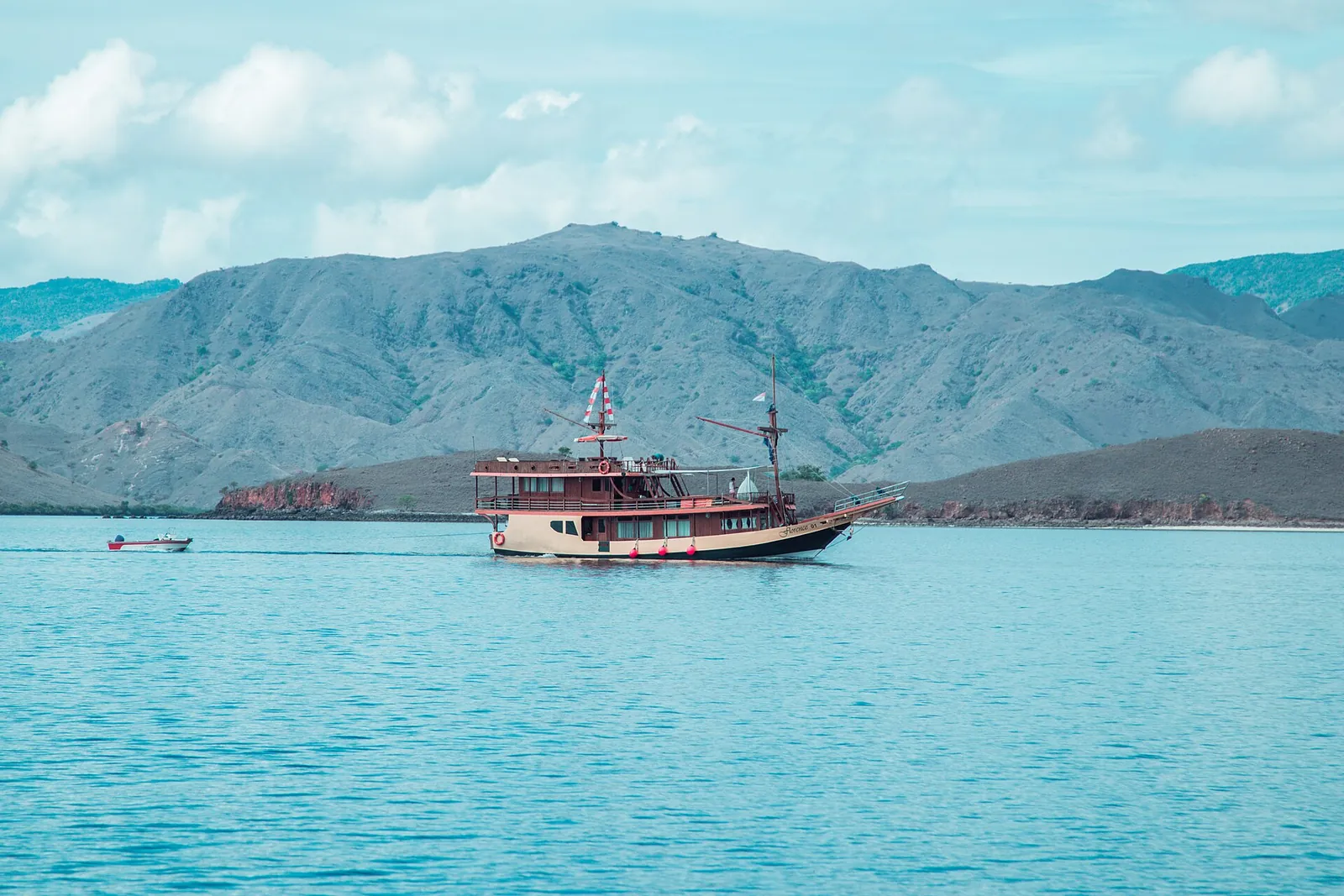
Komodo is a boat destination: the dragons, Padar's viewpoint, the pink beaches and the dive sites are all reached from the harbour at Labuan Bajo. The Ministry of Tourism suggests liveaboards as a convenient way to see Komodo and Flores, and the regional tourism authority BPOLBF explains that most liveaboards are phinisi, the traditional wooden sailing ship of Bulukumba in South Sulawesi, many of them modified for tourists. It notes that facilities differ by operator and that the boats typically have up to 14 cabins for two.
A day boat suits a short stay or a sensitive stomach; a liveaboard of one or more nights suits divers and anyone who wants more time in the park than a day trip allows. Whichever you choose, the park itself limits numbers: the Komodo National Park office told Antara that a quota of 1,000 visitors a day has applied since 1 April 2026, so confirm that your operator has secured park tickets for your dates.
Sea conditions matter here too. In August 2026, after the M7.7 earthquake in East Nusa Tenggara, BPOLBF and the Labuan Bajo harbour authority (KSOP) denied reports that sailings to Padar and Komodo had been suspended, and said the advice in force concerned high waves and strong winds in the southern Sape Strait. Liveaboards are not risk-free: Antara reported a phinisi sinking off Pink Beach in July 2023 with nine foreign tourists on board. Ask the operator about life jackets, the life raft, the radio and the crew, and follow the harbour master's warnings.
Pelni: the long-distance ships
Pelni ships are for travellers with time who want to sail rather than fly between provinces. According to Pelni's FAQ, tickets can be booked on pelni.co.id, in the PELNI Mobile app (Android and iOS), through the contact centre (021-162, WhatsApp 0811-162-1-162), at Alfamart and Indomaret convenience stores and through travel agents. Online tickets must be bought at least one day before departure, and one booking covers up to ten passengers.
The e-ticket is not your boarding document. You exchange it for a ticket or boarding pass at the Pelni branch or the departure port, from 24 hours before sailing, and foreign passengers show their passport. When we checked on 2026-10-03, the FAQ listed a 50% cancellation charge on the base fare (cancellations only at a Pelni branch) and allowed schedule or route changes up to five hours before departure for a 10% administration fee.
On board, Pelni lists economy cabins and class cabins for two (1A), four (1B), six (2A) or eight (2B) adults, and three meals a day are included. The free baggage allowance is 40 kg with maximum dimensions of 70 × 40 × 35 cm; adult bicycles and motor vehicles are not accepted as baggage, nor are animals, flammable goods or strong-smelling food. Paid onboard Wi-Fi (SEAWIFI) is sold in packages, but plan on being offline for long stretches.
Safety and weather: how to choose a boat on the day
The UK government's travel advice is blunt: sea conditions can change rapidly, safety standards vary between providers, and vessels can be crowded, overloaded and poorly maintained. It advises checking for life jackets and lifeboats before you travel, bringing your own life jackets for children because suitable sizes are not always available, and avoiding travel after dark unless you are satisfied the vessel is properly equipped.
Indonesia's meteorological agency, BMKG, publishes maritime forecasts with dedicated pages for the Sunda, Bali and Lombok Strait crossings, port forecasts, seven-day wave outlooks and high-wave warnings. Check them the evening before and again in the morning. The UK advice gives October to March as the usual rainy season, noting that it can differ in eastern Indonesia; Wikivoyage adds that on the Bali–Gili run July and August bring southerly swell and wet crossings, and that the sea is usually calmest in the morning.
- Look before you board. Count life jackets, check the passenger load and where luggage is stowed. If the boat is overloaded or the weather looks wrong, Wikivoyage's advice is not to board and to ask for a refund.
- Sail early. Morning departures leave room for delays and avoid the late-afternoon and night crossings the UK advice warns about.
- Pay the Bali levy before you travel. Bali's IDR 150,000 tourist levy is paid once per visit through Love Bali; if you arrive by sea at Benoa, there is also a cashless payment counter at the port.
- Keep slack. Leave at least one spare day between the last boat of a trip and an international flight.
Practical questions
Is the fast boat from Bali to the Gili Islands safe?
Standards vary by operator. The UK government's advice warns that boats can be overloaded and poorly maintained and that you should check for life jackets before you travel. Choose an established operator, travel in the morning, check BMKG's Lombok Strait forecast and do not board if the boat looks overloaded or the weather is bad.
How do I book a public ferry in Indonesia?
For ASDP's car ferries (for example Padangbai–Lembar or Ketapang–Gilimanuk), use the Ferizy website or app. Check in at the port within the time shown on your e-ticket and bring your passport; an e-ticket expires if you miss the check-in window.
Can foreigners travel on Pelni ships?
Yes. Book on pelni.co.id, in the PELNI Mobile app, at Alfamart or Indomaret or through an agent, at least one day before departure online. Exchange the e-ticket for a ticket or boarding pass at the port from 24 hours before sailing, showing your passport.
How long does the ferry from Bali to Lombok take?
ASDP's Padangbai–Lembar car ferry is a slow crossing; Wikivoyage gives roughly five to six hours, plus loading time. Fast boats from Padang Bai or Serangan to the Gilis and northern Lombok are much quicker but more exposed to the weather.
Is there a boat from Bali to Labuan Bajo and Komodo?
Pelni ships call at both Benoa in Bali and Labuan Bajo, and the overland route uses ASDP ferries via Lombok and Sumbawa (Kayangan–Pototano, then Sape–Labuan Bajo). Both take days, so if time is short, fly to Labuan Bajo and use boats only inside Komodo National Park.
Do I need to pay the Bali tourist levy if I arrive by boat?
Yes, foreign tourists pay the IDR 150,000 levy once per visit, ideally online through Love Bali before arrival. The Ministry of Tourism says there is also a cashless counter at Tanjung Benoa port as well as at the airport.
Sources and checks before you travel
Reference sources for the version dated 3 October 2026. Confirm opening times, access, transport and conditions for your travel dates.
- ASDP Indonesia Ferry: company profile and ports ↗ — opens in a new tab
- ASDP Indonesia Ferry: commercial route map ↗ — opens in a new tab
- ASDP press release, 28 September 2026: Ketapang–Gilimanuk recovery ↗ — opens in a new tab
- ASDP press release, 29 September 2026: queues shrinking on Ketapang–Gilimanuk ↗ — opens in a new tab
- Ferizy (ASDP ticketing) ↗ — opens in a new tab
- Pelni: FAQ ↗ — opens in a new tab
- Pelni: baggage rules ↗ — opens in a new tab
- Pelni: ticket reservation (port list) ↗ — opens in a new tab
- Indonesia Ministry of Tourism: Gili Trawangan ↗ — opens in a new tab
- Indonesia Ministry of Tourism: Nusa Penida ↗ — opens in a new tab
- Love Bali (Bali Provincial Government): Nusa Penida ↗ — opens in a new tab
- Indonesia Ministry of Tourism: Bali tourist levy ↗ — opens in a new tab
- Indonesia Ministry of Tourism: Labuan Bajo ↗ — opens in a new tab
- Indonesia Ministry of Tourism: Lombok's halal cuisine ↗ — opens in a new tab
- BPOLBF (Labuan Bajo Flores Tourism Authority): Phinisi ↗ — opens in a new tab
- Antara: Komodo National Park quota of 1,000 visitors a day ↗ — opens in a new tab
- Antara: Ministry of Tourism on safety in Labuan Bajo (23 August 2026) ↗ — opens in a new tab
- Antara: tourist boat sinks in Komodo National Park (22 July 2023) ↗ — opens in a new tab
- BMKG maritime weather ↗ — opens in a new tab
- UK FCDO travel advice: Indonesia safety and security ↗ — opens in a new tab
- Wikivoyage: Gili Islands (get in) ↗ — opens in a new tab
- Wikivoyage: Lombok (get in by boat) ↗ — opens in a new tab
Does this experience fit your route?
If you would rather not arrange boats yourself, a guided island day from Bali or Lombok bundles the crossing and the transfers. Check the boat operator, the life jackets and the weather policy before you book.
Check dates and details on Viator ↗ — opens in a new tabAffiliate link · Book with ViatorPhoto credits
A phinisi tour boat off Labuan Bajo, the starting point for Komodo day trips and liveaboards
Photograph: Yasuspade — opens in a new tab · CC BY-SA 4.0 — opens in a new tab
Changes: Resized and converted to WebP; displayed with responsive crops. · Original photograph and licence details ↗ — opens in a new tab
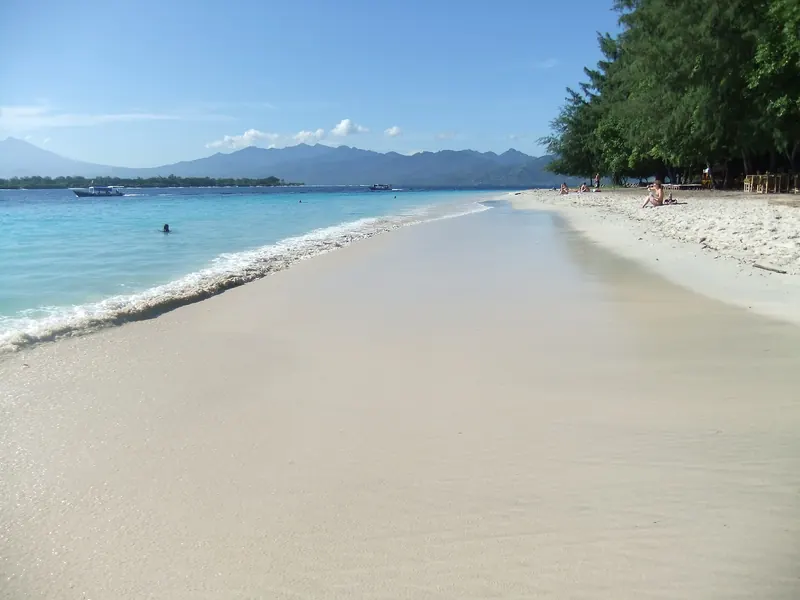
Passengers waiting on the beach at Gili Trawangan for the fast boats
Photograph: Mansu Mon — opens in a new tab · CC BY-SA 4.0 — opens in a new tab
Changes: Resized and converted to WebP; displayed with responsive crops. · Original photograph and licence details ↗ — opens in a new tab
Fast boats at Sanur, where boats leave for Nusa Penida and Nusa Lembongan
Photograph: Imadedana — opens in a new tab · CC BY-SA 4.0 — opens in a new tab
Changes: Resized and converted to WebP; displayed with responsive crops. · Original photograph and licence details ↗ — opens in a new tab
The roll-on, roll-off ferry Swarna Cakra leaving Lembar, Lombok's port for the Padangbai crossing
Photograph: Bahnfrend — opens in a new tab · CC BY-SA 4.0 — opens in a new tab
Changes: Resized and converted to WebP; displayed with responsive crops. · Original photograph and licence details ↗ — opens in a new tab
The Pelni liner Tilong Kabila leaving Benoa harbour in Bali
Photograph: Sabung.hamster aka Everyone Sinks Starco aka BxHxTxCx — opens in a new tab · CC BY-SA 4.0 — opens in a new tab
Changes: Resized and converted to WebP; displayed with responsive crops. · Original photograph and licence details ↗ — opens in a new tab
Breakfast boxes served aboard the Pelni ship KM Gunung Dempo
Photograph: Sandarw — opens in a new tab · CC BY-SA 4.0 — opens in a new tab
Changes: Resized and converted to WebP; displayed with responsive crops. · Original photograph and licence details ↗ — opens in a new tab