Hanoi and the Northeast · Quang Ninh
Yen Tu Mountain guide: cable cars, Dong Pagoda and a day from Ha Long
Yen Tu is the mountain where King Tran Nhan Tong gave up his throne at the end of the 13th century, became a monk and founded Truc Lam, which Vietnam's national tourism site calls the first Vietnamese school of Zen Buddhism. A chain of pagodas, stupa gardens and hermitages climbs its forested eastern slope in Quang Ninh, from the stream of Giai Oan at the foot to the small bronze Dong Pagoda on the 1,068-metre summit. Since July 2025 it has been the heart of a UNESCO World Heritage site. It is a pilgrimage first and a viewpoint second, and the trip works best when you treat it that way: a full day on foot and by cable car, with the bay of Ha Long somewhere below the clouds.
- Suggested time
- 1 full day (2 days with a night at the foot of the mountain)
- Where to stay
- The resort area at the foot of Yen Tu, Uong Bi, or Ha Long for a day trip
- Season and timing
- The Yen Tu festival runs from the 10th day of the first lunar month for three months (roughly February to May) and brings the biggest crowds. VnExpress suggests April to October for a quieter, cooler climb; mist and sudden rain are common at the top in any season.
The short answer
Give Yen Tu one full day and, if you can, the night before or after at the foot of the mountain. VnExpress puts the drive from Hanoi at about 140 kilometres and three to three and a half hours, so a same-day return from Hanoi means leaving around 5:00 and getting back in the evening; from Ha Long it is much closer, which makes Yen Tu a natural cultural day before or after a cruise. Ride the cable cars up to save your legs for the final stone stairs to Dong Pagoda, or walk the whole way (about four hours up, according to VnExpress) if you want the quieter pagodas the cable cars skip. Sleep in the resort area at the foot of the mountain (Nuong Village or Legacy Yen Tu) or in Uong Bi, or stay in Ha Long and come by car or on a tour. Avoid the spring festival weekends unless you want to be part of the pilgrimage crowds.
Why Yen Tu matters, and what UNESCO listed
Yen Tu was a Buddhist mountain before the Tran dynasty, but it became the centre of Vietnamese Buddhism when Tran Nhan Tong (1258–1308), who reigned from 1279 to 1293, handed the throne to his son and came here to found the Truc Lam (Bamboo Grove) Zen sect, according to the Quang Ninh government portal. His successors Phap Loa and Huyen Quang, the second and third patriarchs, built on his work, and the mountain became known as the Buddhist capital of Vietnam. The portal counts 11 pagodas and hundreds of shrines and stupas on the mountain today, many rebuilt in recent decades on Tran- and Le-dynasty foundations.
In July 2025 UNESCO inscribed the Yen Tu – Vinh Nghiem – Con Son, Kiep Bac Complex of Monuments and Landscapes as Vietnam's ninth World Heritage site. It is a serial property of 12 sites across Quang Ninh, Bac Ninh and Hai Phong, centred on the Yen Tu range, and the national tourism site lists the Yen Tu component as including Hue Quang stupa, Hoa Yen pagoda, Lan pagoda, Ngoa Van pagoda and parts of the old pilgrimage route. The other components, such as Vinh Nghiem pagoda with its woodblocks and the Con Son – Kiep Bac temples, are separate trips in Bac Ninh and Hai Phong.
Quang Ninh has made the site free to enter as a thank-you for the inscription: when we checked on 2026-10-03, the provincial portal and national newspapers reported free admission to the Yen Tu relic and scenic area from 2026 until 31 December 2028, free parking at the Ha Kieu coach station until the end of 2026 and free visitor insurance. The cable cars are not included and are paid separately.
The climb: from Giai Oan stream to Dong Pagoda
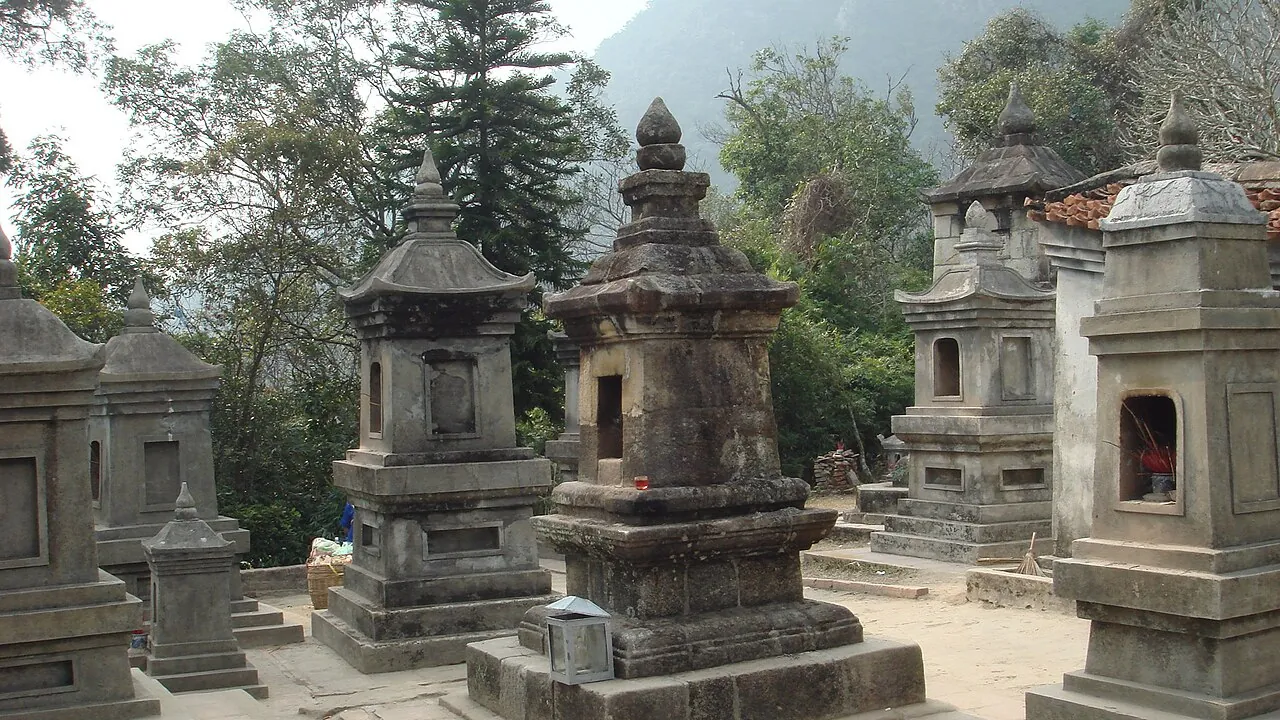
The pilgrimage starts at Giai Oan, the 'stream of absolution'. Legend, as the provincial portal tells it, says the king's concubines drowned themselves here when they failed to persuade him to return to the palace, and he built Giai Oan Pagoda to give their souls rest; the present building dates from 1994. From there the Pine Road leads to the Hue Quang stupa garden, where a 7-metre Tran-style stupa built in 1309 holds relics of Tran Nhan Tong, surrounded by more than 97 smaller stupas of Truc Lam monks.
Hoa Yen Pagoda, at about 534 metres (sources give 534 to 543), is the largest pagoda on the mountain and housed the Truc Lam patriarchs from the Ly to the Le dynasties; it was rebuilt on the old Tran foundations in 2002. The portal notes two ancient frangipani trees here said to be about 700 years old. Above it, Bao Sai Pagoda honours the king's first disciple, and Van Tieu Pagoda, above 700 metres, has a small stupa garden called Vong Tien Cung, 'the place to see the fairy land'.
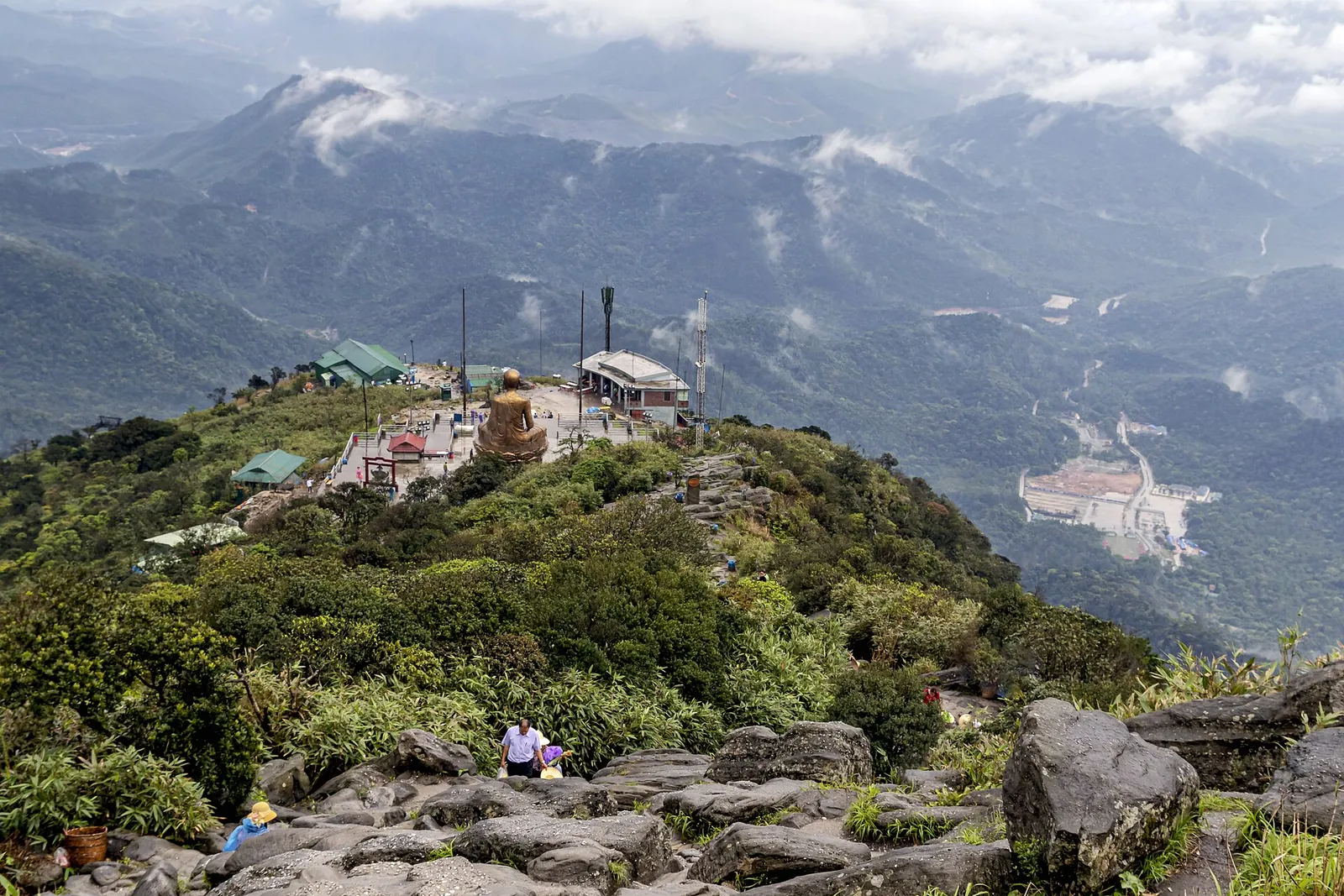
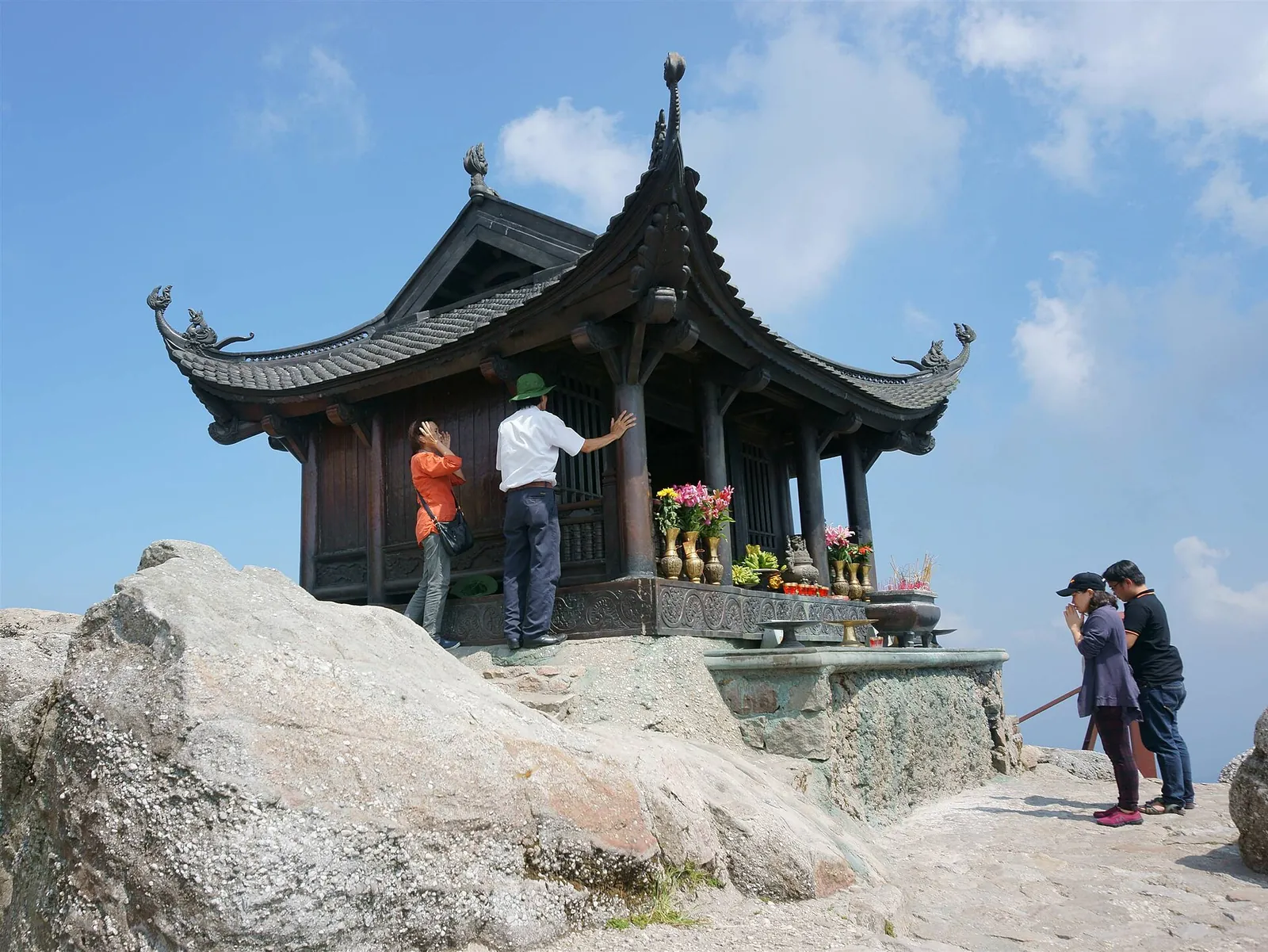
Near the top you pass the An Ky Sinh rock, a natural stone shaped like a praying monk, and the statue of Tran Nhan Tong, a 12.6-metre seated bronze of 138 tonnes inaugurated in 2013. The last stairs lead to Dong Pagoda (the Bronze Pagoda) on the summit at 1,068 metres. The current pagoda, cast in bronze and completed in early 2007, is tiny, about 4.6 by 3.6 metres, and enshrines the Buddha and the three Truc Lam patriarchs. On a clear day you look out over the whole north-east; on many days you are standing in cloud.
The heritage management board is putting up signs asking pilgrims not to rub or tuck banknotes onto the altars, especially at Dong Pagoda. Put donations in the boxes, dress modestly and keep your voice down at the shrines.
Make time for the local food
What to eat and where to look
Yen Tu bamboo shoots (mang truc)
Slender wild bamboo shoots from the Yen Tu forest, 30 to 40 centimetres long, eaten boiled with roasted sesame salt, grilled in their sheaths, pickled with garlic and chilli, or stir-fried with beef or goat. Viet Nam News and Tuoi Tre both single them out as the mountain's speciality.
- Where to look
- Restaurants at the foot of the mountain, and sellers along the path who bring them down from the forest in season.
- Fit it into your day
- Lunch after coming down from Dong Pagoda; the harvest season coincides with the spring festival.
Not every bamboo-shoot dish is vegetarian: the stir-fries often include beef or goat.
Pagoda-style vegetarian set meals
Yen Tu is a Buddhist mountain, and VnExpress notes that most restaurants offer a choice of vegetarian sets alongside meat dishes; the resort restaurants have more elaborate vegetarian menus.
- Where to look
- Restaurants around the car park and in the resort area at the foot; simple food stalls at rest stops on the climb.
- Fit it into your day
- A light lunch between the two cable-car lines or at the foot after the descent.
Vegetarian dishes may still use fish sauce in ordinary restaurants; ask for 'chay' and check.
Stream fish with betel leaves and hill chicken
VnExpress lists stream fish fried with la lot (wild betel) leaves, chicken cooked with rice wine, com lam (rice cooked in bamboo) and herbal teas among the dishes found in most restaurants at Yen Tu.
- Where to look
- Restaurants at the foot of the mountain; Nuong Village's restaurant serves Vietnamese dishes such as clay-pot rice, braised fish and chicken cooked with wine.
- Fit it into your day
- Dinner if you stay the night at the foot of the mountain.
Not suitable if you want to keep the pilgrimage day meat-free; ask about prices before ordering dishes sold by weight.
Cable car or stone steps?
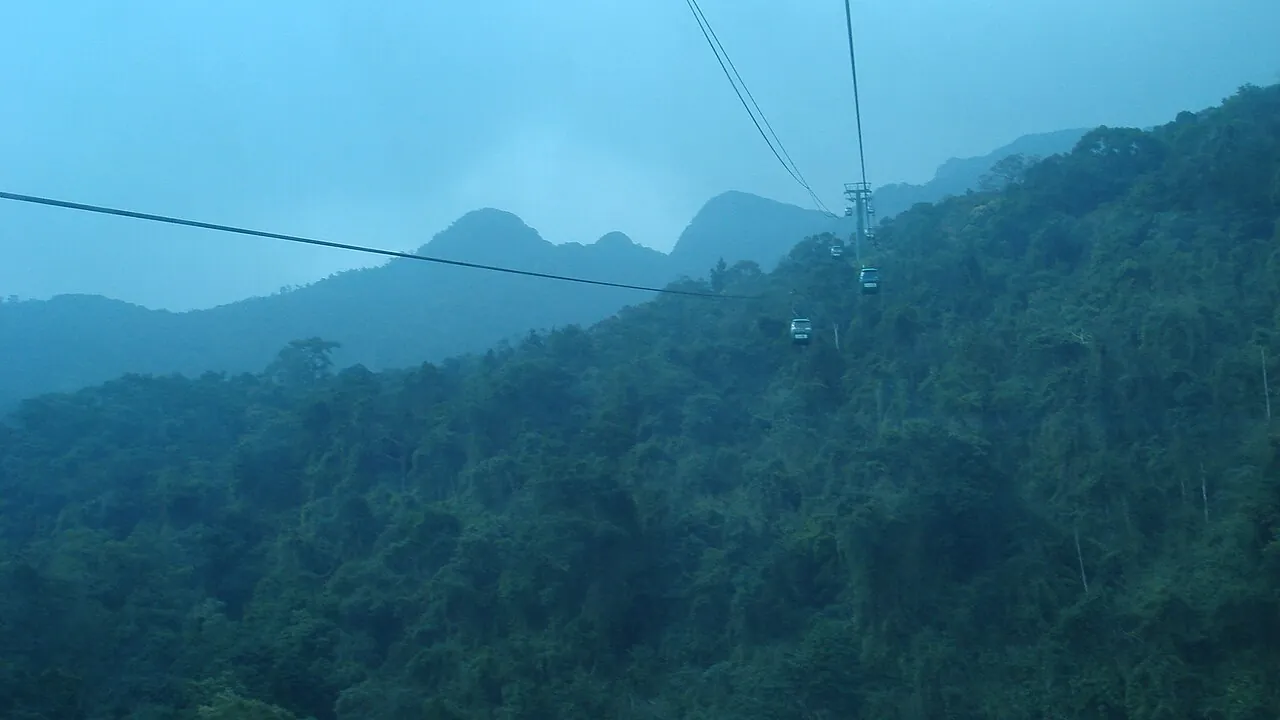
Most visitors combine both. VnExpress describes the usual cable-car day: walk from the car park past Giai Oan stream, ride the first line from station 1 to station 2 for Hue Quang and Hoa Yen, walk on past the cliff-side Mot Mai (One Roof) pagoda to station 3, ride the second line to station 4, then walk about 200 metres to An Ky Sinh and the king's statue and about 300 metres more to Dong Pagoda. The cable cars skip Van Tieu and Bao Sai pagodas, so walk part of the route if you want to see them.
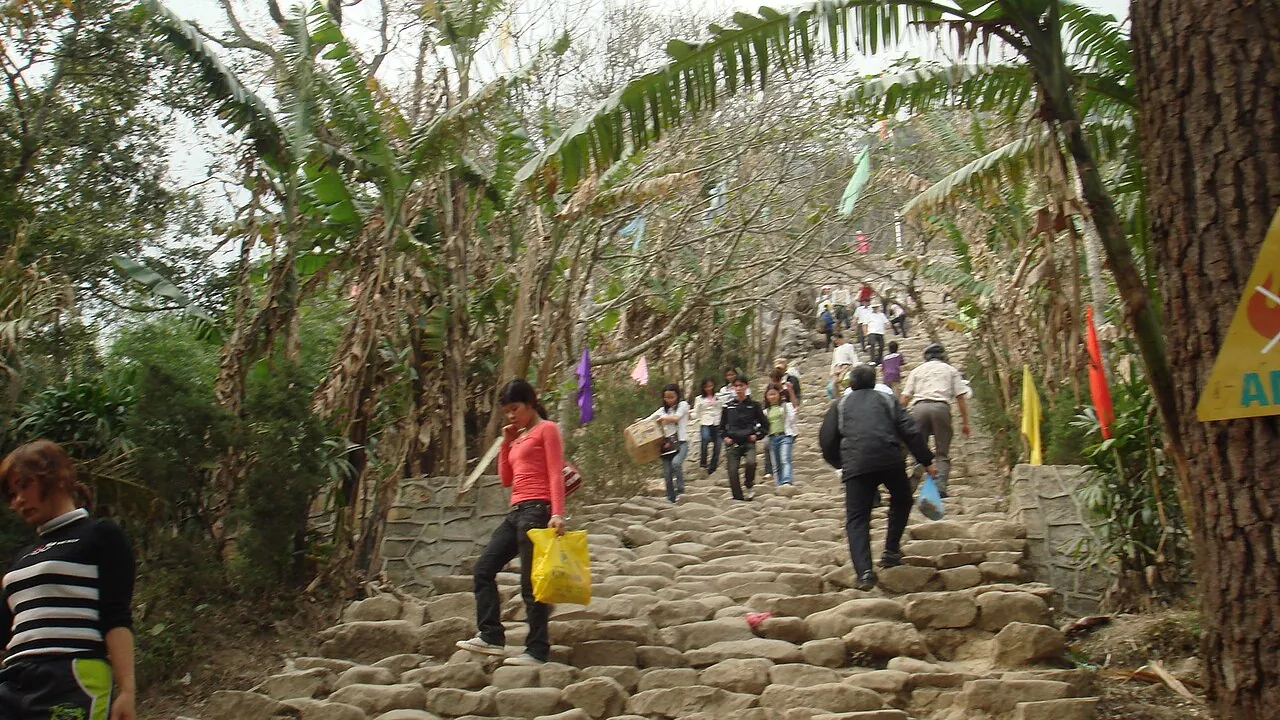
Walking all the way takes about four hours up, by VnExpress's estimate, on long flights of uneven stone steps that are slippery in rain and mist. If you are not sure you can manage the whole route, the same guide suggests walking up and taking the cable car down. Bring water, snacks, a light rain jacket and shoes with grip; some pilgrims use a walking stick.
Cable car tickets are sold separately from the (currently free) site admission. We could not reach the operator's ticket page, so we do not list fares or hours here; check them at the ticket office before you set off up the mountain. During the 2026 spring festival, Bao Quang Ninh reported QR-code cable-car booking to shorten queues, and free electric shuttles inside the site run by Tung Lam Development Joint Stock Company, which also provides the free parking at Ha Kieu.
When to go: the spring festival and the quiet months
The Yen Tu Festival opens every year on the 10th day of the first lunar month and lasts three months; in 2026 the opening ceremony was on 26 February at Truc Lam palace, with a meditation retreat, a regional food and OCOP products fair and a large art performance in the days around it. This is the pilgrimage season, and the crowds are real: Bao Quang Ninh counted more than 60,000 visitors in the first three days after the 2026 opening, with rooms at the foot of the mountain fully booked. Dan Tri reported more than 4,600 visitors on a single day in May 2026 and over a million in the first months of free entry.
If you want the mountain to yourself, go on a weekday outside the festival and away from Vietnamese public holidays. VnExpress suggests April to October as the time to climb without queues, when the mountain is relatively cool. Other dates on the Buddhist calendar also bring pilgrims, notably the death anniversaries of the three patriarchs, the Buddha's birthday (15th day of the fourth lunar month) and the national memorial for Tran Nhan Tong on the 1st day of the 11th lunar month.
The summit weather changes fast. Even on a bright day at the foot, expect cloud and wind at Dong Pagoda, and avoid the climb when storms are forecast for the north-east coast.
Getting there and pairing Yen Tu with Ha Long
Yen Tu lies west of Uong Bi, which the Quang Ninh portal places about 39 kilometres west of Ha Long City and 115 kilometres east of Hanoi. That makes it a natural stop between the two: a cultural day before or after a Ha Long Bay cruise rather than a detour squeezed into the cruise transfer. By car from Hanoi, VnExpress gives about 140 kilometres and three to three and a half hours. There is no railway to the site today; the planned Hanoi – Quang Ninh high-speed line includes a Yen Tu station.
Without a car, VnExpress describes taking a coach from Hanoi's My Dinh, Giap Bat or Gia Lam stations towards Uong Bi, Cam Pha or Ha Long, getting off at Trinh pagoda on Highway 18 and taking local bus 16 to Yen Tu. It is doable but slow; the simpler options are a guided day trip from Hanoi or Ha Long, or a taxi or private car from Ha Long or Uong Bi.
If you drive yourself, start early in festival season to beat the traffic jams, and take care on the winding, steep road if you ride a motorbike.
Staying at the foot of the mountain
A night at Yen Tu lets you start the climb early, before the day-trip coaches, and see the valley in the quiet of the evening. The Quang Ninh portal reported that Legacy Yen Tu and Nuong Village were fully booked during the 2026 May holidays, so book ahead for holidays and festival weekends; VnExpress advises booking two to three months ahead in peak season.
Nuong Village (Lang Nuong) recreates a northern Vietnamese village along Giai Oan stream, with guest houses named after village plants, and Legacy Yen Tu – MGallery is a resort built in Tran–Le style at the foot of the mountain. Simpler dormitory rooms for pilgrim groups are found around the car parks, and VnExpress mentions basic overnight places near Hoa Yen for those who want to be at Dong Pagoda for sunrise. Otherwise, stay in Uong Bi, the nearest town, or in Ha Long if Yen Tu is a day out from a bay trip.
Practical questions
Is there an entrance fee for Yen Tu?
When we checked on 2026-10-03, Quang Ninh had made admission to the Yen Tu relic and scenic area free from 2026 until 31 December 2028. Cable car tickets are not included and are paid separately.
How long does it take to climb Yen Tu?
VnExpress estimates about four hours on foot from the foot of the mountain to Dong Pagoda. With both cable car lines you only walk the stretches between stations and the final few hundred metres to the summit.
Can I visit Yen Tu as a day trip from Hanoi?
Yes, but it is a long day: about 140 kilometres and three to three and a half hours each way by road, according to VnExpress. Leaving around 5:00 and staying at the foot of the mountain or continuing to Ha Long makes the day easier.
Can I combine Yen Tu with Ha Long Bay?
Yes. Yen Tu lies west of Uong Bi, between Hanoi and Ha Long, so it fits as a separate day before or after a cruise. Do not try to squeeze it into a cruise transfer day.
When is the Yen Tu festival?
It opens on the 10th day of the first lunar month and lasts three months. In 2026 the opening was on 26 February. Expect very large crowds, especially on weekends.
What is at the top of Yen Tu?
Dong Pagoda, a small bronze pagoda at 1,068 metres, completed in its current form in 2007. Just below it are the An Ky Sinh rock and the 12.6-metre bronze statue of Tran Nhan Tong.
Sources and checks before you travel
Reference sources for the version dated 3 October 2026. Confirm opening times, access, transport and conditions for your travel dates.
- UNESCO: Yen Tu – Vinh Nghiem – Con Son, Kiep Bac officially inscribed on the World Heritage List ↗ — opens in a new tab
- Vietnam National Authority of Tourism: Vietnam's 9th World Heritage Site ↗ — opens in a new tab
- Vietnam National Authority of Tourism: Yen Tu Festival ↗ — opens in a new tab
- Quang Ninh Portal: Yen Tu Mountain – an impressive journey ↗ — opens in a new tab
- Quang Ninh Portal: Yen Tu Festival ↗ — opens in a new tab
- Quang Ninh Portal: Holy Yen Tu ↗ — opens in a new tab
- Quang Ninh Portal: Yen Tu cultural space attracts large numbers of visitors during the holiday ↗ — opens in a new tab
- Quang Ninh Portal: Thorough preparations for the 2026 Yen Tu Spring Festival ↗ — opens in a new tab
- Quang Ninh Portal: Uong Bi city ↗ — opens in a new tab
- Nguoi Lao Dong: Yen Tu spring festival lasts three months, admission 'zero dong' ↗ — opens in a new tab
- Thanh Nien: e-tickets and smart monitoring at Yen Tu ↗ — opens in a new tab
- Bao Quang Ninh: crowds of pilgrims at Yen Tu after the 2026 spring opening ↗ — opens in a new tab
- Dan Tri (DTiNews): Yen Tu draws more than 1 million visitors after free-entry policy ↗ — opens in a new tab
- VnExpress: Yen Tu travel handbook 2026 ↗ — opens in a new tab
- VnExpress: Hanoi – Quang Ninh high-speed railway breaks ground ↗ — opens in a new tab
- Viet Nam News: specialities of Yen Tu – Vinh Nghiem and Con Son – Kiep Bac ↗ — opens in a new tab
- Tuoi Tre: Yen Tu bamboo shoots ↗ — opens in a new tab
- Legacy Yen Tu Resort & Retreat – MGallery (Accor) ↗ — opens in a new tab
Does this experience fit your route?
A guided day trip is the simplest way to reach Yen Tu without a car. Check which cable car lines are included, how much walking is left to Dong Pagoda and whether your date falls in the spring festival.
Check dates and details on Viator ↗ — opens in a new tabAffiliate link · Book with ViatorPhoto credits
The summit ridge of Yen Tu Mountain, where the pilgrimage route ends among rocks, shrines and views over the north-east
Photograph: Bùi Thụy Đào Nguyên — opens in a new tab · CC BY-SA 4.0 — opens in a new tab
Changes: Resized and converted to WebP; displayed with responsive crops. · Original photograph and licence details ↗ — opens in a new tab
Dong Pagoda, the Bronze Pagoda, on the 1,068-metre summit of Yen Tu
Photograph: Imgcloud — opens in a new tab · CC BY-SA 4.0 — opens in a new tab
Changes: Resized and converted to WebP; displayed with responsive crops. · Original photograph and licence details ↗ — opens in a new tab
Stupas in the Hue Quang stupa garden, where relics of King Tran Nhan Tong are kept
Photograph: Thang Nguyen from Nottingham, United Kingdom — opens in a new tab · CC BY-SA 2.0 — opens in a new tab
Changes: Resized and converted to WebP; displayed with responsive crops. · Original photograph and licence details ↗ — opens in a new tab
The cable car over the forest of Yen Tu, which saves most of the climb to Hoa Yen
Photograph: Thang Nguyen from Nottingham, United Kingdom — opens in a new tab · CC BY-SA 2.0 — opens in a new tab
Changes: Resized and converted to WebP; displayed with responsive crops. · Original photograph and licence details ↗ — opens in a new tab
Pilgrims on the stone steps of the old route up Yen Tu
Photograph: Thang Nguyen from Nottingham, United Kingdom — opens in a new tab · CC BY-SA 2.0 — opens in a new tab
Changes: Resized and converted to WebP; displayed with responsive crops. · Original photograph and licence details ↗ — opens in a new tab