Northern Mountains · Son La
Moc Chau guide: tea hills, plum blossom, glass bridge and where to stay
Moc Chau is a high plateau in Son La province, about 200 kilometres north-west of Hanoi on the road that continues to Son La city and Dien Bien. Vietnam's national tourism site describes it as 80 kilometres long and 25 wide, rising above 1,000 metres, with the country's largest tea plantations. It is a working landscape rather than a single sight: tea hills, dairy pastures and plum orchards, with Thai and Hmong villages, waterfalls and caves spread across it. What you see depends heavily on the month, so decide when to go before you decide what to do.
- Suggested time
- 1–2 nights
- Where to stay
- Moc Chau town or the old farm town (now Thao Nguyen ward) for hotels and food; a Ban Ang homestay for a village stay; Moc Chau Island if the glass bridge is the point of the trip
- Season and timing
- White mustard flowers bloom most fully around November and December, and plum blossom from about mid-January to late February, around Tet. Plums are picked from March to May, and the national tourism site recommends tea tours from April to December. Waterfalls are fullest in the rainy season. Winter nights on the plateau are cold.
The short answer
Give Moc Chau two nights, or one if it is a stop on the way north-west. At roughly 200 kilometres each way, a day trip from Hanoi spends more of the day on the road than on the plateau. Sleep in Moc Chau town or the old farm town for restaurants and transport, or in a homestay in Ban Ang if you want a village. Spend one day on the tea hills, a dairy farm and the season's blossom or fruit, and the other on Dai Yem waterfall, the Bach Long glass bridge or a walk. Go in winter for mustard flowers and plum blossom, in late spring for plum picking, or in the rainy season for waterfalls.
Choose a base: town, farm town or village
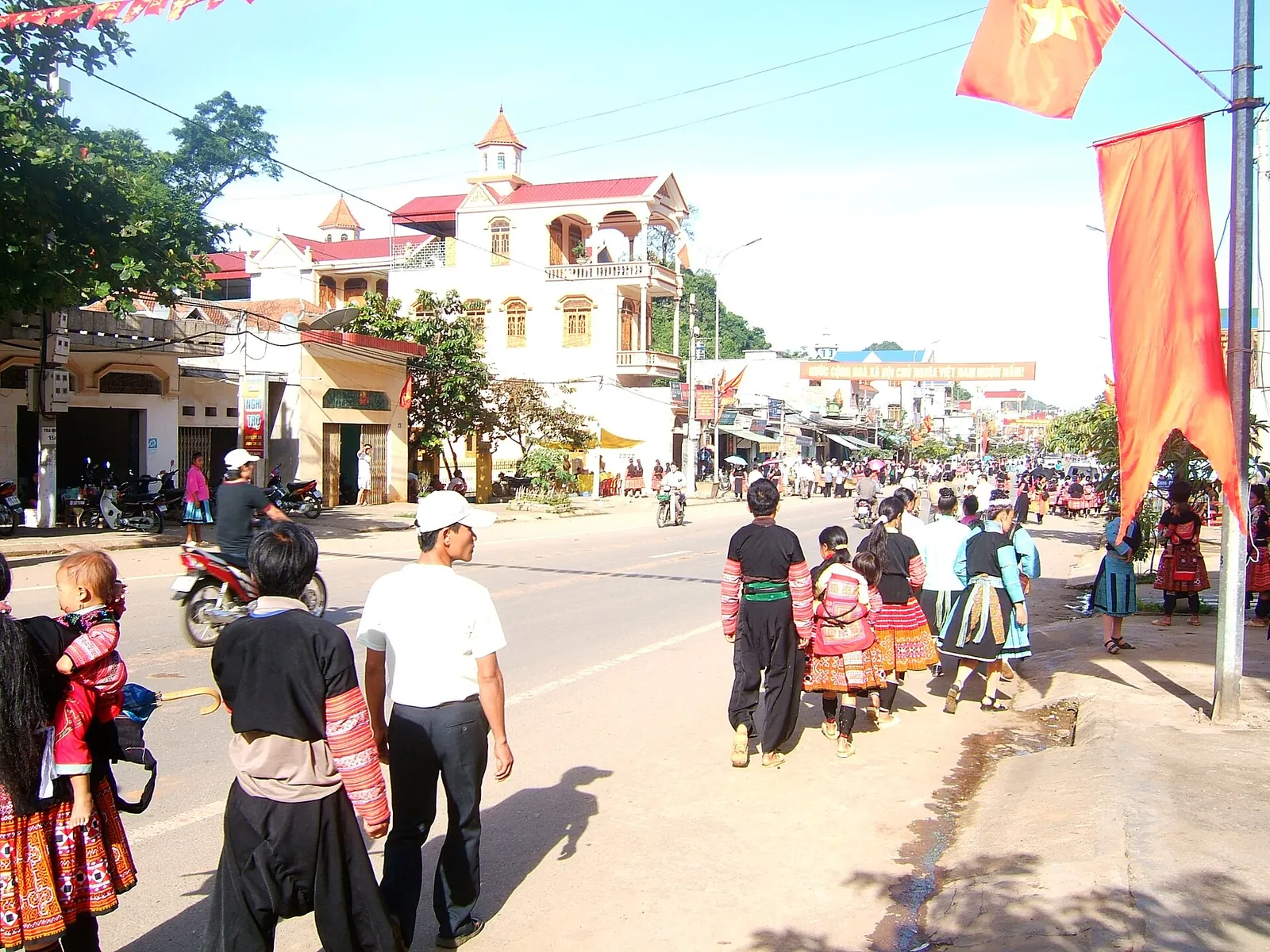
Moc Chau has two built-up centres a few kilometres apart on Highway 6. The old district town is now Moc Chau ward. The former Nong Truong Moc Chau farm town, now part of Thao Nguyen ward, lies about 5–7 kilometres back towards Hanoi, according to the Son La provincial newspaper, which also notes that most guesthouses are in these two areas. Both suit travellers without their own transport: you have restaurants, places that rent motorbikes and a stretch of main road where long-distance coaches stop.
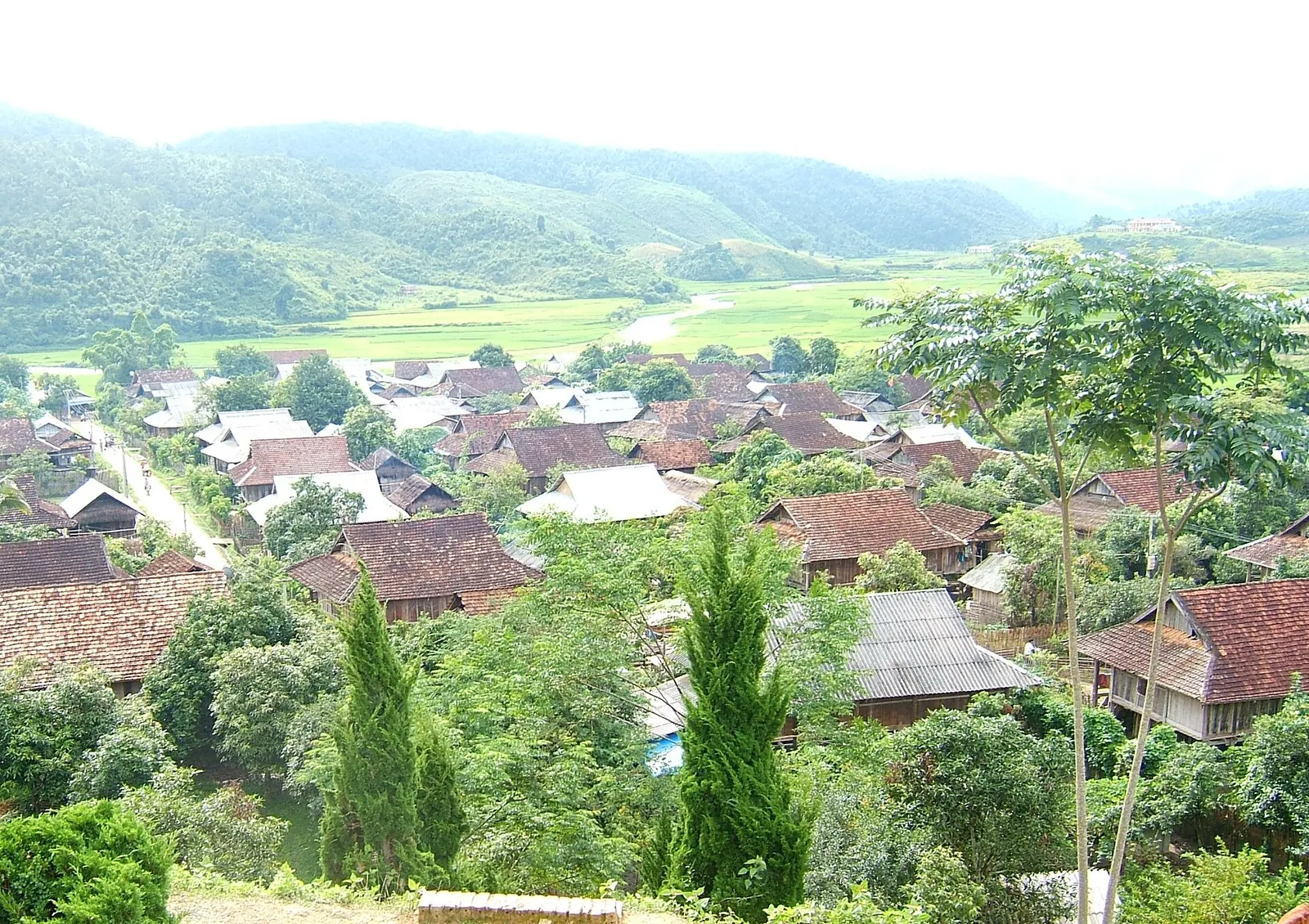
For a village stay, the same newspaper points to family homestays near the pine forest at Ban Ang, a Thai village with stilt houses beside a lake. Vietnam's tourism site describes Ang, Doi and Vat villages as community tourism villages. Moc Chau Island, the resort park around the Bach Long glass bridge in Muong Sang, has its own hotel, glamping and Thai-style stilt-house rooms; it is convenient for the bridge but away from the town's restaurants.
The plateau is large, and the sights are spread out. Nang Tien waterfall is about 26 kilometres from Moc Chau and Pha Luong peak about 40, so whichever base you choose, plan each day around one direction rather than crossing the plateau and back.
Tea hills, dairy farms and orchards
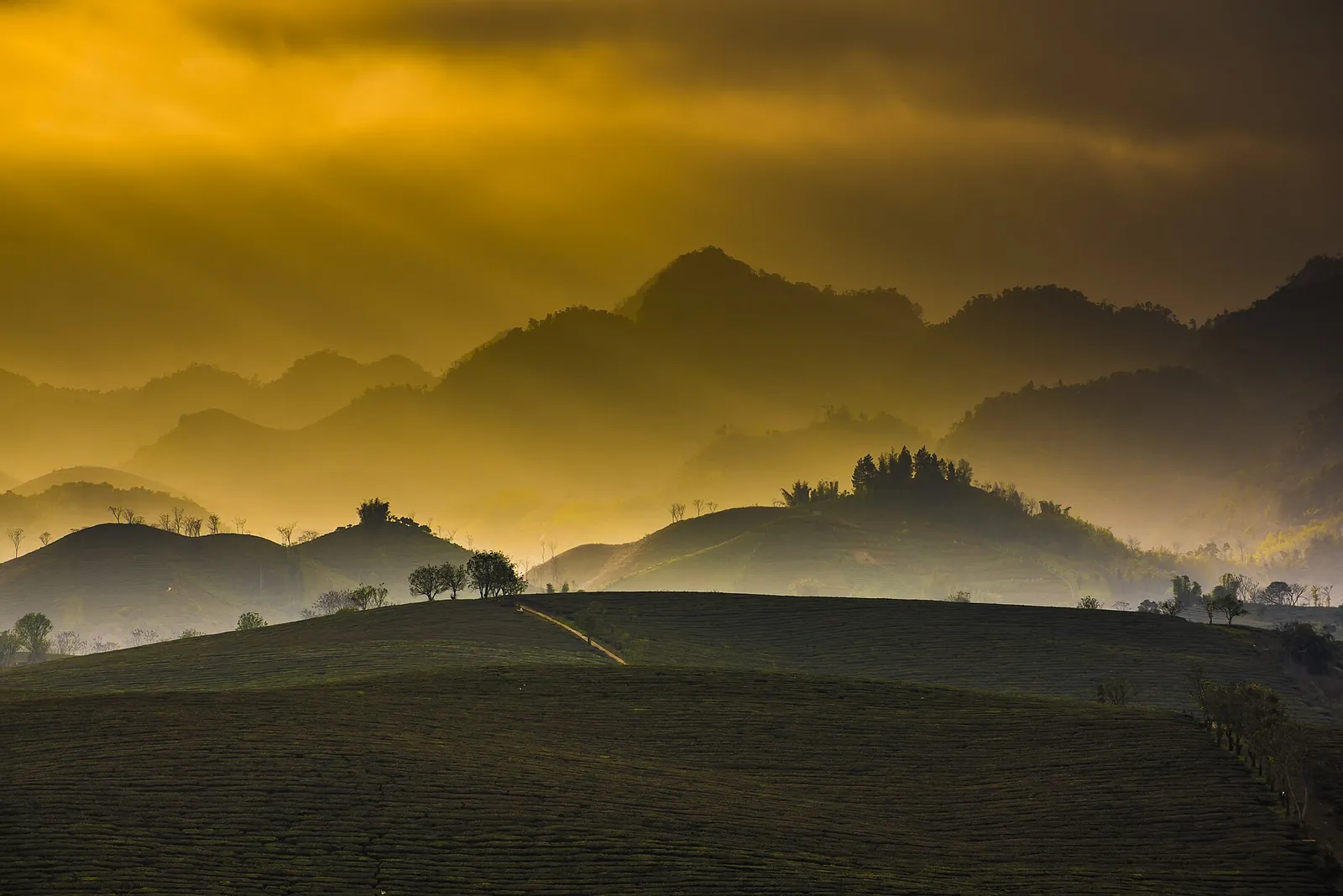
Tea is the plateau's signature. With about 3,000 hectares of tea, according to the national tourism site, Moc Chau is the largest tea-growing area in Vietnam. The best-known views are the rows of bushes on the rounded hills around the farm town and the heart-shaped tea hill at Tan Lap, which the provincial newspaper lists among the classic photo stops. Vietnam's tourism site suggests the Moc Suong area for a tea ceremony and a look at how the leaves are processed, and tea tours from April to December. The fields are farms where Thai and Hmong families work, so stay on the paths and ask before photographing people up close.
Moc Chau is also dairy country. The state farm founded here grew into the Moc Chau dairy company behind the Moc Chau milk brand, and the provincial newspaper has reported on farm visits where visitors feed the cows and try milking. Check what is running when you visit rather than assuming a farm is open.
Fruit follows the seasons: oranges, persimmons, apricots, strawberries, peaches and plums, according to the national tourism site. Na Ka valley, about 16 kilometres from the farm town and planted with more than 100 hectares of plum trees, is the best-known plum valley. It is the place to go both for blossom in winter and for the fruit, which the provincial newspaper says is celebrated with a picking festival in mid-May.
Make time for the local food
What to eat and where to look
Bê chao (fried young veal)
Moc Chau's own dish and a by-product of its dairy farms. Male calves that will never give milk are used when they are only one to three weeks old. The provincial newspaper describes the meat being cut into cubes, blanched to soften the milky smell, seasoned and then fried until golden.
- Where to look
- Restaurants along Highway 6 in Moc Chau town and the farm town; look for 'bê chao' on the sign.
- Fit it into your day
- Order a plate to share at dinner, with greens and sticky rice on the side.
This is very young veal; skip it if that matters to you. It is fried and rich, so share it rather than ordering a plate each.
Fresh Moc Chau milk
The plateau's dairy farms supply the Moc Chau milk brand. The provincial newspaper lists milk alongside tea as one of the obvious things to take home.
- Where to look
- Local shops in Moc Chau; dairy-farm visits, where they are running, also sell fresh milk products.
- Fit it into your day
- A snack between tea-hill stops, or a gift to carry back to Hanoi.
Fresh milk needs to stay cold; buy it on the day you leave or pick long-life packs for the journey.
Pa pỉnh tộp (Thai folded grilled fish)
A traditional Thai dish of Son La. A carp or similar fish is split along the back, stuffed with mắc khén (mountain pepper), ginger, lemongrass, chilli and herbs, folded and grilled over charcoal until golden.
- Where to look
- Thai restaurants and homestays in Ban Ang and the villages; stream fish (cá suối) also appears on menus in town.
- Fit it into your day
- The centrepiece of a shared Thai dinner, with sticky rice and chẩm chéo, the local chilli and mắc khén dipping sauce.
Fish is often grilled with the bones in; mắc khén has a numbing, peppery bite.
Cơm lam and five-colour sticky rice
Upland sticky rice soaked overnight, packed into bamboo tubes with water, sealed with leaves and roasted over the fire until the tube chars. Five-colour sticky rice (xôi ngũ sắc) is dyed with plant extracts.
- Where to look
- Thai homestay dinners, restaurants and market stalls; cơm lam is often sold ready-roasted in its tube.
- Fit it into your day
- The staple of a Thai meal: tear off pieces and eat them with grilled meat or fish.
Filling and plain on its own; eat it with dipping sauces and grilled dishes.
Moc Chau tea and plum wine
Tea from the plateau's plantations, and wines made from Moc Chau plums and apricots. At evenings of xoe and sap dancing, rượu cần (rice wine) is shared from a jar through long bamboo straws.
- Where to look
- Tea tastings in the tea-growing areas, local speciality shops for tea and fruit wine, and homestays in Ban Ang for rice wine.
- Fit it into your day
- Tea after a morning in the tea hills; rice wine with a homestay dinner.
Home-made spirits are strong and their alcohol content is not labelled; never ride a motorbike after drinking.
Waterfalls, caves and the Bach Long glass bridge
Dai Yem waterfall, also called Ban Vat, is the plateau's most visited falls. It lies on the road towards the Loong Sap border crossing with Laos, drops in two tiers and is at its most impressive in the rainy season, as the national tourism site notes. A red-painted glass walkway, the Love Glass Bridge, crosses in front of it. Nang Tien waterfall, further out, has shallow pools at the bottom suited to families.
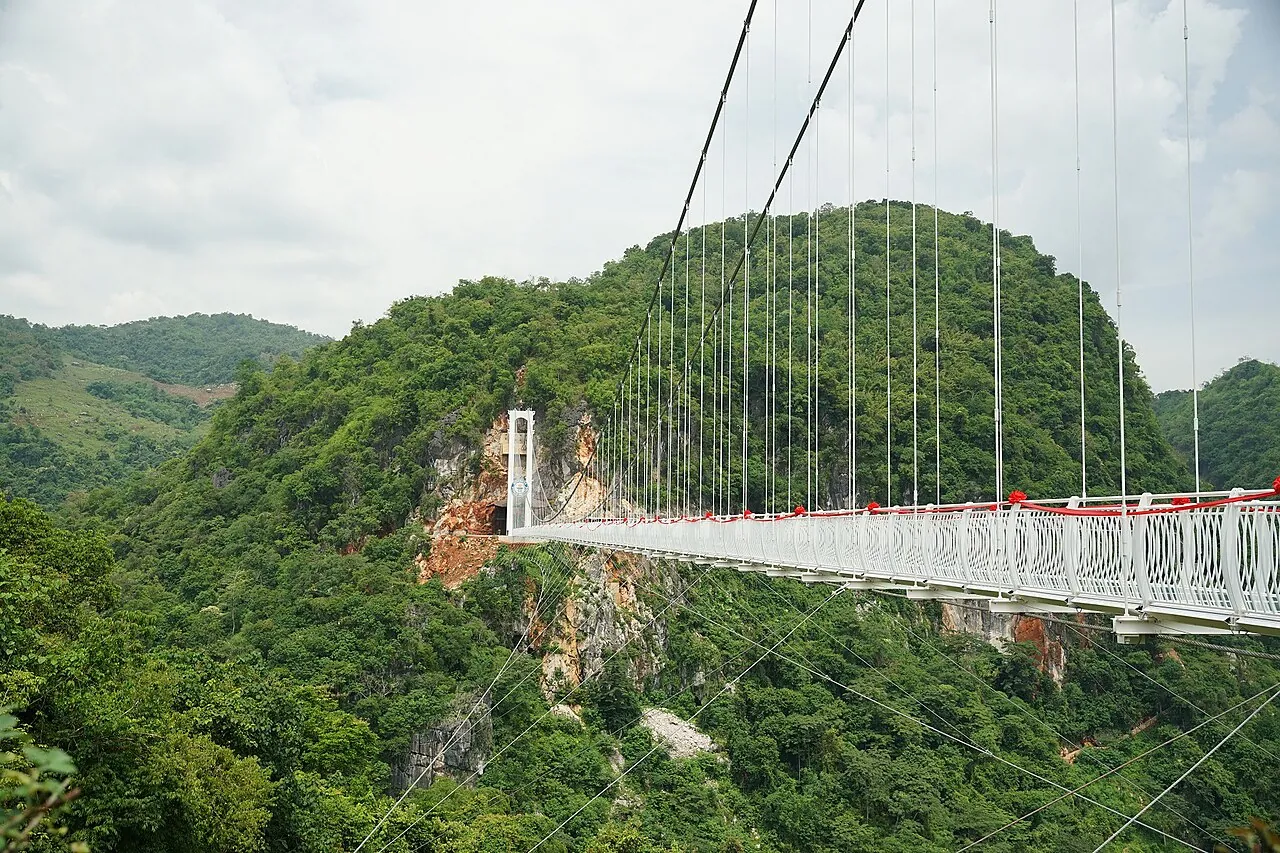
The Bach Long (White Dragon) bridge at Moc Chau Island opened on 28 April 2022 and was recognised by Guinness World Records as the world's longest glass-bottomed bridge. The operator describes a 290-metre span between two mountains, joined to a cliffside glass walkway, about 150 metres above the forest. When we checked on 3 October 2026, the operator's online ticket page listed 650,000 VND for an adult glass-bridge ticket on Fridays, weekends and public holidays, 350,000 VND for a child between 1 and 1.4 metres tall, and 150,000 VND for an adult ticket that only covers entry to the park. Combination tickets add the zipline and other rides. Check the current price list and whether your visit falls on a weekday before you buy.
Closer to town, Dong Doi (the Bat Cave, also called Son Moc Huong) is a limestone cave about 300 metres from the town centre towards Son La, reached by about 240 steps. The national tourism site lists it as a national historical and cultural site, and the provincial newspaper notes that the entrance looks out over the whole town. Pha Luong, the 'roof of Moc Chau' at about 2,000 metres on the border with Laos, is a serious hike: the national tourism site says the climb takes one to four hours, depending on fitness.
When to go: blossom, fruit and rain
Moc Chau's calendar is set by what is flowering or ripening, and many domestic visitors time their trip around one season. Book ahead for Tet, public holidays and weekends in the blossom season, when the plateau is busiest.
- November–December: white mustard flowers at their fullest, according to the provincial newspaper, with fields at Ban Pa Phach, around Ban Ang and in the farm town. Expect rain, early darkness and fog on the road.
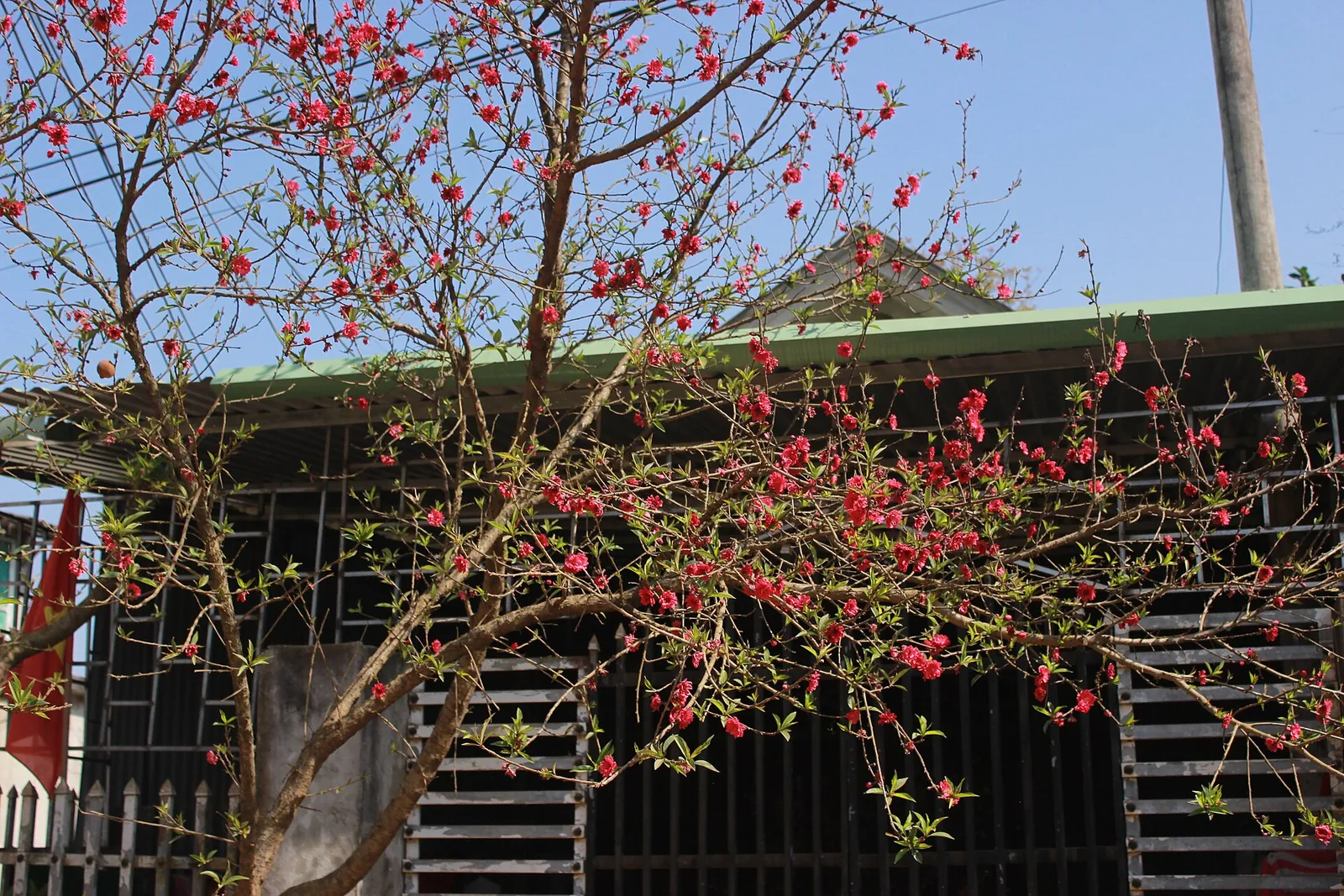
- Mid-January to late February: plum blossom in Na Ka and other valleys, around Tet; peach blossom at the same time. The provincial newspaper recommends mid-morning to mid-afternoon for photographs, once the mist has lifted.
- March: ban flowers bloom, according to the provincial newspaper, and the Thai community holds the Het Cha festival in Ang village, according to the national tourism site.
- March–May: plum picking, with the Na Ka fruit festival in mid-May.
- April–December: tea tours; in the rainy season, the waterfalls are at their fullest.
- September: the provincial newspaper notes Hmong celebrations around Independence Day.
Getting there and getting around
The usual road from Hanoi follows Highway 6 through Hoa Binh, over the Thung Khe Pass and past Mai Chau, then climbs to the plateau. The Son La provincial newspaper's travel guides say coaches leave Hanoi from My Dinh and Yen Nghia bus stations, that coaches bound for Son La and Dien Bien pass through Moc Chau, and that limousine vans also run the route. We found no official timetable, so confirm the departure time and drop-off point with the operator.
On the plateau, the national tourism site notes that bicycles and motorbikes can be rented. Only ride a motorbike if you are licensed and experienced on mountain roads. In winter, the provincial newspaper warns of cold nights, fog and early darkness: slow down, use your lights and avoid riding after dark. Without a bike, hire a car with a driver for the day, or join a tour.
A two-day plan
This is an editorial suggestion, not a timetable. Swap the blossom or fruit stop for whatever is in season.
- Day 1: arrive from Hanoi by midday; afternoon on the tea hills around the farm town and the heart-shaped hill at Tan Lap; bê chao and grilled fish for dinner.
- Day 2 (morning): Na Ka valley for blossom or fruit, or a dairy farm visit; Dong Doi cave on the way back through town.
- Day 2 (afternoon): Dai Yem waterfall, or the Bach Long glass bridge at Moc Chau Island; dinner in Ban Ang with rice wine if you are staying in the village.
- Day 3: continue north-west towards Son La and Dien Bien, or return towards Hanoi with a night in Mai Chau.
Combining Moc Chau with the north-west
Because Moc Chau sits on the main road from Hanoi to Son La and Dien Bien, it makes a natural first or last night on a north-western loop. Mai Chau's valley of rice fields and Thai stilt-house villages is on the same road, closer to Hanoi, so the two pair well: a night in each breaks the drive and gives you two different landscapes, a flat valley floor and a rolling plateau.
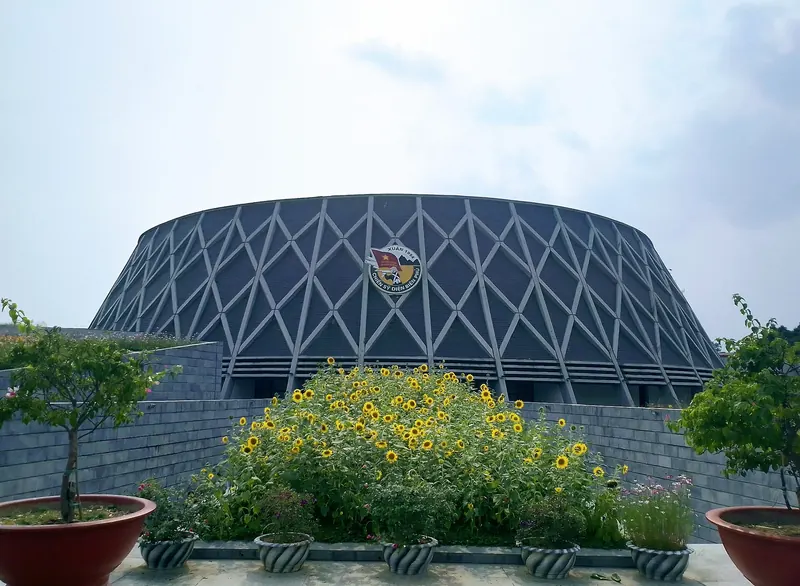
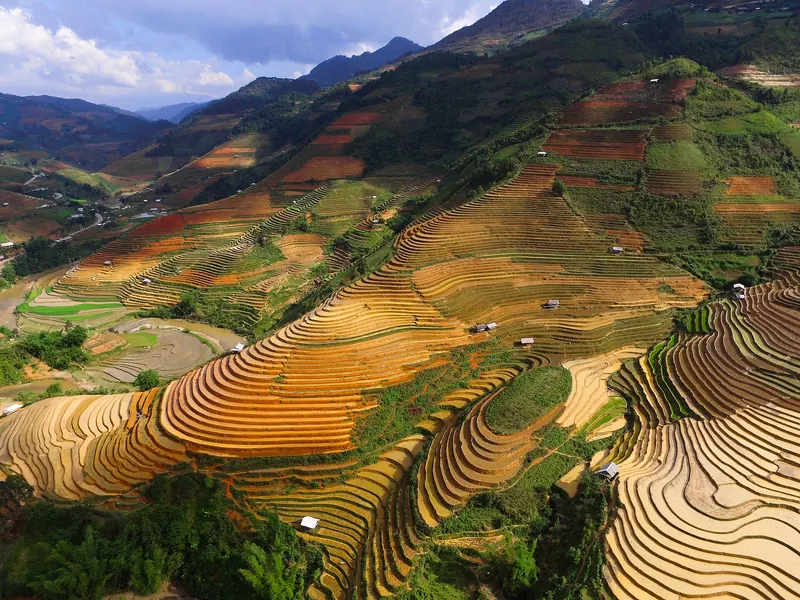
Continue to Dien Bien Phu for the battlefield history, or further north to the rice terraces of Mu Cang Chai. Pu Luong, a forested reserve in Thanh Hoa, is another option for walking among Thai villages; see the related guides below for how to get there.
Practical questions
How many days do I need in Moc Chau?
Two nights lets you see the tea hills, one seasonal stop and either Dai Yem waterfall or the glass bridge without rushing. One night works as a stop on the way north-west. A day trip from Hanoi is possible with a tour, but at about 200 kilometres each way you spend most of the day on the road.
When is the best time to visit Moc Chau?
It depends on what you want to see. Mustard flowers are best around November and December, plum blossom from mid-January to late February, plums are picked from March to May, and the waterfalls are fullest in the rainy season. The national tourism site points to a cool climate all year, but winter nights are cold.
Should I stay in Moc Chau town or the farm town?
Either works. Both have guesthouses, restaurants and coach stops on Highway 6, and they are only a few kilometres apart. The farm town (now part of Thao Nguyen ward) is closer to the main tea hills. For a quieter night in a village, choose a homestay in Ban Ang.
How much is the Bach Long glass bridge?
When we checked on 3 October 2026, the operator's online ticket page listed 650,000 VND for an adult glass-bridge ticket on Fridays, weekends and holidays, and 350,000 VND for children between 1 and 1.4 metres tall. Prices change and can differ on weekdays, so check the operator's site before you go.
How do I get from Hanoi to Moc Chau?
By road along Highway 6, through Hoa Binh and past Mai Chau. Coaches leave from Hanoi's My Dinh and Yen Nghia bus stations, coaches bound for Son La and Dien Bien pass through Moc Chau, and limousine vans also run the route. Confirm times and the drop-off point with the operator.
What food is Moc Chau known for?
Bê chao (young veal, blanched and then fried) is the plateau's own dish, and the dairy farms make fresh milk the obvious souvenir. Thai cooking adds grilled stream fish, sticky rice cooked in bamboo and rice wine drunk through bamboo straws.
Sources and checks before you travel
Reference sources for the version dated 3 October 2026. Confirm opening times, access, transport and conditions for your travel dates.
- Vietnam Tourism: Moc Chau, your one-stop nature escape ↗ — opens in a new tab
- Vietnam Tourism: why Moc Chau is every eco-traveller's dream destination ↗ — opens in a new tab
- Vietnam Tourism: be thrilled by the world's longest glass-bottomed bridge ↗ — opens in a new tab
- Moc Chau Island: Bach Long glass bridge (operator) ↗ — opens in a new tab
- Moc Chau Island: online ticket order (operator) ↗ — opens in a new tab
- Bao Son La: travelling to Moc Chau in the mustard-flower season ↗ — opens in a new tab
- Bao Son La: travelling to Moc Chau in the plum-blossom season ↗ — opens in a new tab
- Bao Son La: the Moc Chau milk brand ↗ — opens in a new tab
- Bao Son La: the distinctive cuisine of the Thai people of Son La ↗ — opens in a new tab
- Bao Son La: six drinks to try with Moc Chau food ↗ — opens in a new tab
- Bao Son La: full text of Resolution 1681/NQ-UBTVQH15 (2025) ↗ — opens in a new tab
- Vietnam Tourism: a traveller's guide to Vietnam's airports ↗ — opens in a new tab
Does this experience fit your route?
A guided overnight from Hanoi is the easiest way to see Moc Chau without driving mountain roads yourself. Before booking, check what is in season, which stops are included and where you spend the night.
Check dates and details on Viator ↗ — opens in a new tabAffiliate link · Book with ViatorPhoto credits
Tea hills on the Moc Chau plateau in the early light, with layers of mist between the ridges.
Photograph: Linh Pham linharex — opens in a new tab · CC0 — opens in a new tab
Changes: Resized and converted to WebP; displayed with responsive crops. · Original photograph and licence details ↗ — opens in a new tab
Bach Long glass bridge at Moc Chau Island, photographed in May 2022.
Photograph: DangTungDuong — opens in a new tab · CC BY-SA 4.0 — opens in a new tab
Changes: Resized and converted to WebP; displayed with responsive crops. · Original photograph and licence details ↗ — opens in a new tab
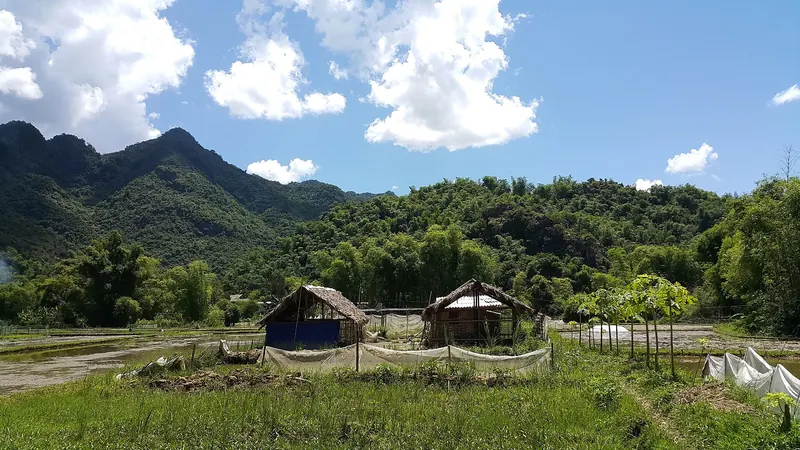
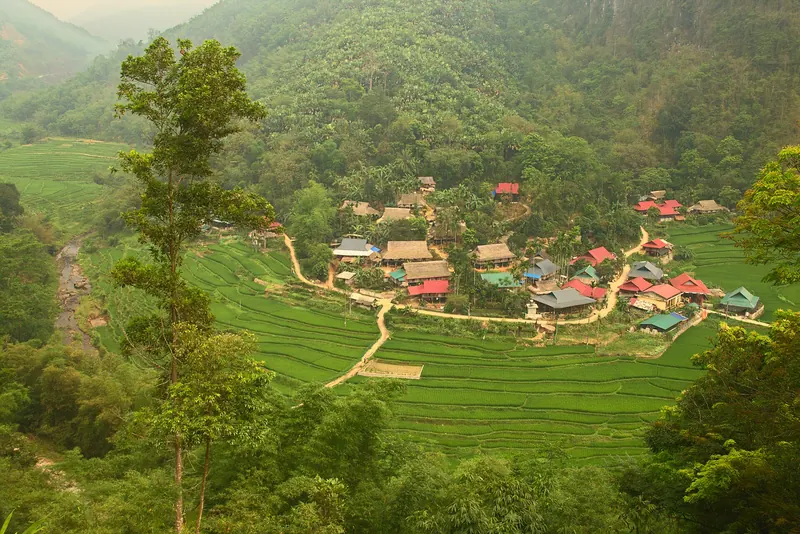
Wooden village houses and rice fields in a valley in Moc Chau.
Photograph: Viethavvh at vi.wikipedia — opens in a new tab · Public domain — opens in a new tab
Changes: Resized and converted to WebP; displayed with responsive crops. · Original photograph and licence details ↗ — opens in a new tab
The main street of Moc Chau town, with Hmong families in traditional dress.
Photograph: vi:user:Viethavvh — opens in a new tab · Public domain — opens in a new tab
Changes: Resized and converted to WebP; displayed with responsive crops. · Original photograph and licence details ↗ — opens in a new tab
Spring blossom outside a house in Moc Chau, under a clear sky.
Photograph: Buileducanh ( thảo luận ) — opens in a new tab · CC BY-SA 3.0 — opens in a new tab
Changes: Resized and converted to WebP; displayed with responsive crops. · Original photograph and licence details ↗ — opens in a new tab