Central Vietnam · Quang Ngai
Ly Son Island guide: volcano walks, garlic fields and boats from Sa Ky
Ly Son is a small volcanic island about 15 nautical miles off Quang Ngai, and it does not look like anywhere else on Vietnam's coast. Old craters rise above a patchwork of garlic and onion plots, black basalt runs straight into clear water, and the villages keep temples and rituals tied to the Hoang Sa flotilla that sailed from here centuries ago. It is now a special zone of Quang Ngai province, and its own 2030 plan expects only about 10,000 of a targeted 400,000 visitors a year to come from abroad. It is a place to sleep on rather than tick off in a day: the boats, the weather and the island's own rhythm all reward two nights.
- Suggested time
- 2 nights
- Where to stay
- An Vinh, near Ly Son harbour on the Big Island; Quang Ngai city for a night before an early boat
- Season and timing
- The local government describes a dry season from March to August and a rainy season from September to February, which brings about 71 per cent of the year's rain; north-east monsoon winds are strongest around October. The national tourism site calls April to August the prime window, with calm seas and clear water. Vietnamese public holidays bring crowds: about 7,000 visitors came over the three-day Hung Kings holiday in 2026, and the island expected around 12,000 to 15,000 over the 30 April–1 May break.
The short answer
Stay two nights on the Big Island, ideally in An Vinh near the harbour. Take a morning fast boat from Sa Ky port in Quang Ngai (the crossing takes roughly 30 to 60 minutes), spend the first afternoon on the west side at Gieng Tien and To Vo Gate for sunset, and the next day climb Thoi Loi, walk Hang Cau and visit Chua Hang before a boat to the Small Island (An Binh) for swimming. Leave on a boat the third morning. Fly into Chu Lai (VCL) or Da Nang (DAD) and travel by road to Sa Ky; go between March and August, and keep a spare day because boats do not sail in rough seas.
Why Ly Son, and how two nights work
Ly Son is Quang Ngai's only island, about 15 nautical miles (some 30 kilometres) from Sa Ky port. The local government describes two islands, the Big Island (Cu Lao Re) and the Small Island (An Binh, also called Dao Be), with a land area of just under 10 square kilometres. Most of the island's people live from the sea, and most of the rest from onions, garlic and maize. It is now governed as the Ly Son special zone of Quang Ngai province.
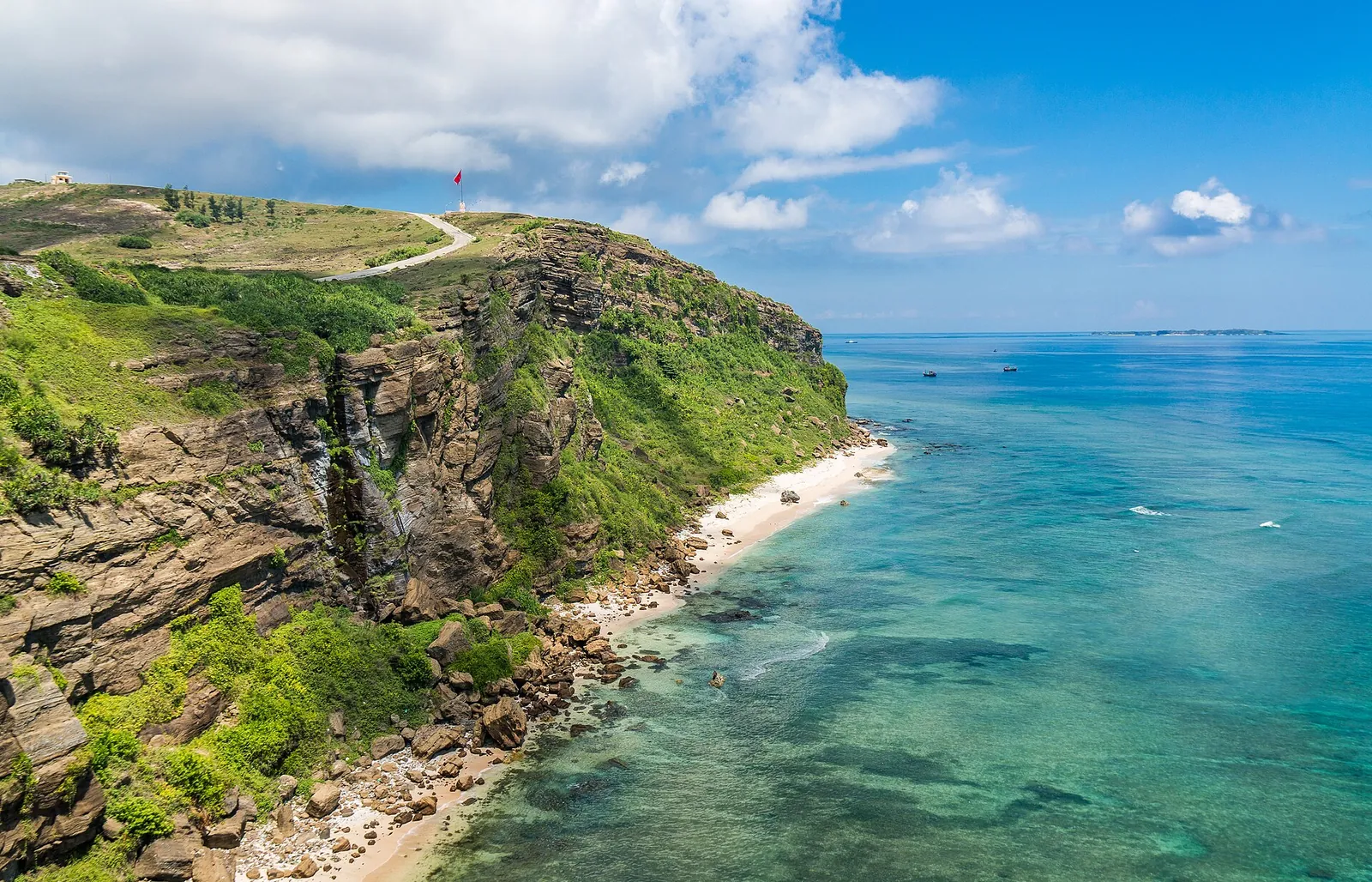
It is a volcanic island. The special zone's own description counts five dome-shaped hills left by volcanic activity, with Thoi Loi the highest at 169 metres, and says landforms of volcanic origin cover about 70 per cent of the island. The national tourism site calls Ly Son a volcano museum, pointing to tuff rings, scoria cones and twisted lava formations where molten rock met the sea.
People have lived here for a long time. The special zone's history page says Sa Huynh culture settlers lived on the island about 3,000 years ago, followed by the Cham, and that Vietnamese fishermen from the mainland settled it in the late 16th or early 17th century. That layering is why a small island has so many shrines, communal houses and festivals.
Two nights is the right length. The first afternoon covers the west side and a sunset at To Vo Gate; the full second day covers Thoi Loi, Hang Cau, Chua Hang and the Small Island; the third morning is for the market and the boat back. The whole island covers less than 10 square kilometres, so most of your time goes on the sights rather than on transport.
Craters and sea cliffs: Thoi Loi, Gieng Tien, To Vo and Hang Cau
Thoi Loi is the rim of the island's largest crater. The national tourism site describes a 20-metre national flagpole on top and a freshwater lake in the crater that supplies residents with water; walking along the rim, you see the sea on one side and the checkerboard of green and white fields on the other.
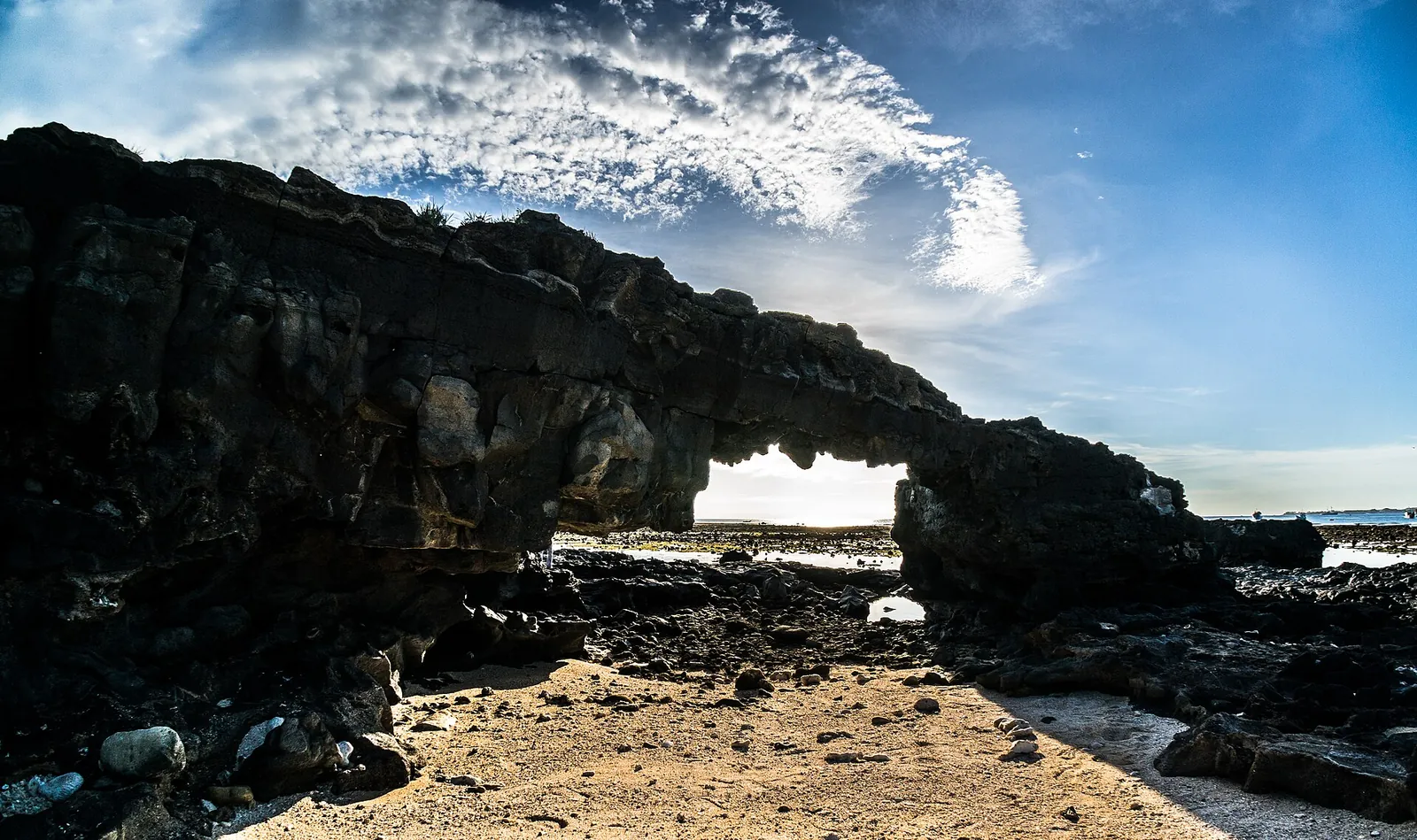
Gieng Tien, the second-largest crater, holds the Duc Pagoda with its Avalokitesvara statue. Lava from Gieng Tien also formed To Vo Gate (Cong To Vo), a natural basalt arch in the Tay (West) hamlet of An Vinh that waves hollowed out over a very long time; the provincial tourism site gives it as about 9 metres long and 2.5 metres high, and it has been ranked a national relic. The national tourism site calls it the place to watch the sun sink into the sea.
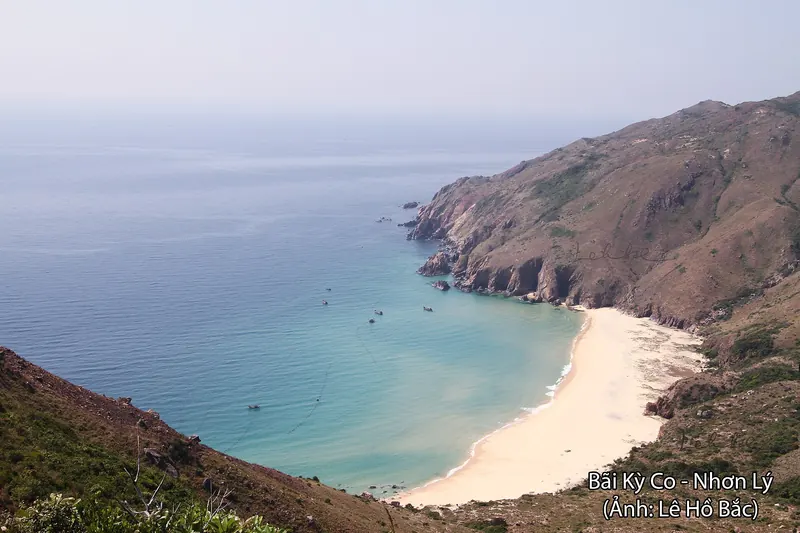
Hang Cau is a 120-metre cliff that is part of the edge of the Thoi Loi volcano ring, according to the national tourism site. The provincial tourism site describes a sheer rock wall on one side and white sand on the other, good for a walk along the shore, rock scrambling and snorkelling. Wear shoes with grip on the volcanic rock.
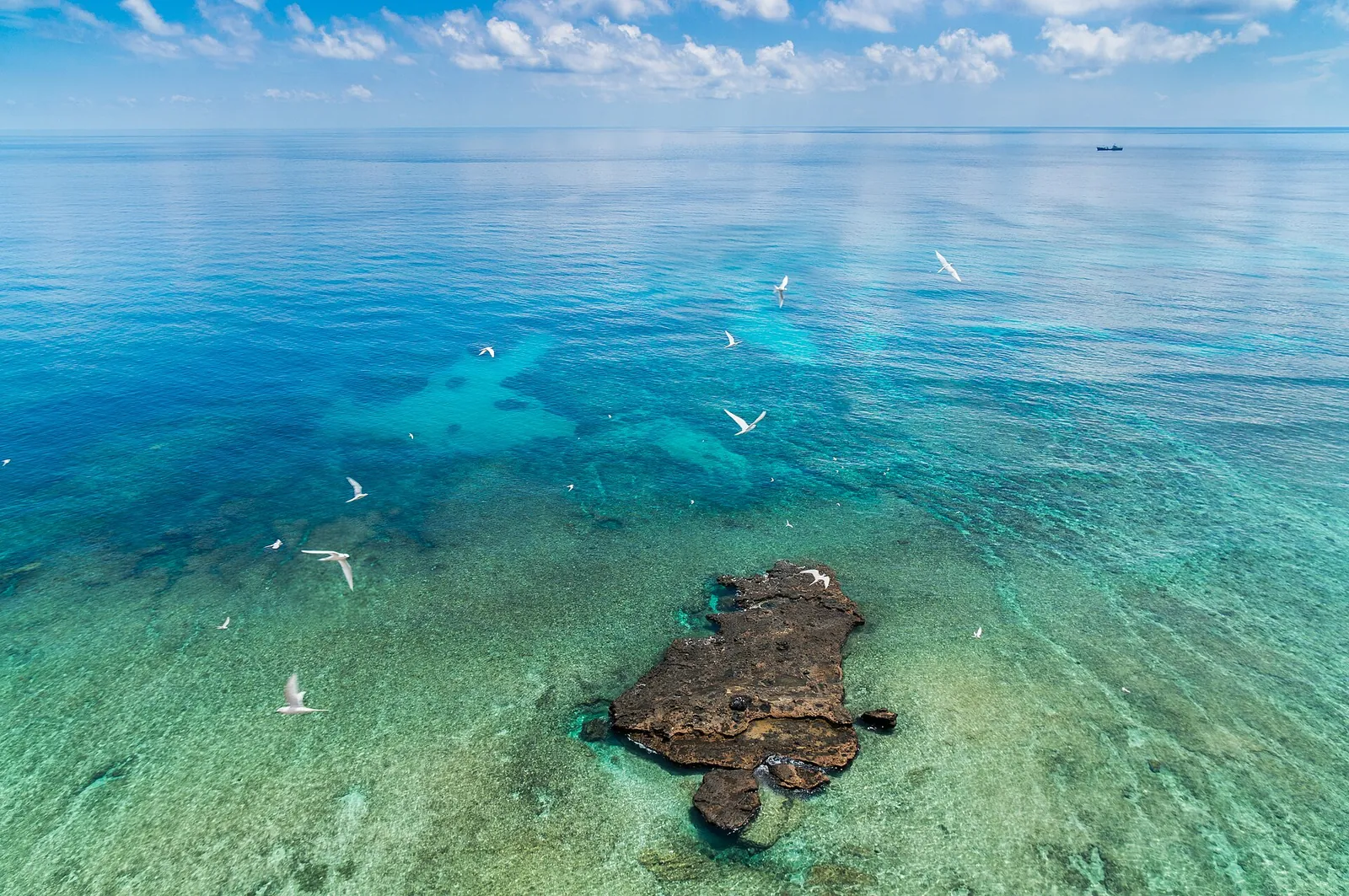
The coast also shows the island's reefs. The national tourism site mentions a field of fossilised "mill coral" not found elsewhere on Vietnam's coast, and the national site's newer feature recommends a boat trip to Ba Lang An Cape in the seaweed season, when green and yellow seaweed lies in the turquoise water.
Make time for the local food
What to eat and where to look
Ly Son garlic salad (goi toi)
The national tourism site names garlic salad as the island's signature dish, made with Ly Son's own garlic, which the provincial tourism site describes as aromatic with a mild, sweet heat.
- Where to look
- The Ly Son night market and local restaurants around An Vinh.
- Fit it into your day
- A starter with your first seafood dinner on the island.
Raw garlic in quantity; dressings often contain fish sauce.
Seaweed salad (goi rong bien)
Seaweed is part of Ly Son's farming and its menus. The special zone lists seaweed salad alongside Ly Son garlic, spanner crab and oc tuong sea snails among the specialities visitors look for.
- Where to look
- Seafood restaurants in An Vinh and An Hai.
- Fit it into your day
- A cool, light lunch after a morning on Thoi Loi or at Hang Cau.
Ask for less chilli if you need to; dressings may contain fish sauce or peanuts.
Spanner crab, sea urchin and grilled conch
The national tourism site singles out sea urchin, conch grilled or sautéed with chilli and lemongrass, spanner crab (cua huynh de) and giant clam as Ly Son seafood to try.
- Where to look
- Seafood restaurants near the harbour in An Vinh.
- Fit it into your day
- The main event of a dinner after sunset at To Vo Gate.
Shellfish. Seafood is usually priced by weight; the special zone requires businesses to post their prices, so check the posted price per kilogram and the weight before it is cooked.
Banh it la gai (ramie-leaf sticky rice cake)
A black, glossy cake of glutinous rice pounded with ramie leaves and sugar, filled with peanuts and coconut or mung beans and steamed in a leaf, as the provincial tourism site describes it. It keeps for several days, so it is the island's usual gift to take home.
- Where to look
- Markets and specialty shops on the Big Island.
- Fit it into your day
- A snack on the boat back, or a gift bought on your last morning.
Contains peanuts and is very sweet.
Chua Hang, the whale temples and the Hoang Sa story
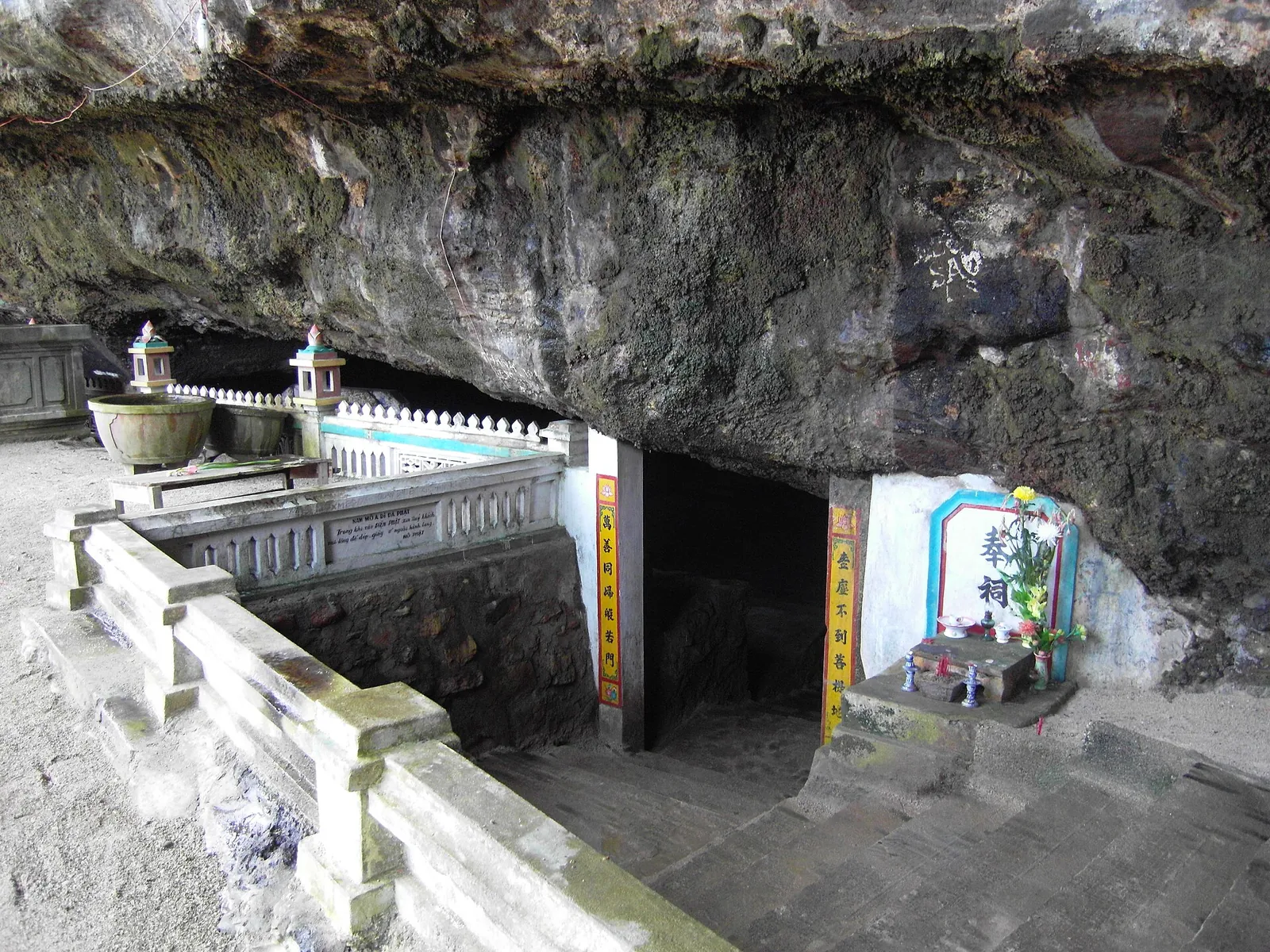
Chua Hang (the Cave Pagoda), on the north-east coast at the foot of Thoi Loi, is the largest of the island's sea caves. The provincial tourism site gives it as 24 metres deep, 20 metres wide and 3.2 metres high; the Cham used the cave as a shrine to Brahmanic deities, and the Vietnamese who settled the island turned it into a Buddhist pagoda in the 17th century. It became a national relic in 1994. Fresh water seeps down from Thoi Loi in front of the entrance, and a statue of Guanyin guards the pagoda, as the national tourism site notes.
The island's history with the sea is visible in its temples. The national tourism site counts more than 50 shrines and temples and seven temples to the whale, the fishermen's god of the sea, and says one of them holds Vietnam's largest whale skeleton, 28.7 metres long.
Ly Son's best-known heritage is tied to the Hoang Sa flotilla, the men the Nguyen lords sent out each year to the Paracel and Spratly islands. An Vinh communal house, by the harbour, dates from the 18th century and became a national relic in 2013; it is where the Khao le the linh Hoang Sa ritual is held on the 16th day of the third lunar month to honour those sailors (2 May in 2026). An Hai communal house, about 3 kilometres from the centre and backed by Thoi Loi, was rebuilt in 1820 and was ranked a national relic in 1995. The provincial suggested route also includes the exhibition house of the Hoang Sa flotilla.
These are living places of worship. Dress modestly, take your shoes off where locals do, and ask before photographing rituals.
The Small Island and the water
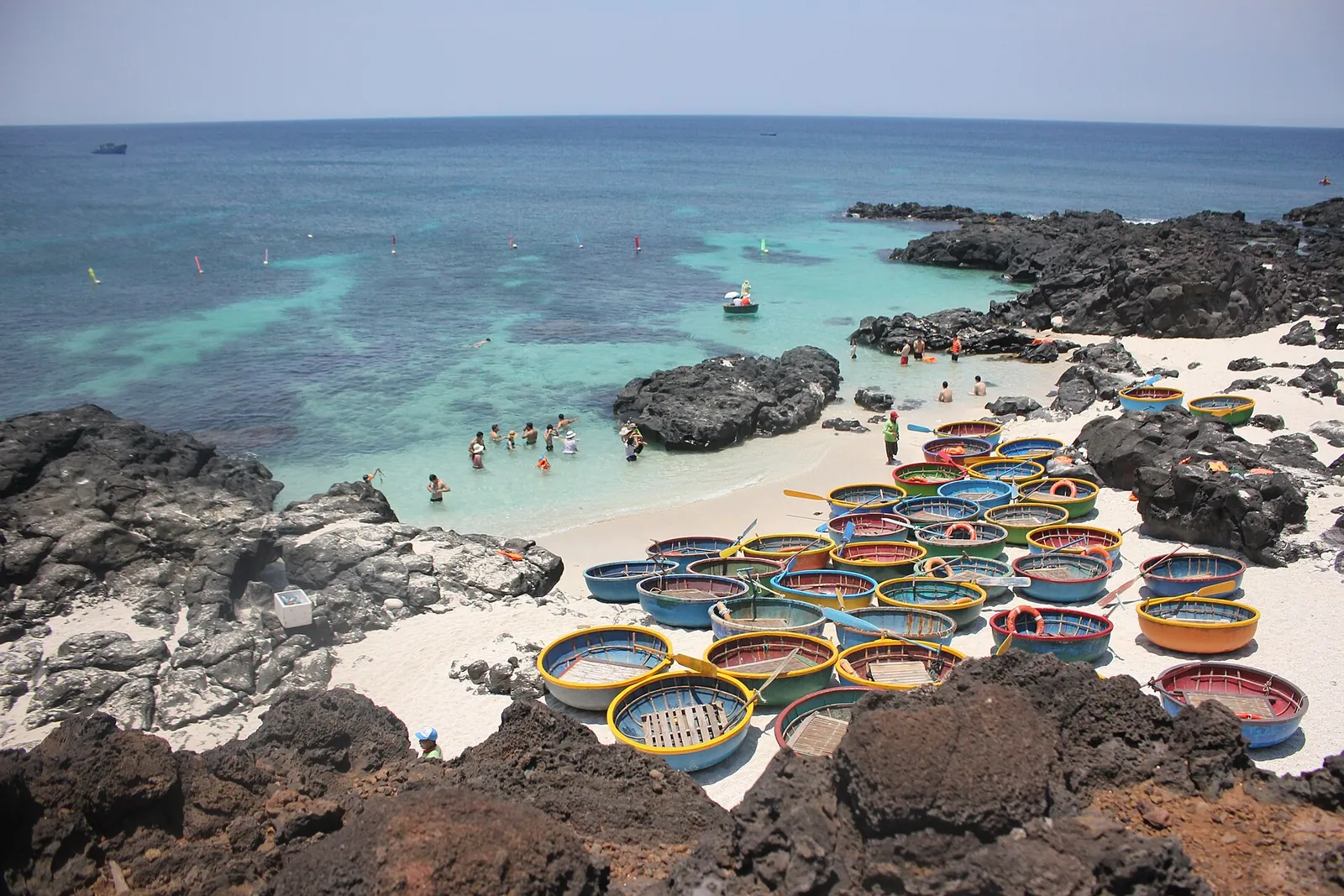
An Binh (the Small Island) is a short boat ride from the Big Island; the national tourism site puts it at about 15 minutes. It has fewer than 100 families, according to that site, is small enough to explore on foot, and has white-sand beaches where snorkelling and coracle paddling are the usual activities. The provincial tourism site reports that between October 2025 and February 2026 a conservation project repainted 83 houses and added 20 murals about sea turtles and marine life, so the village itself is now part of the visit.
The special zone's 2030 tourism plan aims to stop single-use plastic on An Binh. Bring a refillable bottle and a bag for your rubbish.
From the Big Island you can also walk the seawall to Mu Cu islet, which the national tourism site suggests for an easy stroll. For water sports, the special zone requires operators to provide life jackets and rescue staff and forbids taking visitors out to sea in bad weather. If an operator offers to go out when the sea is rough, say no.
Garlic fields, markets and festivals
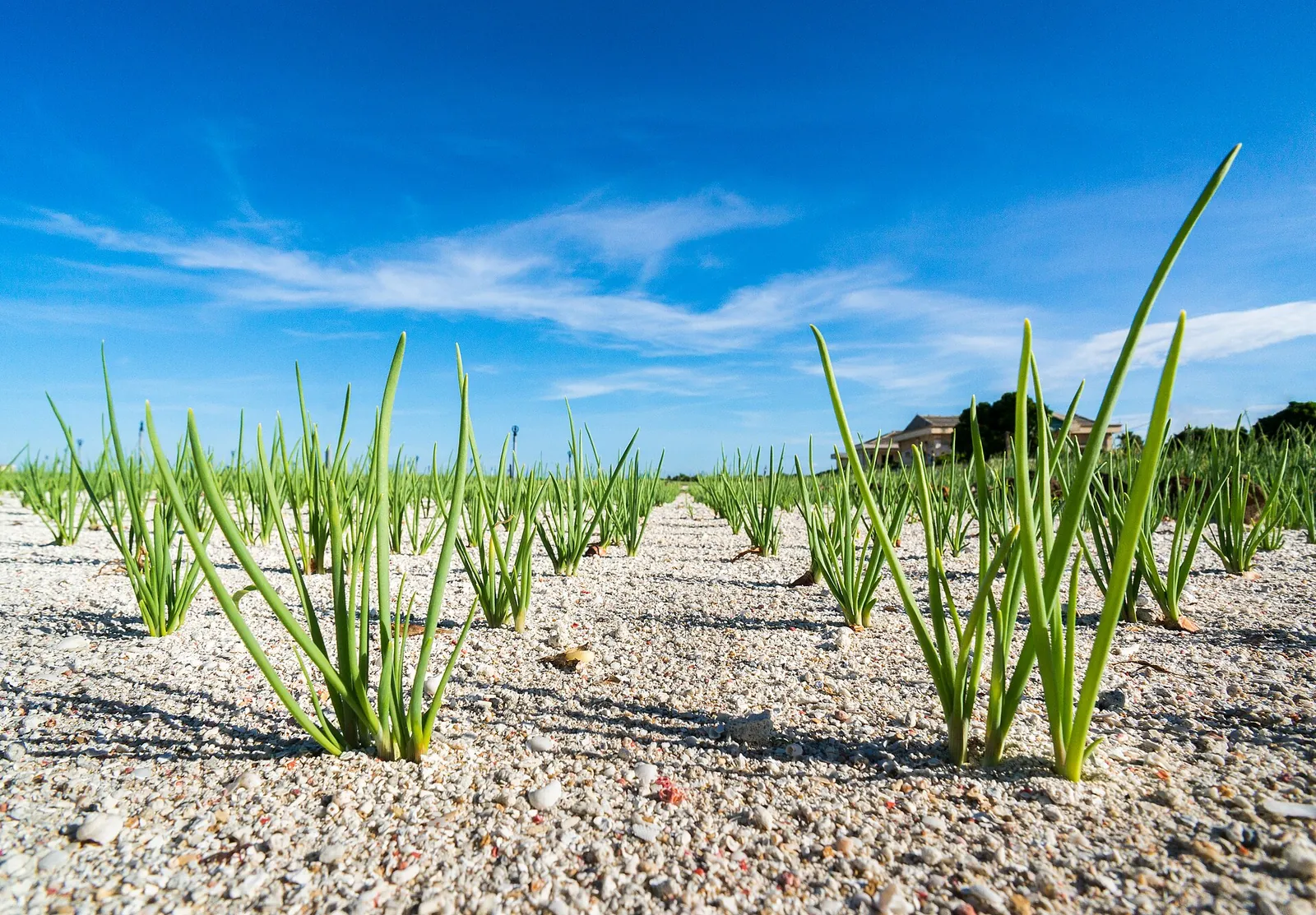
Ly Son is known across Vietnam as the kingdom of garlic. The national tourism site explains that farmers spread fine white sand over the dark volcanic soil, which keeps in moisture and protects the crop from sea wind; it also mentions seaweed used as fertiliser. That is what gives the fields the checkerboard look you see from the craters. Ly Son garlic is small, with thin white skin, a strong aroma and a mild, sweet heat, according to the provincial tourism site, and it is a recognised national brand. The prized kind is single-clove garlic.
Buy garlic, garlic wine and banh it la gai on your last morning rather than the first day, so you are not carrying them around. The national tourism site points to the Ly Son night market for local specialities.
The island's two big festivals are the Khao le the linh Hoang Sa ritual at An Vinh communal house and the Tu Linh boat race, in which village crews from An Vinh and An Hai race boats carved as the four holy animals: dragon, unicorn, turtle and phoenix. The special zone says the race was first held in 1826, and it is listed as national intangible heritage. The national tourism site places it at the beginning of the lunar year; in 2026 races were also staged around 30 April as part of the provincial tourism festival. In June 2026 the island also hosted a SUP festival from To Vo Gate to the Small Island and the Ly Son Cross Island open-water swim. Check the year's programme before you plan around a festival, and book boats and rooms early for those dates.
Getting there: Sa Ky port, fares and the weather
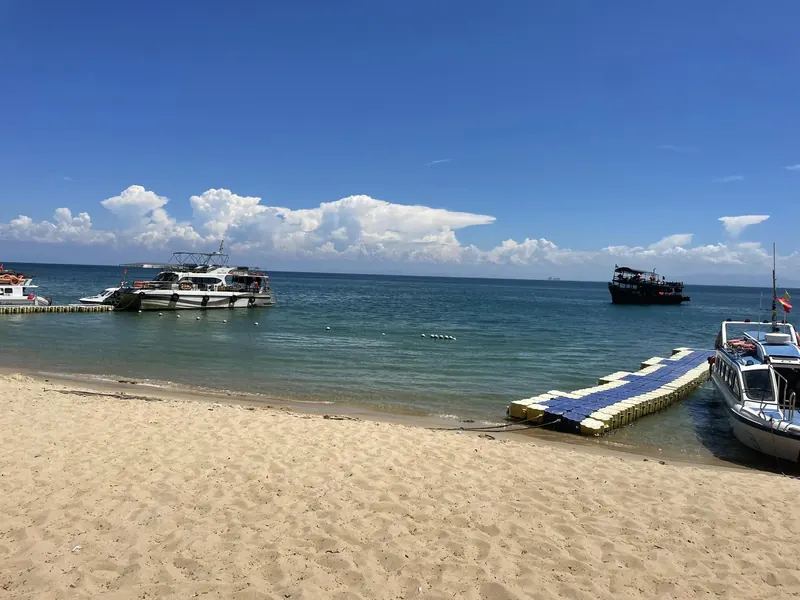
Fast boats leave from Sa Ky port on the Quang Ngai coast. The provincial tourism site says the Sa Ky – Ly Son route has fast boats every day in the morning and afternoon, and advises contacting the ticket office before you travel. The national tourism site gives the crossing as 30 to 60 minutes in one article and 35 to 45 minutes in another. Tickets are electronic: in May 2026 passengers were boarding by scanning a QR code.
When we checked on 2026-10-03, the most recent fares published by the provincial tourism site dated from spring 2026. From 30 March 2026 the three companies then running the route, with four boats a day between them, set the visitor fare at 212,000 dong one way. Phu Quoc Express joined the route from 17 April 2026 with departures from Sa Ky at 07:00, 10:00 and 14:00 and from Ly Son at 08:30, 12:15 and 16:00, and fares of 216,000 dong (VIP) and 160,000 dong (economy), not including the port fee. Times and fares change with the season and the price of fuel, so confirm them with the operator or the port before you go.
On public holidays the route gets very busy: in the 30 April–1 May break of 2026 the operators ran 25 to 32 sailings a day. Book the return boat when you book the outward one.
The weather is the real limit. The special zone says that when seas are rough and winds strong, boats are not allowed to leave port, and that passengers must be told in time so they can change plans. The local government's climate notes put the rainy season from September to February and the strongest winds around October, so those are the months to keep the most slack. Leave a spare day before an onward flight, and do not plan a same-day return to catch a plane.
Getting to Sa Ky: the national tourism site suggests flying into Da Nang, or connecting to Chu Lai airport, then taking a taxi or coach to the port. Quang Ngai station is on the north–south railway, which makes a night in Quang Ngai city and an early boat a good alternative.
Practical questions
How do I get to Ly Son Island?
Take a fast boat from Sa Ky port in Quang Ngai. The national tourism site gives the crossing as about 30 to 60 minutes. To reach Sa Ky, fly into Da Nang or Chu Lai and continue by taxi or coach, or take the train to Quang Ngai.
How much is the boat from Sa Ky to Ly Son?
When we checked on 2026-10-03, the latest fares published by the provincial tourism site were from spring 2026: 212,000 dong one way for visitors from 30 March 2026, and 216,000 dong (VIP) or 160,000 dong (economy) plus the port fee on Phu Quoc Express from 17 April 2026. Confirm current fares before you travel.
How many days do I need on Ly Son?
Two nights. That gives you an afternoon on the west side with sunset at To Vo Gate, a full day for Thoi Loi, Hang Cau, Chua Hang and the Small Island, and a relaxed morning for the boat back.
When is the best time to visit Ly Son?
Between March and August, the dry season described by the local government; the national tourism site recommends April to August for calm seas and clear water. The rainy season runs from September to February, with the strongest winds around October, and boats do not sail when the sea is rough.
Can I visit Ly Son as a day trip?
It is possible on paper but not worth it: you would see only one side of the island, and boats do not sail in rough weather, so a delayed return can wreck an onward plan. Stay at least one night, ideally two.
What happens if the sea is too rough?
Boats stay in port. The special zone says the authorities do not let boats leave in big waves and strong winds and that passengers must be told in time. Keep a spare day, and do not book a flight for the same day as your boat back.
Sources and checks before you travel
Reference sources for the version dated 3 October 2026. Confirm opening times, access, transport and conditions for your travel dates.
- Vietnam National Authority of Tourism: Visit Ly Son Island for pristine beaches and more ↗ — opens in a new tab
- Vietnam National Authority of Tourism: Ly Son Island, Vietnam's next must-visit island destination ↗ — opens in a new tab
- Ly Son special zone: natural conditions ↗ — opens in a new tab
- Ly Son special zone: history ↗ — opens in a new tab
- Ly Son special zone: ready for visitors over the 2 September holiday (2026) ↗ — opens in a new tab
- Ly Son special zone: plan to make Ly Son a sea-island tourism centre ↗ — opens in a new tab
- Ly Son special zone: about 7,000 visitors over the Hung Kings holiday (2026) ↗ — opens in a new tab
- Ly Son special zone: Tu Linh boat-race festival ↗ — opens in a new tab
- Ly Son special zone: Khao le the linh Hoang Sa and Tu Linh race in the 2026 tourism festival ↗ — opens in a new tab
- Quang Ngai tourism (Department of Culture, Sports and Tourism): getting around ↗ — opens in a new tab
- Quang Ngai tourism: Sa Ky – Ly Son fares cut from 30 March 2026 ↗ — opens in a new tab
- Quang Ngai tourism: Phu Quoc Express on the Sa Ky – Ly Son route from 17 April 2026 ↗ — opens in a new tab
- Quang Ngai tourism: crowds on the Sa Ky – Ly Son route over the 2026 holiday ↗ — opens in a new tab
- Quang Ngai tourism: Chua Hang ↗ — opens in a new tab
- Quang Ngai tourism: To Vo Gate proposed as a national relic ↗ — opens in a new tab
- Quang Ngai tourism: a journey to Ly Son (2026) ↗ — opens in a new tab
- Quang Ngai tourism: An Vinh communal house ↗ — opens in a new tab
- Quang Ngai tourism: An Hai communal house ↗ — opens in a new tab
- Quang Ngai tourism: the Small Island repainted ↗ — opens in a new tab
- Quang Ngai tourism: Ly Son onions and garlic ↗ — opens in a new tab
- Quang Ngai tourism: banh it la gai ↗ — opens in a new tab
- Quang Ngai tourism: 2-day Quang Ngai – Ly Son route ↗ — opens in a new tab
- Vietnam Airlines: flights to Chu Lai ↗ — opens in a new tab
Does this experience fit your route?
There is no confirmed ready-made Viator tour to Ly Son: book the Sa Ky boat directly, and use Viator for the Da Nang leg of your trip.
Browse relevant experiences on Viator ↗ — opens in a new tabAffiliate link · Book with ViatorPhoto credits
Volcanic cliffs and clear water on the coast of Ly Son Island, off Quang Ngai
Photograph: minhphuc_99kdd — opens in a new tab · Public domain — opens in a new tab
Changes: Resized and converted to WebP; displayed with responsive crops. · Original photograph and licence details ↗ — opens in a new tab
The beach on the Small Island (An Binh), where coracles wait for visitors
Photograph: Đôi Ta Đi — opens in a new tab · CC BY-SA 4.0 — opens in a new tab
Changes: Resized and converted to WebP; displayed with responsive crops. · Original photograph and licence details ↗ — opens in a new tab
A basalt sea arch on Ly Son's shore; To Vo Gate on the west coast is the island's best-known arch
Photograph: minhphuc_99kdd — opens in a new tab · Public domain — opens in a new tab
Changes: Resized and converted to WebP; displayed with responsive crops. · Original photograph and licence details ↗ — opens in a new tab
Crops planted in coral sand spread over volcanic soil, the farming method behind Ly Son's garlic
Photograph: minhphuc_99kdd — opens in a new tab · Public domain — opens in a new tab
Changes: Resized and converted to WebP; displayed with responsive crops. · Original photograph and licence details ↗ — opens in a new tab
Shallow reefs and clear water around Ly Son Island
Photograph: minhphuc_99kdd — opens in a new tab · Public domain — opens in a new tab
Changes: Resized and converted to WebP; displayed with responsive crops. · Original photograph and licence details ↗ — opens in a new tab
A shrine built into a volcanic rock overhang on Ly Son, where cave pagodas such as Chua Hang shelter their altars
Photograph: Kim Yong Soo/Doosan … — opens in a new tab · CC BY 3.0 — opens in a new tab
Changes: Resized and converted to WebP; displayed with responsive crops. · Original photograph and licence details ↗ — opens in a new tab