South Central Coast and Highlands · Quang Ngai
Kon Tum travel guide: the wooden church, Ba Na villages and Mang Den
Kon Tum is the Central Highlands town that most itineraries skip, and that is much of its appeal. A Catholic church built of timber in the Ba Na stilt-house style, a thatched communal house that rises above the riverbank, and Ba Na villages a walk across a suspension bridge from the centre make a compact, unhurried stay. Most rooms are in small hotels and homestays. What you get is a working highland town on the Dak Bla River, with the cool pine country of Mang Den 50 to 60 kilometres up the road.
- Suggested time
- 2–3 nights (3 with Mang Den)
- Where to stay
- Kon Tum town centre, near the wooden church and the Dak Bla River; Mang Den for a night in the pine forest
- Season and timing
- The rainy season usually runs from April to November and the dry season from December to March. Coffee blossom comes in late March and early April; Mang Den's cherry blossom peaks around Tet. Evenings can be cold.
The short answer
Give Kon Tum two nights, or three if you add Mang Den. Fly to Pleiku (PXU), which Vietnam's tourism authority places about 45 kilometres and roughly an hour by road from Kon Tum, and sleep in the town centre near the wooden church. Spend one day on the church, the bishop's seminary and the river at sunset, and one on the Kon Klor communal house, the suspension bridge and the Ba Na village of Kon K'tu. With a third night, go up to Mang Den, 50 to 60 kilometres away on a steep, winding road, and sleep among the pines. For the tri-border marker, hire a car and driver.
Get your bearings: a river town, now part of Quang Ngai
Kon Tum sits in the far north of the Central Highlands. The old province bordered Laos and Cambodia, and the Dak Bla River curves around the town before flowing on into Gia Lai, where it becomes part of the Se San. Vietnam's tourism authority now lists the town's sights under Kon Tum ward, Quang Ngai province, and Mang Den under Mang Den commune, because the former Kon Tum province has been folded into Quang Ngai. Older maps, bus companies and booking sites may still say Kon Tum province. Treat both names as the same place.
The town is small enough to see on foot or by short taxi rides. The wooden church, the bishop's seminary and the Kon Klor communal house are all close to the river in the centre. Vietnam Tourism describes Kon Tum's lodging as plentiful but mostly small budget hotels and homestays, so expect simple, practical rooms rather than resorts. Stay in the centre for your first nights. Mang Den, up on the plateau to the east, is a separate base with its own hotels and homestays. Go there for a cool night, not for a day trip squeezed between sights in town.
The wooden church and the bishop's seminary
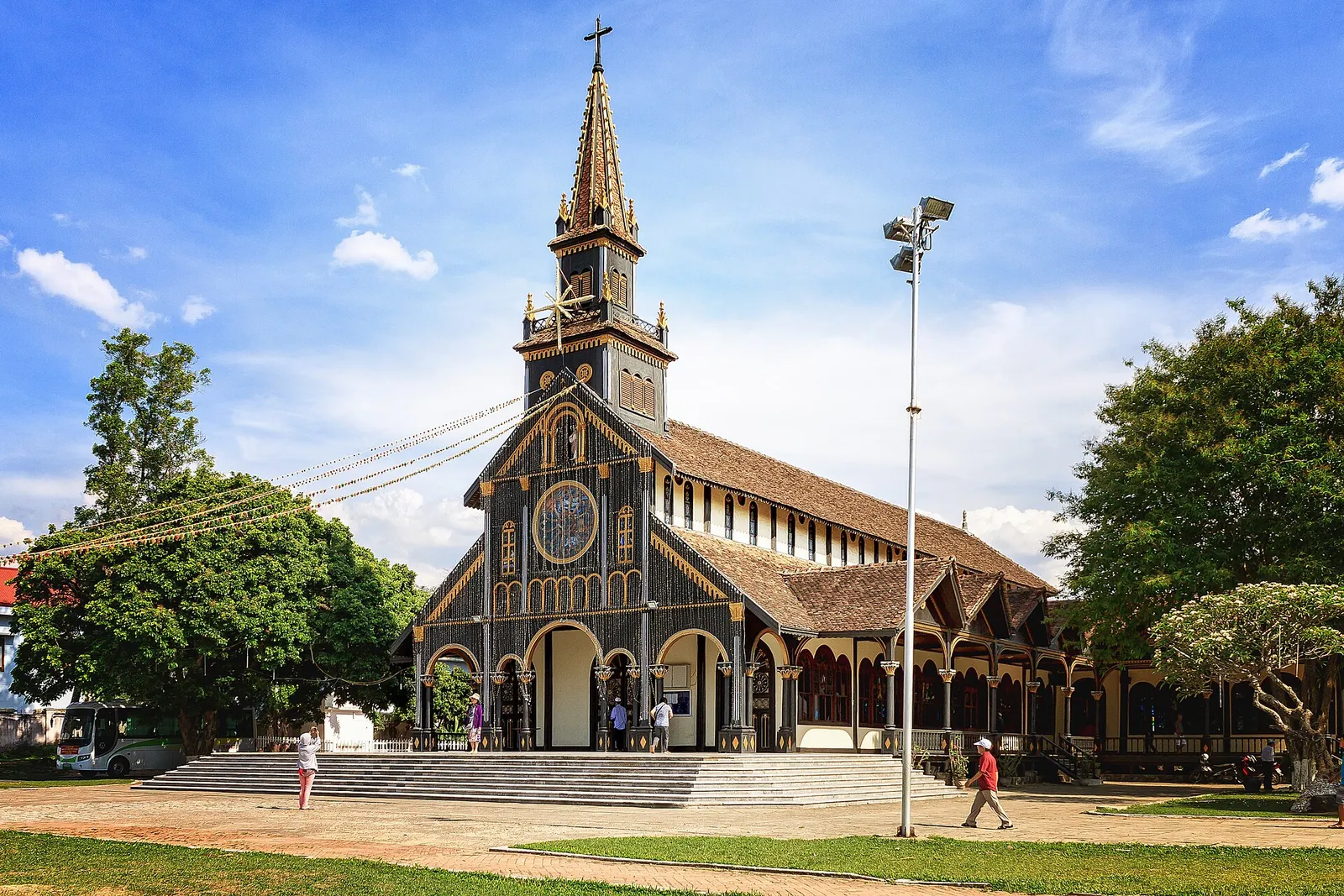
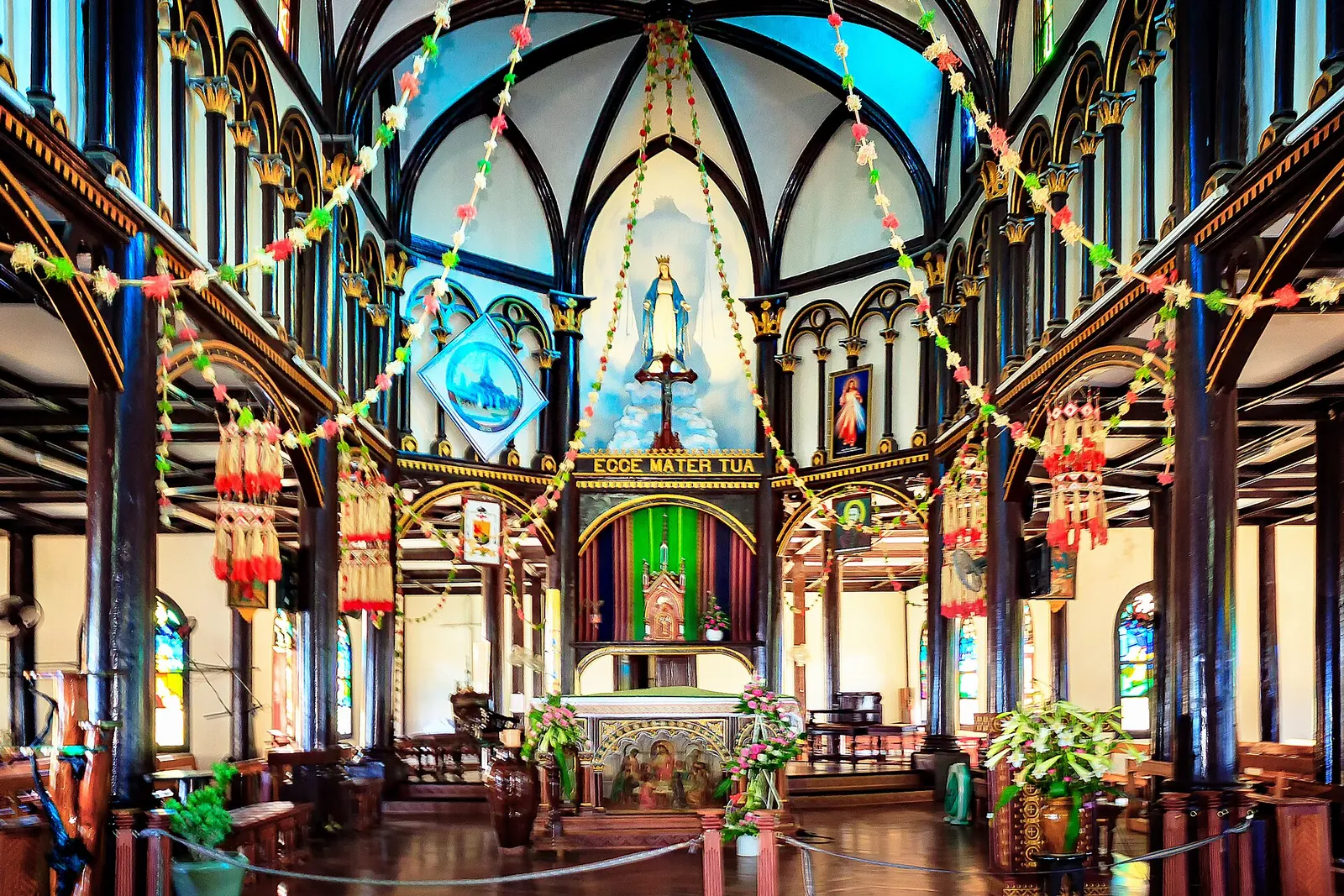
Kon Tum Cathedral, on Nguyen Hue Street, is known to everyone as the Wooden Church. French priest Joseph Decrouille built it between 1913 and 1918, and Vietnam Tourism describes a Roman-style plan combined with the shape of a Ba Na stilt house. The frame is of ca chit timber (Shorea roxburghii) and the walls are of earth mixed with straw, with no reinforced concrete. Inside, rows of dark wooden columns are joined by wooden arches, and the stained glass shows Bible scenes alongside images of highland life. The cross tower is about 25 metres high. According to a Vietnam Tourism article, the church was restored in 1995 without changing its original form.
The grounds carry highland symbols, such as carved tomb-house figures and a rong-style roof over the walkway, and the church was built for the area's ethnic minority Catholic communities. It is an active parish. Dress modestly, keep quiet inside and do not walk in during a service; if the doors are shut, look at the exterior and come back later.
The Kon Tum Missionary Seminary, also called the Bishop's Palace, stands on Tran Hung Dao Street, a short walk away. It dates from 1935 and is built almost entirely of hardwood above concrete floor pillars, in a mix of Western and highland styles. A traditional house in the grounds serves as a small museum of farming tools, household objects and the cultural objects of local ethnic groups. When we checked on 2026-10-03, Vietnam Tourism's Kon Tum guide said the seminary is closed on Tuesdays and open to visitors on the other days. Plan the church and the seminary for the same morning, and not on a Tuesday.
Make time for the local food
What to eat and where to look
Gỏi lá (Kon Tum leaf salad)
A platter of forest leaves eaten with boiled pork, shrimp and pork skin. Vietnam Tourism counts 30 to 40 kinds of leaves in the dry season and at least 70 in the rainy season. The dip is the point: a thick, pale yellow sauce of fermented sticky rice cooked with dried shrimp and pork belly.
- Where to look
- Restaurants in Kon Tum town; ask your hotel which one local families use.
- Fit it into your day
- A long shared lunch or dinner, best with two or more people.
Contains pork and shrimp, and the leaves are eaten raw; skip it if your stomach is already unsettled.
Grilled chicken with cơm lam (bamboo-tube rice)
Free-range chicken stuffed with wild pepper leaves, onion, lemongrass and chilli and grilled over very hot charcoal, served with sticky rice cooked in young bamboo tubes and peanut salt or sesame. Vietnam Tourism calls it a traditional dish of the area and Mang Den's signature meal.
- Where to look
- Grill restaurants in Mang Den and in Kon Tum town; look for charcoal grills and bamboo tubes by the fire.
- Fit it into your day
- Dinner on your night in Mang Den, when the evening is cold.
Each batch takes 20 to 30 minutes over the coals, so order early.
Bún đỏ (red vermicelli)
Rice noodles that turn red as they soak up a broth coloured with annatto and shrimp, usually with crab, meatballs and boiled quail eggs. Vietnam Tourism treats it as a Central Highlands dish rarely found elsewhere in Vietnam.
- Where to look
- Roadside stalls and restaurants in Kon Tum town; the tourism authority says it is served at both.
- Fit it into your day
- Breakfast or a quick lunch between the church and the river.
Contains crab and shrimp.
Turmeric sticky rice with bamboo shoots
Sticky rice soaked with turmeric so that it cooks a bright yellow, eaten with stir-fried or boiled bamboo shoots, salt and sesame, or braised meat.
- Where to look
- Morning stalls and markets in Kon Tum town.
- Fit it into your day
- A cheap, filling breakfast before a day trip to Mang Den or the border.
Ask whether the braised meat is pork if you avoid it.
Kon Klor and the Ba Na villages along the Dak Bla
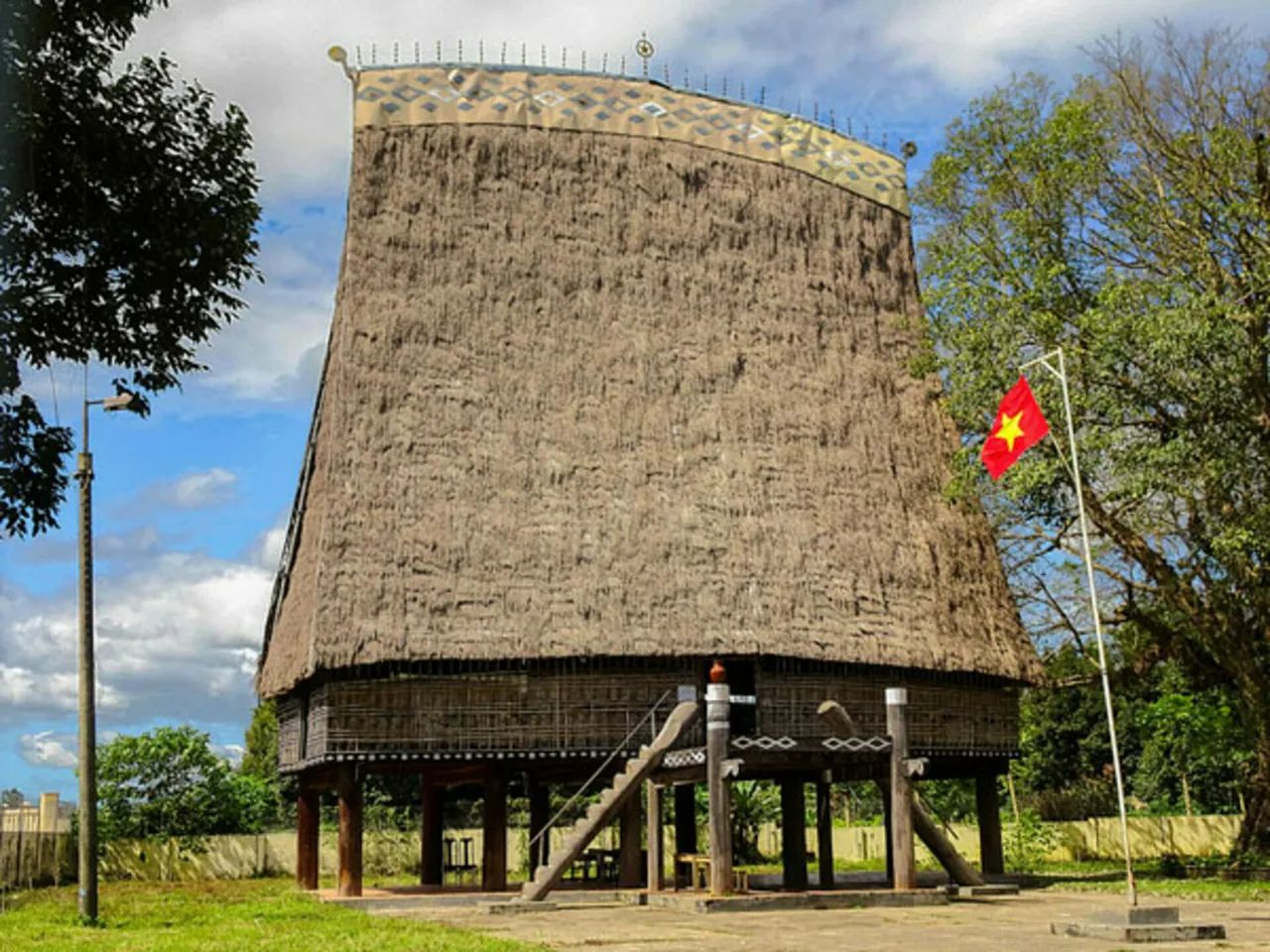
Vietnam Tourism calls the Kon Klor rong house the largest communal house in the Central Highlands. A rong is the communal house of a Ba Na village: Vietnam Tourism describes the soaring thatched roof, the wood, bamboo and thatch construction and the carved patterns, and calls it the soul of the village. The present house was rebuilt on the foundations of an earlier one that burned down in May 2010, and Vietnam Tourism gave its height as 22 metres. It is a place for village gatherings and ritual, not a museum. Ask before climbing the steps or photographing people.
Next to it, the Kon Klor suspension bridge crosses the Dak Bla. Vietnam Tourism gives its length as 292 metres and its width as 4.5 metres. From the bridge you look over sugar cane, maize and rice fields and the villages along the banks. Walk across in the late afternoon: the river is the town's place for sunrise and sunset, there are gardens along both banks, and Vietnam Tourism mentions a sightseeing boat service.
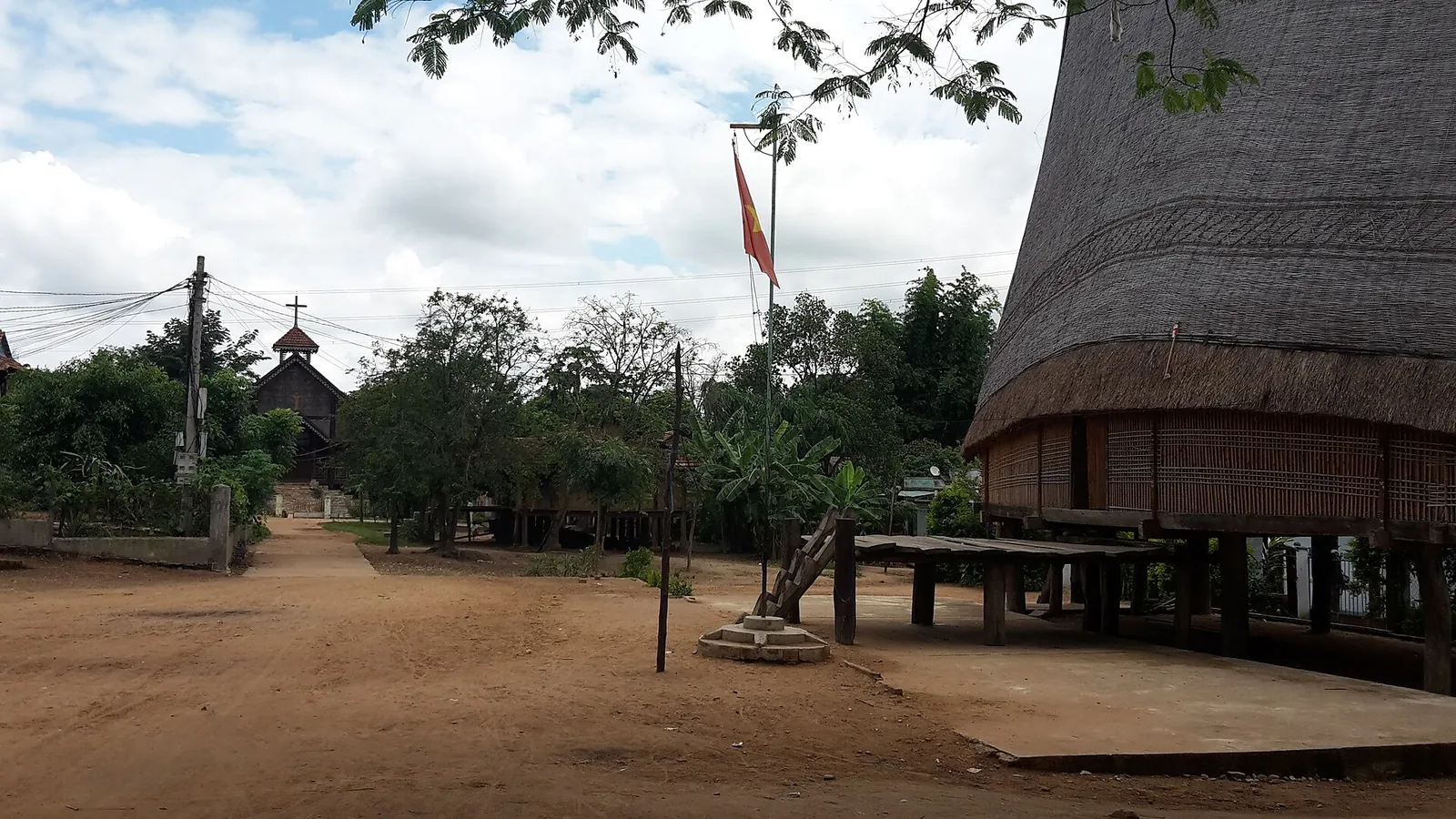
Across the Kon Klor bridge, Kon K'tu keeps many of the Ba Na village's traditional features. A 2024 article from Vietnam's tourism authority lists four community tourism villages around the town that the province has recognised: Kon K'tu, Kon Klor, A Biu and Kon Jơ Dri, and shows visitors watching traditional Ba Na brocade weaving at Kon K'tu. Go with time to spare, not just for a photograph. If you want more than a walk-through, ask your hotel to arrange a local guide who can introduce you.
Kon Tum Prison and the town's other history
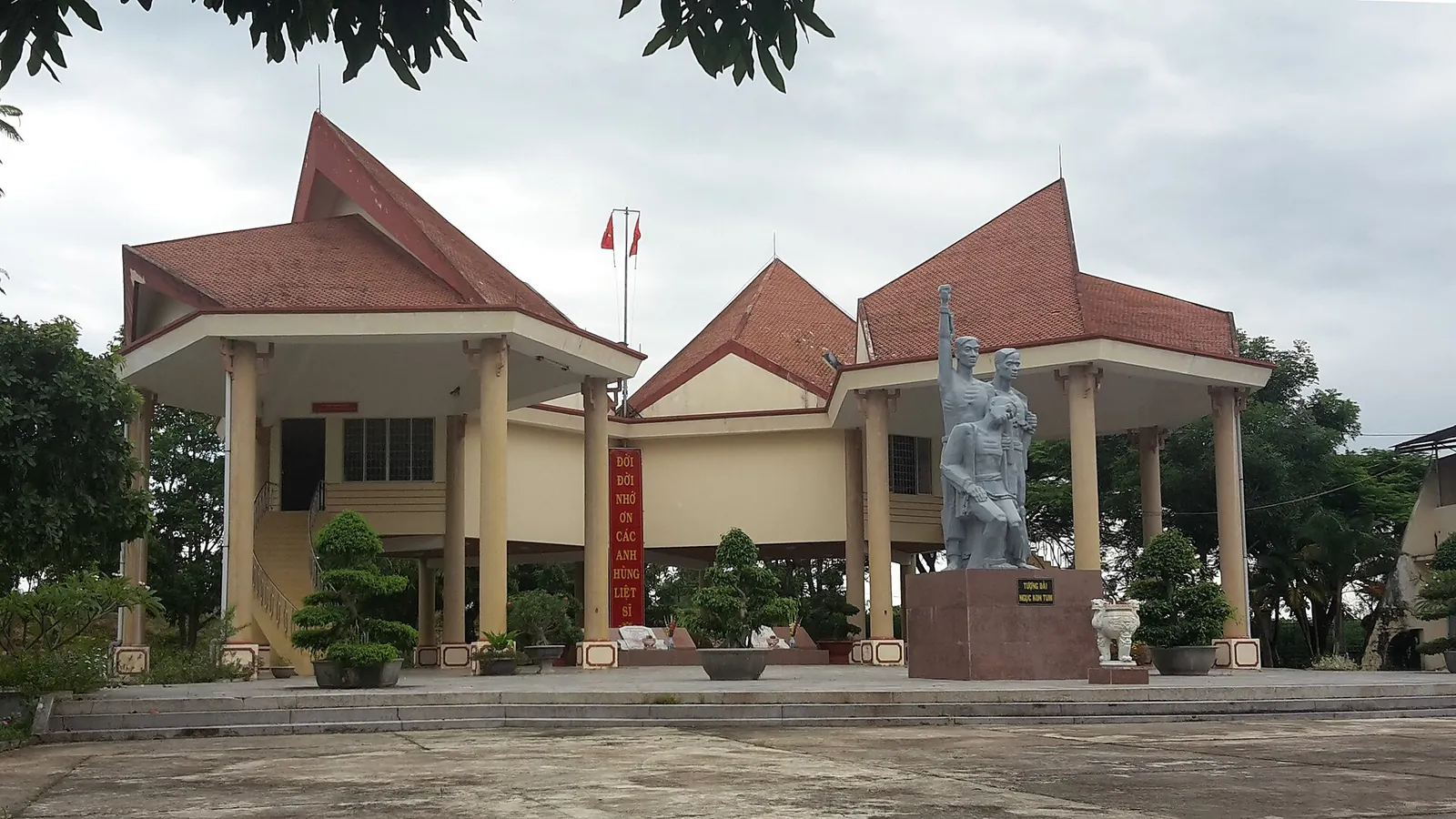
Kon Tum Prison was the earliest prison for political prisoners in the Central Highlands. The French brought prisoners here from Nghe An, Ha Tinh and Thua Thien Hue, and in September 1930 the province's first Communist Party cell was formed inside. On 11 February 2026 the Prime Minister's Decision 266/QĐ-TTg ranked it a special national relic. For Vietnamese visitors it is a place of remembrance, so treat it like a memorial.
The town's religious buildings are not only Catholic. Bac Ai Pagoda was begun in 1932 and received a royal title under Emperor Bao Dai, and Vietnam Tourism also names the Vo Lam and Trung Luong communal halls and Trung Khanh Pagoda among the town's sights. With the provincial museum, these are enough for a slow second afternoon in town if the weather turns wet.
Mang Den: a cool night in the pine forest
Mang Den is on a plateau at about 1,200 metres in the former Kon Plong district. Vietnam Tourism's articles place it between 50 and 60 kilometres from Kon Tum, along Highway 24 towards the Quang Ngai lowlands, and warn that the road is steep and winding. The tourism authority describes pine forest, lakes and waterfalls, and gives a winter low of about 5°C, so bring a warm layer.
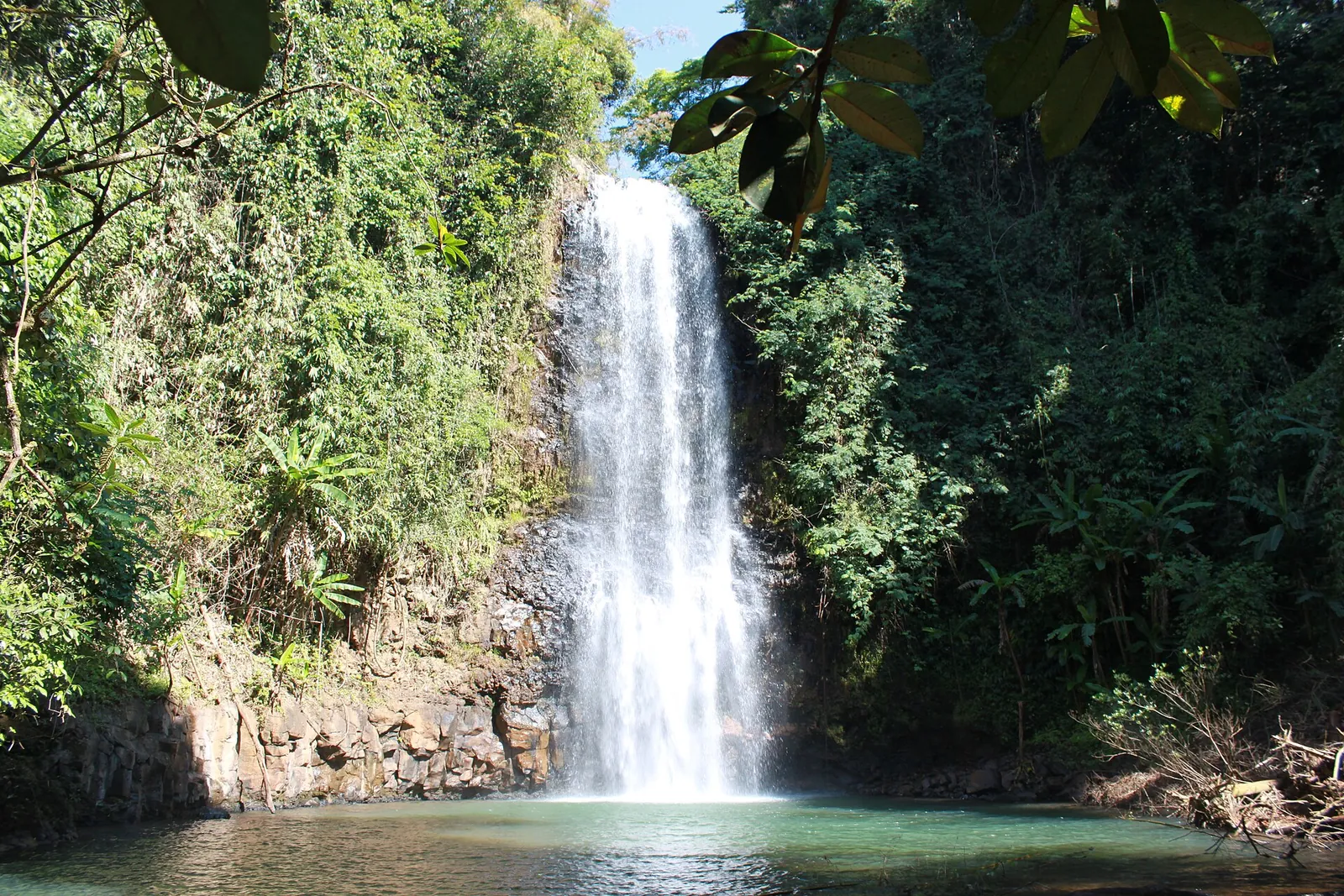
The sights are spread out, so a driver or your own transport helps. Dak Ke Lake has walking paths along the shore. Pa Sy Waterfall forms where three streams meet in the forest. The Statue of Our Lady of Mang Den, about a kilometre from the old district centre, is a Catholic place of prayer. Kon Bring is one of the area's community-based cultural villages, with a rong house and gong performances. Vietnam Tourism suggests early mornings from February to June for watching clouds fill the valleys.
Cherry trees have been planted at Mang Den since about 2010, and they usually flower from late in the twelfth lunar month to the end of the first, roughly around Tet. Quang Ngai's culture and tourism department scheduled the Mang Den Culture and Tourism Week and cherry blossom season for 1–4 January 2026. Vietnam Tourism says October to December is the busiest time, so book ahead then.
Further out: the tri-border marker, Chu Mom Ray and Ngoc Linh
Each of these needs most of a day. Vietnam Tourism says Chu Mom Ray can be reached by car or bus from town; for the border, hire a car and driver. The Vietnam–Laos–Cambodia tri-border marker is a triangular granite marker on a 1,086-metre hill near the Bo Y international border gate, which Vietnam Tourism puts about 75 to 80 kilometres from Kon Tum. When we checked on 2026-10-03, its Kon Tum guide said the border gate area was open from 7:00 to 19:30 every day and free to visit. That guide was published in 2024, so ask locally before you set out, and carry your passport near the border.
Chu Mom Ray National Park, an ASEAN Heritage Park, is about 30 kilometres from town according to Vietnam Tourism, and is home to several ethnic groups, among them the Brau, one of the smallest in Vietnam. Ngoc Linh, at about 2,600 metres, is the highest mountain in the Central Highlands and the source of the Dak Bla. A trek there is a separate expedition that needs a local guide.
A workable three-night route
This is an editorial suggestion, not a timetable. Check the seminary's closing day and road conditions before you set off.
- Day 1 — Pleiku to Kon Tum: arrive at Pleiku airport, take the hour's road transfer, check in near the wooden church and walk to the Dak Bla for sunset.
- Day 2 — Church, seminary and Kon Klor: the wooden church and the seminary in the morning (not on a Tuesday), the Kon Klor rong house and the suspension bridge in the afternoon, then over the river to Kon K'tu.
- Day 3 — Up to Mang Den: a morning at Kon Tum Prison, then the drive up to Mang Den; Dak Ke Lake and Pa Sy Waterfall before dark, and a night in the pines.
- Day 4 — Onward: back down to Pleiku for a flight, or down Highway 24 to the Quang Ngai coast for Ly Son.
Practical questions
How many days do I need in Kon Tum?
Two nights cover the wooden church, the seminary, Kon Klor and Kon K'tu at an easy pace. Add a third night for Mang Den, and a fourth if you want a full day to the tri-border marker or Chu Mom Ray.
How do I get to Kon Tum?
Kon Tum has no airport. Fly to Pleiku (PXU), which Vietnam Tourism places about 45 kilometres away, roughly an hour by car, and continue by bus or taxi. Sleeper buses also run from Ho Chi Minh City, about 550 kilometres and 10 to 12 hours according to Vietnam Tourism.
Is Kon Tum still a province?
No. Official tourism notices now give Kon Tum's sights as Kon Tum ward, Quang Ngai province, and Mang Den as a commune of Quang Ngai. Older signs and booking sites may still use the old provincial names.
Can I go inside the wooden church?
Yes, when it is open and no service is under way. It is an active cathedral: dress modestly and stay quiet. The nearby bishop's seminary was listed by Vietnam Tourism as closed on Tuesdays when we checked on 2026-10-03.
When is the best time to visit Kon Tum?
The dry season, from December to March, is easiest for travel. Late March and early April bring coffee blossom, and Mang Den's cherry blossom peaks around Tet. The rainy season from April to November is greener but wetter on mountain roads.
Is Mang Den worth an overnight stay?
Yes, if you have the time. The road from Kon Tum is steep and winding, and the lakes, waterfalls and village are spread out, so a night lets you see them without rushing and catch the morning clouds.
Sources and checks before you travel
Reference sources for the version dated 3 October 2026. Confirm opening times, access, transport and conditions for your travel dates.
- Vietnam National Authority of Tourism: Travel guide to Kon Tum ↗ — opens in a new tab
- Vietnam National Authority of Tourism: Kon Tum Province, not-to-be-missed attractions ↗ — opens in a new tab
- Vietnam National Authority of Tourism: Hundred-year-old wooden cathedral in Kon Tum ↗ — opens in a new tab
- Vietnam National Authority of Tourism: The unique wooden church in Kon Tum ↗ — opens in a new tab
- Vietnam National Authority of Tourism: Central Highlands' biggest communal house inaugurated ↗ — opens in a new tab
- Vietnam National Authority of Tourism: Attractive destinations in Kon Tum city (Vietnamese) ↗ — opens in a new tab
- Vietnam National Authority of Tourism: Two sites ranked special national relics (Vietnamese) ↗ — opens in a new tab
- Vietnam National Authority of Tourism: Mang Den (There is amusing and full of mystery Mang Den in Vietnam) ↗ — opens in a new tab
- Vietnam National Authority of Tourism: Mang Den Culture and Tourism Week and cherry blossom season 2026 (Vietnamese) ↗ — opens in a new tab
- Vietnam National Authority of Tourism: Spectacular features of Kon Tum tourism ↗ — opens in a new tab
Photo credits
Kon Tum's wooden cathedral, built between 1913 and 1918 in a blend of Roman-style and Ba Na stilt-house forms.
Photograph: Bùi Thụy Đào Nguyên — opens in a new tab · CC BY-SA 4.0 — opens in a new tab
Changes: Resized and converted to WebP; displayed with responsive crops. · Original photograph and licence details ↗ — opens in a new tab
Inside the wooden church: dark timber columns and arches lead to the altar.
Photograph: Bùi Thụy Đào Nguyên — opens in a new tab · CC BY-SA 4.0 — opens in a new tab
Changes: Resized and converted to WebP; displayed with responsive crops. · Original photograph and licence details ↗ — opens in a new tab
The Kon Klor rong house, the communal house of a Ba Na village beside the Dak Bla in Kon Tum.
Photograph: Taynguyenjk — opens in a new tab · CC BY-SA 4.0 — opens in a new tab
Changes: Resized and converted to WebP; displayed with responsive crops. · Original photograph and licence details ↗ — opens in a new tab
Pa Sy Waterfall in the forest at Mang Den, on the plateau east of Kon Tum.
Photograph: Weendang — opens in a new tab · CC BY-SA 3.0 — opens in a new tab
Changes: Resized and converted to WebP; displayed with responsive crops. · Original photograph and licence details ↗ — opens in a new tab
Kon K'tu, a Ba Na village across the Dak Bla River from Kon Tum town.
Photograph: Martinfred — opens in a new tab · CC BY-SA 4.0 — opens in a new tab
Changes: Resized and converted to WebP; displayed with responsive crops. · Original photograph and licence details ↗ — opens in a new tab
The memorial at Kon Tum Prison, ranked a special national relic in February 2026.
Photograph: Martinfred — opens in a new tab · CC BY-SA 4.0 — opens in a new tab
Changes: Resized and converted to WebP; displayed with responsive crops. · Original photograph and licence details ↗ — opens in a new tab