Hanoi and the Northeast · Hanoi
Tay Ho (West Lake), Hanoi: where to stay, pagodas, cycling and food
West Lake (Ho Tay) is Hanoi's largest lake, and the Tay Ho area around it is where the city slows down. The national tourism site describes a 17-kilometre shoreline lined with cafes, old pagodas and gardens; what it means in practice is space to walk, cycle and sit by the water, a short taxi ride from the Old Quarter. It is not a sightseeing checklist. Tay Ho works best as the place you sleep and spend your evenings, with the centre visited by day.
- Suggested time
- 1 day for the lake; 4+ nights as a base for Hanoi
- Where to stay
- Quang An peninsula (Xuan Dieu, Tu Hoa) for lakeside cafes; Truc Bach or Yen Phu for the shortest ride to the centre
- Season and timing
- The national tourism site names April to June and September to December as the best months for Hanoi; June to August is hot and rainy, and late December to March can be cold. Lotus season on the lake is summer; peach blossoms come around Lunar New Year.
The short answer
Choose Tay Ho if you are staying in Hanoi for four nights or more, travelling with children, or returning to the city and no longer need to be inside the Old Quarter. Give the lake itself one unhurried day: Tran Quoc Pagoda and Thanh Nien Road in the morning, a bike ride along the shore, Tay Ho Temple and an early dinner as the sun goes down. Sleep on the Quang An peninsula around Xuan Dieu Road for cafes and lake access, or near Truc Bach and Tran Quoc if you want to stay closest to the centre. Use taxis or ride-hailing apps for the Old Quarter and Ba Dinh, and plan each day around one trip into town rather than several.
Tay Ho or the Old Quarter: choosing your base
The Old Quarter puts you on top of Hanoi's street life and most first-visit sights, and it is noisy until late. Tay Ho is the opposite trade: quieter streets, a lake to walk beside and international-standard hotels and resorts, at the cost of a taxi or ride-hailing trip each time you go into the centre. For a two-night first visit that trade is rarely worth it. For four nights or more, a family trip, or a second visit to Hanoi, it often is.
Most visitors sleep on or near the Quang An peninsula, the tongue of land that pushes into the lake from the east shore, around Xuan Dieu and Tu Hoa streets. The national tourism site's hotel list includes the InterContinental Hanoi Westlake at 5 Tu Hoa Street and the Sheraton Hanoi on Xuan Dieu Road — both on the peninsula. Truc Bach and Yen Phu, at the lake's south-eastern corner by Thanh Nien Road and Tran Quoc Pagoda, are the closest part of the lake to Ba Dinh and the Old Quarter.
Before booking, check the exact street rather than the words "West Lake" in the hotel name. The lake is large and its shore road long, and a hotel on the far side can leave you a long way from both the cafes and the centre. Ask how a car reaches the door, since some lanes off the main roads are narrow.
Tran Quoc Pagoda and Thanh Nien Road
Tran Quoc Pagoda sits on a small island on the east side of the lake and is the oldest Buddhist temple in Hanoi. According to the Vietnam News Agency, it was founded between 541 and 547 under King Ly Nam De beside the Red River, and was moved to its present site in the early 17th century after the riverbank collapsed. The tall red stupa that appears in most photographs, the 15-metre Bao Thap, is recent: it was built in 1998. In the grounds is a bodhi tree presented by Indian President Rajendra Prasad when he visited Hanoi in 1959.
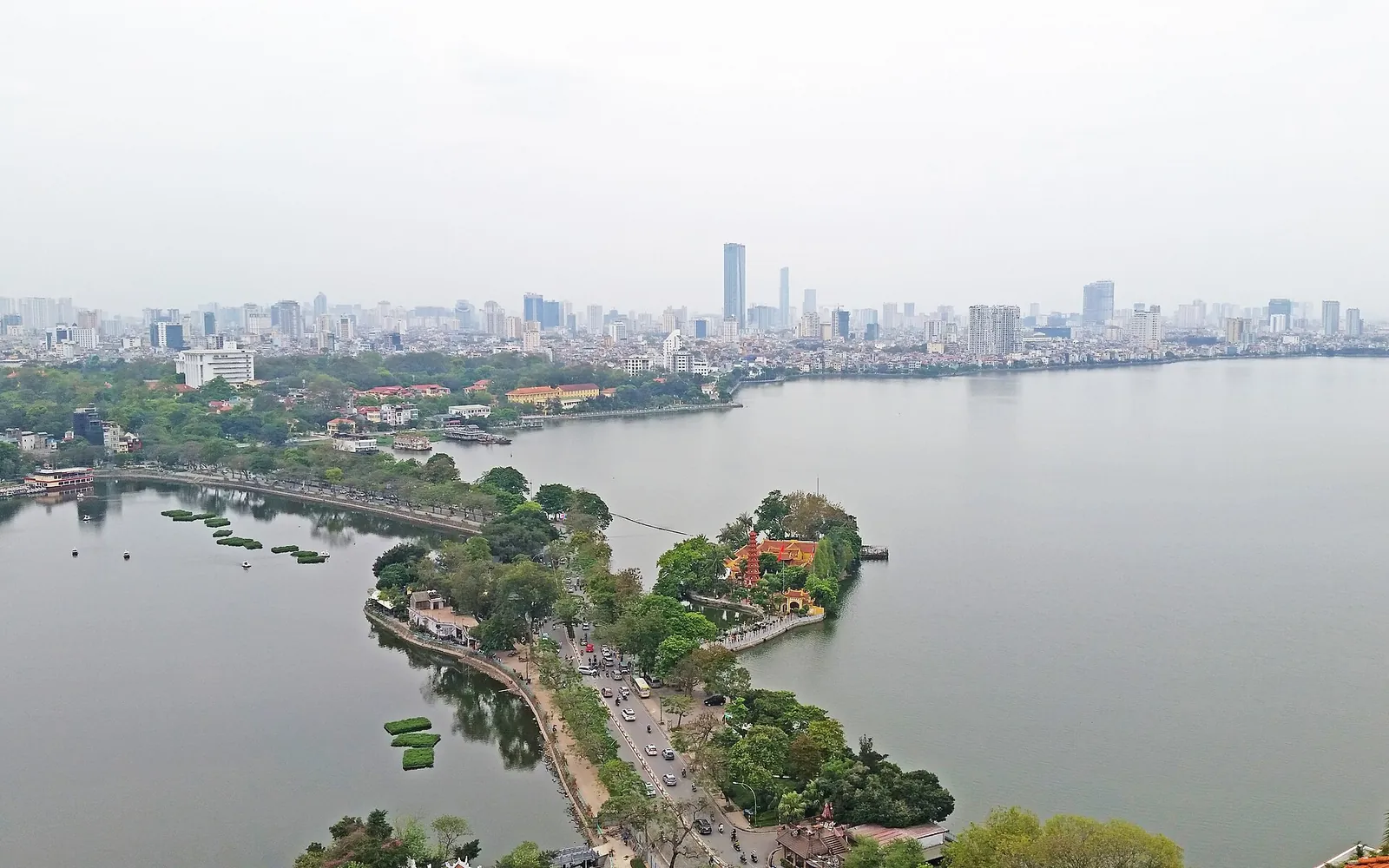
The pagoda is reached from Thanh Nien Road, the tree-lined causeway that separates West Lake from the much smaller Truc Bach Lake, with water on both sides. It is an active place of worship, so dress with shoulders and knees covered and keep your voice down in the halls. No official visitor page with opening hours was available when we checked, so arrive in the morning and allow for it being closed to visitors during ceremonies.
Walk south along Thanh Nien Road towards Truc Bach afterwards. The national tourism site's walking route continues past the 11th-century Quan Thanh Taoist temple near the southern end of the road and on to Ngu Xa, the island neighbourhood on Truc Bach Lake known for pho cuon, fresh rice-noodle rolls filled with meat and herbs.
Make time for the local food
What to eat and where to look
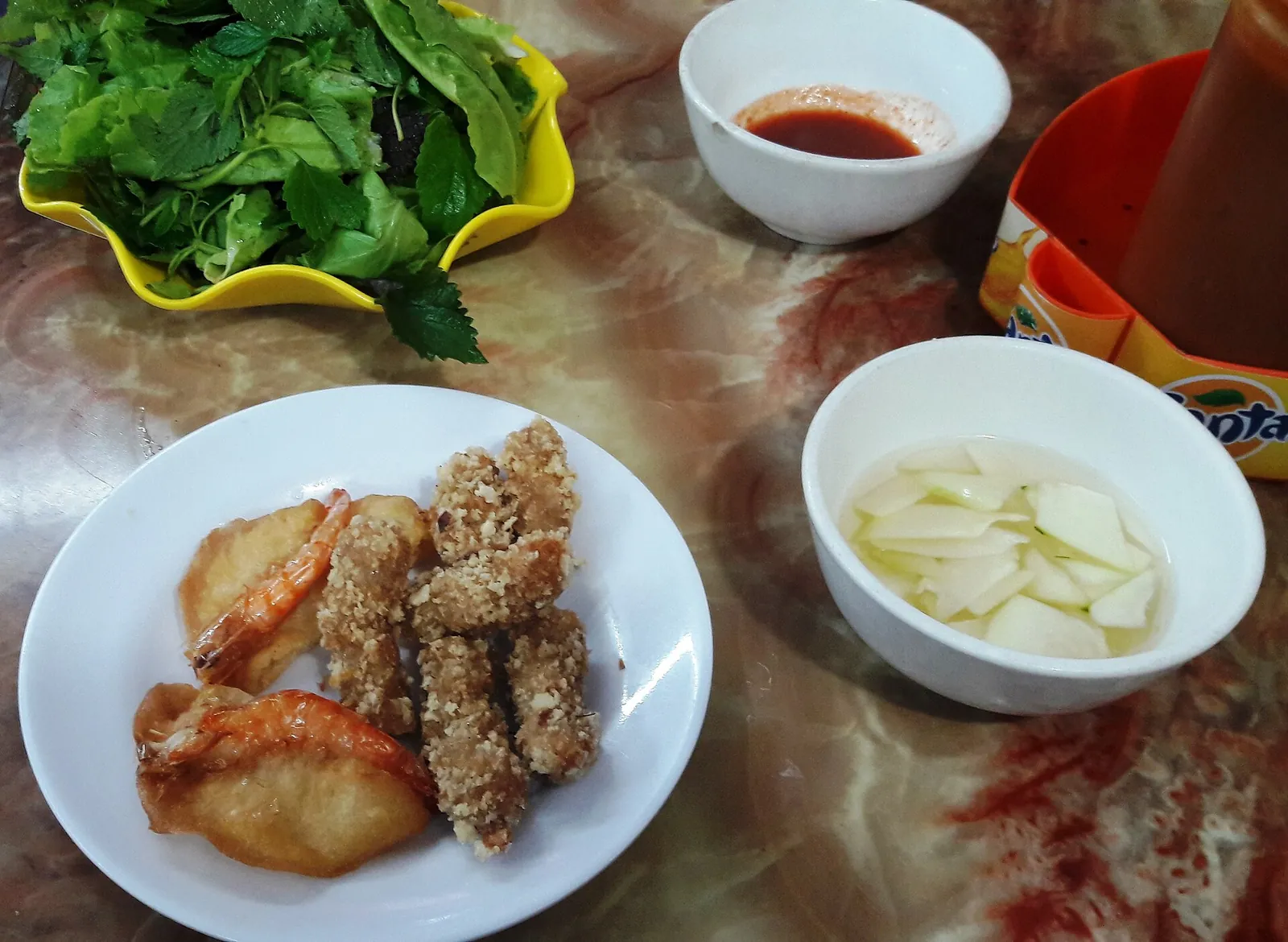
Banh tom Ho Tay (West Lake shrimp fritters)
Crisp fritters of battered sweet potato and prawns, served with sweet-and-sour fish sauce and papaya on the side. The national tourism site says the dish began on West Lake, made with shrimp caught in the lake.
- Where to look
- Restaurants around the lake that advertise bánh tôm Hồ Tây.
- Fit it into your day
- A shared snack or light lunch after the morning at Tran Quoc; the tourism site suggests a glass of iced soy milk alongside.
Deep-fried and contains shellfish and fish sauce.
Pho cuon (rolled rice noodles)
Sheets of fresh rice noodle rolled around grilled meat and herbs. Ngu Xa, the island neighbourhood on Truc Bach Lake, is where Hanoi's version is best known; phở chiên phồng, puffed fried noodle squares with beef gravy, comes from the same streets.
- Where to look
- The small restaurants on Ngu Xa island and along Truc Bach Lake, a short walk south of Tran Quoc Pagoda.
- Fit it into your day
- Lunch at the end of the Thanh Nien Road walk, or an early dinner.
Contains meat, and the sauces usually contain fish sauce; ask before ordering if you avoid either.
Quang An lotus tea (tra sen)
Green tea from Tan Cuong in Thai Nguyen province, scented with Bach Diep lotus grown on West Lake. The craft of making it in Quang An was recognised as national intangible cultural heritage.
- Where to look
- Tea shops and producers on the Quang An peninsula, and lotus-tea stalls during the summer lotus season and festival.
- Fit it into your day
- An afternoon break between the bike ride and Tay Ho Temple; good packed tea also makes a gift to take home.
Quality and price vary widely; buy from a producer who can explain how the tea was scented.
Phu Thuong sticky rice (xoi)
Steamed sticky rice from Phu Thuong village in Tay Ho, a recognised national heritage craft. Common versions include xoi xeo with mung bean and fried shallot, red xoi gac coloured with gac fruit, and xoi lac with peanuts.
- Where to look
- Sticky-rice sellers and shops across Hanoi, many supplied by Phu Thuong cooks; the village itself at its festival after Tet.
- Fit it into your day
- Breakfast before an early ride or temple visit; it is filling and easy to carry.
Some versions include peanuts, lard or pork floss; ask what is on top.
Bo bia ngot (sweet rice-paper rolls)
Thin rice paper rolled around a layer of nougat-like sugar, shredded coconut and sesame seeds, sold from bicycle vendors.
- Where to look
- Vendors along Thanh Nien Road; the national tourism site's dessert guide names the street.
- Fit it into your day
- A snack while walking between Tran Quoc Pagoda and Truc Bach.
Contains sesame; check with the vendor if you have allergies.
Around the lake by bicycle, and Tay Ho Temple
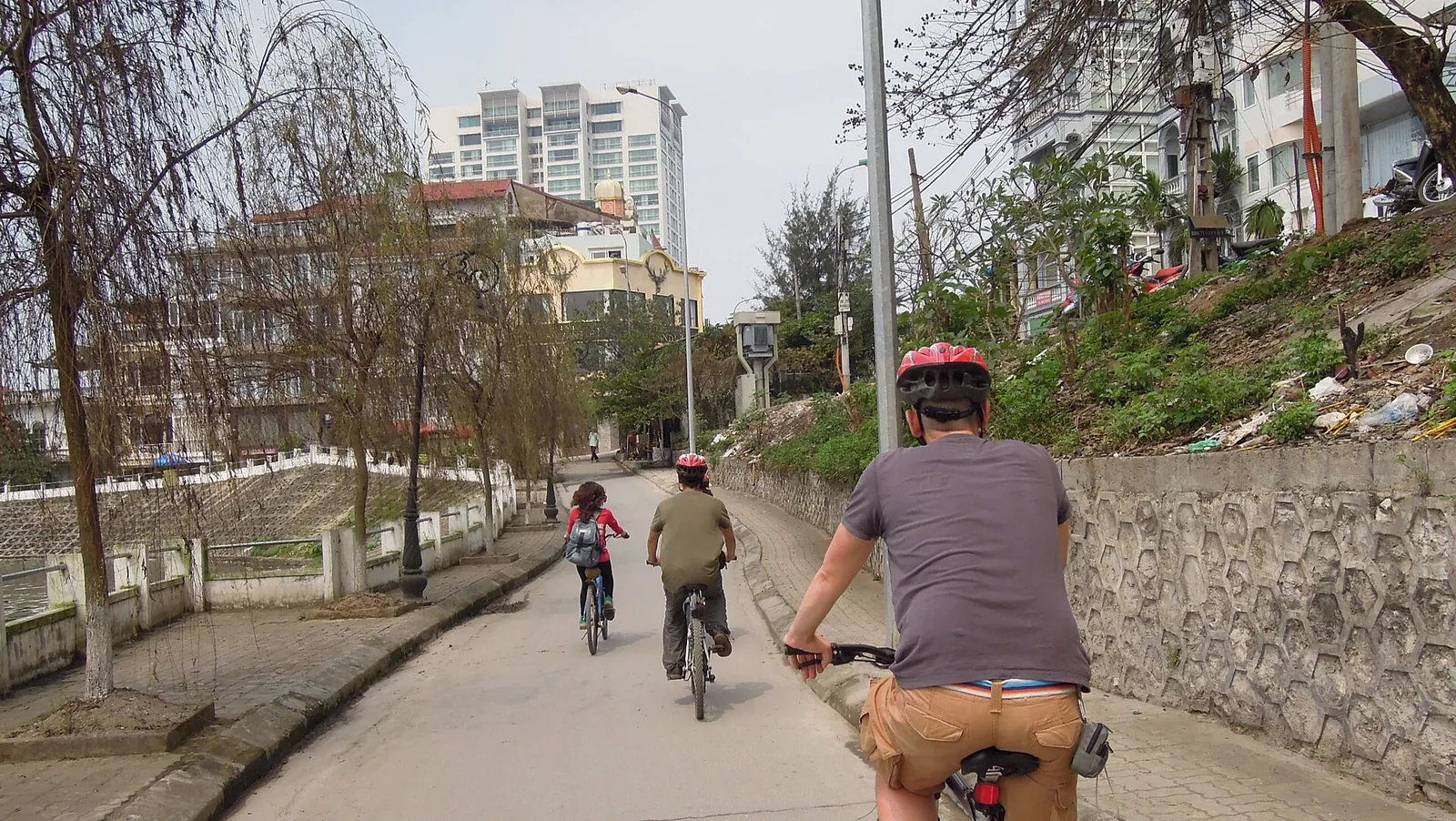
The national tourism site calls the shoreline perfect for cyclists, and a ride is the best way to understand the size of the lake. Hanoi's regulations for the lake allow bicycles, cyclos and electric vehicles on the walking routes around it, and the national news agency photographs cyclists and walkers along the winding lakeside roads. Ride early or from late afternoon, when it is cooler, and expect to share the road with motorbikes on some stretches. Hire bikes from a rental shop or your hotel; the tourism site's weekend guide points to the Hanoi Bicycle Collective for rentals.
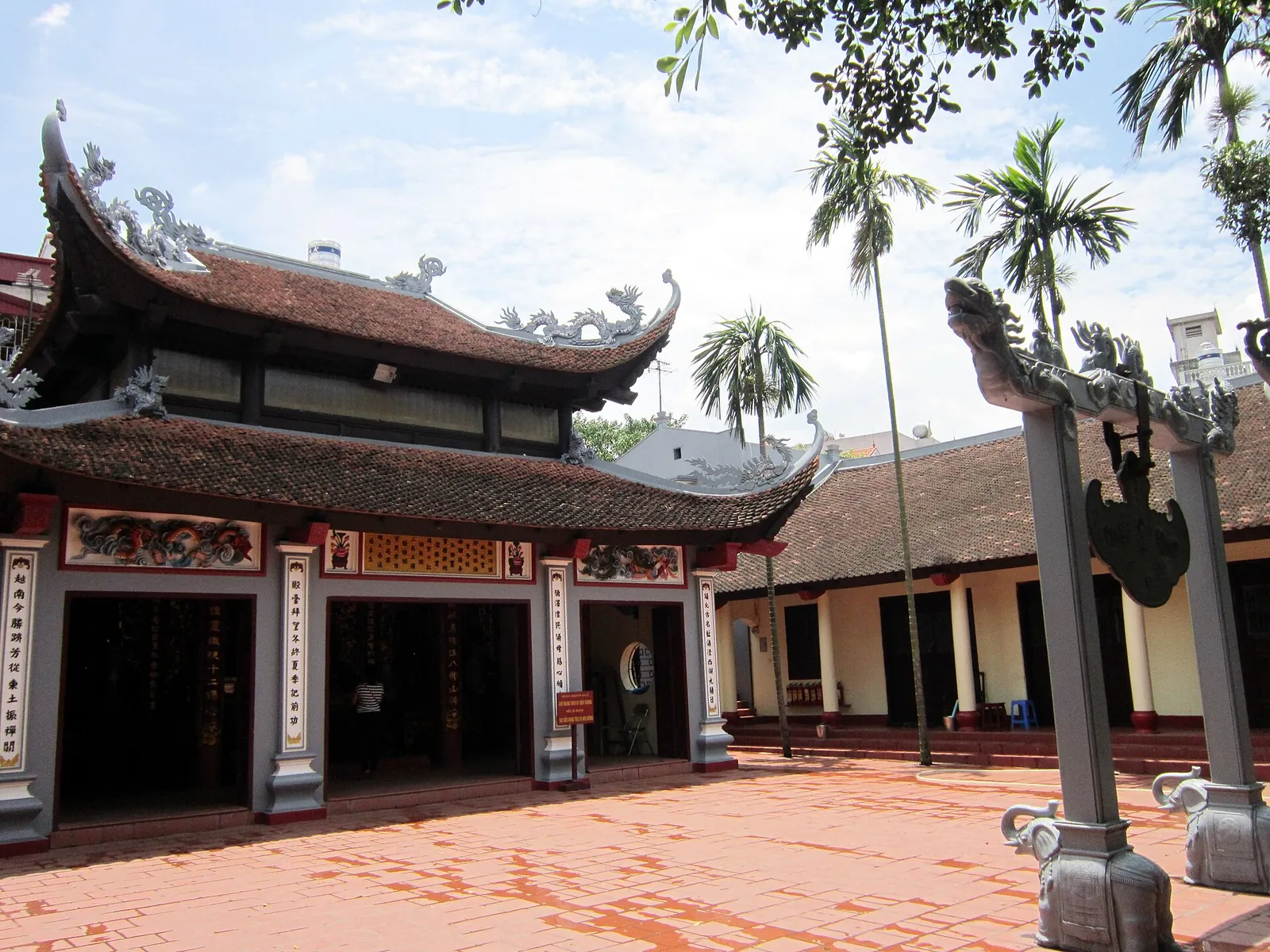
Tay Ho Temple (Phu Tay Ho) stands at the end of the Quang An peninsula, by the water. It is dedicated to the Mother Goddess Lieu Hanh, and the Mother Goddess worship practised here was inscribed by UNESCO as intangible cultural heritage in 2016. This is one of the city's most visited temples: crowds come on the 1st and 15th days of each lunar month and around Lunar New Year to pray and leave offerings. Visit on an ordinary weekday if you want to look around, and wear neat clothing that covers shoulders and knees.
Vietnam News counts 71 historical and cultural relics in the Tay Ho area and lists Kim Lien, Tao Sach and Van Nien pagodas and Dong Co temple among the best known. You do not need to see them all. Pick one or two on your route and leave time for the lake itself, especially around sunset, which the national news agency's photographers single out as the lake's finest hour.
Seasons on the lake: lotus, peach blossom and Tet
Not long ago much of the shore was ponds and fields, as one Hanoian recalls on the national tourism site, and the old craft villages still set the calendar. Nhat Tan is known for its peach-blossom gardens, at their best in spring around Lunar New Year (Tet), and Quang Ba and Tu Lien for growing kumquat trees. In summer the lotus ponds around the lake draw visitors, and Quang An is the home of Hanoi's lotus-scented tea.
The Hanoi Lotus Festival is the summer event to plan around. In 2026 it ran from 26 to 28 June at Ly Tu Trong Flower Garden, the Tay Ho Creative Cultural Space and Lac Long Quan Flower Garden, according to the Vietnam News Agency; at the opening the Ministry of Culture, Sports and Tourism formally recognised West Lake and its surroundings as a tourist area. Dates change each year, so check for the next edition before you travel.
Phu Thuong village holds its sticky-rice festival over the 8th to 10th days of the first lunar month, shortly after Tet. Lunar dates move against the Western calendar, so convert them for your travel year.
Tay Ho with children and on longer stays
Families tend to find Tay Ho easier than the Old Quarter: there is room to walk without stepping into traffic at every corner, and open space by the water. The Ho Tay Water Park is a summer favourite with Hanoi families, according to Vietnam News; check its own channels for the season and opening days before promising it to anyone.
Water sports are a newer addition. The same city plan permits activities such as canoeing, water bikes and windsurfing through licensed operators, but no overnight stays on boats. Book only with an organised operator that supplies buoyancy aids.
For a longer stay, settle into a rhythm: mornings in the centre while it is cooler, afternoons back at the lake. The Vietnam Museum of Ethnology in Cau Giay is a natural pairing, since the national tourism site suggests stopping at West Lake on the way back from it.
A workable lake day
This is an editorial suggestion, not a timetable. Check opening days for each place you choose.
- Morning: Tran Quoc Pagoda, then a walk along Thanh Nien Road to Quan Thanh temple and Truc Bach Lake.
- Lunch: pho cuon at Ngu Xa on Truc Bach, or banh tom by the lake.
- Afternoon: rest during the midday heat, then hire a bike and ride part of the shore towards the Quang An peninsula.
- Late afternoon: Tay Ho Temple at the tip of the peninsula, then a lakeside cafe for sunset.
- Evening: dinner around Xuan Dieu Road, or a taxi back into town if you are staying in the Old Quarter.
Practical questions
Is Tay Ho a good place to stay in Hanoi?
Yes, for longer stays, families and second visits. It is quieter and greener than the Old Quarter, with lakeside walking and cycling. The trade-off is a taxi or ride-hailing trip into the centre each day, so for a short first visit the Old Quarter is usually more practical.
Can you walk from West Lake to the Old Quarter?
From the south-eastern corner, around Tran Quoc Pagoda and Truc Bach, the walk via Thanh Nien Road and Quan Thanh temple is pleasant. From the Quang An peninsula and the rest of the shore it is far enough that most people take a taxi or ride-hailing car.
How long does it take to cycle around West Lake?
The national tourism site gives the shoreline as about 17 kilometres. Allow a half day at a relaxed pace with stops at a pagoda and a cafe; on a first visit, riding one section between Tran Quoc Pagoda and the Quang An peninsula is enough.
What should I wear to Tran Quoc Pagoda and Tay Ho Temple?
Both are active places of worship. Wear neat clothing that covers shoulders and knees and keep your voice down in the halls. Avoid Tay Ho Temple on the 1st and 15th of the lunar month if you prefer to look around without crowds.
When is the best time to visit West Lake?
September to December and April to June are the best months for Hanoi as a whole, according to the national tourism site. Summer brings the lotus season and the Hanoi Lotus Festival; spring around Lunar New Year brings Nhat Tan's peach blossom.
What food is West Lake known for?
Banh tom, the shrimp and sweet-potato fritter that the national tourism site says originated on West Lake, Quang An lotus-scented tea, and Phu Thuong sticky rice. Pho cuon at Ngu Xa on neighbouring Truc Bach Lake is a short walk from Tran Quoc Pagoda.
Sources and checks before you travel
Reference sources for the version dated 3 October 2026. Confirm opening times, access, transport and conditions for your travel dates.
- Vietnam Tourism: the perfect weekend in Ha Noi ↗ — opens in a new tab
- Vietnam Tourism: 7 reasons Hanoi is the world's leading city break destination ↗ — opens in a new tab
- Vietnam Tourism: Vietnam's cities in 360° ↗ — opens in a new tab
- Vietnam Tourism: 3 walking tours of Hanoi ↗ — opens in a new tab
- Vietnam Tourism: Ha Noi food guide ↗ — opens in a new tab
- Vietnam Tourism: 15 dreamy desserts to try in Vietnam ↗ — opens in a new tab
- Vietnam Tourism: Ha Noi ↗ — opens in a new tab
- VietnamPlus (VNA): exploring the 1,500-year-old pagoda in Hanoi ↗ — opens in a new tab
- Vietnam News: Tay Ho District full of tourism potential ↗ — opens in a new tab
- Vietnam News: Hanoi allows West Lake to operate water sports and leisure services ↗ — opens in a new tab
- VietnamPlus (VNA): creative cultural spaces in Tay Ho ↗ — opens in a new tab
- VietnamPlus (VNA): Hanoi festival celebrates cultural heritage of lotus (June 2026) ↗ — opens in a new tab
- VietnamPlus (VNA): West Lake, a timeless landmark ↗ — opens in a new tab
- Vietnam Government Portal (Thang Long): lotus tea-making recognised as national heritage ↗ — opens in a new tab
- VietnamPlus (VNA): Hanoi's sticky rice cooking craft recognised as national heritage ↗ — opens in a new tab
- Vietnam News: Phu Thuong sticky rice impresses foodies ↗ — opens in a new tab
- Vietnam.vn: Tay Ho Temple visitor guide ↗ — opens in a new tab
- Vietnam Tourism: weather and climate in Vietnam ↗ — opens in a new tab
- Vietnam Tourism: a traveller's guide to Vietnam's airports ↗ — opens in a new tab
- Noi Bai International Airport: public transportation ↗ — opens in a new tab
Does this experience fit your route?
A guided ride is the easiest way to cover the shore, its pagodas and a lotus-tea stop in one go. Check the start time, the route and how much of it is in traffic before you book.
Check dates and details on Viator ↗ — opens in a new tabAffiliate link · Book with ViatorPhoto credits
Thanh Nien Road, the causeway between West Lake and Truc Bach Lake, seen from above
Photograph: Alex 69200 vx — opens in a new tab · CC BY-SA 4.0 — opens in a new tab
Changes: Resized and converted to WebP; displayed with responsive crops. · Original photograph and licence details ↗ — opens in a new tab
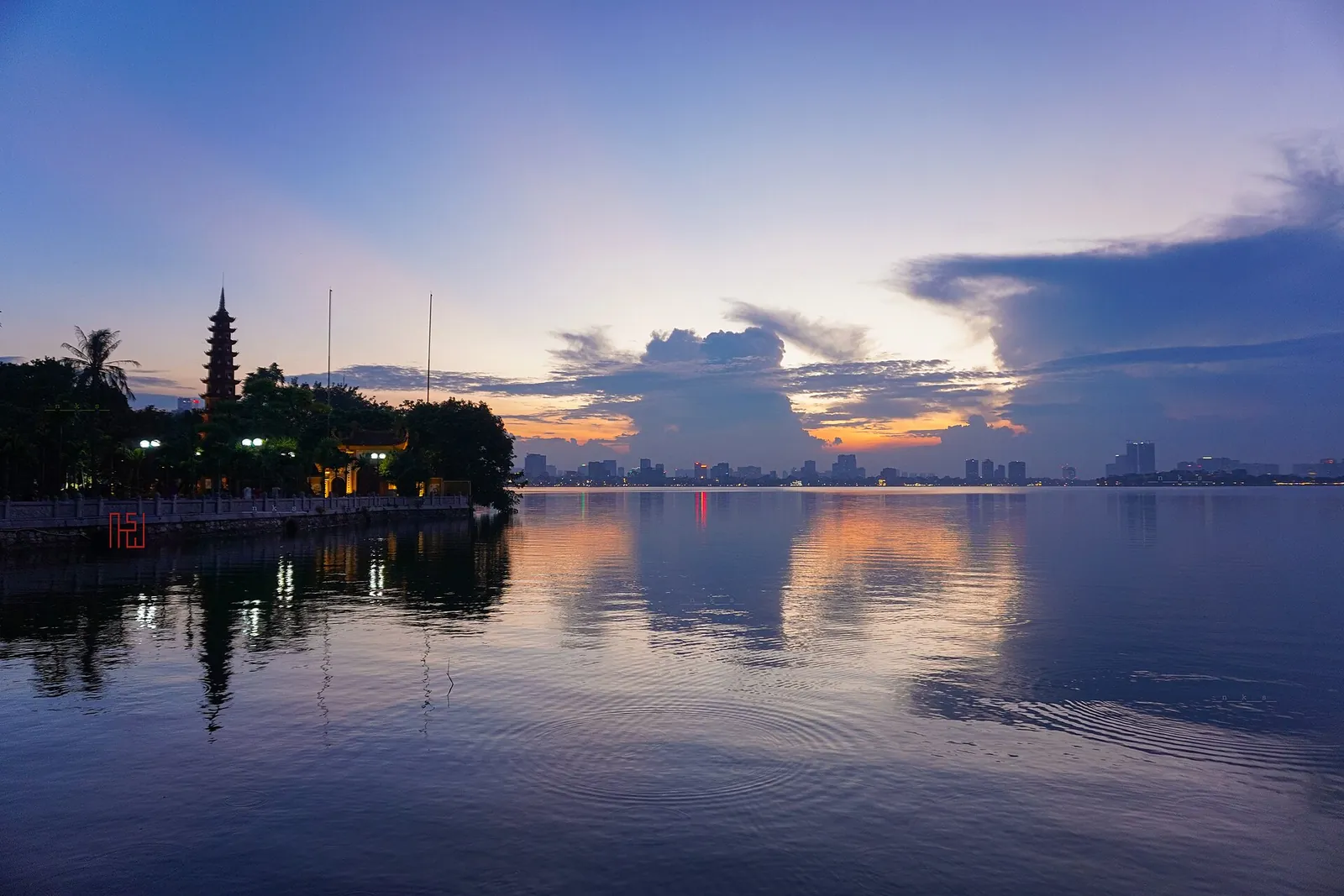
Sunset over West Lake, with the stupa of Tran Quoc Pagoda on the left
Photograph: NKSTTSSHNVN — opens in a new tab · CC BY-SA 4.0 — opens in a new tab
Changes: Resized and converted to WebP; displayed with responsive crops. · Original photograph and licence details ↗ — opens in a new tab
Cycling through the lanes of Tay Ho
Photograph: David McKelvey from Brisbane, Australia — opens in a new tab · CC BY 2.0 — opens in a new tab
Changes: Resized and converted to WebP; displayed with responsive crops. · Original photograph and licence details ↗ — opens in a new tab
Tay Ho Temple (Phu Tay Ho), dedicated to the Mother Goddess Lieu Hanh
Photograph: Bùi Thụy Đào Nguyên — opens in a new tab · CC BY-SA 3.0 — opens in a new tab
Changes: Resized and converted to WebP; displayed with responsive crops. · Original photograph and licence details ↗ — opens in a new tab
Banh tom: shrimp and sweet-potato fritters served with herbs, sauce and papaya
Photograph: Phương Huy — opens in a new tab · CC BY-SA 4.0 — opens in a new tab
Changes: Resized and converted to WebP; displayed with responsive crops. · Original photograph and licence details ↗ — opens in a new tab