Plan your trip · Vietnam
Vietnam etiquette: temple dress, greetings, photos and bargaining
Vietnamese manners are forgiving with visitors who make an effort, and most of what matters fits on one page: cover up at temples, take your shoes off in homes, pass things with the right hand or both hands, ask before you photograph someone, and keep your voice down when something goes wrong. The details change between a Hanoi pagoda, a sidewalk noodle stall and a Hmong village above Sapa, and a few rules are not manners at all but law. This guide sorts them by the situations you will actually meet.
- Suggested time
- Applies to the whole trip; plan an extra minute at each temple door and a slower morning for village markets
- Where to stay
- Hanoi Old Quarter for pagodas and city etiquette; Sa Pa town or a Ta Van homestay for minority villages
- Season and timing
- All year. Around Tet (usually January or February) homes, temples and transport are at their busiest; the Ho Chi Minh Mausoleum was closed for maintenance until 2 November 2026 when we checked.
The short answer
Pack for temples, not just for the heat: at least one outfit that covers shoulders and knees, plus shoes you can slip off easily, because you will remove them at pagodas and in homes. Learn xin chào (hello) and cảm ơn (thank you), use your right hand or both hands to pass anything, and never argue loudly over a price or a mistake. In minority villages around Sapa and Ha Giang, go with a locally owned guide or homestay, ask before every portrait, and buy textiles at the market, where you can ask how long a piece took to make. Carry a printed copy of your passport photo page and visa, and do not photograph military sites.
Pagodas, temples and the Ho Chi Minh Mausoleum
The Vietnam National Authority of Tourism's advice for temples is short: wear modest clothing and always remove your shoes and hat. You can carry your shoes with you, but not on your feet. Its FAQ adds that shoulders and knees should be covered at religious sites, in the countryside and at the Ho Chi Minh Mausoleum, and the UK government's travel advice says the same, noting that signs outside many religious and cultural sites spell out the dress code. A light scarf or a shirt in your daypack solves the problem for a hot day that mixes sightseeing and pagodas.
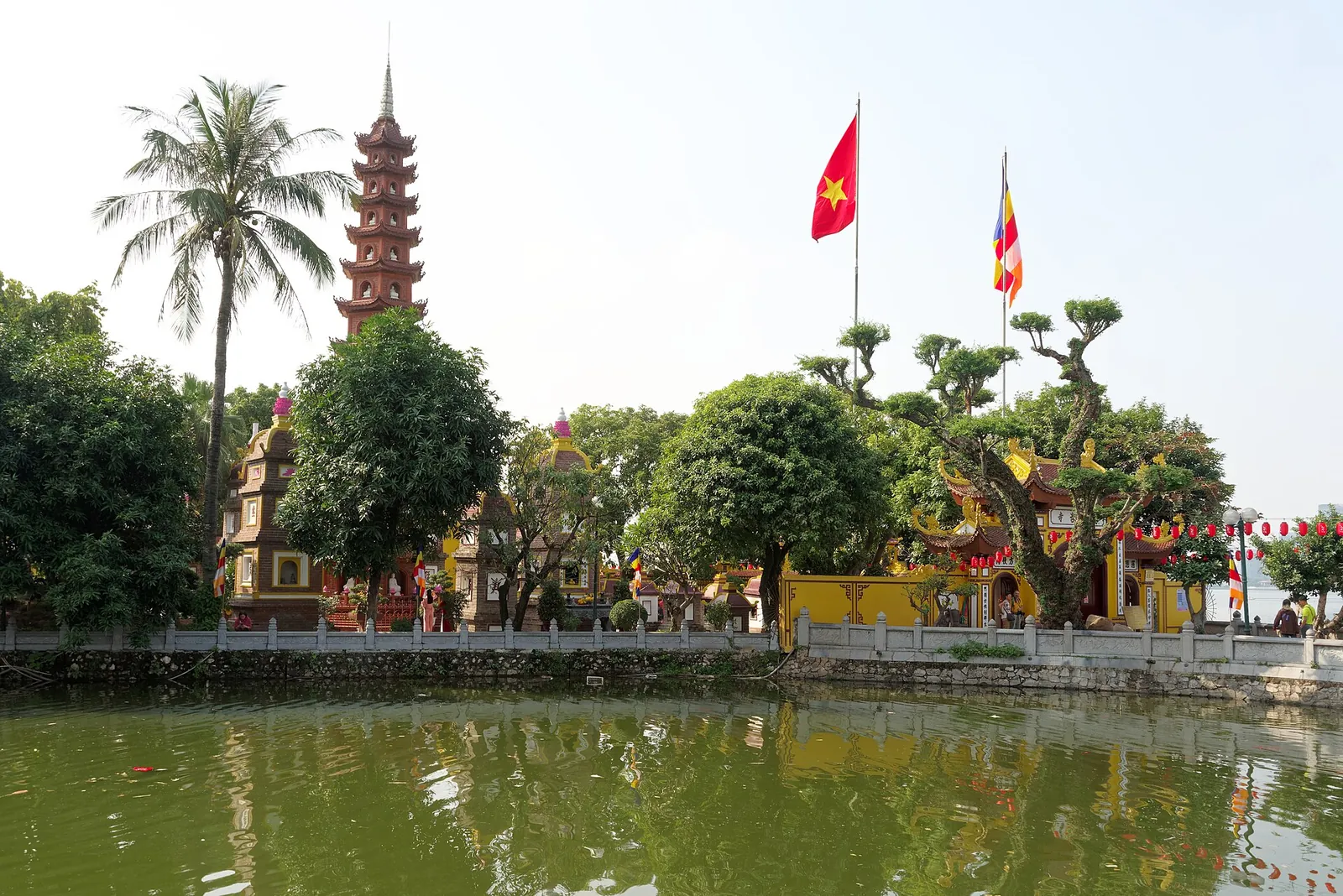
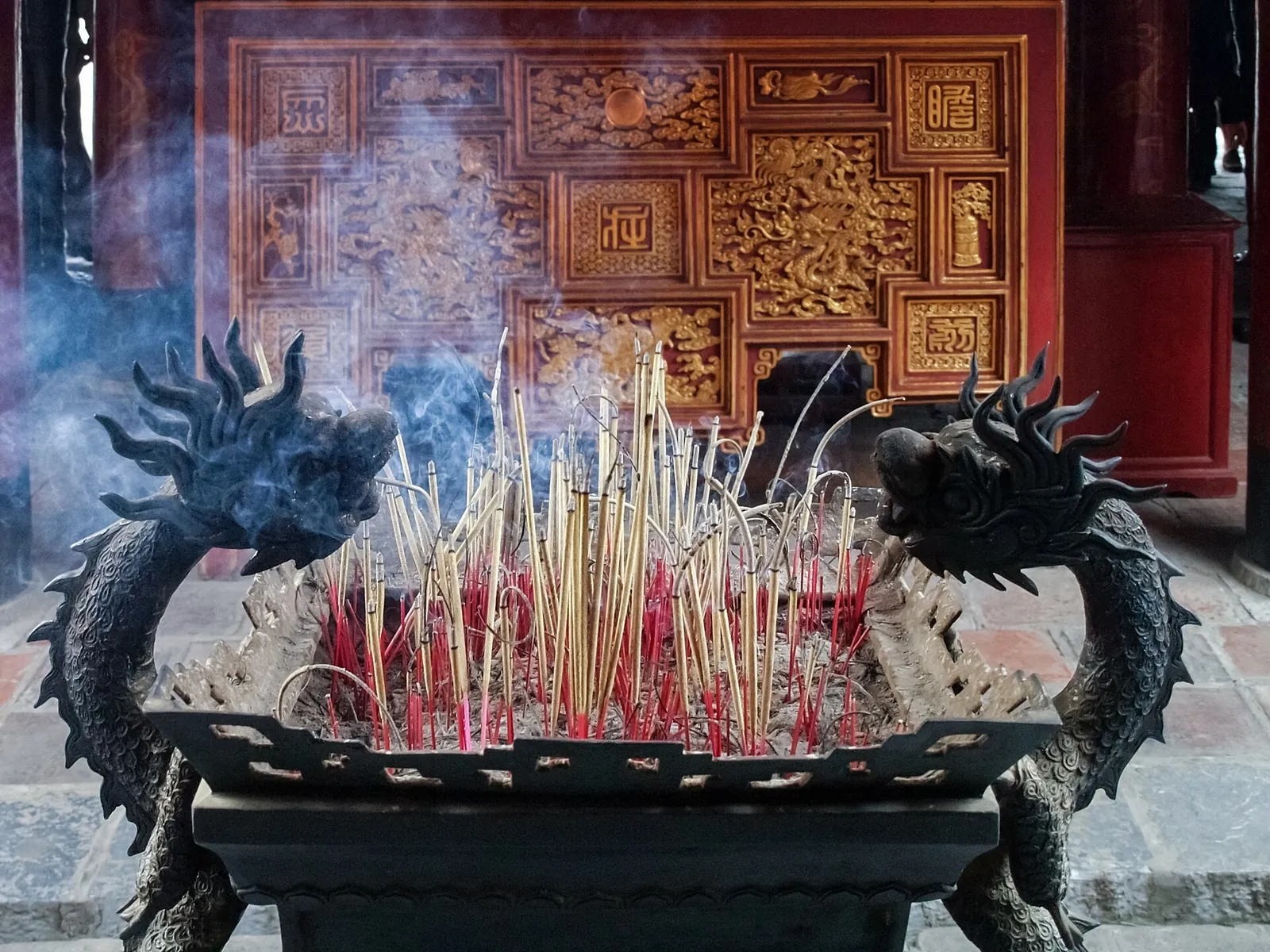
Altars are not only in temples. The tourism board points out that Vietnamese families keep altars in shops and homes, some of them on the ground: do not step over a ground altar or walk directly in front of one. In pagodas such as Tran Quoc on West Lake or at the Temple of Literature, people come to burn incense and pray, so step aside at the burners and altars and let worshippers go first.
The Ho Chi Minh Mausoleum in Hanoi has its own decorum. The official guide describes it as a solemn experience: dress formally, keep the line moving, do not point or raise your voice inside, and do not take photographs inside, which is strictly forbidden. Expect to queue outside. Check the calendar before you plan around it. When we checked on 2026-10-03, the Mausoleum Command's notice, reported by Tuoi Tre, said visits were suspended from 4 September to 2 November 2026 for periodic maintenance, reopening on 3 November. The same notice gave cold-season visiting hours from 1 November to 31 March of 8am to 11am, with Saturdays until 11:30am.
- Clothing: shoulders and knees covered; no sheer fabrics or visible underwear. Men should not go shirtless in public, and swimwear belongs on the beach or at the resort.
- At the door: shoes and hat off. Look at what local visitors do with their shoes and follow them.
- Inside: quiet voices, no pointing at people or statues, and no photos where signs or staff say so.
Eating and drinking: shared plates, both hands and who pays
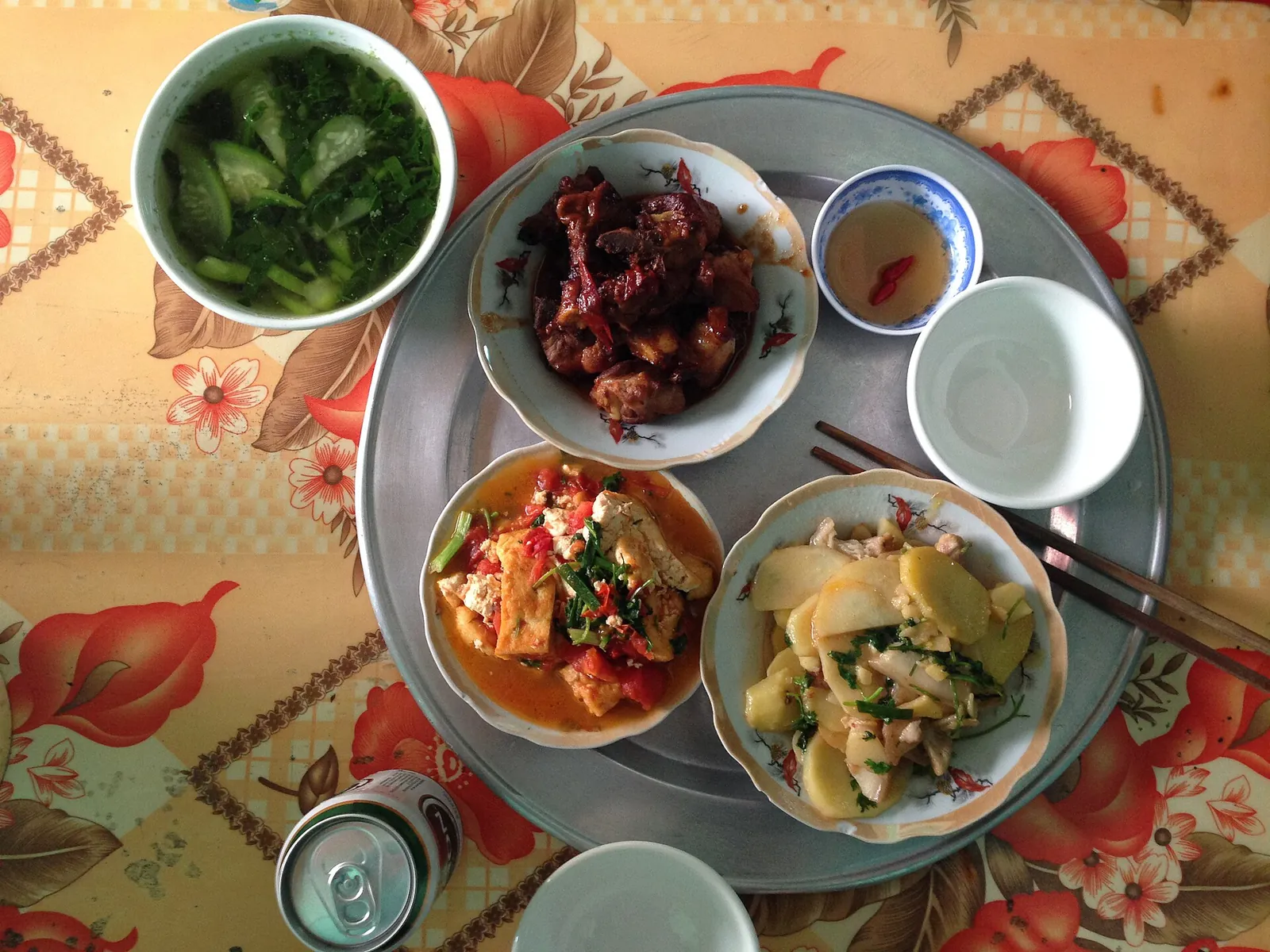
Most Vietnamese meals are shared: dishes go in the middle, and each person has a small rice bowl and chopsticks. The tourism board's etiquette guide says to pass dishes with both hands or your right hand, never the left, and to hold your spoon in your left hand when eating soup. A good host will keep offering food, refill your glass and put the best pieces into your bowl. If you have had enough, say politely, more than once, that you are very full.
Who pays is settled by custom: in most social gatherings the person who made the invitation pays the bill, and otherwise the most senior person does. If you invited your guide or homestay family to dinner, expect to pay. Tipping is optional. According to the same guide it is more common with tour guides and in spas than in restaurants, and there is no obligation.
Sidewalk stalls have their own simple rules, set out in the tourism board's street-food guide: eat first, pay later. Order at the front, pick a stool, and pay the cook on the way out; often someone tallies the bill in their head, and a written bill is unusual but can be asked for. Wiping your chopsticks or spoon before you eat is normal, and so is dropping lime husks and herb stems into the bin under the table. When you finish, lay your chopsticks together on top of the bowl. At busy times strangers may share your table, and a smile is all that is expected.
Drinking is social too. Vietnamese raise their glasses and toast together each time they drink, rather than sipping alone; the call is "một, hai, ba, dô!" (one, two, three, drink). Joining in is polite, but you can toast with a soft drink. The UK government warns about deaths from methanol in alcoholic drinks, including drinks bought in licensed bars and hotels in tourist areas, and advises against buying spirits from street vendors, so be wary of unlabelled spirits however warmly they are offered.
Make time for the local food
What to eat and where to look
Cơm bình dân (everyday rice plates)
A choose-it-yourself eatery where home-style dishes such as omelette, garlicky greens, caramelised fish and roast pork are laid out and served over hot rice. It is the easiest place to practise pointing politely, sharing a table and paying on the way out.
- Where to look
- Lunchtime eateries in any city, open from about 11:30am to 1pm according to the tourism board's street-food guide.
- Fit it into your day
- Lunch between temple visits; point at the dishes you want rather than at people.
Dishes sit out on display, so go early in the lunch hour and choose places with a fast turnover.
A shared family meal at a homestay
Several dishes in the middle of the table, a rice bowl and chopsticks each, and a host who keeps filling your bowl. It is where the table manners in this guide matter most: pass with both hands, accept what you are given, and say you are very full when you want to stop.
- Where to look
- Homestays in Ta Van and the Muong Hoa valley near Sa Pa, or in Ha Giang villages such as Thon Tha.
- Fit it into your day
- Dinner on a trekking night; tell your host about any allergies or diet before the cooking starts.
Home-distilled spirits are often offered; sip a little or toast with tea or a soft drink.
Phở at a sidewalk stall
Rice noodle soup with a basket of herbs and condiments on the table for you to season it. Stalls usually serve one or two dishes, so you can simply ask for what the next table is having.
- Where to look
- Small specialist shops and sidewalk stalls in Hanoi's Old Quarter, busiest at breakfast.
- Fit it into your day
- Breakfast before an early temple visit; order at the front, sit on a stool and pay the cook on the way out.
Beef is often served rare and cooks in the broth; ask for chín (well done) if you prefer.
Thắng cố at a highland market
The Hmong (Mong) meat soup, traditionally made with horse meat; to suit visitors, many cooks now use buffalo, beef or pork, simmered in a broth of bones, offal and a dozen spices. On market mornings it is eaten at shared tables, often with men men (steamed maize) and corn wine, and sitting down to a bowl is a friendlier way to spend time in the market than just taking photos.
- Where to look
- Food stalls at weekly highland markets such as Bac Ha, and restaurants on the Ha Giang plateau.
- Fit it into your day
- A late breakfast or early lunch after walking the market, with your guide to explain what is in the pan.
Contains offal and often horse meat; ask before ordering.
Minority villages in Sapa and Ha Giang: photos, guides and homestays
The northern highlands are where etiquette matters most, because the people you meet are not performers. Hmong, Dao and other communities around Sapa and on the Ha Giang plateau still wear their own dress and live in working villages. The tourism board's general rule is to respect people's privacy and always ask before you lift your camera, and the Canadian government's advice says to seek permission from locals before photographing them. Ask with a gesture and a smile, accept a no, and show the person the picture if they say yes. A guide from the community makes asking much easier.
Choose who you go with. The tourism board's guide to Sapa for sustainable travellers recommends tour companies owned by locals that follow sustainable practices, and notes that staying in a homestay supplements the small income families get from farming. In Ha Giang, it points to a social enterprise, YESD, that links travellers with rural communities such as Thon Tha. Talk to your guide before you set off about how much time you want in villages and how much on the trails.
In a home, take your shoes off just outside the door, greet the older members of the family first and shake hands with your right hand. If you bring a gift, the tourism board suggests biscuits or cake, fruit, flowers or soft drinks, and nothing black. Homestays are family houses, so ask before you walk into rooms, step around ground altars and dress as you would at a pagoda.
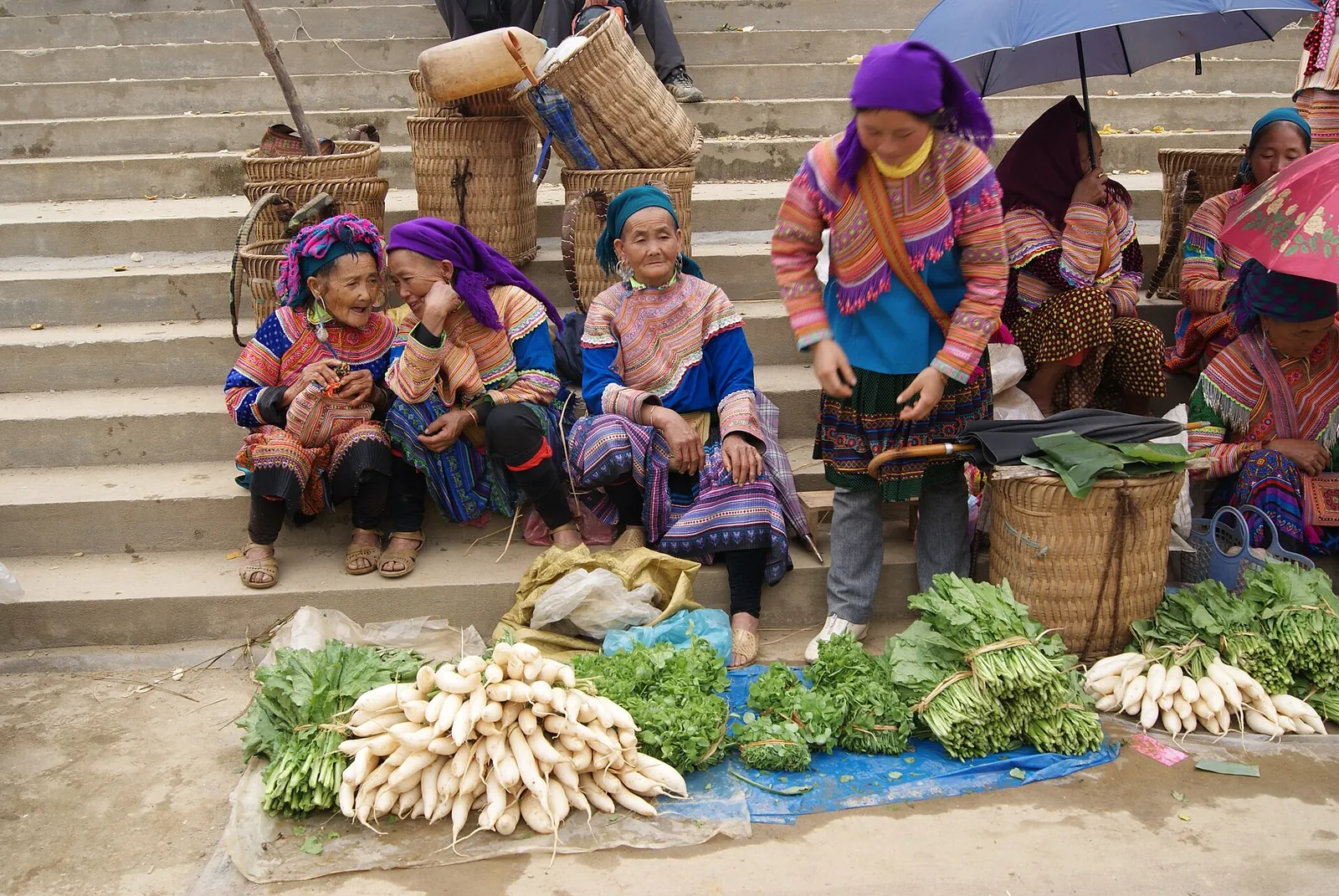
Markets are part of village life, not a show. Bac Ha's Sunday market and the weekly market at Pho Cao in Ha Giang draw people from across the area to buy and sell. Watch from the edges, do not block stalls while you take photos, and the same ask-first rule applies to sellers as to anyone else. Market days move, so ask your guide or homestay host when they are.
Greetings, gestures and saving face
The idea that matters most is saving face. The tourism board advises keeping your cool and avoiding loud arguments, making a scene, scolding people for mistakes or pointing out anything that might shame them. If a room is wrong or a bill is off, raise it quietly and with a smile. Public displays of affection are also frowned upon; men and women often do not touch in front of others.
A simple xin chào (hello) and cảm ơn (thank you) go a long way. To catch someone's attention, Vietnamese do not say "excuse me" but call out with a term of address that matches their age: em ơi for someone younger than you, chị ơi for a woman a little older, anh ơi for a man a little older, cô ơi or chú ơi for someone your parents' age, bà ơi or ông ơi for the elderly. When in doubt, the tourism board suggests bạn ơi, "hey friend".
Mind your hands. Pass and receive things with your right hand or both hands. Avoid pointing at people and patting anyone on the head or back, especially someone older than you. The official guide also warns that the Western crossed-fingers gesture for good luck is highly impolite in Vietnam.
Bargaining without offence
Haggling is normal in markets: the tourism board describes Bac Ha's Sunday market as a riot of colour and excited haggling. Keep it light. Ask the price (bao nhiêu tiền?), say đắt quá (that's too expensive) with a smile if it seems high, and walk on politely if you cannot agree. Only name a price you are willing to pay, and remember the advice on saving face: a raised voice over a small sum embarrasses everyone.
With handmade textiles, think about what a fair deal is. A Black Hmong guide interviewed by the tourism board advises buying at the back and upstairs of the Sapa market, where local women sell good-quality pieces, rather than from sellers in the street, who can feel rushed and pushy, and asking how long a piece took to make before you settle on a price. Some costumes take months to make. Jewellery is the exception: she rates the women selling in the street as having the best pieces.
Fixed prices are fixed: malls, many shops in the cities and metered taxis do not bargain. The tourism board names Mai Linh and Vinasun as taxi companies with sealed meters, and warns of rigged meters, overcharging and confusing currency, so use a metered taxi or a ride-hailing app rather than negotiating a price at the kerb.
Rules that are law, not manners
A few things that look like etiquette are enforced. The UK government's advice says you must always carry photographic ID, and that the authorities accept a printed copy of the photo page of your passport and your visa. Do not hand your passport to a motorbike rental shop or landlord as a deposit. Do not take photos near military bases; Canada's advice adds that sensitive sites are not always marked, so do not photograph military installations or personnel even without a sign.
Politics and religion need care. The UK advice says to avoid all protests, and warns that possessing political material or unsanctioned religious activity, including proselytising, can lead to an exit ban, a prison sentence or a full travel ban. Drug penalties are severe, regardless of quantity, and vapes are banned: you cannot buy them in Vietnam or bring them in. These rules change, so check your government's current advice before you travel.
Practical questions
What should I wear to temples in Vietnam?
Clothes that cover your shoulders and knees, and nothing sheer. Take your shoes and hat off before going in. The same dress code applies at the Ho Chi Minh Mausoleum, where the tourism board also asks visitors to dress formally.
Do you tip in Vietnam?
It is optional. The tourism board says tipping is more common for tour guides and in spas than in restaurants, and you are under no obligation. If service was good, a tip for your guide at the end of a trek is a kind gesture.
Can I take photos of people in Sapa and Ha Giang?
Ask first, every time. The official tourism advice is to respect people's privacy and always ask before lifting your camera, and the Canadian government also advises seeking permission before photographing locals. Accept a refusal, and never photograph military sites or personnel.
Is it rude to bargain in Vietnam?
No, haggling is expected in markets, but keep it friendly. Ask the price, say đắt quá (too expensive) with a smile, and walk away politely if you cannot agree. For handmade textiles, ask how long the piece took to make so you reach a fair price. Do not bargain in malls, fixed-price shops or metered taxis.
Is the Ho Chi Minh Mausoleum open?
When we checked on 2026-10-03, the Mausoleum Command's notice said visits were suspended from 4 September to 2 November 2026 for maintenance and resume on 3 November. Inside, photos are forbidden, and you should keep the line moving and stay quiet.
Which hand should I use in Vietnam?
Use your right hand or both hands to pass dishes, money or gifts, and shake hands with your right hand. Avoid pointing at people and touching anyone's head.
Sources and checks before you travel
Reference sources for the version dated 3 October 2026. Confirm opening times, access, transport and conditions for your travel dates.
- Vietnam National Authority of Tourism: Vietnamese etiquette for travellers ↗ — opens in a new tab
- Vietnam National Authority of Tourism: Frequently asked questions ↗ — opens in a new tab
- Vietnam National Authority of Tourism: Hanoi's six heritage sites ↗ — opens in a new tab
- Tuoi Tre: Mausoleum Command notice on the 2026 maintenance closure ↗ — opens in a new tab
- Vietnam National Authority of Tourism: A beginner's guide to Vietnamese street food ↗ — opens in a new tab
- Vietnam National Authority of Tourism: Sapa itinerary for sustainable travellers ↗ — opens in a new tab
- Vietnam National Authority of Tourism: interview with a Black Hmong guide in Sapa ↗ — opens in a new tab
- Vietnam National Authority of Tourism: Sapa ↗ — opens in a new tab
- Vietnam National Authority of Tourism: Ha Giang adventures ↗ — opens in a new tab
- Vietnam National Authority of Tourism: One-of-a-kind cuisine of the Ha Giang karst plateau ↗ — opens in a new tab
- Vietnam National Authority of Tourism: Vietnamese phrases ↗ — opens in a new tab
- Vietnam National Authority of Tourism: Health and safety ↗ — opens in a new tab
- UK FCDO travel advice: Vietnam safety and security ↗ — opens in a new tab
- Government of Canada: Travel advice for Vietnam ↗ — opens in a new tab
- Vietnam National Authority of Tourism: A traveller's guide to Vietnam's airports ↗ — opens in a new tab
- Vietnam National Authority of Tourism: Ha Giang loop four-day road trip ↗ — opens in a new tab
Does this experience fit your route?
Want someone local to explain the customs as you go? Compare guided food walks in Hanoi and village treks from Sa Pa.
Check dates and details on Viator ↗ — opens in a new tabAffiliate link · Book with ViatorPhoto credits
Tran Quoc Pagoda on West Lake in Hanoi: a working Buddhist pagoda, so cover shoulders and knees and take your hat off inside.
Photograph: Jakub Hałun — opens in a new tab · CC BY 4.0 — opens in a new tab
Changes: Resized and converted to WebP; displayed with responsive crops. · Original photograph and licence details ↗ — opens in a new tab
Incense at the Temple of Literature in Hanoi. Let worshippers go first at altars and burners.
Photograph: Myrabella — opens in a new tab · CC BY-SA 4.0 — opens in a new tab
Changes: Resized and converted to WebP; displayed with responsive crops. · Original photograph and licence details ↗ — opens in a new tab
Bac Ha Sunday market in Lao Cai province. Ask before you photograph sellers, and keep clear of the stalls.
Photograph: Truth'soutthere — opens in a new tab · CC BY-SA 3.0 — opens in a new tab
Changes: Resized and converted to WebP; displayed with responsive crops. · Original photograph and licence details ↗ — opens in a new tab
A shared everyday Vietnamese meal: dishes go in the middle, and each diner has a rice bowl and chopsticks.
Photograph: Hoangkid — opens in a new tab · CC BY-SA 4.0 — opens in a new tab
Changes: Resized and converted to WebP; displayed with responsive crops. · Original photograph and licence details ↗ — opens in a new tab
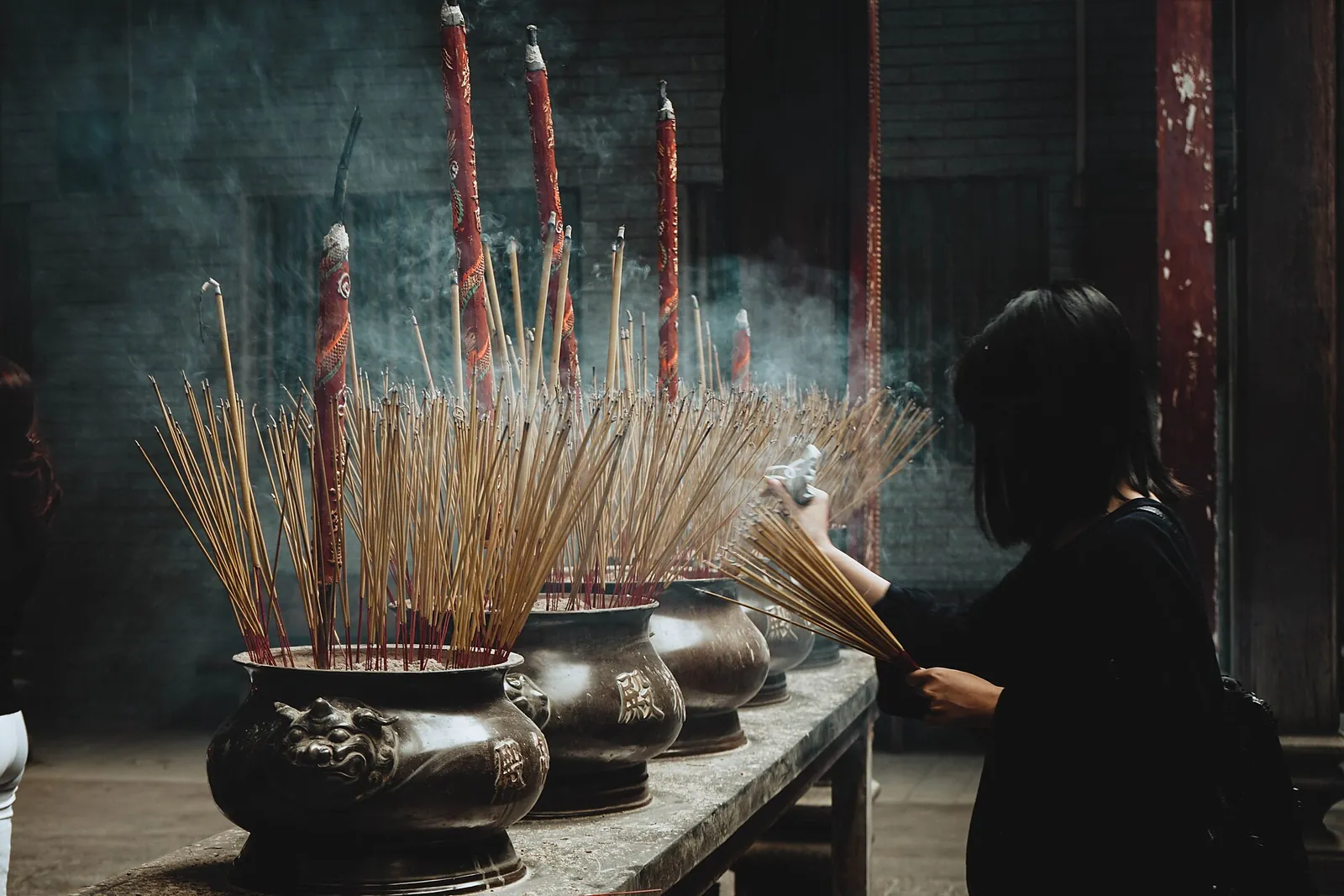
Thien Hau Temple in Ho Chi Minh City, where incense is part of everyday worship.
Photograph: Chinh Le Duc mero_dnt — opens in a new tab · CC0 — opens in a new tab
Changes: Resized and converted to WebP; displayed with responsive crops. · Original photograph and licence details ↗ — opens in a new tab