Central Vietnam · Hue
Bach Ma National Park guide: waterfalls, summit trails and where to stay
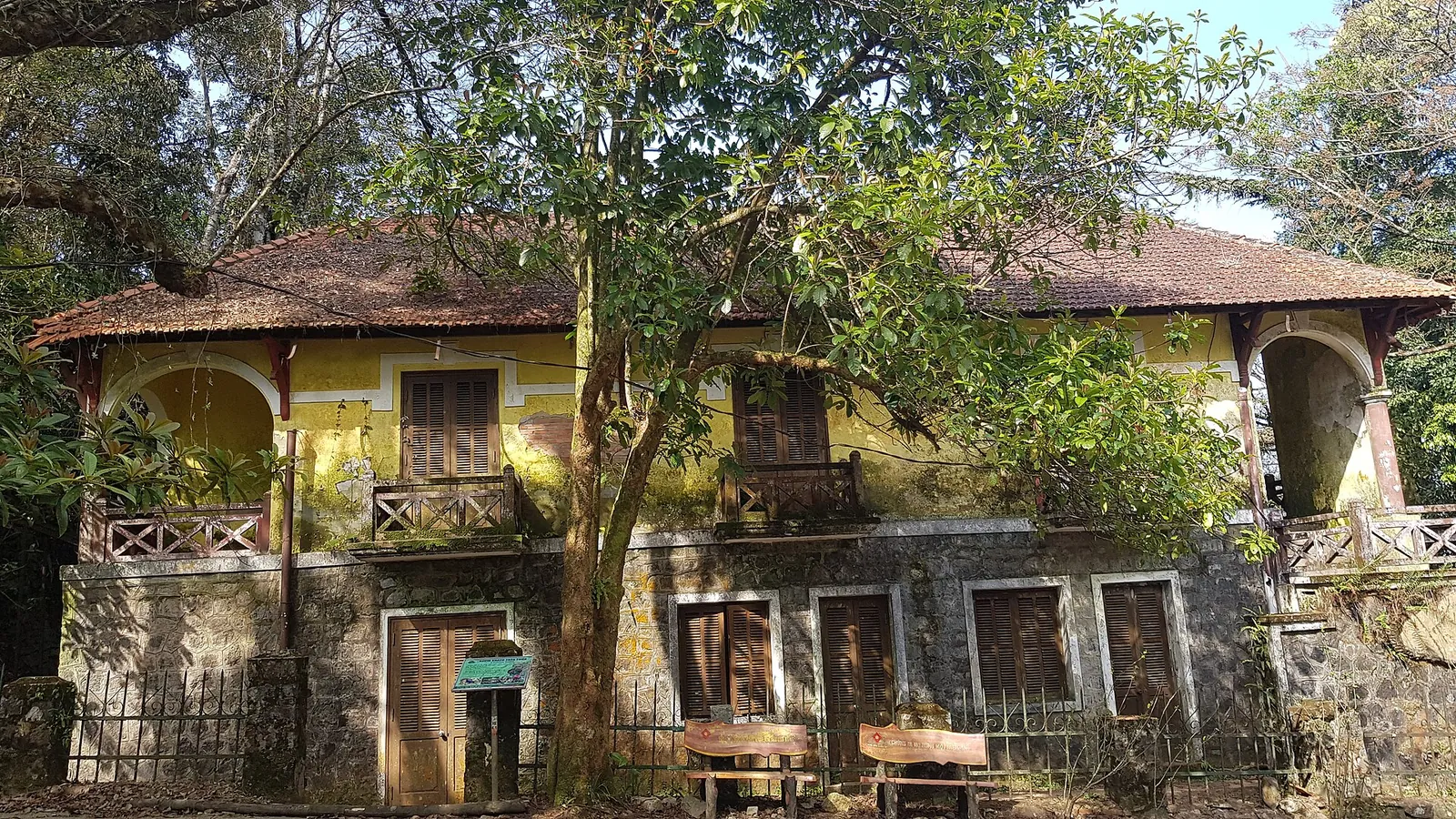
Bach Ma is the forested mountain range between Hue and Da Nang, and its national park is the place in this stretch of central Vietnam to walk in real forest rather than on a beach. In the 1930s the French built a hill station of around 139 villas on its upper slopes; today the ruins sit along granite-paved paths inside a national park that climbs from lowland forest to a 1,430-metre lookout facing the sea. A visit is short paths, cold pools and waterfalls rather than a long trek, and the weather on the summit decides how good the day is.
- Suggested time
- 1 long day, or 2 days with a night on the mountain
- Where to stay
- Hue for a day trip; the park's villa guesthouses near the summit for an overnight
- Season and timing
- The summit is much cooler than the coast. Vietnam's tourism authority says Hue's rains come in August and can last through January, with flooding usually from October; the park warns against stream-side trails in heavy rain, and its nature calendar describes cold rain and fog at the end of the year.
The short answer
Give Bach Ma one long day from Hue, or a night on the mountain if you want the summit at dawn and the waterfall without hurrying. Book transport up the summit road in advance: private motorbikes and vehicles with more than 16 seats are not allowed to the top, so most visitors use a park car or a small private car. Do the 800-metre walk to Hai Vong Dai first, then the Five Lakes and Do Quyen waterfall loop. Sleep in Hue for a day trip, or in one of the park's villa guesthouses near the summit for an overnight stay.
How a Bach Ma day works
The park lies in Phu Loc commune, now part of Hue city, and its own visitor guide puts it about 40 kilometres from Hue. The visitor centre and ticket gate are off National Highway 1A at the end of Tran Dinh Tuc road; the park's guide says the turning is about a kilometre from Cau Hai market on the lagoon. Do not follow the signs for the Truc Lam Bach Ma Zen Monastery on the way — that road leads to Truoi Lake, not to the summit.
From the gate a narrow road climbs through the forest to the old hill station, and the trailheads are marked by kilometre posts along it. The park allows only vehicles of 16 seats or fewer on the summit road, and bars private motorbikes, so a car is part of the plan. When we checked on 2026-10-03, the park's transport price list (applied from 1 May 2025) offered its own cars for day trips and overnight trips, with a lower passenger limit for foreign visitors than for Vietnamese ones; larger tour coaches must transfer to the park's shuttle. The park's guide says fit walkers can hike up from the gate instead, in four to five hours, starting before 9:00.
The park asks visitors to book services in advance and to bring a warm layer and flat-soled shoes. When we checked on 2026-10-03, the official site carried a notice that the park had reopened to visitors from 1 January 2026, with phone numbers for bookings; check that page for any newer notice before you go.
Hai Vong Dai: the summit lookout
Start with the easiest and most rewarding walk. From the Morin villa a granite-paved path of about 800 metres climbs to Hai Vong Dai, the sea-view lookout at about 1,430 metres. The park describes it as the one trail suited to visitors of every age, and from the top you look over forested ridges to the coast and the lagoons.
If the summit is clear when you arrive, go up straight away rather than saving it for the end of the day: mountain weather changes quickly, and the view is the point of the climb. Along the way and around the summit area you pass ruined villa walls of granite, the remains of the hill station the French completed in 1942.
Make time for the local food
What to eat and where to look
Set rice meals at the park restaurant
The park's restaurant serves Vietnamese set meals (com phan) and plates of rice with a main dish, and grilled food or seafood can be ordered in advance. When we checked on 2026-10-03, its price list showed a cheaper per-person rate for groups of ten or more.
- Where to look
- The park restaurant in the summit area; order through the park's service centre when you book transport.
- Fit it into your day
- Lunch between Hai Vong Dai and the Five Lakes loop, or dinner if you stay the night.
The park asks visitors not to bring food and drink into the tourist area, to cut down on litter, so plan on eating here rather than packing a picnic.
Breakfast noodle soup on the summit
For overnight guests, breakfast at the park is a bowl of noodles — the price list names pho, bun and instant noodles with beef — which is welcome after a cold, misty dawn at the lookout.
- Where to look
- The park restaurant near the villa guesthouses.
- Fit it into your day
- Before the morning walk to Do Quyen waterfall on day two.
Room prices at the villas do not include breakfast; order it with your booking.
Charcoal grill at the campsite
Campers can rent large or small charcoal grills, with charcoal included, at the Thong Nang and Kim Giao campsites, and add a campfire in the evening.
- Where to look
- Arrange it with the park's environmental education and service centre, which handles tents, grills and camping fees.
- Fit it into your day
- An evening meal for a group camping overnight.
Ask what food the park can supply for the grill, given its request not to bring food into the area, and do not leave any rubbish behind.
Bun bo Hue back in the city
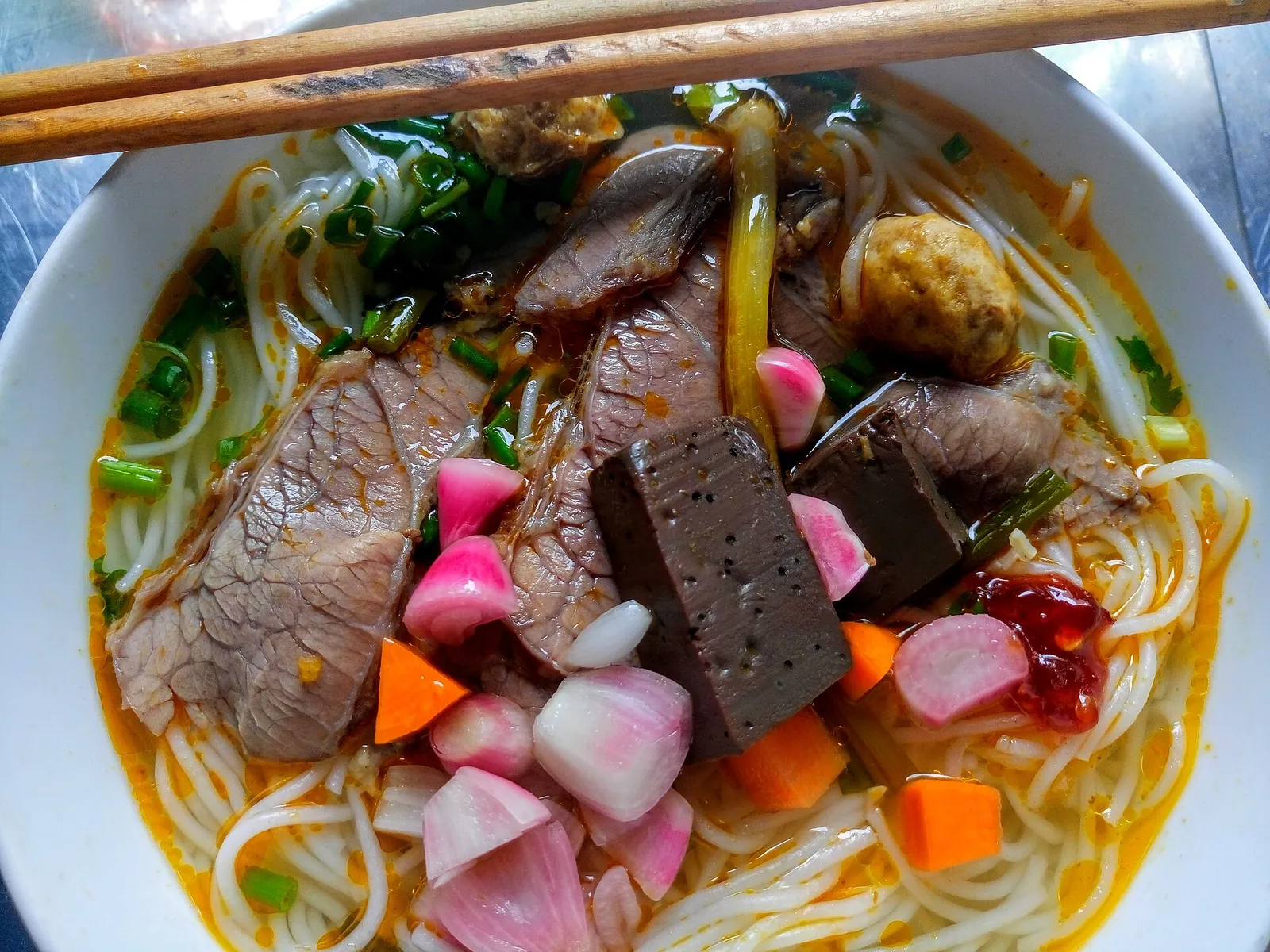
Hue's famous noodle soup combines beef brisket with pork hock, trotter, loin and blood cubes in a broth seasoned with lemongrass, shrimp paste, garlic and shallots — a hearty bowl after a day on the mountain.
- Where to look
- Noodle shops across Hue.
- Fit it into your day
- Breakfast before an early departure, or dinner on your return to Hue.
Contains pork, blood and shrimp paste and is often spicy.
Five Lakes and Do Quyen waterfall
The park's main walking loop starts near the Kim Giao villa. The Five Lakes (Ngu Ho) trail follows a stream past a chain of five clear pools and small falls, about 1.5 kilometres and 30 minutes on foot; the park says you may swim in lakes 4 and 5 if you can take the cold water. At a junction, a path of about 500 metres leads to the top of Do Quyen waterfall, which the park gives as about 300 metres high. Turning the other way brings you back to the road at kilometre 16; the park puts the whole loop at about 3.3 kilometres.
Do Quyen can also be reached directly by a gently sloping 1.5-kilometre path from kilometre 16. The park mentions nearly 700 steps down beside the fall for those with the legs and time for it — remember that every one of them has to be climbed again. The red rhododendrons that give the waterfall its name flower along the rocks and streams in spring.
Stay off stream-side trails when heavy rain or a tropical depression is forecast, and never try to cross a stream that is rising. The park's weather page gives these rules and an emergency number; follow the rangers' instructions in the forest.
Other trails, birds and wildlife
Tri Sao falls are reached by a path of about 2.5 kilometres through open forest from a signed trailhead about 5 kilometres up the road from the gate; the park describes clear pools at the end where you can swim. The Rung Cho Den trail, about 3 kilometres down the road from the summit guesthouses, goes into a stand of old *cho den* trees, some over a metre across and more than 30 metres tall — the park admits it is mainly for people who love trees. Longer multi-day routes towards Truoi Lake need a guide and camping in the forest.
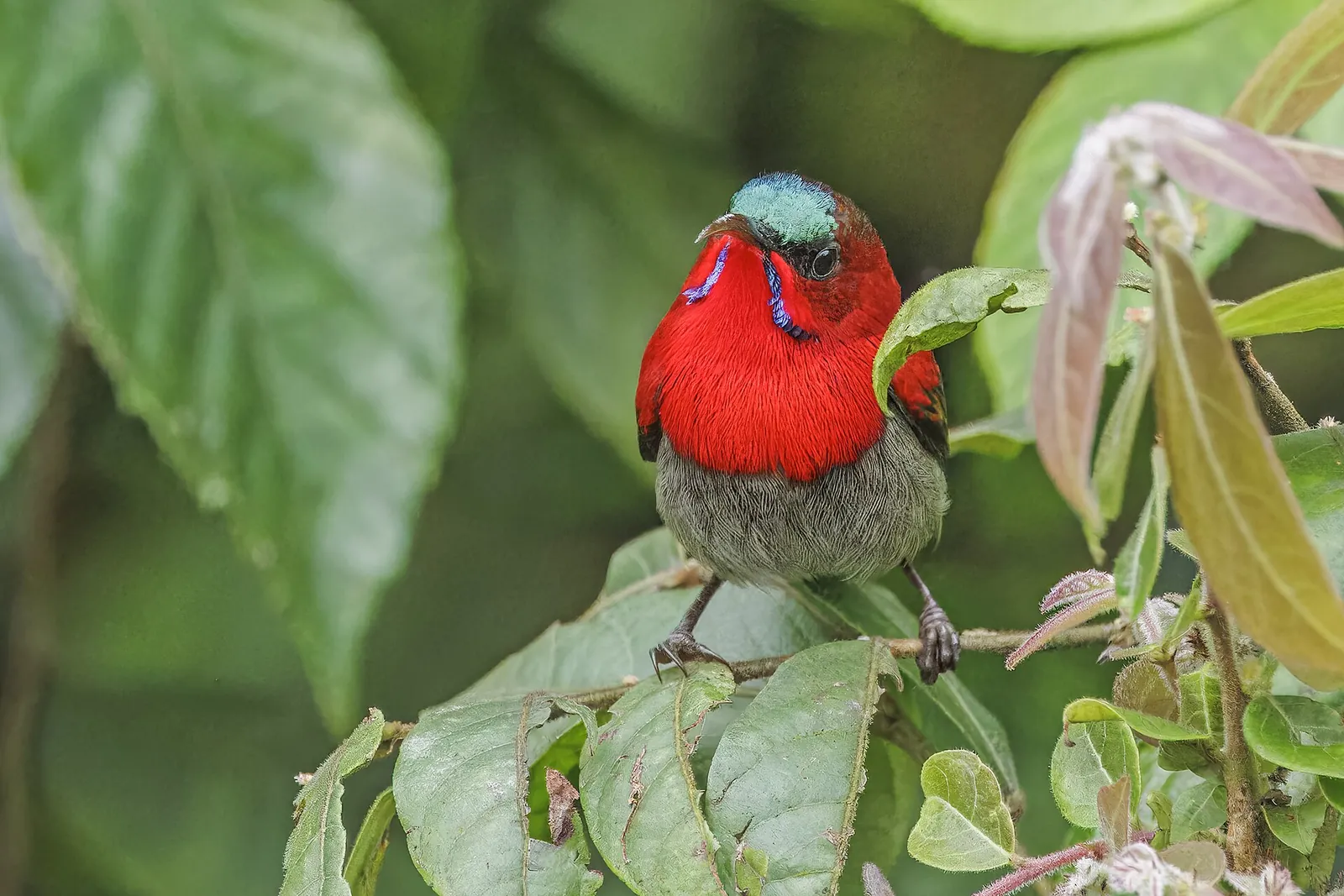
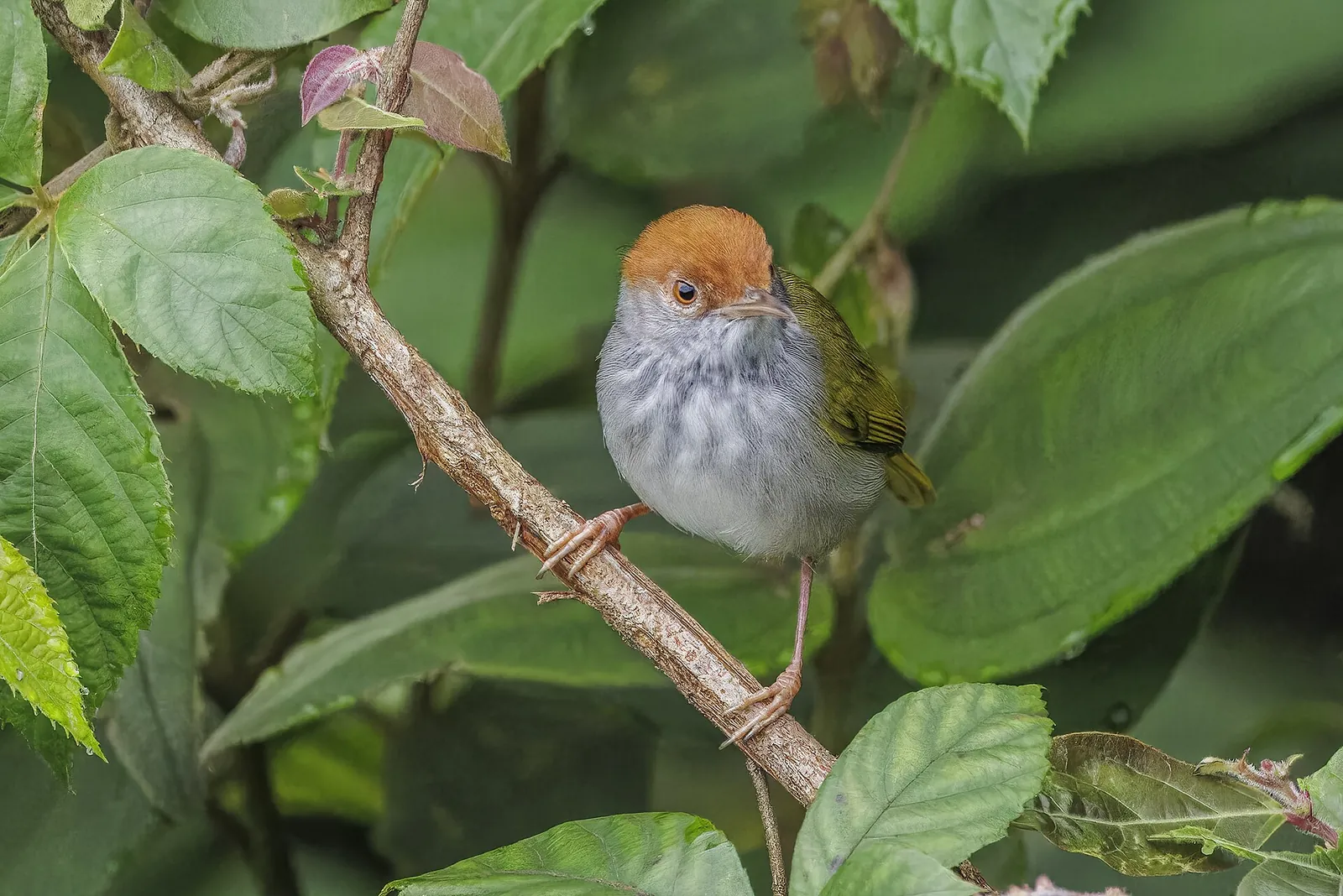
A national park was first proposed here in 1925 to protect Edwards's pheasant, and today the park says 363 bird species have been recorded. It recommends early morning and late afternoon for birdwatching, and its English-speaking guides and well-known bird-caller, Truong Cam, can be booked through the park. Red-shanked douc langurs are among the animals listed in its nature calendar; seeing them is luck, not a promise.
The summit also holds the Bach Ma tunnels, dug after the battle for the peak in 1973 and listed as a national historic site in 2009.
Staying overnight on the mountain
A night on the summit turns Bach Ma from a rushed outing into an unhurried one: you can walk to the lookout in the early morning, take the waterfall loop without watching the clock and hear the birds at dusk. The park runs the rooms itself, in restored villas — Do Quyen and Kim Giao — and the Bao An house, which has four-bed rooms; the villa rooms have en-suite bathrooms. When we checked on 2026-10-03, the park's price tables, applied from 1 January 2025, listed rooms from 500,000 dong without breakfast, with no more than three guests per villa room.
There are two campsites, Thong Nang at kilometre 17.5 and Kim Giao at kilometre 17, behind the villa of the same name; the park rents tents with sleeping mats and bags, and charcoal grills. Campfires can be booked for the evening. The park also tells visitors not to expect luxury hotels or nightlife here, which is exactly the appeal.
If you prefer to sleep in a city, Hue is the natural base for a day trip, and Da Nang works if you are willing to cross the Hai Van Pass both ways.
Practical questions
Can I visit Bach Ma National Park as a day trip from Hue?
Yes. The park is about 40 kilometres from Hue by its own guide, and a long day covers the Hai Vong Dai lookout and the Five Lakes and Do Quyen waterfall loop. Start early and book a car for the summit road in advance.
Can I ride a motorbike up to the summit?
No. The park bars private motorbikes and vehicles with more than 16 seats from the summit road. Use the park's cars, a small private car or a tour; larger coaches transfer to the park's shuttle.
How much is the entrance ticket?
When we checked on 2026-10-03, the park's price list (applied from 1 May 2025) gave 65,000 dong for adults and 25,000 dong for children, students and older visitors with ID. Check the park's official site before you go.
Can I swim at Bach Ma?
The park says you can swim in lakes 4 and 5 on the Five Lakes trail and in the pools at Tri Sao falls. The water is cold, and stream-side trails should be avoided in heavy rain.
Where can I stay inside the park?
The park runs rooms in the restored Do Quyen and Kim Giao villas and the Bao An house near the summit, and two campsites with tents for hire. Book through the park's service centre.
Do I need a guide?
Not for the short marked trails, though the park says a guide makes walks safer and more interesting. English-speaking guides and the park's bird-caller can be booked, and longer routes into the forest require one.
Sources and checks before you travel
Reference sources for the version dated 3 October 2026. Confirm opening times, access, transport and conditions for your travel dates.
- Bach Ma National Park: home page and reopening notice ↗ — opens in a new tab
- Bach Ma National Park: five messages to visitors ↗ — opens in a new tab
- Bach Ma National Park: history ↗ — opens in a new tab
- Bach Ma National Park: Hai Vong Dai trail ↗ — opens in a new tab
- Bach Ma National Park: Five Lakes trail ↗ — opens in a new tab
- Bach Ma National Park: Do Quyen trail ↗ — opens in a new tab
- Bach Ma National Park: Tri Sao trail ↗ — opens in a new tab
- Bach Ma National Park: Rung Cho Den trail ↗ — opens in a new tab
- Bach Ma National Park: walking in the primary forest ↗ — opens in a new tab
- Bach Ma National Park: birdwatching ↗ — opens in a new tab
- Bach Ma National Park: transport price list ↗ — opens in a new tab
- Bach Ma National Park: other services and tickets ↗ — opens in a new tab
- Bach Ma National Park: food and drink ↗ — opens in a new tab
- Bach Ma National Park: Do Quyen villa ↗ — opens in a new tab
- Bach Ma National Park: Kim Giao villa ↗ — opens in a new tab
- Bach Ma National Park: Bao An house ↗ — opens in a new tab
- Bach Ma National Park: Thong Nang and Kim Giao campsites ↗ — opens in a new tab
- Bach Ma National Park: travel handbook ↗ — opens in a new tab
- Bach Ma National Park: weather and safety ↗ — opens in a new tab
- Bach Ma National Park: nature calendar ↗ — opens in a new tab
- Vietnam Tourism: Hue ↗ — opens in a new tab
- Vietnam Tourism: Hue's best to eat, from the palace to the street ↗ — opens in a new tab
Does this experience fit your route?
Bach Ma is easiest with transport arranged: compare tours from Hue that include the summit road, or book the park's car directly.
Browse relevant experiences on Viator ↗ — opens in a new tabAffiliate link · Book with ViatorPhoto credits
One of the old hill-station villas in Bach Ma National Park, built by the French before 1942
Photograph: Andre Hospers — opens in a new tab · CC BY 4.0 — opens in a new tab
Changes: Resized and converted to WebP; displayed with responsive crops. · Original photograph and licence details ↗ — opens in a new tab
A male crimson sunbird in Bach Ma National Park, where the park has recorded 363 bird species
Photograph: Charles J. Sharp — opens in a new tab · CC BY-SA 4.0 — opens in a new tab
Changes: Resized and converted to WebP; displayed with responsive crops. · Original photograph and licence details ↗ — opens in a new tab
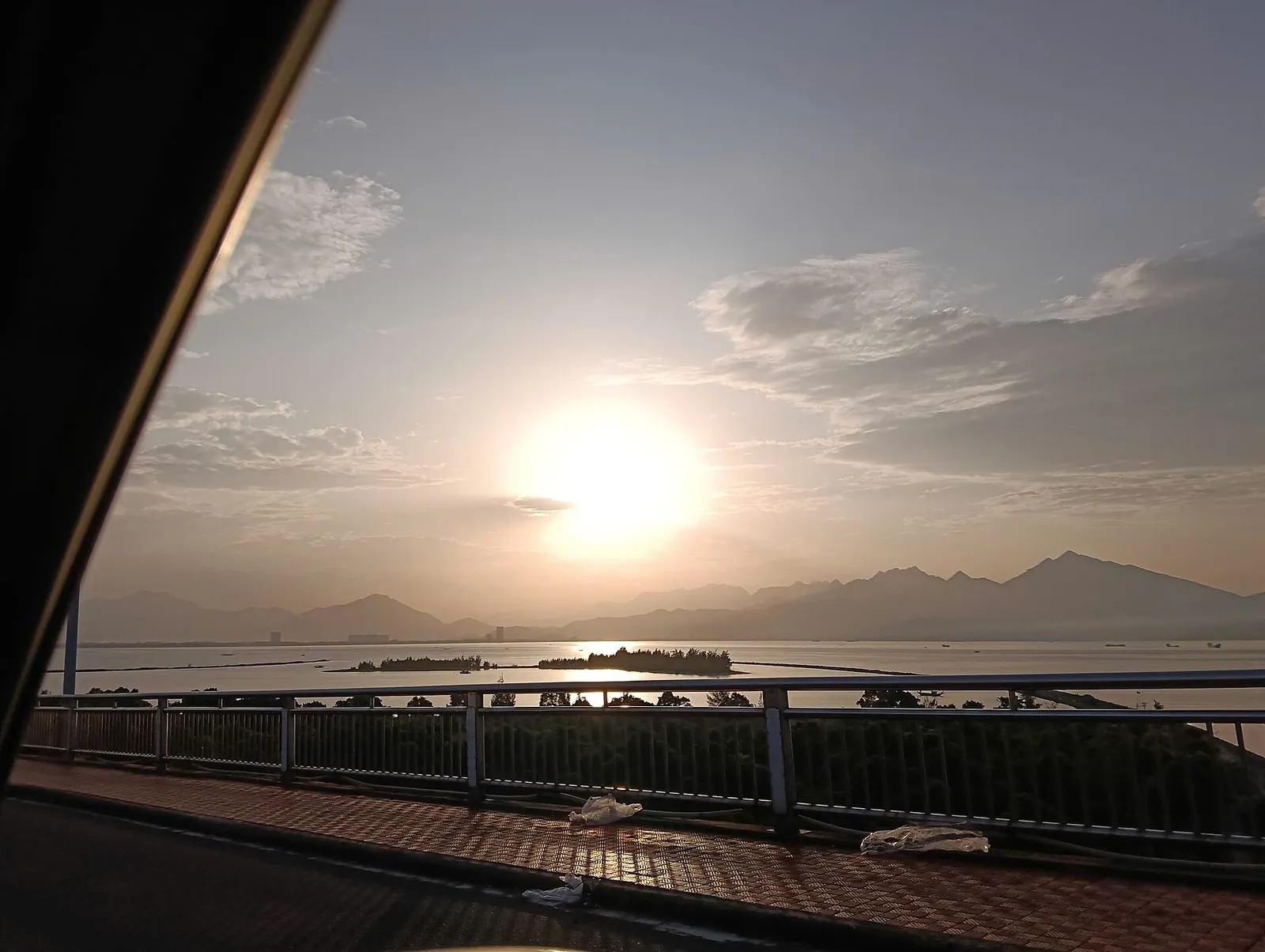
The Bach Ma range seen across the bay from Da Nang in the late afternoon
Photograph: Lê Đăng Khôi — opens in a new tab · CC0 — opens in a new tab
Changes: Resized and converted to WebP; displayed with responsive crops. · Original photograph and licence details ↗ — opens in a new tab
A dark-necked tailorbird in the forest of Bach Ma National Park
Photograph: Charles J. Sharp — opens in a new tab · CC BY-SA 4.0 — opens in a new tab
Changes: Resized and converted to WebP; displayed with responsive crops. · Original photograph and licence details ↗ — opens in a new tab
Bun bo Hue, the noodle soup to look for in Hue before or after a day on the mountain
Photograph: Beelerb — opens in a new tab · CC BY-SA 4.0 — opens in a new tab
Changes: Resized and converted to WebP; displayed with responsive crops. · Original photograph and licence details ↗ — opens in a new tab