Northern Mountains · Thai Nguyen
Ba Be National Park guide: the lake, Puong Cave and Tay homestays
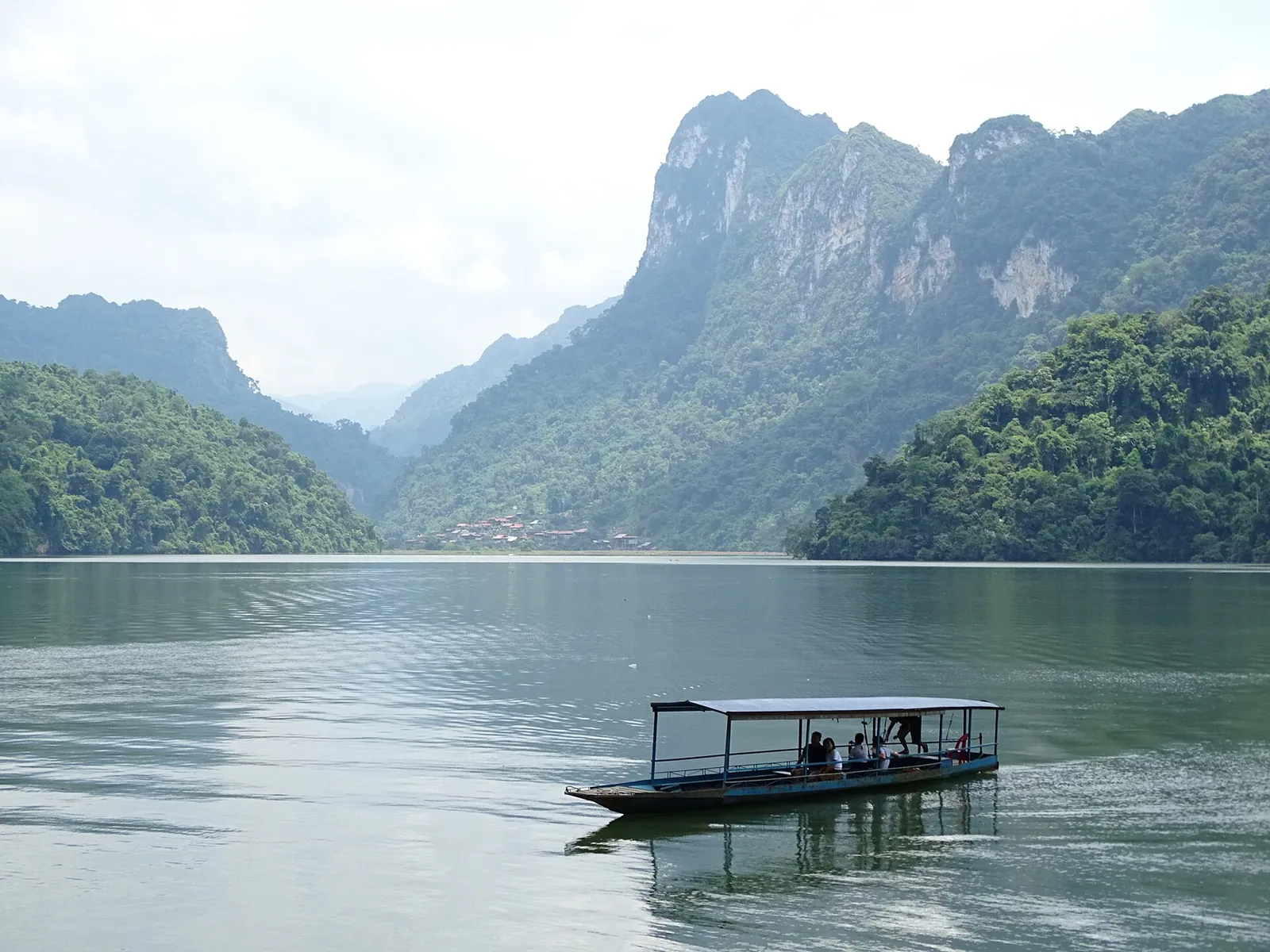
Ba Be is Vietnam's largest natural freshwater lake: a narrow ribbon of water, up to about eight kilometres long, threaded between forested limestone mountains in the far north-east. The Tay call it Slam Pe, the three lakes, after its three basins, Pe Leng, Pe Lu and Pe Lam. Around it, Ba Be National Park protects karst forest, caves and the Nang River, and Tay families in the lakeside villages still live in wooden stilt houses that double as homestays. It is not a place of big sights. The day is a slow boat trip to the temple island, through a river cave and up to a waterfall, and the evening is dinner on a stilt-house floor while the lake goes quiet.
- Suggested time
- 2 nights (3 days)
- Where to stay
- A Tay stilt-house homestay at Pac Ngoi or Bo Lu on the lake; Coc Toc and Ban Cam for quieter alternatives
- Season and timing
- The forest is green all year; winters are dry and chilly, and Vietnam's national tourism site warns that storms can disrupt plans between July and October. In March and April, after the first rains, fish leap the rapids at Dau Dang. The Long Tong spring festival is on the 10th day of the first lunar month.
The short answer
Give Ba Be two nights. The long road from Hanoi takes most of the first day; the second is for a full boat day on the lake and the Nang River (An Ma Temple, Puong Cave, Dau Dang Waterfall, Ao Tien) with a climb to Hua Ma Cave or a kayak; the third morning is for a walk or bike ride through the villages before you leave. Sleep in a Tay stilt-house homestay at Pac Ngoi or Bo Lu on the lake shore rather than in a town. Ba Be also works as a gentle stop on a longer northern route towards Cao Bang or Ha Giang.
What Ba Be is, and why you sleep by the lake
Ba Be National Park was created in 1992 and covers 10,048 hectares, according to Vietnam's Nature and Biodiversity Conservation Agency. It was named an ASEAN Heritage Park in 2004 and a Ramsar wetland in 2011, the 1,938th in the world and Vietnam's third. At its centre is the lake: up to about eight kilometres long, 17 to 23 metres deep on average and about 35 metres at its deepest, with a surface that rises and falls between roughly 300 and 500 hectares with the seasons. The agency counts 1,268 species of higher plants, 182 of them orchids, and 470 vertebrate species in the park.
Since the 2025 provincial merger, the lake lies in Ba Be commune in Thai Nguyen province; older maps, signs and booking pages still say Bac Kan province, Ba Be district or Nam Mau commune, so search under both names. The lake area is not a town. Lodging is mostly family homestays in the Tay villages on the shore, and the commune names Pac Ngoi, Bo Lu, Coc Toc and Ban Cam as its homestay villages.
That is the reason to stay rather than visit. A homestay owner quoted by the provincial newspaper in 2026 noted that most visitors stay only one or two days, and a single night leaves you with a rushed boat trip squeezed between two long drives. With two nights, the lake gets a full day and the villages get an evening and a morning.
The boat day: An Ma, Puong Cave, Dau Dang and Ao Tien
Almost everything worth seeing on the water fits into one boat day, and the boat is how you get between the sights. The commune describes the classic loop: An Ma Temple on its island in the lake, Ao Tien (the Fairy Pond) on the northern side, Puong Cave on the Nang River and Dau Dang Waterfall beyond it, with Ba Goa Island, the Widow's Island, in the Pe Leng basin. The provincial tourism portal describes another way in: motorboats from Buoc Lom pier run down the Nang River and through Puong Cave into the lake.
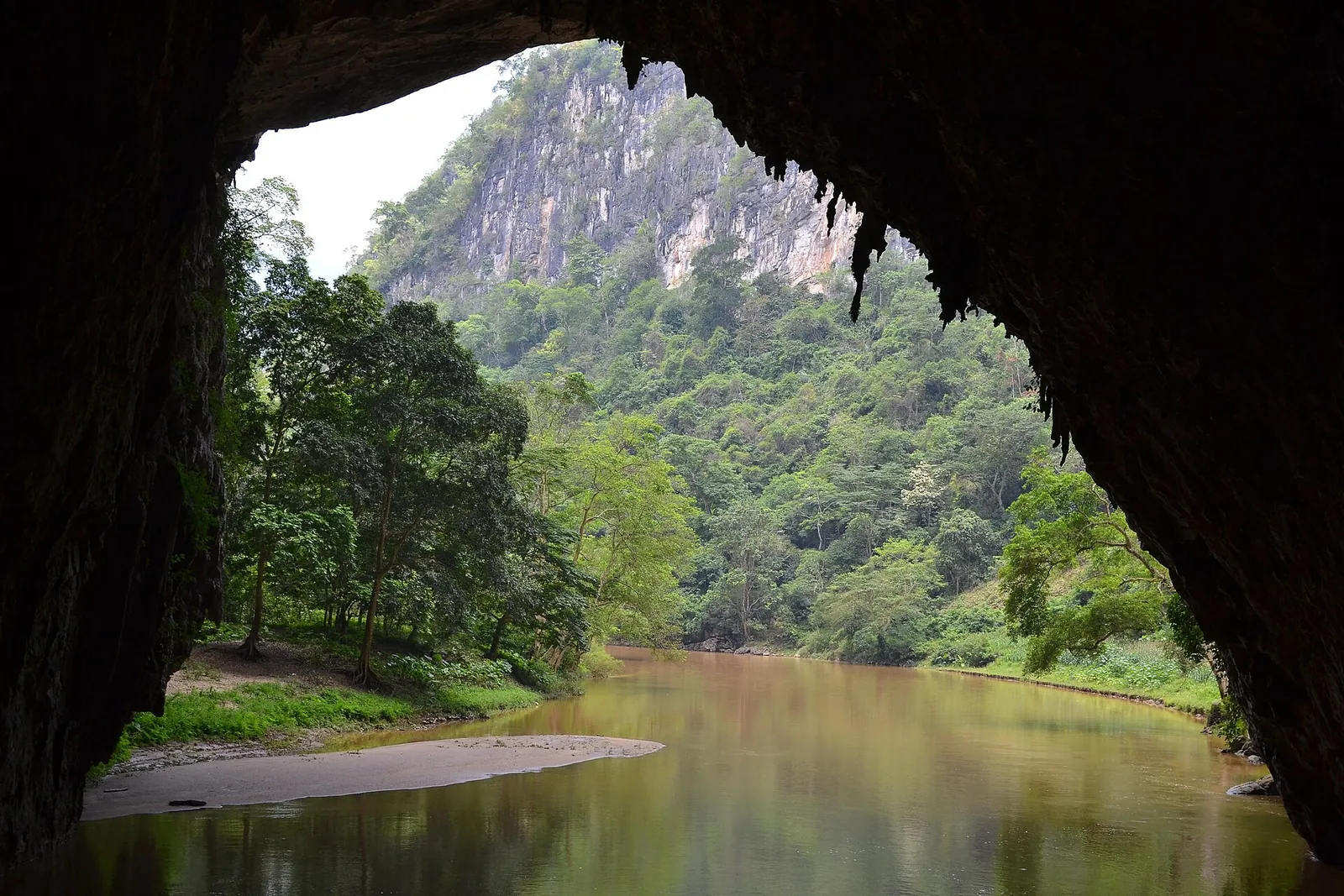
An Ma Temple stands on a limestone island about 30 metres high; the provincial tourism portal says the old temple was restored in 2006. Local tradition holds that it honours loyalists of the Mac dynasty who died at Puong Cave in the wars of the late 16th and early 17th centuries. Puong Cave is a tunnel cut by the Nang River: the commune gives a ceiling of more than 20 metres, an average width of 30 metres and a river passage of almost 300 metres, home to 23 species of bats. Dau Dang is where the Nang breaks over a jumble of boulders in three tiers along a steep stretch of about 500 metres, with a wooden walkway for visitors. Ao Tien is a small pond enclosed by cliffs and forest, about 100 metres on foot from the lake shore.
Boats are run under the tourism area's management, and the price list is posted at the piers; that list, not a quote from a stranger, is what counts. A 2024 report by the Vietnam News Agency's Bao Tin Tuc cited a 2023 notice setting 300,000 dong for Route 1, from the pier on the north shore to An Ma Temple and back. We could not find a current official price list online, so check the board at the pier and agree the route and the stops before you set off. Take water, a hat and a layer for the cave, and expect the longer routes that include Dau Dang to take most of the day.
Make time for the local food
What to eat and where to look
Ca nuong (grilled lake fish)
Small lake fish, only the size of a finger, cleaned, clamped between split bamboo and grilled over charcoal until golden. The provincial tourism portal describes the flesh as firm and sweet, and says you eat them whole, head and bones included.
- Where to look
- Homestay dinners and the small restaurants near the boat piers and in the lakeside villages.
- Fit it into your day
- Order a skewer with rice and greens at lunch on the boat day or at your first homestay dinner.
The bones are eaten too; if you dislike small bones, ask for larger fish or a different dish.
Tep chua (sour fermented lake shrimp)
A Tay preserve of tiny fresh lake shrimp, salted and mixed with cooked rice, leaf yeast, garlic, chilli, galangal and lean pork, then left to sour in a sealed jar for a few days. VnExpress describes it eaten with boiled pork, green banana, star fruit and herbs.
- Where to look
- On the table at homestay dinners in Pac Ngoi, and in jars sold at the lakeside piers.
- Fit it into your day
- A small side dish to share at dinner; try it before buying a jar to take home.
Fermented and uncooked unless steamed; it contains shellfish and pork. Ask for it steamed if you are cautious.
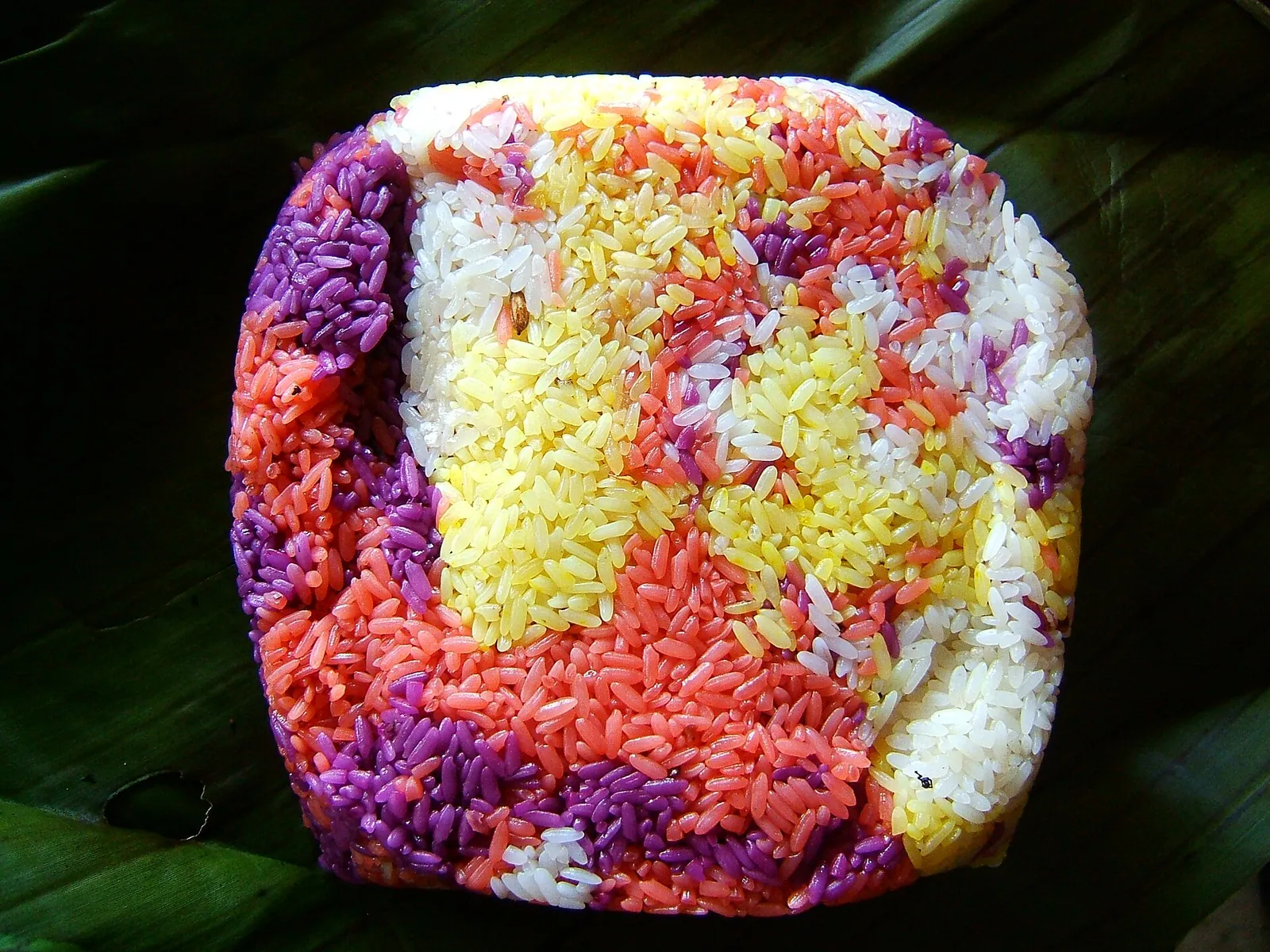
Xoi ngu sac (five-colour sticky rice)
Glutinous rice coloured with plant dyes in purple, red, yellow, white and sometimes green. The commune lists it among the dishes of the lake villages, and upland sticky rice (xoi nep nuong) is a staple of local meals.
- Where to look
- Homestay meals and village festivals, especially around Long Tong in spring.
- Fit it into your day
- Breakfast before the boat day, or a packed lunch for the trip to Dau Dang.
Filling and plain on its own; it is usually eaten with meat, sesame salt or other dishes.
Bamboo shoots, fern salad and hill chicken
The forest side of the table: bamboo shoots (mang), a salad of wild fern (nom rau don) and free-range hill chicken (ga doi), which the provincial tourism portal lists among the local dishes alongside lake shrimp.
- Where to look
- Family dinners in the stilt houses; menus change with the season and what the forest provides.
- Fit it into your day
- Let your host choose a set dinner, and say in advance if you do not eat meat.
Fern salad and other wild greens are seasonal; dressings often contain fish sauce.
Hua Ma Cave and the land side of the park
Hua Ma Cave is the dry cave of the area, and the provincial tourism portal calls it the most intact natural cave in the area. It lies about eight kilometres from the centre of the park, halfway up a mountain in Ban Pjan village of Dong Phuc commune (formerly Quang Khe commune). From the foot of the mountain, a stone stairway of more than 300 metres climbs to the entrance; you then descend about 100 metres into a chamber nearly 700 metres long, with a ceiling up to 50 metres high and a dry floor. Wear shoes with grip and allow time for the climb.
On land, Vietnam's national tourism site points to hiking trails that fan out around the lake and to the quiet roads along the water, which suit a bicycle. Homestays and local guides can arrange both. The provincial broadcaster reports SUP boards, kayaks and lakeside camping on offer, and the national tourism site notes that the calm water is used for swimming and fishing; ask your host where it is sensible to swim.
Keep the day after the boat trip for one of these rather than a second round of sights. A morning climb to Hua Ma and an afternoon in a kayak, or a walk between Pac Ngoi and the neighbouring villages, is a better use of Ba Be than covering more distance.
Staying with a Tay family
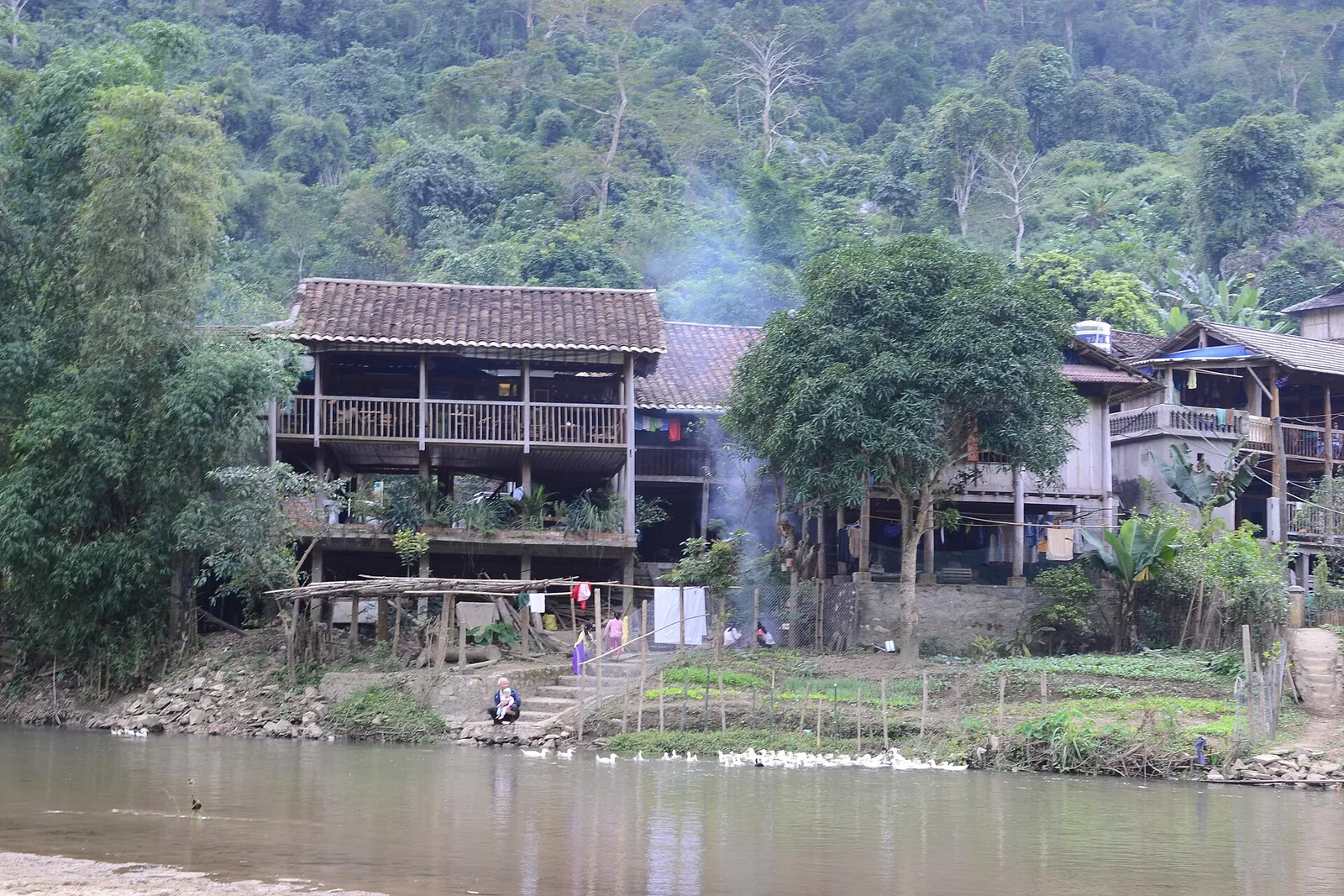
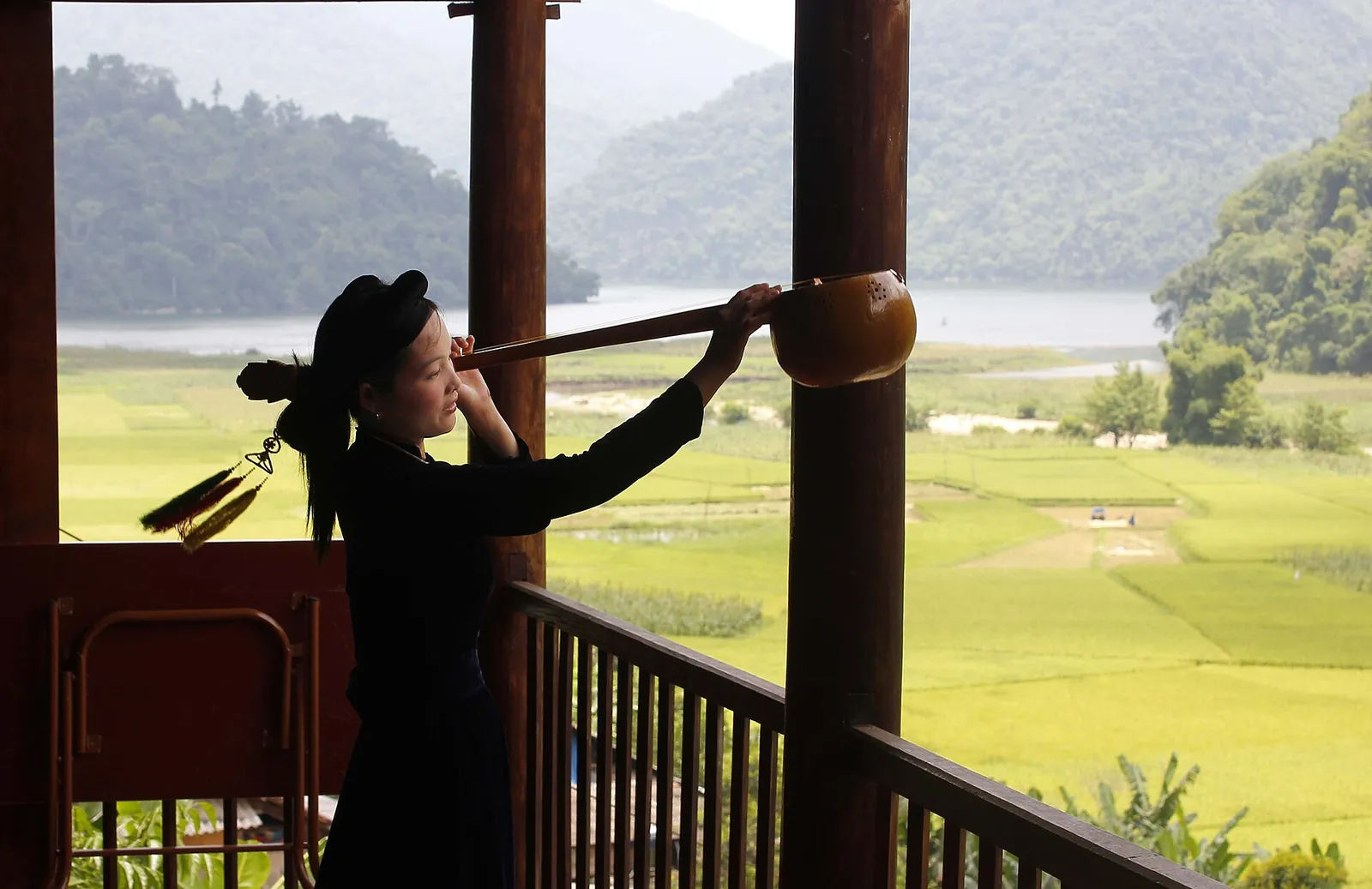
The Tay are Vietnam's second-largest ethnic group, and the national tourism site describes how they settle in valleys beside rivers and lakes, in raised wooden houses, with wet-rice farming and fishing as part of daily life. At Ba Be you can stay in such a house and, as the national tourism site puts it, learn fishing and boating first-hand from your host family. The commune lists fishing, brocade weaving and cake-making among the traditional activities visitors can join, and evenings of Then singing to the tinh lute, the Tay's long-necked instrument.
Pac Ngoi is the best-known village, on the lake shore, and the obvious choice for a first visit. Bo Lu is where the Long Tong spring festival is held. Coc Toc and Ban Cam are smaller. Before you book, check whether you are getting a private room or a space on a shared sleeping floor, what bathroom you will share and whether dinner with the family is included.
This is a lived-in village, not a show. Follow your hosts' lead on shoes inside the house, ask before photographing people, and keep music and voices down in the evening. Book ahead for weekends and Vietnamese holidays, when domestic visitors fill the lake.
Getting there from Hanoi, and onward to Cao Bang or Ha Giang
Ba Be has no airport or railway. Vietnam's national tourism site puts the trip at about six hours from Hanoi, and suggests booking through a tour company or arranging it yourself; it names Mr Linh's Homestay as one host that arranges transfers from the capital. A new 37-kilometre road from Bac Kan to the lake, opened in April 2025, has cut that last leg from more than two hours to under one, according to the former Bac Kan provincial newspaper, so current journey times may be shorter than older guides suggest. The commune puts the lake about 50 kilometres from Bac Kan ward.
We found no official timetable for buses from Hanoi to the lake, so we do not give one. In practice, most international visitors come on a tour, by private car or by a transfer arranged through their homestay. If you take a bus, confirm with your host where it stops and how you will cover the last stretch to the village.
The same new road continues west towards Na Hang in Tuyen Quang province, and Cao Bang lies further north. That is what makes Ba Be useful on a northern loop: a gentle lake stop between Hanoi and the more demanding roads of Ha Giang or the Cao Bang border country. Treat each move between them as a travel day.
When to go: rain, cold and festivals
The national tourism site describes the forest as green all year, with dry, chilly winters and occasional storms between July and October that can disrupt travel plans. Pack a warm layer for winter nights in a wooden house, and in the rainy months build a spare half-day into the plan in case a boat trip is cut short.
Two dates stand out. The Long Tong spring festival at Bo Lu, on the 10th day of the first lunar month, brings tug-of-war, stick-pushing, bull fights and dugout canoe races, according to the commune; the An Ma Temple festival follows on the 6th day of the second lunar month. In March and April, after the first heavy rains, the commune describes shoals of fish leaping the rapids at Dau Dang. Festival days and national holidays are the busiest; ordinary weekdays are the quietest.
A workable two-night plan
This is an editorial suggestion, not a timetable. Check the weather and the boat routes with your host the evening before.
- Day 1 — Arrive: leave Hanoi early, reach the lake by the afternoon, settle into a homestay at Pac Ngoi or Bo Lu and walk the shore before dinner.
- Day 2 — Boat day: a full day on the water to An Ma Temple, Ao Tien, Puong Cave and Dau Dang Waterfall, with lunch arranged through your host or the boat driver.
- Day 3 — Land and leave: climb to Hua Ma Cave or kayak in the morning, then drive back to Hanoi or on towards Cao Bang or Ha Giang.
- Only one night? Do the boat loop on the first full day and skip Hua Ma; expect most of both days to go on the road.
Practical questions
How many days do I need at Ba Be?
Two nights. The journey from Hanoi takes most of the arrival day, the boat loop to An Ma, Puong Cave and Dau Dang fills a full day, and the third morning leaves time for Hua Ma Cave, a kayak or a village walk.
Can I visit Ba Be as a day trip from Hanoi?
Not sensibly. Vietnam's national tourism site puts Ba Be about six hours from Hanoi; even with the new road from Bac Kan, a day trip would be almost all driving.
Where should I stay at Ba Be Lake?
In a Tay stilt-house homestay in one of the lakeside villages. Pac Ngoi is the best known; Bo Lu, Coc Toc and Ban Cam are alternatives. Check whether you are booking a private room and whether meals are included.
How much is a boat on Ba Be Lake?
Prices are set by the tourism area and posted at the piers. A 2024 Bao Tin Tuc report cited 300,000 dong for Route 1, from the north-shore pier to An Ma Temple and back, under a 2023 notice; longer routes cost more. We could not find a current official list online, so check the board at the pier.
Is Ba Be in Bac Kan or Thai Nguyen province?
Both, depending on the date of the map. Since the 2025 provincial merger, the lake lies in Ba Be commune, Thai Nguyen province; it was previously in Ba Be district, Bac Kan province.
Can I combine Ba Be with Cao Bang or Ha Giang?
Yes. Cao Bang lies further north, and the new road from Bac Kan continues past the lake towards Na Hang in Tuyen Quang province. Plan each leg as a separate travel day.
Sources and checks before you travel
Reference sources for the version dated 3 October 2026. Confirm opening times, access, transport and conditions for your travel dates.
- Nature and Biodiversity Conservation Agency: Ba Be National Park ↗ — opens in a new tab
- Ba Be commune (Thai Nguyen): Ba Be Lake, a destination not to miss ↗ — opens in a new tab
- Thai Nguyen tourism portal: Ba Be Lake ↗ — opens in a new tab
- Thai Nguyen tourism portal: Hua Ma Cave ↗ — opens in a new tab
- Thai Nguyen tourism portal: Dau Dang Waterfall ↗ — opens in a new tab
- Thai Nguyen tourism portal: An Ma Temple ↗ — opens in a new tab
- Vietnam Tourism: 7 amazing national parks in Vietnam ↗ — opens in a new tab
- Vietnam Tourism: 5 ways to encounter Vietnam's ethnic groups ↗ — opens in a new tab
- Vietnam Tourism stimulus site (from Bao Bac Kan): the new road to Ba Be Lake ↗ — opens in a new tab
- Bao Thai Nguyen: a golden opportunity for Ba Be Lake tourism (April 2026) ↗ — opens in a new tab
- VOV World: lake tourism in post-merger Thai Nguyen ↗ — opens in a new tab
- Bao Tin Tuc (Vietnam News Agency): motorboat tickets on Ba Be Lake (2024) ↗ — opens in a new tab
- VnExpress: tep chua of the Tay at Ba Be Lake ↗ — opens in a new tab
Does this experience fit your route?
If you would rather not organise the long drive and the homestay yourself, a tour from Hanoi with at least two nights at the lake is the easiest way to see Ba Be. Check the route, the homestay and what is included before you book.
Check dates and details on Viator ↗ — opens in a new tabAffiliate link · Book with ViatorPhoto credits
Ba Be Lake: a boat heads across the water beneath the karst cliffs
Photograph: Adam Jones from Kelowna, BC, Canada — opens in a new tab · CC BY-SA 2.0 — opens in a new tab
Changes: Resized and converted to WebP; displayed with responsive crops. · Original photograph and licence details ↗ — opens in a new tab
Puong Cave, where the Nang River runs through the mountain on its way to Ba Be Lake
Photograph: Ba Be National Park — opens in a new tab · CC BY-SA 3.0 — opens in a new tab
Changes: Resized and converted to WebP; displayed with responsive crops. · Original photograph and licence details ↗ — opens in a new tab
A Tay stilt house at Pac Ngoi, the best-known homestay village by the lake
Photograph: Ba Be National Park — opens in a new tab · CC BY-SA 3.0 — opens in a new tab
Changes: Resized and converted to WebP; displayed with responsive crops. · Original photograph and licence details ↗ — opens in a new tab
Then singing with the tinh lute, a Tay tradition you can hear in the lake villages
Photograph: Ba Be National Park — opens in a new tab · CC BY-SA 3.0 — opens in a new tab
Changes: Resized and converted to WebP; displayed with responsive crops. · Original photograph and licence details ↗ — opens in a new tab
Five-colour sticky rice (xoi ngu sac), a festive dish of the northern uplands (photographed in Son La)
Photograph: Khương Việt Hà — opens in a new tab · Public domain — opens in a new tab
Changes: Resized and converted to WebP; displayed with responsive crops. · Original photograph and licence details ↗ — opens in a new tab