Northeast Thailand (Isan) · Ubon Ratchathani
Ubon Ratchathani travel guide: candles, cliffs and the Mekong
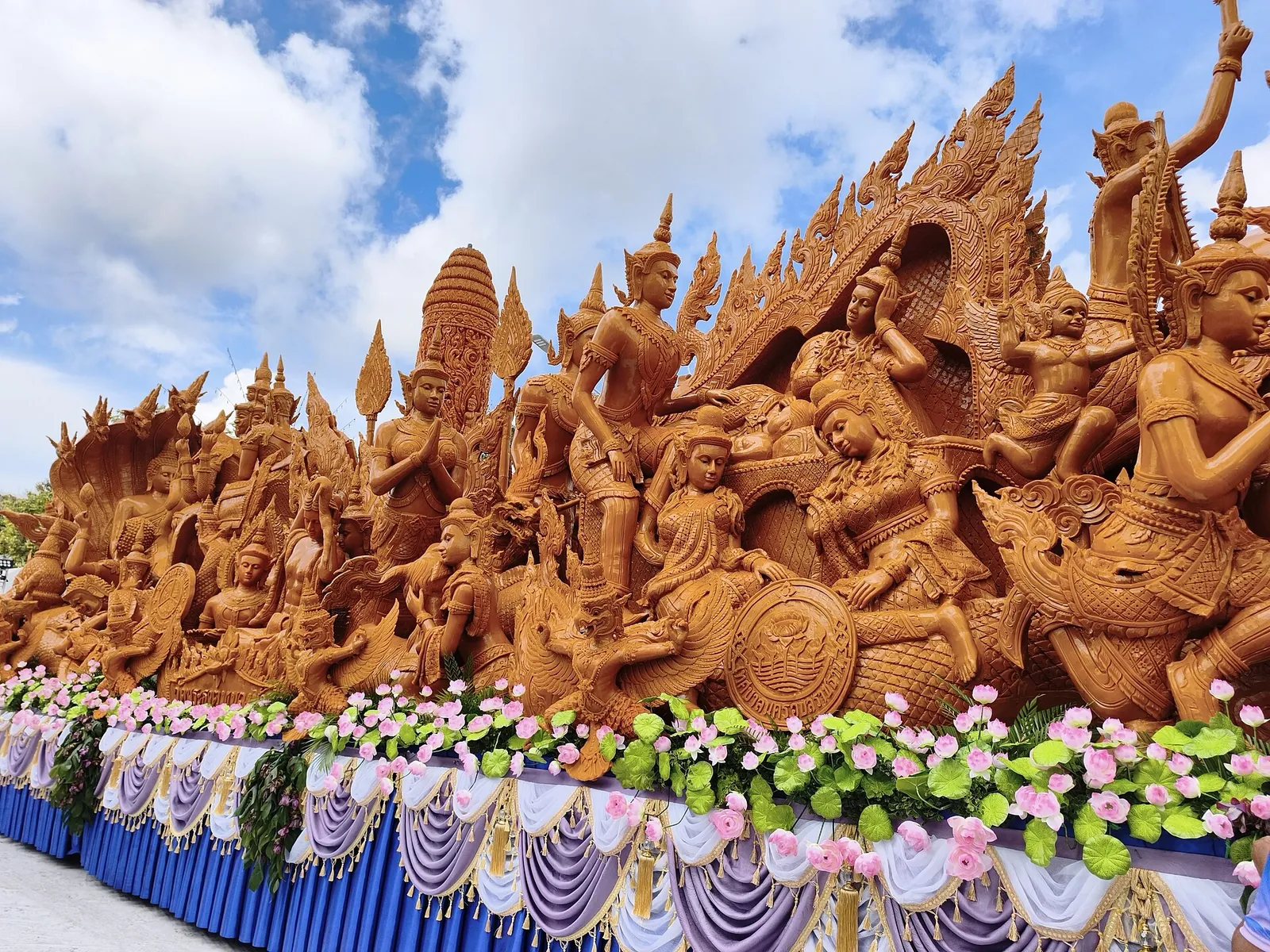
Ubon Ratchathani, the 'royal city of the lotus', is Thailand's far-eastern gateway, where the Mun River flows towards the Mekong and the Lao and Cambodian borders. The city is known for its Candle Procession, now one of TAT's three Signature Thailand Events; beyond it lie cliffs with prehistoric paintings, a riverbed of thousands of rock pools and a temple that glows at night.
- Suggested time
- 3 days
- Where to stay
- Ubon city; Khong Chiam for the Mekong
- Season and timing
- November to February is coolest; the Candle Procession is held around the start of Buddhist Lent in July.
The short answer
Spend three days. In the city, see Wat Thung Si Mueang's scripture hall, Wat Si Ubon Rattanaram and the Ubon Ratchathani National Museum. Then drive east to Pha Taem National Park for its cliff paintings and Mekong views, Sam Phan Bok's rock pools in the dry season, and Wat Sirindhorn Wararam at dusk. Visit in late July for the Candle Procession. Fly into Ubon from Bangkok.
The Candle Procession
Rooted in the Buddhist Lent tradition of offering candles, the Ubon Ratchathani Candle Procession brings huge carved and moulded wax sculptures through the city. TAT made its 125th edition, held from 25 to 31 July 2026 at Thung Si Mueang with main parades on 29 and 30 July, a Signature Thailand Event.
Workshops in candle carving and visits to temple communities run in the weeks around the festival. Dates follow the lunar calendar; check each year and book early.
Temples and museum in the city
Wat Thung Si Mueang is thought to date from around 1813, according to the Ministry of Tourism and Sports' directory, and is famous for its scripture hall (ho trai) and murals. Wat Si Ubon Rattanaram enshrines Phra Kaew Bussarakham, a small, revered topaz Buddha image.
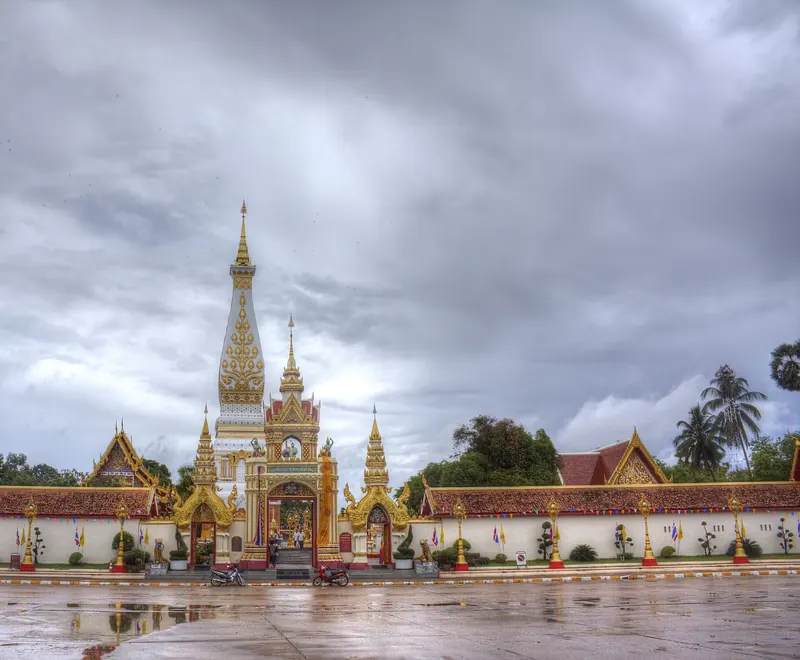
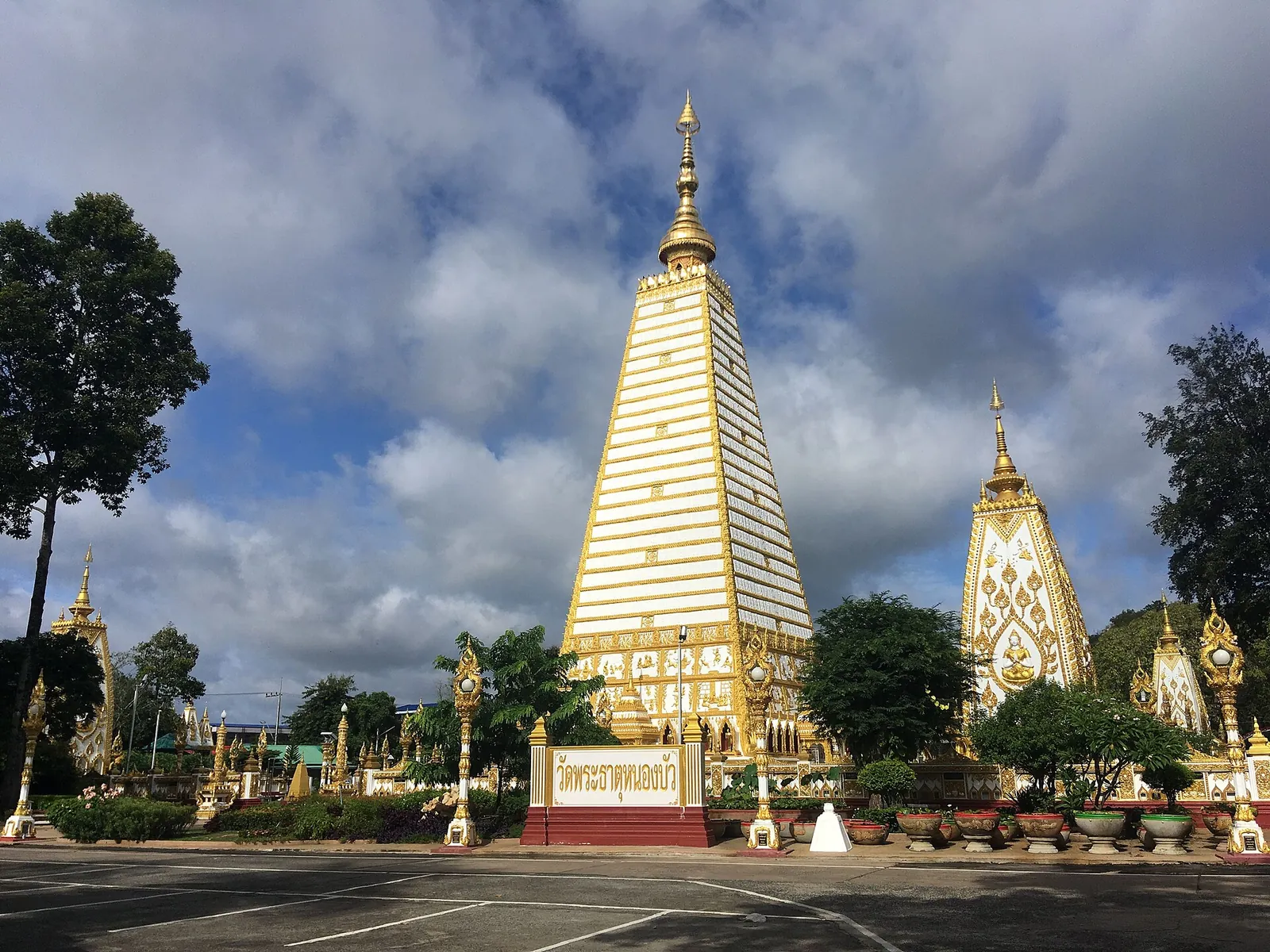
On the edge of the centre, Wat Phra That Nong Bua has a white-and-gold chedi, Phra That Chedi Si Maha Pho, modelled on the stupa at Bodh Gaya, as the directory describes.
The Ubon Ratchathani National Museum occupies a 1918 former town hall and displays regional art and archaeology, including Ardhanarishvara and Ganesha sculptures; the directory notes it is closed on Mondays and Tuesdays.
Make time for the local food
What to eat and where to look
Isan classics
Som tam, larb and grilled meats with sticky rice, as TAT describes the region's food.
- Where to look
- Local restaurants and markets in the city.
- Fit it into your day
- Lunch between temples.
Spicy; may contain pla ra.
Vietnamese-influenced dishes
Moo yor (pork sausage), nam nueng (grilled pork with rice paper and herbs) and banh mi, which TAT showcased as Ubon specialities.
- Where to look
- Breakfast shops and restaurants in the city.
- Fit it into your day
- Breakfast or a light lunch.
Contains pork; sauces may contain peanuts.
Mekong river fish
Grilled and steamed fish from the Mekong and Mun rivers.
- Where to look
- Riverside restaurants at Khong Chiam.
- Fit it into your day
- Lunch after Pha Taem.
Fish bones; prices often by weight.
Pha Taem National Park
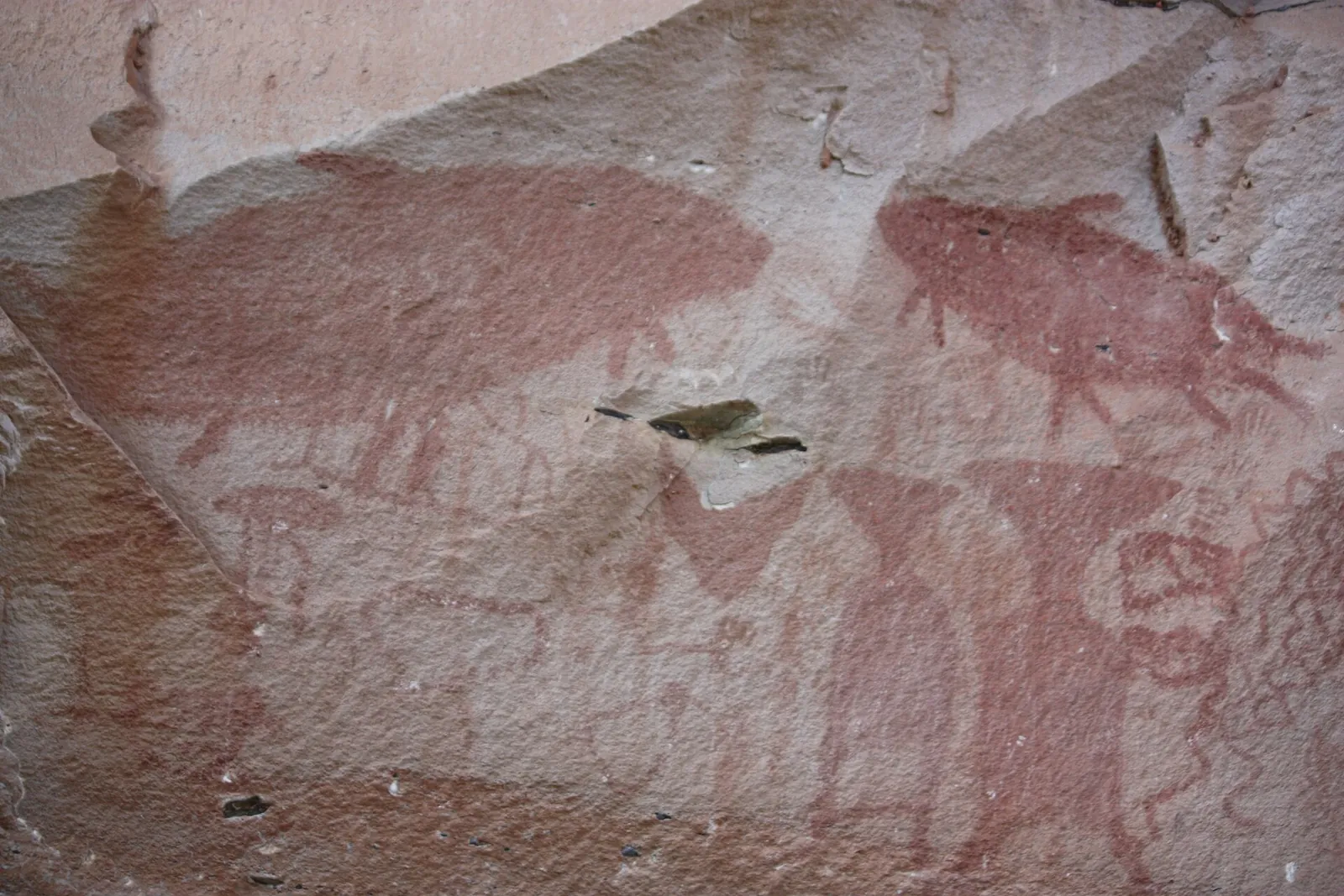
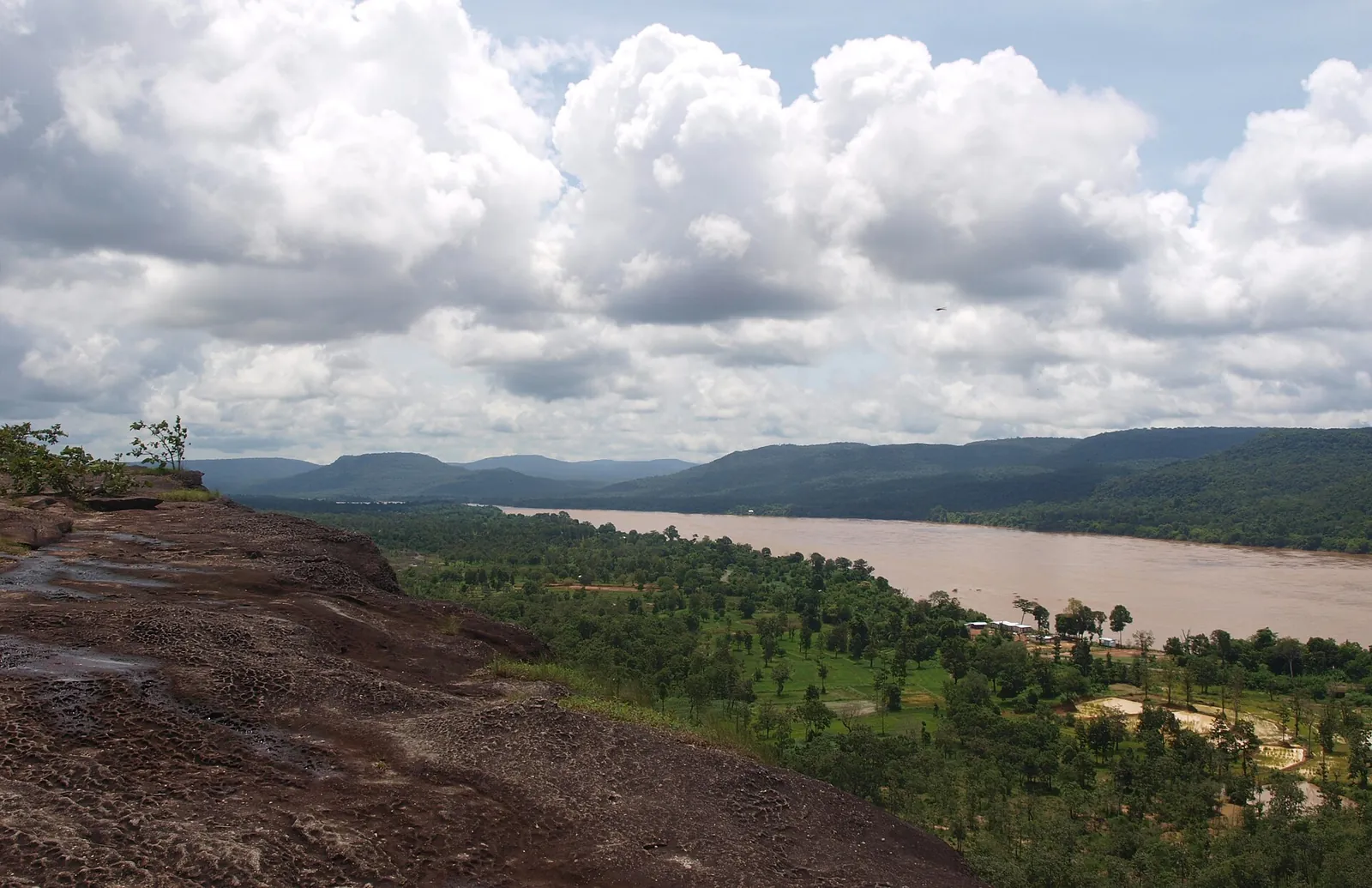
In Khong Chiam district, the cliffs of Pha Taem overlook the Mekong and carry prehistoric paintings, mostly in red, which the directory dates to some 3,000 to 4,000 years ago; their discovery by Silpakorn University led to the creation of the national park.
Walk the cliff trail to see the paintings, and stay for sunrise or sunset over Laos. Check park fees and hours on arrival.
Sam Phan Bok
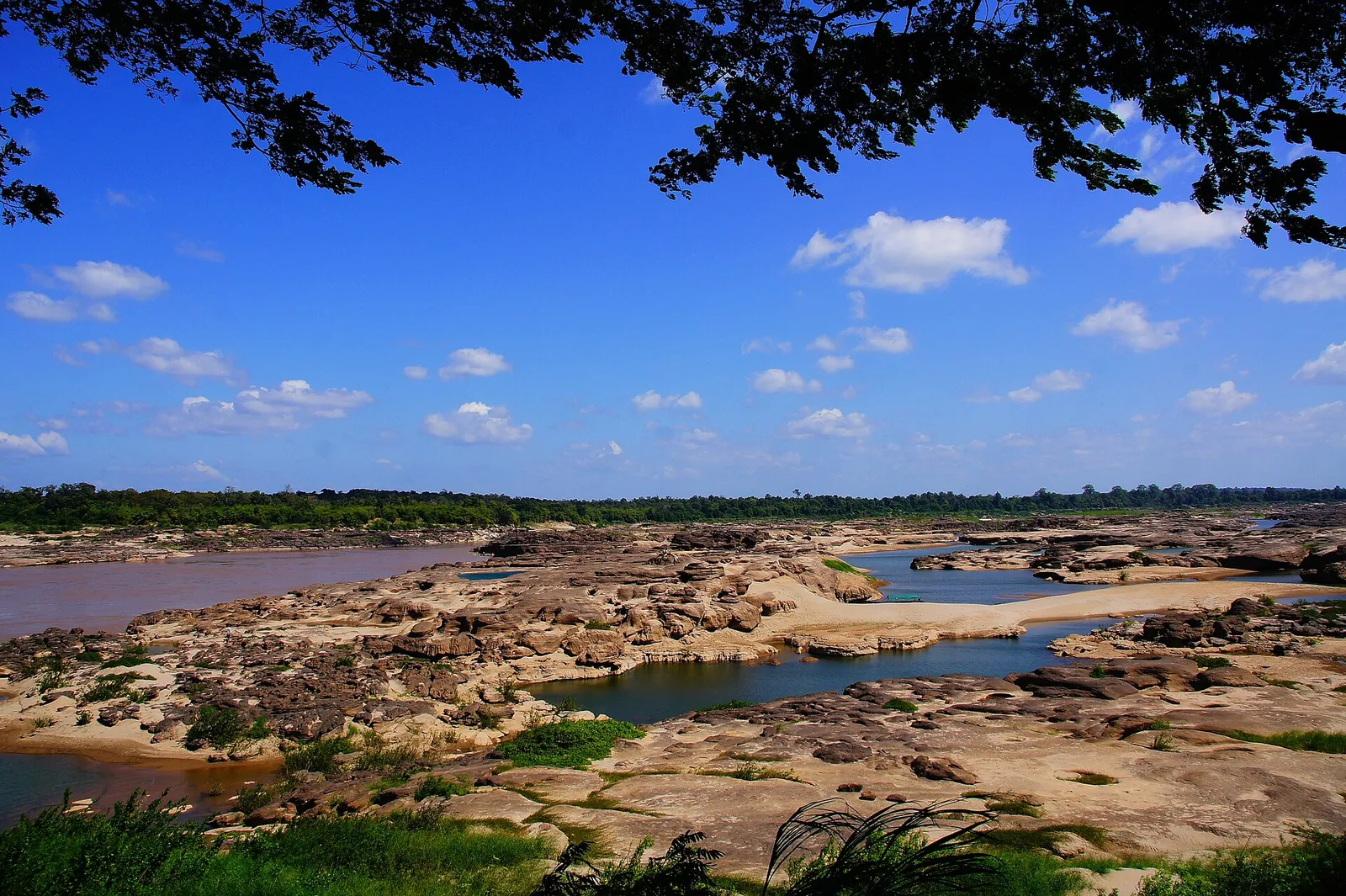
Further north at Ban Pong Pao, Sam Phan Bok — 'three thousand holes' — is a sandstone riverbed eroded by the Mekong into more than 3,000 pools and potholes, as the directory describes; it is sometimes called Thailand's Grand Canyon.
It is visible only when the river is low, roughly in the dry season; in the rainy season it is underwater. Wear shoes with grip and keep away from edges.
Wat Sirindhorn Wararam
Near the Chong Mek border crossing, Wat Sirindhorn Wararam (Wat Phu Prao) is known for the mural of a wishing tree on the back of its ordination hall that glows green after dark, according to the directory.
Arrive before sunset to see the view, then wait for the glow.
Practical questions
When is the Ubon Candle Procession?
Around the start of Buddhist Lent, usually in July. In 2026 it ran from 25 to 31 July, with main parades on 29 and 30 July.
How old are the paintings at Pha Taem?
The directory dates them to some 3,000 to 4,000 years ago.
When can I see Sam Phan Bok?
When the Mekong is low, roughly in the dry season; it is underwater in the rainy season.
When is the Ubon Ratchathani National Museum open?
The directory says it is closed on Mondays and Tuesdays.
Sources and checks before you travel
Reference sources for the version dated 1 October 2026. Confirm opening times, access, transport and conditions for your travel dates.
- TAT Newsroom: 125th Ubon Ratchathani Candle Procession ↗ — opens in a new tab
- TAT Newsroom: Ubon Ratchathani Candle Procession for global audiences ↗ — opens in a new tab
- Thailand Tourism Directory: Wat Thung Si Mueang ↗ — opens in a new tab
- Thailand Tourism Directory: Wat Si Ubon Rattanaram ↗ — opens in a new tab
- Thailand Tourism Directory: Wat Phra That Nong Bua ↗ — opens in a new tab
- Thailand Tourism Directory: Ubon Ratchathani National Museum ↗ — opens in a new tab
- Thailand Tourism Directory: Pha Taem National Park ↗ — opens in a new tab
- Thailand Tourism Directory: Sam Phan Bok ↗ — opens in a new tab
- Thailand Tourism Directory: Wat Sirindhorn Wararam ↗ — opens in a new tab
Photo credits
A carved candle float in the Ubon Ratchathani Candle Procession.
Photograph: PhiPhiUbon — opens in a new tab · CC0 — opens in a new tab
Changes: Resized and converted to WebP; displayed with responsive crops. · Original photograph and licence details ↗ — opens in a new tab
Prehistoric paintings at Pha Taem National Park.
Photograph: Henry_Flower ( talk ) ( Uploads ) — opens in a new tab · CC BY-SA 3.0 — opens in a new tab
Changes: Resized and converted to WebP; displayed with responsive crops. · Original photograph and licence details ↗ — opens in a new tab
The Mekong from Pha Taem.
Photograph: Alabama Martin Künzel, Berlin, 2012 — opens in a new tab · CC BY-SA 3.0 — opens in a new tab
Changes: Resized and converted to WebP; displayed with responsive crops. · Original photograph and licence details ↗ — opens in a new tab
Sam Phan Bok in the dry season.
Photograph: Charin ninsu — opens in a new tab · CC BY 3.0 — opens in a new tab
Changes: Resized and converted to WebP; displayed with responsive crops. · Original photograph and licence details ↗ — opens in a new tab
Wat Phra That Nong Bua, Ubon Ratchathani.
Photograph: Christophe95 — opens in a new tab · CC BY-SA 4.0 — opens in a new tab
Changes: Resized and converted to WebP; displayed with responsive crops. · Original photograph and licence details ↗ — opens in a new tab
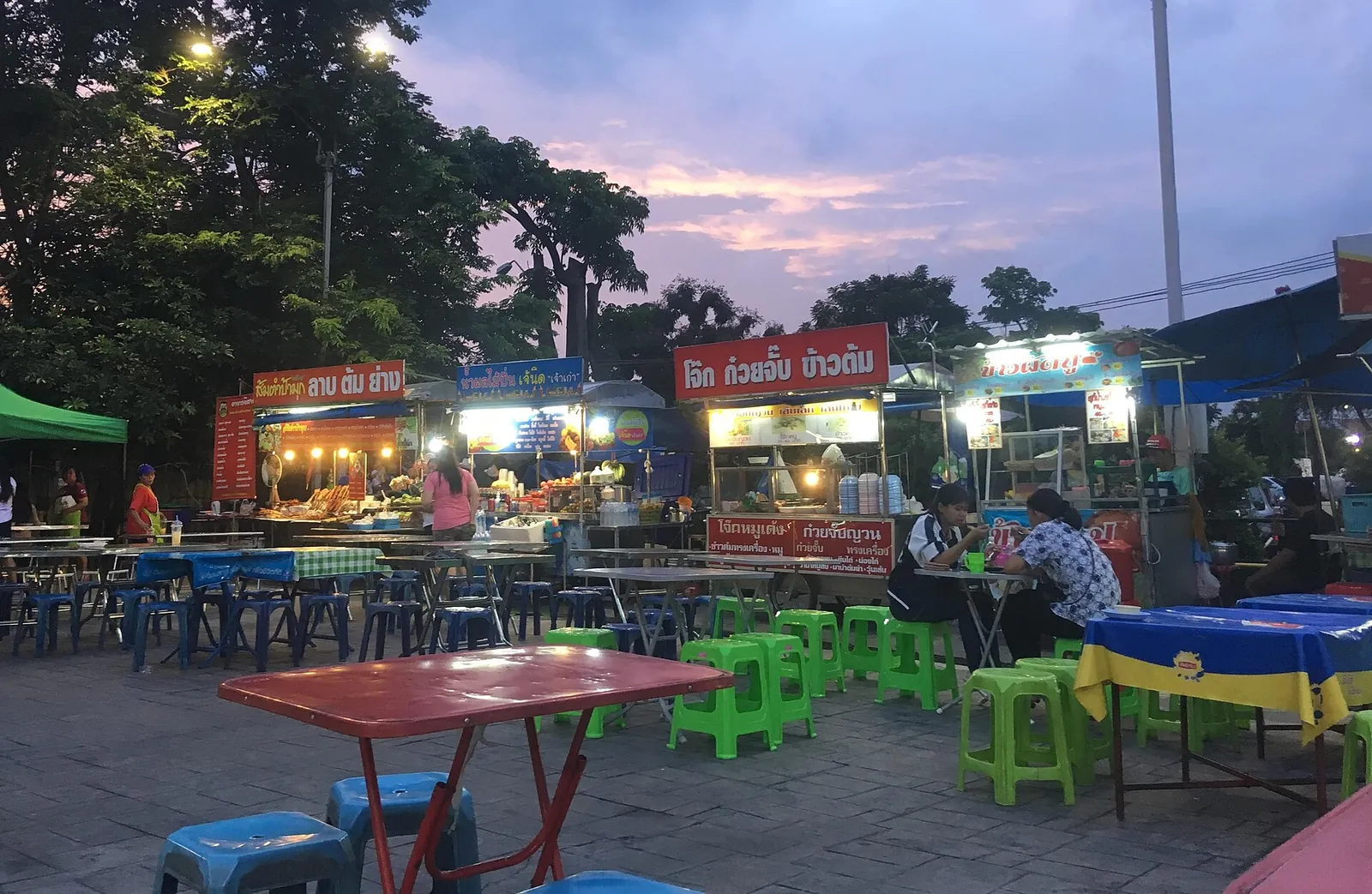
An evening market in Ubon Ratchathani.
Photograph: Christophe95 — opens in a new tab · CC BY-SA 4.0 — opens in a new tab
Changes: Resized and converted to WebP; displayed with responsive crops. · Original photograph and licence details ↗ — opens in a new tab