Northern Thailand · Nan
Nan travel guide: Wat Phumin murals, a living old city and mountain salt
Nan is a small, unhurried old city in a valley near the Lao border, with mountains on every side. UNESCO named it a Creative City of Crafts and Folk Art in 2025, recognising, as TAT puts it, a living heritage from Tai Lue textiles and bamboo crafts to ancient kilns and the murals of Wat Phumin. Beyond town, the roads climb to salt wells, rice terraces and viewpoints over seas of mist.
- Suggested time
- 3 days
- Where to stay
- Nan old city; Bo Kluea for a mountain night
- Season and timing
- November to February for cool mornings and seas of mist; the rainy season turns the rice terraces green but makes mountain roads slower.
The short answer
Spend three days: one in the old city for Wat Phumin, the national museum and Wat Phra That Chae Haeng; one in the mountains at Bo Kluea's salt wells and the village of Ban Sapan; and a dawn at Doi Samer Dao in Si Nan National Park. Fly into Nan Nakhon Airport or come by road via Phrae. Hire a car or driver for the mountains.
Wat Phumin
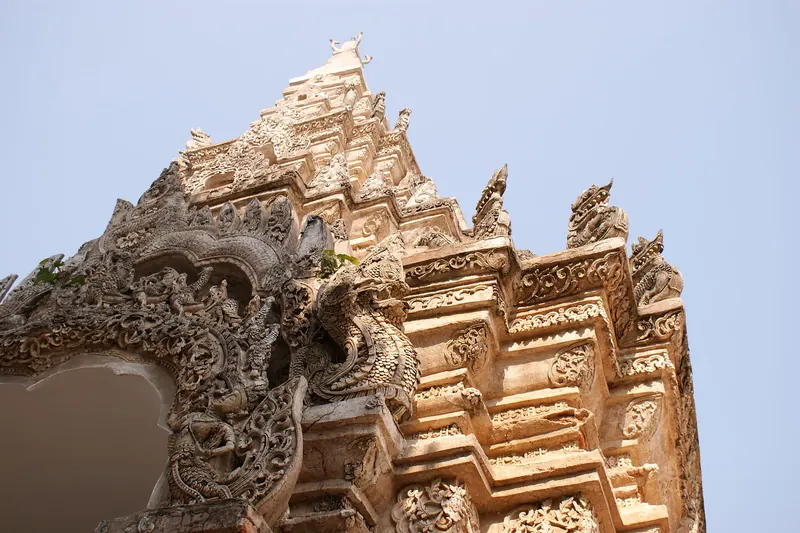
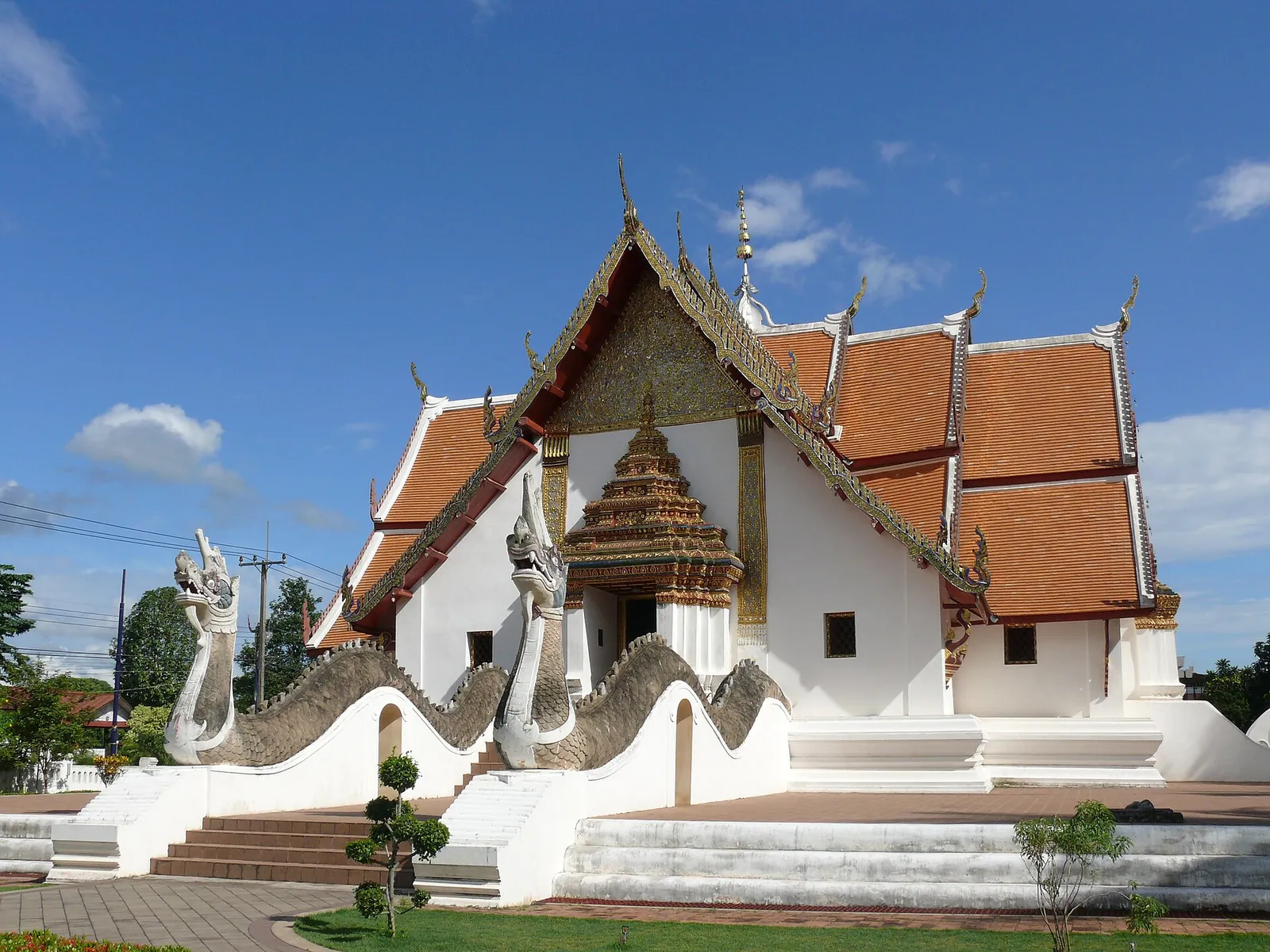
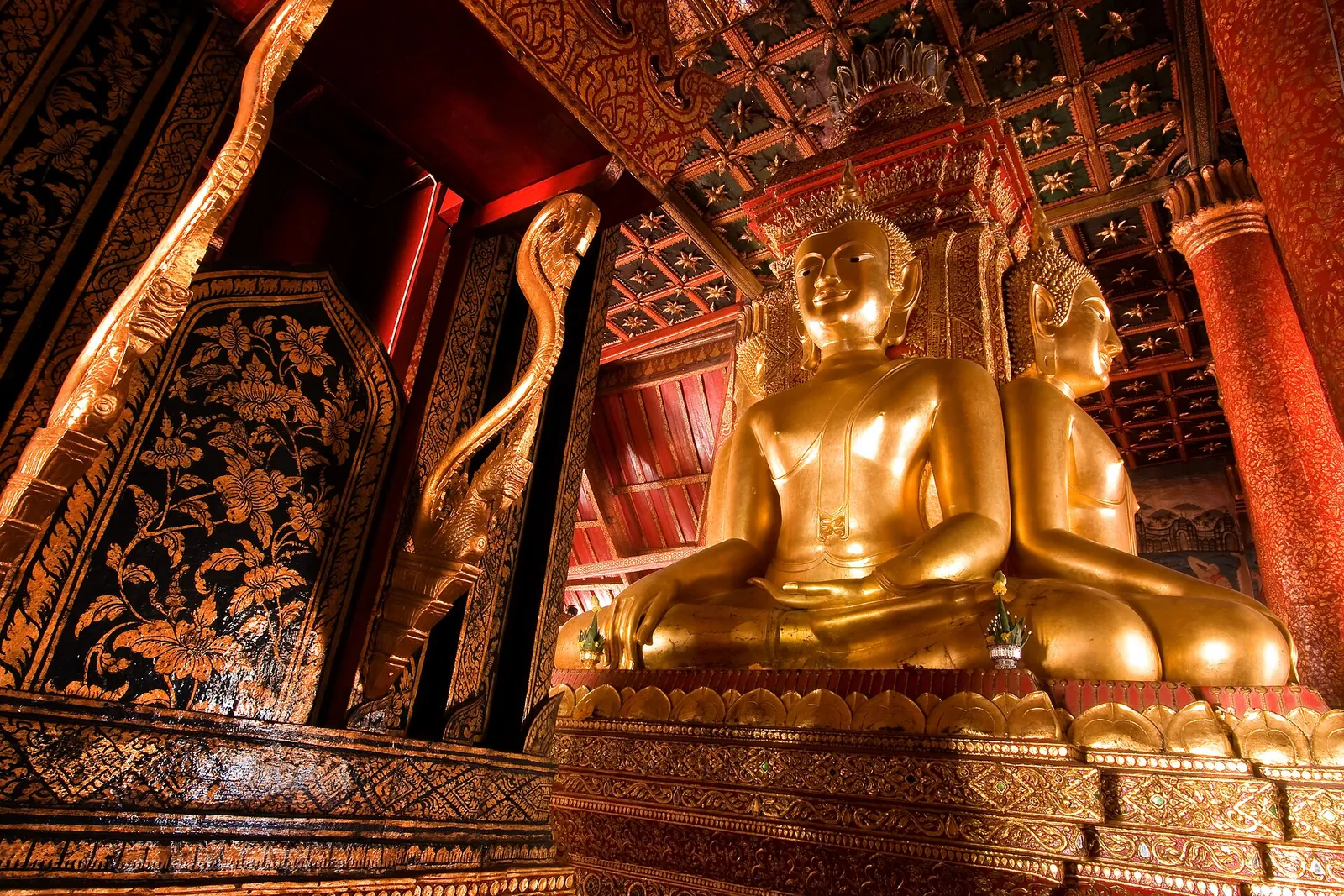
Wat Phumin is Nan's most famous temple. The Ministry of Tourism and Sports' directory dates it to 1596, when it was built by the ruler of Nan, and highlights its unusual cross-shaped hall, where the temple and main hall are one building with carved wooden doors facing all four directions.
Inside, the murals depict everyday life and culture of the time — the much-photographed whispering couple is here. Come early before the tour groups, look without touching the walls and avoid flash.
The old city and the museum
Opposite Wat Phumin, the Nan National Museum occupies the former residence of the last ruler of Nan, a European-style building mixed with local architecture, built in 1932 and turned into a museum in 1974, according to the directory. It lists opening from Wednesday to Sunday, 9:00 to 16:00.
Wat Phra That Chang Kham, with its elephant-buttressed chedi, stands across the road. The compact centre is easy to explore on foot or by bicycle; in the evening, look for the riverside walking street and local food stalls.
Make time for the local food
What to eat and where to look
Tai Lue dishes
Nan's Tai Lue communities cook a distinctive northern cuisine of herb-rich relishes, grilled river fish and noodle soups.
- Where to look
- Local restaurants and markets in town and in Tai Lue villages such as Nong Bua.
- Fit it into your day
- Lunch on a day out to the villages.
Ask about chilli and fermented ingredients.
Khanom jeen nam ngiao
Rice noodles in a tomato and pork-rib broth, a northern breakfast found across Nan.
- Where to look
- Morning noodle shops in the old city.
- Fit it into your day
- Breakfast before Wat Phumin.
Pork and often blood cubes.
Bo Kluea mountain salt
Salt boiled from the wells of Bo Kluea, sold plain or flavoured as a local product.
- Where to look
- Shops by the salt wells in Bo Kluea.
- Fit it into your day
- A souvenir to take home.
It is salt — use sparingly.
Wat Phra That Chae Haeng
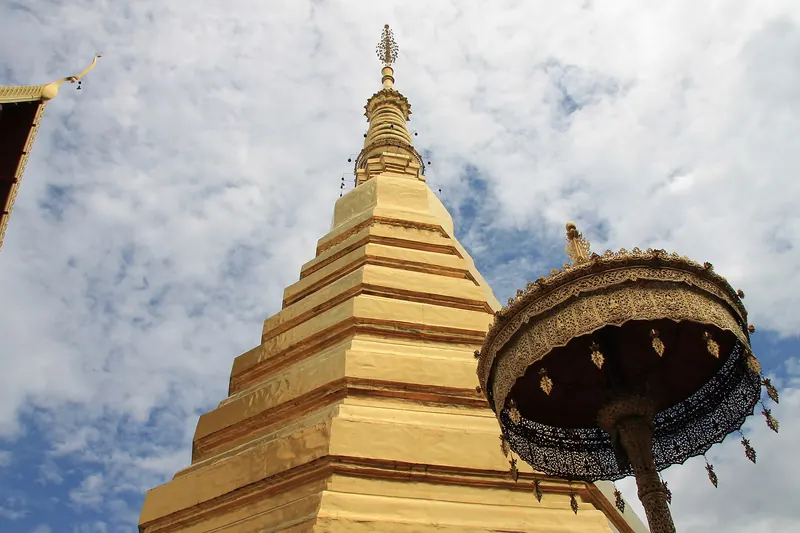
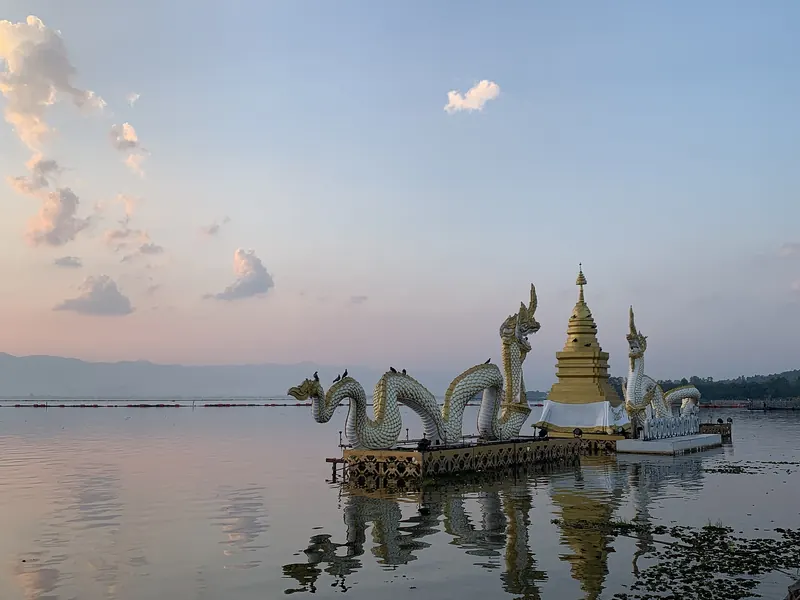
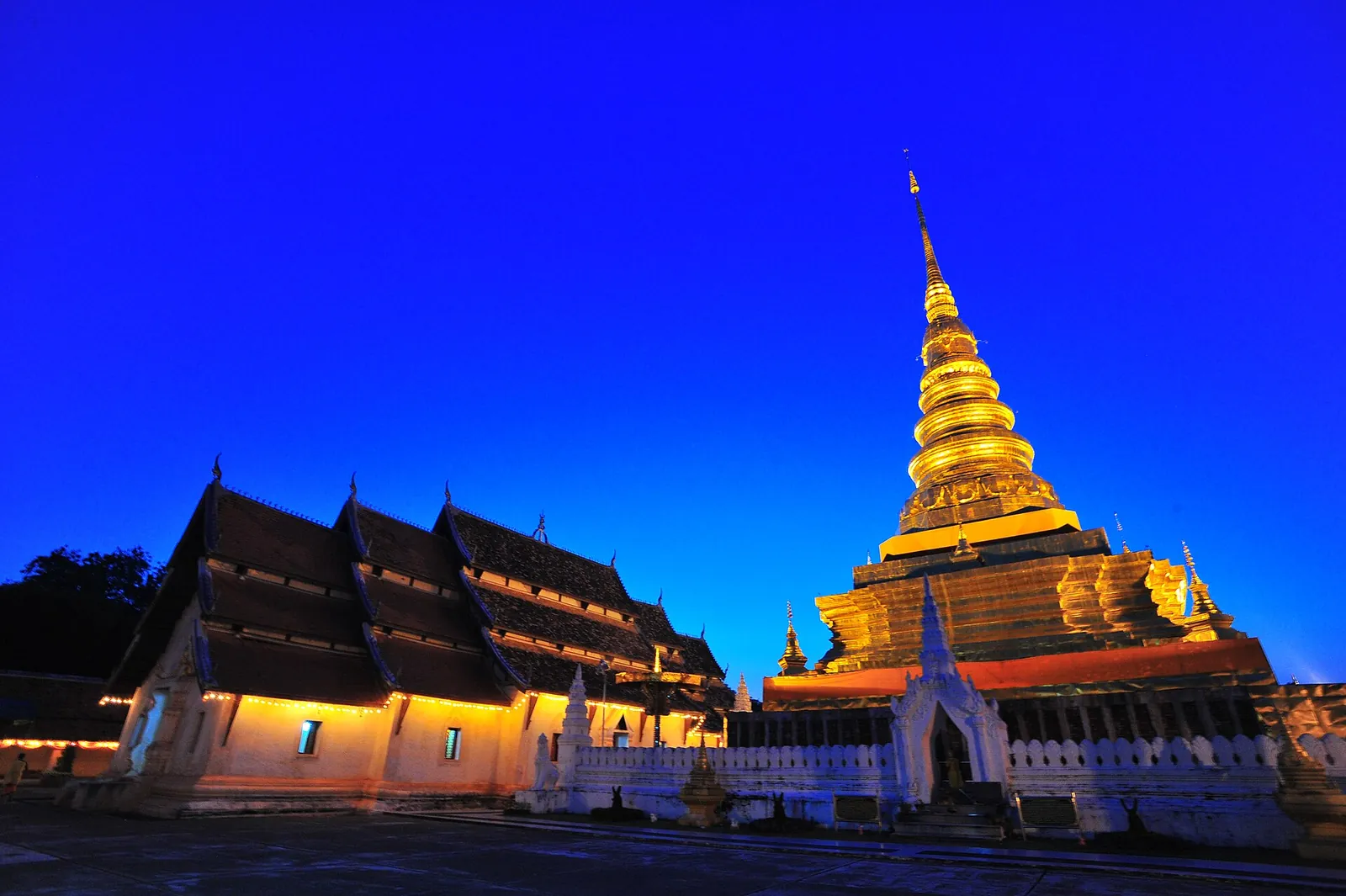
Across the Nan River on a hill south-east of town, Wat Phra That Chae Haeng is the province's most revered temple, with a golden chedi approached by naga staircases. It is at its best in the late afternoon light.
Dress modestly and follow posted rules; as at some northern relic temples, women may be asked not to enter certain areas around the chedi.
Bo Kluea and Ban Sapan
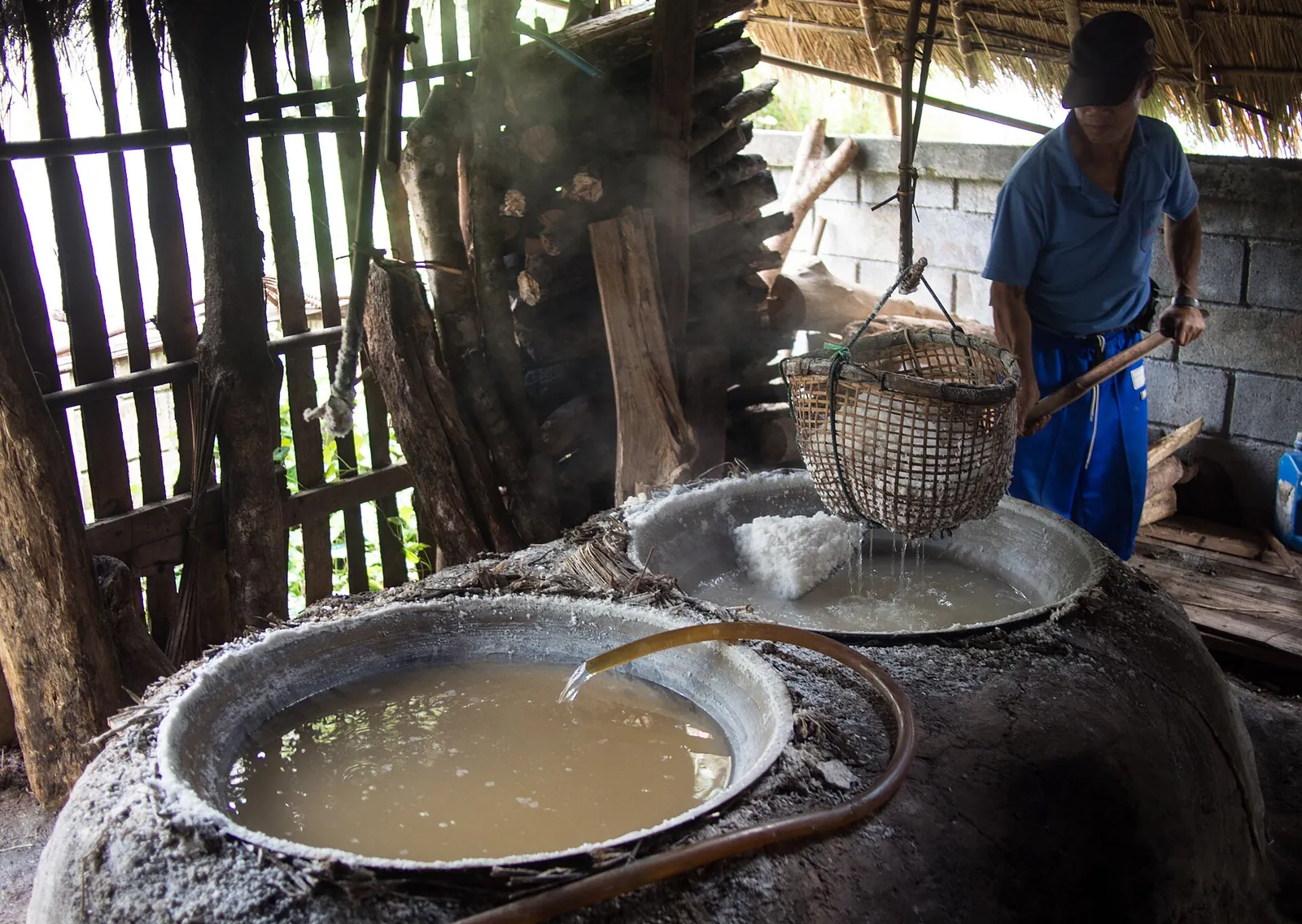
In the mountains to the north-east, Bo Kluea is known for its rock-salt wells, where villagers still boil brine to make salt. About 9 kilometres away, the directory describes Ban Sapan as a small, peaceful community among mountains and streams, with green rice fields in the rainy season and homestays for an overnight stay.
The road is steep and winding. Drive in daylight, allow most of a day for the round trip from Nan, or better, stay a night.
Doi Samer Dao sunrise
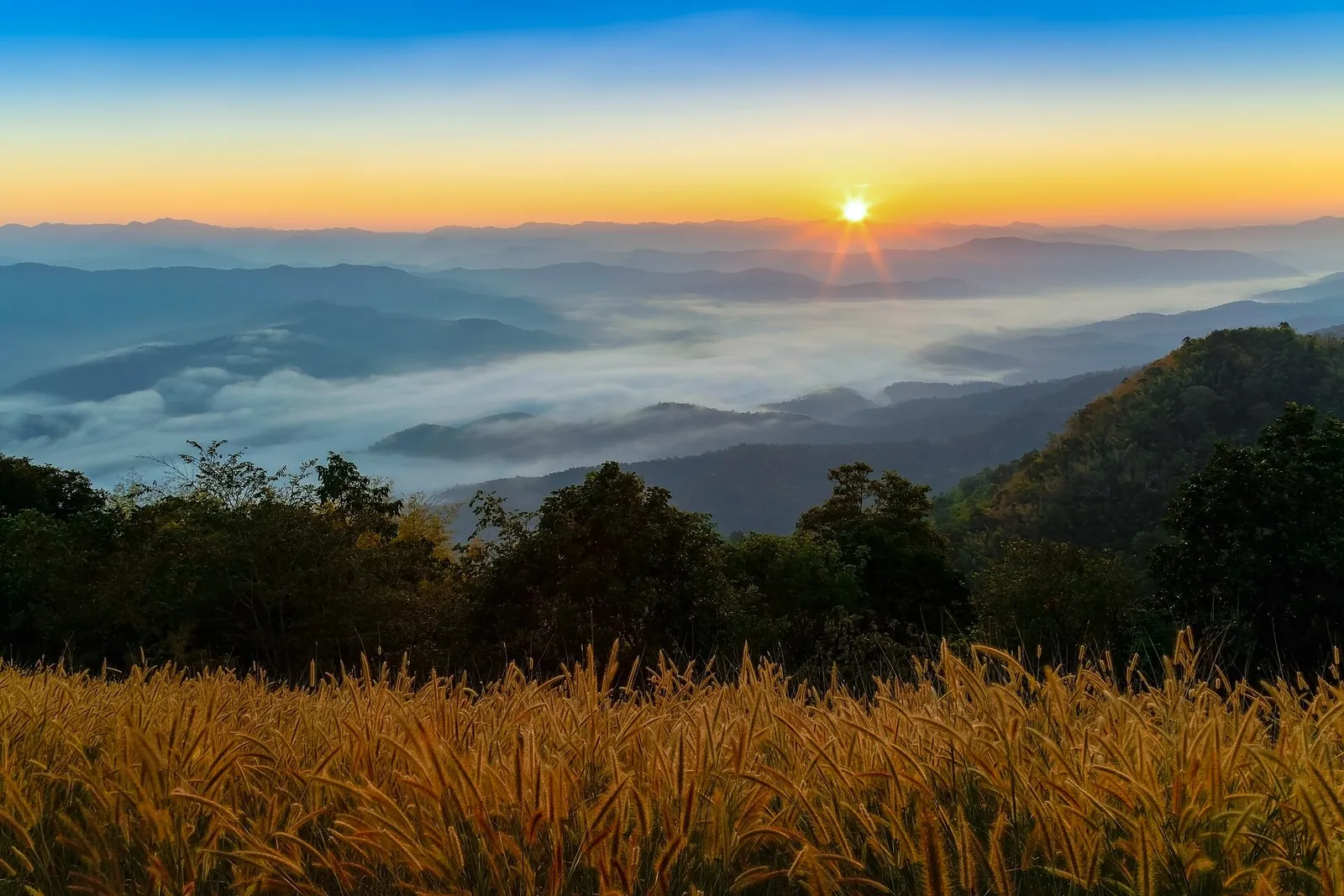
Doi Samer Dao, in Si Nan National Park, is a viewpoint for sunrise over a sea of mist with the Nan River in the valley below, as the directory describes. Camping or staying near the park headquarters makes the dawn view easier.
Bring warm clothes for the cool season, and check national park conditions and fees before going.
Practical questions
How do I get to Nan?
Fly into Nan Nakhon Airport from Bangkok, or travel by road via Phrae from Chiang Mai or Bangkok.
What are the opening hours of the Nan National Museum?
The directory lists Wednesday to Sunday, 9:00 to 16:00. Check before you go.
Why is Wat Phumin famous?
For its cross-shaped hall with doors facing four directions and its murals of daily life, dating from a temple built in 1596.
Can I visit Bo Kluea as a day trip?
Yes, but the mountain road is long and winding. A night at Bo Kluea or Ban Sapan is more relaxing.
When is the best time for the sea of mist?
Cool-season mornings, roughly November to February.
Sources and checks before you travel
Reference sources for the version dated 1 October 2026. Confirm opening times, access, transport and conditions for your travel dates.
- Thailand Tourism Directory: Wat Phumin ↗ — opens in a new tab
- Thailand Tourism Directory: Nan National Museum ↗ — opens in a new tab
- Thailand Tourism Directory: Doi Samer Dao ↗ — opens in a new tab
- Thailand Tourism Directory: Ban Sapan ↗ — opens in a new tab
- TAT Newsroom: Nan and Songkhla named UNESCO Creative Cities for 2025 ↗ — opens in a new tab
Photo credits
Wat Phumin, Nan.
Photograph: (WT-fr) Ellnik at French Wikivoyage — opens in a new tab · CC BY-SA 1.0 — opens in a new tab
Changes: Resized and converted to WebP; displayed with responsive crops. · Original photograph and licence details ↗ — opens in a new tab
The Buddha images facing four directions inside Wat Phumin.
Photograph: Khunkay — opens in a new tab · CC BY-SA 4.0 — opens in a new tab
Changes: Resized and converted to WebP; displayed with responsive crops. · Original photograph and licence details ↗ — opens in a new tab
Wat Phra That Chae Haeng at dusk.
Photograph: K.Phothiwijit — opens in a new tab · CC BY-SA 3.0 — opens in a new tab
Changes: Resized and converted to WebP; displayed with responsive crops. · Original photograph and licence details ↗ — opens in a new tab
Sunrise at Doi Samer Dao, Si Nan National Park.
Photograph: Chalerm Achamana — opens in a new tab · CC BY-SA 4.0 — opens in a new tab
Changes: Resized and converted to WebP; displayed with responsive crops. · Original photograph and licence details ↗ — opens in a new tab
Boiling brine into salt at Bo Kluea.
Photograph: Takeaway — opens in a new tab · CC BY-SA 3.0 — opens in a new tab
Changes: Resized and converted to WebP; displayed with responsive crops. · Original photograph and licence details ↗ — opens in a new tab