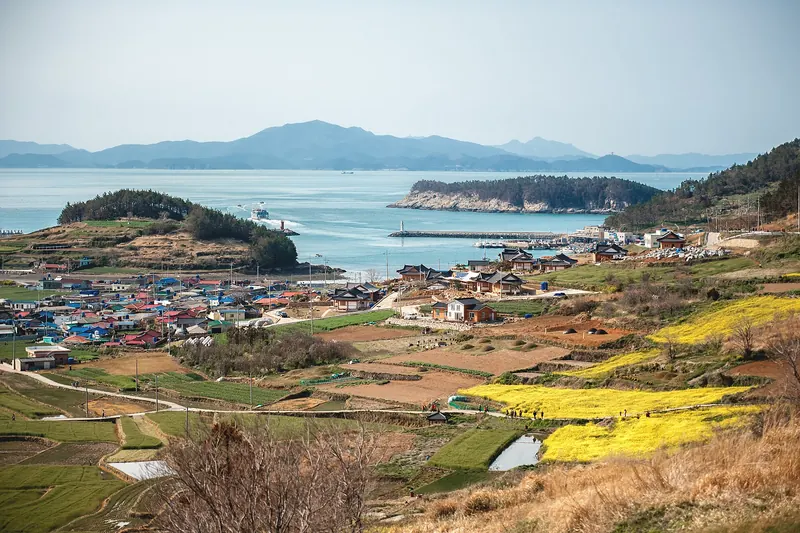
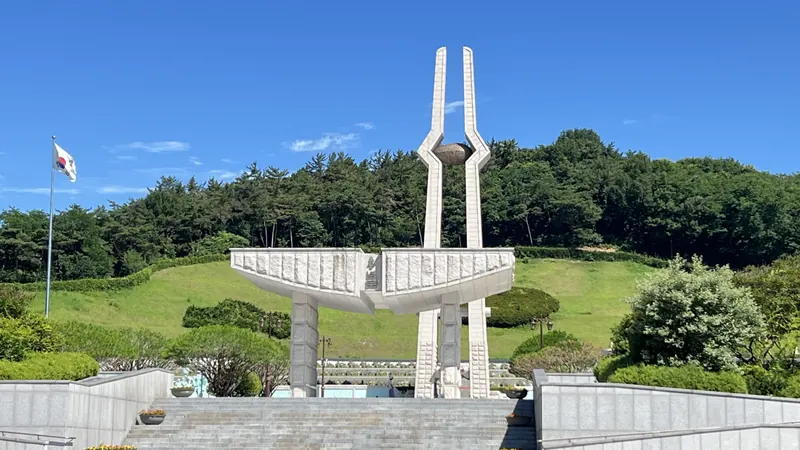
Jeolla · South Jeolla
Mokpo travel guide: Yudalsan, the sea cable car, old port and ferries
Mokpo sits on Korea's southwest coast, where the Yeongsan River meets a sea crowded with islands. Its old town, below the rocky hill of Yudalsan in the middle of the city, still has brick and stone buildings from the port's early years, the oldest of them built in 1898. Today the city strings the hill, the port and the islands together with a 3.23-kilometre marine cable car, keeps its fish markets and dried-seafood shops close to the harbour, and sends ferries out to Hongdo, Heuksando and the other islands of Sinan. Most of what a visitor comes for is within walking distance of Mokpo Station.
- Suggested time
- 2 days (3 with an island trip)
- Where to stay
- Old town near Mokpo Station or the port waterfront for walking and ferries; the Peace Plaza district for hotels by the fountain
- Season and timing
- April to November is the fullest season: the Dancing Sea Fountain runs only in these months, and the 2026 Mokpo Port Festival takes place on 16–18 October. The cable car and island ferries can stop in strong wind or poor weather in any season.
The short answer
Give Mokpo two days. Spend the first on foot in the old town: the Modern History Museum buildings, the port-side markets and an afternoon climb of Yudalsan, then ride the marine cable car over the sea to Gohado around sunset. Use the second evening for Gatbawi Rock and the Dancing Sea Fountain at Peace Plaza, which runs from April to November. Sleep in the old town near Mokpo Station or on the port waterfront if you are walking or catching a ferry; choose the Peace Plaza district for sea-view hotels by the fountain. Add a third day, or an overnight, for a ferry to Hongdo.
Where to base yourself: old town, waterfront or Peace Plaza
VisitKorea describes Mokpo as a city for travellers who like to explore on foot, with many of the main sights within walking distance of each other, and points to the well-preserved modern-era buildings near Mokpo Station. That makes the old town around the station the natural base for a first visit: the Modern History Museum, the port markets and the paths up Yudalsan are all close by, and small guesthouses sit at the foot of the hill. The Mokpo Port Passenger Terminal, for the island ferries, is about 15 minutes by city bus from the station, VisitKorea says.
The port waterfront along Haean-ro, between the old town and Samhakdo, has hotels facing the marina and Samhakdo; it suits an early ferry or an evening at the Samhakdo pier, where the city's harbour cruises leave. The Peace Plaza district in the newer part of the city, on Pyeonghwa-ro, is where the Dancing Sea Fountain plays in front of the sea and where hotels advertise fountain views. It is further from the old town, so plan on buses or taxis for the historic quarter.
Mokpo's Special Tourist Zone, as VisitKorea outlines it, stretches about 6.9 kilometres from the North Port by Yudalsan through the old town and Samhakdo to Gatbawi Rock and Peace Plaza. Since 1 July 2026 Jeollanam-do and Gwangju have been merged into the Jeonnam–Gwangju Special Metropolitan City, so official addresses now carry the new name, while maps and booking sites may still show Jeollanam-do.
The old port town: museums, markets and dried fish
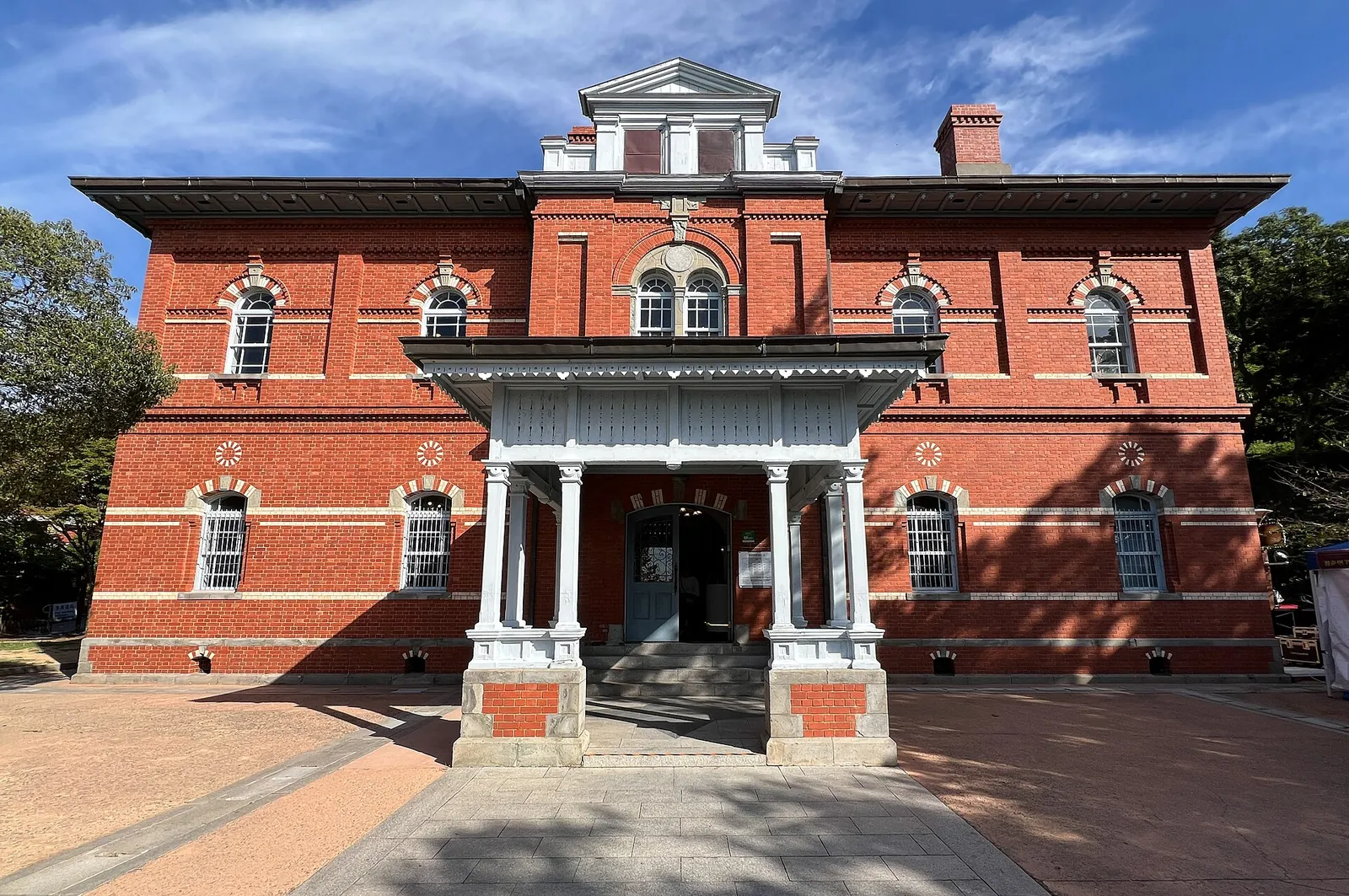
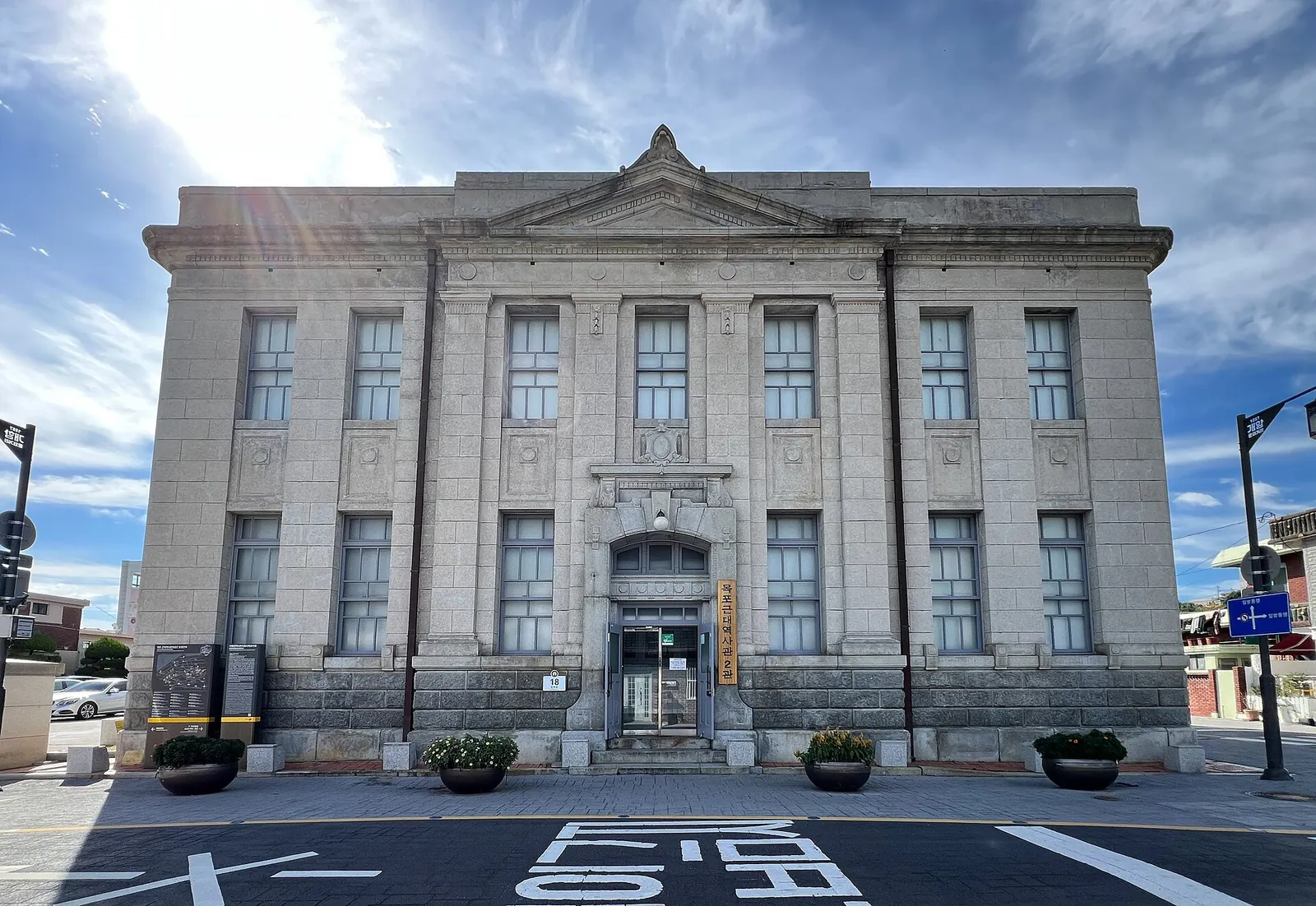
Start at the Mokpo Modern History Museum No. 1, which VisitKorea calls the oldest building in Mokpo. Built in 1898, it housed public bodies including consulates and city offices before becoming the museum in 2014, and its exhibition follows Mokpo from the old Mokpojin fort through the port opening and the Japanese colonial period (1910–1945), with miniature street scenes of the city at that time. A short walk away, Museum No. 2 occupies the Renaissance-style building put up in 1920 as the Mokpo branch of the Oriental Development Company, with photographs of old Mokpo and a floor on the colonial period. When we checked on 3 October 2026, VisitKorea listed both as open 9:00 to 17:30 (last admission 17:00), closed on Mondays, with admission of 2,000 won for adults.
Close to the harbour, the Mokpo Hall of Popular Music has turned the former Honam Bank Mokpo branch into a free exhibition on the popular songs associated with the city, with a retro café and costume corner; VisitKorea listed it as open 9:00 to 18:00 and closed on Mondays and 1 January. Fans of Korean film can look for Yeonhee's Supermarket, a filming location for *1987: When the Day Comes* (2017), which VisitKorea mentions among the old-town sights.
Leave time for the food streets. The Dried Seafood Street in Bukman-dong, by the port, is lined with stalls of croaker, skate, anchovies and kelp, and many shops let you taste before you buy. The Mokpo Fishery Market on Haean-ro has 125 stores selling fresh fish, skate, salted and dried seafood from the southwest sea; when we checked, VisitKorea gave its hours as 7:00 to 20:00, closed on the first and third Sundays of the month. Near the station, Jayu Market has more than 220 shops, and its Namjin Night Market brings food vendors on Friday and Saturday evenings.
Make time for the local food
What to eat and where to look
Nakjitangtangi (chopped live octopus)
VisitKorea names Mokpo nakjitangtangi as one of the signature dishes of the region: small live octopus chopped finely at the table or in the kitchen, named after the 'tang-tang' sound of the knife, and lightly seasoned with sesame oil. The pieces are still moving when served.
- Where to look
- Seafood restaurants around the old port and the fish market on Haean-ro.
- Fit it into your day
- A shared starter at dinner on the old-town day, before a cooked fish dish.
The suckers can stick to the mouth and throat; chew each piece well. Not suitable for small children or anyone who has trouble swallowing.
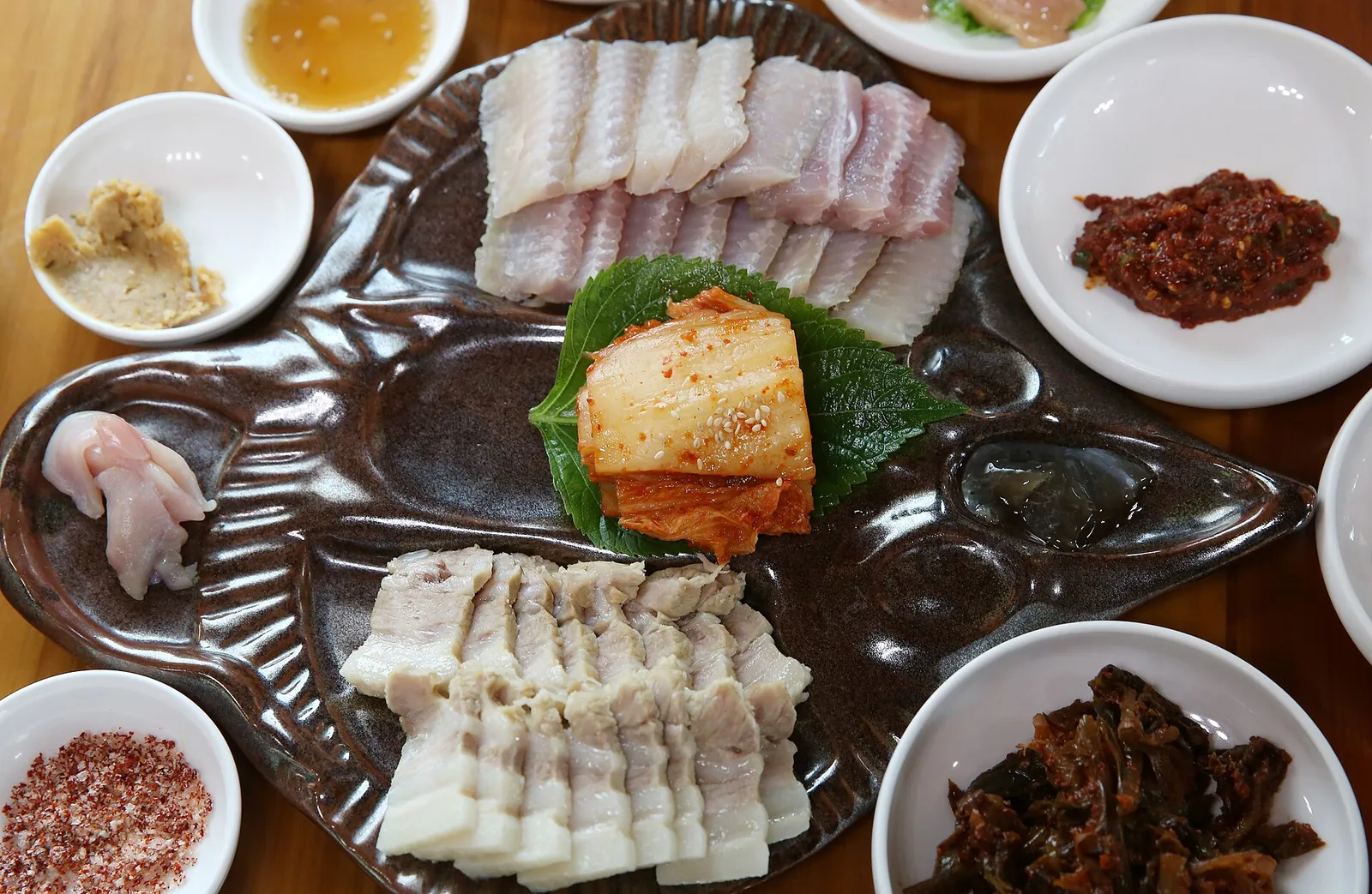
Hongeo samhap (fermented skate with pork and kimchi)
Fermented skate served with boiled pork and kimchi or aged kimchi, eaten together in one bite. VisitKorea warns that the skate has a powerful smell and flavour that people either love or hate; the pork and kimchi balance it. Skate is a staple of Mokpo's fish markets.
- Where to look
- Specialist skate restaurants in the old town and stalls in the Mokpo Fishery Market, which lists skate among its main products.
- Fit it into your day
- Share one plate among several people at dinner rather than ordering it as a main dish.
The smell is very strong; try a small portion first. Contains pork.
Mineo (croaker) course
Croaker served several ways in one meal. VisitKorea's guide to summer foods describes Mokpo's Mineo Street as the place for a seasonal croaker course of soup, sliced raw fish, jeon pancakes and seasoned raw fish salad.
- Where to look
- Mokpo Mineo Street in the Jungang-dong 1-ga area of the old town.
- Fit it into your day
- A long lunch or dinner for two or more; the course is meant for sharing.
VisitKorea notes that croaker stew is often a seasonal dish, mainly from June to August; ask what is in season and check the price per person before you order.
Dried croaker, anchovies and kelp
The Dried Seafood Street near the port sells the southern sea's catch dried: croaker, skate, anchovies and kelp. Many shops offer tastings.
- Where to look
- The Dried Seafood Street in Bukman-dong and the dried-seafood stores in the Mokpo Fishery Market.
- Fit it into your day
- A snack on the old-town walk, or something to take home on your last morning.
Check the import rules of your home country before packing seafood in your luggage.
Yudalsan, the marine cable car and Gohado
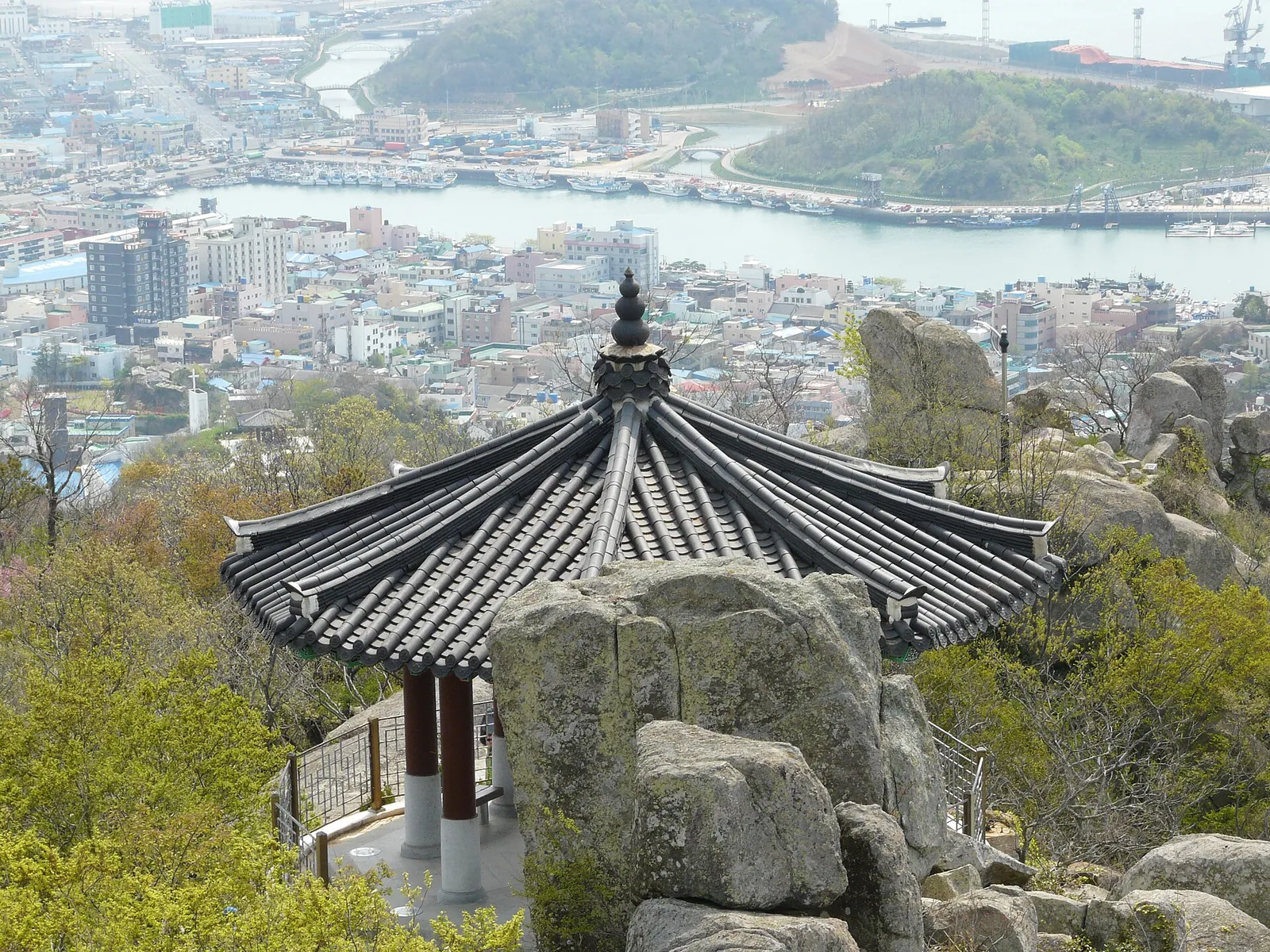
Yudalsan rises in the middle of the city, and VisitKorea recommends it for the view over Mokpo and the island-studded Dadohae sea, especially at sunset and for the port lights at night. It is free and open at all hours. On the way up you pass Nojeokbong, a great boulder linked to Admiral Yi Sun-sin: during the Imjin War (1592–1598), VisitKorea relates, figures made of straw were placed across the hill to make his force look larger and the Japanese fleet withdrew. Below the summit rock, the Yudalsan Sculpture Park, which VisitKorea says was Korea's first outdoor sculpture garden, holds more than a hundred works.
The Mokpo Marine Cable Car links the hill with the sea. Its cabins leave the North Port station on Haeyangdaehak-ro, rise to a station near the top of Yudalsan, turn and cross the water to Gohado island; the operator gives the line as 3.23 kilometres long, with a round trip of about 40 minutes. The Yudalsan station has no road access or parking, so you board at North Port or Gohado. When we checked on 3 October 2026, the official site listed round-trip fares of 24,000 won for adults and 18,000 won for children in a standard cabin, and 29,000 and 23,000 won in the glass-floored crystal cabin; VisitKorea listed opening from 9:00 with closing between 19:00 and 21:00 depending on season and day, and last tickets one hour before closing. The operator warns that it may close early or not open at all in bad weather and posts temporary closures for strong wind on its site, so look at the official page before you go.
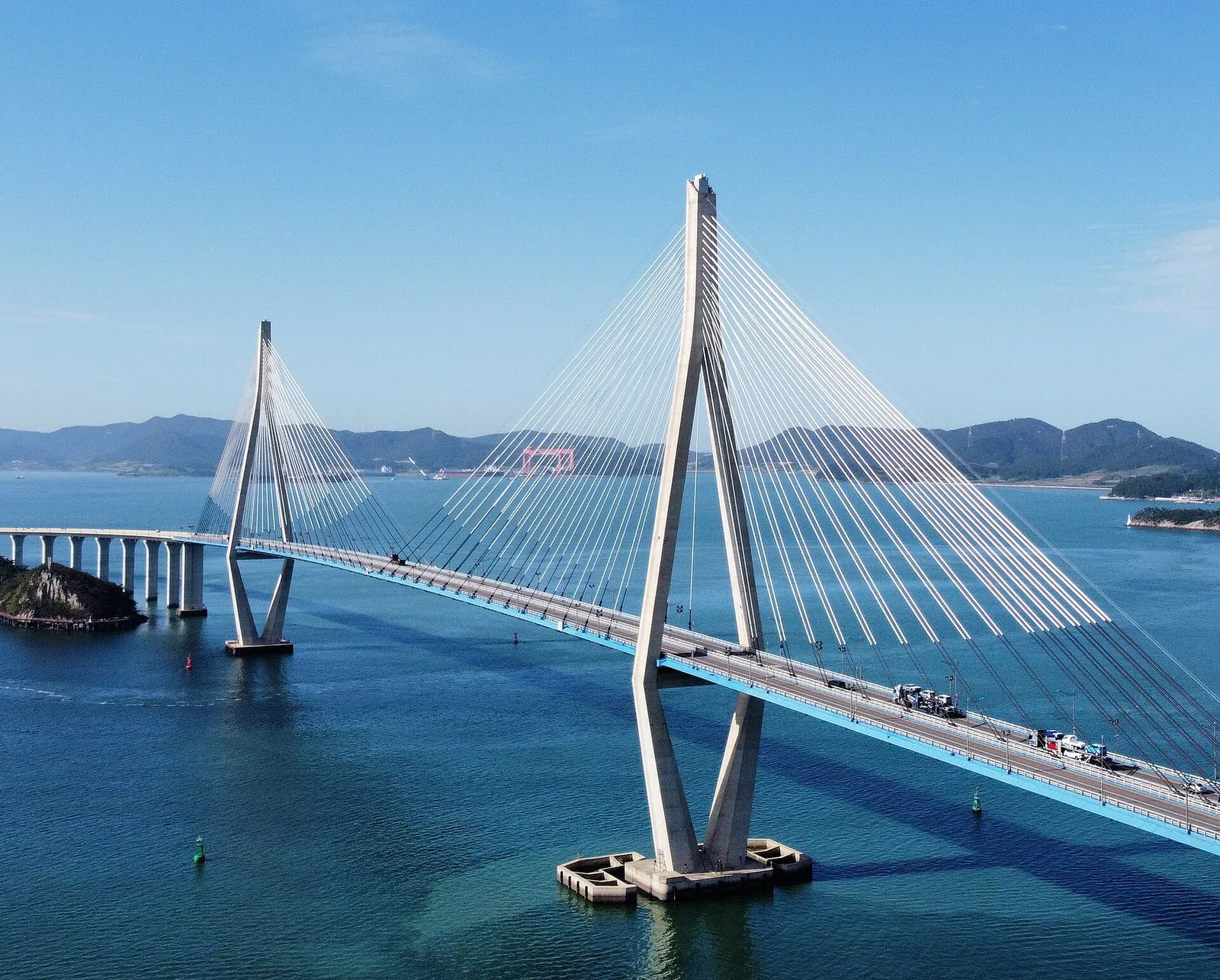
On Gohado, which can also be reached by road over Mokpo Bridge, VisitKorea describes historic sites connected with Admiral Yi Sun-sin, a botanical garden and greenhouse, an observatory with a 360-degree view of Mokpo and the islands, and a deck trail built out over the sea. A good plan is to walk up Yudalsan in the afternoon, ride from North Port to Gohado for the walk and the observatory, and come back across the water as the sun goes down.
Evenings by the sea: the fountain, Gatbawi and the waterfront
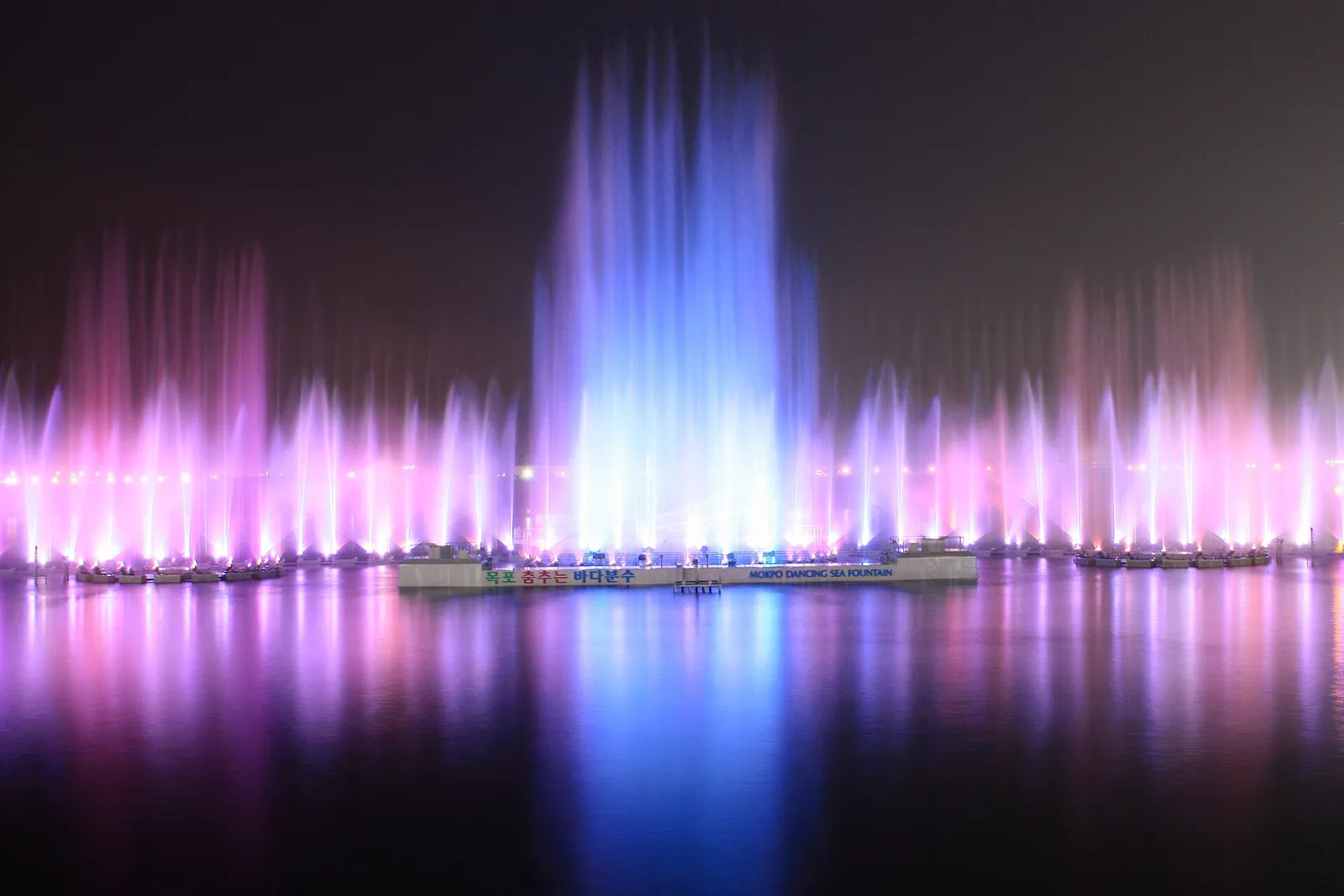
The Dancing Sea Fountain in front of Peace Plaza is a 150-metre musical fountain on the water that, VisitKorea says, can shoot jets up to 70 metres high. It is free. When we checked on 3 October 2026, VisitKorea listed shows at 20:00, 20:30 and 21:00 every day from June to August; in April, May and September to November at 20:00 and 20:30 from Tuesday to Thursday and on Sundays, with a 21:00 show added on Fridays and Saturdays. It does not run on Mondays, and no shows are listed for December to March.
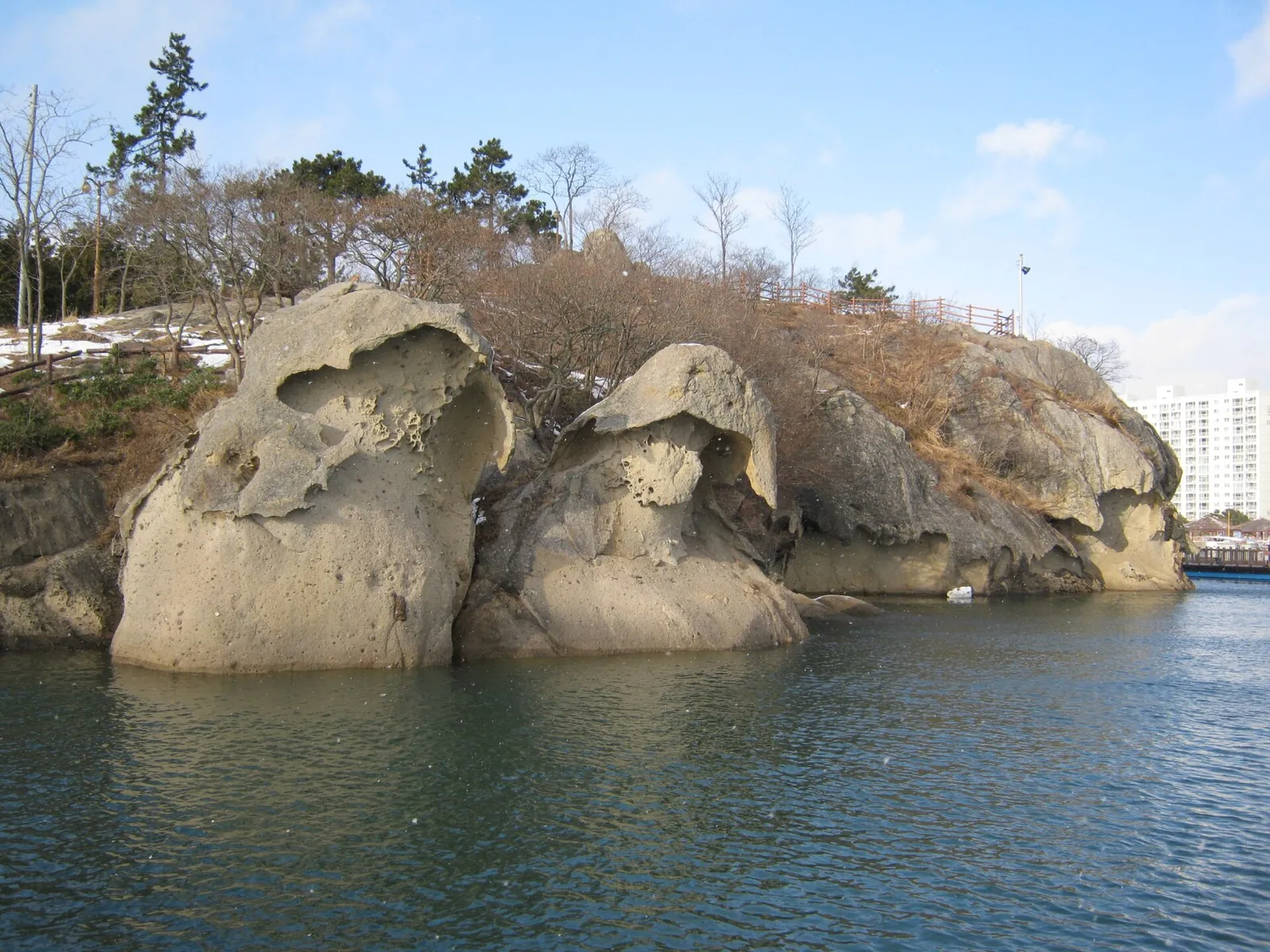
Earlier in the evening, follow the coast to Gatbawi Rock, two weathered sandstone formations, 8 and 6 metres tall, that are said to look like two men wearing traditional gat hats. It has been a Natural Monument since 2009, and a coastal walkway leads past it; VisitKorea lists it as free, with access restricted in typhoons, heavy rain, snow or fog. The surrounding Gatbawi Culture Town groups the city's museums: the National Maritime Museum run by the National Research Institute of Maritime Cultural Heritage, which VisitKorea describes as the only museum in Korea displaying marine cultural relics, with more than 2,000 objects raised from the sea (free; listed as open 9:00 to 18:00 and closed on Mondays), and the Mokpo Natural History Museum with its dinosaur fossils.
Back near the old town, the Mokpo Skywalk by the Yudal Recreation Area is a free platform over the sea with glass and steel sections, busiest at sunset, with Mokpo Bridge to one side. From the Samhakdo pier, Samhakdo Cruise runs daytime harbour trips and evening sunset or fireworks sailings past the cable-car tower, the bridge and the fountain; when we checked, VisitKorea listed departures at 11:00, 14:00, 16:00 and 19:30, with fares from 20,000 won for adults.
Ferries to Hongdo, Heuksando and the Sinan islands
Mokpo is the main gateway to the far islands of the southwest. VisitKorea says the Mokpo Port Passenger Terminal has ferries to Jeju and to islands of the region including Heuksando, Hongdo and Gageodo, that a passport or other ID is needed to board, and that it takes about 15 minutes by city bus from Mokpo Station. Ferry schedules and fares are on the terminal operator's Korean-language site; we could not read them from here, so check them before you plan around a crossing, and be prepared for sailings to be cancelled in rough seas.
Hongdo, about two and a half hours by ferry from Mokpo according to VisitKorea, is named for its red cliffs at sunset; the island is a designated natural monument, and the classic way to see it is a sightseeing boat around its 33 rocky islets. Heuksando, about 92.7 kilometres from Mokpo, is part of Dadohaehaesang National Park and has a coastal ring road past most of its sights. With crossings of that length, plan either as an overnight trip rather than a quick day out.
Closer in, Jeungdo in Sinan County was, VisitKorea notes, Asia's first designated slow city, with Korea's largest salt fields at Taepyeong, the Ujeon Beach and the Jjangttungeo (mudskipper) Bridge over the tidal flats. Check current transport with Sinan County's tourism office (tour.shinan.go.kr) before you set out. For Jeju, see our separate guide; the ferry is an alternative to flying if you want to take a car or arrive by sea.
A two-day plan
This is an editorial suggestion, not a timetable. Check the opening days for each place, and remember that most museums close on Mondays and the fountain does not run on Mondays.
- Day 1 — Old town and Yudalsan: the Modern History Museum No. 1 and No. 2 in the morning, lunch near the port and a look at the Dried Seafood Street, Yudalsan and Nojeokbong in the afternoon, then the cable car from North Port to Gohado and back around sunset.
- Day 2 — Gatbawi and Peace Plaza: the National Maritime Museum and the Natural History Museum at Gatbawi Culture Town, the coastal walkway past Gatbawi Rock in the late afternoon, then dinner and the Dancing Sea Fountain at Peace Plaza (April to November, not Mondays).
- Day 3 (optional) — The islands: an early ferry from the Mokpo Port Passenger Terminal to Hongdo, ideally with a night on the island or on Heuksando.
Getting there and moving on
From Incheon International Airport, VisitKorea gives two routes: AREX to Seoul Station (about 1 hour 15 minutes) and a KTX to Mokpo Station (about 2 hours 40 minutes), or an intercity bus from Terminal 1 to Mokpo Bus Terminal (about 4 hours 10 minutes). VisitKorea also notes that the KTX gets you from Seoul to Mokpo in under three hours.
For a longer loop through the southwest, Gwangju, Boseong's tea fields and the ferry port of Wando each have their own guide, with details of how to get there.
Practical questions
How many days do I need in Mokpo?
Two days cover the old town, Yudalsan, the cable car to Gohado, Gatbawi and the fountain at Peace Plaza. Add a third day or an overnight if you want to take a ferry to Hongdo or Heuksando.
How long is the Mokpo Marine Cable Car ride?
The line is 3.23 kilometres long and a round trip takes about 40 minutes, according to the operator. It runs from the North Port station over Yudalsan to Gohado. Check the official site on the day, as it can close in strong wind.
When does the Dancing Sea Fountain run?
From April to November, in the evenings, never on Mondays. When we checked VisitKorea on 3 October 2026, shows were at 20:00 and 20:30, with a 21:00 show on Fridays and Saturdays outside the summer months and every day from June to August.
How do I get to Hongdo from Mokpo?
By ferry from the Mokpo Port Passenger Terminal, about 15 minutes by city bus from Mokpo Station. VisitKorea gives the crossing as about two and a half hours. Bring a passport or other ID and check the operator's timetable before you go.
How do I get to Mokpo from Seoul or Incheon Airport?
By KTX from Seoul to Mokpo Station in under three hours, or from Incheon Airport by AREX to Seoul Station and then the KTX. Intercity buses from Incheon Airport Terminal 1 take about 4 hours 10 minutes to Mokpo Bus Terminal, VisitKorea says.
Where should I stay in Mokpo?
In the old town near Mokpo Station or on the port waterfront if you want to walk to the museums, markets, Yudalsan and the ferry terminal. Choose the Peace Plaza district if you prefer a sea-view hotel by the fountain.
Sources and checks before you travel
Reference sources for the version dated 3 October 2026. Confirm opening times, access, transport and conditions for your travel dates.
- VisitKorea: Nature, Tradition & Culinary Delights in Gwangju & Jeollanam-do ↗ — opens in a new tab
- Mokpo Marine Cable Car (official site) ↗ — opens in a new tab
- VisitKorea: Mokpo Marine Cable Car ↗ — opens in a new tab
- VisitKorea: Yudalsan Mountain ↗ — opens in a new tab
- VisitKorea: Nojeokbong Peak ↗ — opens in a new tab
- VisitKorea: Yudalsan Sculpture Park ↗ — opens in a new tab
- VisitKorea: Gohado Marine Theme Park ↗ — opens in a new tab
- VisitKorea: Mokpo Modern History Museum No. 1 ↗ — opens in a new tab
- VisitKorea: Mokpo Modern History Museum No. 2 ↗ — opens in a new tab
- VisitKorea: Mokpo Hall of Popular Music ↗ — opens in a new tab
- VisitKorea: Mokpo Special Tourist Zone ↗ — opens in a new tab
- VisitKorea: Mokpo Dried Seafood Street ↗ — opens in a new tab
- VisitKorea: Mokpo Fishery Market ↗ — opens in a new tab
- VisitKorea: Mokpo Jayu Market (Namjin Night Market) ↗ — opens in a new tab
- VisitKorea: Mokpo Dancing Sea Fountain ↗ — opens in a new tab
- VisitKorea: Mokpo Gatbawi Rock ↗ — opens in a new tab
- VisitKorea: Gatbawi Culture Town ↗ — opens in a new tab
- VisitKorea: National Research Institute of Maritime Cultural Heritage ↗ — opens in a new tab
- VisitKorea: Mokpo Natural History Museum ↗ — opens in a new tab
- VisitKorea: Mokpo Skywalk ↗ — opens in a new tab
- VisitKorea: Samhakdo Cruise ↗ — opens in a new tab
- VisitKorea: Getting to Jeju Island ↗ — opens in a new tab
- VisitKorea: Hongdo Island ↗ — opens in a new tab
- VisitKorea: Heuksando Island ↗ — opens in a new tab
- VisitKorea: Jeungdo Island (slow city) ↗ — opens in a new tab
- VisitKorea: 7 Must-Try Nourishing Korean Summer Foods ↗ — opens in a new tab
- VisitKorea: Skate, Pork, and Kimchi Combo (Hongeosamhap) ↗ — opens in a new tab
- VisitKorea: Mokpo Port Festival ↗ — opens in a new tab
- VisitKorea: Mok-po Marinabay Hotel ↗ — opens in a new tab
- VisitKorea: Fontana Beach Hotel ↗ — opens in a new tab
- VisitKorea: Ri-in Mokpo Guesthouse ↗ — opens in a new tab
Does this experience fit your route?
Mokpo is best explored on foot, by cable car and by ferry without a guide. If you add guided days elsewhere in Korea, check each tour's departure point and length before you book.
Browse relevant experiences on Viator ↗ — opens in a new tabAffiliate link · Book with ViatorPhoto credits
The observatory pavilion on Yudalsan looks over Mokpo, its port and the islands beyond.
Photograph: myself ( User:Piotrus ) This photo was taken with Panasonic Lumix DMC-FZ18 — opens in a new tab · CC BY-SA 3.0 — opens in a new tab
Changes: Resized and converted to WebP; displayed with responsive crops. · Original photograph and licence details ↗ — opens in a new tab
Mokpo Modern History Museum No. 1, built in 1898, is the oldest building in the city.
Photograph: Mobius6 — opens in a new tab · CC BY-SA 4.0 — opens in a new tab
Changes: Resized and converted to WebP; displayed with responsive crops. · Original photograph and licence details ↗ — opens in a new tab
Museum No. 2 occupies the 1920 building of the former Oriental Development Company's Mokpo branch.
Photograph: Mobius6 — opens in a new tab · CC BY-SA 4.0 — opens in a new tab
Changes: Resized and converted to WebP; displayed with responsive crops. · Original photograph and licence details ↗ — opens in a new tab
Gatbawi Rock, a Natural Monument at the mouth of the Yeongsan River.
Photograph: gary4now — opens in a new tab · CC BY 3.0 — opens in a new tab
Changes: Resized and converted to WebP; displayed with responsive crops. · Original photograph and licence details ↗ — opens in a new tab
Mokpo Bridge, which links the city with Gohado and the coast beyond.
Photograph: Glabb — opens in a new tab · Public domain — opens in a new tab
Changes: Resized and converted to WebP; displayed with responsive crops. · Original photograph and licence details ↗ — opens in a new tab
The Dancing Sea Fountain in front of Peace Plaza during an evening show.
Photograph: Mar del Este — opens in a new tab · CC BY-SA 3.0 — opens in a new tab
Changes: Resized and converted to WebP; displayed with responsive crops. · Original photograph and licence details ↗ — opens in a new tab
Hongeo samhap: fermented skate with boiled pork and kimchi (photographed in neighbouring Naju).
Photograph: Republic of Korea from Seoul, Republic of Korea — opens in a new tab · CC BY-SA 2.0 — opens in a new tab
Changes: Resized and converted to WebP; displayed with responsive crops. · Original photograph and licence details ↗ — opens in a new tab